



 Claim Ownership
Fashion Your Seatbelt
Subscribed: 59Played: 442
Subscribe

© All rights reserved
Description
The Fashion Your Seatbelt podcast gives its listeners the rare opportunity to hear from some of the leading voices working in the fashion industry today. Each podcast is an exclusive one-to-one conversation with a creative who is crafting the future of fashion. Hosted by the renowned and award-winning fashion journalist Jessica Michault, this podcast is designed to take its audience directly to the heart of fashion and discover what makes it tick.
95 Episodes
Reverse
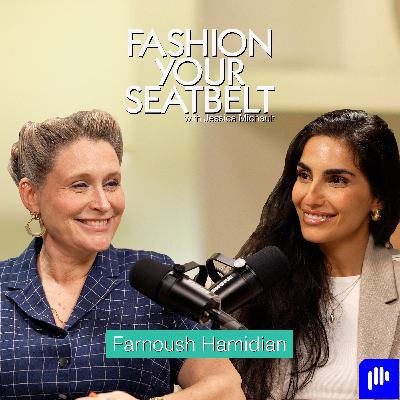
Model and poet Farnoush Hamidian has that unquantifiable something, what the French call je ne sais quoi, that only fashion’s most iconic muses possess. All eyes turn towards her when she enters a room, and anyone who has seen her walk a couture catwalk can confirm she dominates the runway with a presence born not just from beauty, but inner strength.Born in Iran, Farnoush’s path to the world’s biggest fashion stages has been anything but straightforward. It’s a story threaded with courage – of leaving home, of finding her place, and of redefining what beauty looks like on her own terms. In an industry that’s still learning to celebrate difference, she has become something rare: a woman who embodies both mystery and meaning.Farnoush, whose face has graced the cover of Vogue Arabia, Emirates Woman and L’Officiel, has collaborated with brands like Dolce Gabbana, Cartier, Tiffany Co, Chaumet and L’Oreal. And walked the Paris Couture runways, most notably as a muse for Stephane Rolland, not to mention the red carpeted steps of the Cannes Film Festival. But behind the editorials and couture fittings lies a deeper narrative — one about resilience, identity, and the power of representation.In a time when the fashion world is finally beginning to open its eyes to diverse forms of beauty, Farnoush stands as both muse and mirror. Reflecting a new generation of women who are rewriting the definition of elegance. Today she is using her voice and her platform to champion a more inclusive and thoughtful vision of beauty. From the quiet discipline of her early years to the creative freedom she’s now embracing, Farnoush has proven herself to be so much more than just a pretty face.
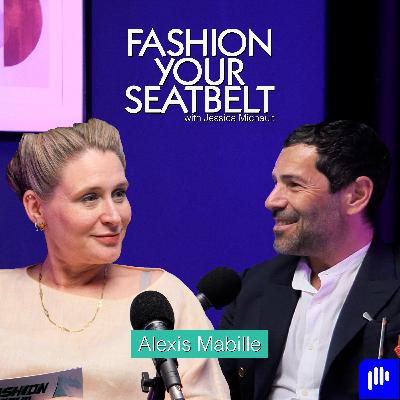
The debonair Alexis Mabille is a renowned French designer known for his innovative work in both fashion and interior design. Born into a big family, he learned early from his mother how to sew clothing, dressing both friends and family in his creations.Later, he would enroll in the Chambre Syndicale de la Couture Parisienne, graduating early because of all the hands-on sartorial experience of his childhood. From there, he worked at prestigious fashion houses like Ungaro and Nina Ricci before being tapped by John Galliano to come work with him during his time at Dior. He also collaborated with Hedi Silmane during his tenure at Dior Homme.Finally, in 2005 Alexis decided to launch his signature brand and found fans in artists like Dita Von Teese, Katy Perry, and Lady Gaga. He gained a reputation for pushing the envelope when it came to the idea of unisex dressing and turned the bow into the signature motif of his maison, making it a modern fixture of fashion. He would also go on to explore interior design with his equally successful company BEAU BOW Paris.In this episode, Alexis explores his approach to building a lasting legacy as he begins a new chapter with his signature brand. Also, we examine what it truly means for originality to transcend market trends and whether creativity alone is enough to make a lasting impact in today’s fashion industry.As always, Alexis is full of stories, full of insights, and full of fun.
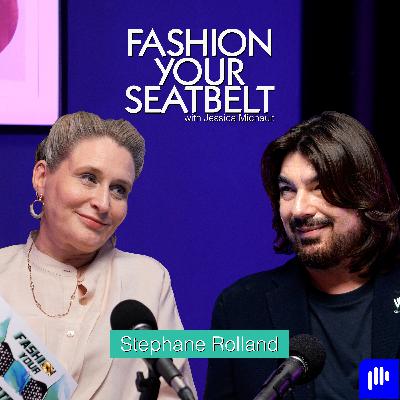
There are fashion designers, and then there are couturiers – those rare artists who understand how to sculpt emotion from fabric or create drama from a single silhouette. Stéphane Rolland is one of those exceptional few.From the moment he stepped onto the haute couture stage, Stéphane made it clear that he wasn’t interested in playing it safe. His signature collections are bold, architectural, and cinematic – full of sweeping trains, sculptural volumes, and unapologetic glamour. His creations don’t just walk into a room; they command it.But behind the red-carpet-ready gowns lies a deep-rooted respect for craftsmanship. A graduate of the Chambre Syndicale de la Couture and the youngest ever Artistic Director at Balenciaga, Stéphane brings a razor-sharp technical skill to the visionary designs of his eponymous fashion house. He is a master of cut, proportion, and impact – dressing women like Beyoncé, Celine Dion, and Queen Rania with the kind of elegance that refuses to go unnoticed.Based in Paris but with an eye always on the world, Stéphane merges the discipline of haute couture with the sensibility of sculpture and the drama of the stage. Each look is a story – powerful, feminine, and unforgettable.Stéphane Rolland doesn’t just design clothes. He creates moments.
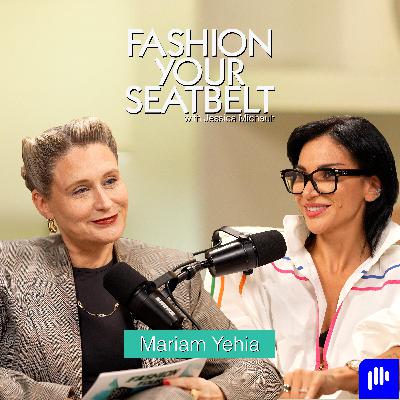
There’s a certain kind of designer who doesn’t just make clothes – she builds a world. Mariam Yeya, the French-Egyptian force behind the fashion label Mrs. Keepa, does exactly that. Her creations aren’t just garments; they’re declarations of individuality, freedom, and fearless femininity – a colorful and creative visual dialogue that is a sartorial dance between structure and spontaneity.Launched in 2016 with Mariam’s husband, Bassel “Keepa” Komaty … thus the name Mrs. Keepa – was born out of a desire to create clothing that felt both modern and timeless. What began as a ready-to-wear brand with a cult-like following among the region’s most discerning dressers has now evolved into an international label known for its eclectic silhouettes, impeccable tailoring, and some serious statement shoulders.Her designs don’t whisper — they speak loud and clear. To women who are confident, eccentric, and unapologetically themselves. The best way to describe the “Mrs. Keepa girl” is that she isn’t a woman defined by trends; she defines them. What ties the brand all together is the designer’s instinctive understanding of contrast — the harmony between masculine and feminine energy, the vintage and the avant-garde, the uninhibited and the meticulously crafted.It’s this melange that makes her work so compelling. As a designer, she brings together her Egyptian heritage and French sensibility with a modern, cosmopolitan slant. And her recent expansion into menswear only cements this idea.But at the heart of Mrs. Keepa’s success is something deeper: a commitment to sustainability as a central creative philosophy. Each collection is built around longevity with pieces designed to live many lives in one wardrobe.Today, the Mrs. Keepa brand stands as one of the most dynamic independent labels to come out of the Middle East — proof that authenticity and imagination can still be a business model. Mariam’s story is, at its core, about freedom, the freedom to create without compromise, to lead without imitation, and to inspire a generation of women to take up space, beautifully and boldly.
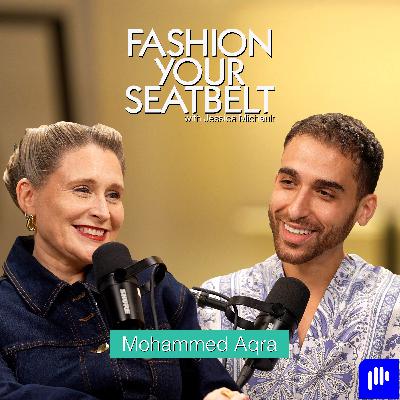
There are visionaries who predict the future — and then there are those who quietly build it. Mohammed Aqra belongs to the latter. As the Chief Strategy Officer of the Arab Fashion Council, he has become one of the most influential figures shaping the evolution of fashion across the Middle East and beyond. Equal parts strategist, connector, and cultural diplomat, he is redefining what it means to turn creativity into economic power.Born in New York to Jordanian parents, Aqra embodies the duality of East and West — a sensibility that has become the foundation of his work. With degrees in International Business and International Business Law, he approaches fashion as both art form and infrastructure, understanding that beauty means little without the scaffolding of sustainability and vision.At just twenty-five, he became one of the youngest executives in the global fashion industry when he co-founded the Arab Fashion Council, a non-profit organization dedicated to building a unified fashion ecosystem across the twenty-two Arab nations. As its Chief Strategy Officer, Aqra is leading initiatives that bridge diplomacy, technology, and design, and his trajectory has been defined by ambition paired with execution.Under his leadership, the Arab Fashion Council has transformed from a regional platform into a global player. Partnerships with industry giants like Meta, Microsoft, Dyson, DHL, and Mattel have expanded the reach of the Middle East’s creative economy, while collaborations with legendary houses such as Jean Paul Gaultier, Moschino, Marchesa, and Carolina Herrera have elevated the Arab fashion narrative onto the international stage. Aqra was also instrumental in founding Dubai Fashion Week alongside Dubai Design District (d3), solidifying the city’s position as one of the five major fashion capitals in the world.But what sets Aqra apart is not only his ability to forge alliances; it’s the way he reimagines the purpose of fashion itself. He sees it as a global language — one that transcends borders and builds bridges. His vision positions the Arab world not as a satellite to the West, but as a central, driving force in the global creative economy.Aqra represents a new kind of industry leader: analytical yet imaginative, disciplined yet daring. His work is not about fashion for fashion’s sake, but about the long game — building creative economies, fostering cross-cultural collaboration, and proving that design can be both a commercial and a diplomatic force. As Dubai continues to rise as a global hub for art, culture, and innovation, Aqra stands at the crossroads — shaping not just how fashion looks, but how it functions, connects, and endures.
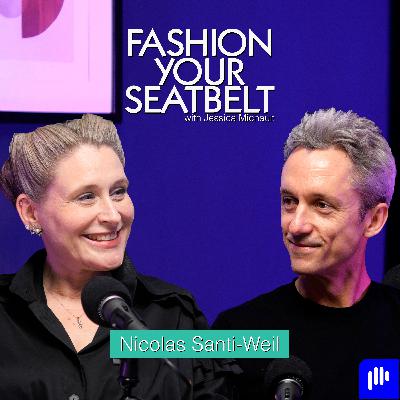
In this episode Nicolas Santi-Weil, the CEO of AMI Paris, discusses what it takes to build a global multimillion dollar independent fashion brand today, how Asia helped shape AMI’s future, and why his carpe diem approach to business has proven so successful… Nicolas Santi-Weil is not your typical fashion CEO. Equal parts strategist and storyteller, he’s the architect – alongside founding designer Alexandre Mattiussi – behind the rise of AMI Paris, the effortlessly cool French brand that’s become the gold standard for Parisian nonchalance. In an era where major luxury conglomerates are reporting their worst results in years Nicolas has been instrumental in shepherding AMI to some quite impressive wins. The 15 year old company now counts 700 wholesale partners and points of sale in over 100 countries. And just last year the brand saw 300 million euros in turnover – an increase of 10 fold in just four short years. With a background that bridges finance, entrepreneurship, and fashion Nicolas brings a rare clarity to an often chaotic industry. He understands how to scale a brand without losing its soul, take daring, yet calculated risks and knows how to craft a growing fashion empire that feels both deeply personal and universally relatable. This is a man who likes to choose the unconventional path… like leaving his job at a multimillion-dollar business to join AMI – when it was still a little-known label. Under his leadership, the company has expanded internationally, come up with some unexpected and energizing collaborations with creative heavyweights, and maintained a fiercely loyal following without compromising its roots. But beneath Nicolas’ work lies a deeper story of risk, reinvention, and quiet resilience. This episode is about truly discovering the man behind AMI’s success. Exploring what it takes to lead a brand through personal sacrifice, cultural shifts, and high-stakes markets like China. And as luck would have it…we also finally get to discover his go to karaoke song.

In the latest episode of the Fashion Your Seatbelt podcast, up and coming fashion designer Burc Akyol shares his unfiltered views on the fashion industry, his nascent signature brand and what it’s really like to work with Cardi B.There are some designers that feel like lighting in a bottle. Burc is without a doubt one of those. The poetic way he talks about fashion, his clear sense of self awareness and his raw honesty make him captivating to listen to and I could have easily spoken with him for hours.With roots in France and Turkey, and a foundation built in the ateliers of some of Paris’s most storied maisons, including Christian Dior and Balenciaga, Burc launched his namesake label in 2019 with a vision as bold as it is refined. His work speaks in a fluent, sensual language – fluid silhouettes, razor-sharp tailoring, and a near-couture level of craftsmanship. It's a wardrobe designed not for the faint of heart, but for those who want to stand elegantly apart.From his now-iconic tuxedo jeans to his sculptural bustiers, Burc brings a magnetic energy to everything he touches. His designs celebrate dualities: masculine and feminine, strength and vulnerability, structure and seduction. It’s no surprise his work has already found fans among fashion’s most daring tastemakers like Cardi B, Cate Blanchett, Kendall Jenner, and Gabrielle Union.But beyond the silhouettes and the styling, there’s a deeper conviction behind the brand – one of sustainability, intentionality, and making garments that last beyond trends. A 2023 LVMH Prize finalist and this year’s winner of the Pierre Berger prize at the ANDAM awards, Burc isn’t just designing clothes; he’s crafting a new kind of bold elegance for a new generation.And fashion – quite frankly – is better for it.

In this episode, I speak with Charlotte Chesnais, a woman who has spent a decade creating jewelry coveted by cool girls around the world. This year, she is celebrating the 10-year anniversary of her signature brand and her 40th birthday. Major milestones for a woman who seems to take everything in stride and with a broad smile.In a landscape where jewelry often shouts for attention, designer Charlotte has built a brand that whispers refinement – but still turns every head in the room. Her pieces are instantly recognizable, not for their flash, but for their form: sculptural, fluid, and impossibly modern. Each design curves around the body… like it was always meant to be there.Charlotte began her career in the world of fashion, working under famed designer Nicolas Ghesquière during his time at Balenciaga, where she honed her eye for structure and developed her instinct for movement. But it was in launching her namesake label in 2015 that she truly came into her own. With collections that blur the line between accessory and art object, she’s redefined what jewelry can look like – and how it should feel.This is a woman who decided to start a family and start a business pretty much simultaneously. Found success early and didn’t take it for granted. She is frank, open, and honest, and that is reflected in the work that she creates. Pieces that become a part of you, of your everyday, and your always.With her third free-standing store about to open in Tokyo, the launch of a captivating new fine jewelry collection, and a clever new flatware collaboration with Christofle, Charlotte continues to expand her universe, inviting more women (and men) to embrace intentional adornment. A kind of luxury that speaks only to those who are truly paying attention.
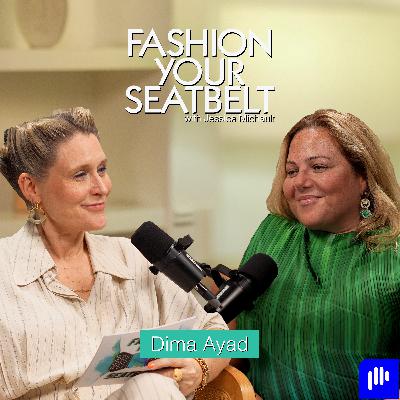
Designer Dima Ayad is rewriting the conversation around Arab fashion, inclusivity, and the power of creative resilience.Born in Lebanon but raised in Dubai, she grew up within the rhythms of the city’s hospitality and luxury spaces. Her early career unfolded in PR and marketing roles at Jumeirah, Raffles, and Atlantis. Places where she learned not only about always going the extra mile and delivering more than what was asked for, but also the critical importance of storytelling and creating deep connections with customers. But fashion — that was personal. Frustrated by the scarcity of beautifully designed, size-inclusive clothing, she began sketching what she needed — pieces that would flatter, not constrain. With no formal training, she learned by doing. Her first collection, launched in 2011, sold out almost immediately — but the trajectory of her signature brand was never linear. She has even said that some collections were “diabolically bad.” But she admits that she has learned more from those missteps than from her biggest wins.Alongside building her namesake label, Dima founded DAC Communications in 2020 — a PR, marketing, and storytelling agency born to fill a gap in the market and nurtured through Dima’s unique vision. She’s now balancing dual identities: the dreamer who brings ideas to life through fabric, and the strategist who helps other brands speak their truths.In our conversation, we explore how Dima keeps inclusion at the core of her business – designing for all women, for diversity, for dignity. We talk about the stumbles along the way that sharpened her resolve and hear how she feels representing Dubai to the world, exploring both its contradictions and its promise. And finally, for those starting out, she gives great insights into the bravest things they can do for their businesses, and how to hold onto themselves and their singular vision as they grow.Dima Ayad’s story is one of elegance, grit, and radical inclusion.

In this episode, I sit down with Laure Guilbault, the Paris Correspondent for Vogue Business. Laure is a diehard fashion journalist. She worked at WWD for five years, became Business of Fashion’s first Paris correspondent, and is now the Paris Correspondent for Vogue Business. She doesn’t just report on fashion – she dissects it. From the C-suites of luxury maisons to the atelier floors of emerging designers, her journalism captures the pulse of an industry in flux.Laure brings a uniquely European lens to her reporting – precise, considered, and always ahead of the curve. She understands not just the aesthetic ambitions of fashion, but the structural realities that shape its billion-dollar future.During the pandemic, she took her love of the industry to new heights when she launched her Sunday Night Live interviews on Instagram. Each Sunday at 6pm, she goes live on the platform to interview leaders and creatives in the fashion and luxury space. It has become a weekly rendez-vous for industry insiders looking for real, uncensored, and unedited conversations about the current state of play in a world that is constantly reinventing itself.In our conversation, we discuss the paradigm shift that fashion is in the midst of facing, how she honed her interview style, and who she has always dreamt of interviewing… and of course, whether or not she would recommend becoming a fashion journalist in the age of AI.
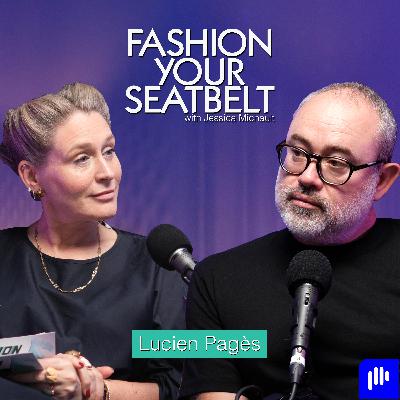
In this episode, I sit down with Lucien Pagès, one of the fashion world’s most accomplished storytellers and the founder of the eponymous Lucien Pagès Communication, a prominent public relations agency in the luxury fashion and beauty industries.Cards on the table…I have known Lucien Pagès for decades. I have watched with joy as his unique mix of charm, creativity, and candor has manifested itself in public relations triumphs for hundreds of brands, including legendary labels such as Saint Laurent, Jacquemus, and Schiaparelli.Once quietly working behind the scenes, Lucien, who just celebrated his 50th birthday, has recently stepped a bit more into the spotlight. Inviting a wider audience into the magical world he works in. Paying it forward to future creatives looking to understand what it takes to authentically and powerfully craft stories that make a luxury brand irresistible.With nearly two decades of navigating the glamorous and ever-evolving world of fashion PR, in our conversation, he pulls back the velvet curtain on the raw truths behind his career, revealing his unfiltered thoughts on his growing TikTok fame, how he deals with different designer personalities, and what luxury really means today.We dive deep into the values, grit, and instincts that guide him. His decision to sell his company after 18 years of shaping fashion’s most iconic voices, and why this man, with the most infectious laugh in fashion, still has so many stories to tell.
In just seven short years, Charaf Tajer, the founder and creative director of the brand Casablanca, has proven that the fashion world has room for a multitude of sartorial expressions. His unique blend of old-money style, colorful prints, sporty inspirations and architectural touches has managed to recalibrate the language of contemporary fashion. With roots in Paris and Morocco, Charaf’s path to fashion wasn’t linear. He cut his teeth in the nightlife scene as the art director of Paris’ iconic venue Le Pompon, but was also a creative consultant for Supreme, once upon a time collaborated with Virgil Abloh. But was also a co-founder of the streetwear brand Pigalle before launching Casablanca in 2018. A label born not from trend-chasing, but from a desire to distil elegance, memory, and escapism into clothing.Casablanca isn’t just a fashion brand; it’s a sensibility. A world where terry cloth tailoring meets Art Deco curves, and where every collection feels like a postcard from a sun-drenched far-flung destination. But behind the silk shirts and saturated palettes lies a precise vision – one that blends nostalgia with modernity and elevates leisurewear into a refined statement of intent.Now, the brand is entering a new era. With two flagship stores about to open – one in Paris and another in Los Angeles – Charaf is bringing his universe into physical form. It’s a bold move, but then again, Casablanca was never about playing it safe. As you’ll hear, Charaf is a designer who leads with instinct, impeccable craftsmanship, and a sociological eye.

Guillaume Delacroix is a luxury brand whisperer. His entire career, from his early days working at Karla Otto and KCD to his time at Giorgio Armani and Balenciaga, to his current role as the founder and CEO of DLX, he has been helping leading prestige companies craft their narratives in ways that spark conversations, engage the public and create lasting impressions. Guillaume launched DLX nine years ago and since then he has built up a reputation in the industry for both spotting and supporting budding design talents but also for helping more established companies create bold new chapters in their brand strategy. A born storyteller, Guillaume doesn’t limit his clientele to just fashion labels but instead uses his skills to create memorable moments with a variety of companies. He has worked with everyone from Matches, and the famed Samaritaine department store in Paris to hot niche brands like Sophie Carbonari Skincare, the Zurich-based On athleticwear label and the current must-have swimwear brand Hunza G. The common denominator across all these companies is they are cool. And if they weren’t cool, by the time Guillaume works his magic on their brand strategy, communication rollout and event activations…well they damn sure will be.I have known Guillaume for years and considering his impressive track record in the luxury space what still strikes me the most is how humble and self-effacing he is. I mean just Google the guy. For someone who can weave a brand narrative like nobody’s business, there is very little about Guillaume himself online. I hope this podcast will help change that. As he is one man worth knowing. This interview took place in June 2021
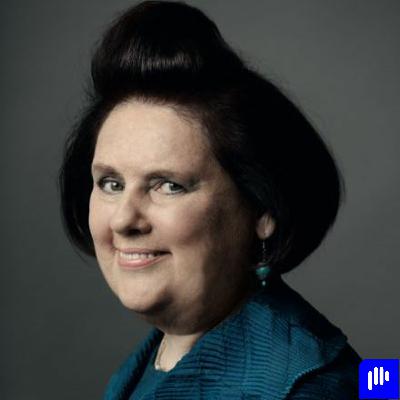
I don’t think I have ever been as nervous about interviewing someone in my entire career as I was when my former boss and colleague Suzy Menkes agreed to speak with me for this podcast. I worked side by side with Suzy for 16 years at the International Herald Tribune, which is now known as the International New York Times. Over that period she mentored me, encouraged me and guided me. Shaping my career as I moved from her assistant to fashion writer and finally the Online Style Editor of the IHT. During our time together we experienced so many amazing fashion moments, from the John Galliano, Alexander McQueen and Marc Jacob eras at Dior, Givenchy and Louis Vuitton, respectively, to watching first-hand the rise of LVMH, Gucci Group, Kering and the whole transformation of the fashion industry from artform to billion-dollar luxury business. Not to mention witnessing the debuts of iconic designers like Nicolas Ghesquière, Alber Elbaz, Phoebe Philo, Tom Ford, Stella McCartney, Alessandro Michele, Riccardo Tisci, Maria Grazia Chiuri, Pierpaolo Piccioli and the list goes on. Suzy’s career as a fashion critic spans close to 60 years, starting with her college days at Cambridge where she was the first female editor of the university newspaper. But even before that, as a teenager, she moved to Paris to study at the fashion school that is now known as ESMOD. So her love of fashion as a visual expression of self and society runs very deep indeed. She started her true calling as a fashion journalist at the age of 24. Working under the watchful eye of Charles Wintour, the father of Anna Wintour, who would be an early mentor for Suzy. But Suzy came into full bloom as one of the most respected fashion critics in the world during her 26-year tenure at the International Herald Tribune. Her words were read in the pages of the daily newspaper by hundreds of thousands of readers around the world and eventually by millions once the internet was born. An audience that only expanded with the advent of social media and her turn as Condé Nast’s International Vogue Editor, which saw her words being translated into different languages and her reviews posted on all of the international Vogue websites. She also was the mastermind behind the idea of the modern luxury conference, events that are now commonplace but were brought into being at the IHT, and later continued at Vogue, under her guidance. Suzy is renowned for her honest, fair and insightful writing, and her ability to put fashion into the context of a wider global narrative. Today she runs her own very successful podcast called Creative Conversations with Suzy Menkes, where she continues to interview the leading movers and shakers within the fashion industry. She is still asking the questions every fashion lover wants to know the answers to, but now I am lucky enough to be able to turn the tables on her a bit and ask her a few questions of my own.

From the moment Alexandra Van Houtte first told me about her newly launched platform in 2016, describing it as Google for fashion, I knew she was onto something. Since then TagWalk, the website she founded and is the CEO of, has grown by leaps and bounds and has become a linchpin platform for anyone working in the fashion industry. It is the first runway image keyword search engine in existence. In a nutshell, the former stylist’s assistant created a site that, in just a few simple clicks, makes it possible for stylists to whittle down their sartorial selections for fashion shoots or mood boards from the thousands of catwalk images, lookbooks, and street style shots taken every season. It is also the perfect tool for fashion journalists and editors who are obliged to cull together images for those never-ending “top trend” texts, as the platform allows users to search for images by keyword, colour, season, brand, and more. Tagwalk also offers a variety of features that make it easy to save, share, and organize images.In addition to its popularity with fashion professionals, Tagwalk’s democratic nature has made it a widespread tool for your average fashionista. As it allows visitors to the site the chance to explore the latest trends, discover new designers, find inspiration for their own personal style and create seasonal wish lists of the key pieces she wants to invest in.My conversation with Alexandra really gets into the nitty-gritty of what it takes to get a start-up off the ground, how best to bring on investors and what skill sets a successful leader needs. As always Alexandra is honest and open with her answers, not pulling any punches when it comes to the hard questions about revenue streams, scaling her business and her hiring practices. I came away from our in-depth chat feeling inspired, energized and ready to take on the world. This interview took place in May 2021

Talk about an inspirational story. Paula Wallace, the president and founder of the Savannah College of Art and Design, better known as SCAD had a singular vision back in September of 1978, To create a world-class art and design college that would prepare students for a global workforce. Under her leadership, SCAD has grown from a small art school with 150 students to a global university that spans three campuses around the world with thousands of students enrolled. Over the years it also became recognised as one of the most respected art and design schools, thanks in no small part to President Wallace, who has been the driving force behind its success for 45 years and today is one of the longest-serving women presidents in the history of U.S. higher education.After speaking with president Wallace – and reading her charming book "The Bee and the Acorn" – which recounts the origins story of SCAD, the things that stand out about her are her drive, her sense of curiously, and her overarching desire to make sure her students are at the forefront of creative innovation. She is forever looking for ways for SCAD students, faculty and alumni to connect, collaborate and share their unique knowledge and perspectives. And president Wallace clearly believes that creativity is essential not only for economic growth, but also that artists and designers play a vital role in shaping the world.This interview was recorded in May of 2022.
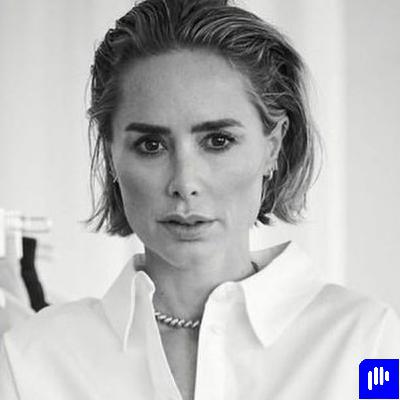
Fashion entrepreneur Anine Bing is a very savvy business woman who knows how to seize her moment. An early adapter to the social media space, Anine, who is a former model and blogger, was one of the first to translate her online following into a successful fashion brand business. She launched her signature line back in 2012 out of the garage in her home in California. Her collection of chic staple pieces, inspired by her Scandinavian heritage and the casual cool of her Los Angeles home base, were an instant hit. Her “online first” business model, leveraging social media to market and promote her pieces was a new strategy at the time she launched. But today it's a formula that many are emulating. She reverse-engineered her success, starting from the digital space and then moving into the more traditional brick-and-mortar arena. Because today, Anine is sitting on the top of a wardrobe essentials empire. Not only is her collection sold in more than 350 stores globally, she also has over 15 stores located around the world. And Anine continues to expand. She has moved into childrenswear and has launched a successful line of perfumes, not to mention sunglasses, shoes, bags, lingerie, and jewelry. I sat down with Anine in her stylish stand-alone store in the heart of Paris to discuss her impressive success story. I was curious to learn more about a woman who was able to translate her love of timeless style and relaxed elegance into a brand that is helping legions of women look picture perfect for their selfies.

Kaat Debo is the Director and Chief Curator of Antwerp’s famed ModeMuseum fashion museum, better known as the MoMu; a museum that has spent the last three years under renovation. But now, after years of waiting, Kaat is able to reintroduce the world to her second home. A museum with over 35,000 pieces of Belgian fashion in its archives and a unique history that celebrates sartorial storytellers who have helped the world see fashion from new and unexpected angles.But while the MoMu is all about helping the larger world understand the different aspects and influences of the fashion universe, Kaat herself hasn’t been one to share her story much with the public. There is very little information about her online, other than the broad brushstroke that tell us that she studied literature and philosophy in school, that she first joined MoMu as a curator in 2001, she spent a couple of years as the editor-in-chief of A Magazine and then in 2009 took up her top spot position as the director of the MoMu. So I was excited to have an in depth chat with Kaat about what it takes to be a curator, especially one working in the rather new field of fashion curation. I looked forward to learning how her studies, her childhood and her mentors throughout her career shaped her world view and her collaborative nature. And I was interested to hear all about the rebirth of MoMu and how she is planning to make this museum so much more than a shire for clothes; but rather a living, breathing part of the Antwerp cultural community that interacts with the city that surrounds it and helps to nurture fashion lovers of the future.

I’ll never forget the first time I discovered the work of Mary Katrantzou. It was in London in 2008 I believe, and I just happened to wander into a room where a rack of her now-famous perfume bottle printed dresses was on display. On hand was her mother who was proudly showing off the stunning creations her daughter had dreamt up. And Mary’s mom had every right to be proud. Her work was unlike anything else going on in fashion at that time. Advancements in printing and computer technology had made it possible for this young woman to create architectural designs on fluid fabrics. Blending beautifully her passion for interior designs and her studies in the field of architecture at Rhode Island School of Design with her Bachelor of Arts in Textile Design and her Master’s in Fashion from Central Saint Martins. But it wasn’t just the print work that set Mary apart from the pack,it was that combined with her choice of vibrant rainbow colorways. The result was a collection that was the harbinger of the 2010s colorful print fashion revolution.Since she started her signature brand in 2008 Mary, who was born in Athens, Greece, has found a way to modernize trompe l’oeil, help women fall in love with print and color again, and showed the world that clashing aesthetics can be boldly feminine and empowering. This is why powerful women like Michelle Obama, Cate Blanchett, Beyoncé, Lizzo, Jane Fonda, and Zendaya have all flocked to her creations. But Mary’s success goes beyond her ability to reinvent her core design principles every season. She is a very savvy businesswoman who saw early on in her career the power that collaborating with other creatives and brands could have in expanding her reach and name recognition. Her recent partnership with the high jewelry company Bulgari on a line of limited edition bags is a perfect example of this. But so is her work with Victoria’s Secret, Longchamp, Topshop, and Adidas Original. And her recent decision to create the size-inclusive year-round holiday capsule collection called Mary-Mare also is indicative of how Mary is able to deftly read the fashion tea leaves as the industry shifts away from seasonal shows and moves into a space where smaller drops throughout a year feels more in keeping with the times we live in.With over a decade in fashion, Mary Katrantzou is still innovating and challenging herself as a creative, and her devoted clients couldn’t be happier.

Designer Spencer Phipps is a born risk-taker. There isn’t a limb on his body that doesn’t have a scar from one escapade or another - that he jumped into with both feet before asking questions. The man is even missing a significant portion of one of his pinkie fingers from one memorable misadventure. And when it comes to taking risks, Spencer also has no problem doing that in business. It was, after all, an impulse decision to launch his signature menswear brand Phipps back in 2017. When, after having worked alongside Marc Jacobs and Dries van Noten, he found himself looking to make his next move and couldn’t find a fashion house that ticked all the boxes. So instead he decided to start his own. Spencer, who was born and raised in San Francisco and graduated with a degree from Parsons in New York, has over the past four years created for himself a label that scratches a very interesting sartorial itch. His clothing celebrates timeless American wardrobe staples that allude to wide open places, outdoor activities, and manly pursuits. Garments that Spencer has designed so that they revere nature, appreciate the artisanal hand, and seek to leave as little an impact as possible on the planet. While simultaneously his goal is to have them hold a long-term place of honor in a man’s closet, another sustainable pursuit.From its inception, one of the pillars of the Phipps brand has been its commitment to sustainable sourcing and responsible manufacturing. For the designer, this means both leveraging the latest technology in terms of construction and production, as well as fine-tuning a list of transparent, sustainable suppliers that he works with regularly. His fervent commitment to crafting clothing that makes an impact but doesn't leave one on the Earth is one of the reasons why Spencer was an LVMH prize finalist in 2019 and, after just two seasons, the brand was added to the official Paris Fashion Week: Menswear calendar. But if I am being completely honest, on top of all the reasons I have already mentioned, Spencer is just a really cool guy that you always have fun hanging out with, as you will discover yourself with this interview.

Comments

Download from Google Play

Download from App Store
 United States