


 Claim Ownership
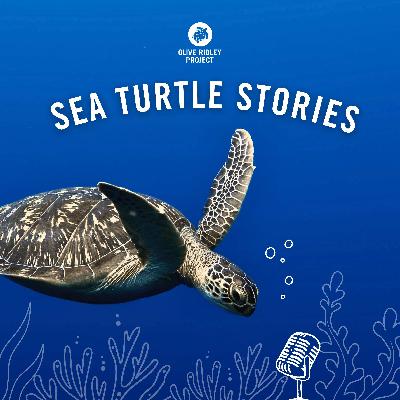
Sea Turtle Stories
Subscribed: 7Played: 43
Subscribe

© Copyright 2026 Olive Ridley Project
Description
Sea turtles, one of the most ancient species of our world have truly stood the test of time. They have seen human civilisations rise and fall, inspired ocean deities across cultures, and baffled scientists with their unique instincts - one of which is a hatchling's impulse to orient itself in the direction of the sea, straight from its nest.
In an effort to uncover the mysterious lives of these sea creatures, we bring you our podcast series on all things sea turtle. Join us as we dive into conversations with experts from around the world, simplifying complexities of sea turtle science, culture, and conservation.
About Olive Ridley Project :
The Olive Ridley Project (ORP), a charity founded in 2013, registered in England & Wales, Maldives and Kenya, is on a mission to protect sea turtles and their habitats through rescue and conservation medicine, scientific research, and education and outreach.
Headquartered in the UK, we currently operate in Kenya, Maldives, Pakistan, Oman and Seychelles, where we are supported by a passionate and dedicated team of
scientists, veterinarians, conservationists, citizen scientists and volunteers.
For more information, visit us at oliveridleyproject.org, or for queries write to us at [email protected].
12 Episodes
Reverse

You've probably heard of lost years – the early period in a sea turtle's life history when, as a hatchling, it is thought to be 'lost' at sea.For a long time, the scientific community wasn't quite sure of where these hatchlings went or what they did!But thanks to recent advances in science and technology, much has come to light on this elusive stage of a sea turtle's life.So tune into this Special Episode with our friends from Ocean Unpacked, as they explore the latest insights into 'Lost Years', and also spotlight a rare conservation success story that offers hope for sea turtles.Timestamps:(00:00) - Introduction(02:33) - So why sea turtles? What’s all the hype?(05:16) - What are threats facing sea turtles today?(07:36) - New research on the “Lost Years” - where do sea turtle hatchlings actually go after leaving the nest?(15:56) - A huge conservation win - Green turtles no longer endangered(18:33) - What does this news mean for sea turtle conservation?Follow Ocean Unpacked to keep up with the weird and wonderful world of our Blue Planet, as they share fascinating facts about the life in our seas, dissect groundbreaking research in marine science, and share the latest ocean news making waves around the world.Podcast Icon Image by: Jemma Paradise
"There is no such thing as a sea turtle expert!" Dr. Kartik chuckles, recalling veteran biologist Dr. Jack Frazier’s words. "Sea turtles will always find a way to do something that baffles you." Although lighthearted, Dr Kartik's remark speaks to his instinctive curiosity and ever-evolving understanding of sea turtles. A leading scientist and sea turtle conservationist from India, Dr Kartik Shanker is a strong advocate for decolonising sea turtle conservation and embracing more pluralistic ways of engaging with nature - a notion that he weaves throughout this candid conversation.Part one of this bonus episode begins with Dr Kartik exploring the enduring mysteries of arribada (mass nesting events that continue to baffle researchers). But the discussion soon takes a deeper turn, examining how conservation practice often prioritises visible, emotionally charged threats while overlooking the more complex, intangible challenges facing sea turtles.The conversation on conservation conundrums continues in part two of the episode, where Dr. Kartik confronts one of the most side-stepped topics in sea turtle conservation: the consumptive use of sea turtles. He critiques the dominant philosophy of protectionism, questioning its unintended consequences and urging the conservation community to reconsider its approach.This episode goes beyond sea turtles, it tackles the larger idea of how we perceive our relationship with nature and the very practice of conservation itself. So tune in now for a conversation that challenges the status quo and raises some tough questions.Further Reading, Sources & References:Shanker, K., Pandav, B., & Choudhury, B. C. (2004). An assessment of the olive ridley turtle (Lepidochelys olivacea) nesting population in Orissa, India. Biological Conservation.Shanker, K. (2015). From soup to superstar. HarperCollins Publishers IndiaR, H. (2021). The conservation paradox: Missing the meadows for the green turtles. RoundGlass Sustain.Sardeshpande, M., & MacMillan, D. (2018). Sea turtles support sustainable livelihoods at Ostional, Costa Rica. Cambridge University Press.Brockington, D. (2002). Fortress conservation: The preservation of the Mkomazi Game Reserve, Tanzania (Vol. 13). James Currey.Kartel Shockington: Kartel Shockington is a failed comic book creation with special powers of rapid hair loss. He sometimes appears as Kartik Shanker, and at other times as Dan BrockingtonShanker, K., Early Capistrán, M. M., Urteaga, J., Mohd Jani, J., Barrios-Garrido, H., & Wallace, B. P. (2023). Decolonizing sea turtle conservation. SWOT Report Vol 18.Dakshin Foundation: An Indian not-for-profit, charitable, non-governmental organisation committed to environmental sustainability and social justice.To support Olive Ridley Project’s work in sea turtle conservation, you can - Name and Adopt a wild sea turtle, Adopt a turtle patient or Donate here: https://oliveridleyproject.org/donateFollow us on Instagram, Facebook, LinkedIn, Tiktok and YoutubeCredits:Sea Turtle Stories podcast is presented by Olive Ridley ProjectThe host for the podcast series is Dr Minnie LiddellThe podcast is edited, mixed and mastered by Dev RamkumarThe podcast series is produced and researched by Anadya Singh
"There is no such thing as a sea turtle expert!" Dr. Kartik chuckles, recalling veteran biologist Dr. Jack Frazier’s words. "Sea turtles will always find a way to do something that baffles you." Although lighthearted, Dr Kartik's remark speaks to his instinctive curiosity and ever-evolving understanding of sea turtles. A leading scientist and sea turtle conservationist from India, Dr Kartik Shanker is a strong advocate for decolonising sea turtle conservation and embracing more pluralistic ways of engaging with nature - a notion that he weaves throughout this candid conversation.Part one of this bonus episode begins with Dr Kartik exploring the enduring mysteries of arribada (mass nesting events that continue to baffle researchers). But the discussion soon takes a deeper turn, examining how conservation practice often prioritises visible, emotionally charged threats while overlooking the more complex, intangible challenges facing sea turtles.The conversation on conservation conundrums continues in part two of the episode, where Dr. Kartik confronts one of the most side-stepped topics in sea turtle conservation: the consumptive use of sea turtles. He critiques the dominant philosophy of protectionism, questioning its unintended consequences and urging the conservation community to reconsider its approach.This episode goes beyond sea turtles, it tackles the larger idea of how we perceive our relationship with nature and the very practice of conservation itself. So tune in now for a conversation that challenges the status quo and raises some tough questions.Further Reading, Sources & References:Shanker, K., Pandav, B., & Choudhury, B. C. (2004). An assessment of the olive ridley turtle (Lepidochelys olivacea) nesting population in Orissa, India. Biological Conservation.Shanker, K. (2015). From soup to superstar. HarperCollins Publishers IndiaR, H. (2021). The conservation paradox: Missing the meadows for the green turtles. RoundGlass Sustain.Sardeshpande, M., & MacMillan, D. (2018). Sea turtles support sustainable livelihoods at Ostional, Costa Rica. Cambridge University Press.Brockington, D. (2002). Fortress conservation: The preservation of the Mkomazi Game Reserve, Tanzania (Vol. 13). James Currey.Kartel Shockington: Kartel Shockington is a failed comic book creation with special powers of rapid hair loss. He sometimes appears as Kartik Shanker, and at other times as Dan BrockingtonShanker, K., Early Capistrán, M. M., Urteaga, J., Mohd Jani, J., Barrios-Garrido, H., & Wallace, B. P. (2023). Decolonizing sea turtle conservation. SWOT Report Vol 18.Dakshin Foundation: An Indian not-for-profit, charitable, non-governmental organisation committed to environmental sustainability and social justice.To support Olive Ridley Project’s work in sea turtle conservation, you can - Name and Adopt a wild sea turtle, Adopt a turtle patient or Donate here: https://oliveridleyproject.org/donateFollow us on Instagram, Facebook, LinkedIn, Tiktok and YoutubeCredits:Sea Turtle Stories podcast is presented by Olive Ridley ProjectThe host for the podcast series is Dr Minnie LiddellThe podcast is edited, mixed and mastered by Dev RamkumarThe podcast series is produced and researched by Anadya Singh
The Caribbean presents a fascinating paradox in the sea turtle conservation story. On one hand, Costa Rica hosts the world’s longest running and most iconic sea turtle conservation initiative. Meanwhile, just up the coast in the neighbouring Nicaragua, one of the world’s few legal sea turtle fisheries flourish.So how does this contradiction play out for sea turtles of the Caribbean? As we know by now sea turtles are global citizens, caring not for our political boundaries. The Caribbean green turtles are no different, for they nest in massive numbers in Costa Rica and forage in Nicaragua. In Episode 8, Brazilian Sea Turtle Biologist, Renato Bruno, uses the story of the Caribbean green turtle to touch upon the messier realities of sea turtle conservation - the history of sea turtle take in the region which then spurred conservation action, to the nuanced present day dynamics of both illegal and legal harvest across the Caribbean, and even the intriguing interactions between two endangered species - jaguars and sea turtles.So join us for a compelling conversation that examines the successes and challenges of sea turtle conservation in a region rich with culture, complexities and contradictions.Links for additional reading:Lagueux, C., Campbell, C., & Strindberg, S. (2017). Artisanal green turtle (Chelonia mydas) fishery of Caribbean Nicaragua: II. Characterization and trends in size, sex, and maturity status of turtles killed, 1994–2011. Marine Biology.Asociacion Salvemos las Tortugas de ParisminaTurtle LoveJaguars & Sea Turtles Tortuguero National Park, Costa RicaTo support Olive Ridley Project’s work in sea turtle conservation, you can - Name and Adopt a wild sea turtle, Adopt a turtle patient or Donate here: https://oliveridleyproject.org/donateFollow us on Instagram, Facebook, LinkedIn, Tiktok and YoutubeCredits:Sea Turtle Stories podcast is presented by Olive Ridley ProjectThe host for the podcast series is Dr Minnie LiddellThe podcast is edited, mixed and mastered by Dev RamkumarThe podcast series is produced and researched by Anadya Singh
Ever wondered why we know so little about male sea turtles? Or why most of our knowledge primarily comes from the female half of the species?Male sea turtles are notoriously elusive, and unlike their female counterparts, male turtles rarely venture onto beaches. This makes studying them in the wild a real challenge. So how much do we know about male sea turtles?In Episode 7, we welcome Brazilian Conservation Biologist, Renato Bruno, to help us unravel the mysteries of male sea turtles. Drawing from nearly a decade of experience in sea turtle research, Renato shares incredible insights - from surprising instances of giant leatherbacks mistaking boats for mates to exploring the key differences in biology and behaviour between males and females.Tune in for an eye-opening conversation that reveals the often-overlooked lives of male sea turtles, and expands our understanding of these incredible creatures.Links for additional reading:Saragoça Bruno, R., Restrepo, J.A. & Valverde, R.A. (2020). Effects of El Niño Southern Oscillation and local ocean temperature on the reproductive output of green turtles (Chelonia mydas) nesting at Tortuguero, Costa Rica. Marine Biology.Bruno, R. S., Restrepo Machado, J. A., Borges Guzman, G. R., Ramos Loria, J. I., & Valverde, R. A. (2022). Biomarkers of reproduction in endangered green sea turtles (Chelonia mydas) nesting at Tortuguero, Costa Rica. Conservation Physiology.Figgener, C., Bernardo, J., & Plotkin, P. T. (2022). Marine turtles are only minimally sexually size dimorphic, a pattern that is distinct from most non marine aquatic turtles. Ecology and Evolution.Laloë, J.-O., Schofield, G., & Hays, G. C. (2023). Climate warming and sea turtle sex ratios across the globe. Global Change Biology.Renato Bruno: Nat Geo ExplorerTo support Olive Ridley Project’s work in sea turtle conservation, you can - Name and Adopt a wild sea turtle, Adopt a turtle patient or Donate here: https://oliveridleyproject.org/donateFollow us on Instagram, Facebook, LinkedIn, Tiktok and YoutubeCredits:Sea Turtle Stories podcast is presented by Olive Ridley ProjectThe host for the podcast series is Dr Minnie LiddellThe podcast is edited, mixed and mastered by Dev RamkumarThe podcast series is produced and researched by Anadya Singh

Comments

Download from Google Play

Download from App Store
 United States