



Ai World
Subscribed: 16Played: 261
Subscribe

© 2024
Description
Welcome to the AI World Fund: Where Innovation Meets Investment
As we prepare for the launch of our AI World Lounge podcast and the upcoming live conferences, we are excited to have you on board. Your expertise and dedication are pivotal to our mission of advancing artificial intelligence in an innovative and ethically sound manner. Your contributions in research, development, and application are integral to achieving this vision.
Thank you for being a part of this exciting journey.
As we prepare for the launch of our AI World Lounge podcast and the upcoming live conferences, we are excited to have you on board. Your expertise and dedication are pivotal to our mission of advancing artificial intelligence in an innovative and ethically sound manner. Your contributions in research, development, and application are integral to achieving this vision.
Thank you for being a part of this exciting journey.
331 Episodes
Reverse

https://aiworldjournal.com/where-ai-is-heading-scaling-toward-2026-and-the-horizon-of-agi/ The provided text is an end-of-year perspective and 2026 agenda report from the AI World Journal, focusing on the maturation and future direction of artificial intelligence. The primary theme is the transition from Generative AI to Agentic Intelligence, specifically through the adoption of E-AI Agents (Enterprise-grade, Executable, and Embodied systems). These agents are described as autonomous operational layers designed to reason, coordinate, and execute complex goals across digital and physical environments, moving beyond simple content generation. The report predicts that the rise of agent fleets will reshape industries like life sciences and finance by 2026, marking a significant step toward Artificial General Intelligence, which is framed as an ecosystem of cooperating agents rather than a single technological breakthrough.

https://aiworldjournal.com/2026-the-year-ai-reinvents-drug-discovery/ The provided text, originating from an AI World Journal article, focuses entirely on how artificial intelligence (AI) is fundamentally transforming the field of drug discovery. The source asserts that 2026 marks the year AI transitions from being a theoretical concept to a practical, critical driver for developing new medicines. Traditional drug development is portrayed as slow and inefficient, while AI-driven methods significantly improve efficiency, increase success rates (citing Chai Discovery's 15-20% antibody hit rate), and accelerate development timelines from over ten years to just a few. Furthermore, the article explores the economic implications of AI, such as massive cost savings, and discusses crucial regulatory and ethical challenges, including the need for Explainable AI (XAI) and data privacy compliance. Ultimately, AI is viewed as an innovation that turns biology into an engineering discipline, opening up the possibility of designing therapies for previously untreatable conditions.
https://aiworldjournal.com/the-architects-of-ai-defining-the-2025-era-a-strategic-imperative/ AI World Journal, offers a comprehensive strategic overview of the artificial intelligence landscape in the year 2025, defining the transition of AI from a research field to critical national infrastructure. It identifies the key players as the Architects of AI—the leaders defining the development and governance of these intelligent systems—and highlights the major shift from simple models to the large-scale deployment of mission-critical AI systems. The source emphasizes that geopolitical competition is centralized around controlling the supply chain for advanced semiconductors and that the rise of agentic AI systems necessitates new frameworks to close the resulting Accountability Gap. Finally, the editorial calls for a Strategic Compute Investment Mandate to secure access to processing power, which is described as a national strategic asset.
https://aiworldjournal.com/2026-ai-compute-predictions-the-shift-beyond-silicon-has-begun/ As the global demand for artificial intelligence continues to surge, 2026 is shaping up to be a pivotal year for AI infrastructure. An AI accelerator startup leveraging optical technologies to address global computational challenges is already seeing clear signals that the industry is approaching a fundamental transition. Below are six key predictions that will define AI compute and hardware strategy in 2026. 1. The Search for New Scaling Laws Accelerates

https://aiworldjournal.com/8-must-read-ai-books-in-2025/ 🤖 Eight Influential AI Books of 2025 1 source The provided text is an article from the AI World Journal titled "The Year in AI: 8 Must-Read Books That Left a Mark in 2025," offering comprehensive summaries and reception reviews for eight significant books published on Artificial Intelligence. These books cover a wide spectrum of AI topics, ranging from an investigative exposé on the internal conflicts and practices of OpenAI, to stark warnings about the existential risks of Superintelligence and philosophical explorations of the Singularity. The selection also includes accessible primers for beginners, such as the For Dummies guide, a standard academic textbook on AI theory, and a practical business guide for non-technical executives seeking to deploy AI within their companies. Collectively, the summaries provide a snapshot of the major technical, ethical, historical, and commercial debates dominating the field of AI in 2025.
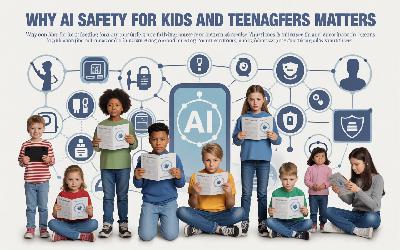
https://aiworldjournal.com/why-ai-safety-for-kids-and-teenagers-matters/ AI Safety Guidelines for Children and Teenagers 1 source The source is an excerpt from an AI World Journal article focused on the critical issue of AI safety for children and teenagers. It emphasizes that young people are engaging with powerful AI tools, such as chatbots, that were not built with their developmental needs in mind, posing risks like emotional manipulation, exposure to harmful content, and potential interference with social development. To address these concerns, the article outlines ten practical AI-safety guidelines for families, stressing the importance of age-appropriate use, close supervision, teaching critical thinking, and open communication between parents and children. The text also lists several key organizations—including Common Sense Media and HealthyChildren.org—that provide expert advice and advocate for greater safeguards for minors using artificial intelligence.

https://aiworldjournal.com/report-ai-2026-quantum-computing-and-artificial-intelligence-usher-a-new-era-of-computing/ ⚛️ The Quantum-AI Nexus: Hardware and Ethics 1 source The article from the AI World Journal provides a forward-looking overview of the anticipated convergence of quantum computing (QC) and artificial intelligence (AI), predicting transformative capabilities in fields like healthcare and finance by 2026. This integration is centered on Quantum Machine Learning (QML), which leverages hybrid classical and quantum models to improve complex optimization problems and high-dimensional data encoding that classical AI struggles to handle. The commercial landscape features complementary approaches from major players, such as IBM's focus on cloud infrastructure and hybrid systems and IonQ's advancements in specialized trapped-ion hardware. However, the text highlights significant limitations, including persistent hardware constraints and a global talent gap in this specialized domain. Finally, the source stresses critical ethical considerations, particularly the urgent security imperative to deploy Post-Quantum Cryptography (PQC) to protect against the future threat of quantum systems breaking current encryption standards.
https://aiworldjournal.com/ai-world-annual-report-2025-the-year-it-was-from-exploration-to-deep-integration/ The source text, an annual report from the AI World Journal, reviews 2025 as a pivotal year in which artificial intelligence moved past experimentation into deep, industry-wide integration. Technological advances focused on the growth of highly accurate, domain-specialized Large Language Models and the maturation of autonomous Agentic AI systems capable of complex, multi-step decision-making. This widespread adoption resulted in measurable success, including achieving 97% accuracy in healthcare diagnostics, while governments simultaneously established global governance standards, notably through the implementation of the EU AI Act. The report also focuses on necessary infrastructure changes, highlighting the massive investment in hardware, such as the Marvell Technology acquisition to integrate optical interconnects into next-generation data centers. Looking toward 2026, the authors predict a period of intense infrastructure build-out, though they caution that the speculative market enthusiasm, driven by high valuations, carries the risk of a potential financial bubble.

https://101aiworld.com/ 101 AI World presents itself as a comprehensive hub for artificial intelligence — a place where AI tools, agents, creative workflows, and AI-education converge. 101aiworld.com +1 It offers an AI "agent" platform (e.g. the "Rex AI Agent") that promises 24/7 intelligent assistance, automation of workflows (scheduling, lead-generation, e-commerce, data capture), and flexible multimodal interaction (voice, chat, forms) — which can help businesses streamline operations and save time. 101aiworld.com It aims to bridge AI with creative industries: casting, film/production workflows, script-to-producer matching, and collaboration tools — which could open new possibilities for creatives using AI as a productivity/creative-boost tool. 101aiworld.com The platform also seeks to foster AI education and public awareness: offering resources, community/foundation-style programs, and a media arm (with content, "AI World Journal" and "AI World Podcast") to inform, educate, and engage people interested in AI — which is good for accessibility and democratization of AI knowledge. 101aiworld.com +1 For users and businesses, 101 AI World positions itself as a "one-stop shop": combining tools, resources, creative & enterprise utilities, and educational content — which can make exploring or using AI easier without having to juggle multiple disconnected services.

https://aiworldjournal.com/ai-market-turbulence-are-we-seeing-the-first-real-cracks/ 📉 AI Market Turbulence: Anxiety, Debt, and Recalibration 1 source The source, an article from the AI World Journal, discusses recent market turbulence and a significant selloff in the AI sector, questioning whether this represents a bubble burst or a necessary recalibration of investor expectations. Authored by Sydney Armani, the piece highlights a roughly 4% slide across major indices, with key AI stocks falling between 2.7% and 8%, despite strong underlying earnings from some companies like Nvidia. The core of the issue is identified as an anxiety-driven risk-off environment, where investors are reacting more to macro pressures—such as inflation uncertainty, geopolitical tensions, and debt concerns related to capital-intensive AI infrastructure buildout—than to quarterly financials. Ultimately, the article concludes that the market is shifting from an era of euphoria to one of proof-seeking, demanding sustainable revenue and predictable margins to justify high valuations.
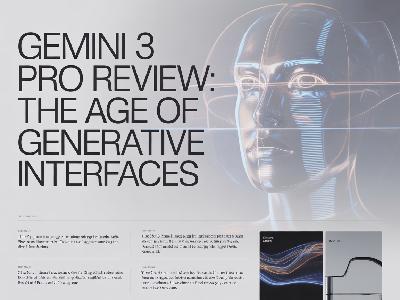
https://aiworldjournal.com/gemini-3-pro-review-the-age-of-generative-interfaces/ Gemini 3 Pro: The Age of Generative Interfaces 1 source The provided text is an article from the AI World Journal offering a comprehensive review of Google's new Gemini 3 Pro model, positioning it as a fundamental shift in user interaction with AI. The core innovation highlighted is the introduction of Generative Interfaces, such as Visual Layout and Dynamic View, which allow the model to build customized, interactive visual applications and UIs in real-time in response to a user prompt. Furthermore, the review emphasizes Gemini 3 Pro's powerful 1-million-token context window for handling massive datasets and its Agentic capabilities to coordinate complex, multi-step tasks across integrated services like Google Workspace, alongside setting new State-of-the-Art (SOTA) records in academic benchmarks.
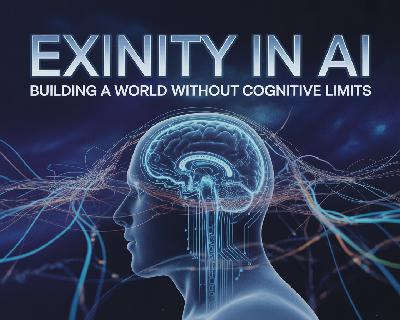
https://aiworldjournal.com/exinity-in-ai-building-a-world-without-cognitive-limits/ ♾️ Exinity in AI: Building Limitless Cognitive Systems 1 source The provided text, originating from the AI World Journal, centers on a transformative concept in artificial intelligence called "Exinity," which champions the idea of infinitely extensible and perpetually evolving intelligent systems. This article explains that Exinity moves beyond static, scale-based models by implementing foundational shifts like modular intelligence layers and continuous learning to ensure AI never hits a cognitive ceiling. The sources argue that this approach, which allows AI to grow without requiring costly full rebuilds, will define the next century of innovation and power next-generation AI agent networks that collaborate like a human workforce. Ultimately, Exinity is presented as the blueprint for hybrid intelligence, amplifying human capabilities rather than replacing them, and shifting the focus of AI development from size to limitless adaptability.

https://aiworldjournal.com/the-good-the-bad-and-the-ugly-of-artificial-intelligence/ The provided text is an excerpt from a November 2025 article by Sydney Armani for AI World Journal, which offers a comprehensive assessment of artificial intelligence. The piece is structured around the "good, the bad, and the ugly" of AI, emphasizing that the technology is now a primary engine shaping modern life. The positive aspects of AI primarily focus on its transformative, life-saving potential in healthcare and medical research, as well as its ability to democratize creative and economic power for individuals. Conversely, the negative challenges include rapid job displacement, the uncertainty created by opaque "black-box models," and the proliferation of organized misinformation. Finally, the most dangerous "ugly" element concerns the erosion of reality through hyper-realistic deepfakes, synthetic identity theft, and malicious autonomous cyber agents, all of which necessitate responsible governance and transparent systems for a sustainable future.
https://aiworldjournal.com/ai-factories-why-this-isnt-another-dot-com-bubble/ AI Factories: Beyond the Dot-Com Bubble 1 source The provided source is an excerpt from the AI World Journal, a publication focused on artificial intelligence news and industry reports, featuring an article titled "AI Factories: Why This Isn't Another Dot-Com Bubble." This specific journal excerpt indicates the content is premium and requires a login or registration to view the full text. The page heavily features a comprehensive list of related articles and external news links concerning various aspects of AI, including its impact on music and business, the race for data center infrastructure, and global competition for chips. A substantial Data Center News Bulletin section details ongoing massive investments, technological advancements, and power challenges related to the data centers that fuel AI growth. Overall, the source provides a snapshot of the rapidly evolving, financially intense, and infrastructure-heavy industrial revolution surrounding artificial intelligence.

https://aiworldjournal.com/ai-report-artificial-intelligence-business-strategies-and-applications/ 🤖 AI Business Strategies and Applications Report 1 source The provided text is an Executive Summary and report excerpts from the AI World Journal detailing the strategic adoption and business applications of Artificial Intelligence, published in November 2025. This comprehensive report emphasizes that AI has shifted from an experimental technology to a critical driver of competitive advantage across sectors, urging organizations to align AI initiatives directly with business outcomes. The source addresses the necessity of strong data infrastructure and ethical governance, including addressing issues of bias and transparency, for sustainable AI success. Furthermore, the report explores the current market impact of AI in industries like finance and healthcare through case studies and outlines future trends such as Generative AI and autonomous systems, projecting that AI will contribute trillions to the global economy by 2030.

The New Frontier: Cloning and AI Agents — Redefining Identity in the Digital Age The provided text from the AI World Journal discusses the emerging field of AI cloning and digital agents, which involves creating sophisticated artificial intelligence capable of replicating a person's identity, including their tone, instincts, and communication style. This development moves beyond the concept of a digital twin for engineering to human-centric AI that can perform tasks, such as handling client interactions or managing schedules, on behalf of an individual. While the article highlights the massive potential for increased productivity and presence through these AI identity replications, it also raises critical ethical questions regarding ownership, authenticity, and the potential for misuse, such as deepfakes. Ultimately, the source argues that these agents should function as extensions of human capabilities rather than replacements, emphasizing that unique human elements like empathy and moral reasoning remain paramount.
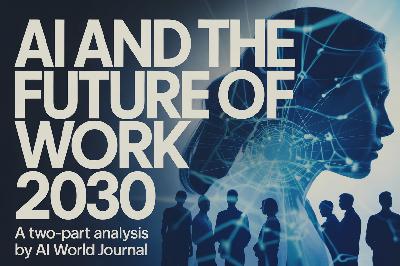
https://aiworldjournal.com/the-future-of-work-wef-predicts-170-million-new-jobs-by-2030-amid-ai-driven-transformation/ The Future of Work: WEF Predicts 170 Million New Jobs by 2030 Amid AI-Driven Transformation The source, AI World Journal, centers on the rapid advancements and societal impacts of artificial intelligence, particularly focusing on its effect on the labor market and digital infrastructure. A prominent article title highlights a World Economic Forum (WEF) prediction of 170 million new jobs by 2030 driven by AI-related transformation, though the article itself is restricted to premium members. The surrounding content provides extensive news and reports about AI, including its application in healthcare, its influence on social media, and its global competition between nations like the US and China. Furthermore, the journal offers an extensive list of recent AI Data Center News, detailing massive investments, energy consumption challenges, and the increasing reliance on technologies like nuclear power to support the growing AI infrastructure.

https://aiworldjournal.com/report-is-ai-in-need-of-retooling-the-case-for-a-smarter-more-human-future/ 🛠️ Retooling AI for a Smarter, Human-Aligned Future 1 source The source is a report from the AI World Journal arguing that Artificial Intelligence is at a crucial crossroads and requires a fundamental retooling. Authored by Sydney Armani, the article contends that current AI systems, such as large language models (LLMs), are masterful at imitation and mimicry but lack true reasoning, wisdom, and human-aligned understanding. The report outlines the limits of the current deep learning paradigm, citing issues like high resource inefficiency, data saturation, and the fragility of models that prioritize computational power over insight. Ultimately, the author calls for a shift toward Human-Centered AI, emphasizing hybrid intelligence, ethical design, and a philosophical reorientation to ensure AI complements humanity rather than merely automating processes or pursuing profit.

https://aiworldjournal.com/ai-and-fiduciary-responsibility-the-new-trust-frontier The source, an article from the AI World Journal, centers on the critical need to redefine fiduciary responsibility as artificial intelligence systems become active decision-makers in various sectors. It argues that traditional concepts of loyalty, care, and good faith must now apply to AI, shifting the burden of accountability from solely human advisors to the organizations and algorithms themselves. The piece emphasizes that companies deploying AI have a dual obligation—technical responsibility for transparency and bias mitigation, and ethical responsibility to act in the user's best interest. To address this, the source advocates for robust AI governance and independent audits to ensure these systems function as trustworthy instruments rather than "black boxes of trust." Ultimately, the article concludes that the future of trust depends on cultivating a corporate culture where human well-being guides AI innovation.
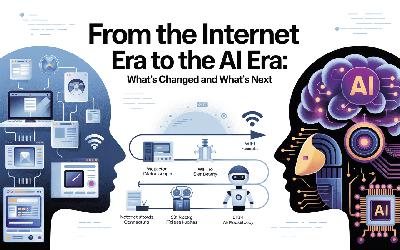
https://aiworldjournal.com/from-the-internet-era-to-the-ai-era-whats-changed-and-whats-next/ Internet to AI Era: Intelligence and Action 1 source The source, an article from the AI World Journal, explains that the shift from the Internet Era to the AI Era represents a profound transformation, moving beyond mere connectivity toward intelligence and action. While the Internet connected people to information, AI systems proactively amplify human creativity and decision-making by interpreting data, generating content, and continuously adapting, unlike the static nature of older web services. The text emphasizes that AI adoption is occurring at an unprecedented speed and will reshape sectors like healthcare, education, and work by embedding intelligence into core processes and transforming data abundance into insight abundance. Ultimately, the author frames AI as a lever for human potential, making the core question how humanity will use this intelligence and creativity to transform the future.

Comments

Download from Google Play

Download from App Store
 United States