


 Claim Ownership
The Adoptee Next Door
Subscribed: 85Played: 1,019
Subscribe

© Angela Tucker
Description
There is something temptingly tidy about the idea of adoption: a family with extra love and resources meets a child in need of both. The Adoptee Next Door takes the listener beyond the sparkly fairy tale of adoption.
angieadoptee.substack.com
angieadoptee.substack.com
18 Episodes
Reverse
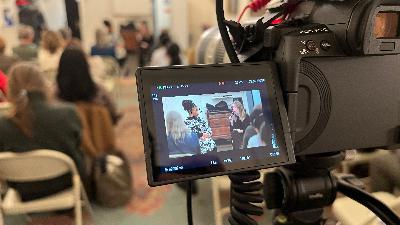
Some conversations are worth trudging through a blizzard for. In early February, when New York City was buried under a Bomb Cyclone, I made my way to the Church of the Ascension in Greenwich Village for a conversation I’d been wanting to have for a long time, with Rev. Alissa Newton, Canon to the Ordinary of the Archdiocese of New York, adoptive mom, founder of the Adoptive Parents 4 Adoptees Fund, and Board Chair of the Adoptee Mentoring Society, the nonprofit I founded and lead.I have a soft spot for rooms where people in positions of institutional power choose to reckon honestly with a history they didn’t personally create but nonetheless inherited. That kind of accountability is its own form of courage. I knew Alissa would bring it.And she did. But this evening was bigger than any one institution. It was a live book talk and wide-ranging conversation about adoption itself — what it means to be adopted, to search, to reunite, to grieve, to belong. We talked about race, identity, and the gap between how adoption is publicly celebrated and privately experienced. The Episcopal Church’s history was one important thread, but the room was full of people hungry to talk honestly about all of it.This episode is a recording of that night.What makes Alissa such a compelling conversation partner is that she knows the Church from the inside, its rhythms, its contradictions, its capacity for both harm and healing. She doesn't flinch from any of it. And for a conversation that required someone willing to examine an institution she loves, that mattered enormously. Historians call the years between 1945 and 1973 the Baby Scoop Era. This is a time when an estimated 1.5 to 4 million unmarried women surrendered children for adoption. That number alone should stop us. Then add the research: young women sent away to maternity homes, shamed from pulpits, pressured by social workers, told that surrender was the only moral choice. Faith-based institutions, including the Episcopal Church, were not peripheral to this story. They were central infrastructure.There were many powerful moments that evening, but one has stayed with me the way certain moments do. It came during the Q&A. Francine Gurtler stood up and asked Alissa to offer an apology on behalf of the Church. Then she told us why. Francine was fifteen years old when she was sent to an unwed mothers home, where she sobbed on the ground begging to keep her baby. “They literally took him from my arms,” she said. She found her son in 2017 through a DNA test, but reunion, as any adoptee or first mother will tell you, doesn’t erase the wound. What Francine wants is both simple and enormous: for the Church to say, to her son and grandchildren, “We stole him from her.”The room went still. That moment said everything.Francine is part of a growing movement of mothers pushing for something historic — a formal Episcopal apology that would make the Church the first U.S. institution to take that step. Two Canadian denominations have already done so, with Vancouver going further by creating counseling resources, a hotline, and a Mother’s Day blessing for mothers who lost children through coercion. An Episcopal apology would break new ground on this side of the border.I left feeling hopeful and proud. Proud that Francine came and was met with the grace she deserved, someone willing to sit in the discomfort of history without flinching. Because the Church cannot celebrate adoption on Sunday and archive its maternity home records on Monday. That's not repair. That's performance. Francine didn't come for performance. She came for the truth. And that night, at least, she got closer to it.I hope you enjoy the episode. Get full access to The Adopted Life at angieadoptee.substack.com/subscribe
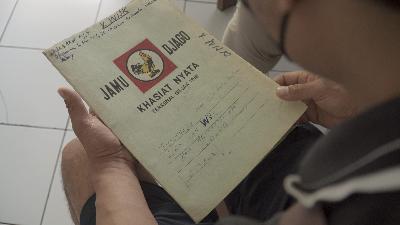
Al Jazeera released this documentary and it’s available HERE.I had so much fun interviewing Huibert van Wijk for this podcast—and watching Child of Their Time left me quietly undone in the best way. Two things struck me immediately. First, this is an adoption story told with deep care by the adoptee’s brother. Second, the film allows the adoptive father to be fully seen and not as a caricature or a villain, but as someone actively grappling with paradox.Lex, the adoptive father, recalls the excitement of adoption in the 1970s: “The baby didn’t come from a mother’s belly, but from the belly of the plane. It was so exciting.” Later, we hear him say, with equal clarity and humility, “If I’d known then what I know now, I wouldn’t have done it.” That shift lands with force, especially when paired with archival images of women holding Indonesian babies on the plane while Lex reflects, “Now I understand the impact.” It is rare and powerful to witness an adoptive parent name both love and regret without collapsing into defensiveness.At the center of the film is Tim, the adoptee, who was adopted from Indonesia to the Netherlands and shares that he never really felt able to bond. From the opening moments, we understand that Tim and Lex are estranged. And yet, throughout the film, it is unmistakable how deeply Lex longs to connect with his son—even as Tim works to make sense of an adoption that cost him culture, history, and belonging.Part of what makes this film so compelling is that it resists a tidy narrative. Child of Their Time centers on Tim and Lex, with Huibert (Tim’s brother) guiding us through a story that refuses the familiar binaries of rescue or gratitude. Instead, we are invited into a layered, sometimes painful exploration of how the same adoption can hold radically different meanings depending on where you stand.After nearly twenty years of working professionally in adoption, I have watched the adoptee-versus-adoptive-parent discourse harden. Conversations become brittle. Defensive. Futile. As if the only way to tell the truth is to decide who is “wrong.” For a long time, inclusive conversations that made room for everyone touched by adoption felt impossible to sustain. Lately, though, something has shifted for me. I’m no longer experiencing adoption as a zero-sum equation. I’m beginning to understand it as a both/and conversation.I’m deeply grateful to my dear friend Cynthia Hansen, a Korean adoptee, who introduced me to Both/And Thinking by Wendy K. Smith and Marianne W. Lewis. The authors describe how embracing paradox begins by noticing tensions—those moments that push us to choose one side over another. They name three familiar traps: rabbit holes, where strengths are overdeveloped until they become weaknesses; wrecking balls, where we overcorrect from one extreme to another; and trench warfare, where polarization hardens into us-versus-them thinking. Their invitation is not to resolve tension too quickly, but to find comfort in the discomfort.That framing feels especially alive in this episode.Lex points to generational differences in how adoption is understood, and I hear that layered alongside broader cultural shifts. Tim, born in 1970, sits at an intersection—experiencing not only the deracination of international adoption, but also a moment when Gen X, Millennials, and Gen Z are increasingly willing to name harm, prioritize mental health, and choose distance or estrangement when relationships feel unsafe. These frameworks were largely unavailable to Boomers, who were raised with a mandate to honor parents at all costs. None of this negates love, but it does contextualize rupture.What is extraordinary to witness in Child of Their Time is an adoptive father taking responsibility for the complexity of adoption. Lex is able to say, “I love him. He is my son,” while also acknowledging that he may be experienced as a surrogate father, not a replacement. That kind of honesty requires relinquishing certainty.Huibert van Wijk’s documentary asks a deceptively simple question: In whose interest is international adoption, anyway? And what this film makes clear is that the only honest answer is not either/or, but both/and.Using home videos, archival footage, and deeply personal interviews, Huibert gently pieces together Tim’s adoption story alongside reflections from his father and brother. After arriving in the Netherlands, Tim struggled to land, culturally, emotionally, and relationally, and over time pulled away from Lex. The film moves back and forth between their perspectives: Tim trying to make sense of his Indonesian and Dutch identities, and Lex slowly realizing that what once felt purely loving now lives inside a much more complicated story.When Tim receives new information about his biological family and travels back to Indonesia, the past doesn’t stay politely in the background. Old assumptions get shaken. Long-avoided conversations finally get some air. The film builds toward a family constellation session, not as a magic fix, but as a brave attempt to sit in the mess together and hold more than one truth at the same time.Child of Their Time is personal, and at the same time, it’s also part of something bigger. It echoes what many adoptees are doing right now: naming impact alongside intention, and refusing the idea that love cancels out loss. Research by Shila Khuki de Vries shows how adoptees in the Netherlands have turned these reckonings into real change—shifting public conversations and pushing policy forward, even when progress is slow and incomplete.That’s where Huibert’s film, and this episode, really land for me. Not in blame. Not in neat conclusions. But in honesty. In staying curious. In choosing both/and over either/or, and letting complexity be part of the story instead of something we rush past. Get full access to The Adopted Life at angieadoptee.substack.com/subscribe
In mid-November, I found myself standing inside a glowing cube in Hollywood.Not metaphorically. Literally. Emerson College’s West Coast micro-campus is a futuristic beacon rising from the heart of the entertainment capital, housing the ambitions of 200+ students who are learning to write, produce, act and report on the stories that will shape our culture. And on this particular night, the stories we were making space for were the ones so often pushed to the margins in the realm of entertainment: adoption, identity, belonging. Next to me sat Marissa Jo Cerar. Screenwriter. Storyteller. She’s the force behind Hulu’s Black Cake and ABC’s Women of the Movement, a writer who cut her teeth on The Handmaid’s Tale, The Fosters, and Birthright. Her mantle holds an NAACP Image Award and two Humanitas Prizes—accolades that matter, yes, but what matters more is this: Marissa writes adoption like she knows it. Because she does. Her work doesn’t tiptoe around identity; it bleeds it onto the page, unapologetically, relentlessly.Our guide for the evening was Juliet Rubin Ramirez, Emerson alum, CFO of the Adoptee Mentoring Society and fellow transracial adoptee, whose voice carried the quiet authority of someone who’s lived these questions, not just asked them.Marissa peeled back the curtain on her adaptation of Charmaine Wilkerson’s novel, Black Cake, revealing how—with Wilkerson’s trust and blessing—she rewrote scenes to honor what adoption actually feels like, not what people want it to feel like. I shared my own small adoptee win: educating the writers of This Is Us about Ghost Kingdom’s, which led to Randall discussing his own in Season 5, Episode 13. We’ve both attempted to hold up a mirror for adoptees who rarely see themselves reflected back.We didn’t shy away from the hard parts. We talked about scarcity—the belief that there’s only room for one adoptee story, one adoptee voice, as if our experiences were a zero-sum game. I unpacked Marika Lindholm’s concept of Boundary Spanning, the skill adoptees develop when we’re constantly translating between worlds that don’t quite fit us. And we named the impossible burden: the expectation that any one of us could stand in for all of us, that our singular stories should somehow contain the multitudes.By the time the evening wound down, the air had softened. Laughter threaded through the crowd. Pens scratched across title pages—Marissa signing her daughter’s book, Spanky and His Blanky, while I signed copies of You Should Be Grateful: Stories of Race, Identity and Transracial Adoption.It was a lovely gathering centered on truth, artistry, and the adoptee imprint on our cultural imagination. Get full access to The Adopted Life at angieadoptee.substack.com/subscribe
What started as two women chatting in a nail salon turned into a deep and moving exchange about family, identity, and what it really means to belong. In this heartfelt episode, Angela Tucker—author of You Should Be Grateful—joins Jen Psaki for an honest conversation about transracial adoption, the myths that surround it, and the importance of centering adoptee voices. From laughter and vulnerability to lessons in empathy, this dialogue reminds us that some of the most meaningful connections start in the most ordinary places. Get full access to The Adopted Life at angieadoptee.substack.com/subscribe
On this episode of The Adoptee Next Door, Patrick opens up about the profound challenges he faced growing up in foster care, from being labeled "unadoptable" to enduring multiple placements. He shares his emotional journey of self-discovery, the moment he faced his case file for the first time, and the painstaking process of reconciling his past. Through his experiences of homelessness, recovery, and his mission to create change for others, Patrick embodies the power of resilience. His story challenges the stereotypes of foster care and offers a powerful message of hope and transformation. Get full access to The Adopted Life at angieadoptee.substack.com/subscribe
If you’re reading this, I already know something important about you: You care. You’re willing to engage with adoptee perspectives in a way that so many people aren’t. And for that, I’m deeply grateful. Because you’re here, I know that you understand that adoption isn’t a simple “happily ever after.” You know that love is important, but it’s not a substitute for racial identity, community, or space to process loss. But, perhaps you haven’t gotten around to reading my book, You Should Be Grateful! I want to invite you to dig deeper with me through a self-paced book club—a space designed to challenge old narratives and build something better. I’ve created a guided book club slide deck that includes: ✅ Thought-provoking discussion prompts ✅ Action steps to make real, meaningful change ✅ A live Zoom session with me to unpack it all (April 2025)And because I love sharing my creative process with you, I’m throwing in some fun extras: 🎹 A personal piano performance 🎧 The Spotify playlist that shaped my writing process 📖 A few hilarious behind-the-scenes audiobook momentsJoin Now: ✨ $5 for non-subscribers - Sign up here! ✨ FREE for all paid Substack subscribers (Email me at angela@theadoptedlife.com, and I’ll send you the deck.) Get full access to The Adopted Life at angieadoptee.substack.com/subscribe
(Yes, the episode title is derived from Michelle Obama's famous line; "when they go low, we go high!")Television influences public opinion of adoption. It's easy to see the influence shows like Annie and The Blind Side have had as they highlight the savior tropes and downplay or ignore the adoptees journey of grief and loss. To my amazement, Long Lost Family seems to buck the trend! This show (which aired on TLC from 2016-2019) focuses on reuniting adoptees with their biological family. In the adoptee-world, shows like this often are termed 'reunion porn.' But this was different. Adoptee, Patrice Martin, was cast on Season 6, Episode 8 and to my amazement they resisted the urge to exploit her story. The production team treated her and her story with the humanity and care that we adoptees desire. Stunned and impressed, I just had to speak with the team that put this episode together. Listen to learn more about how a network television resisted the inevitable ratings gold.This episode features:Patrice Martin - AdopteeKathryn Takis - Long Lost Family producerLisa Joyner - Host of Long Lost FamilyJen Utley - Director of Family Research at Ancestry.comLeslie Mackinnon - Therapist for Long Lost Family cast and crew You can reach out to Angela through her website or on Instagram @angieadoptee. Get full access to The Adopted Life at angieadoptee.substack.com/subscribe
Back in 2016, Angela had 12 year old transracial adoptee Alex, as a guest on her web series, The Adopted Life. In this episode, Angela reconnects with Alex, now a 17 year old transgender woman, to discuss adoption, the intersections of LGBTQ culture, and how quarantine provided a silver lining for Alex's transition period.You can reach out to Angela through her website or on Instagram @angieadoptee. Get full access to The Adopted Life at angieadoptee.substack.com/subscribe
Angela talks with Tiffany Henness about the surprising grief she experienced during her pregnancy and childbirth of her two biological kids. As a Christian she challenges the fairy-tale narrative about adoption and wonders if Christians may be use the book of Psalms to think differently about helping children through adoption. You can reach out to Angela through her website or on Instagram @angieadoptee. Get full access to The Adopted Life at angieadoptee.substack.com/subscribe
Kristen and I talk about her identity as a white-passing Latina, adopted from Paraguay to Washington DC. The first time Kristen and I chatted she told me that she has only recently begun identifying as Latina.You can reach out to Angela through her website or on Instagram @angieadoptee. Get full access to The Adopted Life at angieadoptee.substack.com/subscribe
Over the past week it's become clear that most U.S. Americans view Amy Coney Barrett’s transracial family as noble, good and representing all things decent. However, transracial adoptees have a different take. It seemed to showcase white saviorism and virtue signaling. Torie and Angela discuss why the Supreme Court nominee's comment was so polarizing and why conversations about transracial adoption are so divided that even hearing directly from transracial adoptees, isn't enough to counter the dominant fairytale narrative. You can reach out to Angela through her website or on Instagram @angieadoptee. Get full access to The Adopted Life at angieadoptee.substack.com/subscribe
The impacts of being told that you were adopted late in life are far reaching. One Late Discovery Adoptee (LDA) says "It feels like a cruel joke. Finding out that you are adopted late in life destroys part of your identity and turns your life upside down." Some parents think they are protecting their child by not telling them. However, finding out as an adult is undoubtedly a shock and for many LDA's they can't help but wonder what else their parents' may have lied about? But Jay sees it differently. He explains how he differentiates a secret versus a lie.You can reach out to Angela through her website or on Instagram @angieadoptee. Get full access to The Adopted Life at angieadoptee.substack.com/subscribe
Angela speaks with Black adoptee Maya Holmes, who was adopted by Black parents as an infant. Maya shares her perspective and challenges Angela's assumptions about racial identity formation for black same-race adoptees.You can reach out to Angela through her website or on Instagram @angieadoptee. Get full access to The Adopted Life at angieadoptee.substack.com/subscribe
Angela speaks with adoptee Nancee Winslow, about nature vs. nurture, reuniting with birth family members, and adoptees feeling the need to prove they are "well-adjusted" with their adoption. Nancee shares a powerful story about the moment she told her 4-year-old son that she was adopted, and his emotional reaction. You can reach out to Angela through her website or on Instagram @angieadoptee. Get full access to The Adopted Life at angieadoptee.substack.com/subscribe
Tony Hynes is a transracial adoptee, and was adopted by white lesbian moms in the mid 1990s. A judge told his parents “A white, same-sex-headed household is not the right household to raise a black child in,” and at the age of 7, Tony was asked to choose between his birth family and his adoptive family. Tony and Angela discuss racism and homophobia in this podcast. You can reach out to Angela through her website or on Instagram @angieadoptee. Get full access to The Adopted Life at angieadoptee.substack.com/subscribe
Angela speaks with transracial adoptee; Jessenia Parmer about the need for more mental health awareness among adoptees. They both address the fear and courage it takes to challenge the mainstream positive narrative of adoption, by acknowledging stories of trauma and loss. You can reach out to Angela through her website or on Instagram @angieadoptee. Get full access to The Adopted Life at angieadoptee.substack.com/subscribe
Angela speaks with Black adoptee; Sam Collier about the complications of reuniting with his birth family. They discuss Sam’s new book “A Greater Story” and why he considers himself to be “rescued.”You can reach out to Angela through her website or on Instagram @angieadoptee. Get full access to The Adopted Life at angieadoptee.substack.com/subscribe
Welcome to The Adoptee Next Door! This podcast will feature conversations with adoptees revealing unique insights about racism, religion, immigration, trauma, and the many layers of unconventional families. Hope you join us for Season 1!You can reach out to Angela through her website or on Instagram @angieadoptee. Get full access to The Adopted Life at angieadoptee.substack.com/subscribe

Download from Google Play

Download from App Store
 United States
Such a terrific interview between Angela and Jessenia, two of my go-to wise women on the issues of identity, healing, mental health and wellness. If this were a transcript, I'd be highlighting the entire thing.
looking forward to more fantastic conversations about adoption! such a great new pod!