


 Claim Ownership
American Cattlemen Podcast
Subscribed: 14Played: 610
Subscribe

© Copyright 2023 All rights reserved.
Description
Welcome to the American Cattlemen Podcast with Gale McKinney, the ultimate platform for connecting with the heart of the cow/calf industry! As the Publisher of American Cattlemen, Gale expertly brings to light the dynamic intersection of business and lifestyle, spotlighting everything from the latest production sales to the excitement of your local county fair.
Join us as Gale conducts engaging interviews with the passionate individuals who truly shape our industry, making you a vital member of our community.
Our audience includes dedicated cow/calf producers across the United States and industry professionals from every corner of the globe, all part of our thriving social media network of over 500,000 unique followers. Don’t miss out—each episode of the American Cattlemen Podcast is promoted through our extensive digital platforms, the American Cattlemen magazine, and our newsletter, ensuring you stay informed and connected. Tune in and elevate your engagement in this vibrant community!
Join us as Gale conducts engaging interviews with the passionate individuals who truly shape our industry, making you a vital member of our community.
Our audience includes dedicated cow/calf producers across the United States and industry professionals from every corner of the globe, all part of our thriving social media network of over 500,000 unique followers. Don’t miss out—each episode of the American Cattlemen Podcast is promoted through our extensive digital platforms, the American Cattlemen magazine, and our newsletter, ensuring you stay informed and connected. Tune in and elevate your engagement in this vibrant community!
317 Episodes
Reverse

Welcome back to the American Cattlemen Podcast. Just ahead, we kick off our series at Cattle Con 2026 with Kaid Panek, and he chats with Tyler and Cody with TyCo Industries.
Tyler explains that their roots are in construction, beginning around 2011 with projects such as building feedlots and dairies. That background in designing and constructing cattle facilities gave them a deep understanding of cattle flow, safety, and what ranchers need in both permanent and portable systems. An important turning point came when they had the opportunity to buy out R.L. Wilson, recognized as the original portable panel maker. Although they were based in Clovis, New Mexico and Wilson was in Cherokee, Oklahoma, a local dealer helped connect them, leading to the acquisition and an expansion of their product line into portable corrals.
From there, Tyco began developing equipment such as the Ranch Boss and the Load Boss. The Load Boss bolts under a standard set of portable corrals, allowing cattle to be loaded into a semi on one side while simultaneously backing up and loading a stock trailer on the other. The system is modular and designed to integrate with existing corrals, making it flexible and highly efficient in real working conditions.
The Ranch Boss XL builds on that concept, combining a portable corral system, the load-out capability of the Load Boss, and a full-featured chute setup in the front, including palpation gates and a bud box configuration in the rear. This design allows cattle to be worked out the front and loaded out the back, enabling ranchers to pull into an open pasture and handle tasks like sorting, working calves, or weaning in one compact system.
Tyler emphasizes that all of this came through trial, error, and constant refinement. They regularly take equipment to local ranchers, invite feedback, and tweak designs based on real-world use. Flowability of cattle is a central concern; systems must encourage cattle to move naturally, avoiding the frustration and danger of poorly designed setups. Drawing on experience from older, unsafe facilities and more advanced feedyard designs, they aim to build equipment that is safer, more efficient, and mindful of budget constraints. Even though some systems are expensive, they argue that combining multiple pieces into one integrated unit can save labor, setup time, and equipment costs in the long run, positioning Tyco as a one-stop solution for modern cattle operations.
For previous episodes of the American Cattlemen Podcast, please visit: www.americancattlemen.com.
American Cattlemen Podcast is Sponsored By:
Rawhide Portable Corrals
Udder Tech, Inc.
Central Life Sciences
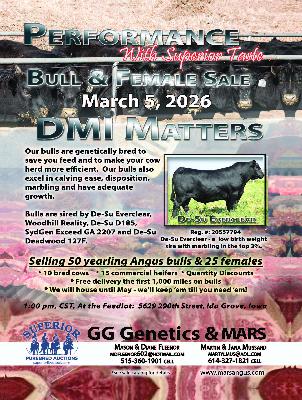
Welcome back to Genetics & the Gavel, powered by American Cattlemen Media. Just ahead, we have Aaron McKinney, he's the field editor for American Cattlemen Media, and he sits down with Mason Fleenor, Owner of GG Genetics. In this episode, Mason and Aaron will dive into the GG Genetics & Mars Angus Performance with Superior Taste Bull & Female Sale , held on March 5th, 2026, at Ida Grove, Iowa.
Mason Fleenor, the owner of GG Genetics, traces the operation’s origins back to the purchase of red heifers in Montana in 1986 and describes how the business has evolved into a performance-driven Angus program. He highlights his family’s involvement and stresses the importance of bringing younger generations into the cattle business. A recurring theme is stewardship: teaching youth to manage cattle, land, and resources while maintaining profitability in a demanding industry.
The core of the conversation focuses on genetic selection for efficiency and carcass traits. Mason explains his emphasis on high marbling, low dry matter intake, and overall growth, describing how the program uses tools like Grow Safe units and partnerships in Mexico to measure intake and validate performance of cleanup bulls. He goes into detail on the sire group, especially an ABS bull, Dave Sue Ever Clear, praised for low intake, moderate frame, and consistency. Mason notes his satisfaction with the uniformity, EPD profiles, and real-world functionality of the bulls in this year’s offering.
The sale itself will feature 52 yearling Angus bulls, one two-year-old bull, 13 bred heifers, and 10 open heifers, including females sourced from the Broken Chain Ranch in Montana. Mason discusses calving ease, birth weight, maternal quality, and how weather and management influence cattle performance. He also describes logistics such as shipping, the importance of experienced auctioneers, and the availability of online bidding through Superior Livestock Auction. The conversation closes by inviting listeners to learn more about the program and consider the offering as a resource for improving efficiency, carcass quality, and long-term herd direction.
For previous episodes of the American Cattlemen Podcast, please visit: www.americancattlemen.com.
American Cattlemen Podcast is Sponsored By:
Rawhide Portable Corrals
Udder Tech, Inc.
Central Life Sciences

Welcome back to another episode of the American Cattlemen Podcast. Just ahead, we have Dustin Hector, he's the Director of Business Development for American Cattlemen Media, and he sits down with Dr. M. Wayne Ayers, Senior Technical Consultant Veterinarian for Elanco Animal Health. In this episode, Dr. Ayers and Dustin will dive into optimizing cattle health and the return of investment on dewormers for your cattle.
Dr. Ayers emphasizes that nutrition is the foundation of every successful cattle operation. He explains that adequate protein, energy, and mineral intake are essential not only for reproduction and colostrum quality, but also for immune function. He introduces the concept of fetal programming or epigenetics, noting that poor nutrition during late gestation—such as when cows graze dry, low-quality forage—can have irreversible negative effects on calf performance and future reproductive capacity. He suggests that today’s strong prices create an ideal opportunity for producers to test new technologies and refine their health and nutrition protocols.
The conversation then turns to building resiliency in cattle health. Dr. Ayers stresses the importance of a sound mineral program and achieving proper body condition scores at calving to support high-quality colostrum, which he calls the most important factor in a calf’s life. He discusses vaccinating cows to prevent abortions and scours, and ensuring colostrum is rich in antibodies. For calves, he recommends planning ahead for branding, turnout, and eventual weaning by considering parasite and fly control, including strategic deworming and the use of fly tags to protect both cows and calves and preserve weaning weights.
Weaning is described as the most stressful period in a calf’s life due to separation, nutritional changes, commingling, and shipping. Dr. Ayers advocates for vaccination strategies that include boosters at weaning, coccidiosis control, and the use of feed additives like rumen modifiers to improve feed efficiency and daily gain.
Elanco Animal Health Optimizing Cattle Health
For previous episodes of the American Cattlemen Podcast, please visit: www.americancattlemen.com.
American Cattlemen Podcast is Sponsored By:
Rawhide Portable Corrals
Udder Tech, Inc.
Central Life Sciences

Welcome back to Genetics & the Gavel, powered by American Cattlemen Media. Just ahead, we have Gale McKinney, he's the owner of American Cattlemen Media, and he sits down with Denny Cason, Owner of Cason's Pride & Joy Simmentals. In this episode, Denny and Gale will dive into the Cason's Pride & Joy Simmentals 11th Annual Performance Bull sale, held on March 7th, 2026, at 1PM CST, at the farm located in Albia, Iowa.
The Cason Family has been in the seedstock business for a long time; they have stood the test of time and have a strong vision for the future. Performance has always been a priority, and this offering is no different. Alongside their steady focus on performance, they monitor strong genetic profiles while maintaining ideal phenotypes.
Denny explains that their program is built to mirror the conditions and management of commercial producers. Located in southeast Iowa in fescue country, their cows graze from early May on fescue pastures, supported by a strong mineral program and well-maintained forages. He emphasizes running cattle under practical, real-world conditions while doing the “detail work” on genetics and performance so that commercial buyers can profit from the bulls they purchase.
Denny reflects on starting in the Simmental business in the mid-1970s and watching the breed evolve. He is particularly pleased with the last couple of decades, noting improvements in calving ease, flexibility in frame size, and the power of modern DNA tools and EPDs. He believes the breed is well positioned to add value to nearly any commercial herd.
The offering for this year’s sale includes 62 herd bull prospects, featuring advantage-age and fall bulls as well as yearlings. Denny highlights sire groups such as Eagle, Proclamation, and Bold Ruler combinations, describing the bulls as functional, sound, and uniform, with strong growth and maternal traits. He points out a subset of “true heifer bulls” that meet his strict criteria for calving ease and birth weights.
For previous episodes of the American Cattlemen Podcast, please visit: www.americancattlemen.com.
American Cattlemen Podcast is Sponsored By:
Rawhide Portable Corrals
Udder Tech, Inc.
Central Life Sciences

Welcome to Genetics & the Gavel, powered by American Cattlemen Media. Just ahead, we have Gale McKinney, he's the owner of American Cattlemen Media, and he sits down with Corbin Cowles, Owner of Pleasant Hill Farms. In this episode, Corbin and Gale will dive into the Pleasant Hill Farms 31st Annual Spring Production Sale, held on February 28th, 2026, at 12:30PM CST, at the Pleasant Hill Farms Sale Facility, in Rockfield, Kentucky.
Pleasant Hill Farms is a family-run operation. The farm is a purebred Angus and Simmental operation located in South Central Kentucky. The operation's roots trace back to Gil's great-grandparents who purchased the original farm in 1920. Their goal is to breed cattle that blend genetics, phenotype, and performance superiority into a product that is sought after by purebred and commercial beef producers alike.
Corbin explains that his parents began marketing genetics through public auctions before he was born, and the operation has since grown to about 230 production-age females, roughly two-thirds Angus and one-third Simmental. He emphasizes a long-standing philosophy of blending eye-appealing phenotype with strong, data-backed genetics, targeting cattle that work for both purebred and commercial beef producers. A core belief at Pleasant Hill is that feminine cows make masculine bulls, and the program is designed to produce stout, durable, performance-oriented herd sires supported by a strong maternal base.
He describes foundational Angus genetics from influential programs such as Leachman, Gardiner, Sitz, Schaff Angus Valley, Ellingson, and Musgrave, combined through AI and embryo transfer. Selection focuses on growth, maternal traits, carcass merit, and balanced genomic indices. On the Simmental side, the offering is dominated by progeny of LCDR Anthem and LCDR Patriot, bulls that have brought consistency, growth, carcass quality, and improved genomic profiles while maintaining sound structure and maternal quality.
The upcoming sale features approximately 80 registered, performance-tested Angus and Simmental bulls, 20 registered cow–calf pairs drawn from the heart of the Georgina and Jewel-based cow families, and 12 high-quality open commercial yearling heifers sourced from a long-time customer using Pleasant Hill bulls. Corbin also includes a single Charolais bull from his own small terminal-focused project.
For previous episodes of the American Cattlemen Podcast, please visit: www.americancattlemen.com.
American Cattlemen Podcast is Sponsored By:
Rawhide Portable Corrals
Udder Tech, Inc.
Central Life Sciences
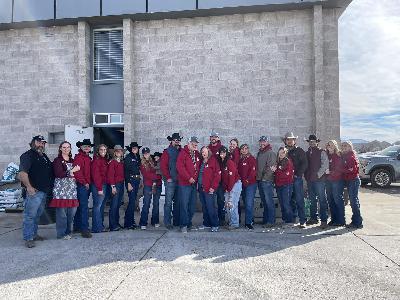
Welcome back to Genetics & the Gavel, powered by American Cattlemen Media. Just ahead, we have Gale McKinney, he's the owner of American Cattlemen Media, and he sits down with Eric and Clay Lyman, Co-Owners of Lyman Livestock. In this episode, they will dive into the Lyman Livestock 14th Annual Bull Sale, held on February 28th, 2026, at 1PM MT, in Salina, Utah.
Lyman Livestock is a fifth-generation ranching operations based out of Central Utah, Run by three brothers, Eric, Kevin, and Mike-and their children. The kids are taught ranching activities at a young age. Their wives are integral to the operation, assisting with meals, feeding, clerical work, and bull sale information.
Eric and Clay describe how the family transitioned from general farming and commercial cattle into registered seedstock roughly 25 years ago, with growth accelerating over the past decade. They emphasize a collaborative family culture where disagreements happen but remain minor, and the brothers and their children function as a close‑knit team.
Their cattle are run in multiple, demanding environments, including high‑arid desert near Canyonlands National Park, spring ground near Yuba Lake, and high‑elevation summer pastures between Montpelier, Idaho, and Cokeville, Wyoming. Cows must calve unassisted, travel long distances for water and forage, and perform across varied terrain and elevation. This zero‑tolerance approach ensures only functional, durable cattle remain in the herd.
Bull selection starts with structural soundness: feet and legs capable of handling rocks, high elevations, and long working lives. Only after structure do they consider EPDs, focusing on calving ease, stability, and weaning performance. Given the prevalence of high‑altitude grazing in the West, they have been committed to PAP testing for around 25 years and have built a cow herd proven to handle high‑altitude disease.
They further enhance genetic predictability through intensive DNA testing. Working with Allied Genetic Resources and DataGenie, all sale bulls receive 100K genomic tests, increasing EPD accuracy. They use simplified badges such as G+, ACE, and ATM to help buyers quickly identify all‑around sires, heifer‑safe calving ease bulls, and terminal growth and carcass sires. The sale will feature 134 PAP‑tested Simmental and SimAngus bulls, including standout sons of the widely regarded GW Medicine Man, reflecting strong consistency, length, rib, and eye appeal throughout the offering.
For previous episodes of the American Cattlemen Podcast, please visit: www.americancattlemen.com.
American Cattlemen Podcast is Sponsored By:
Rawhide Portable Corrals
Udder Tech, Inc.
Central Life Sciences

Welcome back to Genetics & the Gavel, powered by American Cattlemen Media. Just ahead, we have Gale McKinney, he's the owner of American Cattlemen Media, and he sits down with Brent Voss, with Voss Angus. In this episode, Brent and Gale will dive into the Voss Angus 11th Annual Production Sale, held of February 28th, 2026, at the Voss Sale Facility, in Dexter, Iowa.
Rooted in hard work and family values, Voss Angus has been dedicated to raising high-quality registered Angus cattle since 1995. Their focus is on superior genetics, maternal strength, and exceptional nutrition to deliver cattle that help producers grow successful herds. At Voss Angus, quality and integrity come first—and they stand behind every animal they sell.
The Voss Angus breeding philosophy emphasizes fertility, longevity, structural soundness, and easy fleshing as non‑negotiable traits, noting that while EPDs are useful, many of the most critical qualities in a productive cow do not have formal numbers attached. Brent then stresses that the program is built to elevate commercial customers’ profitability through cattle that breed back, stay sound, and raise high‑quality calves under real‑world conditions.
Brent and Gale will then walk through the sale offering, starting with bulls. Brent highlights sire groups such as Throttle, Renovation, President, Harvester, Anthem, Rainfall, Panther, Scale House, Dexter, Robust, Rock, Arrowhead, Riptide, Hollywood, and Next Gen, repeatedly returning to themes of muscle, structural correctness, docility, and consistency. Several matriarch cows and donor females, including influential Chloe and Panther‑line females, are identified as cornerstones of the program. Brent also describes the depth and quality of the female offering, including multiple Chloe daughters and other donor families, positioning the sale as a strong opportunity both for established herds and new entrants to Angus seedstock.
For previous episodes of the American Cattlemen Podcast, please visit: www.americancattlemen.com.
American Cattlemen Podcast is Sponsored By:
Rawhide Portable Corrals
Udder Tech, Inc.
Central Life Sciences

Welcome back to Genetics & the Gavel, powered by American Cattlemen Media. Just ahead, we have Gale McKinney, he's the Owner of American Cattlemen Media, and he sits down with Scott Eblen and Kadee Calhoun, with Eblen Simmentals. In this episode, they will dive into the Eblen Simmentals 2026 February Bull Sale, held on February 28th, at 1PM CST, located at the farm in Bridgewater, Iowa.
The Eblen Simmental breeding program was originally established by Doug Eblen in the late 1970's and early 1980s. It is currently operated by Scott Eblen and his daughter, Kadee Calhoun, who have continued to develop and expand the herd. The operation runs both a cattle program and a row crop farm. Their bulls are known for high performance, with some gaining nearly 4.5 pounds per day.
Scott and Kadee describe a family-centered operation where multiple grandchildren are present and involved. They hope these youngsters will become the next generation of help and carry forward the cattle legacy. That family atmosphere shapes their approach to cattle: practical, hands-on, and focused on producing bulls that will go out and work for commercial cattlemen.
Scott explains the Eblen Simmental breeding philosophy as starting with structural correctness and function. He prioritizes sound feet, good structure, and strong maternal traits. While EPDs and performance data are tracked, he insists cattle cannot be selected on numbers alone; the bull’s physical structure, growth, and overall presence must match what is on paper. The bulls are developed on a sensible ration that keeps them in good working condition rather than pushed to excessive fat, so they transition well to real-world ranch environments.
The 2026 February bull sale offering includes just over thirty-five purebred Simmental and SimAngus yearling bulls, spanning late 2024 to early 2025 birth dates. Scott highlights influential sire groups, including a Lover Boy son that combines calving ease, growth, and maternal strength; a powerful bull from a respected South Dakota outfit; and a Wheatland Man of War son whose impact is evident in a large share of the sale bulls. He also notes a Guardian son used on heifers, whose calves exhibit both power and strong dispositions.
Docility is a consistent theme. Scott and Kadee emphasize that quiet, easy-handling bulls still go out and work hard, and that temperament is carefully culled on their operation. Visitors and repeat customers have commented that this is among the most powerful, consistent sets of bulls Eblen Simmentals has ever assembled, making the 2026 February sale an especially important opportunity for commercial producers seeking structurally sound, growthy, and user-friendly bulls.
For previous episodes of the American Cattlemen Podcast, please visit: www.americancattlemen.com.
American Cattlemen Podcast is Sponsored By:
Rawhide Portable Corrals
Udder Tech, Inc.
Central Life Sciences

Welcome back to Genetics & the Gavel, powered by American Cattlemen Media. Just ahead, we have Gale McKinney, he's the owner of American Cattlemen Media, and he sits down with Caleb Cannon, Owner of Stone Gate Farms. In this episode, Caleb and Gale will dive into the Stone Gate Farms 56th Annual Production Sale, held on February 23rd, 2026, at the farm in Flemingsburg, Kentucky.
For five generations, the family has been rooted in agriculture, with Angus cattle at the heart of their operation. In 1952, the Cannon Brother's purchased three registered Angus heifers and joined the American Angus Association, begging the breeding philosophy that still guides Stone Gate arms today: a commitment to producing efficient, predictable seedstock for the commercial cattle industry.
Caleb explains that Stone Gate develops breeding bulls to work in real-world environments. Cows are managed with the same limited, realistic inputs a typical commercial producer would use. There are no creep feeders; weaning weights and production records reflect what the cows themselves produce. Bulls are weaned off the cow, placed on a 12% protein ration through their yearling data collection, ultrasound scanned for carcass traits such as IMF and ribeye, then “slowed down” and hand-fed daily. This close daily interaction allows the family to monitor feet, health, and especially docility, culling anything that does not meet their standards. Disposition and structural soundness are emphasized in both sire selection and herd management.
The sale offering includes 53 eighteen‑month‑old bulls described as a highly consistent, stout, long‑topped, good‑footed group with strong performance ratios and pedigrees stacked for fertility, longevity, and maternal strength. Caleb highlights specific lots, such as Lot 1, an Aztec son from a high‑ratio, highly productive cow family, and other lots that balance calving ease, growth, and carcass merit. He notes a thoughtful mix of genetics that gives repeat buyers fresh options and new buyers a strong foundation.
In addition, the sale features 12 registered fall pairs, all cows with heifer calves at side and bred back, many to cornerstone sires in the Stone Gate program. Caleb emphasizes these three‑in‑one packages as rare opportunities, suitable both for established herds and for people wanting to start with high‑quality Angus females backed by proven production.
For previous episodes of the American Cattlemen Podcast, please visit: www.americancattlemen.com.
American Cattlemen Podcast is Sponsored By:
Rawhide Portable Corrals
Udder Tech, Inc.
Central Life Sciences

Welcome back to Genetics & the Gavel, powered by American Cattlemen Media. Just ahead, we have Gale McKinney, he's the owner of American Cattlemen Media, and he sits down with Juston Mitchell, Owner of 2S Angus Land & Cattle. In this episode, Juston and Gale will dive into the 2S Angus Annual Production Sale, held on February 27th, 2026, at the ranch in Seneca, Missouri.
At 2S Angus, breeding and herd management decisions are based on the core principles of producing Elite Seed-Stock genetically designed to be leading cattle operation in SW Missouri. An elite breeding program takes years of discipline and at 2S Angus they strive to move forward on a daily basis. Sparing no expense of time, money or energy when they set up their breeding and select our groups.
2S Angus emphasizes maternal strength and functional, profitable cattle for commercial producers, particularly in fescue country. Juston stresses that while he aims to raise nationally recognized, elite Angus, the foundation is a powerful commercial bull program supported by a consistent, proven cow herd. He focuses on females that are productive at four to five years of age and older, with many remaining in the herd into their teens. Traits such as phenotype, structural correctness, udder quality, feet, fertility, hair shedding, disposition, and longevity are non-negotiable. Culling is intense, and females or high-dollar purchases that do not work in the environment are moved on.
Juston highlights several key donor cows and cow families that anchor the program, including H4, 2-002, J38, and daughters of influential sires like T220, Reno, and others. He walks through feature bulls and females in the sale, noting consistent phenotype, depth of body, strong tops, sound feet, and calm dispositions. Sire groups mentioned include Jumpstart, Heat Seeker, Intuition, Jordan, Craftsman, Hometown, Capone, Monumental, Rangeland, and Alternative, each chosen to complement the cow herd’s strengths and maintain functionality and performance.
The sale will offer 55 18‑month‑old bulls and five elite heifers, representing the top of the 2S Angus program, with a straightforward customer-focused guarantee and the option to participate in person at the ranch or online through DVAuction.
For previous episodes of the American Cattlemen Podcast, please visit: www.americancattlemen.com.
American Cattlemen Podcast is Sponsored By:
Rawhide Portable Corrals
Udder Tech, Inc.
Central Life Sciences

Welcome back to Cattlemen & Veterinarians: A Partnership in Bovine Health, powered by American Cattlemen Media. Just ahead, hosts Dr. Shynia Peterman and Gale McKinney chat with Dr. Eric DeVuyst and Dr. Cheryl DeVuyst, owners of DeVuyst Ranch about the Economic Implications of Providing Aggressive Treatments in Cattle.
Cheryl and Eric have a background in production agriculture and focus on their work. Cheryl's specialization is agricultural finance, while Eric's is farm and ranch management. In addition to currently serving as Vicec-Chair of the Cattlemen's Beef Board, Cheryl is an advisor to the Oklahoma Collegiate Cattlewomen and works to help develop young leaders in the beef industry. She was named the Oklahoma Cattlewoman of the Year in 2024. Eric has focused on research and Extension projects that impact the profitability of agricultural operations. Some of his research includes the economics of genotyping in cattle operations, management of cow-calf operations, and feedlot profitability.
The conversation begins with an overview of the current cattle market, where tight supplies and strong consumer demand for beef are driving record prices. Weather-driven forage availability, especially the easing of drought in parts of the Great Plains versus persistent dryness in western regions, is shaping whether the industry moves into an expansion phase. Eric and Cheryl emphasize that, regardless of market cycles, the single most important number for cow-calf producers to track is cost of production. Producers cannot control cattle prices, but they can influence their costs through stocking rate, feed management, and disciplined record-keeping.
Feed costs and land decisions emerge as critical drivers of profitability. Overstocking inflates feed bills and degrades grass, while chasing expensive land can create unsustainable financial pressure. Most U.S. cow-calf herds are small, often family-run operations with modest labor costs, but large operations may face tightening labor conditions. Instead of focusing solely on individual weaning weights, the guests recommend thinking in terms of pounds weaned per acre and favoring moderate-sized cows that allow higher stocking rates and better overall output.
Common economic mistakes include chasing the wrong EPDs, inadvertently selecting large, high-maintenance cows, and failing to keep or analyze detailed production records. Vaccination and basic health protocols are framed as “cheap insurance” rather than direct profit centers—producers may not see the absence of disease as a measurable return, but the financial hit from outbreaks is immediate and severe. University tools such as preconditioning budgeting models can help evaluate value-added programs, and research shows that bundled practices like vaccination, castration, dehorning, defined calving seasons, and sound genetics substantially increase the odds of premiums and profitability.
Economic Implications of Providing Aggressive Treatments in Cattle
For Future or Previous episodes visit our websites:
American Cattlemen
American Dairymen
Cattlemen and Veterinarians: A Partnership in Bovine Health Sponsored by:
Elanco Animal Health
Central Life Science

Welcome to Genetics & the Gavel, powered by American Cattlemen Media. Just ahead, we have Gale McKinney, he's the owner of American Cattlemen Media, and he sits down with Brian Oswald with High Point Genetics. In this episode, Brian and Gale will dive into the High Point Genetics 18th Annual Bull Sale, held on February 28th, 2026, at 1PM CST at the Harkens Hulls Ranch in Osceola, Iowa.
High Point Geentics cowherd is managed under conditions that mirror commercial operations in the area, with cows primarily running on fescue and bluegrass pastures and with limited labor resources. The Oswald family has been in the bull business throughout Brian's lifetime, and it was through a friendship with the late Dick Bell that Brian's passion for Angus cattle originated.
Brian explains that High Point Genetics runs about 500 cows plus a 150-head cooperator herd, giving them a gene pool of roughly 650 registered Angus and SimAngus cows. They sell around 220 bulls annually, mostly to commercial cattlemen in the surrounding region. Their philosophy centers on a common-sense, balanced approach to genetics. They prioritize cattle with added body length, a tick more frame, strong growth, structural correctness, and eye appeal—traits that help calves sell well at the sale barn, perform in the feedlot, and hang heavier carcasses.
Brian walks through key sire groups, including calving ease bulls, crossover bulls that start on heifers and later move to cows without sacrificing performance, and higher-powered cow bulls. He highlights standout individuals such as sons of Connealy High Point, the high-profile sire Eternity, Mercury, and multiple Angus and SimAngus lines like North Star, Growth Fund, Galactics, Big Country, and Texas Teas.
High Point Genetics
For previous episodes of the American Cattlemen Podcast, please visit: www.americancattlemen.com.
American Cattlemen Podcast is Sponsored By:
Rawhide Portable Corrals
Udder Tech, Inc.
Central Life Sciences

Welcome to Genetics & The Gavel, powered by American Cattlemen Media. Just ahead, we have Gale McKinney, he's the owner of American Cattlemen Media, and he sits down with John Wessel, Owner of Pine View Angus. In this episode, John and Gale will dive into the Pine View Angus 22nd Annual Bull Sale, held on February 21st, 2026, at 1PM CST, at the farm located North of Colesburg, Iowa.
Pine View Angus is set right in the middle of rural America in Colesburg, Iowa. The farm's location has shaped their livelihoods and focus. the family is active in many phases of agriculture, from implement sales and service, seed sales and service, custom feeding, farming, and, of course, purebred Angus Cattle.
Wessel traces his roots back to German immigrants who settled in northeast Iowa in the late 1860s. His family has long been involved with registered livestock, from Brown Swiss dairy cattle to draft horses, and that passion for genetics has carried through to his own Angus program. He reflects on his late father’s work ethic, transition from dairy to hogs and commercial Angus, and the impact his example had on Wessel’s approach to cattle and life.
The Pine View Angus philosophy is that the cow herd, particularly the females, are the true foundation of any successful seedstock operation. He emphasizes that while bulls are what customers see and talk about, great bulls are only possible because of strong maternal genetics. Functionality, structural soundness, appropriate size, muscle, and especially udder quality are non‑negotiable traits. John and his family use extensive embryo transfer and IVF work, pairing each female with sires through carefully planned, individual matings to create complementary genetic combinations. Data, EPDs, genomics, and carcass information are used to fine-tune decisions, but phenotype and real‑world functionality remain paramount.
Wessel also discusses what commercial producers prioritize most: calving ease, birth weight, disposition, and fertility. He argues that today’s strong beef market reflects where prices should have been for some time, noting robust consumer demand and willingness to pay for high-quality beef. He believes beef has moved beyond being a simple commodity and become part of an “event” eating experience.
For previous episodes of the American Cattlemen Podcast, please visit: www.americancattlemen.com.
American Cattlemen Podcast is Sponsored By:
Rawhide Portable Corrals
Udder Tech, Inc.
Central Life Sciences
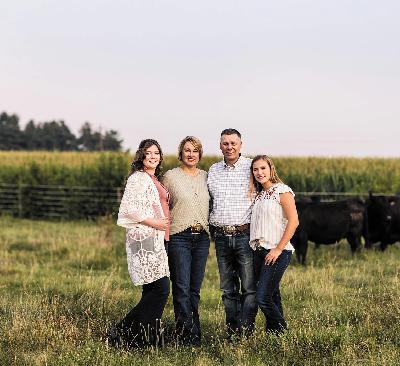
Welcome back to Genetics & The Gavel, powered by American Cattlemen Media. Just ahead, we have Gale McKinney, he's the owner of American Cattlemen Media, and he sits down with Dennis Deppe, Owner of Deppe Angus. In this episode, Dennis and Gale will dive into the Deppe Angus Progress Through Testing Bull & Female Sale, held on February 27th, 2026, at 6PM CST, at the farm in Waverly, Iowa.
Starting from modest roots, the Deppe Angus brand was built upon a strong vision. Despite only owning three cows after college graduation, this small foundation was key to establishing the brand. They meticulously developed their herd by focusing on careful breeding, selecting superior bulls, and retaining their most exceptional females.
Dennis emphasizes that “progress through testing” is not a slogan but the core of his program, reinforced by comprehensive genomic testing on all sale cattle.
The sale offering, which includes a powerful set of 76 yearling and age-advantaged bulls, 21 spring-bred heifers and pairs, 27 high-end open females, and several elite genetic opportunities is great for anyone looking to expand their herd. Dennis highlights key sire groups such as Crouch Congress, Glacier, Spring Cove Grant, Duracell, Craftsman, Wildcat, and others, explaining how each contributes growth, carcass merit, structural soundness, and maternal strength. He repeatedly comes back to cow families like Black Cap and Mistress that anchor the program’s consistency across different sire lines. Several standout lots are described in detail, including bulls with top-percentile growth, efficiency, and carcass EPDs, as well as females he believes could serve as front-line donors in any herd.
The discussion also covers three special genetic opportunity lots built around proven donor cows with exceptional dollar indexes and strong track records in third-party testing. Dennis notes that a portion of proceeds from one of these lots will support youth, education, and research through the Angus Foundation, aligning with his long career as an ag instructor and FFA advisor.
For previous episodes of the American Cattlemen Podcast, please visit: www.americancattlemen.com.
American Cattlemen Podcast is Sponsored By:
Rawhide Portable Corrals
Udder Tech, Inc.
Central Life Sciences

Welcome back to Genetics & The Gavel, powered by American Cattlemen. Just ahead, we have Gale McKinney, he's the owner of American Cattlemen Media, and he sits down with Bailey Johnson, Oner of Johnson Angus Ranch. In this episode, Bailey and Gale will dive into the Johnson Angus Ranch 54th Annual Genetic Advantage Bull Sale, held on February 28th, 2026, at 1PM CST at Mobridge, South Dakota.
The Johnson Angus Ranch breeding philosophy centers on producing cattle that work in real-world conditions - moderate, efficient, structurally sound, and capable of adding pounds while maintaining cow herd longevity. Many of their bulls come from cow families that have stood the test of time, with multiple generations still in production today. Disposition, soundness, and usability remain priorities in every mating decision they make.
The upcoming sale will showcase a deep offering headlined by 81 yearling Angus bulls, eight aged bulls, and 27 bred heifers. Bailey describes the yearling bulls as a very consistent yet individually unique group, with many sired by home-raised sires for the first time. She highlights several key sire groups, including Rainmaker 4404, known for strong maternal daughters; BNB Holy Water; BJJ Legacy, a Baldrige Bronc son whose progeny combine performance with the kind of females commercial producers need; and the Jose sire line, bringing in OCC Juno blood and producing calm, structurally sound daughters with good udders and feet. Another major sire group is the Quarrel 3/3 bulls, which Bailey describes as powerful, high-quality cattle and notes that lots 32 and 33 stand out as particularly multi-dimensional.
Bailey and Gale then discuss the aged bulls, including Patron, cataloged as Lot 88, an experienced herd sire and full brother to Jose, representing a rare opportunity to purchase genetics from the heart of the program. Bailey explains their development philosophy: bulls are grown on a high-fiber ration without silage or distillers grains, aiming to express genetic potential while ensuring they are sound and ready to work without being over-conditioned.
The 27 bred heifers are a first-time sale feature for Johnson Angus. Many come directly from the keeper pen and will be sold in two groups sorted by calving dates, with gate cut available under defined minimums.
For previous episodes of the American Cattlemen Podcast, please visit: www.americancattlemen.com.
American Cattlemen Podcast is Sponsored By:
Rawhide Portable Corrals
Udder Tech, Inc.
Central Life Sciences

Welcome back to Genetics & The Gavel, powered by American Cattlemen Media. Just ahead, we have Aaron McKinney, he's the field editor for American Cattlemen Media, and he sits down with Randy Kessler and Tierra Kessler Duke, of Kessler Angus. In this episode, they will dive into the Kessler Angus Bull Sale, held on February 17th, 2026, at 12:30Om PST, at the ranch in Milton-Freewater, Oregon.
Kessler Angus is a first-generation cattle ranch started with a single 4H project heifer by Randy Kessler in 1962 in Milton-Freewater, Oregon. Randy sold his first bull in 1964 and has been holding an annual production sale since 2007 after years of private treaty and consignment sales.
Tierra explains that the operation is very family oriented. She works full-time on the ranch, her brother Cody splits time between the ranch and horse training, and their sister Cheyenne works as an ICU nurse in California but returns annually to help with calving. The cattle experience a range of environments: mature cows calve on dryland wheat pastures in the hills, older cows and first-calf heifers are kept closer to the ranch. This setup emphasizes functional, hardy cattle that perform under minimal pampering.
A central theme of the program is calving ease combined with performance. The Kesslers are known as a trusted source of heifer bulls that deliver the calving ease promised without sacrificing growth. They lean heavily on the Angus Pathfinder program, with over 28% of their eligible mature cow herd having earned Pathfinder status. Their cow herd is expected to “pay its way,” funding land, equipment, and overall ranch operations, with a strong emphasis on fertility, early breeding, heavy-weaning calves, and long-term functionality.
They'll close the interview by diving into the upcoming Kessler Angus Bull S ale. Tierra walks through the offering by sire group, highlighting Basin Keystone, Free Water, Deluxe, Pacific, Top Gun, Prolific, North Star, Security, Jameson, Rise Above, Safe Deposit, Lookout, Inspire, Highlander, Resilient, Duke, Kindred, and Kingdom. She details standout bulls, their EPD profiles, carcass traits, maternal strength, and notable donor cow families behind them, emphasizing both calving ease and strong growth and carcass merit.
For previous episodes of the American Cattlemen Podcast, please visit: www.americancattlemen.com.
American Cattlemen Podcast is Sponsored By:
Rawhide Portable Corrals
Udder Tech, Inc.
Central Life Sciences
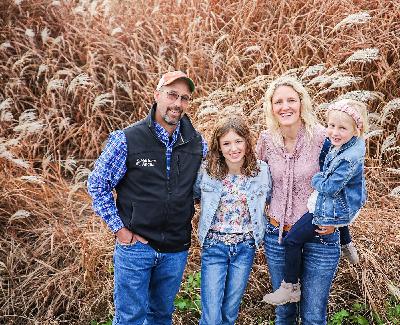
Welcome back to Genetics & The Gavel, powered by American Cattlemen Media. Just ahead, we have Gale McKinney, he's the owner of American Cattlemen Media, and he sits down with Jody Marten, Owner of Martens Angus. In this episode, Jody and Gale dive into the Martens Angus Farms 25th Anniversary Sale, held on February 25th, 2026, at 1PM CST, located at the farm, Bellevue, Iowa.
The history of this operation is deep-rooted, actually starting with his father, Leo, who raised and sold Registered Angus Cattle in Clinton County, Iowa, back in the 1950s. There was a pause, tough, as a family move led to a switch to purebred hogs. But, with the decline in the pork industry in the late 1980s, the Angus herd made its return in the early 1990s. Jody himself jumped in after graduating from Iowa State in the mid-1990s, working alongside Leo until he fully purchased the cow herd in 2001.
Discussing the Martens Angus breeding philosophy, Jody emphasizes running a purebred Angus program that functions like a commercial herd. Cattle are not pampered, and traits like disposition and birth weight remain foundational priorities. He focuses on balanced genetics, blending calving ease, growth, carcass merit, maternal value, and structural soundness, using EPDs as a guide rather than a strict target.
The sale offering includes approximately 40 18‑month‑old bulls, bred heifers, open heifers, and commercial spring‑bred heifers. Jody highlights the extra age and durability of the bulls and describes several standout lots that combine calving ease with muscle and performance. Many of the top bred and open heifers, he notes, are the kind that normally would stay in his own replacement pen, with several candidates suitable for donor status. The commercial spring‑bred heifers, bred to a strong performance bull, are purebred cattle marketed as commercial, with the option to obtain registration papers for an additional fee.
For previous episodes of the American Cattlemen Podcast, please visit: www.americancattlemen.com.
American Cattlemen Podcast is Sponsored By:
Rawhide Portable Corrals
Udder Tech, Inc.
Central Life Sciences

Welcome back to the American Cattlemen Podcast. Just ahead, we have Kaid Panek with the American Cattlemen, and he sits down with Cody and Erica Archie of Bar 7 Ranch and Marc Ahrens of Moly Manufacturing. In this episode, Kaid and the gang will discuss the benefits of strong, effective cattle-handling equipment and how Moly's Silencer Squeeze Chutes fit that bill.
No one wants to work with faulty equipment and Cody contrasts his early years working cattle with rudimentary or worn-out equipment—manual chutes, guillotine head gates, makeshift setups, and unsafe conditions—against the experience of using a Silencer. He emphasizes how inferior equipment increases stress, risk of injury and cattle wrecks, and ultimately costs more in the long run.
The discussion highlights the Silencer as a long-term, customizable investment. Mark explains that almost everything beyond the basic tail doors is custom built to match the customer’s herd, working style, and future plans. Options like palpation cages, walk-through doors, side exits, neck extenders, brisket bars, and expandable floors allow ranchers to tailor the chute to their needs and to grow into it over five to ten years, rather than outgrowing it quickly.
Erica adds the family perspective, describing how the Silencer has dramatically improved confidence and safety for her and their children. Once hesitant to run the controls, she quickly found it intuitive and now sees it as a critical tool that reduces risk, stress, and the chance of serious injuries. They note that even young or older family members can safely operate the hydraulics.

Welcome back to Genetics & The Gavel, powered by American Cattlemen Media. Just ahead, we have Gale McKinney, he's the owner of American Cattlemen Media, and he sits down with Tony Peckenpaugh, owner of Peckenpaugh Angus. In this episode, Tony and Gale dive into thee Peckenpaugh Angus Annual Bull Sale, held on February 22nd, 2026, at 2PM CST, located at the farm in Carthage, South Dakota.
Peckenpaugh Angus has a deep history in purebred cattle, beginning with Registered Herefords in 1936 and adding Registered Angus in 1998. Today, they run about 300 Registered Angus cows alongside a commercial herd and farming operation. Their philosophy emphasizes functionality: the cattle must perform well within a busy schedule without a full-time herd manager.
The Peckenpaugh Angus philosophy is built around functionality and real-world performance rather than pampered management. With limited labor and a busy farming schedule, cows are expected to calve unassisted, get calves up and going, and thrive under variable conditions without constant checking. The environment in South Dakota demands this kind of resiliency, as cattle regularly face mud, damp cold, dust, heat, humidity, and harsh winter wind chills. Over time, the family has accumulated extensive carcass and grid data, reinforcing their focus on marbling, carcass quality, and uniformity.
They will then get into some highlights and several standout lots, noting the emphasis on length, volume, structural soundness, and especially docility, which Tony sees as increasingly important given the aging ranching population. He describes bulls that are easy to handle yet powerful and athletic, suitable for covering cows efficiently and adding pounds to calves. The sale also includes a couple of commercial bulls that are fully purebred by genetics but will sell without papers due to uncertain dams. Tony expresses strong confidence in the entire offering and invites interested cattlemen to study the catalog, view the bulls, and evaluate the program’s practical, performance-oriented genetics.
For previous episodes of the American Cattlemen Podcast, please visit: www.americancattlemen.com.
American Cattlemen Podcast is Sponsored By:
Rawhide Portable Corrals
Udder Tech, Inc.
Central Life Sciences

Welcome back to the American Cattlemen Podcast. Just ahead, we have Dustin Hector, he's the Director of Business Development of American Cattlemen Media, and he sits down with Georg Weitzel, with Crystal Springs Ranch and Kalf Kozies. In this episode, Georg and Dustin will dive into the Kalf Kozies product and how it was designed to help calves out in the cold.
Georg explains that his family ranch calves out around 500 cows in January, February, and March, often in temperatures reaching 30 to 40 degrees below. Calves are usually born outside and then brought into the barn, but limited barn capacity means they can only stay inside for about 24 hours before returning outdoors. Even when calves were dried off, their ears frequently froze. Over the years, Georg and his family tried multiple existing products, but none performed the way they needed.
That led Georg’s wife, Sarah, to design the Kalf Kozies. It is a custom-woven, water-resistant fleece hat that slips over the calf’s head, with dedicated ear pockets and eye holes. The material has stretch built into the right areas for a secure yet comfortable fit. Adjustable snaps on the neck band allow a single hat to fit a wide range of calf sizes, from small preemies to large beef calves. To solve the issue of losing visual identification when all the calves were wearing hats, they added a leather patch on the outside that can be marked with a reusable grease pencil.
Georg emphasizes that comfort and functionality distinguish Kalf Kozies from competing products. The design allows the ears to remain in their natural forward position, so calves stay comfortable, active, and inclined to get up and nurse. The fabric wicks moisture away instead of trapping it, helping ears naturally toughen over several days of use. The ear pockets also help keep the hat in place, reducing the need for constant adjustment. Economically, preventing frozen ears can avoid substantial market discounts on calves, so a single saved ear can more than pay for the product. Georg notes that dairy producers use the hats to safely house multiple calves together and that calves wearing Kalf Kozies tend to be warmer, happier, and healthier throughout the winter.
For previous episodes of the American Cattlemen Podcast, please visit: www.americancattlemen.com.
American Cattlemen Podcast is Sponsored By:
Rawhide Portable Corrals
Udder Tech, Inc.
Central Life Sciences

Comments

Download from Google Play

Download from App Store
 United States