


 Claim Ownership
Building The Billion Dollar Business
Subscribed: 10Played: 199
Subscribe
© 2026 Ray Sclafani
Description
Hosted by Financial Advisor Coach, Ray Sclafani, "Building The Billion Dollar Business" is the ultimate podcast for financial advisors seeking to elevate their practice. Each episode features deep dives into actionable advice and exclusive interviews with top professionals in the financial services industry. Tune in to unlock your potential and build a successful, enduring financial advisory practice.
95 Episodes
Reverse
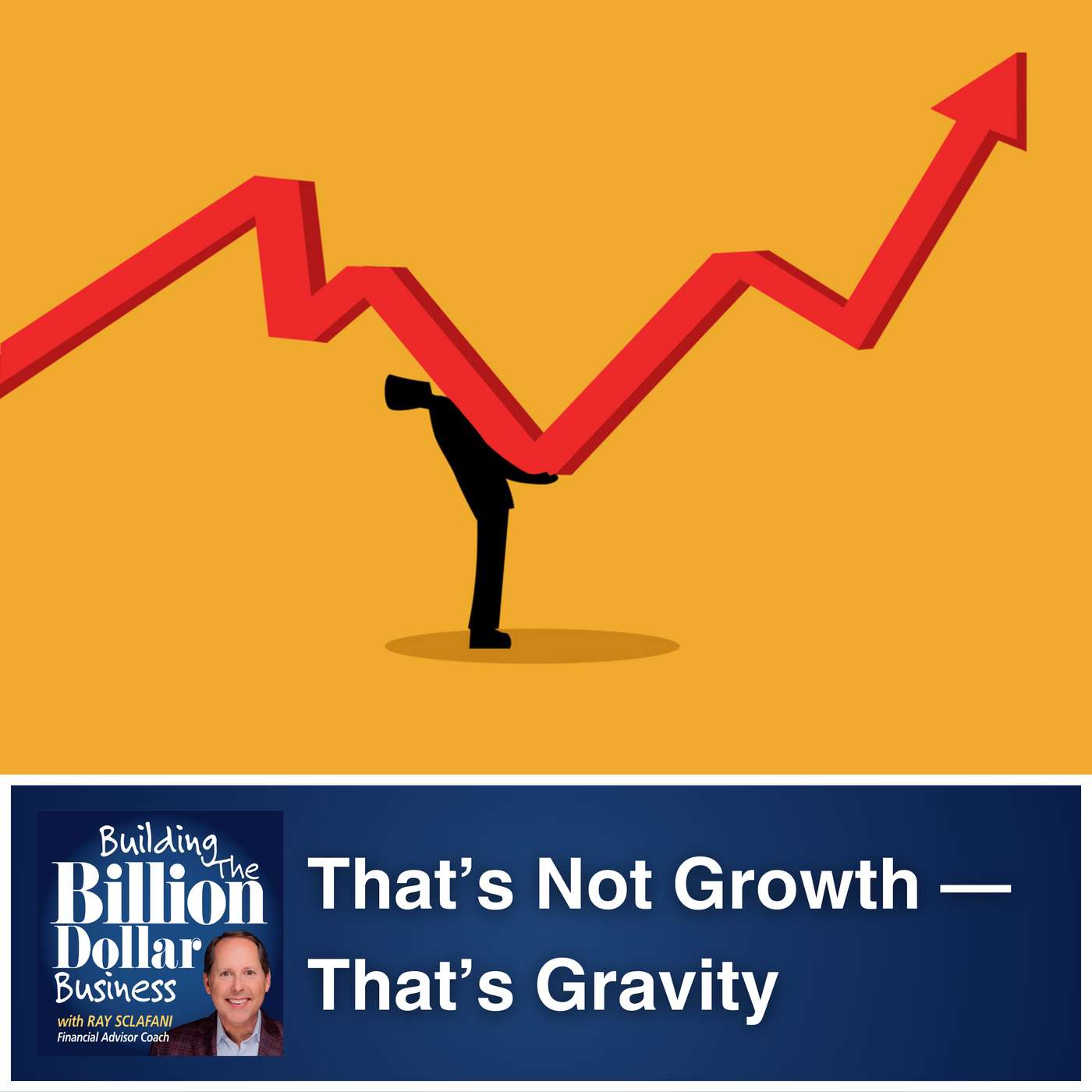
In this episode of Building the Billion Dollar Business, Ray Sclafani delivers a direct message to advisory firms. Market appreciation is not the same as real growth. When AUM climbs because of a bull market, it may boost revenue, but it does not automatically build enterprise value.Ray challenges firms to separate capital market lift from true organic growth. Real growth comes from net new relationships, expanded wallet share, stronger engagement, and intentional investments in business development and marketing.He outlines the practical shifts the best firms make, including tracking net new assets accurately, funding growth strategically, upgrading marketing from SEO to AEO, and setting ambitious targets that are not dependent on market momentum.The message is clear: growth is not accidental. It is earned through deliberate choices, disciplined execution, and a mindset that refuses to confuse momentum with mastery.Key Takeaways70% of RIA channel growth over the past decade has come from capital markets.Firms must clearly distinguish net new assets from capital appreciation.Tracking client acquisition, retention, wallet share, and lifetime value is critical.Advisors must know their CAC (client acquisition cost) and LTV (lifetime value).Firms that build organic growth muscles win new clients even when markets stall.Questions Financial Advisors Often AskQ: What is the difference between market-driven growth and real organic growth for RIAs? A: Market-driven growth occurs when portfolios expand due to a bull run and AUM increases because of capital appreciation. Real organic growth is the kind that builds enterprise value by adding new ideal clients, increasing wallet share from existing clients, creating deeper engagement, and expanding capacity to serve more clients.Q: How can advisory firms accurately measure organic growth? A: Firms should separate net new assets from capital appreciation, monitor actual client acquisition and retention, track wallet share and client lifetime value, and analyze numbers as if the market did not change.Q: What reports should advisory firms review to track real growth? A: Firms should be able to track net new assets from existing clients, new assets from new clients, and opportunity reports showing client meetings and new opportunities created. They should generate reports that clearly distinguish net new assets from capital appreciation.Q: What should financial advisors do immediately to improve organic growth? A: Strip market gains from reports and analyze numbers without market lift. Develop a focused business development strategy with defined roles and funding. Audit marketing strategy, including SEO to AEO and AI usage. Define an ambitious growth target tied to new relationships and revenue streams.Q: What growth rate should firms target for real organic expansion? A: Firms serious about organic growth should pursue mid to high teens year-over-year growth, minus capital markets and inorganic growth.Find Ray and the ClientWise Team on the ClientWise website or LinkedIn | Twitter | Instagram | Facebook | YouTubeTo join one of the largest digital communities of financial advisors, visit exchange.clientwise.com.

In this episode of Building the Billion Dollar Business, host Ray Sclafani breaks down six practical ways financial advisory firms can fuel organic growth, the most reliable indicator of long-term firm health.Organic growth goes beyond market-driven AUM increases. It reflects a firm’s ability to consistently attract new client relationships, deepen existing ones, and create a repeatable, scalable growth engine. Ray explains why firms that win new households outperform peers in revenue, enterprise value, and advisor productivity, yet still underinvest time and resources in client acquisition.The result is a clear roadmap for firms that want to move from opportunistic growth to a self-sustaining, institutionalized client acquisition model.Key Takeaways Organic growth is one of the clearest indicators of an advisory firm’s long-term health and sustainability.Firms that consistently attract new client households outperform peers in revenue, enterprise value, and productivity.A focused, consistent value proposition strengthens marketing effectiveness and client relevance.CRM systems should be actively used to track opportunities, heirs, and wallet-share expansion.Firms that embed growth into their culture create repeatable and scalable client acquisition engines.Questions Financial Advisors Often AskQ: What is organic growth in a financial advisory firm?A: Organic growth reflects a firm’s ability to deepen existing client relationships and consistently attract new client relationships, rather than relying solely on market performance or external acquisitions.Q: Why is organic growth important for wealth management firms?A: Organic growth enables firms to expand capabilities, increase capacity, reinvest in client value, and build a scalable, self-sustaining business. Firms that consistently attract new clients outperform peers in key performance areas.Q: What is a Loyal Client Advocate (LCA)?A: Loyal Client Advocates are clients who are vocal supporters and active connectors. They often generate referrals and play a critical role in helping firms grow through trusted introductions.Q: Why should advisory firms move away from the “eat what you kill” model?A: Organic growth works best as a team-based effort. The most effective firms divide responsibilities for lead generation, nurturing, and closing, allowing advisors to focus on their strengths rather than operating independently.Q: How does CRM support organic growth?A: CRM systems help firms track opportunities with current clients, heirs, and future inheritors. Regularly reviewing CRM reports ensures growth opportunities don’t fall through the cracks.Find Ray and the ClientWise Team on the ClientWise website or LinkedIn | Twitter | Instagram | Facebook | YouTubeTo join one of the largest digital communities of financial advisors, visit exchange.clientwise.com.
In this episode, Ray Sclafani challenges financial advisory teams to confront a hard truth: growth is revealed through behavior, not intentions. While many firms talk about growth, few operate in true “growth mode.” Instead, they rely on capital market appreciation, passive referrals, and overextended teams, which creates the illusion of growth rather than sustainable, controllable expansion.Ray walks through 10 common missteps even top-performing advisory teams make, from confusing revenue growth with organic growth to underinvesting in marketing, capacity, and next-generation leaders. He emphasizes that real growth requires intentional planning, shared alignment, measurable client acquisition strategies, proactive hiring, and consistent execution.Key Takeaways What your firm does day-to-day matters more than what it says in vision decks.Organic growth comes from new ideal clients and expanded wallet share.Teams must define growth together. Misalignment on what “growth” means is a primary cause of ensemble breakdowns.Firms operating at full capacity cannot grow without proactive hiring and role clarity.Leading indicators matter more than lagging ones.Questions Financial Advisors Often AskQ: What is the difference between revenue growth and organic growth?A: Revenue growth driven by capital market appreciation is not growth you can control. Organic growth comes from acquiring new ideal clients and expanding wallet share with existing clients.Q: Why is a client acquisition plan essential for growth?A: Without a documented and measurable client acquisition plan, referrals become sporadic, follow-ups are inconsistent, and the pipeline lacks reliability.Q: What metrics should growth-oriented advisory firms track?A: Firms should track leading indicators such as the number of new clients onboarded, revenue per new ideal client, close rates, and time in the pipeline, not just AUM or revenue.Q: How much should financial advisors invest in marketing for growth?A: Studies referenced suggest investing approximately 5–7% of gross revenue into marketing and growth initiatives for firms operating in true growth mode.Q: Why is next-generation development critical to growth?A: Without actively developing future growth leaders, firms are not preparing for sustained expansion or long-term succession.Q: How often should advisory firms review their growth strategy?A: Growth-oriented firms review strategic priorities quarterly, course-correct intentionally, and ensure every team member understands their role in executing the organic growth plan.Find Ray and the ClientWise Team on the ClientWise website or LinkedIn | Twitter | Instagram | Facebook | YouTubeTo join one of the largest digital communities of financial advisors, visit exchange.clientwise.com.

In this episode of Building the Billion Dollar Business, Ray Sclafani introduces the concept of white space and explains why it is essential for effective leadership as advisory firms grow. Borrowed from design, white space is not empty space, it is intentional space that gives structure, clarity, and meaning. Ray explains that leadership works the same way. As organizations scale, calendars fill, meetings multiply, and leaders become embedded in day-to-day execution. While constant motion can feel productive, it often comes at the cost of perspective and judgment.Drawing on leadership research and personal experience, Ray explains that the most effective leaders deliberately create distance from daily operations to think, reflect, and see patterns more clearly. White space allows leaders to step above the business rather than remain buried inside it. This intentional pause improves decision quality, strategic clarity, and people leadership over time.The episode closes with two coaching questions to help leaders reflect on the kind of leader they need to become and how intentionally they are designing their schedules to support that growth.Key TakeawaysLeadership effectiveness improves when leaders step back from daily execution.Research shows that distance improves judgment, adaptability, and leadership outcomes.White space allows leaders to reframe problems instead of reacting to them.Leaders should schedule quarterly white space sessions and treat them as non-negotiable.Leadership happens when leaders intentionally create space to think above the business.Questions Financial Advisors Often AskQ: What is white space in leadership?A: White space is intentional time and space designed for thinking, reflection, and perspective. It is not empty or unproductive time, but space that allows leaders to step above day-to-day execution and focus on judgment, patterns, and long-term direction.Q: Why is white space important for leaders?A: White space improves leadership effectiveness by creating distance from constant execution. Research referenced in the episode shows that leaders who intentionally step away from daily operations demonstrate stronger judgment, better adaptability, and higher decision quality in complex environments.Q: How is white space different from catching up on tasks?A: White space is not clearing an inbox or working in a quieter location. True white space requires restraint and choosing not to fill every moment on the calendar. It is time designed specifically for thinking, reflection, and perspective.Q: When should leaders create white space?A: White space becomes more important as responsibility grows. When everything feels urgent, leaders need intentional pauses to avoid losing altitude and perspective.Q: How often should leaders schedule white space?A: Ray recommends creating intentional white space at least once a quarter. This could be a half day away from the office, a solo offsite, or uninterrupted time designed specifically for thinking.Find Ray and the ClientWise Team on the ClientWise website or LinkedIn | Twitter | Instagram | Facebook | YouTubeTo join one of the largest digital communities of financial advisors, visit exchange.clientwise.com.
Most RIAs continue to grow in assets, client demand, and professionalization, but structurally, the majority remain founder-focused organizations. While growth itself is no longer the primary challenge, leadership capacity increasingly is.In this episode, Ray Sclafani explains why leadership bench strength, not markets, not strategy, and not capital, is the real constraint on long-term RIA growth. Drawing from two real-world coaching engagements with multi-billion-dollar RIA CEOs, Ray contrasts two leadership postures: one focused on building optionality through distributed leadership, and another clinging to centralized control as time quietly narrows future choices.Ray makes the case that building a leadership bench is not about stepping down, it’s about designing leadership intentionally, years before necessity forces decisions. Firms that develop leaders, establish decision rights, and transfer trust internally create options: to evolve as CEO, shift roles, bring in external leadership, or transition ownership on their terms.The episode concludes with reflection questions for founders and executive teams who want to build enduring firms.Key Takeaways Nearly 90% of RIAs operate as founder-focused firms, limiting future optionsPast success does not automatically qualify a leader for the firm’s next stageLeadership benches take three to five years to build when done wellWithout distributed leadership, options narrow quickly due to time, health, or external pressureTeam-based firms outperform founder-led firms because leadership responsibility is sharedEnduring RIAs design leadership intentionally before they are forced toQuestions Financial Advisors Often AskQ: What is leadership bench strength in an RIA?A: Leadership bench strength refers to having multiple developed leaders within the firm who are trusted, empowered, and capable of carrying leadership responsibility beyond one or two individuals.Q: Why is leadership bench strength important for RIA growth?A: According to the episode, leadership capacity and internal bandwidth are primary constraints on RIA growth, even as assets and client demand continue to rise.Q: How long does it take to build a leadership bench in an advisory firm?A: When done well, building a leadership bench takes a minimum of three to five years and requires intentional role design, decision rights, and leadership development.Q: What happens if leadership remains concentrated with the founder?A: When leadership capability lives primarily in one or two people, options narrow over time, and decisions are often made by circumstance rather than intention.Q: What role does trust play in leadership development?A: Trust transfer internally is essential as leaders must be developed, trusted, and empowered ahead of necessity for options to expand.Find Ray and the ClientWise Team on the ClientWise website or LinkedIn | Twitter | Instagram | Facebook | YouTubeTo join one of the largest digital communities of financial advisors, visit exchange.clientwise.com.
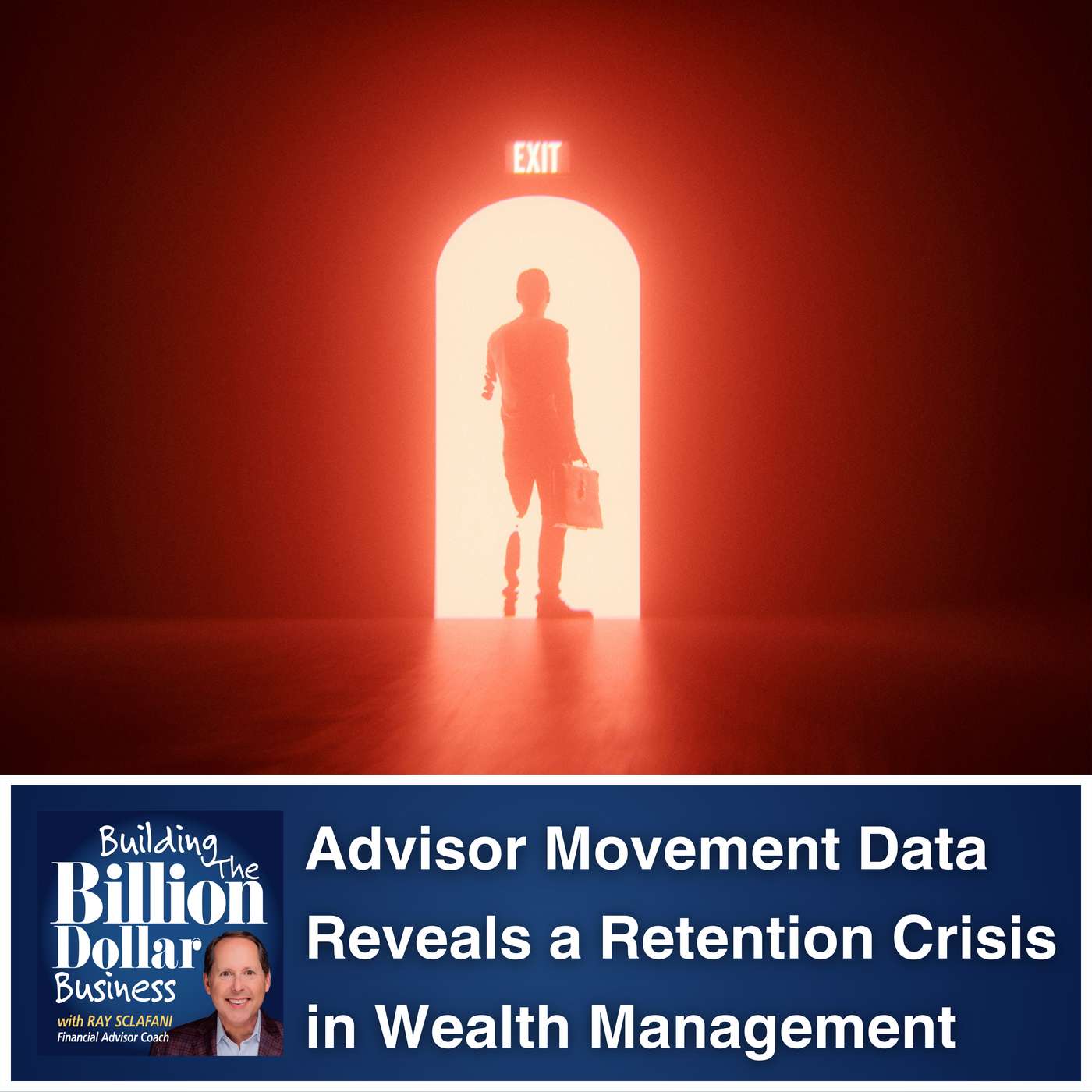
In this episode of Building the Billion Dollar Business, Ray Sclafani breaks down why advisor movement data should be treated as an early warning system and not industry gossip. While the number of advisors changing firms has remained steady, a more concerning trend is emerging: more advisors are leaving the profession entirely than entering it.Ray explains that this shift isn’t driven by compensation alone. Instead, advisors are making intentional decisions based on leadership clarity, career path visibility, enterprise value, and control over their future. He outlines four critical decision points for firm leaders in 2026: rethinking retention beyond pay, recruiting for long-term fit, aligning custodian and broker-dealer relationships with strategic purpose, and putting leadership development front and center.The episode challenges RIA and wealth management leaders to confront strategic ambiguity, leadership bottlenecks, and platform misalignment before retention issues show up in the P&L. The message is clear: firms that provide a credible future will keep top talent and those that don’t won’t.Key TakeawaysAdvisor movement data is an early warning system that reveals where confidence in leadership and long-term value is eroding.More financial advisors are leaving the profession entirely than entering it, signaling a deeper industry challenge beyond firm-to-firm movement.The cost of replacing experienced advisors far exceeds the cost of retaining and developing existing talent.Firms overly dependent on a single founder or leader create bottlenecks that limit growth and retention.Clear leadership pathways and role clarity are essential to sustaining advisor confidence and long-term firm value.Questions Financial Advisors Often AskQ: What does advisor movement data reveal about the wealth management industry? A: Advisor movement data shows where advisors believe long-term value exists and serves as an early warning system for leadership, retention, and strategic alignment issues.Q: Why are financial advisors leaving firms if compensation remains competitive? A: Advisors leave when they lack leadership clarity, role clarity, and a credible long-term career path, not simply because of pay.Q: Are more advisors leaving the profession entirely? A: Yes. In 2025, more advisors exited the profession than entered it, indicating a growing talent decline in the industry.Q: What is the real cost of losing experienced financial advisors? A: Replacing senior advisors typically costs one-and-a-half to two times their total compensation when factoring in lost productivity, recruiting time, and client disruption.Q: What role does leadership play in advisor retention? A: Advisors closely evaluate leadership development, decision-making structure, and whether firms rely too heavily on a single founder or leader.Q: Why do advisors say they are “voting with their feet”? A: Advisors move firms to gain more control over their future, their clients, and their long-term career trajectory, not because they want more change.Find Ray and the ClientWise Team on the ClientWise website or LinkedIn | Twitter | Instagram | Facebook | YouTubeTo join one of the largest digital communities of financial advisors, visit exchange.clientwise.com.

Most high-performing advisors can point to someone who helped shape their success. Yet many firms still leave learning to chance, assuming experience alone will do the work. In this episode, Ray Sclafani makes the case that training is not a nice-to-have but a growth imperative for advisory firms that want to scale, retain top talent, and deliver a consistent client experience.Drawing on industry data and real-world examples from ClientWise, Ray breaks down six practical steps firm leaders can use to build a learning-driven culture. He explores how professional development plans, career planning guides, and intentional training budgets create clarity and momentum for individuals and teams. Ray also shares how firmwide training, visibility around learning milestones, and gamification can reinforce accountability and engagement across the organization.The episode closes with a discussion on balancing internal and external training, preparing the next generation of leaders, and using learning as a strategic advantage. If you want your firm to grow faster, retain great people, and multiply its impact, this episode offers a clear roadmap for making training a core part of how your business operates.Key TakeawaysFirms that prioritize training consistently outperform those that treat learning as optionalTraining must be budgeted intentionally, just like hiring, marketing, and technology investmentsFirmwide training builds culture, alignment, and shared language across teamsMaking learning visible through recognition and communication reinforces its importance internally and with clientsTraining is growth insurance that drives scalability, retention, and long-term firm valueQuestions Financial Advisors Often AskQ: Why is training essential for advisory firm growth? A: Training is a growth imperative. Firms with strong learning cultures are more productive, more innovative, more profitable, and better at retaining employees than firms that undervalue training.Q: How does training impact employee retention in advisory firms? A: According to LinkedIn’s Learning Report cited in the episode, 94 percent of employees say they would stay with a company longer if it invested in helping them learn.Q: What are Professional Development Plans (PDPs)? A: PDPs are co-created plans between team members and their leaders that outline skills, competencies, and experiences needed for future roles. They are reviewed regularly and tied to measurable goals rather than treated as static HR documents.Q: Why should advisory firms budget intentionally for training? A: Research from the Association for Talent Development shows that top-performing companies spend more per employee on training and are more profitable than their peers. Training should be budgeted with the same discipline as hiring, marketing, and technology.Q: How does training support future leadership and succession planning? A: Training prepares team members to step into new roles, reduces key-person risk, and builds a pipeline of future leaders who are ready to support the firm’s long-term growth.For more information click here to visit the Best in the Business Blog. Find Ray and the ClientWise Team on the ClientWise website or LinkedIn | Twitter | Instagram | Facebook | YouTubeTo join one of the largest digital communities of financial advisors, visit exchange.clientwise.com.
In this episode, Ray Sclafani dives into the concept of transfers of trust and how advisory firms can design client confidence beyond a single advisor. As firms scale, trust often remains concentrated around the founder or lead advisor, creating fragility and limiting growth. Ray explains how high-performing teams transition to shared advisory models, where multiple advisors and specialists collectively deliver advice, creating enduring client confidence, stability, and enterprise value.You’ll learn practical strategies to expand trust externally to clients, introduce advisors effectively, and build a team-centered approach that strengthens relationships and supports long-term growth.Key Takeaways Trust often concentrates around one advisor, which can make growth fragile.External transfers of trust occur when clients expand confidence from one advisor to the broader team.Internal transfers of trust involve founders delegating authority, credibility, and leadership to the next generation.Shared advisory models create client experiences that feel stable and enduring, rather than dependent on one person.Designing trust intentionally improves client retention, referrals, and long-term firm stability.Questions Financial Advisors Often AskQ: What is a transfer of trust? A: Transfers of trust describe the process of moving client confidence from a single advisor to the broader advisory team. It ensures the client experiences multiple advisors as capable, credible, and worthy of trust.Q: Why is it important to transfer trust beyond the lead advisor? A: When trust is concentrated with one person, the firm is vulnerable. Expanding trust to the team creates stability, scale, and endurance, ensuring clients continue to feel supported even if the lead advisor is unavailable.Q: How do high-performing advisory teams expand trust? A: They operate as interdependent ensembles, with distinct roles such as lead advisor, planning specialist, investment partner, and relationship manager. Each advisor contributes advice and expertise, allowing clients to experience the team’s credibility collectively.Q: How can advisors identify which clients need more exposure to the team? A: Advisors can categorize clients into advocates, engaged clients, and at-risk clients. Advocates can help reinforce the team’s credibility, engaged clients adapt naturally to new advisors, and at-risk clients may need more time and attention for trust to expand.Find Ray and the ClientWise Team on the ClientWise website or LinkedIn | Twitter | Instagram | Facebook | YouTubeTo join one of the largest digital communities of financial advisors, visit exchange.clientwise.com.
In this episode of Building the Billion Dollar Business, Ray Sclafani explores why New Year’s resolutions fail inside advisory firms and what high-performing advisory teams do differently when designing kickoff meetings. Drawing on behavioral research and real-world coaching experience, Ray explains that the early breakdown of resolutions is not a motivation problem, it is a design problem.Ray introduces the concept of positive intent, a practical leadership approach that replaces vague resolutions with clear statements of what a team will do, how it will do it, and why it matters. He emphasizes that effective kickoff meetings begin before the meeting itself, with leaders building trust through one-on-one conversations that connect personal goals to professional alignment.The Five-Part Kickoff Meeting Framework for High-Performing Advisory TeamsRefine Annual OKRs to Align Advisory Team Outcomes Define clear objectives and measurable key results that improve client experience, advisory firm performance, and team effectiveness—starting with outcomes, not activity.Set Clear Advisory Firm Priorities With a Strong “Why” Identify the top priorities for the year and state each with positive intent, linking daily decisions to client value and long-term advisory firm strategy.Celebrate the Prior Year to Reinforce Team Performance Recognize wins, reflect on lessons learned, and reinforce behaviors that contributed to advisory team success and sustainable growth.Reinforce Advisory Firm Values Through Shared Team Experiences Bring firm values to life by highlighting real behaviors and building trust through meaningful shared experiences that strengthen advisory team culture.Align Individual Growth and Development With Team Objectives Encourage team members to state clear personal and professional growth intentions that directly support advisory firm priorities and client outcomes.Key TakeawaysMost New Year’s resolutions fail within the first six to eight weeksPositive intent provides operational clarity around what will be done, how, and whyLeaders strengthen teams by connecting personally before aligning professionallyKickoff meetings should start with outcomes, not activitiesTeams grow sustainably when individual development aligns with team goalsQuestions Financial Advisors Often AskQ: Why do New Year’s resolutions fail in advisory firms?A: Resolutions tend to fail early because they are often vague, reactive, and focused on avoidance rather than progress. According to research referenced in the episode, most resolutions break down within the first six to eight weeks, indicating a design problem rather than a lack of motivation.Q: What is “positive intent” in a kickoff meeting?A: Positive intent is a clear statement of what the team will do, how it will do it, and why it matters. Unlike resolutions, positive intent provides operational clarity and helps teams sustain momentum throughout the year.Q: What should be included in an advisory firm kickoff meeting?A: High-performing advisory teams include five parts: refining OKRs, setting clear priorities with a clear why, celebrating the previous year, reinforcing values through shared experiences, and aligning individual growth with team objectives.Q: Why is celebrating the previous year important?A: Recognition reinforces effective behavior, and reflection turns experience into learning. High-performing teams take time to acknowledge what worked and what did not before moving forward.Find Ray and the ClientWise Team on the ClientWise website or LinkedIn | Twitter | Instagram | Facebook | YouTubeTo join one of the largest digital communities of financial advisors, visit exchange.clientwise.com.
As advisory firms close out a strong year and look ahead to 2026, many leaders are focused on hiring, capacity, and AI-driven efficiency. In this episode of Building the Billion Dollar Business, Ray Sclafani challenges leaders to pause and ask a more important question: How does growth actually feel to the people doing the work?Drawing on research from Arthur C. Brooks, Adam Grant, Gallup, Korn Ferry, and Harvard Business Review, Ray explains why burnout is rarely caused by long hours alone and why meaning, progress, and connection to impact are far more predictive of performance and retention. He explores the hidden strain rapid growth can place on teams, long before headcount catches up, and why most voluntary turnover in advisory firms is preventable.Ray shares four practical, research-backed ways advisory firm leaders can strengthen team engagement and retention by making client impact more visible across the organization. From rethinking case studies to expanding team participation in client meetings, this episode offers actionable strategies to help firms scale without eroding culture, energy, or purpose.Key TakeawaysBurnout is driven more by futility and lack of meaning than by long hoursOnly ~16% of employees report being very satisfied at work, despite fair compensationMeaningful work predicts performance, persistence, and retention better than incentivesReplacing key talent can cost 1.5–2x annual compensation in advisory firmsGrowth without connection is fragile; growth with meaning is durableThe firms that win in 2026 will help people feel the impact of their work, not just measure itFind Ray and the ClientWise Team on the ClientWise website or LinkedIn | Twitter | Instagram | Facebook | YouTubeTo join one of the largest digital communities of financial advisors, visit exchange.clientwise.com.
As the year comes to a close and ClientWise marks 20 years in business, Ray Sclafani shares a thoughtful year-end leadership reflection on what it truly takes to build an enduring wealth management firm.In this short, reflective episode of Building the Billion Dollar Business, Ray explains why long-term thinking has become a competitive advantage for financial advisors and why leadership depth is no longer optional. He introduces a practical three-year planning framework that helps advisory firm leaders balance reset, execution, and compounding growth while the business remains in motion.This episode is designed to help financial advisors step back, clarify priorities, and think beyond the next quarter without losing momentum. Ray also shares powerful coaching questions to guide year-end reflection, leadership growth, and intentional planning for the years ahead.Key TakeawaysEnduring advisory firms are built through long-term leadership thinking, not short-term reactionsA three year time horizon is far enough to create clarity but close enough to remain actionableStrong leaders reset, execute, and harvest results simultaneouslyPlanning does not require pausing the business; leadership happens while moving forwardThe future of wealth management remains strong for firms willing to invest with intentionQuestions Financial Advisors Often AskQ: What is the three year planning cycle for financial advisors? A: The three year planning cycle is a leadership framework that encourages advisors to plant seeds in year one, execute in year two, and see visible impact in year three, allowing for clarity without losing momentum.Q: Why is long term thinking important for advisory firm growth? A: Long term thinking helps advisory firm leaders make better trade-offs, avoid reactive decisions, and invest in people, systems, and leadership depth that compound over time.Q: How does leadership depth impact advisory firm success? A: Leadership depth is now a competitive advantage because enduring firms rely on strong teams and next-generation leaders, not just a single founder or rainmaker.Q: How can financial advisors plan while still running the business day to day? A: Effective leaders plan while the business is in motion by resetting what no longer works, executing current initiatives, and benefiting from prior investments all at once.Q: What should financial advisors reflect on at year end? A: Advisors should reflect on who they need to become as leaders, what they must stop tolerating, where to invest earlier, and who deserves recognition for their impact.Find Ray and the ClientWise Team on the ClientWise website or LinkedIn | Twitter | Instagram | Facebook | YouTubeTo join one of the largest digital communities of financial advisors, visit exchange.clientwise.com.
In this episode of Building the Billion Dollar Business, Ray Sclafani dives into how financial advisors can turn strategy into action using a Sorkin-style approach. Rather than relying on thick slide decks or polished documents, Ray emphasizes that strategy should be a story your team can act on today. Learn how to identify a single strategic intention, confront uncomfortable truths, and facilitate productive team dialogue that drives execution. Discover practical steps to align your team, prioritize high-impact decisions, and build a scalable, enduring advisory firm.Listeners will walk away with four actionable coaching questions to guide their next strategic moves and insights on developing leadership, succession, and enterprise growth in their advisory firm.Key TakeawaysChoose one clear strategic intention for your firm.Identify the top 2–3 obstacles threatening that strategy.Focus on execution, not perfect documents.Develop leadership and bench strength within your team.Questions Financial Advisors Often AskQ: What is a Sorkin-style approach to strategy?A: A Sorkin-style approach treats strategy like a compelling story, focusing on dialogue, decisions under pressure, and clear stakes. For financial advisors, it emphasizes team involvement, prioritization, and actionable direction rather than lengthy slide decks or abstract documents.Q: How can financial advisors turn strategy into execution? A: Advisors can turn strategy into execution by choosing one strategic intention, identifying top obstacles, confronting uncomfortable truths with their team, and facilitating structured retreats or discussions to make decisions and assign responsibility.Q: Why is single-intention strategy important for advisory firms? A: Focusing on one strategic intention prevents confusion, ensures alignment across the team, and allows advisors to make high-impact decisions that drive measurable growth and sustainable leadership.Q: How does this approach help build a scalable advisory firm? A: By clarifying priorities, delegating responsibilities, and developing leadership within the team, advisors create capacity for growth, reduce founder dependency, and build a firm that can endure and thrive over time.Find Ray and the ClientWise Team on the ClientWise website or LinkedIn | Twitter | Instagram | Facebook | YouTubeTo join one of the largest digital communities of financial advisors, visit exchange.clientwise.com.
In this episode of Building the Billion Dollar Business, Ray Sclafani dives into the strategies that top advisory firms use to level up their teams. Discover how feedback, self-reflection, and merit-based career paths drive engagement, performance, and growth. Ray shares actionable ideas for both leaders and team members to create a culture where ambition, curiosity, and development are rewarded.Learn why high-performing advisory teams invest in clear career paths, regular feedback, and stretch opportunities, and how these practices can accelerate talent development and firm growth. Whether you’re a firm leader or an advisor aiming to maximize your impact, this episode is packed with insights backed by research from Gallup, Harvard, Deloitte, McKinsey, and more.Key Takeaways:Career paths and performance expectations fuel engagement and development. Employees receiving meaningful feedback develop 3–4x faster.Challenging assignments cultivate skills that formal training alone cannot.Open communication about goals, learning needs, and strengths creates high-performing teams.Employees who actively manage their own development are more likely to become leaders.Questions Financial Advisors Often AskQ: How can financial advisors level up their team? A: Advisors can level up their team by providing regular feedback, creating clear career paths, promoting merit-based performance, and offering stretch opportunities for skill growth.Q: Why is feedback important for team development? A: Meaningful feedback accelerates employee growth, improves performance, and increases engagement, helping advisors develop high-performing teams.Q: How can team members take ownership of their growth? A: Team members can take ownership by reflecting on their performance, asking for feedback, volunteering for stretch responsibilities, and actively pursuing development opportunities.Find Ray and the ClientWise Team on the ClientWise website or LinkedIn | Twitter | Instagram | Facebook | YouTubeTo join one of the largest digital communities of financial advisors, visit exchange.clientwise.com.
In this episode, Ray explores one of the most overlooked leadership disciplines in advisory firms: off-boarding with intention, respect, and alignment. While most teams invest heavily in creating world-class onboarding experiences, few bring the same rigor to the moment when a team member exits. Ray shares why offboarding is not about correcting failure—it's about stewardship. When leaders navigate departures with clarity, dignity, and structure, they strengthen the culture, protect client relationships, and create space for the team to evolve.Through a candid example from his own team, Ray demonstrates how mutual clarity, co-creation, and a disciplined framework can turn a transition into an empowering moment for both the departing individual and the organization. He also walks through a seven-part offboarding framework inspired by SHRM best practices and years of coaching elite advisory firms, offering a practical blueprint firms can use to elevate their own internal processes.Ray closes with coaching questions leaders can use to refine hiring, strengthen feedback loops, and ensure that offboarding reinforces, not erodes, the culture they’ve worked hard to build.Key TakeawaysOffboarding is about stewardship, respect, and protecting your culture.Fit and alignment matter as much as skills.Clear, honest communication prevents surprises during transitions.Use a structured offboarding framework to stay consistent and professional.How you handle goodbyes shapes your culture just as much as onboarding.For more information click here to visit the Best in the Business Blog.Find Ray and the ClientWise Team on the ClientWise website or LinkedIn | Twitter | Instagram | Facebook | YouTubeTo join one of the largest digital communities of financial advisors, visit exchange.clientwise.com.
In this Thanksgiving episode, Ray Sclafani reflects on why gratitude is more than a seasonal sentiment for advisory leaders — it is a strategic advantage. Drawing from research, industry insights, and personal experience at ClientWise, Ray explores how appreciation strengthens culture, deepens engagement, and elevates performance across advisory firms.He highlights why recognizing people’s contributions is essential to leadership, offers meaningful reflection questions for advisors, and underscores that gratitude should lead to action: developing talent, raising standards, investing in future leaders, and preparing for the growth ahead.Ray closes with a message of appreciation to the ClientWise team and the advisory professionals they serve, encouraging leaders to use this season not as an endpoint but as a launchpad for impact in 2026.Find Ray and the ClientWise Team on the ClientWise website or LinkedIn | Twitter | Instagram | Facebook | YouTubeTo join one of the largest digital communities of financial advisors, visit exchange.clientwise.com.
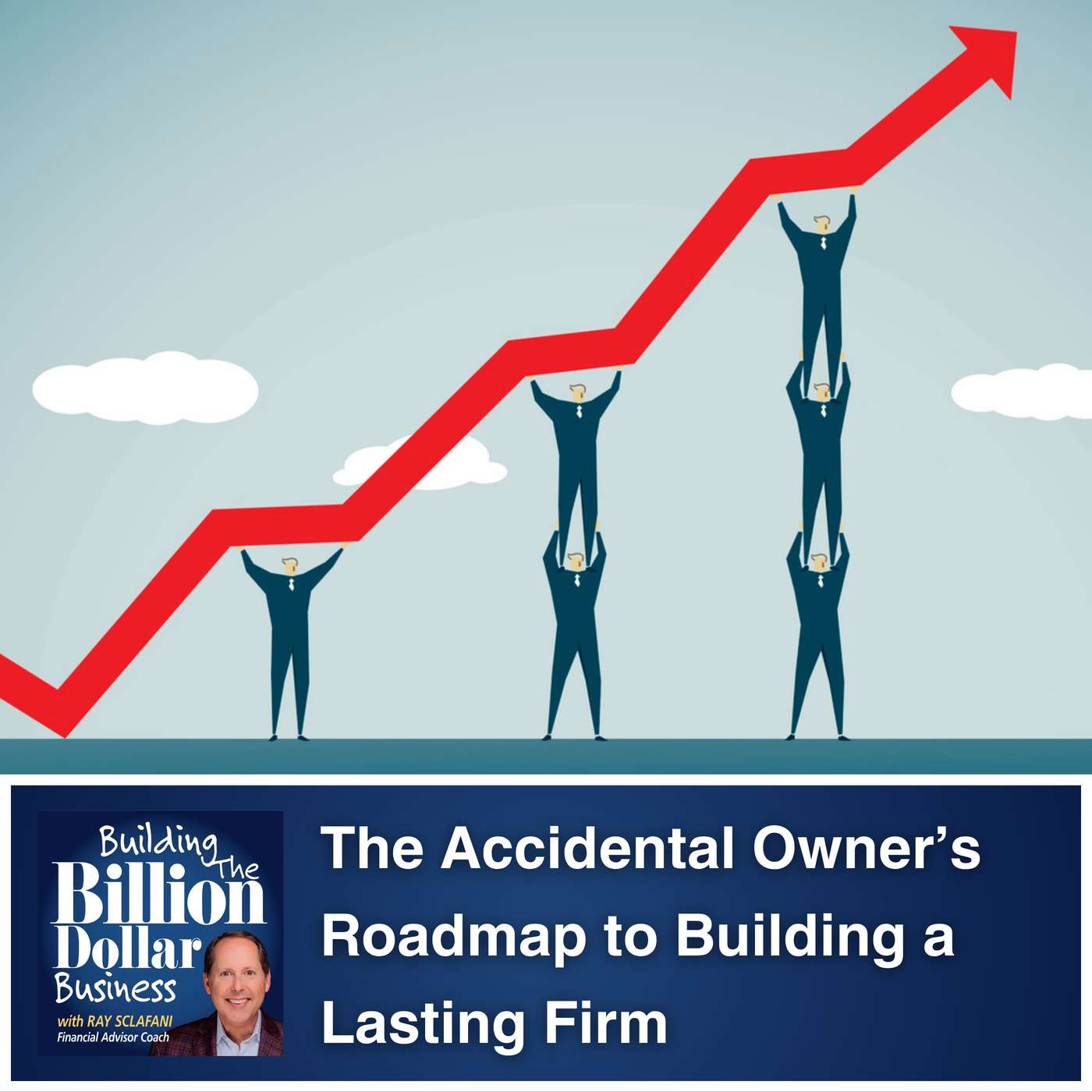
In this episode of "Building the Billion Dollar Business," host Ray Sclafani delves into the strategies and insights behind successful financial advisory firms, focusing on organic growth and new client acquisition. He outlines six steps to boost growth, emphasizing the importance of client relationships, team collaboration, and strategic planning. Ray also discusses the significance of setting intentional goals and fostering a culture centered around growth.Key TakeawaysOrganic growth is a critical indicator of a firm's health.Understanding total relationship value (TRV) is essential.Generational continuity is key for long-term success.A focused marketing plan aligns with client needs.Utilizing CRM effectively identifies growth opportunities.Reframing culture around growth attracts talent.For more information click here to visit The Best in the Business Blog.Find Ray and the ClientWise Team on the ClientWise website or LinkedIn | Twitter | Instagram | Facebook | YouTubeTo join one of the largest digital communities of financial advisors, visit exchange.clientwise.com.
In this episode, Ray Sclafani discusses the implications of avoiding growth targets in business. He highlights a case where a company decided to stop setting growth targets to focus on client service. However, he argues that this decision led to challenges in managing capacity, planning succession, and fulfilling client promises. The conversation emphasizes the importance of balancing client service with the need for growth targets to ensure effective business management.Key TakeawaysGrowth happens whether you plan or notTrack revenue per professional, revenue per client, and time per client segmentMap retirements against junior advisor readiness and create a 3–5 year development planLet data guide leadership decisions by using dashboards and metrics to prevent overextension and burnoutPrevent “success outgrowing structure” by conducting quarterly capacity checks to evaluate workload, client demand, and team readinessFind Ray and the ClientWise Team on the ClientWise website or LinkedIn | Twitter | Instagram | Facebook | YouTubeTo join one of the largest digital communities of financial advisors, visit exchange.clientwise.com.
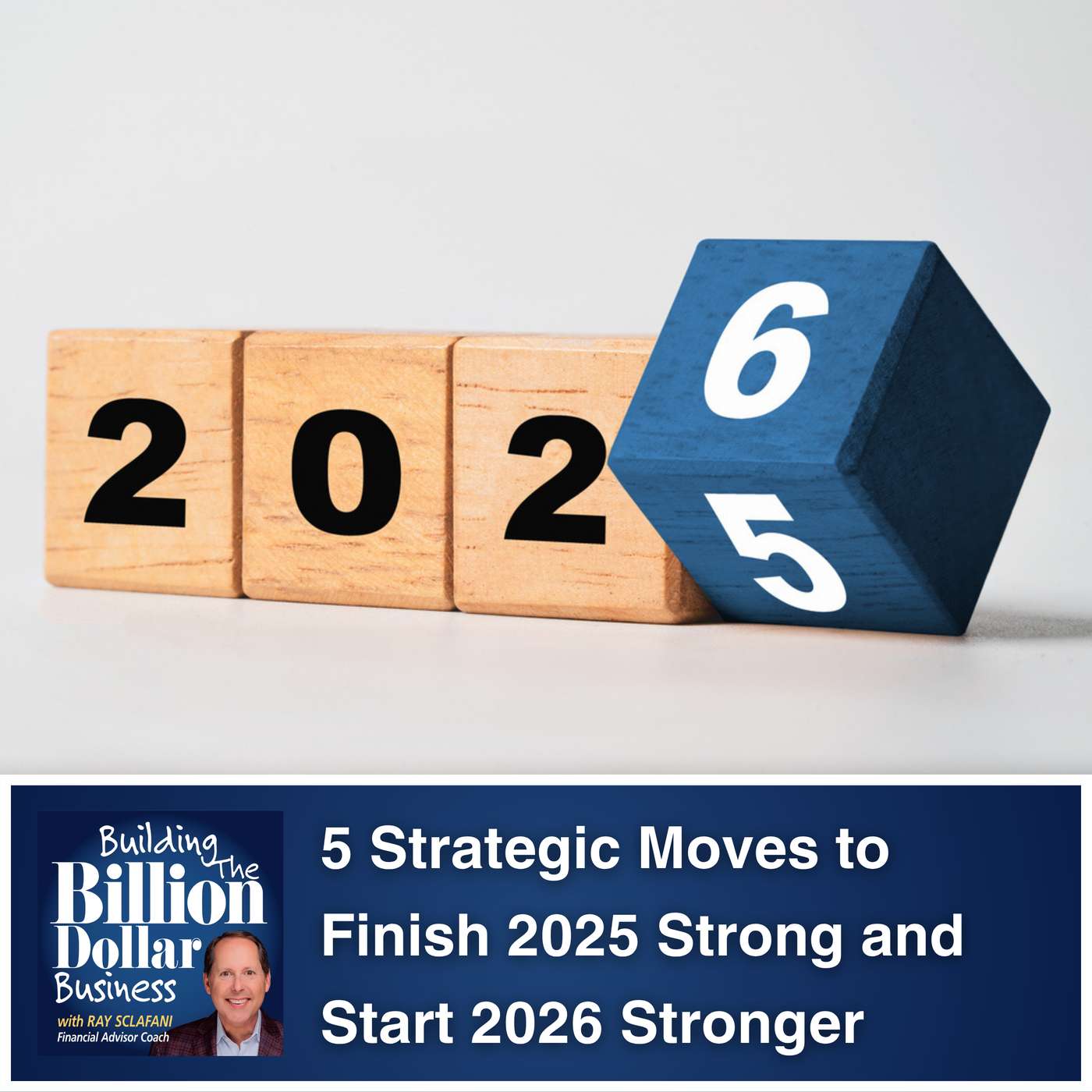
In this episode, Ray Sclafani discusses the importance of finishing the year strong and how it impacts the upcoming year. He emphasizes the need for a proactive mindset, strategies for success, and the significance of setting clear goals. He also covers overcoming challenges and maintaining motivation as key components of achieving success.Key TakeawaysHow you finish the year will determine how you start next year.Set clear goals for the new year to guide your actions.Overcoming challenges is part of the journey to success.Reflect on your progress this year to identify areas for improvement.Mindset shifts can lead to breakthroughs in performance.For more information click here to visit The ClientWise Blog.Find Ray and the ClientWise Team on the ClientWise website or LinkedIn | Twitter | Instagram | Facebook | YouTubeTo join one of the largest digital communities of financial advisors, visit exchange.clientwise.com.

In this episode, Ray Sclafani discusses the critical importance of having a well-defined compensation philosophy in financial advisory firms. He highlights the common pitfalls of compensation planning without a clear strategy and emphasizes the need for a structured approach that aligns pay with performance, culture, and profitability. The conversation covers the essential building blocks of a strong compensation philosophy, how to implement it effectively, and the impact it has on employee engagement and trust in leadership.Key TakeawaysMore than half the industry lacks a clear compensation strategy.Clear pay philosophies lead to lower turnover rates.Transparency in compensation processes fosters trust among employees.Regularly review and adapt your compensation philosophy to align with business changes.Involve team members in defining key performance metrics.A strong compensation philosophy reflects the firm's values and leadership style.For more information click here to visit the Best in the Business Blog.Find Ray and the ClientWise Team on the ClientWise website or LinkedIn | Twitter | Instagram | Facebook | YouTubeTo join one of the largest digital communities of financial advisors, visit exchange.clientwise.com.
In this episode, Ray Sclafani explores how advisory firm leaders can move from solo leadership to shared, high-performing teams. Using the metaphor of a musical ensemble, Ray shares lessons from his high school band and real-world coaching with billion-dollar firms to show how clarity, trust, and accountability create lasting success. Learn how to define team roles, foster trust, and lead through leadership transitions while keeping your firm’s performance in harmony.Key Takeaways Leadership is most effective when responsibility is shared across the team.Clear roles help every team member understand how they contribute to the bigger picture.Trust among team members strengthens performance and accountability.Transitions in leadership are opportunities to evolve and sustain firm value.Every team member’s contribution is essential, like instruments in a symphony.Click here for the Decision Making Problem Solving Model™. Find Ray and the ClientWise Team on the ClientWise website or LinkedIn | Twitter | Instagram | Facebook | YouTubeTo join one of the largest digital communities of financial advisors, visit exchange.clientwise.com.

Comments

Download from Google Play

Download from App Store
 United States