


Human Factors Technology
Subscribed: 1Played: 24
Subscribe

Description
Exploring the intersection of technology and human behavior. Starting with a central question, we'll explore how innovative tech solves critical business problems by leveraging and enhancing user behavior. Tune in to uncover the future of human-centered design and intelligent solutions, one episode at a time.
12 Episodes
Reverse

In this episode of Human Factors Tech, we challenge common assumptions about AI in design and development, focusing on the role of vibe coding. We explore how vibe coding can empower UX/UI professionals to embrace new technologies rather than shy away from them. Our analysis highlights the potential of vibe coding to bridge the gap between creative ideas and functional code, making technology more accessible and innovative.TakeawaysVibe coding challenges traditional design assumptions.UX/UI professionals can embrace vibe coding.Vibe coding bridges creative ideas and code.Design thinking is enhanced by vibe coding.Vibe coding fosters innovation in design.Non-coders can leverage vibe coding effectively.Vibe coding requires thoughtful application.Professional developers remain essential.Vibe coding evolves with technological advances.Embracing AI in design leads to new opportunities.Chapters00:00:00 Introduction to Vibe Coding00:03:00 Challenging AI Assumptions00:06:00 Embracing Vibe Coding in Design00:09:00 Tools and Techniques for UX/UI00:12:00 Future Opportunities in Design and DevelopmentListen to full episode:

In this episode of Human Factors Tech, Jared Degnan delves into the nuanced intersections of authenticity, community engagement, and governance within our AI-driven world. From insights gathered during Atlanta Tech Week to expert discussions around AI ethics, content innovation, and transformative tech, Jared and his guests unpack how human-centric principles can guide us through rapid technological advancement.Discover why authenticity remains the cornerstone of meaningful digital experiences, how governance structures must evolve to keep AI ethical, and the ways community engagement fuels sustainable innovation. Featuring voices from the Hidden Genius Project and thought leaders shaping the future of content creation, this conversation explores how real-world experiences are crucial to designing technology that aligns with human values.

In this episode of Human Factors Tech, Jared Degnan delves into the nuanced intersections of authenticity, community engagement, and governance within our AI-driven world. From insights gathered during Atlanta Tech Week to expert discussions around AI ethics, content innovation, and transformative tech, Jared and his guests unpack how human-centric principles can guide us through rapid technological advancement.Discover why authenticity remains the cornerstone of meaningful digital experiences, how governance structures must evolve to keep AI ethical, and the ways community engagement fuels sustainable innovation. Featuring voices from the Hidden Genius Project and thought leaders shaping the future of content creation, this conversation explores how real-world experiences are crucial to designing technology that aligns with human values.Episode Highlights:Why authenticity is essential in an age where AI will soon generate 90% of digital content.The urgent need for governance frameworks guiding responsible AI practices.Real-world stories from Atlanta Tech Week, emphasizing the power of community-driven innovation.How the Hidden Genius Project is empowering Black youth through mentorship in technology.Join Jared in exploring the human dimensions of tech evolution, and learn actionable insights to apply within your own tech leadership and innovation journey.Chapters00:00 - Introduction to Synthetic and Augmented Data03:18 - Understanding Augmented Data06:35 - Exploring Synthetic Data09:18 - Applications of Augmented Data12:08 - The Intersection of Data and Personalization15:15 - Conclusion and Future Implications
Personalization at scale takes data - and a lot of it. In this episode we explore types of data that can can be “home grown” to help create ever more powerful and personalized experiences. In particular we dive into the concepts of synthetic and augmented data and their implications for technology and human experience. ResourcesAWS’ Guide To Data Augmentation - https://aws.amazon.com/what-is/data-augmentation/ Synthetic Data Generation using LLM: Crash Course for Beginners - https://youtu.be/hMjtdECXlYo?si=AHLaad4fj13VlG2N Synthetic Data and the Future of AI - https://papers.ssrn.com/sol3/papers.cfm?abstract_id=4722162 Personalization Done Right (Spotify Case Study) - https://hbr.org/2024/11/personalization-done-right TakeawaysSynthetic data mimics statistical properties of real data.Augmented data enriches existing data sets for better insights.Context is crucial when utilizing data for decision-making.Collaboration with data scientists enhances data utilization.Synthetic data allows for scaling and running simulations.Augmented data can personalize experiences across various industries.Data limitations can hinder effective personalization efforts.Elasticity testing can benefit from larger synthetic data sets.Understanding different data types is essential for professionals.The implications of data types extend to healthcare and user experience.Chapters00:00 - Introduction to Synthetic and Augmented Data03:18 - Understanding Augmented Data06:35 - Exploring Synthetic Data09:18 - Applications of Augmented Data12:08 - The Intersection of Data and Personalization15:15 - Conclusion and Future Implications

In this episode we explore the concept of personas in technology design, emphasizing the evolution from traditional one-dimensional personas to interactive personas that can engage in dialogue. We'll dive into the importance of understanding the target audiences and how AI tools like ChatGPT can enhance the persona creation process.The conversation covers the significance of research in building effective personas, the need for realism in persona responses, and concludes with insights on the future of persona development in technology.TakeawaysPersonas are essential for understanding the target audience.Interactive personas can enhance the design process.AI tools like ChatGPT can aid in persona creation.Research is crucial for building effective personas.Diversity of opinion improves persona accuracy.Realism in persona responses is important for engagement.Tweaking personas can lead to better outcomes.Understanding the user's context enhances persona effectiveness.Technology should empower and inspire users.The future of personas lies in their interactivity and realism.

In this episode of Human Factors Tech, we interview Zach Braun, CEO of Slate Safety , a startup focused on wearable technology aimed at improving worker safety. The conversation delves into the design and functionality of their wrist-based monitor, which tracks core body temperature and other metrics to prevent heat-related injuries. Zach shares insights on the importance of user experience, data privacy, and the role of AI in enhancing workplace safety. The discussion also touches on the future of wearable technology and the lessons learned from customer feedback.


We’re taking a trip to the International Manufacturing Technology Show (IMTS) to discover innovative technologies that enhance human behavior in manufacturing. In part one of this two-part episode, we walk with KEBA, makers of a no-code programming platform, which empowers manufacturing managers to program robots without extensive coding knowledge. The conversation delves into the role of system integrators, the importance of safety in automation, and the future of manufacturing technology in the context of Industry 4.0.
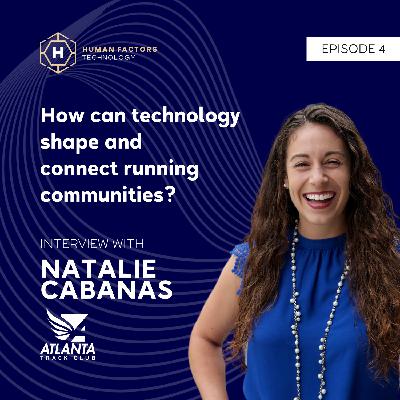
Atlanta Track Club is a nonprofit organization with a mission to create an active and healthy Atlanta through running and walking.They employ various communication strategies and technologies, such as push notifications, text messages, and live broadcasts, to keep participants informed and safe during races.The transition to the Let's Do This registration platform has improved data management and customer service for Atlanta Track Club.They are exploring ways to track the long-term impact of their events on participants' health and well-being.Technology has the potential to enhance the social aspect of their platform and create a stronger community among participants.

An errant content update from CrowdStrike took down hundreds of thousands of systems. Could this have been prevented with a better focus on the human factors of QA testing?Let’s explore.

TakeawaysTechnology strategy is important for the success of organizations and technology as a whole.Technology strategy involves people, process, systems, data, ROI, and experiences.Technology strategy is nested under the corporate and business strategies.There are three main categories of technology strategy: out of the box, best of breed, and custom development.Technology strategy helps in avoiding tech debt and making informed decisions.TitlesAvoiding Tech Debt through Technology StrategyComponents and Categories of Technology StrategySound Bites"Technology strategy is like solving a Rubik's cube.""Technology strategy should not be your primary strategy. Your primary strategy is your corporate strategy.""Out of the box strategy is when you take the platform as it is and make it the way your business works."ChaptersIntroduction to Technology StrategyPositioning Technology StrategyCategories of Technology StrategyTech Debt and the Importance of Technology Strategy

Human Factors Technology PodcastSeason 1, Episode 00Why do we need another type of technology podcast?
Comments


Download from Google Play

Download from App Store
 United States