


The Podcast Aquatic
Subscribed: 8Played: 177
Subscribe

© Tennessee Aquarium
Description
The official podcast of the Tennessee Aquarium in Chattanooga, Tennessee. Gain new insights into the animals — even the human kind — living and working in one of the world's largest freshwater-focused aquariums!
64 Episodes
Reverse
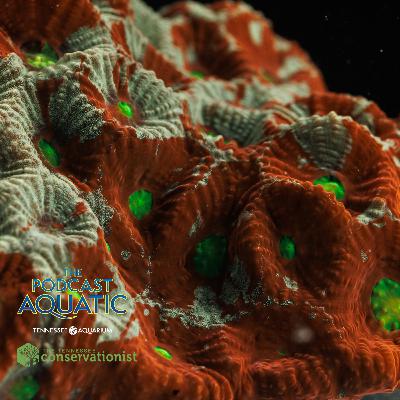
Excitement continues to mount on our campus as we anticipate the March 7 opening of our all-new Scuttlebutt Reef gallery. In the previous episode of the show, we took a top-level view of this exciting collection of habitats. This week, we’re zeroing in on what could be described as the gallery’s “centerpiece”: a massive, 6,000-gallon living reef exhibit. This bustling aquatic community was designed and built fromscratch by two of our aquarists, who join us on the episode about halfway through the construction process (at the time of recording). We chat about species selection, the challenges of caring for coral and the many other steps involved in designing a reef that’s pleasant for the animals to live in and for our guests to visit.Check out the previous, overview episode on Scuttlebutt Reef here: https://open.spotify.com/episode/0XrC5hE2A3P9Rte8yxFr46?si=3bf282f7ccdc4973Watch the first of our two-part video docu-series about theconstruction of this exhibit: https://youtu.be/6aqTBv8YMSoEpisode Cast Casey Phillips, host/senior communicationsspecialistKyle McPheeters, life support systems lead aquaristSarah Kate Bailey, aquarist II The Podcast Aquatic is made possible by support from The Tennessee Conservationist, the official magazine of Tennessee State Parks.Printed sustainably on 100% post-consumer recycled paper with UV ink, each issue is filled with fascinating stories about Tennessee’s native species, rich history, and unique culture. It’s also your guide to exploring state parks and planning your next outdoor adventure. Become a Tennessee Conservationist and subscribe at tnconservationist.org. Join other conservation enthusiasts and follow us on Facebook and Instagram. [Episode cover art is of a War Coral (Favites pentagona) and was taken by Communications Content Creator II Doug Strickland.]
Although the Aquarium is constantly changing up animals inthe exhibits or building new habitats, it’s not often that we get to celebrate the opening of a brand-new gallery. With a building like ours, space is at a premium, so when we add something big, something old often has to leave to makeroom for the new and exciting addition. In a little over two weeks, the Aquarium will cut the ribbonon Scuttlebutt Reef. This exciting new collection of exhibits is taking the place of the Boneless Beauties gallery and is the first major addition to our campus since 2023. Scuttlebutt Reef shines a spotlight on many smaller marinespecies with highly specialized (and often misunderstood) adaptations. These oddball superpowers allow them to — among other things — glow in the dark, suction themselves to rocks, refract light, dig without any limbs and punch well above their weight class. The new gallery opens on March 7, 2026, but in the meantime,this episode will preview the new space, explore its origins and introduce many of the species you’ll soon be able to see there. To learn more about Scuttlebutt Reef, visit tnaqua.org/exhibit/scuttlebutt-reef/ Episode CastCasey Phillips, host, senior communications specialistSharyl Crossley, Ocean Journey lead aquarist Tom Demas, vice president, chief husbandry and exhibits officerJeff Worley, director of exhibit services The Podcast Aquatic is made possible by support from The Tennessee Conservationist, the official magazine of Tennessee State Parks.Printed sustainably on 100% post-consumer recycled paper with UV ink, each issue is filled with fascinating stories about Tennessee’s native species, rich history, and unique culture. It’s also your guide to exploring state parks and planning your next outdoor adventure. Become a Tennessee Conservationist and subscribe at tnconservationist.org. Join other conservation enthusiasts and follow us on Facebook and Instagram.
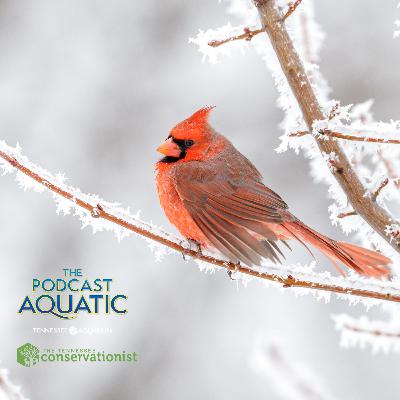
Whether you’re shoveling your way out of lake effect snow or get goosebumps and uncontrollable shivers whenever the thermometer dips below 50, winter can be a tough time of year. That’s especially true for wildlife, which can’t just keep nudging up the thermostat whenever they feel a bit of a chill. So what tactics do animals employ to make it through this tough time of year when food resources are thin on the ground, freshwater freezes solid and just a thin layer of leaf litter is all that’s separating them from exposure to the latest bomb cyclone? In this episode, several Aquarium experts point out the differences between hibernation, torpor and brumation, explain where bees go in the winter and how bears can manage to go months between bathroom breaks. Episode CastCasey Phillips, host/senior communications specialist/anti-winter rabblerouserKevin Calhoon, curator of forestsRose Segbers, senior entomologistLindsey Lewis, ambassador animal care specialist IIThe Podcast Aquatic is made possible by support from The Tennessee Conservationist, the official magazine of Tennessee State Parks.Printed sustainably on 100% post-consumer recycled paper with UV ink, each issue is filled with fascinating stories about Tennessee’s native species, rich history, and unique culture. It’s also your guide to exploring state parks and planning your next outdoor adventure.Become a Tennessee Conservationist and subscribe at tnconservationist.org. Join other conservation enthusiasts and follow us on Facebook and Instagram.
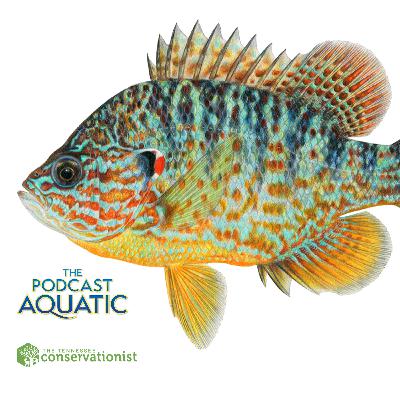
Before the advent of photography and — obviously — videography, naturalists had no choice but to rely on their artistic skills if they wanted to preserve a visual record of their work. Whether an impromptu sketch or a laboriously detailed drawing or painting, scientific illustrations were a vital means of sharing scientific research and observations with the public. They were also, in many cases, absolutely beautiful works in their own right. In this episode of the show, we connect with a modern-day scientific illustrating savant, Joe Tomelleri, who is renowned the world over for this exactingly detailed depictions of freshwater fish. Using nothing but his skill, carefully preserved specimens and a set of colored pencils, he toils for dozens of hours to produce a single image that replicates identifiable characteristics down, without exaggeration, to individual scales. To learn more about Joe's work or to purchase a print, visit his website at https://www.americanfishes.comWatch a video documenting Joe and Dr. Bernie Kuhajda's work to study and document Mexican trout species at https://youtu.be/IgLvcImJW1I?si=12R290rrmZr3_rbu[The drawing of a Pumpkinseed used as this episode's art is by — and used courtesy of — Joe Tomelleri.]Episode CastCasey Phillips, host/senior communications specialistJoe Tomelleri, scientific illustratorDr. Bernie Kuhajda, aquatic conservation biologistThe Podcast Aquatic is made possible by support from The Tennessee Conservationist, the official magazine of Tennessee State Parks.Printed sustainably on 100% post-consumer recycled paper with UV ink, each issue is filled with fascinating stories about Tennessee’s native species, rich history, and unique culture. It’s also your guide to exploring state parks and planning your next outdoor adventure. Become a Tennessee Conservationist and subscribe at tnconservationist.org. Join other conservation enthusiasts and follow us on Facebook and Instagram.
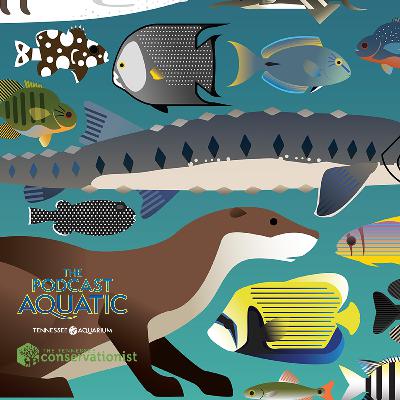
While exploring the galleries of the River Journey and OceanJourney buildings, artwork might not be what you’re focusing on during a visit to the Tennessee Aquarium, but maybe you should take a beat to give it some love. Stylized depictions of our living collection are all over campus courtesy of a pair of extremely talented and industrious graphic designers.In this episode — the first of a two-part mini-series — we’ll explore the overlap between art and science, learn about the role our graphic designers play in achieving our mission and how they heck they translate the recognizable features of an animal like an Epaulette Shark into a stylized illustration. Episode CastCasey Phillips, host, senior communications specialist,certified non-artistAimee Swartz, graphic designer Mike Shuleva, graphic designer The Podcast Aquatic is made possible by support from The Tennessee Conservationist, the official magazine of Tennessee State Parks.Printed sustainably on 100%post-consumer recycled paper with UV ink, each issue is filled with fascinating stories about Tennessee’s native species, rich history, and unique culture. It’s also your guide to exploring state parks and planning your next outdoor adventure. Become a Tennessee Conservationist and subscribe at tnconservationist.org. Join other conservation enthusiasts and follow us on Facebook and Instagram.
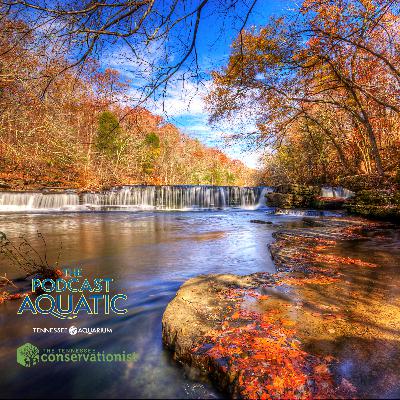
For many people, a visit to a national park is like making a pilgrimage, a chance to commune with nature in a setting of remarkable beauty and peace. The United States is a big country, though, and even with more than 430 designated national parks, every region didn't get an equal share of the spoils. Although spectacular examples exist, such as the Great Smoky Mountains, Acadia and Everglades, only about 20% of national parks are east of the Mississippi. If you live far from a national park and want to seek solace in nature closer to home, your best bet is probably one of the almost 10,000 state parks. These sites are distributed far more evenly throughout the country and enshrine vistas every bit as beautiful and grandiose as those in national parks. Even better, there's probably one (or several) just around the corner from wherever you happen to be listening. In this episode, the Studio Dive Cage goes on the road to Old Stone Fort State Archaeological Park about an hour west of Chattanooga. There, guests from The Tennessee Conservationist — the official magazine of Tennessee State Parks — and the park discuss the misnomer that gave Old Stone Fort its name, why the nearby Duck River is so biologically rich, the role state parks play in democratizing access to nature and the future of Tennessee state parks. For more information about or to subscribe to The Tennessee Conservationist, visit https://www.tnconservationist.orgLearn more about Tennessee's State Parks at https://www.tnstateparks.comEpisode castCasey Phillips, host/senior communications specialist/bona fide state park fan Whit Gardner, marketing and subscription manager (The Tennessee Conservationist)Keith Wimberley, park manager (Old Stone Fort State Archaeological Park)The Podcast Aquatic is made possible by support from The Tennessee Conservationist, the official magazine of Tennessee State Parks.Printed sustainably on 100% post-consumer recycled paper with UV ink, each issue is filled with fascinating stories about Tennessee’s native species, rich history, and unique culture.It’s also your guide to exploring state parks and planning your next outdoor adventure. Become a Tennessee Conservationist and subscribe at tnconservationist.org. Join other conservation enthusiasts and follow us on Facebook and Instagram.
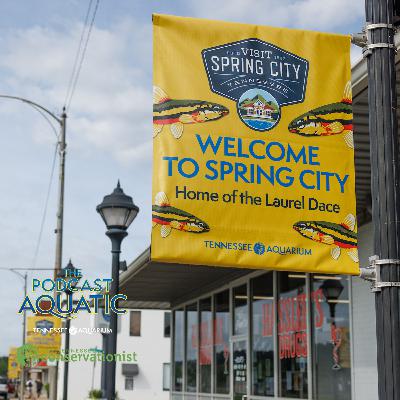
For many species, the arrival of humans to the neighborhood is usually a portent of bad things to come. The alterations we make to our environment often wreak havoc on the other animals that share those wild spaces with us. No matter how you slice it, ours is the dominant species on the planet when it comes to shaping the world around us to suit our wants and desires. But that power also can be wielded to enact positive change, and when humans — especially an entire community of them — rally to a species' defense, their impact can be potent. In this episode, you'll learn about one small Tennessee community's response to learning about the plight of a critically endangered minnow living on a nearby ridge. Like all good neighbors, they came together in defense of this hard luck fish, and the story of how and why that came to happen is the subject of this discussion. Learn more about the Laurel Dace and the Aquarium's efforts to save it here: https://tnaqua.org/join-give/race-for-the-laurel-dace/ Episode CastCasey Phillips, host/senior communications specialistHelaina Gomez, watershed conservation coordinatorStephania Motes, former city manager of Spring City, TennesseeThe Podcast Aquatic is made possible by support from The Tennessee Conservationist, the official magazine of Tennessee State Parks.Printed sustainably on 100% post-consumer recycled paper with UV ink, each issue is filled with fascinating stories about Tennessee’s native species, rich history, and unique culture. It’s also your guide to exploring state parks and planning your next outdoor adventure.Become a Tennessee Conservationist and subscribe at tnconservationist.org. Join other conservation enthusiasts and follow us on Facebook and Instagram.
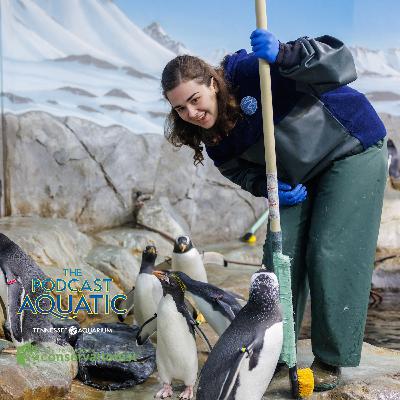
At the Aquarium, a LOT of work is done by full-time team members, from seeing to the needs of the animals and keeping the lights on to hosting special events and ... yes, podcasting. During their visit, however, many guests benefit in innumerable ways from the dedicated efforts of hundreds of volunteers. From prepping diet for sharks and watering tropical orchids to hosting underwater educational programs, volunteers make the Aquarium world go round. In this episode, our volunteer coordinators join a long-time volunteer diver to discuss why folks are so generous with donating their time and effort to the Aquarium and ways you — yes, YOU — can sign up to help out, too. Learn more about opportunities to volunteer at the Aquarium at tnaqua.org/volunteer/Episode CastCasey Phillips, senior communications specialist/hostDarleene Cole, senior program manager of volunteer servicesClaudia Mendez-Marti, volunteer engagement coordinatorDaniel Backlund, volunteer diverThe Podcast Aquatic is made possible by support from The Tennessee Conservationist, the official magazine of Tennessee State Parks.Printed sustainably on 100% post-consumer recycled paper with UV ink, each issue is filled with fascinating stories about Tennessee’s native species, rich history, and unique culture. It’s also your guide to exploring state parks and planning your next outdoor adventure.Become a Tennessee Conservationist and subscribe at tnconservationist.org. Join other conservation enthusiasts and follow us on Facebook and Instagram.

As the last kitten-a-day page falls from the calendar, we're taking a moment to look back on the first full year of The Podcast Aquatic and celebrate the many high points for the show. Of all the topics we've covered this year, though, host Casey is most proud of our (admittedly fairly recent) discussion about how the Aquarium takes pains to ensure it is as accessible to as broad an audience as possible. Take a listen to this touching discussion as you toast in 2026. The show will be back up and running next week with a new episode to kick off season two!The Podcast Aquatic is made possible by support from The Tennessee Conservationist, the official magazine of Tennessee State Parks.Printed sustainably on 100% post-consumer recycled paper with UV ink, each issue is filled with fascinating stories about Tennessee’s native species, rich history, and unique culture. It’s also your guide to exploring state parks and planning your next outdoor adventure. Become a Tennessee Conservationist and subscribe at tnconservationist.org. Join other conservation enthusiasts and follow us on Facebook and Instagram.
Hard to believe we're 50 episodes deep into The Podcast Aquatic! Listen in as we celebrate this milestone by turning the tables on erstwhile host/wannabe expert Casey Phillips to put him in the hot seat for once!Episodes we mention that you should check out: Doing Science at Aquariums and Zoos: https://open.spotify.com/episode/7vbVj21Z9P0griqYMoQ05c?si=DamyzMn1QaGcNwTCNqfkAQ Everybody Loves Rays, Man: https://open.spotify.com/episode/6B4aL2FtzWZRBCxE3BX9WQ?si=nj-PyqUBSPe_CEqwZDUvbQBuilding An Aquarium For Everyone: https://open.spotify.com/episode/5gcXGoJxzrS1zC1qjHMevU?si=VOOYRxwBQOSTcKgNcGFXZwAppalachian Animal Mythbusters: https://open.spotify.com/episode/7tzrHG44hMtBkcGuWhbVTz?si=c20f84a0bd0743d3Check out these other zoo and aquarium podcasts:Aquarium of the Podcific (Aquarium of the Pacific): https://open.spotify.com/show/3iItYuGBfh4UsDfWaBSpiC?si=7fccf8cf018f4e3eCincinnati Zoo Tales (Cincinnati Zoo): https://open.spotify.com/show/7dV5yB9Hi4mNbGxsID9MSe?si=63a7720d5d974c57Our Herd (Toledo Zoo and Aquarium): https://open.spotify.com/show/4fga076PsppB51wmjhFHhH?si=871812850f974dc8Amazing Wildlife (San Diego Zoo): https://open.spotify.com/show/43FIWGkO98EugEu5eyF0s9?si=0697387b3a4b4790Episode CastCasey Phillips, senior communications specialist/expert on himselfRachel Thayer, guest host/assistant curator of fishesThe Podcast Aquatic is made possible by support from The Tennessee Conservationist, the official magazine of Tennessee State Parks.Printed sustainably on 100% post-consumer recycled paper with UV ink, each issue is filled with fascinating stories about Tennessee’s native species, rich history, and unique culture.It’s also your guide to exploring state parks and planning your next outdoor adventure. Become a Tennessee Conservationist and subscribe at tnconservationist.org. Join other conservation enthusiasts and follow us on Facebook and Instagram.
In the English language, there are few words that convey a sense of finality quite like "extinction." The notion that a species could completely disappear from the planet forever — down to literally the last individual — is incredibly sobering. But how "final" is extinction? How can scientists be sure that an animal has, in fact, completely disappeared forever? As sampling and surveying techniques improve and more and more eyes and camera lenses are trained on broader and broader swaths of the planet, supposedly extinct animals like the Coelacanth and Attenborough's Long-beaked Echidna have been rediscovered like Lazarus rising from the grave. In this quick-hit episode, we pose the question to our resident biologist of how extinction is determined, whether it's reversible and, if so, why bringing an animal back might not be a morally sound path to take. Learn more about how our intervention saved the critically endangered Laurel Dace from near-certain extinction: https://youtu.be/NPcm_d-PsXk?si=xRy63_gWZ_ktvExF Episode castCasey Phillips, host, senior communications specialist, certifiably not extinctDr. Bernie Kuhajda, aquatic conservation biologistThe Podcast Aquatic is made possible by support from The Tennessee Conservationist, the official magazine of Tennessee State Parks.Printed sustainably on 100% post-consumer recycled paper with UV ink, each issue is filled with fascinating stories about Tennessee’s native species, rich history, and unique culture.It’s also your guide to exploring state parks and planning your next outdoor adventure. Become a Tennessee Conservationist and subscribe at tnconservationist.org. Join other conservation enthusiasts and follow us on Facebook and Instagram.
Why are lemurs such messy eaters? Why would a penguin refuse to eat a delicious capelin? If a snake hasn't eaten in three months, should I be concerned? If you think it's tough to feed your clan, consider the challenge of satiating more than 13,000 animals, all of which have different needs and preferences. On the eve of the most glutton-y holiday of all, this Thanksgiving-special episode homes in on all the delectably meaty details when it comes to nutrition here at the Tennessee Aquarium. Check out how many fish penguins can put down in a single sitting (waddling?) before undergoing their annual catastrophic molt: https://youtu.be/LFxelNv7PwoEpisode castCasey Phillips, host, senior communications specialist, life-long eaterDr. Chris Keller, staff veterinarianThom Demas, vice president and chief husbandry & exhibits officerKevin Calhoon, curator of forestsThe Podcast Aquatic is made possible by support from The Tennessee Conservationist, the official magazine of Tennessee State Parks.Printed sustainably on 100% post-consumer recycled paper with UV ink, each issue is filled with fascinating stories about Tennessee’s native species, rich history, and unique culture.It’s also your guide to exploring state parks and planning your next outdoor adventure.Become a Tennessee Conservationist and subscribe at tnconservationist.org. Join other conservation enthusiasts and follow us on Facebook and Instagram.
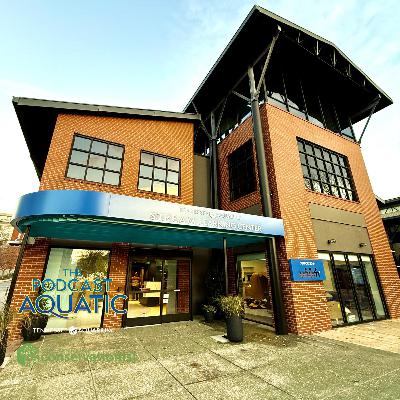
When you were a student — assuming you aren't still one — did you ever imagine that your teacher lived at your school? Sometimes, educators can give so much of their time and energy (and occasionally their money) to their craft that it can certainly seem like a school is where they call home. In reality, many teachers feel hamstrung at having to adapt their methods to their classroom facilities, working around inadequacies or equipment that doesn't quite meet their own needs or those of their students. What if teachers were invited to help design those same classrooms, though? Wouldn't their input be a valuable asset in the learning process? Wouldn't it ease their frustration and make them more effective at their critically important jobs? As this episode goes live, the Tennessee Aquarium is just one day away from opening a major addition to its downtown Chattanooga campus: The S.T.R.E.A.M. Learning center, supported by UNUM. This new facility sits next door to the Ocean Journey and River Journey buildings and will act as the hub of the Aquarium's previously decentralized educational efforts. Better still, its design was directly influenced by the educators who will be using it to teach and as a resource for professional development. In this episode, we discover why we invited teachers to participate in the design process and how their input will impact the Aquarium's long-standing role as an educational resource to so many.Episode castCasey Phillips, host, senior communications specialist and proud teacher's son/brother-in-lawNatali Rodgers, director of learning and evaluationRachel Hargis, UNUM corporate social responsibility managerThe Podcast Aquatic is made possible by support from The Tennessee Conservationist, the official magazine of Tennessee State Parks.Printed sustainably on 100% post-consumer recycled paper with UV ink, each issue is filled with fascinating stories about Tennessee’s native species, rich history, and unique culture.It’s also your guide to exploring state parks and planning your next outdoor adventure. Become a Tennessee Conservationist and subscribe at tnconservationist.org. Join other conservation enthusiasts and follow us on Facebook and Instagram.
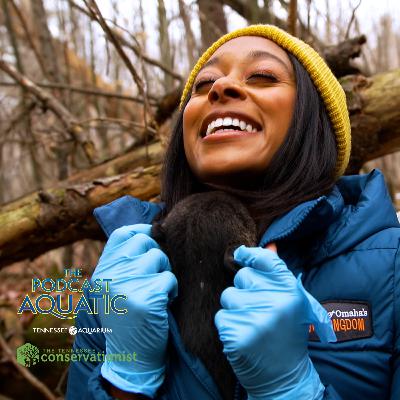
All her life, Dr. Rae Wynn-Grant was focused on one career ambition: to host a nature series like those that had so stoked her passion for animals early in life. Decades later, Dr. Rae was an author and host to a hit podcast with a long list of academic achievements to her name. She was content and had come to terms with the thought that she might not be destined to grace the silver screen.And then NBC came calling with an offer to co-helm one of the most well-respected, storied nature series to lead the revival of a legendary series: Mutual of Omaha's Wild Kingdom. Alongside co-host Peter Gros, she has visited wild faces and spaces across the world for Wild Kingdom Protecting the Wild, which recently began airing its third season in October. In this episode, Dr. Rae chats about growing up apart from nature but no less entranced by it and her hopes and ambitions as an inspiration to new generations of animal lovers. Mutual of Omaha's Wild Kingdom Protecting the Wild airs Saturday mornings on NBC's "The More You Know" programming block. Check local airtimes and other ways to watch at mutualofomaha.com/wild-kingdom/article/how-to-watch-mutual-of-omahas-wild-kingdom-protecting-the-wildLearn more about Dr. Rae Wynn-Grant's many projects via her website, raewynngrant.com/Episode castCasey Phillips, host and senior communications specialistDr. Rae Wynn-Grant, author, wildlife ecologist, podcast host and co-host of Mutual of Omaha's Wild Kingdom Protecting the WildThe Podcast Aquatic is made possible by support from The Tennessee Conservationist, the official magazine of Tennessee State Parks.Printed sustainably on 100% post-consumer recycled paper with UV ink, each issue is filled with fascinating stories about Tennessee’s native species, rich history, and unique culture. It’s also your guide to exploring state parks and planning your next outdoor adventure.Become a Tennessee Conservationist and subscribe at tnconservationist.org. Join other conservation enthusiasts and follow us on Facebook and Instagram.
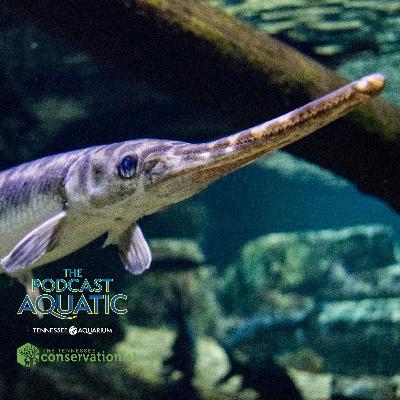
There are some animals that don’t deal well with change. Or rather, they seem to somehow avoid being touched by the passage of time like they’re role playing as Peter Pan or Dorian Gray. These lurkers on the edges of the evolutionary flow are what scientists have catchingly termed “living fossils.” One of the most well-known examples of being adverse-to-change are the lepisosteiformes, the taxonomic order of fishes more commonly known as “gars.”These toothy-snooted, predominantly freshwater predators have a fearsome appearance but have come to be much beloved. This episode arrives concurrent with the annual celebration known as “Gar Week.” This weeklong social media event is the brainchild of the Oklahoma Department of Wildlife Conservation and offers an opportunity for the citizens of Earth to pay homage to these evolutionarily stubborn fishes. This episode features special guest Dr. Solomon David, a well-known, socially media savvy gar expert, researcher and aquatic ecology professor from the University of Minnesota. Learn more about him at solomondavid.net/ [Check out Dr. David’s gar-geous photos and videos via his Instagram (instagram.com/solomon.r.david/) and TikTok (tiktok.com/@solomonrdavid).] Episode castCasey Phillips, host/senior communications specialist/podcast GARgoyleDr. Solomon David, assistant professor, aquatic ecologist and principal investigator at GarLab (University of Minnesota)Dr. Bernie Kuhajda, aquatic conservation biologist (Tennessee Aquarium)The Podcast Aquatic is made possible by support from The Tennessee Conservationist, the official magazine of Tennessee State Parks.Printed sustainably on 100% post-consumer recycled paper with UV ink, each issue is filled with fascinating stories about Tennessee’s native species, rich history, and unique culture. It’s also your guide to exploring state parks and planning your next outdoor adventure.Become a Tennessee Conservationist and subscribe at tnconservationist.org. Join other conservation enthusiasts and follow us on Facebook and Instagram.
Appalachia is an ancient place. That's a fact. Whether your roots in this part of the world run deep, you just moved here or you're merely passing through, the feeling of age in this rippled, time-worn landscape is palpable, especially when you find yourself traipsing off the trail. The animals that dwell in the deep lakes and far-flung hollers betwixt Appalachia's mountains have birthed many tall tales and legends. And as it turns out, some of them might even have a kernel of truth to them. In this special episode of the show, we swap tales and shine a light of scientific truth on our old home place. A team of the Aquarium's in-house experts bring their experience to the task of debunking — or possibly lending credence to — common Appalachian animal myths, from rumors of mountain lions haunting the hills to literal big fish stories of giant catfish lurking at the bottom of rivers. Episode castCasey Phillips, host, senior communications specialist and proud Appalachian Rachel Thayer, assistant curator of fishes and daughter of the Commonwealth (of Virginia)Bill Hughes, herpetology collection coordinatorKevin Calhoon, curator of forestsDr. Bernie Kuhajda, aquatic conservation biologist[Disclaimer: The song used in the introduction to this episode was created through the generative audio platform Suno.]The Podcast Aquatic is made possible by support from The Tennessee Conservationist, the official magazine of Tennessee State Parks.Printed sustainably on 100% post-consumer recycled paper with UV ink, each issue is filled with fascinating stories about Tennessee’s native species, rich history, and unique culture.It’s also your guide to exploring state parks and planning your next outdoor adventure. Become a Tennessee Conservationist and subscribe at tnconservationist.org. Join other conservation enthusiasts and follow us on Facebook and Instagram.
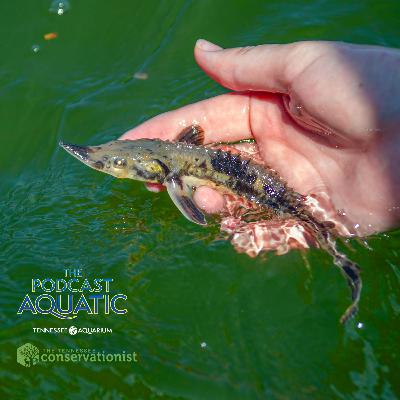
For a fish that first appeared alongside dinosaurs and survived the calamity that wiped them out, the Lake Sturgeon has had a hard last half-century in Tennessee. Once abundant in the state's waterways, wild Lake Sturgeon were last seen in Tennessee in 1963. In 1998, the Tennessee Aquarium was among the organizations that founded the Lake Sturgeon Working Group. Since then, the group members have been hard at work raising and releasing baby Lake Sturgeon in hopes of re-establishing a stable wild population in the Tennessee and Cumberland rivers. This year, that effort celebrates 25 years of releasing sturgeon raised in human care, and recent findings by wildlife managers suggest those years of effort may finally be bearing fruit. Watch our scientists help with spawning wild Lake Sturgeon in Wisconsin: https://youtu.be/ew_4yDb3CcwEpisode CastCasey Phillips, host/senior/communications specialistDr. Anna George, vice president conservation science & educationEd Scott, fisheries biologist, Tennessee Valley Authority (retired)Brandon Simcox, rivers and streams coordinator, Tennessee Wildlife Resources Agency The Podcast Aquatic is made possible by support from The Tennessee Conservationist, the official magazine of Tennessee State Parks.Printed sustainably on 100% post-consumer recycled paper with UV ink, each issue is filled with fascinating stories about Tennessee’s native species, rich history, and unique culture. It’s also your guide to exploring state parks and planning your next outdoor adventure. Become a Tennessee Conservationist and subscribe at tnconservationist.org. Join other conservation enthusiasts and follow us on Facebook and Instagram.
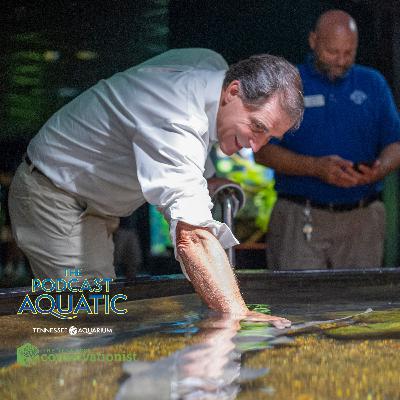
To the general public, the acronym "AZA" might be largely meaningless, but in the zoo and aquarium world, it's associated with the gold standard by which all aspects of a zoological organization is measured, especially the animals' well being. The Association of Zoos and Aquariums was founded more than 100 years ago in 1924. It now comprises more than 9,000 individual members and has accredited more than 250 institutions worldwide. In this episode — recorded live at AZA's annual conference in Tampa, Florida — AZA President & CEO Dan Ashe talks about what it means to hold zoos and aquariums to this incredibly high standard, how it (like its member institutions) has had to change over the last century and the pride he takes in AZA's many global conservation-focused efforts around the world. Learn more about AZA's Saving Animals From Extinction (SAFE) Program: https://www.aza.org/aza-safeEpisode castCasey Phillips, senior communications specialist, host and AZA memberDan Ashe, AZA president & CEOThe Podcast Aquatic is made possible by support from The Tennessee Conservationist, the official magazine of Tennessee State Parks.Printed sustainably on 100% post-consumer recycled paper with UV ink, each issue is filled with fascinating stories about Tennessee’s native species, rich history, and unique culture. It’s also your guide to exploring state parks and planning your next outdoor adventure. Become a Tennessee Conservationist and subscribe at tnconservationist.org. Join other conservation enthusiasts and follow us on Facebook and Instagram.
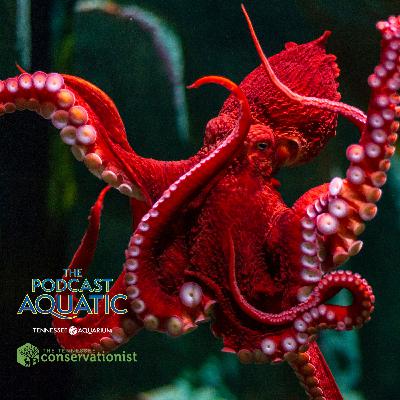
From impossibly flexible, boneless bodies and mastery of camouflage to an over-abundance of brains and hearts, octopuses are like aliens come down from on high to boggle the minds of biologists. In this short-form, Mic Droplet episode of the podcast, the Aquarium’s resident octopus specialist helps celebrate World Octopus Day by ticking off a few of the most-noteworthy facts about these amazing cephalopods and explains how in the actual heck you weigh a 50-pound octopus. See what a morning in the life of an octopus caretaker looks like: https://www.youtube.com/watch?v=gMw9NkkqkmY Episode castCasey Phillips, host and octopus hug survivorDanny Alexander, senior aquaristThe Podcast Aquatic is made possible by support from The Tennessee Conservationist, the official magazine of Tennessee State Parks.Printed sustainably on 100% post-consumer recycled paper with UV ink, each issue is filled with fascinating stories about Tennessee’s native species, rich history, and unique culture. It’s also your guide to exploring state parks and planning your next outdoor adventure. Become a Tennessee Conservationist and subscribe at tnconservationist.org. Join other conservation enthusiasts and follow us on Facebook and Instagram.
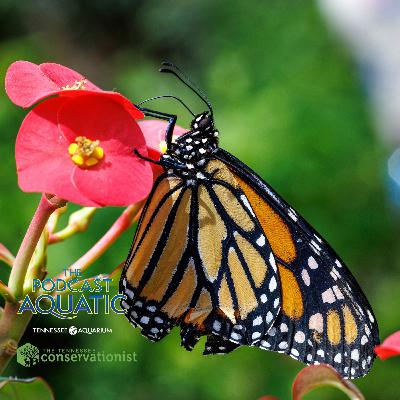
When it comes to the most impressive migrations in the animal kingdom , there are a few obvious standouts: the pole-to-pole voyage of the Arctic Tern; the horizon-spanning race of Wildebeests across the Serengeti; the bear-dodging spawning runs of Chinook Salmon.In the insect world, however, pretty much everything pales in comparison to the daunting voyage of Monarch Butterflies from Central Mexico to Canada and back again. Every year, these tiny, beautiful insects embark on this trip, which takes multiple generations to complete ... except when it doesn't. At the onset of fall, a single generation of butterflies completes the entire trip back to Mexico, a task that sounds laughably impossible for a featherweight insect with gossamer-delicate, three-inch wings. Yet they do it, every ... single ... year. The Tennessee Aquarium sits squarely in the middle of the migration route for the eastern population of Monarch Butterflies, making it a prime viewing location for these orange-and-gold beauties as they make their way northward each fall. In this episode, the Aquarium's senior entomologist talks about Monarchs set people's hearts a-flutter, the biological processes that allow them to undertake their unbelievable trip and steps society is taking to protect Monarchs from the greatest threat of all: us. Episode CastCasey Phillips, host, senior communications specialist and butterfly adorant Rose Segbers, senior entomologistAdditional ResourcesThe Tennessee Aquarium's Butterfly Garden: https://tnaqua.org/exhibit/butterfly-garden/Flight of the Butterflies trailer: https://www.youtube.com/watch?v=Nww3L5b0wnoMake Way for Monarchs (The Tennessee Conservationist): https://digital.tnconservationist.org/publication/?i=850997&article_id=5026054&view=articleBrowserXerces Society for Invertebrate Conservation's Project Milkweed: https://xerces.org/milkweedThe Podcast Aquatic is made possible by support from The Tennessee Conservationist, the official magazine of Tennessee State Parks.Printed sustainably on 100% post-consumer recycled paper with UV ink, each issue is filled with fascinating stories about Tennessee’s native species, rich history, and unique culture. It’s also your guide to exploring state parks and planning your next outdoor adventure. Become a Tennessee Conservationist and subscribe at tnconservationist.org. Join other conservation enthusiasts and follow us on Facebook and Instagram.

Comments

Download from Google Play

Download from App Store
 United States