


 Claim Ownership
Minor Compositions
Subscribed: 6Played: 48
Subscribe

© Copyright firefly frequencies
Description
Minor Compositions: Publishing the Unruly, the Radical, and the Yet-to-Come.
Minor Compositions is a research theorizing publishing project that is located, at the moment, within the London metropolitan basin of collective intelligence. Its main aim is to bring together, develop, and mutate forms of autonomist thought and practice, avant-garde aesthetics, and an everyday approach to politics.
More information: https://www.minorcompositions.info
As well on this webstite, Minor Compositions can be listened to via all the usual podcast type places including Apple Podcasts, Spotify, etc...
Minor Compositions is a research theorizing publishing project that is located, at the moment, within the London metropolitan basin of collective intelligence. Its main aim is to bring together, develop, and mutate forms of autonomist thought and practice, avant-garde aesthetics, and an everyday approach to politics.
More information: https://www.minorcompositions.info
As well on this webstite, Minor Compositions can be listened to via all the usual podcast type places including Apple Podcasts, Spotify, etc...
45 Episodes
Reverse

Minor Compositions Podcast Season 2 Episode 4 Wages Against Dreamwork In this episode of Minor Compositions, the usual format is playfully overturned as Richard Gilman-Opalsky stages a friendly “revolt,” taking over hosting duties to interview Stevphen Shukaitis about The Wages of Dreamwork, co-written with Joanna Figiel. What unfolds is less a conventional author interview than a comradely and reflective exchange on the conditions, contradictions, and possibilities of creative labor under contemporary capitalism. Moving between humor and critical analysis, the conversation explores dreamwork as both exploitation and potential: tracing how imagination, desire, and affect are captured within systems of value, while also gesturing toward forms of refusal, collectivity, and insurgent creativity. The episode places the book in relation to broader traditions of radical thought and publishing, unfolding as an open and informal exchange moving easily between discussion and reflection, and between critique and comradery. Intro / Outro Music: Richard Gilman-Oplasky, “A Minor Composition”
Minor Compositions Podcast Season 2 Episode 3 Communism Actually In this episode of the Minor Compositions, we discuss Communist Ontologies with its authors Richard Gilman-Opalsky and Bruno Gulli, exploring their proposal that communism be understood not only as a political program but as a form of life. The conversation ranges across questions of political economy, ontology, and revolutionary subjectivity, considering how Marx’s critique of capitalism points toward the recovery of ways of living beyond the reduction of life to labor. Along the way we discuss the historical contingency of revolutionary subjects, drawing on figures such as Rosa Luxemburg and Frantz Fanon, as well as movements like the Zapatista Army of National Liberation, to think through how identities and forms of struggle emerge, transform, and sometimes dissolve. The discussion also reflects on the philosophical tension between being and becoming, the limits imposed by carceral systems, and the possibilities opened by imagining new forms of collective life – finding, in the spirit of W. E. B. Du Bois – that the struggle for freedom often begins in small practices of interdependence, imagination, and other ways of doing beyond the logics of capital. More on the book.Bio: Richard Gilman-Opalsky is professor of political theory and philosophy in the School of Politics and International Affairs at the University of Illinois. He is the author of eight books, including Imaginary Power, Real Horizons, The Communism of Love, Specters of Revolt, and Precarious Communism. His work has been translated and published in Greek, Spanish, French, and German. Bruno Gullì teaches philosophy at Cuny-Kingsborough. He is the author of various articles and four books in the field of political ontology, including Labor of Fire: The Ontology of Labor between Economy and Culture (2005) and Singularities at the Threshold: The Ontology of Unrest (2020). Intro / outdo music: Wukir Suryadi, playing the Minotaur of Titir Image: Judgment of Midas, Unknown Flemish artist, imitator of Hendrik van Balen, late 16th century, via Hermitage Museum; King Midas, Andrea Vaccaro, 1670, via Dorotheum
Minor Compositions Podcast Season 2 Episode 2 Jazz is My Religion, Ted Joans is My Perspective In this episode of the Minor Compositions, we are joined by Steven Belletto and Grégory Pierrot, in order to discuss Steven’s book Black Surrealist. The Legend of Ted Joans. Together we explore Joans as Beat Generation insider, jazz trumpeter, collage artist, Pan-Africanist, and self-styled Surrealist griot, tracing a life that unfolded as an ongoing experiment in what he called a poem-life. Born in Cairo, Illinois in 1928, Joans moved through Greenwich Village at the moment the Beat Generation was coalescing, opened the first Black-owned art gallery in the neighborhood, staged proto-Happenings, and developed his jazz action paintings before embarking on decades of itinerant movement between Paris, Tangier, Timbuktu, and beyond. The conversation considers how Joans swam across and between currents often kept apart – Surrealism, Négritude, Black Power, and the Black Arts movement – while using humor, performance, and chance encounter as tools of resistance. We discuss jazz poetry, the fugitive, undercommon quality of his practice, and the challenges posed by an archive scattered by design. Reflecting on ongoing efforts to gather manuscripts, journals, recordings, and unpublished works, this episode takes up Joans’s radical dreams: of surrealism as liberation, of counterculture as insurgent practice, and of life itself as a work of art still resonating in the present. More on the book.Bio: Steven Belletto is Professor of English at Lafayette College. He is author of The Beats: A Literary History (2020), No Accident, Comrade: Chance and Design in Cold War American Narratives (2012), and editor of six books, including The Cambridge Companion to Jack Kerouac (2024), American Literature in Transition, 1950-1960 (2018) and The Cambridge Companion to the Beats (2017). Grégory Pierrot is Associate Professor of English at the University of Connecticut at Stamford where he teaches American and African American literature. His research bears on the cultural networks of the Black Atlantic. He is the author of The Black Avenger in Atlantic Culture (2019). Intro / outdo music: Ted Joans - Jazz is My Religion (1964)
S2E1 – In girum imus nocteet consumimur igniSeason 2 opens with a conversation with Silvia Maglioni and Graeme Thomson – filmmakers, artists, and co-founders of Firefly Frequencies – reflecting on radio as a collective, political, and affective medium. Moving between the history of autonomous radio, projects such as Lullabies for the Revolution and Terminal Beach, and collaborations including the Gaza Biennale, the discussion explores sound as a way of creating community, defamiliarizing political experience, and responding in time. The episode also considers radio and publishing as shared infrastructures: voicings, montage, reading groups, remixing archives, and the possibilities of activating past materials for new collectivist futures. Opening Season Two, In girum imus nocte et consumimur igni circles questions of listening, drift, and persistence – how we move together through sound, and what it means to keep a frequency alive.Firefly Frequencies: https://fireflyfrequencies.orgTerminal Beach: https://fireflyfrequencies.org/podcasts/terminal-beachAmbient Thought: https://fireflyfrequencies.org/podcasts/ambient-thoughtLullabies for the Revolution: https://fireflyfrequencies.org/podcasts/lullabies-for-the-revolutionMemory for Denial: https://fireflyfrequencies.org/podcasts/memory-for-denial Workers Against Capital: Reading Mario Tronti Sixty Years On: https://www.minorcompositions.info/?p=1666 Music: Intro: Jaydawn & Wukir Suryadi - Moal Ngejat from Pucung, Pangkur Jeung Hujan BedogOutro: Fireflies August 2022
Minor Compositions Podcast Episode 43 Communize the city This episode begins with Kike España’ presenting his essay “Communize the City: Towards an Insurgent Vicinity,” a text that examines the contemporary urban condition through the lens of financial brutalism, before segueing into a discussion of themes from it. España argues that cities have become logistical infrastructures of extraction, where financialization, automation, and real-estate speculation converge to displace communities and dissolve social relations. Drawing on thinkers such as Mbembe, Lefebvre, Guattari, and Moten, the essay frames the city-form as a planetary apparatus of expulsion – one that transforms citizenship, civility, and urban renewal into mechanisms of enclosure, discipline, and dispossession. Against this backdrop, España calls for insurgent forms of inhabiting that arise from the ruins of financial brutalism: practices of neighborhood, subsistence, and insurgency that refuse recognition by the dominant order while cultivating new forms of common life. By foregrounding the “informality of the commune” and proposing strategies like neighborhood committees, blocks in struggle, and intercommunalism, the text insists on the possibility of communizing the city from within its fractures. The seminar invites participants to reflect on how these concepts might inform both critical theory and practical organizing in the face of today’s planetary urban crisis. Bio: Kike España is an architect and urban researcher based in Málaga, Spain, with a PhD in urban theory from the University of Seville. He is actively involved in grassroots cultural-urban initiatives, including the social and cultural centre La Casa Invisible, the collective bookshop Suburbia, and the independent publishing house Subtextos. His work bridges academic inquiry and activist practice. He contributes to the Overtourist City research project at the School of Architecture, University of Málaga, and his writings explore themes of gentrification, commoning, and insurgent urbanism.
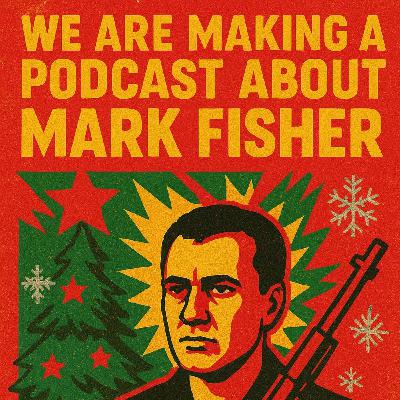
Minor Compositions Podcast Episode 42 We Are Making a Podcast About Mark Fisher In this episode, we speak with artists Sophie Mellor and Simon Poulter of Close and Remote about their sprawling, collaborative, and genre-bending project We Are Making a Film About Mark Fisher. The conversation traces the origins of the film: how an initial spark in Fisher’s writing grew into a hybrid work that fuses documentary, performance, collective creativity, and hauntological fiction. We explore how Close and Remote approached the challenge of translating hauntology into visual and cinematic language: the textures of lost futures, the atmospheres of cultural stagnation, and the ghosts that structure the present. With over seventy contributors and much of the production unfolding openly on Instagram, the film became an experiment in distributed authorship and decapitalised making. Mellor and Poulter reflect on how this process worked in practice: the unexpected turns, the moments of productive chaos, and the ways the networked contributions reshaped the project’s trajectory. They consider, too, how Fisher himself might have responded to such a mode of production, and the tensions inherent in staging anti-capitalist creative work on corporate platforms. Screening dates and more information about We Are Making a Film About Mark Fisher can be found at Close and Remote: https://www.closeandremote.net/portfolio/we-are-making-a-film-about-mark-fisher
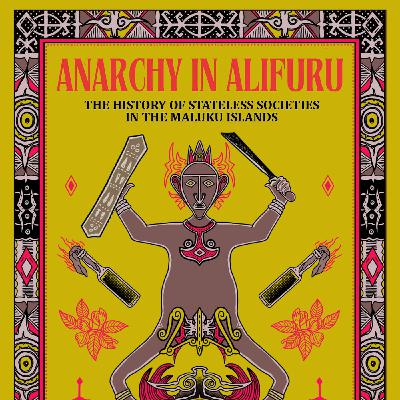
Minor Compositions Podcast Episode 41 Alifuru World: Stateless Histories, Decolonial Futures Discussion with Ferdiansyah Thajib & Hypatia Vourloumis on the forthcoming book Anarchy in Alifuru: The History of Stateless Societies in the Maluku Islands by Bima Satria Putra Putra’s book traces the histories of the Alifuru peoples – those who refused incorporation into the state formations of Ternate, Tidore, colonial empires, and the modern Indonesian nation-state. Drawing from oral histories, early travel accounts, and anarchist anthropology, Anarchy in Alifuru reimagines Maluku not as a marginal zone of empire but as a living archive of statelessness: a site where alternatives to state power and hierarchical authority were practiced, defended, and continually reconfigured. This conversation will explore how these histories of Alifuru resistance resonate with contemporary struggles for autonomy, decolonization, and collective life. How might the legacies of refusal and federation in the archipelago inform critiques of extraction, assimilation, and the persistent violence of the nation-state? What possibilities emerge when we read these histories as resources for thinking – and living – politics otherwise? Together Thajib, and Vourloumis will consider how Anarchy in Alifuru unsettles dominant narratives of modernity and opens space for minor, insurgent forms of world-making. Bios: Ferdiansyah Thajib is a researcher and educator whose work focuses on queer politics, affect, and the intersections of memory, trauma, and collective healing in post-authoritarian Indonesia. Current he is a senior lecturer at FAU Erlangen-Nürnberg, Germany. Since 2007 he has been a member of the KUNCI Study Forum & Collective in Yogyakarta, where he has been involved in developing practices of critical pedagogy, artistic research, and collaborative forms of knowledge production. His writing and projects explore how marginal communities craft modes of survival, endurance, and solidarity. Hypatia Vourloumis is a scholar of performance, poetics, and anticolonial thought with a focus on Indonesia. She holds a Ph.D. in performance studies from NYU and has published widely in journals such as Women & Performance, Theatre Journal, and Performance Research. She is co-author (with Sandra Ruiz) of Formless Formation (Minor Compositions, 2021) and The Alleys (NP, 2024). Her work often emerges through collaboration with theorists, artists, and activists, engaging questions of aesthetics, politics, and autonomous forms of collective life. Intro / Outro Music: Filastine & Nova - Nusa Fantasma
Minor Compositions Podcast Episode 40 Utopia in the Factory? Discussion with Rhiannon Firth & John Preston on their new book Utopia in the Factory. Prefigurative Knowledge Against Cybernetics There’s long been this seductive idea that automation, AI, and robotics might finally deliver us into a kind of post-work utopia. You can find it everywhere, from Silicon Valley pitch decks to certain corners of the radical left. The story goes something like this: in the age of “Industry 4.0,” digital manufacturing will allow for seamless, frictionless production. Factories without workers –“lights-out” facilities where machines run the show – become the emblem of a capitalist cybertopia. And then, on the other side, there’s the more radical dream: that these same technologies might be the conditions for Fully Automated Luxury Communism – a reimagined Marxist vision where automation liberates humanity from labour, ushering in lives of collective leisure and abundance. Still others turn back to cybernetics, seeing in the feedback loops of AI, networks, and digital communication new ways to organize – an anarchist cybernetics for the 21st century. But the book we’re discussing this episode, Utopia in the Factory. Prefigurative Knowledge Against Cybernetics by Rhiannon Firth and John Preston, asks us to pause. It questions that technological optimism, not just in its capitalist manifestations, but in its radical appropriations too. What happens when we start to see automation and cybernetics not as tools of liberation, but as systems that can’t quite grasp the messy, tacit, and creative dimensions of human work and cooperation? Through a close critique of automation, AI, and the cybernetic paradigm, they argue that these technologies can never fully capture what makes human making and organizing meaningful. Instead they show, through interviews with workers, makers, and activists, that autonomy, creativity, and desire – those spontaneous, often hobbyist forms of collaboration – remain essential. These are the forms of life and labour that resist being coded, automated, or optimized. And perhaps, they suggest, it’s in these spaces – of hobbying, tinkering, and collective improvisation – that other futures begin to take shape. Bio: Rhiannon Firth is Lecturer in Sociology of Education at the Institute of Education, University College London. She is interested in anti-authoritarian organising within, against and beyond the crises of capitalism. Her research focuses on grassroots utopias, mutual aid and the pedagogical and prefigurative practices of radical social movements. John Preston is Professor of Sociology at the University of Essex. He has pioneered an original stream of research in the sociology of disasters and existential threats. His work also explores the sociology of education and, most recently, skills and AI. For more on the book: https://link.springer.com/book/10.1007/978-3-031-87132-0 Intro / outro music: “Sucked Out Chucked Out 1” by The Ex, from “The Dignity of Labour”

Discussion with Elena Vogman & Marlon Miguel discussing the work of François Tosquelles and Jean Oury Born amidst the ruins of World War II and the shadow of fascist extermination policies, institutional psychotherapy emerged not just as a form of mental health care, but as a radical mode of resistance. At the Saint-Alban psychiatric hospital in occupied France, a new approach was forged, one that tore open the walls of confinement and reimagined the psychiatric institution as a space for collective transformation. Patients and caregivers, militants and medics worked together in horizontal structures, creating group therapies and cooperatives that refused both the authoritarianism of the clinic and the colonial logic embedded in psychiatric norms.The recent volume Psychotherapy and Materialism brings this history into sharper view, offering the first English translations of two key texts by François Tosquelles and Jean Oury – figures at the core of this movement. A Catalan exile and anarcho-syndicalist, Tosquelles was instrumental in theorizing the treatment of the institution as inseparable from the treatment of psychic suffering. Oury, later founder of the La Borde clinic, extended this work through experimental practices that would resonate with – and influence – thinkers like Frantz Fanon, Félix Guattari, Fernand Deligny, and Anne Querrien. Rather than containing madness, institutional psychotherapy opened a space for its circulation, listening, and expression – what we might call a politics of disalienation. It unsettles not only psychiatry but also psychoanalysis, pedagogy, and social practice. As these ideas echo into today’s crises of care and mental health, this discussion invites us to think with Tosquelles and Oury: what would it mean to treat our institutions – and ourselves – otherwise?Bios: Elena Vogman is a scholar of comparative literature and media. She is Freigeist Fellow and Principal Investigator of the research project co-principal investigator of the research project ‘Madness, Media, Milieus: Reconfiguring the Humanities in Postwar Europe’ at Bauhaus-Universität Weimar and visiting fellow at the ICI Berlin. She is the author of two books, Sinnliches Denken. Eisensteins exzentrische Methode (2018) and Dance of Values: Sergei Eisenstein’s Capital Project (2019). Marlon Miguel is co-principal investigator of the project ‘Madness, Media, Milieus. Reconfiguring the Humanities in Postwar Europe’ at Bauhaus-Universität Weimar and visiting fellow at the ICI Berlin. He holds a double PhD in Fine Arts (Université Paris 8 Vincennes-Saint-Denis) and Philosophy (Federal University of Rio de Janeiro). His current research focuses on the intersection between contemporary philosophy, art, media, and psychiatry. He also practices contemporary circus and does practical movement research. Also available on all the usual podcast platforms.
Minor Compositions Podcast Episode 38 Post-War Surrealism and Anti-authoritarianism This discussion brings together Abigail Susik and Michael Löwy to explore the international history of surrealism after 1945, with a focus on its enduring anti-authoritarian spirit. Often misunderstood as an avant-garde movement confined to the interwar years and extinguished by World War II or the death of André Breton, surrealism instead persisted – and continues – as a living, transnational community committed to creative and social transformation. Drawing on their extensive research, which resulted in two special issue of the Journal of Avant-Garde Studies, Susik and Löwy will discuss how surrealism’s anti-authoritarian investments have manifested across different geographies and political contexts, from postwar Europe to Latin America, the Caribbean, Africa, and beyond, tracing its presence into the present moment.Rather than treating surrealism as an art-historical artifact or a closed chapter of modernism, this event examines its longevity and adaptability as a vanguard spirit of resistance, one that connects aesthetic experimentation to struggles against domination. What does it mean to recognize surrealism as both historically situated and epochal — rooted in specific contexts yet animated by an ethos that transcends them? How has its “continuous modus operandi” of linking creative production with anti-authoritarian praxis evolved from the exilic conditions of WWII through the upheavals of 1968, the crises of the neoliberal era, and even into present? Susik and Löwy invite us to reflect on surrealism’s ongoing relevance as a force of imagination and opposition in our own time.Bio: Abigail Susik is the author of Surrealist Sabotage and the War on Work, editor of Resurgence! Jonathan Leake, Radical Surrealism, and the Resurgence Youth Movement, 1964–1967, and coeditor of the volumes Surrealism and Film After 1945: Absolutely Modern Mysteries and Radical Dreams: Surrealism, Counterculture, Resistance. Susik is a founding board member of the International Society for the Study of Surrealism and joint editor of the Bloomsbury Transnational Surrealism Series. She lives in Portland, OR. Michael Löwy is Research Director of Sociology at the Centre National de la Recherche Scientifique, Paris. His previous books include Redemption and Utopia: Liberation Judaism in Central Europe, Marxism in Latin America and The War of the Gods: Religion and Politics in Latin America. Image from Gee Vaucher’s “A Week of Knots” project.
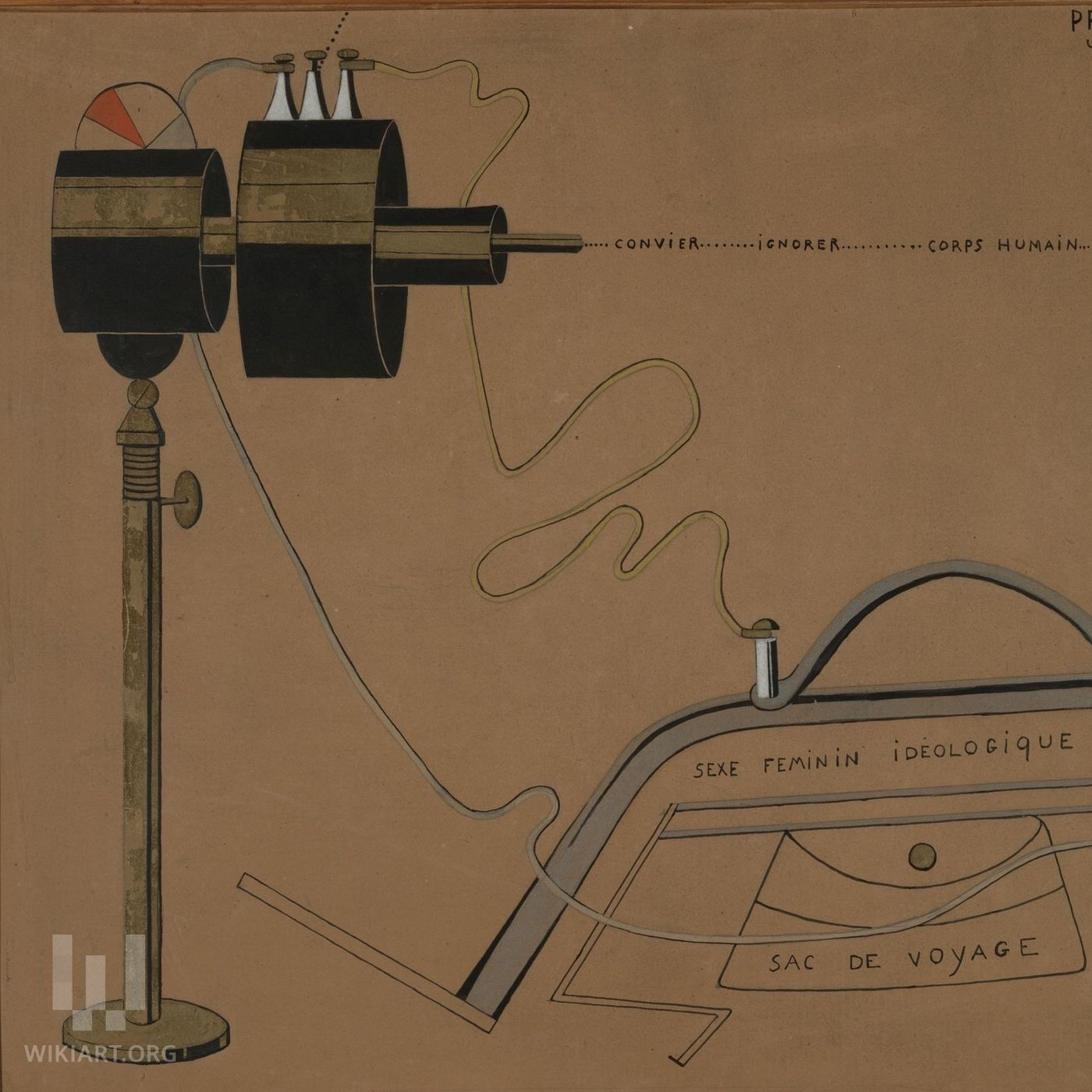
Minor Compositions Podcast Episode 37 Universal Prostitution & the Crisis of Labor This episode is a conversation with Jaleh Mansoor on the themes of her new book Universal Prostitution and Modernist Abstraction: A Counterhistory. In this provocative work, Mansoor offers a counternarrative of modernism and abstraction and a rethinking of Marxist aesthetics. Drawing on Marx’s concept of prostitution — as an allegory for modern labor — she explores how generalized and gendered forms of work converge in modern and contemporary art. More on the book: “In Universal Prostitution and Modernist Abstraction, Jaleh Mansoor provides a counternarrative of modernism and abstraction and a reexamination of Marxist aesthetics. Mansoor draws on Marx’s concept of prostitution—a conceptual device through which Marx allegorized modern labor—to think about the confluences of generalized and gendered labor in modern art. Analyzing works ranging from Édouard Manet’s Olympia and Georges Seurat’s The Models to contemporary work by Hito Steyerl and Hannah Black, she shows how avant-garde artists can detect changing modes of production and capitalist and biopolitical processes of abstraction that assign identities to subjects in the interest of value’s impersonal circulation. She demonstrates that art and abstraction resist modes of production and subjugation at the level of process and form rather than through referential representation. By studying gendered and generalized labor, abstraction, automation, and the worker, Mansoor shifts focus away from ideology, superstructure, and culture toward the ways art indexes crisis and transformation in the political economic base. Ultimately, she traces the outlines of a counterpraxis to capital while demonstrating how artworks give us a way to see through the abstractions of everyday life.” Bio: Jaleh Mansoor is Associate Professor of Art History, Visual Art, and Theory at the University of British Columbia and author of Marshall Plan Modernism: Italian Postwar Abstraction and the Beginnings of Autonomia, also published by Duke University Press. More on the book.
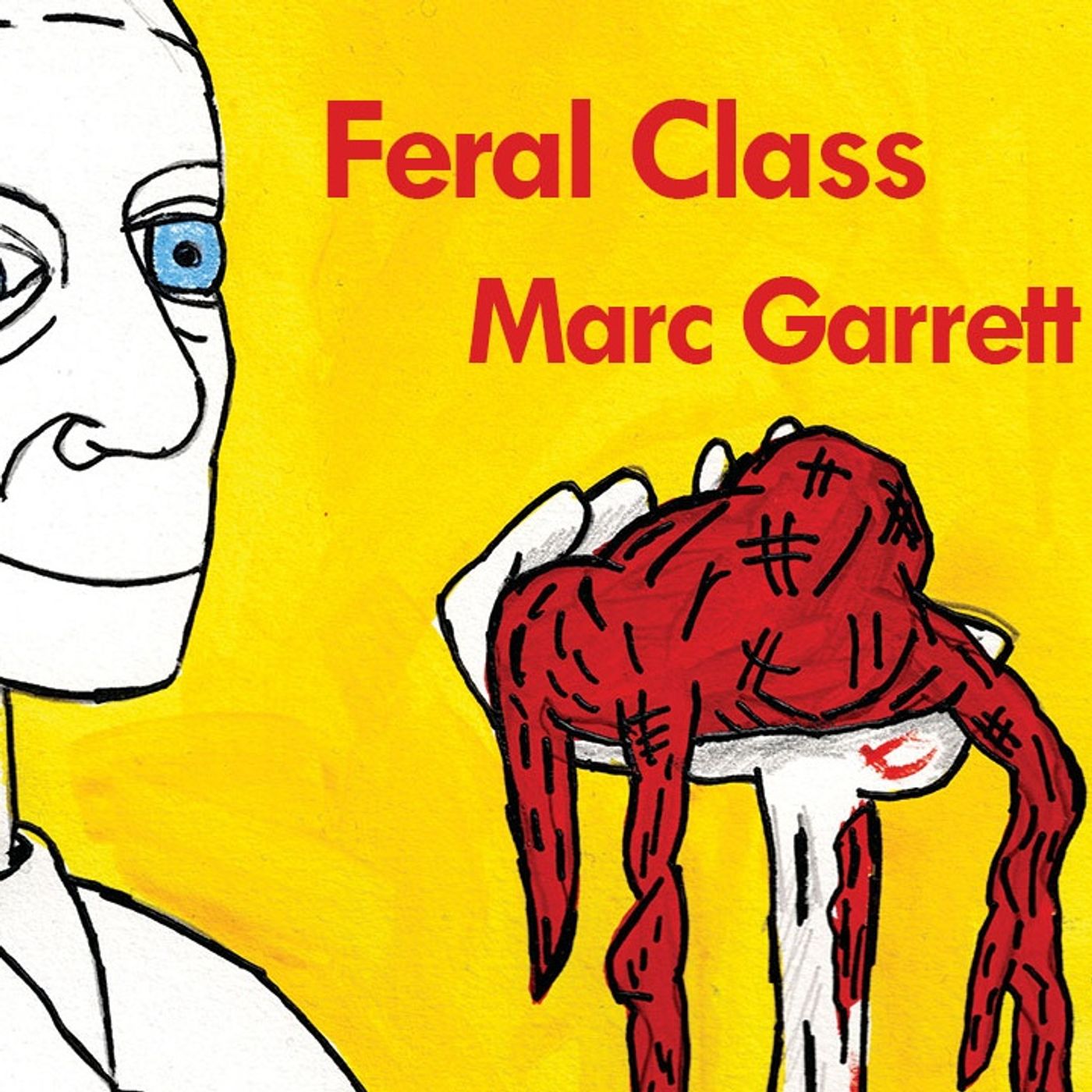
Minor Compositions Podcast Episode 36 Feral Class Untamed. Unheard. Unstoppable. For this episode with have a chat with Marc Garrett about his forthcoming book Feral Class. The book is Marc Garrett’s raw and resonant memoir of surviving – and creating – on the margins. It delves into the lived realities of working-class artists, charting Garrett’s journey from the edges of cultural production to the heart of radical practice. Through vivid storytelling, biting critique, and moments of dark humour, Garrett reflects on what it means to grow up outside the safety nets of art institutions, forging a path through DIY networks, political resistance, and feral creativity.What does it mean to live as part of the “feral class” – those who exist beyond the permission of gatekeepers, who make art not to be accepted but to disrupt? Join us for an exploration of class struggle, artistic survival, and the wild potential of lives lived in defiance of cultural elitism. This is not just a memoir – it’s a call to arms for those who create from below, with dirt under their nails and fire in their bellies.Bio: Marc Garrett’s life and work embody the intersection of art, technology, and social change, shaped by his working-class upbringing and a commitment to challenging institutional hierarchies. Growing up in Southend-On-Sea, he explored creative expression through street art, pirate radio, and early online activism before co-founding Furtherfield in 1996 with Ruth Catlow, an artist-led community resisting the commercialisation of the art world. Despite personal challenges, including a cancer diagnosis in 2022, Garrett continues to focus on ideas and questions that acknowledge and engage working-class and feral-class contexts as a springboard for more extensive dialogues on creating conditions for social change across art, technology, and ecology. More on the book: https://www.minorcompositions.info/?p=1561The Minor Compositions podcast is in made in collaboration with Firefly Frequencies: https://fireflyfrequencies.org

It’s summer and we’re feeling a bit lazy… so rather than record something new, for this episode we’re presenting a recording of a seminar discussion between Stefano Harney & Stevphen Shukaitis that occurred this May in London. It was part of an event organized by CHRONOS from Royal Holloway. You are on the way to destruction, make your time. In this conversation we discuss cricket, CLR James, cricket, a number of other things, as well what was probably the main point of the event, which was re-visiting Stefano and Fred Moten’s book The Undercommons: Fugitive Planning & Black Study. The conversation is long and rambling, maybe like a derive, but hopefully stumbles into enough interesting areas to be well worth your while.Here’s some more vaguely official text to give it a more air of respectability: “Renowned for his intellectually generous and electrifying speaking style, Stefano’s work continues to resonate deeply across disciplines and borders. Those who had the privilege of engaging with him during his time at Queen Mary and the University of Leicester will remember him as a transformative presence, one who played a crucial role in connecting Critical Management Studies to the broader global currents of radical thought and critical theory. In this event, Stefano Harney will be joined in conversation by Stevphen Shukaitis of the University of Essex. Together, they will revisit the enduring impact of The Undercommons: Fugitive Planning & Black Study, the seminal work Harney co-authored with Fred Moten and published in 2013 through Minor Compositions, the radical publishing imprint founded by Stevphen. The Undercommons has become a cornerstone text in radical academia and activist circles alike: offering a profound rethinking of the university, the business school, and the very terms of study, fugitivity, and refusal. This promises to be an unmissable evening of dialogue, reflection, and provocation. Whether you're already steeped in the ideas of The Undercommons or just beginning to explore the terrain, we invite you to join us for what is sure to be a powerful and inspiring event.” More on the Centre for Critical and Historical Research on Organisation and Society (CHRONOS) Bios: Stefano Harney is a teacher and writer engaged in collaborative work across classrooms, research, and social practice, with a focus on black studies. He has taught a wide range of subjects, including anthropology, sociology, art criticism, American Studies, and business, at institutions in the US, UK, Indonesia, Vietnam, Singapore, Canada, and Germany. Harney was a Hayden Fellow and Visiting Critic at Yale’s School of Art (2020-2021) and an Honorary Professor at the University of British Columbia. He is best known for his co-authored works with Fred Moten, The Undercommons (2013) and All Incomplete (2021), and has also published on management education, public administration, and Caribbean diaspora identity.Stevphen Shukaitis is Reader in Culture & Organization at the University of Essex and is co-director of the COVER, the commons research centre.. Since 2009 he has coordinated and edited Minor Compositions. He is the author of a number of books, most recently The Wages of Dreamwork. Class Composition & the Social Reproduction of Cultural Labor (2024, co-written with Joanna Figiel). He likes to work on projects with his friends, some of which end up resulting in the production of books. The Minor Compositions podcast is in made in collaboration with Firefly Frequencies: https://fireflyfrequencies.org
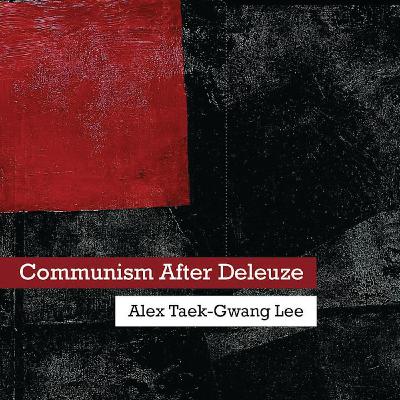
Discussion with Alex Taek-Gwang Lee about his new book Communism After Deleuze. What if communism was always the secret engine of Deleuze’s thought? This episode uncovers a hidden itinerary running through Deleuze’s work: a subterranean current where the idea of the Third World becomes a cipher for revolutionary desire. Against the grain of liberal economy and creeping fascism, Deleuze's veiled engagements with Marx – sparked by the upheavals of May ’68 – point toward an unfulfilled political project. Join us as we excavate this buried legacy and explore how these forgotten pathways might still resonate, agitate, and assemble today. More on the book: “Often regarded as an apolitical philosopher, the challenges that Deleuze mounted to structuralism are easy to overlook. By reinvigorating the communist aspect of his political project and linking his ideas to Alain Badiou, Jacques Rancière and Slavoj Žižek, Alex Taek-Gwang Lee reveals Deleuze's objective: to rescue Marxism from the dogmatic status quo and revive its political agendas. This major undertaking situates his ideas alongside and sets out a new framework for reading the significance of Marxist thought in postwar France. Ultimately, this new understanding of Deleuze's critique of global capitalism opens up his vision of materialistic politics as a means of shaping the people and the proletariat of the future.” Bio: Alex Taek-Gwang Lee is Professor of Cultural Studies in the School of Communication at Kyung Hee University, Seoul, South Korea.
In this episode, we speak with Rasheedah Phillips about her groundbreaking book Dismantling the Master’s Clock: On Race, Space, and Time. Drawing from Black Quantum Futurism, Phillips challenges dominant, Western notions of time – showing how they have been shaped by colonialism, capitalism, and racial oppression. Why does time seem to move only forward? Why are certain experiences – like aging or birth – treated as irreversible, even though physics suggests otherwise? Phillips explores how Black and Afrodiasporic communities have imagined and practiced alternative conceptions of time, where past, present, and future are interwoven rather than linear. Bio: Rasheedah Phillips is a queer housing advocate, lawyer, parent, and interdisciplinary artist working through a Black futurist lens. Phillips is the founder of the AfroFuturist Affair, founding member of the Metropolarity Queer Speculative Fiction Collective, and co-creator of the art duo Black Quantum Futurism. Phillips’ work has been featured in the New York Times, The Wire, New York Magazine, Boston Review, Hyperallergic, and e-flux. Ash Sharma is an independent researcher and writer, and editor of journal darkmatter.For more on the book.
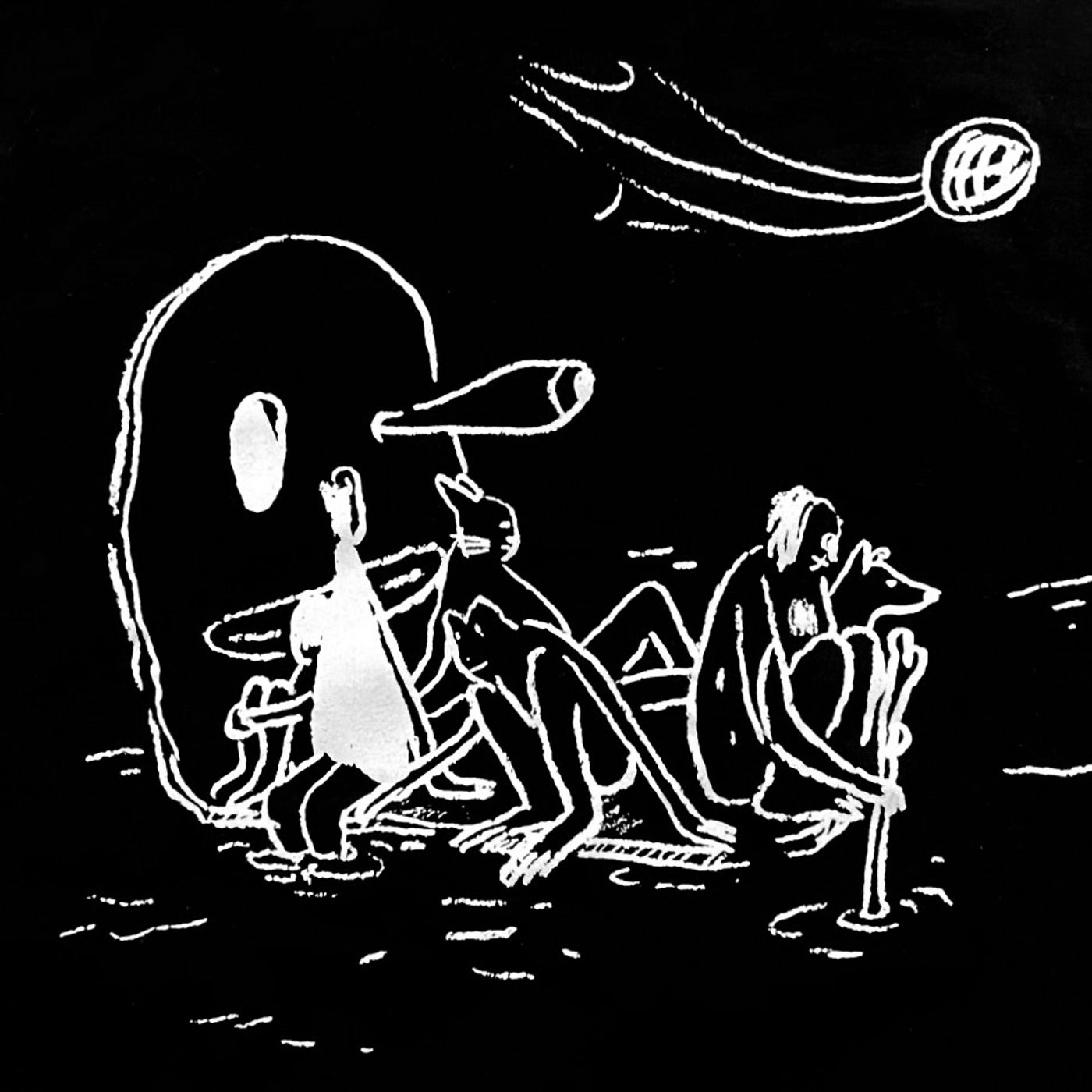
For this episode we have a discussion with writer and theorist Sven Lütticken, as we delve into his new book States of Divergence. In it we will explore the book’s core themes: the lived experience of accelerating catastrophe, and the emergence of divergent, resistant practices across art, politics, and everyday life. More on the book “Set against the backdrop of global crises, from climate change to pandemics, Lütticken dissects contemporary cultural and political practices that attempt to break free from the disastrous momentum of capitalist modernity. His journey traverses fields including art theory, philosophy, and politics, presenting a nuanced critique of the ways in which deviant temporalities and forms of life confront or adapt to catastrophe. Through a series of essays, the book tackles issues ranging from survival to prefigurative practice, indigeneity and internationalism, and the dialectics of critique and revolution. Lütticken masterfully blends personal narrative, historical inquiry, and theoretical reflection to question what it means to live – and resist – within the contradictions of our time. States of Divergence is essential reading for anyone seeking to understand how art, politics, and life intersect in an era defined by ever-deepening contradictions and conflicts. Bio: Sven Lütticken is an art historian. He teaches at Leiden University’s Academy of Creative and Performing Arts and at the Vrije Universiteit Amsterdam. He is the author of History in Motion: Time in the Age of the Moving Image (2013), Cultural Revolution: Aesthetic Practice after Autonomy (2017), and Objections: Forms of Abstraction, Vol. 1 (2022). For more on the book: https://www.minorcompositions.info/?p=1373.Intro music: The Fall - Slang King The Minor Compositions podcast is in made in collaboration with Firefly Frequencies: https://fireflyfrequencies.org
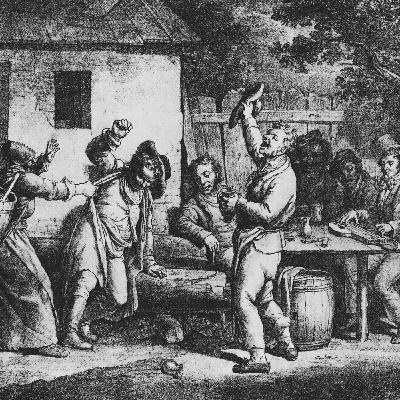
This episode is a conversation with Paul Rekret, centered around his book Take This Hammer: Work, Song, Crisis (2024). In this discussion we explore the book’s key themes through both discussion and curated music selections that speak to the intersections of labor, leisure, and sound. Take This Hammer examines how shifts in work and the economy – from the fragmentation of the working day to the rise of precarious labor – have shaped and been reflected in the forms and experiences of popular music. Rekret traces how the separation of work and leisure, once central to industrial society, has become increasingly blurred in the age of streaming, automation, and remote labor, and considers how music both registers these changes and imagines alternatives. Together, we’ll listen to tracks connected to themes from the book, and discuss how musical forms – across genres like trap rap, dance music, and field recordings – respond to crises of work, economic instability, gentrification, and ecological breakdown. This session is an invitation to think with music: not just as entertainment, but as a way of sensing and sounding out life under capitalism and beyond. This episode is accompanied by an installment of the Saint Monday Mixtapes, which can be accessed here. Bio: Paul Rekret is the author of three books: Down With Childhood: Pop Music and the Crisis of Innocence (2017); Derrida and Foucault: Philosophy, Politics, Polemics (2018); Monopolated Light and Power (with Edward George, Louis Moreno, Ashwani Sharma (2024)), and editor of George Caffentzis's Clipped Coins, Abused Words & Civil Government (2021). He has published on political and cultural theory in journals such as Theory, Culture & Society, Constellations, South Atlantic Quarterly and his writing has appeared in Frieze, The Wire, Art Monthly, The New Inquiry, and elsewhere. He is a member of Le Mardi Gras Listening Collective and works on sound and ecological crisis as part of Amplification/Annihilation. He is a Lecturer in the School of Media and Communications at the University of Westminster. For more on the book. Intro music: Guitar Welch, Hogman Maxey, Andy Mosely, and Huddie Ledbetter - Take This Hammer The Minor Compositions podcast is in made in collaboration with Firefly Frequencies: https://fireflyfrequencies.org
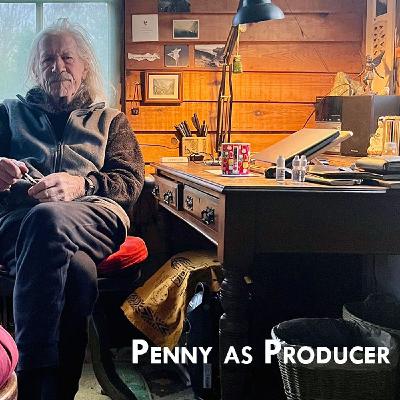
Penny Rimbaud is best known as a founding member of the anarcho-punk collective Crass, as well as for his work as a poet, writer, and philosopher. But beyond these well-known aspects of his life and practice lies another, less frequently discussed dimension: his role as a record producer. The original idea for this episode of Minor Compositions was straightforward: sit down with Penny and discuss his work as a producer, focusing in particular on a selection of albums that he considers to represent the best of his production efforts (a list of which is included below). However, as anyone who has ever had a conversation with Penny can attest, things rarely go according to plan, and all the better for that. For Penny, production is never merely about microphone placement, mixing levels, or the technical minutiae of sound engineering. Instead, it is a much more expansive and intuitive process, one that involves engaging artists on a deeper, often psychological level. His aim is not just to capture a performance, but to push artists beyond their comfort zones, to guide them into unexplored creative territory they might not have reached on their own. In this sense, his work as a producer takes on the character of a kind of psychotherapy or psychoanalysis: a practice of care, provocation, and transformation. This conversation marks the beginning of what will be an extended series with Penny, exploring these themes as they resonate across his work in music, poetry, and thought over the years. More than just a reflection on artistic production, this series aims to trace a broader philosophical and ethical project: one that blurs the boundaries between art and life, creativity and critique. There is no authority but yourself, but there is no self…Episode begins with an extended section from Kate Shortt and Alcyona Mick - Convergence & Variations Outro - “The Night” - KUKL Pen’s Production Work Album ListKUKL - Holidays in Europe D & V – D & V (Inspiration Gave Them The Motivation To Move On Out Of Their Isolation) Hit Parade – Nick Knack Paddy Whack The Cravats – The Cravats In Toytown Eve Libertine – I am that Tempest For more on Caliban Sounds: https://calibansounds.bandcamp.com The Minor Compositions podcast is in made in collaboration with Firefly Frequencies: https://fireflyfrequencies.org

Minor Compositions Podcast Episode 29 Surrealism, Bugs Bunny, and the Blues This episode is a discussion with Paul Buhle, Abigail Susik, and Penelope Rosemont about the newly released book Surrealism, Bugs Bunny, and the Blues: Selected Writings on Popular Culture. This collection brings together legendary Chicago surrealist Franklin Rosemont’s writings on popular culture over a period of more than forty years. Rosemont, a self-taught scholar, poet, and artist, playfully uncovers the sometimes hidden-in-plain-sight writers and artists who managed to be both popular, vernacular, and in their own ways profoundly revolutionary. Rosemont skillfully weaves together what most would regard as unlikely threads. The labor culture of the nineteenth-century anarchist movement gains new meaning when connected to the famed Chicago musicians of blues and jazz. His interests from childhood extended from his favorite animators and comic art – Mel Blanc and Tex Avery, Scrooge McDuck, Mighty Mouse, Krazy Kat, Smokey Stover, and Powerhouse Pepper – to nineteenth-century drug-taker Benjamin Paul Blood, or the barely remembered best-selling utopian writer Edward Bellamy. Palindromes and other wordplay counted along with radical environmentalism, modern dance alongside the “mad” self-taught writer-artist Henry Darger. Bios: Paul Buhle has written, edited, or coedited more than four dozen books, including twenty graphic novels, beginning with Wobblies! He founded the SDS journal Radical America and the Oral History of the American Left archive at New York University. He is coeditor of the Encyclopedia of the American Left, a former senior lecturer at Brown University, and the authorized biographer of C.L.R. James. He lives in Providence, RI. Abigail Susik is the author of Surrealist Sabotage and the War on Work, editor of Resurgence! Jonathan Leake, Radical Surrealism, and the Resurgence Youth Movement, 1964–1967, and coeditor of the volumes Surrealism and Film After 1945: Absolutely Modern Mysteries and Radical Dreams: Surrealism, Counterculture, Resistance. Susik is a founding board member of the International Society for the Study of Surrealism and joint editor of the Bloomsbury Transnational Surrealism Series. She lives in Portland, OR. For more information on the book: https://pmpress.org/index.php?l=product_detail&p=1723 Intro music: Krazy Kat Theme Song from “Slow Beau” (1927) The Minor Compositions podcast is in made in collaboration with Firefly Frequencies: https://fireflyfrequencies.org

E28 Band People with Franz Nicolay This episode is a recording of a seminar held at the University of Essex with Franz Nicolay on his book Band People. In it Franz Nicolay explores the working and creative lives of musicians. In it, he argues that to talk about the role of a ‘band person’ is not only to talk about art and craft but also to develop a critique of the value placed on fame and a celebrity culture that requires the singling out of individuals from a collaborative enterprise. Band People foregrounds the political dynamics of cultural labour and the precarity that the working lives of musicians share with a growing segment of the larger economy. It sets out to uncover the wide pyramid of talent and effort that supports the work of making music. The book provides insights into how, in the creative sector, social groups organize themselves, into how musicians navigate aspects of their work such as anonymity and agency, and how the industry creates taxonomies of specialists and stylists, generalists and chameleons, hired guns and band members, road dogs and punch-clock session players, the fan favorite and so on. It asks, who are ‘band people’, the character actors of popular music? Seminar introduced & chaired by Melissa Tyler Bios: Franz Nicolay is a writer, musician, and faculty member in music and written arts at Bard College. In addition to records under his own name, he has been a member of World/Inferno Friendship Society and the Hold Steady. He is the author of The Humorless Ladies of Border Control: Touring the Punk Underground from Belgrade to Ulaanbaatar and the novel Someone Should Pay for Your Pain. For more information on the book: https://utpress.utexas.edu/9781477323533/ The Minor Compositions podcast is in made in collaboration with Firefly Frequencies: https://fireflyfrequencies.org Apologies for variable audio quality in the recording.

Comments

Download from Google Play

Download from App Store
 United States