


 Claim Ownership
Factory Futures
Subscribed: 1Played: 0
Subscribe

© Jp
Description
Welcome to the Factory Futures Podcast!
Join us as we dive into the world of innovation and best practice in manufacturing.
We sit down with industry leaders in reliability, operations, and production with a mission to uncover the new technologies making a real impact, driving performance, and enhancing profitability of your site.
We explore the leadership journeys of our guests, learning from their challenges, and gain from their insights.
Subscribe on your favourite app to stay ahead of the curve with our latest episodes. Thanks for listening, and enjoy the show.
Join us as we dive into the world of innovation and best practice in manufacturing.
We sit down with industry leaders in reliability, operations, and production with a mission to uncover the new technologies making a real impact, driving performance, and enhancing profitability of your site.
We explore the leadership journeys of our guests, learning from their challenges, and gain from their insights.
Subscribe on your favourite app to stay ahead of the curve with our latest episodes. Thanks for listening, and enjoy the show.
14 Episodes
Reverse

Speak with Cohesive: https://www.cohesivesolutions.com/Connect with Rob : https://www.linkedin.com/in/rob-mora-bd/Attend Maximo Live : https://theeventgap.eventsair.com/maximo-live/SummaryIn this conversation, Rob Mora, head of global sales for Cohesive, discusses the critical aspects of asset management and reliability engineering. He emphasizes the importance of transitioning from reactive to proactive management, the challenges organizations face in this journey, and the significance of cultural change alongside technological upgrades. Rob shares real-world examples of how companies have overcome data chaos and highlights the need for leadership buy-in and measuring success to ensure long-term commitment to asset management initiatives. He provides practical advice for reliability engineers, stressing the value of starting small and engaging frontline workers to drive improvements in asset management practices.Chapters00:00 Introduction to Rob Mora and Cohesive04:26 Understanding Asset Management and Reliability Challenges06:53 Common Hurdles in Transitioning to Proactive Management09:26 Cultural and Organizational Changes Required11:59 The Importance of ROI in Asset Management14:42 Real-World Examples of Overcoming Challenges17:13 Lessons Learned in Asset Management19:44 Practical Advice for Reliability Engineers22:36 Avoiding Common Pitfalls in Asset Management25:09 Why Choose Cohesive for Maximo Integration27:43 Conclusion and Future EngagementsTakeawaysRob Mora emphasizes the importance and difficulty of transitioning from reactive to proactive asset management.Cohesive focuses on connecting reliability strategy with real-world execution.Data chaos is a common hurdle in asset management that needs addressing.Cultural change is as important as technology in asset management maturity.Leadership buy-in is crucial for successful asset management initiatives.Small wins can build momentum in asset management projects.Measuring success and ROI is essential for long-term buy-in.Companies often treat asset management as a maintenance project rather than a business strategy.Engaging technicians and frontline workers can provide valuable insights.Starting small and scaling up is a practical approach to asset management.
Get Evan's free tools : https://www.evanpowell.com.au/Connect with him : https://www.linkedin.com/in/evanpowell90/SummaryIn this episode, Evan Powell shares his expertise on spares management, discussing the common challenges faced by reliability and maintenance teams. He talks about the importance of understanding the problem with spares, taking control through a structured framework, and implementing demand-driven purchasing strategies. The conversation also covers the significance of review cycles for continuous improvement and the potential future integration of AI in inventory management. Evan provides actionable insights for site leaders to optimise their spares strategy and improve overall operational efficiency.Chapters2:00 Introduction to Spares Inventory Management11:40 Understanding the Challenges of Spares20:30 Frameworks for Effective Inventory Control25:03 The Relay Race of Information Transfer29:45 Demand-Driven Purchasing and Its Impact30:04 Preventive Maintenance Planning34:13 Review Cycles for Effective Inventory Management39:50 Aligning SOP Processes with Spare Parts Strategy43:32 Advice for Site Leaders on Spare Strategy45:06 The Future of Spares and AI IntegrationTakeawaysSpares inventory often has a long tail with 95% of usage coming from 5% of items.Understanding the criticality of parts is essential for effective inventory management.Daily review cycles are crucial for managing replenishment and inventory control.Work orders should drive the demand for purchasing inventory.Visual management of inventory data can facilitate better decision-making.Engaging vendors in the inventory management process can lead to better outcomes.Preventive maintenance should be integrated with inventory management strategies.Regularly reviewing inventory usage helps in optimizing stock levels.AI can enhance predictive maintenance but requires quality data to be effective.Creating a culture of collaboration between engineering and supply chain teams is vital for success.Keywordsspares management, inventory control, demand-driven purchasing, maintenance strategies, engineering teams, supply chain management, criticality assessment, review cycles, AI in inventory, optimization
Show Links:Julien's Linkedin : https://www.linkedin.com/in/julien-maffre-74ba9023/Amsyst : https://amsyst.com/SummaryIn this conversation, we sit down with Julien Maffre to talk through the intricacies of asset management, exploring the importance of a structured approach to asset-centric strategies. We discuss the significance of master data, risk assessment, and the role of AI in enhancing asset management practices. Real-world applications and case studies illustrate the challenges and successes in implementing effective asset strategies. The conversation also touches on the cultural aspects of change management and offers advice for young reliability engineers.Chapters00:00 Introduction and Journey Overview04:44 The Evolution of Asset Management07:29 Understanding Asset-Centric Approaches10:17 The Three Pillars of Asset Management12:57 Master Data: The Foundation of Strategy15:51 Challenges in CMMS and Change Management21:27 Transitioning CMMS: Challenges and Opportunities23:50 Understanding Risk Profiles in Asset Management27:20 Three Layers of Decision-Making in Asset Strategy28:50 Asset Strategy: Balancing Maintenance and Investment32:36 Real-World Examples: Transforming Asset Management38:13 The Role of AI in Asset Management43:31 Advice for Young Reliability EngineersTakeawaysAsset management is crucial for operational excellence.Understanding the three pillars of asset management is essential.Master data is foundational for effective asset strategies.Risk assessment helps prioritize maintenance actions.AI can enhance decision-making in asset management.Cultural readiness is vital for successful implementation.Real-world examples illustrate the importance of structured approaches.Young engineers should embrace curiosity and first principles thinking.Effective communication is key in change management.Continuous improvement is necessary for asset management success.
📌 Connect with Damien and his team at : https://oepartners.com.au/📌 Connect with Damien on LinkedIn : https://www.linkedin.com/in/laceydamienSummaryIn this episode, Damian Lacey shares his journey from engineering to consulting, emphasizing the importance of continuous improvement in manufacturing. He discusses his experiences at Toyota, highlights case studies demonstrating efficiency improvements, and explores the significance of data in identifying bottlenecks. Damian also addresses the challenges of sustaining improvement programs and the need for effective upskilling of teams. The conversation concludes with insights on underrated tools for continuous improvement and how to connect with him for further discussions.TakeawaysDamian transitioned from engineering to consulting, focusing on operational excellence.Working at Toyota provided a strong foundation in lean manufacturing principles.Identifying bottlenecks is crucial for improving manufacturing efficiency.Engaging frontline workers is key to uncovering improvement opportunities.Data clarity is essential for understanding process performance.Sustaining improvement programs requires ongoing leadership support and engagement.Visual performance management can drive effective problem-solving.Upskilling teams should focus on practical application rather than just theory.Continuous improvement is a collective effort across all levels of an organization.Building a culture of awareness around waste and inefficiency is vital for success.Sound Bites"It's about finding out where the constraints are.""You need to demonstrate that interest."Chapters07:14 - The Toyota Experience13:41 - Identifying Bottlenecks in Manufacturing19:55 - Case Study: Catering Company Improvements23:08 - Engaging Teams for Effective Change25:08 - Balancing Theory and Practice in Continuous Improvement30:20 - Sustaining Change: Making Improvements Stick33:49 - Unlocking Potential through Maintenance and Reliability37:13 - Upskilling Teams for Long-Term Success38:56- Lightning Round: Insights and Reflections
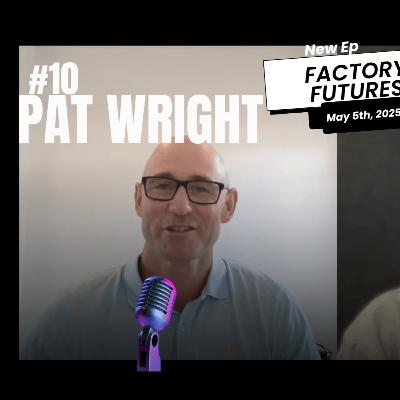
SummaryIn this episode, Jean-Philippe Picard interviews Pat Wright, an experienced operations leader with over 20 years in manufacturing. They discuss the importance of continuous improvement, the tools and methodologies involved, and how to engage teams effectively. Pat shares insights on leadership, safety, and the challenges of adopting new technologies in manufacturing. The conversation emphasizes the need for genuine leadership support, the role of trust in teams, and the significance of small, incremental improvements for sustainable success.TakeawaysContinuous improvement is a toolbox for problem-solving.Engaging teams is crucial for effective improvements.Leadership support is key to sustaining improvements.It's about overcoming fear of change.A little improvement every day is better than perfection.What’s the problem we’re trying to solve?Trust is built through honest conversations.Technology adoption is about change, not just tools.Safety improvements are essential in manufacturing.Celebrate small wins to keep morale high.TitlesUnlocking Continuous Improvement in ManufacturingThe Power of Team Engagement in OperationsSound Bites"It's about overcoming fear of change.""Celebrate small wins to keep morale high.""What’s the problem we’re trying to solve?"Chapters06:15 -Defining Continuous Improvement: Tools and Approaches09:26 - Practical Applications of Continuous Improvement12:10 - Engaging Teams in Continuous Improvement15:35 - Safety in Manufacturing: A Continuous Improvement Perspective18:17 - Leadership in Continuous Improvement21:24 - Coping with Pressure in Operations Management24:10 - Handling Challenges and Team Engagement31:28 - Data-Driven Problem Solving33:50 - Addressing Underperformance in Teams35:57 - Navigating Technology Adoption Challenges40:01 - Overcoming Fear of Change45:09 - The Importance of Pre-Meeting Discussions46:37 - Learning from Failed Initiatives50:14 - Sustaining Improvements in Operations53:30 - Balancing Ambition and Employee Well-Being55:46 - Recommended Resources and Quotes

Show notes Get the checklist Jeff mentioned : https://info.peopleandprocesses.com/planning-checklist-podcastFollow Jeff on LinkedIn : https://www.linkedin.com/in/jeffshiver/SummaryIn this conversation, Jeff Shiver shares his extensive experience in maintenance and reliability, discussing common mistakes organisations make, effective strategies for improvement, and the importance of planning and scheduling. He emphasises the need for a solid foundation in maintenance practices, the role of kitting and staging in efficiency, and the significance of avoiding delays. Jeff also highlights the importance of understanding criticality in maintenance and how to change relationships with maintenance teams to foster better collaboration and outcomes.Chapters05:46 Jeff Shiver's Journey in Reliability08:35 Impact of Maintenance on Business Viability10:59 Common Reliability Mistakes in Organizations13:55 Understanding Maintenance Strategies16:30 The Importance of Kitting and Staging19:07 Avoidable Delays in Maintenance Execution22:10 The Role of Planning and Scheduling24:28 Precision Maintenance and Avoiding Defects27:26 Building Effective Partnerships with Production30:07 Prioritising Maintenance Work32:15 The Impact of Reactive Work on Planned Maintenance35:00 Evaluating the Value of Preventive Maintenance42:39 Improving PM Programs for Better Efficiency45:45 Criticality and Its Role in Maintenance Strategies50:43 Changing the Relationship with MaintenanceTakeawaysJeff Shiver has over 20 years of experience in maintenance and reliability.Many organizations still make basic reliability mistakes.Effective maintenance strategies require proper planning and scheduling.Kitting and staging are crucial for efficient maintenance execution.Reactive maintenance is more costly and less safe than planned maintenance.PMs should address likely failure modes to add value.Criticality in maintenance should focus on where the organisation is losing money.Inversion thinking can help prevent issues before they arise.Common sense practices are often overlooked in maintenance.Engaging technicians in the PM process leads to better outcomes.
SummaryIn this episode, Simon Murray, a maintenance coach, discusses the three stages of maintenance and reliability, the common challenges faced by organisations, and the importance of leadership investment in reliability. He introduces his training programs designed to help organisations improve their maintenance practices and shares insights on common pitfalls in maintenance management. The conversation emphasises the need for data-driven decision-making and the importance of aligning maintenance goals with overall business objectives.Chapters00:00 Introduction to Simon Murray and His Work04:35 Understanding the Three Stages of Maintenance08:27 Industry Insights and Challenges12:05 Overcoming Leadership Resistance to Reliability Investments20:37 Exploring Simon's Key Programs30:11 Steps to Achieve Maintenance Excellence35:03 The Seven Deadly Sins of CMMS38:59 Advice for Leaders in Maintenance and ReliabilityTakeawaysMaintenance is a journey through three stages: reactive, reliability, and asset management.Leadership often resists investing in reliability due to a lack of understanding of its value.Data is crucial for justifying maintenance investments to leadership.Maintenance teams need to communicate effectively with operations to create joint schedules.Training programs should be tailored to the specific needs of organisations at different stages.Common pitfalls include poor CMMS setup and lack of clear workflows.It's essential to measure and report on the value of maintenance activities.Continuous improvement requires a cultural shift within organisations.Maintenance managers should focus on both technical and leadership skills.Building a community of maintenance managers can provide valuable support and networking opportunities.
In this episode of the Factory Futures Podcast, I am joined by Rafe Britton to dive deep into the critical role of lubrication in industrial operations, with a special focus on the food and beverage industry.
We discuss the common challenges faced in lubrication practices, the importance of condition monitoring, and emerging innovations in lubrication technology.
Rafe shares insights into the frequent mistakes made in lubrication management, practical tips for improvement, and the long-term benefits of adopting best practices and proper training.
Link to the assessment Rafe refers to :
The Lubrication Excellence Framework Quiz :
1. Naviguate to https://lubrication.expert/ -->
2. Right below the header, a click on the button that reads "Start your 5 minute Assessment"
3. Enter your details
Some key take-aways
Welcome and New Year’s Wishes: Kick off 2025 with a focus on improving reliability through lubrication.
Universal Need for Lubrication: If it moves, it likely requires proper lubrication.
Contamination Challenges: 80% of machine failures stem from contamination-related issues.
Impressive ROI: Investing $1 in lubrication can return up to $40 in value through reduced failures and downtime.
Food-Grade Safety: Food-grade lubricants ensure incidental contact is safe and meet regulatory standards.
Common Errors: Mixing incompatible lubricants is a frequent and costly mistake.
Viscosity Is Key: One of the three most crucial properties of any lubricant.
Training Resources: A wealth of online courses and materials are available to improve lubrication knowledge.
Chapters & Timestamps
00:00 – Introduction to Lubrication Expertise08:12 – The Importance of Lubrication in Industry12:38 – Challenges in Food and Beverage Lubrication19:01 – Procurement Issues in Lubrication23:01 – Improving Lubrication Practices27:58 – Asset Management and Lubrication Standards30:30 – The Selection Process in Lubrication32:47 – Inspection and Condition Monitoring34:44 – Understanding Lubrication Systems35:41 – Greasing Techniques and Tools39:38 – Auto Lubrication Systems43:16 – Common Mistakes in Lubrication Practices46:50 – Emerging Technologies in Lubrication49:46 – Educational Resources for Lubrication Knowledge
Podcast Episode: The Essential Role of Lubrication in IndustrySummaryKey TakeawaysEpisode Chapters
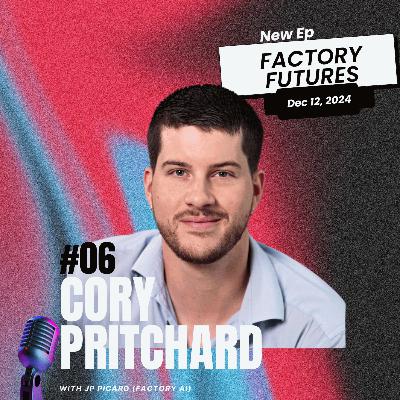
Summary
In this conversation, I speak with Cory Pritchard, the MD of Predict Australia. Together, we discuss the critical themes of reliability and data in the mining industry. We explore the economics of reliability, the importance of predictive maintenance, and the ongoing data revolution in mining maintenance. Cory shares insights on how existing data can be leveraged to improve operational efficiency and reduce costs, emphasising the need for collaboration with execution teams to enhance data collection processes.
We also cover the importance of closing the information loop in maintenance strategies, the challenges associated with CMMS and data quality, and the need to break free from traditional time-based preventive maintenance approaches. We talk about a successful transition to predictive maintenance, emphasising the role of data in improving maintenance strategies. The discussion also touches on innovation and change management within the industry, concluding with insights on the future outlook of the mining sector.
Chapters
00:00 Introduction and Background
02:48 Economics of Reliability in Mining
05:57 Business Case for Predictive Maintenance
11:59 The Data Revolution in Mining Maintenance
18:01 Engaging Execution Teams for Data Collection
24:41 Closing the Information Loop
25:34 Challenges with CMMS and Data Quality
29:32 Breaking Free from Time-Based PMs
37:30 Successful Transition to Predictive Maintenance
44:17 Innovation and Change Management
47:14 Future Outlook of the Industry

In this episode, we had an insightful conversation with Erik Hupje, founder of Reliability Academy and a widely respected voice in the maintenance and reliability field. With over 50K followers on LinkedIn, Erik is known for consistently sharing high-value content with the industry.
The episode is divided into four key parts:
Introduction
00:00 - 05:36: Erik’s background and an introduction to the episode.
05:36 - 07:25: Overview of maintenance challenges and the Road to Reliability Framework™.
The Road to Reliability Framework™
7:35 : How the framework came about
11:26: The role of planning and scheduling in effective maintenance.
17:08: Cultural factors influencing maintenance success.
22:31: Continuous improvement in maintenance practices.
27:52: Techniques for capturing and analysing downtime data.
Principles of an Effective Maintenance Program
33:06: Key principles for establishing a robust maintenance program.
Advice for New Maintenance Managers
44:36: Erik shares valuable advice for those new to maintenance management.
We’re confident you'll find value in Erik’s insights. Please share your feedback with us on LinkedIn, including suggestions for future guests you’d like to hear from—perhaps even yourself!
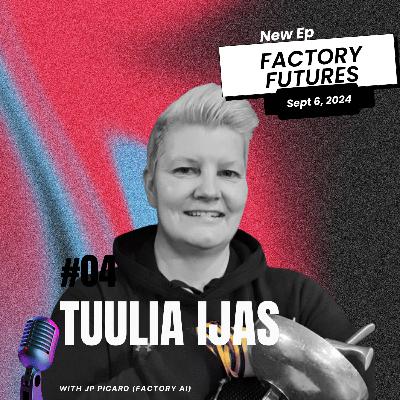
Intro & Summary
Welcome to our latest podcast episode featuring Tuulia Ijas. At the time of recording this podcast, Tuulia is between roles, having most recently been in Reliability and Maintenance Manager @ Asahi Beverages.
In the episode, Tuulia Ijas shares her journey from production to maintenance and the importance of understanding the customer's needs. She emphasises the need for a healthy relationship between production and maintenance, which can be achieved through open communication, collaboration, and shared goals.
Tuulia highlights the significance of physical proximity and regular meetings between production and maintenance teams. She discusses the importance of understanding the impact of maintenance on production and vice versa, setting service level agreements, and using continuous improvement tools to improve the relationship.
In this conversation, we also touch on the evolution of the role of maintenance and reliability in manufacturing, the challenges of implementing predictive strategies, and engaging the younger generation in manufacturing. Tuulia emphasises the importance of open-source conversations and reassessing agreements in collaborative work.
She also highlights the changing role of maintenance and reliability, driven by cost constraints and the availability of data. Tuulia shares her experiences in problem-solving and the need for a poker face in challenging situations. She encourages manufacturing leaders to appreciate the moments of smooth sailing and surround themselves with good people.
Chapters
Timestamps may not perfectly align with the content, and guest dialogue may have been refined for accuracy.
00:00 Tuulia Ijas' Journey
17:17 Building a Healthy Relationship Between Production and Maintenance
23:00 The Importance of Communication and Collaboration
25:02 Understanding the Impact of Maintenance on Production
27:10 The Evolution of Maintenance and Reliability
29:06 Data-Driven Decision Making in Maintenance
31:13 Utilising Technology for Maintenance Analysis
34:19 Transitioning to a Predictive Strategy
45:23 Problem-Solving and the Poker Face in Manufacturing
47:11 Appreciating the Moments of Smooth Sailing

In this week's podcast episode, we had the pleasure of speaking with Filip Kramer, who has an impressive background in reliability and technical roles.
Filip has worked with several large companies across Europe and Australia and spent six years at Amazon. At the time of recording, he was a Senior Technical Program Manager at Amazon, and he has since transitioned to a Technical Manager role at Australia Post.
Some of the highlights from our conversation include:
Lessons from Mentoring and Being Mentored (5 minutes in)
The Shift from Reactive to Predictive Maintenance, and Why Engineers Are Like Wizards and Magicians (20 minutes in)
Creating an Innovation Roadmap (30 minutes in)
As always, please note that the opinions expressed in this episode are solely those of our guest and do not reflect the views or opinions of their employer.
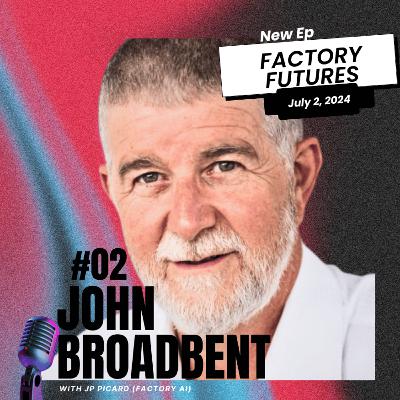
Intro
It's been such a pleasure to have John Broadbent on the podcast.
It's been such a pleasure to have John Broadbent on the podcast. John is a one-of-a-kind veteran in the industry with nearly 50 years of experience (even if he doesn't look a day over 40!). With a career that spans from his early days as a mechanical engineering cadet at CSR to founding multiple successful businesses and becoming a renowned expert in digital transformation, John's journey is a testament to the evolution and potential of modern manufacturing.
Throughout the conversation, John shares invaluable insights drawn from his extensive career, highlighting the challenges and opportunities within the Australian manufacturing landscape. He discusses the importance of smart manufacturing, the role of automation in addressing labor shortages, and the critical need for real-time data integration.
Whether you're a site leader grappling with operational inefficiencies or an executive considering the digital transformation journey, John's practical advice and proven strategies offer a roadmap to achieving manufacturing excellence in the 21st century.
John shares so many gems in this podcast, some of our favourite parts where;
- 00:01:35 - The Beginning of John's Journey John Broadbent shares his early career experiences, starting as a mechanical engineering cadet at CSR in 1975, setting the stage for his extensive journey in the manufacturing industry.
- 00:04:13 - Insights into Smart Manufacturing John discusses his pivotal role in building factories in China and Thailand, providing a firsthand account of the early implementations of smart manufacturing practices and their long-term benefits.
- 00:10:35 - The Challenges of Today's Manufacturing Leaders , and the Lego Meme
- 00:14:18 - Real-Time Data and Operational Improvement & Why OEE is becoming a Fad John emphasises the importance of real-time data integration and its impact on operational efficiency, offering practical advice on how manufacturing leaders can streamline their processes.
- 00:16:18 - Driving around town with no dashboard and no windows, and the MD in the passenger seat
- 00:19:53 - Addressing Labor Shortages with Automation John explores how automation can help mitigate labor shortages, using examples from successful companies like GPC Electronics and Coca-Cola to illustrate the benefits of investing in smart manufacturing technologies.
- 00:30:24 - The Necessity of Leadership Commitment John highlights the critical role of leadership in committing to digital transformation, outlining the steps organisations need to take to align their strategy and achieve sustainable growth in the manufacturing sector.

It's been such a pleasure to have Michael Riches on the podcast.
Mike is passionate people leader, with an impressive logical, analytical mind. Throughout the episode, it's clear that he always puts people first, and that would be a larger part of his success. He explains the challenges and long-term benefits of implementing new technology, sharing some success stories and mistakes and previous sites he's led. He mentions practices like asset care software and autonomous maintenance. Mike stresses the need for preparation and sticking to long-term goals, even when immediate results aren't visible.
They also discuss how crucial employee engagement is for success. Michael shares how focusing on engagement led to improvements in safety, quality, efficiency, and financial performance. The conversation wraps up with insights on leadership, making better daily decisions, and dealing with imposter syndrome.
Comments


Download from Google Play

Download from App Store
 United States