


 Claim Ownership
Brimful
Subscribed: 1Played: 9
Subscribe

© Brim Lactation and Family Care
Description
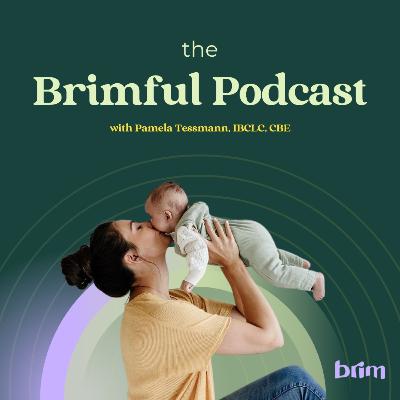
Welcome to Brimful, where your host Pamela Tessmann, IBCLC and former Doula & Childbirth Educator, explores the various paths of pregnancy, childbirth, postpartum, infant feeding, and parenting. Each episode blends Pamela’s evidence-based guidance with rich conversations featuring guests who bring their own experience and expertise to the table.
Together, they unpack the realities of early parenthood with curiosity and compassion. Tune in for episodes that inform, inspire, and celebrate new beginnings.
Want to support the podcast? https://buymeacoffee.com/brim.familycare
Together, they unpack the realities of early parenthood with curiosity and compassion. Tune in for episodes that inform, inspire, and celebrate new beginnings.
Want to support the podcast? https://buymeacoffee.com/brim.familycare
12 Episodes
Reverse
In this episode, we sit down with Cayla Solomon, the compassionate and knowledgeable founder of Sleeping Beauties. Cayla is dedicated to transforming sleep for individuals and families through her unique, holistic approach. Her philosophy centers on addressing the root causes of sleep disruptions while considering family dynamics and paramedical factors, offering a truly bespoke and sustainable path to better rest.
The Science of Sleep: Cayla shares key insights into why sleep challenges occur and how they impact overall well-being.
Holistic Solutions: Discover how Cayla’s approach goes beyond conventional sleep training to address every aspect of a family’s life, ensuring no root issue is overlooked.
Empowering Families: Hear real-life stories of how Cayla has supported families in regaining control of their sleep and mental health.
Practical Advice: Get tips and actionable strategies for improving sleep, even in complex or unique situations.
Parents struggling with their child’s sleep patterns.
Individuals experiencing personal sleep challenges.
Anyone curious about the connection between sleep, mental health, and family dynamics.
Cayla Solomon is a sleep expert with a difference. Through Sleeping Beauties, she offers unbiased, tailored support that avoids one-size-fits-all solutions. Cayla’s dedication to empowering families and addressing the deeper causes of sleep disruption has made her a trusted guide for achieving long-lasting change.
🌐 Visit her website: Sleeping Beauties
📸 Follow her on Instagram: @OfficialSleepingBeauties
📧 Connect with Cayla: Send her a message
A downloadable sleep progression guide: Get Your Free Guide Here
Workbook: Transform Contact to Independent Sleep. Get yours for only $27 Here
We’d love to hear your thoughts on this episode!
Join the Conversation: Share your sleep challenges or breakthroughs by tagging us on Instagram @brim.familycare
Leave a Review: If you enjoyed this episode, rate and review our podcast! Your feedback helps us bring more valuable content to listeners like you.
Follow Us: Stay connected for more episodes on perinatal mental health, parenting, and wellness:
Instagram: @brim.familycare
Website: brimfamilycare.com
Tune in now and unlock the secrets to a good night's sleep! 🌙
In this insightful episode, we sit down with Kirsten Werner, RMT, owner of Cumberland Village Wellness and founder of Wellness Business Coaching. Kirsten shares her inspiring journey from certified aromatherapy massage practitioner in 2001 to becoming a Registered Massage Therapist in 2008, and how she has built a thriving practice deeply rooted in the Comox Valley community.
We dive into her unique offerings, including infant and toddler massage classes, post-surgical care for mastectomy, top surgery and c-section patients. Kirsten also reveals her passion for teaching—helping parents connect through touch and guiding wellness practitioners to create sustainable, successful businesses.
What You’ll Learn in This Episode:
The incredible benefits of baby and toddler massage for connection, development, and relaxation.
How Kirsten supports clients recovering from surgeries, including her specialized training for mastectomy care.
The role of therapeutic c-section massage in postpartum recovery and wellness.
Kirsten’s approach to helping wellness practitioners build aligned, profitable practices.
Her connection to the community fuels her work.
Connect with Kirsten Werner:
Website: Cumberland Village Wellness
Instagram: @cumberlandvillagewellness & @wellnessbusinesscoaching
Wellness Business Coaching: Learn more here
Resources Mentioned in This Episode:
Mastectomy Guide for Health Professionals training
Infant Massage classes and workshops
Get Involved:
Love this episode? Subscribe, leave a review, and share it with your community. Let us know what resonated most by tagging us on Instagram @brim.familycare or connect with us at our website www.brimfamilycare.com
Let Kirsten’s passion and expertise inspire your journey in wellness, whether you’re seeking healing touch for yourself or tools to build a fulfilling business.
Tune in and let the healing begin!
In this episode, we delve into the critical but often overlooked topic of perinatal mental health, discussing the challenges faced by both parents during the perinatal period. We'll explore perinatal mood disorders, such as postpartum depression and anxiety, and how they impact not only mothers but fathers and partners as well.
Our special guest, Tasha Page, a registered social worker specializing in perinatal mental health, gives us an inside look at what a typical counseling session looks like with her. She shares her approach to providing compassionate, personalized care and guiding parents through their emotional struggles during infertility, pregnancy and postpartum.
Tasha also talks about her fertility support group, which provides a safe, supportive space for individuals and couples navigating the often difficult and emotionally taxing journey of infertility.
Whether you're a parent, parent-to-be, or someone facing fertility challenges, this episode offers valuable insights and resources for mental health and emotional well-being during the perinatal period.
Tune in to learn more about how you can prioritize mental health during one of life’s most transformative experiences.
Credits:
Produced by: Pamela Tessmann
Music by: PK Tessmann
Contact info:
Tasha Page - www.glaciercounselling.com, hello@glaciercounselling.com
Pamela Tessmann - www.brimfamilycare.com, hello@brimfamilycare.com
Books Recommendations:
I had a miscarriage Jessica Zucker
Good Moms have Scary Thoughts- Karen Klieman
For something a little more academic:
In (M)other Words, Andrea O'Reily
How to Keep House While Drowning, KC Davis
The book Tasha is working on is slated to be called Barren: An Exploration of the Journey to Parenthood and will be published by Demeter press next year (2025).
They have a number of amazing books on the experience of mothering, pregnancy loss, etc
https://demeterpress.org/
Recommended Resources to Have Listed Nearby:
Emergency Mental Health 9-88 Call or text 24/7
Crisis Line
Text: 250-800-3806 6pm – 10pm 7 days per week
Call: 1-888-494-3888 24/7
Postpartum Support International
www.postpartum.net
helpline for access to resources: 1.800.944.4773
- Access to online resources in multiple languages
- Online support groups on a wide variety of topics
- Local support and specialized coordinators
- Directory of therapists with training specific to perinatal mental health
Pacific Post Partum Support Society
www.postpartum.org
Help line to speak to a support Counselor: 1-855-255-7999
- Online support groups.
- Excellent online resources with information about perinatal mental health for all members of the family in multiple languages.
In this episode, Pamela sits down with osteopath Sarah Clement and dentist James Chen to discuss oral restrictions in infants. Discover what they are, how they affect breast/chest and bottle feeding & infant wellness, when a frenectomy might be a good option, and how pediatric bodywork can help.
* This episode is for informational purposes only and should not be a substitute for advice from a registered Midwife or Medical Doctor. If you have concerns, please see your care provider or IBCLC Lactation Consultant.
Contact Info:
Sarah Clement: sarah@viosteopathy.ca, www.viosteopathy.ca/growing-bodies-wellness
Dr. Chen: www.downstreamdental.com
Pamela Tessmann, IBCLC: brimfamilycare.com, hello@brimfamilycare.com
Credits:
Produced by Pamela Tessmann
Music by PK Tessmann
The holidays can be a joyful - and challenging - time for parents of breastfed babies, especially when food reactivity is involved. In this episode, I chat with Dr. Trill from Free to Feed, an expert in supporting families navigating infant food sensitivities.
Dr. Trill walks us through:
How to identify true food reactivity versus what might be latching difficulties
What an elimination diet might look like
Tips for managing your own nutrition and well-being
Strategies to enjoy holiday meals without stress or guilt
What to expect long-term
This episode is full of evidence-backed, practical guidance to help you feel confident and supported. Be sure to share it with your support people or your friends and family who may be navigating these challenges.
Connect with Dr. Trill:
Website: https://www.freetofeed.com
Social Media: @free.to.feed
Connect with Pamela:
Website: www.brimfamilycare.com
Social Media: @brim.familycare
Support The Brimful Podcast:
buymeacoffee.com/brim.familycare
In this episode, Pamela sits down with Alix Meyers, doula and founder of Tenderly, a practice dedicated to supporting neurodivergent families through fertility, pregnancy, birth, and postpartum. Alix shares her path from a career in marketing to becoming a doula, the journey of discovering neurodivergence within her own family, and how her lived experience shaped the neuro-affirming lens she brings to her work.
Together, Pamela and Alix explore the sensory, communication, and executive-function realities that can shape a birthing or postpartum experience, especially for those who may not yet realize they're neurodivergent. They discuss why so many birthing people don’t receive the support they need, how masking can disguise overwhelm, and how simple shifts in practice can help birth workers provide truly neuro-affirming care.
Alex also shares how virtual doula support can be a powerful accessibility tool, what families can expect when working with her online, and the upcoming self-paced birth planning course she’s creating specifically with neurodivergent brains in mind.
In this episode:
• How Alix discovered her path into birth work
• Why neurodivergence often goes unrecognized until the postpartum period
• Sensory overload, executive functioning, communication differences, and how they shape the perinatal experience
• What “neuro-affirming care” actually means
• Tips for advocating for your needs with care providers
• How virtual doula support creates accessibility for neurodivergent families
• A peek into Alex’s upcoming neuro-affirming birth planning course
If you or someone you support is navigating pregnancy or postpartum with a neurodivergent lens, this conversation offers clarity, validation, and tools for cultivating a more supported experience.
Connect with Alex:
Website - https://www.lovetender.ly/
Social Media - @lovetender.ly_doula
Email - alix@alixmyers.com
Support Brim Lactation & Family Care:
If you’d like to support the podcast and ongoing educational work, you can do so here:
https://www.buymeacoffee.com/brimfamilycare
More episodes, services, and offerings: www.brimfamilycare.com
In this episode, I’m joined by Janelle Fontaine, Registered Massage Therapist and founder of Nurturing the Mother. Janelle's practice focuses on perinatal and postpartum bodywork, helping parents heal, reconnect, and restore balance after pregnancy and birth.
Through her hands-on work and teaching, Janelle is transforming how we understand postpartum recovery. She offers specialized post–cesarean and scar tissue massage, and she also trains other RMTs and health professionals to provide this essential care in their own practices.
We talk about what real postpartum recovery looks like, the often-overlooked impact of c-section scars, and how compassionate touch can help rebuild trust and connection within the body after birth.
Whether you’re a new parent, a perinatal professional, or someone passionate about holistic healing , this conversation will leave you feeling grounded, inspired, and deeply seen.
What inspired Janelle to create Nurturing the Mother
The power of bodywork in postpartum and cesarean recovery
Common misconceptions about c-section scars and healing timelines
The emotional side of postpartum touch and body reconnection
How Janelle teaches other RMTs to support postpartum clients
Why postpartum recovery deserves the same care and attention as birth itself
Website: www.nurturingthemother.ca
Instagram: @nurturingthemother
Courses and Resources:
The Cesarean Recovery Guide (for parents and clients):
nurturingthemother.thinkific.com/courses/the-cesarean-recovery-guide
NTM: Cesarean Massage & Rehab for Health Care Providers (for RMTs and professionals):
nurturingthemother.thinkific.com/courses/NTM-CesareanMassage&RehabforHCPs
Connect with Pamela Tessmann, IBCLC:
Website: @brim.familycare
Support the Brimful Podcast:
buymeacoffee.com/brim.familycare
In this episode of Brimful, Pamela sits down with Jacob Engelsman, IBCLC, (He/Him) - lactation consultant, educator, and author of Lactation for the Rest of Us - to talk about making infant feeding support more inclusive, accessible, and rooted in real-life experiences.
Jacob shares what inspired his book, the gaps he sees in traditional lactation education, and how we can move toward care that celebrates diversity and meets families where they are. Together, Pamela and Jacob discuss breaking down barriers in the field, centering compassion over perfection, and building a culture of feeding support that truly fits the rest of us.
Whether you’re a parent, perinatal professional, or advocate for family-centered care, this episode offers insight, honesty, and a refreshing perspective on what inclusive lactation support can look like.
Learn more about Jacob’s (He/Him) work:
Website: @lactationfortherestofus
Connect with Pamela (She/Her) (Host):
Website: @brim.familycare
Support this podcast and the work we do:
buymeacoffee.com/brim.familycare
In this episode, your host Pamela returns to share essential insights into the early days of feeding your baby. Although this episode comes a bit late, missing World Breastfeeding Week, Pamela makes up for it with valuable advice and information for new parents.
Introduction to Lactation:
Understanding the process of milk production in the mammary glands.
The role of key hormones like prolactin and oxytocin in milk production and release.
The three stages of milk production and how they impact your breastfeeding journey.
Challenges and Solutions in Early Lactation:
Common challenges in the second stage of lactation, such as delayed milk production and how to address them.
Importance of skin-to-skin contact and hand expression in promoting milk production.
Tips for managing the early days of breastfeeding, including the "Day 2 Syndrome."
Role of an IBCLC:
What is an International Board Certified Lactation Consultant (IBCLC) and how they can support you.
Differences between IBCLCs, lactation counselors, and La Leche League leaders.
How to find an IBCLC and advocate for better access to their services in Canada.
Advocacy and Support:
Ways to advocate for IBCLC care in your community and workplace.
How to support new parents through practical help, encouragement, and sharing accurate information about breastfeeding.
Organizations and initiatives that support breastfeeding and how you can contribute.
Petition to Include IBCLCs in BC Medical Services
Canadian Lactation Consultant Association
Local Milk Banks and Breastfeeding Support Groups
Sound Birth Services Resources
References:
https://bmcpregnancychildbirth.biomedcentral.com/articles/10.1186/s12884-016-0876-1
https://internationalbreastfeedingjournal.biomedcentral.com/articles/10.1186/s13006-022-00523-3#:~:text=Women%20giving%20birth%20by%20Cesarean,initiation%20of%20breastfeeding%20%5B11%5D.
Have questions or need more information? Email Pamela at hello@brimfamilycare.com.
Don’t forget to rate the show and share it with your friends!
Credits:
Produced by Pamela Tessmann
Music by PK Tessmann
Thank you for joining us today! We hope this episode provides you with the knowledge and confidence you need as you embark on your infant feeding journey. Until next time, take care!
In This Episode:
How breastfeeding can lower stress hormones and inflammation — key factors linked to depression.
How exclusive breastfeeding supports better sleep quality and quantity for mothers.
The bidirectional link between mental health and lactation: each impacts the other.
The protective effects of breastfeeding for trauma survivors.
How poor or dismissive support increases depression risk, and positive support decreases it.
Rethinking the idea of “permission to quit” through the lens of autonomy, respect, and real care.
References Mentioned:
Kendall-Tackett, K. A. (2015). Depression in New Mothers: Causes, Consequences, and Treatment Alternatives. Available via PubMed Central: https://pmc.ncbi.nlm.nih.gov/articles/PMC4842365/
Key findings: Breastfeeding reduces cortisol and inflammation, improves sleep, and protects against depression — especially in trauma survivors.
Dennis, C.-L., & McQueen, K. (2016). The relationship between infant-feeding outcomes and postpartum depression: A longitudinal study. CMAJ Open, 4(1), E103–E109. https://www.cmajopen.ca/content/4/1/E103
Study of 380 mothers in Calgary: 88% experienced feeding difficulties. When support was perceived as positive, risk of postpartum depression dropped from 14.9% to 5.25%. Negative or dismissive support did not improve outcomes.
Connect with us:
Host: Pamela Tessmann, IBCLC www.brimfamilycare.ca Instagram: @brim.familycare
Buy Me a Coffee to support the show: buymeacoffee.com/brim.familycare
Guest: Erin Dykstra, IBCLC Sweet Spot Lactation Instagram: @sweetspotlactation
Find a Lactation Consultant in BC
https://bclca.wildapricot.org/
Join host Pamela, an IBCLC and Childbirth Educator, as she delves into the intricate ways pregnancy reshapes our nervous system. From understanding the fundamentals of the sympathetic and parasympathetic systems to exploring brain adaptations and emotional sensitivities, this episode unpacks how these changes prepare us for parenthood. Practical tips for managing sleep, stress, and supporting neurodivergent experiences are also covered, along with insights into co-regulating with your baby's cues. Whether you're expecting or supporting someone who is, this episode offers valuable insights and strategies for navigating the journey ahead.www.brimfamilycare.com
hello@brimfamilycare.com
Music by PK Tessmann
Brain Changes: https://www.ncbi.nlm.nih.gov/pmc/articles/PMC7657461/
ADHD Meds in Pregnancy: https://www.ncbi.nlm.nih.gov/pmc/articles/PMC7338246/
Substance Use Disorder Help:
https://www.ccsa.ca
https://www.islandhealth.ca/our-services/mental-health-substance-use-services/adult-mental-health-substance-use-services
Perinatal Mental Health:
https://www.postpartum.net/canada
https://postpartum.org
Comox Valley Parent Groups:
https://www.valleychild.ca/
In this episode, I’m joined by Dr. Margie Davenport, a leading Canadian researcher in perinatal physical activity and a professor at the University of Alberta. Dr. Davenport directs the Pregnancy and Postpartum Health Research Program, where her work focuses on how movement, rest, and recovery affect parents and babies from preconception through the first year postpartum.
We begin by exploring how Dr. Davenport came to this work and why the postpartum period has long been under-researched despite being such a critical time for physical and mental health. From there, we dive into the newly released 2025 Canadian Guidelines for Physical Activity, Sedentary Behaviour, and Sleep During the First Year Postpartum.
A major focus of this conversation is the relationship between exercise and breastfeeding. Dr. Davenport breaks down what the research actually shows about milk supply, milk quality, infant growth, injury risk, and the long-standing myths around lactic acid and “exercise ruining breast milk.” We also discuss nutrition, hydration, breast support during activity, and practical ways parents can move their bodies without pressure or unrealistic expectations.
We then zoom out to look at mental health and sleep. Dr. Davenport shares compelling evidence that even small amounts of physical activity in the early postpartum period are associated with meaningful reductions in postpartum depression and improvements in sleep quality. Importantly, this episode reinforces that postpartum recovery is not linear, not universal, and not something to rush.
This conversation is a grounding, evidence-based reminder that postpartum care must be individualized, compassionate, and supported at the family and societal level.
Helpful Links & Resources
Dr. Margie Davenport – University of Alberta Exercise & Pregnancy Program
https://www.ksr.ualberta.ca/exerciseandpregnancy/
2025 Canadian Guidelines for Physical Activity, Sedentary Behaviour, and Sleep During the First Year Postpartum
https://csepguidelines.ca/postpartum/
General Information on Physical Activity During Pregnancy & Postpartum (Health Canada)
https://www.canada.ca/en/public-health/services/health-promotion/healthy-living/physical-activity.html
Connect with host Pamela Tessmann
www.brimfamilycare.com
hello@brimfamilycare.com
Support the Podcast
If you value evidence-based conversations like this and want to support the ongoing work of Brim Lactation & Family Care and the Brimful podcast, you can do so here:
Buy Me a Coffee – Brim Lactation & Family Care
https://buymeacoffee.com/brim.familycare
Your support helps keep thoughtful, research-informed conversations about infant feeding, mental health, and family care accessible.
Comments

Download from Google Play

Download from App Store
 United States