


 Claim Ownership
Voice of a Leader
Subscribed: 0Played: 5
Subscribe

Description
What legacy will you leave behind? What do you hope your name might stand for? If you could leave one message behind with the world long after you’re gone, what would it be?
At Voice of a Leader, a signature podcast by Brand of a Leader, we explore the answers to that profound question through the voices of today's preeminent entrepreneurs and leaders. Worldwide.
Each episode dives deep into their stories, journeys, and insights, uncovering the "why" behind their ambition, the challenges they've overcome, and the wisdom they've gained. It's "Business Therapy" — raw, authentic conversations revealing the complexities of leadership and inspiring you to realize your own potential.
Join us as we explore what the voice of a true leader sounds like. Listen on Apple Podcasts & Spotify.
16 Episodes
Reverse
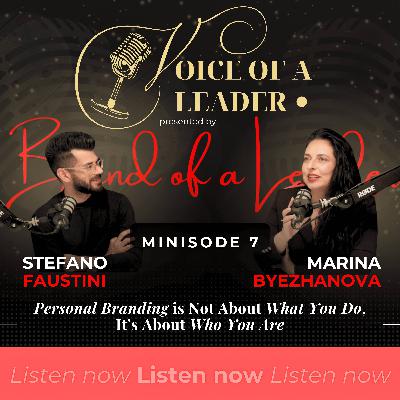
In this reflective minisode, Brand of a Leader co-founders Marina Byezhanova and Stefano Faustini discuss the transformative personal branding journey of Sun Ah Brock, founder of a leading interior design studio. They explore how Sun Ah evolved from someone deeply resistant to personal branding to embracing her authentic voice and creating meaningful impact.
Marina and Stefano share insights about Sun Ah's unique story as a Korean adoptee and how her exploration of identity became central to her personal brand. They discuss her journey from questioning "why would anyone listen to me?" to confidently taking the stage and moving audiences with her story. The co-founders highlight how Sun Ah's personal philosophy of "feelings over things" has not only shaped her personal brand but revolutionized her business approach in an industry typically focused on surfaces and aesthetics.
Takeaways
Personal branding is fundamentally about identity rather than profession
Resistance to personal branding often stems from questioning one's worthiness
The most personal stories are often the most powerful to share
A well-developed personal brand can transform not just personal visibility but entire business models
Effective personal branding requires not just storytelling but a clear message and purpose
Sound Bites
"Personal branding is not about what you do. It is about who you are."
"The inner story, the story of identity, the story of who we are... those are the things that need to come out."
"The journey of personal branding is ongoing and kind of a forever thing."
"In addition to telling our story, be clear on what is the message for others."
"Feelings over things."
Chapters
00:00 - Introduction to Sun Ah Brock's Story 01:30 - From Resistance to Embracing Personal Branding 03:10 - The Connection Between Identity and Personal Branding 04:45 - Witnessing Sun Ah's Transformation 06:10 - The Importance of Message Beyond Story 08:15 - How Personal Brand Transformed Sun Ah's Business
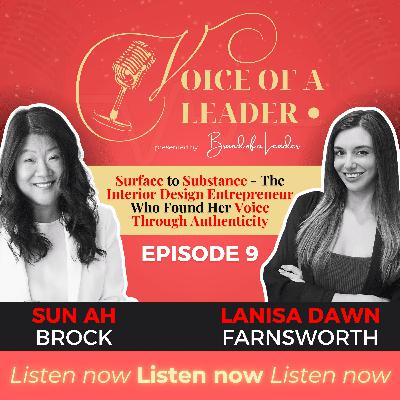
Sun Ah Brock shares her remarkable journey from founding LUX Decor in her kitchen in 2019 to building what is on-track to become North America's largest interior design community. As a Korean adoptee who was abandoned at the age of four, Sun Ah explores how her personal journey of identity discovery profoundly influences her approach to design and business.
In this powerful episode, Sun Ah shares her moving story of self-discovery and the ongoing exploration of her identity. She discusses her transformation from someone deeply resistant to personal branding and questioning "why would anyone listen to me?" to embracing her unique voice and perspective. The conversation reveals how her personal philosophy of "feelings over things" and concept of "interiority" have not only shaped her personal brand but revolutionized her approach to business.
Sun Ah's journey includes reconnecting with her biological family in South Korea and taking the courageous step to share her story publicly for the first time. Her experience demonstrates how personal branding isn't about what you do, but who you are—a philosophy that has allowed her to create a distinctive approach in an industry typically focused on surfaces and aesthetics. Sun Ah also shares her vision for Maru, her design community that embodies connection, vulnerability, and belonging—values she discovered were missing in her own life. Through authentic leadership and storytelling, she demonstrates how embracing one's true identity can create deeper connections both personally and professionally.This episode beautifully illustrates how embracing your authentic story and developing a clear message can create meaningful impact that extends beyond personal visibility to transform an entire business approach.
Key Takeaways:
Imposter syndrome often manifests as questioning whether you deserve "a spot at the table" or if people want to hear your voice
The difference between "fitting in" (changing parts of yourself) and "belonging" (arriving as yourself and being accepted)
Creating a sense of home for others can become a powerful purpose, especially for those who never felt it themselves
True connection requires both giving and receiving—sharing deeply, not just listening to others
Communities provide belonging, support, and opportunities for vulnerability that fuel both personal and professional growth
Entrepreneurial focus is critical—energy should be directed to 1-2 priorities rather than trying to do everything at once
Authentic leadership involves being vulnerable first, which inspires others to do the same
Sound Bites:
"I want to create a sense of home for others that I never really felt like I had."
"Fitting in is changing parts of yourself to belong, but truly belonging is arriving as yourself and being accepted."
"If you can really live authentically, you just live a richer life."
"Focus on less and do it really well."
"If the inner story is something burning within you, it is most likely time for it to come out."
"Live your life as you."
Chapters: 00:00 - Introduction and Imposter Syndrome07:00 - Turning Houses into Homes13:56 - The Adoption Journey and Korean Heritage20:06 - Reconnecting with Biological Family26:05 - Building Communities and Authentic Living28:28 - Vulnerable Leadership33:34 - From Fitting In to Belonging40:06 - The Entrepreneur's Challenge of Focus49:16 - Authentic Networking and Being "Perfectly Imperfect"
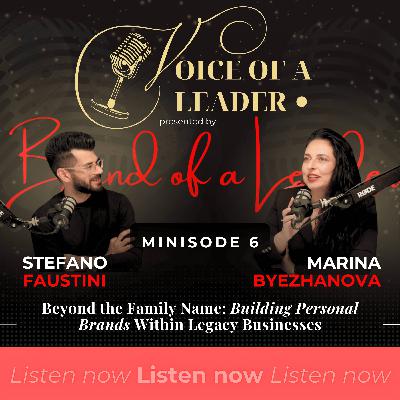
In this reflective minisode, Brand of a Leader co-founders Marina Byezhanova and Stefano Faustini explore the unique challenges faced by leaders of family businesses. Inspired by their conversations with Steven Short and James Ricci, they discuss the complex dynamics of preserving legacy while carving out one's unique identity as a second or third-generation business leader.
The co-founders examine the distinct form of imposter syndrome experienced by family business leaders - the pressure of measuring up to established legacies while simultaneously driving innovation and growth. Marina shares her own contrasting perspective as a first-generation entrepreneur, noting how she once felt inadequate next to those running larger, established family businesses before understanding their unique challenges.
Stefano and Marina highlight how personal branding becomes especially valuable for family business leaders seeking to differentiate themselves while honoring their heritage. They discuss how modern leaders in family businesses can leverage the established equity of their corporate brands while still creating their own identity and bringing fresh perspectives that often revitalize and "save" family businesses that might otherwise become obsolete.
Key Takeaways:- Family business leaders face a unique form of imposter syndrome- There's a delicate balance between preserving legacy and driving innovation- Personal branding helps clarify individual identity within the family business context- Modern leadership often requires being the public face of a traditionally behind-the-scenes family enterprise- Family businesses have the advantage of established brand equity when launching personal branding initiatives
Sound Bites:- "How can you leave a lasting mark within an organization that has been around for so long?"- "You not only have the pressure of scaling a business and innovating, but you also have somebody else's legacy to preserve."- "It's really identity work."- "Building our own personal brand helps us build our own legacy."- "It's usually those second, third, fourth generation guys and gals that save the family business."
Chapters: 00:00 - Introduction to Family Business Challenges 01:20 - The Unique Imposter Syndrome of Family Business Leaders 02:50 - Personal Identity Within Family Business Context 04:30 - Balancing Family Dynamics and Business Challenges 06:16 - Perspectives on Starting vs. Inheriting Businesses 08:38 - Leveraging Legacy for Future Success
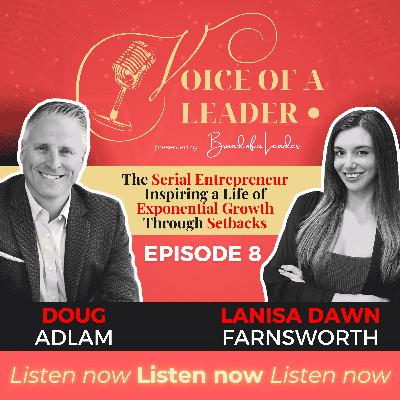
Doug Adlam is a serial entrepreneur and exponential growth expert whose journey spans the mortgage, fintech, and wealth management sectors. After scaling his parents' mortgage business by 40X and co-founding Finmo, a technology company that fundamentally transformed Canada's mortgage process, Doug discovered his passion for driving exponential growth through innovation and disruption across multiple ventures.
In this episode, Doug opens up about his fascinating transition from high-stakes sports officiating to serial entrepreneurship. Drawing from his experience of nearly 800 games as a hockey official, he shares how early lessons in performing under pressure and managing conflict on the ice shaped his approach to scaling businesses. Doug discusses his pivotal career redirection when his NHL officiating dreams ended, and how this moment became a catalyst for his entrepreneurial journey.
As an active member of Entrepreneurs' Organization (EO) and graduate of the Global Speakers Academy, Doug brings a unique perspective that combines high-performance sports psychology with business acumen. He shares compelling insights about challenging industry monopolies, navigating near-bankruptcy experiences, and the importance of resilience in entrepreneurship – including a dramatic "22 minutes from bankruptcy" story that showcases the real challenges of scaling ventures.
With an engaging storytelling style and authentic vulnerability, Doug inspires listeners to embrace challenges as opportunities and pursue what he calls an "exponential life" – one that exceeds the limitations we place on ourselves.
Key Takeaways:- Failure can be a powerful catalyst for growth and redirection- True disruption requires courage to challenge established industry norms- Business success often comes from identifying and improving existing solutions rather than reinventing everything- The entrepreneurial journey involves managing both personal and investor expectations- Learning from cross-industry experiences can provide valuable insights and solutionsSound Bites:- "You don't always need to reinvent the wheel - you can learn from others who have done things before you."- "Just because an industry has always done something doesn't mean there isn't a better way to do it."- "You have a choice to live subpar in mediocrity or exponentially."- "We can unlock levels of fulfillment that we literally can't imagine exist or possible."Chapters:00:00 - Introduction and Early Career Aspirations03:15 - The NHL Dream and First Major Redirection17:40 - Building a Mortgage Business25:04 - Challenging Industry Status Quo32:42 - The 22 Minutes from Bankruptcy Story45:11 - Cross-Industry Innovation and Learning52:13 - Overcoming Challenges and Imposter Syndrome57:19 - Lessons Learned and Living Exponentially01:00:36 - Final Thoughts on Entrepreneurship and Growth
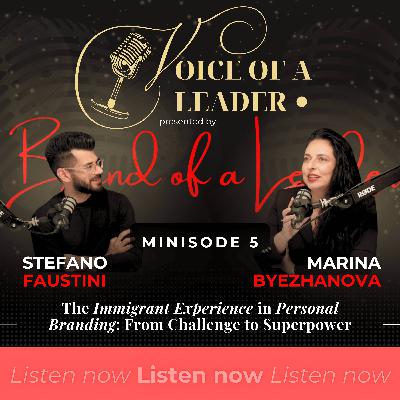
Inspired by their full-length episode with entrepreneur Jenny Feterovich, co-founders Marina Byezhanova and Stefano Faustini explore the complex relationship between immigration, identity, and personal branding. Marina shares her personal journey from wanting to hide her immigrant identity to proudly wearing it as part of her brand, while they discuss how the immigrant experience—though challenging—can become a powerful differentiator in building an authentic personal brand.Drawing insights from Jenny's remarkable story of transformation, from fleeing her home country to becoming an Emmy-nominated professional, they examine how immigrants navigate the delicate balance of standing out while fitting in. The conversation reveals why imposter syndrome, though a Western concept, often resonates deeply with immigrant experiences, and how embracing one's unique background can become a catalyst for connection and success.Key Takeaways- The immigrant experience can be transformed from a perceived weakness into a powerful brand differentiator- Personal branding requires authentic storytelling that resonates from within- Repetition is crucial in building strong brand associations- The journey from hiding to embracing one's immigrant identity varies for each person- Imposter syndrome manifests differently in immigrant experiences- Authentic stories that are "burning within" create the most impact- Personal brand building requires balancing assimilation with maintaining uniqueness
Chapters00:00 Introduction and Jenny's Story02:56 Imposter Syndrome as a Western Concept05:50 The Journey from Hiding to Embracing Identity08:55 Strategic Storytelling in Personal Branding
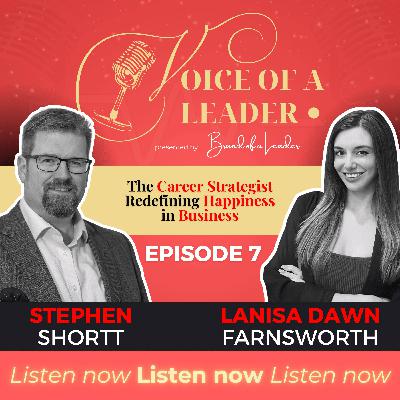
Stephen Shortt is a serial entrepreneur and career strategist with a passion for helping people find fulfilling and rewarding careers. Drawing on his experiences growing up in two family businesses, Stephen shares candid insights into the unique challenges of legacy leadership and how these shaped his approach to entrepreneurship and talent development.
In this episode, Stephen opens up about his battles with imposter syndrome and how he turned those challenges into opportunities for growth. He discusses his Successful Succession framework, which helps family businesses thrive without losing sight of relationships, and the universal importance of aligning career choices with personal values.
Stephen’s work extends across several ventures, including ETC Consult and CareerFit, where he combines strategic planning with talent assessment to help individuals and organisations achieve their goals. Beyond his professional endeavors, Stephen’s role as a former Global Chair of the GSEA competition highlights his commitment to fostering young entrepreneurs, even earning him the title of "Disney Princess" on LinkedIn for his appearance in the Disney+/National Geographic documentary Own The Room.
With an infectious energy and a knack for storytelling, Stephen inspires listeners to navigate their own career paths with authenticity, curiosity, and purpose.
Key Takeaways- Imposter syndrome is a universal experience, but it can be managed by challenging self-doubt and focusing on growth.- Leading a family business brings unique challenges, including balancing legacy with innovation.- Success is deeply personal and should align with one’s values and sense of fulfillment.- Building a strong team is about trust, communication, and empowering others to excel.- Personal branding is a continuous journey that involves self-awareness and authenticity.
Sound Bites- “Leadership is about listening, learning, and empowering your team to thrive.”- “Imposter syndrome isn’t a sign of weakness—it’s a signal to reflect and grow.”- “In a family business, you’re not just inheriting a company—you’re inheriting a story.”- “Success isn’t just about hitting targets; it’s about living in alignment with your values.”
Chapters00:00 - Introduction and Setting the Scene04:15 - Growing Up in a Family Business12:48 - Understanding and Navigating Imposter Syndrome27:35 - Defining Personal Success42:10 - Building and Leading High-Performing Teams57:22 - Aligning Career Choices with Values01:10:08 - Closing Thoughts and Key Takeaways
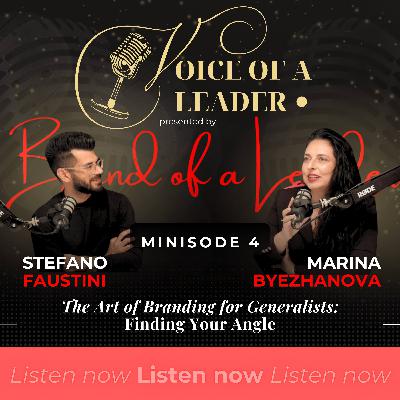
In this fourth minisode of our podcast, co-founders Stefano Faustini and Marina Byezhanova tackle a big question: How do you build a personal brand when you’re a generalist—someone without one clear area of expertise?
The answer? Your personal brand isn’t just about what you do—it’s about who you are. Stefano and Marina break down how to position yourself authentically, showcase your expertise, and avoid being, well, boring. They explore the power of combining hard expertise with humanization and share why defining your goals and content pillars is the first step to success.
Whether you’re trying to stand out as a leader, attract top talent, or become a thought leader in unexpected spaces, this episode will show you how to build a brand that’s as real as it is impactful.
Key Takeaways- Building a personal brand is possible, even as a generalist.- Your brand angle should reflect who you are, not just what you do.- Combining expertise with a humanizing element prevents your brand from being boring.- Clear goals and content pillars are essential for effective personal branding.- You can position yourself as an expert in areas beyond your primary industry.- A strong personal brand can attract higher-caliber talent to your organization.Chapters00:00 Navigating Personal Branding as a Generalist02:56 The Importance of Brand Positioning06:04 Balancing Expertise and Humanization in Branding08:56 Defining Goals for Personal Branding
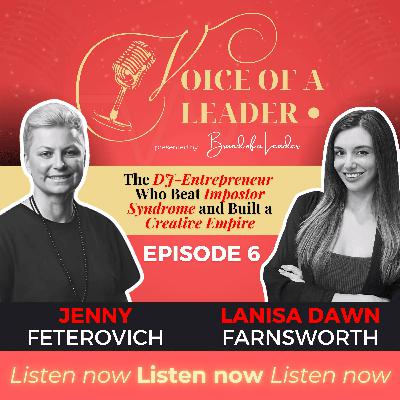
Jenny Feterovich is a DJ turned entrepreneur and creative innovator who's making waves at the intersection of art, music, and technology. Her journey as a first-generation immigrant has shaped her into a fascinating entrepreneur and atypical thinker who inspires others to push beyond their comfort zones.After arriving from the Soviet Union, Jenny embraced the challenges of building a new life in America. Her entrepreneurial journey started in the music scene as a DJ, eventually expanding into multiple successful ventures including a party promotion business, production company, and gym.Throughout her career, Jenny has been refreshingly candid about her battles with imposter syndrome while continuing to break new ground in every new endeavour she embarks on - all of which she approaches with a remarkable sense of courage and creative liberty. Her story includes both triumphs and setbacks - including a concert that flopped but taught her invaluable lessons about resilience and failing forward.Jenny truly holds a unique approach to business, blending creativity with disciplined execution in what is a rare balance. Above all, it was her success metrics we found particularly resonant - two simple but powerful metrics: the impact she creates in the world and the freedom she has in her life.Today, Jenny crafts extraordinary experiences for brands and artists, pushing boundaries in creative technology. She's become a mentor and speaker who encourages others to dream bigger and look past conventional expectations.Key Takeaways- True success comes from creating impact and achieving personal freedom- Imposter syndrome can be overcome through persistence and self-belief- Setbacks and failures are valuable stepping stones in the entrepreneurial journey- Ideas need execution to become reality- It's okay to chart your own path beyond societal expectations- Building a supportive network is crucial for personal growth
Sound Bites"I have a Japanese toilet with a heated seat. That's when I made it.""You can have excuses or can have results.""Coupling your purpose with your passion and execution, no doubt you're gonna be successful.""You have to be a little bit delusional in a sense to believe that you can push through."Chapters00:00 - Introduction and Colorful Fashion09:23 - From Soviet Union to America19:17 - First Entrepreneurial Ventures22:04 - Starting a DJ Career25:04 - Lessons from Failure29:33 - Defining Success32:42 - Creating Impact and Finding Freedom45:11 - Overcoming Imposter Syndrome and Believing in Yourself54:05 - Creating Extraordinary Experiences in Art, Music, and Technology01:07:03 - Following Your Passion01:11:25 - Being Delusional and Pushing Through01:15:14 - The Journey to Parenthood01:17:21 - Finding Answers Within01:20:21 - Being True to Yourself01:23:24 - Operating from a Place of Love01:27:15 - Making a Positive Impact
In this third minisode of our podcast, co-founders Stefano Faustini and Marina Byezhanova discuss the power of personal branding, focusing on its unique challenges and benefits for those with high-value networks, like Stephan Roche.
The episode dives into the hesitation many face when stepping into the public eye, especially the fear of judgment and being misinterpreted. Stefano and Marina stress that rather than fixating on detractors, the key is to build a base of "true fans" who resonate with one's message. They highlight the importance of visibility not only for immediate impact but for building a lasting legacy. The conversation encourages listeners to embrace the stakes of personal branding, as taking ownership of one’s narrative is crucial for authentic leadership.
Key Takeaways- Personal branding is vital for individuals with high-value networks - and the stakes in personal branding are high, regardless of status.- Fear of judgment holds many back from embracing visibility.- Focusing on true fans rather than detractors is essential.- Visibility strengthens impact and builds legacy.- People are drawn to those who share authentic and valuable insights.- Courage and authenticity are cornerstones of a strong personal brand.Chapters 00:00Introduction to Steven Roche and Personal Branding03:02The Stakes of Personal Branding05:49Overcoming Fear of Judgment08:58The Value of True Fans12:12Conclusion and Reflection on Legacy
James Ricci is the President of Roy Foss, one of Canada’s largest retail automotive and leasing companies, where he is leading a transformation in e-mobility at a 65+ year-old, multi-generational family business. James is an entrepreneur, deep thinker, and an advocate for the future of mobility, with a career shaped by the duality of both tradition and innovation in the automotive industry.
Stepping into a legacy business, James initially wrestled with imposter syndrome and the expectations tied to a family heritage, finding his stride through a commitment to authenticity and growth. With an MBA from the London School of Economics and recognition in Automotive News’ “Top 40 Under 40,” he has distinguished himself as a modern leader. His journey spans from starting his first business at 16 to scaling strategic projects that redefine Roy Foss’ future.
James is also an active investor and advisor, helping organizations in Canada and beyond navigate the evolving landscape of tech and mobility. He believes in leading with both head and heart, balancing risk with strategic experimentation. With a focus on self-awareness and genuine connection, James is reshaping not only his family’s business but also the future of the industry itself.Key Takeaways- Imposter syndrome can be common in family businesses, especially when trying to prove oneself and live up to the legacy of previous generations.- Finding a balance between focusing on the present and planning for the future is crucial for long-term success.- Transformation and transition are key aspects of success in the automotive industry.- Asking deeper questions can lead to a better understanding of problems and solutions.- Curiosity, compassion, and courage are valuable qualities in leadership, though they are not mainstays of traditional businesses (yet should be).Sound Bites"There's probably no greater breeding ground for imposter syndrome than a family business, especially a three-generation family business.""I'm interested in how people and businesses navigate existential moments in their existence.""Once you've been mastering one side of a product, service or innovation - and understanding what market exists for it - only then can you start moving into different areas and looking towards the future."ChaptersOn Imposter Syndrome17:40Becoming an Entrepreneur at 1624:32Lessons from a Family Business31:29Balancing Tradition and Innovation38:19Advice for Entrepreneurs40:51Experimentation and Strategic Projects43:03Existential Moments in Business46:28Self-Awareness and Creating Value49:36Leadership as a Series of Questions52:12Taking Responsibility and Asking Deeper Questions01:03:38Embracing the Present Moment
In this second minisode of our podcast, co-founders Stefano Faustini and Marina Byezhanova dive deep into the specifics and tactics of personal branding, focusing on one key question: "How vulnerable do I really need to be when building a personal brand?"They reflect on the inspiring journey of David Shamszad, who shared deeply personal stories as part of his branding process. In David's case, his personal branding journey was an inside-out process requiring him to officially bring his truest, deepest (and darkest) parts of himself to the table in an effort to no longer have "separate" identities (i.e. his identity as a recovering addict struggling with mental illness and his identity as a successful 7-figure CEO). The conversation emphasizes the importance of curating what to share, the balance between personal and professional identity, and why authenticity is necessary (and powerful) in personal branding.Key Takeaways- Personal branding requires a level of vulnerability.- Sharing personal stories can be therapeutic, and curating what to share is essential for authenticity.- A personal brand is an expression of who you are - and imposter syndrome can hinder personal branding efforts.- Building a personal brand involves stepping outside comfort zones.- Humanizing your brand is crucial for connection, but not all personal stories need to be shared publicly.- Personal branding is not just about business identity.- The journey of personal branding evolves over time, and it is a journey worth taking.Chapters00:00Introduction to Personal Branding and Vulnerability02:52The Journey of David Shamszad06:07Curating Your Personal Brand09:14The Essence of Personal Branding12:02Conclusion and Key Takeaways
David Shamszad is a CEO, Entrepreneur, and Author. He is expanding a real estate enterprise and changing the dialogue on mental illness and substance abuse. His story is not one you'll hear anywhere else - and it is entirely worth learning about.
As a respite from early symptoms of depression and trauma at home, David turned to drugs and drinking at the age of 13. In early adulthood, he oscillated between debilitating depression, manic episodes, and week-long binges.
After a severe manic and depressive episode at 23, David was diagnosed with bipolar disorder. A decade-long battle with mental illness and addiction ensued. At the end of it, he was ready to surrender and rebound - a journey which began with vulnerability, acceptance, and courage.
He went to a chemical dependency treatment facility that transformed his life. His dual diagnosis (mental health and substance abuse addiction) was confirmed for the first time.In some ways, his life now is unrecognizable from its darkest days. David is the CEO of SG Real Estate, an expanding, 8-figure real estate enterprise. Founded in 2012, the company now employs 50+ people and generates $10MM+ in annual revenue. He is also a husband, father, youth mentor, passionate advocate, and the author of a forthcoming book on mental illness, addiction, and recovery called: Coming Up for Air.Key Takeaways- Imposter syndrome can be a common experience for individuals with mental health issues.- The stigma surrounding mental health can prevent individuals from seeking help and being honest about their struggles. Open discussions about mental health are crucial in reducing stigma and promoting understanding.- Manic energy can lead to destructive behaviors and the need to burn off excess energy.- Triggers for bipolar episodes can include inconsistent self-care, lack of sleep, and substance abuse.- Addiction and mental health issues can strain relationships, but recovery can lead to healing and growth.Sound Bites"Growing up, there wasn't even a vocabulary for mental illness.""There is no better life to live than the one where you're totally honest with yourself.""The only way that this much pain and anguish could end is if I'm not alive."Chapters05:24Discussing Imposter Syndrome12:22David's Childhood and Upbringing19:45The Impact of Mental Illness and Self-Medication28:18Entering the Psychiatric Ward32:40Struggles at Work and Seeking Help33:11The Destructive Cycle of Manic Energy35:11The Danger of Untreated Mental Illness37:12The Power of Vulnerability and Support41:30The Impact of Mental Illness on Relationships48:55Committing to Sobriety and Seeking Help
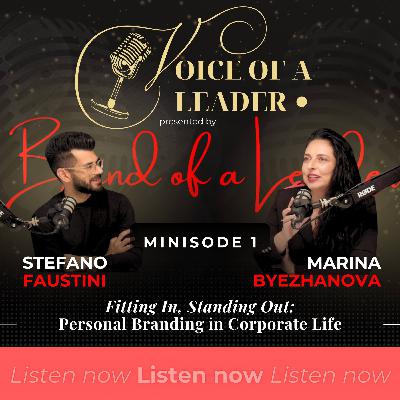
In this inaugural minisode of our podcast, co-founders Stefano Faustini and Marina Byezhanova dive deep into the specifics and tactics of personal branding, especially for leaders in corporate environments. They discuss overcoming common barriers like imposter syndrome and the resistance many face when it comes to visibility and self-promotion. The conversation highlights the role personal branding plays in inspiring teams, creating opportunities, and fostering positive influence. The episode also features insights from former COO of the Verizon Consumer Group Krista Bourne, guest from Episode #2 of the Voice of a Leader podcast, who shares her own journey and lessons learned about personal branding.Key Takeaways- So many entrepreneurs and leaders resist putting themselves in the spotlight - and imposter syndrome is a common barrier to visibility- Corporate leaders can build personal brands without ruffling feathers- Visibility is essential for attracting top talent and being a magnet for hiring - and personal branding is becoming a necessity in corporate culture- Leaders must inspire their teams to be effective- Consistency in personal branding is crucial for recognition- Building a personal brand opens doors to new opportunities- The future of corporate leadership will include personal branding as a standard practiceChapters00:00Introduction to Personal Branding and Leadership01:57Overcoming Resistance in Personal Branding05:57Navigating Corporate Environments for Personal Branding11:49The Importance of Personal Branding for Corporate Leaders16:47Inspiring Leadership and the Role of Personal Branding
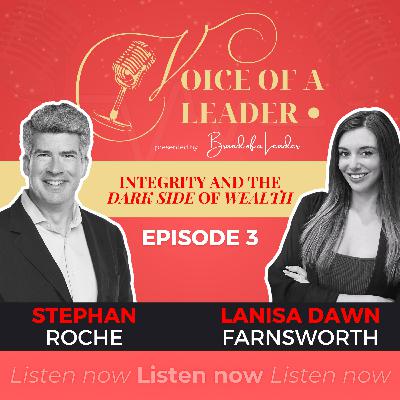
Stephan Roche is a CEO, investor, strategic advisor, and venture capital and family office executive.
Holder of a Bachelor’s degree from Princeton and an MBA from Harvard, Stephan served as the CEO of a family office for one of the wealthiest American families. By the end of his tenure as CEO, he had grown the family office from 50 to 500; helped steer the organization through turbulent social and economic circumstances; and built relationships with best-selling authors, world-renown scientists, athletes, and billionaires.Simultaneously, Stephan also confronted the dark, shadow side of wealth – the impropriety, abuses of power, degradation of ethics and over-importance of wealth as a defining part of one’s identity. Today, Stephan is the CEO of SemperVirens, a venture capital firm within the Sequoia group. SemperVirens provides advisory, mentorship, and capital to startups poised to make a positive impact in the world, fostering an asymmetric portfolio of investments in women, BIPOC, and diverse founders with grand visions for company growth and outsized impact.Key Takeaways- Imposter syndrome can manifest in different ways, including feeling like an imposter due to lack of expertise, feeling out of alignment with external validation, and feeling qualified but not fulfilled in a role.- Success is multi-dimensional and goes beyond traditional metrics of achievement, encompassing personal relationships, values, and alignment with oneself.- Parental influence on career choices can impact an individual's sense of fulfillment and alignment with their chosen path.- Procter & Gamble's approach to feedback and leadership training emphasizes the value of junior team members' input and the importance of learning from others in a collaborative environment.- In the business world, collaboration and benchmarking are essential for success, while academia often emphasizes individual achievement and originality. Formal education often leaves individuals unprepared for the real-world skills needed for success in business.- The power of integrity lies in doing the right thing, always, and building trusted relationships.- Wealth reveals and amplifies a person's values and does not fundamentally change who they are.Chapters00:00Introduction, Childhood and Career Journey13:14Discussion on Imposter Syndrome and Success38:09Navigating the Gaps in Formal Education55:56The Multifaceted Nature of Wealth01:21:29Creating Positive Impact: Personal Experiences and Perspectives

Krista Bourne is a global keynote speaker, advisor, and former Fortune 20 executive. After an unstable childhood and leaving college after only one semester, her journey took a remarkable turn when she found an opportunity that became a 25-year career at Verizon. Starting in the mailroom in upstate New York, Krista progressed through key roles in Service, Sales, and Operations. In time, she became the Chief Operating Officer for the Verizon Consumer Group, the first Black woman to hold the position. Leading a distributed team of 30,000 employees, she served over 110 million customers, delivered more than $500M in cost optimization and contributed to an annual revenue exceeding $100 billion.Join us as Krista shares with Lanisa D. Farnsworth how she overcame impostor syndrome, unlocked her leadership potential, and learned to embrace the power of simple choices to achieve the extraordinary.Key Takeaways- Imposter syndrome is situational and can be managed by compartmentalizing it as a specific challenge rather than allowing it to define one's entire identity.- Continuous learning and a learner's mindset are essential for personal and professional growth, especially in the face of emerging trends like AI and entrepreneurship.- Chasing impact, not titles, is a key to success in one's career, as it allows for a focus on meaningful contributions rather than superficial achievements. Imposter syndrome is situational and can be managed through disciplined approaches.- Balancing career and family requires effective calendar management, prioritization, and communication.- Finding purpose in a career involves being part of something bigger than oneself and making positive change.- Personal and professional branding are both important for career advancement and thought leadership.- Being authentic and making intentional choices are key to building the life you want.- Introverts can navigate professional settings by approaching it like a workout, pushing themselves to engage and interact.- The bravest thing Krista did was taking on a profit and loss role without a financial or business background, demonstrating the power of learning and adaptability.Chapters00:00 The Importance of Continuous Learning36:40 Navigating Imposter Syndrome and Career-Family Balance40:55 Purpose, Branding, and Authenticity in Career Development45:19 The Power of Choices and Intentional Living53:53 Challenges and Triumphs of an Introverted Professional

Marina Byezhanova is an entrepreneur, global speaker, and co-founder of Brand of a Leader, the world’s leading personal branding agency for GenX CEOs. In this inaugural episode, Marina shares the founding history of Brand of a Leader, the company’s true mission, and the impact she aspires to make on the entrepreneurial world through personal branding. The episode explores the essence of impostor syndrome, starting a business during a global pandemic, and how personal branding and being authentic can be a powerful tool to overcoming imposter syndrome. Sound Bites "When you have a personal brand, you have an opportunity to inspire people and make an impact at scale." "When you have a strong recognizability of your name and people are following you for you, they follow along with pivots." "Being radically authentic is what breeds connection and formulates trust." "Their positive spin on imposter syndrome." "Stand out, speak up and be radically authentic." "You go first, the universe follows." Chapters 00:00 Introduction and Mission of Brand of a Leader 03:20 The Importance of Personal Branding 08:53 Working with Gen X CEOs and Navigating Self-Marketing 25:15 Imposter Syndrome and the Power of Belief 29:16 Introduction to Imposter Syndrome 38:25 The Role of Personal Branding 45:13 The Power of Visualization and the Universe
Comments


Download from Google Play

Download from App Store
 United States