


 Claim Ownership
The Format.
Subscribed: 0Played: 0
Subscribe

© Flo Lumsden
Description
A podcast newsletter for podcast producers - updates on tech, monetization and even the psychology behind podcasting.
theformatpodcast.substack.com
theformatpodcast.substack.com
9 Episodes
Reverse
We spoke to self-described “audio and podcast person” Arielle Nissenblatt about distance running, the importance of trailers as a tool for onboarding new listeners, and her eleven-year journey from casual podcast consumer to one of the leading voices in the industry.She developed the idea for her first podcast newsletter, Earbuds, in 2017 while stuck in LA traffic. Eight years later, Arielle has led podcasting efforts at SquadCast.fm, Descript, The Podcast Academy, and more. Today, Arielle is Pinwheel's Director of Community and Content at Audily.🎧 What we cover this episode:* Engaging soundbites to hook listeners quickly in your cold open.* Audio quality in long-form audio is paramount over visuals.* Keep your podcast structure and schedule consistent: elements like intro/outro/segment signposting will help retain engagement.* Text-based audio editing services like Descript can revolutionize your workflow if you want a lower barrier of entry into podcasting.Connect with Arielle on Linkedin: https://www.linkedin.com/in/arielle-nissenblatt-90348356/Learn more about Arielle: https://www.ariellenissenblatt.com/📝 Episode OutlineIntroduction and Personal Background (00:00 - 06:18)Flo shares personal context about upcoming jaw surgeryIntroduction of guest Arielle, met at On Air Fest, with background at Descript, Castbox, Audily, and SquadcastCareer Origins and Educational Background (06:18 - 09:02)Arielle shares childhood uncertainty about career directionArielle's interest in international relations and conflict resolution developed in collegeArielle studied geography in undergrad, drawn to Guinness Book of World Records and superlativesHuman Evolution and Storytelling Discussion (09:02 - 13:03)Discussion of Born to Run by Christopher McDougall - humans evolved for distance runningExploration of humans’ unique capacity for storytelling, culture, and shared beliefs compared to other speciesAnalysis of how stories, religion, and money as human constructs shape civilizationPodcasting Appeal and Learning Styles (13:03 - 16:04)Discussion of audio learning advantages over visual learning for many peopleArielle’s preference for audiobooks over traditional reading due to focus challengesImportance of audio quality over visual quality for storytelling contentCareer Entry into Podcasting Industry (16:04 - 20:12)Arielle started listening to podcasts in 2014, got first job in space around 2016Started from zero connections by creating a newsletter about podcast recommendations in 2017.Early monetization through newsletter advertising and event ticket exchangesDescript Experience and Current Role (20:12 - 23:11)Arielle joined Descript through Squadcast acquisition, worked there for 1.5 yearsCurrent role as Director of Community and Content at Audily/Pinwheel podcast studioPodcast Format and Structure Best Practices (23:11 - 30:10)Discussion of intro/outro formats - scripted with music versus varied approachesImportance of consistent elements to orient listeners (familiar music, format)Cold open technique using compelling quotes from upcoming interviewEssential elements: host name, show name, guest introduction, episode value propositionSignposting different segments throughout show for listener navigationConsideration for audio-only listeners when producing video podcastsTrailers, Marketing, and Audience Engagement (30:10 - 38:04)Podcast trailers as crucial onboarding and marketing toolsPromise-delivery framework: tell audience what they’ll learn, teach them, confirm what they learnedRapid Fire Questions from On Air Fest This is a public episode. If you'd like to discuss this with other subscribers or get access to bonus episodes, visit theformatpodcast.substack.com/subscribe
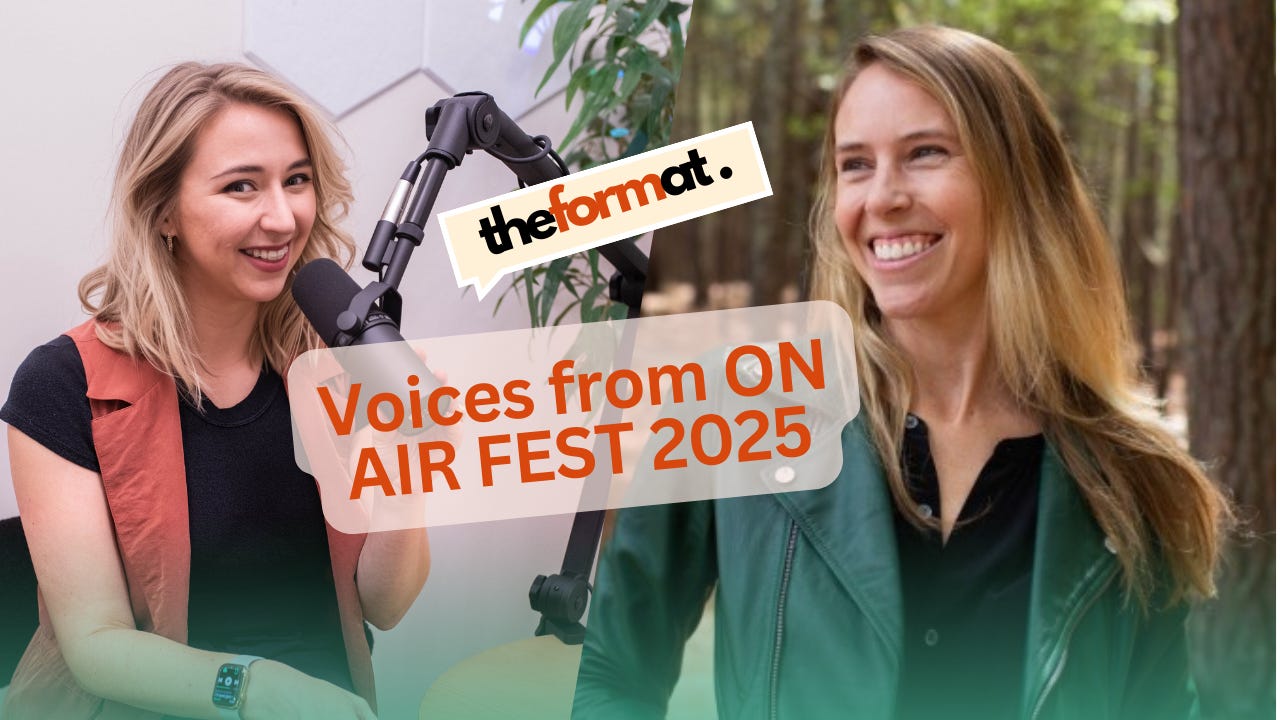
(🎧 Listen on Spotify or Apple Podcasts.)Lauren Wingard and I had a blast at On Air Fest in Brooklyn last month. In these interviews, we cover everything from audience research to the ever-evolving debate between audio and video podcasting. Lauren and I reflect on the 5 “on the street” interviews we did at On Air Fest last month and share our favorite takeaways and learnings. We hope you enjoy!- Outline - Flo and Lauren Introduction (00:00 - 09:34)* How we met* Lauren’s professional journey from Red Hat leadership development to BetterOn* Warm-ups and on-camera techniquesBen Robbins (NPR, Audible) on Why Audience Research is Crucial (09:34 - 12:20)* Ben is the founder of Sound Insights* Previously worked at NPR for 13 years and was global senior director of Research at Audible* Why Audience Research is imperative Flo & Lauren Recap (12:20 - 16:30)* Clip from “10 Years of National Sawdust” with Paola Prestini & Jad AbumradChioke Ianson (Resonate Podcast Festival, VCU) on Why Audio is Magic (16:30 - 21:29)* Chioki founded Resonate Podcast Festival in Richmond, Virginia* He is the director of community media at the Institute for Contemporary Art at VCU and an underwriting voice for NPRMelanie Levitan (26:48 - 28:45) - Perspective from a podcast lover & attendee of the Fest* On Being Podcast * Introduction of Simon Adler interview, clip from 15-minute live “Closed Captions: RadioLab”Simon Adler (Senior Producer, RadioLab) (31:34 - 36:55) on How to Design a Story for Different Formats* The story behind closed captions * The Impact of the Gallaudet University Protests* Reflections storytelling for various formatsMax Jungreis (StoryCorps) (41:30 - 52:45)* The Art of Storytelling at StoryCorp* Challenges and Rewards of Producing* The Role of Facilitators* Rapid Fire Questions with Max Reflections and Future Plans (52:45 - 58:53)* Meeting Reggie Watts* Concluding ThoughtsAdditional References:* Serial Podcast * Bianca Giaever - Making Documentaries a Spiritual Practice* Netflix Considers Podcasting* One Small Step - StoryCorps * The Monty - Lauren Wingard’s Story* Reply All Podcast This is a public episode. If you'd like to discuss this with other subscribers or get access to bonus episodes, visit theformatpodcast.substack.com/subscribe
(Listen on spotify, apple podcasts)I discovered Siobhan and her work on the internet, of course. Her book “The Power of Podcasting” caught my eye and I added to cart. Most books about podcasting are full of tactics and fluffy advice. The Power of Podcasting, however, gave me specific examples from Siobhan’s decades in radio, documentary, and podcast production to back up her learnings. In this episode, I had the opportunity to (virtually) sit down with author Siobhan McHugh, award-winning podcast producer, Oprah & Oxford Handbook endorced scholar based in Australia and ask her some of the deeper questions I’ve asked myself for years like…* When is it ethical to add music to an interview? * Is it OK to add in your perspective as the host or journalist? * Why is podcasting so popular now? How did we get here and where are we going?Siobhan shares her journey from Ireland to Australia, from science student to a celebrated figure in radio and why audio storytelling is still her favorite format.🎙️ Introduction and Podcasting Background (00:00 - 07:51)* Siobhan McHugh introduced as an award-winning writer, documentary maker, and podcast producer* Discussion on the impact of Serial podcast on the podcasting industry* Authenticity in podcasting 📚 Audio Storytelling and Education (07:51 - 18:00)* Siobhan's experience teaching audio storytelling to skeptical students* Emphasis on the power of audio as a medium* Discussion on the cost and effort involved in producing narrative podcasts🎭 Ethical Considerations in Podcasting (18:00 - 29:45)* Debate on the ethics of manipulating emotions through music in podcasts* Importance of balancing storytelling with ethical considerations* Discussion on the trend of hosts becoming part of the story in podcasts🔍 Investigative Podcasting and Human Nature (29:45 - 39:24)* Analysis of Serial's approach to storytelling and its impact* Discussion on the balance between drama and respect in true crime podcasts* Importance of humanizing subjects in investigative podcasting🎤 Podcasting's Influence and Future (39:24 - 47:31)* Discussion on podcasting's role in political communication* Analysis of different podcast formats and their appeal* Reflection on the future of podcasting and its potential impact This is a public episode. If you'd like to discuss this with other subscribers or get access to bonus episodes, visit theformatpodcast.substack.com/subscribe
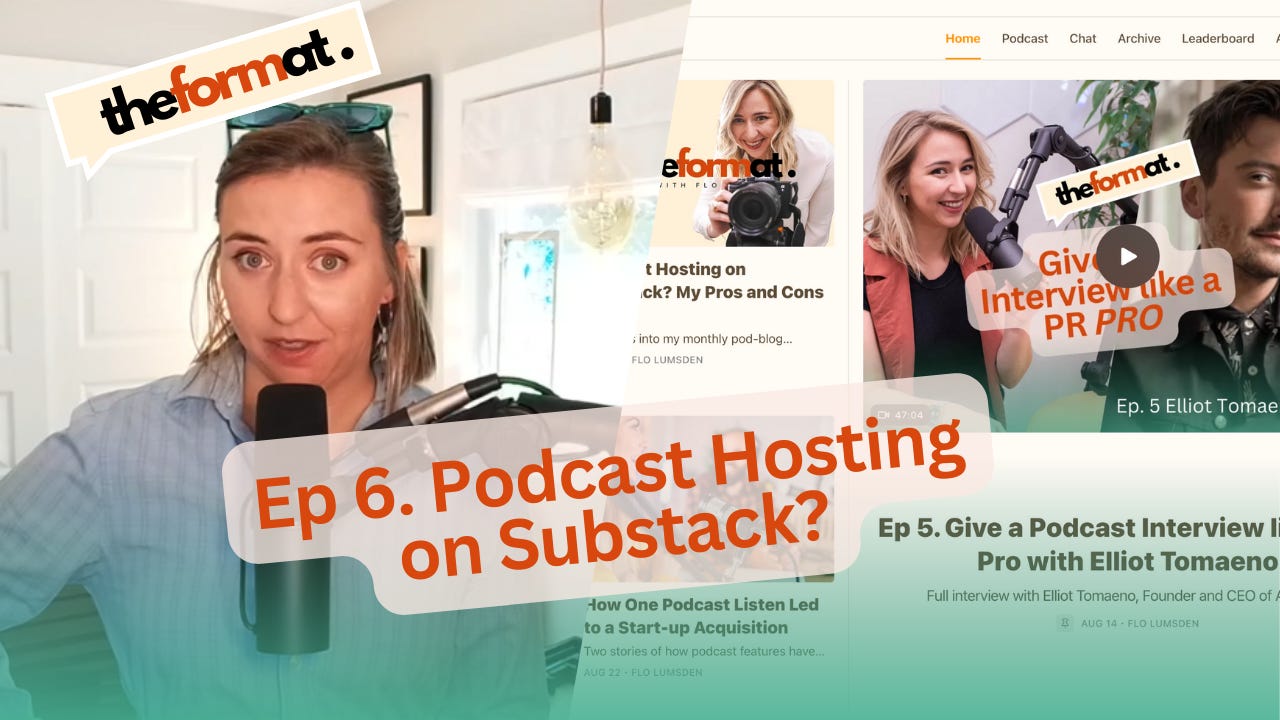
I’m trying something new again! I recently wrote a blog outlining the pros and cons of hosting my podcast on Substack, and now I’ve a companion podcast episode to the blog. To read along as you listen, here is the original blog below. What do you think of this format? My friend Angela Hollowell was the first friend and fellow producer who enthusiastically introduced me to Substack. She was really excited about an app that allowed her to grow her email list and actually delivered her content to her subscribers (unlike IG, Facebook, and LinkedIn algorithms). It also allowed her to set up paid monthly subscriptions and create a beautiful, branded site for her content. “If patreon and medium had a baby, it would be substack” I told friends. On top of all of this, it supported podcast hosting! WOW. The Format. is a reader-supported publication. To receive new posts and support my work, consider becoming a free or paid subscriber.I had to try it out. I love creating new brands, so I got to work brainstorming the name and premise of my new substack channel. I landed on “TheFormat.” I often think and talk philosophically about how media is changing and how various new and old media “formats” rise and fall with popularity and new technology. As an independent podcast producer, I think it’s important to share my perspective of the medium and my expertise. I set up interviews with people I wanted to learn from or get to know professionally and started turning it into content for my brand, Chorus Studios. “TheFormat.” would explore this new, popular format of podcasting. So how is it going? Here are my top take aways.Big Ups 👍 for Publishing your Pod-blog on Substack:* Built-in promotion and networking via email and in-app* Once you join the substack community, both in-app and your inbox, substack will start recommending publications and articles for you. As a substack producer, this means there are more opportunities for users to discover my content - especially if they follow other channels with similar content or topics to mine. About 30% of my subscribers found me organically through substack! * Opportunity to take advantage of “Recommendations” and good discoverability* Supports video and audio versions of your podcast for simple, one file distribution* Monetization* Opportunity for your followers to support your work financially with a low monthly donation - similar to patreon.* RSS feed creation* When you create a podcast on substack, substack will create an RSS feed for you. You still need to go into your setting and make sure your podcast is connected to Spotify, Apple Podcasts etc, but they make this process quite easy.* One place for all of your media formats * Promotes a combination of media simultaneously - written, video, audio, podcast. I wanted a platform where I could try out various written summaries or snippets from my podcast interviews. It’s so awesome that my followers can come to this one place to find both the full podcast as well as written content focusing on various topics (key take aways for example) from that longer podcast. * Beautiful design and fairly easy-to-use site setup * It took me a few days to set up my new website for TheFormat. on substack but it was easier than creating a website from scratch using other platforms like wix or Squarespace. I appreciate the ability to apply your unique brand colors, logo and imagery to the site. * Learn and connect with likeminded professionals* When considering which community to host your blog, reputation matters. So far, substack has a lot of edu-tainment or professional adjacent content that lends itself well to the content I am producing. I’ve made some great new connections to fellow podcasters and media professionals through Substack.Not so Ups 👎 for Publishing your Podcast on Substack:* Does not automatically distribute to nich podcast platforms* Unlike other podcast distributors like Transistor.fm, Substack does not automatically suggest you connect your podcast to platforms you may not have heard of like Deezer or Playerfm. If you want to do this with your substack podcast, you’ll need to take the RSS feed to these platforms on your own. It is possible, it’s just a bit extra work.* Mobile version of podcasts don’t have links to Spotify, Apple etc as it does on the web app* Ok this is my biggest pet peeve. While the web app version of the podcast episode page does have buttons to “listen on spotify, apple podcasts” etc, the iPhone or ios app does not. WHY!?! I have to add the links in the text of the episode show notes so that folks who have the app can find links to listen elsewhere… now that I’ve just written this out I realize that this may be because they don’t want users to leave the substack app to listen to the podcast elsewhere. Yup, that’s probably it. Here’s a screenshot from my iPhone of what I’m talking about.* Paid versus free podcast episodes is clunky and confusing to me* Admittedly, I haven’t released any “paid only” episodes yet so I will probably understand this better when I do. Somehow, paid podcast access is sent to a separate feed than the free podcast access. If someone is following the podcast on spotify but upgrades on substack from free to paid, I think they would need to follow a new link to find the correct version of the podcast on spotify. Ofcourse, if you are listening in the substack app this is easy but if your listeners are on other platforms this can be a confusing experience.* Podcast Stats leave much to be desired* I usually use transistor.fm to distribute my podcasts and, well, they don’t have the best analytics but it is much more specific than those offered by Substack. I would love to see more analytics, such as which episodes were listened to during specific dates, on substack. * What makes Substack great is also, in another way, a weakness* Substack is fun and interesting because it combines so many types of online platforms - it’s a blog, a blogging network, a podcast streaming and distribution service, AND it has social media features like chat, restacks, and comments. * Similar to how Instagram is trying to be youtube, snapchat, tiktok and a photoapp - substack is doing it all and, as a user and producer, its confusing. I’m still asking myself, which way is the best way to promote my content on substack? Should I chat all of my subscribers? I will say, email newsletter aspect is a huge bonus. Even though I don’t have thousands of followers here yet, I already feel loyal to the platform because I can almost guarantee most of my subscribers will at least see my content in their inbox.Where I’ve Landed for Now:As with anything you do with your business, the most important question to ask is “What are my top goals with this project?”Right now, my main goal for TheFormat. is to build community and have people who I could work with listen (or watch) the podcast - to build my credibility and thoughtleadership as a podcasting professional within my industry. Secondly, I want to use substack to try out different ways of creating written content from my podcast content. Thirdly, I want to stay abreast of new technology and experiment with this new hybrid platform. My main goal right now is not to have thousands of listeners or become a well known podcast host. I’m open to it! But it’s not my main goal. Therefore, I’m ok with having a smaller but more focused listener base. I also really enjoy and appreciate the email list building and networking functionality built into the platform. If you are going to produce content for yourself and it’s going to time away from paying work, I think it’s important to enjoy it and to find it useful to your growth as a professional. So far I’m really enjoying this platform and that in of itself is really valuable to me! Other substack podcasters! Please comment your top pros and cons to hosting your podcast on substack in the comments below! I’d love to hear your thoughts!Cheers! -Flo, Chorus Studios Thanks for reading The Format.! This post is public so feel free to share it. This is a public episode. If you'd like to discuss this with other subscribers or get access to bonus episodes, visit theformatpodcast.substack.com/subscribe
(Listen on spotify, apple podcasts)Have you ever wondered how PR professionals help their clients prepare for a podcast interview? You are about to find out! Elliot Tomaeno founded ASTRSK PR in 2012 and has worked with some of the most innovative startup brands out there, including Groupon, Prime Video, Lemonade, Getaround, THINX, and Squarespace. He has been featured on Business Insider’s Top 50 PR professionals' list 7 years running as well as Adweek’s 30 Under 30 in 2015. Through ASTRSK, Elliot has helped launch and support more than 800+ startups and innovation brands. In this conversation, we discuss how and why he started his own public relations firm focused on innovation, how he advises his clients to best represent themselves on a podcast, how he views ethics in business, and his vision for the future of ASTRSK. We dive deep into specific techniques he uses for his clients to help them prepare to give an excellent podcast interview. He also shares some incredible outcomes from podcasts featuring his clients. This is a good one guys! Shout out to my friend Chris Gorges of Thompson & Prince for connecting us. Connect with Elliot Tomaeno on Instagram or Linkedin.Here’s an outline with time codes below. 🎙️ Podcasting and PR Insights (00:00 - 15:00)* PR feels less contrived than traditional advertising* Podcasts offer a more genuine, raw content experience* Elliot Tomaeno introduced as founder and CEO of ASTRSK PR* PR preparation differs for podcasts vs. other media formats* Importance of being in the right headspace for podcast interviews👤 Client Preparation for Podcasts (15:00 - 30:00)* Encourage vulnerability and storytelling in podcast interviews* Prepare strategies for redirecting uncomfortable questions* Balance between personal stories and business objectives* Importance of listening to previous podcast episodes before appearing as a guest* Ethical considerations when taking on new PR clients🚀 ASTRSK PR's Approach and Values (30:00 - 46:49)* Focus on startups making positive impact* Annual pro bono contest for underrepresented founders* Importance of authenticity and vulnerability in brand storytelling* Considerations for starting a company podcast* Value of creating shareable, saveable content for social media This is a public episode. If you'd like to discuss this with other subscribers or get access to bonus episodes, visit theformatpodcast.substack.com/subscribe
(Listen on Spotify, Apple Podcasts)Meet Ana Xavier: Originally from Portugal, Ana created her first podcast back in 2008 (!!) while completing her bachelor’s of science in communications and journalism from the University of Porto. After a decade of experience in podcasting, broadcasting and digital marketing in Portugal, and London, UK, founded The Podcast Space. Ana and her team have helped more than 40 professionals and entrepreneurs launch and improve their podcast. She was recently named Marketing Maverick of the Year and has been featured by Riverside.fm and Captivate. Learn more here. What makes a great podcast?Beyond the basics, like having a clear beginning, middle, and ending to each episode - Ana and I discuss how we help our podcast clients think strategically to get the most out of their time and money producing a podcast. If you are creating a podcast to support your existing business, a great podcast for you will be one that helps you and your clients.Start with what you know. * What do your customers care about? * What problems are they struggling with?* Who are they?* What questions do you get asked over and over again that you’ve gotten pretty good at answering or explaining?It’s important to ask yourself these questions before you start a podcast. Answering these questions for yourself will help you become more clear and focused on the goals for the podcast which, in turn, will help you decide what kind of content you want to create, what guests you want on the show, etc. One simple way to achieve value from your podcast is to create a micro-episode. Here’s a clip (viewable on Substack) from the episode where Ana and I discuss this. The Creating and Maintaining Part…Ana and I both agree that perfection is way overrated. It’s more important to get started and allow yourself to iterate as you go. * Realize the original title for the show isn’t catching folk’s attention? Change it! * Don’t have the time to produce a show every week? Change to monthly or bi-monthly. It’s OK to change things as you go - just keep going. Another big part of creating and maintaining a podcast is setting up a home studio that is easy for you to use. Ana and I discuss this in great depth in our conversation. I’m a bit techy and opted for a more complex set-up with a mixer, but Ana uses a $50 USB microphone and sounds and looks fabulous! She sounds so fabulous that I’ve purchased that exact microphone to take with me when I’m traveling and need to record. Here’s a clip (viewable on Substack) of us talking about our podcast studio setups. Want links to our exact studio equipment? Sign up for a paid subscription and get the links! Your paid subscription helps me keep this Podcast & Substack going! Thank you!How to find Ana and The Podcast Space:Ana’s InstagramAna’s WebsiteThe Podcast Space Podcast This is a public episode. If you'd like to discuss this with other subscribers or get access to bonus episodes, visit theformatpodcast.substack.com/subscribe
(Listen on Spotify.)Podcasting has exploded in popularity in recent years, providing a unique and intimate way to share stories, ideas, and experiences. With the emergence of user-friendly technology and platforms, it's never been easier to start your own podcast. But why create one and where would you even start? How much does it cost? This piece is inspired by conversations I’ve had with dozens of folks curious about the power and possibility of podcasting. If you are curious as well, I hope this “podblog” helps you get started!Why Podcasting?Podcasting offers a more personal and intimate way to connect with your audience. Unlike short videos or scripted content, podcasts allow for greater depth and connection. They can be more affordable than video production and are typically long-form, providing ample content that can be repurposed (example short mentioned in podcast) for various platforms.Types of PodcastsThere are several formats your podcast can take. The interview format is one of the most common, involving a conversation between two or more people. Narrative podcasts are more story-driven, akin to an audio film or documentary. News-based podcasts tend to have regular segments or recurring themes. The format you choose will largely depend on your content and target audience.Budget ConsiderationsThe cost of producing a podcast can vary widely. Narrative style podcasts, with their layers of sound and storytelling, can take a lot of time and money to produce. On the other hand, interview-style podcasts are typically less resource-intensive and more affordable. It's crucial to consider your budget and the amount of time you can dedicate to the production process.Podcast BrandingYour podcast's branding should align with your overall message and audience. Consider the tone, style, and feel you want your podcast to convey. Your branding will extend to everything from the music and colors to the language and presentation style. If your podcast is tied to a business, it should be a sibling of the existing brand, not a distant cousin.Tools for PodcastingThere are numerous tools available to help with podcast production. Descript, for example, is a tool that can automatically transcribe your recordings, making the editing process simpler and more efficient. Other tools, like Fireflies AI, can help create outlines, produce blogs, and provide other valuable resources from your podcast content.SummaryStarting a podcast is an exciting endeavor that can help you connect with your audience on a deeper level. Understanding the types of podcasts, considering your budget and branding, and utilizing available tools can make the process smoother and more enjoyable. Think you're ready to start your podcast or pod blog? Schedule a quick call with me to learn more. Happy Podcasting!References:Ana Xavier - The Podcast SpaceSerial PodcastDescriptAdobe AuditionBill Nussey Visual SoundbiteSubstack - TheFormat.Fireflies AISplice app This is a public episode. If you'd like to discuss this with other subscribers or get access to bonus episodes, visit theformatpodcast.substack.com/subscribe
The Future of Podcasting: A Deep Dive with Nick from FountainLISTEN ON FOUNTAINThe podcasting landscape is continually evolving, and one company at the forefront of this revolution is Fountain. In a recent discussion, Nick, a co-founder of Fountain, shed light on how the company is shaping the future of podcasting, addressing challenges faced by creators, and redefining the concept of value in this ever-growing medium.Fountain - A New Era of PodcastingFountain is not your typical podcasting platform. It combines elements of a social media network with a podcasting app, allowing listeners to not only consume content but also engage with it. Listeners can boost episodes, comment on them, and even share clips with their followers. This community interaction is a step towards a more dynamic future for podcasting.Value for Value ModelOne of the most intriguing aspects of Fountain is the introduction of the 'value for value' model. This concept revolutionizes the way podcasters earn income. Instead of relying on advertisements or sponsors, listeners can directly support their favorite podcasters through small contributions, also referred to as 'boosts'. This model not only incentivizes creators to produce high-quality content but also fosters a more intimate relationship between the podcaster and the listener.Bitcoin - The Currency of ChoiceFountain's choice of Bitcoin as currency for listener contributions is another remarkable feature. Nick explains that this decision was driven by a desire to enable a unique feature – streaming money. This feature allows listeners to pay a small amount per minute of content consumed. Moreover, Fountain also offers a 'listen to earn' feature, where users can earn bitcoins just by listening to episodes.Enhancing Listener EngagementFountain is also working towards improving listener engagement and feedback, which Nick believes is a crucial aspect often overlooked in traditional podcasting. Fountain allows users to create clips, comment on episodes, and even start conversations with other listeners. It's a way to make podcasting a two-way street, opening up a world of possibilities for interaction and community-building.The Road AheadNick shares his vision for the future, he shares his plans to attract larger podcasts to the platform. He believes that Fountain's unique features, such as community interactions, the 'value for value' model, and opportunities for growth and discovery, could be significant draws for established podcasters.Fountain is redefining the podcasting landscape by focusing on the value of content, community interaction, and listener engagement. By addressing the challenges faced by podcast creators and providing a unique platform for listeners, Fountain is paving the way for a dynamic future for podcasting. - This is a public episode. If you'd like to discuss this with other subscribers or get access to bonus episodes, visit theformatpodcast.substack.com/subscribe

It's here! The first podcast episode of The Format. This conversation is with my friend and fellow podcast producer based in Durham, North Carolina, Angela Hollowell. Angela owns Rootful Media and hosts The Honey and Hustle Podcast. We talk about crafting an engaging interview, managing guest expectations, tech tools we are loving and using podcasting to disseminate information and build communities. In order of mention:Why Raleigh? Podcast The World Changing Podcast Creative Architects - Castos The Ground Up ShowThe Zane Lowe Interview SeriesSt. Augustine’s University ZapierNotion AI Aston The Colin and Samir showPatreonAirbnbRed Hat Podcast How I Built This with Guy RazFrontier RTPPhil FreelonDescriptOutine: What got us into podcastingWhat new tools we have been using that we loveAI tools Interviews techniquesBalancing guest comfort/happiness with the quality of the show - pros and cons of sending drafts or episode for review Show formats/stylesEditing styles/processYoutube and spotify SEOVideo podcasting versus non-video podcasting38:06 took a while for angela to realize Honey & Hustle was a podcast and to start releasing it on spotify etcWhat aspects of our work so far we are most proud ofScratching that creative itch vs. making a living - why we love podcasting Patreon and other creator platforms The future of podcasting - What is a "successful" podcast The width versus the depth of your reach This is a public episode. If you'd like to discuss this with other subscribers or get access to bonus episodes, visit theformatpodcast.substack.com/subscribe
Comments


Download from Google Play

Download from App Store
 United States