


 Claim Ownership
Concrete Logic
Subscribed: 26Played: 693
Subscribe

© Seth Tandett
Description
What is the most used manmade material on Earth? You guessed it – concrete.
In each episode of Concrete Logic, we will explore one concrete-related topic with the help of industry professionals that are shaping the future of the trade. We’ll talk with suppliers, contractors, architects, engineers, specialists, and even some proponents of competing materials about their views of concrete and their vision of its future.
In each episode of Concrete Logic, we will explore one concrete-related topic with the help of industry professionals that are shaping the future of the trade. We’ll talk with suppliers, contractors, architects, engineers, specialists, and even some proponents of competing materials about their views of concrete and their vision of its future.
152 Episodes
Reverse

PRESENTED BY: GPRS Construction professionals know that utilities and concrete reinforcements can cause big problems when you’re on the job. GPRS helps you avoid them. We use ground penetrating radar to detect rebar, conduit, and post tension cables before you cut, core, or drill. And our concrete scans are 99.8% accurate… we guarantee it—helping you reduce hits, downtime, expenses, and keep your people safe.To keep your jobsite safer, visit https://www.concretelogicpodcast.com/GPRS SUMMARYConcrete strength gets all the attention.But what if the real driver of concrete performance isn’t strength at all?In this episode of the Concrete Logic Podcast, Bob Higgins returns to talk about alkalinity — the chemical environment inside concrete that may control moisture behavior, curing, permeability, and long-term durability.Bob explains why alkalinity is often confused with pH, why salts inside concrete can trap moisture that testing methods never see, and why modern cement chemistry may be quietly changing how concrete cures and performs.If you’ve ever wondered why concrete behaves differently today than it did decades ago, this conversation will make you think.WHAT YOU’LL LEARN· What alkalinity actually means in concrete chemistry · Why pH and alkalinity are not the same thing · The two alkaline salts that control moisture behavior in concrete · Why salts can trap moisture that RH tests can’t detect · How high alkalinity can lead to permeable, weaker surface concrete · The difference between porosity and permeability · Why precast heat curing can change long-term durability · Why compressive strength often fails as a durability indicator · How cement kiln dust may have increased alkalinity in modern cementCHAPTERS00:00 Introduction 02:20 What alkalinity means in concrete 03:10 Why salts control moisture behavior 07:40 Why RH probes can miss trapped moisture 10:20 Calcium hydroxide vs sodium hydroxide 14:00 Self-desiccation and modern cement chemistry 18:00 Where alkalinity in concrete comes from 23:30 Signs of high alkalinity in concrete 24:00 Why precast surfaces can be more permeable 26:00 Porosity vs permeability explained 29:00 Why compressive strength can mislead durability 31:20 Why sealers often fail long term 33:00 Alkali-silica reaction explained 35:00 Why alkalinity isn’t being studied enough 38:00 Why RH specifications often don’t make sense 39:00 Preview: additional forms of moisture in concrete GUESTBob HigginsChief Scientisthttps://www.concretelogicpodcast.com/guests/robert-higgins/ CONCRETE LOGIC ACADEMYIf you like what you’re learning on the podcast, the Concrete Logic Academy Unlimited Pro Membership is where it all comes together.We take the topics you hear on the show and turn them into structured courses—with real explanations, supporting material, and quizzes so you actually retain it.Most people in this industry learn by trial and error.This is how you get ahead without paying for mistakes.Many courses qualify for PDHs and CEUs.Start your free trial here: https://www.concretelogicpodcast.com/pro SUPPORT THE PODCASTIf the Concrete Logic Podcast has helped you learn something new or connect with someone in the industry, consider supporting the show.Donate here: https://www.concretelogicpodcast.com/supportLooking for great hunting or work gear: https://www.concretelogicpodcast.com/kuiuInterested in advertising or media services? https://www.concretelogicpodcast.com/partner-with-concrete-logic-podcast/ CREDITSProducers: Jodi Tandett, Concrete Logic MediaMusic by Mike Dunton https://www.mdunton.com/ WHERE TO FIND SETHWebsite: https://www.concretelogicpodcast.com LinkedIn: https://www.linkedin.com/in/sethtandett/ YouTube: https://www.youtube.com/@concretelogicpodcastUntil next time, let’s keep it concrete!

PRESENTED BY: CONCRETE LOGIC ACADEMY Practical education and ongoing development for concrete professionals at every stage of their career. Join here: https://www.concretelogicacademy.com/Superflat concrete floors didn’t just appear overnight.They evolved through decades of trial, error, and innovation.In this episode of the Concrete Logic Podcast, Chad White from Structural Services Inc. (SSI) returns to explain how the industry went from checking floors with a 10-foot straightedge to producing high-tolerance floors for robotics, automated warehouses, and high-bay storage systems.Chad has more than 40 years of experience in concrete construction, starting as a cement mason apprentice before running his own company and later becoming a senior concrete consultant with SSI. He has worked on defined-traffic superflat floors, random-traffic high-tolerance slabs, suspended slabs, and industrial floor systems across the country.We talk about how the means and methods have changed, what actually defines a “superflat” floor, and why today’s demands for automation and robotics are pushing tolerances tighter than ever.If you’ve ever wondered how contractors actually hit FF, FL, and F-min numbers, this episode explains the real-world process behind it.WHAT YOU’LL LEARN· What actually qualifies as a superflat concrete floor· How floors were measured before the F-number system· Why laser screeds and float pans changed everything· The difference between defined-traffic (F-min) and random-traffic floors· Why robotics and automated warehouses are demanding flatter floors· Where most grinding corrections occur on high-tolerance slabs· Why slump consistency and placement rate matter more than exotic mix designs· How laser scanning and real-time data could change floor flatness control in the futureCHAPTERS00:00 Introduction and episode overview02:40 Early methods for measuring floor flatness05:15 How superflat floors started in warehouse logistics08:40 Measuring FF, FL, and F-min floors12:00 The history of the F-number system16:30 How superflat floors were built in the 1980s22:00 Bump cutting and manual finishing methods28:30 Profilographs and corrective grinding31:00 High-tolerance random traffic floors34:00 Laser screeds and float pans change the industry37:00 Modern methods for producing flatter floors39:00 Mix design considerations for superflat slabs42:00 The future of floor flatness measurementGUESTChad White Structural Services Inc. (SSI)https://www.concretelogicpodcast.com/guests/chad-white/CONCRETE LOGIC ACADEMYIf you enjoy the educational side of the podcast, check out the Concrete Logic Academy.The Academy takes topics from the podcast and turns them into structured learning courses with quizzes and supporting material. Many courses qualify for PDHs and CEUs for engineers and industry professionals.Learn more here:https://www.concretelogicacademy.comSUPPORT THE PODCASTIf the Concrete Logic Podcast has helped you learn something new or connect with someone in the industry, consider supporting the show.Donate here:https://www.concretelogicpodcast.com/supportLooking for great hunting gear: https://www.concretelogicpodcast.com/kuiuInterested in advertising or media services? seth@concretelogicpodcast.comCREDITSProducers: Scott Reed, Jodi Tandett, Concrete Logic MediaMusic by Mike Duntonhttps://www.mdunton.com/WHERE TO FIND SETHWebsite: https://www.concretelogicpodcast.comLinkedIn: https://www.linkedin.com/in/sethtandett/YouTube: https://www.youtube.com/@concretelogicpodcastUntil next time, let’s keep it concrete!

PRESENTED BY: CONCRETE LOGIC ACADEMYPractical education and ongoing development for concrete professionals at every stage of their career.Join here: https://www.concretelogicacademy.com/ EPISODE SUMMARYYou get the 28-day report.It’s low.Now what? In this episode, Seth sits down with Josh Agee, Concrete Quality Assurance Manager at F.A. Wilhelm Construction, to walk through what actually happens when a cylinder comes back below strength.Who do you call first?Is it the mix? The placement? The testing company?When do you use a Swiss hammer? When do you core? And what really matters — the cylinder… or the in-place concrete?This is a practical, field-level conversation about investigating low breaks, managing risk, and protecting your project before things spiral.If you work in structural concrete, this isn’t hypothetical.It’s coming. WHAT YOU’LL LEARN • Why reviewing batch tickets is the first move • Why the middle third of the truck matters when sampling • How poor field curing can destroy cylinder results • What most people misunderstand about testing tech responsibility • When to use Swiss hammers and Windsor probes • Why coring is often the final answer • What the rolling average actually tells you • When concrete must be removed — and when it doesn’t • How better pre-pour meetings reduce risk CHAPTERS 00:00 – The low break email no one wants 03:29 – Investigating batch tickets and water additions 05:26 – Why pre-pour meetings matter more than you think 08:07 – Cure box mistakes that happen all the time 13:03 – Non-destructive testing and managing risk 15:11 – Coring and what break patterns tell you 18:26 – Rolling averages and statistical outliers 21:16 – Proper sampling: the middle third rule 23:26 – How cylinders get mishandled 25:02 – Labeling errors that create chaos 26:22 – Lessons learned moving forward GUEST INFOJosh AgeeConcrete Quality Assurance ManagerF.A. Wilhelm ConstructionProfile: https://www.concretelogicpodcast.com/guests/josh-agee/ CONCRETE LOGIC PARTNERSINTELLIGENT CONCRETEConcrete not behaving the way it should?Intelligent Concrete combines lab-level testing with real-world field experience to identify the true root cause of performance issues — not just treat the symptoms.Reach out for help: https://www.concretelogicpodcast.com/intelligent-concrete CONCRETE LOGIC ACADEMYEarn PDHs in the same straight-talk format as the podcast:Join now: https://www.concretelogicpodcast.com/academy SUPPORT THE PODCAST (VALUE FOR VALUE)Concrete Logic operates on a Value-for-Value model.If you get value from the show — whether that’s education, perspective, or just something that makes you better at your craft — consider giving value back.Donate here: https://www.concretelogicpodcast.com/donate Producer-level supporters get recognized on the episode. This episode’s Producers: Josh Bong Tom Cummings Thank you for supporting independent concrete education. You can also support the show by purchasing your KUIU work, workout, or hunting gear through our link — 10% goes to the podcast at no additional cost to you: https://www.concretelogicpodcast.com/kuiu Media, sponsorship, or content inquiries: seth@concretelogicpodcast.com CREDITS Producers: Josh Bong, Tom Cummings, Jodi Tandett & Concrete Logic Media Music by Mike Dunton: https://www.mdunton.com/ WHERE TO FIND SETH https://www.linkedin.com/in/seth-tandett/ https://www.youtube.com/@concretelogicpodcast https://www.concretelogicpodcast.com Seth@concretelogicpodcast.com Until next time…Let’s keep it concrete.

PRESENTED BY: CONCRETE LOGIC ACADEMY Practical education and ongoing development for concrete professionals at every stage of their career. Join here: https://www.concretelogicacademy.com/EPISODE SUMMARYThirty years ago, concrete mix designs were simpler, more prescriptive, and easier to predict.Today, they’re optimized, blended, engineered, and heavily influenced by admixtures, SCMs, and cement chemistry.In this episode, Seth talks with Jeff Slagle from Chaney Enterprises about how ready-mix designs actually evolved over the last three decades—what changed, why it changed, and what that means for producers, engineers, and finishers working with today’s concrete.WHAT YOU’LL LEARNWhat ready-mix designs actually looked like in the 1990s (and why they were so prescriptive)Why SCMs like slag and fly ash were initially resisted—and how producers got buy-inHow high-range water reducers quietly changed everythingWhy performance-based specs (P2P) shifted control back to producersWhat Type IL cement changed in real-world placement and finishingWhy data centers are driving new mix demandsWhat problems the next generation of concrete still hasn’t solvedCHAPTERS00:00 – Why this episode matters 03:20 – Jeff Slagle’s path through the ready-mix business 06:10 – What mix designs looked like 30 years ago 09:50 – When SCMs actually entered the Mid-Atlantic market 11:30 – Slag vs fly ash: field realities, not theory 14:45 – Prescriptive specs vs performance-based design (P2P) 17:00 – High-range water reducers and the air-entrainment nightmare 19:30 – Aggregate blending and plant complexity 20:30 – Type IL cement and the end of “cheap” SCMs 23:40 – Finishing challenges and jobsite adaptation 26:30 – What the future might look like for concrete mixes 29:00 – Cement supply, imports, and market pressureGUEST INFOJeff Slagle Director of Key Aggregate Accounts Chaney Enterprises Email: JSlagle@chaneyenterprises.com Website: https://www.chaneyenterprises.com CONCRETE LOGIC PARTNERSINTELLIGENT CONCRETEConcrete not behaving the way it should?Intelligent Concrete combines lab-level testing with real-world field experience to identify the true root cause of concrete performance issues—not just treat the symptoms.Reach out for help: https://www.concretelogicpodcast.com/intelligent-concrete CONCRETE LOGIC ACADEMYEarn PDHs in the same straight-talk format as the podcast:Join now: https://www.concretelogicpodcast.com/academySUPPORT THE PODCASTDid you get value out of the show? Give some value back:https://www.concretelogicpodcast.com/donateBuy your KUIU work, workout & hunting gear and 10% goes to the show. No added cost to you:https://www.concretelogicpodcast.com/kuiuMedia, sponsorship, or content inquiries:seth@concretelogicpodcast.com CREDITSProducers: Jodi Tandett & Concrete Logic MediaMusic by Mike Dunton: https://www.mdunton.com/WHERE TO FIND SETHhttps://www.linkedin.com/in/seth-tandett/ https://www.youtube.com/@concretelogicpodcast https://www.concretelogicpodcast.comSeth@concretelogicpodcast.com

PRESENTED BY: CONCRETE LOGIC ACADEMY Practical education and ongoing development for concrete professionals at every stage of their career. Join here: https://www.concretelogicacademy.com/EPISODE SUMMARYConcrete cracks are often brushed off as shrinkage, restraint, or “just part of concrete.”That mindset gets structures in trouble.In this episode of the Concrete Logic Podcast, Seth Tandett is joined by Dr. Jon Belkowitz to break down alkali-silica reaction (ASR) and alkali-aggregate reaction (AAR)—what they are, how they develop, and why they continue to surprise engineers, contractors, and owners decades after first being documented.They walk through the history of ASR, how it shows up in real structures, why it’s often misdiagnosed, and how modern testing and prevention strategies are improving—but still imperfect. The core message is simple: cracks are symptoms, not root causes, and ignoring them is how durability problems turn into long-term failures.This is a practical, field-informed conversation for anyone responsible for designing, specifying, building, or maintaining concrete structures.WHAT YOU’LL LEARNWhy ASR remains one of the most misunderstood concrete durability issuesThe difference between ASR and AAR—and why the distinction mattersHow reaction-driven cracking differs from typical shrinkage or restraint crackingWhen ASR damage can accelerate faster than expectedHow ASR is identified and diagnosed in real structuresWhere current ASR testing methods work—and where they fall shortWhy prevention is still more reliable than remediationHow concrete professionals should think about cracks before they spreadCHAPTERS00:00 – Why concrete cracks should never be ignored02:11 – ASR vs. AAR: definitions and mechanisms04:50 – How ASR damages concrete over time07:47 – Identifying and diagnosing ASR in the field10:08 – Testing methods and prevention strategies13:19 – The future of ASR management in concrete structuresGUEST INFODr. Jon BelkowitzIntelligent ConcreteJon@intelligent-concrete.comCONCRETE LOGIC PARTNERSINTELLIGENT CONCRETEConcrete not behaving the way it should?Intelligent Concrete combines lab-level testing with real-world field experience to identify the true root cause of concrete performance issues—not just treat the symptoms.Reach out for help: https://www.concretelogicpodcast.com/intelligent-concreteCONCRETE LOGIC ACADEMYEarn PDHs in the same straight-talk format as the podcast:Join now: https://www.concretelogicpodcast.com/academySUPPORT THE PODCASTDid you get value out of the show? Give some value back:https://www.concretelogicpodcast.com/donateBuy your KUIU work, workout & hunting gear and 10% goes to the show. No added cost to you:https://www.concretelogicpodcast.com/kuiuMedia, sponsorship, or content inquiries: seth@concretelogicpodcast.comCREDITSProducers: Jodi Tandett, Maya Richardson & Concrete Logic Media Music by Mike Dunton: https://www.mdunton.com/WHERE TO FIND SETHhttps://www.linkedin.com/in/seth-tandett/ https://www.youtube.com/@concretelogicpodcasthttps://www.concretelogicpodcast.comSeth@concretelogicpodcast.com

PRESENTED BY: CONCRETE LOGIC ACADEMY Practical education and ongoing development for concrete professionals at every stage of their career. Join here: https://www.concretelogicacademy.com/ EPISODE SUMMARY If you’re building something new in this industry—mix designs, equipment, software, processes—there’s a good chance you’re creating intellectual property… without realizing it. In this episode, Seth Tandett sits down with Chen Wang, CEO of Steelike, to talk patents, trade secrets, NDAs, and the real-world decisions that decide whether you protect your advantage—or hand it to someone else. This isn’t legal theory. It’s how innovation actually gets copied in construction, why “we’ll just patent it” is usually oversimplified, and what a smart IP strategy looks like when you’re trying to build a business. WHAT YOU’LL LEARN · The difference between patents, trade secrets, and copyrights (and why it matters) · When a patent makes sense—and when it can create new headaches · How trade secrets can last forever (but only if you treat them like secrets) · What you should protect: formulations, processes, tooling, or workflow · Why NDAs are common—and why they don’t magically solve everything · How enforcement really works when someone copies your idea · The biggest misconceptions about IP in construction and engineering · How to build an IP strategy that matches your business model CHAPTERS 00:00 – Understanding intellectual property in construction 05:00 – The basics of intellectual property 08:34 – When to patent vs. keep a trade secret 10:32 – Deciding what to protect: formulations and processes 13:52 – Enforcing patents and trade secrets 15:58 – The risks and rewards of patents 18:47 – Identifying valuable trade secrets 20:05 – Protecting your ideas before sharing 23:33 – Navigating NDAs in the construction industry 25:24 – Developing an IP strategy 27:37 – Misconceptions about IP in construction GUEST INFO Chen Wang, CEO Steelike Chen@steelike.com https://steelike.com/ CONCRETE LOGIC PARTNERS INTELLIGENT CONCRETE Concrete not behaving the way it should? Dr. Jon Belkowitz and the Intelligent Concrete team combine lab-level testing with real-world field experience to get to the root cause of performance issues—not just treat the symptoms. https://www.concretelogicpodcast.com/intelligent-concrete CONCRETE LOGIC ACADEMY Earn PDHs in the same straight-talk format as the podcast: https://www.concretelogicpodcast.com/academy SUPPORT THE PODCAST Did you get value out of the show? Give some value back: https://www.concretelogicpodcast.com/donate Buy your KUIU work & hunting gear and 10% goes to the show. No added cost to you: https://www.concretelogicpodcast.com/kuiu Media, sponsorship, or content inquiries: seth@concretelogicpodcast.com CREDITS Producer: Karl Watson, Jodi Tandett & Concrete Logic Media Music by Mike Dunton: https://www.mdunton.com/ WHERE TO FIND SETH https://www.linkedin.com/in/seth-tandett/ https://www.youtube.com/@concretelogicpodcast https://www.concretelogicpodcast.com
We design concrete for 75 years. So why are we okay watching it fail in 12 to 24 months? That’s the uncomfortable question Seth Tandett puts on the table with Dr. Jon Belkowitz in this episode. Codes, specifications, and budgets are still written around a 50–75 year design life. But in the field, concrete surfaces are scaling, wearing, and failing in as little as a year or two. Instead of revisiting that original promise, the industry seems stuck reacting to failures instead of asking why they’re happening. This conversation challenges some long‑held assumptions about specifications, durability, performance testing, and why compressive strength tells us almost nothing about whether concrete will actually last. This isn’t about theory. It’s about what’s showing up on real projects—and why no one seems willing to talk about the gap between what we design for and what we’re getting.WHAT YOU’LL LEARN · Why the 75‑year design life quietly disappeared from industry conversations · How concrete surfaces went from 20–30 year service expectations to failing in 12–24 months · Why compressive strength is one of the most forgiving—and misleading—tests we rely on · What durability indicators actually matter if service life is the goal · How prescriptive specs box everyone in and protect no one · Why performance‑based specifications are the only real path forward · What Peter Taylor’s work gets right about protecting the concrete surface · How warranty language misses durability altogether · Why practical field intelligence keeps getting ignoredCHAPTERS 00:00 – Intro and how to support the Concrete Logic Podcast 03:42 – Why we stopped talking about 75‑year design life 06:30 – The disconnect between specs and field performance 08:59 – Why compressive strength doesn’t equal durability 12:07 – The industry’s reliance on paper over field reality 14:34 – Why specifications need to change 15:22 – Prescription vs performance‑based specs 19:12 – What should actually be specified for durability 21:28 – Using performance tests to enforce accountability 25:22 – Warranty periods and real‑world consequences 28:07 – The concrete surface as the first line of defense 31:30 – What the industry really lost—and how to get it backGUEST INFO Dr. Jon Belkowitz Intelligent Concrete https://www.concretelogicpodcast.com/guests/jon-belkowitz/CONCRETE LOGIC PARTNERS INTELLIGENT CONCRETE Concrete not behaving the way it should? Dr. Jon Belkowitz and the Intelligent Concrete team combine lab‑level testing with real‑world field experience to get to the root cause of performance issues—not just treat the symptoms. https://www.concretelogicpodcast.com/intelligent-concreteCONCRETE LOGIC ACADEMY Earn PDHs in the same straight‑talk format as the podcast: https://www.concretelogicpodcast.com/academySUPPORT THE PODCAST Did you get value out of the show? Give some value back: https://www.concretelogicpodcast.com/donate Buy your KUIU work & hunting gear and 10% goes to the show. No added cost to you: https://www.concretelogicpodcast.com/kuiu Media, sponsorship, or content inquiries: seth@concretelogicpodcast.comCREDITS Producer: Jodi Tandett & Concrete Logic Media Music by Mike Dunton: https://www.mdunton.com/WHERE TO FIND SETH https://www.linkedin.com/in/seth-tandett/ https://www.youtube.com/@concretelogicpodcast https://www.concretelogicpodcast.com

Concrete Is Losing on Cost. Here’s How to Take It Back.Concrete keeps getting priced out of jobs, not because it can’t compete, but because we keep doing the same things the same way. In this episode, Seth Tandett sits down with Rich Szecsy to talk about where concrete costs actually come from and why material price increases are only part of the story. They walk through how specs, local codes, labor assumptions, and risk avoidance quietly stack the deck against concrete, even when it’s the better material. This isn’t a theoretical discussion. It’s a practical look at what contractors, engineers, and producers can question, change, and push back on if they actually want concrete to stay competitive. WHAT YOU’LL LEARN· Why concrete keeps losing bids to steel and other materials· How self-compacting concrete can cut labor without cutting performance· Where specifications quietly drive cost more than material prices· How local codes create massive cost disparities for the same building· Why fear of sharing ideas slows innovation across the industry· How small, incremental changes can unlock real savings· Why understanding the full contractual chain matters more than mix price· What questions teams should be asking earlier to avoid cost traps CHAPTERS00:00 – Intro and how to support the Concrete Logic Podcast02:36 – Why concrete is struggling to compete on cost05:32 – Self-compacting concrete and labor reduction08:18 – How specifications quietly drive cost10:55 – Engineering challenges baked into specs13:44 – Local codes and why the same building costs more in different cities16:31 – The industry’s fear of sharing ideas18:58 – Incremental changes that actually move the needle21:32 – Local regulations and hidden cost multipliers23:56 – Asking better questions earlier GUEST INFORich SzecsyBio: https://www.concretelogicpodcast.com/guests/rich-szecsy/ CONCRETE LOGIC PARTNERSINTELLIGENT CONCRETEConcrete not behaving the way it should?At Intelligent Concrete, Dr. Jon Belkowitz and his team combine lab-level testing with real-world field experience to get to the root of performance issues, not just the symptoms.https://www.concretelogicpodcast.com/intelligent-concrete CONCRETE LOGIC ACADEMYEarn PDHs in the same straight-talk format as the podcast:https://www.concretelogicpodcast.com/academySUPPORT THE PODCASTDid you get value out of the show? Give some value back:https://www.concretelogicpodcast.com/donateBuy your KUIU work & hunting gear and 10% goes to the show. No added cost to you: https://www.concretelogicpodcast.com/kuiuMedia, sponsorship, or content inquiries:seth@concretelogicpodcast.com CREDITSProducer: Jodi Tandett & Concrete Logic MediaMusic by Mike Dunton: https://www.mdunton.com/WHERE TO FIND SETHhttps://www.linkedin.com/in/seth-tandett/https://www.youtube.com/@concretelogicpodcasthttps://www.concretelogicpodcast.com
Most concrete looks the way it does for one simple reason.We keep designing around the forms we know how to build.In this episode, Seth sits down with Darren Baldwin, President of PIKUS, to break down the real difference between analog formwork and digital formwork—and why that distinction quietly limits what architects, engineers, and contractors think is even possible with concrete.This is not a hype-filled “3D printing is the future” conversation. It’s a practical discussion about where digital formwork actually works, where it absolutely doesn’t, and why architectural concrete—not structure—is where this technology earns its keep. WHAT YOU’LL LEARN • What “analog vs. digital formwork” really means in construction terms • When digital formwork beats precast on cost, logistics, and constructability • How curves, grade changes, and non-repeatable geometry break traditional forms • Why lack of data (and testing) still blocks structural adoption • Why architects keep designing square stuff when they don’t have to CHAPTERS 00:00 – Intro and how to support the Concrete Logic Podcast 02:30 – Analog vs. digital formwork explained 04:10 – Is this just 3D concrete printing? 05:40 – When digital formwork makes economic sense 07:10 – Grade changes, curves, and non-repeatable geometry 09:20 – Testing, engineering, and the structural data gap 14:40 – Remodels, access constraints, and why lightweight matters 16:05 – Leave-in-place printed formwork (and why it’s not the focus) 19:30 – Digital concrete + millwork integration 21:20 – How to reach Darren / PIKUS GUEST INFO Darren Baldwin PIKUS https://www.concretelogicpodcast.com/guests/darren-baldwin/ INTELLIGENT CONCRETE Concrete not behaving the way it should? At Intelligent Concrete, Dr. Jon Belkowitz and his team combine lab-level testing with real-world field experience to get to the root of performance issues, not just the symptoms. If you want data you can trust and answers you can use, learn more at https://www.concretelogicpodcast.com/intelligent-concrete CONCRETE LOGIC ACADEMY Earn PDHs in the same straight-talk format as the podcast: https://www.concretelogicacademy.com SUPPORT THE PODCAST Support the show directly: https://www.concretelogicpodcast.com/donate KUIU helps support the podcast: https://www.concretelogicpodcast.com/kuiu Media, sponsorship, or content inquiries: seth@concretelogicpodcast.com CREDITS Producer: Jodi Tandett & Concrete Logic Media Music by Mike Dunton: https://www.mdunton.com/ WHERE TO FIND SETHhttps://www.linkedin.com/in/seth-tandett/ https://www.youtube.com/@concretelogicpodcast https://www.concretelogicpodcast.com

Most people think moisture problems in concrete come from below the slab. Concrete Bob Higgins explains why that assumption keeps blowing up floors.In this episode, Bob Higgins breaks down how moisture actually moves through concrete, why liquid water and water vapor are not the same thing, and how alkalinity quietly does more damage than most people realize. We also get into why common moisture testing methods are misused, why surface damage matters more than deep readings, and how outdated standards keep throwing contractors under the bus.If you’ve ever wondered why floors fail even when the numbers “look fine,” this one connects the dots.What You’ll Learn· Why moisture in concrete is not just “moisture”· The difference between liquid water, water vapor, and chemically bound moisture· Why relative humidity testing is often misunderstood — and misapplied· How alkalinity concentrates at the surface and drives real damage· Why many moisture problems come from the top, not the soil· What self-desiccation is and why you can’t fix it once it happens· How material changes in cement quietly broke old assumptions· Why contractors keep getting blamed for problems they didn’t cause Chapters00:00 – Why Moisture in Concrete Is Misunderstood 01:15 – The Different Forms of Moisture That Matter 03:30 – Why the Center of Concrete Often Doesn’t Dry 06:40 – The Problem With RH Probes and Surface Damage 10:30 – Why Cement Chemistry Changed the Rules 12:30 – What Alkalinity Really Is (and Why pH Misses the Point) 15:45 – Why New Cements Can Self-Desiccate 18:45 – Irreversible Damage From Heat and Chemistry 21:45 – Vapor Barriers, Curling, and Old Assumptions 24:30 – Why Most Moisture Comes From the Surface 28:45 – The Stack Effect Explained 31:30 – Why RH Numbers Don’t Match Real Failures 35:45 – What Needs to Change Going Forward 39:20 – Final ThoughtsGuest InfoName: Bob Higgins Email: rcconsulting.higgins@gmail.com Webpage: https://www.concretelogicpodcast.com/guests/robert-higgins/Intelligent ConcreteConcrete not behaving the way it should?At Intelligent Concrete, Dr. Jon Belkowitz and his team combine lab-level testing with real-world field experience to get to the root of performance issues, not just the symptoms.If you want data you can trust and answers you can use, learn more at https://www.concretelogicpodcast.com/intelligent-concreteConcrete Logic AcademyEarn PDHs in the same straight-talk format as the podcast:https://www.concretelogicacademy.comSupport the PodcastSupport the show directly:https://www.concretelogicpodcast.com/donateKUIU helps support the podcast:https://www.concretelogicpodcast.com/kuiuMedia, sponsorship, or content inquiries:seth@concretelogicpodcast.comCreditsProducer: Frank Stankunas, Jodi Tandett & Concrete Logic Media Music by Mike Dunton: https://www.mdunton.com/Where to Find SethSeth Tandett — concrete nerd and host of the Concrete Logic Podcast.LinkedIn: https://www.linkedin.com/in/seth-tandett/ YouTube: https://www.youtube.com/@concretelogicpodcast Podcast Website: https://www.concretelogicpodcast.com
Most people believe the chart on the screen — Dr. Jon explains why you shouldn’t. If you’ve ever sat in a conference session staring at a chart and wondering whether you’re seeing real data or a dressed-up story, this episode is for you. Dr. Jon Belkowitz breaks down how data in the concrete industry is often stretched, normalized, cherry-picked, or misleading — and how to spot it before making decisions that affect a structure’s performance. We get into why people present data, what questions you should ask before trusting it, what error bars mean, and when it’s time to ask tougher questions. This conversation also touches on motivations, funding sources, normalized datasets, Purdue-Pharma-style chart tricks, and why peer review still matters. What You’ll Learn Why is data really presented in this industry — truth, persuasion, or something in between? How charts can hide peaks or exaggerate trends What error bars actually mean and why they matter When to question normalized or percentage-based data Signs that a dataset should be tossed out completely How to read peer-reviewed papers quickly without wasting time Why checking funding sources matters Why asking questions doesn’t make you “anti” anything Chapters 00:00 – Why We’re Talking About Data 01:00 – What Motivates People to Present Data 04:00 – The Role of Data in Confidence and Decision-Making 07:30 – Normalized Data and How It Can Mislead 12:00 – Purdue-Pharma-Style Chart Tricks 15:30 – What Error Bars Actually Tell You 21:00 – When to Question What You’re Being Shown 25:30 – Reading Research Papers Without Wasting Time 30:00 – Motivation, Funding, and Hidden Bias 34:00 – Final Thoughts Guest Info Name: Dr. Jon Belkowitz Company: Intelligent Concrete Email: jon@intelligent-concrete.com Website: www.intelligent-concrete.com Concrete Logic Academy Earn PDHs in the same straight-talk format as the podcast: https://www.concretelogicacademy.com Support the Podcast Support the show: https://www.concretelogicpodcast.com/donate KUIU helps support the podcast: https://www.concretelogicpodcast.com/kuiu Media, sponsorship, or content inquiries: seth@concretelogicpodcast.com Credits Producer: Douglas H. Clarke, Jodi Tandett & Concrete Logic Media Music by Mike Dunton: https://www.mdunton.com/ Where to Find Seth Seth Tandett — concrete nerd and host of the Concrete Logic Podcast. LinkedIn: https://www.linkedin.com/in/seth-tandett/ YouTube: https://www.youtube.com/@concretelogicpodcast Podcast Website: https://www.concretelogicpodcast.com

Everyone in the concrete world knows the Baker name, but very few know the real story. This episode finally gets it on record. Dan Baker walks through how the company started with three brothers, $500, and a truck that needed a hill to start — and how it grew into ENR’s #1 concrete contractor in America. Dan lays out the moves, the mistakes, the risks, and the mindset shifts required to grow from residential slabs to major industrial, stadiums, and billion-dollar work. If you're trying to scale a concrete company, this episode is a roadmap. WHAT YOU’LL LEARN What allowed Baker to jump from residential flatwork to commercial and industrial work The key moment that changed the company’s trajectory forever Why the first stadium project lost seven figures — and what Dan did next When to hire someone smarter than you (and why you may have to pay them more than yourself) Why Dan says contractors must “either know or should have known” when things go wrong How to build a reputation that actually carries you into bigger work CHAPTERS 00:00 – Why this is the most requested interview in show history 01:24 – The real origins of Baker Concrete in 1968 09:59 – Learning concrete the hard way (and the right way) 17:40 – The A-frame job that changed everything 23:27 – Turner hands Baker the total-package blueprint 26:50 – What it truly takes to “cross over” in this industry 37:25 – Losing a million dollars on a stadium — and still going after the Bengals 42:50 – Becoming (and staying) #1 48:11 – Dan explains the “Amish Marines” mindset 50:17 – People. Honor. Grit. Baker’s core in one sentence. GUEST INFO Dan Baker Founder, Baker Concrete Construction Bio: https://www.concretelogicpodcast.com/guests/daniel-l-baker/ Company: Baker Construction Enterprises Website: https://www.bakerconstruction.com SUPPORT THE PODCAST If you learned something from this conversation — consider donating. It keeps the show independent and education-first: https://www.concretelogicpodcast.com/support/ PODCAST PARTNERS INTELLIGENT CONCRETE Want advanced concrete training, petrography education, mix-design science, and materials research? Visit Intelligent Concrete at: www.concretelogicpodcast.com/intelligent-concrete CONCRETE LOGIC ACADEMY Early access to episodes, PDH courses, technical deep-dives, and a place to sharpen your concrete knowledge: https://www.concretelogicacademy.com KUIU KUIU gear link (first orders get 15% off): www.concretelogicpodcast.com/KUIU CREDITS Produced by: Jodi Tandett & Concrete Logic Media Music by: Mike Dunton — https://www.mdunton.com CONNECT WITH US Host: Seth Tandett LinkedIn: https://www.linkedin.com/in/sethtandett/ YouTube: https://www.youtube.com/@concretelogicpodcast Website: https://www.concretelogicpodcast.com Like, subscribe, comment, and share the show. Let’s keep it concrete.
Indiana just told the cement industry it won’t accept any blended cement with more than 10% limestone. That’s a first - and it’s not sitting well with the people who pushed Type IL cement in the first place. For the first time, a state DOT pushed back on Type IL cement—and the industry fired back. Indiana’s Department of Transportation says it’s protecting performance after bridge decks started scaling. The American Cement Association says the DOT’s new limits are unnecessary, confusing, and unscientific. So, who’s right—and what does it mean for the rest of the country’s concrete? What You’ll Learn • Why INDOT limited Type IL limestone content to 10% • The ACA’s objections — and what’s left unsaid • How PCA’s 2021 carbon-neutrality roadmap and the federal Buy Clean program accelerated the switch to Type IL • Why the “one-to-one replacement” claim may have been oversold • How variable limestone content (≈7.6–12.4%) affects consistency and performance • Why admixtures and curing aren’t substitutes for good practice • What INDOT’s maintenance and inspection programs get right • Why other DOTs may follow Indiana’s lead next Chapters 00:00 – Introduction & ACA Briefing Overview 01:00 – INDOT’s 10% Limit and Industry Response 04:00 – How Type IL Cement Took Over the Market 07:30 – PCA Roadmap & Federal Buy Clean Pressure 10:30 – Complacency and the One-to-One Myth 14:00 – What Really Drove the 2021–2023 Flip 18:00 – Cement Chemistry and QC in the Field 22:00 – The Variability Problem: 7.6% vs 12.4% Limestone 26:30 – Are Admixtures and Curing the Real Culprits? 30:00 – INDOT’s Data-Driven Maintenance Approach 32:00 – Why Other States Are Watching Closely Guest Info Dr. Jon Belkowitz – Chief Technical Officer, Intelligent Concrete Email: jon@intelligent-concrete.com Website: https://www.intelligent-concrete.comConcrete Logic Academy Earn your PDHs the logical way. Explore practical courses made for contractors, engineers, and producers. Free trial: https://www.concretelogicacademy.comSupport the Podcast Support the show and be listed as a Producer for life on the episode page: https://www.concretelogicpodcast.com/supportMedia & Sponsorship Inquiries: seth@concretelogicpodcast.comPodcast Partners Intelligent Concrete At Intelligent Concrete, we combine lab precision with field expertise to help you understand what your concrete is telling you. Our services include mix troubleshooting, forensic and petrographic testing, performance-based specification and admixture development, and training for engineers, contractors, and producers. Whether you’re chasing consistency, durability, or answers after a failure, Intelligent Concrete delivers the data and insight to solve problems and improve performance. Learn more: https://www.concretelogicpodcast.com/intelligent-concreteKUIU (Affiliate Link) – https://www.concretelogicpodcast.com/kuiu15% off the first order. CreditsProduced by Jodi Tandett & Concrete Logic Media Music by Mike Dunton — https://www.mdunton.comConnectivity Host: Seth Tandett Concrete Visionary | Business Development at Baker Construction | Host of the #1 Concrete Podcast LinkedIn: https://www.linkedin.com/in/sethtandett/ YouTube: https://www.youtube.com/@concretelogicpodcast Website: https://www.concretelogicpodcast.comIf you learned something new, share this episode with your team and help more engineers and builders think logically about concrete. Until next time, let’s keep it concrete! Reference Links ACA Briefing: “Portland-Limestone Cement Limits in Indiana Department of Transportation Specifications” (October 2025 Update) — https://tinyurl.com/TypeILINDOT Recurring Special Provision 901-M-069 (Effective December 1, 2025): https://www.in.gov/dot/div/contracts/standards/rsp/sep25/900/901-M-069%20251201.pdfINDOT Testing Memos Referenced in ACA Briefing: • 21-05 • 22-02 • 23-01 • 24-03 • 25-02 (Available at https://www.in.gov/indot/doing-business-with-indot/contractorsconstruction/division-of-materials-and-tests/current-testing-memos/)
What if your concrete mix could cut a data center’s power bill by 15%? In this episode of the Concrete Logic Podcast, host Seth Tandett talks with Frank Stankunas Sr., Frank Stankunas Jr., and James Cordeiro from Silverback Concrete about a concept most engineers haven’t thought about—thermal resistivity in concrete. They explain how low rho concrete helps data centers shed heat faster, take pressure off the grid, and extend the life of buried electrical infrastructure. You’ll hear how they’re testing mixes that hit rho values in the 20s, why quality control is everything, and why engineers need to stop “copying and pasting” specs from old jobs. By the end, you’ll see why thermal resistivity may be the next big efficiency play in the world’s fastest-growing utility - data. What You’ll Learn • What thermal resistivity (rho) actually measures in concrete. • How low rho concrete reduces power bills and protects the grid. • Why inconsistent mixes can cause “thermal runaway” in cables. • How soil type and aggregate selection affect heat dissipation. • What testing and verification look like for low rho concrete. • Why some engineers are still unaware of rho’s importance. • How Silverback’s “Game Changer” mix is redefining performance. • What collaboration between engineers and contractors could unlock next. Chapters 00:00 – Introduction to Thermal Resistivity in Concrete 01:48 – Understanding Thermal Resistivity and Its Importance 05:21 – Comparing Standard Concrete Mixes to Low Rho Concrete 09:08 – Testing and Verifying Thermal Resistivity 12:37 – Quality Control and Consistency in Concrete Mixes 16:22 – The Role of Engineers in Specifying Rho Values 20:05 – Innovative Approaches to Reducing Heat in Data Centers 23:37 – Conclusion and Future Directions for Concrete Technology Guest Info Frank Stankunas Sr. – President, Silverback Concrete fstankunas@silverbackconcrete.co Frank Stankunas Jr. – Vice President, Silverback Concrete fstankunasjr@silverbackconcrete.co James Cordeiro – Director of Strategic Development, Silverback Concrete jcordeiro@silverbackconcrete.co https://www.silverbackconcrete.co Concrete Logic Academy Earn your PDHs the logical way. Explore practical courses made for contractors, engineers, and producers. Free trial: https://www.concretelogicacademy.com Support the Podcast Support the show and be listed as a Producer for life on the episode page: https://www.concretelogicpodcast.com/support KUIU Affiliate Link: https://www.concretelogicpodcast.com/kuiu Media & Sponsorship Inquiries: seth@concretelogicpodcast.com Podcast Partners Intelligent Concrete At Intelligent Concrete, we combine lab precision with field expertise to help you understand what your concrete is telling you. Our services include mix troubleshooting, forensic and petrographic testing, performance-based specification and admixture development, and training for engineers, contractors, and producers. Whether you’re chasing consistency, durability, or answers after a failure, Intelligent Concrete delivers the data and insight to solve problems and improve performance. Learn more: https://www.concretelogicpodcast.com/intelligent-concrete Credits Produced by Jodi Tandett & Concrete Logic Media Music by Mike Dunton — https://www.mdunton.com Connectivity Host: Seth Tandett Concrete Visionary | Business Development at Baker Construction | Host of the #1 Concrete Podcast LinkedIn: https://www.linkedin.com/in/sethtandett/ YouTube: https://www.youtube.com/@concretelogicpodcast Website: https://www.concretelogicpodcast.com If you learned something new, share this episode with your team and help more engineers and builders think logically about concrete. Until next time, let’s keep it concrete!

What happens when the concrete industry’s “wonder dust” meets its high-tech rival? In this episode of the Concrete Logic Podcast, host Seth Tandett brings back Dan McCoy and Dr. Jon Belkowitz to challenge everything we thought we knew about silica fume. From bridge deck overlays that crack like eggshells to the real CO₂ math no one wants to talk about, the guys separate hype from chemistry and ask the only question that matters: What are we really asking this concrete to do? What You’ll Learn • What is silica fume really — and how did it end up in our concrete? • How does colloidal silica change the way concrete performs in the field? • Why bridge deck overlays using silica fume often fail before their time. • How mix design mistakes turn silica fume into a “volatile” material. • Why colloidal silica can actually cost less than silica fume. • What’s the environmental truth behind “green” cement substitutes? • Why performance specifications—not recipes—should drive concrete design. • The one ASTM document every purchaser should actually read. Chapters 00:00 Introduction and Guest Introductions 01:36 Understanding Silica Fume 05:11 Colloidal Silica vs. Silica Fume 13:38 Practical Applications and Challenges 18:34 Cost Analysis and Environmental Impact 32:52 Exploring Concrete Associations and Data Sources 33:07 Understanding CO₂ Emissions in Concrete Materials 34:34 Debating Environmental Impact of Fly Ash 36:03 The Role of Coal in Concrete Production 38:23 Analyzing Silica Fume vs. Colloidal Silica 40:10 Cost and Benefits of Silica in Concrete 41:23 Challenges in Using Silica Fume 43:03 Evaluating Cost Structures of Concrete Materials 45:22 Understanding Concrete Specifications and Purchaser Requirements 46:56 Concluding Thoughts on Concrete Practices Guest Info Dan McCoy, P.E. — R.L. McCoy, Inc. Email: danmccoy@rlmccoy.net LinkedIn: https://www.linkedin.com/in/dan-mccoy-48507730/ Website: https://www.rlmccoy.com Dr. Jon Belkowitz, Ph.D., P.E. — Director of Research, Intelligent Concrete Email: jon.belkowitz@intelligent-concrete.com LinkedIn: https://www.linkedin.com/in/jon-belkowitz-phd-pe-53494719/ Website: https://intelligent-concrete.com Concrete Logic Academy Earn PDHs for courses built from real podcast episodes. Start learning at https://www.concretelogicacademy.com Support the Podcast Donate to keep Concrete Logic independent: https://www.concretelogicpodcast.com/support Shop KUIU gear through our affiliate link: https://www.concretelogicpodcast.com/kuiu For podcast media services or sponsorships: seth@concretelogicpodcast.com Podcast PartnersIntelligent Concrete At Intelligent Concrete, we combine lab precision with field expertise to help you understand what your concrete is telling you. Our services include mix troubleshooting, forensic and petrographic testing, performance-based specification and admixture development, and training for engineers, contractors, and producers. Whether you’re chasing consistency, durability, or answers after a failure, Intelligent Concrete delivers the data and insight to solve problems and improve performance. Learn more: https://www.concretelogicpodcast.com/intelligent-concrete Credits Producers: Jodi Tandett & Concrete Logic Media Music by Mike Dunton — https://www.mdunton.com Connectivity Host: Seth Tandett — Concrete Visionary & Host of The #1 Concrete Podcast LinkedIn: https://www.linkedin.com/in/sethtandett YouTube: https://www.youtube.com/@concretelogicpodcast Website: https://www.concretelogicpodcast.com Like, subscribe, comment, and share this episode to help more people think critically about concrete. Let's keep it concrete!
What if the problem isn’t your concrete, but how you run your business? In this episode of the Concrete Logic Podcast, Seth Tandett talks with Tamson Omps, Director of Operations at Thomas Concrete, about how ready-mix producers can finally take control of their margins. Tamson lays out the seven areas that make or break profitability in the ready-mix business—from equipment maintenance and driver retention to scheduling and waste management. Whether you manage a single plant or oversee a regional operation, this episode gives you a practical, no-nonsense look at what’s actually driving your profits (and losses) today. What You’ll Learn • Why does Tamson say “we don’t sell concrete—we sell truck space”? • What simple maintenance strategy can save thousands in downtime? • How can ready-mix companies cut driver turnover by focusing on the right incentives? • What’s the real cost of a truck sitting on the jobsite? • How does batching setup and admixture sequencing impact load times and profit? • What can schedulers do to eliminate wasted hours in the yard? • How can waste and return concrete be turned into an extra revenue stream? Chapters 00:00 – Introduction: The Profitability Puzzle in Ready-Mix 01:19 – Shifting Perspective: Concrete as a Service, Not a Product 03:25 – Low Hanging Fruit: Equipment Maintenance 04:36 – People Matter: Keeping Delivery Pros on the Team 08:20 – Truck Turnaround: The Real KPI That Matters 11:02 – Load Times and Plant Flow: Admixtures, Sequencing, and Efficiency 18:16 – Scheduling for Success: Managing Peak Demand 22:54 – Waste Management: Turning Returns into Revenue Guest Info Tamson Omps Director of Operations, Thomas Concrete Email: tamson.omps@thomasconcrete.com LinkedIn: https://www.linkedin.com/in/tamson-omps-mba/ Company: Thomas Concrete – https://www.thomasconcrete.com Concrete Logic Academy Earn PDHs the easy way. Listen to podcast episodes, complete a short quiz, and get professional development hours with proper documentation. Start your free trial: https://www.concretelogicacademy.com Support the Podcast This show runs on a Value-for-Value model. If you got value from this episode, consider supporting us: https://www.concretelogicpodcast.com/donate Support the show while gearing up with KUIU premium outdoor gear—what Seth wears both on the hunt and on the job. Shop through this link at no extra cost: https://www.concretelogicpodcast.com/KUIU Want help with media services like podcasting or YouTube for your concrete company? Reach out to Seth at seth@concretelogicpodcast.com. Credits Producers: Jodi Tandett and Concrete Logic Media Music by Mike Dunton – https://www.mdunton.com Connectivity Host: Seth Tandett – Concrete Visionary & Business Development Manager at Baker Construction LinkedIn: https://www.linkedin.com/in/sethtandett YouTube: https://www.youtube.com/@concretelogicpodcast Website: https://www.concretelogicpodcast.com Don’t forget to like, subscribe, comment, and share. Let’s keep it concrete.
Have we’ve moved from the “Great Resignation” to the “Great Staying Put” era?In this episode of the Concrete Logic Podcast, Seth Tandett sits down with Patrick Narron and Parker Jackson to talk about what’s really going on in the construction job market. They cover shifting job-seeker mindsets, geographic mobility, and how to spot real opportunities when the market demands more for the same paycheck. From recruiter strategies to personal career sacrifices, this conversation helps job seekers and companies get clear on today’s landscape.What You'll LearnWhy are workers staying longer instead of chasing new jobs?Is relocating still worth it in today’s construction market?What red flags should candidates look for when evaluating opportunities?How can recruiters use advanced communication to stand out?What do market cycles reveal about job security and loyalty in construction?Chapters00:00 – Introduction to the Current Job Market01:32 – Shifts in Job Seekers' Mindsets05:26 – Personal Experiences in Career Moves07:19 – Market Trends and Job Tenure09:12 – Cyclical Nature of the Construction Industry16:26 – Evaluating Job Opportunities and Red Flags21:27 – The Importance of Advanced Communication25:42 – Regional Market Insights and TrendsGuest InfoPatrick NarronEmail: narronp@bakerconstruction.comLinkedIn: https://www.linkedin.com/in/patrickpnarron/Company: Baker Construction – www.bakerconstruction.comParker JacksonEmail: jacksonp@bakerconstruction.comLinkedIn: https://www.linkedin.com/in/parker-jackson-tamu/Company: Baker Construction – www.bakerconstruction.comConcrete Logic AcademyEarn PDHs the easy way. Listen to podcast episodes, complete a short quiz, and get professional development hours with proper documentation.Start your free trial: https://www.concretelogicpodcast.com/academySupport the PodcastThis show runs on a Value-for-Value model. If you got value from this episode, consider supporting us:https://www.concretelogicpodcast.com/donateSupport the show while gearing up with KUIU premium outdoor gear—what Seth wears both on the hunt and on the job. Shop through this link at no extra cost: https://www.concretelogicpodcast.com/KUIUWant help with media services like podcasting or YouTube for your concrete company? Reach out to Seth at seth@concretelogicpodcast.com.CreditsProducers: Jodi Tandett and Concrete Logic MediaMusic by Mike Dunton: https://www.mdunton.com/ConnectivityHost: Seth Tandett – Concrete Visionary & Business Development Manager at Baker ConstructionLinkedIn: https://www.linkedin.com/in/sethtandettYouTube: https://www.youtube.com/@concretelogicpodcastWebsite: https://www.concretelogicpodcast.comDon’t forget to like, subscribe, comment, and share. Let’s keep it concrete.
Mass timber is often promoted as faster, cheaper, and greener—but does it really hold up against concrete? In this episode of the Concrete Logic Podcast, we examine where timber actually competes, where it falls short, and what owners and engineers need to know before choosing it over concrete. From speed and aesthetics to fire ratings, insurance, and durability, this conversation exposes the tradeoffs that get lost in the marketing.What You'll Learn- What exactly qualifies as mass timber, and why is CLT the dominant product?- Can timber’s speed of construction outweigh prefabrication challenges?- Why do acoustics and fire safety force timber to rely on concrete toppings?- How do insurance and durability concerns stack up against concrete?- Are sustainability claims for timber real—or just another sales pitch?- Where does concrete still deliver advantages timber can’t match?Chapters00:00 – Introduction to Mass Timber and Concrete04:38 – Understanding Mass Timber Products09:00 – Advantages of Mass Timber in Construction13:40 – Design Considerations and Aesthetics18:22 – Durability, Maintenance, and Sustainability22:48 – Cost, Insurance, and Market TrendsGuest InfoName: Garrett BraunEmail: gbraun@blueneststructural.comWebsite: https://www.blueneststructural.com/Company: Blue Nest StructuralConcrete Logic AcademyEarn PDHs the easy way. Listen to podcast episodes, complete a short quiz, and get professional development hours with proper documentation. Start your free trial: https://www.concretelogicpodcast.com/academySupport the PodcastThis show runs on a Value-for-Value model. If you got value from this episode, consider supporting us: https://www.concretelogicpodcast.com/donate Support the show while gearing up with KUIU premium outdoor gear—what Seth wears both on the hunt and on the job. Shop through this link at no extra cost: https://www.concretelogicpodcast.com/KUIU Want help with media services like podcasting or YouTube for your concrete company? Reach out to Seth at seth@concretelogicpodcast.com.CreditsProducers: Jodi Tandett and Concrete Logic MediaMusic by Mike Dunton: https://www.mdunton.com/ConnectivityHost: Seth Tandett, Concrete Visionary & Business Development Manager at Baker ConstructionLinkedIn: https://www.linkedin.com/in/sethtandettYouTube: https://www.youtube.com/@concretelogicpodcastWebsite: https://www.concretelogicpodcast.com Don’t forget to like, subscribe, comment, and share. Let’s keep it concrete.

What if sunlight alone—not heat—was silently destroying your concrete? In this episode of the Concrete Logic Podcast, Seth Tandett and Bob Higgins uncover a groundbreaking MIT study that reveals evaporation can be driven by light, not just temperature. This discovery doesn’t just change climate models—it could explain why concrete in the field fails in ways labs never predict. From sublimation and surface chemistry to curing practices and accountability, this episode forces the industry to face a missing piece of science hiding in plain sight. What You'll Learn - Can light alone drive evaporation—and what does that mean for concrete curing? - Why does cold-weather curing produce more durable concrete? - Is sublimation the hidden culprit behind freeze–thaw damage? - How does surface relative humidity affect cement formation efficiency? - Why do laboratory tests keep producing results that don’t match the field? - Could pigmented curing compounds or internal curing be the next solution? - Are installers being unfairly blamed for failures tied to ignored science? Chapters 00:00 – Introduction: Concrete Climate and Missing Science 01:44 – MIT’s Light-Driven Evaporation Discovery 05:41 – Why This Matters for Concrete Durability 11:35 – Relative Humidity and Cement Formation 17:24 – Sunlight, Chemistry, and Curing Practices 23:13 – Future Directions and Industry Accountability Guest Info Name: Bob Higgins Email: rcconsulting.higgins@gmail.com Webpage: https://www.concretelogicpodcast.com/guests/robert-higgins/ Company: Independent Concrete Consultant Concrete Logic Academy Looking for practical, real-world education in concrete? Get your first PDH course FREE at the Concrete Logic Academy: https://www.concretelogicpodcast.com/academySupport the Podcast This show runs on a Value-for-Value model. If you got value from this episode, consider supporting us: https://www.concretelogicpodcast.com/donate Support the show while gearing up with KUIU premium outdoor gear—what Seth wears both on the hunt and on the job. Shop through this link at no extra cost to you: https://www.concretelogicpodcast.com/KUIU Want help with media services like podcasting or YouTube for your concrete company? Reach out to Seth at seth@concretelogicpodcast.com. Credits Producers: Jodi Tandett and Concrete Logic Media Music by Mike Dunton: https://www.mdunton.com/ Connectivity Host: Seth Tandett, Concrete Visionary & Business Development Manager at Baker Construction LinkedIn: https://www.linkedin.com/in/sethtandett YouTube: https://www.youtube.com/@concretelogicpodcast Website: https://www.concretelogicpodcast.com Don’t forget to like, subscribe, comment, and share. Let’s keep it concrete.
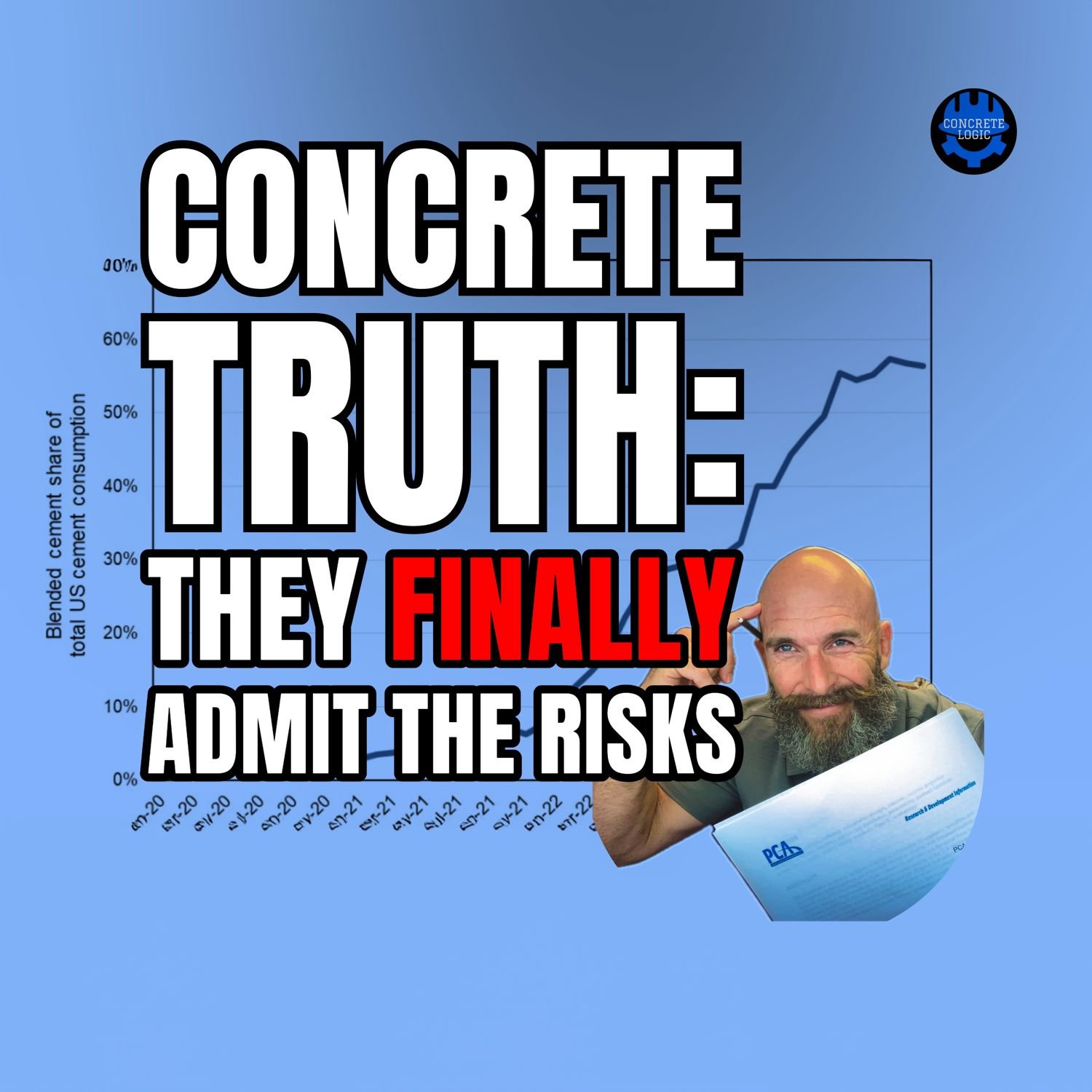
Back in 2011, the industry said portland-limestone cement (PLC) came with “no significant risks.” By 2024, the updated report admits higher carbonation rates, chloride ingress concerns, admixture sensitivity, and tighter curing demands. In this solo episode, Seth lays out what actually changed between the 2011 and 2024 reports, what the case studies do—and don’t—prove, and asks the blunt question: would PLC be this widespread without the CO₂ storyline? What You’ll Learn - What the 2011 report promised vs. what the 2024 report now admits. - How carbonation, chloride ingress, admixture control, and curing show up in the latest findings. - What the project examples (PCA exposure site, Utah DOT bridges, Texas pavements, European jobs) really say. - Claimed upsides beyond CO₂: energy savings, workability, and mass concrete heat benefits. - Why PLC is less forgiving than Type I/II—and what that means on real jobs. - The big question: is PLC an innovation or a policy-driven shift? Chapters 00:00 – Welcome, solo setup, and callback to EP #126 00:30 – Why revisit PLC? ACA’s comment and the 2024 report 02:00 – Blended cement usage spike: under 10% to ~65% in a few years 03:00 – 2011 → 2024: from “no risk” to “manageable issues” 05:00 – Admixtures/air, SCMs, and curing: where sensitivity shows up 07:00 – Positives claimed beyond CO₂: energy, workability, mass concrete 08:30 – What case studies actually show (PCA prisms, Utah bridges, Texas pavements, Europe) 12:00 – PLC is less forgiving: tighter margins than Type I/II 13:30 – What’s still missing: long-term (50–100 yr) performance proof 15:30 – Would PLC exist without the CO₂ narrative? 16:30 – Support the show + open invite for guests 17:30 – Outro Concrete Logic Academy Want to go further? Courses and PDHs for concrete pros: https://www.concretelogicacademy.com Support the Podcast If this helped you think differently about concrete, consider supporting the show: - Donate: https://www.concretelogicpodcast.com/donate - Kuiu gear (affiliate link): https://kuiu.sjv.io/Z6D1XW- Looking for media help—podcasting, YouTube, or storytelling for your concrete company? Reach out to Seth at seth@concretelogicpodcast.com to learn more. Credits Produced by Jodi Tandett & Concrete Logic Media Music by Mike Dunton (https://www.mdunton.com/) Stay Connected Host: Seth Tandett, Concrete Visionary & Industry Expert LinkedIn: https://www.linkedin.com/in/sethtandett YouTube: https://www.youtube.com/@concretelogicpodcast Website: https://www.concretelogicpodcast.com Don’t forget: Like, subscribe, comment, and share this episode to help spread the word. Let’s keep it concrete!

Comments

Download from Google Play

Download from App Store
 United States