


 Claim Ownership
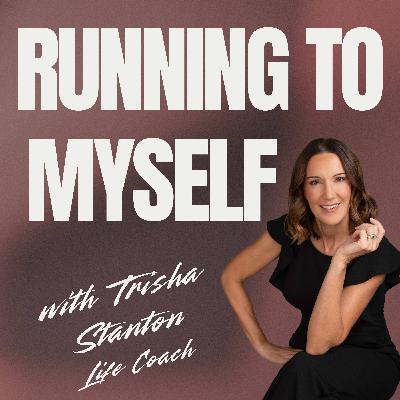
Running to Myself
Subscribed: 1Played: 2
Subscribe

© 2025 Trisha Stanton
Description
Hi, I’m Trish.
I’m a Life and Mindset Coach for women—and before that, I was a runner.
Before I became a runner, though, I saw my life—and my possibilities—very differently.
It was through countless miles on the road and trail that something began to shift.
Running didn’t just change my body; it expanded my mind.
It taught me that I was capable of so much more than I ever believed.
Through failures, victories, and everything in between, I started to see myself—and life itself—in a whole new way.
This podcast is my chance to share that journey with you.
Maybe you’ll recognize parts of your own story here.
Maybe you’ll start to think differently about what’s possible for you, too.
Welcome to Running to Myself.
I’m so glad you’re here.
66 Episodes
Reverse
Episode Title: One Word, One Year: A Rhythm That Grounds Me Podcast: Running to Myself with Trisha Stanton
Episode Summary:In this reflective episode, Trisha invites you into the quiet rhythm that has shaped her life for the past decade: choosing a single word to anchor each new year. Through stories about taunting squirrels, emotional associations, and what it means to live “over the top,” she shares how this simple practice has evolved into something sacred—guiding her through joy, grief, growth, and everything in between.
Whether you’re someone who’s picked a word every year or someone who’s never even considered it, this episode offers a gentle invitation to pause… and pay attention to the rhythms that already exist in your life.
In this episode, Trisha shares:
How choosing a word started during a difficult season
The unexpected challenges and blessings of her 2025 word, Over the Top
Why our brains crave meaning and create powerful associations
How rhythms and small rituals can quietly transform us
A heartfelt reminder that even when we feel off course, we’re still on the path home
Resources + Links:
🔗 Connect with Trisha: www.trishastanton.com
🔗 Book a free consultation: Free Consultation
📬 Join the email list for free coaching and encouragement: https://www.trishastanton.com/signup
If this episode encouraged you… Please take a moment to leave a review or share it with a friend. Your words help others find this space—and remind them that they’re not alone.
In today’s episode, Trisha dives into the holiday tradition of decorating for Christmas, and how our ideas about “the right time” have completely shifted over the years. From December-only decorating to the rise of November 1 trees, she shares stories from her own life about how personal preference has evolved across seasons, moves, kids, and emotions.
And more importantly… she uses this as a jumping-off point to explore a bigger concept:
How many of the things we stress about are actually neutral?
This conversation invites you to loosen your grip on the small things, release the urge to police differences, and reclaim your energy for what genuinely matters.
What You’ll Learn:
Why timing and traditions are not moral issues• How to spot when you’re judging a neutral choice• A simple 3-step tool to interrupt that pattern• What gets freed up emotionally when you stop trying to control other people’s preferences
Takeaway:
Not everything needs your opinion, your stress, or your energy. Some things are simply “different,” not wrong.
Listen If You:
Feel frustrated or confused by how other people do things• Tend to overthink the “right way” to make decisions• Want more emotional margin during the holidays• Are ready for life to feel lighter
Final Note:
This episode isn’t really about Christmas décor, it’s about reclaiming peace in everyday life.
If this conversation helps shift your perspective even a little, imagine what we could do together with intentional coaching.
Click HERE to book your free consultation
In this episode, Trisha is joined by her dear friend Josie, who experienced a profound series of losses in 2017 and 2018. Josie lost her husband and father within a day of each other, and only two days after Christmas the following year, she also lost her mother. Together, Trisha and Josie talk about the emotional reality of grieving during the holidays, why grief doesn’t follow a timeline, and how hope can slowly return through connection and small moments.
Key Themes: • Grief is not linear — it often comes in waves, and those waves shift over time • The holidays can amplify both joy and pain, sometimes simultaneously • People grieve differently based on their relationship to who they lost • There is no “right” timeline for healing • Being gentle with yourself is critical • Support is not always about fixing — sometimes it is simply presence, listening, or sitting in the quiet with someone • Hope can show up in small moments, routines, and noticing what still matters
If you are grieving this season, this episode offers companionship and compassion.And if you love someone who is grieving, it offers understanding and perspective.
Josie's book, BIRDS and breadcrumbs is available on Amazon. Click HERE to learn more about Josie's Book
💬 Episode Summary
We go into the holiday season hoping for joy, peace, and connection — but often end up feeling stressed, disappointed, or frustrated instead. Why? Because behind our holiday “hopes” often live hidden expectations.
In this heartfelt episode, Trisha shares what happens when we let go of those expectations — of our loved ones, of ourselves, and of what the holidays “should” look like — and instead choose connection over control.
Through real stories, relatable moments, and a powerful reflection on what she calls “the emotional scorecard,” Trisha invites you to release the mental scripts that keep you stuck in frustration and discover the peace that comes when you simply allow people (and moments) to be what they are.
🪞 Key Takeaways
We all carry invisible holiday scripts — expectations of how others should act, respond, or feel.
Disappointment isn’t caused by people — it’s caused by the gap between expectation and reality.
The “emotional scorecard” keeps us stuck in resentment and comparison.
Love given with conditions is exhausting; love given freely creates peace.
Releasing expectations opens the door to connection, gratitude, and joy that lasts.
💭 Reflection Questions
1️⃣ Who are you silently expecting to act differently this holiday season? 2️⃣ How would it feel to love them exactly as they are, without trying to manage or fix them? 3️⃣ What would happen if you set down your invisible scorecard and simply chose presence over perfection?
🌿 Try This
Before your next family gathering, take a few minutes to write down what you’re expecting from others. Then ask yourself, “Is this something I can control?” If not, practice releasing it — and replace it with a prayer like:
“God, help me love them as they are, not as I wish they were.”
✨ Favorite Quotes
“You can’t be curious and controlling at the same time.” “Unspoken expectations often turn into silent resentments.” “Keeping score never leads to connection — it leads to exhaustion.” “The holiday you’re actually in can be just as sacred as the one you imagined.”
🙏 Faith Reflection
Even God doesn’t control how others show up — He invites, but never forces.When we follow His example, we find peace.Loving others freely means trusting that grace is more powerful than expectation.
📣 Call to Action
If this episode spoke to your heart, share it with someone who might need a little more peace this holiday season.
And if you’re ready to build a mindset that brings more calm, connection, and joy to your everyday life — let’s talk.You can schedule a free consultation with Trisha at trishastanton.com.
Because peace doesn’t come from everyone else changing —it comes from you choosing to release, receive, and rest. 💛
💬 Episode Summary
What do you do when life doesn’t turn out the way you expected?
Maybe the story you’re living looks nothing like the one you once imagined — and the disappointment feels heavy. You replay old decisions, question where you went wrong, and tell yourself that life should have gone differently.
In this honest and hope-filled episode, Trisha Stanton explores what happens when reflection turns into rumination — and how regret, if left unchecked, can become an anchor that keeps you stuck in dismay and defeat.
You’ll learn how to release the mental loop of “I should have…” and start telling a new story — one grounded in compassion, growth, and faith.
Because your past doesn’t define your future — unless you let it.
🪞 Key Takeaways
Reflection helps; rumination harms. The difference is whether you’re learning or looping.
Regret is meant to be a teacher, not a prison.
You can’t change the facts of your past, but you can change the story you tell about them.
Faith reframes failure. God redeems what we release.
Freedom begins when you stop rehearsing regret and start writing a new chapter.
💭 Reflection Questions
1️⃣ What story are you currently telling yourself about how your life has turned out? 2️⃣ How is that story serving — or limiting — you? 3️⃣ What would it sound like to tell the truth through grace instead of guilt?
🌿 Try This
When you find yourself replaying a regret, pause and ask:
Is this thought helping me move forward, or keeping me stuck? Then replace it with a new one:
“I did the best I could with what I knew then — and I’m learning to move forward now.”
✨ Favorite Quotes
“Regret is meant to be a moment of learning, not a lifelong loop.” “You can’t live forward while replaying backward.” “The weight isn’t in what happened — it’s in the story you keep retelling.” “God doesn’t erase regret. He redeems it.” “The story isn’t over because the picture changed.”
🙏 Faith Reflection
God never wastes a chapter. Even the ones that didn’t go as planned can be rewritten with grace. He can’t redeem what you refuse to release — but the moment you let go, He begins transforming the pain into purpose.
📣 Call to Action
If this message spoke to your heart, share it with someone who might be carrying the weight of regret.
And if you’re ready to let go of the old story and create a new one — one filled with clarity, peace, and direction — let’s talk.Schedule a free consultation with Trisha at trishastanton.com.
Because your life doesn’t have to look like the one you imagined to still be beautiful, purposeful, and free. 💛
💬 Episode Summary
We often assume that if something is right, it will be easy. But what happens when the right path turns out to be hard?
In this episode, Trisha shares how adjusting her expectations, rather than abandoning her goals, completely changed her perspective. She tells the story of selling her farmhouse to move to San Antonio, a season that proved the path can be right and still be incredibly difficult.
Through honest reflection and practical tools, you’ll learn how to stop being surprised by hard things and start using them as opportunities to grow.
🌿 Key Takeaways
Ease and peace aren’t the same thing.
Most discouragement comes from unmet expectations.
The goal doesn’t have to change—your expectations might.
Hard isn’t punishment; it’s preparation.
Faith doesn’t remove the struggle—it carries you through it.
🧭 Try This
Name what you expected.
Write what’s actually true now.
Replace “This shouldn’t be happening” with “This is growth.”
Reaffirm your goal.
Keep showing up.
💡 Quote to Remember
“The path isn’t wrong—it’s just harder than you thought. Keep going.”
Have you ever noticed how tempting it is to skim the surface of life, staying in the “comfortable” emotions while avoiding the hard ones? It feels easier in the moment… but over time, it leaves us with a half-lived story.
In this episode of Running to Myself, I share a recent trip to Maui that became so much more than a family vacation. What began as a beach getaway turned into a vivid metaphor for the emotional landscape of life: rugged roads, stark contrasts, unexpected beauty, and unforgettable views.
Much like Maui, our lives are not one-dimensional. They’re made up of contrasts—joy and grief, ease and struggle, calm and chaos. And when we only allow ourselves to feel what’s pleasant, we miss out on the depth, meaning, and growth that come from embracing the full range of our emotions.
In this episode, you’ll discover:
🌴 How a rugged, three-hour drive across Maui mirrors the emotional terrain of life.
💡 Why emotions are messengers—and what they’re trying to tell you.
🔥 What happens when we suppress or ignore emotions (and how they quietly resurface).
🤝 Why going deeper into our emotions strengthens connection with ourselves and others.
🌊 How avoiding emotions may feel safe short-term but robs us of long-term growth.
🛠 Practical mindset tools for noticing, naming, and processing emotions in healthy ways.
Reflection Questions:
Which emotions do I most often avoid and what message might they carry?
Where in my life am I staying on the “beach” instead of exploring the full landscape?
What might open up for me if I allowed myself to sit with discomfort instead of resisting it?
Resources & Next Steps
If this episode resonated with you and you’re ready to explore your own emotional landscape more deeply, I’d love to help. This is the work I do every day with my coaching clients—building resilience, processing emotions, and creating purposeful, meaningful lives.
👉 Book your free consultation with me here: Book a Call
And if you loved today’s episode, share it with a friend, leave a review, or subscribe so you never miss a conversation.
Because life isn’t meant to be skimmed—it’s meant to be lived in full color.
Episode Title: From Coasting to Choosing: Your Guide to Finishing Strong
Episode Summary: How do you want to end this year’s chapter? So often, October through December slips by in a blur of busyness…holidays, family gatherings, celebrations and we quietly let go of the habits and goals we committed to earlier in the year. But here’s the truth: the last two months of the year matter. They can either become a time of coasting and “starting over in January,” or a time of intentional choices that set you up for success in the year ahead.
In this episode of Running to Myself, I’ll share:
Why finishing matters more than we think
The hidden cost of giving up the last two months of each year
Practical, doable ways to stay intentional through the holidays
Reflection questions and journaling prompts to help you end the year strong
This isn’t about perfection, hustle, or denying yourself rest and celebration. It's about finishing with intention and integrity, so that January 1st doesn’t feel like a complete reset, but a continuation of the strength you’ve already built.
Highlights & Takeaways:
The “holiday slide” is real, but you don’t have to participate in it
Finishing strong builds self-trust that carries into the next season
One focus > trying to do it all
Anchor habits keep you grounded when life gets busy
“Future You” is your best accountability partner
Reflection Questions:
What one goal or habit do I want to focus on for the rest of this year?
How do I want to feel on December 31st?
What would finishing strong look like in my relationships, health, spiritual life, or personal growth?
What is one anchor habit I can hold onto, no matter how busy the season gets?
Resources & Links:
Connect with me at https://www.trishastanton.com/
Join my email list for weekly coaching encouragement: https://www.trishastanton.com/signup
Follow me on Instagram: @tstanton21
Join my Facebook group: The Simple Truth Coaching
When Habits Slip Away: How to Notice and Realign
Episode Summary Sometimes the habits that matter most to us don’t disappear all at once. They slip away slowly. One small compromise, one busy morning, one season of change… and before we know it, a rhythm that once anchored our well-being is gone.
In this episode of Running to Myself, I share a personal story about losing one of my most life-giving habits, daily time outdoors, and how I realized it was impacting my mood, energy, and overall well-being. More importantly, I’ll walk you through practical ways to notice when your habits are drifting and how to gently realign them, without guilt or shame.
If you’ve been feeling “off” lately and can’t quite put your finger on why, this episode will give you a framework to reflect, reset, and begin again.
What You’ll Hear in This Episode:
Why habits matter more than willpower or motivation
How even habits you love can slip away without you realizing it
My personal story of discovering the impact of daily outdoor time
The subtle signs that a habit has drifted out of your life
Practical steps for reclaiming lost rhythms without shame
How to identify your own “keystone habits” that make everything else easier
Action Steps for You:
Pause and reflect: Notice where your mood or energy feels off.
Identify the drift: Which habits have quietly slipped away?
Reconnect to your why: Remind yourself of the habit’s impact on your well-being.
Start small: Shrink the habit down to the simplest version and build from there.
Celebrate the shift: Pay attention to how quickly your body and mood respond when you bring it back.
Reflection Question for You: 👉 What’s one habit that has quietly slipped out of your life—and what’s one simple way you can bring it back this week?
Resources & Links:
Let’s connect: https://www.trishastanton.com/
Join my email list for weekly encouragement + free coaching tools: https://www.trishastanton.com/signup
Follow me on Instagram: @tstanton21
Join my Facebook group: The Simple Truth Coaching
Closing Encouragement Friend, habits don’t just shape what we do, they shape who we are becoming. When they slip, so do we. But the good news is: you can always realign. Start with one small step today, and let that step carry you forward.
Summary: What do scorpions in San Antonio have to do with your mindset? More than you think.
In this episode of Running to Myself, Trisha Stanton shares a true story about discovering a scorpion above her head in the ceiling fan—and how it led her to a powerful reminder about managing our minds.
Just like regular pest control doesn’t prevent every insect from sneaking through, our daily mental practices don’t eliminate every negative thought forever. The goal isn’t to stop the scorpions completely—it’s to know exactly what to do when they show up.
✨ Listen in, and let this story remind you that the scorpions may still show up… but they don’t have to stay.
In this episode, you’ll learn:
Why negative thoughts (“scorpion thoughts”) are normal and expected
How to notice them without judgment or panic
A simple 5-step process to neutralize and redirect them
Why daily routines matter more than perfection
How to shift from frustration into curiosity and confidence
Resources & Links:
Join my free email list for weekly coaching encouragement: Click HERE to Join email list
Book a free consultation Call: Click HERE to book your free consultation
Connect with me on Facebook: Trisha Shipley Stanton
🎙️ Episode Show Notes
Episode Title: When Identity Gets in the Way of Letting Go
Description: What happens when something that once defined you… no longer fits?
In this deeply personal episode of Running to Myself, I share a confession that’s been a few months in the making: I’m not running anymore.
Running has been part of my identity for nearly two decades. It’s given me joy, discipline, resilience, and countless finish-line moments. But recently, I’ve discovered that holding onto the label of “runner” has been harder than letting it go. And the deeper I wrestled with this, the more I realized, this isn’t just about running. It’s about identity.
Together, we’ll explore:
Why letting go of an identity can feel like losing yourself
How nostalgia and fear keep us clinging to what no longer serves us
The surprising ways new identities can bring us closer to our truest self
Three powerful reflection questions to help you re-examine your own labels
This episode isn’t just about running. It’s about finding freedom in who you are right now, beyond the labels, beyond the roles, beyond the expectations. Because running to myself has never been about miles; it’s always been about truth.
Takeaways You’ll Walk Away With:
How to discern whether an identity is still serving you in this season
How to challenge the stories you tell yourself about letting go
How to discover who you are without the labels you’ve carried
If you’ve ever struggled with letting go of a role, a habit, or a label that once defined you, this episode is for you.
📓 Show Notes
Episode Title: Two Roads, Two Endings: Choosing the Story You’ll Tell Tomorrow
Episode Summary: What if the hardest choices you face aren’t about right or wrong—but about which ending you’ll live with?
In today’s episode, Trisha Stanton shares a deeply personal story about the restaurant she and her husband once owned. It was a chapter filled with financial strain, emotional loss, and moments when quitting seemed like the only sensible option. Yet, one small decision to “give it a little more time” completely rewrote the ending of that story.
Through raw honesty and powerful reflection, Trisha shows how perseverance, faith, and perspective can transform even the hardest seasons into something redemptive.
What You’ll Learn in This Episode:
Why the choices you face aren’t always about right versus wrong, but about different possible endings.
How pausing before you quit can shift your perspective and open up new possibilities.
Practical tools for staying in the game when giving up feels easier.
How to reframe success in seasons where the outcome isn’t clear.
The power of one simple belief: “It’s not over yet.”
Actionable Takeaways:
Before making a big decision, give yourself time and space—don’t choose from fear or fatigue.
Ask yourself: What story will I tell five years from now about this decision?
Redefine what “winning” looks like for today—it doesn’t always have to mean profit or perfection.
Look for just one reason to believe again—it may be the bridge between failure and breakthrough.
If you’re at a fork in the road, this episode will remind you: the ending isn’t written yet.
Episode Title: Pattern Interruption: A Shovel to Get Unstuck
Do you ever feel like your mind is running in circles—caught in the same cycle of negative thinking, with no way out? You’re not alone. In this episode of Running to Myself, Trisha Stanton shares a powerful tool for moments like these: pattern interruption.
Pattern interruption is like grabbing a shovel when you’re buried in the muck. It doesn’t make the entire problem disappear, but it breaks the cycle, creates space to breathe, and helps you reconnect with hope.
Through a personal story about ironing and reorganizing during one of life’s storms, Trisha shows how small, ordinary actions can interrupt destructive thought loops and bring surprising relief. You’ll hear both the science and the soul of why this tool works—and how to apply it when you feel stuck.
In this episode, you’ll learn:
Why your brain gets trapped in repetitive negative thought patterns
How small actions can act as powerful reset buttons
Practical examples of pattern interruption you can try right away
A simple exercise—“In a perfect world…”—to shift your perspective and spark new possibilities
How creating distance from a problem opens the door to clarity and your next right step
Key Takeaway
You don’t have to untangle the whole knot at once. Interrupting the pattern gives you the breathing room you need to move forward—one small scoop at a time.
If you’ve been feeling stuck, overwhelmed, or consumed by a problem you can’t solve, this episode is for you.
🎙️ Episode Title:
Sneaky Thoughts That Hold You Back — “I’m So Behind in My Life”
Episode Summary
Have you ever caught yourself thinking, “I’m so behind in my life”? That quiet thought can hit like a thunderclap—leaving you anxious, unsettled, and even tempted to give up before you’ve begun.
In this episode of Running to Myself, Trisha Stanton unpacks the sneaky thought of being “behind” and shows how it keeps us stuck in fear, shame, and inaction. Using her own story of running late—and the stress spiral it triggered—she draws powerful parallels to how our thoughts about life timelines can hijack our peace and sabotage our progress.
The truth? You’re not behind. You’re exactly where you’re meant to be. And when you learn to shift your thoughts, you open up new feelings, new actions, and new results.
💡 What You’ll Learn in This Episode
Why the thought “I’m behind” is actually a disguised form of quitting
How negative thought loops affect not only your mind but also your body and emotions
The link between thoughts → feelings → actions → results—and why awareness is the key to breaking free
A simple, powerful practice to replace the thought “I’m behind” with something lighter and more hopeful
How to step into intentional action without rushing, panicking, or giving up
🛠️ Practical Takeaways
Pause and Notice: When “I’m behind” comes up, stop and pay attention to how it feels in your body.
Reframe It: Ask yourself, “What if I’m not behind? What if I’m exactly where I need to be?”
Shift Your Action: From that new belief, choose one thoughtful, intentional step forward.
💙 Final Encouragement
You’re not late. You haven’t missed your chance. And you are not behind. You are on the exact path you’re meant to be on—and every thought you choose can move you closer to the life you want.
✨ If this episode encouraged you, share it with a friend who needs the same reminder. 📩 And for more encouragement like this, make sure you’re subscribed to Running to Myself wherever you listen to podcasts.
Episode Title: Your Label is Your Limit: Breaking Free from Self-Imposed Boundaries
Host: Trisha Stanton
Episode Overview:
In this powerful episode of Running to Myself, Trisha Stanton dives deep into the self-imposed labels we all carry and how they can keep us stuck. From the labels we’ve adopted about our abilities to our identities, these stories often hold us back more than we realize. Trisha shares how these limiting beliefs define us before we even give ourselves a chance to break free and how we can start recognizing and dismantling these boundaries to reach our fullest potential.
If you’ve ever caught yourself saying, “I’m not good at that,” “I’m not a leader,” or “I’ll never be that type of person,” this episode is for you. It's time to shed those limiting labels and embrace a life of growth, possibility, and transformation.
In this episode, you’ll learn:
What labels are and how they shape our identities
Personal stories, including Trisha’s own journey from “not an athlete” to marathon runner
The profound impact labels have on our decisions and actions
Practical steps to recognize and challenge your limiting labels
How to break free from these boundaries to step into a more vibrant, expansive version of yourself
Key Takeaways:
Recognize the Labels: Identify the labels you’ve adopted over the years. Write them down and take a hard look at how they’ve defined your actions and beliefs.
Challenge the Labels: Ask yourself if these labels are truly accurate. How would your life look without them?
Shift Your Self-Talk: Reframe your language to empower yourself. Instead of saying, “I’m not a good communicator,” say, “I’m working on improving my communication.”
Find Evidence to the Contrary: Reflect on past experiences where you’ve succeeded despite the labels you've accepted. Use those moments to prove that your labels aren’t truths.
Step Outside Your Comfort Zone: Take small, courageous steps that challenge the labels you’ve accepted. These small actions will help reshape your self-image and build confidence.
Connect with Trisha:
Book a Free Consultation: Click Here!
Become an Email Subscriber: Join Here!
Instagram: @tstanton21
Facebook: Trisha Shipley Stanton
Thank You for Listening:
If this episode inspired you, please be sure to subscribe, rate, and leave a review on your favorite podcast platform. Your feedback helps spread the message and reach more people who can benefit from a mindset shift.
If you’re ready to break free from the labels keeping you small and step into your true potential, let’s connect! Reach out to Trisha for a one-on-one coaching session and start making lasting changes today.
Remember, Mindset Matters!
Episode Title: Caring for Others Without Losing Yourself: Mindset Tools for Caregivers Podcast: Running to Myself Host: Trisha Stanton
Episode Summary: In today’s episode of Running to Myself, Trisha Stanton speaks directly to those in caregiving roles—especially those who never signed up for the job. Whether you’re caring for a loved one with a terminal illness, mental health struggles, or chronic medical needs, caregiving can be both sacred and heavy. Trisha shares three powerful mindset tools to help caregivers take care of themselves, offering practical strategies to reconnect with their own needs, desires, and sense of identity, even amidst the emotional and physical toll of caregiving.
In this episode, you'll learn:
Why it's essential to recognize that you are not just your role—you are still YOU.
The importance of accepting support, and how asking for help is a necessity, not a failure.
How tiny moments of care—like a few deep breaths or a brief break—can create meaningful shifts in your well-being.
Trisha also talks about:
The invisible toll caregiving can take and how it often leads to feelings of being unseen or unheard.
How to balance the tenderness of caregiving with the truth that your life and needs still matter.
The importance of holding space for both love and self-care.
Key Takeaways:
Mindset Tool #1: You Are Not the Role Don’t lose yourself in caregiving. Take time to check in with your own needs, desires, and boundaries.
Mindset Tool #2: You Deserve Support Burnout doesn’t make you stronger—it just wears you down. It’s okay to ask for help.
Mindset Tool #3: Tiny Moments Matter Care for yourself in small, but impactful ways throughout the day.
Quotes from the episode:
“You are allowed to be tired. You are allowed to be overwhelmed.”
“Even in this hard season, there’s still space for your voice. There’s still room for your breath.”
“You don’t have to figure it all out today, but you can take your next small step forward.”
Connect with Trisha:
Book a Free Consultation: Click Here!
Become an Email Subscriber: Join Here!
Instagram: @tstanton21
Facebook: Trisha Shipley Stanton
Subscribe to the Running to Myself Podcast: Don’t miss an episode! Subscribe to Running to Myself for more insights on personal growth, mindset, and living a life that’s true to you.
Tune in next week for another episode focused on real-life solutions, powerful mindset tools, and stories of growth and transformation.
Thank you for listening! Don’t forget to share this episode with someone who might need a little encouragement today. You’re doing better than you know.
🎙️ Episode Title: Where Do You Need to Raise Your Standards?
👋 Episode Summary:
In this thought-provoking episode of Running to Myself, Trisha Stanton explores what it really means to "raise your standards" and it’s not about hustle, perfectionism, or doing more. Instead, it's about grounding yourself in intentional choices that align with who you're becoming.
Through powerful reflections and coaching-inspired questions, Trisha invites listeners to consider where they might be settling, what beliefs are quietly shaping their lives, and how self-compassion, not criticism, can be the catalyst for meaningful growth.
If you’ve ever felt stuck in a pattern that no longer fits, or if you sense you’re meant for more but aren’t sure where to begin, this episode is for you.
💭 In This Episode, You’ll Hear:
Why raising your standards is about care, not criticism
The subtle ways we tolerate misalignment without realizing it
Three powerful reflection questions to help you reset your expectations
How your thoughts, habits, and boundaries reflect what you believe about your worth
A gentle invitation to stop settling—and start honoring your future self
🔑 Reflection Questions:
What are you currently tolerating that doesn’t align with who you're becoming?
Where might you be settling when you’re meant to rise?
What would shift if you believed you were worthy of more?
Connect with Trisha:
Book a Free Consultation: Click Here!
Become an Email Subscriber: Join Here!
Instagram: @tstanton21
Facebook: Trisha Shipley Stanton
🎙️ The Power of Shifting Your Focus: Why Small Adjustments Lead to Big Growth
📌 Episode Summary: In this episode of Running to Myself, Trisha Stanton shares how a small shift in focus during a gym workout led to a powerful mindset revelation. Whether you're lifting weights or navigating a challenging season of life, where you place your mental attention matters. Trisha explores how we often stay stuck, not because of what’s happening around us, but because of the stories we keep believing. She unpacks how small mental shifts like focusing on the process instead of the outcome or noticing the stories in your head can create big, lasting change. With personal stories, coaching insights, and practical tools, this episode will help you recognize when it’s time to shift your focus and how to do it with intention.
🔑 Key Takeaways:
Why even small focus shifts can lead to big changes in how we show up
3 signs it’s time to reevaluate where your attention is going
The difference between focusing on the outcome vs. the process
How to interrupt negative thought patterns that keep you stuck
Why getting outside perspective, through coaching or conversation, can be the clarity you need
🛠️ Tools You’ll Learn:
Zoom in on the process: Break big goals down into smaller, manageable focus points.
Notice the story you're telling yourself: Replace old, unhelpful thoughts with more supportive ones.
Ask for perspective: Sometimes we can't see what's keeping us stuck until someone else holds up a mirror.
💬 Reflection Prompt: What area of your life feels heavy right now and could that heaviness shift if your focus did?
The Cost of Growth: Why Inconvenience Might Be the Sign You’re on the Right Path
✨ Episode Summary: We live in a world built for convenience—but real growth doesn’t happen when everything is easy. In this deeply personal episode, I’m pulling back the curtain on what growth actually looks and feels like, and why inconvenience might be the clearest signal that you’re headed in the right direction.
From mountain climbs to messy emotions, this episode is for anyone who’s stuck in the “middle part”—the place where it’s not shiny anymore and everything feels hard. You’re not failing. You’re becoming.
Whether you’re navigating a big decision, showing up for someone you love, or just feeling stretched thin, this conversation will help you rethink what it means to grow—and why the discomfort might be the most important part.
💬 In This Episode, We Talk About:
Why trying to avoid inconvenience might be keeping you stuck
A real-life mountain climb that taught me what growth really costs
How growth shows up in everyday challenges—grief, learning, relationships
The connection between inconvenience and meaningful transformation
Why your relationships are worth showing up for—even when it’s messy
Three practical mindset shifts to help you take action when it’s not easy
🛠️ Practical Takeaways:
Ask yourself: Where is convenience running the show in your life?
Do one thing this week that feels inconvenient—but necessary.
Remember: Growth isn’t supposed to feel easy. It’s supposed to stretch you.
📌 Quote of the Episode: “Stretching into the next version of yourself always costs something—and convenience is usually the first thing to go.”
💡 Ready to take your next brave, inconvenient step? Let’s talk. Book a free coaching consultation at trishastanton.com or click the link in the show notes.
🙌 If this episode spoke to you: Send it to a friend, leave a review, or share it on social media and tag me @tstanton21. Your support helps get this message into more hearts and hands.
✨ Episode Summary: Feeling stuck?
Overwhelmed by decisions, transitions, or the unknown?
You’re not alone—and you’re not doing it wrong.
In this episode, Trisha shares a powerful coaching principle that helps women move forward when life feels cloudy or confusing:
💬 What’s my next right step?
With coaching insight, personal stories, and practical tools, Trisha explores why we get stuck—and how one small step can shift your momentum, build self-trust, and help you reconnect with clarity, peace, and purpose. 💡
In This Episode, You’ll Learn: Why most stuckness comes from overwhelm, not laziness
How fear-based beliefs silently sabotage progress
Why clarity often follows action—not the other way around A trail-running story that illustrates the power of imperfect movement 3 ways to shift your mindset and take action today—even if you're unsure
🔁 Real-Life Takeaways Include:
✔ Replace “I have to do it all” with “What’s one small thing I can do next?”
✔ Give yourself permission to act without certainty or perfection
✔ Name your personal next right step—then take it
✔ Learn how Trisha helps clients break big transitions into doable, life-giving steps
🧭 Coaching Invitation: Are you tired of feeling like you have to figure it all out alone? Trisha offers one-on-one coaching for women navigating life transitions and seeking more clarity, peace, and purpose. If you're ready to stop spinning and start moving forward—she'd love to walk with you.
📅 Schedule a free consult at trishastanton.com
💬 Reflection Question: What’s one small step you can take today that feels true to where you are—and who you’re becoming?
🔗 Resources & Links: Free coaching consultation → https://www.trishastanton.com/signup-985664a6-bdb2-4692-9427-4f1c1134bd2a
Join the email list → https://www.trishastanton.com/signup
Let’s connect on Instagram → @tstanton21
❤️ Thanks for Listening! If you found this episode helpful, please:
✔ Share it with a friend
✔ Leave a review on your favorite podcast app
✔ Tag @tstanton21 and let Trisha know what spoke to you most
You don’t need a full plan. You just need your next right step. Let’s take it together.

Comments

Download from Google Play

Download from App Store
 United States