


 Claim Ownership
Candid Conversations on Leadership
Subscribed: 1Played: 113
Subscribe

© Candice Solomon-Strutz and Chris Tidrick
Description
Candice Solomon-Strutz and Chris Tidrick have in-depth conversations about what it means to be a leader today.
Candice and Chris are IT leaders at the University of Illinois at Urbana-Champaign and collectively have more than 50 years of experience working in higher education.
You can find Candice at @caniso13 on Instagram, Twitter, Threads, and TikTok and @candicesolomonstrutz on LinkedIn.
You can find Chris at @think.feel.lead on Instagram, Threads, and TikTok, and @christophertidrick on LinkedIn.
Candice and Chris are IT leaders at the University of Illinois at Urbana-Champaign and collectively have more than 50 years of experience working in higher education.
You can find Candice at @caniso13 on Instagram, Twitter, Threads, and TikTok and @candicesolomonstrutz on LinkedIn.
You can find Chris at @think.feel.lead on Instagram, Threads, and TikTok, and @christophertidrick on LinkedIn.
23 Episodes
Reverse
In this episode, Chris and Candice go one-on-one for a candid conversation sparked by Chris’s recent Substack post, “Leading Through Our Fractures.” They open by grounding the moment in Black History Month, with Candice noting its significance and encouraging listeners to keep learning because Black history is American history. From there, the episode settles into a reflective, personal discussion about leadership, identity, and the real stories that shape how we show up at work.Chris introduces the core idea behind “leading through our fractures”: the belief that leaders don’t become credible by appearing flawless—they become relatable by acknowledging what’s real. He connects this to the Japanese art of kintsugi, where broken pottery is repaired with gold, making the cracks part of the beauty rather than something to hide. Candice shares why this resonated so deeply: our flaws and missteps aren’t just baggage, they’re often the very things that make us uniquely grounded, empathetic, and effective—if we learn how to carry them with intention.Together, they explore the tricky middle ground between being an authentic, vulnerable leader and oversharing in a way that becomes unsteady or inappropriate. Candice talks about learning where that line is by watching examples of what not to do, and by paying attention to feedback when she shares something personal in a way that helps others grow. They dig into empathy too—how it’s less about claiming you “know exactly how someone feels” and more about listening, asking questions, and letting your own experiences with challenge make you more compassionate without turning it into a comparison game.The conversation gets personal as both reflect on how childhood experiences echo into adulthood leadership. Chris names the lingering impact of not being “picked” growing up, and how that quietly fueled a need for approval and expertise—until he learned to notice it and choose differently. He also brings in ideas from Positive Intelligence (and the notion of internal “saboteurs”), sharing how his own restlessness can push unnecessary change unless he checks his motives. They wrap on a lyrical note, referencing a line Candice highlighted—about broken pieces, scars, and harmony—underscoring the episode’s theme: when leaders embrace the cracks with honesty and boundaries, they don’t look weaker… they look more whole.To read the article that inspired this epiosde, please visit https://thinkfeellead.substack.com/p/leading-through-our-fractures
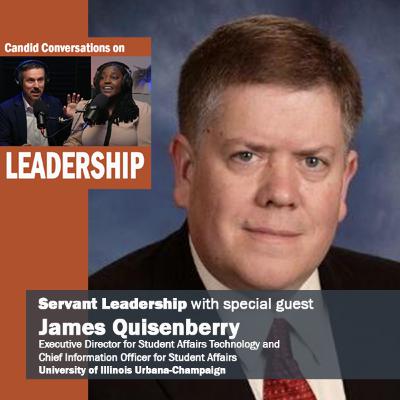
In this episode of Candid Conversations on Leadership, Chris and Candice welcome guest James Quisenberry, who leads IT for Student Affairs at the University of Illinois Urbana-Champaign and co-founded the campus IT Leadership Workshop. Together they unpack servant leadership—rooted in Robert Greenleaf’s 1970 essay “The Servant as Leader”—as a philosophy where a leader’s primary goal is to serve the people and the organization. Candice walks through hallmark traits like empathy, deep listening, community-building, self- and organizational awareness, stewardship, commitment to growth, and humility—framing how these build trust, morale, innovation, retention, and ethical cultures.The trio contrasts servant leadership with more traditional, hierarchical models, noting how generational shifts changed how people want to be led. They surface a core tension leaders must navigate: balancing autonomy and agency with organizational clarity and speed. Chris shares how his team uses “disagree and commit” to invite inclusive debate before moving decisively—and how accountability is not at odds with compassion. James pushes back on the misconception that servant leadership is “soft,” arguing it often means serving people best by holding them to clear standards, and by prioritizing the whole organization over a one-to-one dynamic.Personal origin stories come through: Candice’s grounding in Alpha Phi Omega’s service ethos; James’ upbringing with educator parents and long-time involvement in Rotary and Scouting; and Chris recognizing service in his own leadership through feedback from his team. They explore how to cultivate the “heart” of a servant leader—through active listening reps, identity-based habits, and service outside of work. Mentorship and coaching emerge as essential—trusted partners who “won’t let you believe your own BS” and help you check ego, motivation, and perception.Finally, they get candid about the hard parts: resisting the urge to rush to solutions, getting out of your own head, and truly listening (especially when you love to talk). They offer practical moves: ask “What serves the organization?” on big calls; celebrate team contributions so success is shared; treat ego as a potential tailwind—not a headwind; and use accountability to remove barriers to others’ growth. Chris closes with a story where stepping back let the team find a better answer—proof that servant leadership can drive both stronger culture and stronger results.
Season 2 of Candid Conversations opens with a twist—hosts Candice and Chris step out of their usual roles and into the hot seat, interviewed by their longtime producer and behind-the-scenes champion, Bob Dignan. Bob, Associate Director for Instructional Media Resources at the University of Illinois Urbana-Champaign, brings thoughtful questions submitted by listeners (and a few of his own) to get the conversation rolling with candor, insight, and vulnerability.The episode kicks off with reflections from Season 1, including a powerful takeaway from guest Tekita Bankhead about the cost of code-switching, and a reminder from Dean Jamelle Sharpe that even senior leaders are fully human—gamers, parents, and everything in between. This theme of authenticity continues as Candice opens up about her experiences with workplace harassment, sharing the profound leadership lessons it taught her about boundaries, vulnerability, and the power of speaking up. Chris responds with transparency of his own, discussing the growing pains that come with rapid institutional expansion, the underestimation of management needs, and how interpersonal dynamics change as teams scale.The conversation takes a nuanced look at the difference between leadership and management, introducing the framework of "why, what, and how" to help listeners identify their strengths and growth areas. Candice and Chris both reflect on how they’ve evolved from managing to leading and how surrounding yourself with the right people is crucial—both for getting the work done and for making work a place you want to be.Bob also pulls out insightful questions around leading from anywhere, dealing with criticism, and maintaining composure in a climate of uncertainty across higher education. Personal stories—from a student group project to an internal promotion sparked by stepping up—underscore the idea that leadership isn't about title, but action. The episode wraps with advice for early-career professionals, underscoring the value of filling gaps, building trust, and finding a workplace culture that energizes you. And yes—Candice and Chris would both choose skydiving over scuba diving.This episode marks a fitting return for Candid Conversations, reminding us that leadership is as much about listening and evolving as it is about strategy and vision.
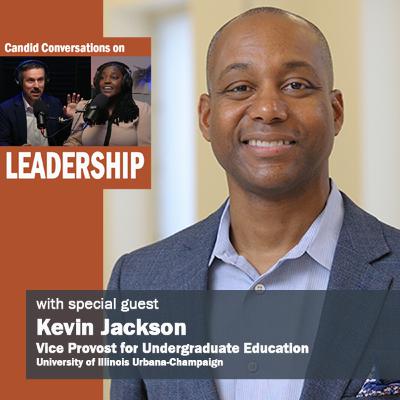
In this episode of Candid Conversations, Chris and Candice welcome Dr. Kevin Jackson, Vice Provost for Undergraduate Education at the University of Illinois Urbana-Champaign. With an extensive background in accounting and academic leadership, including his tenure as Associate Dean at Gies College of Business, Dr. Jackson shares an authentic and deeply personal exploration of his journey into educational leadership. From his humble beginnings to his current role overseeing the undergraduate experience for tens of thousands of students, Dr. Jackson speaks candidly about what motivates him and how his faith, values, and relationships shape his leadership style.Throughout the episode, Dr. Jackson reflects on the nature of calling versus career, noting that his progression into leadership has often been spurred by others recognizing qualities in him before he recognized them in himself. He discusses the transition from faculty life to administration and how his missional approach to higher education led him to embrace roles that aligned more closely with his values, even when self-promotion and ambition were not part of the equation. His reflections on the challenges of balancing transparency with professional discretion offer a nuanced look at the ethical complexities of leadership in higher ed.Listeners will be moved by Dr. Jackson’s emphasis on relational leadership—his belief in leading through empathy, listening, and care for the well-being of others. He offers heartfelt insights into maintaining work-life balance, the importance of boundaries, and redefining discipline as the ability to step away and be present for what matters most. Personal stories, such as his church fellowship group and his newfound passion for birding, offer glimpses into the rhythms that keep him grounded.As the episode closes, Dr. Jackson speaks directly to aspiring leaders, encouraging them to lead with a clear sense of purpose and mission. Whether reluctant or ambitious, he asserts, effective leadership begins with knowing what you hope to accomplish and staying true to your values. His candid reflections and unwavering focus on the human side of higher education will resonate with educators, students, and leaders alike.

In this episode of Candid Conversations on Leadership, Chris and Candice welcome Sparkle Sanders, a certified leadership consultant, speaker, and coach with Maxwell Leadership. With over 20 years of experience in business and marketing, Sparkle now leads AddSpark Consulting and partners with organizations ranging from Parkland College to the Girl Scouts of Central Illinois and the University of Illinois. She's also the founder of Full Truth LLC, a global ministry centered on encouragement and spiritual growth, and the author of 180 Days of Beautiful Truth.Sparkle shares the deeply personal journey behind her unique name and how embracing its meaning—"to shine brightly with flashes of light"—mirrored her path toward authentic leadership. Initially trained in marketing, her career pivoted after years of burnout and disillusionment sparked a desire to understand what makes great leaders thrive. Sparkle candidly discusses how she moved from internalizing frustration to discovering her true calling through leadership development. A pivotal moment came during a John Maxwell mastermind course, where she recognized the difference between professional and leadership development and committed to cultivating leaders from the inside out.Throughout the episode, Sparkle outlines the core leadership challenges she encounters in her work—confidence issues, imposter syndrome, and communication breakdowns—and how she leverages DISC assessments and individualized coaching to help clients rediscover their strengths and lead with clarity. Her approach is deeply reflective and holistic, incorporating her Christian faith, regular journaling, exercise, and even cooking as outlets for balance and rejuvenation. Sparkle’s methodology includes interactive, innovative coaching strategies like the Leadership Game, fostering connection and growth even in remote and newly formed teams.In a particularly touching segment, Sparkle opens up about hard feedback she’s received and how moments of embarrassment became catalysts for self-awareness and growth. From confronting emotional reactions in the workplace to finding clarity through stillness and faith, Sparkle exemplifies the power of self-leadership. She leaves listeners with a reminder that leadership transformation starts within—and that being seen, understood, and empowered is possible for everyone. Her name may have come from a movie, but Sparkle Sanders lives up to it every day by lighting the way for others.You can learn more about Sparkle Sanders at https://sparklesanders.com/about-sparkle
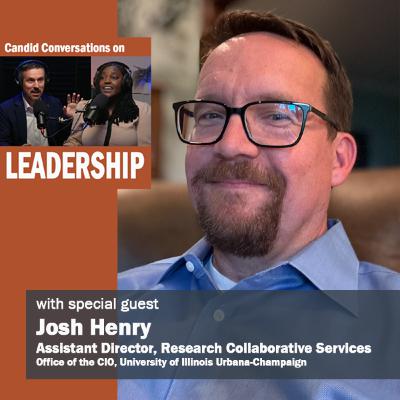
In this episode of Candid Conversations on Leadership, Candice and Chris welcome Josh Henry, the newly appointed Assistant Director of Research Collaborative Services in the Office of the CIO at the University of Illinois Urbana-Champaign. With a rich career that began in 1999 and spanned over two decades within the College of ACES, Josh shares an inspiring journey marked by personal growth, meaningful mentorship, and a deep commitment to supporting research through IT. Josh recounts how early experiences—from fixing printers in faculty offices to listening in on groundbreaking research conversations—fostered a profound connection to the university’s mission and ignited a passion for collaborative support in research.Josh offers an insightful reflection on how leadership opportunities emerged from acts of curiosity and service rather than ambition. He discusses how mentors like Paul Hixson modeled a people-first approach that continues to shape his own leadership style—one grounded in empathy, trust, and a belief in empowering others. He emphasizes the importance of helping IT professionals see the broader impact of their work and encourages them to engage with the research community through events and lectures to foster this understanding. Josh also speaks candidly about moments when he felt overlooked, using those experiences to shape a leadership value centered on generously sharing credit.Delving into his current role, Josh describes the exciting challenge of uniting a decentralized research IT community. He’s especially proud of emerging cross-campus collaborations that bring together technologists, librarians, and data experts to collectively elevate research support. Despite the current uncertainty in federal research funding, Josh sees a growing culture of empathy and mutual support among campus researchers and staff. His vision for the future includes more inclusive governance and sustained conversations that allow diverse voices to influence strategy and direction.Beyond the professional, listeners get a glimpse into Josh’s personal routines and passions, including daily coffee with his wife, an insatiable love for books—particularly science fiction—and his surprising side gig as a certified National Weather Service storm spotter. As the conversation wraps, Josh encourages listeners to either seek or offer kindness in their professional communities, reinforcing the idea that leadership is as much about creating space for others as it is about taking initiative. This candid, heartfelt conversation is a testament to the quiet power of collaboration, curiosity, and care in shaping a meaningful career in IT leadership.
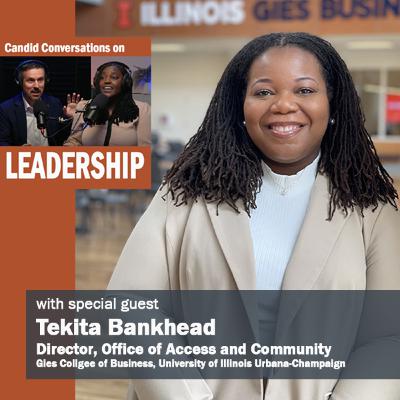
In this episode of Candid Conversations, Chris and Candice sit down with Tekita Bankhead, a global DEI strategist, writer, speaker, and educational consultant who currently serves as the Director of Access and Community at the Gies College of Business, University of Illinois Urbana-Champaign. Tekita brings a multidimensional background in nursing, student affairs, mental health advocacy, and educational leadership to the conversation, sharing insights from her decade-long journey at Illinois and beyond. Her path into higher education was unplanned but deeply meaningful, revealing how moments of failure can lead to unexpected transformation and purpose.Tekita recounts her pivot from nursing to higher education, sparked by a semester setback and the guidance of a mentor. This moment catalyzed a lifelong passion for helping others recognize and develop their leadership potential—especially those who may not traditionally see themselves as leaders. She discusses pivotal roles, such as her tenure at the Bruce D. Nesbitt African American Cultural Center and the Counseling Center’s ACE IT program, that honed her skills in community building, large-scale programming, and crisis management during the pandemic. These experiences, coupled with her lived identity, have deeply shaped her people-centered, grace-first leadership philosophy.Throughout the conversation, Tekita reflects on how her background in nursing and advocacy has fostered a trauma-informed, human-centered approach to leadership. She challenges conventional workplace norms, advocating for authenticity, trust-giving, and a redefinition of belonging as a default rather than something to be earned. Her metaphorical insights—like comparing DEI to elevators in a penthouse—help illuminate the universal benefits of inclusive design and the importance of access for all. She also dives into the complex dual role of education as both an oppressive and liberating force, calling for greater transparency, diverse narratives, and early exposure to multiple perspectives.In more personal moments, Tekita opens up about her deep commitment to therapy, her spiritual grounding, and her creative passion for writing. She shares the origin of her initiative, The Pedestal Project, which uplifts Black women through writing and communal healing, born from a powerful counseling session that inspired her to reimagine self-worth. Her reflections on feedback, particularly learning to "speak less and listen more," serve as practical wisdom for emerging leaders. The episode closes with a resonant message inspired by Toni Morrison—that true freedom and power are best used to help liberate and empower others.
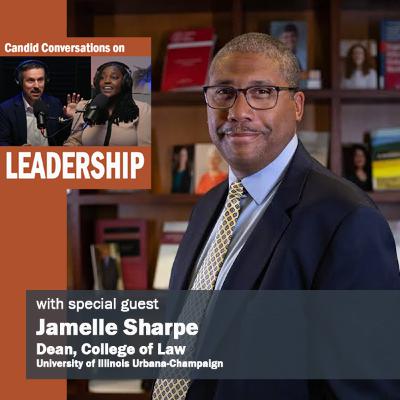
In this insightful episode of Candid Conversations on Leadership, hosts Candice and Chris welcome Jamelle Sharpe, Dean, Professor, and Guy Raymond Jones Faculty Scholar at the University of Illinois College of Law. Dean Sharpe shares a captivating account of his winding path to academic leadership, from his early days as an undergraduate student of literature, through the high-stakes world of investment banking at Morgan Stanley, to his distinguished career in legal academia. With wit, humility, and a deep sense of purpose, Dean Sharpe reflects on how each phase of his life shaped his views on leadership, collaboration, and public service.Dean Sharpe opens up about the transformative lessons he learned during his time on Wall Street—where 100-hour work weeks and lean teams fostered a culture of intense collaboration and accountability. He recalls powerful mentorship moments, including the mantra, “Nobody owns a monopoly on good ideas,” which has informed his leadership style ever since. His upbringing as a first-generation American from a West Indian family instilled in him a tireless work ethic and a deep sense of responsibility—values he now brings to the College of Law as its first African-American dean.The conversation takes a deep dive into his academic focus on federal administrative law, a field he passionately describes as central to human flourishing and societal collaboration. He explains how this often-overlooked area of law influences every aspect of American life, including higher education. Dean Sharpe also explores the current political climate’s impact on the federal administrative state and outlines how the College of Law is responding to challenges and opportunities in legal education, including the rise of legal technology and access to justice through potential non-JD legal practitioners.In the final segment, Dean Sharpe shares personal habits that keep him grounded, including a commitment to optimism and daily routines like making his bed. He even reveals a lifelong love of single-player RPG video games—culminating in his enthusiastic defense of Mass Effect 3 as the pinnacle of storytelling in gaming. He closes with powerful reflections on principled leadership, the courage to speak truth, and measuring success through the empowerment of others. Whether you're considering a career in law or simply want to become a better leader, this conversation is brimming with inspiration and practical wisdom.
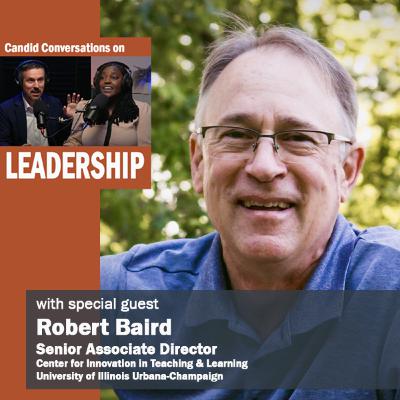
In this heartfelt and wide-ranging episode of Candid Conversations, we welcome Dr. Robert Baird. Robert is the Senior Associate Director of Educational Partnerships at the Center for Innovation in Teaching and Learning (CITL) and an adjunct lecturer in the College of Media at the University of Illinois at Urbana-Champaign. With a background that bridges English, cinema, and cognition, Robert’s career has spanned Hollywood film editing, academic publishing, and over three decades of work in teaching and learning technologies. Known for his storytelling, curiosity, and deep commitment to mentorship and community, Robert brings both wisdom and warmth to the leadership table.A long-time friend and campus colleague, Robert reflects on his unconventional academic journey from Oklahoma to Hollywood and ultimately to higher education, where he has spent over 30 years shaping educational partnerships and mentoring leaders at the University of Illinois. His stories, often infused with humility and humor, highlight the power of surprise and mentorship in helping people realize their potential.Robert shares the pivotal influence of mentors who opened his eyes to the possibilities of academia and pushed him to evolve as a scholar and leader. From wrestling with dissertation advice to pivoting away from a tenure-track path, Robert offers honest insights into the values that guided his decisions. His leadership style—rooted in empathy, curiosity, and support—mirrors his years as a youth soccer coach and educational facilitator. He discusses how these personal experiences helped him coach emerging IT leaders on campus through the IT Leadership Workshop (ITLW), where his creative use of props—like pigeon books and redwood clippings—sparks unconventional thinking and analogies for leadership.The conversation also delves into the evolution of educational technology, from the advent of email and learning management systems to the current wave of artificial intelligence. Robert speaks passionately about how AI challenges us to rethink what it means to be human and how students today are already engaging with it in complex and thoughtful ways. He highlights the value of writing, the importance of meaningful assignments, and how AI has exposed pedagogical practices that need to evolve.Toward the end, Robert shares personal reflections on family, self-care, and the lessons learned from a career spent navigating change with compassion and creativity. From his philosophy on life balance—“family is the earth, and my career is a moon orbiting it”—to a candid admission of being afraid of heights, Robert remains as grounded as he is intellectually adventurous. His parting message is simple but powerful: if you’re grounded in empathy and love, you’ll be okay.You can learn more about Robert Baird at https://www.linkedin.com/in/robertbaird3/Hosts Candice and Chris are IT leaders at the University of Illinois at Urbana-Champaign and collectively have more than 50 years of experience working in higher education. Candice is currently the Senior Director of IT Partners at the College of Applied Health Sciences and Chris is the Chief Information Officer and Senior Director of IT Partners at the Gies College of Business.
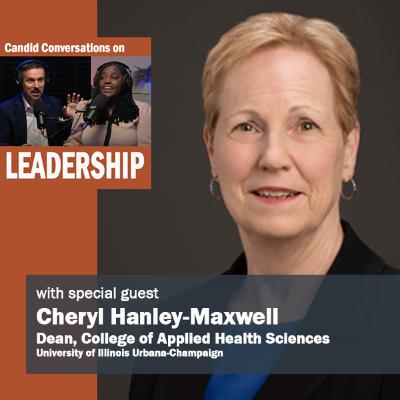
In this episode of Candid Conversations on Leadership, we sit down with Cheryl Hanley-Maxwell, Dean of the College of Applied Health Sciences at the University of Illinois. With a distinguished career spanning decades, Cheryl has become a powerful advocate and leader in the fields of rehabilitation and disability services. A triple alumna of the University of Illinois, Cheryl also spent 26 years at the University of Wisconsin-Madison in various leadership roles. Her passion for inclusion, equity, and helping others thrive has shaped both her career and her leadership style.Cheryl shares how her path to leadership wasn’t something she planned, but rather something she stepped into out of necessity and conviction. From her initial reluctance to take on administrative roles to her realization during a sabbatical cancer diagnosis that her true strength lies in helping others succeed, Cheryl paints a vivid picture of what it means to lead with purpose. She speaks candidly about pivotal moments, such as becoming department chair amid complex dynamics, and how those experiences deepened her understanding of collaborative leadership.The conversation touches on Cheryl’s foundational values—doing no harm, recognizing the dignity in everyone, and always prioritizing listening. She discusses her advocacy roots, shaped during the civil rights era, and how her passion for justice and inclusion led her to special education and, eventually, academic leadership. Cheryl also opens up about the balance she strives for in her personal life, including how exercise and reading fiction, especially satirical mysteries, help her decompress from the demands of leadership.Looking ahead, Cheryl reflects on the future of health sciences education, emphasizing its growth post-COVID, particularly in areas like aging and public health. She underscores the importance of building strong teams and empowering others, reminding aspiring leaders to be self-aware, value-driven, and cautious not to barrel forward without considering those around them. Her wisdom offers a grounded, thoughtful perspective on leadership as a tool for collective progress rather than personal ambition.You can view all episodes of Candid Conversations on Leadership at https://candidconversations.link/
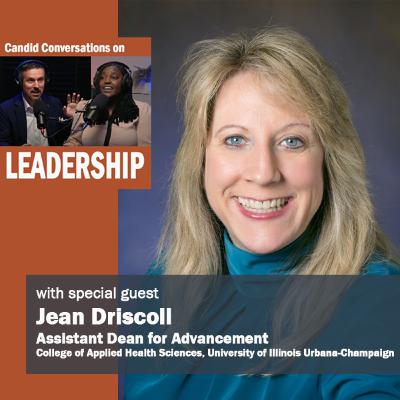
In this episode of Candid Conversations on Leadership, we sit down with Jean Driscoll, an eight-time winner of the Boston Marathon in the women’s wheelchair division and the Assistant Dean for Advancement at the College of Applied Health Sciences at the University of Illinois Urbana-Champaign. Jean shares her remarkable journey from overcoming the challenges of spina bifida to becoming one of the world’s most decorated wheelchair athletes. Her story is one of resilience, determination, and the power of leadership in all aspects of life.Jean opens up about the pivotal moments in her life, from the difficult transition to using a wheelchair as a teenager to her recruitment to the University of Illinois. She reflects on how her competitive nature and rigorous training shaped her understanding of leadership, discipline, and teamwork. Her experiences as an elite athlete taught her the importance of structure, commitment, and respect—qualities that she has carried into her professional career. As she transitioned from athletics into fundraising and advancement, Jean faced imposter syndrome and the challenges of cold-calling potential donors. Through persistence and learning to embrace rejection as part of growth, she developed into a confident and effective leader.Beyond her professional achievements, Jean’s passion for philanthropy and mentorship shines through in her work, particularly her efforts in Ghana to support individuals with disabilities. She shares how witnessing people with disabilities living in extreme conditions ignited a mission in her to uplift others, both literally and figuratively. Her leadership philosophy centers on investing in people, fostering a culture of respect, and making every experience count. Whether through coaching her advancement team, engaging with alumni, or leading community initiatives, Jean exemplifies the impact of caring and service-driven leadership.Jean leaves listeners with powerful advice: leadership is not a one-size-fits-all journey. Whether leading from the front, middle, or behind, everyone has the ability to make a difference. She encourages aspiring leaders to dream big, work hard, and embrace both successes and failures as valuable learning experiences. This conversation is a testament to the power of perseverance and the ways in which leadership manifests in everyday moments, from athletic competitions to acts of kindness in a second-grade classroom.
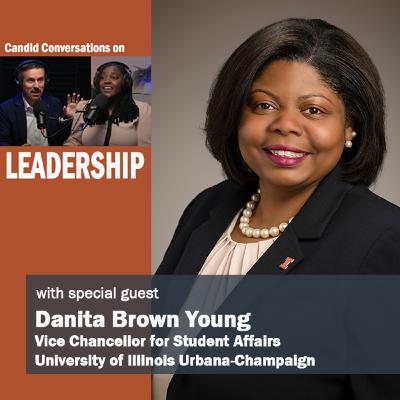
In this candid and wide-ranging conversation, Dr. Danita Brown Young, Vice Chancellor for Student Affairs at the University of Illinois at Urbana-Champaign, shares the story of her leadership journey from a childhood of community service to becoming a nationally recognized student affairs leader. With more than 25 years of experience in higher education, Dr. Brown Young offers a deeply personal and practical perspective on what it means to lead with purpose, compassion, and a deep commitment to student success. Her leadership has been shaped by her early roots in community involvement, a desire to support students beyond the classroom, and a belief in education as a path to equity and justice.Throughout the episode, Dr. Brown Young opens up about the formative experiences that guided her path, including an early dream of becoming a math teacher, and how her pivot into counseling and student affairs gave her the opportunity to make a greater impact. She emphasizes the importance of relationship-building, flexibility, and integrity in leadership, and introduces her approach to work-life integration—one that balances priorities like a diversified portfolio. Her insights offer a refreshing alternative to the myth of “work-life balance,” grounded in grace, community, and authenticity.Listeners are taken behind the scenes of student affairs at a large public university, particularly during moments of crisis. Dr. Brown Young recounts her team’s response to a campus worker strike and how it reaffirmed her appreciation for frontline staff. She also discusses broader challenges facing higher education today, including budget constraints, mental health needs, and the evolving role of technology—especially AI. Her leadership philosophy is underscored by empathy, collaboration, and an unwavering belief in student potential.In a lighter moment, Dr. Brown Young shares her dream of being a backup singer and dancer, revealing the vibrant personality and joy she brings to leadership. She closes the conversation by encouraging aspiring student affairs professionals to lead with heart, humility, and a deep sense of service—reminding us that real leadership is about lifting others up while staying grounded in who you are.You can learn more about Dr. Brown Young at https://studentaffairs.illinois.edu/brown-young
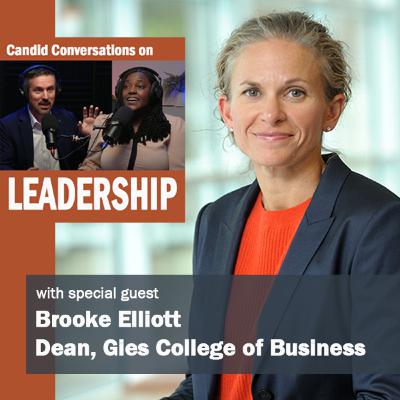
In this episode of Candid Conversations, Chris and Candice welcome Dean Brooke Elliott of the Gies College of Business at the University of Illinois Urbana-Champaign. Brooke, who has served in a variety of influential academic leadership roles, shares her deeply personal and professional journey—one marked by bold decisions, strategic vision, and a growing emphasis on empathy. As the first female dean of Gies, Brooke provides thoughtful insight into how her leadership has evolved and how she continues to shape the future of higher education.Brooke opens up about her leadership philosophy, describing herself as transparent, bold, and empathetic. She explains how these traits are foundational for building trust and leading through change, especially in times when institutions like universities must innovate rapidly. Reflecting on her career trajectory—from starting as an assistant professor in 2003 to becoming dean—Brooke recounts the surprising lessons she learned when stepping into administrative roles, particularly the challenge and importance of building consensus among faculty.The conversation turns introspective as Brooke discusses her struggles with pace—often wanting to move faster than her team is ready for—and the feedback that helped her grow, including the realization that surrounding herself with like-minded individuals wasn’t always the best strategy. She emphasizes the value of diverse perspectives and being intentional about creating teams that challenge and complement one another. Brooke also touches on the emotional reality of leadership, including the loneliness that can come with top roles and the importance of mentors and peer support.In a powerful closing segment, Brooke shares how a series of personal health challenges in 2022—including two cancer diagnoses—shaped her understanding of vulnerability and authenticity in leadership. Her candid reflection on staying grounded, maintaining routines, and choosing to be open with her story is a moving reminder that connection, empathy, and authenticity aren’t just buzzwords—they’re essential to truly impactful leadership.You can learning more about Dean Brooke Elliott at https://giesbusiness.illinois.edu/profile/w-brooke-elliott
Chris and Candice dive into the complex topic of accountability and how they motivate themselves and their teams to be accountable. Working in an environment that doesn’t have a significant amount of extrinsic motivation, they work to build team cultures where people are intrinsically motivated to achieve success. Candice and Chris are IT leaders at the University of Illinois at Urbana-Champaign and collectively have more than 50 years of experience working in higher education. Candice is currently the Senior Director of IT Partners at the College of Applied Health Sciences and Chris is the Chief Information Officer and Senior Director of IT Partners at the Gies College of Business.
Chris and Candice discuss the benefits of attending professional conferences with a focus on the most recent EDUCAUSE Annual Conference. We dive into Brené Brown's keynote chat, the top issues facing higher ed, how to get the most out of a conference experience, and the importance of engaging with your professional community. EDUCAUSE (https://www.educause.edu/) is a nonprofit association and the largest community of technology, academic, industry, and campus leaders advancing higher education through the use of IT. Candice and Chris are IT leaders at the University of Illinois at Urbana-Champaign and collectively have more than 50 years of experience working in higher education. Candice is currently the Senior Director of IT Partners at the College of Applied Health Sciences and Chris is the Chief Information Officer and Senior Director of IT Partners at the Gies College of Business.
Chris and Candice dive into the concept of feedback and how it’s a critical ingredient in healthy teams and organizations. Feedback is a gift to give and to receive when it is specific, timely, and delivered and received through a lens of growth and improvement. We talk about this feedback framework and model it in action. Available on other podcast platforms at https://candidconversations.link/episode-8-building-a-culture-of-feedback/Candice and Chris are IT leaders at the University of Illinois at Urbana-Champaign and collectively have more than 50 years of experience working in higher education. Candice is currently the Director of IT Partners at the College of Applied Health Sciences and Chris is the Chief Information Officer and Senior Director of IT Partners at the Gies College of Business.
Candice and Chris take Candid Conversations on Leadership on the road with a live event at the University of Illinois IT Pro Forum on November 12, 2024. They answer a variety of questions from the UofI IT Community focused on leadership, resilience, stakeholder management, professional growth, mentorship, and coaching.Candice and Chris are IT leaders at the University of Illinois at Urbana-Champaign and collectively have more than 50 years of experience working in higher education. Candice is currently the Director of IT Partners at the College of Applied Health Sciences and Chris is the Chief Information Officer and Senior Director of IT Partners at the Gies College of Business.
Chris and Candice discuss the art of interviewing. We share our own experiences interviewing for jobs as well as what we look for when hiring. The conversation also includes a number of tips you can use during the interview process.Candice and Chris are IT leaders at the University of Illinois at Urbana-Champaign and collectively have more than 50 years of experience working in higher education. Candice is currently the Director of IT Partners at the College of Applied Health Sciences and Chris is the Chief Information Officer and Senior Director of IT Partners at the Gies College of Business.
In this inspiring and practical episode, hosts Chris and Candice explore the powerful idea that anyone, regardless of their title or formal position, can be a leader. Drawing on the famous line from Ratatouille—"Everyone can cook"—they pivot to the belief that "Everyone can lead." Leadership, as they define it, isn’t about authority or hierarchy, but about influencing others toward a common goal. Through personal anecdotes and examples from their professional and community experiences, the conversation underscores how initiative, energy, and relationship-building are at the heart of true leadership.Candice shares her experience launching a peer coaching and mentorship program through the Women in Technology group—a grassroots effort that continues to thrive each fall. This example illustrates how seeing a gap and choosing to act is often all it takes to lead. Chris adds a compelling story about stepping into the role of Cubmaster for a local scouting troop despite initial insecurities, ultimately discovering a rewarding opportunity for personal growth and community impact. Other examples include forming communities of practice, spearheading campus-wide technology transitions, and leading by example—even in the simple act of picking up litter to inspire others.The episode also delves into “kinetic leadership,” a concept that celebrates the ability to get things moving and model the energy and behavior you want to see in others. Both hosts discuss the importance of soft skills like storytelling, listening, and the “presumption of yes” when working toward solutions in sometimes risk-averse environments. They candidly reflect on their own challenges—Candice working to become a better listener and Chris pushing himself to initiate new relationships—highlighting that leadership is a continuous learning process.Chris introduces a useful framework for building trust and influence: the Four I’s—Initiate, Inquire, Invest, and Influence. These elements, they explain, are foundational for gaining the credibility and trust needed to lead effectively. The episode concludes on a high note with a recent example of collaborative leadership during the global CrowdStrike incident. Across their campus, individuals stepped up, leaned in, and worked together without complaint to restore essential IT services—an unforgettable real-world example of leading from where you are.Candice and Chris are IT leaders at the University of Illinois at Urbana-Champaign and collectively have more than 50 years of experience working in higher education. Candice is currently the Senior Director of IT Partners at the College of Applied Health Sciences and Chris is the Chief Information Officer and Senior Director of IT Partners at the Gies College of Business.
In this powerful and deeply personal episode, hosts Chris and Candice engage in a heartfelt discussion on the true meaning and impact of Diversity, Equity, and Inclusion (DEI) in both professional and personal settings. Sparked by recent news about DEI team layoffs at a major tech company, the conversation unfolds as a necessary reminder that DEI is more than a corporate buzzword—it is a practice, a responsibility, and a cultural shift that must be actively cultivated and protected.Candice, a DEI advocate and member of a Women in Technology leadership group, offers clear and compelling definitions of diversity, equity, and inclusion. She explains how each concept is interdependent, likening them to threads in a quilt—one cannot exist meaningfully without the others. Chris adds his perspective by sharing practical shorthand and workplace metaphors to make the ideas more accessible, including the well-known visual of different-height individuals trying to see over a fence, illustrating the difference between equality and equity.The episode delves into the importance of intentionality in organizational change, with both hosts recalling their experience working to diversify IT leadership councils on campus. These efforts led to measurable improvements in representation and culture, underscoring how inclusive voices can drive systemic change. Chris highlights how his own IT team at the Gies College of Business evolved from being male-dominated to having gender-balanced leadership—progress made possible by rethinking hiring practices, including simplifying job requirements to open doors to more candidates.But this conversation doesn’t shy away from the emotional labor and challenges involved in DEI work. Candice shares powerful stories about the microaggressions she and her children have faced, emphasizing the need to empower marginalized voices rather than tokenizing them. The discussion on allyship centers on actionable steps—how leaders can amplify voices in meetings, address exclusionary behaviors, and pivot from “rescuing” individuals to advocating for cultural transformation.In a particularly vulnerable moment, Chris reflects on his own fears of “saying the wrong thing” as a white man in DEI spaces. Candice responds with grace, highlighting the importance of making mistakes, learning, and growing. The episode ends with mutual reflections on intersectionality and the desire to be seen as whole individuals—not merely representatives of a demographic group.This conversation is a compelling reminder that DEI is not about checking boxes, but about fostering empathy, listening deeply, and committing to long-term, systemic change.Note: Near the end of the podcast, Chris brings up the concept of intersectionality. For more information on this important topic, please see https://www.youtube.com/watch?v=ViDtnfQ9FHc and https://www.ted.com/talks/kimberle_crenshaw_the_urgency_of_intersectionalityCandice Solomon-Strutz and Chris Tidrick are IT leaders at the University of Illinois at Urbana-Champaign and collectively have more than 50 years of experience working in higher education. Candice is currently the Senior Director of IT Partners at the College of Applied Health Sciences and Chris is the Chief Information Officer and Senior Director of IT Partners at the Gies College of Business.

Comments

Download from Google Play

Download from App Store
 United States