


 Claim Ownership
Common Home TV: Questions for the Modern World
Subscribed: 0Played: 0
Subscribe

© Copyright 2024 All rights reserved.
Description
Welcome to the Common Home TV Podcast, your go-to source for inspiring and thought-provoking conversations at the intersection of integral ecology and an inclusive Church. Each episode delves into the profound questions facing faith communities. Join us as we engage with leading voices in theology, environmental science, social justice, and community activism, sharing stories and insights that challenge us to live more sustainably and compassionately. Together, let’s build a future where everyone has a place in our common home.
17 Episodes
Reverse
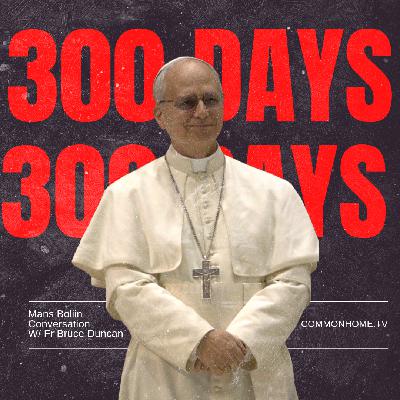
Welcome to the Common Home TV Podcast, and thank for joining us for another conversation at the intersection of faith, social justice, and the modern world.
In this episode, Fr Mans Bolli CSsR, priest and leader in digital mission for the Redemptorist of Oceania, is in conversation with Fr Bruce Duncan, a respected voice in Catholic social teaching and a mentor to many.
Together, they reflect on the first 300 days of Pope Leo’s pontificate, exploring continuity with Pope Francis, the importance of synodality, and the urgent call to live faith through action in today’s world.
From global challenges like war and climate change to the Church’s role in shaping conscience and public life, our hosts challenge listeners to consider what it truly means to live the Gospel today.
This episode was released after a period of pause following the Bondi attack, as we grieved in solidarity with our Jewish brothers and sisters.
In the final episode of In the Shadows of the Holy Land, we speak with Fr David Neuhaus SJ, an Israeli Jesuit priest, theologian, and one of the most important voices in Jewish–Christian relations in the region.
Born into a Jewish family shaped by exile and the trauma of the Holocaust, raised in apartheid-era South Africa, and later received into the Catholic Church, Fr David’s life has unfolded across some of the defining moral crises of the modern world. That journey has given him a way of seeing the Holy Land from the margins.
In this conversation, Fr David reflects on identity and belonging, the legacy of 1917 and the modern roots of the conflict, the misuse of Scripture in Zionism and Christian Zionism, and the dangerous illusion that security can be built on domination and exclusion. He speaks candidly about anti-Semitism, its reality, its horror, and its weaponisation, and about the Church’s struggle to speak clearly in the face of injustice.
Drawing on theology, history, and personal encounter, this episode wrestles with what it means to be prophetic in a time of war, how lament is not a failure of faith, and where fragile but real signs of hope might still be found.
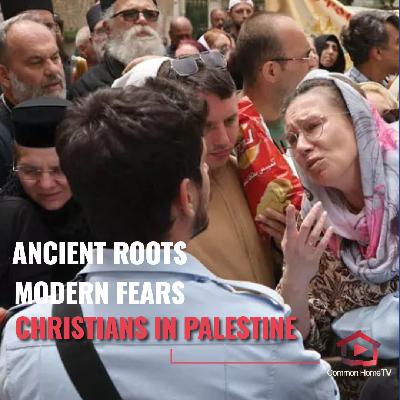
In this episode of In the Shadows of the Holy Land, we begin by widening the frame with Fr Shiran Fonseka, a Redemptorist priest from Sri Lanka now based in Melbourne. Shiran reflects on three decades of civil war, how neighbours learned to see one another as enemies, and how the Church worked to rebuild trust through preaching justice, defending human dignity, and simply staying with communities while everything around them fell apart. His story, including his congregation’s response to the recent floods in Sri Lanka , reminds us that war and reconciliation are human stories, not tribal ones.
From there, we turn to our main conversation with Sami El-Yousef, CEO of the Latin Patriarchate of Jerusalem and a lifelong Christian resident of the Old City. Sami outlines the fragile yet deeply rooted Christian presence in Palestine and Gaza, the network of schools, parishes, and institutions that often step in where the state cannot, and how the Church navigates its mission under both the Palestinian Authority and Hamas. He speaks candidly about the scale of destruction in Gaza and the West Bank, the loss of hope, international silence, and the Church’s courage to name injustice without becoming a political pawn.
Together, these two conversations invite us to recognise patterns that repeat across continents: division, dehumanisation, courageous leadership, and the slow, patient work of rebuilding trust. What does it mean for the Church to stand with people in the midst of war , and what might genuine solidarity look like from places like Australia?
Tune in and find out.
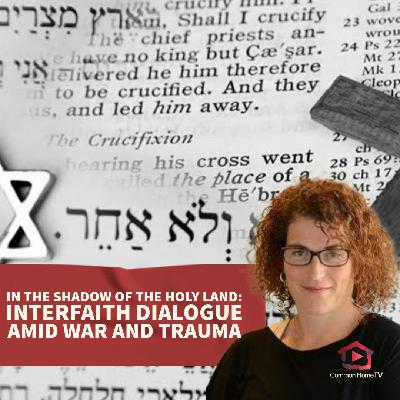
In this episode, we talk with Hana Bendcowsky, Program Director at the Jerusalem Center for Jewish-Christian Relations at the Rossing Center for Education and Dialogue. For more than two decades, Hanna has worked at the heart of Jewish–Christian relations , creating programs that bring communities together across painful histories, unequal realities, and deeply felt fears.
Growing up as part of the majority in Israel shaped how she sees responsibility, empathy, and the moral weight of dialogue. In this conversation, she reflects on what happens when people carry trauma, faith, and identity into the same room, and why genuine encounter matters even, and especially, during times of war.
Hanna speaks candidly about the challenges of teaching religious literacy in a place where religion is often weaponised, and the quiet courage required to stay in conversation when everything around you pulls towards division.
This episode offers a grounded, human look at what interfaith dialogue can be when the stakes are unbearably high.
Watch the full video at www.commonhome.tv
Visit the Rossing Center for Education and Dialogue to learn more about their work for peace in a time of war.
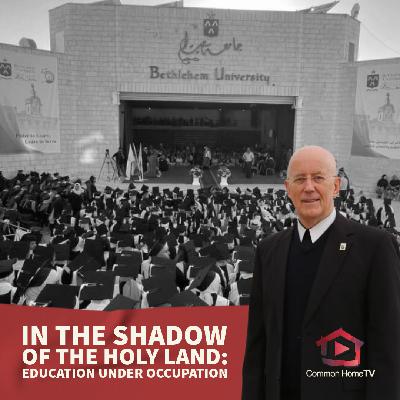
This premiere of In the Shadow of the Holy Land lays the foundation for the series; a commitment to good-faith conversation grounded in the equal dignity of every life.
Our guest is Br Peter Bray FSC, former Vice-Chancellor of Bethlehem University. He traces the modern history of the conflict, explains the differences between the West Bank and Gaza, and shows how occupation is lived through movement, checkpoints, and economic control. We also hear directly from Bethlehem University students about crossing the wall each day and why being listened to matters. Peter reflects on his goal to make education “an oasis of peace” and on the discipline of nonviolence. He shares how a solidarity Camino shaped his hope, and why telling the truth need not humiliate or hate.
Subscribe on YouTube or your favourite podcast app to catch next week’s episode with Hanna Bendcowsky of the Jerusalem Center for Jewish–Christian Relations.
It’s been a while since you’ve heard from us, and when you hear what we have been up to you’ll understand why we needed the time to get things right
We’re excited to share our new four-part mini-series, in Questions for the Modern World In the Shadow of the Holy Land: Identity and War.
In this mini series we speak with:
Brother Peter Bray, a New Zealander who spent years leading Bethlehem University
Hanna Bendcowsky, an Israeli peace educator working in Christian-Jewish dialogue;
Sami El-Yousef, a Palestinian Christian and CEO for the Latin Patriarchate of Jerusalem;
Fr David Neuhaus, an Israeli Jesuit born into a Jewish family in South Africa who has devoted his life to understanding between faiths.
If you’d like to watch the full version, it’s available now on our website and socials.
Thanks for listening. We look forward to sharing this journey with you.
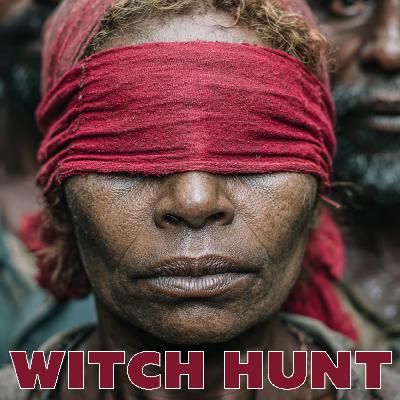
The word “witch” might sound like something from the past, buried in history books or brought up on Halloween. But for thousands of women around the world today, being called a witch can mean violence, exile, or even death.
In this episode, we speak with Sister Lorena Jenal, a Swiss-born Franciscan who has spent over 40 years in Papua New Guinea. She walks alongside women who’ve been accused of sorcery, offering not only rescue, but healing, dignity, and hope.
Sister Lorena’s story is not one of charity from afar, but of deep solidarity, standing with those whose lives are in danger and creating spaces for healing when the unthinkable happens.
We hope you enjoy
SHOW NOTES:
Donate to Catholic Mission at: https://www.missio-hilft.de/informieren/wofuer-wir-uns-einsetzen/menschenrechte/internationaler-tag-gegen-hexenwahn/
Atlantic Break (Music) https://linktr.ee/Atlantic.Break
Redemptorist Youth Congress highlights: https://www.facebook.com/profile.php?id=100087243649746
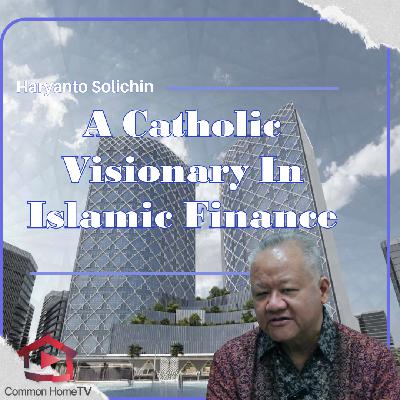
In this episode, we explore one of the most surprising and inspiring intersections of faith and economics. Our guest is Mr. Haryanto Solichin — a devout Catholic and the Commissioner of Menara Syariah, a landmark Islamic finance project rising on the reclaimed shores of PIK 2, Jakarta.
At the heart of Indonesia’s boldest Islamic financial development is a vision that transcends religious boundaries. Mr. Solichin believes that Syariah economics isn’t just for Muslims — it’s an ethical model for all: inclusive, transparent, equality-oriented, and purpose-driven.
How does a Catholic become a leading voice in Islamic finance? What shared values unite these traditions? And what can we learn from his interfaith approach to leadership?
Join us as we unpack the ethical principles of Syariah finance — and meet the Catholic helping make them a global reality.
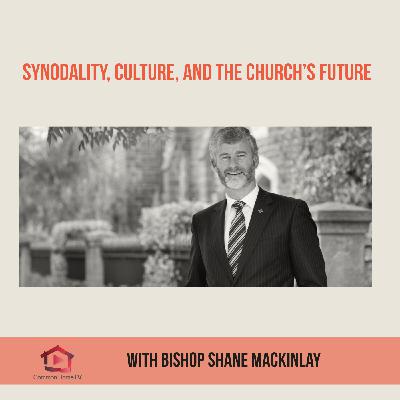
Welcome to Questions for the Modern World, a podcast by Common Home TV where faith meets the challenges—and possibilities—of our time.
In this episode, we’re joined by Bishop Shane Mackinlay, Bishop of Sandhurst and a key figure in the global Synod on Synodality. As the Church enters a new chapter following the death of Pope Francis, now is the moment to reflect on the vision he leaves behind—a Church that listens, journeys together, and engages with the world rather than retreating from it.
We talk with Bishop Mackinlay about the deep need to reconnect faith with modern culture, how synodality offers an antidote to apathy, and the questions being raised around women’s ordination.
This is an honest and hopeful conversation that points to a Church not of the past, but of possibility.
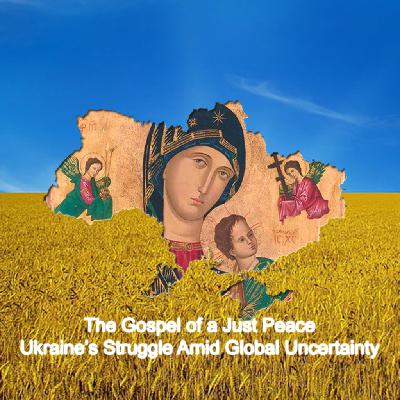
As Ukraine continues its fight for survival, the world watches with shifting allegiances and wavering commitments. In this episode of Questions from the Modern World, we sit down with Father Kolisnyk, a Ukrainian Redemptorist priest, to discuss what a just peace truly means for Ukraine and how faith sustains people in the face of war.
🔹 How has the war changed Ukraine’s spiritual landscape?
🔹 What lessons from history shape Ukraine’s approach to diplomacy?
🔹 How does political fatigue in the West impact Ukraine’s struggle?
🔹 What role do global Catholic communities play in standing in solidarity?
Father Ihor speaks candidly about the cost of justice, the weight of global inaction, and why, for many Ukrainians, this is not just a political fight—it is a fight for survival. He challenges Western leaders, including former U.S. President Donald Trump, on their rhetoric and highlights the deep historical wounds that make negotiations with Russia fraught with danger.
💬 “The Russians came, as they have before, to cancel our culture, our language—even our faith.”
This is a conversation about faith, resilience, and the global responsibility to stand for truth.
📺 Watch the full interview on Common Home TV
🎧 Available now as a podcast – subscribe and listen on your favourite platform!
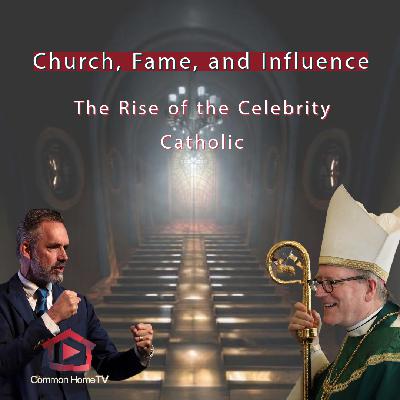
Welcome to Questions for the Modern World. In this episode, we’re thrilled to be joined by Kathryn Joyce, a renowned investigative journalist and adjunct lecturer in political science at Brooklyn College. Formerly a reporter with Type Investigations and Salon, Kathryn has served as a contributing editor at The New Republic and a contributing writer at Highline. Her work has appeared in acclaimed publications such as Vanity Fair, The New York Times Magazine, Mother Jones, The Marshall Project, Pacific Standard, Wired, The Nation, and many others.
Today, we explore the intersection of faith, fame, and influence, dissecting her recent Vanity Fair article, Behind the Catholic Right’s Celebrity-Conversion Industrial Complex. We examine the rise of celebrity conversions, the role of well-funded American Catholic media ministries, and their profound impact on the Church in the United States and globally.
We also reflect on her book, The Child Catchers: Rescue, Trafficking, and the New Gospel of Adoption, and discuss the lasting impact of evangelical adoption practices ten years after its release.

In an era where artificial intelligence continues to reshape every aspect of our lives, from how we work and communicate to how we think and interact, the question of ethics, morality, and human dignity remains more important than ever. Dr. Ziggy Zdziarski, a leading researcher in Artificial Intelligence with a background in both philosophy and theology, is at the forefront of these discussions, exploring how faith can inform and guide the future of AI.
With a PhD in AI and recent participation in the Vatican’s AI Forum, Dr. Zdziarski brings a unique perspective on balancing technological progress with a commitment to the common good. In this exclusive interview, Dr. Ziggy shares insights into the ethical implications of AI, how his Catholic faith shapes his approach, and why dialogue between science and spirituality is crucial in today's rapidly evolving digital world.
For more from Dr. Ziggy, check out his blog at zbigatron.com and visit his new YouTube channel, @Zbigatron, where he dives deeper into the intersections of AI, philosophy, and faith.
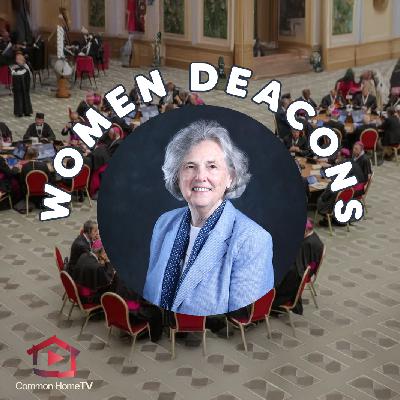
In this Bite Size episode of "Questions for the Modern World," we welcome Dr. Phyllis Zagano, a leading expert on women deacons in the Catholic Church. As the Global Synod on Synodality unfolds, Dr. Zagano sheds light on the history and current debates surrounding women's roles in church leadership.
This episode addresses critical questions about women's ordination, clericalism, and the broader implications for women's dignity and inclusion in the Church and society. Tune in for an insightful conversation that challenges conventions and envisions new possibilities for women in the Catholic Church.
For those interested in a deeper comparison of Cardinal Fernández’s written justifications and the comments he presented to the Synod, as mentioned in the podcast, Hendro Munsterman’s transcriptions offer an insightful look into the varying ways the Vatican communicates on this critical issue.
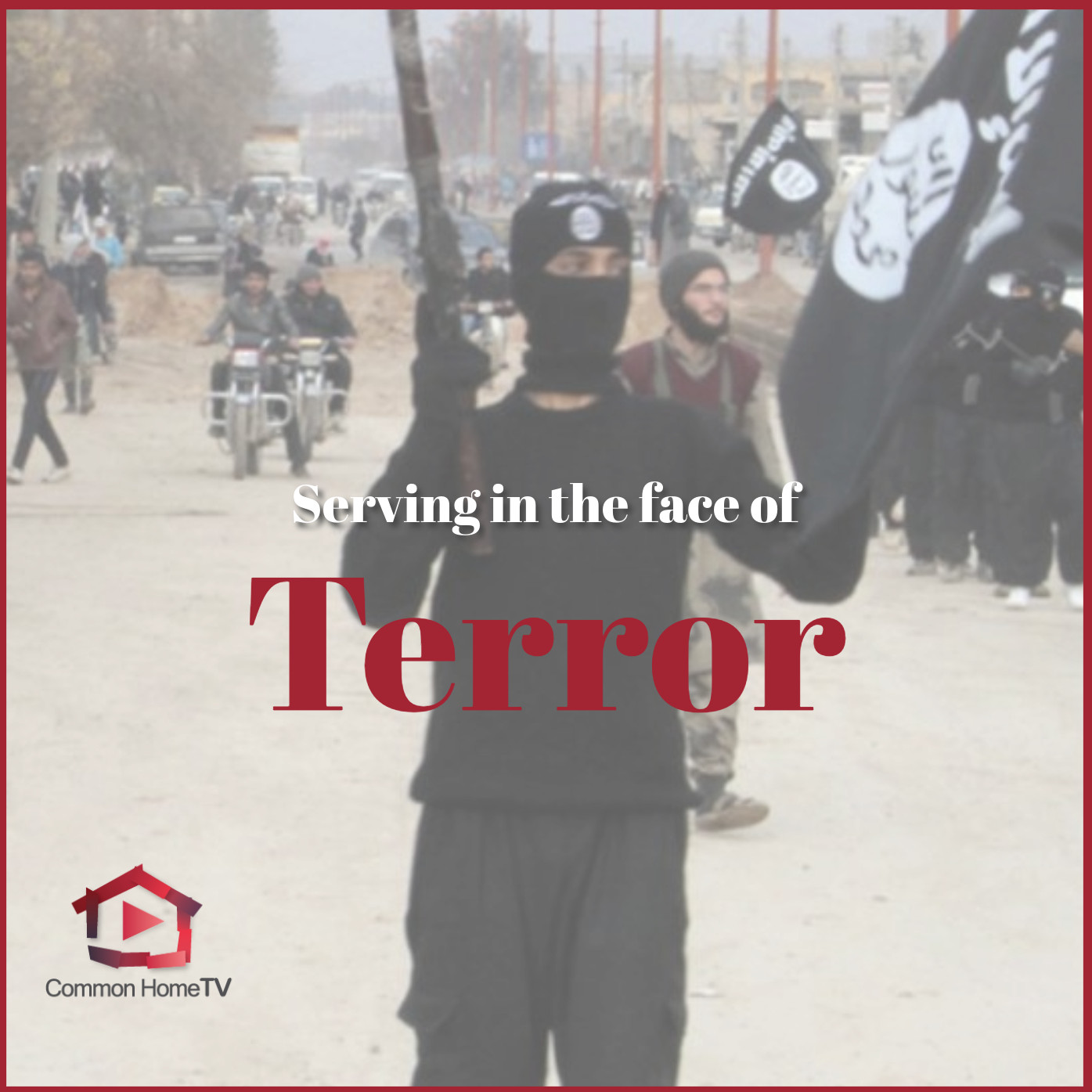
On the tenth anniversary of the rise of ISIS, Common Home TV looks back with the release of its latest short documentary, "Learning to Serve in the Face of Terror," which focuses on the remarkable actions of Chaldean Catholic Archbishop Bashar Warda, CSsR, in response to the humanitarian crisis caused by the rise of ISIS in Iraq. The documentary is available as both a video and podcast.
ISIS’s invasion and capture of Mosul triggered one of the largest displacements of people in recent history. The documentary examines the critical period when thousands of Christians, Yazidis, and Muslims were forced to flee their homes to escape violence and persecution. As Erbil became a sanctuary for the displaced, Archbishop Warda leaned on his Catholic faith and Redemptorist charism to lead and provide essential aid, shelter, and hope to those in desperate need.
Reflecting on the rapid and unexpected takeover by ISIS, Archbishop Warda said, “It was a surprise to everyone. We knew the dangers of sectarian violence, but no one expected that one day the entire province of Mosul would be hijacked by ISIS in such a short time.” He added, “People walked for over 12 hours to reach safety because they were completely unprepared for what happened. We had to respond with whatever resources we had, offering help to all in need, regardless of their faith.”
"Learning to Serve in the Face of Terror" provides an in-depth look at how Archbishop Warda, faced with overwhelming challenges, mobilised resources to care for vulnerable communities. His leadership ensured that the displaced received both essential aid and spiritual support during their darkest hours, serving as a powerful testament to Catholic social teaching in action.
For those interested in the full visual experience, the video documentary is available on commonhome.tv.

Welcome to another episode of Questions for the Modern World here on Common Home TV, where we dive deep into the challenges, questions, and hopes shaping our global community.
Today, we're honored to have with us Fr. Patrick Kelly, SJ, PhD—a distinguished scholar and author whose work explores the intersection of faith, sport, and spirituality. Fr Kelly has authored several influential books, including Catholic Perspectives on Sports: From Medieval to Modern Times and Play, Sport and Spirit. He also served as editor for Youth Sport and Spirituality: Catholic Perspectives. His expertise has led him to collaborate with Vatican offices on the topic of sport, contributing to the revision of the Catholic Church's first-ever document on sports, Giving the Best of Yourself, published in June 2018.
In addition to his academic achievements, Fr. Kelly brings personal experience to his work, having served as captain of the football team and been an All-Conference free safety at Grand Valley State University.
We hope you enjoy this conversation as we look at the rich connections between faith, sports, and the common good.
"
Welcome to the Common Home TV podcast, a new series from Common Home TV where we explore topics important to the emerging inclusive Church. Many of these podcasts are also available as videos on our website, so please check them out at Common Home TV. This podcast is a space for meaningful conversation and insights, where we discover healthy ways to relate to God, ourselves, and each other. Join us as we journey together towards a more compassionate and interconnected world.
In our inaugural episode, we are honoured to speak with Felix Corley, a distinguished religious rights activist, journalist, and editor at Forum 18, an organisation dedicated to documenting and advocating for religious freedom in Central Asia, Russia, Russian-occupied Ukraine, government-held Ukraine, Belarus, and the South Caucasus particularly Azerbaijan. With decades of experience in reporting on religious persecution and freedom, Felix has an in-depth understanding of the challenges faced by religious communities, particularly in countries with oppressive regimes. His work has been instrumental in bringing international attention to issues of religious freedom and human rights violations.
We hope you enjoy our conversation with Felix as we explore the vital topic of religious freedom, exploring its importance and the current state of affairs in Ukraine and Russia.
Welcome to the Common Home TV Podcast, your go-to source for inspiring and thought-provoking conversations at the intersection of integral ecology and an inclusive Church. Each episode delves into the profound questions facing faith communities. Join us as we engage with leading voices in theology, environmental science, social justice, and community activism, sharing stories and insights that challenge us to live more sustainably and compassionately. Together, let's build a future where everyone has a place in our common home.
Comments

Download from Google Play

Download from App Store
 United States