


 Claim Ownership
Hands On Hands Off
Subscribed: 133Played: 1,996
Subscribe

© AAOPMT
Description
An AAOMPT Podcast
210 Episodes
Reverse
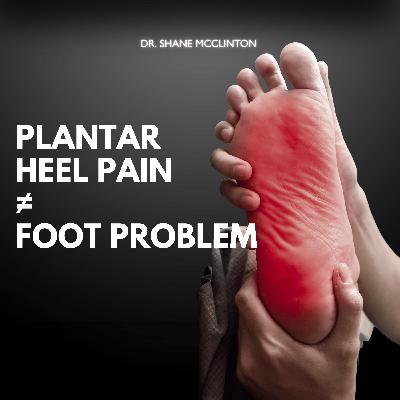
In this episode of the Hands-On, Hands-Off Podcast, Dr. Trenton Rehman sits down with Dr. Shane McClinton to discuss plantar heel pain and the role of physical therapy in both clinical outcomes and healthcare costs.Dr. McClinton walks through a series of studies stemming from his doctoral research, including a randomized clinical trial, a detailed case series, and a three-year cost-effectiveness analysis. Together, they explore how adding physical therapy to usual podiatry care impacts pain, function, quality of life, and long-term costs.Key themes include manual therapy, impairment-based exercise, proximal contributions to heel pain, interdisciplinary collaboration, and why plantar heel pain may deserve the same clinical mindset as low back pain.Key Takeaways (Listener-Facing)Plantar heel pain is a multidimensional condition with local and proximal contributors.Adding physical therapy to usual podiatry care improved outcomes and reduced costs over three years.Manual therapy and exercise were delivered pragmatically and tailored to impairments.Strengthening may be underutilized in plantar heel pain management.Collaboration between physical therapists and podiatrists benefits patients and reduces downstream burden.⏱️ TIMESTAMPED CHAPTERS (YouTube + Podcast)00:00 – Introduction to the episode and guest00:01 – Dr. Shane McClinton’s background and research focus00:03 – Why plantar heel pain referrals to PT are low00:07 – Rationale for studying cost-effectiveness00:10 – Study design overview (RCT + pragmatic approach)00:15 – Description of podiatry-only vs podiatry + PT care00:17 – Inclusion and exclusion criteria00:22 – Case series: why eight different heel pain presentations00:26 – Manual therapy strategies used in the study00:30 – Clinical practice guidelines and decision-making00:32 – Pain mechanisms, education, and chronicity00:35 – Proximal vs local treatment decisions00:38 – Three-year cost-effectiveness results explained00:44 – Implications for referrals and collaboration00:48 – Final take-home message from Dr. McClinton
Andreas Remis joins the podcast to unpack low back pain in a way that finally makes sense — bridging APTA CPG classifications, real-world clinical diagnosis, and the confusing world of radiographic findings.As faculty across multiple fellowships and residencies within the Duke Health System — and an educator shaped by his own poor rehab experience as a patient — Andreas brings a thoughtful, grounded approach to one of PT’s most complex conditions.In this episode:• LBP classification: CPG vs imaging vs clinical reasoning• How expert clinicians simplify diagnosis• Why radiographs often mislead clinicians and patients• The turning point when PTs begin to feel “value-confident”• Teaching LBP across OMPT pipelines• Lessons Andreas learned from being a failed patientIt’s a must-listen episode for clinicians, residents, and fellows treating low back pain.
When the cost of delay is measured in millions of dollars and operational readiness, guesswork isn’t an option.In this episode, we sit down with Josh Kidd, physical therapist, researcher, residency director, and embedded clinician working with special operations personnel and fighter pilots. Josh shares how directional preference plays a central role in clinical decision-making when time, performance, and safety all matter.We explore what directional preference actually is (and what it isn’t), why it should be viewed as an assessment rather than an exercise, and how inconsistent definitions in the research have led many clinicians to misunderstand or abandon it altogether.Josh also walks through real-world data from a tactical setting, where his team has used directional preference to help service members return to duty 36% faster, while empowering patients to self-manage and reducing recurrence.This conversation connects research, clinical reasoning, and performance-based care—challenging clinicians to rethink not just what they do, but how they think.???? In This Episode, You’ll Learn:Why directional preference matters beyond the spineThe most common misconceptions clinicians have about directional preferenceHow inconsistent research definitions affect real-world practiceHow directional preference can guide prognosis and return-to-duty decisionsWhat clinicians can learn from high-stakes military performance environmentsOne mindset shift that can immediately improve clinical reasoning
Faith Stokes joins the podcast to talk about treating the patients many clinicians feel least prepared for — those navigating trauma, addiction, suicidality, chronic pain, pelvic health conditions, and complex biopsychosocial presentations.Faith practices in rural North Georgia, where she blends manual therapy, psychologically informed care, and lifestyle medicine. As a residency coordinator and adjunct faculty across multiple programs, she’s passionate about helping clinicians develop clarity when treating patients whose stories involve trauma, fear, avoidance, social instability, or chronic stress.In this episode:• Simple vs. complex PTSD in clinical practice• Why trauma-informed care is essential in OMPT• Yellow flag screening and why it’s our responsibility• The PT’s role in addiction and suicidality• Integrating pelvic health with orthopedics and manual therapy• Using lifestyle medicine without shame or judgment• How experts reason through overwhelming complexityThis is a deep, human, and incredibly practical conversation for every PT.
Dr. Moyo Tillery sits down with Dr. Ron Shank to explore the evolving relationship between Orthopaedic Manual Physical Therapy (OMPT) and Mechanical Diagnosis & Therapy (MDT). Drawing from decades of clinical practice, mentorship, and research, Ron reframes the debate — arguing that integration, not ideology, leads to better patient outcomes.Together, they unpack directional preference, centralization, test–retest frameworks, patient empowerment, and the leadership principles that shape great clinicians. This is a must-listen for anyone navigating modern manual therapy practice.Key Topics Covered:Directional preference vs centralizationEnd-range testing as common groundHands-on vs hands-off decision-makingPatient self-efficacy and dependencyMentorship, leadership, and legacy in OMPT
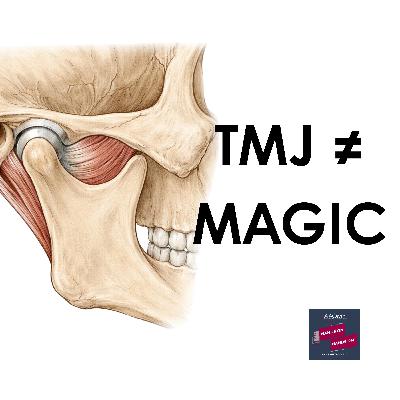
Most physical therapists will treat TMJ pain. Almost none will ever encounter a full bilateral TMJ replacement—paired with mandibular advancement and upper palate expansion. When that rare case appeared, there was no rehab playbook… so this clinician built one.What listeners will learn:How TMJ replacement compares (and doesn’t) to hip and knee replacementsWhy outcomes research exists—but rehab pathways don’tHow to apply total joint principles to a jaw jointWhat to do when surgical restrictions limit “normal” movementThe role of nutrition, SLPs, and interdisciplinary careHow lived experience changes clinical decision-makingWhy it matters: This episode isn’t really about TMJ—it’s about how clinicians think when evidence is thin and responsibility is high.Guest: Katie Berry — sports & orthopedic clinician, adjunct professor, and OMPT fellow-in-training.
Cody Mansfield joins the show to unpack the real value of residency and fellowship training — and to share insights from his new Cardon Research Award–funded study examining outcomes in non-operative knee pain.Cody serves as Director of the Ohio State OMPT Fellowship, research associate, physical therapist, associate editor for JOSPT Cases, and instructor in the OSU DPT program. His mixed-methods research evaluates whether post-professional training changes outcomes related to quality, service, and cost — and what patients themselves value about receiving care from fellowship-trained clinicians.In this conversation: • Why this research matters for the future of OMPT • Early insights from comparing trained vs. non-trained clinicians • Patient perspectives on fellowship-trained PTs • Residency vs. fellowship — how they actually differ • Cody’s educational sessions on LE referral patterns and spinal decision-making • His journey through a PhD while raising two young boysWhether you’re a student, clinician, educator, or program director, this episode gives you a grounded look at what advanced training really does for patient care.
Hollis Bixby sits down with us to explore how gamification is reshaping PT education — from DPT programs to hybrid residencies to post-professional training.Hollis has spent seven years as a sports physical therapist, is wrapping up her manual therapy fellowship through Regis University, and is beginning a new chapter as Assistant Professor at Campbell University. Through her work with Duke’s Orthopedic Hybrid Residency, she’s helping design gamified learning experiences that boost engagement, motivation, and clinical skill development.In this episode: • What gamification really is — and what it’s not • How game elements improve learning and retention • Strategies educators can implement tomorrow • How fellowship and residency training benefit from playful design • Why PT education needs to evolve for today’s learners • Hollis’s journey from sports PT → educator → innovatorThis episode is all about teaching smarter, not harder — and making learning fun again.
Rebekah Griffith joins the podcast to talk about what it means to be a newly minted AAOMPT Fellow working in one of the most unlikely settings — the Emergency Department.She shares why OMPT-level manual therapy skills are not only relevant in the ED, but essential for rapid assessment, safe decision-making, and efficient patient care. Rebekah explains how fellowship training sharpened her clinical reasoning, helped her manage acute MSK presentations, and expanded her impact within emergency medicine teams.In this episode: • The PT’s role in the ED • How manual therapy speeds clarity and improves outcomes • Examples of OMPT reasoning in acute, high-stakes scenarios • Why fellowship training matters outside outpatient ortho • Reducing unnecessary imaging, opioids, and admissions • Rebekah’s journey through AAOMPT Fellowship and into ED practiceWhether you’re a clinician, student, or educator, Rebekah’s perspective will reshape how you think about where — and how — manual therapy skills should be used.
Ken Olson joins the podcast to discuss his work on the IFOMPT/IOPTP taskforce on pediatric spinal manipulation and the ongoing clinical reasoning debate around specific vs. general manipulation.Ken is a private practice clinician, educator, past-president of IFOMPT and AAOMPT, author of Manual Physical Therapy of the Spine, and recipient of the 2024 Distinguished Lecturer Award. His perspective blends evidence, global standards, and decades of practical experience.Topics include: • Why the pediatric manipulation taskforce was created • The taskforce’s findings and new position statements • Safety, indications, and advocacy for pediatric manual therapy • The “specific vs. general” manipulation controversy • The value and evidence for specificity in OMPT • What great clinical reasoning looks like in manipulation decisionsThis is a must-listen for OMPT clinicians, educators, and advocates shaping the profession’s next chapter.
Jason Silvernail joins the show to break down the essential communication and leadership skills clinicians need to thrive—and to protect themselves from burnout, conflict, and misalignment.We explore the principles behind assertive communication, how to establish a confident presence, and what it means to communicate clearly without crossing into arrogance or dominance. Jason offers practical, real-world strategies for handling interruptions, navigatingtension, setting boundaries, and keeping conversations focused.Episode topics include:• Mindset and behaviors of assertive communicators• Body language, tone, and leadership presence• Techniques for clarity in difficult conversations• Active listening and feedback as two-way communication• Holding boundaries in professional interactions• De-escalation strategies for disruption, interruptions, and conflictThis episode is for clinicians, mentors, educators, and leaders who want to show up with more confidence and communicate with purpose.
Pediatric manual therapy has been built on adult techniques — and that’s a problem.Educator, clinician, and researcher Ginny Henderson joins us to expose the missing guidelines, the hidden dangers, and the new evidence-based techniques designed specifically for growing bodies.We cover: • Why kids’ bones are more vulnerable — and how to mobilize safely • The biggest misconceptions clinicians bring from adult PT • Combining joint mechanics with motor learning for better outcomes • How chronic pain presents differently in children • The powerful (and often overlooked) influence of parent beliefs • When pain is nociceptive… and when it’s actually nociplastic • How PTs can start making better decisions tomorrow with pediatric patientsThis is one of those “I didn’t even know I needed this” conversations — and it might change how you treat kids forever.
Dr. Gail Deyle joins the show to discuss clinical reasoning, diagnostic skill, and the evidence supporting OMPT. A true clinician-scientist, Dr. Deyle has spent decades conducting clinical trials, mentoring fellowship-trained clinicians, and advocating for direct access and advanced evaluation skills in physical therapy.In this episode we explore:• Why PTs are essential contributors to global health• Evidence showing OMPT’s high benefit and low risk• The real impact of fellowship training on clinical outcomes• Advanced interviewing and reasoning as core PT competencies• The importance of diagnostic screening by PTs• Direct access and why restrictions harm patientsGuest: Dr. Gail DeyleOrganization: Army Baylor Doctoral Fellowship
In this episode, Jimmy sits down with the legendary Dr. Gail Deyle — clinician-scientist, mentor, and one of the most cited researchers in orthopaedic manual physical therapy.Dr. Deyle breaks down:The defining trait of clinicians who excel after fellowshipWhat separates great mentors from good onesReal-world stories of PTs catching critical medical conditionsThe biggest mistake clinicians make in their early reasoningWhy MSK health is a global opportunity for PTsHow clinicians can start contributing to researchThe power of collaboration between clinicians and research facultyA concise but insight-rich conversation with one of the most respected voices in the profession.00:00 – Intro: Why Dr. Gail Deyle is a PT legend 00:36 – Welcoming Gail + Reno conference gambling banter 01:15 – What trait predicts fellowship success? 02:36 – Seeing former mentees grow into experts 03:24 – What makes a great mentor? 04:43 – PTs as frontline diagnosticians 06:48 – Real examples: PTs catching serious conditions 08:22 – The biggest unlock in advanced clinical reasoning 10:04 – Making implicit reasoning explicit 11:35 – Communication, feedback & the mentor/mentee relationship 12:00 – PTs as an untapped force in global MSK health 13:10 – Red light / green light: habits to stop and start 14:55 – Dr. Deyle named in the top 2% of cited researchers 15:28 – Why clinicians should participate in research 15:48 – Closing
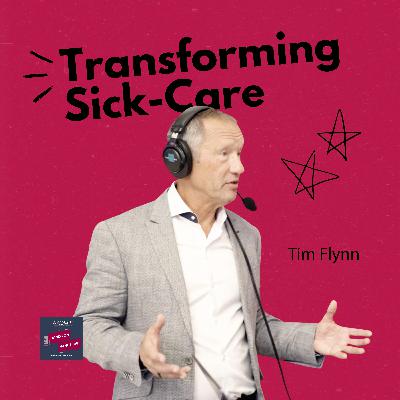
Dr. Tim Flynn joins the show for a powerful conversation about what it really takes to transform a broken healthcare system.A clinician, educator, and innovator, Tim has spent decades teaching around the world, challenging outdated models, and reminding clinicians that change starts with one encounter at a time.In this episode, we explore: • Why the U.S. operates a “sick-care” system — and how to shift away from it • What “Live health to sell it” means for providers and patients • The role of purpose-driven teaching in PT education • Disrupting entrenched systems without losing sight of patient connection • Lessons Tim learned early in his career teaching in the U.S. Army Baylor PT Program • How clinicians can create meaningful change at the individual and systemic levelsWhether you’re a student, seasoned PT, or someone passionate about healthcare reform, this conversation will leave you thinking differently about your work, your patients, and your purpose.About Tim Flynn:Tim is a clinician, teacher, and international speaker who works with private clients, leads national and international workshops, and contributes to the Substack OwnMyHealth. His career reflects a lifelong commitment to service, critical thinking, and the healing power of human connection.
Today on Hands On, Hands Off, host Moyo Tillery sits down with Dr. Myra Meekins—PT, educator, and curriculum designer—to rethink how we teach and learn OMPT. From “practice makes perfect” to practice with purpose, Myra connects classic motor-learning models to the OPTIMAL theory (expectancies, autonomy, external focus), and shows why you must address the psychosocial to change the psychomotor.We get concrete about designing sticky learning experiences for DPT students, residents, and fellows; building safe, high-expectation lab cultures; and using feedback, simulations, and competency-based education to translate knowledge to performance. Myra also shares her path from MTI fellowship and WashU’s Movement System Impairments work to leading curriculum development for a new DPT program and co-investigating a $1.6M grant bringing PT simulation into high schools.You’ll learnWhy clear expectations + psychological safety accelerates skill acquisitionHow to scaffold from competence → refinement → mastery across DPT, residency, and fellowshipPractical ways to make learning “stick” for a class of 100 (and a class of 10)Using low-stakes, frequent formative assessment to steer teaching in real timeDesigning integrated, case-based curricula (and avoiding silo traps)What competency-based education and entrustable professional activities (EPAs) look like in PTMovement as the organizing principle: applying Movement System Impairments to guide exam & interventionWhy educators must adapt to the learner in front of them, not the one they used to be
What if context—patient beliefs, provider expectations, and the therapeutic relationship—drives a meaningful share of spinal manipulation outcomes? In this HANDS ON HANDS OFF episode, we break down a single-arm intervention study funded by the Paris Family Foundation via the Foundation for OMPT, why the current mechanisms model zeroes in on the “context zone,” and how to practically weave guidelines + shared decision-making into outpatient practice.Top takeawaysOutcomes vary—and context might be part of the mechanismStudy design links individual providers ↔ individual patients for cleaner signalsImplementation: use shared decision-making to operationalize guidelinesCareer notes: pick mentors early, build long-term collaborators, include patient partners
In this episode of HANDS ON HANDS OFF, host Dr. Moyo Tillery sits down with Dr. Sarah Shaver, a clinician, educator, and researcher focused on gender considerations in orthopaedic manual physical therapy. Together they explore why common assumptions about female athletes and chronic pain patients can perpetuate inequities—and what OMPT practitioners can do to change that.From ACL injury risk factors to concussion outcomes, manual therapy decision-making, and care for transgender and non-binary athletes, Dr. Shaver challenges listeners to reflect on their own biases, apply equity-based care, and use available research to transform outcomes.What you’ll learn in this episode:Why gendered assumptions about ACL injuries and concussions can lead to inequitable careHow “hands-off” approaches to chronic pain disproportionately affect female patientsThe difference between equality and equity in clinical practicePractical strategies and resources to recognize and reduce bias in your own treatmentHow to create more inclusive environments for transgender and non-binary athletes in OMPT settings
What does “usual care” really mean in physical therapy research — and why is it so inconsistently applied across studies? In this episode, Dr. Amy McDevitt joins us for a deep-dive conversation into the limitations of current PT research and how vague terms like "usual care" are impacting evidence-informed practice.Dr. McDevitt discusses:Why “nothing” should never be a control in clinical trialsHow heel pain and orthotic studies show cracks in research designThe evolving role of manual therapy and therapeutic allianceHer collaborative work with Dr. Moyo Tillery on minority faculty representationAdvice for early-career academics and clinical researchersThe connection between burnout, purpose, and academic productivityThis episode is a must-listen for PTs, educators, researchers, and anyone passionate about improving the quality of care through better scholarship.
Seth interviews Carl DeRosa about the shift to competency-based education (CBE) and entrustment in physical therapy.Highlights:Designing backwards: from competencies to curriculumHow integration dismantles siloed coursesFaculty adoption & team-teaching complexitiesThe profession's position versus medicine, pharmacy & vetUniversity of Arizona’s agile 3‑year medical school modelEntry‑level “workforce readiness,” especially in the AI eraThe pitfalls of overvaluing NPTE pass ratesCapstones focused on professional identity, not low-value researchBuilding master adaptive learners using EPAsAdvice for faculty and programs beginning their CBE journey

Comments

Download from Google Play

Download from App Store
 United States