


The Twelfth House
Subscribed: 92Played: 4,716
Subscribe

© Holisticism
Description
Join host Michelle Pellizzon, the Holisticism team, and expert guests as we explore the connection between the practical and metaphysical aspects of well-being. Muse with us on why self-knowledge, intuitive business, spirituality, and creativity all contribute to embracing life as creatives, entrepreneurs, and squiggly brained intuitives on a mission to do our sacred Work.
thetwelfthhouse.substack.com
thetwelfthhouse.substack.com
300 Episodes
Reverse

📚 Resources and Links:* Sign up for the North Node waitlist here* Inquire about 1:1 work with Michelle here* Holisticism Resources 4 u:* Ruthless Clarity — an 8-week email course designed to help you achieve crystal-clear certainty about your goals, desires, and energy allocation* How to Begin: A Project Planning Class — a 90-m on-demand class that teaches you exactly how to sketch a effervescent project plan that’ll fill you with glee and inspiration and instantly banish procrastination and overwhelm, so your brilliant ideas can finally come to life.* The Subconscious Audit — an 11-day diagnostic framework that helps you identify what’s holding you back and making you *feel* blocked. Because you’re never actually blocked* The New Age Playbook for Spellbinding, Can’t-Stop-Reading Copy — a 35-page downloadable workbook to take your writing from blah to bingeableTo be blunt and unpoetic about it, a way to increase your surface area for synchronicities is to just start noticing things.In the Feldenkrais Method we talk a lot about habituation and differentiation. The whole point of a Feldenkrais class can be boiled down to this: I’m trying to bring your attention to your habitual way of being, moving, and thinking by introducing some type of novelty into your experience; the novelty helps you notice the things you’ve grown accustomed to which have been “invisibilized” in your life.By bringing your new awareness online, you give yourself options for responding to the world differently. You illuminate choices. You create doorways where there were once walls.And that’s the whole crux of synchronicity practice — we’re trying to create more opportunities for synchronicity to show itself.Archetype practice can do this, sure. But today I want to talk about an even more obvious option for inviting a different reality into being — altar work.What’s an altar? An altar is a place made sacred.The word sacred comes from the late Middle English sacre, which means to ‘consecrate.’ An object or place that’s been consecrated has been set apart from the average and the ordinary to accomplish something specific. We might also describe these objects or places as holy.A sacred space is a place where wonder can be glimpsed. - Joseph CampbellWhen we focus our attention on building and tending to altars we transform a space from regular-degular — mundane, if you want to get fancy about it — to holy and magical. An IKEA BILLY bookshelf becomes a hallowed shrine. The top of your ancient apartment refrigerator turns into a reminder of the omnipresence of our ancestors. The dashboard of your somehow-still-kicking Honda Civic becomes “a sacred place,” as my obsessed toddler has taken to saying. (Shoutout to the Moana writers for introducing that banger to our home, it’s familial canon now)The spaces we might take for granted because we’ve become habituated to thinking of them in a certain way are called into new light. We can see things differently … And if we begin to see one thing differently, maaaaaybe JUUUUUUSST MAYBE we can open up to the possibility of seeing many things differently.How you use your altar depends entirely on your cultural and spiritual beliefs and practices. But altar practice itself? Universelle. We find evidence of altars and shrines going waaaaaaay back to the Paleolithic era. Permanent sacred spaces tucked into narrow caves and carved into stone underhangs. ‘Mobile’ altars that could be taken on-the-go by migratory peoples. People have been doing this s**t forever.I think that altar creation is hardwired into our DNA, even if that’s not how we necessarily clock it these days. Is a thoughtfully designed tablescape for a dinner party not an altar to kinkeeping? Is an organized, dedicated crafting corner not a shrine to creativity? Is a well-tended back garden not a cathedral of nature?All I’m saying, really, is that making an altar doesn’t have to be this buttoned up ceremonial, Wicca-adjacent act full of vermillion red candles and money bowls and scrying mirrors and the menstrual blood collected during the Full Moon (Although… I do love the drama, as a Scorpio Moon tosses hair) You already know how to make an altar, but maybe do it with a little more oomph and awareness, you know?There are many ways to make an altar, and usually we make them in devotion to something — a deity, a loved one, an intention. Practices vary dramatically. If you have the privilege of knowing your ancestral origins, studying those traditions is always where I’d point you first for more specific guidance.But for our purposes, I suggest starting with a small altar (or refreshing your usual altar) organized for Winter.A Winter’s Altar May I go goth for a sec? When I pull the Death card, my mind goes straight to Winter. (People with 13s in their Matrix of Destiny chart — eyes on me! Eyes on me! This applies to you!) The Death card isn’t a harbinger of doom, more a reminder of the cyclical nature of all things in the universe.Eventually, everything ends! (positive)Eventually, everything ends. (foreboding)The Spectre of Death tills a fallow field — there is no life here, yet. Because it’s winter! The field needs time to rest in order to bloom in the spring. All things in their proper timing.It’s not incredibly groundbreaking to be like, “Oh, winter, rest, yeah?” And to me, that’s actually not what this card or season tells us. Death still works the field in the winter, he ain’t vacaying. This is the time for working in the dark — at inky pre-dawn and late afternoons blanketed in shadow — deliberately and devotionally. Winter air is crisp and clear — Death’s line of vision to the horizon is unobscured. You can see in the dark, eventually, because your eyes adjust if you sit still in it for long enough. The opportunity to bloom in spring is created in the winter.How to assemble (resist the urge to overconsume, I beg!)Circling back to the point of all this — the purpose of altar building is to bring the sacred into the mundane. To get started, we’ll need a few elements:A place to put your altarDoesn’t have to be big or impressive, a window sill or a corner of a bookshelf or a side table in your entry will do just fine (you can also build a traveling shrine to take on-the-go, in which case you’ll need an implement for transport, like an altar cloth or a cigar box)An intention Yes, we’re hoping to increase our surface area for synchronicity… but why? What are you hoping the outcome will be for you, when the field around you gives you little nudges of acknowledgement? Health, happiness, healing, spiritual growth, gratitude, love, self-knowing, peace, strength, clarity, intuition, wealth, work opportunities, community, friendship, confidence, direction? I get a sense that most of us here are looking for confirmation of being on the path to something purposeful and living a life that is personally meaningful while contributing to the collective. But pick your thing! A theme, even a capaciously broad one, is important.Cleansing materialsLiteral cleaning supplies (I am currently obsessed with this stuff?), but also ceremonial cleansing tools like salt, incense, smoke, selenite, a bell… all can work, depends on your preference and your practice. I’m partial to copal resin and this incense.Symbolic and sympathetic totems Dealers choice, here. There’s really no need to buy anything new, if you don’t want to. Use what you can find in your house, on a walk, etc. Drawing on your intention, meditate on what symbols could represent your focus. Flowers, stones and minerals, saints, dieties, tarot cards, colors, herbs, essential oils — all have culturally associated meanings that you can draw upon to echo your intention. In my opinion, using items that you have personal associations with — a golf tee that reminds you of your grandfather’s love, or gardenias that feel like home because they remind you of your mom — as opposed to meanings that you look up in a book but don’t necessarily feel called to are always going to make a more sagrado space, IYKWIM.Other items you might want to add to your altar:* photos of loved ones or beloved/sacred places* a candle* coins or cash* coffee, wine, rum — common in certain cultural practices* elemental additions for water, earth, fire, wind* a letter with your intentions written on it* sigils you’ve designed* spells you’re working* protective materialsThe main thing for us is to practice seeing things differently. So if you were asking for my advice (not saying you are, but… you’ve read like 600 words on this so we’re kind of at that point in the story, right? Not too presumptuous of me to go there?), I would encourage you to set up your altar in a space you walk past every day but tend to overlook. For me, this is the windowsill at the top of the stairs just before you enter our bedroom.Set up your altar with some awarenessMaybe pause the podcast you’re listening to before you get going. Maybe pull a card real quick. Maybe say a prayer, if you feel moved to. Maybe a recite poem. (What’s the difference?)Now here’s the invitation — notice what happens when you invite the sacred into the every day. Resist the urge to habituate, to walk past the altars of your life without acknowledgement.Liked this?You’ll love Holisticism and our podcast The Twelfth House.Want to learn more about intuitive business and creator-ship?Sign up for the North Node waitlist here.Into my persnickety personality and strategic perspective?Inquire about 1:1 advising with me here. This is a public episode. If you'd like to discuss this with other subscribers or get access to bonus episodes, visit thetwelfthhouse.substack.com/subscribe
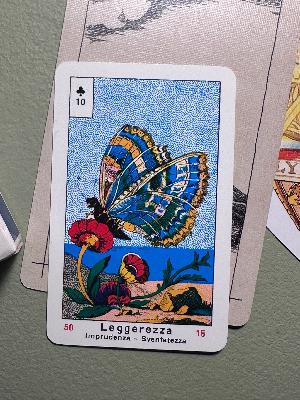
📚 Resources and Links:* Sign up for the North Node waitlist here* Inquire about 1:1 work with Michelle here* Holisticism Resources 4 u:* Ruthless Clarity — an 8-week email course designed to help you achieve crystal-clear certainty about your goals, desires, and energy allocation* How to Begin: A Project Planning Class — a 90-m on-demand class that teaches you exactly how to sketch a effervescent project plan that’ll fill you with glee and inspiration and instantly banish procrastination and overwhelm, so your brilliant ideas can finally come to life.* The Subconscious Audit — an 11-day diagnostic framework that helps you identify what’s holding you back and making you *feel* blocked. Because you’re never actually blocked* The New Age Playbook for Spellbinding, Can’t-Stop-Reading Copy — a 35-page downloadable workbook to take your writing from blah to bingeableThe first rule for creating the conditions for a most magical year is that you gotta look alive.Expanding your surface area for luck and magic is not a passive inheritance; it’s co-creative. You gotta but your big boy pants on and be accountable for your part in all this, while also keeping your ego in check and surrendering to the group project vibes of this whole endeavor. Operate in the faith that if you do your part with as much integrity as possible, your creative partner (god, source, universe, benevolent aliens, ancestors, unicorn spirit guides, whatever your belief is) will act that way, too. As above, so below, right?When I say look alive I’m being ridiculously literal. Use your eyeballs. Look and see.What are you looking for? Well, signs, of course.Are you looking or are you seeing (obnoxious but important!) As I was thinking about this episode, my list for why looking for signs is a high-leverage practice kept expanding. Sign-finding is one of those low-effort, high-return activities because its a non-boring way to practice paying attention.Like, you could meditate in silence for 20 minutes. Or, you could pretend you’re living in a life-sized version of an I Spy book … either way, you’re going to slow waaaaay down (clues are hard to spot when you’re sprinting through life). Slowing down forces you to clock what’s coming up, like:* sensations in your body,* thoughts, ideas, patterns in your mind* information in your physical environment that you might usually take for grantedNow, noticing “the signs” is sort of a daunting task. I’m getting overwhelm-schwitzy just thinking about it. Everything is a sign if you’re looking for signs, which seems like the worst version of confirmation bias and perhaps something that can send you into light levels of spiritual psychosis.We don’t want that. Which is why we’re turning to tarot and archetypes today to be our guides.Why this works no matter if you’re too “advanced” for tarot or if you’re a newborn baby when it comes to tarocchi You might be reading this like, Really, tarot? Doesn’t that feel a bit… remedial? Give us something COOL and ADVANCED! Something tricky!OK, yeah, I hear you. You might be o-v-e-r tarot, which is your right! (Maybe check out Zener cards, if you feel you’ve ascended beyond the humble tarot deck)But if you’ve graduated onto more esoteric methods like, say, black mirror scrying, I actually think this is the perfect time to blow the dust of ye olde tarot deck and look at the cards and their symbols with fresh eyes.And if you’ve yet to crack the spine on the Tarot for Dummies book that’s been camped on bedside table for the last seven months, great! You’re in the right place, too.Tarot is an incredible tool for accessing the unconscious mind because it is non-linguistic. Language is a somewhat modern technology. Cormac McCarthy explains it better than I can, but humans had thoughts and ideas for thousands of years before language developed. We can assume, then, that language developed as a cognitive extension — a way to translate our thoughts outside of our selves. We should assume that this translation, like most translations, will never be a perfect representation of our internal ideas. And while we might have an internal dialogue that involves language, this is a learned way of thinking. Basically, ur brain thinks in images first, then translates those images to words so you can talk about them with your pals.The unconscious mind is the most ancient part of you. It operates in visuals, patterns, symbols, and comes alive when surrounded by the imaginal.Tarot as a sign-cipher Tarot is mostly non-linguistic. It’s all symbols and colors and images, baby! So it’s a perfect tool for waking up your ancient inner awareness.I love tarot as a sign-cipher for a few more reasons:* At this point, it’s pretty accessible! You can get a tarot deck at CVS (lol), you can download a tarot app, you can probably borrow a deck from the barista at your local coffee shop. Barrier to entry is low.* Tarot is easy for habit building. Pull one card a day… that’s it. No need to do a 39-card spread. Start simple and work up to complexity later, if you want.* You already understand the symbols in the tarot. You don’t need a guidebook. Trust me! If you’ve seen a movie, read a book, admired a painting at any point in your life, you know enough to be able to reasonable interpret the card in front of you.* Whether you believe an invisible hand of fate is guiding you to your cards or the cards are simply a psychoanalytical tool doesn’t really matter. This practice of finding symbols and signs is pretty agnostic.For our purposes, tarot gives us a place to start. You’re looking for winks from the Universe that you’re on the right path — the tarot can help us identify the beginning of the breadcrumb trail so we’re not frantically chasing down every semblance of a path that we see. It helps us figure out what we’re looking for by presenting us with a smaller “database” (I guess that’s the right word?) of signs and symbols to consider.From there, we can laser in on what’s significant.“The true symbol should be understood as an intuitive idea that cannot yet be formulated in any other or better way.” — C. G. JungThe Rider-Waite-Smith deck is probably the most well-known tarot deck, but all decks — even the most austere — have some symbology to them. We use the symbols in the cards in front of us as a jumping off point to determining signs, symbols, and archetypes that are personally meaningful… and that’s what you look for out in the big, bold world.I’m going to encourage you to shake off the idea that there is a “right” definition or association with a card or symbol you see. Trust yourself. Suspend “logic” for a second. Don’t worry about getting it right.My recommendation is that you pull a card every day. You might not resonate with anything on the card in front of you — that’s fine! Just the practice of paying attention will do you so much good.That said, you might not vibe with the card imagery but keep an eye out for where the card is mirrored in your world as you go about your day. Did you pull a Page of Swords in the morning, only to hand over your keys to a teenage valet driver later that night? Did you pull the Moon, then see a scorpion tattoo on your guitar teacher’s wrist? Those are winks, homie.HOW TO PRACTICE SEEING THE SIGNSPull a cardDon’t try to understand the “message.” Treat this like a work of art — notice what speaks to you. Is there a color you’re drawn to? An image? A symbol? A shape? What are you drawn to? What are you repelled by?How does it make you feel?As you go through each element you’re drawn to, consider how it makes you feel. Scared, excited, calm, nostalgic, anxious, silly…?What associations do you have with what you see?Themes? Patterns? A memory of your aunt crying when your cousin got a butterfly tattoo on her 16-year-old hip in 1996?Now, you have the option for more research…“Research is formalized curiosity. It is poking and prying with a purpose.” —Zora Neale HurstonIf you’d like, continue to saunter towards a research rabbit hole with the symbols that feel most resonant to you. I’d encourage you here not to look up what the sign is “supposed” to mean, but instead research almost anything else about it — its origins, where it shows up in literature or paintings, its significance in different cultures, yada yada.And that’s pretty much it — simple, right? We’re not trying to read the cards. We’re just using them as a tool to practice symbology. I recommend trying to pull a card every day and going through this investigative process with yourself. If you do, I can practically guarantee that your life will feel as if its been sprinkled with magic “coincidence” dust within a few weeks.Good luck! This is a public episode. If you'd like to discuss this with other subscribers or get access to bonus episodes, visit thetwelfthhouse.substack.com/subscribe

📚 Resources and Links:* Sign up for the North Node waitlist here* Inquire about 1:1 work with Michelle here* Holisticism Resources 4 u:* Ruthless Clarity — an 8-week email course designed to help you achieve crystal-clear certainty about your goals, desires, and energy allocation* How to Begin: A Project Planning Class — a 90-m on-demand class that teaches you exactly how to sketch a effervescent project plan that’ll fill you with glee and inspiration and instantly banish procrastination and overwhelm, so your brilliant ideas can finally come to life.* The Subconscious Audit — an 11-day diagnostic framework that helps you identify what’s holding you back and making you *feel* blocked. Because you’re never actually blocked* The New Age Playbook for Spellbinding, Can’t-Stop-Reading Copy — a 35-page downloadable workbook to take your writing from blah to bingeableI know, I knooooooow. You didn’t mean to! Yet here we are, and somehow every time you put a quarter into the metaphorical vending machine of life expecting a gumball, you get served up a turd instead. Two quarters? Two turds. When it comes to a *certain* area of your life, it seems like it doesn’t matter if you try harder, sink more money into it, or spend more time on it — things just get more fucked worse. You read the title of this post and thought, “cursed myself? Yeah, that kind of checks out.” Today I want to (cheekily) help you reverse your self-curse. How to know if you’ve cursed yourselfClose your eyes. Be honest. What part of your life feels like it’s been cursed by a bridge troll? Where are you running up that hill only to slide back down even faster? Where are you investing $50 and somehow losing $60?That’s your curse zone, baby.(Important caveat: When I say “curse,” I’m talking about areas where you have agency and control.) Four Ways You Might Have Accidentally Played Yourself1. You’re performing vulnerability or authenticity with ulterior motives Are you sharing something deeply personal because you genuinely want to, or because you think it’ll perform well? Are you trauma-dumping for engagement? Are you trying to sanitize your shadow by talking about it before you’ve actually worked through it?Listen, I’m not saying you can’t be vulnerable. But if you’re using your emotional experiences as content strategy, that energy gets muddy. And muddy energy = gunky outcomes.2. You’re sharing from an open woundThere’s sharing from a scar (good), sharing from a scab (risky), and sharing from an open wound (you’re gonna bleed on people, and they don’t like that).When you share something that just happened — before you’ve had time to sit with it, make sense of it, or get any perspective — you get a pretty flat, superficial take. Premature sharing can actually keep you stuck in that painful place instead of moving through it. And yeah, that can definitely make you feel liked you’re been cursed. 3. You’re building in public with the wrong materials at the wrong time Building in public is great advice… sometimes! But if you’re sharing your nascent idea — the one that’s still so delicate a light breeze could knock it over — you’re building with materials that can’t withstand pressure yet. One strong exhale from the internet and your whole thing collapses.Wait until you have cement bricks. Or at least plywood. Your baby ideas need protection and nurturing, not a tomato-throwing audience.4. You’re being weird about change Two sides of the same cursed coin:* Option A: You changed dramatically overnight (from the audience’s perspective) because you were hiding your evolution the whole time. Now everyone’s confused and feels bamboozled.* Option B: You’re resisting change even though every fiber of your being wants to evolve, and that resistance is making you miserable.Both lead to the same outcome: things feeling cursed because you’re not being honest about your becoming.How to Reverse the CurseStep 1: CleanseSalt bath. Cleanse your space. Cleanse the specific area of your life that feels cursed. Step 2: Get Ruthlessly ClearWhat do you actually want? What do you not want? You need both to create a clear picture. “I want a delicious cheeseburger with no soggy lettuce and no tomatoes” is way more specific than “I don’t want soggy food.”Be honest about your motivations. Are you sharing because it feels right, or because you’re performing? Only you know.Step 3: Protect YourselfSpiritually, mentally, emotionally. Not all attention is good attention. Get strategic about who you want to see you and who you hope ignores you. Step 4: Strategic Silence ProtocolThe ultimate question: If you couldn’t share this with anyone, would you still want to do it?If yes → hell yeah, that’s intrinsic motivation, go for it.If no → good to know! Maybe the exciting part is the party at the end, not the actual thing.There’s an art to shutting the f**k up sometimes. Not everything is for everyone. Some ideas are too delicate to expose to other people’s opinions before you’ve spent real time with them.Write Your New SpellA spell is just: clear intention + gathered energy + actions that align with what you want.You can jump over a dictionary on the first day of school. You can whisper intentions into your morning coffee. You can make it up! It’s just like when you were a kid and decided that picking three flowers while spinning in a circle would make your crush like you back.That’s magic. You can still do that. You’re just old now.So: have you accidentally cursed yourself? And more importantly, what spell are you gonna cast to fix it?Drop it in the comments. I wanna know. This is a public episode. If you'd like to discuss this with other subscribers or get access to bonus episodes, visit thetwelfthhouse.substack.com/subscribe
📚 Resources and Links:* Sign up for the North Node waitlist here* Inquire about 1:1 work with Michelle here* Holisticism Resources 4 u:* Ruthless Clarity — an 8-week email course designed to help you achieve crystal-clear certainty about your goals, desires, and energy allocation* How to Begin: A Project Planning Class — a 90-m on-demand class that teaches you exactly how to sketch a effervescent project plan that’ll fill you with glee and inspiration and instantly banish procrastination and overwhelm, so your brilliant ideas can finally come to life.* The Subconscious Audit — an 11-day diagnostic framework that helps you identify what’s holding you back and making you *feel* blocked. Because you’re never actually blocked* The New Age Playbook for Spellbinding, Can’t-Stop-Reading Copy — a 35-page downloadable workbook to take your writing from blah to bingeable Has the whimsy, magic, and sparkly intuition has been seemingly Dyson-vacuumed out of your existence? Do you feel trapped by your own identity or paralyzed by indecision? Have you noticed that it seems like the universe hasn’t winked at you in a while? (Rude!) Congrats — you played yourself. This one’s for you. Let’s talk about self-surveillance Self-surveillance is becoming the cop in your head. It’s that voice judging everything you do as you’re doing it. It’s the part of you watching yourself from outside your body, constantly monitoring how your actions look to other people. It’s censoring yourself before you speak, curating your identity online, and performing actions because they’d look good on Instagram rather than because you actually want to do them.And here’s the problem: you can’t create and judge simultaneously. When you’re self-surveilling, you’re stuck regurgitating old ideas instead of channeling something new. You’re closing yourself off from sensing, feeling, and intuiting. You’re reducing your surface area for luck and magic.Self-surveillance keeps you trapped in the realm of the known, using old materials to try and build something new. But magic lives in the unknowable! Synchronicity happens beyond the border of the comfortable! When you’re performing a human life instead of living one, you miss the glimmers of opportunity that are right there in your peripheral vision! So, basically, we need to cool it on the self-surveillance to invite intuition, magic, flow, synchronicity back into our lives. Listen to the full episode for practices on dropping the surveillance loop and letting your freak flag fly. This is a public episode. If you'd like to discuss this with other subscribers or get access to bonus episodes, visit thetwelfthhouse.substack.com/subscribe
This is a free preview of a paid episode. To hear more, visit thetwelfthhouse.substack.comHi! Welcome back to The Twelfth House+, our bi-monthly behind-the-paywall podcast episodes. Every month, I record two episodes — one BTS, “inside voice” convo, and one audio course to help you navigate living a creative, intuitive life with more ease, abundance, and wonder.In this episode, I dive into Colin Bedell’s recent video about the state of astrology and the problematic ways fear-mongering and rigid control dynamics have infiltrated spiritual spaces. Colin’s call for a “big reset” — one that centers sovereignty, nuance, and grace over black-and-white thinking — had me kicking my feet under my chair in abject GLEE. (I also love when his New Jersey affect popped out… it was truly perfect, absolutely no notes.)And and AND I extend his critique beyond astrology to the world that Holisticism inhabits — a smorgasborg of intuitive business advice, wellness/well-being frameworks, and creative work. If you haven’t watched Colin’s video yet, I highly recommend it. For my full thoughts (messy and unedited, for better or worse)… just press play on the episode.Now, let’s talk about something I do love: planning! If you’re thinking about launching an offer before the year ends (yes, there’s still time but we’re reaaaaally pushing it!), here’s your roadmap.
📚 Resources and Links:* Sign up for the North Node waitlist here* Inquire about 1:1 work with Michelle here* Holisticism Resources 4 u:* Ruthless Clarity — an 8-week email course designed to help you achieve crystal-clear certainty about your goals, desires, and energy allocation* How to Begin: A Project Planning Class — a 90-m on-demand class that teaches you exactly how to sketch a effervescent project plan that’ll fill you with glee and inspiration and instantly banish procrastination and overwhelm, so your brilliant ideas can finally come to life.* The Subconscious Audit — an 11-day diagnostic framework that helps you identify what’s holding you back and making you *feel* blocked. Because you’re never actually blocked* The New Age Playbook for Spellbinding, Can’t-Stop-Reading Copy — a 35-page downloadable workbook to take your writing from blah to bingeable I sat down with amelia hruby, phd of off the grid clubhouse / Softer Sounds / Thought of You talk about her new book Your Attention is Sacred Except on Social Media — and what resulted was one of those rare conversations where you literally feel #blessed for the opportunity to have even floated through it. (Amelia tends to have that effect.) Your Attention is Sacred Except on Social Media is a philosophical manifesto that refuses to accept the attention economy as inevitable. It’s not about 30-day internet detoxes or generic just-put-a-timer-on-your-social-media-time advice. It’s about reclaiming agency, understanding what algorithms actually are, and asking whether the tools we use can actually deliver on their promises.In today’s episode, we talk about how this book has been in the works for three years (but only took a week to write), why we should rethink the term “attention economy,” why business books are boring (sorrryyyyyyy they are! they are!!!! ¯\_(ツ)_/¯ ) and Amelia gives us the inside baseball on the process of moving from a traditional publishing contract to self-publishing this book to profitability. This is a public episode. If you'd like to discuss this with other subscribers or get access to bonus episodes, visit thetwelfthhouse.substack.com/subscribe
📚 Resources and Links:* Sign up for the North Node waitlist here* Inquire about 1:1 work with Michelle here* Holisticism Resources 4 u:* Ruthless Clarity — an 8-week email course designed to help you achieve crystal-clear certainty about your goals, desires, and energy allocation* How to Begin: A Project Planning Class — a 90-m on-demand class that teaches you exactly how to sketch a effervescent project plan that’ll fill you with glee and inspiration and instantly banish procrastination and overwhelm, so your brilliant ideas can finally come to life.* The Subconscious Audit — an 11-day diagnostic framework that helps you identify what’s holding you back and making you *feel* blocked. Because you’re never actually blocked* The New Age Playbook for Spellbinding, Can’t-Stop-Reading Copy — a 35-page downloadable workbook to take your writing from blah to bingeableKP Pilley is baaaaaaaack! And we’re bringing you a mega-episode to talk about a concept that will free you from the tyranny of “content creation strategy”: content worlds. Not content strategies or content calendars or content audits — we’re talking about building a whole paradigm for how you show up online that doesn’t require you to be terminally logged in to seven different platforms while spiraling about whether your Instagram grid “makes sense.”KP — copywriter, strategist, professional pattern-recognizer, born digital child of the internet — breaks down why most of us are creating content for platforms instead of creating ideas and letting them live where they need to live. This episode is for anyone who’s ever felt exhausted trying to feed the insatiable algorithms on ever single platform that you supposedly “need” to be on to run a successful business / make a name for yourself / develop a personal brand. We get into why you don’t actually have to make content if it’s destroying your will to live, and how to figure out what that one strategy for YOU (because it’s different for everyone!) that gets you 80% of the results you’re looking for. Pareto Principle babes, this one’s for you. We also talk about why more is definitely not better, how your coffee shop flyer might be outperforming your entire social media presence, and what it means to stop performing strategy for an imaginary audience of LinkedIn judges and start doing the one thing that actually gets you clients. If you’ve been waiting for permission to quit the platforms that make you miserable, or if you’re trying to figure out where to focus when everyone’s telling you to be everywhere — this one’s for you.In this episode we talk about...Content worlds, not content platforms. Why you should build a geography of ideas that’s agnostic to where it lives, how to stop creating for Instagram and start creating with Instagram as one destination among many, and the surprisingly freeing realization that you don’t owe the internet anything.The 80/20 rule applied to marketing. How to identify your Desert Island strategy — the one thing you’d do if you could only do one thing.Permission to quit platforms that drain you. Why you don’t actually have to make content if it’s the bane of your existence (you just have to figure out another way to get clients), how to tell if you’re being strategic or just performing productivity, and why your coffee shop flyer might actually be your highest-converting marketing channel.The content constellation and nine-grid strategy. How to do a factory reset on your feed when you’re overwhelmed, why KP launched a “done for you” version after people struggled with execution, and what it means to build an editorial calendar based on your actual capacity—not what the gurus say you “should” be doing. This is a public episode. If you'd like to discuss this with other subscribers or get access to bonus episodes, visit thetwelfthhouse.substack.com/subscribe
This is a free preview of a paid episode. To hear more, visit thetwelfthhouse.substack.com📚 Resources and Links:* Sign up for the North Node waitlist here* Inquire about 1:1 work with Michelle here* Holisticism Resources 4 u:* Ruthless Clarity — an 8-week email course designed to help you achieve crystal-clear certainty about your goals, desires, and energy allocation* How to Begin: A Project Planning Class — a 90-m on-demand class that teaches you exactly how to sketch a effervescent project plan that’ll fill you with glee and inspiration and instantly banish procrastination and overwhelm, so your brilliant ideas can finally come to life.* The Subconscious Audit — an 11-day diagnostic framework that helps you identify what’s holding you back and making you *feel* blocked. Because you’re never actually blocked* The New Age Playbook for Spellbinding, Can’t-Stop-Reading Copy — a 35-page downloadable workbook to take your writing from blah to bingeableI’ve been on a “talking about writing” kick lately (see here and here).Since 2020 I’ve stood ten toes down on the claim that copywriting is one of those recession-proof skills that anyone should try to hone. Maybe now I should start saying copywriting is an AI “revolution”-proof skill — because even though you can definitely get an AI tool to do your copywriting for you, it will never ever ever be as good as what you could have made yourself if you understand the core tenets of copywriting.Good copywriting (and I’d argue great writing of any kind) requires deeply understanding and empathizing with the person you’re trying to talk to. And, yes, using a catchy turn of phrase or $5 words can make your writing sound better, but those fixes are just superficial if you’re not thinking through the underlying motives of your reader.I guess what I’m saying is AI can certainly tzuzh a piece of writing for you, but if you rely on AI alone to spit out your copy it will always take longer and it will almost always be worse that anything you could’ve written yourself.Which is why I’m back on my b******t talking about writing and emails and today, About Pages.I knowwwww. You’ve been meaning to update it. Or write it. Or maybe it exists somewhere in the digital ether as a 404 error, haunting your website like a specter.Here’s why this matters enough for me to dedicate an hour and a half — yes, you read that right, an hour and a half — to talking about it: Your about page is the second most visited page on your website. Right after your homepage, it’s where people go to figure out if they actually want to work with you, buy from you, or even keep paying attention to you.And most of us? We’re absolutely shitting the bed on it.We’re either serving up nothing at all, a painfully short paragraph that says essentially nothing, or — and this is the one that really gets me — a weird CV-LinkedIn hybrid that makes visitors feel like they’re reviewing resumes instead of connecting with a human being who might actually be able to help them.Your about page is primo real estate. It’s where you can differentiate yourself, build trust, create that “know, like, and trust” factor, and actually sell your work. But we’re treating it like an afterthought. Like the headline you write in thirty seconds after spending hours on an article. And that’s a problem.Today I’m going over part one — exactly what’s inside of an About page. Keep your eyes peeled for part two, where I’ll give you a template for creating your About page.Before we dive in, I want to mention that if you’re new to thinking about copywriting or you want to go deeper on a lot of the concepts I’m going to touch on here—like specificity, the rule of one, and the stages of awareness—you should absolutely check out our book, The New Age Playbook for Spellbinding, Can’t-Stop-Reading-Copy. It’s our digital book on copywriting and just generally writing better, and a lot of what I talk about in this episode is covered in much more detail there. Alright, let’s get into it.
📚 Resources and Links:* Sign up for the North Node waitlist here* Inquire about 1:1 work with Michelle here* Holisticism Resources 4 u:* Ruthless Clarity — an 8-week email course designed to help you achieve crystal-clear certainty about your goals, desires, and energy allocation* How to Begin: A Project Planning Class — a 90-m on-demand class that teaches you exactly how to sketch a effervescent project plan that'll fill you with glee and inspiration and instantly banish procrastination and overwhelm, so your brilliant ideas can finally come to life.* The Subconscious Audit — an 11-day diagnostic framework that helps you identify what's holding you back and making you *feel* blocked. Because you're never actually blocked* The New Age Playbook for Spellbinding, Can’t-Stop-Reading Copy — a 35-page downloadable workbook to take your writing from blah to bingeableLook, I’m not saying Taylor Elyse Morrison has figured it all out, but she did launch an entire coaching business in one week while actively avoiding her PhD coursework, which is either BIG galaxy brain energy or the most relatable form of procrastination I’ve ever witnessed. She’s out here juggling multiple businesses, consulting for Google, getting her doctorate, and casually dropping wisdom about portfolio careers while also seeming to have a lot of fun and make a lot of cool stuff. Which makes her the perfect person to talk to about embracing your multiplicity and experimenting in public. In this conversation, we talk about why so many of us are climbing career ladders only to realize we hate the view from the top, how to know if you’re being strategic or just performing for LinkedIn, and whether that thing you’re working on needs to be your magnum opus or if it can just be, like, a regular bone in the skeleton of your life’s work. We also get into the very real shame around being an experimenter, why consistency has been weaponized against creative people, and how to tell if you actually want the thing or just want to post about having the thing. If you’ve ever felt like you should want what you have but secretly dream about burning it all down and starting something new — or if you’ve been waiting to feel “expert enough” to do literally anything — this one’s for you.In this episode we talk about...Action as expertise-building. Why “building expertise through just action” actually works better than waiting until you feel qualified enough, and how Taylor Morrison went from procrastinating on a PhD project to launching an entire coaching offer in one week (spoiler: it involved a lot of specificity and zero permission-seeking).The shame of experimenting. What it really means when high achievers are terrified of looking “flaky,” why consistency has been weaponized against creative people with active minds, and how to tell the difference between running away from a challenge versus running toward something that actually lights you up.Portfolio careers and the “so what?” moment. Why climbing the hill only to hate the view is the defining career crisis of our generation, what happens when external validation stops working, and how to figure out if you actually want the thing or just want to post about having the thing.The minimum lovable product approach. How to launch something in a week instead of spending months perfecting it, why AI can help but specificity is what makes your work actually good, and the surprisingly liberating truth that not everything you create has to be “your big thing” — sometimes it’s just your femur in the skeleton of your body of work. This is a public episode. If you'd like to discuss this with other subscribers or get access to bonus episodes, visit thetwelfthhouse.substack.com/subscribe
📚 Resources and Links:* Sign up for the North Node waitlist here* Inquire about 1:1 work with Michelle here* Holisticism Resources 4 u:* Ruthless Clarity — an 8-week email course designed to help you achieve crystal-clear certainty about your goals, desires, and energy allocation* How to Begin: A Project Planning Class — a 90-m on-demand class that teaches you exactly how to sketch a effervescent project plan that'll fill you with glee and inspiration and instantly banish procrastination and overwhelm, so your brilliant ideas can finally come to life.* The Subconscious Audit — an 11-day diagnostic framework that helps you identify what's holding you back and making you *feel* blocked. Because you're never actually blocked* The New Age Playbook for Spellbinding, Can’t-Stop-Reading Copy — a 35-page downloadable workbook to take your writing from blah to bingeableI think that most of you should stop sending a newsletter. Like, right now. Immediately. CLOSE THE SUBSTACK TAB!When you start learning about marketing a business outside of Instagram or social media, one of the first things that gets shoved into your brain is the idea that you NEED to send an email every week to your audience.This is both terrifying and daunting, because* The idea of reminding someone you exist every week means they can reject you EVERY WEEK, vs. sliding under the radar hoping they don’t unsubscribe from your email list simply because they don’t notice you. Yery Jurassic Park “T-rex can’t see you if you don’t move” vibes.* Writing — not putting together a bunch of pictures, not talking in a 15 second IG story, not recording an off-the-cuff podcast, but actually WRITING something — every week is time-consuming, even for people who don’t have to google where the apostrophe goes for its and it’s every time. (It’s me, I’m people)So a lot of us don’t do it, or pretend that this advice doesn’t apply to us, or stick our fingers in our ears and go LA LA LA I CAN’T HEAR YOU.And — pay attention, this is where I vindicate you and you get to forward this to everyone who’s ever made you feel bad about your inconsistent email schedule — the advice to send a newsletter every week is burning people out, keeping them stuck in content loops that don’t convert, and creating audiences who don’t actually know what you do.Not because you’re doing it wrong! But because a weekly newsletter might be the wrong tool for you entirely.I know you’re punching the air in celebration right now. But before you get ahead of your skies, I regret to inform you that there’s some solid logic to the Internet Person Commandment #1, “Thou shalt email your list every week.”Here’s what it gets right:* building your email list is important because it’s the only digital audience real estate you “own,” meaning it’s independent of a platform (like Instagram or Youtube), you can take it with you anywhere, and it’s not impacted by petty algorithm changes that hide your content from you audience at the exact moment you’re really trying to reach them* but an email list full of people who don’t know who the hell you are or WHY they signed up for you email list in the first place is another type of hell, and definitely not a hell that you can make money in (more like a hell that makes you feel like a unwelcome guest in your own home, like you’re interrupting a party that you organized… yuck)* so you should email your list regularly to create trust and recognition — this creates a relationship between you and your audience members, especially when you provide them value* and putting out regular content is a great way to test your ideas and gauge general audience interestBasically, help people remember who you are and what you do and give ‘em a little somethin’ somethin’ that makes them happy to see your name in their inbox instead of feeling dread or annoyance when your name pops up next to a subject line.It’s easy to reduce all that logic down to a quick and dirty bottom line — I’ve gotta email my audience every week OR ELSE — and forget the very important why and to what end behind the action.In the past, when my students or clients have inquired about the Weekly Email Problem I’ve recommended a few solutions.PROBLEM:I don’t know what to send, and so I send nothing. Or it takes me a really long time to write an email every week because I spiral into an existential crisis about whether anyone cares about my thoughts on Wednesday mornings, so I just... don’t do it.SOLUTIONS:Create a template you can easily replicate every week and fill in with content, like a newsletter.Figure out what you’re actively selling or promoting, and using the stages of awareness reverse engineer what you’ll talk about each week in your weekly email.Use your weekly email to promote your other content (like a podcast, or a Youtube video, or a blog post) and have that be the “focus” of the email.But I have to amend my advice — because not everyone should send out a weekly newsletter instead of an original piece of content to their audience.And for some of you, a dedicated weekly newsletter might be doing the opposite of what you want it to.Think of it this way: content educates, a newsletter informs.It’s a great format for showing your audience a ton of information. You can easily include links to events, information about upcoming offers, quick updates about what’s up in your world and what you’re enjoying or inspired by.That’s perfect for a product aware audience — an audience who knows what you do, who you are, and what the value of your product or service is.But most people who subscribe to your email list are not product aware. They’re still figuring out what you do, and if it can help them, and if they can even trust you.While they might enjoy the link you share to that chic shower lamp you’ve been using for low-sensory night showers, they’re probably not frothing at the bit to work with you or buy your product. Confused people don’t buy things.I could argue that confused people also don’t stay subscribed to a Substack publication long-term, but perhaps that’s a discussion for another day.This is how the weekly newsletter trap creates Void States:The Uninspired State: You’re on autopilot, filling a template with links week after week. You’re not teaching your actual perspective or expanding anyone’s thinking—including your own.The Burnt Out State: You’re exhausted by the hamster wheel of it. Another week, another newsletter to cobble together. You’re prioritizing consistency over clarity, and it’s draining you.The Overwhelmed by Possibility State: You’re throwing everything at the wall — links, personal stories, half-formed ideas, updates — hoping something sticks. But you have no idea what’s actually working or who’s paying attention.Sound familiar?When you’re trying to decide what to send email-wise to your audience, remember it all goes back to what you’re trying to do — what’s the most important point for you?Trying to grow your audience?Trying to teach or sell?Trying to build brand identity?Trying to test your ideas?Trying to gauge audience interests?Decide what you’re trying to do FIRST, then design what your regular email missive could look like… not the other way around.And here’s where I get to the good news: You don’t have to publish on the same day at the same time every week with military-like precision.You can skip a week, you can publish on different dates, you can change it up! I personally believe that done is better than perfect, but I don’t think you should shortchange quality just to hit an imaginary deadline that no one else really cares about. Your subscribers aren’t sitting there with a calendar and a sharpie marking off the days since your last email, grumbling to themselves if you don’t hit ‘em with a freshie at exactly 9a on Wednesday morning.Here’s what I believe: there’s always a more creative way to get what you want. Including with email.The weekly newsletter is one tool. Not the only tool! And definitely not the right tool for everyone at every stage of their business.Over this next few emails, I’m going to show you how to think about your email strategy differently:* What to send when you’re building an audience vs. converting sales* How to structure content that actually moves people through your world* How to design an email rhythm that serves your goals instead of someone else’s rulesBecause the point isn’t to email your list every week. The point is to build a relationship with your audience that converts them into paying clients.And there are a lot of ways to do that that don’t involve scrambling to send a link roundup every Tuesday at 9am :) This is a public episode. If you'd like to discuss this with other subscribers or get access to bonus episodes, visit thetwelfthhouse.substack.com/subscribe
📚 Resources and Links:* Sign up for the North Node waitlist here* Inquire about 1:1 work with Michelle here* Holisticism Resources 4 u:* Ruthless Clarity — an 8-week email course designed to help you achieve crystal-clear certainty about your goals, desires, and energy allocation* How to Begin: A Project Planning Class — a 90-m on-demand class that teaches you exactly how to sketch a effervescent project plan that'll fill you with glee and inspiration and instantly banish procrastination and overwhelm, so your brilliant ideas can finally come to life.* The Subconscious Audit — an 11-day diagnostic framework that helps you identify what's holding you back and making you *feel* blocked. Because you're never actually blocked* The New Age Playbook for Spellbinding, Can’t-Stop-Reading Copy — a 35-page downloadable workbook to take your writing from blah to bingeableI've seen no fewer than 17 different examples of people creating self-learning syllabi for themselves, whether it's "these are all the movies and books and podcasts I'm gonna consume in September" or "these are the things I'm going to read and think about in Q4."And I love that impulse! The impulse is correct, it shows a sense of intrinsic curiosity and — dare I say — whimsy which we DESPERATELY need more of in this world. Personally, I’m an absolutely sloot for learning. I would identify as a lifelong learner — it's arguably one of my most deeply held values.Buuuuuuuuuuuuut I think when you just give yourself a list of things to read or consume without a little digestif moment at the end of it all, you're kind of knowledge hoarding without real transformation. It’s a touch of capitalism-inspired scarcity mindset — just endlessly accruing and consuming stuff without stopping to breathe and check in and decide what to do with everything you’ve acquired.This will win me no friends, but to me this rabid consumption of information without taking time to metabolize and process what you’ve ingested is almost equivalent to just endlessly doom scrolling on TikTok.That doesn’t mean I think you should light your self-learning syllabus on fire and commit to a life of smooth brainery. Instead I have a small suggested amendment to your study plan — an artifact.In this episode we talk about...The confidence-competence flywheel. Why sharing your half-baked thoughts actually makes you smarter (and how this loop can take over your entire life in the way that holistically improves your experience of being).Knowledge wants to be used, not hoarded. What happens when information sits unused in your brain like books gathering dust on a shelf, and why that miiiiiiiight be contributing to our collective de-evolution. The artifact approach that changes everything. How creating something — anything! — that helps you process what you learn transforms you from consumer to creator (and why your weird interests are exactly what the world needs, not to go all cheesy on ya).The stuck-in-student-mode solution. If you've been collecting ideas but never sharing them, waiting until you're "expert enough" to have opinions, or convinced your thoughts aren't valuable enough yet, this approach helps you transition from consumer to creator while building confidence and credibility simultaneously. This is a public episode. If you'd like to discuss this with other subscribers or get access to bonus episodes, visit thetwelfthhouse.substack.com/subscribe
📚 Resources and Links:* Sign up for the North Node waitlist here* Inquire about 1:1 work with Michelle here* Holisticism Resources 4 u:* Ruthless Clarity — an 8-week email course designed to help you achieve crystal-clear certainty about your goals, desires, and energy allocation* How to Begin: A Project Planning Class — a 90-m on-demand class that teaches you exactly how to sketch a effervescent project plan that'll fill you with glee and inspiration and instantly banish procrastination and overwhelm, so your brilliant ideas can finally come to life.* The Subconscious Audit — an 11-day diagnostic framework that helps you identify what's holding you back and making you *feel* blocked. Because you're never actually blocked* The New Age Playbook for Spellbinding, Can’t-Stop-Reading Copy — a 35-page downloadable workbook to take your writing from blah to bingeableThanks for tuning into our series these last few weeks on divination and channeling — did you have fun? I had fun! I hope you had fun. I went into this divination series experiment with a pretty strong opinion about people who throw around the word "channeling" in their marketing copy. Six weeks later, I haven’t totally changed my stance… but there were quite a few ideas that emerged in our research that’ve really stuck to my ribs. As we wrap this experiment, I’m left with four big ideas that I’m still rolling around in my brain that directly relate to channeling. In this episode: I.The body always finds a way to become a divining rod.It’s not all about freeing your mind and opening your third eye.The body plays an integral and oft overlooked role in divination/channeling/flow state, and even thought I know this it still surprises me how involved the physical body is in the quest to become an antennae for cosmic information. It’s very easy to get all ethereal and heady and mental about spiritual stuff and forget your body is a necessary (and literal) vessel of information.Regulating the nervous system through somatic practice — meditation, breath, repetitive motion, routine, etc. — is key for clear downloads.This realization hit me like a brick to the face, which is infuriating because I literally study embodied cognition. I'm training to be a Feldenkrais practitioner for pete’s sake. I should know this. Yet I'm constantly trying to bypass my body — can't I just think my way through everything? Can't I just sit down and make art without paying attention to whether I'm breathing?But every single divination practice we explored came back to the body. Spiritualist artists used repetitive motions to access trance states. Automatic writing requires that flow state you can only reach through breath work or movement. Even your morning pages routine is a somatic practice, though we pretend it's just "journaling."II.Fluency in your preferred medium makes channeling more powerful.You’re able to more accurately describe what you’re channeling when you have more words to say it.Think of it like a computer's operating system. If channeled information shows you "a green tree taller than the tallest building you've ever seen," but your reference for "tallest building" is a two-story house, you're going to translate that as a three-story tree instead of a massive sequoia.Agnes Pelton, trained from childhood in oil paint and color theory, could translate her visions with precision that someone who took art classes in middle school simply cannot match. It's not about the information being wrong — it's about having enough vocabulary to communicate what doesn't work linguistically.This is why I get annoyed when people dismiss skill-building as "too academic" or "not intuitive enough." If your first language is movement, energy will communicate through movement because that's the path of least resistance. But if you only speak one creative language, you're limiting what can come through.III.Channeling is kind of a code word for “ego-less information.” It’s simultaneously not that special and so goddamn special.Just like giving birth or falling in love.When someone uses the word "channeled" to describe something they’re presenting to the world, I think they're kinda of covertly messaging: "I don't have skin in this game. I'm delivering this information without agenda. I'm just the messenger." Whether that's actually true is another question, babyyyyyy.IIII.There are benefits to delusion and meglomania!Self-trust is essential for accessing flow states. The thing that blocks most of us from channeling anything useful is self-surveillance — watching ourselves from a distance, judging and editing in real time. Narcissists don't do this. They're like "yeah, that's divine wisdom" without questioning themselves for even a second.I'm not endorsing spiritual megalomania, but most of us could benefit from like, ten minutes a day of drinking our own Kool-Aid. Spend the other 23 hours and 50 minutes of the day doubting yourself if you want! That’s none of my business. But you have to get over yourself is the bottom line.OK, so those are my direct influences from the last seven weeks — but I wanted to take some time to zoom out a bit and reflect on some pattern observations I’ve seen in the intuitive business and creative work space.Things I’m noticing whether I like it or not I’m of the belief that you need to change up your inputs (experiences, habits, research, practices, influences) to get new outputs (ideas, lessons, beliefs, skills, outcomes).There were a bunch of things that I did this summer — some planned, some coincidental — that shifted my inputs:* I went on a “summer break” from seeing 1:1 Matrix of Destiny clients* I spent two weeks in Ann Arbor training in the Feldenkrais Method (normally my trainings are over three days on zoom)* Saw a new round of 1:1 business advising clients* Welcomed lots of new members to the North Node and personally did onboarding calls with about half of them* My schedule changed a little bit because we (blessedly!) enjoyed a nanny share for two half days a week, which meant that I got 4-8 more hours of “free time” in every week* Put a 15-minute per day timer on my social media use (truly I’m rolling my eyes at this myself because it’s just SO BASIC IT’S SO ANNOYING but it really did impact my inputs and outputs for the summer!)And all of that ^^^ contributed to the things I spent time doing, thinking about, getting annoyed by, etc. There were a few striking patterns that seemed to emerge this summer in the intuitive business and creative work world as a result of those shifting inputs. It’s tough to say if what I’m noticing are actually global patterns, or just microtrends within my little ecosystem. I’ll let you be the judge — either way, I think it’s curious! One of my favorite parts of my job is that I get to talk to lots of people from lots of walks of life and it’s gotta mean something that these concepts have come up so many times with so many different people this summer. "Wait, I Don't Actually Want This"Nearly every new business client this summer had the same realization — they didn't really really want to pursue what they'd initially contacted me about. They'd been on autopilot toward goals that were no longer theirs. And these aren't people following societal expectations; these are self-directed entrepreneurs who'd outgrown their own previous desires without noticing.Running Experiments / “Adjust, try again. Adjust, try again.”People are running experiments and adjusting in real time instead of going back to the drawing board. Launch didn't work? Adjust one thing and try again. This health intervention failed? Try a different approach. Less "burn it all down," more "tweak and iterate."The rage fuel ain’t fuelin’ like it used to.The sacred rage that fueled so many businesses and activist projects is running out of steam. Anger is fast fuel but burns out quickly. People who built entire platforms on rage against AI, MLMs, patriarchy, corporate America are finding it unsustainable. The rage is still valid, but it can't be your only creative fuel source.I’m seeing people reaching for sustainable fuel that doesn't require you to stay perpetually pissed off.Whew, OK let’s wrap this upThis whole exploration reminded me that channeling might just be the magical-mundane experience of accessing flow state where ego steps aside. Whether you call it channeling, intuition, or getting out of your own way, the mechanics are surprisingly consistent: get present in your body, develop fluency in your medium, trust what comes through, and create something that didn't exist before.What stuck with you from this? I want to know what you're noticing in your own creative practice or in the patterns around you. This is a public episode. If you'd like to discuss this with other subscribers or get access to bonus episodes, visit thetwelfthhouse.substack.com/subscribe
This is a free preview of a paid episode. To hear more, visit thetwelfthhouse.substack.com📚 Resources and Links:* Sign up for the North Node waitlist here* Inquire about 1:1 work with Michelle here* Mentioned in today’s episode: * Channeling a Manifesto Class — happening on 8/28! * Trance mediumship and channeling spirits (and the uncomfortable questions no one's asking) with medium Hannah Macintyre* can an AI tool “channel” messages?* Holisticism Resources 4 u:* Ruthless Clarity — an 8-week email course designed to help you achieve crystal-clear certainty about your goals, desires, and energy allocation* How to Begin: A Project Planning Class — a 90-m on-demand class that teaches you exactly how to sketch a effervescent project plan that'll fill you with glee and inspiration and instantly banish procrastination and overwhelm, so your brilliant ideas can finally come to life.* The Subconscious Audit — an 11-day diagnostic framework that helps you identify what's holding you back and making you *feel* blocked. Because you're never actually blocked* The New Age Playbook for Spellbinding, Can’t-Stop-Reading Copy — a 35-page downloadable workbook to take your writing from blah to bingeableI almost didn't record this episode because, honestly, I think we’re all a bit AI'd out. Or maybe it’s just me, IDK. But since we're deep in a series about channeling, creativity, and the importance of wielding your consciousness, I figured it was time to address the elephant in the Substack server room.Here's the thing: I'm not anti-AI, but I'm also not about to let a computer do my thinking for me. Like???? Have you guys even read a sci-fi novel before? That’s an obvious recipe for disaster-slash-technological apocalypse.I can have empathy for why someone might be tempted to outsource writing, thinking, creating, innovating, designing, etc. to a non-sentient algorithm. But I believe using your brain and wrestling with ideas and concepts and art and reality and consciousness and self-concept is like… a biological imperative. Is that not kind of the point of living? Anyway, I’m by no means the first person to point this out.After spending weeks talking about why the wrestling and way-finding process of creativity is so essential to our humanity, I've got some thoughts on how to use these tools without, you know, completely atrophying your gorgeous brain.My Personal AI Commandments* I don't use AI for anything I can't do myself * I don't use AI “just for funsies” — it’s a waste of resources, like leaving the water running or turning your AC on full blast at noon in the middle of August. Also AI is boring! Why would I talk to a chatbot when I can just talk to a smart person. Or even a dumb person, at least that would be entertaining. * I always ask: What am I going to do with the extra time? It better be thinking, reading, creating, playing with my kid, channeling spirits, or touching grass… otherwise I fear I have lost the plot. Actual brain rot — “use it or lose it”I grew up in the 90s and have an irrational fear of contracting something like Mad Cow disease and my brain turning into Swiss cheese. If you also fear brain rot, let me introduce you to a concept that will either help you sleep like a big brained baby or keep you up at night staring into the black hole of your ceiling — “use it or lose it.”Scientists studying dementia found that individuals who started to use a hearing aid as soon as they lost some of their hearing — vs. those who did not use hearing aids once they become audio impaired — had lower rates of dementia later in life. Why? Because the anti-hearing aid group stopped using the part of their brain that processes listening and language comprehension, resulting in neurological atrophy.Spooky. I think about the “use it or lose it” principle when it comes to my physical muscles, my creative muscles, my intuitive muscles, and I can’t help but feel it’s totally true.So here's my first rule: If I can use my own brain to do it without emotionally thrashing myself, I'm going to try. Basically, I don’t want to run to AI first if I’m feeling lazy. Feels like a slippery slope that ultimately robs me of my abilities, which leaves me totally reliant on AI.Before you automate anything, ask yourself: What are you going to do with that extra time?If your answer is "make more mediocre content faster," please stop. The world doesn't need more AI-generated blog posts. But if your answer is "think deeper thoughts, read more books, have actual conversations, or create something genuinely meaningful," then yes—let AI handle your grocery lists and email sorting.Think of it like the nutrition concept of "crowding out." Instead of just removing the bad stuff, you add so many good things that there's no room for the junk. Use AI to clear mental clutter so you can fill that space with the stuff that makes you more human, not less.What AI kind of sucks at as of right now* Good writing: There are tell-tale signs (the “It’s not *** — it’s ***” formula…) and honestly, the majority of the writing that LLMs are pulling from is mediocre at best.* Original ideas: Once again, LLMs use large data sets to predict the probable next word in a sentence, and then the probable next idea in a paragraph. This predictive nature means that even if you really work the platform to help you come up with new ideas, you’re still probably reheating someone’s nachos.* Working reliably: A few weeks ago I spent 30+ minutes trying to get ChatGPT to make a simple grocery list based on five recipes I’d uploaded to the chat. It kept forgetting ingredients, miscalculating numbers, hallucinating recipes. It would’ve taken me less time to just grab a pen and paper and write out what I needed.The Tools That Actually Make My Life Better
📚 Resources and Links:* Sign up for the North Node waitlist here* Inquire about 1:1 work with Michelle here* Holisticism Resources 4 u:* Ruthless Clarity — an 8-week email course designed to help you achieve crystal-clear certainty about your goals, desires, and energy allocation* How to Begin: A Project Planning Class — a 90-m on-demand class that teaches you exactly how to sketch a effervescent project plan that'll fill you with glee and inspiration and instantly banish procrastination and overwhelm, so your brilliant ideas can finally come to life.* The Subconscious Audit — an 11-day diagnostic framework that helps you identify what's holding you back and making you *feel* blocked. Because you're never actually blocked* The New Age Playbook for Spellbinding, Can’t-Stop-Reading Copy — a 35-page downloadable workbook to take your writing from blah to bingeableWeek four of our "Divine Downloads" series and we're asking: what happens when "channeling" becomes a convenient shield for questionable authority?Today KP and I are diving into Breath of Fire, the HBO docuseries about Guru Jagat and the Ra Ma Institute. The series, “chronicl[es] the shocking secret history of Kundalini yoga and the evolution of one of its most prominent leaders,” and is based on a 2021 Vanity Fair article by Hayley Phelan titled, The Second Coming of Guru Jagat. (I recommend at least reading the article before tuning into this ep.) Kundalini is a tough topic to broach — there are so many well-meaning people who practice it and who’ve found it incredibly supportive who know close to nothing about founder Yogi Bhajan. (Who was problematic at best, allegedly criminal and abusive at worst.) It’s hard to square how a “technology” that connects its practitioners to the otherwordly could come from such darkness. Breath of Fire does a decent job at explaining the sordid background of Kundalini yoga and Yogi Bhajan while detailing the story of Guru Jagat, an equally complex figure. The Vanity Fair article doesn’t mince words: “Depending on whom you ask, Jagat was a bona fide spiritual leader—or a fraud; a controversial thought leader; a bigot; a feminist; a rape apologist.” It’s tragic that Guru Jagat, neé Katie Griggs, passed away at such a young age under such strange circumstances. And this documentary series does an excellent job investigating some of the questions we’ve been asking about the role of channelling or “divine downloads” in illustrating spiritual authority. On today’s episode, we're talking cults, frauds, the racism that built Western yoga, and why you might want to take a beat if your spiritual teacher is shooting fake money out of guns on Instagram.In this episode we talk about...We somehow connect startup culture to cult behavior, discuss why Venice Beach should come with a warning label, and explore the uncomfortable truth that you can have genuine spiritual experiences in fundamentally dishonest containers.The perfect cult storm. Anti-structure times + low-boundary people + extreme charisma = Venice Beach spiritual empire. It's a formula, people! Why breathwork actually works (and why maybe that's the problem). When the practices are genuinely helpful but the authority structure is complete b******t, what do you do with that?The trickster necessity. Maybe we need spiritual frauds to keep us sane? This theory will hurt your brain in the best way.Plus: why you should never give anyone your credit card information after breathwork. This is a public episode. If you'd like to discuss this with other subscribers or get access to bonus episodes, visit thetwelfthhouse.substack.com/subscribe
This is a free preview of a paid episode. To hear more, visit thetwelfthhouse.substack.com📚 Resources and Links:* Sign up for the North Node waitlist here* Inquire about 1:1 work with Michelle here* Holisticism Resources 4 u:* Ruthless Clarity — an 8-week email course designed to help you achieve crystal-clear certainty about your goals, desires, and energy allocation* How to Begin: A Project Planning Class — a 90-m on-demand class that teaches you exactly how to sketch a effervescent project plan that'll fill you with glee and inspiration and instantly banish procrastination and overwhelm, so your brilliant ideas can finally come to life.* The Subconscious Audit — an 11-day diagnostic framework that helps you identify what's holding you back and making you *feel* blocked. Because you're never actually blocked* The New Age Playbook for Spellbinding, Can’t-Stop-Reading Copy — a 35-page downloadable workbook to take your writing from blah to bingeableWeek two of our "Divine Downloads" series and we're diving into the big question: what's actually happening when someone says they're "channeling" something?Today I'm talking to Hannah Macintyre, practicing medium and host of Mediumship Matters. While most people in the mediumship world just repeat the same old talking points, Hannah's out here asking the questions we all have — even the slightly (very) uncomfortable ones. I really love listening to Hannah’s show, and I’m delighted to chat with her on The Twelfth House today. In this episode we talk about...The "special gift" myth. Turns out most mediums don't have some dramatic spiritual awakening.
📚 Resources and Links:* Sign up for the North Node waitlist here* Inquire about 1:1 work with Michelle here* Holisticism Resources 4 u:* Ruthless Clarity — an 8-week email course designed to help you achieve crystal-clear certainty about your goals, desires, and energy allocation* How to Begin: A Project Planning Class — a 90-m on-demand class that teaches you exactly how to sketch a effervescent project plan that'll fill you with glee and inspiration and instantly banish procrastination and overwhelm, so your brilliant ideas can finally come to life.* The Subconscious Audit — an 11-day diagnostic framework that helps you identify what's holding you back and making you *feel* blocked. Because you're never actually blocked* The New Age Playbook for Spellbinding, Can’t-Stop-Reading Copy — a 35-page downloadable workbook to take your writing from blah to bingeableWe’re officially in week two of our “Divine Downloads” series — and buckle up, y’all, because we’re talking about spiritual possession, but in a cool way? Today novelist, poet, astrologer, and the cohost of COSMIC VALLEY GIRL (season two starts in Sept!) Emmalea Russo joins me to explore the murky, magical territory between creative flow and spiritual channeling.In this episode we talk about… The weaponized use of "channeling." We get into why the word can make our hackles rise — is it a cop-out from creative responsibility, or are we all just vessels for something larger than ourselves? Spoiler: it's complicated.Characters as atmospheric spirits. Emmalea describes how her novel characters literally inhabit her while writing, shifting her mood and language almost automatically. Haters will say she’s possessed! The alchemical writing process. From chaos to gold, we explore how the vessel (aka you, the writer/creator/maker) is the most important part of the creative work. Plus why strategic silence beats oversharing your works-in-progress every time.Editing is channeling, too. Through repetition and that delicious friction of working with a human editor who challenges you, something transcendent emerges.We somehow manage to connect medieval mystics to modern publishing, discuss why your natal chart isn't for public consumption, and explore what it really means to be a "pure channel" (hint: we're all too human for that). Plus, Emmalea spills on her Book Sherpa accelerator program that, in my opinion and the opinions of many of her students, is more valuable than getting an MFA. If you’re ready to finally write the book that’s been haunting you for years, Em hooked us up with a special discount code for the sherpa-curious — use EARLYBOOK for $330 off! Fair warning: we end on some cancellable opinions so… forge ahead to the end at your own discretion. This is a public episode. If you'd like to discuss this with other subscribers or get access to bonus episodes, visit thetwelfthhouse.substack.com/subscribe
This is a free preview of a paid episode. To hear more, visit thetwelfthhouse.substack.comFound ObjectsWelcome to Found Objects, where we give you a behind-the-scenes look at what we’re thinking about, haunted by, reading, making, and what's generally floating around the spiderweb of our etheric minds. These are the building blocks — some directly, some indirectly — that contribute to what we’re focusing on for the next six weeks in our series, The Divine Download: What is Called Channeling?This is the second post in the series. If you want access to the full curriculum for this series, subscribe to The Twelfth House.Private PortalsThe beginning of the summer felt like being shot out of a cannon — two weeks on X-Games mode (studying / parenting / entrepreneuring) in Ann Arbor, during a particularly busy season at Holisticism (doors opened to the North Node and we welcomed so! many! amazing new members; Ruthless Clarity hit hard and fast for eight full weeks and whooooweeee did it pack a punch) followed by family time on the east coast for a few weeks.In between all that, the quotidian details: doctors appointments and test results and exercising and being present and hugging friends and making bad art and annotating books and watching movies and finally (finally!!!) getting eight hours of childcare a week. My brain felt deliciously rung out by mid-July.As I write this, it feels like the dust has momentarily settled in my personal life. I love backstroking through the long, thick days of high summer — no need to rush. The pools of my mind have time to replenish themselves. It’s nice to feel ideas gently bubbling to the surface but free of the urgency to pursue them immediately (rare for me, I’ve gotta enjoy it while I can).Over the past few months my deepest conversations have circled back around to the genocide and man-made famine in Palestine, the presence of ICE terrorizing our neighborhood and kidnapping our community members, and the general existential helplessness one feels watching fascism consume our government — what do we do? What can we do, when it seems like nothing we try makes a difference?Well, here’s how I think of it:If I do nothing, it won’t make a difference to the cause.If I do something, it won’t make a difference to the cause — but at least I’ll sort of feel better. So why not do something, even if it’s small?In my mind Chef José Andrés is a Roma Downey “Touched by An Angel”-level earth angel and deserving of the goddamn Nobel Peace Prize for his work at World Central Kitchen. WCK is on the ground in Gaza baking loaves of bread and handing them out daily. They’re a great organization you can donate to here.8 Ideas Floating In My Psychic Field
This is a free preview of a paid episode. To hear more, visit thetwelfthhouse.substack.com📚 Resources and Links:* 📩 Connect with host Michelle Pellizzon-Lipsitz and team Holisticism* Sign up for the North Node waitlist here * Inquire about 1:1 work with Michelle here* Holisticism Resources 4 u:* Ruthless Clarity — an 8-week email course designed to help you achieve crystal-clear certainty about your goals, desires, and energy allocation* How to Begin: A Project Planning Class — a 90-m on-demand class that teaches you exactly how to sketch a effervescent project plan that'll fill you with glee and inspiration and instantly banish procrastination and overwhelm, so your brilliant ideas can finally come to life.* The Subconscious Audit — an 11-day diagnostic framework that helps you identify what's holding you back and making you *feel* blocked. Because you're never actually blocked* The New Age Playbook for Spellbinding, Can’t-Stop-Reading Copy — a 35-page downloadable workbook to take your writing from blah to bingeableA practical guide to reclaiming your time and mental energy without compromising your professional integritySomething interesting is afoot.I’ve had no fewer than six conversations over the past two weeks about a very particular problem: what to do about having an unproblematic day job.“What kind of problem is that,” you’re thinking.It’s kind of a golden handcuffs demi-fine handcuffs situation — you’ve got a gig that pays well, provides health insurance, and isn't soul-sucking. It’s probably time-consuming, but in an average 9-to-5 way. You might even kind of enjoy it! You have fun slacking weird memes to your coworkers, and whomst amongst us could say “no” to the free snacks that litter the team kitchen? You probably appreciate knowing you’re good at what you do, and being a valuable member of the team makes you feel good.But here's the thing: it's not your passion.It's not how you want to spend your one wild and precious life. You have a gnawing desire to get something else brewing — a creative project, a business idea, a calling that feels more aligned with who you really are.While you’re not pulling 80-hour weeks, you’ve found that you don’t have enough space (mental, temporal, emotional) to really work on your other project. You’re not interested in pulling bleary-eyed all-nighters to work on your side project. But you can’t seem to get enough momentum while working in sporadic, clandestine spurts of free time.Honestly, it’s not about trying harder or having more discipline or drinking more energy drinks so you don’t need as many honk-shoos a night. If that worked, you wouldn’t have this problem.You’re stuck between two paths: stay in the realm of financial stability and accept that your side thing will remain a side thing, or quit to make space for what truly matters to you?
📚 Resources and Links:* Sign up for the North Node waitlist here* Inquire about 1:1 work with Michelle here* Holisticism Resources 4 u:* Ruthless Clarity — an 8-week email course designed to help you achieve crystal-clear certainty about your goals, desires, and energy allocation* How to Begin: A Project Planning Class — a 90-m on-demand class that teaches you exactly how to sketch a effervescent project plan that'll fill you with glee and inspiration and instantly banish procrastination and overwhelm, so your brilliant ideas can finally come to life.* The Subconscious Audit — an 11-day diagnostic framework that helps you identify what's holding you back and making you *feel* blocked. Because you're never actually blocked* The New Age Playbook for Spellbinding, Can’t-Stop-Reading Copy — a 35-page downloadable workbook to take your writing from blah to bingeableIn our latest Spiritual Text episode, Jonathan Koe joins me to explore how The Psychology Of Money became an unexpected teacher in the art of being human under capitalism… And THAT’S what I call a spiritual text! In this episode we talk about…Money as spiritual practice. Our relationship with money becomes this incredibly revealing lens for understanding our subconscious wiring and inherited family patterns.The “enough” question. Housel writes that "the hardest financial skill is getting the goalpost to stop moving" — and damn if that ain’t just the skill of life in general? We explore what it means to know when enough is enough.The compound interest of resilience. Warren Buffett made 99% of his wealth after age 65 — not because he became an exponentially more effective investor, but because compounding interest really started to hit its stride and he didn’t interfere even when things got scary. We talk about not quitting right before the magic happens.Optimism as strategy. Honestly, you’re just gonna have to listen to the ep to get this one :) We somehow manage to connect Warren Buffett to the alchemical process, discuss why spiraling on the internet isn't a wealth-building strategy, and explore what your money patterns might be trying to teach you about your next level of growth. And listen, we read the book so you don’t have to (if you don’t want to…) — enjoy! This is a public episode. If you'd like to discuss this with other subscribers or get access to bonus episodes, visit thetwelfthhouse.substack.com/subscribe
📚 Resources and Links:* THE DOORS ARE OPEN TO THE NORTH NODE! * Inquire about 1:1 work with Michelle here* Holisticism Resources 4 u:* Ruthless Clarity — an 8-week email course designed to help you achieve crystal-clear certainty about your goals, desires, and energy allocation* How to Begin: A Project Planning Class — a 90-m on-demand class that teaches you exactly how to sketch a effervescent project plan that'll fill you with glee and inspiration and instantly banish procrastination and overwhelm, so your brilliant ideas can finally come to life.* The Subconscious Audit — an 11-day diagnostic framework that helps you identify what's holding you back and making you *feel* blocked. Because you're never actually blocked* The New Age Playbook for Spellbinding, Can’t-Stop-Reading Copy — a 35-page downloadable workbook to take your writing from blah to bingeableShort one today — admittedly, I had something totally different locked and loaded in the editorial calendar, but felt compelled by something (a spirit? the Muse? Lucifer? Who’s to say?) to share this instead. These are the 11 ideas that I feel have changed my brain, my luck, and my life more than anything else. (I mean, the combo of Notion + Are.na is a close second)Here are the 11 phrases from the podcast that "rewired my brain chemistry and changed the odds on my luck":* "It's more fun to have fun."Make anything more enjoyable for yourself; you might as well have fun with whatever you're doing.* "If you're not having a good time, it's your fault."This was a huge one for me during a time of my life where I had paralyzing social anxiety. When I take 100% responsibility for my experience, I’m not longer a victim to my circumstances. * "If you couldn't tell anyone you got it, would you still want it?"A test to distinguish between genuine desires and people-pleasing/external validation seeking. * "It's not failure until the game is over/until the story's over"You get to decide what the last chapter looks like; failure isn't final until you decide it is. * "That's none of my business" / "That's Future Me's business"What are you going to do in five years? What are you going to do with that degree? How are you going to make money with that skill? What will you do if XYZ happens? Hi, that’s none of my business. I cannot be bothered to worry about things outside my control, including what happens in the future. Also, I trust that Future Me is a brilliant super freak witch who will know what to do when we get there — I have confidence that she’ll figure it out. * "You have a 100% track record of figuring it out."Trust that you'll handle whatever comes because you always have before. * "Your perfect day is always in front of you because perfection is a mindset."You can always turn your day around; perfection is about mindset, not circumstances. * "You look stupid doing nothing. You look stupid doing things. You might as well get something out of looking stupid."Since you'll look dumb either way, you might as well do what you want and enjoy it. * "Sometimes you just have to admit that we're selling you yoga pants."It ain’t that deep. Not everything has to be achingly meaningful; it's okay for things to just be fun or simple. * "The worst thing that can happen is that someone says no."Ok… they said no… Did you die? No! Time for the next thing. * "We are all on a journey of ecstasy and bewilderment"Embrace the mystery and wonder of life! Stop trying to predict everything. You’re stealing the fun and whimsy! Take what you like, disregard what you don’t. ¯\_(ツ)_/¯ Giving you an etheric hug from here — we need your light in the world. x michelle This is a public episode. If you'd like to discuss this with other subscribers or get access to bonus episodes, visit thetwelfthhouse.substack.com/subscribe


Download from Google Play

Download from App Store
 United States
✅✅▶️▶️ CLICK HERE Full HD✅1080p✅ 4K✅ WATCH ✅💻📺📱👉https://co.fastmovies.org
While the format isn't original, the content is as promised: Useful, insightful information that doesn't get the spotlight (that it really should) presented in an informal, funny, and true-to-Holisticism style. Cosy up here to get no-nonsense talk about the wellness/ spiritualism industry that feels like a coffee date with friends.
I have never written a review for anything *ever* - so this is a big deal. I love my podcasts but this one is the first one I've listened to that has me EXCITED for the episode of the week to come out. Michelle, Head Witch at Holsticism is passionate about making wellness + resources and info on intuitive business accessible in several ways - including this podcast! I love this podcast because the conversations shared are full of raw, genuine connection (aka not awkward, weird forced interview style episodes), potent medicine, deep knowledge, so much love, and a sprinkle of sass. I appreciate all of the effort and work that the Holisticism team did to make this podcast possible. 110% encourage anyone to do their self a favor and check out this podcast.