


 Claim Ownership
Good Clean Energy
Subscribed: 9Played: 65
Subscribe

© 2024 Good Clean Energy
Description
How do we build a world with abundant, affordable, carbon-free electricity?
That’s the question at the heart of Good Clean Energy, a podcast featuring interviews with scientists, innovators and energy experts working to transform the energy ecosystem and tackle climate change.
Hosted on Acast. See acast.com/privacy for more information.
29 Episodes
Reverse
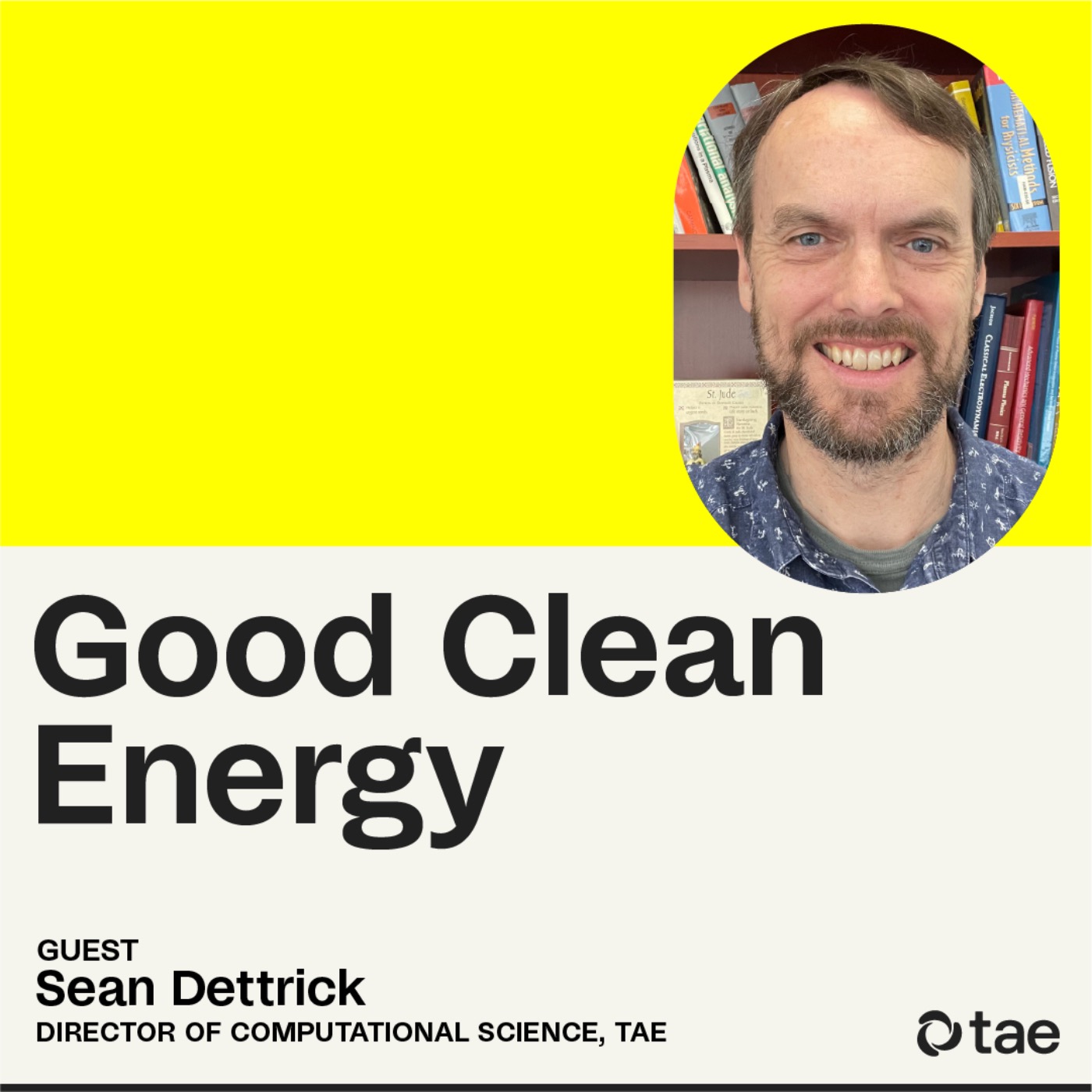
In this episode, TAE Director of Computational Science Sean Dettrick explores the groundbreaking role of simulation in advancing commercial fusion. Since joining TAE in 2002, Dettrick has led efforts to build a "digital twin" of fusion reactors—high-fidelity simulations that mirror the physical machines under development, allowing researchers to predict and optimize reactor behavior without physically constructing every variation.These simulations are not just digital prototypes—they’re essential tools for understanding the intricate physics of plasma behavior, validating experimental data, and informing future designs.TAE’s sixth-generation fusion machine, Copernicus, is still in development but Dettrick and his team have already seen it "operate" in the virtual world. Through simulations, they analyze how plasma reacts under various conditions, tweak system parameters, and test designs far faster and more flexibly than physical experiments allow.As computational power has grown from teraflops to petaflops and now to the exascale frontier, so too has the capacity to simulate the six-dimensional complexity of plasma physics. Dettrick emphasizes that reaching commercial fusion will require continued advances in both computing and collaboration between theoretical and experimental scientists.Looking ahead, Dettrick believes simulations will be crucial not only in building the first fusion power plants but in optimizing them for mass production—ensuring they’re not just functional, but also manufacturable.Covered in this episode:TAE has created high-fidelity digital twins of its fusion reactors.These simulations allow testing and optimization without building physical prototypes.Models are calibrated with real-world data to predict future reactor behavior.Digital models can test design changes that would be physically impossible or too costly to implement in real experiments and provide quick feedback on potential improvements.TAE’s sixth-generation machine is already running in virtual form.There's a healthy tension between simulation and physical testing—each validates and informs the other. Real-world results continue to refine and improve digital models.(01:30) The Role of Simulation in Fusion Research(02:20) Building and Testing Fusion Reactors(04:00) Digital Twins and High-Fidelity Models(05:45) Complexities of Plasma Simulation(08:10) Copernicus: The Sixth Generation Fusion Machine(10:56) Advancements in Supercomputing(18:15) Future of Fusion Simulation and CommercializationFull transcript: https://tae.com/how-digital-simulations-lead-to-real-world-fusion/Listen and Follow 'Good Clean Energy' on Apple PodcastsListen and Follow 'Good Clean Energy' on Spotify Hosted on Acast. See acast.com/privacy for more information.
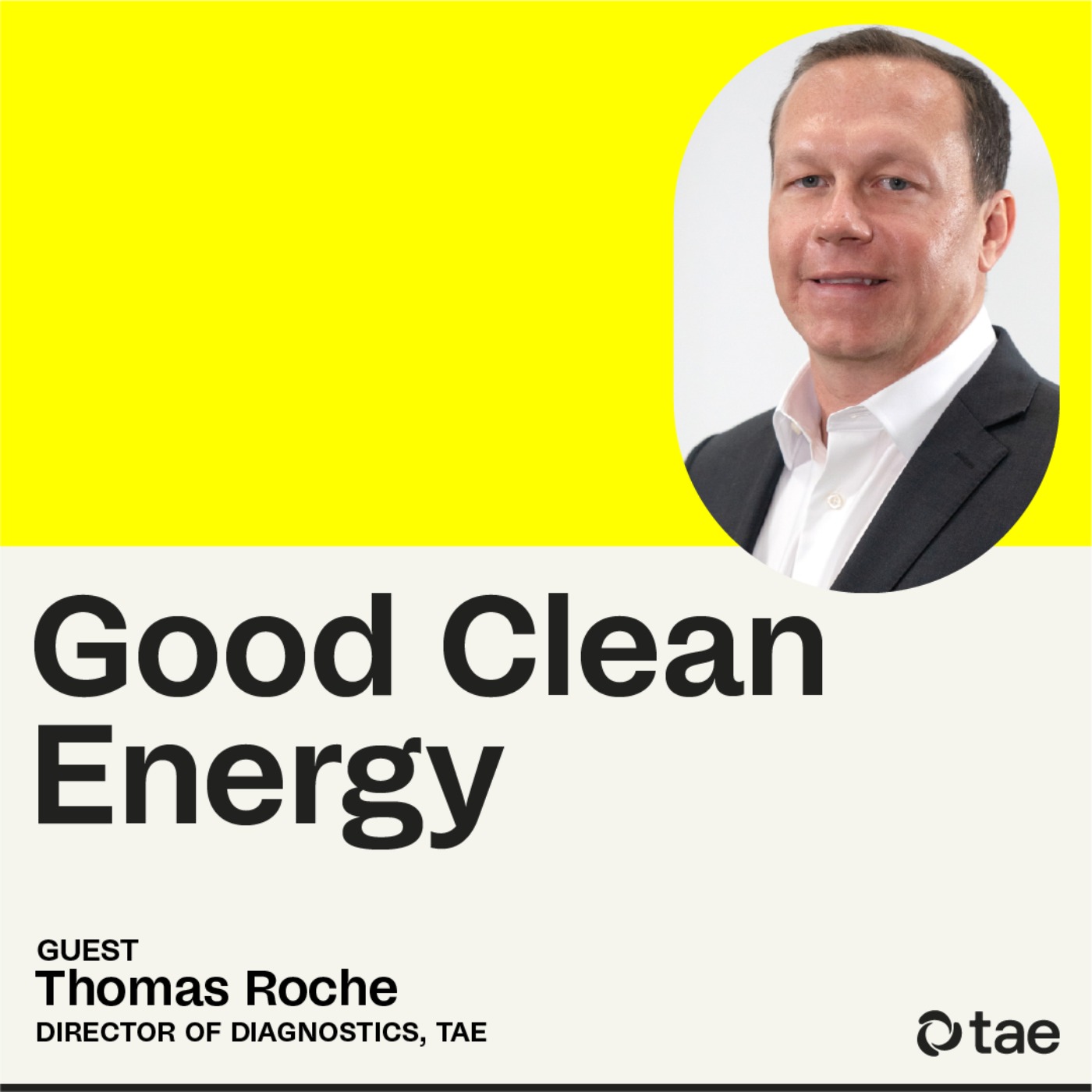
Good Clean Energy is a podcast that tackles one of the most existential questions of our time: how to build a world with abundant, affordable, carbon-free electricity. This season we’re going to unpack what TAE is working on to make fusion energy a reality.In this episode, TAE Director of Diagnostics Thomas Roche discusses his groundbreaking paper that showcases a significant advancement in fusion energy research. The conversation delves into an experiment that drastically simplified TAE’s fusion research machine, leading to a first in the field. Roche explains how neutral beam injection replaced complex formation sections, reducing costs and complexity while improving performance. These developments mark a significant step towards creating efficient and economical fusion power plants in the future.Covered in this episode:Understanding TAE’s fusion approachInnovative experiments and surprising resultsImplications for TAE’s future fusion machinesReducing cost and complexity(01:32) Understanding TAE's Fusion Reactor(04:21) Innovative Experimentation and Breakthroughs(07:21) Implications for Future Fusion Reactors(09:36) Cost and Complexity ReductionsLearn more: TAE Delivers Fusion Breakthrough that Dramatically Reduces Cost of a Future Power Plant Hosted on Acast. See acast.com/privacy for more information.
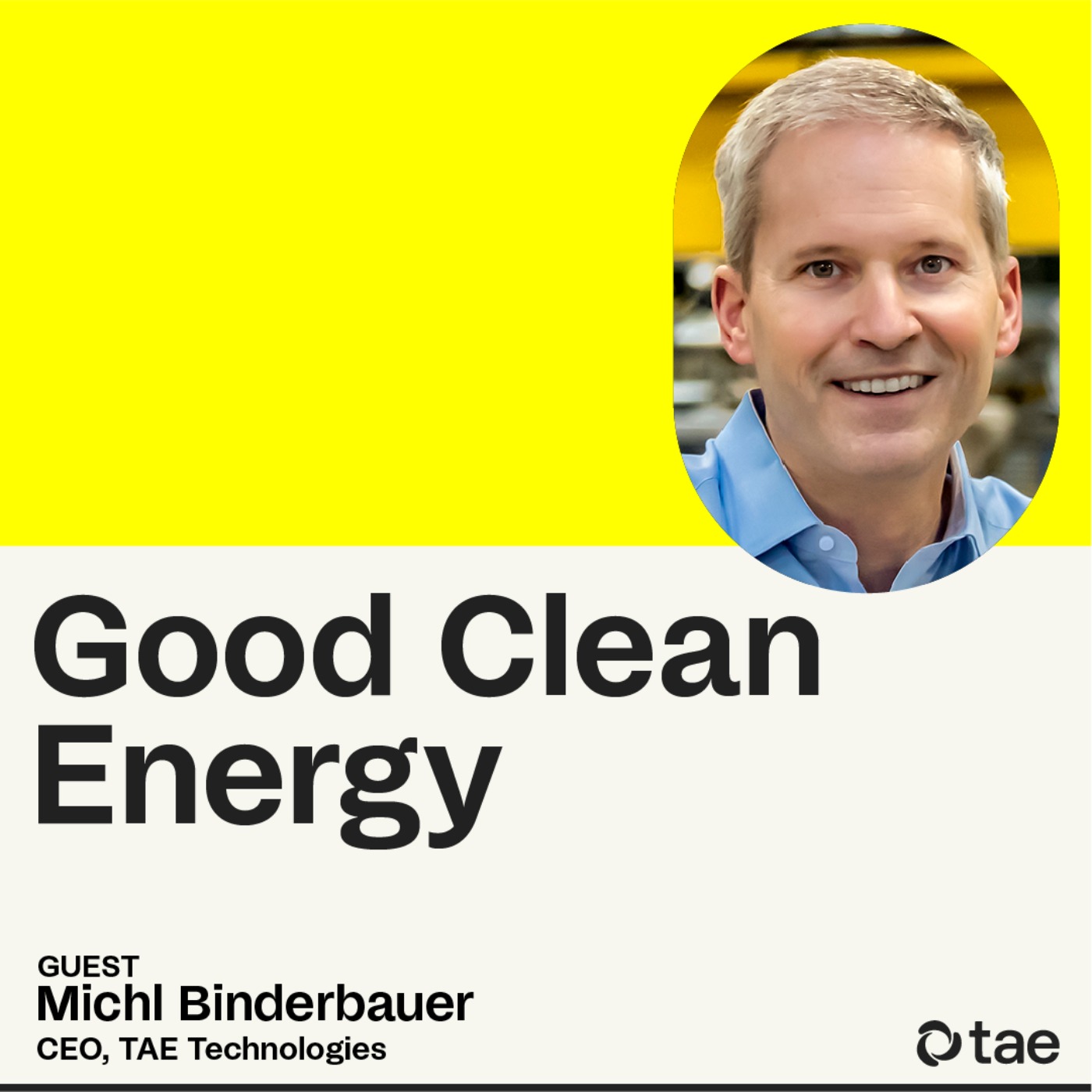
Good Clean Energy is a podcast that tackles one of the most existential questions of our time: how to build a world with abundant, affordable, carbon-free electricity. This season we’re going to unpack what TAE is working on to make fusion energy a reality.In this episode, TAE CEO Michl Binderbauer dives deep into a specific fusion machine design called the Field-Reversed Configuration that TAE has pursued since the company's inception. He explains how the FRC works, its unique advantages, and how it differs from other magnetic-confinement approaches by allowing the plasma to generate its own magnetic field, reducing the need for expensive and cumbersome external magnets. Binderbauer details the difficulties of working with FRCs and describes the breakthroughs TAE has made in simplifying and stabilizing the process, paving the way for more practical and economically viable fusion power plants.(00:41) Field-Reversed Configuration Explained(01:51) Challenges and Solutions in FRC(03:29) Technical Deep Dive into FRC(06:04) Innovations and Achievements in FRCLearn more: TAE Delivers Fusion Breakthrough that Dramatically Reduces Cost of a Future Power Plant Hosted on Acast. See acast.com/privacy for more information.
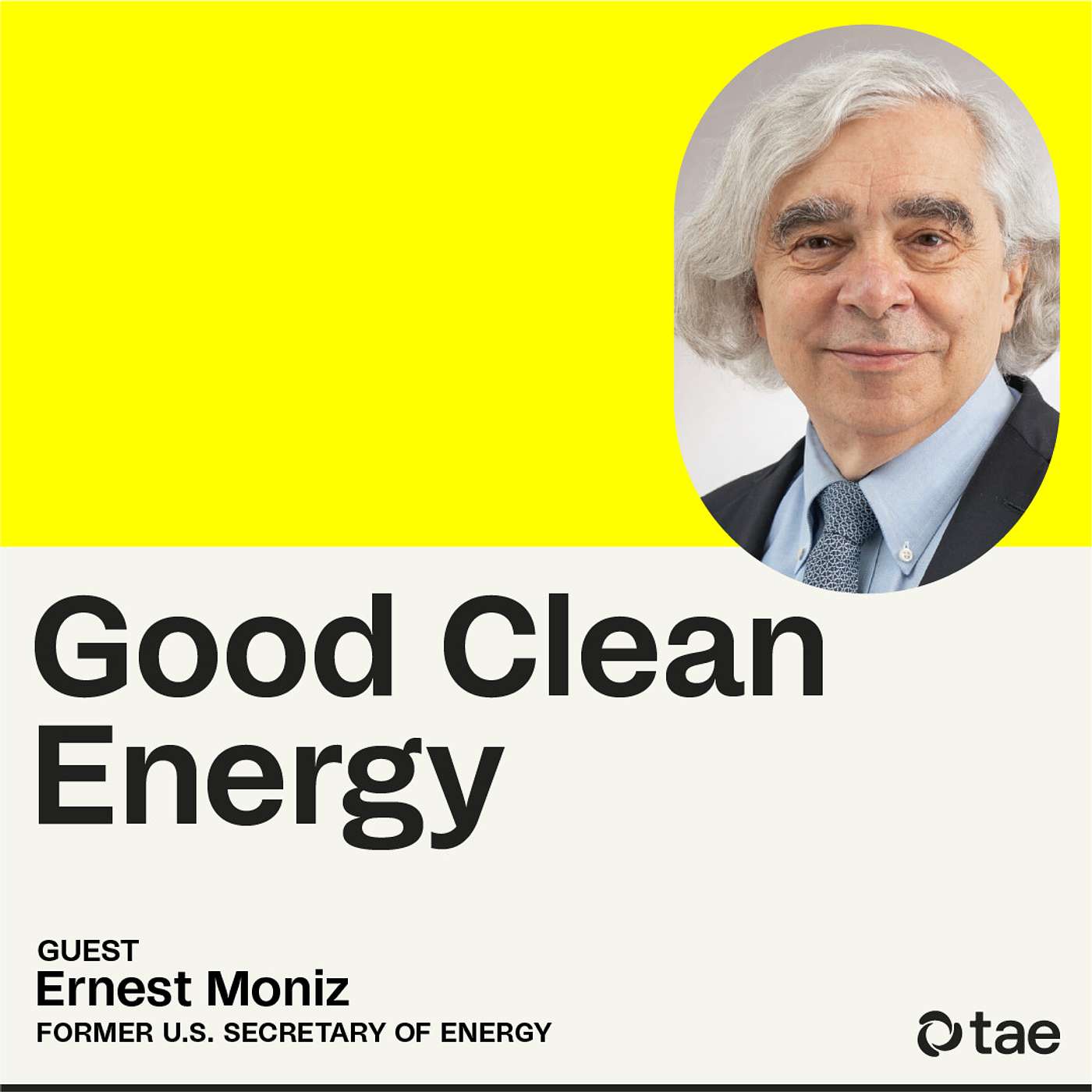
At COP28, U.S. Climate Envoy John Kerry announced a major fusion strategy for the world. Former U.S. Secretary of Energy Ernest Moniz joins Good Clean Energy from Dubai to break down this White House plan to bring fusion to market as fast as possible. For a full transcript, head to the episode page.Listen and Follow 'Good Clean Energy' on Apple Podcasts Listen and Follow 'Good Clean Energy' on Spotify Hosted on Acast. See acast.com/privacy for more information.
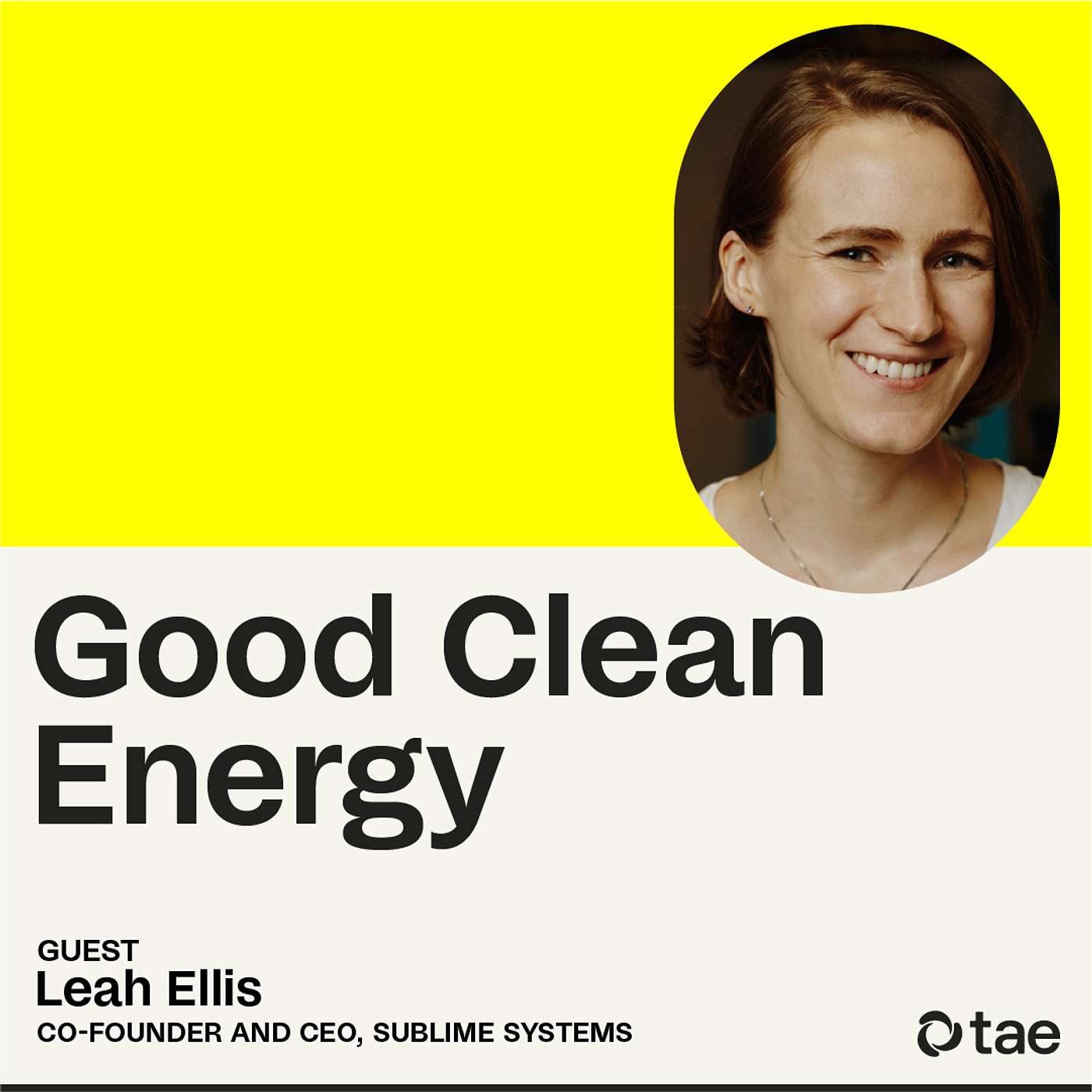
Cement accounts for 8 percent of global CO2 emissions. The production of one ton of Portland cement — the kind most commonly used — results in one ton of CO2 released into the atmosphere. And since cement is exceptionally cheap and the most massively produced man-made material in the world, those emissions are going to grow. “In a do-nothing scenario, emissions from cement are projected to increase 50 percent between now and 2050,” says Dr. Leah Ellis, co-founder and CEO of Sublime Systems.Ellis’ company is producing low-carbon cement by replacing the traditional high-temperature, fossil fuel, combustion-driven kiln with an electrochemical approach that operates at ambient temperature and uses renewable electricity.“I like to say Sublime is the electric vehicle of cement making.”Covered in this episode:[3:18] How Ellis’ background in chemistry led to making carbon-free cement[5:51] Why defining cement by its performance is important[7:48] The basics of cement[9:29] The outrageous amount of cement produced annually[11:29] How Sublime Systems produces cement with fewer carbon emissions[18:06] The ability to compete economically[23:04] Scaling up Sublime’s operations[26:37 The leaky tap analogy to understand the climate crisis[29:53] A vision for the cement industry in 2035For show notes and a full transcript, head to the episode page.Listen and Follow 'Good Clean Energy' on Apple Podcasts Listen and Follow 'Good Clean Energy' on Spotify Hosted on Acast. See acast.com/privacy for more information.
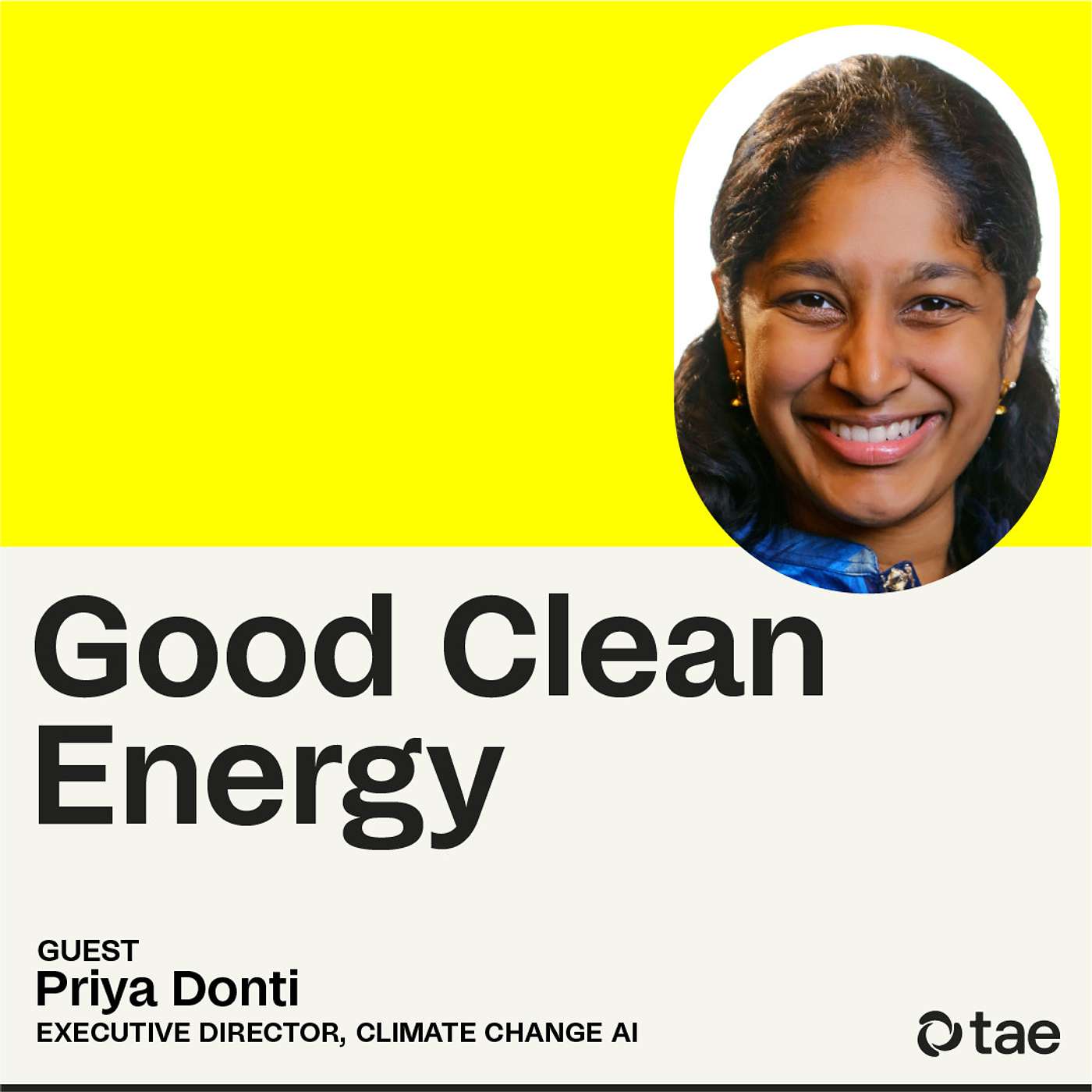
Priya Donti, co-founder and executive director of Climate Change AI, joins Good Clean Energy to talk about the role AI and machine learning can play in transforming America's power grid to optimize clean power production and consumption.For show notes and a full transcript, head to the episode page.Listen and Follow 'Good Clean Energy' on Apple Podcasts Listen and Follow 'Good Clean Energy' on Spotify Hosted on Acast. See acast.com/privacy for more information.
Dr. Ernie Moniz, an acclaimed nuclear physicist and former U.S. Secretary of Energy, joins Good Clean Energy again to discuss the film “Oppenheimer” and the dawn of the nuclear age through the lens of today.For show notes and a full transcript, head to the episode page.Listen and Follow 'Good Clean Energy' on Apple Podcasts Listen and Follow 'Good Clean Energy' on Spotify Hosted on Acast. See acast.com/privacy for more information.
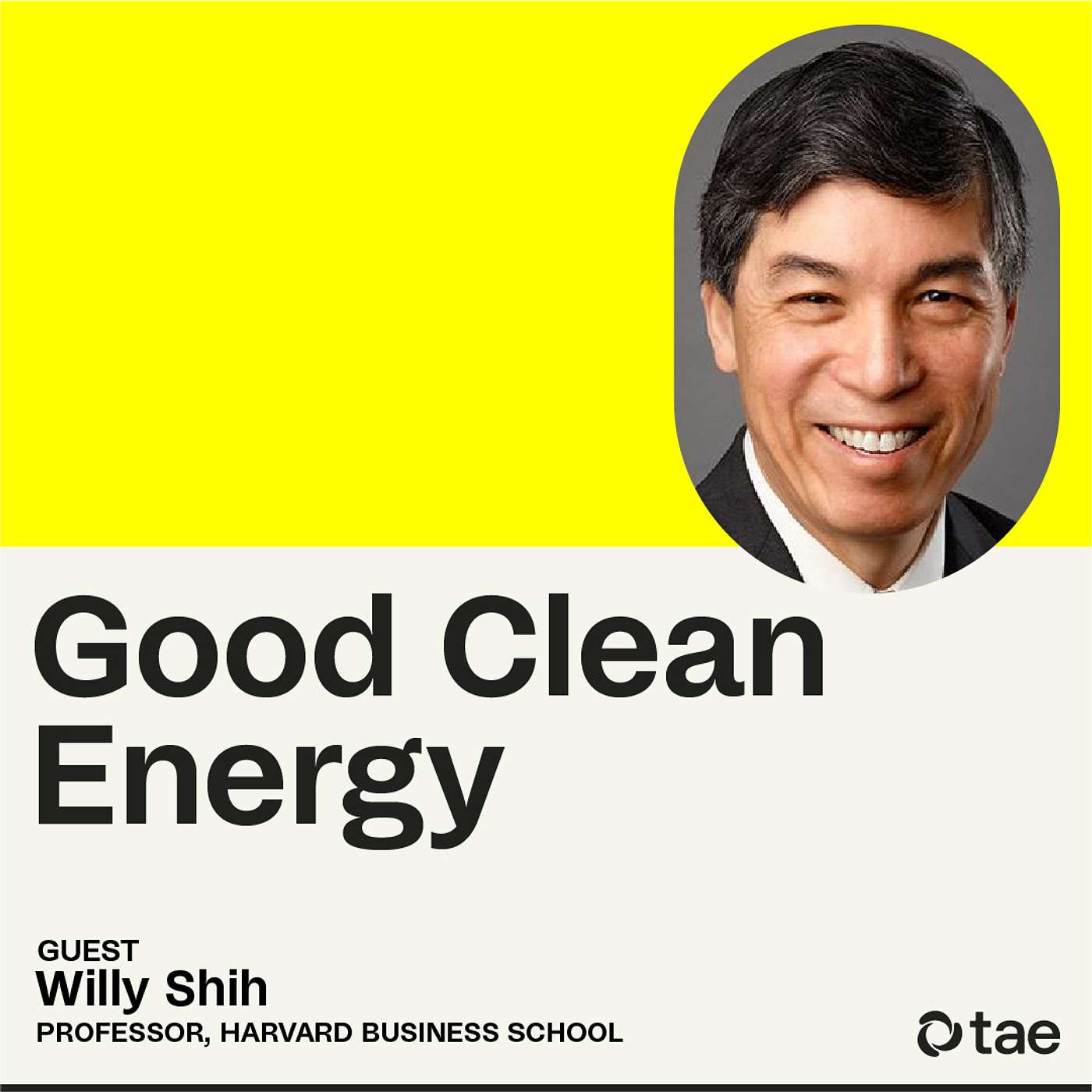
Willy Shih, Professor of Management Practice in Business Administration at Harvard Business School, joins Good Clean Energy to talk about the impact of the Inflation Reduction Act on reshoring manufacturing and how it can help the U.S. reassert itself as a leader in innovation, particularly in the transition to clean energy.For show notes and a full transcript, head to the episode page.Listen and Follow 'Good Clean Energy' on Apple Podcasts Listen and Follow 'Good Clean Energy' on Spotify Hosted on Acast. See acast.com/privacy for more information.
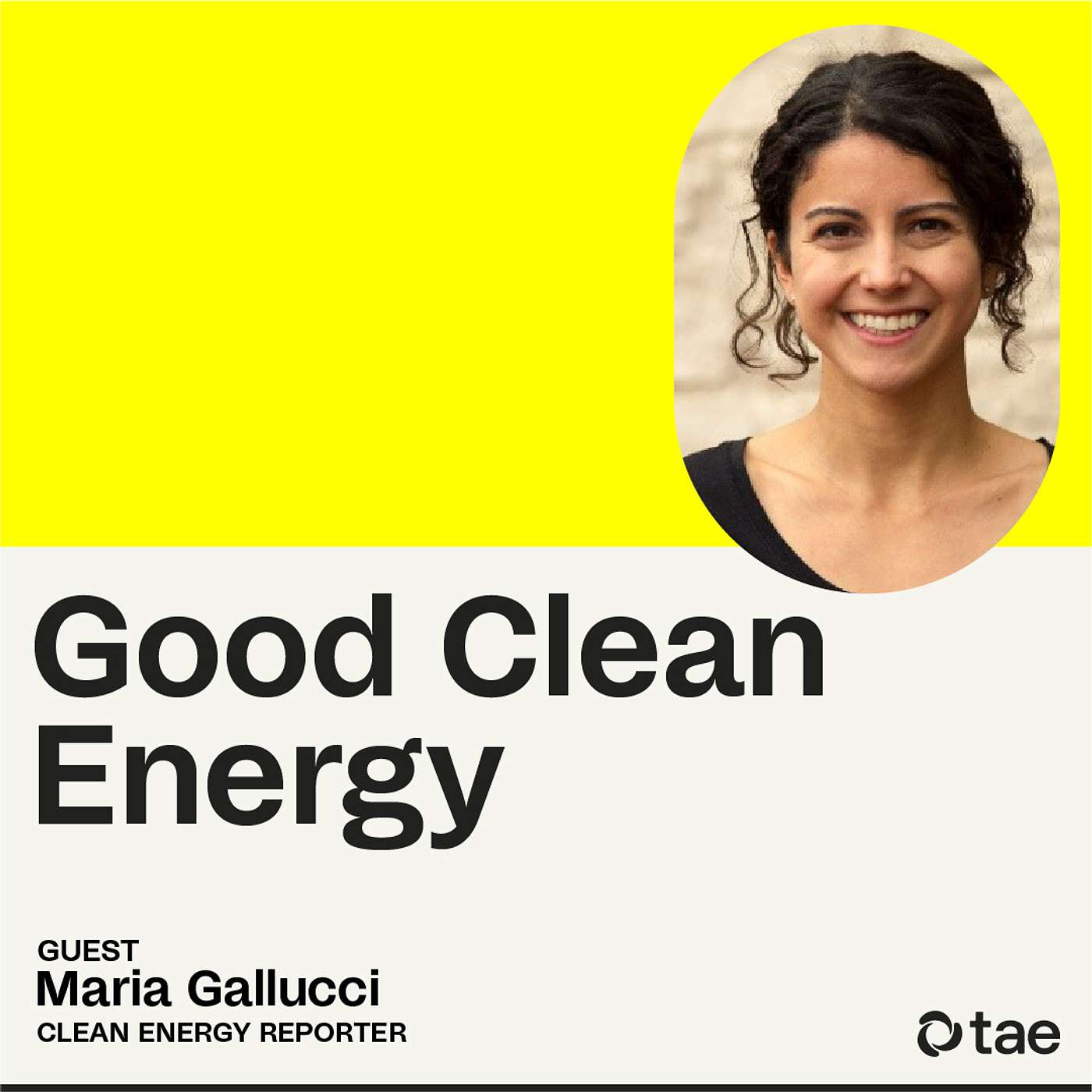
About 90 percent of the world's trade is transported by sea, on giant polluting cargo ships that burn particularly dirty oil. Last week, the International Maritime Organization, the UN body responsible for regulating global shipping, set a new CO2 reduction target for the industry to get to net zero by 2050. To help us make sense of the transition that will need to happen, Maria Gallucci, a clean energy reporter at Canary Media, joins Good Clean Energy to talk about new green fuels and technologies for the industry.For a full transcript, head to the episode page.Listen and Follow 'Good Clean Energy' on Apple Podcasts Listen and Follow 'Good Clean Energy' on Spotify Hosted on Acast. See acast.com/privacy for more information.
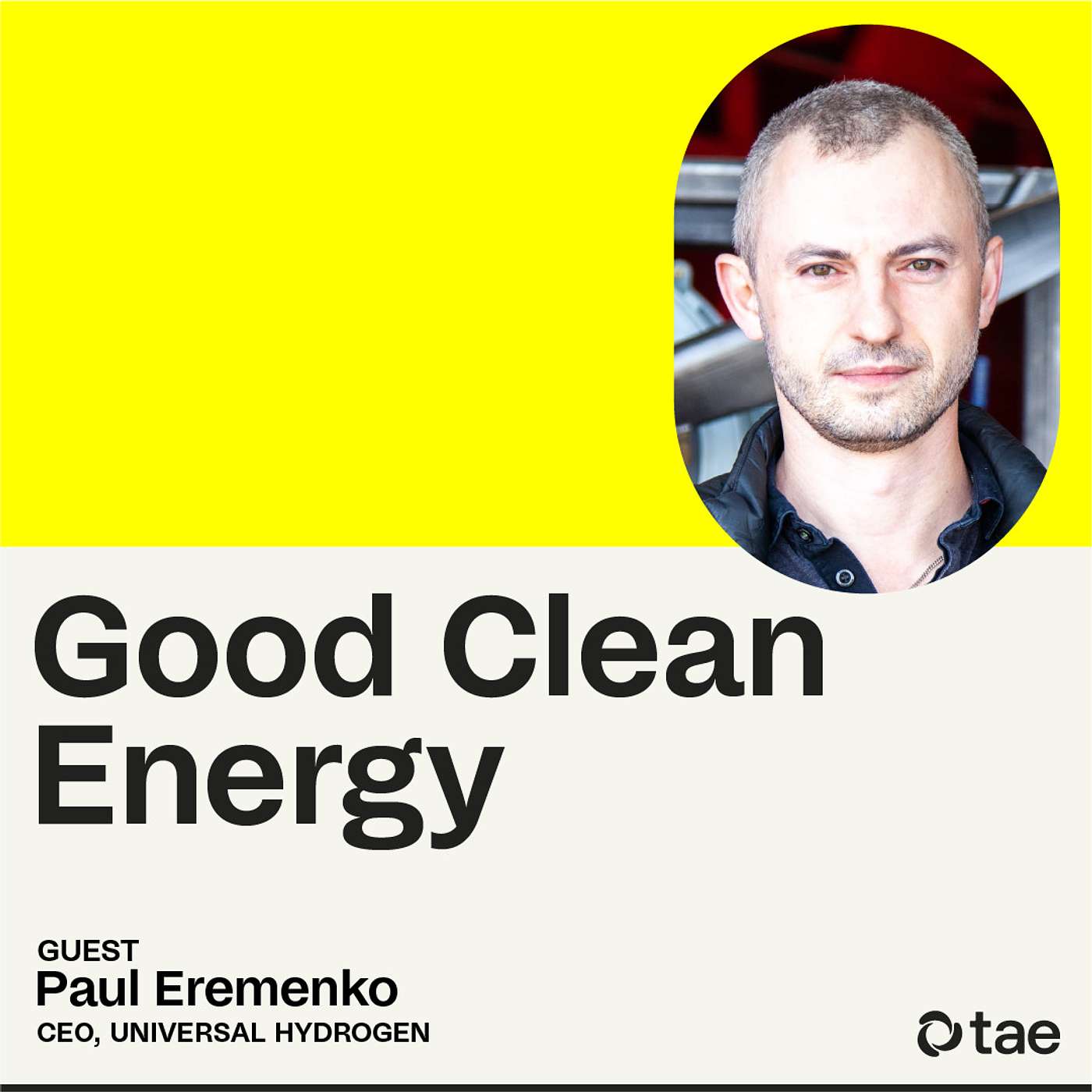
Paul Eremenko, co-founder and CEO of Universal Hydrogen, believes that there is a relatively simple way to solve the aviation industry’s carbon emissions problem. Today’s sustainable fuels aren’t really all that sustainable, he says, and electric planes, while great in theory, don’t scale. That leaves one obvious choice for Eremenko: green hydrogen. “There is a very significant sort of low-hanging fruit opportunity with no significant tech risk to put hydrogen in service and solve in one fell swoop half of aviation emissions problems by 2035,” Eremenko says.Covered in this episode:[3:52] The aviation industry’s current carbon footprint[5:40] Why sustainable fuels aren’t really all that sustainable[7:12] Why electric planes aren’t feasible[8:27] Explaining the color spectrum of hydrogen[9:22] How hydrogen is safer than jet fuel[12:40] Technology for hydrogen fueled aviation[17:45] Why you can’t just fill up the existing fuel tanks with hydrogen[19:02] The “Nespresso pod of hydrogen”[21:23] Universal Hydrogen’s inaugural flight[23:20] How the range of a hydrogen craft compares to a regular jet-fuel plane[23:50] Major challenge is availability of green hydrogen[26:39] The economic competitiveness of hydrogen[27:31] A new commercial aircraft configuration[34:39] A few ways the aviation industry could look by 2045For show notes and a full transcript, head to the episode page.Listen and Follow 'Good Clean Energy' on Apple Podcasts Listen and Follow 'Good Clean Energy' on Spotify Hosted on Acast. See acast.com/privacy for more information.
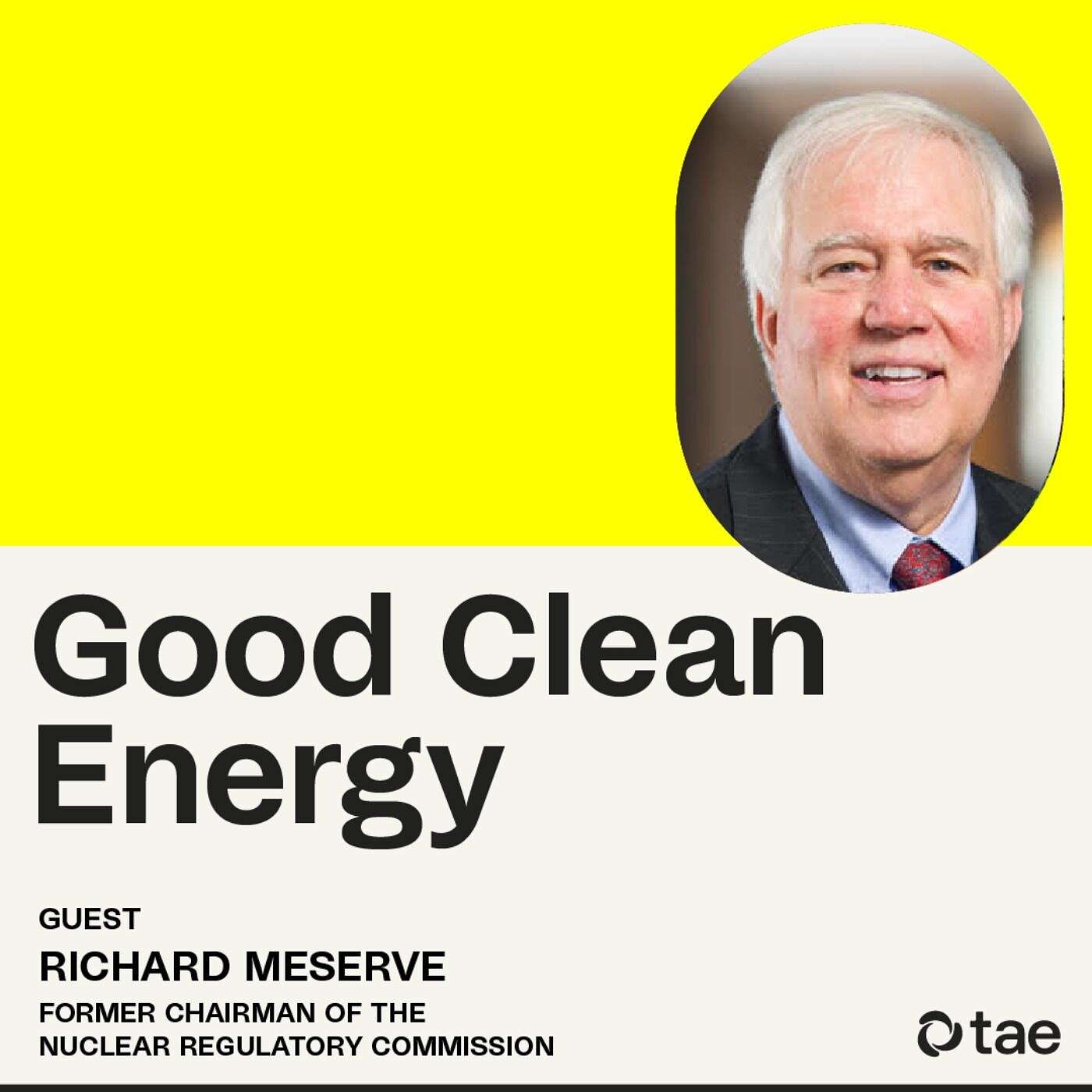
As a former chairman of the U.S. Nuclear Regulatory Commission with both a law background as well as a PhD in applied physics, Richard "Dick" Meserve is uniquely qualified to speak on the future of both nuclear fission and fusion in the U.S. “We have a huge challenge in confronting climate change, and it's my view that we need to marshal all the resources we can to address it," says Meserve. "And that obviously includes a heavy emphasis on renewables, but you need a backup. You need firm power as a supplement to renewables. And nuclear is a natural component of that.”For show notes and a full transcript, head to the episode page.Listen and Follow 'Good Clean Energy' on Apple Podcasts Listen and Follow 'Good Clean Energy' on Spotify Hosted on Acast. See acast.com/privacy for more information.
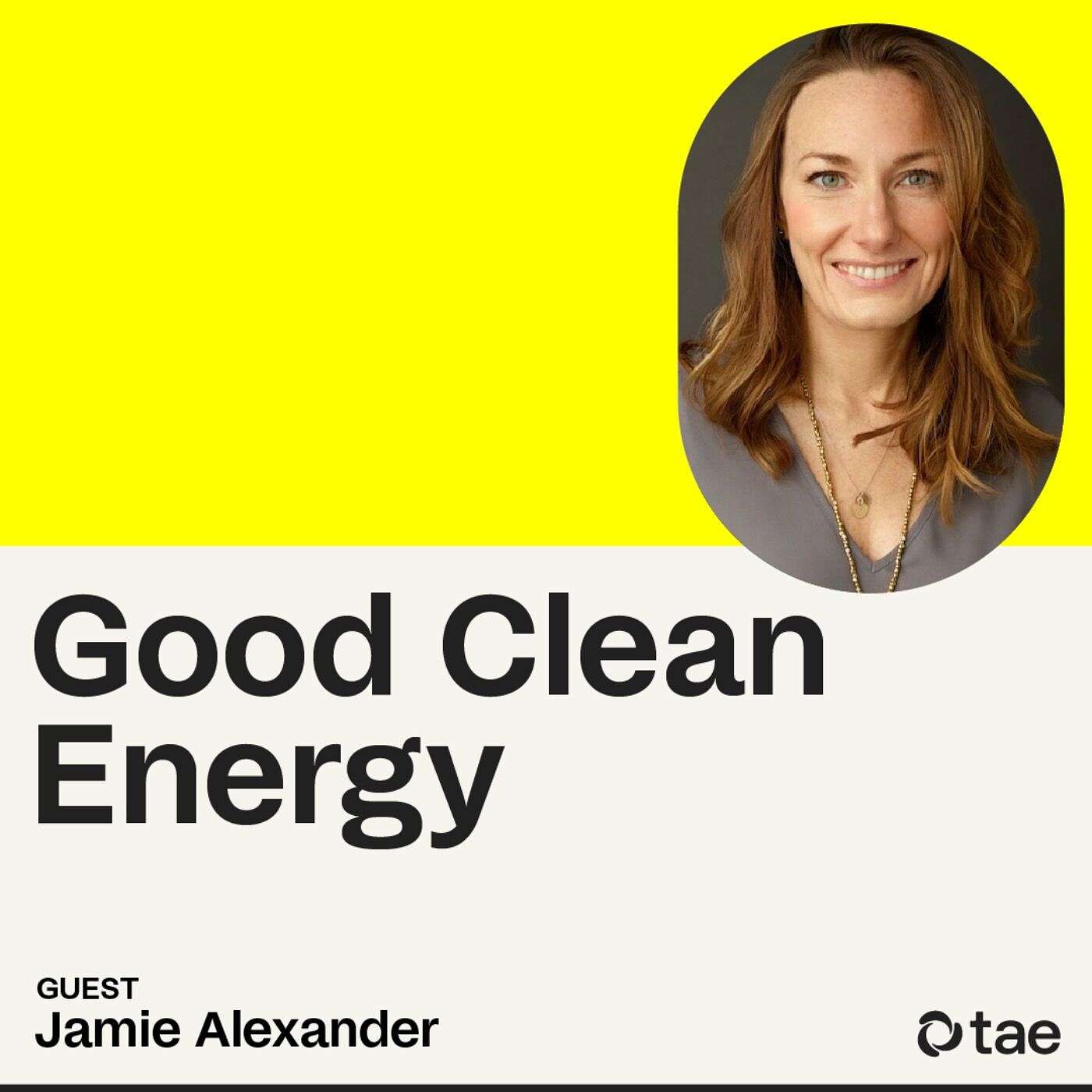
Jamie Alexander is working to make capitalism compatible with a climate-safe world. Alexander is the director of Drawdown Labs, a branch of the nonprofit organization Project Drawdown that works directly with corporations to think beyond net zero and use their existing social, political, financial, and employee power to accelerate climate solutions at an unprecedented scale. "The more that companies can identify what their superpower is and use that to help the world get closer to our climate goals — that's where I think capitalism and climate change are going to meet in the middle.”For show notes and a full transcript, head to the episode page.Listen and Follow 'Good Clean Energy' on Apple Podcasts Listen and Follow 'Good Clean Energy' on Spotify Hosted on Acast. See acast.com/privacy for more information.
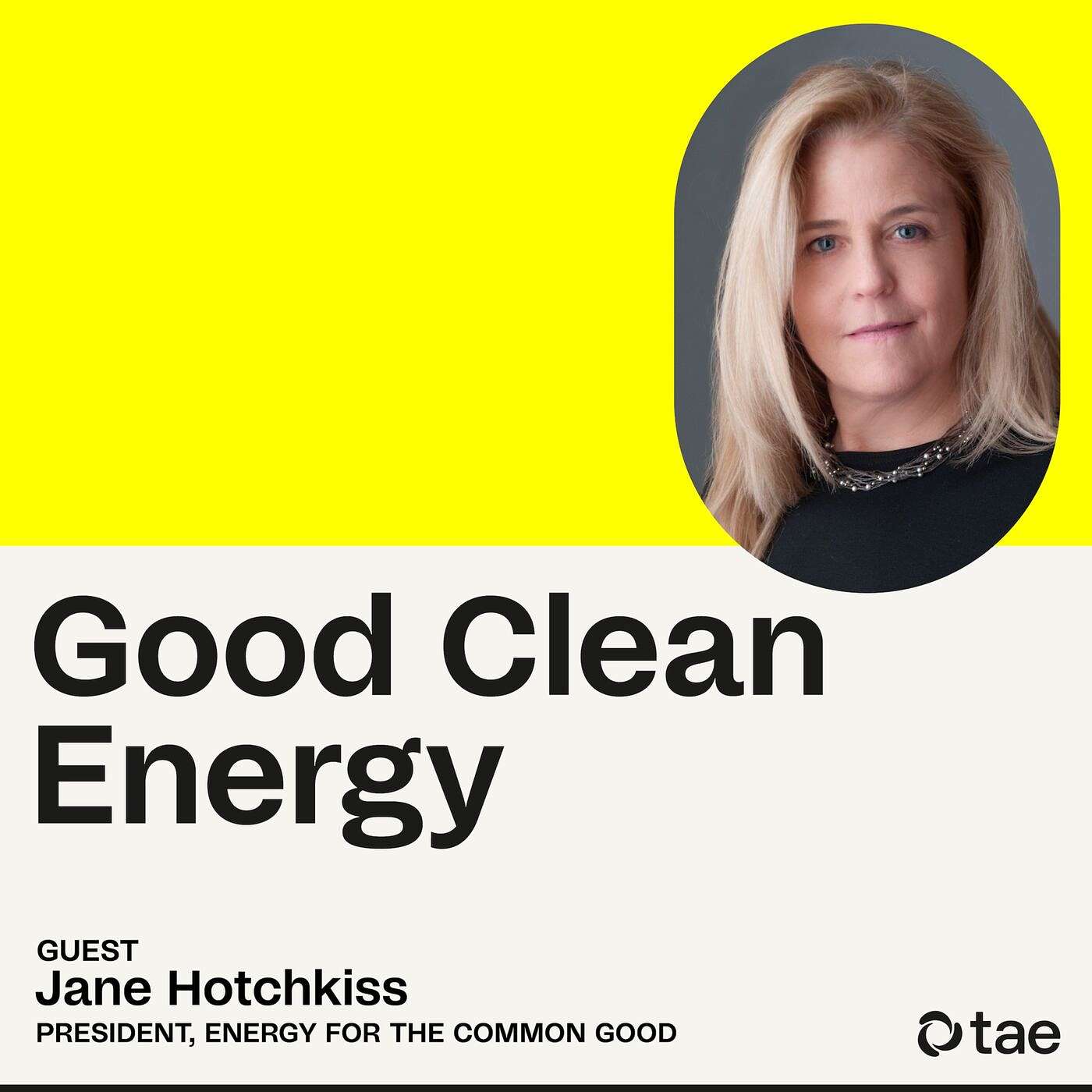
Jane Hotchkiss, the president and cofounder of nonprofit Energy for the Common Good, is on a mission to educate the public about the promise of fusion and to support the buildout of a future fusion energy sector. For the full transcript, head to the episode page.Listen and Follow 'Good Clean Energy' on Apple Podcasts Listen and Follow 'Good Clean Energy' on Spotify Hosted on Acast. See acast.com/privacy for more information.
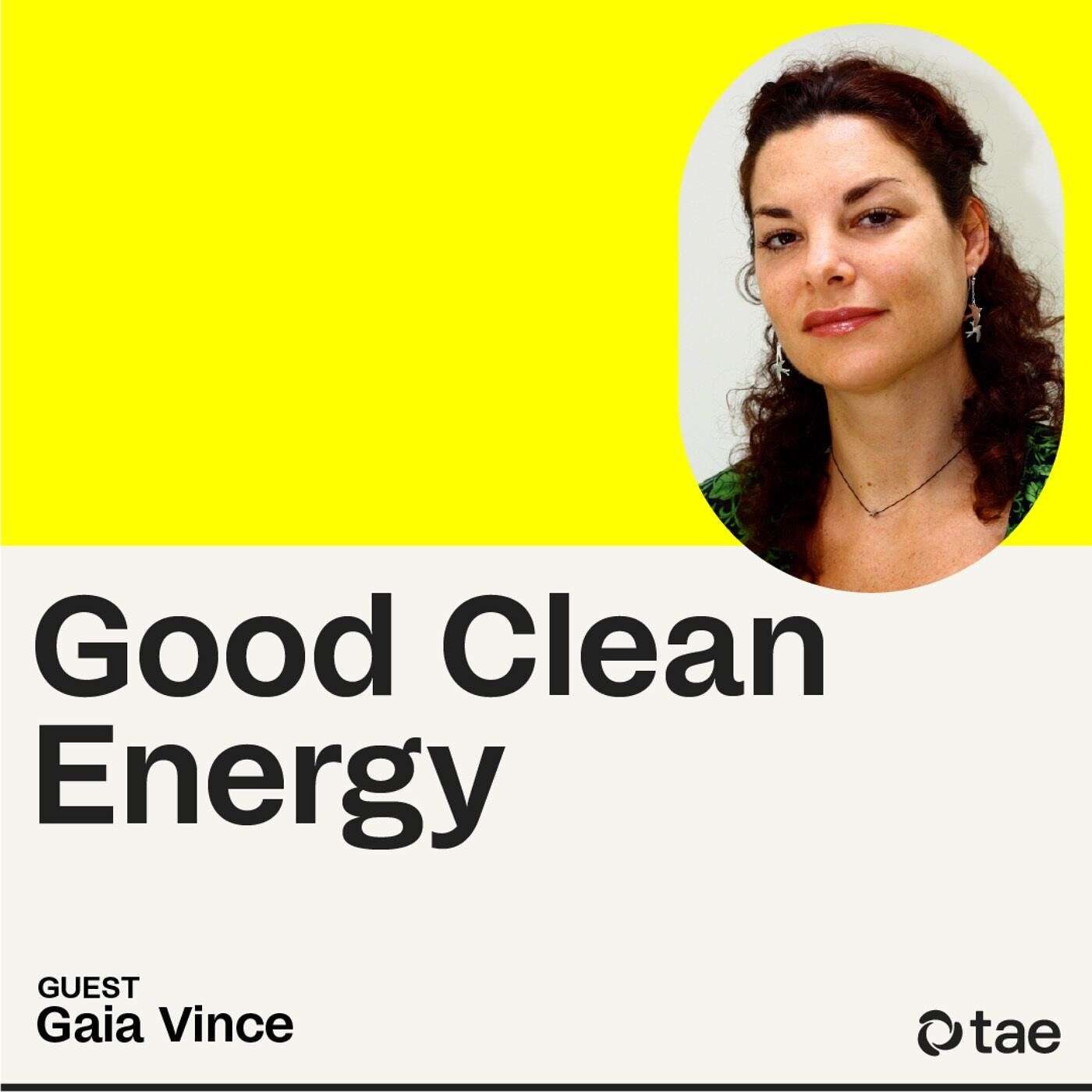
Gaia Vince, a science journalist and the author of Nomad Century: How To Survive The Climate Upheaval, joins the show to talk about how climate change and energy will play a factor in mass migration to come. For a full transcript, head over to the episode page. Listen and Follow 'Good Clean Energy' on Apple Podcasts Listen and Follow 'Good Clean Energy' on Spotify Hosted on Acast. See acast.com/privacy for more information.
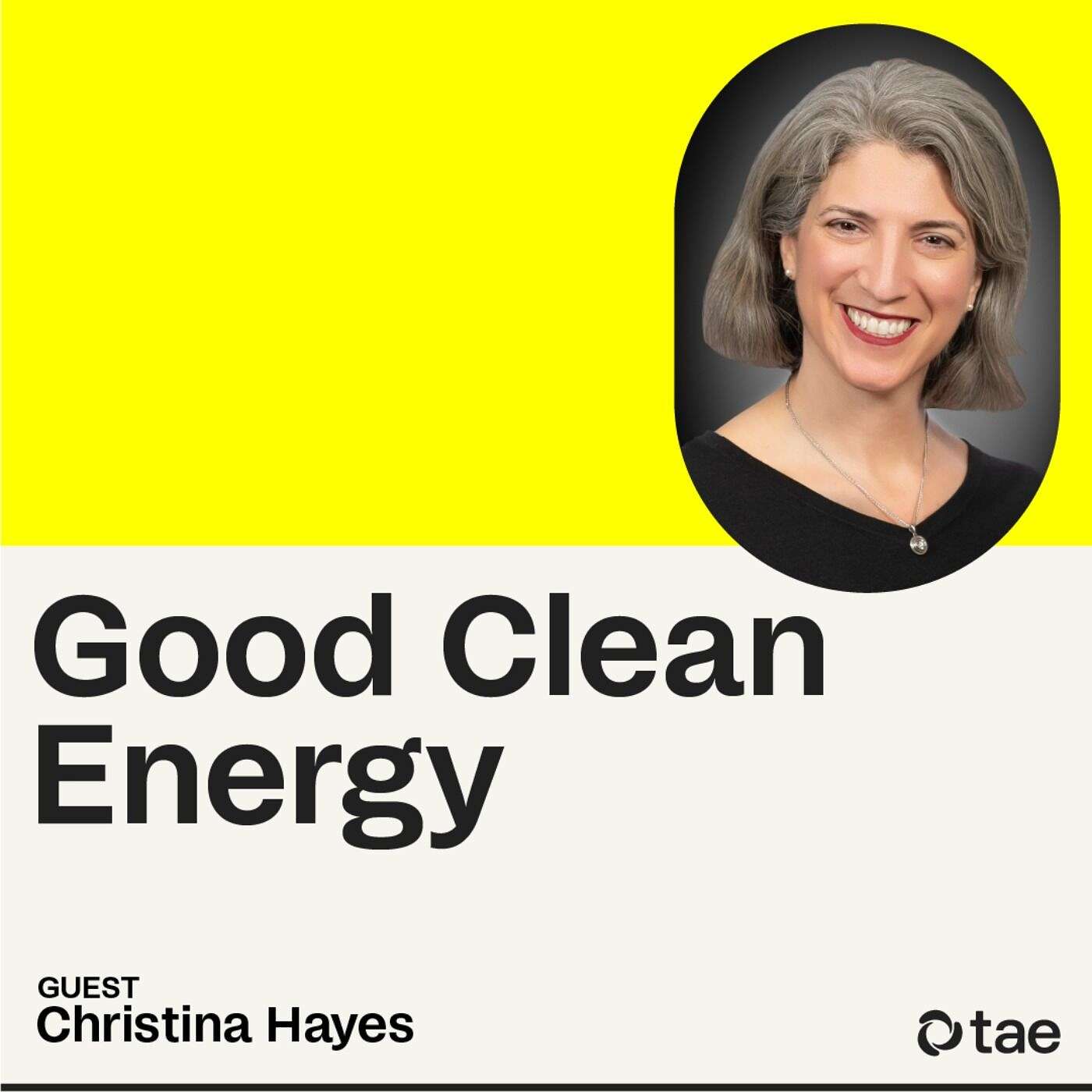
The U.S. power grid is old. On average, it’s 40 years old — a quarter of the grid is 50 years old and there are parts that are 100 years old. And as we strive for a net-zero future, that grid is going to play a massive role, says Christina Hayes, Executive Director of Americans for a Clean Energy Grid, a coalition focused on preparing the U.S. grid for new renewable and clean energy sources. For a full transcript, head to the episode pageListen and Follow 'Good Clean Energy' on Apple Podcasts Listen and Follow 'Good Clean Energy' on Spotify Hosted on Acast. See acast.com/privacy for more information.
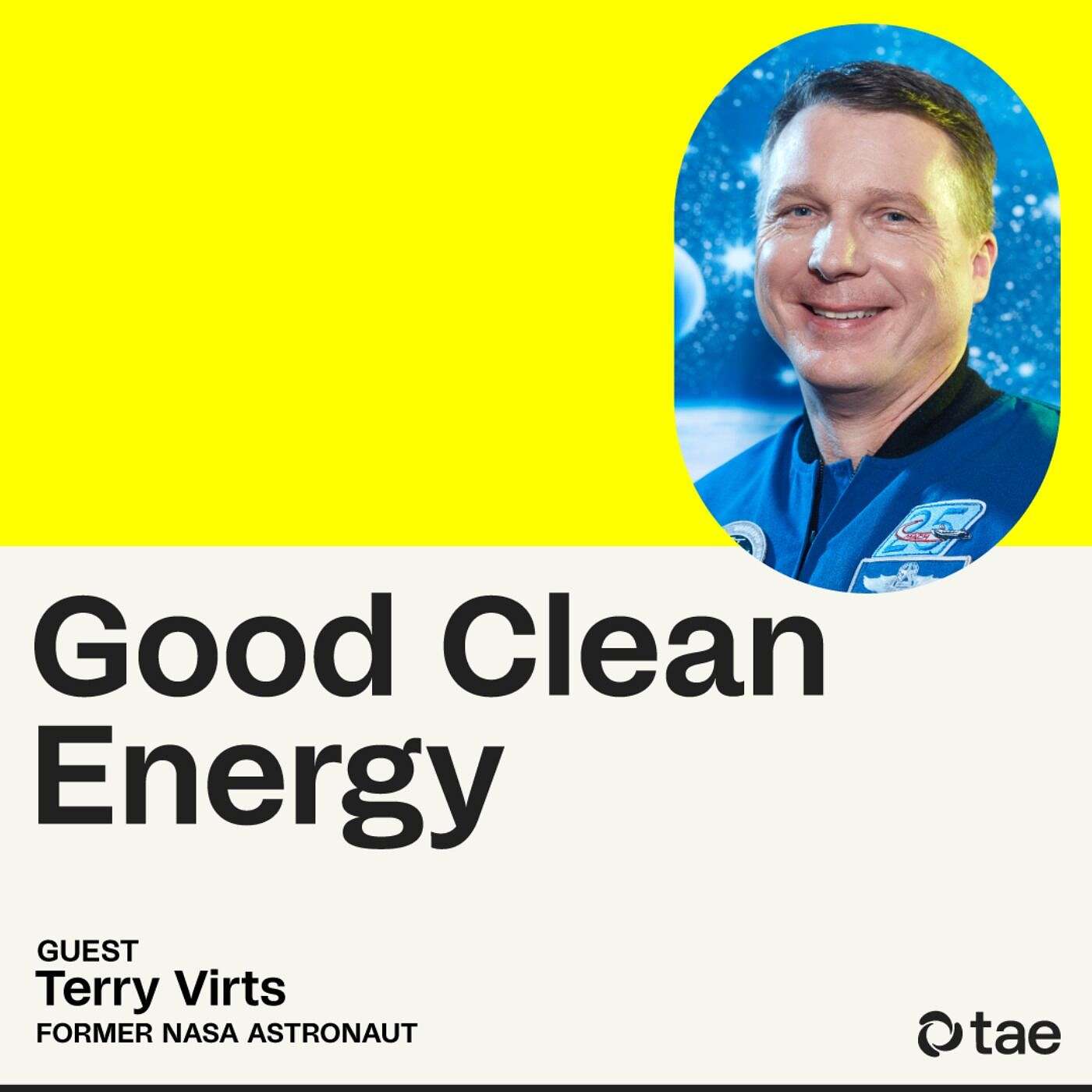
Col. Terry Virts, a former NASA astronaut and commander of the International Space Station, believes we need to focus on smarter ways to abate carbon emissions. "In every way, if you can get clean, abundant energy, human life is better.”For a full transcript, head to the episode page.Listen and Follow 'Good Clean Energy' on Apple Podcasts Listen and Follow 'Good Clean Energy' on Spotify Hosted on Acast. See acast.com/privacy for more information.
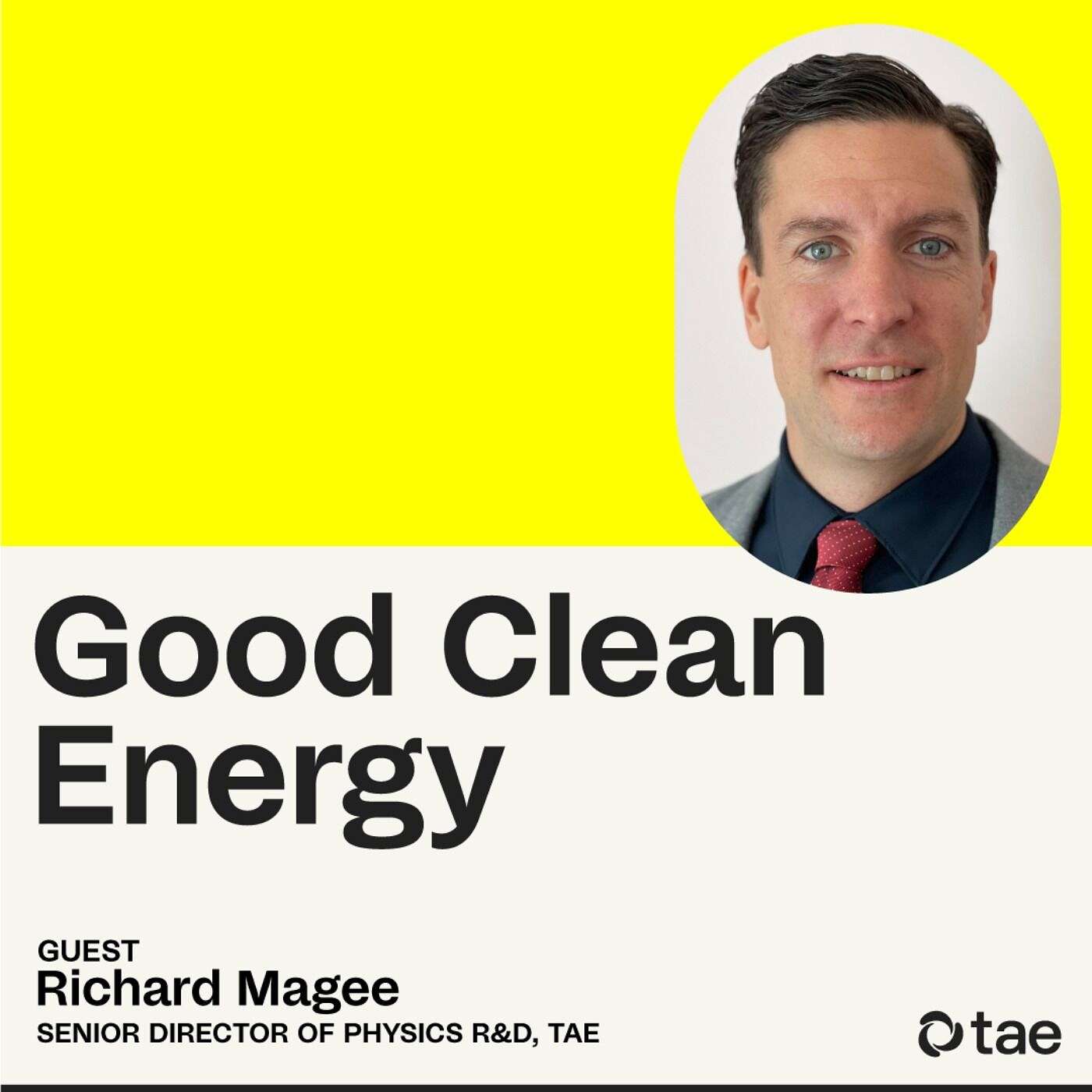
Scientists at TAE and the National Institute for Fusion Science in Japan have demonstrated the first-ever hydrogen-boron fusion experiments in a magnetically confined fusion plasma. Rich Magee, Senior Director of Physics Research and Development at TAE, joins the show to break down this promising achievement in the development of fusion power with hydrogen-boron, the cleanest, most cost-competitive, and most sustainable fusion fuel.For a full transcript, head to the episode page Listen and Follow 'Good Clean Energy' on Apple Podcasts Listen and Follow 'Good Clean Energy' on Spotify Hosted on Acast. See acast.com/privacy for more information.
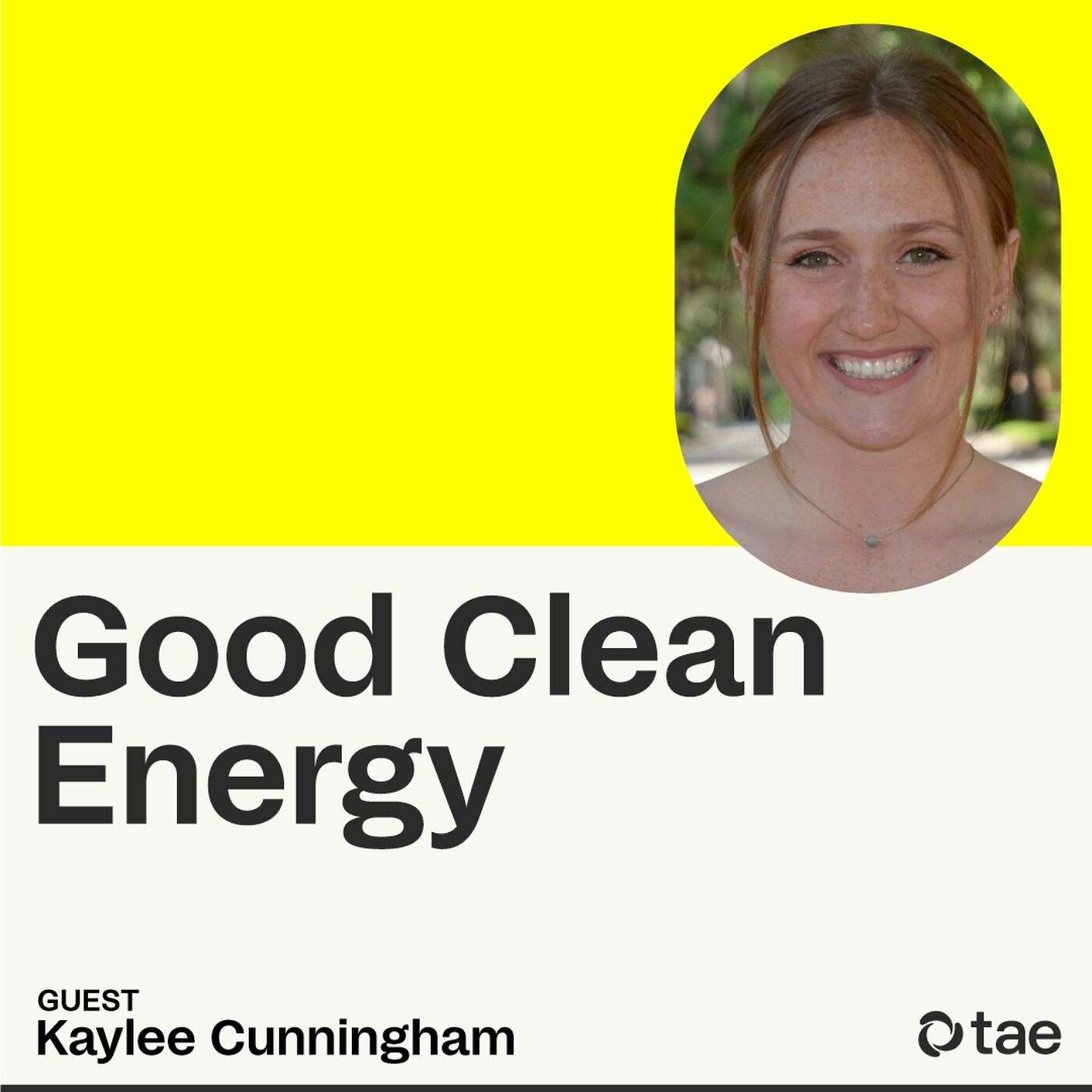
Kaylee Cunningham is a PhD student at MIT in nuclear engineering and a popular TikTok influencer who’s focused on communicating about the potential for nuclear power. She joins the show to talk about small modular reactors, how NRC regulations affect the nuclear industry, and how she addresses people's worries about nuclear waste and meltdowns.For a full transcript, head to the episode page Listen and Follow 'Good Clean Energy' on Apple Podcasts Listen and Follow 'Good Clean Energy' on Spotify Hosted on Acast. See acast.com/privacy for more information.

Rose Mutiso, research director for the D.C.-based think tank Energy for Growth Hub, joins the show to discuss the connection between access to affordable electricity and poverty and details a path forward for “energy poor” countries on the continent of Africa. Covered in this episode:The connection between access to electricity and povertyThe reality of living in an energy poor countryWhy modeling is important for energy policy makingHow the path to accessible energy in Africa will unwindWhy energy infrastructure is crucial to Africa’s futureFor a full transcript, head to the episode pageListen and Follow 'Good Clean Energy' on Apple Podcasts Listen and Follow 'Good Clean Energy' on Spotify Hosted on Acast. See acast.com/privacy for more information.
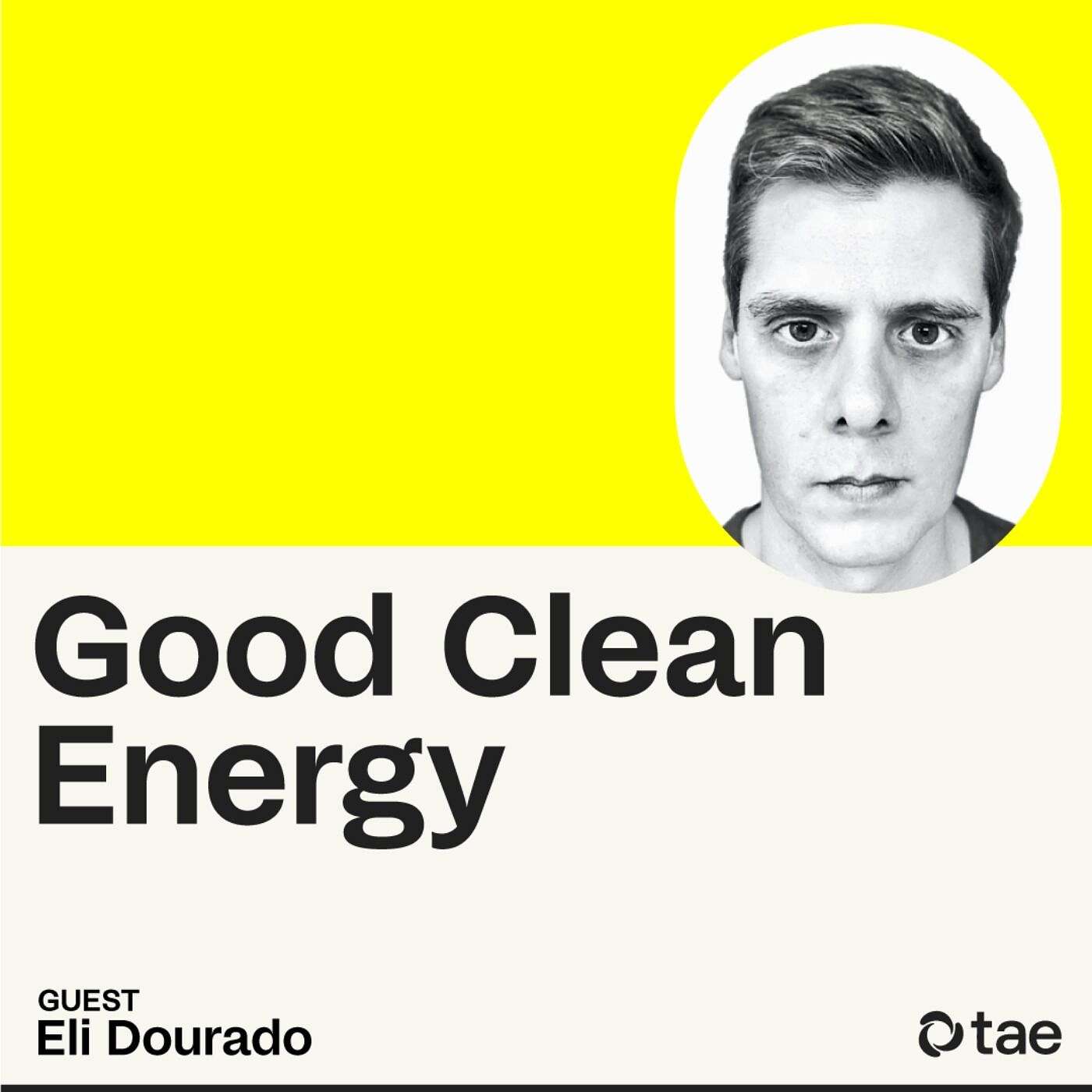
Eli Dourado is an economist and a senior research fellow at the Center for Growth and Opportunity at Utah State University who believes that “energy superabundance” — access to an unlimited supply of cheap, clean energy— will drive dramatic increases in economic growth, improve human well-being and unlock solutions to many of the world’s biggest challenges. For a full transcript, head to the episode pageListen and Follow 'Good Clean Energy' on Apple Podcasts Listen and Follow 'Good Clean Energy' on Spotify Hosted on Acast. See acast.com/privacy for more information.

Comments

Download from Google Play

Download from App Store
 United States