


 Claim Ownership
Follow the Gradient
Subscribed: 6Played: 101
Subscribe

© Follow the Gradient
Description
Insider knowledge and real stories about how to build a business from Europe while staying sane. Each week founders Melanie Gabriel and Christian Woese dive deep into one specific topic on a founder's or startup operator's mind and share how to solve the challenge together with an expert. Follow the Gradient and stay tuned.
https://followthegradient.io/
https://followthegradient.io/
74 Episodes
Reverse
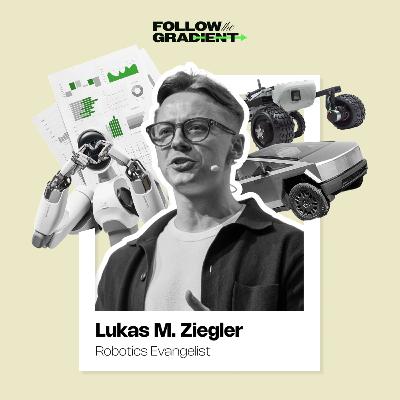
What happens when a $39 billion humanoid bet can't do useful work, but a wheeled robot in a warehouse already turns a profit?In this episode of Follow the Gradient, Melanie and Christian sit down with Lukas Ziegler, robotics evangelist, triple venture partner, and the person whose content reaches over 100 million people a year. From programming cobots in Poland to advising robotics startups across three VC funds, Lukas has seen both the factory floor and the fundraising pitch.This conversation cuts through the humanoid hype to examine what actually generates industrial ROI, why simulation alone won't close the gap, and what European founders get wrong about choosing their investors.We talk about:Why 80% of humanoid functionality can be delivered by wheeled robots at a fraction of the cost, and why VCs still fund the other formThe reliability cliff: how 95% success in the lab translates to destroyed ROI in 24/7 industrial operationsWhy narrowing your task scope until failure modes are countable is the real path from demo to productionThe sim-to-real gap: NVIDIA Cosmos helps you pre-train at scale, but real-world teleoperation data remains irreplaceableWhy robotics founders should run due diligence on their investors, not just the reverse, especially with SaaS-focused VCsPoland's emergence as an underestimated AI and robotics hub, and where the European ecosystem actually holds structural advantagesThis is not a conversation about when robots will change the world. It is about the compounding decisions that separate robotics companies shipping revenue from those shipping demos.Our biggest takeaways, including Lukas's view on where robotics founders consistently misjudge their path to production:https://www.followthegradient.io/p/lukas-ziegler-podcast —Where to find Lukas M. Ziegler:LinkedIn: https://www.linkedin.com/in/zieglerr/ X: https://x.com/lukas_m_ziegler YouTube: https://www.youtube.com/@zieglerrr Newsletter: https://ziegler.substack.com/ —🎙 Follow the Gradient: conversations about building a business from Europe while staying sane.Follow us: Melanie: https://www.linkedin.com/in/melaniexgabriel/ Christian: https://www.linkedin.com/in/christian-woese/ Subscribe to our channels:Newsletter: https://www.followthegradient.io YouTube: https://www.youtube.com/@followthegradientLinkedIn: https://www.linkedin.com/company/followthegradient/ X: https://x.com/followgradient Instagram: https://www.instagram.com/followthegradient/—00:00 Introduction02:28 From programming robots to becoming the world's top robotics voice05:10 The 80/20 rule: wheeled robots vs. humanoids08:10 Safety gaps and the missing ISO standard for legged robots12:03 How to Derive Real ROI From Robots20:19 Reliability as a product: the path from 95% to 99.9%26:35 Boring problems win: Zipline, Exotec, and narrow task mastery29:17 Customer discovery: how to find the right robotic use case33:32 Tesla's 8.4 billion miles of data and why it doesn't help robots38:23 Europe in the global robotics race: talent, manufacturing, and EU Inc47:08 Rapid fire: the questions that reveal if a robot is production-ready

Most founders think they can save their SaaS business by sprinkling AI on top. They're wrong. The entire playbook that powered the last two decades of software is being rewritten.In this conversation on Follow the Gradient, Andreas Goeldi, Partner at b2venture and a serial entrepreneur with 30+ years in technology, breaks down how AI is fundamentally reshaping what software businesses look like, how they price, and who survives.This is not a conversation about AI features or hype cycles. It is a clear-eyed examination of which business models are emerging, which are dying, and what separates the founders who adapt from those who get left behind.We talk about:Why the traditional SaaS playbook with 80% margins is incompatible with real AI integrationThe shift from selling tools to selling outcomes, and why customers have always wanted thisTwo categories of AI startups that are almost guaranteed to failHow general-purpose agents are becoming the "Excel of AI" and eating niche productsWhy half of all developers refuse to use AI coding tools and what that means for their careersWhat happens to organizations when middle management layers start disappearingThis episode is less about what AI can do and more about what it forces you to decide. Andreas brings the rare combination of someone who built companies for two decades before switching to investing in them, and his frameworks cut through the noise with uncomfortable clarity.Our biggest takeaways, including Andreas's reality check on where most founders are dangerously delusional about AI:https://www.followthegradient.io/p/andreas-goeldi-podcast Where to find Andreas Goeldi:LinkedIn: https://www.linkedin.com/in/agoeldi/ b2venture: https://www.b2venture.vc Blog (Innospective): https://innospective.net/ —🎙 Follow the Gradient: conversations about building a business from Europe while staying sane.Follow us: Melanie: https://www.linkedin.com/in/melaniexgabriel/ Christian: https://www.linkedin.com/in/christian-woese/ Subscribe to our channels:Newsletter: https://www.followthegradient.io YouTube: https://www.youtube.com/@followthegradientLinkedIn: https://www.linkedin.com/company/followthegradient/ X: https://x.com/followgradient Instagram: https://www.instagram.com/followthegradient/—00:00 Introduction02:22 The biggest delusion in AI right now04:55 Four buckets of AI business models07:58 AI pricing in times of vibe coding13:55 The real moats left in AI: data, regulation, and user experience17:48 Two startup ideas you should never build right now22:17 What existing SaaS founders must do to survive25:49 Why middle management is about to disappear33:01 How AI is transforming venture capital from the inside37:11 Do startups still need VCs when four people can hit millions?43:03 Rapid fire: thin wrappers, CTO hiring, and European quality
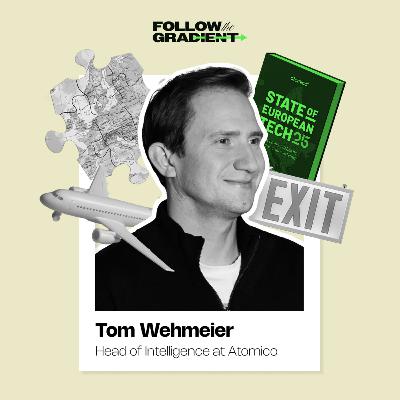
Most European founders believe the ecosystem is catching up. What if the real constraint isn't capital or talent, but the collective psychology that keeps us from acting like we've already arrived?In this episode of Follow the Gradient, we sit down with Tom Wehmeier, Partner at Atomico and the architect behind the State of European Tech report for over a decade. Tom has a rare vantage point: he tracks ecosystem fundamentals through data and sees how they play out firsthand through Atomico's investment portfolio.This is a conversation about what the numbers actually say versus what founders feel, where European tech has genuinely compounded, and where fragility still hides in plain sight.We talk about:Why sentiment and belief remain Europe's most fragile infrastructure, even as fundamentals have never been strongerHow talent is flowing from US megatech into European startups and why that shift took a decade to pay offThe three things blocking pension funds from venture allocation, including one nobody talks about: in-house talentWhy 30% of companies at Series C relocate abroad and the gravitational pull that drives itHow breakout companies like DeepL, Lovable, and Framer share a common thread: narrative clarityWhy fragmentation across European markets is what built global resilience in companies like Spotify and BookingThis episode is not a cheerleading session. It is a clear-eyed look at where conviction is earned, where it is borrowed, and where the gap between data and narrative still needs closing.Our biggest takeaways, including Tom's view on what founders consistently misread about Europe's exit data:https://www.followthegradient.io/p/tom-wehmeier-podcast Where to find Tom Wehmeier:LinkedIn: https://www.linkedin.com/in/tomwehmeier/ Email: tom@atomico.com State of European Tech: https://stateofeuropeantech.com Atomico: https://atomico.com —🎙 Follow the Gradient: conversations about building a business from Europe while staying sane.Follow us: Melanie: https://www.linkedin.com/in/melaniexgabriel/ Christian: https://www.linkedin.com/in/christian-woese/ Subscribe to our channels:Newsletter: https://www.followthegradient.io YouTube: https://www.youtube.com/@followthegradientLinkedIn: https://www.linkedin.com/company/followthegradient/ X: https://x.com/followgradient Instagram: https://www.instagram.com/followthegradient/—00:00 Introduction03:07 Europe's ecosystem fundamentals have never been stronger10:51 Where the friction shows up: go-to-market and fragmentation13:21 What will improve soon vs what founders must design around17:09 Europe's 4.6 million tech workers and where the talent advantage breaks down19:52 The compounding talent flywheel across generations24:38 Why 30% of companies relocate abroad at Series C28:45 The pension fund bottleneck: perception, regulation, and talent37:20 What breakout European companies do differently43:59 Rapid fire
Investors don't invest in you to be a very expensive administrator. So why are you still managing your own calendar at Series A?In this conversation on Follow the Gradient, Kate Connolly, founder of KaaS and former Chief of Staff at DeepMind, breaks down why most founders wait too long to get executive support and what it costs them when they do.This is not a conversation about hiring an assistant. It is about how operational leverage changes the speed of every decision a founder makes, from fundraising to hiring to product.We talk about:Why you cannot solve the strategy problem before you solve the operational problemThe concrete difference between an EA and a chief of staff, and which one you actually need firstWhat VCs privately tell Kate about founders who refuse to delegateHow a 60-minute calendar audit can reveal where your week is leakingWhy the most common chief of staff hires fail within months due to role scopingWhat great EAs do before they are asked, and how to interview for that instinctThis is not a playbook for outsourcing tasks. It is a conversation about what changes in a company when the founder stops being the bottleneck, and what it takes to get out of your own way.Our biggest takeaways, including Kate's view on where founders misjudge their own leverage:https://www.followthegradient.io/p/kate-connolly-podcast —Where to find Kate Connolly:LinkedIn: https://www.linkedin.com/in/kateconnollylondon/ Website: https://withkaas.com —🎙 Follow the Gradient: conversations about building a business from Europe while staying sane.Follow us: Melanie: https://www.linkedin.com/in/melaniexgabriel/ Christian: https://www.linkedin.com/in/christian-woese/ Subscribe to our channels:Newsletter: https://www.followthegradient.io YouTube: https://www.youtube.com/@followthegradientLinkedIn: https://www.linkedin.com/company/followthegradient/ X: https://x.com/followgradient Instagram: https://www.instagram.com/followthegradient/—00:00 Introduction02:30 When founder mode becomes the bottleneck07:29 EA vs Chief of Staff: defining the roles clearly11:24 The 15-person chief of staff trap14:46 The cost of waiting too long: velocity17:08 The 60-minute calendar audit19:09 Building your EA into a second brain26:37 What to look for when hiring an EA32:41 When everything compounds: 12-24 months in34:41 Working with C Levels46:01 Rapid fire
What actually breaks a startup first: moving too slowly, or hiring the wrong people too fast?Founders often think speed is the answer, until speed quietly becomes the problem.Follow the Gradient sits down with Paddy Lamb, Talent Partner at Atomico, who has helped scale teams from the first hire to hundreds of people across multiple continents. Drawing on a decade inside fast growing startups and venture portfolios, Paddy brings a grounded view on what really compounds and what quietly erodes a company early on.This conversation is less about hiring tactics and more about how founders make irreversible people decisions under pressure. It surfaces the trade offs behind growth, quality, accountability, and the standards that shape a company long after the first few hires.We talk about:Why hiring one month later is often cheaper than fixing a rushed hire for a yearHow to design early teams around capabilities instead of default job titlesWhat strong employer branding looks like when you have no budget and no nameWhy hiring pipelines should be built to eliminate risk, not to collect yesesHow to spot hunger and ownership without mistaking confidence for signalWhen holding on too long damages culture more than letting go earlyRather than offering a checklist, this episode explores how founders think when the answers are unclear. It is about judgment calls, standards, and accepting discomfort as the price of building something that lasts.Our biggest takeaways, including Paddy’s view on where founders consistently misjudge people decisions:https://followthegradient.io/p/paddy-lambros-podcast-video —Where to find Paddy Lambros:LinkedIn: https://www.linkedin.com/in/patricklambros/ Dex: https://meetdex.ai/ —🎙 Follow the Gradient: conversations about building a business from Europe while staying sane.Follow us: Melanie: https://www.linkedin.com/in/melaniexgabriel/ Christian: https://www.linkedin.com/in/christian-woese/ Subscribe to our channels:Newsletter: https://www.followthegradient.io YouTube: https://www.youtube.com/@followthegradientLinkedIn: https://www.linkedin.com/company/followthegradient/ X: https://x.com/followgradient Instagram: https://www.instagram.com/followthegradient/—00:00 Introduction02:49 The journey from startup to VC05:19 Hiring slower versus scaling at all costs07:01 Deciding early roles from first principles08:39 Attracting talent without brand or budget11:40 Clarifying your employer value proposition14:04 Structuring the hiring funnel like sales17:56 Using case studies and workshops effectively20:51 Evaluating hunger and long term potential24:04 Onboarding for time to first value26:44 Holding a high bar during probation29:56 Executing layoffs with clarity and focus35:56 Founder evolution and role layering over time
Apply the concept of "Your personal Energy Audit" Adrian mentions here: https://followthegradient.io/p/how-to-protect-mental-health-with-the-energy-audit What happens when the traits that make you win are the same ones that quietly undo you?Most founders learn how to push. Few learn when stopping is the harder, necessary move.Follow the Gradient sits down with Adrian Locher, Managing Partner at Merantix Capital, a multi time founder and early stage investor who has seen the cost of relentless ambition firsthand. After exiting a previous company, Adrian pushed harder than ever, until burnout, depression, and personal loss forced a reset .This conversation explores how high performance actually works over decades, not months, and what founders miss when they treat endurance as a personal flaw rather than a design problem.We talk about:Burning out at the peak of success, not during failureWhy founders’ greatest strengths often become their most dangerous liabilitiesThe moment productivity collapses when fear quietly replaces curiositySeparating family time and work to eliminate the constant guilt loopTreating recovery as a non optional phase, not a rewardLeading teams by modeling boundaries instead of preaching balanceThis episode is less about fixing habits and more about examining how founders relate to fear, ambition, and self worth when no playbook applies. It offers a lens for thinking clearly under pressure, before pressure turns personal.Our biggest takeaways, including Adrian’s view on what founders misread about endurance:https://followthegradient.io/p/adrian-locher-podcast-burnout —Where to find Adrian Locher:LinkedIn: https://www.linkedin.com/in/adrianlocher/ —🎙 Follow the Gradient: conversations about building a business from Europe while staying sane.Follow us: Melanie: https://www.linkedin.com/in/melaniexgabriel/ Christian: https://www.linkedin.com/in/christian-woese/ Subscribe to our channels:Newsletter: https://www.followthegradient.io YouTube: https://www.youtube.com/@followthegradientLinkedIn: https://www.linkedin.com/company/followthegradient/ X: https://x.com/followgradient Instagram: https://www.instagram.com/followthegradient/—00:00 Introduction03:52 Burnout at the peak of founder success05:26 Ignoring early symptoms until everything stops12:56 Therapy and structuring life around three buckets20:09 Building companies as a marathon, not a grind23:49 Leading through authenticity instead of toughness28:06 Fear as a hidden driver of overperformance32:25 Helping yourself before helping the company33:58 Mentoring founders to avoid the lowest lows37:48 Redefining success beyond money and status

What happens when Europe stops cheering itself on and starts taking responsibility for the outcome?In this episode of Follow the Gradient, we sit down with Judith Dada, Partner at Visionaries Club, to unpack one of the most uncomfortable conversations in European tech right now. Drawing on her work as an investor, writer, and ecosystem builder, Judith brings a rare mix of conviction and realism to questions many founders quietly avoid.This conversation is not about tactics or trend-chasing. It is about agency, moral responsibility, and what it really means to build companies in Europe at a moment when technology, geopolitics, and personal choices are colliding.We talk about:Why performative Euro-optimism can be just as damaging as constant pessimismThe hidden risk of Europe settling for the application layer while conceding models and infrastructureHow statistics about Europe obscure the difference between averages and outliers founders could still becomeWhat founders miss when they treat Europe like a marketplace instead of something they help buildWhy AI’s impact feels invisible to most organizations while accelerating at the frontierThe personal cost of ambition, from childcare trade-offs to deciding when silence becomes complicityThis episode offers a lens, not a manual. It explores how founders make decisions when the stakes are unclear, the odds are uneven, and opting out feels easier than staying in the fight.Our biggest takeaways, including Judith’s view on what founders fundamentally misjudge about responsibility and long-term impact:https://followthegradient.io/p/judith-dada-podcast —Where to find Judith Dada:https://www.linkedin.com/in/judith-dada/ Visionaries Club: https://visionaries.vc/ Opensource Nanny: https://opensourcenanny.com/ Relativity Collective: https://relativitycollective.com/ —🎙 Follow the Gradient: conversations about building a business from Europe while staying sane.Follow us: Melanie: https://www.linkedin.com/in/melaniexgabriel/ Christian: https://www.linkedin.com/in/christian-woese/ Subscribe to our channels:Newsletter: https://www.followthegradient.io YouTube: https://www.youtube.com/@followthegradientLinkedIn: https://www.linkedin.com/company/followthegradient/ X: https://x.com/followgradient Instagram: https://www.instagram.com/followthegradient/—00:00 Introduction02:30 Why European tech sovereignty suddenly feels urgent05:39 Why realism and agency must coexist08:58 Where Europe is too optimistic about AI layers10:01 Why statistics don’t define Europe’s future12:22 AI as a civilizational rather than technical shift15:05 The widening gap between AI frontier and reality20:12 Choosing hard problems despite low odds25:29 Realizing no one else is driving the bus27:56 From leaving Europe to fixing its foundations30:21 Speaking up when silence feels safer35:31 Parenting ambitious careers without pretending it’s easy45:14 Building peer environments that raise ambition48:37 Rapid fire questions
What happens when Europe stops apologizing for its ambition and starts executing at full speed?Some founders still believe Europe’s biggest constraint is confidence. This conversation challenges that idea head on.Follow the Gradient sits down with Laura Modiano, Head of Startups EMEA at OpenAI, who works daily with founders across Europe, the Middle East, and Africa. She brings a rare vantage point from inside OpenAI and from years of supporting companies from first prototype to real scale.This episode is less about hype cycles and more about how ambition, technical depth, and feedback driven execution actually compound over time. Laura reflects on what changes when speed collapses, tools feel like coworkers, and founders are forced to rethink how they learn, unlearn, and decide under uncertainty.We talk about:Why European founders systematically underestimate how fast they can go with today’s AI toolingHow collapsing build cycles shift the real bottleneck from ideas to decision qualityThe execution gap that appears after early traction and why “building small” becomes a hidden ceilingWhy technical literacy is no longer optional even for application layer foundersHow Europe’s fragmented markets quietly train founders to think global from day oneWhat great execution looks like when models evolve faster than product roadmapsRather than offering a playbook, this episode zooms out on how founders make choices when the ground keeps moving. It’s about taste, timing, and knowing when to ship, when to pause, and when to discard assumptions that once worked but no longer fit.Our biggest takeaways, including Laura’s view on what founders consistently misjudge about speed and scale:https://followthegradient.io/p/laura-modiano-podcast —Where to find Laura Modiano:https://www.linkedin.com/in/laura-modiano/ Reach out at: startups@openai.com —🎙 Follow the Gradient: conversations about building a business from Europe while staying sane.Follow us: Melanie: https://www.linkedin.com/in/melaniexgabriel/ Christian: https://www.linkedin.com/in/christian-woese/ Subscribe to our channels:Newsletter: https://www.followthegradient.io YouTube: https://www.youtube.com/@followthegradientLinkedIn: https://www.linkedin.com/company/followthegradient/ X: https://x.com/followgradient Instagram: https://www.instagram.com/followthegradient/—00:00 Introduction02:03 Why Europe Produces Globally Competitive Founders06:07 What Founders Miss About AI Acceleration08:52 Building Real Companies Beyond Demo Culture12:09 Why Technical Depth Wins In AI Startups15:42 What Switzerland Gets Right About Ecosystems20:01 Deciding Where To Build In Europe23:01 What Strong Execution Looks Like Today26:10 Discovering AI Use Cases Beyond Cost Cutting28:55 Why Unlearning Becomes A Scaling Advantage31:26 Maintaining Founder Intensity Without Burnout41:40 Making High Stakes Decisions With Incomplete Data44:57 Where Startups Should Focus As Models Advance46:41 False Beliefs Holding European Founders Back
What actually breaks deep tech startups isn’t lack of vision, but running out of patience before reality catches up.Follow the Gradient sits down with Roland Siegwart, Professor of Autonomous Systems at ETH Zurich and one of Europe’s most influential robotics mentors. Over two decades, Roland has helped shape ETH’s spin-out culture and advised companies like Anybotics, BlueBotics, and 7Sense from research to real-world deployment .This conversation explores how deep tech companies are really built when timelines are long, capital is patient but finite, and founders must constantly trade ambition against survival.We talk about:Why abundant early-stage capital can quietly reduce urgency in deep tech startupsThe hidden cost of the last 10 percent from prototype to market-ready systemHow early revenue from “unsexy” applications can enable bigger long-term betsWhy Europe’s strength in hardware systems also makes scaling slower and harderThe role experienced operators play in grounding PhD-driven founding teamsWhen founders must step aside to prevent becoming the company’s bottleneckRather than offering formulas, this episode examines how founders learn to make irreversible decisions with incomplete information, balancing engineering rigor with the pressure to move before the window closes.Our biggest takeaways, including Roland’s view on where founders most often misjudge deep tech reality:https://followthegradient.io/p/roland-siegwart-podcast —Where to find Roland Siegwart:LinkedIn: https://www.linkedin.com/in/roland-siegwart-85466912/ —🎙 Follow the Gradient: conversations about building a business from Europe while staying sane.Follow us: Melanie: https://www.linkedin.com/in/melaniexgabriel/ Christian: https://www.linkedin.com/in/christian-woese/ Subscribe to our channels:Newsletter: https://www.followthegradient.io YouTube: https://www.youtube.com/@followthegradientLinkedIn: https://www.linkedin.com/company/followthegradient/ X: https://x.com/followgradient Instagram: https://www.instagram.com/followthegradient/—00:00 Introduction 03:51 How Switzerland built a self sustaining robotics ecosystem 05:02 Turning university research into real world companies 07:39 Why Europe struggles to scale deep tech globally 09:46 Funding strategies for long hardware driven timelines 12:16 The painful gap between lab prototypes and products 14:09 Early signals that founders can survive the transition 15:37 Finding a first market with real customer pain 19:00 When pilots turn into scalable robotics businesses 20:47 Bringing business leadership into technical teams 23:24 When founders must step aside to let companies grow 31:49 Navigating dual use and ethical responsibility in robotics
What actually determines whether a founder scales or silently stalls?In this episode of Follow the Gradient, we sit down with Lina Chong, Partner at HV Capital, to unpack what she’s learned from being on both sides of the table: building and exiting companies, then backing some of Europe’s most successful scale-ups.It’s a candid conversation about decision-making under uncertainty, founder psychology, and the uncomfortable trade-offs that define real growth.We talk about:Why the best founders make fast, irreversible decisions, even without perfect clarityThe dark side of founder identity (and what happens after an exit)When loyalty to early employees becomes a growth constraint, not a virtueHow resilient founders respond when capital tightens and markets shiftGo-to-market lessons from companies like TravelPerk and FreshaWhen European founders should go global and why “home market first” is often arbitraryRather than playbooks, this episode focuses on how great founders think, decide, and adapt when the path forward isn’t obvious.— Our biggest takeaways, including Lina’s perspective on what most founders get wrong when scaling:https://www.followthegradient.io/p/lina-chong-podcast —Where to find Lina:LinkedIn: https://www.linkedin.com/in/linachong/ —🎙 Follow the Gradient: conversations about building a business from Europe while staying sane.Follow us:Melanie: https://www.linkedin.com/in/melaniexgabriel/ Christian: https://www.linkedin.com/in/christian-woese/ Subscribe to our channels:Newsletter: https://www.followthegradient.io YouTube:https://www.youtube.com/@followthegradientLinkedIn: https://www.linkedin.com/company/followthegradient/ X: https://x.com/followgradient Instagram: https://www.instagram.com/followthegradient/—00:00 Introduction01:43 From Founder to VC03:05 Experimental Cultures vs Rigid Vision05:05 The Post-Exit Emotional Crash07:58 Founder Signals That Predict Scale11:40 Loyalty vs Scale14:58 When Caution Kills Growth16:28 How VCs Form Conviction21:07 Using Investors for GTM and Fundraising25:16 European SaaS Go-To-Market27:30 Global First vs Home Market32:53 Resilience in Downturns33:43 Personal Resilience
What do you keep when a year of founder advice contradicts itself? What actually sticks once the playbooks cancel each other out and you are left with your own judgment?Follow the Gradient closes out the year with a reflective episode from hosts Melanie Gabriel and Christian Woese, drawing on dozens of conversations with founders, operators, and investors across Europe . Instead of a guest interview, this episode turns the lens inward, unpacking what truly held up across a full year of building, scaling, and questioning received wisdom.The conversation surfaces how founders actually form convictions when advice is biased, context is messy, and no clean answers exist. It is less about what to do next and more about how to think when certainty is unavailable.We talk about:Why most founder advice is shaped by survival bias and how to tell when it does not apply to your companyThinking internationally from day one without losing focus on a home market that still needs to workSaying no as a growth skill and why focus becomes harder as opportunities increaseIntrospection as an underrated founder capability that quietly compounds over timeWhy venture capital is often treated as default advice despite fitting only narrow business modelsHow founders actually protect sanity through routines, relationships, and deliberate reflectionThis episode resists formulas. It treats building a company as a sequence of judgment calls rather than a checklist, shaped by context, timing, and personal limits more than by frameworks.Our biggest takeaways, including Melanie and Christian’s view on where founders most often mistake confidence for clarity:https://followthegradient.io/p/what-we-learned-from-interviewing-50-plus-guests—🎙 Follow the Gradient: conversations about building a business from Europe while staying sane.Follow us:Melanie: https://www.linkedin.com/in/melaniexgabriel/ Christian: https://www.linkedin.com/in/christian-woese/ Subscribe to our channels:Newsletter: https://www.followthegradient.io YouTube: https://www.youtube.com/@followthegradient LinkedIn: https://www.linkedin.com/company/followthegradient/ X: https://x.com/followgradient Instagram: https://www.instagram.com/followthegradient/ —00:00 Introduction01:10 Reflecting on a year of conversations and learning02:25 Why we started Follow the Gradient05:34 Our personal paths into entrepreneurship10:41 Thinking international from day one in Europe13:38 Why saying no is a growth skill14:55 Introspection as an underrated founder skill18:34 When venture capital is the wrong default20:15 Trusting intuition over generic startup advice21:55 How founders can work with academia24:02 Defining success beyond titles and outcomes28:38 How we convince busy guests to join31:53 Books and thinkers that shaped our thinking36:44 Habits that help founders stay sane
What actually makes a startup work when almost every decision you make is probably wrong?Founders often believe success comes from better planning, cleaner structure, or safer timing. Béa Knecht argues the opposite.In this episode of Follow the Gradient, we sit down with Béa Knecht, co founder of Zattoo and one of Europe’s earliest builders of legal live TV streaming. Having founded the company in Silicon Valley and scaled it across Europe through multiple market shocks, Béa brings a rare, hard earned perspective on what actually holds under pressure.This conversation is not about frameworks or growth hacks. It is a deep examination of how founders think, unlearn certainty, and act when reality keeps changing faster than their plans.We talk about:Why European founders must treat internationalization as a day one survival skill, not a later milestoneThe difference between bravery and speed in decision making, and why waiting is usually just losing quietlyHow to tell a true must have product from a nice to have, using budget and pain as the only honest signalsWhy enforcing structure too early can kill the very thinking startups depend onHow rapid course correction costs far less than founders imagine, even after public decisionsWhat brutal downscaling taught Béa about leadership, dignity, and keeping a company aliveThis episode favors judgment over checklists, adaptability over certainty, and clear seeing over confident storytelling in environments where most signals arrive late and incomplete.Our biggest takeaways, including Bea’s view on what founders consistently misunderstand about must have products:https://followthegradient.io/p/bea-knecht-podcast —Where to find Bea Knecht:LinkedIn: https://www.linkedin.com/in/beaknecht/ —🎙 Follow the Gradient: conversations about building a business from Europe while staying sane.Follow us:Melanie: https://www.linkedin.com/in/melaniexgabriel/ Christian: https://www.linkedin.com/in/christian-woese/ Subscribe to our channels:Newsletter: https://www.followthegradient.io YouTube: https://www.youtube.com/@followthegradient LinkedIn: https://www.linkedin.com/company/followthegradient/ X: https://x.com/followgradient Instagram: https://www.instagram.com/followthegradient/
What happens when you scale without chasing ambition, funding, or customers telling you what to build?Some of the most durable companies aren’t designed to grow fast. They’re designed to stay honest.Follow the Gradient sits down with Olivier Gaudin, co-founder and former CEO of SonarSource, the code quality platform used by millions of developers and the majority of the Fortune 100. Built without venture pressure for years and shaped by deep proximity to real developer pain, SonarSource followed a very different scaling path.This conversation unpacks the thinking behind that path, from resisting premature structure to making uncomfortable product calls, and from building culture without managers to deciding when that philosophy finally breaks.We talk about:Why SonarSource refused managers until 200 employees and what finally forced that shiftMeasuring traction through adoption and community pull instead of revenue milestonesThe risks of listening too closely to paying customers too earlyHow open source shaped trust, distribution, and long-term product directionThe moment internal language stopped meaning the same thing across the companyWhy pushing incomplete features exposed the wrong problem to solveThis episode is less about how to scale and more about when not to. It’s a window into decision-making driven by conviction rather than optimization, and how clarity erodes when organizations grow faster than shared understanding.Our biggest takeaways, including Olivier’s view on what founders consistently get wrong about listening to customers:https://followthegradient.io/p/olivier-gaudin-podcast —Where to find Olivier Gaudin:LinkedIn: https://www.linkedin.com/in/oliviergaudin/ —🎙 Follow the Gradient: conversations about building a business from Europe while staying sane.Follow us:Melanie: https://www.linkedin.com/in/melaniexgabriel/ Christian: https://www.linkedin.com/in/christian-woese/ Subscribe to our channels:Newsletter: https://www.followthegradient.io YouTube: https://www.youtube.com/@followthegradient LinkedIn: https://www.linkedin.com/company/followthegradient/ X: https://x.com/followgradient Instagram: https://www.instagram.com/followthegradient/
What happens when scientific patience collides with startup urgency, and neither side fully survives intact?Follow the Gradient sits down with Andy Yen, co-founder and CEO of Proton, a 500+ person European tech company built around privacy, democracy, and long-term independence. Andy’s path runs from particle physics at CERN to building one of Europe’s most mission-driven scale-ups, and his credibility comes from having lived through both worlds.This conversation explores how values, identity, and pressure shape decisions when the stakes are structural, not just commercial. It is a discussion about speed versus permanence, trust versus convenience, and what founders owe to users, employees, and society when technology becomes power.We talk about:Why scientists underestimate urgency, and why startups die if they inherit that mindset unchangedHow crowdfunding 10,000 early users permanently reshaped Proton’s obligations and governanceThe logic behind placing a fast-growing tech company under control of a nonprofit foundationWhy building a platform matters more than features when competing with Big Tech ecosystemsHow Proton decides when to absorb financial losses rather than compromise on censorship or surveillanceWhy Europe’s tech problem is demand, not talent, and how public procurement quietly shapes sovereigntyThis episode is less about tactics and more about how founders reason when every option carries long-term consequences. It traces how conviction hardens under constraint, and how decision-making changes once trust becomes the primary asset you cannot afford to lose.Our biggest takeaways, including Andy’s view on what founders misunderstand about speed, trust, and compromise:https://followthegradient.io/p/andy-yen-podcast —Where to find Andy Yen:LinkedIn: https://www.linkedin.com/in/andy-yen-03a9676/ —🎙 Follow the Gradient: conversations about building a business from Europe while staying sane.Follow us:Melanie: https://www.linkedin.com/in/melaniexgabriel/ Christian: https://www.linkedin.com/in/christian-woese/ Subscribe to our channels:Newsletter: https://www.followthegradient.io YouTube: https://www.youtube.com/@followthegradient LinkedIn: https://www.linkedin.com/company/followthegradient/ X: https://x.com/followgradient Instagram: https://www.instagram.com/followthegradient/

What if the ambition powering your startup is quietly working against you?What if being driven is less about purpose and more about fear you have not named yet?Follow the Gradient sits down with Jonas Muff, founder of AI healthcare company VARA, for a rare conversation about ambition, identity, and the inner cost of building. Jonas is best known for his essay The Curse of Being Driven, written after a personal collapse during a critical fundraising moment that forced him to question what was really motivating his success.This episode is not about productivity or resilience as performance traits. It is an examination of how founders construct self-worth, how fear hides inside ambition, and what changes when you stop confusing motion with meaning.We talk about:Why Jonas’ inability to get out of bed during fundraising was an identity crisis, not burnoutHow the need to stand out often masks a deeper belief of not being enoughThe subtle difference between purpose-driven ambition and fear-driven momentumWhy overthinking is an attempt to control uncertainty rather than face itHow meditation reveals the volume of inner noise instead of silencing itWhat vulnerability-based leadership looks like in real, uncomfortable decisionsRather than offering tools to optimize yourself, this conversation lingers in the harder territory founders usually avoid. It treats ambition as something to understand, not suppress, and leadership as a byproduct of self-awareness rather than force of will.Our biggest takeaways, including Jonas’s view on what founders consistently misunderstand about ambition and fear:https://followthegradient.io/p/jonas-muff-podcast —Where to find Jonas Muff:LinkedIn: https://www.linkedin.com/in/jonas-muff/ —🎙 Follow the Gradient: conversations about building a business from Europe while staying sane.Follow us:Melanie: https://www.linkedin.com/in/melaniexgabriel/ Christian: https://www.linkedin.com/in/christian-woese/ Subscribe to our channels:Newsletter: https://www.followthegradient.io YouTube: https://www.youtube.com/@followthegradient LinkedIn: https://www.linkedin.com/company/followthegradient/ X: https://x.com/followgradient Instagram: https://www.instagram.com/followthegradient/
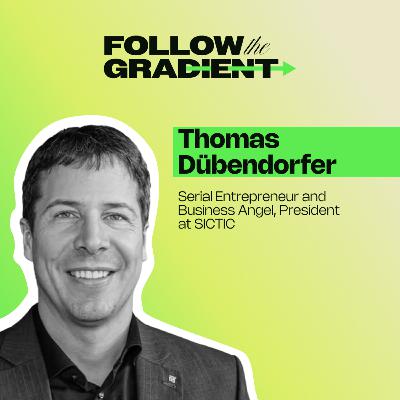
Thomas is a veteran angel investor and board member with 40+ startup deals under his belt—and a front-row seat to what makes early-stage companies thrive or fall apart. He’s also the president of SICTIC, Switzerland’s largest angel network, and someone who’s seen the European startup scene evolve from local coffee chats to global Zoom deals.In this episode we talk about:• Why most first-time angels invest too soon—and too big• How founders can spot the difference between a project and a real business• What makes a healthy cap table at seed (and what absolutely breaks it)• How to activate angels after the wire hits—without burning yourself outA conversation about pattern recognition, post-wire dynamics, and the slow art of building trust between founders and funders.For more on early-stage investing and startup strategy, subscribe to our newsletter at followthegradient.io.
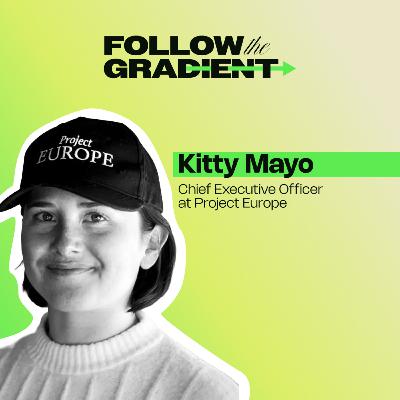
What does it take to give young founders permission to be audacious, before they have credentials to hide behind?In this episode of Follow the Gradient, we sit down with Kitty Mayo, CEO of Project Europe, an under 25 founder fund backed by more than 200 of Europe’s leading entrepreneurs. Kitty previously spent five years at Entrepreneur First, working closely with early stage founders at the very start of their careers.The conversation explores how ambition actually forms, why culture often matters more than capital, and what it means to build a founder movement without headquarters, playbooks, or institutional safety nets.We talk about:Why Europe’s biggest constraint on young founders is cultural permission, not access to capitalWhat Kitty looks for in founders that never shows up in pitch decks or metricsHow building without an HQ increases surface area and creates stronger founder bondsThe hidden cost of chasing venture funding when the ambition is not truly venture scaleWhy earnest obsession beats fashionable ideas when backing founders under 25What Europe should borrow from Silicon Valley, and what it needs to consciously rejectThis episode is less about frameworks and more about how beliefs, environments, and peer groups shape founder behavior long before outcomes are visible.Our biggest takeaways, including Kitty’s view on what European founders consistently underestimate:https://followthegradient.io/p/kitty-mayo-podcast —Where to find Kitty:LinkedIn: https://www.linkedin.com/in/kittymm/ —🎙 Follow the Gradient: conversations about building a business from Europe while staying sane.Follow us:Melanie: https://www.linkedin.com/in/melaniexgabriel/ Christian: https://www.linkedin.com/in/christian-woese/ Subscribe to our channels:Newsletter: https://www.followthegradient.io YouTube: https://www.youtube.com/@followthegradient LinkedIn: https://www.linkedin.com/company/followthegradient/ X: https://x.com/followgradient Instagram: https://www.instagram.com/followthegradient/
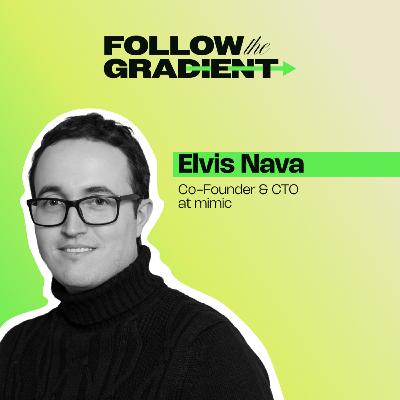
Elvis Nava is a researcher-turned-founder building Mimic Robotics, a company developing general-purpose robot hands powered by imitation learning. After completing his PhD at ETH Zurich, Elvis realized the only way to scale his research was by turning it into a company. Today, Mimic is pioneering a new kind of robotics—flexible, AI-native, and already proving itself in real-world industrial use cases.In this episode we talk about:• Why some research only works outside the lab• How to build hardware that adapts—rather than hard-codes—the task• What it takes to raise a $16M seed round in Europe• How hackathons and ecosystem building accelerate deeptechA conversation about research taste, the myth of perfection, and what happens when you build both the model and the machine.For more behind-the-scenes from Elvis - including takeaways on fundraising and team-building - subscribe to our newsletter at followthegradient.io.
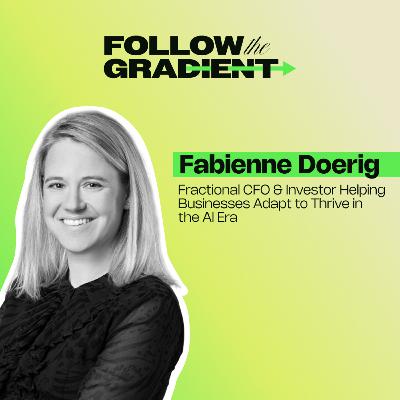
Fabienne Doerig is a former CFO and COO turned advisor, with 15+ years of experience helping companies - from pre-seed startups to public enterprises - scale their finance and ops. She’s led through hypergrowth, driven restructuring, and now helps founders automate the operational backbone of their business using AI.In this episode we talk about:• Why clarity, not code, is the first step in automation• How to build a 13-week cash forecast that updates daily• When to build, buy, or copy automation tools• What founders get wrong about scaling their back officeA conversation about the hidden power of finance operations, the messy reality of AI adoption, and why the biggest wins often come from the most “boring” use cases.For more insights from Fabienne—including practical examples that didn’t make it into the episode—check out our newsletter at followthegradient.io.
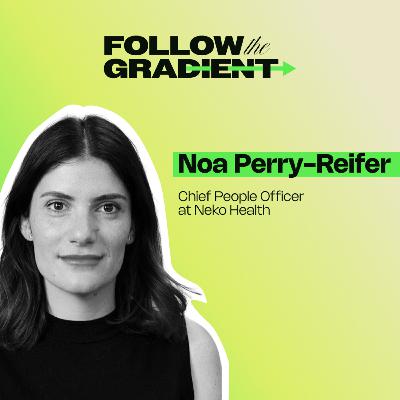
Noa Perry Reifer is the Chief People Officer at Neko Health, where she’s helped scale the team from 100 to over 500 in just five months. Before that, she spent nearly a decade helping build the culture and people systems at On, one of Europe’s most iconic consumer brands.In this episode we talk about:• Why culture is the most misunderstood scaling tool• How to build orgs that are bold, fast—and still deeply human• Why AI-native hiring needs both automation and judgment• What founders get wrong about org design in hypergrowthA conversation about leadership in the AI era, building cultural glue across wildly different teams, and how to design companies that don't just move fast—but move with meaning.For more insights from Noa - including examples that didn’t make it into the episode - check out our newsletter at followthegradient.io

Comments

Download from Google Play

Download from App Store
 United States