


 Claim Ownership
Building Nebraska
Subscribed: 1Played: 6
Subscribe
© Copyright 2026
Description
A podcast for dreamers AND do-ers.
We'll ignite your passion for entrepreneurship and showcase those who turn ideas into reality.
A podcast produced by the Rural Radio Network and powered by the Engler Agribusiness Entrepreneu
We'll ignite your passion for entrepreneurship and showcase those who turn ideas into reality.
A podcast produced by the Rural Radio Network and powered by the Engler Agribusiness Entrepreneu
42 Episodes
Reverse
Just days after graduating high school in 2024, Emory Conrad took a leap that most people her age wouldn’t consider — purchasing the local popcorn shop where she had worked throughout high school.
Instead of heading to college, she chose the entrepreneurial path and became the owner of GoodyPop.
What started as a small downtown shop has become a destination for popcorn lovers, offering more than 200 unique flavors — from sweet classics to bold combinations you wouldn’t expect.
In this episode of Building Nebraska, Emory shares what it’s like to buy a business at 18 years old, the lessons she learned working there as a student, and how she’s putting her own stamp on the shop while honoring its history. She also talks about the risks, the creativity behind developing new flavors, and why small businesses play such an important role in rural communities.
Discover how one young Nebraskan turned opportunity into ownership — and how a popcorn shop is becoming a symbol of the state’s entrepreneurial spirit.
Building Nebraska is powered by the Engler Agribusiness Entrepreneurship Program at the University of Nebraska–Lincoln.
How do ag startup ideas actually turn into real companies?
In Part 2 of this conversation, Brennan Costello breaks down how entrepreneurs move from idea to prototype to funding — and what it really takes to build a scalable ag tech business.
He shares real Nebraska success stories and explains why the state is becoming a hub for agricultural innovation.
Building Nebraska is powered by the Engler Agribusiness Entrepreneurship Program at the University of Nebraska–Lincoln.
Why do some ag startups take off while others struggle to gain traction?
In this episode of Building Nebraska, we sit down with Brennan Costello, Director of The Combine at Nebraska Innovation Campus, to talk about what separates successful ag entrepreneurs from the rest.
Costello shares lessons from working with founders across the ag tech space, including why testing ideas in the real market — even when it’s uncomfortable — is critical to building a business that lasts.
Building Nebraska is powered by the Engler Agribusiness Entrepreneurship Program at the University of Nebraska–Lincoln.
Could cargo planes full of salmon soon be landing in Nebraska?
On this episode of the Building Nebraska Podcast, Bryce sits down with entrepreneur Kiel VanderVeen, the founder behind a proposed $250 million salmon processing facility in Nebraska City.
The idea started as a hobby. VanderVeen and his wife built a small aquaponics system in a greenhouse outside town, raising salmon and growing leafy greens using nutrient-rich water. But after a devastating fire destroyed their entire facility, the vision for what could come next only grew bigger.
Now VanderVeen and his team are proposing a new model that could reshape how fresh seafood reaches American consumers. Instead of waiting weeks for imported salmon to travel through traditional supply chains, the plan is to fly fish directly to the Midwest for processing, dramatically reducing the time it takes to reach grocery stores.
If built, the project could bring high-tech food manufacturing jobs, a major expansion of Nebraska City’s tax base, and a new industry to rural Nebraska.
In this conversation, VanderVeen explains:
• Why salmon makes economic sense in Nebraska
• How cargo jets full of fish could shorten the seafood supply chain
• The pivot that followed a devastating fire
• What a $250 million facility could mean for southeast Nebraska
• And how the U.S. could someday produce far more of its own seafood
The Building Nebraska Podcast is brought to you by the Engler Agribusiness Entrepreneurship Program at the University of Nebraska–Lincoln — empowering the next generation of entrepreneurs to build businesses and opportunities across rural America.
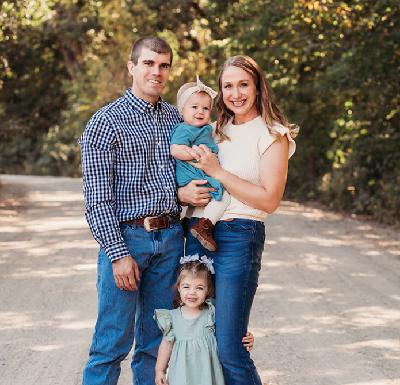
Presented by the Engler Entrepreneurship Program at the University of Nebraska–Lincoln. In Part 2 of our conversation with Hannah Klitz, founder of Oak Barn Beef, we move beyond business strategy and into life behind the storefront.
Hannah and her husband Eric met through the Engler Entrepreneurship Program and now run their West Point-based beef company together — while raising two young daughters inside the rhythm of the business. She shares what it means to:
• Build a company with your spouse
• Balance motherhood and entrepreneurship • Embrace Engler’s hands-on, mentorship-driven mindset
• Navigate a crowded direct-to-consumer beef market
• Invest in rural communities
If you missed Part 1, be sure to listen to the business story behind Oak Barn Beef’s growth into a nationwide brand.
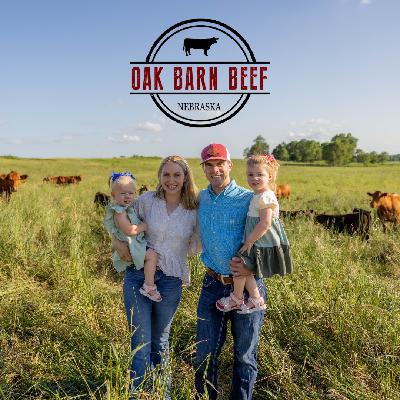
Hannah Klitz was just 20 years old when she launched Oak Barn Beef as a sophomore in college.
Today, the West Point, Nebraska-based company raises cattle, operates a storefront, and ships dry-aged, Nebraska-raised beef to customers in all 50 states.
In Part 1 of this conversation, Hannah shares how she built a direct-to-consumer beef brand from scratch — including learning how to ship a perishable product, developing an e-commerce strategy, working with local processors, and navigating historically high cattle prices.
This is a story about grit, logistics, rural entrepreneurship, and scaling a business from a college idea into a nationwide operation.
Part 2 drops next week.
Presented by the Engler Entrepreneurship Program at the University of Nebraska–Lincoln
As more farm families retire and look to reduce risk, Big Iron Auctions is seeing continued growth in its online auction model, according to co-founder Mark Stock.
Stock discussed the company’s evolution and current business dynamics on Part 2 of the Building Nebraska podcast, powered by the Engler Agribusiness Entrepreneurship Program at the University of Nebraska–Lincoln.
Stock, who started the auction business with his brother Ron, said the company’s data shows online auctions consistently outperform traditional open-outcry sales.
He said the trend is being driven largely by retiring baby boomers who want certainty as they exit agriculture.
Stock said Big Iron’s growth has also depended on staying focused while continuing to adapt, including embracing new technology.
Hear how Big Iron Auctions has grown from a Nebraska startup into a nationwide online auction company, remaining rooted in people, from employees to sellers navigating some of the biggest financial decisions of their lives.
Building Nebraska is powered by the Engler Agribusiness Entrepreneurship Program at the University of Nebraska–Lincoln.
In Part 1 of the Building Nebraska podcast, Mark Stock—co-founder of Big Iron Auctions—shares how a willingness to experiment with technology years ahead of the curve reshaped the auction business.
Long before online bidding was widely trusted in agriculture, Mark and his brother Ron were testing real-time internet auctions.
This episode dives into the importance of timing, trust, transparency, and knowing when to change—without losing the values that built your business in the first place.
Building Nebraska is brought to you by the Engler Agribusiness Entrepreneurship Program at the University of Nebraska–Lincoln.
Most people don’t think about restrooms — until they need one.
Grant and Erin Stahla built Stahla Services LLC, a Nebraska-based company that provides high-end mobile restroom, shower, locker room, and specialty trailers for construction sites, commercial remodels, disaster response, and major events across the country.
What started as a college startup operating out of a metal shop outside Lincoln has grown into a national operation rooted in quality, culture, and intentional leadership.
On this episode of Building Nebraska, the Stahlas share how they scaled an asset-heavy service business, navigated cash-flow pressure, hired for culture first, and learned how to run a growing company together as husband and wife — without losing sight of their values.
This episode is proudly powered by the Engler Agribusiness Entrepreneurship Program at the University of Nebraska–Lincoln.
Before Amigos became a familiar name across Nebraska, it was just a husband and wife with an idea.
In this episode of Building Nebraska, we sit down with Roger and Jan Moore, the founders of Amigos, to hear the full story behind one of Nebraska’s most recognizable restaurant brands. From opening their first location in Lincoln in 1980 to growing the business to 30 stores statewide, the Moores share what it really took to build Amigos from the ground up.
They talk about 18-hour days, sleeping in the restaurant, fierce fast-food competition, closing locations when necessary, and navigating major disruptions like COVID-19. You’ll also hear how Amigos has adapted over time—from drive-thru shifts and food courts to grocery store products, food trucks, and national shipping.
Along the way, Roger and Jan share hard-earned lessons on risk-taking, hiring great managers, employee ownership, and what they look for in future leaders. It’s a candid conversation about perseverance, humility, and building a business that treats customers like friends.
This is the Amigos story—on Building Nebraska.
Entrepreneurship doesn’t care where you come from. It doesn’t care about your GPA, your hometown, your age, or your background. And in Nebraska, wherever you go—from a kindergarten classroom in Omaha to the wide-open rangeland near Cody—you’ll find people with a shared belief: Nobody’s coming to rescue us, so let's get to work.
That no-nonsense spirit is at the heart of the latest episode of the Building Nebraska podcast. Recorded inside the Rural Radio Network’s Lincoln studios, this special edition brings together two of the people behind the Engler Agribusiness Entrepreneurship Program: Director Tom Field and Chief Creative Officer Hailey DeMers, to reflect on the stories that shaped Season One and preview the journey ahead.
A Year of Showcasing Real Entrepreneurs
Season One traveled the state to spotlight the everyday innovators who are building businesses, building communities, and building Nebraska.
Field and DeMers share how the Engler community has been behind the podcast from the start. Their mission: to highlight the untold stories of Nebraska entrepreneurs who aren’t chasing yachts or tech hype, but rather those who are creating legacy businesses that strengthen rural communities.
Inside the Engler Entrepreneurship Program
For those unfamiliar with Engler, Field breaks down the program's unique approach: helping students do entrepreneurship long before others might think they’re ready. Unlike traditional programs centered on high-growth tech, Engler focuses on purpose-driven, community-rooted businesses.
Students learn by building: from the entry-level 101 course to the famous $50 business class, where students are handed $50 to launch something real. One standout example? LS Lures launched in the Engler Garage and is now selling nationwide.
More than 90% of Engler alumni stay in Nebraska or return to their rural roots—building companies that pump millions into the local economy. Engler’s last impact report showed nearly $150 million in cumulative revenue and more than 140 jobs created within a decade.
Entrepreneurship in the Real World
One of the big conversations in this episode centers around a reality every business owner faces: pivoting, failing, and starting again.
DeMers shares stories of students who’ve lost entire hard drives, or who’ve had to scrap and rebuild their companies. Engler teaches that failure isn’t an identity, but rather a stepping stone.
Field emphasizes the power of community, reminding listeners that the most important work is always still ahead. And that even in places like Tecumseh, innovation blooms in unexpected places, including programs teaching entrepreneurship to the incarcerated.
Looking Ahead to Season Two
Field and DeMers close the conversation with a message to future entrepreneurs: the Engler Program is open-armed and open-sourced. Whether you're a student, a dreamer, or someone with an idea you can’t shake, Engler’s mission is to invest in your potential and help you build something that matters.
Season Two of Building Nebraska promises even more journeys across the state to capture the stories of the innovators, growers, makers, and doers shaping Nebraska’s future.
When cattle prices crashed during the farm crisis of the 1980s, rural Nebraska faced a hard question: what’s next? For farmers and ranchers near Valentine, the answer came not from the pasture, but from the Niobrara River. In this episode of Building Nebraska, host Rebel Adamson visits with Mary Mercure of Brewers, Canoers, and Tubers to learn how a simple idea to boost local tourism turned into a thriving river recreation industry.
Mercure explains that her husband’s parents were local teachers who saw opportunity in the scenic waterways of Cherry County. “They were on a board looking for another avenue for Valentine,” she says. “They hired a group to do a study, and that’s when they realized the Niobrara River could be a new resource.” What started as a few canoes on the water became the roots of what’s now known as Nebraska’s tubing capital.
Today, that legacy lives on. Thousands of visitors each summer come from across the Midwest to float the Niobrara, bringing a major boost to Valentine’s restaurants, campgrounds, and motels. “They’ve really embraced tourism here,” says Mercure. “Golfing, stargazing, vineyards, local shops, people have found new ways to keep this community vibrant.”
What once started as a survival strategy is now a symbol of resilience and reinvention in rural Nebraska.
Listen to this episode of Building Nebraska, powered by the Engler Agribusiness Entrepreneurship Program at the University of Nebraska–Lincoln, to hear how Valentine and Cherry County as a whole have embraced tourism as an asset to their community.
In the quiet Sandhills town of Cody, Nebraska, something extraordinary is brewing—or rather, fermenting. What began as a retirement hobby for George Johnson transformed into George Paul Vinegar, a nationally acclaimed maker of handcrafted, old-fashioned vinegars now shipped to all 50 states.
In this episode of Building Nebraska, George and his daughter, Emily Johnson, share how they have turned a kitchen experiment into one of the most unique rural businesses in the country.
https://youtu.be/4GqErgOpKx4
From Grapes to Greatness
It all started with a few rows of apple trees and grapevines.
“I was retired and had some extra time,” George said. “One thing led to another, and pretty soon we had some grapes and thought, ‘What are we going to do with all these grapes? Let’s make some wine.’”
The Johnsons soon discovered that their unconventional Nebraska wines didn’t quite fit the California mold. A friend suggested they might make good vinegar, a remark that could’ve been taken as an insult, but instead sparked a new direction.
“Turns out, he was right,” Emily laughed. “We just started experimenting, a lot of trial and error. No one would tell us their process, so we had to figure it out ourselves.”
With their shared background in physics, the father-daughter team applied scientific precision to an age-old art, crafting vinegars that are as complex as they are flavorful.
The Slow Art of Real Vinegar
Unlike industrial vinegars that can be made in 48 hours, their wine vinegars age for up to 18 months, while balsamic-style vinegars mature for at least five years.
“We make vinegar the way pioneers did,” George explained. “Nothing to speed it up, no shortcuts. That’s why ours actually taste and smell like the fruit they come from.”
Their meticulous methods have earned them praise from chefs across the country and praise in major publications, from Food & Wine to The Wall Street Journal.
A Bold Pitch and a Big Break
In the early days, George personally introduced his vinegars to top restaurants in Omaha.
“Picture this,” Emily said. “Dad walks into these fancy restaurants in cowboy boots with bottles of vinegar made in Cody, Nebraska. It caught people off guard, but once they tasted it, they were hooked.”
Word spread quickly. Food editors wrote stories, chefs shared recommendations, and soon the orders started rolling in. A Wall Street Journal article in December of 2007 sent demand skyrocketing.
“We went from filling the backseat of my pickup to filling the entire box with packages headed to every corner of the country,” George recalled.
Building Rural Dreams
“If you believe in your product and put it out there authentically, people will respond,” Emily said. “Rural entrepreneurs have so much opportunity now. You can sell directly online from anywhere.”
Their story proves that even in a town of fewer than 200 people, a world-class product can flourish.
Building Nebraska is brought to you by the Engler Agribusiness Entrepreneurship Program at the University of Nebraska–Lincoln.
Entrepreneurship can take many forms. For Nick and Kristen Ryan of Central City, Nebraska, it’s entrepreneurship has been a vessel to give back to their hometown while creating abundance for themselves.
In this special live episode of the Building Nebraska podcast, recorded at an Engler Agribusiness Entrepreneurship Program event at UNL, the Ryans shared how they built two thriving hometown businesses: Prairie Creek Winery and The Dentist.
On this episode of Building Nebraska, we travel to Cherry County to visit the Circle C Market, a one-of-a-kind student-run grocery store that has become the heartbeat of the community.
A Community’s Big Idea
The Circle C Market began as a bold experiment. Two business teachers dreamed of giving kids hands-on learning opportunities while solving a critical problem: the nearest full-service grocery store was more than an hour away. Thanks to a grant, community support, and plenty of student energy, that dream became reality in 2013.
Students at the Helm
From stocking shelves and managing vendors to customer service and even serving as store managers, students gain real-world skills that prepare them for life beyond the classroom. The market doubles as a learning lab, with a teacher’s classroom built right inside the store.
“What better way to teach students how to work than by letting them run a real grocery store?” says Liz Ravenscroft, teacher and store manager.
More Than a Business
The Circle C Market isn’t just about selling bread, milk, and eggs. It’s about community resilience. For many residents, especially those who can’t travel to larger towns, the store is a lifeline. As Liz shared, one elderly community member depends on weekly grocery deliveries—made possible because the Circle C Market exists.
A Model for Rural America
Cody’s student-led grocery store stands as a rare success story at a time when many rural towns struggle to keep their main streets alive. Built with straw bale walls, stocked with local pride, and fueled by student ambition, the Circle C Market proves that entrepreneurship can solve real community needs.
Listen now to hear how Cody’s students are building a stronger future for their community on the Building Nebraska podcast, brought to you by the Engler Agribusiness Entrepreneurship Program at the University of Nebraska–Lincoln.
For Jim Pinney, owner of Husker Meats, the journey from raising cattle on his family ranch to running a full-service meat processing plant has been a full-circle experience.
Pinney grew up in Ainsworth, worked in the old butcher shop during high school, and later earned a meat science degree at Kansas State University. After working in plants across the country, he returned home to ranch, and eventually purchased the very facility where he first learned the trade.
“It gives me a very rare opportunity to truly connect farm to table,” Pinney said. “Not many ranchers have both the livestock and the processing plant to bring it all together.”
Serving Ranchers and Families
Husker Meats operates with flexibility, processing cattle, hogs, and lambs for both retail and private customers. Ranchers can take beef home for their own families or market it through farmers markets. The business also supports county fairs, community events, and custom processing.
Each year, Husker Meats partners with 18 area schools through the Sandhills Cattle Association’s Steers for Students program, where donated beef is processed into hamburger for school lunches. Students even visit the plant to learn about carcass grading and meat cuts, an experience Pinney says can spark new interests.
Expanding Reach with USDA Inspection
One of the biggest evolutions in the business came when Husker Meats added USDA inspection. That shift opened the door to a wider market.
“It was intimidating at first, but it’s been very positive,” Pinney said. “Now we can sell meat nationwide through our sister company, Rope and Ride Meats.”
Investing in People
Running a rural business comes with challenges, and finding skilled workers is at the top of the list. Pinney says most employees learn through on-the-job training.
“There’s nothing complicated about it, but it is hard work and it’s repetitive,” he said. “The key is finding people who show up and want to learn.”
A Full-Circle Reward
For Pinney, the greatest satisfaction comes from seeing the process come together from calf to steak on the dinner table.
“My joy is watching an animal raised right, handled humanely, processed here, and then knowing that families get to enjoy it together at home,” he said. “That’s what makes me happy.”
In a town of just a few hundred people, you might not expect to find world-class craftsmanship tucked in a small storefront in Cody, Nebraska. But step inside the Sandhills Boot Company, and you’ll meet Kyle Rosfeld, a man who has spent the last 25 years turning leather into art.
Kyle doesn’t just sell boots. He builds them from the ground up, starting with a customer’s footprint and ending with a fit and style you won’t find in any store.
“Generally, people come to me because they can’t find something that fits or they want something unique,” Kyle says. “Whatever you want. Color, style, height, I can make it happen.”
Kyle honed in on his craft in an untraditional way: no apprenticeship, no formal schooling. Instead, he bought a set of old boot making machines, found an instruction book in the crate, and decided to figure it out himself.
Over the years, his work has been worn by some notable names, including country music legend Willie Nelson. Kyle crafted a custom pair for Nelson ahead of the Harvest the Hope concert in Nebraska, and even delivered them in person on the singer’s bus.
His advice for young people? “Start your own business early. If it doesn’t work, you’ve learned something valuable. If it does, you’re ahead of the game.”
In rural Nebraska, child care is more than convenience, it’s survival. When COVID-19 left Ainsworth families without options, a kitchen table conversation sparked a $2 million community effort to open the Ainsworth Child Development Center. On this episode of Building Nebraska, Haley Miles and Karen O’Hare share how local grit, collaboration, and Main Street pride transformed a crisis into a cornerstone for the community’s future. Building Nebraska is powered by the Engler Agribusiness Entrepreneurship Program.
In this episode of Building Nebraska, we head deep into the Nebraska Sandhills to a place where cattle and grapes grow side by side. Host Rebel Sjeklocha visits with Tim and Greg Nollette of Niobrara Valley Vineyards, a family-run winery in Nenzel, Nebraska.
While some may consider Nenzel the middle of nowhere, to the Nollette's- it is home. The Nollette brothers share their journey of transforming their family ranch into a vibrant vineyard, winery, and tasting destination. From navigating loss and the 1980s farm crisis, to forging their own path, the Nollette brothers share about the grit and innovation it has taken to preserve their five-generation legacy in the area.
What began with a favor to a local vinegary turned into a full-fledged wine operation, and today, their wines are available in over 90 retail outlets across Nebraska, and even shipped to 38 states.
They discuss the challenges of grape growing in the Sandhills, the balance of science and art in winemaking, and how they built a brand from scratch, literally knocking on doors to get their wines on the shelf. Along the way, they have cultivated community in an ocean of grass.
Building Nebraska is powered by the Engler Agribusiness Entrepreneurship Program at the University of Nebraska - Lincoln.
In a world dominated by online orders and big-box stores, there’s magic in stepping into a place where you’re greeted by name - and so was your grandpa.
In this week’s episode of Building Nebraska, we travel to Ainsworth to visit with Joe McBride of Ranchland Western Store, a business that’s been a cornerstone of the community since 1959. Joe shares the story behind his family’s multi-generational store, a place where leather goods, custom craftsmanship, and heartfelt service are all part of a day’s work.
Ranchland may be rooted in the Sandhills, but its reach is far and wide. Joe talks candidly about growing up in the business, the day he got the phone call offering him the chance to take it over, and how his daughter is now helping usher Ranchland into the modern age with updated merchandising, social media, and one-of-a-kind leather work.
While the store continues to evolve, the heart of the business hasn’t changed. Customers aren’t just customers, they’re friends. Some pop in to shop, others to visit or wait for a doctor’s appointment. The doors are open, the hours are consistent, and Joe is likely waiting to greet you with a smile.
In an era where many main-street businesses are struggling to make ends meet, Joe remains optimistic.
“If you’ve got the will and you’ve got the heart, there’s a way.”
Building Nebraska is powered by the Engler Agribusiness Entrepreneurship Program at the University of Nebraska–Lincoln.

Comments

Download from Google Play

Download from App Store
 United States