


 Claim Ownership
Taking Control of Cancer
Subscribed: 4Played: 7
Subscribe

© 2026 North East London Cancer Alliance
Description
Welcome to Taking Control of Cancer, the podcast from the North East London Cancer Alliance. Think of us as your ‘how to’ guide when it comes to busting common cancer myths, overcoming fears and barriers, and improving cancer prevention, diagnosis, treatment and care.
This series aims to provide both patients and healthcare professionals with tangible things they can do to help when it comes to cancer. Whilst we know not all cancers are preventable, there are things we can all do that could make a positive difference to the health and wellbeing of our family, friends and colleagues.
There are two underlying themes across all episodes – the importance of early diagnosis, and reducing health inequalities.
Host:
Steve Bland is an award-winning podcaster and producer and one of the three presenters of the BBC podcast You, Me and the Big C, which was set up by his first wife - BBC presenter Rachael Bland - before her death from triple negative breast cancer in 2018.
Regular guests:
Dr Angela Wong, Chief Medical Officer, North East London Cancer Alliance:
Angela is a driving force behind improving cancer diagnostics for residents across north east London. As Chief Medical Officer for the North East London Cancer Alliance, Angela works tirelessly on delivering innovation and service improvements for cancer patients.
Femi Odewale, Managing Director, North East London Cancer Alliance:
Femi leads the programme teams from the North East London Cancer Alliance across three core areas of work: Early Diagnosis, Diagnosis and Treatment, and Personalised Care.
This series aims to provide both patients and healthcare professionals with tangible things they can do to help when it comes to cancer. Whilst we know not all cancers are preventable, there are things we can all do that could make a positive difference to the health and wellbeing of our family, friends and colleagues.
There are two underlying themes across all episodes – the importance of early diagnosis, and reducing health inequalities.
Host:
Steve Bland is an award-winning podcaster and producer and one of the three presenters of the BBC podcast You, Me and the Big C, which was set up by his first wife - BBC presenter Rachael Bland - before her death from triple negative breast cancer in 2018.
Regular guests:
Dr Angela Wong, Chief Medical Officer, North East London Cancer Alliance:
Angela is a driving force behind improving cancer diagnostics for residents across north east London. As Chief Medical Officer for the North East London Cancer Alliance, Angela works tirelessly on delivering innovation and service improvements for cancer patients.
Femi Odewale, Managing Director, North East London Cancer Alliance:
Femi leads the programme teams from the North East London Cancer Alliance across three core areas of work: Early Diagnosis, Diagnosis and Treatment, and Personalised Care.
52 Episodes
Reverse
In this episode of Taking Control of Cancer, host Steve Bland is joined by Wayne Douglas, Diagnosis and Treatment Programme Lead, and Angela Wong, Chief Medical Officer, both from the North East London Cancer Alliance; and George Hawkins from Pathfinder Intelligence, to explore how the alliance is developing a comprehensive AI strategy aimed at improving cancer outcomes across the region.The discussion begins by addressing the system pressures driving the strategy. Cancer incidence is rising, referrals have increased, and diagnostic services are under sustained strain. Against this backdrop, the alliance is exploring how artificial intelligence can help shift the NHS conversation from simply digitising frontline services to improving frontline productivity and clinical capacity. Rather than adopting AI as a novelty or isolated innovation, the alliance is taking a deliberate, proactive approach to embedding it within cancer pathways.The episode highlights how the strategy links productivity, sustainability, and patient safety. AI solutions such as chest X-ray triage illustrate how technology can prioritise urgent cases more effectively, improving safety while also reducing wasted clinician time and easing pressure on imaging services. Crucially, these productivity gains can help offset the costs of AI tools, supporting financial sustainability at a time when healthcare budgets are under pressure.
It's that time of the month again when Steve Bland and Femi Odewale dissect the month's cancer news - and this time it's March 2026. Steve and Femi cover National CNS Day, how the alliance is reducing cancer inequalities for Gypsy, Roma and Traveller communities; research from the European Code Against Cancer which says tackling air pollution should be part of government work to cut cancer rates; 30 years of Maggie's centres and a new study that has found that globally, six cancers are rising faster in younger adults than older ones.For more information about National Cancer Clinical Nurse Specialist Day and the videos of clinical nurse specialists, visit: https://www.nelcanceralliance.nhs.uk/news/national-cancer-clinical-nurse-specialist-day-16-march-2026 or watch the videos on YouTube:Ruth: https://youtu.be/_ZtjNhta1IsJessica: https://youtu.be/0WNlMcLo0iMMarisa: https://youtu.be/8IOlI7qgu6UMessage from Marisa for National Cancer CNS Day: https://youtube.com/shorts/CEXUA73tYFM?feature=shareLet us know what you think!Please complete our short feedback form to let us know what you think of our podcasts (it will only take five minutes to complete).
In this episode, host Steve Bland is joined by three international nurses currently working in cancer services across north east London - Angie Pol and Robbie Castro, Clinical Nurse Specialists at St Bartholomew’s Hospital and Kristine Mangaliag, a Clinical Nurse Specialist Lung Cancer at Whipps Cross Hospital.Together, they explore what it truly means to be an international nurse in the UK cancer workforce, sharing personal stories, professional challenges, and moments of growth that shape both careers and patient care.The conversation begins with personal journeys into nursing, uncovering what inspired each guest to choose the profession and what led them to take the bold step of working abroad. The nurses reflect on the realities of relocating to a new country, including the emotional and practical challenges of starting again in an unfamiliar healthcare system.Moving into work life, the episode explores how nursing in the UK compares with practice in their home countries. Guests discuss transferable skills they bring with them, how they adapt to new clinical pathways and systems, and what it’s like navigating the NHS while maintaining high standards of compassionate cancer care.This episode is released on National Cancer Clinical Nurse Specialist Day, which recognises the importance of the role, raises awareness of career opportunities, and thanks all CNSs across the country for all the hard work they do.To find out more about Cancer Clinical Nurse Specialists, visit: https://www.nelcanceralliance.nhs.uk/cancer-clinical-nurse-specialistsRead more about National Cancer Clinical Nurse Specialist Day: https://www.nelcanceralliance.nhs.uk/news/national-cancer-clinical-nurse-specialist-day-16-march-2026#NationalCancerCNSDayLet us know what you think!Please complete our short feedback form to let us know what you think of our podcasts (it will only take five minutes to complete).
In this episode, host Steve Bland chats to Kate Williams, the Macmillan Cancer CNS Development Lead (CDL) for North East London Cancer Alliance, and Rani Petros, a Clinical Nurse Specialist Uro Oncology at St Bartholomew’s Hospital, to delve into an exciting new pilot project that aims to transform the future of cancer nursing across London. The CDL pilot project is a three-year initiative, delivered in partnership with Macmillan Cancer Support and NHS England, designed to address workforce challenges by embedding a dedicated Development Lead role into each London Integrated Care System area. Kate explains why the CDL role was created — highlighting the pressing need to tackle high vacancy rates, retention issues, and limited exposure to cancer nursing during initial training — and how the pilot supports newly qualified and early-career Cancer Clinical Nurse Specialists (CNSs) to build confidence, autonomy and leadership skills.Through a blend of one-to-one mentoring, group education sessions, and outreach activities, the CDL role also promotes the CNS career pathway and fosters a resilient, skilled workforce capable of meeting future cancer care needs.This episode is released on National Cancer Clinical Nurse Specialist Day, which recognises the importance of the role, raises awareness of career opportunities, and thanks all CNSs across the country for all the hard work they do.To find out more about the Macmillan CDL pilot, visit https://www.nelcanceralliance.nhs.uk/macmillan-cancer-cns-development-lead-cdl Read more about National Cancer Clinical Nurse Specialist Day: https://www.nelcanceralliance.nhs.uk/news/national-cancer-clinical-nurse-specialist-day-16-march-2026#NationalCancerCNSDayLet us know what you think!Please complete our short feedback form to let us know what you think of our podcasts (it will only take five minutes to complete).
The North East London Cancer Alliance has been working closely with local communities to develop a cancer inequalities strategy that aims to close the gap in cancer outcomes across the region.In this episode, host Steve Bland is joined by Caroline Cook, Early Diagnosis Programme Lead at the North East London Cancer Alliance, and Tiago Moutela, Associate Director at Claremont. Together, they explore the extensive engagement work that brought together voices from a wide range of diverse communities across north east London.The conversation highlights why meaningful community input is essential, how different groups shared their experiences of cancer care, and how these insights will be used to shape a strategy designed to improve access, experience and outcomes for everyone affected by cancer.Listeners will hear how the Cancer Alliance, working in partnership with Claremont, undertook extensive engagement with a diverse range of communities, including groups who are often underrepresented in healthcare decision-making. The discussion explores the methods used to reach these communities, the insights they shared, and how their lived experiences will influence strategic priorities.The episode demonstrates how co-production and listening to local voices can lead to more inclusive, equitable cancer care and better outcomes across north east London.Let us know what you think!Please complete our short feedback form to let us know what you think of our podcasts (it will only take five minutes to complete).
Getting a bowel screening result is just the first step. For some, follow-up tests are needed to make sure everything is okay. In this episode of Taking Control of Cancer, host Steve Bland talks through what happens after bowel screening, what further tests might be recommended, and what you can expect from the process. We also highlight why attending these appointments is so essential and how the NHS supports people through this journey, helping to catch problems early when they’re easiest to treat.Clare McGeady from the bowel screening service helps explain what a colonoscopy is, what it is looking for and why you might need one. She talks through some of the myths and fears to provide reassurance for patients who are invited to attend a colonoscopy, and highlights just how essential it is to attend your appointment.For more information about what a colonoscopy is, visit https://www.nhs.uk/tests-and-treatments/colonoscopy/Let us know what you think!Please complete our short feedback form to let us know what you think of our podcasts (it will only take five minutes to complete).
In February's cancer news round-up, Steve Bland and Femi Odewale talk oesophageal cancer month, they explore a new pilot to use complex HIPEC surgery to treat ovarian cancer and discover how AI might help detect more early stage breast cancer.Plus Steve and Femi look at a new plan from NHS England to change bowel cancer screening to help detect more cancers earlier and potentially save lives across England. And it's Femi's birthday! Let us know what you think!Please complete our short feedback form to let us know what you think of our podcasts (it will only take five minutes to complete).
In this episode of Taking Control of Cancer, Steve Bland is joined by Jay Scott-Nicholls, the Creative Director at Circus, and Dr Adam P Januszewski PhD MRCP, Consultant Medical Oncologist, Quality and Safety Lead at Barts Cancer Centre to explore how digital innovation is transforming the experience of cancer care across north east London, focusing on the launch of a new virtual hospital tour at St Bartholomew’s Hospital. Designed to help patients prepare for cancer treatment, the virtual tour guides them through how to get to their appointment and what to expect when they arrive, reducing uncertainty and anxiety at a critical moment in their care journey.Recorded at the launch event at St Bartholomew's Hospital, the episode highlights how technology can improve not only the quality of care but also equity of access. By providing clear, visual, and accessible information, the virtual tour helps patients who may be unfamiliar with hospital settings, travelling from further afield, living with anxiety, or facing language or communication barriers. Importantly, it also aims to improve appointment attendance, ensuring patients are supported to receive timely care.The discussion places the virtual tour within a broader programme of digital innovation across the North East London Cancer Alliance, including the use of AI to speed up chest X-ray reporting, animated videos to explain tests and procedures in simple terms, and chatbots that offer round-the-clock answers to patient questions. Together, these tools demonstrate how technology can support patients before, during, and after diagnosis and treatment. Patients attending St Bartholomew’s Hospital are encouraged to access the virtual tour using the link or QR code in their appointment letter to help them feel more prepared and confident ahead of their visit. Read more about the tour: https://www.nelcanceralliance.nhs.uk/news/launch-new-virtual-hospital-tour For more information about innovation in cancer diagnosis and treatment in north east London, watch this short video: https://youtu.be/urpQ6-AnExc Let us know what you think!Please complete our short feedback form to let us know what you think of our podcasts (it will only take five minutes to complete).
For this World Cancer Day special episode, Steve Bland and Femi Odewale, Managing Director of North East London Cancer Alliance, are joined by Dr Jagan John — a GP at Aurora Medcare, GPwSI in Cardiology at BDCHS, Personalised Care Clinical Director for NHS England (London), and Primary Care Board Representative for NEL ICB. Together, they explore the significance of World Cancer Day, the launch of the National Cancer Plan for England, and what these national ambitions mean on the ground for patients and communities in north east London. Following the launch of the National Cancer Plan for England, Femi talks through the key priorities of the plan and what they mean specifically for North East London Cancer Alliance. As one of the top-performing cancer alliances in the country, consistently meeting and exceeding the three national cancer standards, the Alliance is well placed to build on strong foundations. Femi reflects on what has driven this performance to date, where there is still more to do, and how the new national plan provides both opportunities and challenges for cancer alliances and the communities they serve. Drawing on his frontline experience as a GP, Dr John reflects on how cancer policy translates into day-to-day primary care — from prevention and early diagnosis to personalised, compassionate support for people living with and beyond cancer. Let us know what you think!Please complete our short feedback form to let us know what you think of our podcasts (it will only take five minutes to complete).
Bowel screening saves lives, but many people are unsure of what it involves or why it’s so important. In this episode of Taking Control of Cancer, we go back to basics to explain what bowel screening is, who can get it, and how it works. Steve is joined by Caroline Cook, Programme Lead for Early Diagnosis at the North East London Cancer Alliance, and Leena Khagram from the NHS Bowel Screening Service to explore the efforts being made across North East London to increase uptake, and share how you, your family, and your community can all play a part in helping more people benefit from this simple, but life-saving test. Plus they cover how a sample of poo really can save your life and most importantly, the techniques you need to collect your samples!Work still needs to be done to encourage more people to complete and return the bowel screening test kit. This episode explores some of the specific barriers and challenges in north east London, where the population is amongst the most diverse in England, and is also in some of the most deprived areas of the country.For more information about bowel screening, visit https://www.nelcanceralliance.nhs.uk/bowel-screeningLet us know what you think!Please complete our short feedback form to let us know what you think of our podcasts (it will only take five minutes to complete).
Steve Bland and Femi Odewale are back with another look at the ways in which cancer is making the news. This time we're looking back on a January that's featured an update on King Charles's treatment, a new screening checker to see if YOU qualify for any screening programmes (click here), a cancer diagnosis for a football legend and a call from a Yorkshire woman diagnosed with early stage breast cancer to make sure women who qualify for a mammogram actually attend their appointment.Plus, it's Cervical Cancer Prevention Week (Jan 19-25) and Steve and Femi are myth-busting! For example, did you know that cervical screening doesn't actually look for cancer?! Cervical screening usually looks for high-risk HPV, not cancer itself. If HPV is found, the sample is then checked for cell changes that could develop into cancer if untreated. Find out more here.For more info, visit the Eve Appeal or for info on the alliance Health Hubs, head to the North East London Cancer Alliance website.Let us know what you think!Please complete our short feedback form to let us know what you think of our podcasts (it will only take five minutes to complete).
In this episode of Taking Control of Cancer, host Steve Bland is joined by Caroline Dancyger, Psychosocial Clinical Lead for the North East London Cancer Alliance, to discuss the importance of addressing not just the physical impact of cancer, but also the emotional, psychological, and social challenges that come with it. Caroline explains what the term ‘psychosocial support’ means, how patients and families can access these services in north east London, and why this kind of care is a vital part of improving outcomes and quality of life. For more information about the support services in north east London, visit https://www.nelcanceralliance.nhs.uk/mental-health-and-psychosocial-support.We also have a directory of training resources for healthcare professionals involved in the delivery of psychosocial services, which can be accessed via this webpage: https://www.nelcanceralliance.nhs.uk/personalised-care-and-psychosocial-careLet us know what you thinkPlease complete our short feedback form to let us know what you think of our podcasts (it will only take five minutes to complete).
In this episode Steve Bland is joined by Femi Odewale and Paul Thomas, from the North East London Cancer Alliance, to dissect the big cancer stories making the news in December 2025.In this episode:1. The UK's National Screening Committee has recommended that only a very small group of men at high risk of prostate cancer should be screened for the disease. Read more here, check out our podcast episode with prostate cancer patients Mike and Yinka and read about the alliance's 'It's Not a Game' campaign here.2. Adrian Chiles has revealed he’s undergone an operation to remove a cancerous patch of skin from his shoulder. The TV presenter’s diagnosis arrived after he spotted a suspicious skin patch, which a biopsy later confirmed to be cancerous. Read more here.3. The National Cancer Patient Experience Survey (NCPES) is now live. NCPES gives people who have received cancer treatment the opportunity to share their experiences directly with the NHS. Every response plays a vital role in shaping how cancer services are designed, delivered, and improved. For more information on NCPES, click here.4. Stand Up To Cancer returned on Friday with new campaign by Channel 4 and Cancer Research UK to drive awareness of NHS cancer screening programmes and raise funds for groundbreaking cancer research. Read more here.And finally....we'd love to hear what you think of this podcast. We've got big plans for 2026 but this is your chance to shape what we cover! Click here to fill out our (very short) survey.
In this powerful episode of Taking Control of Cancer, the North East London Cancer Alliance shines a spotlight on prostate cancer, which is one of the most common cancers affecting men, yet one surrounded by silence, stigma, and late diagnosis.Host Steve Bland welcomes two remarkable guests, Yinka and Mike, both prostate cancer survivors whose journeys have transformed them into advocates and community voices. Through honesty and humour, they share how their diagnoses changed their lives, how they navigated treatment, and why they now dedicate their time to helping other men, especially those in diverse and underserved communities across north east London, recognise the importance of knowing their risk and getting checked early.For more prostate cancer advice, check out the resources available at Prostate Cancer UK.Please let us know what you think of our podcasts and complete this short feedback form (it will only take five minutes).
In this episode, Steve Bland is joined by Sarah Koya, Patient Experience and Engagement Lead, at the North East London Cancer Alliance, and patients Samina Hussain and Dawn Williams to discuss the National Cancer Patient Experience Survey (NCPES) — an important national initiative that gives people living with and beyond cancer the opportunity to share their views on the care they receive.The survey, commissioned by NHS England and conducted annually, is sent to patients who have received cancer treatment as an inpatient or outpatient during a specific period (April, May & June). It asks about every stage of the cancer journey, from diagnosis, tests, and treatment, through to support after care, giving patients the chance to share what went well and what could be improved.The feedback from tens of thousands of patients across England helps the NHS understand what matters most to those affected by cancer. It plays a vital role in shaping how services are designed and delivered, from improving communication between healthcare teams, to ensuring timely diagnosis, better emotional support, and equitable access to care.However, in North East London, as in other parts of the country, some communities are underrepresented in the survey responses, particularly patients from Black African and Caribbean backgrounds. This means that their voices and experiences may not be fully reflected in how services are improved, which is why encouraging greater participation from all communities is so important.Please let us know what you think of our podcasts and complete this short feedback form (it will only take five minutes).
In our latest round up of all the ways in which cancer is making the news, host Steve Bland and Femi Odewale, the managing director the North East London Cancer Alliance, talk Movember, find out why ultra-processed foods are being linked with bowel cancer and discuss a survey carried out by Cancer Research UK which found that more than half of Britons who have a possible cancer symptom do not contact their GP over fears they won't be able to get an appointment. Steve and Femi also celebrate the news that Taking Control of Cancer has been downloaded in 50 countries around the world AND introduce the Alliance's new WhatsApp channel, launched to share all the latest news from the Alliance. You can access the channel using this link https://bit.ly/4oSF8Ku.Please let us know what you think of our podcasts and complete this short feedback form (it will only take five minutes).
In this episode Steve Bland and guests talk pancreatic cancer - a cancer often called the “silent cancer” because its symptoms can be subtle and easy to miss. But awareness can make a life-saving difference. Steve is joined by Alfie Bailey-Bearfield, Head of Influencing and Health Improvement at Pancreatic Cancer UK, and Rishi Athwal, Early Diagnosis Project Manager, North East London Cancer Alliance, to shine a light on one of the toughest cancers to detect. Together, they discuss the key signs and symptoms everyone should know, along with the latest facts and statistics about pancreatic cancer in the UK. Alfie also shares exciting developments in research, including a new breath test that could transform early detection, and explains why spotting pancreatic cancer early is so critical. The conversation also covers the work of EUROPAC, which looks at the role of genetics and family history in pancreatic cancer, and introduces Pancreatic Cancer UK’s Family History Checker, a tool designed to help people understand their own risk. This is an essential listen for anyone who wants to understand more about pancreatic cancer, the importance of early diagnosis, and how we can all play a part in raising awareness.For more information, visit the Pancreatic Cancer UK website: https://www.pancreaticcancer.org.uk/ Please let us know what you think of our podcasts and complete this short feedback form (it will only take five minutes).
In the third of our special episodes looking at how cancer is making the news, Steve Bland and North East London Cancer Alliance Managing Director Femi Odewale sift through the stories that made the news in October 2025.Steve and Femi talk Strictly, hip-shaking, Movember moustaches, breast screening and why there are calls for menopause support to be included in cancer treatment plans.Plus Femi explains why he's excited about an article in the British Journal of Urology International on prostate cancer which was co-authored by a leading North East London surgeon. Read that right here.Please let us know what you think of our podcasts and complete this short feedback form (it will only take five minutes).
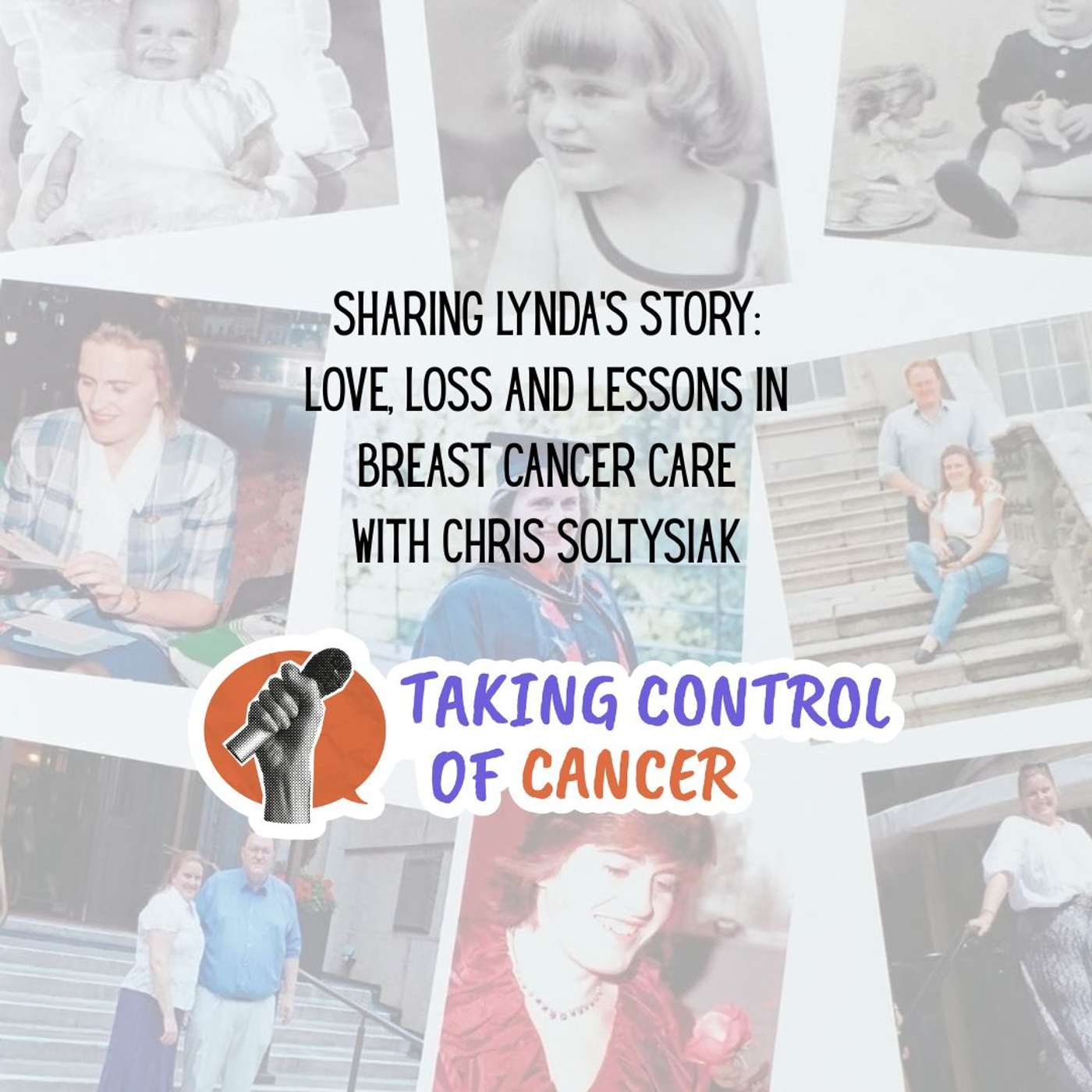
This episode of Taking Control of Cancer 'Sharing Lynda’s Story: Love, loss and lessons in breast cancer care', is dedicated to Lynda Soltysiak.In this deeply moving episode, host Steve Bland speaks to Chris Soltysiak, a patient and carer representative from the North East London Cancer Alliance, as he shares the story of his late wife, Lynda. Lynda dedicated over 30 years of her life to the NHS, supporting others with compassion and commitment, yet when her own symptoms of breast cancer emerged, her journey through the healthcare system was marked by delays, missed opportunities, and heartbreaking loss.Chris opens up about Lynda’s courage, her love for her family, and her enduring dedication to others, even in the final weeks of her life. He also reflects on the challenges faced by carers, the impact of missed diagnoses, and the changes that are needed in cancer awareness and support. Through this story, Chris offers powerful lessons for patients, carers, and healthcare professionals alike — reminding us of the importance of persistence, advocacy, and compassion in the face of cancer.Please let us know what you think of our podcasts and complete this short feedback form (it will only take five minutes).
In this episode host Steve Bland and guests explore a lesser known cancer that impacts thousands of people each year in England. Around 6,000 people each year in England are diagnosed with neuroendocrine cancer, but because symptoms can be vague or mistaken for other conditions, diagnosis is often delayed, making awareness among both patients and healthcare professionals vital.Steve is joined by Cathy Bouvier-Ellis, CEO and Co-Founder of Neuroendocrine Cancer UK, along with Jane Aylott, a patient sharing her lived experience, and Sarita Yaganti, Programme Lead for Personalised Cancer Care at the North East London Cancer Alliance, to discuss the challenges of diagnosing neuroendocrine cancer, the signs and symptoms to look out for, treatment options available, and the importance of connecting patients with specialist support networks.Whether you are a patient, carer, or healthcare professional, this conversation sheds light on why early recognition matters and how support can make a huge difference for patients with neuroendocrine cancer. Key facts and stats· Around 6,000 people are diagnosed with neuroendocrine tumours (NETs) each year in the UK.· NETs account for about 1–2% of all cancers, but incidence has been increasing over the past two decades.· Many patients experience delays of 5–7 years on average before receiving an accurate diagnosis.· Common sites include the gastrointestinal tract, pancreas, and lungs.Please let us know what you think of our podcasts and complete this short feedback form (it will only take five minutes).

Comments

Download from Google Play

Download from App Store
 United States