


 Claim Ownership
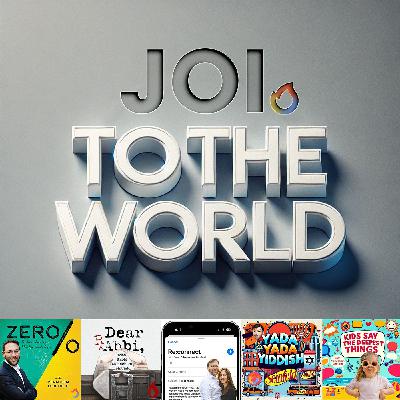
JOI to the World
Subscribed: 1Played: 2
Subscribe

© Copyright Menachem Lehrfield
Description
JOI to the World is a collection of podcasts by Rabbi Lehrfield of JOI that explore diverse aspects of Jewish life, learning, and culture. Each episode offers a unique perspective, drawing from the rich tapestry of Jewish thought and tradition. You can subscribe to this podcast to get weekly episodes or you can subscribe to the individual shows to receive the monthly episodes as they air.
- Zero Percent: Discover the profound outsided impact of a people that make up less than 0.2% of the world.
- Dear Rabbi: Practical answers to questions about Judaism.
- reConnect: Bridging the gap between ancient wisdom and modern life, this series offers a deep dive into the relationships that matter most.
- Yada Yada Yiddish: A Jewish perspective on Seinfeld, using the show’s iconic moments as a springboard for exploring Jewish concepts and values.
- Kids Say the Deepest Things: Meaningful lessons from the funny and insightful things kids say, with reflections on life, parenting, and Jewish tradition.
167 Episodes
Reverse
In today's episode of Dear Rabbi, I'm answering a profound question about God's role in our suffering, especially during these challenging post-COVID times. I explain why we can't fully grasp God's ways by sharing two powerful stories – one about a hypothetical cousin from the jungle seeing a gym for the first time, and another about my personal experience with my son Ozzy during his medical procedure. Through these examples, I illustrate how our limited perspective, like looking at a painting with our nose against the canvas, prevents us from seeing the complete picture.As Jews, we believe in reincarnation and that our souls return to fix things unknown to us. While we may not understand everything now, I emphasize that if something doesn't seem good, it's simply because we haven't reached the end of the story yet. Keep the questions coming! If you have a burning question about Judaism,Email us at Dearrabbi@Joidenver.com📧Tune in to Dear Rabbi and uncover the wisdom behind Jewish customs and laws. 🎙️🌟Follow us for more:Website - https://www.joidenver.comInstagram - https://www.instagram.com/joidenverFacebook - http://www.facebook.com/JOIdenverYouTube - https://www.youtube.com/c/JOIdenverPinterest - http://pinterest.com/jewishdiy
🎧 Listen to this and other episodes at www.joidenver.com/podcastsIn this episode of Dear Rabbi, I tackle an excellent paradox: The Torah explicitly states that one is prohibited from adding or subtracting from the mitzvot. So how then do rabbinic mitzvot come to be? Isn't that adding to the Torah? You're correct that the Torah forbids us from adding or detracting from it, and both adding and detracting are equally problematic. Your question is so good that the Rambam (Maimonides) himself asks it: How did the rabbis make fences for the Torah? Isn't that adding to it? I explain the crucial distinction between rabbinic mitzvot and adding to the Torah.Adding to the Torah would be claiming "this is what the Torah says" when the Torah doesn't actually say it. Rabbinic mitzvot, however, are very different. The rabbis are doing exactly what the Torah commands them to do—putting up protective fences to prevent people from transgressing actual Torah law. The key is that we understand the distinction between rabbinic law and Torah law. As long as we recognize these are safeguards put in place to protect us from violating biblical Torah law, it's not only acceptable but actually required by the Torah itself.Think of it like guardrails on a highway or a fence on top of a high roof - if we take Torah seriously and want to ensure we don't transgress biblical law, we need those guardrails to keep us in line. History proves the wisdom of rabbinic laws. I personally have looked at some rabbinic laws and thought, "Are you serious? You really think if X happens, then Y will happen?They seem totally disconnected!" But we have the benefit of history, and we can see that Jewish communities that abandoned rabbinic laws actually began abandoning Torah laws as well. The direct correlation between transgression of rabbinic law and the forgetting of Torah law is remarkable and validates the rabbis' foresight.Keep the questions coming! If you have a burning question about Judaism,Please email us at Dearrabbi@Joidenver.com📧Tune in to Dear Rabbi and uncover the wisdom behind Jewish customs and laws. 🎙️🌟Follow us for more:Website - https://www.joidenver.comInstagram - https://www.instagram.com/joidenverFacebook - http://www.facebook.com/JOIdenverYouTube - https://www.youtube.com/c/JOIdenverPinterest - http://pinterest.com/jewishdiySubscribe to "JOI to the World" to access all our podcasts, including Yada Yada Yiddish, Kids Say the Deepest Things, Reconnect, and Dear Rabbi.Join us as we uncover the treasures in our backyard and explore what makes the Jewish people extraordinary! 🕎📚🎙️
📖 Parshat Vayikra This Week: At a YU commencement, Rachel Goldberg-Polin said, "Judaism is not about what you think. It isn't about what you learn. It isn't about what you say. Judaism is about what you do.' The sacrifices in this parsha seem archaic, but here's what we can connect to: when something was wrong, you didn't just feel bad; you brought an offering. You took action. You noted that something was out of alignment and needs to change. Today, when we're stuck, when we mess up, when we need to transition, thinking about it isn't enough. Saying it isn't enough. Action is what transforms. Don't just think things. Don't just say things. Do things. Shabbat Shalom. 💪Follow us for more:Website - https://www.joidenver.comInstagram - https://www.instagram.com/joidenverFacebook - http://www.facebook.com/JOIdenverYouTube - https://www.youtube.com/c/JOIdenverPinterest - http://pinterest.com/jewishdiySubscribe to "JOI to the World" to access all our podcasts, including Yada Yada Yiddish, Kids Say the Deepest Things, Reconnect, and Dear Rabbi.Join us as we uncover the treasures in our backyard and explore what makes the Jewish people extraordinary! 🕎📚🎙️
🎧 Listen to this and other episodes at www.joidenver.com/podcastsIn this episode of Dear Rabbi, I answer a question that surprises many people: Do Jews believe in reincarnation? The short answer is yes. Judaism does believe in the concept of gilgul neshamot (reincarnation of souls), according to many of our sages.Practically all of us alive today are reincarnations of previous souls and lives. What this means is that if a person, for whatever reason, did not fulfill their purpose in this world during their lifetime, they get to try again. I know it sounds a lot like a video game: you do your best, try as hard as you can, and if you die without finishing your mission, you get to try again.I explain how the Zohar finds a biblical reference to this in the laws of levirate marriage (yibum). When a man dies childless, his widow is obligated to marry his brother, and the Torah states that the firstborn son "shall succeed in the name of his dead brother, that his name not be erased from the Jewish people." " The Zohar reveals this as the secret of reincarnation: the child born from this union is actually a reincarnation of the deceased brother.The earliest biblical reference may be from the Book of Job, chapter 33, verse 30: "Behold, God does all these things with man two or three times... to bring back his soul from the grave, to bask in the light of the living." So yes, Jews do believe in reincarnation, though it's not as widely known as other Jewish beliefs.Keep the questions coming! If you have a burning question about Judaism,Please email us at Dearrabbi@Joidenver.com📧Tune in to Dear Rabbi and uncover the wisdom behind Jewish customs and laws. 🎙️🌟Follow us for more:Website - https://www.joidenver.comInstagram - https://www.instagram.com/joidenverFacebook - http://www.facebook.com/JOIdenverYouTube - https://www.youtube.com/c/JOIdenverPinterest - http://pinterest.com/jewishdiySubscribe to "JOI to the World" to access all our podcasts, including Yada Yada Yiddish, Kids Say the Deepest Things, Reconnect, and Dear Rabbi.Join us as we uncover the treasures in our backyard and explore what makes the Jewish people extraordinary! 🕎📚🎙️
📖 Parshat Pekudei This Week: The Mishkan is complete. Donations poured in. Gold, silver, and precious materials. But then the Torah does something unexpected: it provides a detailed accounting of every single donation. Wait, why? Nobody was accusing Moshe of embezzlement. Because inspiration is intoxicating. When we're caught up in a mission that feels good, we can skip the details, assuming 'if it feels right, it must be right. ' The Torah says, "Pause." Slow down. Account for everything. Make sure nothing slipped through. Inspiration without accountability is dangerous. Feel inspired, yes, but stay rational. Check the details. Ensure integrity. Even the holiest projects need transparency. Especially the holiest projects. Shabbat Shalom. 📊Follow us for more:Website - https://www.joidenver.comInstagram - https://www.instagram.com/joidenverFacebook - http://www.facebook.com/JOIdenverYouTube - https://www.youtube.com/c/JOIdenverPinterest - http://pinterest.com/jewishdiySubscribe to "JOI to the World" to access all our podcasts, including Yada Yada Yiddish, Kids Say the Deepest Things, Reconnect, and Dear Rabbi.Join us as we uncover the treasures in our backyard and explore what makes the Jewish people extraordinary! 🕎📚🎙️
🎧 Listen to this and other episodes at www.joidenver.com/podcastsIn this episode of Dear Rabbi, I answer a question many people ask: What is the best way to get started in wanting to be more involved in Jewish life? The answer might surprise you with how accessible and flexible it actually is.Luckily, Judaism is not all or nothing. It's better to do something than to do nothing at all. While that might sound obvious, it's not the way many Jews approach Judaism. I hear people say all the time, "Rabbi, why should I light Shabbat candles?" I don't keep Shabbos." But here's the truth: the fact that you might go to the movies after lighting candles does not invalidate the mitzvah you've done by lighting those candles. This applies to all of our mitzvot. My recommendation is to find those aspects of Judaism that speak to you personally. Find what's most meaningful to you, and if you're going to start somewhere, you might as well start there. But how do you know which aspects are most meaningful? The only way to really know is to begin learning more about Judaism. The more you study Torah, the more you discover what's out there and learn the different ways Judaism can enhance your life.So the only way to begin is to start studying, whether one-on-one with a rabbi or anyone who knows more Torah than you, or through resources like Aish.com, which has thousands of articles on every topic imaginable. Rabbi Akiva famously said in the Talmud that learning is most important because learning leads to action. You can't possibly do the mitzvot until you learn about them, what they are, how they work, and how they can enhance your life.Keep the questions coming! If you have a burning question about Judaism,Please email us at Dearrabbi@Joidenver.com📧Tune in to Dear Rabbi and uncover the wisdom behind Jewish customs and laws. 🎙️🌟Follow us for more:Website - https://www.joidenver.comInstagram - https://www.instagram.com/joidenverFacebook - http://www.facebook.com/JOIdenverYouTube - https://www.youtube.com/c/JOIdenverPinterest - http://pinterest.com/jewishdiySubscribe to "JOI to the World" to access all our podcasts, including Yada Yada Yiddish, Kids Say the Deepest Things, Reconnect, and Dear Rabbi.Join us as we uncover the treasures in our backyard and explore what makes the Jewish people extraordinary! 🕎📚🎙️
📖 Parshat Ki Tisa This Week: Immediately after the highest spiritual moment in history, receiving the Torah directly from God at Mount Sinai, comes the Golden Calf, one of the lowest points in Jewish history. How does that happen? How do you fall so far, so fast? The lesson: inspiration is not permanent. That spiritual high, that moment of clarity, that burst of motivation it fades. Always. And if you're not ready for that, the fall can be steep. If the Jewish people at Mount Sinai could sink so quickly, we certainly can. So when inspiration strikes, act immediately. Do something concrete. Take a step. Put it into action before the feeling disappears. Capture the spark while it's still burning. Don't just feel it; build on it. Shabbat Shalom. 🔥Follow us for more:Website - https://www.joidenver.comInstagram - https://www.instagram.com/joidenverFacebook - http://www.facebook.com/JOIdenverYouTube - https://www.youtube.com/c/JOIdenverPinterest - http://pinterest.com/jewishdiySubscribe to "JOI to the World" to access all our podcasts, including Yada Yada Yiddish, Kids Say the Deepest Things, Reconnect, and Dear Rabbi.Join us as we uncover the treasures in our backyard and explore what makes the Jewish people extraordinary! 🕎📚🎙️
🎧 Listen to this and other episodes at www.joidenver.com/podcastsIn this episode of Dear Rabbi, I answer one of the most common misconceptions about Jewish law: Can a person with a tattoo be buried in a Jewish cemetery? The short answer is yes - even someone with a tattoo can absolutely be buried in a Jewish cemetery.That's not to say tattoos are condoned by Judaism. The Torah (the Bible) makes it very clear that it is forbidden to get a tattoo. But why? I explain that we look at our bodies as holy receptacles for our souls. Just like you wouldn't borrow a Bentley from someone and put bumper stickers all over it, we believe our bodies are, so to speak, borrowed. They're here to fulfill a specific purpose - housing our souls and allowing us to connect spiritually through action in this physical world. Therefore, we don't want to permanently mark them up with those proverbial bumper stickers.However, having a tattoo doesn't disqualify someone from Jewish burial. This is just one of many misconceptions people have about Jewish law and burial practices. The reality is far more compassionate and understanding than the myths suggest.Whether you have tattoos yourself, know someone who does, or are simply curious about Jewish burial customs and what actually disqualifies someone from Jewish cemetery burial, this episode clears up a widespread misunderstanding about Jewish practice and law.Keep the questions coming! If you have a burning question about Judaism,Please email us at Dearrabbi@Joidenver.com📧Tune in to Dear Rabbi and uncover the wisdom behind Jewish customs and laws. 🎙️🌟Follow us for more:Website - https://www.joidenver.comInstagram - https://www.instagram.com/joidenverFacebook - http://www.facebook.com/JOIdenverYouTube - https://www.youtube.com/c/JOIdenverPinterest - http://pinterest.com/jewishdiySubscribe to "JOI to the World" to access all our podcasts, including Yada Yada Yiddish, Kids Say the Deepest Things, Reconnect, and Dear Rabbi.Join us as we uncover the treasures in our backyard and explore what makes the Jewish people extraordinary! 🕎📚🎙️
📖 Parshat Tetzaveh This Week: Jews have long been in the 'schmatta business,' not just a Marvelous Mrs. Maisel stereotype but reality. Many Jewish fashion icons trace their roots to the garment industry. Why this connection? Look at this week's parsha: an entire Torah portion obsessed with what the Kohen Gadol wears, not what he does, but what he wears. The subtle point: before serving God, the kohen must feel the weight of responsibility. His clothing reminds him he represents something bigger than himself. Same for us. Jews have always dressed differently, not for fashion but as a uniform showing we're connected to something greater. We have a calling beyond our individual lives. The clothes really do make the man. They remind us of our mission. Shabbat Shalom. 👔Follow us for more:Website - https://www.joidenver.comInstagram - https://www.instagram.com/joidenverFacebook - http://www.facebook.com/JOIdenverYouTube - https://www.youtube.com/c/JOIdenverPinterest - http://pinterest.com/jewishdiySubscribe to "JOI to the World" to access all our podcasts, including Yada Yada Yiddish, Kids Say the Deepest Things, Reconnect, and Dear Rabbi.Join us as we uncover the treasures in our backyard and explore what makes the Jewish people extraordinary! 🕎📚🎙️
🎧 Listen to this and other episodes at www.joidenver.com/podcasts.Welcome to Zero Percent, the podcast that explores the outsized impact of the Jewish people! 🌟Vietnam veteran and healthcare entrepreneur Stephen Rosedale built one of America's largest post-acute care systems, but his most defining moments happened long before that. In this episode, Stephen shares how a chance encounter in college led him to Israel, how combat in Vietnam forged an unbreakable promise to be his "brother's keeper," and how a single tap on the shoulder at a bar mitzvah changed his life at 47.Discover how Stephen's philosophy of "hearts touching hearts" became both the foundation of a 25,000-employee company and a blueprint for transforming Jewish life in Cincinnati from founding a kollel to building schools and synagogues and supporting Israeli communities rebuilding after October 7th.Whether you're thinking about what it means to give, how to pass philanthropic values to the next generation, or how near-death experiences shape a life of purpose, Stephen's story is a masterclass in turning personal trials into communal impact. This episode asks a simple but powerful question: when you feel that tap on the shoulder urging you to do good, will you stop and listen?CONNECT WITH US:🎧 Listen to all our podcasts: [www.joidenver.com/podcasts]Follow us for more: Website - https://www.joidenver.comInstagram - https://www.instagram.com/joidenverFacebook - http://www.facebook.com/JOIdenver YouTube - https://www.youtube.com/c/JOIdenverPinterest - http://pinterest.com/jewishdiySubscribe to "JOI to the World" to access all our podcasts, including Yada Yada Yiddish, Kids Say the Deepest Things, Reconnect, and Dear Rabbi.Join us as we uncover the treasures in our backyard and explore what makes the Jewish people extraordinary! 🕎📚🎙️
🎧 Listen to this and other episodes at www.joidenver.com/podcastsIn this episode of Dear Rabbi, I tackle a persistent stereotype: Where did the idea come from that all Jews are rich? I can assure you it's not true in my case, and we all know Jews who are wealthy and Jews who are struggling, just like all of society. But the origin of this stereotype reveals something profound about Jewish values. I share a fascinating insight from Mark Twain, who once wrote an article addressing the root causes of antisemitism.While many people are familiar with the end of that article, where he talks about how Jews seem to be immortal, surviving despite everything the world has thrown at them, he makes a remarkable observation in the middle of the article. Mark Twain noted that because Jews take care of each other, you never find a Jewish beggar. Perhaps that's where the stereotype originated. Non-Jewish neighbors assumed Jews were all rich because they never saw Jewish people begging or asking for money on the streets.The reason, of course, wasn't because poor Jews didn't exist; rather, the Jewish community took care of them quietly and effectively. While stereotypes are generally negative, understanding the root of this particular one is something we should take pride in. Jewish people have always taken care of one another. This important Jewish value—sharing what we have with others, taking care of our fellow brothers and sisters, and ensuring no Jew (or any human being) ever goes hungry has always been central to Jewish identity and community life.Keep the questions coming! If you have a burning question about Judaism,Please email us at Dearrabbi@Joidenver.com📧Tune in to Dear Rabbi and uncover the wisdom behind Jewish customs and laws. 🎙️🌟Follow us for more:Website - https://www.joidenver.comInstagram - https://www.instagram.com/joidenverFacebook - http://www.facebook.com/JOIdenverYouTube - https://www.youtube.com/c/JOIdenverPinterest - http://pinterest.com/jewishdiySubscribe to "JOI to the World" to access all our podcasts, including Yada Yada Yiddish, Kids Say the Deepest Things, Reconnect, and Dear Rabbi.Join us as we uncover the treasures in our backyard and explore what makes the Jewish people extraordinary! 🕎📚🎙️
📖 Parshat Terumah This Week: God doesn't need a palace. He doesn't need gold, silver, or a physical home. So why command us to build the Mishkan? Because WE need it. We're physical beings living in a material world, constantly absorbed in the tangible. God is teaching us: you can elevate it all. Don't think you're 'too materialistic' or 'too physical' to be spiritual. Take those physical materials, gold, wood, and fabric, and make me a home. By doing so, you remind yourself that you're truly spiritual inside. Everything at your disposal can become holy. Your work, your home, and your relationships all can be sanctuaries. You're not too little. You're capable of making space for the Divine in your everyday life. Shabbat Shalom. 🏗️Follow us for more:Website - https://www.joidenver.comInstagram - https://www.instagram.com/joidenverFacebook - http://www.facebook.com/JOIdenverYouTube - https://www.youtube.com/c/JOIdenverPinterest - http://pinterest.com/jewishdiySubscribe to "JOI to the World" to access all our podcasts, including Yada Yada Yiddish, Kids Say the Deepest Things, Reconnect, and Dear Rabbi.Join us as we uncover the treasures in our backyard and explore what makes the Jewish people extraordinary! 🕎📚🎙️
🎧 Listen to this and other episodes at www.joidenver.com/podcastsIn this episode of Dear Rabbi, I answer a crucial question: Is there anything wrong with buying a mezuzah online or at a gift shop? The answer might surprise you and could save you from making an expensive mistake. First, let me clarify we're talking about the mezuzah scroll itself (the parchment inside), not the decorative case. A mezuzah case doesn't have any inherent holiness and can be purchased anywhere you'd like. But the scroll inside is a completely different matter. It's extremely important that mezuzah scrolls are purchased from reputable sources, either directly from a sofer (scribe) or from someone trustworthy who deals in mezuzahs. Here's why: Unlike a Torah scroll, a mezuzah must be written in specific order from beginning to end without corrections. If a scribe makes a mistake two lines from the end, an unscrupulous person might just scratch it out and correct it, but that makes the mezuzah non-kosher because it wasn't written in proper order. In a Torah scroll, mistakes can be fixed anywhere, but with a mezuzah, you cannot. There's no way to know by looking at it whether it was written properly; you must trust the source. I can tell you from personal experience: every time I go to someone's home to put up mezuzahs, 98% of the time they have at least one mezuzah that is not even remotely kosher, meaning it was never kosher to begin with. I've seen mezuzahs written on paper and photocopies, and people who bought mezuzahs at their synagogue gift shop where the scroll was made of paper, yet the staff told them it was kosher. If you're purchasing mezuzahs, buy them from a reputable person who knows the scribe and can verify they're written properly according to Jewish law. I also share information about My Mezuzah (mymezuzah.org), an organization that provides free mezuzahs for anyone who needs them.Keep the questions coming! If you have a burning question about Judaism,Please email us at Dearrabbi@Joidenver.com📧Tune in to Dear Rabbi and uncover the wisdom behind Jewish customs and laws. 🎙️🌟Follow us for more:Website - https://www.joidenver.comInstagram - https://www.instagram.com/joidenverFacebook - http://www.facebook.com/JOIdenverYouTube - https://www.youtube.com/c/JOIdenverPinterest - http://pinterest.com/jewishdiySubscribe to "JOI to the World" to access all our podcasts, including Yada Yada Yiddish, Kids Say the Deepest Things, Reconnect, and Dear Rabbi.Join us as we uncover the treasures in our backyard and explore what makes the Jewish people extraordinary! 🕎📚🎙️
📖 Parshat Mishpatim This Week: Right after the drama of the Ten Commandments at Mount Sinai, the Torah shifts to... civil law. Rules about damages, loans, workers' rights, and caring for the vulnerable. Why the sudden shift? Because the Torah is teaching us that spirituality isn't just prayer and study; it's how you treat your neighbor, your employee, the stranger. Being godly means not doing to others what you wouldn't want done to you. It means being kind, gentle, and caring. Judaism's foundation isn't mystical experiences; it's ethical living. You want to serve God? Pay your workers on time. Return lost property. Care for the widow and orphan. Real holiness is interpersonal. Shabbat Shalom. 🤝Follow us for more:Website - https://www.joidenver.comInstagram - https://www.instagram.com/joidenverFacebook - http://www.facebook.com/JOIdenverYouTube - https://www.youtube.com/c/JOIdenverPinterest - http://pinterest.com/jewishdiySubscribe to "JOI to the World" to access all our podcasts, including Yada Yada Yiddish, Kids Say the Deepest Things, Reconnect, and Dear Rabbi.Join us as we uncover the treasures in our backyard and explore what makes the Jewish people extraordinary! 🕎📚🎙️
🎧 Listen to this and other episodes at www.joidenver.com/podcastsIn this episode of Dear Rabbi, I tackle a persistent stereotype: Where did the idea come from that all Jews are rich? I can assure you it's not true in my case, and we all know Jews who are wealthy and Jews who are struggling, just like all of society. But the origin of this stereotype reveals something profound about Jewish values. I share a fascinating insight from Mark Twain, who once wrote an article addressing the root causes of antisemitism.While many people are familiar with the end of that article—where he talks about how Jews seem to be immortal, surviving despite everything the world has thrown at them—he makes a remarkable observation in the middle of the article. Mark Twain noted that because Jews take care of each other, you never find a Jewish beggar. Perhaps that's where the stereotype originated. Non-Jewish neighbors assumed Jews were all rich because they never saw Jewish people begging or asking for money on the streets.The reason, of course, wasn't because poor Jews didn't exist—rather, the Jewish community took care of them quietly and effectively. While stereotypes are generally negative, understanding the root of this particular one is something we should take pride in. Jewish people have always taken care of one another. This important Jewish value—sharing what we have with others, taking care of our fellow brothers and sisters, and ensuring no Jew (or any human being) ever goes hungry—has always been central to Jewish identity and community life.Keep the questions coming! If you have a burning question about Judaism,Please email us at Dearrabbi@Joidenver.com📧Tune in to Dear Rabbi and uncover the wisdom behind Jewish customs and laws. 🎙️🌟Follow us for more:Website - https://www.joidenver.comInstagram - https://www.instagram.com/joidenverFacebook - http://www.facebook.com/JOIdenverYouTube - https://www.youtube.com/c/JOIdenverPinterest - http://pinterest.com/jewishdiySubscribe to "JOI to the World" to access all our podcasts, including Yada Yada Yiddish, Kids Say the Deepest Things, Reconnect, and Dear Rabbi.Join us as we uncover the treasures in our backyard and explore what makes the Jewish people extraordinary! 🕎📚🎙️
📖 Parshat Yitro This Week: When listing qualifications for judges, the Torah mentions capable, God-fearing, truthful, and last, 'hates gain' (integrity). Why last? Shouldn't integrity be first? The Torah teaches us that corruption rarely starts with bad people. It starts with good people making small compromises. Then another. Then another. Slowly, those compromises erode moral character until integrity is gone. We're all susceptible; you can be capable, well-intentioned, even truthful, and still become morally corrupt through incremental compromises. The warning is clear: stay vigilant. Guard your integrity fiercely. Don't rationalize 'just this once. 'The slippery slope is real, and good people slide down it every day. Don't let it happen to you. Shabbat Shalom. ⚖️Follow us for more:Website - https://www.joidenver.comInstagram - https://www.instagram.com/joidenverFacebook - http://www.facebook.com/JOIdenverYouTube - https://www.youtube.com/c/JOIdenverPinterest - http://pinterest.com/jewishdiySubscribe to "JOI to the World" to access all our podcasts, including Yada Yada Yiddish, Kids Say the Deepest Things, Reconnect, and Dear Rabbi.Join us as we uncover the treasures in our backyard and explore what makes the Jewish people extraordinary! 🕎📚🎙️
📖 Parshat Beshalach This Week: Trapped between the Egyptian army and the sea, the people pray desperately. God's response? 'Move forward.' But the sea doesn't split until Nachshon ben Aminadav steps in. Water to his ankles. His knees. His waist. His shoulders. Only when it reaches his nostrils does the sea miraculously part. This is Jewish faith, not blind belief, but active trust. God waits for us to take the first step, to show we're invested, that we care enough to act. Then He meets us there. It's a partnership: we do our utmost, step into the water even when we can't see the path, then hand over the reins and say, "God, You're in control." 'What sea are you standing before? Take the step. Shabbat Shalom. 🌊Follow us for more:Website - https://www.joidenver.comInstagram - https://www.instagram.com/joidenverFacebook - http://www.facebook.com/JOIdenverYouTube - https://www.youtube.com/c/JOIdenverPinterest - http://pinterest.com/jewishdiySubscribe to "JOI to the World" to access all our podcasts, including Yada Yada Yiddish, Kids Say the Deepest Things, Reconnect, and Dear Rabbi.Join us as we uncover the treasures in our backyard and explore what makes the Jewish people extraordinary! 🕎📚🎙️
🎧 Listen to this and other episodes at www.joidenver.com/podcasts.Welcome to Zero Percent, the podcast that explores the outsized impact of the Jewish people! 🌟Join us as Robin Chotin shares her deeply moving journey of Jewish philanthropy alongside her late husband, Stephen, of blessed memory, whose impact on Denver's Jewish community remains unparalleled. Discover how Robin's parents quietly instilled a sense of responsibility through their actions rather than words, teaching her that "if you are blessed in this world, if you have the capacity to be able to help other people, then it's what you have to do."Hear Robin's transformative story about her missions to Israel with Federation, where walking into apartment buildings riddled with bullet holes from Gaza brought the struggles of the Jewish people directly to the forefront of her eyes. Learn how seeing something firsthand—not just reading about it—changed everything about her commitment to giving.Robin opens up about the challenges of passing on philanthropic values to the next generation, revealing how her children initially resented her constant community involvement yet ultimately embraced the same values, now taking their own children to volunteer at assisted living facilities. From her grandchildren's service work in New York to her daughter Whitney's community involvement in Denver, Robin's greatest accomplishment isn't measured in dollars but in the saplings that grew from her family tree.Whether you're navigating difficult times reminiscent of World War II and the Depression or seeking to create lasting impact through Federation, JFS, National Jewish Hospital, or your local community, Robin's wisdom reminds us why firsthand experience and persistent commitment matter more than the size of any single gift. This episode challenges us to recognize that we live comfortably in Denver while others face unimaginable struggles and asks what we will do with that blessing. Discover why Robin wants to "live forever" to witness the potential still ahead and what it truly means to leave a legacy that transcends generations.CONNECT WITH US:🎧 Listen to all our podcasts: [www.joidenver.com/podcasts]Follow us for more: Website - https://www.joidenver.comInstagram - https://www.instagram.com/joidenverFacebook - http://www.facebook.com/JOIdenver YouTube - https://www.youtube.com/c/JOIdenverPinterest - http://pinterest.com/jewishdiySubscribe to "JOI to the World" to access all our podcasts, including Yada Yada Yiddish, Kids Say the Deepest Things, Reconnect, and Dear Rabbi.Join us as we uncover the treasures in our backyard and explore what makes the Jewish people extraordinary! 🕎📚🎙️
🎧 Listen to this and other episodes at www.joidenver.com/podcastsIn this episode of Dear Rabbi, I answer a question many people wonder about: What's up with the Jewish calendar? Why was Hanukkah on December 2nd one year, late December another year, and even overlapped with Thanksgiving a few years ago? Why does this calendar seem so different from the regular calendar we use?I explain that here in America and most of the Western world, we use the Gregorian calendar, which is purely solar at 365.2524 days. Other cultures use lunar calendars, like Islam, which track cycles of the moon. In lunar calendars, years are arbitrary, which is why Muslim holidays like Ramadan can fall in winter one year and summer another - the season doesn't matter. The Jewish calendar is unique because it's neither purely solar nor purely lunar - it's a luni-solar calendar. Unlike lunar calendars, our holidays must fall in specific seasons because they're intimately connected to the time of year.The Torah explicitly commands that Passover take place in springtime - a season of rejuvenation where everything comes to life and is reborn, mirroring how the Jewish people left Egypt and became a nation during the Exodus. To accomplish this seasonal alignment while following lunar months, we add an extra month of Adar seven times in every 19-year cycle. This means seven times every 19 years, we have 13 months instead of 12. If you're born in the month of Adar, you get to celebrate two birthdays during those leap years!This is why the Jewish calendar doesn't align with the English calendar exactly - it only does so every 19 years. Every 19 years, your English birthday and Hebrew birthday will fall on the same day.Keep the questions coming! If you have a burning question about Judaism,Please email us at Dearrabbi@Joidenver.com📧Tune in to Dear Rabbi and uncover the wisdom behind Jewish customs and laws. 🎙️🌟Follow us for more:Website - https://www.joidenver.comInstagram - https://www.instagram.com/joidenverFacebook - http://www.facebook.com/JOIdenverYouTube - https://www.youtube.com/c/JOIdenverPinterest - http://pinterest.com/jewishdiySubscribe to "JOI to the World" to access all our podcasts, including Yada Yada Yiddish, Kids Say the Deepest Things, Reconnect, and Dear Rabbi.Join us as we uncover the treasures in our backyard and explore what makes the Jewish people extraordinary! 🕎📚🎙️
📖 Parshat Bo This Week: Before leaving Egypt, God commands the Israelites to take a lamb, Egypt's deity tie it to their bedposts, then slaughter it as the Korban Pesach. Why specifically a lamb? Because freedom requires letting go of competing allegiances. The Egyptians worshiped lambs. To become God's people, the Israelites had to publicly reject what Egypt held sacred, releasing the Egyptian mentality, culture, and false gods that once defined them. Only then could they embrace true freedom. We all carry 'lambs', old identities, toxic beliefs, relationships that no longer serve us. Real liberation isn't just escaping physical bondage; it's releasing the internal chains that keep us enslaved. What false gods are you still tied to? What do you need to let go of to be truly free? Shabbat Shalom. 🐑Follow us for more:Website - https://www.joidenver.comInstagram - https://www.instagram.com/joidenverFacebook - http://www.facebook.com/JOIdenverYouTube - https://www.youtube.com/c/JOIdenverPinterest - http://pinterest.com/jewishdiySubscribe to "JOI to the World" to access all our podcasts, including Yada Yada Yiddish, Kids Say the Deepest Things, Reconnect, and Dear Rabbi.Join us as we uncover the treasures in our backyard and explore what makes the Jewish people extraordinary! 🕎📚🎙️

Comments

Download from Google Play

Download from App Store
 United States