


 Claim Ownership
MMT101.ORG - Modern Monetary Theory Podcast
Subscribed: 2Played: 48
Subscribe

© Jim Byrne
Description
14 Episodes
Reverse
Undermining Economic Resilience – The Economic Impact of Adopting the European Union’s Stability and Growth Pact in an Independent ScotlandIn this episode of the MMT podcast I am delighted to be talking to economist William Thomson, co-founder with Kairin Van Sweedn of the Scotonomics organisation.Scotonomics aims are described as“Exploring how our economic system really works—and how it could work better.”William has - through his energy and commitment - become a leading character in Scotland’s heterodox economics community - spreading the word about how we can use our knowledge about the economy to make people’s lives better.As well as organised economics conferences in Scotland, William has also been busy writing and co-writing discussion papers and articles on Scotland’s economy-including the one we chat about today called“Undermining Economic Resilience – The Economic Impact of Adopting the European Union’s Stability and Growth Pact in an Independent Scotland.”co-written with one previous podcasts guests, Dr Dirk Ehnts -Dirk is a German heterodox economist and an accredited parliamentary assistant at the European Parliament in Brussels for Fabio de Masi (MEP).As well as chatting about the paper William will also be telling me about the upcoming festival of economics called.'Scotland’s Festival of Economics' - a nice literal title for the conference.The conference takes place from March 19th to 21st 2026.I’ll be attending the conference myself for the Thursday sessions.Ok, here’s me chatting to economist William Thomson.MMT101 Podcast LinksScotonomicsScotland’s Festival of EconomicsDiscussion paper: Undermining Economic Resilience - The Economic Impact of Adopting the European Union’s Stability and Growth Pact in an Independent Scotland (2026)Modern Money Theory: A Simple Guide to the Monetary System - Dirk Ehnts (2024) Get full access to MMT101.ORG - Learn Modern Monetary Theory (MMT) at mmt101.substack.com/subscribe
Welcome to this week’s MMT101 Podcast. Today I’m bringing you a recent chat I had with Anne Maxwell and Kevin Gaynor of the RadioMMT podcast, a podcast based in Melbourne, Australia.I’ve been a regular listener to Anne and Kev’s show for quite a long time. In fact, the first time I came across Kevin Gaynor was when he was on the same Modern Money Lab economics course as myself a few years ago. That was the Economics for Sustainable Prosperity course run by Steven Hail.If you have heard of the course you will know it has the MMT perspective embedded within it.The focus of Anne and Kev’s show is to explain what can sometimes be quite complex economics topics in a way that most people can understand, which is what I aim to do myself. That’s why I was so delighted to be invited on for a chat.I was also delighted that they agreed to allow me to publish this episode on my own Substack MMT101 podcast.Anyway, that’s enough from me. Just one more thing before we jump into our chat. Don’t forget to subscribe if you are not already a subscriber, and if you have any spare change please become a paid subscriber because that will allow me to continue to publish my weekly MMT101 articles and podcasts.Note that this is an audio-only podcast. Hopefully you are ok with that. Ok, so here is myself chatting with Anne Maxwell and Kevin Gaynor of RadioMMT. Get full access to MMT101.ORG - Learn Modern Monetary Theory (MMT) at mmt101.substack.com/subscribe
In this episode I am delighted to be talking to Bill Blain - bond trader, CEO of Wind Shift Capital Advisors and publisher of ‘Blain’s Morning Porridge’ - which is a daily commentary on global finance and markets. Just a few things to say before we get started. Bill is an unusual guest for the podcast, in that he’s not an MMTer though he does have some views that are similar. But Bill is a man who has been working in finance for 4 decades and as they say - that means he knows a thing or two. We don’t need to agree with the framework within which his ideas spring - and to be honest - there’s much that we don’t agree on. However, that does not mean that we can’t learn from Bill’s experience.You’ll notice that I do steer clear of ‘arguing the point’. Instead I try to keep quiet - because I want to hear what Bill has to say - whether or not I agree with it.Bill is sincere in his beliefs - he is not disingenuous and as you will discover as we chat - he’s a nice guy. And he knows a lot about the finance sector. One other thing I will mention- so as not to confuse those who are MMTers who know a bit about Quantitative Easing - which we chat briefly about: is that it sounds as if I agree that QE is about the government dumping lots of money into the economy. I don’t agree.What I’m saying is: in relation to QE the central bank swaps government bonds for reserves. Commercial banks can’t spend those reserves on houses or stocks, but the investors who sold the bonds now hold cash or deposits instead of gilts, and they spend that cash on other assets: pushing up the price of assets like housing and shares, contributing to inequality. I used the word ‘liquidity’ as a short-hand for that story.Ok, before we get into our chat - don’t forget to subscribe to MMT101 and if you can afford to - please become a paid subscribers, it really helps me to continue with this work.MMT101.ORG - Learn Modern Monetary Theory (MMT) is a reader-supported publication. To receive new posts and support my work, consider becoming a free or paid subscriber.Books mentioned in this podcast* Modern Money Theory: A Simple Guide to the Monetary System by Dirk Ehnts* Modern Monetary Theory: Key Insights, Leading Thinkers* The Invisible Doctrine: The Secret History of Neoliberalism (& How It Came to Control Your Life) - by George Monbiot and Peter Hutchison Get full access to MMT101.ORG - Learn Modern Monetary Theory (MMT) at mmt101.substack.com/subscribe
Hi, I’m Jim Byrne and this is for people who believe we can build a fairer, greener world by understanding how the economy and our monetary system work. Subscribe for free to get my weekly post.In this episode of the MMT101 Podcast I’m chatting with Fiona McGregor and Marlene Halliday on the Scottish Indy Podcast. The topic of conversation is my new online course, The Why, The What & The How of MMT.They did such a great job of combining information and entertainment in our chat that I asked Fiona and Marlene if I could share it on my MMT101 Substack platform – and they very generously agreed. So, here it is. It was really enjoyable, I think you’ll like it.Just a quick note: I make a couple of slips of the tongue. At one point, while talking about Quantitative Easing (QE), I said “exchange rates” when I meant “interest rates.”Later, after explaining why Germany wasn’t running deficits because they were earning so much from exports, I then oversimplified the UK’s position by saying: “governments must run deficits because individuals and businesses in the private sector are savers”. Of course, I should have added: “unless the foreign sector is bringing in an equivalent amount of income.”Marlene and Fiona’s show is a must listen for anyone with an interest in seeing Scotland once again become an independent country. I highly recommend the Scottish Indy Podcast. And of course, for more MMT content please subscribe to MMT101. Resources* MMT101 - Modern Monetary Theory (MMT) – The Why, The What & The How* Scottish Indy PodcastsNote, that paid subscribers resources are now on this page. Downloadable factsheets, a downloadable dictionary of economic jargon, my book/journal recommendations and much more. Get full access to MMT101.ORG - Learn Modern Monetary Theory (MMT) at mmt101.substack.com/subscribe
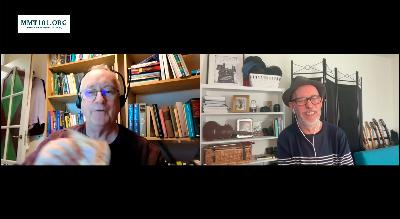
Hi, I’m Jim Byrne and this is for people who believe we can build a fairer, greener world by understanding how the economy and our monetary system work. Subscribe for free to get my weekly post.Today I have the second part of my conversation with economist Steve Keen. I’m sure you will enjoy it. Steve is on form and dispenses his wisdom throughoutIn this part of our chat he continues his demolition of the neoliberal understanding of the economy: from barter, to the importance of the idea of equilibrium - to loanable funds – or as he calls it – The Ashley Madison Theory of Banking.In the last section of our conversion Steve pulls up his data tables to explain double-entry bookkeeping – in the context of our modern monetary system.So, I suggest you watch this via the video version of this chat on my MMT101 Substack - as it will be more difficult to understand what is going on if you are just listening.One thing I have to say before we start is that there are some swear words in this podcast episode. I initially took them out - but then I changed my mind. It felt that by removing them I was taking away the impact of what Steve was saying – and anyway it is up to you to decide whether or not you are happy or unhappy about some swear words. You don’t have to listen if you are offended.On a different note, if you want to support my work teaching the basics of MMT, I would really appreciate it if you were to become a subscriber - or even better a paid subscriber. Because it really helps me to continue on my mission of teaching the lessons of MMT. Take My Course To Learn Modern Monetary Theory (MMT) From The Ground UpWhile I have your attention, did you know I have a comprehensive MMT online training course that is free for paid subscribers? Review the contents of my course here. Now it a good time to learn about Modern Monetary Theory (MMT) and why it is the only approach to economics that tells us that saving the world and the people in it is possible. Get full access to MMT101.ORG - Learn Modern Monetary Theory (MMT) at mmt101.substack.com/subscribe
Hi, I’m Jim Byrne and this is for people who believe we can build a fairer, greener world by understanding how the economy and our monetary system work. Subscribe for free to get my weekly post.Dirk shares his personal journey: how he came to study economics and what led him to Modern Monetary Theory (MMT). And of course, we talk about some of the key ideas in his bookAbout Dirk EhntsDirk Ehnts is a German economist, one of Europe’s leading voices in Modern Monetary Theory (MMT). He holds a Ph.D. in economics from the University of Oldenburg and has taught at institutions including Bard College Berlin and the Maastricht University Summer School..Dirk helped kick off the first European MMT Conference in 2019, and later that year joined Pavlina Tcherneva and Esteban Cruz-Hidalgo in calling for a European finance ministry and a Job Guarantee.Since 2016, Dirk has been teaching MMT each summer at the Maastricht University Summer School. He’s also part of the MMT Summer School in Poznan, Poland — and helped organise the second European MMT Conference in 2021.Support MMT101Ok, before we get into our chat: if you are finding this MMT101 content useful and educational, please become a subscriber. :-)And if you want to help me to continue with this work, I would really appreciate it if you were to become a paid subscriber. It really helps me to continue on my mission of spreading the word about MMT. Because understanding how the monetary system works helps us change the world for the better.If you have any feedback or questions, or if you disagree with anything I write, I want to hear from you. I value your input whether you agree with me or not. Please add your comments in the discussion area.Note, that paid subscribers resources are now on this page. Downloadable factsheets, a downloadable dictionary of economic jargon, my book/journal recommendations and more. Get full access to MMT101.ORG - Learn Modern Monetary Theory (MMT) at mmt101.substack.com/subscribe
Hi, I’m Jim Byrne and this is for people who believe we can build a fairer, greener world by understanding how the economy and our monetary system work. Subscribe for free to get my weekly post.I have a treat for you today on the MMT101 Podcast. I will be chatting to Steve Grumbine of the MMT Podcast Macro N Cheese. And if you’ve ever listened to his podcast, you will know that he is a bona fide ‘force of nature’.He constantly reminds us that learning about MMT is not the point in itself — the point is to use it to make people’s lives better.And in that pursuit, Steve is never afraid to say what’s on his mind. He doesn’t hide from political realities and doesn’t hold back no matter what the topic is.So, of course, in this episode we mention one of those very topics, i.e. when we briefly discuss Gaza.With that in mind, I need to make it clear that I condemn all violence — whether by Hamas or by the Israeli government and I wholeheartedly condemn antisemitism.Ok, before we get into our chat. If you are finding this MMT101 content useful and educational, please become a subscriber.And if you want to help me to continue with this work, I would really appreciate it if you were to become a paid subscriber. It really helps me to continue on my mission of teaching the lessons of MMT.Ok, let’s get right into my chat. My guest this week is Steve Grumbine.Note, that paid subscribers resources are now on this page. Downloadable factsheets, a downloadable dictionary of economic jargon, my book/journal recommendations and more.If you have any feedback or questions or if you disagree with anything I write, I want to hear from you. I value your input whether you agree with me or not. Please add your comments in the discussion area. Get full access to MMT101.ORG - Learn Modern Monetary Theory (MMT) at mmt101.substack.com/subscribe

Hi, I’m Jim Byrne and this is for people who believe we can build a fairer, greener world by understanding how the economy and our monetary system work. Subscribe for free to get my weekly post.Today I’m talking to another of my favourite economists, Steve Keen. I absolutely love talking to Steve because he never holds back from saying what he thinks. He’s got the courage of his convictions and, of course, he’s got the data to back up those convictions.Steve is an Australian economist and author of Debunking Economics, a critic of mainstream economics and—importantly, in terms of setting himself apart from other economists, he’s developed his own simulation software that models the economy as it changes over time. He’s also well known as one of the few who predicted the 2008 financial crash.In this episode, among other things, Steve debunks the claims of neoliberal economists on their own terms, talks about the importance of the private debt-to-GDP ratio and demonstrates the crucial role of government as a stabiliser of the economy—using his simulation software.I spoke to Steve for quite a while. It’s all great stuff with fantastic insights but a bit too long for this podcast – so in addition to this episode I intend to post the full chat on YouTube.Don’t forget to subscribe to MMT101 and if you would like to help me to continue to write and put these MMT podcasts together - please become a paid subscriber MMT101 economics. Thanks.One more thing: I’ve beeped out a few words in this episode. I just thought I’d let you know before we get into it.Ok, let’s listen to economist Steve Keen on the MMT101 Podcast.MMT101.ORG - Learn Modern Monetary Theory (MMT) is a reader-supported publication. To receive new posts and support my work, consider becoming a free or paid subscriber. Get full access to MMT101.ORG - Learn Modern Monetary Theory (MMT) at mmt101.substack.com/subscribe

In this MMT101 podcast we were delighted to be speaking to MMT superstar, economist Phil Armstrong. When I say we, I mean myself and my MMT colleague Lynne Dougan.One of the things that makes Phil such a superstar is that he never forgets why it’s important to study MMT: i.e., so we can make people’s lives better.Phil Armstrong – the UK’s leading MMT scholarPhil is arguably the UK’s leading MMT scholar. He has over 38 years of experience as an economist, an educator, and author. In addition to his economics teaching, he also teaches business and engineering.And like many in the MMT/Post-Keynesian space, for example, economist John Harvey, who I spoke to a few episodes ago, he is a strong advocate for pluralism in economic thought.In this podcast we ponder many questions—including: “What are economists for?” “Do they do anything useful?” “Are economic predictions worth the paper they are written on?” “Why do mainstream economists ignore the other side of the balance sheet?” and “Why does MMT help us understand the real world?”I’ll admit we also go off-topic a few times, at one point we start talking about Scotland and Scottish independence: which of course is relevant to MMT because, unlike the UK Government, Scotland is a currency user, not a currency issuer. Both myself and Lynne are Scottish independence supporters, so we are always happy to talk on that subject.Phil’s publications include the following:* “Can Heterodox Economics Make a Difference?: Conversations With Key Thinkers”* Phil also contributed a chapter called "Modern Monetary Theory as Post-Neoliberal Economics: The Role of Methodology-Philosophy,” to the book Modern Monetary Theory: Key Insights, Leading Thinkers.Check them out. We all need to be studying Phil’s insights. Become a paid subscriber to MMT101DOTORGIf you haven’t already done so, please subscribe to my MMT101 Substack, it will allow me to continue to teach Modern Monetary Theory (MMT) via my articles and podcasts. Keep well and keep busy,JimHi, I’m Jim Byrne and this is for people who believe we can build a fairer, greener world by understanding how the economy and our monetary system work. Subscribe for free to get my weekly post. Get full access to MMT101.ORG - Learn Modern Monetary Theory (MMT) at mmt101.substack.com/subscribe

In this episode, I am chatting to the economist John T Harvey - known to some as ‘The Cowboy Economist’, the Texas cowboy persona he adopts while making seemingly complicated ideas accessible to a wider audience.We cover quite a lot of ground. We chat about the underlying methodologies used by different schools of economic thought, the influence of values and ideological beliefs, the differences between MMT & Post Keynesianism and much much more.John is someone I greatly admire – not just as a tremendously smart economist and teacher - but as a genuinely nice person: always generous with his time, his knowledge and his good humour.John was born in London, England, in the 1960s and then moved to the States - I’m not sure what year that was. However, I do know that he earned his master’s degree in economics in 1986 and his PhD in Economics in 1987 at Texas Christian University - where he remains to this day - as a Professor of Economics.John is a leading post-Keynesian economist and if I read him right, he is also influenced by the Institutionalist School. He specialises in, among other things, macroeconomics, business cycles and exchange rates.He has many, many publications to his name and is the author of a number of books - including: “Contending Perspectives in Economics: A Guide to Contemporary Schools of Thought”, which he first published in 2015 and updated in 2020.John has an ability to present complex economic ideas in a clear, engaging, and often humorous way - and that has made him a regular contributor to many mainstream media outlets, including: Forbes, RealClear Markets and OpEdNews. His passion for making economics accessible and relevant always shines through. I’m sure you will enjoy our chat.Become a paid subscriber of MMT101On a different note, if you are finding these podcasts and articles useful please support my work at MMT101.ORG by become a paid subscriber.Your support allows me to continue to write, teach and to build a community of like-minded individuals. Individuals, like yourself, who understand that MMT offers an opportunity to change the world for the better.Currency issuing governments like the UK are running austerity policies which literally costs lives and plunge people into poverty. As MMT advocates, we know there is no need for it.So, the more people who learn about MMT, the quicker we will get to the point where politicians and orthodox economists will take notice and start to change their tune. So, become a paid subscriber now. Get full access to MMT101.ORG - Learn Modern Monetary Theory (MMT) at mmt101.substack.com/subscribe
Warren Mosler on the MMT101.ORG PodcastWarren Mosler is an entrepreneur, an innovator, a writer, and, latterly, a teacher. His background is in finance, having founded three successful investment companies. He also has a passion for building and racing cars. Currently, he considers his main job to be teaching us all how the economy and the monetary system work.And, of course, last but not least, Warren is principally responsible for developing the heterodox school of economics we all now call Modern Monetary Theory (MMT).We take advantage of Warren’s knowledge in this episode by asking questions relating to his 2010 book, The 7 Deadly Innocent Frauds of Economic Policy. It remains a great introduction to Modern Monetary Theory (MMT).Become a paid subscriber of MMT101On a different note, please support the work of MMT101.ORG by become a paid subscriber. Your support allows me to continue to write, teach and to build a community of like-minded individuals. Individuals, like yourself, who understand that MMT offers an opportunity to change the world for the better.Currency issuing governments like the UK are running austerity policies which literally costs lives and plunge people into poverty. As MMT advocates, we know there is no need for it.So, the more people who learn about MMT, the quicker we will get to the point where politicians and orthodox economists will take notice and start to change their tune. So, become a paid subscriber now.That’s the preamble - so lets’ jump right in and listen to our chat with Warren Mosler. Get full access to MMT101.ORG - Learn Modern Monetary Theory (MMT) at mmt101.substack.com/subscribe
Welcome to part two of our chat with Professor L. Randall Wray. In the first episode we learned a lot about the origins of money – back in the distant past.In this episode we are back in the 21st century. We learn what actually happens when we pay our taxes; what the government tells us taxes pay for; why governments surpluses don’t tend to bring joy to the world; and why most economists are still slow to take onboard MMT insights.Hi, I’m Jim Byrne and this is for people who believe we can build a fairer, greener world by understanding how the economy and our monetary system work. Subscribe for free to get my weekly post.Support MMT101.org by Becoming a Paid SubscriberIf you are enjoying this content and finding it a valuable learning tool, please support MMT101.ORG by become a paid subscriber.Your support allows me to continue to write, teach and to build a community of like-minded individuals. Individuals, like yourself, who understand that MMT offers an opportunity to change the world for the better.Currency issuing governments like the UK are running austerity policies which literally costs lives and plunge people into poverty. We know there is no need for it.So, the more people who learn about MMT, the quicker we will get to the point where politicians and orthodox economists will take notice and start to change their tune. Become a paid subscriber now.OK, let’s jump into part two of our chat with Professor L. Randall Wray.MMT101.ORG - Learn Modern Monetary Theory (MMT) is a reader-supported publication. To receive new posts and support my work, consider becoming a free or paid subscriber. Get full access to MMT101.ORG - Learn Modern Monetary Theory (MMT) at mmt101.substack.com/subscribe
Professor L. Randall Wray on MMT101.org: Chatting with Jim Byrne & Lynne DouganProfessor L. Randall Wray is a leading Modern Monetary Theory (MMT) economist and scholar.In this podcast episode Professor L. Randall Wray talks about: where money comes from, standardising a unit of measurement, the destruction of taxes, understanding IOUs, balance sheet entries, sovereign debt, and more... Get full access to MMT101.ORG - Learn Modern Monetary Theory (MMT) at mmt101.substack.com/subscribe

Today I am chatting with Tim Rideout and Ian Stewart of the Scottish Currency Group. And, if you’re thinking, ‘Currency? Well, that doesn’t sound very interesting’, then stay tuned because Tim and Ian will have you convinced otherwise.Tim and Ian chat about all things related to the upcoming Scottish Currency Group Conference. The conference will take place on the 21st of September, 2024, at the Carnegie Conference Centre in Dunfermline.If I were to reduce the aim of the conference to a single phrase, that phrase would be: ‘why an independent Scotland has to have its own currency.’ That's not their description, that's one I made up - because that's the impression I got from reading the conference program. I hope you enjoy my conversation with Tim Rideout and Ian Stewart of the Scottish Currency Group. Get full access to MMT101.ORG - Learn Modern Monetary Theory (MMT) at mmt101.substack.com/subscribe
Comments


Download from Google Play

Download from App Store
 United States