


 The Business of Open Source
The Business of Open SourceSubscribed: 20Played: 788
Subscribe

© Emily Omier Consulting
Description
Whether you're a founder of an open source startup, an open source maintainer or just an open source enthusiast, join host Emily Omier as she talks to the people who work at the intersection of open source and business, from startup founders to leaders of open source giants and all the people who help open source startups grow.
281 Episodes
Reverse
This week on The Business of Open Source, I spoke with Adam Jacob, co-founder and CEO of the Swamp Club. The first thing we talked about was When To Quit. System Initiative, Adam’s second company (after Chef), was one he ultimately shut down after deciding that he just didn’t have product-market fit. The idea of when to quit is an important one — I personally like Annie Duke’s book on the subject. We all have limited time and energy, and knowing when to abandon one project (or pivot from an experiment that isn’t working, etc) is an important one. In Adam’s case, he decided to take something he’d been working on at System Initiative and pursue it as a stand-alone company instead of chugging along with something that seemed to not be working. Knowing the difference between the common challenges around building a company and the signs that it’s just not going to work is absolutely not easy. Adam also argues that in an era when software has become easier than ever to rebuild, it’s also more important than ever for software to be open source, because now more than ever, your code and your feature set is not your moat. Community is your moat. What’s really exciting about Swamp Club is, for example, the people in the Discord sharing what they are building, both with Swamp’s software as well as with other tools. Adam had a lot of other things to say, like how the final code is actually an expression of how well you understand the problem space. But of course we talked directly about how AI has changed the collaboration mode in Swamp’s open source community, and what that means for how the open source project itself gets built. We also talked about establishing a clear value proposition for the community itself, one that is different from the value proposition of using the software. If community is your moat, this is something to pay attention to; the overlap between people who use the software and people who are active in the community is not perfect, and you can have people who don’t even use the software who hang out in the community regardless. If you’re still struggling on questions around understanding your customers’ problem space, figuring out the core value proposition for your software and/or your community, and in general establishing a moat that is not just your code, you should reach out… this is what I help companies with.
In this episode of The Business of Open Source, I spoke with Dima Grossman, founder and CTO at Novu. For Novu, being open source is part of the go to market strategy. Dima says a big part of the motivation behind going open source to get the widest possible adoption for Novu. It was also a way for Novu to be different in a relatively crowded market, one that serves many developers but that didn’t have a real open source player. Aside from being a go to market strategy, Dima mentioned that while the team at Novu is only 15 people, there are over 450 contributors from around the world, contributing not just tangible things like code, but also ideas and feedback about the problem space. This tight connection with the user community ends up giving Novu a competitive advantage over other players. Is your open source project part of your go to market strategy? Do you want to make it part of the GTM strategy? Reach out and we'll talk about how to leverage open source to build a thriving commercial business.
In this episode of The Business of Open Source, I spoke with Kris Zyp, SVP of engineering at HarperDB, in the third and final episode in the series about how Harper went from a closed-source company to an open source company. We talked about what Kris saw as the risks and benefits of going open source before they went open source, how they ended up deciding what went into the open source project versus in the enterprise edition, and where the gray areas where. The CEO of Harper, Stephen Goldberg, said that 80% of moving from a closed-source company to an open source company was about communication. I was curious what Kris said about where the heavy lifting was in the transition; but I was also curious about his insights into product strategy, because when I asked his colleagues about product strategy in the transition to open source they both punted to him. We talked about developing a framework for deciding what features go into which edition, and how that framework is communicated internally and externally. We talked about who makes the ultimate product strategy decisions, and what they take into account when making these product strategy decisions. We also talked about using trial and error, the unexpected benefits of being open source, and how Kris thinks that many people overestimate the risks and underestimate the benefits of being an open source company. PS a huge thunderstorm started while I was recording this episode! You might be able to hear it in the background. Are you a closed-source software company thinking about open sourcing a key part of your codebase? Are you wondering how you’ll balance the relationship between the project and product? Reach out, because those are the kind of questions I help companies resolve — and they see dramatic growth as a result.
In today’s episode of The Business of Open Source, I spoke with Matt Watson, CEO of Fullscale, about a number of topics related to product development and how AI is changing that. Let’s start with a question: What is the difference between a software engineer and a software developer? Matt thinks there is a key difference: software engineers write code, and software developers figure out how to solve customer problems with software. What do you think is more valuable in a world where AI agents can write the code for you? We talked about the importance of creating a well-lit path for users to use your product for their specific use case — and removing everything that is confusing or unnecessary for their use case. Somebody has to have the vision for what the project is trying to do. This was always the case for open source projects, but it continues to be the case now, with AI agents able to demolish a product feature backlog in an afternoon. Who is deciding whether or not it is a good idea to build something just because a customer or a sales rep suggested it? How to do you make sure you stay on track? We talked about how your biggest competitor is customers not just not buying something from you, but either building something internally using an AI agent, or just doing nothing. This is something you need to consider when you are selling and marketing your product — your biggest competitor. We also talked about the challenge selling to developers, how AI accelerates the winner-take-all dynamics in many markets, and you need AI to recommend your tools or you’ll get lost. Last piece of advice: The goal isn't to be the best, it's to be the best known for what you do. Think about that next to you're wondering whether or not you should invest in marketing. ##Matt says we need more product people. If you need help figuring out what the master vision of your company is and how to translate that master vision into a product roadmap and message overhaul that will get your ecosystem fired up, you should reach out… because that is what I do. My clients see increased pipeline growth, better conversions throughout their funnel and team alignment.
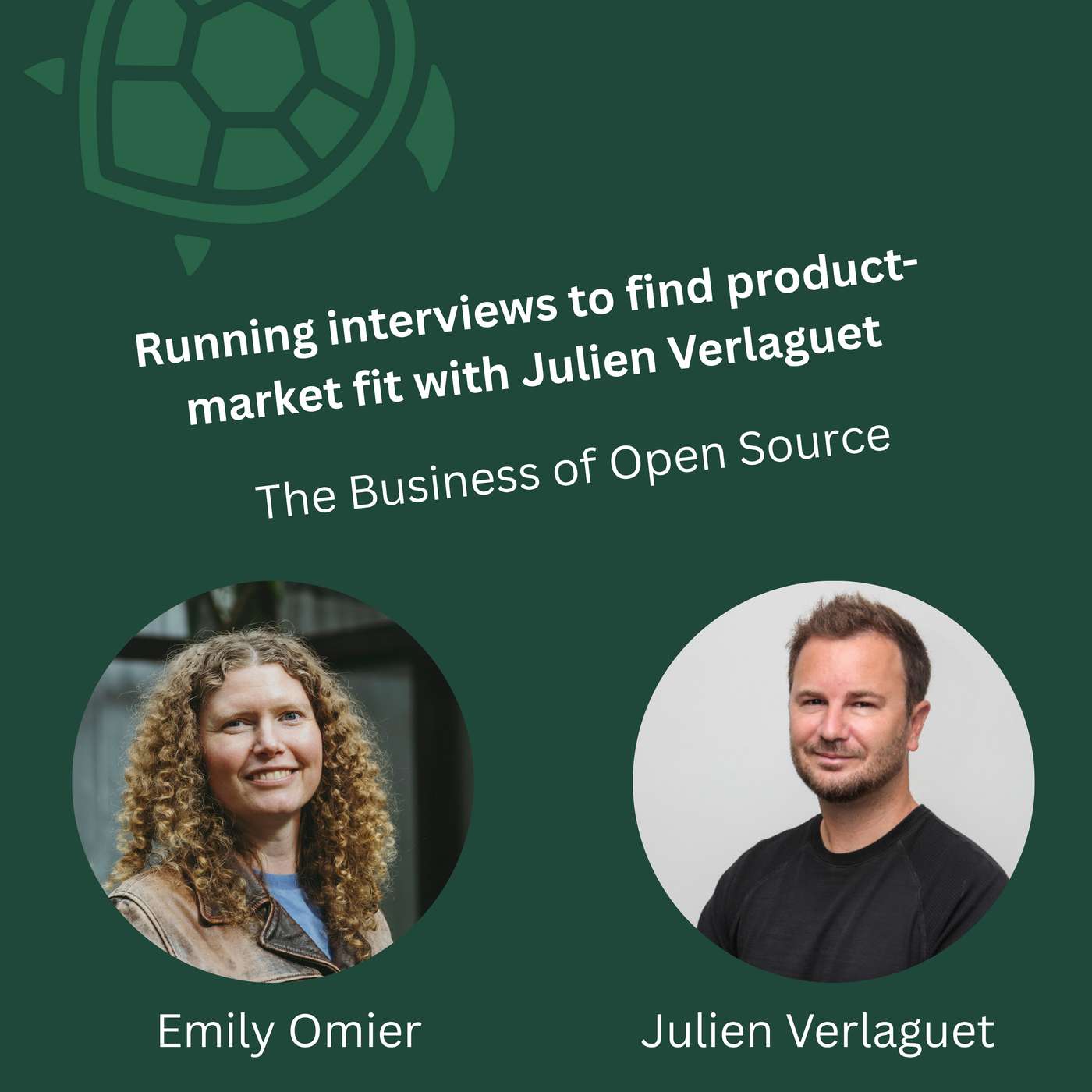
This week on The Business of Open Source, I talk with Julien Verlaguet, the CEO of Skiplabs. Julien is a programming language guy, and we talked about what it means to maintain an open source programming language. We talked about what it means to monetize a a programming language… or, as Julien says, you do not. So why does maintaining SKIP pay off for the team at Skiplabs? And how exactly do they make money? Skiplabs builds products using SKIP, and they focus on building products that can and do take full advantage of the programming language. But ultimately, do customers care that the products are built by the language maintainers? Probably not. “If your open source project can’t be directly monetized with a SaaS,” Julien said. “You have to get a bit more creative.” Indeed, how do you get creative? I have to agree with Julien, that it really depends on what you’re working on. When you think about how to monetize, it’s important to think about what exactly your customers want. He talked about the importance of doing interviews with your target market. In fact, he recommends doing two or three interviews with people in your target market, and in the first interview you don’t even talk about your product ideas, but rather listen to them talk about their problems and how they solve them or would like to solve them. ###By the way, did you know that one of the services I offer is interviewing your customers? Julien talks about how people can overstate how good your product is during interviews… this is true, and having an outside person do the interviews is one of the ways around this. If you’d like someone to interview people in your target market, including users and customers, and to help you use that information to get to product-market fit faster, reach out.

Comments

Download from Google Play

Download from App Store
 United States