


 Claim Ownership
Tipping My Fedora
Subscribed: 17Played: 203
Subscribe

© Copyright 2024 All rights reserved.
Description
Join Sergio Angelini and guests every 2 weeks for an exploration of crime, mystery and all things Noir in Film, Books, TV, Audio and much more besides.
42 Episodes
Reverse
Sergio is joined by Moira Redmond, she of the mighty Clothes in Books blog, to celebrate the work of Ross Macdonald, creator of PI Lew Archer and for many the natural successor to Hammett and Chandler. We look at his books, his life with his wife, celebrated mystery author Margaret Millar, and some of the films based on his novels including HARPER (1966) and THE DROWNING POOL (1975). both starring Paul Newman, and the TV Movie THE UNDERGROUND MAN (1974) featuring Peter Graves as Archer.
Here is a complete list of the Archer novels in publication order:
The Moving Target (1949)
The Drowning Pool (1950)
The Way Some People Die (1951)
The Ivory Grin (1952)
Find a Victim (1954)
The Barbarous Coast (1956)
The Doomsters (1958)
The Galton Case (1959)
The Wycherly Woman (1961)
The Zebra-Striped Hearse (1962)
The Chill (1964)
The Far Side of the Dollar (1965)
Black Money (1966)
The Instant Enemy (1968)
The Goodbye Look (1969)
The Underground Man (1971)
Sleeping Beauty (1973)
The Blue Hammer (1976)
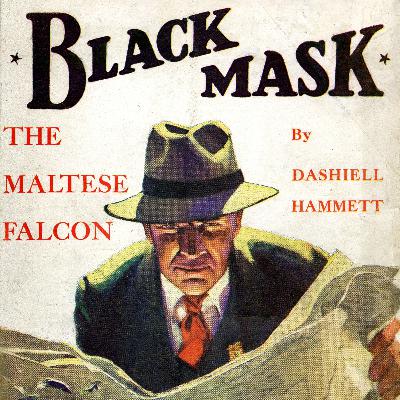
Sam Spade, the protagonist of Dashiell Hammett’s The Maltese Falcon, first appeared Black Mask magazine before publication in book form in 1930. Despite being an instant success, Hammett never wrote another book about his ultra hardboiled PI, though he did appear again in three short stories published in 1932. Between 1931 and 1941, as discussed with Mark Dillon on the last episode of Fedora, Warner Bros released three films based on the novel, with a different actor playing the main role each time. However, it was on radio that Spade had his most consistent success. The Adventures of Sam Spade, as the half-hour show was called, made its debut on 12 July 1946, starring Howard Duff as Spade and Lurene Tuttle as his secretary, Effie Perrine. The show moved from ABC to CBS and then NBC, running for a total of 245 episodes. On top of that, Duff and Tuttle reprised their roles in a special 1-hour episode of Suspense, in which Sam Spade briefly met Philip Marlowe (as played by host Robert Montgomery). That episode is presented here in its entirety.
Suspense / The Kandy Tooth Caper (CBS, 10 January 1948) Written by Bob Tallman and Jo Eisinger; Director: William Speir; Cast: Robert Montgomery (series host / Philip Marlowe), Howard Duff (Sam Spade), Lurene Tuttle (Effie Perrine), Joe Kearns (Casper Gutman), Cathy Lewis (Hope Laverne), Wally Maher (Lawrence Laverne), Jay Novello (Joel Cairo), Jeanette Nolan (Mrs. Julius), Jack Edwards, Jr. (Herman Julius / mortuary attendant), Sidney Miller (documentary narrator), Hans Conried (Marvin / Don Constantino), Bill Johnstone (Lieutenant Dundy).
Today’s podcast is devoted to THE MALTESE FALCON, the classic novel by Dashiell Hammett and its various film versions including the classic Humphrey Bogart version from 1941 and the two lesser-known adaptations that preceded it.
My guest is Mark Dillon, the award-winning Toronto-based journalist specializing in film, TV and pop music. He is a former editor of Playback, the business publication for the Canadian media industries, and to which he still contributes. He has been writing for Hollywood magazine American Cinematographer for more than 25 years. He is author of Fifty Sides of The Beach Boys, chronicling America’s band, and co-hosts the (non-noir) podcast Surf’s Up: A Beach Boys Podcast Safari: https://soundcloud.com/user-93394161
Today I am joined by Ayesha Khan - host of the prizewinning podcast, Every Single Sci-Fi Film Ever* (www.everyscififilm.com/) - to talk about one of our favourite movies, Ridley Scott's BLADE RUNNER (1982). In addition we will also look at its sequel, Denis Villeneuve's BLADE RUNNER 2049 and Philip K. Dick's original source novel, Do Android Dream of Electric Sheep?
In the podcast we mention Film Noir Bingo, created by Todd Downing - you can follow him at www.todddowning.com.
You can follow Ayesha at www.everyscififilm.com and listen to her podcast Every Single Sci-Fi Film Ever* on all major platforms.
Sergio looks at Michael Anderson's 1958 suspense drama, CHASE A CROOKED SHADOW, a clever mystery with a strong cast and memorable payoff. It stars Anne Baxter as an heiress driven to near madness when a man turns up claiming to be her dead brother and everybody but her believes him. Richard Todd is the the smooth impostor and Herbert Lom plays the understandably confused police inspector.
Though uncredited, the premise of the film, and its memorable final twist on which the whole plot depends, had first been used on radio in 1946 for an episode of The Whistler:
"Stranger in the House" (CBS, 2 September 1946), starring Virginia Gregg and Gerald Mohr. Script: Harold Swanton and Mark Smith; Music: Wilbur Hatch; Producer / Director: George W. Allen
The radio play is included in today's podcast, which also looks at some of the many screen and stage variations that followed it. These include the following adaptations of the 1960 stage play by Robert Thomas, Piege Pour Un Homme Seul:
1965: Catch Me If You Can (Stage Play)
Witten by Jack Weinstock and Willie Gilbert Directed by Vincent J. Donehue
Starring Tom Bosley, Dan Dailey, Bethel Leslie, George Mathews
1969: Honeymoon with A Stranger (TV Movie)
Written by Henry Sleaser and David P. Harmon Directed by John Peyser
Starring: Janet Leigh, Rossano Brazzi, Barbara Steele, Cesare Danova
1976: One of My Wives is Missing (TV Movie)
Written by Peter Stone Directed by Glenn Jordan
Starring: Jack Klugman, James Franciscus, Elizabeth Ashley, Joel Fabiani, Garry Walberg
1987: Vanishing Act (TV Movie)
Written by Richard Levinson and William Link Directed by David Greene
Starring: Mike Farrell, Elliot Gould, Margot Kidder, Fred Gwynne
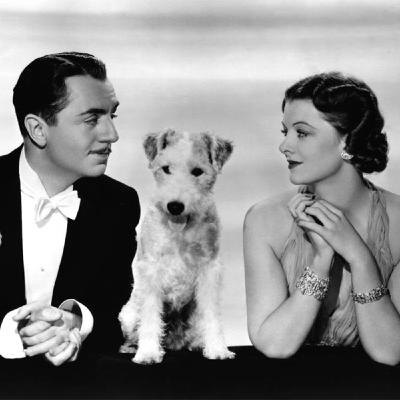
For this special Christmas episode, Sergio is joined by Scott K Ratner for an in-depth look at Dashiell Hammett's novel The Thin Man. We also consider the series of six movies it spawned, all of them starring William Powell and Myrna Loy as Nick and Nora Charles and Skippy as their pet Terrier, Asta. Here's a full list of the films in the series:
The Nick and Nora Charles Screwball Mystery Movies
The Thin Man (1934)
After the Thin Man (1936)
Another Thin Man (1939)
Shadow of the Thin Man (1941)
The Thin Man Goes Home (1944)
Song of the Thin Man (1947)
We also look at some of our favourite movie whodunits, including AND THEN THERE WERE NONE (1945), GREEN FOR DANGER (1947), WITNESS FOR THE PROSECUTION (1957), DEATH ON THE NILE (1978) and Rian Johnson's KNIVES OUT series starring Daniel Craig.
Scott K. Ratner is a Southern-California based writer/magician/actor whose endeavours are largely rooted in his interests in Golden Age detective fiction and classic era Hollywood cinema. He has written the libretto and lyrics for two whodunit musicals (All Talking! All Singing!! All Murder!!! and Murder on the High C’s) and a one-act Agatha Christie-related comedy (Kill A Better Mousetrap), as well as several nerdy articles for such magazines as Crime and Detective Stories and Mystery Scene. His magic act was once publicly praised by no less than Harry Blackstone, Jr. and the great Dai Vernon, though the truth of that story is considerably less impressive when the details are known. His brief sojourn as a teenage actor in television connected him with a few important players of the classic Hollywood era, and he regrets that he didn’t know enough about their filmographies at the time to ask the interesting questions. As a magician and theme park entertainer, he worked over two decades apiece at Disneyland and Knott’s Berry Farm.
Sergio is joined by Luke Deckard and Matthew Booth, the hosts of the excellent Mean Streets podcast (https://meanstreetspodcast.podbean.com/) to find out what their top 10 Film Noir remakes are. The films under discussion include (in chronological order) are:
THE MALTESE FALCON (1941)
THE KILLERS (1964)
FAREWELL MY LOVELY (1975)
THE POSTMAN ALWAYS RINGS TWICE (1981)
NO WAY OUT (1987)
NARROW MARGIN (1990)
CAPE FEAR (1991)
THE TALENTED MR RIPLEY (1999)
CASINO ROYALE (2006)
NIGHTMARE ALLEY (2021)
Luke and Matt are the hosts of the Mean Streets podcast, which you can find at: https://creators.spotify.com/pod/profile/luke-deckard/. Both are published crime fiction authors. Luke's homepage can be found at: https://www.lukedeckard.com/. Details of Matthew's published novels can be found at the Crime Writer's Association website: https://thecwa.co.uk/find-an-author/booth-matthew/.
It's 40 years since Alan Plater's mellow comedy thriller THE BEIDERBECKE AFFAIR (1985), starring James Bolam and Barbara Flynn, first appeared on TV. Sergio is joined by Plater expert James Leggott to discuss the original serial and it's two sequels, THE BEIDERBECKE TAPES (1987) and THE BEIDERBECKE CONNECTION (1988).
Dr James Leggott is Head of School, Design Arts and Creative Industries, at the Northumbria University. For more information about his work and publications, please visit: https://www.northumbria.ac.uk/about-us/our-staff/l/james-leggott/
Music credit: "Crying All Day" (1927), Frankie Trumbauer and His Orchestra featuring Bix Beiderbecke, courtesy of the Internet Archive: https://archive.org/details/1927-USA-Archives-1927-10-25-Bix-Beiderbecke-Frankie-Trumbauer-Crying-All-Day
Sergio is joined by Vincent M. Gaine of Lancaster University to discuss Michael Mann's hitman neo-noir, Collateral, starring Tom Cruise, Jamie Foxx and Jada Pinkett Smith. A thriller made on the cutting edge of digital cinema of 2004, this in-depth exploration of the film will look at the new technology used to make it, how it sits within Mann's filmography - and why Sergio really has a problem with Tom Cruise's wig in the film.
Dr Vincent M. Gaine teaches at Lancaster University and is the author of "Existentialism and Social Engagement in the Films of Michael Mann". The locus of Vincent’s research is the intersection of globalisation, liminality and identity politics in media. He has published on contemporary film genres, cycles and franchises, including superhero cinema, conspiracy thrillers and James Bond, as well as contemporary auteurs including James Cameron, Kathryn Bigelow and Christopher Nolan. His current research concerns nostalgic espionage, liminal superheroes and the social-anthropological representation of Boston in media. Vincent is also a podcaster, with a monthly podcast called Invasion of the Pody People, and regular guest appearances on Not Just For Kids (https://notjustforkids.libsyn.com/), The Uncut Network and There Can Be Only One. He contributes film reviews to The Geek Show (https://thegeekshow.co.uk/) and the Critical Movie Critics (https://thecriticalcritics.com/).
Brad Friedman is back to talk about Hitchcock's 1940s Noir thrillers with Sergio! This time they discuss the romantic whodunit, SPELLBOUND (1945), the spy drama NOTORIOUS (1946) and the real-time suspense thriller, ROPE (1948).
Brad blogs about Golden Age mystery books and movies at Ah Sweet Mystery: https://ahsweetmystery.com/
To read "The House of Dr Edwardes" by Francis Beeding, the basis for SPELLBOUND, click here: https://freeread.de/@RGLibrary/FrancisBeeding/Novels/TheHouseOfDoctorEdwardes.html
Spoiler alert: the plots for all the films discussed, including their respective endings, are explored in great detail.
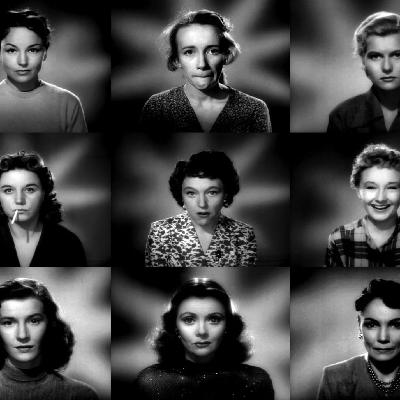
Special guest Jonathan Rigby joins Sergio to discuss WOMEN OF TWILIGHT (1952), the film adaptation of Sylvia Rayman's 1951 groundbreaking all-female play.
Jonathan Rigby has been writing about films for over 30 years now - and has been an actor for even longer. He is the author of several books on horror cinema, including English Gothic, American Gothic and Euro Gothic - with American Gothic 2 on the way – and Studies in Terror, and has also written biographies of Christopher Lee and Roxy Music. He has also recorded loads and loads of audio commentaries and solo video interviews for Blu-ray releases. As an actor, he's best known for playing radio comic Kenneth Horne on numerous occasions, and as a director he revived the Sylvia Rayman play Women of Twilight for the first time in nearly 60 years - and that was over ten years ago, with no further professional revival having happened since. Today we’re going to talk about that play, his revival and the 1952 film adaptation, originally released in the US as Twilight Women.
The Fedora podcast is one year old today. And it's also my birthday! To celebrate, my awesome buddy Professor Stacey Abbott (who also just had her birthday) makes a very welcome return visit to Fedora. This time we get together to celebrate the John Wick series starring the mighty Keanu Reeves.
Please note, we pretty much spoil every single one of the films.
[This episode is being re-presented to correct an earlier technical problem]
My very special guest is Stacey Abbott, Professor of Film at Northumbria University, where she is a member of their Horror Studies Research Group. Her research focuses on horror and cult film and television, with a particular interest in vampire and zombies.
She is the author of Celluloid Vampires (2007), Undead Apocalypse (2016) and the BFI Film Classic on Near Dark (2020). She is the co-author of TV Horror (2013) and the co-editor of Global TV Horror (2021), both with Professor Lorna Jowett.
She regularly writes essays to accompany DVD and Blu-ray releases, including Second Sight’s Ginger Snaps, Possessor and Blair Witch Project, as well as Eureka’s Tank Girl and The Secret of NIMH.
She is currently writing a book on Horror Animation.
Publication details:
Near Dark (BFI Classics) by Stacey Abbott: www.bloomsbury.com/uk/near-dark-9781911239277/
Angel (TV Milestones) by Stacey Abbott: https://mitpressbookstore.mit.edu/book/9780814333198
Celluloid Vampires by Stacey Abbott: https://utpress.utexas.edu/9780292716964/
Global TV Horror edited by Stacey Abbott and Lorna Jowett: www.uwp.co.uk/book/global-tv-horror/
TV Horror edited by Stacey Abbott and Lorna Jowett: www.bloomsbury.com/uk/tv-horror-9781848856189/
Undead Apocalypse by Stacey Abbott: https://academic.oup.com/edinburgh-scholarship-online/book/19174?login=false
Today we launch headlong into the erotic thriller genre with a very deep dive into the 1992 box office smash, Basic Instinct. Starring Michael Douglas and Sharon Stone, written by Joe Eszterhas and directed by Paul Verhoeven, this gaudy and controversial Neo Noir has many strong links to Hitchcock's Vertigo. To discuss this film and more, Sergio is joined by very special guest, Rebecca McCallum.
N.B. The podcast, recorded in February 2025, includes huge spoilers - and gives away the ending to Basic Instinct and Vertigo too!
Rebecca is a writer, speaker and creator/host of Talking Hitchcock, a podcast that explores the work and the world of her favourite director. The podcast covers deep dives on Hitchcock’s films as well as topic driven discussions on everything in the Hitchcockian universe. She curates, hosts and speaks at Hitchcock screenings and festivals up and down the UK and has written about the director’s films both online and in print for many publications including Fangoria, Grim Journal, Hemlock Books and MovieJawn. She has presented at Hitch Con, the largest international Hitchcock conference of its kind and co-hosted a Hitchcock programme on BBC Radio.
Talking Hitchcock Podcast:
Listen to Talking Hitchcock Podcast here: https://creators.spotify.com/pod/show/rebecca-mccallum/
Instagram/Bluesky: @talkinghitchpod
Linktree https://linktr.ee/PendlePumpkin to Read/Listen to Rebecca's Work: Rebecca McCallum | Twitter @hitch_pod
Find and Follow Rebecca
Instagram: @pendlepumpkin
James Harrison of Film Noir UK joins Sergio to preview the 2025 Film Noir Fest, which is taking place from 31 October to 2 November at the Plaza Cinema in Weston-Super-Mare. This year's theme is heist movies and highlights include screenings of:
Kubrick's KILLER'S KISS (1955) and THE KILLING (1956), Huston's THE ASPHALT JUNGLE (1950), Siodmak's CRISS CROSS (1949), Dassin's RIFIFI (1955) and Tarantino's RESERVOIR DOGS (1992).
There is also a retrospective dedicated to crime films starring Ida Lupino, including HIGH SIERRA (1941), ROAD HOUSE (1948), ON DANGEROUS GROUND (1951), BEWARE, MY LOVELY (1952) and WHILE THE CITY SLEEPS (1956). In addition there will be a silent Heritage Noir double bill with a live score by Neil Brand and screenings of British thrillers courtesy of Talking Pictures TV / Renown.
For full details about the festival and tickets, visit the homepage of Film Noir UK: https://ti.to/film-noir-uk/filmnoirfest2025
Sergio is joined by blogger Aidan Brack, of Mysteries Ahoy, for an in-depth look at Akira Kurosawa's classic 1963 suspense thriller, High and Low. This seems like the perfect time to look back at the film with the release of Spike Lee's remake, Highest 2 Lowest, starring Denzel Washington.
Adapted from King's Ransom - the tenth volume in Ed McBain's series of police procedurals featuring the cops of the 87th Precinct - Sergio and Aidan look at the original book, its 1962 American TV adaptation and Kurosawa's extraordinary film version.
Aidan Brack is a public librarian with a love of mystery fiction. He started his blog, Mysteries Ahoy! in late 2017 as a way to connect with other fans of mysteries and to catalogue his experiences with the genre. Since then, he has shared his thoughts on over 600 books, 100 film and television productions, as well as the occasional radio drama. His father is crime novelist, Graham Brack.
Aidan enjoys reading and writing about many different types of mystery fiction, including works in translation. He has a particular interest in inverted mysteries - stories in which the culprit's identity is known to the reader from near the start.
You can find his writing at www.mysteriesahoy.com
For more info on author Graham Brack, visit: https://grahambrackauthor.com/
To watch the 1962 TV version of King's Ransom, visit: www.youtube.com/watch?v=_5sTB0_UyEc
Following on from the first part last week, Sergio and Sheldon Hall reunite for a second bout of Film Noir scepticism. How well does Sergio stand up to Sheldon's stinging and relentless criticism?
The genres being considered include Westerns, Horror, Science Fiction and the work of Alfred Hitchcock.
To listen to the first part of the podcast, visit:
Apple buff.ly/wDl4xnB
Spotify buff.ly/34bRrLu
YouTube buff.ly/QyLHaCo
The titles being considered, in chronological order, include:
THE SEVENTH VICTIM (Robson, 1944)
WHISPERING SMITH (Fenton, 1948)
ROPE (Hitchcock, 1948)
WINCHESTER 73 (Mann, 1950)
INVASION OF THE BODY SNATCHERS (Siegel, 1956)
VERTIGO (Hitchcock, 1958)
Sheldon Hall is an Emeritus Fellow at Sheffield Hallam University, UK. A former film journalist and lecturer, he is the author of Zulu: With Some Guts Behind It (2005/2014) and Armchair Cinema: A History of Feature Films on British Television, 1929-1981 (2024), co-author of Epics, Spectacles, and Blockbusters: A Hollywood History (2010), and co-editor of Widescreen Worldwide (2010) and Film Critics and British Film Culture: New Shots in the Dark (2025). In addition, he has contributed chapters and articles on British and American film history to numerous books and journals and interviews to many Blu-ray special editions of films including, most recently, Sirk in Germany (1934-35), The Lives of a Bengal Lancer (1935), Black Tuesday (1954), H.M.S. Defiant (1962) and Juggernaut (1974)
At the beginning of every podcast, Sergio asks his guests to give their definition of Film Noir, a notoriously difficult assignment. This week, in the first of a two-part episode, Dr Sheldon Hall, long-time friend to Sergio and the podcast, picks holes in the host's own attempts to define the term.
They consider two genres, screwball comedy and the gangster movie, and look to see how well they overlap with Film Noir, along with the 1931 version version of The Maltese Falcon, starring Ricardo Cortez as Sam Spade.
The films under discussions, in chronological order, include the following:
UNDERWORLD (Von Sternberg, 1927)
THE MALTESE FALCON (Del Ruth, 1931)
TWO SECONDS (Le Roy, 1932)
THE MIRACLE OF MORGAN'S CREEK (Sturges, 1944)
WONDER MAN (Humberstone, 1945)
Sheldon Hall is an Emeritus Fellow at Sheffield Hallam University, UK. A former film journalist and lecturer, he is the author of Zulu: With Some Guts Behind It (2005/2014) and Armchair Cinema: A History of Feature Films on British Television, 1929-1981 (2024), co-author of Epics, Spectacles, and Blockbusters: A Hollywood History (2010), and co-editor of Widescreen Worldwide (2010) and Film Critics and British Film Culture: New Shots in the Dark (2025). In addition, he has contributed chapters and articles on British and American film history to numerous books and journals and interviews to many Blu-ray special editions of films including, most recently, Sirk in Germany (1934-35), The Lives of a Bengal Lancer (1935), Black Tuesday (1954), H.M.S. Defiant (1962) and Juggernaut (1974).
Next week, in part 2 of our conversation, we look at Western, Horror, Science Fiction, and Hitchcock varieties of Film Noir.
The 1988 live action and animation hybrid, Who Framed Roger Rabbit, can certainly lay claim to being the most unusual Film Noir yet featured on Tipping My Fedora. A 1940s murder mystery set in a parallel universe in which humans and cartoons co-exist, it was a huge gamble for the studio and its director, Robert Zemeckis, hot off the success of the first Back to the Future movie. The gamble paid off however, both critically and at the box office, but how well does its technical wizardry stand up today?
Joining me to discuss this highly unusual Neo-Noir is my very good friend Simon Brown, an independent scholar who specialises in early film history, horror, adaptation studies and film technology.
He is the author of Cecil Hepworth and the Rise of The British Film Industry (Uni of Exeter Press, 2016) and Screening Stephen King: Adaptation and the Horror Genre in Film and Television (uni of Texas Press, 2018). He is currently working on a book about director Robert Zemeckis.
The great film composer and songwriter David Shire turns 88 today. To celebrate, I am joined by film music historian John Leman Riley to look at some of Shire's classic 1970s Neo-Noir music scores, including:
THE TAKING OF PELHAM ONE TWO THREE (Sargent, 1974)
THE CONVERSATION (Coppola, 1974)
FAREWELL, MY LOVELY (Richards, 1975)
ALL THE PRESIDENT'S MEN (Pakula, 1976)
For more information about the life and work of David Shire, please visit his homepage at: http://davidshiremusic.com/
John Leman Riley’s career has embraced photography, librarianship, archiving, teaching and lecturing, academic writing and editing, as well as journalism, reviewing, exhibition catalogues, CD and DVD notes and the like. Often focusing on film and film music, classical music, and Eastern European culture, he has been published by Cambridge, Oxford and Edinburgh University Presses, Routledge, Greenwood, BFI, Rough Guides and others.
Highlights include Dmitri Shostakovich: a Life in Film (Tauris), Discover Film Music (Naxos) for which he curated two accompanying CDs of excerpts, Sound at the Film Society, (“The Sound of the Silents in Britain”, OUP), Keeping the Icons on the Wall: Shostakovich’s Cinema and Concert Music (“Dmitrij Šostakovič tra Musica, Letteratura e Cinema”, Leo S Olschki), Soviet Cinema: Between Art and Propaganda (Cité de la Musique, Paris, and Caja Madrid), Stalin (and Lenin) at the Movies (“Contemplating Shostakovich: Life Music and Film”, Ashgate), and Live Cinema: Silent Film, Orchestral Accompaniment and the Special Event (“Archival Film Festivals”, Edinburgh UP).
He regularly writes for and is Reviews Editor of the DSCH Journal (www.dschjournal.com) and was the English Language editor for Apparatus Journal (https://www.apparatusjournal.net/index.php/apparatus).
In From the Woods to the Cosmos, on the Severin BluRay release of Viy, he discusses Russian and Soviet horror and sci-fi cinema.
Commissioned by the South Bank Centre, he wrote, produced and directed Shostakovich: My Life in Film, telling the story of the composer’s film career with an orchestra playing the scores to film clips. Shostakovich was played by Simon Russell-Beale in London and, at the Komische Oper, Berlin, by Ulrich Matthes (Goebbels in Der Untergang).
He writes at https://johnlemanriley.substack.com/
Film and music historian John Leman Riley is back and joins me for a discussion of some of the great Neo-Noir scores composed by Ennio Morricone, Michael Small and Jerry Goldsmith.
In this episode we focus on four great films and their soundtracks:
THE SICILIAN CLAN (Verneuil, 1969) - music by Ennio Morricone
THE BIRD WITH THE CRYSTAL PLUMAGE (Argento, 1970) - music by Ennio Morricone
KLUTE (Pakula, 1971) - music by Michael Small
CHINATOWN (Polanski, 1974) - music by Jerry Goldsmith
John’s career has embraced photography, librarianship, archiving, teaching and lecturing, academic writing and editing, as well as journalism, reviewing, exhibition catalogues, CD and DVD notes and the like. Often focusing on film and film music, classical music, and Eastern European culture, he has been published by Cambridge, Oxford and Edinburgh University Presses, Routledge, Greenwood, BFI, Rough Guides and others.
Highlights include Dmitri Shostakovich: a Life in Film (Tauris), Discover Film Music (Naxos) for which he curated two accompanying CDs of excerpts, Sound at the Film Society, (“The Sound of the Silents in Britain”, OUP), Keeping the Icons on the Wall: Shostakovich’s Cinema and Concert Music (“Dmitrij Šostakovič tra Musica, Letteratura e Cinema”, Leo S Olschki), Soviet Cinema: Between Art and Propaganda (Cité de la Musique, Paris, and Caja Madrid), Stalin (and Lenin) at the Movies (“Contemplating Shostakovich: Life Music and Film”, Ashgate), and Live Cinema: Silent Film, Orchestral Accompaniment and the Special Event (“Archival Film Festivals”, Edinburgh UP).
He regularly writes for and is Reviews Editor of the DSCH Journal (www.dschjournal.com) and was the English Language editor for Apparatus Journal (https://www.apparatusjournal.net/index.php/apparatus).
In From the Woods to the Cosmos, on the Severin BluRay release of Viy, he discusses Russian and Soviet horror and sci-fi cinema.
Commissioned by the South Bank Centre, he wrote, produced and directed Shostakovich: My Life in Film, telling the story of the composer’s film career with an orchestra playing the scores to film clips. Shostakovich was played by Simon Russell-Beale in London and, at the Komische Oper, Berlin, by Ulrich Matthes (Goebbels in Der Untergang).
He writes at https://johnlemanriley.substack.com/

Comments

Download from Google Play

Download from App Store
 United States