



 Claim Ownership
Chatting GPT
Subscribed: 6Played: 43
Subscribe

© Maryrose Lyons
Description
Real conversations with the humans making AI work. Maryrose Lyons of AI Institute, speaks to AI directors, founders, and strategists who've moved beyond pilots to real transformation. From architecture studios to construction sites, AI is changing how we design, build, and manage the places we live and work. This is the podcast for built environment where you learn from the people who've done it, not just talked about it.
Hosted on Acast. See acast.com/privacy for more information.
40 Episodes
Reverse
Sean Blanchfield, Co-Founder Jentic, joins Maryrose Lyons of the AI Institute for the second part of their conversation, this time diving deep into agentic AI, what it actually means for businesses, and how Jentic's infrastructure can help enterprise get there. From the risks of locking into a single AI model to a practical three-layer roadmap for AI transformation, Sean offers a grounded, builder's perspective on where enterprise AI is really headed. An essential listen for anyone in construction, professional services, or other sectors navigating fragmented systems and wondering where to start.Chapters00:00 Introduction and Welcome Back00:30 Model Neutrality — Why You Shouldn't Lock Into One AI01:30 Microsoft Copilot: The Hype and the Reality02:20 Self-Hosting and On-Prem AI for Sensitive Data03:00 Where Jentic Fits In — Mapping Your Software Ecosystem04:00 Building a Digital Twin of Your Business Infrastructure 05:00 Agents in the Sandbox — Testing Before Going Live05:45 Validating and Publishing Automations Incrementally06:30 Voice Agents and Real-Time Field Queries 07:30 Layer Three: Governance and Running an AI-Powered Company08:30 Humans in the Loop — Cross-Workflow Thinking09:15 Resistance to AI Adoption (Spoiler: Less Than You'd Think)10:00 The Future Company — Humans as Governors of Machines11:00 Wrap-Up and Where to Find JenticConnect with Sean Blanchfield : https://www.linkedin.com/in/seanblanchfield/Check out Jentic https://jentic.com/ Hosted on Acast. See acast.com/privacy for more information.
Serial entrepreneur and Co-Founder of Jentic, Sean Blanchfield joins our host Maryrose Lyons for a conversation about Ireland's AI opportunity, and the risks of getting it wrong. From energy infrastructure and nuclear power to the future of the professional class, Sean lays out a bold, pragmatic roadmap for positioning Ireland to win in the AI generation. A must-listen for founders, policymakers, and anyone thinking seriously about the future of the Irish economy.Key TopicsIreland's AI strategy and infrastructureEnergy and regulation for AI developmentFuture economy and AI's impact on jobs and wealthData centers and inference centers in IrelandRegulatory environment and green energy initiativesChapters00:00 Introduction to Sean Blanchfield and AI in Ireland01:07 Ireland's Position in the AI Landscape01:43 The Future of Work and AI's Impact04:47 Regulatory Challenges and Data Centers07:40 Energy Needs for AI Infrastructure09:24 The Importance of Creativity in the AI EraConnect with Sean Blanchfield : https://www.linkedin.com/in/seanblanchfield/ Hosted on Acast. See acast.com/privacy for more information.

In this episode of Chatting GPT, Maryrose Lyons speaks with DC Cahalane, a venture partner at SureValley Ventures, about the evolving landscape of AI investment and its implications for startups and small businesses. They discuss the importance of rethinking traditional business processes, the role of government in AI development, and the need for new economic measures in a rapidly changing technological environment. DC emphasizes the significance of understanding investor expectations and the potential of AI to transform business operations, particularly for small enterprises.Chapters00:00 Introduction to AI and Ecosystem Building03:07 Investing in AI: Trends and Innovations05:52 Government Responses to AI: A Comparative Analysis08:32 The Role of AI in Small Business Success11:26 Rethinking Economic Measures in the Age of AI14:00 The Future of Entrepreneurship and AI15:50 Conclusion and Insights on Entrepreneurial Ecosystems16:47 Understanding Pitch Decks and Investor Expectations17:26 The Importance of Problem-Solving in Business19:06 The Misunderstanding of AI Terminology Hosted on Acast. See acast.com/privacy for more information.
In this episode of Chatting GPT, host Maryrose Lyons of the AI Institute speaks with Dr. Lollie Mancey about the intersection of AI and anthropology, exploring how technology influences human relationships and societal structures. They discuss the importance of ethical AI, the need for agency in a technology-driven world, and the implications of AI on work and purpose. The conversation also touches on global perspectives on AI regulation, the challenges of abundance versus scarcity, and the necessity of fostering human connections in an increasingly digital landscape.Show NotesGuest: Dr Lollie ManceyTitle: Digital Anthropologist, Co-presenter of RTÉ's FuturevilleTakeawaysPeer-reviewed research in AI is often outdated by publication.The convergence of disciplines is crucial for understanding AI's impact.Humans attribute emotions to AI systems, complicating our relationship with technology.Consequential thinking is essential in AI development and ethics.Agency in technology use is divided between passive consumers and active learners.Leadership must embrace complexity and uncertainty in AI governance.Global perspectives on AI regulation vary, with different cultural implications.Abundance in resources does not guarantee fairness or meaning.Ethical AI requires a shift in mindset towards social responsibility.Human connections are vital in countering the loneliness exacerbated by AI.Chapters00:00 Introduction to AI and Anthropology03:06 The Intersection of AI and Human Relationships05:56 Consequential Thinking in AI Development09:02 Agency and the Bifurcation of Human Experience11:43 The Role of Leadership in AI Ethics14:50 Global Perspectives on AI Regulation17:43 The Future of Work and Purpose in an AI World20:43 Abundance vs. Scarcity in Economic Models23:48 The Need for Ethical AI and Social Responsibility26:52 Human Connection in the Age of AI30:01 Conclusion and Future ConsiderationsResources:Futureville - RTÉ programme imagining Ireland in 2050Connect with Lollie: drlollie.ie | LinkedIn: Dr Lollie (L-O-L-L-I-E)Chatting GPT is produced by AI Institute. For AI adoption in built environment firms, visit https://weareaiinstitute.com/ Hosted on Acast. See acast.com/privacy for more information.
Show Notes Summary: In this episode of Chatting GPT, Maryrose Lyons speaks with Jo Joyce, a partner at Taylor Wessing, about the intersection of AI, law, and regulation. They discuss the EU AI Act, its implications for innovation, and how it compares to AI regulations in China. Jo explains the categories of high-risk AI systems and the challenges businesses face in navigating regulatory uncertainty. The conversation also touches on Jo's role as a trustee at the Vagina Museum, highlighting the importance of gynaecological health education. They conclude with insights on the future of law in the age of AI and practical advice for businesses.Takeaways: The EU AI Act aims to balance innovation and regulation.There is a generational shift in how technology impacts work.China's AI regulation is more streamlined compared to the EU.High-risk AI systems include those used in safety-critical applications.Regulatory uncertainty can overwhelm businesses, but clarity is key.The Vagina Museum educates on gynaecological health and challenges.Legal frameworks need to adapt to the evolving landscape of AI.Transparency and user trust are essential in AI regulation.Businesses should focus on understanding public perception of their AI use.Proactive engagement with legal advice can mitigate risks.Chapters00:00 Introduction to AI Regulation and Cybersecurity02:58 The EU AI Act: Innovation vs Regulation05:53 Comparative Analysis: EU vs China AI Regulation08:58 Understanding High-Risk AI Systems11:58 Navigating Regulatory Bodies and Compliance14:47 Future of AI Regulation: Expectations and Changes18:16 Shifting Responsibilities in AI Literacy20:53 The Getty vs. Stability AI Case: Implications for Copyright25:12 The Need for Legal Reform in the Age of AI27:33 The Vagina Museum: A Unique Educational Initiative30:43 Practical Advice for Ethical AI UseConnect with Jo: https://www.linkedin.com/in/jkjoyce/ Hosted on Acast. See acast.com/privacy for more information.
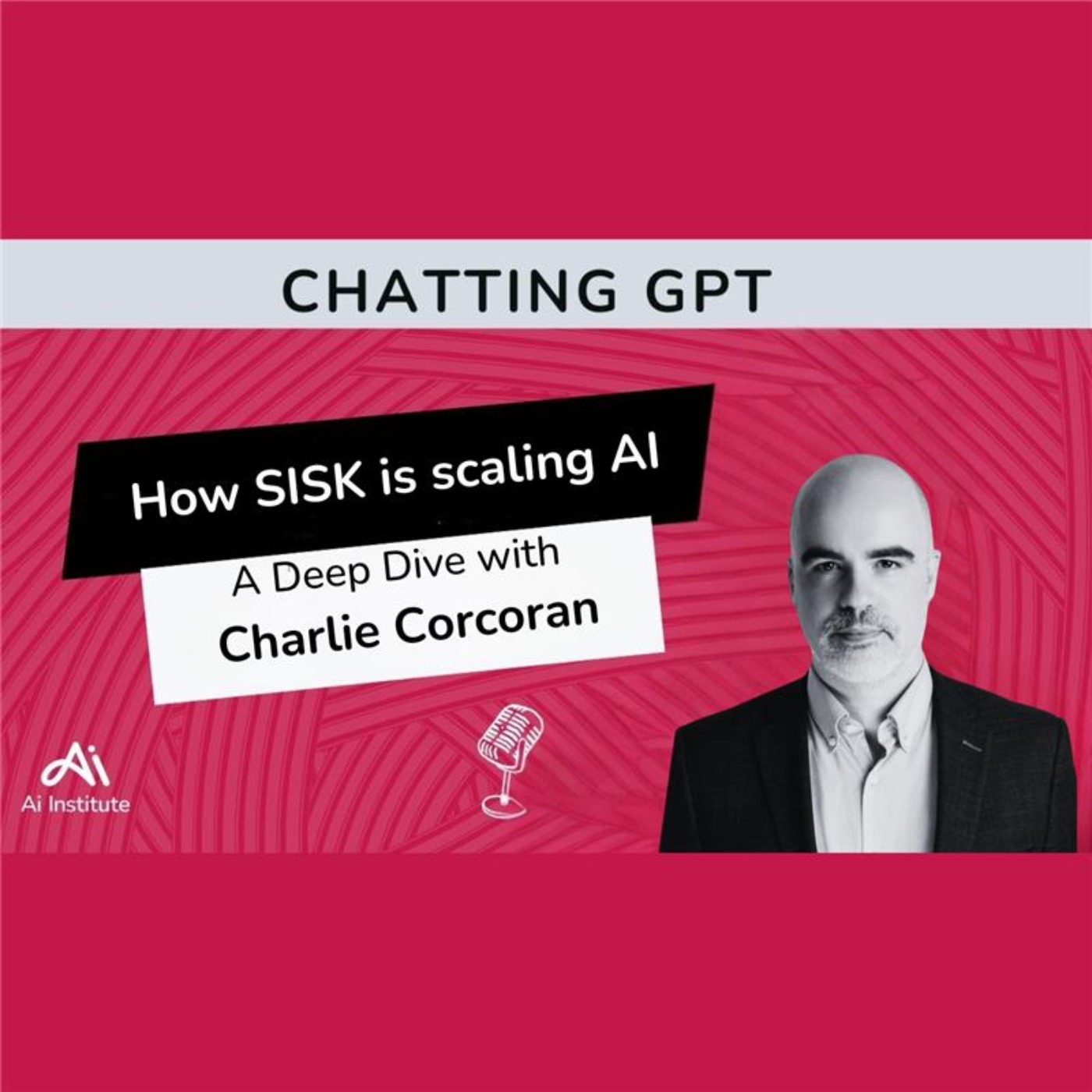
AI Implementation in Construction: A Conversation with Charlie Corcoran of SISKIn this episode of Chatting GPT, host Maryrose founder of the AI Institute, sits down with Charlie Corcoran, Head of Technology, Architecture, and Data at Sisk. They discuss the gradual integration of AI in the construction industry, emphasising productivity improvements, operational efficiency, and data management. Charlie shares insights into specific AI applications within Sis, including their internal intranet, safety data analysis, and the use of computer vision. They also talk about navigating the challenges of AI adoption, addressing shadow AI, and the importance of user groups in fostering AI literacy and collaboration within the organisation. Tune in to learn how AI is reshaping the construction sector and the strategies that are making this transformation possible.Show NotesGuest: Charlie Corcoran, Head of Technology, Architecture and Data, Sisk00:00 Introduction 00:38 The Role of AI in Construction02:11 Prioritising AI Projects03:20 Real-World AI Applications06:16 AI Adoption Challenges and Solutions08:42 Shadow AI and Data Security11:42 Maximising Productivity with AI18:16 Advice for AI Implementation Hosted on Acast. See acast.com/privacy for more information.
Breffni Greene spent 10 years as a practicing architect at Henry J Lyons before spotting ChatGPT on screens across the studio—line managers had no idea their teams were using it. Shadow AI was rampant. Rather than crack down, he convinced leadership to create a new role: Head of AI and Design Innovation. The taboo was real—colleagues worried AI would erase their writing skills and creative thinking. But once people found their hook, everything changed. The managing director discovered new prompting techniques. Junior staff transformed messy interview transcripts into publishable narratives using 11 Labs. Report writing shifted from painful compliance to creative storytelling. Since December, they've processed 500 million tokens at 0.17 cents per message using OmniChat's multi-model platform.Breffni's 2035 vision? Sitting with his moleskin and pen, drawing architecture, knowing the mundane work is handled—proof humans didn't lose to machines.Show NotesGuest: Breffni Greene, Head of AI and Design Innovation, Henry J Lyons ArchitectsKey Topics:[03:09] Shadow AI discovery - ChatGPT on screens across the studio, line managers unaware, the catalyst for Breffni's role.[04:28] Breaking the taboo - AI was genuinely taboo in architecture. Concerns about losing writing skills and creative language.[04:55] Individual wins matter - Even the managing director discovers new techniques. People must find how AI fits their own work.[06:22] The book project - 11 Labs identified voices in messy transcripts, enabling authentic conversational narratives with proper citations.[09:13] Transcription workflows - Talking through building concepts naturally, then structuring compliance documentation while preserving creative passion.[24:18] 500 million tokens at 0.17 cents - Massive volume, minimal cost using multi-model strategy via OmniChat platform.[24:41] Meet Henry - Firm-specific AI persona. GPT-4o for strategy, Claude Sonnet for analysis, Gemini Flash for documents.[26:27] 2035 vision - Moleskin and pen in beautiful urban space, knowing mundane work is handled. Humans still create value.Key Takeaways:Shadow AI signals appetite, not a problem to eliminateCultural change requires individual wins, not platform rolloutsMulti-model strategies improve cost efficiency dramaticallyAuthentic voice matters more when AI generates generic contentConnect: LinkedIn - Breffni GreeneReplay from 2025.. Breffni's cultural transformation blueprint remains essential. Hosted on Acast. See acast.com/privacy for more information.
We're already cyborgs—our phones are extensions of our minds. But 2.7 billion people remain in digital darkness. Dr Lollie Mancey, digital anthropologist and RTÉ Futureville co-presenter, challenges the notion that AI will free us to paint in meadows. Reality? Jobs will vanish, universal basic income may arrive, and we'll face a purpose crisis when work no longer defines us. She poses the era's defining question: when your AI assistant comes home, is it at your table or recharging in the garage? Your answer reveals how you see technology's role. She's betting 80% on AGI by 2030—not gradual progress, but desperate need for higher intelligence. From 1950s washing machines to ChatGPT, labour-saving tools never save time—they shift expectations. The future isn't written, and AI won't decide our fate—we will.Show NotesGuest: Dr Lollie ManceyTitle: Digital Anthropologist, Co-presenter of RTÉ's FuturevilleKey Topics:[01:46] Humans plus technology, not instead of - Why AI isn't pixie dust to sprinkle on everything. Anthropologists are finally having their moment as the human element becomes critical.[03:05] 2.7 billion in digital darkness - Who's missing from the AI conversation? Ireland's bubble makes us forget vast populations have no internet access.[04:23] Who benefits from time saved? - Will employers reward productivity over hours? The washing machine didn't free women from housework—it just changed expectations.[06:17] Universal basic income and purposelessness - When manual labour vanishes, what happens to identity? Two-generation unemployment creates malaise, addiction, depression. The pension (€270/week) is our only test case.[07:10] The 1970s leisure prediction - Someone walked into a Dublin classroom and wrote "leisure time vs work time" on the blackboard. Were they right? Will we choose to work, or will the choice be made for us?[26:31] AGI by 2030: 80% odds - Lollie's bold prediction: artificial general intelligence within six years, triggered by an unsolvable crisis requiring higher brain power.[27:21] The interruption problem - New voice AI that interrupts changes everything. If you're rude to ChatGPT, are you training yourself to be rude to humans?[28:08] At the table or in the garage? - The defining question: where does your AI companion belong? Younger generations already see them as household members, not machinery.[29:28] The invasive technology concern - Why Lollie and neuroscience professors agree: don't open the hard box protecting our soft brains unless absolutely necessary.Key Takeaways:We're passive cyborgs now; we need to become active by understanding algorithmsThe future of work isn't about productivity gains—it's about identity reconstructionAI adoption without considering the 2.7 billion offline is incomplete thinkingYour answer to "table or garage?" reveals your entire worldview on technologyLabour-saving tools historically shift work, they don't eliminate itResources:Futureville - RTÉ programme imagining Ireland in 2050Connect with Lollie: drlollie.ie | LinkedIn: Dr Lollie (L-O-L-L-I-E)Podcast: Available at drlollie.ieChatting GPT is produced by AI Institute. For AI adoption in built environment firms, visit https://weareaiinstitute.com/ Hosted on Acast. See acast.com/privacy for more information.
When Allan Russell joined Musgraves as Head of AI and Process Automation, he thought the 147-year-old Irish retailer wasn't using much AI. Within weeks of his "roadshow" around the business, he'd uncovered 17 unauthorised applications—before even speaking to IT. Then the real numbers emerged: 300,000 hits to Grammarly in 30 days across just 1,700 office users. Shadow AI wasn't theoretical—it was rampant and ungovernanced. Rather than panic, Allan built a strategy around what people were already doing, rolling out Microsoft Copilot and establishing four pillars: process automation, AI, culture, and governance. His advice? Stop hesitating—your competitors are already using these tools. And never deploy AI without first talking to the people whose problems you're trying to solve.Show NotesGuest: Allan Russell, Head of AI and Process Automation, MusgravesKey Topics:[04:16] The shadow AI discovery - How an informal "roadshow" uncovered 17 AI applications before consulting IT.[06:44] 300,000 Grammarly hits - Network data revealed 300,000 Grammarly hits in 30 days across 1,700 users, plus 1,200 ChatGPT hits.[08:02] Four foundational pillars - Process automation and AI supported by culture and governance. Why psychological safety matters as much as guardrails.[10:32] Rolling out Microsoft Copilot - Why starting with enterprise solutions beat playing whack-a-mole with shadow IT.[23:32] Two pieces of advice - (1) Don't hesitate—competitors are already moving. (2) Understand pain points first. Design thinking beats technology-first thinking.[24:57] Beyond internal consumers - What's next: recipe managers, price optimisation, identifying opportunities across Musgraves' franchisee ecosystem.Key Takeaways:Quantify your shadow AI problem through network traffic analysisRelationship capital precedes technical deploymentStart with pain points, not platformsGovernance enables speed by giving people permission to experiment safelyConnect: LinkedIn - Allan J RussellReplay of a 2024 episode. Allan's blueprint for managing shadow AI remains one of the clearest roadmaps we've covered. Hosted on Acast. See acast.com/privacy for more information.
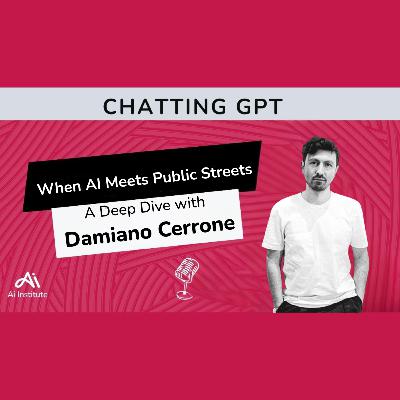
When Munich's citizens were invited to reimagine one of their main streets using AI, the results didn't just sit in a presentation deck—they were actually built. Damiano Cerrone, founder of Urbanist AI and Co-Plan AI, has worked with over 80 organisations worldwide to transform how cities engage with their residents. Instead of traditional surveys asking "what do you want?", his platforms let people visualise, evaluate, and iterate on urban design ideas in real-time. The twist? Damiano argues AI models should be biased—tuned to each participant's perspective—because that's what makes collaboration meaningful. From training Eastern European mayors to test policies with generative AI, to working with the UN Development Programme and Dubai's Prime Minister's office, he's pioneering what he calls "collaborative public governance." The challenge ahead: making European city centres attractive to humans again after decades of infrastructure-led dehumanisation.Guest: Damiano CerroneCompany: Urbanist AI & Co-Plan AILocation: Helsinki, FinlandKey Topics Discussed[02:02] Munich's streets transformedHow a citizens' engagement process during a festival led to an AI-imagined green space and water feature being built as a prototype on one of Munich's main streets.[03:29] Training mayors in Eastern EuropeWorking with the UN Development Programme to help mayors use generative AI to evaluate and test their own policies—compressing months of work into rapid visualisation cycles.[05:33] The collaboration vs. replacement questionWhy cities are asking "why engage people when we can simulate engagement with AI agents?"—and Damiano's response: treating AI as a billion colleagues, not a billion replacements.[08:37] When what people want is wrongHow AI enables people to evaluate their own ideas by seeing them visualised, leading to minds being changed through the process itself rather than being told "no" by experts.[16:38] Embracing bias in AI modelsDamiano's contrarian stance: models should be tuned to individual participants' biases because that's what creates interesting, fruitful conversations—not sterile consensus.[18:13] The mega-trend for European citiesWhy attracting human beings back to dehumanised city centres is the biggest urban challenge ahead, following the post-COVID exodus.Resources MentionedUrbanist AI: site.urbanistai.comCityLab Berlin: Monthly neighbourhood engagement programme (Kids Lab)Futureville (RTÉ): Irish television series imagining Athlone in 2050Connect with Damiano: LinkedInFor Built Environment ProfessionalsDamiano's work demonstrates how participatory AI can close the gap between consultation and implementation—particularly relevant for architecture practices, engineering consultancies, and planning departments struggling with meaningful stakeholder engagement. His platforms have been adopted by governments worldwide, proving that citizen-generated spatial ideas can move from digital visualisation to physical intervention.Chatting GPT is produced by AI Institute. If you're interested in AI adoption for built environment firms, visit https://weareaiinstitute.com/ Hosted on Acast. See acast.com/privacy for more information.
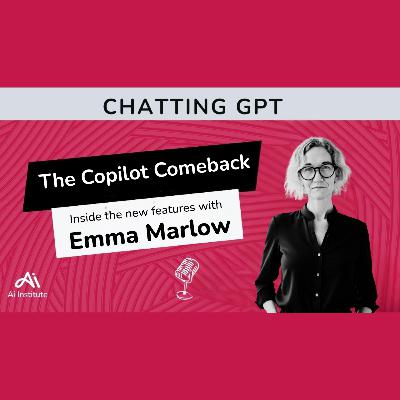
Remember when we thought Microsoft Copilot was just a "glorified file manager"? Well, things have changed in 2025.In this episode, host Maryrose Lyons is joined by the AI Institute's Head of Course Development, Emma Marlow, to discuss why the team has gone from "bearish to bullish" on Copilot. If you have a license sitting unused because the early versions felt clunky or uncreative, this is the episode that will change your mind.Emma breaks down the "game-changing" new features that have turned Copilot into a genuine productivity powerhouse—from the integration of ChatGPT-5 to the magic of "Ask Agent" in M365 . plus, we geek out on the "no-code" potential of Copilot Studio and share exclusive insights on what’s coming in 2026 (spoiler: it involves Claude).In this episode, we cover:Security First: Why Copilot wins on data privacy and the "redact, redact, redact" fatigue of other LLMs.The "Ask Agent" Feature: How to bring your custom agents directly into Word and Excel to analyze your documents.Copilot Studio: Why this "sandbox" is the hidden gem for building powerful workflows without writing code.2026 Predictions: The scoop on Claude coming to Azure and why your PowerPoint deck might finally look good.Links & Resources:Copilot Masterclass https://weareaiinstitute.com/product/copilot-courseCore Skills https://weareaiinstitute.com/product/ai-core-skills-2026Emma on LinkedIn: https://www.linkedin.com/in/demonllamalimited/ Hosted on Acast. See acast.com/privacy for more information.

For this episode, Maryrose Lyons speaks with Geoffrey Allen, CEO and co-founder of Mersus Technologies, an immersive training company specialising in VR for life sciences and manufacturing.In this illuminating chat, Geoff discusses Mersus's unique approach, which includes pioneering hand-tracked only mobile VR experiences to avoid complex controllers. They explore the concept of spatial computing as the "next digital frontier," moving past the 2D internet into a 3D environment.Key takeaways from the conversation:Discover how Mersus uses VR to standardise operations and eliminate contamination risks in high-value processes, such as training staff how to properly put on a gown or handle expensive compounds.Immersive training is self-directed and self-paced, leading to dramatic improvements in training time (75–80% quicker) and higher retention rates through muscle memory.The Role of AI: Geoff explains that the future involves integrating AI, including custom LLMs, to eventually allow for no-code virtual environment creation.Talent Development: Learn about the Mersus talent programme that trains college students in the necessary game engine skillsets (Unity and Unreal) for making commercial immersive media. By the way, they just picked up a prestigious award for Excellence in Talent Development for their programme which is a huge achievement.Tune in to hear why Geoff says, "If Apple's betting it, you have to keep an eye on it," when it comes to spatial technology.Geoff's LinkedIn: https://www.linkedin.com/in/geoffreyallenirl/Mersus Technologies Website: https://mersus.io/Lex Fridman Interview with Mark Zuckerberg: https://www.youtube.com/watch?v=MVYrJJNdrEgAvatar Academy on Meta Quest Store: https://www.meta.com/experiences/avatar-academy/8856539844374985/#spatialAI #3d #VR Hosted on Acast. See acast.com/privacy for more information.

The Reality of Vibe Coding Rob explains the difference between traditional no-code tools and AI-assisted development. Whilst an eight-year-old can build a functioning game through prompting, there's a critical gap: vibe coding gets you 60-70% of the way to a working prototype, but production applications require security, reliable hosting, and proper edge case handling. It's brilliant for prototyping, less brilliant for finishing.The Death of Traditional Coding Rob hasn't written a line of code in six months. He's shifted from typing on mechanical keyboards to managing AI agents - a role that sits between traditional coding and management. He can build in minutes what previously took days or weeks, though he admits missing the dopamine hit of that immediate code feedback loop.When Lovable Fails (and When It Works) The conversation tackles the uncomfortable truth about AI development tools: developers won't take your Lovable prototype and polish it up. These tools excel at helping non-technical founders validate ideas and create something tangible to show customers or managers. If it proves viable, that's when you either learn to build properly or hire a developer.Agents in 2026: Beyond the Hype Rob cuts through the "year of agents" narrative. Whilst large language models are plateauing, the tooling around agents is making substantial leaps. Cursor demonstrates how agents plugged into existing workflows deliver genuine value. Enterprise spending on AI agents has increased significantly, with companies finding practical sweet spots rather than abandoning ship after failed proof-of-concepts.Where to Start with Agents For small business owners and marketers, Rob recommends starting with Notion's business plan - use the agent in the bottom right corner to build databases and organise your work. From there, progress to Microsoft Copilot, then eventually tools like Cursor if you want to build custom applications.The YouTube Growth Strategy Rob's channel success stems from obsession and authenticity rather than gimmicks. His advice: spend a week on the hook and packaging (title and thumbnail) rather than slapping them together in five minutes after creating the content. Study analytics religiously and commit to consistent output.Key Takeaway: AI development tools are transforming who can build software, but they're not magic. Understanding their limitations - that crucial 30% gap between prototype and production - is essential for anyone looking to implement AI practically in their business.Connect with Rob: YouTube https://www.youtube.com/@RobShocksAbout ChattingGPT: The only podcast dedicated to how real Irish people are actually implementing AI in the workforce - no theory, no fluff, just genuine challenges and practical breakthroughs.Subscribe now so you never miss an episode. Hosted on Acast. See acast.com/privacy for more information.

This week on ChattingGPT, we have Stephen Redmond - an influential leader in data analytics and digital transformation, with a background spanning AI leadership roles at BearingPoint and Accenture. He's the Founder and Chief AI Officer of Straitéis AI, a consultancy focused on helping SMEs cut through AI noise to find real value. He is also now working with the AI Institute to deliver AI strategy for clients - combining his expertise in strategy, prioritisation and governance with ours in AI literacy training and implementation.In this show we talk about:How some executives are stuck in conference-induced paralysis whilst their staff are already using ChatGPT on their phones. Stephen Redmond talks about what actually works when implementing AI in business.Key Topics:The Freeze Response Why C-suite leaders attend conferences, hear everything they should be doing, then do nothing. The third option beyond fight or flight that's stopping AI adoption.Shadow AI Reality Billions of weekly ChatGPT users aren't waiting for corporate approval. Staff are using AI anyway—often unsafely. The security risk hiding in plain sight.AI Literacy vs AI Strategy Why training needs to start at the top and bubble up through middle managers. How literacy is climbing the Gartner hype cycle whilst generative AI slides into the trough of disillusionment.The Practical Approach Show, tell, ideate. Map customer journeys, identify pain points, prioritise by value. Why some problems need process tweaks, not AI.From Fear to Curiosity Maryrose on how the conversation shifted from "AI will take my job" (2023) to "data security" (2024) to "overwhelm" (early 2025) and now "curiosity" (now heading into 2026).The SME Gap Why Irish small-to-medium enterprises—especially construction and professional services—represent the biggest untapped opportunity for practical AI implementation.Stephen Redmond LinkedIn: https://www.linkedin.com/in/stephenredmond/Straitéis AI website: https://www.straiteis.ie/AI Institute website: https://weareaiinstitute.com/ Hosted on Acast. See acast.com/privacy for more information.

John Clancy of Galvia and Maryrose Lyons of the AI Institute, AI Adoption specialists for the built environment sector make the case for curiosity, shared data, and human-AI collaboration that improves decisions across every store.DescriptionThis episode centres on people: giving Retail Managers a clear, shared view of performance and using gen-AI to ask better questions of the business.John Clancy outlines how to spread successful tactics across locations how they discuss talent pipelines, internships, and why Manchester and France offer useful models for pro-AI environments.Episode Notes“Once the model goes live, that’s the beginning”—why adoption is a people programme.Democratise access: managers query KPIs and predictions in natural language.Share successes fast: one-click ideas from Cork to every other store.Train for cross-sell moments (café, grooming) without hard selling.Literacy shift: beyond “write emails” to using data for decisions.Talent reality: startups can’t match salaries; offer breadth and impact instead.Policy backdrop: AI campus, minister, and investment fixes to raise national ambition.Safe by design: data remains within the retailer’s four walls.Practical proof: targeted re-engagement drove 4.4% revenue uplift.Curiosity as a KPI: reward teams for testing and sharing what works.Subscribe to Chatting GPT for clear, human-first stories on from people who are using AI to deliver real results—fortnightly drops.KeywordsAI literacy, Built Environment AI, AI Adoption, AI Transformation, AI culture, human-AI collaboration, democratising data, store manager insights, generative AI at work, curiosity at work, retail decision-making, UK Ireland AI, Manchester ecosysem, France AI policy, team enablement, knowledge sharing, Galvia, Chatting GPT Hosted on Acast. See acast.com/privacy for more information.
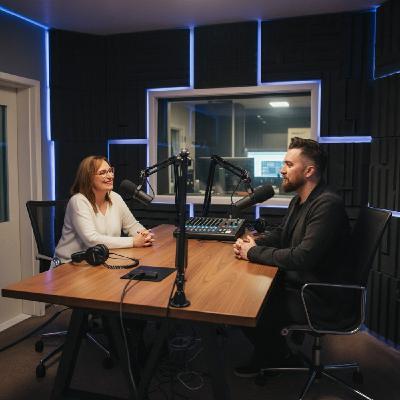
In this episode of Chatting GPT, Maryrose Lyons speaks with Breffni Greene, the head of AI and design innovation at Henry J Lyons Architects. They discuss the integration of AI in architecture, the challenges faced in traditional practices, and the evolving roles of graduates in an AI-driven environment. Breffni shares his journey of becoming an AI champion within his firm, the importance of engaging sceptics, and innovative uses of AI in projects. The conversation also touches on the future of architectural education and the skills needed for upcoming professionals in the field.Connect with Breffni on LinkedIn: https://www.linkedin.com/in/breffnigreene/ Hosted on Acast. See acast.com/privacy for more information.

The Three Types of AI Adopters - Companies dilly-dallying in the shallow end, those taking strategic initiatives, and businesses going AI-first. Only 1% feel their AI has hit maturity.Shadow AI Crisis - Up to 78% of employees are using AI tools regardless of company policy, creating massive GDPR and data exfiltration risks. Enterprise Ireland's AI ban exemplifies this problem.The VW Trade Secret Leak - How an engineer's ChatGPT query accidentally revealed an unreleased drivetrain design, highlighting the real risks of ungoverned AI use.Beyond Task Automation - Moving from basic automation to AI-first requires rethinking entire business processes - from CRM strategies to contact centre operations.SME Advantage vs Resource Reality - Small businesses have agility but face cost barriers. Lee's framework for strategic COO-led AI initiatives with focused expert teams.EU AI Act: Quality Control, Not Innovation Killer - Why the legislation is product regulation protecting fundamental rights, not a barrier to innovation. Companies complaining really just don't want to build quality products.Lee Bristow is originally from Cape Town, now based in Ireland, working with Saros Consulting on cybersecurity, AI governance, and helping enterprises navigate AI implementation strategically.CONNECT Find Lee on LinkedIn or through Saros Consulting for AI governance and cybersecurity expertise.SUBSCRIBE Hit subscribe to ChattingGPT to continue learning from leaders navigating the messy reality of AI implementation. Hosted on Acast. See acast.com/privacy for more information.

What if AI could let you test a million building designs before laying a single brick? Or age a structure 50 years to see how climate change might affect it?Sharon Richardson reveals how artificial intelligence is quietly revolutionising one of the world's oldest industries. From robots that lay tiles with surgical precision to AI systems that run thousands of design iterations in minutes, construction is getting a complete overhaul.We also tackle the big question everyone's asking: does AI's energy appetite matter if it helps us slash the other 97% of global electricity use? Sharon breaks down the numbers that might surprise you.In this episode:Why AI feels like having an engineering time machineThe real energy cost of AI (it's smaller than you think)How robots and humans will split construction workClimate modelling that shows buildings decades into the futureWhy the built environment shapes us as much as we shape itPerfect for anyone curious about AI's practical impact beyond the heSmart, grounded, and refreshingly honest, this is a must-listen for leaders shaping the future of cities, sustainability, and innovation.You can connect with Sharon on LinkedIn: https://www.linkedin.com/in/sharonr/ Hosted on Acast. See acast.com/privacy for more information.

A Look Back from 2030: The Human Side of AIHow Skills, Culture, and Transformation Shaped the Future of WorkIn this episode of Chatting GPT, Maryrose Lyons sits down with transformation expert Stephanie Prenderville for a playful yet thought-provoking conversation set in the year 2030.Together, they explore how work has evolved in an AI-first world—from three-day work weeks and skills-based rewards to the critical importance of human literacy. You’ll hear insights about why creativity, emotional intelligence, and critical thinking have become the core skills of the modern workforce, and how leaders can overcome fear and overwhelm to build cultures that thrive alongside technology.Topics Covered:What it really means to put humans at the heart of AIHow AI transformed hiring, learning, and performance managementWhy critical thinking and human literacy are non-negotiable leadership skillsThe move to transparent, skills-based rewardsThe role of creativity and sustainability in measuring successTips for leaders starting their AI transformation journeyConnect with Stephanie Prenderville:👉 Follow Stephanie on LinkedInLearn more about the AI Institute:👉 Visit the AI Institute Website Hosted on Acast. See acast.com/privacy for more information.
From cyber law to Kabul, from the UN to Brussels, Caro Robson has been at the frontline of AI regulation for two decades. In this episode, she joins Maryrose Lyons of the AI Institute to dissect the global power struggle over AI.They talk DeepSeek, Deep State, and the deep flaws in Europe’s AI readiness. Caro breaks down the delays in the EU AI Act, the surprising innovation culture in China, and the human cost behind every clever chatbot.Expect a smart, clear-eyed take on ethics, enforcement, and why Malta is outperforming Ireland on AI preparation.📚 Read Caro’s latest work: carorobson.com/blog-news-resources including her post on the EU AI Act 'Is it dead on arrival?'📚 Kate Crawford's book "Atlas of AI" which Caro highly recommends.📚 Link to the podcast with Declan Power on AI in warfare. Hosted on Acast. See acast.com/privacy for more information.

Comments

Download from Google Play

Download from App Store
 United States