


 Claim Ownership
The Willow Worlds Podcast
Subscribed: 0Played: 0
Subscribe

© Duncan Zuill
Description
13 Episodes
Reverse
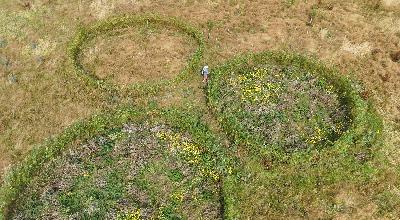
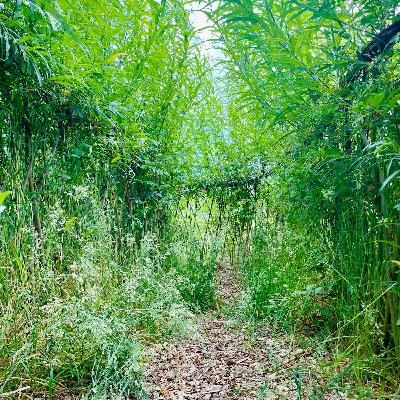
This summer has been a season of steady, visible change at Willow Worlds. When I walk through the plantation now, I see a place that is not only maturing but beginning to shape its own character. What was once a patchwork of rods is slowly filling out into a living landscape — one that carries the marks of the weather, the efforts of volunteers, and even the curious damage of deer testing their antlers.This month there’s not much to do while the willow is growing — so I’ve taken up philosophising. Then I read some of it to the committee, and nobody understood what I was talking about and so, I’m going to be stereotypically British and talk about the weather instead.The weather played a central part in this story. After a notably wet June, with Atlantic fronts bringing regular rainfall and thundery bursts, the dfitches held plenty of moisture and gave our willows a strong start. Early July was more mixed — sunshine between showers, the kind of “four seasons in a day” weather that Scotland knows well. Mid-July warmed again before further showers returned and August opened dramatically with Storm Floris. Yet the middle of August turned out warmer and largely dry, which gave our willows a lift. Across the UK it went down as the hottest summer on record, and here in Fife that warmth was tangible: faster growth where moisture held, even as some of the more exposed or newly planted trees struggled in drier patches.The first thing anyone notices now is the sheer difference in height. In just six months we’ve gone from grassland to three-metre willows. The June rain sent them skyward — flexible but firm. The woven rods have held their shape, and in places sunflowers have sprung up to decorate the lines. They are strongest where we wove them into the structure, already forming small patches of shade and shelter that simply didn’t exist a year ago. In Willow Worlds 2 and 3, the addition of cow manure has driven vigorous growth, though the young trees are temporarily swamped by weeds and wildflowers. They will, in time, outgrow the competition. In Willow World 1, the grass remains much the same as last year and the young trees stand out more clearly. The conversation between trees, grass, and wildflowers will take years to complete. For now, we simply take photos and watch.Wildlife is beginning to claim its share. Long grasses hum with insects, and a hedgehog has been spotted scurrying around. Small birds flit between stems, using them as perches and launching pads. This summer we found our first nest tucked into one of the fedges. But the real surprise came in September: wasps. Hardly seen earlier in the year, they appeared in huge numbers around the older fedges in Bat’s Wood — more than I’ve ever seen anywhere in Scotland. Two pupils described being chased out of the willows by, as they put it, a whole Young Team of wasps. Willow fedges seem to suit wasps very well indeed, it’s actually quite mesmerising to watch them.And there was the schools’ Tree Party, which helped us secure the final points for a Woodland Trust Green Tree School Gold Award. Dozens of pupils returned to see how “their” trees had grown. Some tied ribbons or left notes for an art display, others measured growth with The Conservation Volunteers (TCV). Local charity CLEAR Buckhaven & Methil provided a tree-themed lunch, some maintenance activities, and local produce to share. It was a relaxed, celebratory day — many of us simply sat together outdoors, enjoying the atmosphere.Of course, there are challenges. The nearby plantation, still reliant on plastic tree guards, needed a lot of cleaning out and weeding. Some of our willows needed a little creative re-weaving. But a few stems browsed or bashed by deer had already sprouted defensive replacement branches, showing that with only a little support, the fedge can heal itself.Now, as September cools the air, the first hints of autumn are appearing: yellowing leaves, softened ground after rain, and a sense of slowing down. Looking back on summer 2025, Willow Worlds feels less like a trial plot and more like a place — alive, changing, and rooted in both community and the climate.I should add one date for your diary, we’re having an event during the Fife Climate Festival, so come along on Tuesday October 14th for our Climate Emergency Lunch in the shelter of our willows (bring your boots). Here’s the Ticket link if you want to book, but you can just turn up.That’s all from me this time, thanks for reading/listening, thank you for subscribing - it helps our project grow! Get full access to Willow Worlds at willowworlds.substack.com/subscribe
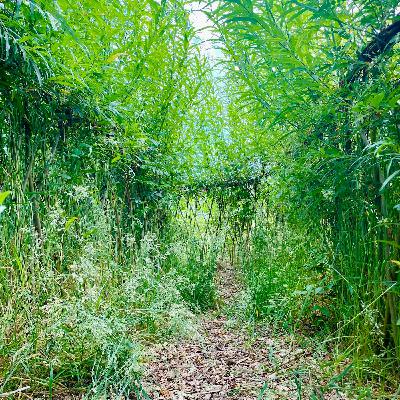
It’s been windy out, we just had Storm Floris (04 August 2025). The fire, in Edinburgh on Arthur’s Seat yesterday (10 August 2025) was made worse by wind fanning the flames up the steep slopes. Wind clearly made that incident worse—but didn’t we hear something about the world becoming less windy, and would that be a good thing?Remember “Global Terrestrial Stilling”? Between about 1980 and 2010, researchers reported roughly a 10% decline in near-surface wind speeds over land. For a moment we worried that the planet’s winds were under threat. Since then, evidence suggests a partial rebound in many regions. So the short answer is ‘don’t worry’ - there will be about the same wind as always. Down in the boundary layer—the thin slice of air we live in—what most of us feel on a breezy day is about bicycle speed: 10–15 mph. Higher up it’s windier, more like car speeds: often 20–30 mph on average. Higher still, in the jet-stream zone, winds can exceed 180 mph at times. So here’s my disclaimer for all us armchair climate scientists: talking about “wind” as one thing is the trap that global warming never was.Stay invested in wind farms. Wind is here to stay, wind is heat redistribution. It exists because we have a planet, an atmosphere, and uneven heating from the Sun. If winds stopped, the tropics would bake, the poles would deepen their freeze, and day–night swings would turn brutal. Thanks to the Second Law of Thermodynamics, pressure and temperature gradients drive motion—so there will always be wind. We should worry about breaking the ecosystem but we shouldn’t worry about breaking the wind.Which brings me to Willow Worlds. At six months old, they’re already acting as a local wind-break: the tallest branches are swaying 3 metres overhead. Some people calculate that this could cut wind by up to 50% directly behind it and create useful shelter farther out. That might mean someone sleeps better, that a house rattles less on stormy nights, and energy bills come down a little—exactly the kind of everyday benefit people mean by “ecosystem services.”Of course, a bit of rewilding isn’t a substitute for housing reform or social work. But Willow Worlds is nice—and “nice” deserves respect. Greenery does furnish a life.Willow Worlds also helped Levenmouth Academy to get short-listed for the Scotland’s Finest Woods (Schools) Award 2025, recieving this certificate. From our point of view, it has a ‘darkly comic’ design which we really enjoyed. (For those who can’t see it: The background to the certificate is a pile of chain-sawed tree trunks piled up as if on the back of a timber truck.) Scotland’s Finest Woods are very nice and we’re proud of our certificate.Anyway, this project is now a year old. I think we’ve got a ‘proof of concept’ that it works in lowland Scotland. There is no other tree plantation method that reaches 3 metres in 6 months - so it’s time to start asking around for people to get involved for next year’s planting.We want to create more Willow Worlds elsewhere, indeed the growing willows demand to be cut and planted elsewhere. If anyone out there wants a willow fedge planted this winter - please message me and we’ll work something out. Please help our project grow!That’s all for now. Thank you for listening to the Willow Worlds Substack. Get full access to Willow Worlds at willowworlds.substack.com/subscribe
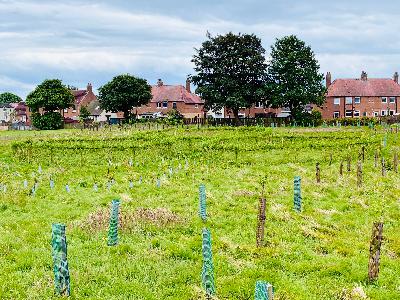
I recently learned about Solarpunk and I’d like to add Solarpunk as an attribute of the Willow Worlds project. I’m saying that Willow Worlds is Solarpunk, but what is Solarpunk? Solarpunk is both a literary genre and an artistic and lifestyle movement that imagines a positive, sustainable future where people live in harmony with nature. This Substack is Solarpunk but unfortunately, it would be Solarpunk even if it was entirely imaginary. There is certainly a place for imaginary projects and writing science fiction but of course the Willow Worlds physically exists and that’s the point of a community-led research project, even if it doesn’t sound as cool. There really are Willow Worlds planted to protect other trees, to cut down on plastic tree guards and improve the ecosystem services of Muiredge Park. But now you know: there is something Solarpunk about Willow Worlds, and if you’d like to tell me about your Solarpunk project, I’d like to hear from you.Welcome to the June episode of the Willow Worlds podcast. In this episode we’ll cover the spring drought, the tree nursery, some deer damage, our tree and now wildflower experiments and how to name 35 species of wildflowers, and why.PART 1: April Showers Bring May FlowersApril Showers Bring May Flowers: The proverb describes the familiar rhythm of the seasons: brief, light spring rains nourishing the soil, holding moisture until May’s longer days, and stronger sun, force life into full expression. Except in 2025, the April showers never came. April passed dry, and May began with the same parched stillness. The BBC report we received just 20% of the average rainfall, it was the driest spring in 69 years. In some areas, that figure dropped to a mere 2%. I’d never seen brown grass in mid-May before.What did this mean for the Willow Worlds project in Muiredge Park?For one, there was a startling bloom of dandelions — all at once. Great yellow constellations lit up the place, reflecting the warm weather. Whether you see them as cheerful wildflowers offering early sustenance to bumblebees, or as stubborn garden trespassers, their abundance was remarkable. But they vanished just as quickly and before most of the bees, it seems, who missed them. This kind of disarticulation — where flowers bloom before pollinators are ready — is the ecological unravelling warned of in Silent Earth by Dave Goulson. A recommended read for everyone interested in life on Earth.On more positive note: the willow fedge of the Willow Worlds is growing well. Digging trenches, layering manure and loosened soil in winter — helped trap enough water for the willows to manage the dry spell. The middles of the willow worlds, however, remain over-exposed to the drought. The saplings there look thirsty, the soil is too dry so we spent a little time adding some water, just to tide them over.PART 2: Treewilding UpdateDrought isn’t much of a worry in our air-pruning nursery. A solar-powered pump manages the watering here, and though it has to spend winter in the shed, it's easy to reinstall it when our now hot, dry Aprils arrives.Now, it’s early summer, the nursery is full. Chestnut, hazel, oak, yew, willow, sycamore, and others — all jostling for light and space. The box looks crowded, but the trees are content. Leaves are upright, growth steady, no signs of stress. After two years, they’ll be pressing at the edges of this wooden world, their roots well trained. Well, hopefully well trained: we’ll see what shape they’re in later.For now, the nursery is thriving — a small win for the trees.PART 3: Willow Worlds vs the WildlifeSome pupils assured me that deer don’t come near the houses. I understood why they believed that — but gently explained they were mistaken. The deer pass through at night, as silent as Slender Man. Still, I like their confidence. A strong sense of place — even when it’s not quite accurate — is a valuable thing. It means they’ve formed a vivid, high-definition picture of where they believe they live. That kind of mental mapping is part of growing up, part of how we build relationships with the world around us. When you spend time in a place — even just a few minutes each day — you start to know it deeply. You remember its shapes, its air, its sounds. And if you’ve never seen a deer there, it’s only natural to think they don’t come.But they do.I’ve learned not to rely on digital wildlife cameras — they don’t last long out here in klepto-land. Instead, I plant “analogue sensors”: lone willow rods, placed like decoys. Deer find them irresistible. Every spring for three years, I’ve planted unprotected willow, and every year, the deer destroy them. I might as well be planting lolipops. The results are unmistakable — bark stripped clean, trunks left smooth and pale as bone. Today the sensors worked: there was clear evidence of deer damage.Turning to inspect the fedge — our living willow fence — I was excited to see how it had fared. To my delight, 89 out of 90 metres showed no damage. This is a mystery but it is what I had hoped. Maybe the woven pattern had confused the deer, like a shoal of fish distracting a shark. Maybe it looked artificial, like an inedible wooden trellis. Or maybe the structure carried vibrations — alarming the deer with each nudge. I might never know.But there was one breach. I found the one place where the deer had decided to strike, on the west side of WW1. The deer had given it the old college try and a battle had ensued between little antlers and woven willow. Happily, it looks like the fedge won. The deer, having made a hole, appears to have given up. No trees inside the Willow World look damaged and we can only guess at why the deer had decided to move on without going through the hole it had made. Roe deer are lazy. I think the deer simply couldn’t be bothered to jump in for such tiny saplings. Apathy is our friend in this situation, I wonder how long we can count on this laziness.PART 4: Tree and Wildflower Experiments“There are no gardening mistakes, only experiments.”Janet Kilburn Phillips.We had hoped to compare tree growth across different soil preparations — to test whether manure, or cardboard or topsoil or some combination made a measurable difference. But the topsoil never arrived, and so, the experiment changed.It’s tempting to think the outcome would have been obvious: of course trees will grow faster in enriched soil. But part of me wonders if the question was too simple to begin with. Anyway, now our attention has shifted — away from just the trees, and toward what grows between them.In Willow World 1, we’ve sown yellow rattle. It’s a curious plant — semi-parasitic on grass, it quietly suppresses the height of meadows, giving other wildflowers a chance to emerge. Bees like it. And once it’s established, it tends to return year after year. Kirkcaldy has had great success with it, though I’m not sure how they managed it so effectively.We’re also pursuing biodiversity to create resilience in our increasingly unreliable climate. In Willow Worlds 2 and 3, we used a seed mix from Scotia Seeds, a local supplier in Fife. Their “Get Nectar-rich Quick” blend offers years of colour, pollen, and surprise. It isn’t cheap — so we’re supplementing the mix with hand-collected annuals and plug plants, grown for quick impact.There is a discussion to have about the effectiveness of using plug plants. This is what we’re investigating in WW2 and WW3: How do areas planted with seeds and plug plants compare with areas where we just sowed seeds?We welcomed the rain in late May which must have really helped our freshly sown and planted wildflowers. We really got the timing right on that - if we’d planted the plugs in April they would all have turned to dust by now. Again, apathy was on our side this time.Part 5: Is it unreasonable to expect me to learn 35 species of wildflowers?Naming wildflowers never has been my cup of tea. In this post, I’m trying to change that. Some people tell me that the names of flowers is a timeless thing to know, like great books it must be nice to know such things so you can feel a greater affinity towards the world you live in. In other words, it might make me a better person. Here’s a quote I’m still working on liking, or maybe understanding fully. It’s from Robert Macfarlane’s The Lost Spells:“As a species, we will not save what we do not love, and we rarely love what we cannot name.”—Robert Macfarlane (2020)Why don’t I like it? Well, not to put a finer point on it, I find this romantic notion of naming equalling loving to be a stretch. On behalf of people like me with low IQs, I’m suspicious of such talk, I believe it’s possible to love nature while failing to name wildflowers. So I don’t like it yet, but maybe I should change my mind. Robert Macfarlane is too clever to go arguing with, he’s usually more right than wrong. I intend to find a way to agree with him without attempting a brain transplant.My starting point is that it seems unreasonable to expect me to learn the 35 species of wildflowers in the Get Nectar-rich Quick seed mix - but I need to change that. Perhaps I should reflect that these plants that have lived millions of years as part of an ecosystem rich in meaning to itself and that I should give that fact the respect it deserves. Cars, by comparison, are simply a deadly species of sofa, invented only 140 years ago, yet I can identify over 35 cars just from their logos. Wildflowers, unlike dangerous furniture, have no interest in brand awareness - they are independent of our regard. They were pre-human, they are more-than-human and they will be post-human. I should take them a bit more seriously than corporate logos because of their awesome endurance and their unique contributions to their ecosystems. The identities of wildflowers are greater than the identities of companies. Hopefully 35 species sounds a more reasonable target now, I’m still not sure about this - I’m old, I don’t learn very fast any more but I’ll give it a go.
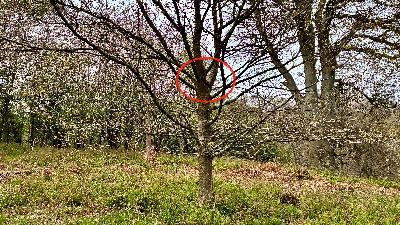
Outgrown.When I was 14, I grew some trees in plastic milk cartons and planted them in the woods. Of course, not all of them survived. One nearly didn’t survive being planted as I remember I broke the top off by mistake when I was carrying it. I planted the little oak anyway - and maybe that’s why I remember it. And now I can still recognise that broken crown, except it’s huge. It towers over me like I once towered over it. I feel very small next to this tree. I have been outgrown. The tree seems more substantial than I am - I have been outgrown and that’s a strange decadent feeling.It’s alright if one of your children makes you feel small when they look down on you, at least you know that you might communicate. A tree doesn’t even look at you. A tree simply gazes into the sky or, more likely, the ground and gets on with its life. To get outgrown by a tree is odd.People say you shouldn’t plant trees close together - but 35 years ago, I did - here are two rowans that grew up together quite happily and it even seems like they have supported each other. I grew them from seed. I remember planting them because they were so tangled together as saplings that it seemed too risky to pull them apart. So Akira Miyawaki is right about the cooperative nature of trees. We need not to pretend that ‘thinning the trees’ is a good idea unless you simply enjoy cutting down trees. In which case, just be honest about your problems, find a good therapist and come clean about why you really want to cut down trees.It’s too late to plant any more willow now, spring has sprung and the sap is rising. In the Willow Worlds, the fedge is budding and coming into leaf fast. Shoots nudge upward, tiny leaves unfurl, and the living structures are taking shape.It’s tempting to want to do more in Spring. But nature fears our impatience because every shoot is delicate. Growth isn’t something we can rush: we have to let Spring, do its thing. It’s a slow conversation between the elements — and our role is mostly to stay out of the way and add water. Water is always good for willow and why not plant some honeysuckle, or simple sunflowers, or peas or beans against the fedge, why should the willow have it all their own way?When we started this project, we had a cunning plan. We set out to plant in a crafty fashion and see what the deer might make of them. Now, the willows are sprouting — we see deer damage all round, but our defences are holding them off so far. There are some little gaps in the fedge and we hope the deer don’t find them, but perfection is not our goal, we’re taking risks and not worrying too much.Already, in small ways, the fedges are weaving themselves into the land. Green shoots where bare stems were, we imagine roots finding their way beneath our feet. In time, these will grow into places of shelter and shadow, a thickening of the boundary layer. We are raising the ceiling of the ecosystem to make room for birds and bats and better, healthier air.We celebrate the simple fact that things are growing and try not to think about how one day we might all be outgrown. [Ed: out-groan?]Thank you for putting up with this rather boring episode of The Willow Worlds podcast!! Get full access to Willow Worlds at willowworlds.substack.com/subscribe

The second-coming of Donald Trump may only last a few more months, maybe a year, maybe four, and he’ll be gone. Unfortunately, he is accompanied by the Four Horsemen of the Apocalypse. They arrived ahead of him and will stay with us much longer: global heating, plastic pollution, ecosystem collapse and world famine. There is a 5th Horseman, but didn’t show up, he just stayed home, he’s playing that most ironically named game: “Call of Duty”.Hi, I’m Duncan Zuill and welcome to the Willow Worlds podcast.We are living through a climate crisis, a plastic pollution crisis, a mass extinction and a biodiversity collapse. Few of us are still living in denial, I think that ship has sailed. Yet when it comes to practical action: where is everybody? Where is everyone when there is a real call of duty?Everyone should be panicking about the state of the planet, but few people are. Most of us are living in a strange bubble of bravery and apathy. Fortunately, our project is designed for success in areas of very brave apathy. That’s why I’m happy to tell you that we got on just fine this month - though I’m a bit late with this post, because well… I couldn’t be bothered. But…We got it done. Nae bother.Well, maybe there was just a wee bit of bother… I’d better tell you.The building company ‘lost’ the 80 tonnes of topsoil they said they would donate. The last-minute solutions to the problem failed leaving us with the prospect of planting trees in manure. Also, climate events all over Fife clashed with our Willow Worlds planting weekend. On Friday, we had only one ticket sold and then of course, there were the Yellow Weather Warnings. The usual adversities, in other words. But we had to take delivery of the willow and we also had to plant it, because we had nowhere to store it. And as Rob Eves, our willow expert was recovering from major shoulder surgery he would do very little lifting but attend as a consultant in an advisory capacity… and then we ran out of wooden stakes. And it was nae bother really.We had 6 adults and 7 children on the day, and, to my surprise that was enough.We had Alex House the volunteer, Rob Eves bringing the willow, tree surgeon Fergus Morrison (as Rob’s assistant) and 3 Bat’s Wood committee members: myself, Ken Haig and Sam Green. 7 children were also helping, some whom had also helped on the soil preparation day.Willow Worlds landed just fine on the day because planting was quick and easy:Here’s what we learned:1. With a nice soft soil, see December’s post, willow fedge is very easy to plant. In fact, 6 adults can plant 90 metres in 3 circles in 4 hours (6 adults x 4 hours = 24 worked-hours). Planting 1200 trees, in an artistic and useful installation is - very fast.2. We learned what to do when we run out of stakes - we coppice more willow trees. We were 18 stakes short but we solved this by cutting what we needed from Bat’s Wood, this saved us £180 and delays. The off-cuts from this work went into Rob’s trailer to feed the giraffes in Edinburgh Zoo. This was cost-free, plastic-free and zero-waste - it’s ticking all the sustainability boxes!3. If we had had significant numbers of volunteers, as unlikely as that sounds, we’d have needed another environmental activity or two to occupy them. This could have been planting native trees inside the circles, removing litter or tidying derelict tree guards nearby. The willow fedge doesn’t need lots of people involved.4. The transformative effect of planting Willow Worlds is several orders of magnitude greater than a new stand of whips in tree guards. This was an immensely satisfying day.5. We still think willow rods replacing the tree guards makes a lot of sense, environmentally speaking.6. Willow Worlds, or more simply, willow enclosures, represents an interesting addition to community tree planting efforts.These are tentative conclusions at the moment, the willows of this project have not yet started to grow. But at the time of writing, the installed fedge circles are successfully planted and likely to thrive in their prepared soil enriched with cow manure. The research question we began with was: “could willow be used to form an alternative to tree guards in lowland Scotland where there is overgrazing from roe deer?” We think that we can say ‘yes’ to this but we also have the additional quesiton about how such installations exist with the communities in which they are planted. We aim to find this out as the roots start to take hold in the apathetic turpitude of Muiredge Park.Alex, our sole volunteer, was quite taken by the installations, calling them “the world’s biggest baskets”. We can say for sure that Willow Worlds was very interesting and positively recieved by someone who came expecting simply to plant trees. However, volunteers at environmental events can be expected to have a positive bias. What about the people living next to the Willow Worlds? We aim to find this out somehow, because to be truly sustainable, it has to be agreeable to those who see the project from the windows of their homes and when they are out walking the dog.But no curtains were seen to twitch, only one person asked what we were doing. We might be waiting a long time to hear what the locals think about the Willow Worlds. We may come to the conclusion that nobody thinks about the Willow Worlds. We may have to think about other ways that a place can think about Willow Worlds.How can we think about a place thinking about Willow Worlds?I want a way of answering this question in simple words.I’ll try to answer this question in the next post here on the Willow Worlds Podcast.After the planting event, I had a quiet conversation with Rob Eaves of Auldgate Willow and tree surgeon Fergus Morrison, diving deeper into the world of willow. The wind had played havoc with my recording, so instead, I’ll share some of the things we talked about—the kind of details that stick in your mind long after the conversation ends.Rob’s journey with willow began in 2008, after a basket weaving course changed the course of his life. What started as a craft quickly became a business, and eventually, Auldgate Willow took root. He spoke about the willow trees with a kind of quiet admiration, describing them as something both beautiful and practical—a rare balance of artistry and ecological purpose. Fergus, newer to the world of willow, was struck by its efficiency. “You just cut it and replant it,” he said, almost in disbelief. A tree that wants to be useful, over and over again.Rob grows and supplies Salix viminalis, a tough, mildew-resistant basket willow. It’s seasonal work—no planting happens during the growing months—but its uses are as varied as they are surprising. Of course, there’s basketry and cricket bats, fencing, charcoal, even animal feed. But then the conversation took a turn toward the unexpected. Willow, it turns out, is woven into riverbanks at scale to prevent erosion. Willow made the seats of Spitfire planes. It even forms the light, flexible cores inside the bearskin hats of the Coldstream Guards. Something about that stuck with me: a tree both delicate and resilient, working its way into history in ways few would ever suspect.I asked them whether Willow Worlds still felt viable after years of involvement. Could it scale up? Could it spread? Fergus was certain more people should know about willow fedge—a living fence that most people wouldn’t even consider. The challenge, he admitted, is maintenance. Like any hedge, it needs a yearly trim. But perhaps the cuttings themselves could find a use.Coppiced willow, when cut just six inches above the ground, erupts into long, straight rods by May—nature’s own renewal cycle. As we walked among the young trees, we realized some had been cut a little too low, and we’d have to see how they fared. We laughed about how we weren’t quite self-sufficient yet—still dependent on Rob’s willow supply. Maybe next year, we said. Maybe next year.That’s all for now, thanks for listening to the Willow Worlds Podcast. See you next time, there’s still a lot of willow to grow. Get full access to Willow Worlds at willowworlds.substack.com/subscribe

There’s a little red-breasted bird who takes an interest in what you are doing in your garden. It’s a Robin and they usually make me feel cheerful. But this month, while I was cutting willow down in Kirkcaldy Walled Garden in the late afternoon, there was a robin who did not like what I was doing. His sharp little eyes seemed to flash at me. In fact, I stopped and went home without doing all that I had had time for - there was something about the bird’s manner that gave me the fear.If you see someone cutting down a tree - do you get upset? Do you think the person cutting down the tree should feel guilty? Well, yes and yes and I know a little bird that agrees with you. But this month it is possible to cut down some trees and, with the help of rewilding, not feel upset or guilty about it. Let me tell you how.January’s activity doesn’t exactly feel like environmental action. Armed with secateurs, long-handled loppers, and even saws, we took to the big, wavy willow trees and reduced them to stumps. If we laid the branches end to end, we’d have about 2.5 kilometers of willow growth—that’s quite a lot of branches. At this time of year, young forests look small, the summer’s lush canopy is gone, leaving behind bare, spindly branches and empty spaces that make everything seem desolate - and there’s me sawing away at what’s left, making it worse. It takes a strong dose of nature-based reflection to convince me that January’s mass mutilation of willow trees makes any ecological sense.The before-and-after photos tell a stark story—cutting willow is a dramatic process. It certainly doesn’t look like a tree would welcome such treatment. To strip them down in the bleakness of winter, leaving behind stacks of cut rods and stakes, feels almost barbaric. Anyone watching might assume it’s a commercial operation. I probably look like some kind of rural criminal, and not just to robins.But that’s not what I am, as I explained to some very earnest environmentally conscious dog walkers. I asked the dog walkers to think of me as the ghost of a woolly mammoth or the ghost of a giant Pleistocene deer. After all, such industrious cutting would have been a regular occurrence when megafauna roamed the Earth. Willow evolved alongside these massive herbivores, its branches sticking out from the snow as one of the only available sources of winter grazing.Of course, the dog walkers walked away shaking their heads and making pointing gestures towards their temples as if they had just remembered something. And that was too bad because I wanted to also tell them about Pleistocene Park and Russia’s most cited Earth Scientist: Sergey Zimov.For 36 years, Zimov has been reintroducing large herbivores like bison, elk and yak to a very remote part of Russia, attempting to bring them back to Pleistocene levels. Pleistocene Park, is a pioneering project that has earned a spot in Project Drawdown’s Top 100 climate solutions. Zimov argues that the numbers of large herbivores need to be much higher than they are to combat global warming and importantly, to stop the permafrost melting. He believes that the vast forests of the north only exist because the mammoths are absent. Without large herbivores to keep the landscape open, the permafrost will melt. His vision is to transform the silent taiga forests into a noisy tundra steppe, filled with grasslands and scattered thickets of trees. In his view, this is the only viable way to protect the permafrost layer. If the permafrost melts, the climate crisis will be far, far worse. Pleistocene ParkAnyway, please watch the two-hour Pleistocene Park documentary linked below.In the Pleistocene, we also had woolly mammoths in Scotland. Rather than seeing myself as an ecological criminal this month, I am the ghost of a mammoth. Ripping out last year’s willow growth as the mammoths did. Now I can feel proud of these before and after photos, I am with winter’s bleakness and I am with the woolly mammoths! I am re-enacting some part of some greater ancestral ecosystem. If that does sound dellusional, well too bad. To make knowledge useful, we need to think with ecosystems and see what works. It’s the right thing to do even if it looks like the wrong thing to do!Note: Pleistocene Park’s campaign to restore huge herds of megafauna can’t be replicated here in Scotland because Scotland doesn’t have a permafrost layer to protect. I’m simply enjoying thinking about their project and reflecting on the fact that willow really can “take it” being cut down to a stump every winter.Anyway, what else is there to fill this relatively slow month? Well, I’ve been taking some pupils outside into the campus to build dens. In the absense of decent trees on campus the building of dens is difficult. So we decided to… you guessed it… plant some willow to help us.The Volunteering Matters Action Earth sponsored tree planting and willow den creation event was postponed due to a storm (made worse by climate change) but it enjoyed amazing shorts and t-shirts weather (no doubt attributable to climate change) on Saturday 1st of February. Two of our largest dead trees were down because of the storm which gave us branches to make into stakes for the willow den and we had a good mix of people attending. We planted over 200 trees and made some more progress on the willow enclosures which are spreading across the site. Young people are now able to create a den in Bat’s Wood much faster and with less difficulty than before now they have a solid shell of willow to inhabit. In a few years, I think it’s going to look pretty cool - as long as we hack it back every year.And so, the cycle turns. What we cut down, we also plant. What seems destructive in winter finds renewal in spring. The stark, cut-back willows will soon erupt in fresh green shoots, just as the young trees we planted will take root and grow. It’s a reminder that landscapes are never still—they shift, they adapt, they demand a certain level of intervention.January’s work may have felt like action against nature, but it was, in truth, an act of alignment. We aren’t just hacking at trees; we are shaping an ecosystem, playing our part in the long rhythms of disturbance and regrowth. The ghost of the mammoth lingers.For now, we wait. The willow stumps will sprout, the dens will take form, and the young forests will rise. By summer, the evidence of our winter’s labor will be hidden in a more dense, humming green. And when next winter comes, the secateurs and handsaws will return, and the cycle will begin again. Get full access to Willow Worlds at willowworlds.substack.com/subscribe
Imagine a patch of grass transformed into a dense, thriving forest in just 3 years. That’s the promise of what Jake M. Robinson calls the 'Miyawaki forest revolution.' Is it the ecological game-changer we need, or just another distraction? Let’s find out.NOTE: The text below has more than the podcast actually says.Fife Council’s Grasslands Project. Link: https://www.fife.gov.uk/kb/docs/articles/environment2/climate-change,-carbon-and-energy/what-fife-council-is-doing/rewilding-fife I’m going to name names because it really does take a community to do a community research project and I’d like to express my thanks to them.Firstly, there was me and Kit (Chris Cuppitt) marking out the circles as best we could and then in December we removed and replanted trees which were getting in the way. They were all small, don’t worry. Then there was Kara Dunn-Wilkie with the CAT scanner: we insisted on very careful CAT scanning for underground pipes and cables. Then we had to remark our three circles as they weren’t circular enough. Then there was the cardboard for mulching one of the circles and, that was a lot of cardboard. Then there were deliveries of manure for 2 of the 3 circles. Donald Laing the farmer from Coalton of Wemyss did us pround with great mountains of it, 10 tonnes in both circles. Pupils were involved in this and even got a ride in the huge tractor.Then there was the great day of ditch digging, Robert Kirkhope from CLEAR brought a small mechanical digger - nothing like the one that made the Wee Forest - and we made 3 circular ditches and filled them with grass, cardboard, manure and soil to feed the willow and enable easy planting. Sam Green and Lee Inglis put in a good shift as volunteers. Local pupils - Armani Drummond, Jackson Currie and Craig Vause were there before I was and we all worked until it was done. I’m amazed with what we did in one epic Saturday.Oh, but anyway - if you’re free a week on Saturday you can come and actually plant a tree with us:Event: Creative Willow PlantingDate: Saturday, January 25th, 2025Time: 12.30-3pmCost: Free - but let me know to expect you!Tickets {shrugs}: if you want a ticket…https://www.tickettailor.com/events/batswood/1531047Email: batswood@icloud.com Get full access to Willow Worlds at willowworlds.substack.com/subscribe
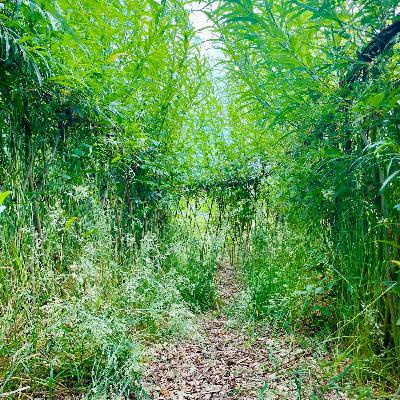
In this installment of Willow Worlds, I want to put in a philosophical thought about why I’m so excited about the idea of using willow in the way we are. I’ve decided to write about affordances. Affordances, the main idea in the Theory of Affordances, is quite simple and only grows into something more complicated as it goes on. For the bits that ‘go on’, I would refer you to thinkers such as Stuart Kauffman and writers like Jeremy Lent - it really is a bit of a niche philosophical area. It is possible to take the idea of affordance and speculate about the very base of existence and even the emergence of consciousness. Fortunately for you, I don’t have quite enough brain to grasp it and explain it and, unfortunately for me, those who have enough brain can’t make it simple enough for me to understand either. But if there is an answer to the ultimate questions, I really do think it has something to do with the idea of affordances. Just don’t ask me how, because I’ll get confused and send you what I wrote yesterday - and you’ll be none the wiser for that.So, I just want to say a few simple things about affordances, in the way I actually do understand them and get excited by them. In these times of climate crisis, biodiversity collapse and neoliberal chaos - we need to believe in our own agency - that we can do something to change things. I just read “The Invisible Doctrine” by George Monbiot and Peter Hutchison, and I think they’re right about quite a lot - we need a profound change in our politics. We need something to really get people up on their feet, to drive the social and political changes we need, and I’m sorry [I pat my pockets], I don’t have that idea on me right now, not even for paid subscribers, but maybe the idea of affordances can help a wee bit.An affordance is a quality that creates complexity. Some affordances are in the design of things, for example, a cup is designed to afford the holding of water. We’d say that holding water is an affordance of a cup. Oh that’s easy but wait. A cup sitting outside and half full of water affords a perch to a small bird that wants to drink. A perch then is an affordance of a cup, to a bird - but only if the bird is small enough and if the bird spots the potential and… notice how the perch is afforded by the cup and the bird, not the far away cup designer. The cup also affords a shadow, a reflection, an obstacle, a risk of spillage and so on. The possible affordances are endless but, the ones actualised in time are both finite and unpredictable.Children are fascinated by affordances, it’s why we pick up a stick and make it into a sword, a fishing rod or a magic wand. Child’s play is full of exploring the affordances of different surfaces, shapes, strengths, textures, slopes, trees and so on. Exploring a wood, setting a fire, going on a night hike, climbing a tree, throwing stones and making dens with sticks are all experiments with affordances.What a plastic tree guard affords to nature is worse than useless - a century of crumbling microplastic dust affords little the future can thank us for. The things of the artificial world have far fewer affordances in them than those found in nature because a living thing has a natural affinity with other living things: they trade in affordances: they feed, shape, live on, move around and consume each other. Living things afford much to each other.A willow tree affords food for beavers, willow evolved next to such voracious herbivores and is quite used to being cut down and having to start again. If you cut a branch of willow and stick it in the ground, it will afford a new tree. It’s amazing. Growing in the ground around our school, a thin willow tree affords a quick snack for a passing deer, then it’s dead. That’s a problem, because the trees never get a break from the deer.But, if we plant sturdy branches of willow in a criss-cross pattern we make a fedge - a living fence hedge - and that affords protection for the willow because the deer can only nuzzle one side of the trunk and not all the way around. If we make the criss-cross patterned fedge into a circle then we afford protection to not only the willow but whatever trees are inside the circle. In this way, fedge circles (Willow Worlds) afford tree protection without tree guards. Fedge therefore affords a nature-based solution to deer overgrazing.Willow Worlds maximises the ecosystem services that willow can afford and this sidesteps what we usually use to afford things: money. It takes money to make a tree guard and money, as a capitalist will tell you, makes the world go round. But what if you could get a tree guard without spending any money? The world would not stop going round, it would simply be a bit different - and the protection of trees would be more effective. My idea of using trees to protect trees effectively cuts out all the middle men in the tree guard industry, except the person actually standing next to the tree.That’s an instance of subsidiarity, when you think about it. Subsidiarity is a sort of left wing idea that means decisions should be taken at as local a level as possible well, Willow Worlds subsidiaritizes tree protection - this form of tree guarding depends solely on the local people who can afford the time and effort it takes to plant a fedge.Of course, time is money too and Willow Worlds is not an off grid survival experiment. We do need some money, for manure and labour, we could pay someone to do this simple, semi-skilled job. And, I don’t mind late industrial capitalism selling us good tools and machines but let’s avoid the toxic tree guards, the ironic wooden stakes and whatever else is making the problems worse.Fedge can afford protection to young trees for the few years they need to get established. Fedge affords a plentiful supply of new willow rods to plant as more fedge in the next year. Fedge is the embodiment of what we want: to grow trees for nature restoration. The tree stake is, by contrast, its opposite: a tree felled for the purpose of money. Fedge is both the tree and the protection of trees, and like our NHS, it is free at the point of use! You cut the new bit off and stick it in the ground and that’s planting and protecting trees at the same time.By recognizing the affordances at hand, like the humble willow, we can find some effective actions. The ability of fedge to protect itself and others is an example of a nature-based solution arising from its affordances rather than a new technology. This might be a metaphor for finding more affordances in other areas of life. We could do with a sustainability that grows without capital investment - branch by branch, tree by tree, and in places affording environmental action - not just the consumption of more stuff.Happy New Year Everyone!Music on the video credit: final word 1v99 by Setuniman -- https://freesound.org/s/783248/ -- License: Attribution NonCommercial 4.0 Get full access to Willow Worlds at willowworlds.substack.com/subscribe
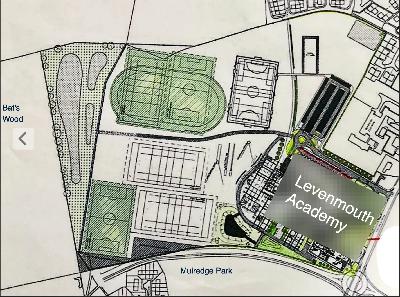
Willow Worlds at Muiredge Park, as a story, begins with the opening of Levenmouth Academy next door. The nature restoration stories at Bat’s Wood are a sort of Silmarillion to the the Willow World’s Hobbit. Fortunately, the nature restoration stories of Bat’s Wood are much easier to read than the early mythology of Tolkein’s Middle Earth and, I’m not just making it up. It’s all true.Willow Worlds is a reader-supported publication. To receive new posts and support my work, consider becoming a free or paid subscriber.In 2017, nobody knew what the three grey blobs on the map were. They sat on the left side of the plans like abstract punctuation, waiting for meaning. The geographers thought they might be contour lines, 3 gentle mounds in the land. But the land wasn’t gentle—it was wrecked. This was the Darkness on the Edge of Town, a place defined by an absence of interest. It was the place where the old school was buried. The new school wanted to sell it off but they had failed due to the presence of bats discovered there. This green triangle of land belongs to the bats therefore we call it Bat’s Wood.The grey blobs of Bat’s Wood turned out to be clover, planted as a desperate first attempt to coax life from the ground. This wasn’t soil, not in the usual sense. It was made-up land—the skeletal remains of earth, flipped inside out by years of bulldozering. The topsoil was long gone, and what was left had spent millennia entombed seven meters underground. Nothing lives that deep except stone and memory. What we had wasn’t land but exposed underworld. Only the hardiest invaders—clover and a particularly tenacious grass—could cling to it.By June 2018, the blobs had begun to transform. The clover’s nitrogen-fixing magic painted the land a vibrant green, its superpower quietly preparing the way for something more enduring: a tree plantation of 5000 native trees, each with a wooden stake and a heavy green plastic tree guard. This added to the pupil’s own tree planting efforts. Through the blobs, the beginnings of an artistic, meandering path took shape. Volunteers carved the paths into the land. I remember Tanaka-san, a student from Japan, dressed in Harajuku-chic pink, wielding a spade heavier than he was, determined to break the clay beneath the February fog. That path is still there, visible on Google Maps, though I wonder if Tanaka-san knows. We’ve built on his first scratchings.We were full of optimism then, convinced that paths would lead to community place-making, and that clover could nurse our fledgling forest to life. With thousands of saplings, protected by green plastic tree guards we felt we had done our job and all we had to do was colour in the map and let nature take its course. But in the real world, the disturbed messy one, Nature can’t simply be summoned - like a spirit - with a bulldozer, a few thousand trees and a bag of clover seeds. Nature made Failblog, in 2018.By the second year, the truth was undeniable: over 90% of our trees were dead. We had given the ground a nitrogen-fix, but the result was turbocharged weeds. Two metre thistles and nettles, greedy for nitrogen, choked out our saplings. The clay soil dried into something resembling pottery in summer and generations of weeds pitted themselves against one generation of trees and won. The plastic guards turned into silent grave markers for dreams that hadn’t taken root.We stumbled in other ways too. One well-meaning idea involved tractor tyres, which we imagined as cheap and durable structures. But tyres, we learned too late, are a fire hazard and a toxic leech on the land. Farmers were only too eager to offload them onto unwitting chumps like us, rather than pay for their disposal. Other early efforts—a low willow fence, a spiral of coloured willows—were equally short-lived, succumbing to poor soil, deer, and the unrelenting weeds. I even lost the photos, as if to spare us the memory of our failures.Yet, these failures were teachers. They taught us to observe more closely and to let go of human planning. Our efforts had been about imposing a vision when we should have been feeding an emerging picture. The problem is that when we listen to what the land needs - and what it rejects - the process takes more than years, it might take decades - an intergenerational period of time that humans find hard to think about. We have already seen this in our discussion of the shifting baselines effect.In the following years, we added and added, not really expecting to get finished but just to see what happened. We dug damp ditches for diversity, we created wormeries, frog and toad abodes, and built bug hotels. We linked to India, to Ghana, to Tanzania and to Eton College. We became beavers and made dams, we became John Muir, we became tadpoles, we became Greta and we went to COP26 and then we became farmers. We tangled our ideas up in a place-based roots which some academics call a rhizome and… and… finally, something really happened.The Fedge: A BreakthroughBy 2022, our focus had shifted to Health and Well-Being and we wanted to encourage people post-covid to walk on our paths. We beame artists and we planted willow; not as weak lines or fragile spirals, but as a strong, tall, living fedge—a fusion of fence and hedge. Using three-meter branches of Salix viminalis, basket willow, we created a curving structure lining Tanaka-san’s path. This time, we prepared the ground with organic matter and woodchip, and we planted with a grant from Creative Carbon Scotland, the intention to make public artwork to encourage healthy outdoor walking.Against some predictions, it worked. The willow took root, defying the deer. Perhaps the deer found the fedge unnatural, even snake-like, and avoided it. Or perhaps the height discouraged them. But most likely, the strong structures afforded a defence against over-grazing that we didn’t expect. The breakthrough was subtle but profound. The fedge wasn’t just a structure; it was an ecological revelation. We found deer damage but the deer could not scratch away the bark around the whole trunk, so the willow survived. This banal-seeming fact—a scratched tree survives, a ringed tree dies—is life and death to a forest. The fedge, we realized, could do more than beautify paths. It could afford protection to new forests.Tested by fire.The first fedge had been built with a good gardener’s construction values. The stakes were a smooth pale pine and they didn’t last long. After about six months, they were spotted as prime firewood and summarily stolen and burnt, as I had feared. But living willow doesn’t burn easily and the willow had rooted well enough to remain despite the disappearance of the supporting stakes. We resolved to plant only living willow after that: thin willow branches and thick willow stakes. We would just plant trees.Willow Worlds: A New VisionWhat began as an art project, grew to become a scientific hypothesis (i.e. fedge can be a barrier against roe deer). Instead of lines of willow, we began planting in shapes: bean-like, yin-yang-like, encircling spaces of life. Inside these living walls, saplings grew unmolested, nourished by mulch and organic matter. We buried deadwood for fungi to feast upon and left insects and frogs to flourish in the safety of the thickets.The Willow Worlds began to mimic something ancient. Like the influence of wolves on a landscape, these thickets created places where deer didn’t go—without excluding them entirely, like deer fences. We got the effects of the landscape of fear, but without the nightmare of wolves. Over time, these spaces became lusher, greener, and unmistakably alive. They were not just tree guards but microhabitats, breathing proof that restoration could be both functional and beautiful. We could make our tree planting plastic free, the fedge was more than a barrier, it was a seed for reimagining restoration itself - something more holistic: Willow Worlds.The Broader Picture - November 2024.The Willow Worlds project is still evolving, but they’ve taught us something crucial: restoration is not about control. It’s about partnership. It’s about finding harmony between what we want to create and what the land will allow. And it’s about patience—a willingness to try, fail, and learn.These living structures have become more than art or science. They’re places of refuge - for saplings, frogs, and insects - from deer and from us. In a time when so much of the world feels beyond repair, Willow Worlds offer a glimpse of what’s possible. These are small acts of hope, rooted in the belief that we can find better ways to coexist with wildlife.The idea for Willow Worlds emerged in Bat’s Wood, but the research project began officially, this month. The research into willow structures that I’m writing about has been joined by other projects getting in on the action. I can’t do this alone, of course, so Willow Worlds has partners as well as volunteers. CLEAR Buckhaven and Methil have great resources and they want to research different tree planting methods inside the Willow Worlds. A student at Stirling University wants to study some microbiology in soil under the wildflowers next to the planted trees. So we have, not one - but three research strands happening at the same time. I like this.The original plan for the Willow Worlds was 6 kidney bean shaped structures that form an almost disorientating, artistic mosaic of Willow Worlds. I liked the idea of being able to move right through, that the worlds would seem porous, gently guiding people and other wildlife through. I thought that the artistic quality of the original design might be important. Also, I wondered whether it was the parallel lines of fedge that kept the deer at bay. However, the tree planters want circles to rival the Wee Forest circle nearby. They want Petri dish circles for experimental tree planting - at first I was against it - who wants to live next to a Petri dish? But in the end, I’ve chosen to give up on my bean-sha
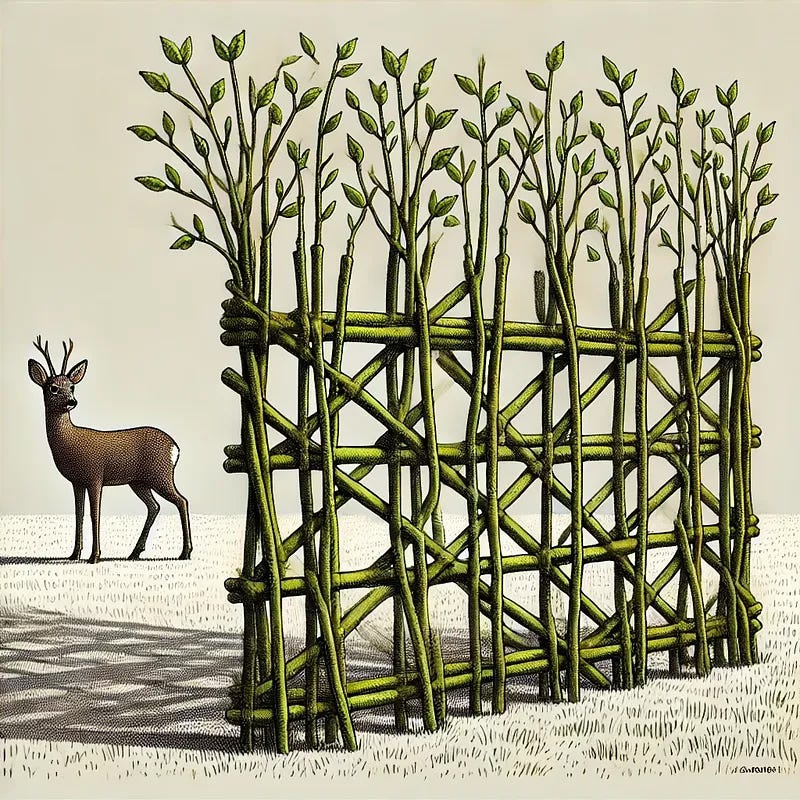
Willow Worlds is a reader-supported publication. To receive new posts and support this project, consider becoming a free or paid subscriber.November has 2 posts and in this first one - we’ll cover baselines, the shifting baselines effect and our project’s site: Muiredge Park. Get full access to Willow Worlds at willowworlds.substack.com/subscribe

Willow Worlds is a reader-supported publication. To receive new posts and support my work, consider becoming a free or paid subscriber. Get full access to Willow Worlds at willowworlds.substack.com/subscribe
Get full access to Willow Worlds at willowworlds.substack.com/subscribe
My first podcast, a brief introduction to the Willow Worlds project. Get full access to Willow Worlds at willowworlds.substack.com/subscribe
Comments

Download from Google Play

Download from App Store
 United States