


 Claim Ownership
Views from Cleve-Mandu Podcast
Subscribed: 1Played: 0
Subscribe

© Stetson
Description
Two young dads, connected by their wives, share their unguarded perspectives on sensitive subjects, drawing on their respective backgrounds, Cleveland and Kathmandu.
clevemandu.substack.com
clevemandu.substack.com
12 Episodes
Reverse

Views from Cleve-Mandu is taking a brief respite with the plan to return with more episodes sometime this Spring. When we return the direction, format, and release schedule may change. This first season was exploratory, serving more as a learning experience for us than an attempt to build and grow an audience. Right now, we gathering analytics on the first season and assessing what the best direction for the show will be. As always, we are open to feedback and various pitches.Our first season explored a wide range of topics, and we sometimes found the opportunity to draw from our distinct backgrounds, Cleveland and Kathmandu. For those who may just be discovering the podcast, we have provided a summary of the first ten episodes with links. Please give them a listen!Here’s the Recap:* Episode 1: Dadsplaining (September 22, 2024): In our first episode, we discuss modern parenting, including generational differences in expectations, cultural differences in parenting styles, and the nature versus nurture debate. We draw from our personal experiences as fathers. * Episode 2: The Deep History of Us (October 6, 2024): Manjul interviews Stetson about the deep origins of humanity. The discussion covers many high-level insights from historical disciplines, including paleogenomics and archaeology. The episodes was inspired in many ways by David Reich’s book Who We Are and How We Got Here. We aim to explain both the recently shared birth of modern humans and all the extant diversity. * Episode 3: Does Sports Betting Have an Upside? (October 20, 2024): Stetson interview Manjul about the world of sports betting, including some general best practices and the current landscape. We debate some of the pros and cons of the new wide availability of app-based sports betting.* Episode 4: Electoral Politics in 2024 (November 3, 2024): As a prelude to the 2024 national elections, we discuss American civics and the history of the electoral college, then we tack on some home race coverage. This includes a brief tangent on the salience of identity in representational politics. * Episode 5: Is College Still Worth It? (November 17, 2024): In this episode, we scrutinize the value of higher education. We explore why college tuition prices soared, the causes and consequences of the monolithic culture of higher ed, and the effects demographic change and shifting social attitudes may have on the future of higher ed. * Episode 6: Elephant Inside, Tail Outside (December 1, 2024): Manjul quizzes Stetson on the meaning of Nepali proverbs and this transitions into a larger discussion about Eastern and Western culture. Stetson bring up one of his favorite topics: Joseph Henrich’s concept of WEIRD (Western, Educated, Industrialized, Rich, and Democratic) societies versus non-WEIRD societies.* Episode 7: The Cost of Reading (December 15, 2024): We discuss the trade-offs involved in dedicating time to reading books in their entirety versus consuming shorter forms of information-dense content. The ongoing decline in reading and the dominance of longform text as the medium of popular and intellectual discourse inspired the discussion. * Episode 8: Mortal Certainty and Its Consequences (December 29, 2024): We venture into uncomfortable philosophical territory in this episode. We ask each other if we’d actually like to know when our lives will end and how that knowledge would affect our life choices. This discussion touches on many philosophical topics like utilitarianism, population ethics, and effective altruism.* Episode 9: There Will Be Carbon (January 12, 2025): Stetson interviews Manjul on the economic landscape and dynamics of the hydrocarbon industry. This touches on hydrocarbon chemistry, supply and demand dynamics, geographical considerations, and some key industry players, and the political landscape. * Episode 10: Inflation (January 26, 2025): We provide some basic insights into the economic phenomenon of inflation, including what it is, how it’s measured, and why it happens. We explore the effects that inflation has had on political outcomes both today and in the recent past. Over the course of the season, we’ve sought to foster thoughtful and respectful dialogue and often provided external resources with published episode. We want to treat complex and controversial subjects with care, while also not shying away from chasing after truth. Thank you for listening. Views from Cleve-Mandu is a reader-supported publication. To receive new posts and support my work, consider becoming a free or paid subscriber.DisclaimerThis podcast is for informational and entertainment purposes. The opinions expressed are solely our own. We are not providing professional advice (financial, medical, etc) of any kind. Get full access to Views from Cleve-Mandu at clevemandu.substack.com/subscribe

We cover some of the basics inflation today. What it is? How it’s measured? Why it happens? Why it is preferable to deflation? And the political consequences of runaway inflation. There is much more that can be said about inflation. Feel free to join the conversation.Resources and Recommendations* The Federal Reserve* Monetary Policy Principles and Practice* The Economic Consequences of the Peace (1919) by John Maynard Keynes* A Monetary History of the United States by Anna Schwartz and Milton Friedman* Zimbabwe's Seemingly Endless Currency Crisis* Is cryptocurrency a hedging tool during economic policy uncertainty?* Monetary policy and BitcoinViews from Cleve-Mandu is a reader-supported publication. To receive new posts and support my work, consider becoming a free or paid subscriber.DisclaimerThis podcast is for informational and entertainment purposes. The opinions expressed are solely our own. We are not providing professional advice (financial, medical, etc) of any kind. Get full access to Views from Cleve-Mandu at clevemandu.substack.com/subscribe
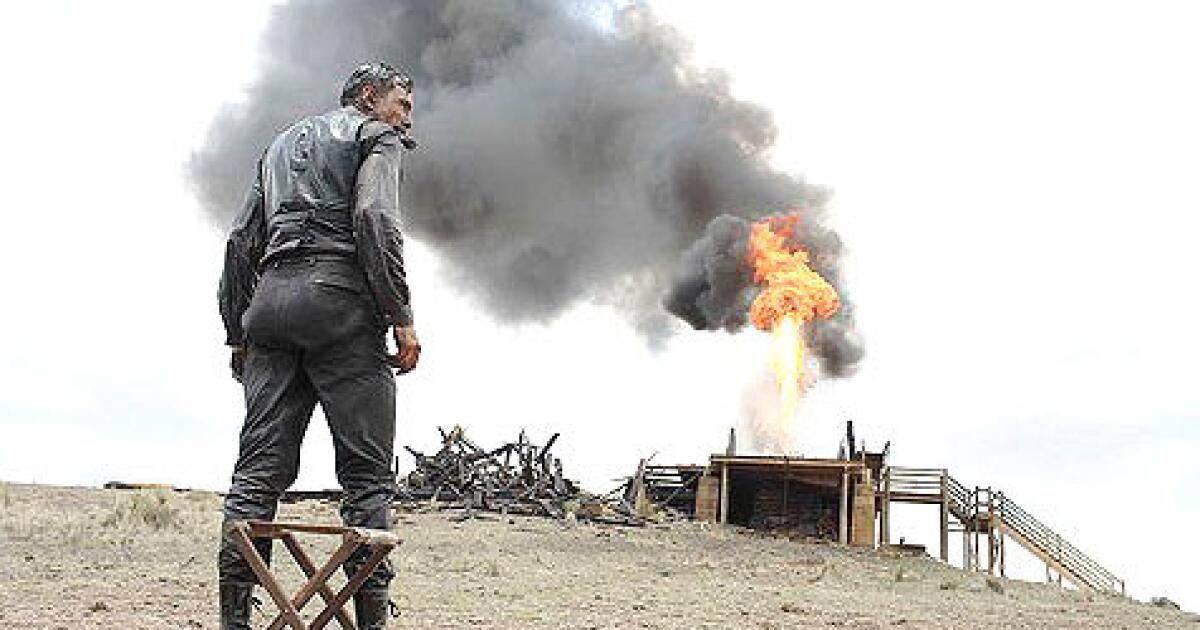
Today, we talk about some of the basic facts and figures of the fossil fuel industry. It’s a brief conversation, but we cover a lot of ground: some hydrocarbon chemistry, supply/demand dynamics, geographical considerations, different corporate players, and the relevant political landscape. While listening it’ll be clear we recorded this prior to the U.S. presidential election, but the verdict on the commentary presented is pending and should still be of interest to listeners.Resources and Recommendations* There Will Be Blood (2007)* Oil’s Extended Reign? by Goldman Sachs Exchanges* Infographic on Middle East Oil Assets* The Absent Superpower: The Shale Revolution and a World Without America by Peter ZeihanDisclaimerThis podcast is for informational and entertainment purposes. The opinions expressed are solely our own. We are not providing professional advice (financial, medical, etc) of any kind. Get full access to Views from Cleve-Mandu at clevemandu.substack.com/subscribe

As the year closes, we chose to venture into the realm of armchair philosophy. This is a freewheeling session, where we try to figure out whether certainty about our expiration date would change how we live. Although outlandish thought experiments can reek of sophomoric bloviation, we felt this was generative and worthwhile to explore. We also hope that it would prompt listeners to engage in conversation with us and with those in their family about these philosophical ideas.In the second half of the podcast, we jump to a discussion of some existing philosophical ideas that have emerged from more recent branches of Utilitarianism, including Population Ethics and Effective Altruism. There are a number of popular thought experiments and debates that have attended the increased awareness of these philosophical ideas. We provide some very superficial coverage of them. Recommended Related Films* Groundhog Day* My Old Ass* Past Lives* The Bucket List* Mission Impossible Film SeriesReferenced/Quoted Substack Article* Ethan Hunt - Not a Utilitarian by Paul BloomViews from Cleve-Mandu is a reader-supported publication. To receive new posts and support my work, consider becoming a free or paid subscriber. Get full access to Views from Cleve-Mandu at clevemandu.substack.com/subscribe

Episode Note:This episode was the inaugural recording of the podcast. It predates Stetson’s use of a microphone to record. Suffice to say, we will provide better audio quality in other recordings, and we’ll continue to improve the overall quality.Today, we discuss the tradeoffs involved in reading a whole book. Stetson has previously written about the tepid interest that American’s have for reading as a leisure activity (the median American likely doesn’t read a single book annually in any format). Plus, Stetson and Manjul approach reading a bit differently. Stetson is more omnivorous while Manjul is more selective and practical. We evaluate how rational Stetson’s reading preferences are and how costly they may be. Episode Resources/Notes* Episode Reading* The Case Against (Most) Books by Richard Hanania* Most books are padded with fluff (i.e the '“could’ve been an essay” scenario)* The time investment is too high compared to more efficient substitutes (skimming, essays, tweets, podcasts, GenAI summaries, etc)* Hanania’s Exceptions (When reading a book is worthwhile):* Rigorous works of history/science* Culturally significant texts* A genius takes you on a journey* In Stetson’s opinions, Hanania’s dismissal of many classic texts is misguided, overlooking the selection and preservation filters of history. The persistence of classics against modern alternatives indicates a large amount of knowledge about humanity is efficiently embedded as many societies have continued to re-invested in preserving and (re-)reading these works. * Deep Reading Will Save Your Soul by William Deresiewicz* The author, a former Yale English Lit prof, is a prominent critic of higher ed. This piece lays out an implicit case for the humanistic value of reading, specifically philosophy and literature. * Here Lies Reading by Stetson Thacker* This is a brief essay that reviews some American reading statistics - at least half of Americans don’t read in any format.* No One Buys Books by Elle Griffin* This great piece examines the publishing industry and some of the shocking dynamics and numbers. Views from Cleve-Mandu is a reader-supported publication. To receive new posts and support my work, consider becoming a free or paid subscriber. Get full access to Views from Cleve-Mandu at clevemandu.substack.com/subscribe

In today’s episode, Manjul quizzes Stetson on the meaning of Nepali proverbs. This fun exercise is one entry in the larger mission of the show, which includes exploring similarities and differences across our different backgrounds. We had a hunch we would find some surprising areas of cultural resonance. Human cultures, despite their diversity, often share universal elements. Plus, there is a shared population history for people of European and South Asian ancestry due to out-migration from the Pontic Steppe during the Bronze Age. This migration is already thought to have contributed to some amount of cultural overlap, including similarities in mythology, art, and language (i.e. Indo-European languages). Apart from these deeper ties, there has been ample time in recent history for cross-pollination and exchange between these two civilizations too.After the proverbs guessing game, we offer some broader reflections on popular conceptions about Eastern and Western cultural comparisons. We explore to what extent these ideas are consistent with our experiences and knowledge. This includes touching on a distinction from the field of cultural evolution: WEIRD (Western, Educated, Industrialized, Rich, and Democratic) societies versus non-WEIRD societies. Views from Cleve-Mandu is a reader-supported publication. To receive new posts and support my work, consider becoming a free or paid subscriber. Get full access to Views from Cleve-Mandu at clevemandu.substack.com/subscribe
In our first podcast conversation, we briefly noted our concerns about the mounting cost of college. We’re both fathers who’ll one day be on the hook for college tuition and related expenses. So we wanted to return to that issue today. In today’s conversation, we make note of some of the factors that influence prices in higher education. We also cover whether we can expect this trend to continue and whether college remains a worthwhile investment. We approach this latter question from two different perspective, our own and a theoretical median American’s. We also discuss whether society is asking college institutions to do too much and why campus and faculty lounge politics are so heavily skewed leftward.Notes on Content Related to the Episode* It’s generally accepted that college costs have skyrocketed, but it’s important to get a handle on the actual data: * A 2022 NBER study found that “Enrollment-weighted average tuition at four-year public universities increased by nearly 200% between academic years 1987-88 and 2018-19, with increases particularly marked in the years around the Great Recession and then slowing in recent years. Because approximately 70% of students at four-year universities in the US attend a public university, the potential burden of increased prices is consequential.”* However, the sticker price of tuition can be deceiving. There is economic research (Ibid) that suggests higher tuition prices can have “progressive” effects on low income access to R1 universities. Essentially, students from well-off families subsidize the costs allowing net tuition to be lower for low/moderate income students. These benefits are more pronounced at more prestigious institutions. However, the absolute share of students from low-income backgrounds is low at R1 institutions even though the relative share has improved. * “the net tuition paid by students from the lowest-income families (less than $30,000 in family income) at four-year universities increased by only 4.5% between 2008-09 and 2018-19, while tuition increased by 32.6%” (Ibid)* Since the 1995–1996 academic year, the “sticker price” at four-year institutions rose over 70% (source). Fortunately, need-based and merit-based financial aid drove down the percentage of students who pay the full sticker price—only 26% of in-state public and 16% of private nonprofit college students paid the full price in 2019–2020, compared to 53% and 29%, respectively, 25 years earlier. * However, money to fund that difference between sticker price and price paid comes from somewhere, and what doesn’t come from the university still constitutes more dollars (mostly public grants) chasing the value of increasingly uncompetitive degrees. * The above data confirm prices have risen. They show the costs are distributed differentially across students of different socioeconomic status. Let’s look closer at why costs have risen:* From a very low resolution perspective, it looks like tuition prices increases over the last 3+ decades are at least partially a product of something called cost disease socialism. The basic idea is that social policy has constrained supply (i.e. the accreditation system and prestige maintenance of acceptance rate/enrollment) while subsidizing demand (i.e. federal grants and loans). Plus we’re talking about a college degree where demand is inelastic, meaning people will almost pay anything to obtain a degree. This is a recipe for driving prices through the roof in a vicious cycle. * Now, we can’t wholly blame social policy. Economic and cultural factors and private decisions figure prominently too. We could put a lower premium on the value of higher education credentials. Prestigious institutions, flush with cash and huge endowments, could have also have opted to expand enrollment. * The ways universities, especially public institutions, obtain funding has changed some since the 1980s. State appropriations have declined while federal grants and private fundraising has increased in importance. This has worked out well for prestigious private and flagship public institutions but other non-research and lower-tier public institutions face more challenges, meaning they are more dependent on keeping enrollment high and getting students to pay tuition and fees.* Returning to some market/culture-related talking points: Obviously, expectations are extremely high. Young students expect schools to be more than institutions of higher learning. They want fancy playgrounds or borderline resorts populated with range of the world’s interesting people. Plus, the competition among institutions for high performing and wealthy students is quite high too. Colleges are compelled into an arms race of sorts to develop campus resources and opportunities outside of the classroom. This has increased administrative bloat and tightened the screws on professors/teaching faculty. * We’ve addressed a little bit of why costs have gone up, but will this trend continue?* The new data coming in suggest the price increase has already plateaued and the real cost is declining in some places.* Demographic change and our current cultural mood suggest a decline in demand has already set in and may continue. This will affect lower prestige and small institutions first. So I’m not sure how much the sticker price at an IvyPlus-type school or flagship state university will change in the near term. * Administrative bloat is a real problem. Trimming the fat here will be painful and hard, but it has already started. To really make a dent in these costs, it may require resetting some of the expectations of young adults and re-organizing the typical bachelor’s degree tract rather than just cutting obviously extraneous offices. For instance, four years looks unnecessarily long.* Finally, is college worth it?* So to answer this accurately, we need some sense of expected value. To do this, economists estimate a wage or wealth premium associated with a degree. Some of this is going to be confounded by the selection effect though. Selection effect here refers to smarter and more affluent kids are both more likely to go to college and to go on to future economic success. In such cases, how much of the economic outcome can we actually attribute to the educational process? Some people (like GMU economist Bryan Caplan) argue that college is just a signaling mechanism and provides little to no direct economic value. * Another way to get at this is to model the return on investment (ROI) of obtaining various higher ed credentials. For the most part, this modeling confirms a lot of people’s prior beliefs about higher education. * Field of study, school prestige, and time-to-degree are important influences on the ROI outcome. For instance, A bachelor’s degree in engineering at a flagship state school that was finished on time is almost certainly going to have a positive ROI.* However, the trends in the college wage/wealth premium are not salutary. Something is eating into the value of a degree. * Consequently, the expected value of going to college is not straightforward. It depends on one’s individual attributes and abilities. We should disabuse ourselves of the idea that having a college degree is always better than not having one. * It is also important, albeit somewhat awkward, to consider the non-material benefits of college. College helps substantially with social finishing and professional networking. However, these benefits are also hard to disentangle from selection effects. * Higher education and culture and politics* A lot of discontent has spilled out into public discourse downstream of rising tuition costs and the declining wage/wealth premium of a college degree. It is also increasingly acknowledged that college degrees may not send the same economic signals they once did. We mint many more degrees at every level than in the recent past. Relatedly, grade inflation is another now widely acknowledge phenomenon. There is also tumult about the asymmetric political valence of higher ed institutions. * Elite overproduction - too many prospective elite members relative to elite slots in current power structure:* Low-income, highly educated urban professionals are often a well-spring of disgruntled political opinions. * Our Social Media Era has increased social comparison opportunities, which possibly intensifies status competition, a net zero-sum game.* The Degree Divide* Increasingly college graduates are sorting into left-wing political identities and voting exclusively and reliably for democrats. Given their greater material and cultural capital, this has generated some amount of class resentment. This has shifted political coalitions and exacerbated polarization.* The “Big Sort” is a related phenomenon. Similar people have increased the efficiency with which they live together. The lack of sorting incentives polarization within the in-group and estranges different groups from each other.* Why is higher education so left-wing?* It has been argued that all social institutions are more liberal because liberal people are more motivated by political issues. It is essentially an argument about correlated difference in personality. This argument is somewhat reminiscent of Jon Haidt’s ideas about how Moral Foundations Theory maps onto American politics. * There is some amount of institutional cultural lock-in driven by hiring practices and social ostracization that plays into this imbalance as well. Resources/Recommendations* a16z podcast: Crisis in Higher Ed & Why Universities Still Matter & Fixing Higher Education & New Startup Opportunities with Marc and Ben* Freakonomics Radio: What Exactly is College For? (There is a whole series of college episodes worth listening to)* The Education Smile - Prestige vs Course of Study Trend* Does college pay off? FREOPP’s latest analysis says… it depends by Preston Cooper* College ROI Dashboard* Additional Piece on College ROI* College ROI Whitepaper* Americans are falling
“I never discuss anything else except politics and religion. There is nothing else to discuss.”―G.K. ChestertonThe 2024 election is imminent! Thus, Manjul and I thought we’d provide some light coverage of American civics, focusing on the electoral college, and then dip our toes into some of the presidential race dynamics. We were aiming to debate electoral college’s contemporary validity, but we didn’t quite get around to that. For those interested, we will link to some content that addresses that question more directly. It is likely that many listeners will have already voted, and we weren’t looking to trigger heated political debates. Instead, we sought to focus on how our system of government is organized and the nature of our democratic input on it. The American system is unique, notable for its continuity, robustness, and deliberative nature. Hopefully, the discussion isn’t too anodyne for Substack.Additional Notes on the Episode:* There was a moment in the show where we discussed the rules of eligibility to run for the office of president, which notably includes being a natural-born-citizen. Our discussion raised the question of whether the Founding Fathers who were not born in America were eligible for the office. In our discussion, we somewhat assumed that one or two of our early Presidents were born abroad. However, we checked into this and all our Presidents were born on the North American continent in colonies that became U.S. states. Stetson did argue that any originator of a country, i.e. a citizen at the birth of the country itself, would be considered natural-born and thus eligible. This does appear to be how the Framers understood things. So a Founding Father like Alexander Hamilton, who was born in the West Indies, would have been eligible to run for President. The first U.S. President to have actually been born in America as an American was Martin Van Buren. * We stumbled into a discussion about the voting status of the people who live in U.S. territories. We got the information correct. People living in U.S. territories are indeed American citizens with voting rights but the extent of their representation in our federal government is different than citizens living in the 50 states. * Stetson tried to borrow a metaphor from the political writer Jonah Goldberg about the hollowness of U.S. political parties today. In the context of presidential nominees, Goldberg has analogized political parties to fueled-up 747s ready for takeoff for whoever the primary electorates choose as the candidate. This was brought up in a discussion of how Donald Trump maneuvered to obtain the Republican nomination in 2016. He didn’t have a long history in Republican politics and was not committed to the same platform as many of the other candidates at the time yet won the nomination decisively and thus the party supported the hijacking in this case rather than asserting an institutional prerogative. This is an example of a party deferring to democratic mechanisms that didn’t exist at the time of their making. It is often brought up in discussion about how we now have weak political parties but strong partisanship. * We had a brief discussion on gender politics near the end of the podcast. Hopefully, we can return to the subject as there is a lot of complexity and controversy there. I have been especially interested in the writing and work of people like Richard Reeves, who have called attention to the lagging social indicators for men and boys. Stetson offered a thought experiment about which sex one would choose to be if we were behind John Rawls’ Veil of Ignorance. * Related to the discussion of gender politics, Stetson mentioned trends in the increase of female representation in Congress and other offices. Here’s a link out to some of visualizations out there on this trend. Recommendations* The Silver Bulletin* This is Nate Silver’s outfit where he has constructed a model to predict election outcomes. The election for U.S. President is incredibly close.* Real Clear Polling - Poll Aggregator Site* Cook Political Report - Another election modeling group* Jonah Goldberg Provides Defense of Electoral College* Yuval Levin on U.S. Constitution* Darrell M. West argues against the Electoral CollegeDisclaimerThis podcast is for informational and entertainment purposes. The opinions expressed are solely our own. We are not providing professional advice (financial, medical, etc) of any kind.Views from Cleve-Mandu is a reader-supported publication. To receive new posts and support my work, consider becoming a free or paid subscriber. Get full access to Views from Cleve-Mandu at clevemandu.substack.com/subscribe

Sports betting has grown increasingly popular after a U.S. Supreme Court decision that allowed states to legalize the practice (Murphy v. National Collegiate Athletic Association). Subsequent to this 2018 decision, 38 states legalized sports betting. As would be expected, this prompted a deluge of interest from both the supply and demand sides of the equation. There’s undeniably been an explosion of betting activity on sports with perhaps the most noticeable side of this activity being the promotional advertisement for app-based platforms like FanDuel. We’re both intrigued by this phenomenon given our interests in mathematics, economics, and statistics. Plus, Manjul is actually an active but prudent user of these betting platforms. In fact, his success there has gotten his action limited. Thus, I’ve turned to him to walk us through some of the basics. In addition to Manjul’s experience, we both share a concern about the new risks created by this open, gamified landscape. To this end, we hope our discussion serves as a gentle PSA about these risks as well as an informational tour of the strategies and resources that are available. Enjoy our conversation on sports betting!Resources* Gambling Glossary* SI Sports Betting Glossary* The Fake Indian Cricket League Created for Real Online Betting* The Financial Consequences of Legalized Sports Gambling* NBA Player Banned from League after Betting Scandal* The Gambler’s Fallacy* Martingale (Betting System)* Kelly Criterion* Responsible Gambling Resources for Sports BettingRecommended Related Reading* On the Edge by Nate Silver* Thinking in Bets by Annie Duke* Superforecasting by Philip E. Tetlock & Dan GardnerViews from Cleve-Mandu is a reader-supported publication. To receive new posts and support my work, consider becoming a free or paid subscriber.DisclaimerThis podcast is for informational and entertainment purposes. The opinions expressed are solely our own. We are not providing professional advice (financial, medical, etc) of any kind. Get full access to Views from Cleve-Mandu at clevemandu.substack.com/subscribe

Some time early in life, we are introduced to the ideas of academic fields interested in the evolution and history of humans. For many, this triggers their first intellectual awakening. In our private conversations, human origins is a subject we’ve returned to a few times. These discussions have been stimulating and often cut to the core of what it means to be human. These ideas have deep implications for how we should think about ourselves as individuals and populations and as a species.We couldn’t even come close to covering everything in this brief conversation, and there may have been places where we said something unclear, contestable or outright incorrect. So in the show notes here, we’re providing additional information presented in a Q&A format for any listener looking for more related content on human evolution and population histories. This content is based on Manjul’s prep questions and Stetson’s answers. Stetson does his best to answer based on his background in genetics and his reading of various sources. There is some overlap with what actually appears in the podcast as well. Questions and Answers on Human History:Human Evolution Narratives* Can you explain the significance of the “Out of Africa” (OOA) theory and how it has shaped our understanding of human migration?* Yes, OOA is the standard model for explaining modern human origins. It is still taught in classrooms. The idea is that modern humans emerged from archaic human populations in Africa and then quickly migrated to the Near East and then the rest of the Eurasian landmass sometime between 100-50 kya.* New data from ancient DNA is complicating this story. The basic issue is that the Near East and NE Africa are a continuous landmass and so genes can flow back and forth. We also know archaic humans had already populated Eurasia prior to the OOA migration and that these populations contribute to our modern human lineage.* We do know from genomic and archaeological data that human origins begin in Africa, but the extent to which our modern lineage owes itself specifically to African ancestors remains somewhat unclear. The preferred working model today, I believe, is that of deep but weak African structure with likely multiple introgressions from archaic humans. * From the human origin that is agreed to have started in Africa, how did we get here?* Think of the broad Human lineage as a trellis that fans out or bunches together at different places. * If we rollback 1-2 mya, we have an archaic human group in Africa. We don’t know a lot about the genes of these early ancient humans. Some of these groups left Africa and populated Eurasia. This includes groups like Homo erectus and later Neanderthals. At some point we start seeing remains that look like modern humans ~300kya. Things are a little unclear in this period but then between 100-50 kya modern humans sweep up out of Africa/the Near East into the Eurasian continent. From there, we get some mixture with Neanderthals and population bottlenecks (events that dramatically shrink the human populations). Things stay as hunter-gatherer groups moving around a bit until agriculture begins to emerge around ~10kya. Then we get a resettling of Eurasia again by the groups developing agriculture. There are different waves of these groups. One of best studied is a group of pastoralists (a ghost population - meaning a population that no longer exists in unmixed form today) thought to be responsible for the wheel and Indo-European languages called the Yamnaya, who came from the steppe lands north of the Black and Caspian. The Yamnaya swept through Europe and down through some of Asia and have contributed substantially to modern populations in both those regions today. This occurred ~5000 years ago.* Here is a summary of the population history of Europe.* Perhaps the best archaeological evidence of early modern humans in Africa is from a partial skull and skeleton discovered in 2017 in Morocco. This finding is 300,000 years old. This is largely consistent with the ancient genetic data, which extrapolates our shared maternal lineage to around 160kya and various regions of the genome can be followed back further to Africa. * Omo I by Richard Leakey is another example of modern human remains dating back to pre-OOA migrations.* Unfortunately, the African climate is not hospitable to the preservation of DNA and so much about the emergence of modern humans from archaic humans remains speculation. However, the best available evidence today suggests that modern humans emerged from mixtures of archaic humans in Africa around 300kya or more. * There were also certainly archaic human groups in Africa 1-2mya that are important contributors to modern humans. * What are the most significant discoveries in the study of human origins?* This is of course a judgment call, but Svante Pääbo was awarded the Nobel prize in physiology and medicine in 2022 for developing techniques that allowed for the sequencing of the genome of Neanderthals from a thumb bone recovered from a cave in Siberia. * Building on this work, the lab of David Reich developed statistical methods that have demonstrated that Neanderthals and modern humans interbred outside of Africa and that lineage populated Eurasia. * Reich argues the biggest finding is that aDNA has complicated or contradicted most of our traditional narratives about the past. Namely, the idea that populations of the past look like those of the present has been shown to be erroneous. Migration and mixture are also fundamental features of human population-level behavior. * Another major finding is the existence of “ghost populations” or ancient populations that can be inferred to have existed based on sequencing of ancient genomes but no longer exist in unmixed form today. It is incredible that even a single genome contains a population history due to the “magic” of genetics. * How do genetics and archaeology complement each other in tracing human origins?* These fields have been increasingly working in collaboration to refine our narratives about human prehistory and the substructure of contemporary populations. This has upturned a lot of conventional wisdom. Both fields are reliant on each other to push our understanding forward but ancient DNA genetics has proved a powerful tool for confirming past migrations and mixture events between past human groups. * How do we define what it means to be human from an evolutionary perspective?* This is a bit of a philosophical question, which runs parallel to the philosophical questions about what defines a species. But generally, the idea is that modern humans are those that both look like us morphologically and have the capacity for language and complex culture. We don’t have a precise definition that everyone accepts. Hence, all the talk about Neanderthals and other ancient humans being a different “species” of humans is often not endorsed by geneticists. * What are the main challenges in obtaining and interpreting fossil and genomic data related to human origins?* The first big challenge is actually obtaining the samples. These are rare and precious. There are ~6000 human fossils and ~16000 ancient DNA samples have been sequenced.* The next is contamination. Microbes set up shop in human remains and when scientists handle the remains they can introduce contamination from their own DNA. There are now intense and elaborate methods used to exclude the microbial contamination and prevent the human contamination. These are significantly methodological innovations. * Can you share any recent breakthroughs in ancient DNA research that have significantly impacted our understanding of human evolution?* We are really just beginning to study the evolutionary changes that are responsible for modern human behavior. The evidence we have today suggests that there have been many small changes deep in our history rather than a few large and important changes. To most, this is an unsatisfying answer so I can call attention to the interesting findings concerning a gene called FOXP2. * Research performed in Paabo’s lab has shown that FOXP2 is largely unchanged along the lineage between mice and chimps until the modern human lineage, where two mutations occurred in that broad human lineage. Moreover, there is a change in FOXP2 that differentiates the FOXP2 gene in us versus Neanderthals. There is some other evidence that suggests that human verbal abilities may have outstripped those of Neanderthals (e.g. methylation signatures on laryngeal soft tissue) despite the comparable brain sizes.* However, there are some exciting evolutionary stories that have occurred over our species' time. This includes the evolution of lactase persistence after the advent of pastoralism. There was a new genetic change that allowed the post-weening expression of the enzyme that digest lactose in certain human populations that were dependent on milk-producing livestock for vital calories.* Most human traits are influenced by many genes - what we call polygenic. Polygenic adaptation has been elusive despite some evidence for height, birth weight, head circumference, and hip width.* On the height finding from recent review:* “An example comes from research comparing polygenic scores for height between different populations. As described in Coop (2019), several studies (Berg & Coop, 2014; Mathieson et al., 2015; Turchin et al., 2012) identified an enrichment of alleles associated with increased height in Northern European populations and concluded this was evidence of polygenic adaptation for height. To construct polygenic scores, these studies used summary statistics from GIANT, a meta‐analysis of height that combined GWAS data from various European cohorts. However, later studies that used summary statistics from the UK Biobank, a single cohort with a more homogeneous population, failed to replicate the enrichment of height‐increasing alleles in Northern European populations (Berg et al.,

To launch Views from Cleve-Mandu podcast, Manjul and I discuss parenting in personal, philosophical, and sociological terms. We’re both relatively new to fatherhood and want to do our best for our kids.Today’s episode breaks down into roughly three segments:* Generational differences in parenting* Eastern versus Western differences in parenting* How much parenting matters to outcomes for kids (i.e. nature versus nurture)Resources, Recommendations, and More:* We talked a bit about whether social expectations have changed much across generations for parents. There isn’t a simple story to tell, but from my perspective, it does seem there is increased parental investment especially from the upper quintiles.* I claimed that becoming a parent does appear to confer a happiness penalty in the aggregate. Measuring such things is fraught, and I highlighted this to point out that subjective responses to parenting can vary a lot. Manjul and I are overjoyed to be parents. However, I can understand how this finding may pop up in the data as there is an entire lifestyle adjustment when moving from a married but childless life to a married-with-children life. Here’s one look at that issue in The Atlantic: What Becoming a Parent Really Does to Your Happiness* Here is a post from Lyman Stone on Parenting Trends (I summarize some points below):* Parenting has become a more isolating activity over recent time.* Most the measured increase in parenting time is due to low-intensity supervision by dads.* Moms have increased the intensity of their parenting investment despite spending similar amounts of time on parenting compared to the recent past.* Moms are spending less time with friends than the recent past.* Parenting styles have become increasing attached to brands, identities, politics. etc. This has raised the stakes of parenting discourse.* On parenting styles, there is a recent movement to reduce parental supervision of childhood as there is a concern from some social observers that “helicopter parenting” (safteyism) and social media/smartphone socialization is driving a noticeable rise in mental health issues among teenagers and young adults. Jean Twenge of iGen, Lenore Skenazy of Free Range Parenting and Jon Haidt of The Anxious Generation are high profile figures in this space. Also on parenting styles, I correctly referenced Amy Chua’s memoir on her aggressive parenting approach. Her notorious memoir is titled The Battle Hymn of the Tiger Mom.* We recommend that any current or prospective parent check out Emily Oster’s blog called Parent Data along with her books: Expecting Better, Cribsheet, and The Family Firm. She is the Billy Beane (the one from Moneyball) of mommy bloggers, meaning she applies cost-benefit, quantitative approaches from her discipline (economics) to granular parenting related questions.* Some claims she’s known for include* Advocating early oral allergen exposure to prevent food allergies* Arguing the current guidelines for alcohol, caffeine, food consumption during pregnancy are overly stringent* Arguing the benefits of breastfeeding are often oversold * Arguing the only negative consequences of “screen time” boil down to it just outcompeting other enriching activities.* Arguing that daycare has no effect on attachment.* Our nature versus nurture discussion is quite short and obviously doesn’t jump into all the complexities raised by such questions. I have written on the subject a few times before but even there am just scratching the surface. For those looking for a primer, I think Robert Plomin’s Blueprint is a gentle and appropriately provocative introduction to the field that studies these questions, Behavioral Genetics. Blueprint leans quite heavily into championing the nature side of the argument and some of the claims have been complicated by more recent research. Nonetheless, it is an easy and engaging read. I have a review available at Goodreads that discusses some of the issues at play. I’m perhaps a strong partisan for the importance of nature, but I think this is largely my response to seeing too many smart people entirely dismiss its role without careful consideration.* Although we didn’t address the subject explicitly in the podcast, I’m interested in the question of how paternal care evolved in humans. This was recently the subject of Sarah Hrdy’s newest book Father Time. Hrdy argues that prolonged exposure to children decreases male testosterone levels and increases oxytocin and prolactin levels. This is a latent parental instinct that may have been selected for in the Pleistocene (~2 mya to 12kya which includes a major Ice Age) during harsh conditions. I have a detailed review of Hrdy’s book here.* We implicitly referenced the Varsity Blues Scandal when touching on the relationship between parental expectations and educational outcomes. This is a really interesting news story that illuminates a lot of salient issues in contemporary America. To some extent, it reveals the way elite status is conferred more by college degrees than material wealth.DisclaimerThis podcast is for informational and entertainment purposes. The opinions expressed are solely our own. We’re not providing professional advice of any kind. Get full access to Views from Cleve-Mandu at clevemandu.substack.com/subscribe

Hi, thank you for listening. This is Stetson of the Holodoxa channel at Substack. Today, I’d like to introduce a new podcast venture. One we’re calling “Views from Cleve-Mandu.” This funny title is a mashup of the names of the hometowns of the hosts, Cleveland and Kathmandu. Which reminds me, I should actually introduce my co-host, Manjul. Manjul is someone I’ve known for almost a decade now. He's a sharp guy. Our connection came courtesy of our wives. They’ve been lifelong friends. When we all get together, Manjul and I have a lot of interesting conversations. We come from different places, work in different industries, and have different perspectives. In an effort to add some structure to these conversations and figure out if they’re interesting to anyone else, we’ve decided to launch a podcast.And yes, I know what you may be thinking, “Yet another podcast run by Millennial mansplainers. Do we really need another?” Well, maybe you’re right, but give us a chance to prove otherwise. We’re not professional podcasters, and there will be some growing pains. We'll work through them. Nonetheless, we think we can introduce listeners to a wide-range of novel, compelling ideas. We can get to all kinds of wonky details about genetics, history, or economics, but we can also take all complexity and compress it into engaging stories that are easy to understand and easy to remember. Plus, we can do this from two meaningfully different backgrounds. There will be times we venture into the wilderness of dangerous ideas and navigate some serious disagreements. Maybe even with you, the listener.So to conclude this little introduction, I want to give some concrete details. We’re launching this September (the 22nd) with new episodes on Sunday evenings every other week. We already have five episodes ready to go. These touch on topics like parenting, the origins of humanity, the value of college, trends in the energy industry, and the opportunity cost of reading. We always welcome any feedback or any questions from any listener. We hope that we can count on you as fellow travelers on our journeys through the peaks and valleys of Cleve-Mandu.P.S. I’ve already received some feedback on the audio. Generally, I think the episodes have been better than this recording. Plus, I still have to purchase a mic, and I’m figuring out which one is best still. I’ll try some other fixes in the mean time too. Any advice is welcome.Views from Cleve-Mandu is a listener-supported podcast. To receive new episodes, consider becoming a free or paid subscriber.On Establishing a Vibe:Manjul and I played around a bit with the various generative AI image creators, including the one built into Substack, to see what would fit best for our show. I’m sure this will evolve over time. Depending on where things go, perhaps we’ll invest in some help with designing marketing materials for the pod. It’s fun to see what these genAI tools turnout even though they tend to be quite generic and characterless. Here are some images we’ve left on the cutting room floor. Enjoy. Get full access to Views from Cleve-Mandu at clevemandu.substack.com/subscribe
Comments

Download from Google Play

Download from App Store
 United States