


 Claim Ownership
The SME Stream
Subscribed: 2Played: 63
Subscribe

Description
Looking for actionable business insights all in one place?
We're here to help you find a way with a curation of the ‘best bits’ from top business podcasts.
Save time searching; subscribe to the SME Stream where you can listen to relevant, timely, business-related content today.
1247 Episodes
Reverse

“Never a dull moment” is how Wellington-based veteran consumer tech reviewer and commentator Pat Pilcher describes the year in tech after relentless product launches, an “utterly insane” Black Friday sales season and the “enshitification” of the internet, thanks in large part to AI. In our final episode of The Business of Tech for 2025, Pilcher joins the show to break down the biggest trends of 2025 and what’s coming in 2026, from AI agents and smart rings to humanoid robots and the debut of solid‑state batteries. Apple, AI and the year of the fold Pilcher starts with the elephant not in the room: Apple’s slow play on generative AI. “Every tech player and their pet poodle had an AI offering except Apple,” he said. “This is just crazy. This is a company that sets the trends that everyone slavishly follows, and they missed the bus on the biggest AI trend probably of the decade.” Yet he thinks there is method in the apparent madness, arguing that “stepping back… until they get a mature offering” may prove “quite sensible” in such a fast‑moving space. That patience, he predicts, will collide with hardware in 2026. Pilcher is convinced 2026 is going to be the year of the iPhone fold, following in the wake of foldables leader Samsung. AI slop, deepfakes and the S-curve of tech adoption AI dominated 2025, working its way along the classic S‑curve of technology adoption. While an enthusiastic user of generative AI tools, Pilcher is blunt about the downsides, from “AI slop” filling Facebook, X and LinkedIn to academics “pulling their hair out” as students outsource learning to chatbot tools. With hyper‑realistic video models like Sora3and an election year looming, Pilcher says “the general public needs to be a lot more critical, a lot more sceptical – and they’re not”. Pilcher chooses Cory Doctorow’s famous term “enshittification” to sum up a key, regressive trend of 2025. “You subscribe to a service, it sounds fantastic and it’s only $5 a month. Three months later, it’s $25 a month, does less, requires more of your information and they can’t guarantee your privacy and by the way, your password’s been stolen,” he said. Pilcher sees this as evidence that the business model underpinning AI is dubious, with companies investing “billions and billions of dollars in massive data centres” in a period of “geopolitical instabilities and macroeconomic instabilities”. Silicon became “the new global currency” in 2025, from Nvidia’s dominance to Google’s Tensor processing units (TPUs) and China’s push to go beyond 40nm (nanometers) under US export bans. Smart glasses, smart rings and genuinely smart homes If 2025 was AI’s year, Pilcher also thinks it was when home and wearable tech quietly levelled up. He rates Meta’s new Ray‑Ban smart glasses, which can describe what you’re looking at and translate signs on command. Future prototypes, he notes, combine wristbands that track “tendon movements” for hand‑gesture interfaces with augmented reality (AR) overlays that could do everything from lie detection in negotiations to live 3D navigation in unfamiliar cities. Smart rings are another sleeper hit, with Pilcher praising rings for being “unobtrusive” and “tiny” while monitoring health stats well enough to “tell you proactively when you’re coming down with a cold or a flu a week before you start noticing symptoms”. In his own testing, backed by a blood‑pressure cuff and digital thermometer, a smart ring delivered accurate results. On the home front, Pilcher says the long‑promised smart home is finally here, thanks to the Matter standard, which means new gadgets “will basically work regardless if you have an Alexa, Apple, Siri or… Google Home”. EVs, robots and the 2026 futures Pilcher also covers the post‑rebate slump in EV sales, the rise of value‑packed Chinese brands like BYD, and the misinformation around EV fire risks, pointing out how a petrol vehicle, not a battery, was to blame in a widely shared bus fire incident. Putting his futurist hat on, Pilcher talks about smart contact lenses with built‑in displays and gesture‑tracking bracelets that could make smartphones “look as quaint as a Model T Ford”, always‑on access to AR shopping lists and navigation, and the first serious wave of humanoid robots. With cheaper AI silicon and compact models, he “wouldn’t be surprised if in late 2026… humanoid robots become the next must‑have consumer electronics category for the well‑heeled”. He also expects to see the debut of solid-state batteries as an alternative to Lithium-ion batteries that power everything from laptops to EVs, expecting new breakthrough technologies to offer longer battery life and durability. Tune in to Episode 131 of The Business of Tech, powered by 2degrees Business, for the full conversation with tech guru Pat Pilcher, streaming on iHeartRadio or wherever you get your podcasts.See omnystudio.com/listener for privacy information.
Drones have gone from hobbyist toys to decisive tools of war and essential infrastructure for industry. Few people have had a better vantage point on that shift than FenixUAS founder Dr Andrew Shelley. In the latest episode of The Business of Tech podcast, the economist and aviation specialist explains how a decade of incremental innovation has transformed uncrewed aircraft into platforms that can reshape modern warfare, agritech and even search and rescue. From DIY quadcopters to smart weapons New Zealand’s first drone rules arrived ten years ago, when the technology was still rudimentary and often home‑built. “Pretty much every part of drone technology has improved,” Shelley said. Better batteries and lighter and stronger materials have almost doubled flight time, while mass‑manufactured airframes have brought the price of drones down. and far more capable sensors and onboard software. Other advances, such as sensor technology and onboard software, have flowed into features many consumers now take for granted, such as obstacle avoidance, rock‑solid position hold and follow‑me modes, as well as increasingly autonomous flight profiles. The Ukraine war, now approaching four years in duration, has been characterised by the use of drones by both Ukrainian and Russian forces. The changing face of warfare Shelley recalled watching footage of a small first‑person‑view drone in Ukraine flying straight past a Russian electronic warfare vehicle “festooned with antennas” and striking the armoured vehicle ahead of it. The drone was trailing a hair-thin fibre-optic cable, allowing it to avoid radio jamming systems. “To a certain extent, what we’re seeing in Ukraine is that the old is new again,” said Shelley, pointing out that the current generation of drones echo some of the cruise‑missile tactics from the early 1990s. Shelley traces a clear line from ISIS workshops that assembled drones from AliExpress parts, through Turkey’s TB2 Bayraktar successes and Russia’s use of DJI’s Aeroscope detection tools, to today’s battlefields where consumer‑grade quadcopters handle intelligence, surveillance, reconnaissance and precision strikes. The West, he argues, has been complacent: “Turkey was leading the way with its Bayraktar TB2, Iran is clearly leading the way with its Shahed series drones and we are playing catch-up,” he said, pointing out that the US is now reverse‑engineering an Iranian drone rather than setting the pace. Artificial intelligence is only beginning to make its mark in commercial uses in New Zealand, but Shelley says the leading edge is already visible in applications like Christchurch‑based SPS Automation’s large agricultural drones. These systems can autonomously identify wilding pines and apply “a small amount of chemical herbicide” to individual plants, an approach he argues could transform conservation economics by reaching areas that are “almost impossible on foot” or too expensive to service with crewed aircraft. Agritech, data and the search and rescue gap If the military implications dominate headlines, Shelley sees at least as much untapped potential in agritech and emergency response. He cites spray drones that can drop slug bait on vulnerable crops in muddy conditions where tractors would churn up soil and helicopters are cost‑prohibitive, turning marginal blocks into productive land. Pasture management is another frontier. Instead of consultants walking paddocks with pasture meters or towing instruments behind quad bikes, he expects drones to fly automated grids soon to map grass cover and optimise feed wedges across entire farms, backed by “clever software” to interpret the imagery. Search and rescue, he argues, is “one of the things we haven’t done well with”, despite New Zealand’s vast coastline, mountains and national parks. Shelley believes agencies need to change their mindset and accept that in bad weather or hazardous terrain, “we have to move into a mindset where we’re happy to lose the technology,” risking a $100,000 drone instead of a multi‑million‑dollar helicopter and its crew to find people in distress. Building a drone industry – and workforce FenixUAS sits at the centre of the fledgling drone ecosystem, training over a thousand civilian and government operators a year, including the New Zealand Defence Force, and certifying many of the country’s advanced drone operators. That gives Shelley what he calls a broader overview of what everyone’s doing with drones than perhaps anyone else in the country, from agritech to infrastructure inspection. While firms like Tauranga-based Syos, and SPS Automation point to a growing UAV scene, he says the real bottleneck is software talent, with drone companies crying out for mechatronics and software engineers who can turn raw imagery into usable insights. Listen to Episode 130 of The Business of Tech podcast featuring Dr Andrew Shelley, streaming on iHeartRadio or wherever you get your podcasts. Your weekly tech reading list The year the tech billionaires won (again) - BusinessDesk Canaries in the code mine: what AI is doing to first jobs for Generation Z - BusinessDesk ChatGPT’s New Internet Browser Can Run 80% of a One-Person Business - Entrepreneur The Data on Self-Driving Cars Is Clear. We Have to Change Course - New York Times AI-Powered Browsers Are Failing Badly - Futurism China set to limit access to Nvidia’s H200 chips despite Trump export approval - FT Australia's ban on social media for users aged under 16 comes into effect; platforms that do not comply risk fines of up to AU$49.5M - The Guardian OpenAI Staffer Quits, Alleging Company’s Economic Research Is Drifting Into AI Advocacy - Wired SpaceX to Pursue 2026 IPO Raising Far Above $30 Billion - Bloomberg From Llamas to Avocados: Meta’s shifting AI strategy is causing internal confusion - CNBC See omnystudio.com/listener for privacy information.
In the creaky world of financial advising, where compliance paperwork devours hours and clunky software feels like a relic from the dial-up era, a New Zealand startup is deploying AI to free advisers from the drudgery. Marloo, co-founded by Hardy Michel, who cut his teeth as head of operations at Wellington-based share trading platform Sharesies, isn't building robo-advisers to supplant humans. Instead, he is using artificial intelligence to free up advisors so they can focus on the trust-building conversations that truly matter to their clients. In the latest episode of The Business of Tech podcast, Michel shares how his London-based venture is already winning paying customers across four countries, proving New Zealand fintech can scale globally from day one. Relocating to London in 2022, Michel joined Estonian-founded investing platform Lightyear, helping it launch across 22 European countries amid regulatory mazes far more complex than New Zealand's. "I felt like I'd really rounded out probably the missing piece of my knowledge and learning, which was kind of how do you build the machine at scale?" Michel told me. Freeing advisors from low-value admin That experience, combined with angel investing via Blackbird Ventures, convinced him to co-found Marloo with fellow Sharesies alum Shakeel Lala. Marloo’s mission? Financial advice is potentially transformational but inaccessible, the founders realised. Advisers spend 70% of their time on low-value admin, from anti-money laundering checks to 50-page suitability reports that gather dust. Existing tools are clunky, with Michel describing the "Windows 95-esque" systems financial advisors had to choose from before Marloo arrived on the scene. Marloo offers a hyper-specialised AI note-taker for client meetings. Unlike transcription tools, it sifts through hours of chit-chat to extract the 5% that counts – goals, risk tolerance, fees – and structures it for compliance or client follow-ups. From there, the AI evolves into a full operating system, turning advisors into "reviewers, not doers", Michel said. Finish a meeting, and Marloo drafts an annual review letter in two minutes, 95% ready for a quick edit. "You no longer have to take notes after the meeting, have a second person in the meeting taking notes for them, or rely on anything else other than our product," Michel explained. The result? Advisors onboard more clients without burnout, firms cut outsourcing costs, and the human element, crucial for navigating life's emotional money milestones like retirement or inheritance, stays front and centre. Giving robo-advice a wide berth This augmentation ethos sets Marloo apart from robo-advice hype. "If robo-advice was kind of as good as it was cracked up to be, we'd all be using it right now. And the reality is we're not," Michel told me. He predicts regulators will be reluctant to green-light fully AI-driven advice, given the trust factor. Instead, Marloo aims to overhaul unit economics: lower fees, drop minimum balances (now often $500,000+), and make quality guidance available to more than just the wealthy. "The mission is [to] transform the underlying [profit and loss] in the unit economics of what it means to deliver advice to a customer so that we can actually reverse that," he said Marloo recently raised NZ$4.6 million in pre-seed funding to accelerate development. "We're going to raise a little bit of money to answer a true false question in 12 months... that we are confident we can spend the next 10 years working on this and it's going to be a massive business," he recounts of the Blackbird pitch. As AI bubbles inflate, Michel warns against shiny tech without substance. "It's never been easier to build... [but] also... to deliver a really shitty product experience," he said. Marloo, he added, prioritises delight – a consumer-grade user experience in a B2B world. For an industry pricing out everyday clients amid rising fees (up 6% in the UK last year), this could be the reset financial advice needs. Tune into episode 129 of The Business of Tech, powered by 2degrees, for the full conversation, where Michel dives deeper into Estonia's entrepreneurial edge, Sharesies' early battles, and why financial advice must stay human-powered. Available now on all major podcast platforms. See omnystudio.com/listener for privacy information.

In this episode, Sienna tells her dad Ben she wants to grow up and start her own beauty brand — just like Rowena Bird from Lush. Rowena’s journey started with literally mixing products by hand and somehow grew into helping build one of the biggest and most loved ethical beauty brands in the world. Sienna and Ben chat with Rowena about: What she was like as a kid and how she got into beauty Starting out as a beauty therapist and working with The Body Shop Selling products from the boot of her car and how the bath bomb was born in a garden shed The good bits, the hard bits, and the “what are we doing?” moments of building Lush from scratch Whether the famous “secret Lush master plan” is actually real 👀 Big mistakes, bouncing back from setbacks, and random career twists like becoming a balloon pilot Skincare and confidence tips for teens How to grow a global brand without losing what matters What advice she’d give young people who want to build something of their own And what she’d tell her younger self It’s a funny, honest chat about doing things differently — and changing the world one glittery bath bomb at a time! Follow The Podcast on Socials: TikTok: Ben | Sienna | The Hits Instagram: Ben | Sienna | The HitsSee omnystudio.com/listener for privacy information.
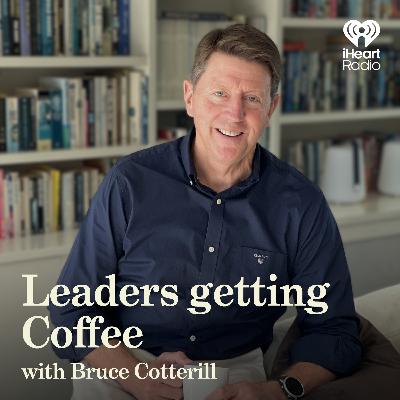
In Leaders Getting Coffee episode 55, our guest is the former National Party Minister, Speaker of the House and Ambassador to London, Sir Lockwood Smith. Sir Lockwood Smith is one of those people you feel you know before meeting him. He first stepped into the public gaze as a television presenter of science programmes aimed at school age children. What started as a university holiday job delivered some early name recognition, helping him to win a seat in the old first part the post political system. He grew up on the family farm that he still runs today. He learned the ropes early and developed the skills necessary to run the farm before leaving school. A Bachelors and Masters degree (with honours) in Agricultural Science put the theory alongside the practical skills he’d already developed. At first, he followed what most of us would observe as an academic career, lecturing at Massey University and wining a scholarship to attend the Waite Agricultural Research Institute, at the University of Adelaide, where he studied for his PhD in ruminant metabolism. He tells of studying Opera, as a sideline, while he was there. While in Adelaide he took up rowing, winning five state championships and leading the Adelaide University Boat Club as it’s captain. Back in New Zealand, politics was calling and he was elected to parliament as the MP for Kaipara in 1984. He became one of our longest serving MP’s, staying for 29 years, the last five of which were spent as a most respected “Speaker of the House”. On the Leaders Getting Coffee podcast with Bruce Cotterill, Sir Lockwood speaks of the highs and lows of life in politics. There have been many achievements and the occasional disappointment, and he is refreshingly open in his discussion, including the behind the scenes conflict surrounding leadership appointments. And he reflects on his time as Speaker of the House and his disappointment at today’s parliamentary behaviour. He also covers off his five-year stint as our High Commissioner to the United Kingdom, Ghana & Nigeria, and Ambassador to Ireland and the various roles he conducted on behalf of the UK government after his post was completed. Today, he’s back on the farm that he has operated throughout a busy life, breeding Belgian Blue bulls, a breed that he has continued to develop and enhance over his entire life. He’s a happy and contented man with a wonderful story to tell. And he tells it very well.See omnystudio.com/listener for privacy information.
It’s in the name. Sam Levi is as luxe as they come when it comes to running a business. Sam started up his first-of-its-kind beauty brand Luxe Sticks in lockdown and has since become a force to be reckoned with in the business world. On launch day, Luxe sticks sold out within 48-hours on launch day, fast-forward to now, Sam hosts an entrepreneurial TV show: Take Your Shot with Sam Levi. Find out what it takes to run an internationally recognised business, the inspiration behind the brand and what it was like to be one of the first openly gay men on New Zealand reality television. The podcasts in the SME Stream contain general information only, not financial or professional advice. Any opinions expressed in the podcasts are not necessarily shared by BNZ, or its related entities. BNZ is not liable for any losses resulting from the content of the podcasts. See omnystudio.com/listener for privacy information.

Fuel providers NPD and Gull announced a proposed merger of the two entities on Wednesday, December 24. The decision now sits with the Commerce Commission as they decide if the merger will increase or decrease competition in the market. Both companies are already low-cost providers, so, it is hoped the proposed merge could lower prices for consumers. Customers have been awaiting a fuel price drop for a while now, as oil prices have fallen, but the change has not been seen at the till. AA Fuel spokesperson Terry Collins told Andrew Dickens, "it's the largest margin I've seen between landed price and retail price, and these companies, what they need to do is not just offer discounts and specials on particular days, but we need to see across the board drop in our fuel prices currently." LISTEN ABOVESee omnystudio.com/listener for privacy information.

Is New Zealand’s largest city dying? Auckland is home to roughly a third of the entire country’s population and is predicted to grow even bigger in the coming years. The City of Sails is, by far, the largest contributor to New Zealand’s economic output, generating about 40% of GDP. But, walk down many of the inner-city streets, and you’ll see vacant lots – with a lot of potential. Today on The Front Page, NZ Herald property editor, Anne Gibson is with us to discuss what can be done to get developers moving on empty spaces – some, that have been desolate for decades. Follow The Front Page on iHeartRadio, Apple Podcasts, Spotify or wherever you get your podcasts. You can read more about this and other stories in the New Zealand Herald, online at nzherald.co.nz, or tune in to news bulletins across the NZME network. Host: Chelsea DanielsEditor/Producer: Richard MartinProducer: Ethan SillsSee omnystudio.com/listener for privacy information.
The Trade Minister claims our new Free Trade Agreement with India, is its best deal struck with any country. It's followed nine months of negotiations, ending with India agreeing to lower or remove tariffs on 95-percent of our exports, with wins for fruit, meat, wool, coal and forestry sectors. Little's changed for dairy - with duty free access only for certain protein products and those for re-export. Todd McClay told Andrew Dickens that all our exporters will benefit. LISTEN ABOVESee omnystudio.com/listener for privacy information.

In this episode of the Make It Happen podcast, I sit down with certified coach and NLP master practitioner Sarah Robb from Spring with Sarah to talk about mindset, healing, and the power of rewiring your subconscious. Sarah shares her incredibly moving story of losing both parents in her twenties, navigating complex grief, and how that pain became the catalyst for her work helping others overcome self-doubt, anxiety, overthinking and “I’m not good enough” beliefs. We dive into what NLP actually is, how the language you use shapes the “house you live in,” why awareness is always the first step to change, and the simple mindset shifts you can start making today (like changing “I have to” into “I get to”). Sarah breaks down why so many women stay stuck in old patterns, how childhood experiences quietly program our beliefs, and why action, repetition and consistency are the real keys to transformation. We also talk about business, fear of judgment, and why your circle and your self-talk matter more than you think. If you’ve ever felt stuck, not enough, or held back by your past, this episode will help you see that change is possible and that what you’re not changing, you’re ultimately choosing. Sarahs Socials and Website 👇 https://springwithsarah.com/ @springwithsarah Book a discovery call 👉 www.makeithappen.org.nz📲 Socials: @makeithappenSee omnystudio.com/listener for privacy information.

In November China's economy showed clear signs of strain as investment, consumption, and industrial output all weakened more than anticipated. "I think the most worrying thing is fixed asset investment actually, which has now declined for the 3rd month in a row," Asia business correspondent Peter Lewis told Andrew Dickens "We've never seen that before." LISTEN ABOVESee omnystudio.com/listener for privacy information.
2025 has been a memorable year for global equity markets, and it's prompted speculation from investors. Between economic downturns and tariffs, there's been plenty for experts to voice concerns about. Fisher Funds expert Sam Dickie explained further. LISTEN ABOVESee omnystudio.com/listener for privacy information.

It’s been a tough run for the economy this year, but the Finance Minister is celebrating the progress that was made. Nicola Willis told Kerre Woodham the economy is growing, which means that when they look back on 2025, they’ll be able to say it ended a lot better than it started. She says that looking into next year, it’s set to grow much faster, with many more jobs being created. “People can look forward to their incomes rising faster than inflation and ongoing low interest rates – that's a positive way to start the next year.” LISTEN ABOVE See omnystudio.com/listener for privacy information.
New Zealand's economy grew more than expected between July and September. But between April and June, it shrank more than previously thought. GDP rose 1.1% in the September quarter, surpassing all expectation but Stats NZ has revised the numbers for the June quarter, finding GDP actually fell 1%, not the previously-reported 0.9%. That means the economy shrank 0.5% in the year to September. NZ Herald Business Editor Liam Dann told Kerre Woodham the data is showing there’s some momentum in the economy, especially within manufacturing and business services. He says consumers take a bit longer to feel upbeat, but the business core of the economy is picking up. LISTEN ABOVE See omnystudio.com/listener for privacy information.
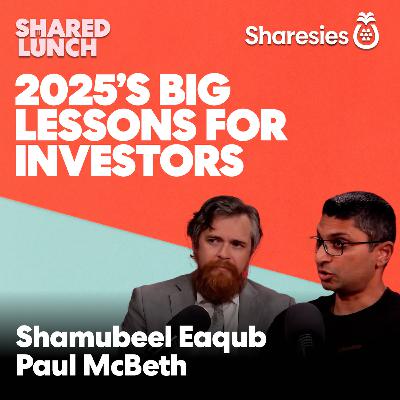
As 2025 wraps, how are we set up for the year to come? We welcome economic experts Shamubeel Eaqub, Chief Economist at Simplicity, and Paul McBeth from the Bottom Line, to review a strange year in the markets. Why was the market’s reaction to trade tariffs so unpredictable? Why has market commentary been so pessimistic lately, even as Wall Street approaches new records? Why has NZ’s economy remained sluggish while share markets rose abroad? Has the property investing market learned its lesson? Hear Shamubeel’s theory that it’s been a humbling year for market commentators, and Paul's thoughts on the surprising strength of NZX small caps and Freightways. Plus, the AI question: A bubble, or the next industrial revolution? For more or to watch on YouTube—check out http://linktr.ee/sharedlunchShared Lunch is brought to you by Sharesies Australia Limited (ABN 94 648 811 830; AFSL 529893) in Australia and Sharesies Limited (NZ) in New Zealand. It is not financial advice. Information provided is general only and current at the time it’s provided, and does not take into account your objectives, financial situation and needs. We do not provide recommendations and you should always read the disclosure documents available from the product issuer before making a financial decision. Our disclosure documents and terms and conditions—including a Target Market Determination and IDPS Guide for Sharesies Australian customers—can be found on our relevant Australian or NZ website. Investing involves risk. You might lose the money you start with. If you require financial advice, you should consider speaking with a qualified financial advisor. Past performance is not a guarantee of future performance. Appearance on Shared Lunch is not an endorsement by Sharesies of the views of the presenters, guests, or the entities they represent. Their views are their own.See omnystudio.com/listener for privacy information.

The Government insists it has a plan to turn the economy around. Treasury's Half Year Economic and Fiscal Update shows the country is first forecast to be in the black by 2029-2030. The Finance Minister has admitted the country is borrowing money to pay the interest bill on the debt. Nicola Willis told Heather du Plessis Allan that bill is about $9 billion a year. She says around 80% of borrowing over the next few years will be for capital assets like hospitals, schools, and roads. There may also be more cuts to the public service as they aim to get back down to surplus. Economic growth is expected to be just 1.7% next year, and Willis says there's still room for efficiency in the public service. She will be sending letters out to her cabinet colleagues to give them ideas on where they can make some savings. LISTEN ABOVE See omnystudio.com/listener for privacy information.
Treasury's Half Year Economic and Fiscal Update has painted a concerning picture for the Government books. It forecasted the deficit will peak at $16.9 billion dollars, and only drop to $60 million in the 2029-2030 financial year. Independent economist Cameron Bagrie says this forecast doesn't come with many surprises. "If you look at the bigger picture, we're now going to have a decade of deficits. And if you look at the last two years, the situation's actually been worsening." LISTEN ABOVESee omnystudio.com/listener for privacy information.
The Finance Minister's still aiming for a surplus this decade, despite today's bleak economic news. Treasury's Half Year Economic and Fiscal Update shows more delay to getting the books back to black. The deficit's expected to deepen more to a high of $16.9 billion and not narrow to $60 million dollars until 2029-30. Nicola Willis says a 2029 surplus is very achievable. "What that will take is just a small revision to the growth upwards, combined with fiscal discipline. And those are two things that our Government is committed to." LISTEN ABOVESee omnystudio.com/listener for privacy information.

The Director General of MPI reviews the December Situation and Outlook for the Primary Industries (SOPI) that was released this morning. Kiwi farmers, growers, and primary producers are driving New Zealand’s economy with food and fibre exports set to reach a record $62 billion for the year to June 30, 2026. The sector now accounts for 83% of all NZ goods exports. See omnystudio.com/listener for privacy information.
There’s a view that New Zealand's still a while away from being a 'rockstar' economy. Half Year Economic and Fiscal Update documents are coming out early this afternoon, carrying key economic metrics. Treasury's also releasing a Budget Policy Statement outlining priorities for upcoming spending. Former Finance Minister Steven Joyce told Heather du Plessis-Allan it was a pretty average year for the economy, and next year looks to be better. Joyce says getting core spending below 30% of GDP is the goal, but it won’t happen overnight. He says Bill English spent eight years after the Canterbury quakes and the global financial crisis wrestling to get back into surplus. LISTEN ABOVE See omnystudio.com/listener for privacy information.

Comments

Download from Google Play

Download from App Store
 United States