


 Claim Ownership
The Root Cause Medicine Podcast
Subscribed: 751Played: 28,220
Subscribe

© 2026 Rupa Health
Description
In each episode, we’ll meet renowned medical experts, specialists and pioneers who’ve influenced the way certain conditions and diseases are understood and treated. We focus on giving you the information you need to understand the root cause, symptoms and treatments available for specific medical conditions.
325 Episodes
Reverse

On this episode of Root Cause Medicine, we’re honored to share the story of Dr. Emlah Tubuo, PharmD, MS, an integrative pharmacist who came to the U.S. in 2003 with $300 in her wallet and built what many of us wish existed in every community: a pharmacy designed around whole person care. Dr. Emlah explains how growing up around infectious disease in Cameroon shaped her prevention-first mindset, and how arriving in the U.S. revealed a different challenge: chronic disease that silently progresses for years before symptoms demand urgent intervention.

Creatine is one of the most extensively researched nutrients in sports, metabolic, and brain health, yet parents and practitioners alike have questions about its use in children and adolescents. In this episode, Dr. Kate Kresge speaks with Jeff Gladd, MD, Chief Medical Officer at Fullscript, to clarify how creatine functions in normal physiology, what the research shows about pediatric safety, and how clinicians can guide families with confidence. Together, they explore growth-related energy needs and practical clinical considerations—offering an evidence-informed framework for responsible conversations about creatine use in youth.

In this Root Cause Medicine podcast episode, we explore emerging concerns around ashwagandha-associated drug-induced liver injury (DILI). While ashwagandha remains one of the most widely used adaptogens in integrative medicine, recent international case reports have highlighted rare but clinically meaningful hepatic adverse events. This episode equips clinicians with a mechanistic understanding of potential risk factors, extraction methods that may increase vulnerability, and practical strategies for patient screening, education, and monitoring—without dismissing the therapeutic value of this foundational herb.
Nearly one in three adults will experience a voice disorder at some point in their lifetime, often without realizing it may be connected to their overall health (Stachler et al., 2018). In this episode, we sit down with integrative otolaryngologist Dr. Linda Dahl to unpack how subtle changes in vocal tone, stamina, and clarity can serve as early clues to what’s happening systemically - from inflammation and hormonal shifts to nervous system stress, reflux, and microbiome changes - and what to do next depending on what you hear. From simple in-office listening strategies and targeted questions to appropriate referrals, lab considerations, and integrative support options, this episode helps clinicians effectively resolve common voice issues using a whole person approach.
In part two of our SIBO series, we’re joined again by Dr. Allison Siebecker to focus on what often determines whether patients stabilize or relapse: nutritional management and supportive care during and after SIBO treatment. We explore how to use prokinetics to support migrating motor complex function, when digestive aids like bile acids and enzymes may be appropriate, and how to apply SIBO dietary frameworks as personalized, flexible tools—not rigid rules. We also cover practical approaches to suspected yeast/dysbiosis overlap, how to support gut barrier integrity without worsening fermentation, and the key myths that can derail outcomes. This episode helps clinicians move from “eradication mode” to sustainable, integrative SIBO care.
The research around SIBO is evolving, and 2026 has brought more subtypes, testing and treatment options than ever before. Our guest this week, Dr. Allison Siebecker, is an expert in conventional and natural approaches to SIBO, helped to open one of the first integrative SIBO centers in the nation, and frequently teaches physicians about how to effectively treat even the toughest cases of SIBO, ISO, IMO and more.
Today, we explore how hydrogen, methane (IMO), and hydrogen sulfide–associated (ISO) pattern-typing can help us choose treatment options that help to decrease SIBO symptoms effectively. We discuss how impaired motility - particularly dysfunction of the migrating motor complex - can impact symptom persistence and relapse in addition to microbial type and load, and why we should address it in treatment plans. Dr. Siebecker also reviews the newest advances in SIBO testing, breath test interpretation, and how long to test depending on what you’re looking to discover.
If SIBO has felt like a guessing game in your practice, or if you’re just looking to stay on the leading edge, this episode offers a clearer, physiology-driven framework grounded in education that will help your clients get and stay well.
This episode of the Root Cause Medicine Podcast features host Dr. Kate Kresge, ND in conversation with Dr. Jeff Gladd, MD, Chief Medical Officer at Fullscript and an integrative primary care physician. Together, they unpack three timely topics for whole-person clinicians: emerging human data on urolithin A as a mitophagy-activating postbiotic that may support mitochondrial function and immune aging; how to help patients engage with the “fiber maxing” trend in a safe, sustainable way that supports metabolic health, GI function, and diet adherence; and a new industry survey showing that 94% of pharma leaders are running or exploring direct-to-patient (DTP) programs, with implications for GLP-1 therapy access, continuity of care, and the clinician’s central role in guiding treatment decisions. (Nature)
In this episode of the Root Cause Medicine Podcast, Dr. Kate Kresge is joined by Dr. Eric Viegas, a leader in supplement safety at Fullscript, for a timely and evidence-informed discussion on lead exposure in protein powders and nutritional supplements. Amid rising media attention and consumer concern, the conversation unpacks how and why trace amounts of lead can appear in supplements, how different regulatory thresholds (Prop 65 vs. USP/ICH) should be interpreted clinically, and what toxicologically relevant exposure actually means. Clinicians will gain practical insight into cumulative lead exposure, patient risk stratification, and how Fullscript is advancing supplement quality through enhanced testing, transparency, and practitioner-facing safeguards.

In this “Health or Hype” rapid-fire episode, Dr. Kate Kresge teams up with Dr. Chris Sands, DPT, OCS, and Dr. Gabe Kresge, DPT, to sort running fact from fiction. They break down why strength training rarely “bulks up” runners and more often boosts efficiency, why single-leg strength better reflects the true demands of running than squats alone, and why minimalist shoes (and cushioning) should be chosen based on individual capacity and a gradual transition. They also address joint health—explaining why moderate, well-programmed running isn’t automatically “wear and tear”—and close with a practical prevention message: running assessments can catch issues before pain starts, and most injuries trace back to training load and under-recovery more than biomechanics.

This episode of the Root Cause Medicine Podcast explores the Modern Running Assessment, an evidence-informed, data-driven framework for evaluating runners’ biomechanics, load tolerance, and performance capacity. Host Dr. Kate Kresge interviews Dr. Chris Sands, DPT, OCS, and Dr. Gabe Kresge, DPT, from Kinetic Physical Therapy to examine how modern tools—dynamometry, force plate testing, slow-motion gait analysis, cadence and vertical oscillation metrics, and single-leg endurance testing—provide objective information that visual observation alone may miss. These measurable insights help clinicians better understand strength-to-body-weight ratios, inter-limb asymmetries, foot-strike loading patterns, and fatigue-related movement changes, offering a clearer picture of the factors that may influence running efficiency, durability, and injury risk.
We’re launching a new series that brings the insights that Fullscript Chief Medical Officer Dr. Jeff Gladd normally shares only with our internal team—now open to the entire integrative and functional medicine community. This month, Dr. Gladd breaks down three emerging clinical priorities with immediate relevance to whole-person care. He covers why the American College of Cardiology is now recommending high-sensitivity CRP (hs-CRP) for universal cardiovascular screening, how grip strength paired with BMI is outperforming traditional biomarkers in predicting metabolic decline and all-cause mortality risk, and what new evidence tells us about saffron as supportive care for patients experiencing SSRI-related sexual side effects.
This episode features Dr. Neda Gioia, OD, CNS®, IFMCP, a pioneer in integrative eye care who blends optometry, clinical nutrition, and functional medicine to advance preventive vision strategies. Clinicians will learn how gut-eye axis mechanisms, AI-driven oculomics, sex-hormone transitions, and nutrient patterns influence ocular inflammation, retinal biomarkers, and whole-system health. Dr. Gioia illustrates how modern imaging (including emerging AI models), stool and hormone testing, and nutrient evaluation can support earlier identification of risk patterns and more personalized, prevention-forward care for patients across the lifespan.
In this inspiring episode of the Root Cause Medicine Podcast, Dr. Kate Kresge welcomes Dr. Cynthia Libert, a board-certified family physician, functional medicine expert, and creator of The Joy Prescription. Together they explore the biochemistry of joy, how gratitude reshapes brain connectivity, and how positive emotion can help to modulate inflammation, support neuroplasticity, and protect cognitive health. Clinicians will learn practical ways to integrate “joy prescriptions” into patient care, using evidence-informed tools to foster resilience and prevent burnout.
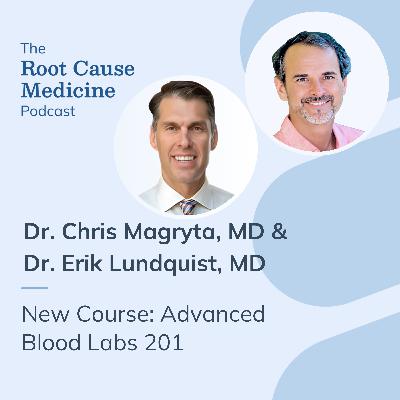
In this episode of The Root Cause Medicine Podcast, Dr. Kate Kresge interviews Dr. Chris Magryta and Dr. Erik Lundquist about Advanced Blood Labs 201—a course designed to help clinicians interpret metabolic and immune biomarkers across pediatric and adult populations. They explain how to use tests like C-peptide, adiponectin, leptin, and glutathione to identify early metabolic stress, and explore immune indices such as SII (Systemic Immune Inflammation Index) and SIRI (Systemic Inflammation Response Index) to uncover inflammation trends in both children and adults.
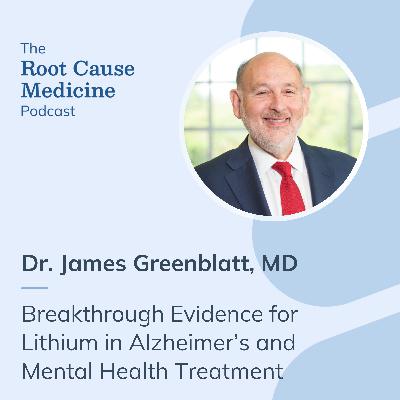
James Greenblatt explores the evolving science of low-dose lithium as a neuroprotective intervention — highlighting its potential to prevent, slow, and even reverse cognitive decline associated with Alzheimer’s disease. He emphasizes that safe, nutritional lithium (2-10 mg) can support brain health by reducing neuroinflammation, promoting neuroregeneration, and stabilizing mood—without the risks associated with pharmaceutical doses. Clinicians are encouraged to assess lithium status through hair mineral analysis, monitor thyroid and kidney function, and consider environmental and dietary influences on endogenous lithium levels. By integrating low-dose lithium into a comprehensive, individualized care plan—including lifestyle modifications and targeted testing—practitioners can leverage this simple mineral to support mental clarity, impulsivity regulation, and long-term cognitive resilience.
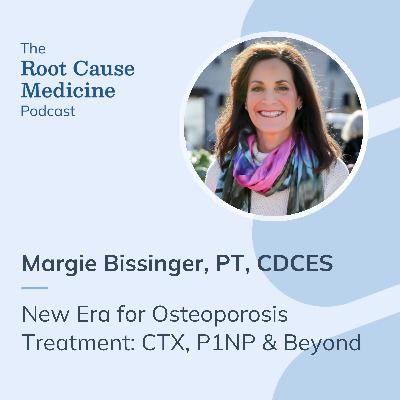
James Greenblatt explores the evolving science of low-dose lithium as a neuroprotective intervention — highlighting its potential to prevent, slow, and even reverse cognitive decline associated with Alzheimer’s disease. He emphasizes that safe, nutritional lithium (2-10 mg) can support brain health by reducing neuroinflammation, promoting neuroregeneration, and stabilizing mood—without the risks associated with pharmaceutical doses. Clinicians are encouraged to assess lithium status through hair mineral analysis, monitor thyroid and kidney function, and consider environmental and dietary influences on endogenous lithium levels. By integrating low-dose lithium into a comprehensive, individualized care plan—including lifestyle modifications and targeted testing—practitioners can leverage this simple mineral to support mental clarity, impulsivity regulation, and long-term cognitive resilience.
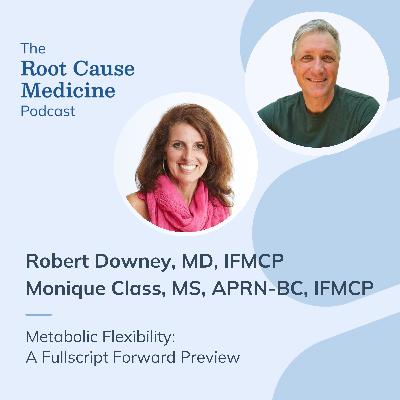
True longevity requires metabolic flexibility, but how can we help our clients get there?
This episode previews personalized metabolic health and longevity strategies from Dr. Rob Downey and Monique Class, presenters at Fullscript Forward 2025. Dr. Downey discusses how metabolic phenotyping, stress/HRV context, and GI patterns can inform evaluation, while Monique describes low-dose (microdosed) GLP-1 approaches, titration by response, and gradual tapering within lifestyle-first care model help them achieve impactful results for their clients. The conversation explores objective monitoring (labs, body composition), muscle-preserving movement, and structured workflows that may help patients sustain progress after medication changes. This episode is for informational and educational purposes only.
This episode of The Root Cause Medicine Podcast explores how the 2025 GLP-1 prescribing advisory from the American College of Lifestyle Medicine, the American Society for Nutrition, the Obesity Medicine Association, and The Obesity Society can act as a catalyst for whole-person metabolic care—rather than just symptom management. Lara Zakaria, IFMCP, pharmacist and functional medicine practitioner, breaks down the new consensus guidelines and highlights opportunities to integrate nutrition counseling, strength training, and lab monitoring to support muscle preservation, nutrient adequacy, and patient safety. You’ll hear Lara’s practical approach—starting with screening for eating disorders and nutrient status before prescribing—and learn how to design workflows that make guideline implementation realistic in busy clinical settings. Providers will leave with evidence-informed strategies to improve patient outcomes, minimize side effects, and support sustainable behavior change around GLP-1 therapy.
This episode of The Root Cause Medicine Podcast takes a deep dive into postpartum care—challenging the idea that one six-week checkup is enough. Serena Saeed-Winn, CNM, WHNP, IBCLC, shares how earlier postpartum visits may help identify concerns such as thyroid changes, support lactation comfort through therapeutic breast massage and lymphatic techniques, and guide gentle scar care for improved comfort and pelvic floor recovery. You’ll also hear insights on hormonal shifts, nutrient needs, and postpartum mental health considerations—plus practical strategies to engage partners and build collaborative care teams. Providers will leave with actionable, evidence-informed ideas to better support families during this critical transition.
In this episode of The Root Cause Medicine Podcast, Dr. Kate Kresge welcomes Dr. Asare Christian, MD, a pain medicine and rehabilitation specialist, to explore the complex physiology of migraines and how a root-cause or functional medicine approach can transform treatment. They discuss the various triggers, including hormonal fluctuations, gut health, inflammation, and environmental toxins, as well as innovative natural therapies, supplements, and device options that empower patients to take control of their headache management. This conversation offers a comprehensive view of migraine care beyond conventional medications, emphasizing education, prevention, and personalized strategies for lasting relief.


Download from Google Play

Download from App Store
 United States
loved it! I learned so much & look forward to putting it into play.
Loved this episode! Sharing it with my friends.
Great information!!! I have been a registered Dental Hygienist for almost 31 years now, and the fluoride issue has been bothering me for a while now. I hope some changes in policy ate coming our way!
this doctor speaks to my soul... I'm buying her book right now!