


 Claim Ownership
Study For Tax In Your Coffee Break
Subscribed: 9Played: 167
Subscribe

© Paula Byrne
Description
Advanced Tax Lecturer from Griffith College, Paula Byrne helping students pass their Irish professional accountancy tax exams.
Disclaimer: The information in this podcast is intended as an exam revision guide only. While every care is taken to ensure accuracy of information contained in this podcast, Paula Byrne does not accept responsibility for errors or omissions howsoever arising. Email paula@paulabyrne.ie.
#Irish tax
Disclaimer: The information in this podcast is intended as an exam revision guide only. While every care is taken to ensure accuracy of information contained in this podcast, Paula Byrne does not accept responsibility for errors or omissions howsoever arising. Email paula@paulabyrne.ie.
#Irish tax
50 Episodes
Reverse

Thank you to Amicus: Search and Recruitment for Sponsoring this episode. To find your next Finance or Accounting Role, head to https://amicus.ie/ and tell them that we sent you!In this episode, I’m revisiting Research & Development (R&D) Tax Relief for Limited Companies in Ireland, because there’s been a very welcome change - the credit has increased from 25% to 30%. Not a nuisance at all when you think about it!I walk through the key conditions companies need to meet to claim the R&D tax credit, including where the R&D must take place, the types of activities that qualify, and the deadline for submitting a claim. I also explain how the refund mechanism works over the three-year period, which is particularly helpful for companies that may be loss-making and looking for cash flow support.We also look at what types of costs qualify, including salaries, overheads, plant and machinery, and even buildings used for R&D — along with the important conditions and potential clawbacks to watch out for. Finally, I cover the rules around surrendering the R&D tax credit to key employees, including the eligibility conditions and the minimum effective tax rate requirement.What you'll hear in this Episode:Overview of the 30% R&D Tax Credit: The increase in the Research & Development tax credit from 25% to 30% and why this change is a positive development for qualifying limited companies in Ireland.Eligibility Conditions for Claiming R&D Relief: The key requirements companies must meet to claim the relief, including being within the charge to Irish corporation tax and carrying out qualifying R&D activities in Ireland, the EU, EEA, or the UK.How the R&D Tax Credit Is Refunded or Offset: The simplified repayment mechanism, explaining how companies can offset the credit against corporation tax or receive it in refundable instalments over a three-year period.Qualifying R&D Expenditure and Assets: The types of costs that qualify for the credit, including salaries, overheads, plant and machinery, and certain buildings used for R&D activities.Surrendering the R&D Tax Credit to Key Employees: How companies can pass part of the tax credit to key employees working in R&D and the strict conditions that must be met, including time spent on R&D and maintaining a minimum effective tax rate of 23%.Thank you for listening to Study For Tax in your Coffee Break! If you enjoyed the episode, make sure to leave a rating and review on your Podcast platform and share it with others to let them know you enjoyed the podcast.To improve your study for the ACCA ATX Exams this year, head to Paula Byrne's website to purchase the Tax Conditions - the Spoken Word for audio-based revision (updated for 2026).Thank you to Matthew Bliss for editing and production of this episode. If you'd like him to edit your podcast, send an email to business@mbpod.com or head to https://www.mbpod.com/.Mentioned in this episode:Get your Audio Revision for the 2026 ACCA Exams
Thank you to Amicus: Search and Recruitment for Sponsoring this episode. To find your next Finance or Accounting Role, head to https://amicus.ie/ and tell them that we sent you!In this episode of Study for Tax in Your Coffee Break, I’m going through the December 2025 ACCA Irish Advanced Tax Examiner’s Report — and honestly, it’s gold dust. The examiner has given us a clear window into what went well, what didn’t, and where valuable marks were left behind. Whether you’re preparing for your first sitting or reflecting on a recent attempt, this report is packed with insight that you simply cannot afford to ignore.We walk through all three questions on the paper, including the 50-mark Question 1 with its mix of ethics, financial distress, share disposals and PRSA contributions. I highlight where students slipped up — from VAT on property (you know he loves it!) to gift splitting rules and, most importantly, failing to read the requirements properly. We also unpack Question 2’s specified intangible assets and permanent establishment issues, and Question 3’s termination payments, FED relief and close company transactions with a strong focus on the examiner’s repeated message: "know your conditions and know how to apply them!"A major theme throughout this paper was professional marks — commercial acumen, skepticism, and real-world thinking. The examiner has clearly raised the bar here, and I share practical advice on how you can prepare for that. If you’re serious about passing this exam, this episode will help you understand exactly what the marking team is looking for — and how to avoid a “bloodbath” in the next sitting.Resources mentioned in this Episode:December 2025 ACCA Irish Advanced Tax Examiner’s ReportACCA ATX Examiner's Reports Portal"Ep040 Ethics"Thank you for listening to Study For Tax in your Coffee Break! If you enjoyed the episode, make sure to leave a rating and review on your Podcast platform and share it with others to let them know you enjoyed the podcast.To improve your study for the ACCA ATX Exams this year, head to Paula Byrne's website to purchase the ACCA ATX IRL Revision Book for Exams in 2025 and Tax Conditions - the Spoken Word for audio-based revision.Thank you to Matthew Bliss for editing and production of this episode. If you'd like him to edit your podcast, send an email to business@mbpod.com or head to https://www.mbpod.com/.Mentioned in this episode:Get your Audio Revision for the 2026 ACCA Exams

Thank you to Amicus: Search and Recruitment for Sponsoring this episode. To find your next Finance or Accounting Role, head to https://amicus.ie/ and tell them that we sent you!In this episode, we're talking through a brand new CGT relief introduced by the Finance Act 2024: the Relief for Investment in Innovative Enterprises, more commonly known as Angel Investor Relief. It’s an interesting and welcome relief that’s designed to help innovative Irish startups access early-stage funding while rewarding investors with a reduced CGT rate.There's a number of qualifications, conditions and interactions of this relief with others that may preclude certain other available reliefs, so make sure to listen carefully in the case that it becomes an examinable relief!Main Topics Discussed in this Episode:Overview of Angel Investor Relief: What it is, why it was introduced, and how it reduces CGT for qualifying investors.Who Can Qualify as an Investor: The key conditions an individual investor must meet, including shareholding limits, minimum holding periods, and connection rules.What Makes a Company “Qualifying”: The importance of the certificate of qualification, what Revenue looks for, and why commercial innovation and going-concern status matter.Eligible Shares and Investment Conditions: What counts as eligible shares, why cash investment is required, and why buying existing shares won’t qualify for the relief.Interaction with Other Tax Reliefs: How Angel Investor Relief interacts with EIIS, Entrepreneur Relief, and Retirement Relief, highlighting why choosing the right relief can make a significant tax difference.*****Thank you for listening to Study For Tax in your Coffee Break! If you enjoyed the episode, make sure to leave a rating and review on your Podcast platform and share it with others to let them know you enjoyed the podcast.To improve your study for the ACCA ATX Exams this year, head to Paula Byrne's website to purchase the ACCA ATX IRL Revision Book for Exams in 2025 and Tax Conditions - the Spoken Word for audio-based revision.Thank you to Matthew Bliss for editing and production of this episode. If you'd like him to edit your podcast, send an email to business@mbpod.com or head to https://www.mbpod.com/.Mentioned in this episode:Get your Audio Revision for the 2026 ACCA Exams
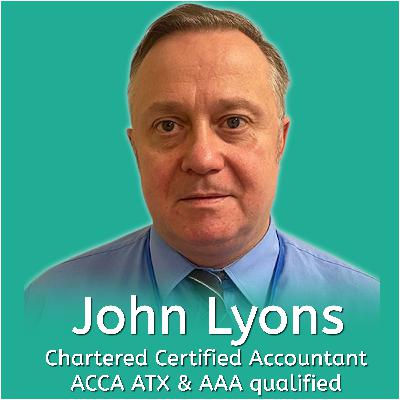
Thank you to Amicus: Search and Recruitment for Sponsoring this episode. To find your next Finance or Accounting Role, head to https://amicus.ie/ and tell them that we sent you!In this very special (and slightly self-indulgent!) episode of Study for Tax in Your Coffee Break, I’m delighted to catch up with one of my favourite ex-students of all time, John Lyons: now officially Mr ACCA. After a semester without his questions, comments and general banter, I couldn’t resist inviting him back for a chat… and I’m so glad I did.John shares his brilliant (and very real) story of taking the long road to qualification. Starting with Accounting Technician exams, stepping up to ACCA, navigating setbacks, life “hiccups”, and still coming back stronger every time.We talk honestly about what it’s like to study later in life when work, family, and responsibilities are all competing for your attention, and why comparison is a trap. John’s mindset of “running your own race” is one I think every student needs to hear.We also dig into why Irish tax is such a valuable subject in the real world (even if some of the syllabus bits make you roll your eyes!), how employers view it, and why effort from week one matters more than most people want to admit.Main Topics Discussed in this Episode:John’s non-traditional journey into accounting, moving from electrician to ACCA through the Accounting Technician route after a career-changing injury.The realities of studying for professional exams later in life, including balancing work, family responsibilities, and maintaining focus and motivation.Why persistence matters more than natural ability, with honest reflections on failing exams, building resilience, and “running your own race.”The practical value of Irish tax in everyday life and why it remains one of the most employable and relevant specialisms for accountants.The importance of consistent effort, student engagement, and using available supports from the very start of the course to give yourself the best chance of passing.Get in touch with John Lyons:LinkedIn: https://www.linkedin.com/in/john-lyons-acca-cat-3bb54474/AB Magazine's "The View with John Lyons" article*****Thank you for listening to Study For Tax in your Coffee Break! If you enjoyed the episode, make sure to leave a rating and review on your Podcast platform and share it with others to let them know you enjoyed the podcast.To improve your study for the ACCA ATX Exams this year, head to Paula Byrne's website to purchase the ACCA ATX IRL Revision Book for Exams in 2025 and Tax Conditions - the Spoken Word for audio-based revision.Thank you to Matthew Bliss for editing and production of this episode. If you'd like him to edit your podcast, send an email to business@mbpod.com or head to https://www.mbpod.com/.Mentioned in this episode:Get your Audio Revision for the 2026 ACCA Exams

Thank you to Amicus: Search and Recruitment for Sponsoring this episode. To find your next Finance or Accounting Role, head to https://amicus.ie/ and tell them that we sent you!I've talked about Residency generally in an episode before, but this time we're talking specifically about Residency Reliefs that appear time and time again in the ACCA Advanced Tax exam. Residency questions are a favourite of the examiner, and knowing your conditions off by heart is the key to securing marks.Join me as we walk through SARP, split-year relief, cross-border relief and FED, unpacking the logic behind each one, the traps students fall into, and the clues the examiner leaves in the case study to steer you toward the right relief.If you’re preparing for December’s exam, this is your quick, clear refresher on the core rules, conditions, and calculations you need at your fingertips.*****Thank you for listening to Study For Tax in your Coffee Break! If you enjoyed the episode, make sure to leave a rating and review on your Podcast platform and share it with others to let them know you enjoyed the podcast.To improve your study for the ACCA ATX Exams this year, head to Paula Byrne's website to purchase the ACCA ATX IRL Revision Book for Exams in 2025 and Tax Conditions - the Spoken Word for audio-based revision.Thank you to Matthew Bliss for editing and production of this episode. If you'd like him to edit your podcast, send an email to business@mbpod.com or head to https://www.mbpod.com/.Mentioned in this episode:Get your Audio Revision for the 2026 ACCA Exams
Thank you to Amicus: Search and Recruitment for Sponsoring this episode. To find your next Finance or Accounting Role, head to https://amicus.ie/ and tell them that we sent you!In this week’s episode, I’m having a proper look through the June 2025 Examiner’s Report for the Advanced Tax exam. I know it might sound a bit dry, but honestly, I love these — they tell you exactly what the examiner was thinking, what went well, and where people fell down. It’s a bit like getting a peek behind the curtain before your own sitting.We go question by question, talking through the examiner’s main points, from ethics and reconstructions to capital taxes, CAT reliefs, residency and consortiums. I’ll flag the areas that caught people out, like missing recommendations, not knowing all the conditions for reliefs or forgetting to show commercial sense. There are some handy little reminders too, about using your skepticism mark and spotting when something doesn’t quite add up.If you want to know what separates a pass from a strong result, this one’s worth your coffee break.Resources Mentioned in the EpisodeACCA ATX IRL Examiner's Report for June 2025ACCA ATX Examiner's Reports Portal"Ep040 Ethics"*************Thank you for listening to Study For Tax in your Coffee Break! If you enjoyed the episode, make sure to leave a rating and review on your Podcast platform and share it with others to let them know you enjoyed the podcast.To improve your study for the ACCA ATX Exams this year, head to Paula Byrne's website to purchase the ACCA ATX IRL Revision Book for Exams in 2025 and Tax Conditions - the Spoken Word for audio-based revision.Thank you to Matthew Bliss for editing and production of this episode. If you'd like him to edit your podcast, send an email to business@mbpod.com or head to https://www.mbpod.com/.Mentioned in this episode:Get your Audio Revision for the 2026 ACCA Exams

Thank you to Amicus: Search and Recruitment for Sponsoring this episode. To find your next Finance or Accounting Role, head to https://amicus.ie/ and tell them that we sent you!In this episode, I’m tackling one of the examiner’s favourite topics: Pensions. While you won’t see them coming up as a full 20-mark question, they appear often enough and can carry a sizeable number of marks. That means they’re well worth your time to understand.I walk you through the examinable areas around both pension investment and withdrawal, explaining the tax treatment, the limits you need to remember, and the pitfalls to watch for in exam questions.Main Topics Discussed:The difference between personal pensions and occupational pensions – and why it matters in exam questions.How tax relief works on personal contributions, including the age-related percentage table and the €115,000 cap.Why employer contributions to occupational pensions are so tax efficient – and how this could influence the incorporation decision for high earners.What happens on pension withdrawal: lump sums, ARFs, and annuities, plus how they’re taxed.How to spot the pension type you’re being asked about and where to find the key tables in your tax tables booklet.If you’re preparing for ATX, pensions are a topic you really can’t afford to ignore. I’ll help you cut through the detail so you can answer with confidence on exam day.Thank you for listening to Study For Tax in your Coffee Break! If you enjoyed the episode, make sure to leave a rating and review on your Podcast platform and share it with others to let them know you enjoyed the podcast.To improve your study for the ACCA ATX Exams this year, head to Paula Byrne's website to purchase the ACCA ATX IRL Revision Book for Exams in 2025 and Tax Conditions - the Spoken Word for audio-based revision.Thank you to Matthew Bliss for editing and production of this episode. If you'd like him to edit your podcast, send an email to business@mbpod.com or head to https://www.mbpod.com/.Mentioned in this episode:Get your Audio Revision for the 2026 ACCA Exams

Thank you to Amicus: Search and Recruitment for Sponsoring this episode. To find your next Finance or Accounting Role, head to https://amicus.ie/ and tell them that we sent you!This is a replay of a previous episode in the feed. We will be back to normal broadcast next in September 2025.In this episode, Paula talks about the different tax considerations related to Share Buybacks for companies, and the reliefs available when a company deftly manages whether CGT or Income Tax is required in each scenario.Topics Covered:Overview of Share BuybackGeneral explanation of share buyback.Context in exams - a case study where a company buys back shares.Income Tax vs. Capital Gains Tax (CGT) TreatmentDefault treatment as an income tax event under schedule F.Preferable treatment as a CGT event and why (lower tax rate at 33%, CGT reliefs).Conditions for CGT TreatmentThe company must be a trading company or a holding company of a subsidiary.Shares must be in an unquoted company.Shares must have been held for five years by an Irish resident individual.Redemption must be for the benefit of trade.Substantial reduction in the shareholder's interest (25% reduction, shares 30% or less post-redemption).Examiner's IndicatorsRecognizing share buyback questions in exam cases (e.g., shareholders not getting along, detrimental to the company).Tax Reliefs for Qualifying ShareholdersEntrepreneurial relief and retirement relief.Potential to pay no tax on share buyback.Treatment for Non-Qualifying ShareholdersTaxed under schedule F.Tax calculation: agreed buyback price minus nominal value of shares.Rate of tax at marginal rate.Withholding tax at 25% by the company.Special ConsiderationsDistinction from close company transactions.Capital loss for those taxed under income tax.Company's Perspective on Share BuybackPotential stamp duty liability.No stamp duty if shares are converted to redeemable preference shares first.*****Thank you for listening to Study For Tax in your Coffee Break! If you enjoyed the episode, make sure to leave a rating and review on your Podcast platform and share it with others to let them know you enjoyed the podcast.If you'd like to purchase the books from which the content of this podcast is made, head to https://paulabyrne.ie/tax-books/.Thank you to Matthew Bliss for editing and production of this episode. If you'd like him to edit your podcast, send an email to business@mbpod.com or head to https://www.mbpod.com/.Mentioned in this episode:Get your Audio Revision for the 2026 ACCA Exams

Thank you to Amicus: Search and Recruitment for Sponsoring this episode. To find your next Finance or Accounting Role, head to https://amicus.ie/ and tell them that we sent you!In this episode, I’m joined by the brilliant Shauna Doherty: winner of the Advanced Tax Prize for Ireland in the December 2024 sitting! 🏆Shauna joined my course late (just after sitting SBL in September!) and still managed to secure the highest mark in the country for ATX. An incredible achievement and she’s kindly come on to share exactly how she did it.We chat all about:How she balanced studying for two professional papers at onceWhy she gave 90% of her time to ATX—and still had a social life!Her bulletproof routine and planning approachHow working with others and asking questions made a huge differenceThe mindset shift from "just pass it" to actually enjoying taxShauna’s strategy is full of smart, sustainable study tips and if you’re feeling overwhelmed, this episode will calm the chaos and give you a real-world roadmap from someone who’s been there and won the big prize!Thank you for listening to Study For Tax in your Coffee Break! If you enjoyed the episode, make sure to leave a rating and review on your Podcast platform and share it with others to let them know you enjoyed the podcast.If you'd like to purchase the books from which the content of this podcast is made, head to https://paulabyrne.ie/tax-books/.Thank you to Matthew Bliss for editing and production of this episode. If you'd like him to edit your podcast, send an email to business@mbpod.com or head to https://www.mbpod.com/.Mentioned in this episode:Get your Audio Revision for the 2026 ACCA Exams
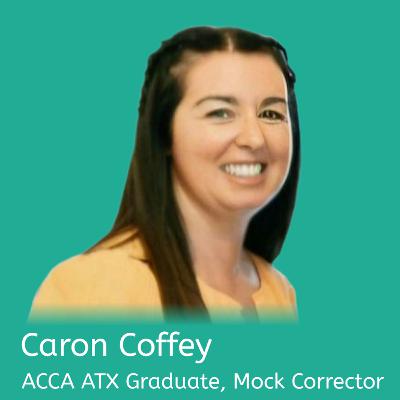
Thank you to Amicus: Search and Recruitment for Sponsoring this episode. To find your next Finance or Accounting Role, head to https://amicus.ie/ and tell them that we sent you!In this episode, I’m joined by one of my brilliant former students turned chief mock corrector, Caron Coffey. Caron sat ATX with me back in December 2022 and has been an essential part of my teaching team ever since. Not only does she have a passion for tax (yes, really!), but she’s also deeply committed to helping our students pass—and she doesn't miss a thing.We chat about:Why mock exams are non-negotiable if you want to passCommon mistakes students make in mocks—and how to avoid themHow good layout and clear structure can win you marksWhat exam technique really looks like under pressureCaron’s own ACCA journey (including sitting ATX and AAA at the same time!)How finding a study buddy can keep you going (shoutout to Grace!)If you're tempted to skip a mock because “you’d rather be studying,” this one’s especially for you.Thank you for listening to Study For Tax in your Coffee Break! If you enjoyed the episode, make sure to leave a rating and review on your Podcast platform and share it with others to let them know you enjoyed the podcast.If you'd like to purchase the books from which the content of this podcast is made, head to https://paulabyrne.ie/tax-books/.Thank you to Matthew Bliss for editing and production of this episode. If you'd like him to edit your podcast, send an email to business@mbpod.com or head to https://www.mbpod.com/.Mentioned in this episode:Get your Audio Revision for the 2026 ACCA Exams

Thank you to Amicus: Search and Recruitment for Sponsoring this episode. To find your next Finance or Accounting Role, head to https://amicus.ie/ and tell them that we sent you!In this episode, I take a deep dive into one of the most deceptively challenging areas of tax exams: ethics. It might only be worth five marks, but identifying exactly which ethical principle is being breached—and why—can be trickier than it seems.I break down the five key ethical principles that you need to know inside and out:Professional behaviourObjectivityProfessional competence and due careConfidentialityIntegrityYou’ll hear real-world scenarios that bring these abstract principles to life, like handling conflicts of interest in a small practice, navigating client relationships, or what to do when a client asks you to overlook a mistake. I also talk about the practical safeguards you need to consider, especially in small firms, and how to keep your professional integrity intact even in sticky situations.Thank you for listening to Study For Tax in your Coffee Break! If you enjoyed the episode, make sure to leave a rating and review on your Podcast platform and share it with others to let them know you enjoyed the podcast.If you'd like to purchase the books from which the content of this podcast is made, head to https://paulabyrne.ie/tax-books/.Thank you to Matthew Bliss for editing and production of this episode. If you'd like him to edit your podcast, send an email to business@mbpod.com or head to https://www.mbpod.com/.Mentioned in this episode:Get your Audio Revision for the 2026 ACCA Exams

Thank you to Amicus: Search and Recruitment for Sponsoring this episode. To find your next Finance or Accounting Role, head to https://amicus.ie/ and tell them that we sent you!In this episode, we’re looking at what happens when shares are being sold—by a person or by a company—and how that affects your tax treatment in the exam. With markets taking a dip in April 2025, it’s a timely topic, and a favourite for the examiner too.I’ll walk you through how to spot whether the shares are quoted or unquoted, why that matters, and what reliefs (if any!) might be available. We’ll cover Entrepreneur Relief, Retirement Relief, and the lovely Holding Company Exemption, along with some very exam-relevant group structure traps like clawbacks and capital group transfers.Main Topics covered in this Episode:Difference between quoted and unquoted sharesIdentifying who is disposing of the shares (individual vs company)Capital Gains Tax (CGT) implications for individualsEntrepreneur Relief and Retirement ReliefCorporation Tax on chargeable gains for companiesHolding Company ExemptionClawback of reliefs in group structuresImportance of exam technique and common trapsThank you for listening to Study For Tax in your Coffee Break!If you enjoyed the episode, make sure to leave a rating and review on your Podcast platform and share it with others to let them know you enjoyed the podcast.If you'd like to purchase the books from which the content of this podcast is made, head to https://paulabyrne.ie/tax-books/.Thank you to Matthew Bliss for editing and production of this episode. If you'd like him to edit your podcast, send an email to business@mbpod.com or head to https://www.mbpod.com/.Mentioned in this episode:Get your Audio Revision for the 2026 ACCA Exams

Thank you to Amicus: Search and Recruitment for Sponsoring this episode. To find your next Finance or Accounting Role, head to https://amicus.ie/ and tell them that we sent you!In this episode, Paula Byrne outlines the recent changes to the Research and Development Tax Credit in Ireland, which has increased from 25% to 30%. She details the conditions for companies to qualify for the credit, the process of claiming and obtaining refunds, and the implications of these changes for limited companies engaged in research and development.Paula also covers how companies can leverage the tax credit for in-house R&D expenses, plant and machinery, and buildings used primarily for R&D activities and what you should look out for in an exam question with the change to the Credit.Episode Summary:Eligibility: The R&D tax credit is available to limited companies in Ireland, not sole traders. The company must be within the charge of Irish corporation tax.Tax Credit Rate: The tax credit has moved from 25% to 30%.Location of R&D: Research and development must be carried out in Ireland, the EU, the EEA (including Norway, Liechtenstein, and Iceland), or the UK.Claim Submission: All R&D claims must be submitted within 12 months from the end of the accounting period.Refund Options: Companies can offset the credit against tax liabilities over a three-year period, or opt for a repayment in the form of refundable installments over the same period.Usage of Credit: The credit applies to in-house R&D expenses, including overheads, plant and machinery, buildings used for R&D, and can potentially be applied to salaries of key employees under specific conditions.Key Employee Benefit: The tax credit can be partially allocated to key employees, provided they meet conditions like spending 50% of their time in R&D activities and maintaining an effective income tax rate of at least 23%.Thank you for listening to Study For Tax in your Coffee Break! If you enjoyed the episode, make sure to leave a rating and review on your Podcast platform and share it with others to let them know you enjoyed the podcast.If you'd like to purchase the books from which the content of this podcast is made, head to https://paulabyrne.ie/tax-books/.Click here to grab your ideal audio revision material for Tax Conditions for this year.Thank you to Matthew Bliss for editing and production of this episode. If you'd like him to edit your podcast, send an email to business@mbpod.com or head to https://www.mbpod.com/.Mentioned in this episode:Get your Audio Revision for the 2026 ACCA Exams
Thank you to Amicus: Search and Recruitment for Sponsoring this episode. To find your next Finance or Accounting Role, head to https://amicus.ie/ and tell them that we sent you!Every time the ACCA Advanced Tax exam is completed, the Examiner creates a report to give candidates feedback on the overall results and advice for what to look for in future exams.In this episode, Paula Byrne gives you a review of the primary pieces of feedback from the Examiner's Report that you should note for when you complete the exam in 2025.Resources Mentioned in this Episode:Download your copy of the ATX IRL Examiner's Report: https://www.accaglobal.com/content/dam/acca/global/PDF-students/acca/p6/examinersreports/ATX%20IRL%20Examiner's%20report%20D24.pdf.Listen to the Partnerships Episode for your Revision: https://player.captivate.fm/episode/7d439553-9545-4722-b83b-04bcbc968949/.Thank you for listening to Study For Tax in your Coffee Break! If you enjoyed the episode, make sure to leave a rating and review on your Podcast platform and share it with others to let them know you enjoyed the podcast.Click here to grab your ideal audio revision material for Tax Conditions for this year.Thank you to Matthew Bliss for editing and production of this episode. If you'd like him to edit your podcast, send an email to business@mbpod.com or head to https://www.mbpod.com/.Mentioned in this episode:Get your Audio Revision for the 2026 ACCA Exams

Thank you to Amicus: Search and Recruitment for Sponsoring this episode. To find your next Finance or Accounting Role, head to https://amicus.ie/ and tell them that we sent you!In this special episode of the podcast, Paula Byrne and Simão Couto discuss the challenges and strategies for studying for the ACCA exams, particularly the advanced tax exam, as a non-native English speaker. They cover Simão's coping mechanisms for managing stress and his unique approach to studying in a foreign language.Topics in this Episode:Introduction to Simão Couto: Discussion on Simão's background and his experience as a Portuguese student studying ACCA in Ireland.Approach to Studying in a Foreign Language: Simão's strategy of using English exclusively for notes and studies, even though it's not his first language, and his methods for expanding vocabulary and improving writing skills.Coping with Stress and Exam Preparation: Simão's techniques for managing stress during the ACCA exams, including walking, listening to podcasts, and going to the gym.Experience with the ACCA Exam: Insights into taking exams in a non-native language, interacting with classmates and professors, and dealing with technical challenges during the exam.Reflection and Future Aspirations: Simão's thoughts on possibly pursuing a career in communications post-qualification and philosophical advice on handling exam results and career decisions.Thank you for listening to Study For Tax in your Coffee Break! If you enjoyed the episode, make sure to leave a rating and review on your Podcast platform and share it with others to let them know you enjoyed the podcast.Click here to grab your ideal audio revision material for Tax Conditions for this year.Thank you to Matthew Bliss for editing and production of this episode. If you'd like him to edit your podcast, send an email to business@mbpod.com or head to https://www.mbpod.com/.Mentioned in this episode:Get your Audio Revision for the 2026 ACCA Exams

Thank you to Amicus: Search and Recruitment for Sponsoring this episode. To find your next Finance or Accounting Role, head to https://amicus.ie/ and tell them that we sent you!In this episode, Paula Byrne delves into the specifics of dwelling house relief as it applies to capital acquisition tax, explaining the conditions and exceptions for receiving a house or apartment tax-free through inheritance or as a gift. She emphasizes the importance of understanding qualifications such as the main home requirement, dependent relative provisions, and the necessity for beneficiaries to live in the dwelling for certain periods.5 Key Learnings:Introduction to Dwelling House Relief: Explanation of what dwelling house relief is and its distinction from CGT relief.Conditions for Tax-Free Inheritance: Criteria for inheriting a dwelling house or apartment tax-free, including the necessity of it being the main home of the disponer and exceptions for dependent relatives.Three-Year Residency Requirement: Requirement for the beneficiary to have lived in the donor's main home for three years prior to inheritance and the restriction on owning other property.Six-Year Residency Post-Inheritance: Obligation for beneficiaries under 65 to live in the inherited property for six years after inheritance, along with rules for reinvestment upon selling the inherited property.Gift Provisions and Dependent Relative Clause: Additional conditions for qualifying under dwelling house relief when receiving a property as a gift, including the requirement for the beneficiary to be a dependent relative.Thank you for listening to Study For Tax in your Coffee Break! If you enjoyed the episode, make sure to leave a rating and review on your Podcast platform and share it with others to let them know you enjoyed the podcast.Click here to grab your ideal audio revision material for Tax Conditions for this year.Thank you to Matthew Bliss for editing and production of this episode. If you'd like him to edit your podcast, send an email to business@mbpod.com or head to https://www.mbpod.com/.Mentioned in this episode:Get your Audio Revision for the 2026 ACCA Exams

Thank you to Amicus: Search and Recruitment for Sponsoring this episode. To find your next Finance or Accounting Role, head to https://amicus.ie/ and tell them that we sent you!In this episode, Paula Byrne delves into the topic of liquidations, discussing the tax implications and various scenarios that can arise when a company goes into liquidation. She covers aspects such as chargeable gains, balancing charges, close company transactions, and the potential for shareholders to claim certain reliefs.Topic List for this Episode: Overview of Liquidations:Explanation of liquidation scenarios, including solvent and insolvent companies.Negligible value claims and loss carry forwards.Tax Implications on Asset Disposals:Chargeable gains and balancing charges on plant and machinery.Corporation tax rates applicable to chargeable gains.Sales to Shareholders:Market value sales vs. undervalued sales.Ring fencing losses and close company implications.Base cost adjustments for shares.Calculating Available Cash for Distribution:Determining cash inflows and outflows.Accounting for disposal proceeds, bank balances, receivables, payables, bank overdrafts, and long-term loans.Capital Gains Tax (CGT) for Shareholders:CGT liability on remaining cash distributions.Entrepreneurial and retirement reliefs and their respective conditions (appointment timelines for liquidators).Thank you for listening to Study For Tax in your Coffee Break! If you enjoyed the episode, make sure to leave a rating and review on your Podcast platform and share it with others to let them know you enjoyed the podcast.If you'd like to purchase the books from which the content of this podcast is made, head to https://paulabyrne.ie/tax-books/.Thank you to Matthew Bliss for editing and production of this episode. If you'd like him to edit your podcast, send an email to business@mbpod.com or head to https://www.mbpod.com/.Mentioned in this episode:Get your Audio Revision for the 2026 ACCA Exams

Thank you to Amicus: Search and Recruitment for Sponsoring this episode. To find your next Finance or Accounting Role, head to https://amicus.ie/ and tell them that we sent you!*****In this episode, Paula talks about the different tax considerations related to Share Buybacks for companies, and the reliefs available when a company deftly manages whether CGT or Income Tax is required in each scenario.Topics Covered:Overview of Share BuybackGeneral explanation of share buyback.Context in exams - a case study where a company buys back shares.Income Tax vs. Capital Gains Tax (CGT) TreatmentDefault treatment as an income tax event under schedule F.Preferable treatment as a CGT event and why (lower tax rate at 33%, CGT reliefs).Conditions for CGT TreatmentThe company must be a trading company or a holding company of a subsidiary.Shares must be in an unquoted company.Shares must have been held for five years by an Irish resident individual.Redemption must be for the benefit of trade.Substantial reduction in the shareholder's interest (25% reduction, shares 30% or less post-redemption).Examiner's IndicatorsRecognizing share buyback questions in exam cases (e.g., shareholders not getting along, detrimental to the company).Tax Reliefs for Qualifying ShareholdersEntrepreneurial relief and retirement relief.Potential to pay no tax on share buyback.Treatment for Non-Qualifying ShareholdersTaxed under schedule F.Tax calculation: agreed buyback price minus nominal value of shares.Rate of tax at marginal rate.Withholding tax at 25% by the company.Special ConsiderationsDistinction from close company transactions.Capital loss for those taxed under income tax.Company's Perspective on Share BuybackPotential stamp duty liability.No stamp duty if shares are converted to redeemable preference shares first.Thank you for listening to Study For Tax in your Coffee Break! If you enjoyed the episode, make sure to leave a rating and review on your Podcast platform and share it with others to let them know you enjoyed the podcast.Click here to grab your ideal audio revision material for Tax Conditions for this year.Thank you to Matthew Bliss for editing and production of this episode. If you'd like him to edit your podcast, send an email to business@mbpod.com or head to https://www.mbpod.com/.#taxation #CGT #incometax #ireland #paulabyrne #stampduty #accountingMentioned in this episode:Get your Audio Revision for the 2026 ACCA Exams

Thank you to Amicus: Search and Recruitment for Sponsoring this episode. To find your next Finance or Accounting Role, head to https://amicus.ie/ and tell them that we sent you!*****In this episode, Paula talks about the tax implications of when a sole trader incorporates.Topic Outline:The Concept of Incorporation ReliefDefinition: Transition from sole trader to limited companyImportance: Practical implications in taxation and examinationsTax Heads Involved in IncorporationIncome TaxCorporation TaxCapital Gains Tax (CGT)Stamp DutyCapital AllowancesValue Added Tax (VAT)Thank you for listening to Study For Tax in your Coffee Break! If you enjoyed the episode, make sure to leave a rating and review on your Podcast platform and share it with others to let them know you enjoyed the podcast.Click here to grab your ideal audio revision material for Tax Conditions for this year.Thank you to Matthew Bliss for editing and production of this episode. If you'd like him to edit your podcast, send an email to business@mbpod.com or head to https://www.mbpod.com/.Mentioned in this episode:Get your Audio Revision for the 2026 ACCA Exams

Favourite ex student Pat Dolan, from Amicus Recruitment, gives some very generous advice.Mentioned in this episode:Get your Audio Revision for the 2026 ACCA Exams

Comments

Download from Google Play

Download from App Store
 United States