


The Lone Wolf Trader
Subscribed: 21Played: 658
Subscribe


© Produced by A. Cordero
Description
Trading is not a team sport. The herd gets slaughtered by noise and emotion. The Lone Wolf thrives on discipline and absolute self-trust.
We reject "guru" signal culture. Sustainable wealth isn't found in someone else's alert—it's forged in your own mind.
This podcast dissects the Physics of Market Psychology and Self-Mastery. We build the mental armor required to execute your edge without hesitation.
Stop following the pack. It's time to hunt alone.
We reject "guru" signal culture. Sustainable wealth isn't found in someone else's alert—it's forged in your own mind.
This podcast dissects the Physics of Market Psychology and Self-Mastery. We build the mental armor required to execute your edge without hesitation.
Stop following the pack. It's time to hunt alone.
370 Episodes
Reverse
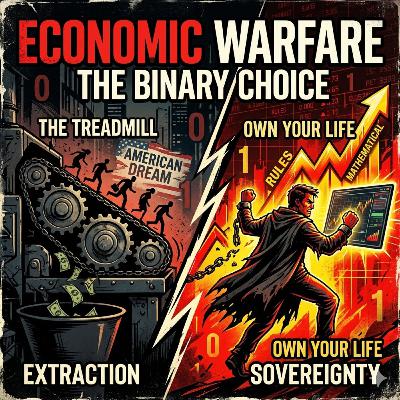
The modern economy is a deliberate system of wealth extraction. The "American Dream" is an engineered treadmill designed for institutional benefit at the expense of the working class. This episode breaks down the binary choice: remain a passive servant or achieve sovereignty through ruthless self-discipline. Trading is the primary tool for this rebellion, provided it is governed by strict mathematical rules. Reject systemic excuses. Build freedom through calculation.
An analytical breakdown of David J. Schwartz’s The Magic of Thinking Big. This episode bypasses motivational clichés to focus on the cold logic of psychological frameworks, the neutralization of "excusitis," and the physical mechanics of confidence. We examine why success is a function of the scale at which you operate your mind rather than innate talent or external luck. This is a strategic dissection of how to build a mental environment conducive to financial sovereignty and high-stakes execution.
Most people spend their lives financing someone else's future because they prioritize social safety over evidence. This episode of The Lone Wolf Trader deconstructs the "Great Lie of Fitting In" and analyzes why independent reasoning is the only path to financial sovereignty.We break down:The Binary Decision Framework: Why every choice either builds your equity or someone else's.Market Herding: Why 90% of retail traders fail by seeking consensus instead of data.The Outsider Advantage: Lessons from Michael Burry and the high cost of being early.Discipline vs. Talent: Why the market rewards consistency and punishes "expensive entertainment."If you are looking for emotional cushioning or validation, this isn't for you. This is a clinical look at the friction required to own your life.

Growth changes everything—including the people around you.In this episode, we break down The Physics of Outgrowing People, a brutally honest look at what happens when personal evolution collides with old relationships. Loyalty is often praised as a virtue, but blind loyalty can quietly destroy your trajectory.Not everyone is meant to travel the entire road with you. Some people belong to a specific chapter of your life, and forcing them into the next one can drain your energy, distort your focus, and slow your progress.This episode explores why growth naturally creates separation, why protecting your inner circle is essential, and how setting firm boundaries is not betrayal—it’s survival.If you’re evolving and the people around you aren’t, this conversation will help you understand why that tension exists and why protecting your peace may be the most important decision you make.Sometimes the hardest truth is also the most liberating:Growth has gravity.And not everyone can move at the same velocity. 🎙️
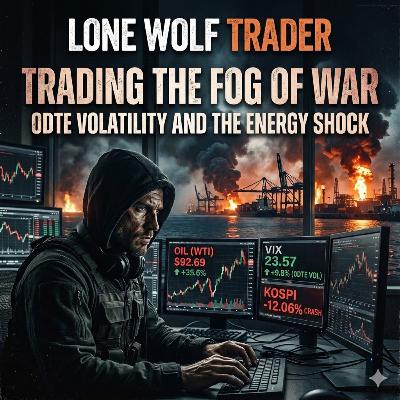
Global markets have entered a stagflationary "meat grinder" where the physical reality of energy scarcity and a contracting labor market has invalidated passive investment strategies. This episode breaks down why the AI-leveraged trade is being liquidated and how to navigate extreme volatility using 0DTE mechanics and the "Physics Test."The Energy Shock: WTI crude’s 36% weekly surge following the Strait of Hormuz closure represents a material liquidity drain on the global economy.The Labor Miss: A loss of 92,000 U.S. jobs in February signals a hard pivot from growth to contraction, creating a "no-win" scenario for the Fed.Tech Contagion: The 12% record crash in the South Korean Kospi provides the blueprint for how leveraged AI and tech bets unravel when energy costs spike.Gamma Dynamics: With the VIX sustained above 23, market makers are forced into negative gamma hedging, amplifying intraday moves and rewarding 0DTE precision.

This episode is a direct, evidence-based guide to selling Cash Secured Puts (CSPs)—a core strategy for income generation and disciplined stock acquisition.We strip away the complexity to explain how you can get paid upfront to commit to buying stocks you already want to own. This isn't about timing the market; it's about setting your price and getting paid for your patience.What you will learn:The Mechanics: How a CSP functions as an "automated limit order" that pays you a premium.Collateral Requirements: Why "Cash Secured" means having 100% of the strike price ready in your account.The Two Outcomes: What happens when the stock stays above your strike versus when you are assigned the shares.Risk Management: Evaluating the "effective cost basis" and avoiding the trap of selling puts on low-quality companies just for the yield.The goal is simple: Generate consistent cash flow while positioning yourself to buy quality assets at a discount.
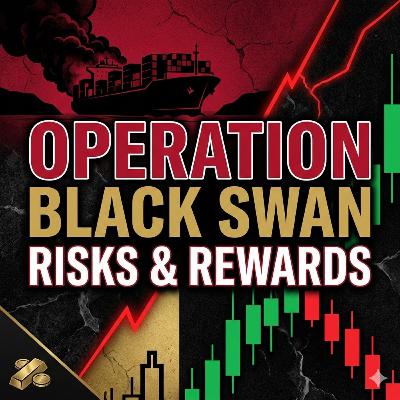
The Strait of Hormuz is de facto closed, not by missiles, but by a 50% spike in insurance premiums. While retail traders chase the vertical moves in Gold and Oil, they are missing the "hidden tax" on the AI trade. High-beta tech like NVDA and MSFT are secretly energy-short positions. In this episode of the Lone Wolf Trader, we strip away the "news anchor" fluff and apply the Physics Test to the Iran-US conflict. We analyze the 3-week logistics lag hitting the automotive sector and why "hoping for peace" is a retail failure of logic. Trade the market you have, not the apocalypse you fear.
Dive into the unapologetic truth: Life and trading are a brutal binary—own your goals with ironclad discipline and accountability, or default to fueling someone else's empire. In "Own It or Owe It: The Ruthless Grind to Self-Mastery in Life and Markets," we shred the myths of overnight success and expose patience as the ultimate weapon. From the soul-crushing gaps between grind and glory, to maintaining fire in the dark while tourists bail, this episode hammers home how time filters the weak and rewards the resilient.Packed with real-world market crashes, legendary traders like Buffett and Livermore, and anonymous retail wipeouts, plus dry humor to cut the tension. Each chapter delivers definitions, stats, examples, takeaways, hard lessons, and no-excuses action steps. End with a recap that hits like a gut punch and a prioritized checklist to lock in your edge.No fluff, no pandering—just raw insights for those ready to master the grind. Listen if you're done waiting passively and ready to behave like a winner.

AI needs more than just chips; it needs immediate, massive power. This episode breaks down the ThomasLloyd/Roman DBDR merger and why their vertically integrated "Behind-the-Meter" strategy is the structural solution the US market has been waiting for. We dive into the 8-K technicals, from the $25 management earnouts to the sponsor's high-conviction "No-Redemption" pledge.
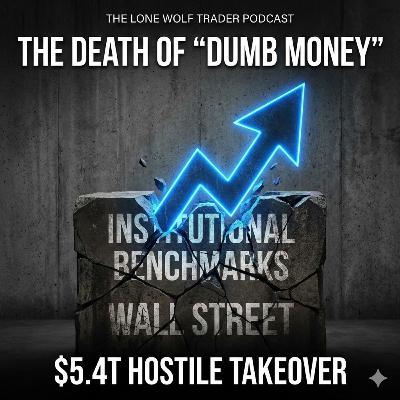
Wall Street’s favorite insult is officially obsolete. In 2025, retail investors didn't just participate in the market—they dominated it, deploying $5.4 trillion to crush institutional benchmarks like SPY and QQQ.In this episode of The Lone Wolf Trader, we dissect the structural collapse of the "Information Moat" and the rise of the high-velocity individual. We explore how retail agility and gamma warfare turned the "pros" into exit liquidity and why the traditional institutional edge has been neutralized by first-principles execution.This is not a lecture on "hope" or "trends." It is a cold, hard autopsy of the 2025 market rotation and a roadmap for the sovereign trader. No sugarcoating. No "benchmark hugging." Just the physics of price discovery.Key highlights include:Scale vs. Stagnation: How $5.4T in retail flow became the primary engine of price discovery.The Agility Gap: Why "oil tanker" institutions can't compete with "speedboat" retail traders.Gamma Warfare: The mechanics of how individual flow now forces institutional hedging.The Binary Reality: You are either the architect of your own goals, or you are the "yield" serving the goals of others.If you are looking for a "safe space" or a "gentle" market recap, look elsewhere. If you want the unvarnished truth about where the power has shifted, welcome to the show.

This episode analyzes the 30-year distillation of Chamath Palihapitiya’s business and life operating system. The core thesis focuses on the transition from a finite, objective-based life to an infinite, process-based existence to prevent intellectual and professional decay.The Truth in One Sentence: Success is not the achievement of milestones but the maintenance of a lifestyle characterized by constant learning, calculated risk, and the total elimination of external leverage.Key Facts:The Objective Trap: Viewing life as a series of checkboxes (degrees, promotions, liquidity events) leads to "stopping" at age 50, which causes rapid cognitive and professional atrophy.The Debt Prison: Debt is not a financial tool but a "cognitive prison" that forces individuals to optimize for short-term liquidity over long-term compounded knowledge.The Broadway Rule: High-level success requires physical proximity to industry hubs (e.g., Silicon Valley for tech, NYC for finance) to maximize "collision rates" and information osmosis.The 60-Hour Mouse: Resilience is a psychological state, not a physical one; the expectation of a positive outcome (hope) can expand physical endurance by over 1,000%.Status as a Hook: Caring about external status allows society to control your behavior, leading to a "caricature" of oneself rather than an authentic, high-performance identity.
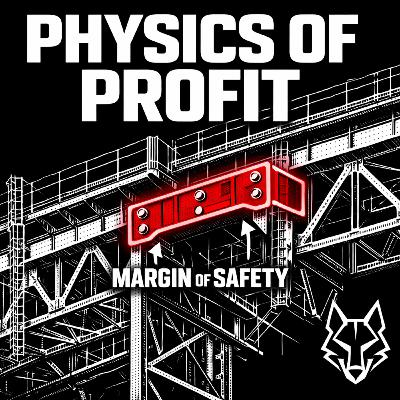
In this episode of The Lone Wolf Trader, we move beyond the chaos of market noise to conduct a clinical dissection of financial survival. Using Benjamin Graham’s foundational principles from The Intelligent Investor, we explore the mechanics of market fluctuations and the structural necessity of the Margin of Safety.This is not a discussion on tips or trends; it is a forensic analysis of market logic. We examine the psychological trap of Mr. Market and demonstrate how to utilize procedural independence to separate price from intrinsic value. Whether you are navigating emotional contagion or the lethal risks of margin debt, this episode provides the strategic blueprint for enduring the market’s irrationality.Core topics include:The Mr. Market Allegory: Exploiting manic-depressive price swings.The Physics Test: Why hope is not a strategy and how to identify logic that fails basic mechanical principles.Majoring in Minors: Identifying and cutting out the <1% details that drain mental energy without impacting outcomes.Margin of Safety: Engineering your portfolio with the 30–50% discount required for risk absorption.The Lone Wolf Standard: Why you must be prepared to hold an asset in total darkness for five years.

This episode provides a structural audit of human communication, reframing high-stakes arguments as a form of risk management. Moving beyond "soft skills," the discussion explores the technical mechanics of dialogue through the lens of trial lawyer Jefferson Fisher’s The Next Conversation. The analysis focuses on moving from a "winner" mindset to a "connector" strategy to preserve social and emotional capital.

In this unfiltered strategic briefing, The Lone Wolf Trader strips away the illusion of the financial "chessboard." Most traders fail because they treat the markets like a game of perfect information, but the real world is a smoke-filled poker room defined by hidden variables and human bias.This session conducts a deep-dive autopsy on your decision-making architecture, moving beyond the dangerous logical fallacy of "resulting"—the habit of judging a decision by its outcome rather than its process.Key takeaways from this briefing include:Chess vs. Poker: Why treating the market as a game of certainty is the fastest way to go broke.The "Wanna Bet?" Circuit Breaker: A tactical verbal tool designed to violently shift your brain from a binary opinion to a quantified probability.Decision Hygiene: Implementing the 10-10-10 Framework to bypass emotional hijacking and the Pre-Mortem Protocol to find systemic risks before they cost you capital.The Truth-Seeking Pod: How to build a "pack" of intellectual dissenters to kill your darlings and expose your blind spots.Stop seeking to be right and start seeking to maximize Expected Value (EV). In the long run, the house always wins—and through rigorous process, you can finally become the house.

Most investors talk about “diversification.” Few can define a true loss floor.In this episode, we break down the cold math behind LEAP put options as the only instrument that can contractually cap downside risk. No narratives. No correlations. No hope. Just a legal agreement that guarantees a sale price when markets break.You’ll learn:Why gold and crypto are not true insuranceHow negative delta and convexity create explosive downside protectionWhy leveraged ETFs fail during volatility shocksThe brutal cost of time decay and premium dragWhen LEAP puts make mathematical sense — and when they quietly destroy returnsThis isn’t theory. It’s structural risk management.If you’re serious about protecting capital in systemic crashes — not just surviving them, but positioning to deploy aggressively afterward — you need to understand the mechanics of the absolute floor.Because in a real bear market, correlation goes to one.And contracts are the only thing that still matter.
Most retail traders don’t lose because of the market. They lose because they bought the illusion.In this episode, we break down the mechanics behind the modern trading “guru” machine — dopamine marketing, fake urgency, rented Lambos, cherry-picked screenshots, and recycled strategies sold as secret systems. We dissect how front-running, selective disclosure, paper accounts, and survivorship bias create the myth of effortless profitability.This isn’t outrage. It’s analysis.You’ll learn:• How manufactured scarcity and social proof hijack your decision-making• Why most course sellers can’t survive audited transparency• The math behind survivorship bias and simulated performance• How to spot front-running and signal-selling traps• Why discipline, position sizing, and downside control beat hype every timeThen we flip the script.Instead of chasing personalities, we outline what a real trading edge looks like:Defined risk. Repeatable process. Data-backed expectancy. Mechanical risk management. Capital preservation first, growth second.Because trading is binary at its core — you either have an edge, or you’re liquidity for someone who does.No gurus. No fantasy. Just structure, risk, and truth.
Stop staring at "head and shoulders" patterns and start looking at the balance sheet. In this episode, we dismantle the myth of technical analysis and return to the first principles of wealth: the Weighing Machine.The market is a voting machine in the short term—a chaotic reflection of human bipolarity—but in the long run, it is a weighing machine that only cares about tangible cash flow and business durability. We break down why treating a stock like a speculative gambling chip is a poverty trap, and why you must view your portfolio as a collection of high-output engines.Key Takeaways:The Physics Test: Why a chart lacks the physical mechanism to generate wealth—only operations do.Noise vs. Value: How to ignore high-frequency distractions and focus on internal financial health.The Owner’s Mindset: Shifting from "trading tickers" to owning productive assets.Stop majoring in the minors of price fluctuations. It’s time to focus on the math that actually scales.

Every time you overshare, you hand someone a weapon they didn't have.In this episode, we break down why "transparency" is a tactical failure. We’re moving past the fluff and looking at the physics of information: how people collect your stories to use as future leverage, why trust must be earned through trial rather than given by default, and the strategic necessity of keeping your business between you, your Lord, and your inner circle.Inside this episode:The Information Leak: Identifying who is "archiving" your vulnerabilities.Trust Tiers: Establishing who actually deserves a seat at the table.The Defense Protocol: How to stop majoring in minors and start protecting your peace and your pocketbook.Stop handing out the blueprints to your own destruction. It's time to close the loop.

Stop comparing your "construction phase" to someone else’s "grand opening." In this episode, we break down the physics of success and why a slow start isn't a failure—it's a structural necessity for carrying heavy loads later in life.If you feel "behind" at 30, 40, or 50, you aren't failing. You are pouring a foundation deep enough to support a skyscraper, while everyone else is pitching tents.In This Episode, We Cover:The "Physics Test" of Comparison: Why looking at someone else’s timeline is a negative-ROI activity that drains your energy without fixing your problems.Structural Load vs. Speed: Why rapid success at 22 is often fragile, and why success at 45+ is engineered to last.The Hidden Variables: We expose the math errors we make when comparing our "struggle" to someone else’s "inheritance."Majoring in Minors: How to stop judging your life by a single snapshot and start focusing on your Day-over-Day progress.Key Quote: "If you rush the process, you might get the result, but you won't be able to hold it. The delay was the protection." — A. Cordero
Most retail portfolios are built on a lie: that diversification is the same as protection. It isn't. When the market crashes, all correlations go to one, and your "safe" assets tank right alongside your risks.In this episode, we strip away the financial industry fluff and apply The Physics Test to risk management. We dismantle the popular myths of "hedging" with Inverse ETFs (and prove why they are mathematically designed to go to zero) and reveal the only two things that actually stop the bleeding: Contractual Mechanics (Puts) and Zero-Beta Assets (Cash).What You'll Learn:The Physics Test: Why "hope" is not a hedge, and why you need a contractual floor.The ETF Trap: How volatility decay eats Inverse ETFs alive if you hold them too long.Cash as a Weapon: Why holding cash isn't "losing to inflation"—it's buying optionality for the crash.The Uncle Point: How to calculate the exact dollar loss that breaks you, and how to hedge only that risk.Listen now if you want to stop guessing and start engineering your survival.


Download from Google Play

Download from App Store
 United States
Cordero77@outlook.com
Cordero77@outlook.com