DiscoverAnalyzing Trends
Analyzing Trends
Claim Ownership

Analyzing Trends

Author: scenarioDNA

Subscribed: 5Played: 16
Share

Description

Analyzing Trends is the essential podcast for leaders, strategists, and innovators seeking to decode the cultural forces shaping our future. Produced by scenarioDNA, a strategic foresight consultancy renowned for its patented Culture Mapping methodology, this semiweekly show delivers rigorous analysis and actionable insights on the intersections of culture, technology, work, and societal transformation. It is connected to AnalyzingTrends.com, a publication that extends each episode with essays, research notes, transcripts, and tools, creating a single ecosystem for deeper exploration. Hosted by cultural intelligence experts Tim Stock and Marie Lena Tupot, each episode goes beyond surface-level headlines to reveal the deeper systems and patterns driving change, from the automation of work and the evolution of masculinity to the erosion of trust and the rise of new governance models. Whether you are navigating organizational change, designing for emerging behaviors, or simply seeking to understand the world with greater clarity, Analyzing Trends equips you with the structured intelligence needed to anticipate shifts, reduce uncertainty, and move forward with confidence in an increasingly complex landscape.
71 Episodes
Reverse
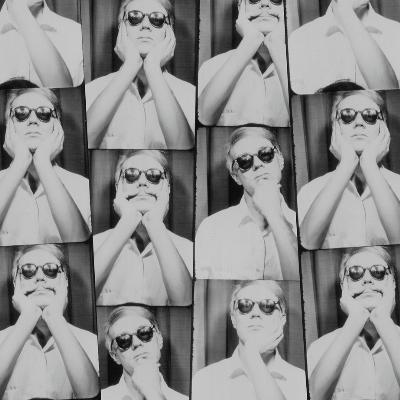
On the photobooth’s 100th anniversary, its compact grammar of a fixed frame and timed shutter within a curtained chamber still teaches how machines choreograph behavior. Narrative intelligence decodes that language, turning affordances into hypotheses designers can test in the wild. If we want identity systems that permit verification without erasing improvisation, we must read these grammars and prototype the social scripts they encourage. What machine language are you listening to?
Younger generations find rites of passage unfulfilling because public life has thinned, connection is often performed, and identity work has shifted into private rehearsal that turns anxiety into a shared code. By framing culture as a living story system, we can see where meaning is forming and design credible thresholds for belonging and responsibility. The result is clearer direction in ambiguous times. Solutions to these complex challenges require an open and layered approach to analyzing how culture is changing. Sensemaking that resists conclusions and opens up more questions and connections between points within the cultural system.
We are revisiting the 2025 Trend Themes with a clearer lens. Flexibility became a perk for the few, not a standard for all. Big donors shaped politics while calling it populism. AI fakes moved from novelty to everyday content. Living alone became something cities must plan for. Cities focused on what was easy to count, while people demanded proof for every claim. October made this obvious: donors pushed court outcomes, newsrooms argued over how to label AI content, housing costs dominated local elections, and outside audits found emissions that city dashboards missed. These are not separate stories. They are parts of one system that now runs on constant pressure, not on quick recoveries.The intersections are plain. Hybrid work helped women where it lasted, while return to office policies hurt caregivers. Class decided who got paid leave and who kept real flexibility. Race and immigration status concentrated risk in frontline jobs. Age and access decided who smart tools helped and who got left out.This needs a different kind of foresight. Treat trust like infrastructure. Attach proof to every claim. Make governance opt in with clear consent, short data windows, and real ways to appeal. Design for belonging so solos, older adults, and young people in fractured media worlds can meet the rest of the city. Pair story with statistic. Set early warning signals. State what is known and what is not so choices in 2026 are clear and defensible.
When Amazon announced plans to replace more than half a million jobs with robots, most reactions focused on automation and job loss. The deeper story is about how such decisions reshape the systems that define work itself. Automation changes not only what people do but how they relate to space, technology, and one another. Every change in workplace design, from surveillance dashboards to wellness pods, carries an underlying logic about trust, power, and purpose. To understand these changes, it helps to look beyond the headlines and ask what stories, assumptions, and structures are shaping them.A causal layered approach makes this possible. It starts with visible trends like return-to-office mandates and AI monitoring, then moves down through the systems that sustain them, the worldviews that justify them, and the deeper myths that give them meaning. This layered way of seeing shows how automation mirrors broader cultural choices about fairness, belonging, and control. It invites us to imagine multiple futures for work, some built around compliance and measurement, others around collaboration and care. Seeing these layers together gives a fuller picture of what is really being designed when machines and people share the same space.
Biological and cultural evolution follow the same logic: survival depends on exposure, not avoidance. Bacteria that developed CRISPR did not eliminate infection; they learned from it, turning viral encounters into memory. Human systems work the same way. Adaptation happens when disruption is absorbed, translated, and reused. From the integration of mitochondria in early life to companies transforming crises into strategy, intelligence grows through the exchange of code, whether genetic, digital, or symbolic.The same principle shapes how meaning evolves. Ideas spread like genes, mutating as they move through networks of language, art, and technology. Movements such as cyberpunk and cypherpunk, or shifts in cultural codes like authenticity and productivity, reveal a pattern of recombination where friction becomes creativity and contradiction becomes coherence. Progress depends on maintaining selective permeability, open enough to let change in and structured enough to stay recognizable. The future belongs to systems that learn to metabolize disruption.
From the disciplined routines of Wellville’s sanitariums to the cathartic ordeals of EST, from Robbins’ firewalks to TED’s fireside polish, American wellness has always been about performance as much as practice. What began as experiments in health and self-actualization gradually turned into spectacles of transformation and, later, commodities of influence. Today, the arc lands at Pete Hegseth’s War Department speech, where wellness codes of discipline, purity, and aesthetics become the language of governance itself. The journey reveals a nation that repeatedly seeks meaning through performance, yet risks confusing liberation with compliance. The question is no longer whether performance shapes identity, but whether America can redirect that performance toward collective flourishing rather than institutionalized control.
The pyramid worked because it taught you how to think. Once machines do the thinking, that whole cultural engine for building expertise starts to disappear.The recent Harvard Business Review article on AI dismantling consulting’s pyramid model points to a much deeper problem. What is unraveling is not just structure but the culture that gave expertise its legitimacy. The rituals and hierarchies that once created authority now feel performative in a world of transparency and automation.This is not a technical disruption but a cultural reckoning. Consulting and design must rebuild around new frameworks of trust, foresight, and human interpretation. The next era of expertise will belong to those who can read cultural change as clearly as they once read a balance sheet.
The 2025 Emmy Awards were more than a night of celebration. They offered a glimpse into where television might be headed. The winners reflected an industry that has moved past the height of Peak TV, when lavish budgets and endless new dramas defined the landscape. What we saw instead was a field in transition, adjusting to new financial realities and changing audience expectations. Television now sits between spectacle and sustainability. Prestige dramas still carry cultural weight, but they are harder to justify in an era of tighter margins. Meanwhile, leaner shows with reliable rhythms are earning recognition of their own. Alongside them, indie projects and new technologies are beginning to push against the edges of the medium. Taken together, these shifts suggest that television’s future will not be defined by a single model, but by the uneasy coexistence of many different ones.
The internet began as a research network. It was built to move facts between people who needed to verify one another. The social era translated that spirit into a single public square and promised that connection would produce clarity. What it produced at scale was a feed. The feed made attention cheap and trust fragile. Today, trust in news sits around 40 percent and younger audiences reach for creators and closed groups before they reach for institutions. That is not a moral failure. It is a structural outcome of how we built discovery and reward.
Hallucination is not a malfunction but a feature of cognition. When signals are thin or ambiguous, the mind completes the picture, blending memory, expectation, and feeling into a coherent scene. In 2025 that architecture meets an anxious, high-velocity information climate, so pattern-seeking both comforts and misleads. Seen this way, hallucination offers a framework for design practice and foresight: a generative spark that opens possibility and empathy; a source of error that breeds false certainty and seductive stories; and a diagnostic of context that exposes the conditions shaping perception. The link to making is direct. Human intelligence moves through imagination that explores, sensemaking that checks conditions, and accountability that fixes claims to evidence. The craft is to balance these modes so the creative benefits of a mind that fills gaps are harnessed while its liabilities are contained.
This Labor Day has me thinking about monsters. Not the ones that chase you, but the kind that smile from a dashboard and tell you everything is fine. Alien: Earth gets this right. Its hybrid child is a mirror for a work life where people move beside machines and the line between the two keeps shifting.
In 2025, branding no longer works the way it once did. Trust is in sharp decline, with fewer than half of consumers believing brands are honest about their values, even as expectations continue to climb. A majority of Gen Z want brands to drive social change, but only a fraction believe they actually follow through. What has emerged is a culture of emotional saturation: campaigns filled with the language of care, belonging, and vulnerability that often serve more as viral theater than genuine support. This shift did not happen overnight. The roots go back to the 2008 recession, when disruption was packaged as empowerment, and to the pandemic, when empathy became the operating system of branding. Both moments left behind unintended costs: precarity, fatigue, and dissonance.The challenge now is not simply about better messaging. Historian Christopher Lasch warned of the cultural dangers of commodified identity, and his critique still resonates. Branding has absorbed the language of culture without taking on its responsibilities, turning rituals of care and connection into fragile spectacles. The next era must confront this directly. If branding is to have a future, it must shift from performance to stewardship, from chasing attention to embedding reciprocity, trust, and resilience into its systems. The open question is whether brands can shoulder that responsibility before fatigue becomes irreparable.
Edges & Intelligence

Edges & Intelligence

2025-08-1308:51

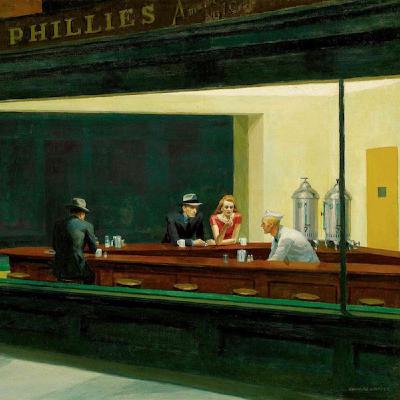
An edge is not missing data. It is the instruction set for seeing. That came into focus after I watched a Google Gemini clip that tried to “walk into” Nighthawks and filled the frame with plausible alleys and doors. The location that inspired the painting sits at the corner of Greenwich Avenue and West 11th Street, on the block I have lived on for more than thirty years, so the difference between a boundary and a blank is not theoretical. In art, the frame tells you what not to cross. In a city, the curb and corner teach how a block holds together. In thinking, an edge slows the eye long enough for meaning to form. When feeds and models smooth those boundaries, we trade sequence for drift and memory for impressions. Keep the edge and you keep the scaffold of intelligence, the line between record, inference, and speculation. Keep the edge and you keep accountability, because claims can be tested and corrected. Creativity is not the removal of limits. It is the careful use of them. If we want culture that lasts and machines that help, we should protect the edges that let both make sense.
In 2025, performative culture has no pause button. Every public figure is locked in a constant loop of self-presentation where each move is dissected, reframed, and turned into content within hours. Visibility is the currency, but fatigue is the price. In semiotic terms, the living operate as open texts, their meaning always in flux and vulnerable to reinterpretation. In that environment, the dead begin to look like they have the advantage. Their stories are complete, fixed in form, and free from scandal, brand missteps, or awkward pivots that demand rewriting. They become closed texts, stable symbols in a culture that craves narratives it can control. Our fascination with these closed stories is not only about nostalgia but also about avoiding the volatility of the present, where the work of sustaining a public image is relentless and the outcome is never secure.
When a global sportswear giant was called to account for releasing a sandal that closely mirrored a traditional Oaxacan design, it became clear that the debate over cultural appropriation in fashion is no longer confined to the margins. Such controversies are unfolding in a legal and cultural environment where origin stories are scrutinized and communities have greater power to demand recognition and restitution. They are also reminders of a longer history in which garments like the Indian jodhpurs were absorbed into Western fashion until their origins faded from view. The challenge for the industry now is to confront how these patterns persist and to decide whether its future will be built on extraction or on genuine cultural engagement.
Who Owns Innovation?

Who Owns Innovation?

2025-08-1015:05

Innovation isn’t just about ideas; it’s about who controls the language that defines them. When Elon Musk declared that xAI would no longer use the term researcher, it wasn’t just a semantic tweak. It was a signal. Stripping out that label repositions authority, redefining who gets to build, who gets to ask questions, and who is no longer seen as essential to the process. Language like this doesn’t simply reflect an internal culture shift; it actively enforces it. Across the tech industry, similar moves are quietly reshaping how innovation is governed. As terms like researcher, ethicist, and even designer get diluted or eliminated, the roles that once introduced reflection, friction, and ethical pause are being sidelined in favor of engineering speed and scale. The result is systems that accelerate but can’t explain themselves, growth without accountability, and progress that no longer asks why.
In cultural theory, a shibboleth is a subtle signifier that identifies group membership. Originally a linguistic term, it has evolved to describe any behavioral, visual, or contextual cue that functions as an insider signal. In branding, shibboleths are the unspoken codes that mark shared knowledge, emotional resonance, or value systems. They are often embedded in language, design affordances, rituals, or interface behaviors. Brands that use shibboleths effectively do not rely on loud slogans or explicit marketing. Instead, they create a sense of belonging through subtlety, requiring fluency to fully access the value. These codes help brands become more than transactional entities. They transform them into cultural infrastructures. Shibboleths matter because modern consumers increasingly seek identity, meaning, and alignment over product attributes. They want to recognize and be recognized. Shibboleths are the micro-cues that mediate that recognition.
In a world where brands function as cultural artifacts rather than just commercial entities, traditional metrics no longer tell the full story. To understand a brand’s true value and its potential for longevity, we must move beyond surface-level sentiment and transactional data. What matters now is resonance: the ability of a brand to align with evolving cultural narratives and systemic realities. This means decoding how brands participate in shared symbols, respond to shifting social norms, and integrate into the broader ethical and ecological structures shaping our future. Resonance is not just a measure of relevance. It is a measure of adaptability, integrity, and meaning.
Decoding Scapegoats

Decoding Scapegoats

2025-06-2819:31

Scapegoating in contemporary culture reveals a deeper failure not only in public discourse but in the way research and foresight are practiced. When societies assign blame to symbolic targets such as migrants, youth, AI, or academic institutions, they often reflect a broader discomfort with complexity, ambiguity, and systemic accountability. These patterns of blame are not merely sociopolitical but point to a crisis in how knowledge is produced and applied. Traditional foresight practices that rely heavily on linear trends, quantifiable data, and sanitized narratives fail to account for the emotional, symbolic, and narrative dimensions of collective behavior. To move forward, research must evolve into a layered, participatory practice that includes cultural semiotics, affective insight, and plural perspectives. Only by treating scapegoats as meaningful signals of what societies cannot process can foresight become a tool not just for prediction, but for understanding and transformation.
In the wake of this weekend’s strike on Iran, the urgency to reassess how we understand uncertainty is clear. Strategic decisions are often driven by what appears to be missing, yet the real blind spots may lie in how meaning is constructed and perceived. A mixed-method approach that combines scenario planning, cultural analysis, and psychological models like the Johari Window offers a more complete way to navigate complexity. It moves beyond filling data gaps and instead focuses on understanding the narratives, identities, and emotions that shape global events.
loading
Comments