


 Claim Ownership
FOMO Investing
Subscribed: 4Played: 13
Subscribe
© 2026 Brian and Mik
Description
Brian and Mik explore the world of investing through real-world examples and behavioral economics principles.
24 Episodes
Reverse
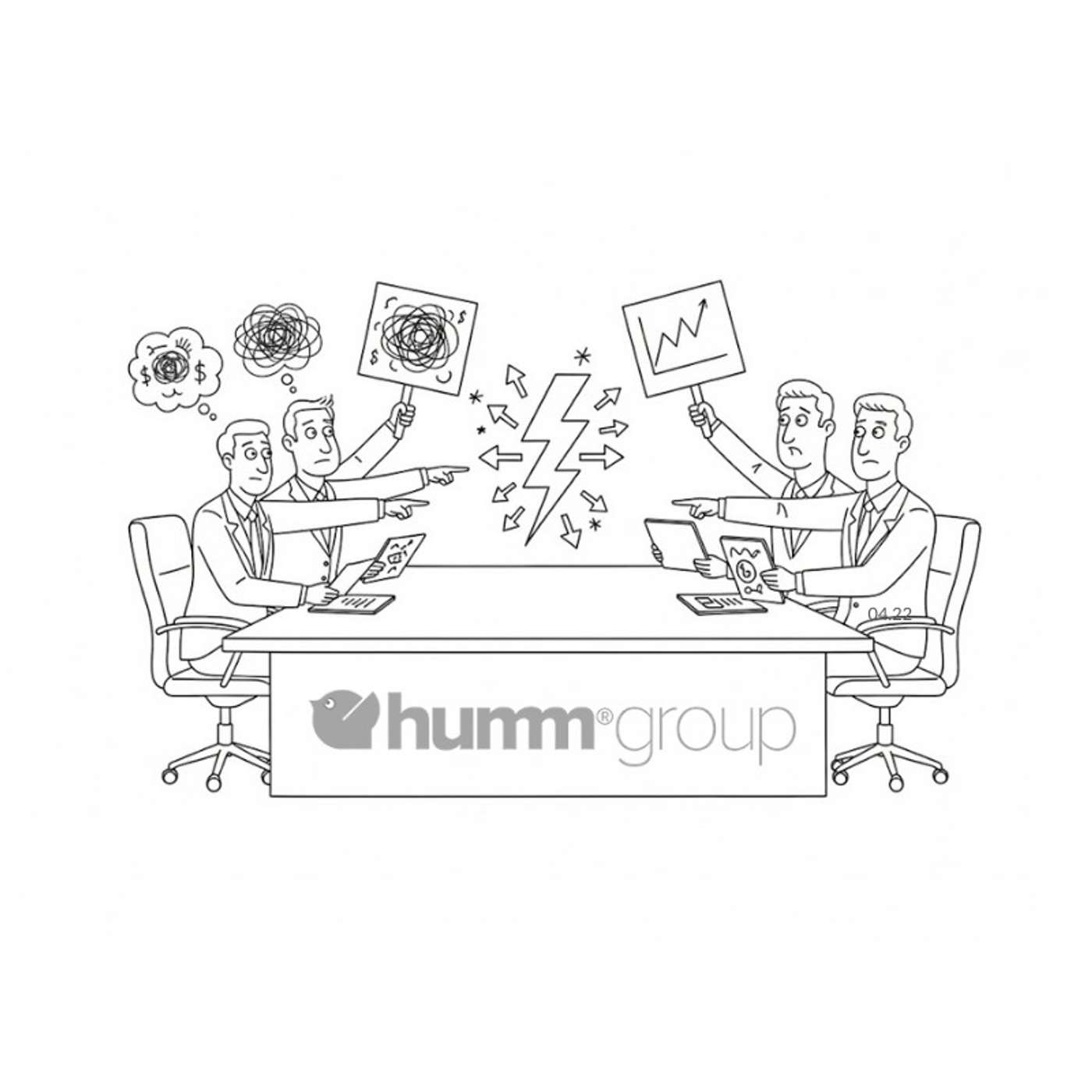
Brian and Mik unpack a live activist situation at Humm Group, a small Australian non-bank lender now facing public pressure from investor Jeremy Raper, who owns ~6% of the company and is pushing for a vote on board change ahead of a February shareholder meeting.They walk through the competing narratives: a founder-led board defending its strategy versus an activist arguing the company is undervalued due to poor governance and capital allocation. Along the way, they discuss downside protection, third-party bids, and special situations.Rather than a stock pitch, this is a case study in pattern recognition: how governance disputes, excess cash, and strategic activist pressure can create asymmetric outcomes.

In this year-end episode, Brian and Mik reflect on FOMO Investing—its origins, how the podcast has evolved, and where they hope to take it in 2026. They revisit key themes from the past year, including quantum computing and GLP-1 biotechs, and share plans for the year ahead.

After the post-IPO drawdown, we review whether Rivian is worth another look. Rivian's software-first design, the Volkswagen JV, the R2, as well as its own autonomous driver investments, seem to indicate it may be more than just another EV manufacturer.

$15 salads, a 90% drawdown, and a very confused stock market. We explore Sweetgreen as a potential turnaround—what’s broken, what might work, and why demand alone doesn’t save a business. Sometimes the hardest investments aren’t the complex ones—they’re the obvious ones.
In this episode of FOMO Investing, Brian and Mik revisit IonQ (IONQ). Building on our original Theory of the Case from November 2024 and our January 2025 update, we unpack recent developments, including:Management changes (CEO and CFO),IonQ's competitive position in the broader quantum market.Challenging valuation metrics ($15 -16 billion on $100 million of revenue)IonQ's $2 billion in Equity financing at $93/share (h/t to Andrew Walker's piece that has a great breakdown of this, link below)🔗 LinksTheory of the Case — IonQ (Nov 2024): https://fomo.transistor.fm/episodes/theory-of-the-case-ionqIonQ Update (Jan 2025): https://fomo.transistor.fm/episodes/ionq-january-2025Andrew Walker on IonQ financing: https://www.yetanothervalueblog.com/p/the-evolution-of-meme-stock-financingChris Monroe on quantum computing and IonQ https://www.youtube.com/watch?v=-eo_VV0Z4aE&t=6249s
OpenAI is racing toward a trillion-dollar valuation while burning tens of billions on chips, data centers, and Azure commitments. We break down the new capital structure, Microsoft’s leverage, why Zuck is FOMO-building compute, and whether OpenAI should even want to be a public company. Also: the underrated bottlenecks—power, foundries, CUDA, China—and why this boom feels like 1999 with actual revenue.Then we jump to biotech to cover the Pfizer and Novo bidding war for Metsera (Pfizer ultimately won with its $8 billion deal). The bidding for Metesera drew at least six bidders and may set-off a chain reaction in the GLP-1 space. We speculate on what this deal might mean for Viking (VKTX) and others in the GLP-1 / obesity space.
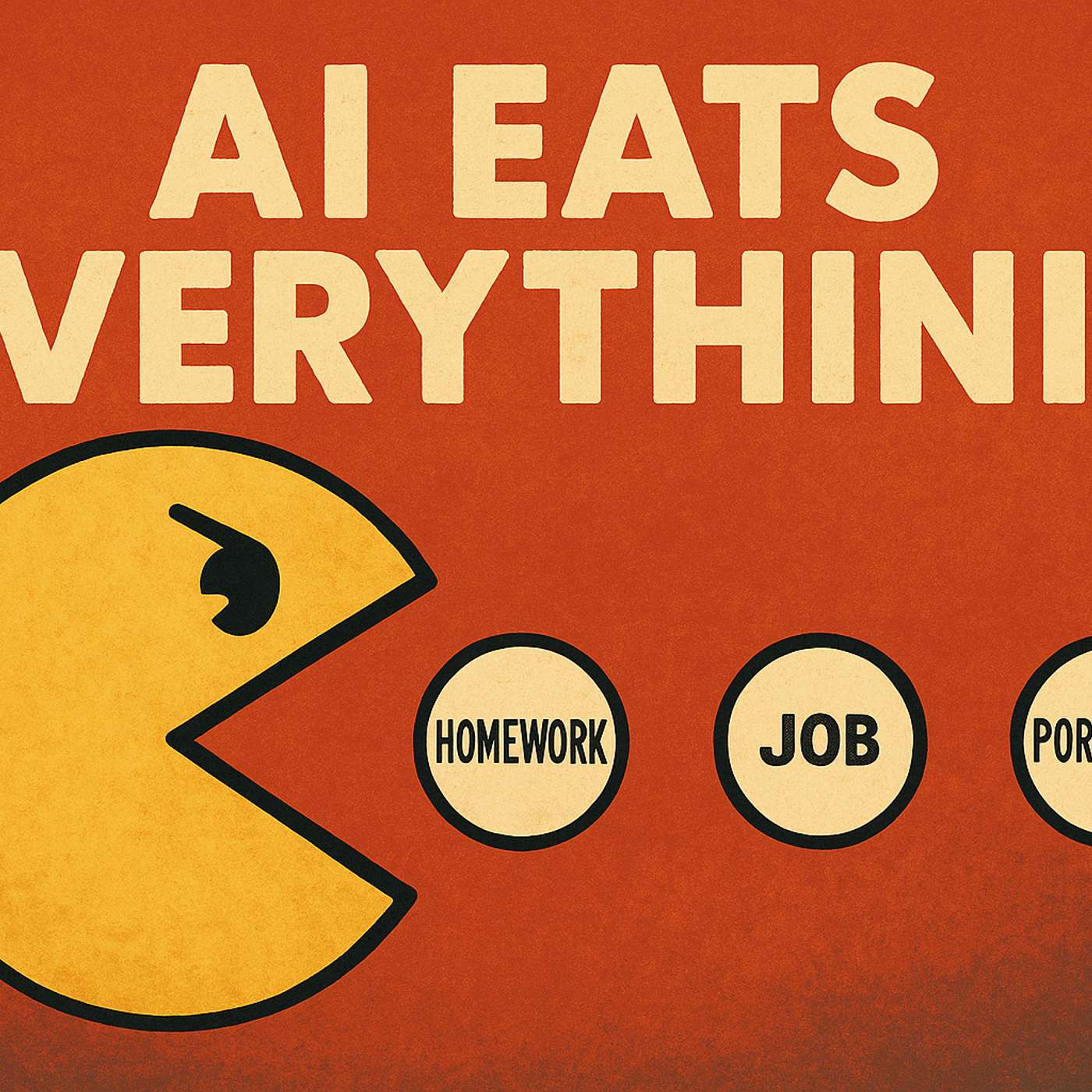
The AI & investing episode. Brian and Mik talk about whether AI will actually replace white-collar jobs or just transform them, how professionals can stay relevant by becoming AI-powered specialists, and where value might accrue across chips, power, “boring” traditional industries, and healthcare and drug discovery. They also explore whether giants like OpenAI will hoover up SaaS, how constraints in compute and electricity could shape the next decade, and why the biggest AI winners may come from unknown unknowns we can’t yet see.
In this episode, Brian and Mik launch a new segment called “Dealable”—where they set aside strict analysis and let their imaginations run on mergers, acquisitions, partnerships, and spin-outs that should happen (even if they probably won’t).The conversation kicks off with Apple’s AI dilemma—is Siri too far behind, and could Apple’s cash hoard finally push them into a big acquisition? Would buying Perplexity or Anthropic give them the AI-native layer their ecosystem needs? And what about the $20B Google search deal that DOJ scrutiny could upend?From there, they turn to Alphabet/Google, exploring what a DOJ-mandated divestiture could look like. Could Waymo be spun out to unlock value? What happens if Chrome were ever separated from Google Search? And whether DOJ case may require a meaningful remedy from Google (and possibly Apple).It’s an episode full of hot takes, half-baked speculation, and a few insights that might just age into real deals.Disclaimer: The views expressed are for entertainment purposes only. This is not investment advice. Please do your own research before making any financial decisions.
(This show was recorded on 31st July 2025)Brian and Mik catch up on a few investment ideas they have been followingWhat we coverANSYS × Synopsys: the deal closed; why a stock-and-cash structure gave us yield and long-term exposure, and how we’re thinking about integration risk and the opportunity ahead. (TLdR: We are still long Synosys)Semis & the “foundry question”: Intel sentiment whiplash, a new CEO with a turnaround pedigree, and the reality of competing with TSMC scale. We speculate on Intel's potential outcome(s) and what second-order effects may be for the ecosystem, including TSMC.Viking Therapeutics (VKTX): why a fast-follower with both subcutaneous and oral programs still looks interesting in a market dominated by Novo/Lilly; the real risks (short interest, dilution, timelines) and why patience, position sizing and buying well matters.Process over predictions: how we use updates like these to revisit assumptions without over-trading the noise.Disclaimer: The views expressed are for entertainment purposes only. This is not investment advice. Please do your own research before making any financial decisions.
In this episode of FOMO Investing, Brian O’Neill and Mikhail Bulchandani do a deep dive into one of Brian’s favorite stocks, TG Therapeutics (TGTX). Brian outlines his multi-year investment thesis in TGTX, from its setbacks in oncology to its successful commercialization of Briumvi (ublituximab) for relapsing forms of multiple sclerosis.What You’ll Learn:TG Therapeutics’ evolution to a successful commercial-stage biotech. Practical investment strategies for investing in biotech companies like TGTX.Insights into the multiple sclerosis treatment landscape, and the growing market for anti-CD20 therapies, including Roche's Ocrevus, Novartis’s Kesimpta, and TG’s Briumvi.How Briumvi has been able to gain market traction.Upcoming catalysts for TG Therapeutics, including the potential for a label update to skip the initial dose, the potential to speed up infusions from 1 hour to 30-minutes, and the development of a subcutaneous formulation of Briumvi.A discussion about Bruton’s Tyrosine Kinase inhibitors (BTKi), a new class of disease modifying therapies in clinical trials for the treatment of MS.How TG Therapeutics has positioned itself as a compelling acquisition target.Brian revisits his February 8, 2024 article on TGTX, written when TG was at $14.32. Recently shares have traded between $35 and $40. Brian updates his forecast for when TG will achieve a $1 billion net product sales run-rate, and notes that the company today is considerably de-risked with market traction and net positive cash flows.LinksBrian’s February 8, 2024 article on TGTXThe Evolution of Anti‑CD20 Treatment for Multiple Sclerosis: Optimization of Antibody Characteristics and FunctionProgress toward Mitigating Disability Progression in Multiple Sclerosis
In this episode of FOMO Investing, Brian and Mik dive into the volatile world of Carvana, exploring its business model, recent stock performance, and the ongoing debate between short and long theses. Mik shares his personal experience selling cars to Carvana during the pandemic, leading into a discussion about the company's unique approach to the used car market. They analyze Carvana's operational efficiencies, the controversy surrounding related-party transactions, and the potential future of online car sales. Links MentionedCliff Sosin, Yet Another Value PodcastRecurve, Yet Another Value PodcastRecurve RebuttalCliff Sosin, Invest Like The BestHindenburg Short Theses
For the lucky no. 13 episode of FOMO Investing, we explore the powerful yet often misunderstood force of "Fear of Missing Out" (FOMO) in investing. We unpack the psychology behind why investors often feel compelled to act impulsively and discuss how some legendary investors harness this instinct to their advantage. We explore how to turn the urge to act into a structured process that maximizes your edge without succumbing to panic or peer pressure.
In this episode, we develop our Theory Of The Case (TOTC) on the ANSYS + Synopsys merger. We cover the potential upside from the deal. Why ANSYS + Synopsys could be the backbone of Physics AI. The merger arbitrage opportunity and lessons from past trades (hello, Rite Aid 👀)Key Topics Covered:🧠 What ANSYS and Synopsys actually do and why they matter💻 CAE + EDA: how the merger creates an end-to-end design environment🤖 Physics AI: the untapped potential of generative models trained on physical simulation data📈 Deep dive into the merger economics, risks, and timeline💰 How to think about merger arbitrage as a strategy—when it works and when it burnsLinks:🎧 ANSYS CTO Dr. Prith Banerjee talks about the future of AI in Physics and Simulation on the Neil Ashton Podcast
In this episode of FOMO Investing, we dive into the full story of Checkpoint Therapeutics, a microcap biotech that just entered into an agreement to be acquired by Sun Pharma. Brian walks us through his personal “theory of the case”—from early conviction to final outcome—including investor psychology, capital efficiency, clinical development hurdles, and what the CVRs (Contingent Value Rights) might still deliver post-deal.We explore the science behind Checkpoint UNLOXCYT™. How Checkpoint navigated FDA delays, dilution, and an unforgiving cash runway — all leading to an eventual $355 million acquisition.Whether you're into biotech investing, thesis-driven trades, or just love a good underdog story, this one is packed with lessons on risk, timing, and what it takes to bring a new cancer therapy to market.💡 Key Topics Covered:Why Checkpoint Therapeutics caught Brian’s eye in 2021The cancer drug (cosibelimab) that made it all happenLessons in biotech cash burn, dilution, and timingHow to size positions in high-risk tradesWhat the 70¢ CVR could still mean for shareholdersThe growing role of fast followers in immunotherapyEmotional anchoring, stubbornness, and scorekeeping as an investor
An update to our Theory of The Case (TOTC) on IonQ ~ mid-January 2025. We review Jensen Huang's and Mark Zuckerburg's claims about the timeline for useful quantum computing (being 15+ years out). We also include IonQ management responses, including the CFO's (Thomas Kramer) view. We reflect on the current state of play of AI and the potential role for Quantum computing.
In this end-of-year episode, Brian and Mik explore the evolution of Bitcoin—from its mysterious beginnings with Satoshi Nakamoto’s 2008 white paper to its current six-figure price. They discuss how Bitcoin’s role has shifted from “electronic cash” to a potential reserve asset, the concept of “digital real estate,” and whether it truly lives up to its promise of decentralization. They also discuss skepticism by prominent figures like Charlie Munger and Jamie Dimon, debate energy usage, and consider Bitcoin’s ongoing risk from governments and regulatory bodies. If you’re curious about how Bitcoin got here, and what the maximalists believe, this conversation is for you.Disclaimer: The content in this podcast is for entertainment purposes only and should not be considered investment advice. Always do your own research.
In this episode, we unpack the latest developments at Intel following the sudden resignation of CEO Pat Gelsinger. In this Theory Of The Trade (TOTT) episode, we recount why Mik initially started investing in Intel when Pat Gelsinger rejoined the company (~ February 2021) and why he is now cutting his exposure to the stock, given the uncertainty overhang after Pat’s departure. We explore Intel’s storied past—from the 386/486 “glory days” to missed opportunities in mobile—and dissect whether Intel can reclaim its position as a leading-edge semiconductor manufacturer or if this is the beginning of the end of this legendary American Silicon Valley company.
In this episode of FOMO Investing, we develop our Theory Of The Case (TOTC) on IonQ (IONQ). In TOTC episodes, we have an open-ended discussion on an investment that we are beginning to research. We dive into the fundamentals, the opportunity, and ultimately whether we believe there is a good investment thesis. IonQ is one of the few pure play quantum compute companies. IonQ is working on developing and scaling general purpose quantum compute. In this episode we discuss what is quantum compute, potential use cases for quantum compute. We explore some parallels between quantum compute and GPU compute and Nvidia ~2009-2011. We discuss some of IonQ’s promising partnerships, the Quibtek acquisition and some promising new quantum networking products that IonQ is looking to launch.We recorded this episode on 15th November 2024 when IonQ was breaking through new all-time-highs and we discuss both the opportunities and risks involved in investing in IonQ at the current valuation. (This Jensen Huang talk we reference, to draw out the GPU parallel in the episode is 13 years old and speaks to a vision of GPU Compute at ~40 minutes in)
In this episode of FOMO Investing, we unpack the outcome of the 2024 elections from a betting market, polling data, and what biases might explain what made them get the odds on the outcome quite wrong.We touch on topics like the wisdom of crowds, the efficient market hypothesis, and how these new betting markets could hedge traditional financial markets. We discuss whether betting on elections is a legitimate hedging tool or just a gamified gamble. We discuss what may have driven poll bias. How analyst predictions for a very tight race may have impacted betting markets. We also discuss how this led to a disconnect that resulted in betting market odds, which had 75/25 odds in favor of Kamala winning the popular vote.
In this episode of FOMO Investing, we develop our Theory Of The Case (TOTC) on Viking Therapeutics (VKTX). In TOTC episodes, we have an open-ended discussion on an investment that we are beginning to research. We dive into the fundamentals, the opportunity, and ultimately whether we believe there is a good investment thesis. Viking Therapeutics (VKTX) has become a fast follower in the rapidly growing GLP-1/obesity drug market. We discuss the current state of play of VK-2735 research and Phase 2/3 studies. We discuss the potential addressable market for GLP-1 drugs in the obesity and diabetes markets. We review why the delivery mechanism may be an important driver in the thesis to invest in VKTX (or its competitors). We discuss the company's capitalization and how the CEO's stewardship (Brian Lian) may be well-positioned to take Viking to the next stage.

Comments

Download from Google Play

Download from App Store
 United States