


 Claim Ownership
Celestial Crumbs
Subscribed: 0Played: 2
Subscribe

© Nathalie Bonilla
Description
Celestial Crumbs is a metaphysical-focused podcast for those who want to feel more connected to the universe. Unlike other podcasts in this space, Celestial Crumbs focuses on the beauty of the cosmos through raw facts in a short, sweet format.
nathaliebonilla.substack.com
nathaliebonilla.substack.com
13 Episodes
Reverse

Did you know you’re always half a second behind reality?That the “now” you’re experiencing already happened, and your brain is still catching you up?Neuroscience tells us two things that sound almost like science fiction:* It takes your brain about .5 seconds to process sensory input and fully register what’s happening.* Your body actually starts reacting .5 seconds before you consciously decide to do something.That means when you touch something hot and pull your hand back, or when you “just know” the right move to make, it isn’t your conscious self making the call. Your body already acted.So in a way, our conscious selves are remembering the future. Our bodies move first, our minds narrate after, and we tell ourselves the story of “I decided.”Why does this matter?Because your instincts aren’t random. They’re real, practiced, embodied intelligence. The gut feeling that arrives “out of nowhere” is your nervous system moving ahead of you. The decision that feels like magic may actually be your body remembering what it already set in motion.Half a second late. Half a second early.That’s the dance of being human — a little behind, a little ahead, and always narrating the mystery in between.✨ In today’s episode of Celestial Crumbs, I dive into this hidden lag, why it changes the way we see free will, and how it makes our intuition feel almost supernatural. Get full access to Celestial Crumbs at nathaliebonilla.substack.com/subscribe
Shame is one of the heaviest emotions we carry — not just in our minds, but in our bodies. It silences us, convinces us to play small, and spreads far beyond the original wound.But what if shame isn’t proof of your unworthiness?What if it’s actually a signal — pointing you toward the exact areas of your life that are ready to grow?In this episode, I dive into:* The difference between guilt and shame (and why shame runs so deep)* How shame shapes our identity and daily choices* The hidden message inside shame that can lead you back to your power* Three practices to start transforming shame instead of letting it silence youYour high-value self doesn’t live without shame — she alchemizes it into strength.🔗 Read the full Day 4 article by clicking here.👉 Tomorrow’s episode will continue this journey as we explore the cycles we repeat — and how to finally break free. Get full access to Celestial Crumbs at nathaliebonilla.substack.com/subscribe
Judgment feels small in the moment, but it quietly reshapes the way we see ourselves and the world. In this episode of Celestial Crumbs, we explore the psychology of judgment—why we do it, how it damages confidence and relationships, and the surprising way it keeps your subconscious stuck in cycles of self-sabotage.You’ll learn:✨ Why judgment is hardwired into the brain (and how to break the pattern)✨ The mirror effect—what your judgments reveal about your own growth edges✨ The difference between judgment and discernment, and why one drains your energy while the other protects it✨ Practical tools to shift from criticism into compassion and curiosityMidweek is the perfect time to pause, reflect, and realign. This episode invites you to notice where judgment shows up in your life and transform it into an opportunity for healing.🔮 Judgment is costly. Discernment is powerful. Self-reflection is priceless.For a deeper dive into this topic, view the companion article: Judgement is a Costly Habit - Stop It Get full access to Celestial Crumbs at nathaliebonilla.substack.com/subscribe
When people hear the phrase high-value mindset, they often picture luxury, polished appearances, or external success. But a high-value mindset goes much deeper than what can be seen from the outside.It begins with the way you think, the standards you hold, and the choices you commit to every single day. It’s knowing your worth, recognizing what aligns with your vision, and refusing to settle for less than what truly supports your growth.A high-value mindset isn’t about perfection—it’s about direction. It’s choosing relationships, habits, and opportunities that reflect the version of you you’re becoming. It’s walking through life with clarity, intention, and self-respect, even when it feels uncomfortable.In today’s episode, we’re laying the foundation for this entire journey. I’ll share what it really looks like to embody a high-value mindset, how it influences the way you show up, and why it becomes the compass for every shift you’ll make over the next 100 days.🎧 Tune in now and step into the first day of your high-value self.Thanks for reading Celestial Crumbs! This post is public so feel free to share it. Get full access to Celestial Crumbs at nathaliebonilla.substack.com/subscribe
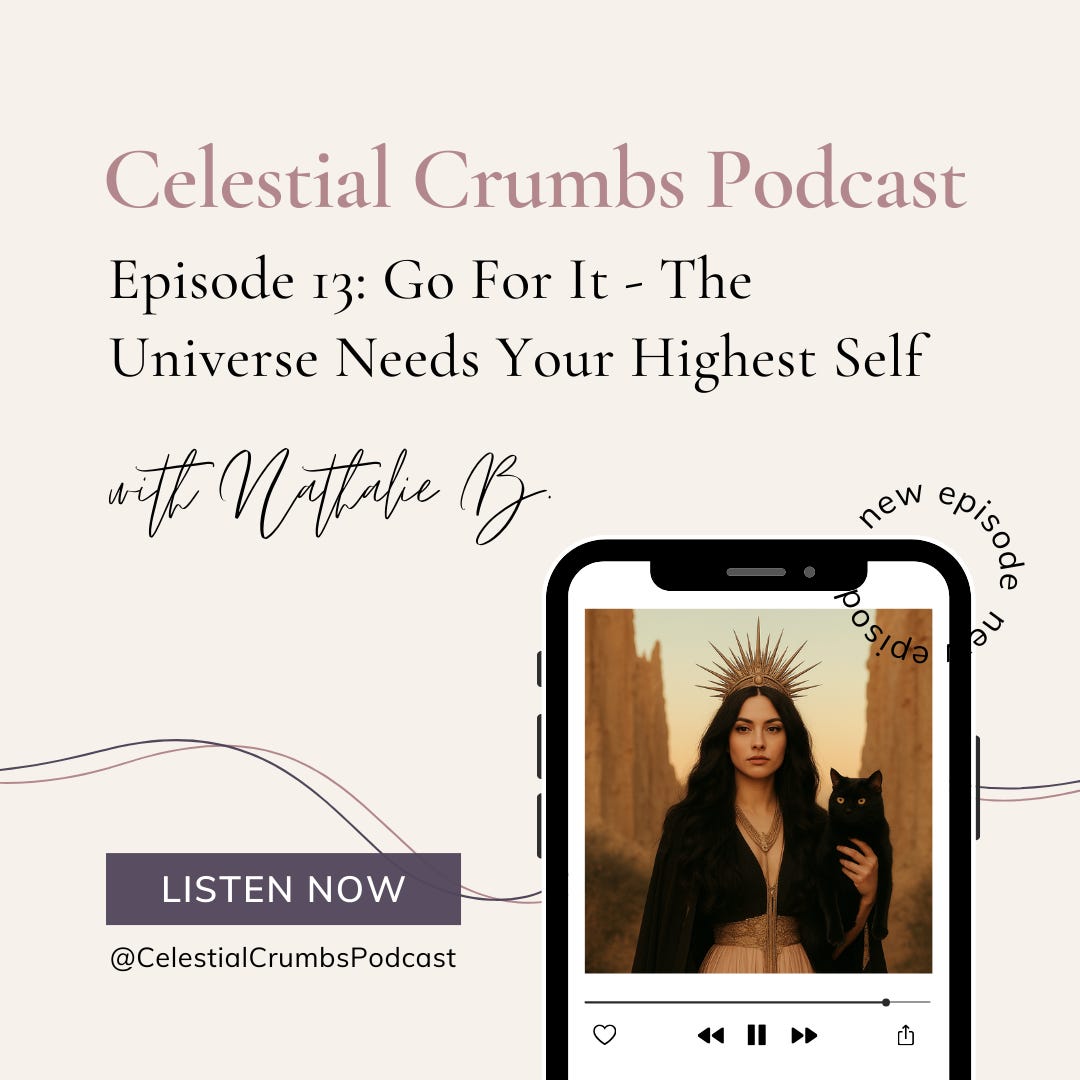
We’re not easing into this — we’re going all in. For the next 100 days, we’re challenging ourselves to think bigger, act bolder, and embrace the so-called “delusional” belief that our highest self isn’t just possible… she’s inevitable. This challenge is about collapsing the gap between who you are now and who you’re meant to be, using mindset shifts, daily actions, and unapologetically high-value standards.In the next post, I’ll outline exactly how it works so you can join in and transform alongside me. Subscribe now so you don’t miss a single step — every insight, prompt, and breakthrough will be waiting in your inbox. Get full access to Celestial Crumbs at nathaliebonilla.substack.com/subscribe
Some believe we are born into random lives. Others believe we chose every detail.In this episode of Celestial Crumbs, we pull at one of the most haunting questions behind reincarnation and the nature of consciousness:Did you choose your life before you were born?We explore the theory of soul contracts—the idea that souls may choose their families, lessons, and even hardships long before incarnation. But this isn’t just a spiritual discussion — we also dive into the surprising science that echoes these ancient beliefs:✨ Infant memory & brain development✨ Epigenetics and inherited trauma✨ Quantum physics & the block universe✨ Near-death experience studies✨ Psychedelic research and consciousness✨ Post-traumatic growth theoryThrough it all, we ask: if you chose this life, what were you hoping to learn?📌 Resources & Mentions:* Journey of Souls by Michael Newton* Dr. Ian Stevenson (University of Virginia Past Life Studies)* Dr. Bruce Greyson (Near-Death Experience Research)* Dr. Rachel Yehuda (Epigenetic trauma studies)* Tedeschi & Calhoun (Post-Traumatic Growth Theory)* Johns Hopkins Psychedelic Research* Block Universe Theory✨ Sneak Peek: Next Week's EpisodeIn next week's episode, we’ll explore the mysterious dance between synchronicity and coincidence — and the surprising science behind what we call “luck.” Are some people wired to experience more meaningful coincidences? And is luck truly random, or something we help create?🎧 Listen now on your favorite platform.💌 Share your thoughts or experiences:DM me on Instagram @celestialcrumbspodcast Get full access to Celestial Crumbs at nathaliebonilla.substack.com/subscribe
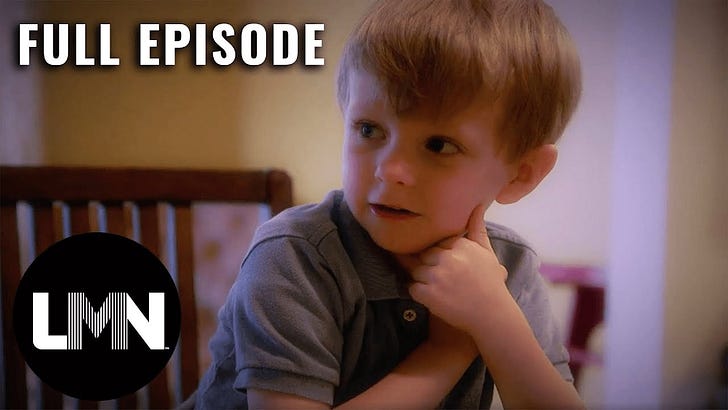
In this episode of Celestial Crumbs, we step into the quiet, uncanny realm of past life memories—especially those carried by children. Host Nathalie Gloria shares two striking stories: the case of the Pollock twins, who seemed to return to their grieving parents after a tragic accident, and a boy named Luke, who vividly remembered a life as a woman named Pam who died in a Chicago hotel fire.What do these stories mean? Why do some young souls remember, while others forget? And what might they reveal about the nature of the soul, trauma, and the possibility of reincarnating with the same souls again and again?This episode isn’t just about belief—it’s about curiosity. It’s about tugging at the threads of consciousness and listening for what echoes back.📎 Mentioned in this Episode:▶️ Watch the Luke & Pam video on YouTube:💌 Share your thoughts by messaging me on Instagram: @celestialcrumbspodcast Support the podcast and buy me a cup of coffee by clicking here or of course subscribing here on substack. Get full access to Celestial Crumbs at nathaliebonilla.substack.com/subscribe
How often do you stop and ask yourself, Who am I really? Its a question as old as time, and just when we think we have the answer, life - and often science - throws us a curveball. In this week’s episode of Celestial Crumbs, I explore the Heisenberg uncertainty principle as a powerful metaphor for self-awareness. Can observing ourselves actually change who we are? Why does trying to define ourselves feel like chasing a moving target? What happens when we stop fighting uncertainty and start embracing it? Join me (and Coraline, of course) as we unravel the mysteries of identity, self-awareness, and personal growth - through the lens of quantum physics. Celestial Crumbs is a reader-supported publication. To receive new posts and support my work, consider becoming a free or paid subscriber. Get full access to Celestial Crumbs at nathaliebonilla.substack.com/subscribe
Episode: Starting the Year with Self-AwarenessIntroductionHello and welcome back to another episode of Celestial Crumbs! I’m your host, Nathalie Bonilla, and as always, Coraline the dog is here with us today, offering her signature emotional comfort and positivity.First, let me say Happy New Year to all of you amazing listeners. Yes, I know it’s already late January, but this is our first official episode of 2025, so I’m giving us a pass. I do want to share why it took me a little longer to get this out. My son had an accident—don’t worry, he’s okay, and he’s healing well—but it was one of those moments where everything felt like it was up in the air. He needed me more than the podcast did, and even though I felt guilty at first for the delay, I know that prioritizing family and health is what matters most. I’m so grateful for your understanding and grace.Now, in the spirit of self-growth and setting intentions for the year ahead, I want to dive into a topic that’s foundational for personal development: self-awareness. This concept has been on my mind a lot lately, especially after coming across a startling statistic. Did you know that only about 15% of people are truly self-aware? And yet, over 90% of people think they are! That means most of us aren’t as self-aware as we believe. So today, we’re going to unpack what self-awareness really is, why it’s so important, and how we can all develop it as a skill.What Is Self-Awareness?Let’s start with the basics. Self-awareness is the ability to understand your emotions, thoughts, and behaviors, and how they impact others. It’s also about understanding how others perceive you—how you show up in the world. So, it’s really a two-sided coin: there’s internal self-awareness and external self-awareness.Internal self-awareness is all about knowing your own values, passions, beliefs, and emotions. It’s that inner dialogue we have with ourselves. For example, if you’re feeling sad, internal self-awareness helps you identify the emotion and understand what you might need to feel better. It’s like being in tune with your inner compass.External self-awareness, on the other hand, is understanding how others perceive you. This includes how your actions and behaviors impact those around you. It’s about being empathetic and connecting with others on a deeper level. When we’re externally self-aware, we can better navigate relationships and communication.Why Self-Awareness MattersSo, why does this matter? First, let’s acknowledge the struggles that come with a lack of self-awareness. Someone who has low internal and external self-awareness might feel lost or stuck in life. They don’t know what they believe or want, and they’re also unsure of how others perceive them.Now, here’s where things get interesting: Even people who seem confident can struggle with self-awareness. For example, leaders who have low external self-awareness might dismiss feedback or believe they know everything. On the flip side, people with low internal awareness might fall into people-pleasing behaviors, always prioritizing others while neglecting their own values and needs.But here’s the good news: High self-awareness can improve nearly every aspect of life. Research shows that people with higher internal awareness report greater satisfaction in their jobs and relationships. It’s also linked to lower levels of anxiety, depression, and stress. When we’re self-aware, we make better decisions, build stronger relationships, and grow in our careers. And the best part? It’s a skill we can develop.How to Improve Self-AwarenessNow, let’s talk about how we can actually work on this. There are some great practices to improve both internal and external self-awareness:* Journaling: Set aside time to reflect on your day. Write down what you felt, what you did, and what patterns you notice over time. Journaling helps you engage with your thoughts and emotions without judgment.* Mindfulness: This doesn’t have to be complicated. Even taking a few moments to sit quietly and notice your thoughts can help. Mindfulness teaches you to be present and observe yourself with curiosity instead of criticism.* Seek Feedback: Ask trusted friends, colleagues, or mentors for honest insights. How do they perceive you? What are your strengths? Where might you grow? The key is to listen without defensiveness—feedback is a gift for growth.* Therapy or Coaching: Sometimes, having a professional guide can make all the difference. They can help you unpack patterns you might not notice on your own.* Meditation: This helps you connect with your inner world and recognize emotional triggers. Over time, it builds resilience and emotional balance.Self-Awareness Is a JourneyOne thing I want to emphasize is that self-awareness isn’t something you achieve once and then check off your to-do list. It evolves with you. As we grow and face new challenges, our self-awareness deepens. It’s a lifelong practice, and that’s part of what makes it so powerful.If you’re someone who struggles with people-pleasing, this is your reminder that practicing self-awareness and setting boundaries isn’t selfish. It’s essential for your growth and for creating healthier relationships.Wrapping UpSo, as we step into 2025, I want to encourage each of you to take one small step toward improving your self-awareness. Whether it’s journaling, asking for feedback, or practicing mindfulness, every step counts.And if you’re looking for more tools to master habits and motivation, I want to invite you to check out my Substack, The Motivation Method. It’s packed with practical advice and strategies to help you grow personally and professionally.Thank you for joining me on this journey, and thank you for the grace you’ve shown as I navigate my own. I’ll see you next time on Celestial Crumbs! Take care and keep growing.Thanks for reading Celestial Crumbs! This post is public so feel free to share it. Get full access to Celestial Crumbs at nathaliebonilla.substack.com/subscribe
Have you ever felt alone? Disconnected, like there's an invisible wall around you keeping you apart from the world? What if I told you that connection—the feeling of being anchored to something bigger—is always there, invisible but physical in its effects?In today's episode, we're going to explore the edges of our perception, how invisible connections manifest in our lives, and why loneliness may not always be what it seems.Where Do You End?Close your eyes for a moment and feel the edge of your arm. Where does it end? Where does the sensation of "you" stop? Can you pinpoint the line where you—your physical self—ceases to exist?Now expand that awareness. Imagine your bubble of personal space. You know the feeling: someone steps too close, and you sense them entering that space before they even touch you. Is this your true edge? Or is it just where your mind’s perception stops?Let’s take it further. Stand or sit with your feet flat on the floor. Can you feel the soles of your shoes meeting the ground? Now, imagine roots sprouting from your toes—pushing down into the earth below. Can you feel that connection reaching deeper, as if you’re anchored into the soil?While the roots are imaginary, their effect isn’t. The mind, it turns out, can transform abstract connections into something that feels very real. This grounded feeling—that sense of anchoring—reminds us of a simple truth: we’re always connected.Degrees of Separation: Smaller Than EverIt’s often said, "It’s a small world." But have you ever wondered how small?Back in the day, there were about 6 degrees of separation between any two people on Earth. This means you’d only have to connect through six individuals to meet a stranger halfway across the globe. In 2016, social media platforms like Facebook and Twitter revealed that this number had shrunk to just 4 degrees.It’s mind-boggling. With 8 billion people on the planet, how can you and I only be four connections away from anyone else?This invisible network—the threads connecting us—proves something important: connection is not limited by physical space. It’s not defined by walls, oceans, or time zones. The world is much smaller and more connected than we think.You’re as Alone as You Choose to BeLet’s challenge the idea of being “alone.” If you close your eyes, stretch out your hand, and hit a wall, you might feel isolated. But look closer: there is no true barrier. The air, the energy, and the invisible network of connections around you always keeps going.In a world with:Instant communication through smartphones,Social spaces open 24/7,Platforms where you can adopt a furry family member with a single click,Communities forming in comment sections, podcasts, and shared experiences,Loneliness is rarely about physical isolation. Instead, it often comes down to perception.If you say, "I’m alone," you might be choosing to focus on a void—a temporary absence—rather than the connections that surround you.Now, this isn’t to dismiss real feelings of loneliness. For those in life transitions, companionship can be hard to find. And sometimes, choosing solitude is exactly what we need. But when loneliness feels heavy—when you don’t want to be alone—the first step to connection is not outward, but inward.Removing the BlindersYou are not alone. Right now, you are not alone.The connections are there—invisible, yes, but real. If you feel blind to them, the question becomes: What is blocking your sight? Sometimes, loneliness comes from within—a perception or belief that creates a barrier between you and the world.To reconnect, you must first ask yourself:What am I holding onto that keeps me feeling separate?What invisible thread do I need to follow to find my people?How can I shift my focus to see the connections already in my life?The truth is, connection never leaves us. Like roots growing from your feet into the earth or the invisible web linking strangers across the world, it’s always there—waiting for us to notice it.Connection may be invisible, but its effects are as real as the ground beneath your feet. When you feel alone, remember this: the world is full of invisible threads linking you to others, to the earth, and to something bigger than yourself.So take a moment. Close your eyes. Breathe. And ask yourself: Where do I end?Maybe the answer is: you don’t.Thank you for joining me on Celestial Crumbs. Until next time, stay grounded and keep exploring the beauty of the universe—one crumb at a time. Get full access to Celestial Crumbs at nathaliebonilla.substack.com/subscribe
Hello and welcome to another episode of Celestial Crumbs, where we discuss facts and theories that make life worth living. I’m your host, Nathalie Bonilla, and as always, Coraline the dog is here with us today to offer some emotional comfort and paw-sitivity to our days. Celestial Crumbs is a reader-supported publication. To receive new posts and support my work, consider becoming a free or paid subscriber.Today, I want to talk about something we've all perhaps taken for granted: the sheer miracle of life on this planet. Not just life as we know it, but the life that exists in places we can't even imagine—hidden, untouched, and thriving in extreme environments.Recently, I came across a discovery made in Antarctica. At the bottom of a previously undisturbed subglacial lake, scientists found an ancient boulder. On the surface of this boulder, an entire ecosystem—completely unknown to science—has been thriving for hundreds of years. Although not much has been officially released yet, we already know that the organisms found there have evolved to survive and thrive in such an extreme environment.While we don’t know exactly what these subglacial lake ecosystems contain, we can draw parallels based on other extreme environments. For example, hydrothermal vents are home to organisms like tube worms, giant clams, and shrimp—creatures that can't live anywhere else but in these scalding hot, toxic environments. These vents can reach temperatures up to 450°F (about 232°C), and spew toxic chemicals from the Earth's core. These organisms are not just living in extreme heat and complete darkness, but one that is filled with toxic chemicals. Yet, they thrive.This reminds me of another example: the Movile Cave in Romania. In 1986, the cave was opened to humans for the first time, and we discovered 57 animal species— including centipedes, spiders, leeches, scorpions, and even lice—that had evolved to live in total isolation, cut off from sunlight. These animals survive using chemosynthesis, a process that allows them to create energy from chemicals rather than light, much like those at hydrothermal vents. It begs the question: what might be possible on another planet?If we look at moons that surround planets like Saturn, many have ice caps with liquid water underneath. It wouldn’t be far-fetched to theorize that some type of life—perhaps even chemosynthetic organisms—could evolve under those conditions, just like the spiders and other creatures found in Movile Cave or tube worms at hydrothermal vents.We often imagine aliens as being something more advanced than us—taller, stronger, faster, and perhaps even scarier. But the reality is that the first aliens we discover will likely be smaller than us—probably microscopic. Life as we know it is incredibly diverse. There are different forms of energy production, different reproductive methods, and even different ways of breathing and excreting. The only limits to what is possible are the limits of our own imaginations. And that impacts where and how we look for life elsewhere.Take, for example, the rediscovery of the Takahe, a large, flightless bird from New Zealand. It was thought to be extinct for about 50 years until it was rediscovered in 1948, living in a remote valley. Or the Coelacanth, often called a “living fossil.” This fish was believed to have been extinct for around 66 million years, only to be rediscovered in 1938 in the depths of the ocean.There are even smaller, more elusive creatures that have reappeared after being thought extinct for decades. Take the woolly flying squirrel, which was thought to have been extinct for 70 years before being rediscovered. Or the pygmy tarsier, a small primate thought to be gone until one was accidentally caught in a mouse trap in 2000. If creatures like these can exist under our noses, why do we assume that we would be able to detect life on planets light-years away?The lesson here is simple: life finds a way. There’s something profoundly beautiful in that resilience. Perhaps the next time we explore the depths of our oceans or open up a cave that hasn’t seen daylight for millennia, we can take a moment to breathe and reflect. Change doesn’t happen in isolation. No organism adapts alone; it is shaped by what surrounds it, what it consumes, and what it interacts with.Bonus Fact Time: Did you know that asking yourself outlandish possibilities and thinking about bizarre facts actually helps to spark creativity, enhances problem-solving skills, and can stimulate curiosity. Listening to content like my podcast can shift your perspective and mindset to something more positive, making change more possible. This has been another cosmic nibble, now back to the show! So, as we wrap up today, I think the real takeaway from all of this is that life—whether on Earth or maybe one day on another planet—finds a way to survive, to adapt, to thrive, even in the harshest, most unwelcoming places. From the deepest ocean vents to hidden subglacial lakes, from dark, toxic caves to the forgotten corners of remote islands, life’s resilience reminds us of something very profound.In our own lives, we face challenges and environments that may feel just as extreme, just as impossible to survive. But if these organisms, these tiny, unassuming creatures, can find ways to adapt and evolve in the face of unimaginable odds, then perhaps so can we. Change takes time, and like the ecosystems we've explored today, it doesn't happen in isolation. We adapt with the help of those around us, the environment we're in, and the energy we bring to the process.So, whether you're diving into the unknown of your own life or just pondering the possibility of life beyond our planet, remember that there’s always a way forward. We are all connected, evolving, and growing in ways we might not even notice until we look back.Thank you for joining me today, and until next time, keep your curiosity alive, and remember—life finds a way.Thanks for reading Celestial Crumbs! This post is public so feel free to share it. Get full access to Celestial Crumbs at nathaliebonilla.substack.com/subscribe
Hello and welcome to another episode of Celestial Crumbs, where we discuss facts and theories that make life worth living. I’m your host Nathalie Bonilla, and as always, Coraline is here with us today to offer some emotional comfort and paw-sitivity. Today, I want to discuss a gorgeous study I came across recently regarding flowers, but more specifically sunflowers.In this study, the scientists found that Sunflowers dance so others can grow better - it ensures others receive better sunlight Darwin was the first one to first take note of the cyclical movement or the wiggle that all plants exhibit as they grow. This movement is referred to as circumnutation and occurs both above and below ground as the stem and roots grow, spread out and communicate with their neighborsWhile it may make more sense to see this movement in plants, we don’t really think of this movement as being conscious of plants - like Sunflowers for instance. Studies have found that sunflowers not only move to maximize their own sunlight, but they also adjust their positions to ensure their neighboring sunflowers can thrive too. This movement isn’t random, it’s ensuring the survival for all.What’s even more fascinating, is in these studies, the plants were potted separately, and were placed besides each other. So even though their roots aren’t crossing each other’s path they still grew in a way that was almost completely optimal for all to receive sunlight. By growing like this, it ensures all plants are growing in harmony, minimizing shading and creating a balance within their community. Sunflowers, in their quiet cooperation, remind us that growth isn’t a solitary endeavor—it’s something we do together, ensuring everyone gets their chance to shine.Just like sunflowers, many other plants communicate and share resources. A more wild example can be found in the underground fungal networks known as mycorrhizal networks. (Side note: That even sounds like something that would be in the brain.) Anyway, These networks allow trees to exchange nutrients, with stronger trees sometimes helping weaker ones. In Douglas fir and beech trees we actually see that there’s mother trees that send resources to baby trees, saplings that are growing and need a helping hand.This fungal network acts like an invisible web of support, ensuring that the entire forest thrives together. These massive unground fungal networks are organisms entirely their own with information being passed through root neural system across acres of land.If plants like the sunflower can instinctively support their community, helping others grow and thrive, then maybe there’s something we can learn from them about how we can move through the world, that also empowers others as they move and grow. Bonus Fact Time: What’s ten feet tall, can take up to ten years to bloom, and attract a crowd akin to baby turtles hatching on a beach? The corpse flower! As mentioned, these are the world’s largest flowers and it can be years, up to 10, in between its blooms. When it blooms, not only does the strong odor of decomposing bodies permeate the air, but it attract people who travel from far and wide to see the event! This has been another cosmic nibble, now back to the show!Perhaps, like the sunflower, we can find ways to share our light, shift and grow in ways that lift others as well.I ask that the next time you take a walk, take a moment to look around and see the web of support that surrounds you, supporting the breath you take and the ground you walk on, appreciate its quiet wisdom. Let it be a reminder that within us all, there’s strength in gentle, purposeful movement and in community. Whether you’re at the start of a journey, dancing through life’s changes, or standing still in the warmth of a new chapter, know that you, like the sunflower, have the power to bring light to others.Thank you for joining us on this episode of Celestial Crumbs. Until next time, keep shining and keep growing.Important links:https://physicsworld.com/a/sunflowers-dance-together-to-share-sunlight/https://www.scientificamerican.com/article/do-trees-support-each-other-through-a-network-of-fungi/The Secret Life of Plants by Peter Tompkins Get full access to Celestial Crumbs at nathaliebonilla.substack.com/subscribe
Understanding priming helps us think bigger about the world around us. It shows that even the smallest details—like holding a warm cup of coffee—can shape our perceptions in powerful ways. And this is exactly what I hope to achieve with my new podcast, Celestial Crumbs. Get full access to Celestial Crumbs at nathaliebonilla.substack.com/subscribe
Comments

Download from Google Play

Download from App Store
 United States