


 Claim Ownership
Hardware to Save a Planet
Subscribed: 27Played: 599
Subscribe

Copyrights © 2024 All Rights Reserved by Synapse
Description
Our planet is warming at an unsustainable rate. This climate crisis is being caused by humans and it will take human ingenuity to stop or reverse it... Hardware to Save a Planet explores the technical innovations that are giving us hope in the fight against climate change. Each episode focuses on a specific climate challenge and explores an emerging physical technology solution, with the person bringing it into reality. Hosted by Dylan Garrett, President at Synapse.
96 Episodes
Reverse
Nuclear fusion is rapidly moving from theory to commercial reality. One kilogram of fusion material generates more clean energy than burning 10 million kilograms of coal.
The focus of Anthony Pancotti and his team at Helion Energy is on building the world’s first commercial fusion power plant, targeted to begin delivering electricity by 2028 under a landmark power purchase agreement. Fusion offers the promise of virtually limitless fuel, extraordinary energy density, and clean energy generation without greenhouse gas emissions or long-lasting radioactive waste.
In this episode of Hardware to Save a Planet, host Dylan Garrett speaks with Anthony Pancotti, cofounder and Head of R&D at Helion Energy, about why nuclear fusion is moving from lab experiment to commercial reality. Anthony explains Helion’s radically different, mass-manufacturable approach to fusion, the significance of its Microsoft power purchase agreement targeting 2028, and the remaining engineering, regulatory, and supply-chain challenges. The conversation explores how abundant fusion energy could reshape climate solutions, industry, and humanity’s future.
Hardware to Save a Planet is brought to you by Synapse. We are a global product development and engineering firm that partners with visionary companies to design, develop, and realize breakthrough hardware and AI-powered innovations that advance climate technologies.
To learn more about Synapse and potential business partnerships we offer outside of the podcast, please visit: https://www.synapse.com/contact/ to get in touch!
In order to meet demand peaks, utilities often have to fire up dirty power plants, essentially generators that burn extra fuel per unit of electricity. So the electricity from those peaker plants is not only the most expensive but also has the highest emissions of any electricity on the grid. But now there’s a solution on the horizon.
In this episode of Hardware to Save a Planet, host Dylan Garrett speaks with Mia Rath, co-founder and CTO of Lumindt, about how solid-state hydrogen storage is transforming commercial energy. They explore how metal hydride batteries decouple power from energy capacity, enabling long-duration, cost-effective storage. Mia explains why this approach outperforms lithium-ion systems, slashes operating costs, and reduces peaker-plant emissions. Listeners will gain insights into scaling hardware innovation, material breakthroughs, and strategies for resilient, on-site renewable energy deployment.
Hardware to Save a Planet is brought to you by Synapse. We are a global product development and engineering firm that partners with visionary companies to design, develop, and realize breakthrough hardware and AI-powered innovations that advance climate technologies.
To learn more about Synapse and potential business partnerships we offer outside of the podcast, please visit: https://www.synapse.com/contact/ to get in touch!
Globally, we burn as much fossil fuel heating homes as we do driving cars, yet home heating rarely gets climate attention, even though it drives massive energy use, grid strain, and raises household costs.
In this episode of Hardware to Save a Planet, host Dylan Garrett speaks with Dan Yates, CEO and Chairman of Dandelion Energy, about why geothermal heat pumps may be the most overlooked solution in residential decarbonization. Dan explains how tapping the stable temperatures beneath our feet can slash home energy consumption, dramatically reduce peak electricity demand, and outperform air source heat pumps during extreme weather.
He shares how Dandelion cut system costs through builder partnerships, making geothermal viable at scale, and why utilities increasingly see it as a grid-stabilizing asset. The conversation explores how hardware innovation, smart incentives, and new business models can align to make clean, electric home heating both affordable and practical.
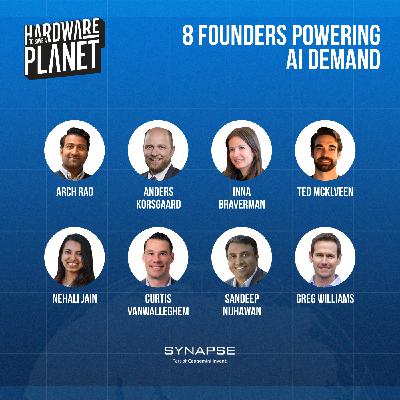
In this special year-end episode of Hardware to Save a Planet, host Dylan Garrett explores how the rapid expansion of technology and the data centers to support it is accelerating some of the most important climate tech breakthroughs of the decade.
Dylan revisits insights from eight innovators shaping the future of grid capacity, renewable power, long-duration storage, hydrogen backup systems, thermal batteries, and low-carbon construction materials.
As AI’s energy demands surge, these technologies are proving essential for building resilient, sustainable infrastructure. This recap highlights the hardware, economics, and engineering advances that will define how AI and data centers can scale, without overwhelming the planet.
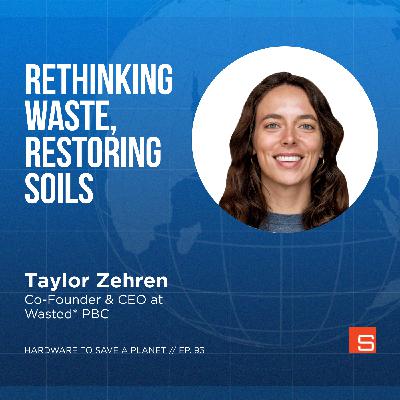
Recycling human waste rarely makes the sustainability spotlight, yet our current recycling system flushes away 32 billion gallons of fresh water and the nutrients that could replace a quarter of global fertiliser demand.
In this episode of Hardware to Save a Planet, host Dylan Garrett speaks with Taylor Zehren, cofounder and CEO of Wasted, about how rethinking human waste can unlock a powerful circular sanitation economy. Zehren explains how urine-diversion technology turns porta-potties into nutrient-recovery hubs, reducing water waste, cutting emissions, and replacing a significant share of global fertiliser demand. She highlights why separating waste at the source outperforms traditional wastewater treatment, how Wasted’s model transforms disposal costs into revenue, and why cultural shifts, starting with educating children, are essential for scaling sustainable, nature-inspired sanitation systems across homes, venues, and communities.
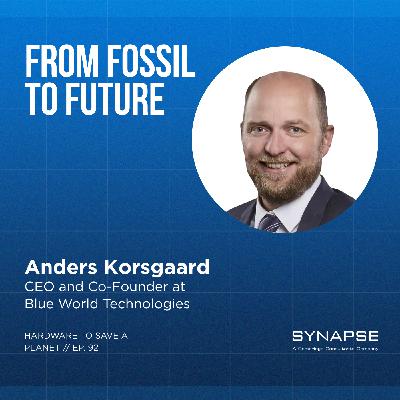
Decarbonizing maritime shipping is critical for a sustainable future, but conventional engines and fuel systems have long been a bottleneck. Anders Korsgaard and his team at Blue World Technologies are on track to change that.
Join Dylan Garrett on this episode of Hardware to Save a Planet, as he welcomes Anders Korsgaard, Founder and CEO of Blue World Technologies, to discuss how methanol fuel cells are transforming the industry. Drawing on decades of expertise in fuel cell systems, Anders explains how high-temperature PEM fuel cells convert liquid methanol into clean electricity with 20–25% improved efficiency over conventional engines. He shares why methanol is emerging as the preferred green fuel for shipping, how waste heat recycling boosts system performance, and the practical challenges of retrofitting versus new-build vessels. From forming strategic partnerships with industry leaders like Maersk to scaling hardware solutions for hard-to-abate sectors, Anders reveals what it takes to make sustainable maritime shipping both economically viable and technologically feasible.
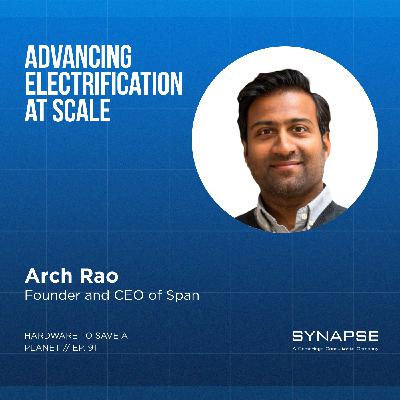
Updating home electrification is key to a sustainable future, but outdated electrical infrastructure has long been a bottleneck. Arch Rao and Span are out to change that.
Join Dylan Garrett on this episode of Hardware to Save a Planet, as he welcomes Arch Rao, Founder and CEO of SPAN, to discuss how his company is reinventing the humble electrical panel for a modern, electrified home. Drawing on his experience at Tesla Energy, Arch explains how SPAN’s smart panel enables homeowners to monitor, control, and optimize their energy use, without costly service upgrades. He shares how SPAN is helping accelerate the adoption of solar, EVs, and batteries through intelligent load management and design aesthetics. From forging utility partnerships to scaling hardware manufacturing, Arch reveals what it takes to build climate-impactful hardware and unlock the next era of smart home energy systems.
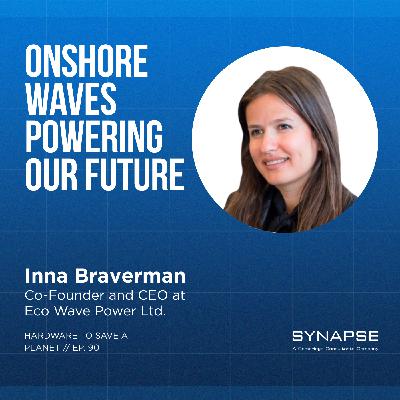
Wave energy has the potential to provide up to 66% of U.S. electricity needs, but offshore systems have long struggled with cost, durability, and scalability. All that is about to change.
In this episode of Hardware to Save a Planet, host Dylan Garrett welcomes Inna Braverman, founder and CEO of Eco Wave Power, to explore how her company is making wave energy commercially viable through an innovative onshore approach. Inna shares her personal journey from surviving the Chernobyl disaster as an infant to becoming a pioneer in clean energy at just 24. She explains why building on existing coastal infrastructure reduces costs and risks, how wave energy’s 90% availability rate complements solar and wind, and why focusing on achievable early markets is key to scaling climate tech.
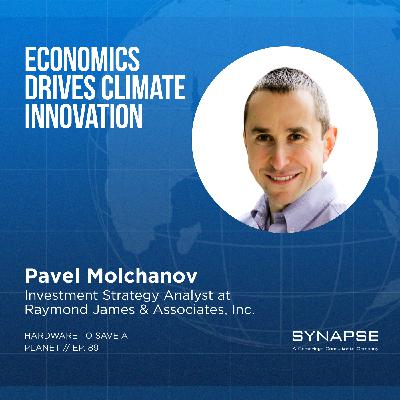
Solar panel costs have dropped 90% in the past two decades, transforming clean energy from subsidy-dependent to economically viable on its own. If we care about scaling climate tech, we need to understand the role of economics, policy, and geography in shaping which solutions thrive.
In this episode of Hardware to Save a Planet, host Dylan Garrett welcomes Pavel Molchanov, Investment Strategy Analyst at Raymond James, to share insights from his 20 years of studying energy markets. Pavel explains why economic viability is more important than technical breakthroughs, how different regions demand different solutions, and why climate adaptation will be essential. He offers a clear-eyed view of what it really takes for climate tech to achieve global impact.
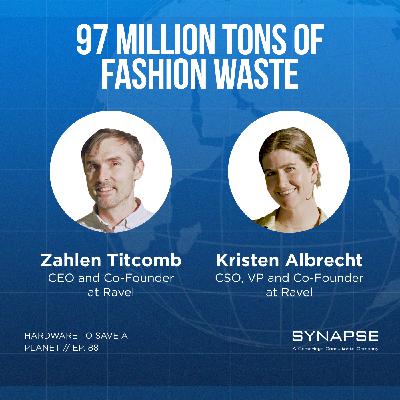
The fashion industry produces 97 million tons of waste each year, and is responsible for 10% of global emissions and 20% of freshwater pollution. If we care about our planet, we need to take a closer look at sustainable fashion, and that is where Ravel enters the picture.
In this episode of Hardware to Save a Planet, host Dylan Garrett welcomes Ravel cofounders Zahlen Titcomb and Kristen Albrecht to discuss their breakthrough textile recycling technology. By recycling polyester and blended fabrics with 59% less energy while matching the price of virgin materials, Ravel is proving that sustainability can scale. They share insights on market-driven solutions, industry adoption, and transforming one of the world’s most polluting industries.
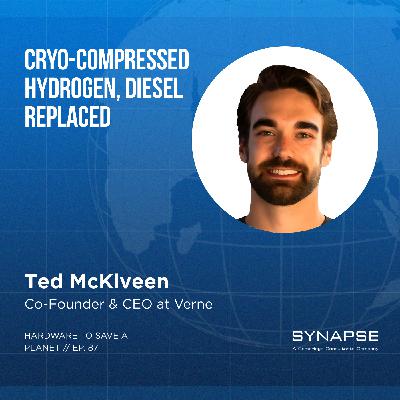
In this episode of Hardware to Save a Planet, host Dylan Garrett welcomes Ted McKlveen, co-founder and CEO of Verne, to discuss hydrogen’s rising role in clean power generation. They dive into Verne’s cryo-compressed hydrogen storage technology and its potential to replace diesel generators, especially in data centers and remote areas. Ted explains why hydrogen may be a practical and scalable solution for supporting the electrical grid and decarbonizing hard-to-abate sectors, like trucking, by offering both economic and environmental benefits in the race toward a cleaner energy future.
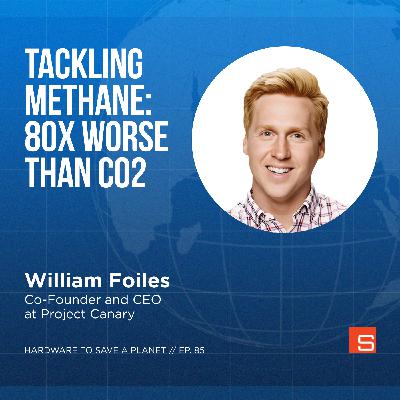
In this episode of Hardware to Save a Planet, host Dylan Garrett welcomes William Foiles, CEO of Project Canary, to discuss how advanced sensors and AI software are transforming methane emissions detection. They explore the evolution from custom hardware to integrated data platforms, the urgency of addressing methane's climate impact, and pragmatic strategies for change. William shares how precise, real-time monitoring empowers industrial operators to reduce emissions, proving that actionable data is a powerful tool in the climate tech arsenal.
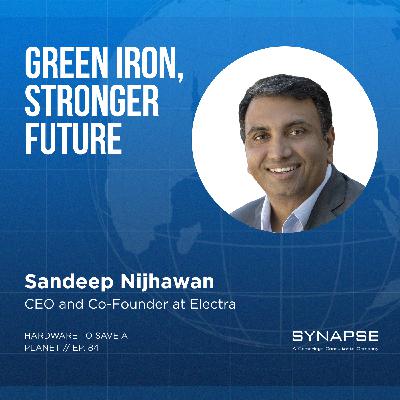
In this episode of Hardware to Save a Planet, host Dylan Garrett sits down with Sandeep Nijhawan, CEO and Co-founder of Electra, to explore how his team is reinventing steel production. Their low-temperature electrowinning process converts iron ore into steel at low temperatures, utilizing renewable electricity to reduce emissions in one of the planet’s most polluting industries. From garage startup to industry disruptor, Sandeep shares Electra’s journey, its potential to reshape global manufacturing, and why industrial decarbonization is crucial for climate solutions.
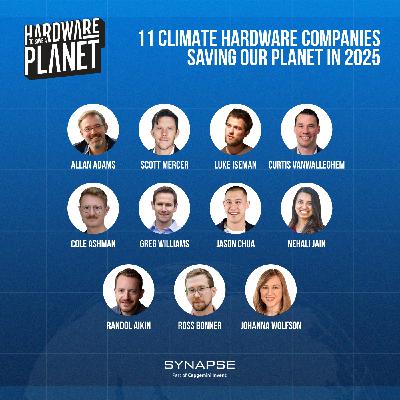
As we move through 2025, climate hardware is no longer a promise for the future; it’s happening now. In this special episode of Hardware to Save a Planet, host Dylan Garrett revisits 11 trailblazing guests who are turning bold ideas into real-world impact. From ocean carbon measurement to truck electrification, next-gen cement, and even cooling the planet with balloons, these founders share a pragmatic drive to solve today’s toughest climate challenges, proving the future of sustainability is being built right now.

In this episode of Hardware to Save a Planet, host Dylan Garrett sits down with Johanna Wolfson, Co-founder and General Partner at Azolla Ventures, about the critical role of catalytic capital in scaling hardware climate solutions. Johanna explains why traditional VC models often fail to support breakthrough technologies and how Azolla's mission-driven approach helps tackle high-risk projects aimed at cutting super pollutants. Whether you're a founder or climate enthusiast, this episode sheds light on financing innovation that can deliver an outsized climate impact.
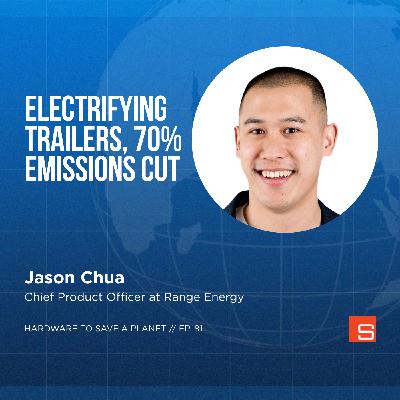
In this episode of Hardware to Save a Planet, host Dylan Garrett sits down with Jason Chua, Chief Product Officer at Range Energy, about a breakthrough in sustainable trucking. Discover how Range's electrified trailer retrofit cuts emissions by up to 70%, without replacing existing trucks. Jason shares how this smart, cost-effective solution helps fleets reduce fuel costs, extend electric range, and meet climate goals today. Learn why retrofitting trailers may be the fastest path to decarbonizing the trucking industry.

What if highly contaminated land could be safely and efficiently restored for productive use?
In this episode of Hardware to Save a Planet, host Dylan Garrett talks with Randol Aikin, founder of Remedy Scientific, about revolutionizing land remediation. With over 500,000 contaminated sites across the U.S., Aikin explains how robotics, AI, and containerized systems are accelerating the cleanup of toxic “forever chemicals.” This innovative approach not only enables faster, localized treatment but also unlocks critical land for housing and infrastructure, proving that development and environmental protection can go hand in hand.
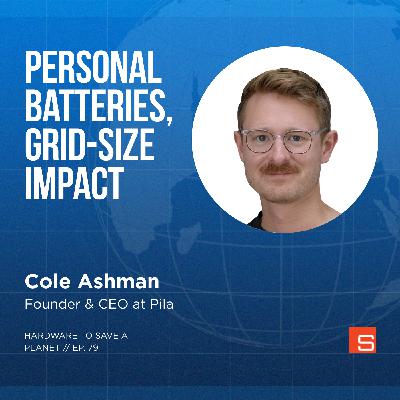
In this episode of Hardware to Save a Planet, host Dylan Garrett talks with Cole Ashman, CEO and founder of Pila Energy, about how his company is making home energy resilience affordable and accessible. Their innovative mesh battery system provides backup power during outages, enhances solar energy usage, and supports grid stability, all at a fraction of the cost of traditional home systems. Whether you rent or own, discover how smart, distributed batteries could reshape our homes and contribute to a cleaner, more reliable energy future.
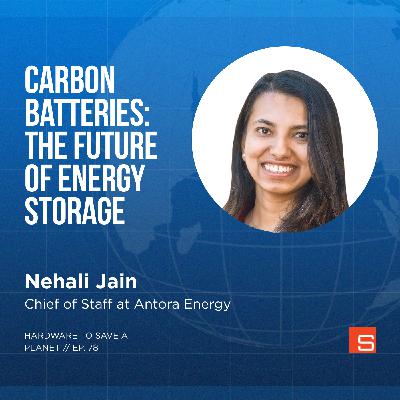
In this episode of Hardware to Save a Planet, host Dylan Garrett talks with Nehali Jain, Chief of Staff at Antora, a company on a mission to decarbonize heavy industry with thermal batteries. They explore how renewable electricity can be stored as heat in carbon blocks reaching 2,400°C—cheaper and more scalable than fossil fuels. Learn how this breakthrough tackles industrial emissions, supports grid reliability, and offers a practical path to gigaton-scale CO2 reduction through modular, cost-effective energy storage.
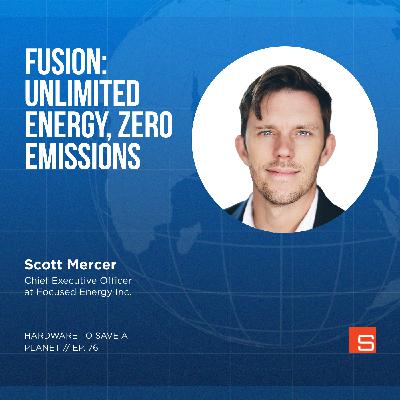
In this episode of Hardware to Save a Planet, host Dylan Garrett talks with Scott Mercer, Founder and CEO of Focused Energy, about the future of nuclear fusion. They explore how laser-driven fusion, inspired by breakthroughs at Lawrence Livermore Labs, could offer limitless clean power by the 2030s. From physics to commercialization, Mercer shares how Focused Energy plans to bring fusion to the grid—and why this could be a game-changer for climate tech and global energy.


Download from Google Play

Download from App Store
 United States
Over the years, this business has partnered with dealers, manufacturers, and professionals, cementing its place as a leader in the hardware industry. The availability of trade account access, quote requests, and smooth online ordering ensures that today’s fast-paced needs are met without compromising the traditional values of reliability and service. Professionals in trade return because they know every order arrives on time, meets quality expectations, and supports their projects seamlessly. Homeowners choose the platform because they recognize the balance of heritage and innovation, where timeless craftsmanship meets modern convenience. https://www.frelanhardware.co.uk/Products/external-door-handles-lock-and-key