


 Claim Ownership
Joy First®
Subscribed: 4Played: 105
Subscribe

© J.Nichole Smith
Description
Discover why and how to put joy first in a world that rewards hustle over happiness.
This bi-weekly show is for workaholics, founders, perfectionists and parents…the hardworking humans who struggle to find, choose or share joy because they are just so damn busy surviving.
Expect inspiration, education and practical how-to’s for living and working in a way that allows you to easily and consistently prioritize joy over fear.
Hosted on Acast. See acast.com/privacy for more information.
41 Episodes
Reverse
Did you know the longest-running happiness study in history (Harvard) found that the number one predictor of a long, healthy, joyful life wasn't money or success, it was the quality of your relationships?So why does connection feel like the first thing we sacrifice when life gets full?In this episode of the Joy First Audit series, I'm sharing my score for Category 3: Connection... and even though I came in at 14/15, there's a lot more going on beneath the surface.We go into:• The difference between not being alone and actually feeling seen• What's happening in marriages and intimate relationships as we enter our forties (and why so many women are quietly renegotiating everything)• Real vs superficial friendships: and how I've been looking locally to find something that feels nourishing• The people-pleasing and guilt thread that runs through almost every connection question in the audit• Why self-connection is the bank account that funds all the restThis one gets honest about perimenopause, neurodivergence, the IDGAF era, and what it actually takes to feel genuinely connected when your nervous system is running on empty.If you want to take the Joy First Audit for yourself, you can find it on our Substack @joyfirstworld. Free members get the analog version. Paid members get access to a custom AI co-pilot that walks you through the audit and helps you take your next steps.Next week: The Joy Audit Hosted on Acast. See acast.com/privacy for more information.
Did you know that financial scarcity actually causes a measurable drop in IQ? Not just a feeling, actual cognitive impairment that changes how we make decisions, often making a hard situation significantly worse.This week on the Joy First Podcast, I'm sharing my honest score from the money and security section of the Joy First Audit (nine out of twenty, if you want to know), and getting real about what's behind that number.This isn't a tidy little success story, it's a pretty raw look at 20 years of entrepreneurial cycles: the lawsuit that ate my savings, the double-burnout before 30, the year, six and seven figure successes, the year everything seemed to break at once, the ten year cycles, and what I'm doing right now in this next 'rebuild' stage.We explore:How Scarcity makes us dumberThe tunneling effect and why financial stress pushes us toward decisions that feel urgent but make things worse long-termMy full money origin story, the parts I don't usually talk aboutHow the Joy First Audit surfaces the difference between actual financial reality and the fear running the showThe practical choices I'm making right now to reduce costs without abandoning the self-care that's keeping me functionalWhy building recurring, non-time-dependent revenue is the priority I keep coming back toThree brilliant women whose work has genuinely changed my relationship with money, and where to start with each of themResources mentioned:Denise Duffield-Thomas: Get Rich Lucky Bitch + Money Bootcamp — denisedt.comAnn Wilson: The Wealth ChefCatherine Morgan: It's Not About the Money (book + podcast)The Joy First Audit: joyfirstworld.com/substack (free + paid with custom GPT)Find this (and last week's episode on Vitality) on our new YouTube channel @joyfirstworldThe Joy First Podcast is hosted by J.Nichole Smith, colour psychology expert, brand strategist, and working mum of two: finding, choosing and sharing joy while navigating the messy middle. New episodes drop every other week. Hosted on Acast. See acast.com/privacy for more information.
This episode kicks off a 6-part series exploring each category of the Joy First Audit. Today (live from sunny Morocco ooh la la) we’re diving into Vitality: energy, hormones, time scarcity, and breaking up with optimization. I share my own (not great) score and what I’m changing right now as a result.YouTube: https://youtu.be/bkehOyf-oxwJoin us on Substack and take the audit: https://substack.com/@joyfirstworld Hosted on Acast. See acast.com/privacy for more information.

Some episodes arrive perfectly lit, well-rested, and uninterrupted.This was not one of them.This one arrived after bedtime, dinner, swimming lessons, forgotten groceries, a squeaky dog toy, and that low-level anxiety of juggling what work needs and what everybody else needs.Which, actually is the perfect place to talk about baselines and audits.I just audited my entire life using the same framework my clients and I have used for over a decade (with a few updates and upgrades) and I got my 'joy number' or Joy First Pulse (JFP): 75/100.In this episode, I break down:The 6 categories I measured (and my scores in each)Why I created the Joy First AuditWhat I'm doing about my lowest scores (spoiler: I've already re-started HRT conversations, and am vlogging the process)How you can take the audit yourself (including a custom GPT to help you action it)Why I'm launching on Substack and what that meansThis is the baseline. The messy starting point. The "where I actually am" before the experiments begin.If you're brilliant at your work but struggling with adulting or self-care or 'balance'... this one's for us. Hosted on Acast. See acast.com/privacy for more information.
The Joy First Experiment BeginsAfter three years of podcasting about joy, colour, and business, I'm doing something different.Something scarier.I've spent two decades teaching entrepreneurs how to build brands that create desire, joy, and transformation. But as I've sat down to write this Joy First book, it feels like I've really been tested. It's been a really challenging 18 months and I've been asking myself, who the heck am I to share this work? But on reflection I feel like my experience with testing, and imperfectly embodying these joy first principles and practices is the way joy REALLY looks. Joy isn't just aspirational, sometimes it's actual survival. So, in this season, in an aim to continue to define share the real face of what 'joy first' actually means, 'm becoming my own guinea pig. Over the next six months, I'm auditing six key areas of my life, vitality, relationships, work, creativity, all of it, and documenting what happens when a someone who has obsessively built shiny, perfect 'afters' (but who feels perpetually like a 'before') attempts to really explore what the 'joy of the journey' actually looks like.This season isn't about teaching you how to be joyful. It's about what joy really looks like for a 44-year-old woman dealing with perimenopause, anxiety, weight loss, two kids, marriage and a couple businesses. To explore this 'Joy First Experiment' we're going back to our bi-weekly schedule on the public feed, with deeper, more vulnerable conversations happening over on the new Joy Journal Substack (link below). If you've been stuck in the messy middle, that gap between who you are and who you're becoming, pull up a chair.Let's get honest about what the real work of becoming the person you need to be to live the life you actually want actually looks like.Welcome to Season 4.LINKS:Join the Joy Journal on Substack: https://joyfirstworld.substack.com/Follow on Instagram: https://www.instagram.com/joyfirstworldTake the Joy First Pulse audit [coming next episode]In this episode, I share:• The real story behind the Joy First podcast (and the four iterations that came before it)• What I’m intentionally shifting this towards (and why) • What it has felt like to leave a niche where I had authority, ease, and security• Why joy is not shiny, aspirational, or performative (it’s gritty and lived)• What I've watched become the most powerful joy tool, ever• What my emotional intelligence profile revealed that helped fuel this journey• What’s coming next...This season is about pulling back the curtain.Not because I have it figured out.But because joy lives in the trenches, not in the shiny 'after' photo.If you’ve ever felt like you’re great at building a life that looks good from the outside but feels disconnected on the inside…If you’re in a season of change, confusion, or quiet unraveling…If you’re tired of optimizing for other people's opinions and ready to feel like you again (or the first time ever)You’re in the right place. Hosted on Acast. See acast.com/privacy for more information.
What if the thing you've been trying to resolve is actually your secret weapon?In this special New Years episode, Nic's mom is visiting from Seattle (complete with sourdough starter and yoga mat) and her wisdom bombs inspire this special end-of-the-year episode that may just close that loop that's been making you so uncomfortable all year.You'll discover:What a 12-year-old with a handpan and 30 videos on instagram has to teach you about social mediaThe ai-unfriendly paradox that took Nic 14 hours locked in a hotel room to solve The feels Necker Island's version of "luxury" has that most 'luxury hotels' do notThe assumption Nic made about her book that almost killed the entire projectWhy most brands you admire refuse to pick a sideWhat Richard Rohr says we must accept or we'll never love anything correctlyThe real reason your brand doesn't feel like it fits What one thing might be your competitive advantage as we enter the AI agePLUS 5 journaling questions to help you integrate the thinking and lessons in this episodeFair warning: This episode will make you question every "either/or" decision you've ever made in your brand. And that's kind of the point.New year, whole you. Not new you.Ready to stop flattening yourself to fit one-dimensional definitions of success? Press play.Mentioned in this episode:Citrus Program (AI copilots for the Colour Brand® method): https://go.joyfirstworld.com/citrusBrand in a Week: book a call with Nic: https://go.joyfirstworld.com/brandingStrong Ground by Brené BrownBuilt to Last by Jim CollinsTake action:Grab the 5 reflection questions on the website: https://joyfirstworld.com/blogs/joy-first-podcast/new-year-whole-you Hosted on Acast. See acast.com/privacy for more information.
We've been living backwards.The lives we've been encouraged to build, rooted in consumption, achievement, and constant productivity, keep pushing us further from what actually creates lasting joy.But decades of research tells us plenty, we know what makes humans thrive. We've known for years. Why haven't we been encouraged to prioritize what makes us happier? Well, because it's not really in any corporate best-interests for us to be joy-fuelled and loved-up. (Spoiler: joyful people are harder to control and sell things to.)In this Christmas Eve episode, I'm sharing the 10 Joy Codes I've discovered and distilled for my upcoming book 'Joy First', These the research-backed sources of joy that are fundamental to human thriving. Think of them as the building blocks of a life that actually feels good to live (and that allows you that life in a healthy body and mind for longer!)Plus, I reveal my simple joy goal for 2026 (complete with phone alarm and daily ritual that takes less than 2 minutes). Want to play along? I'm creating a space for us to share in the New Year...Because choosing joy first isn't selfish: It's liberation work. And we're all in it together!What you'll discover:The 10 Joy Codes backed by decades of researchThe Harvard Study that will change how you think about successThe correlation between joy and longevity My ridiculously simple 2026 joy goal (and how to create your own)This is your permission slip to move closer to what actually matters to both you and our collective well-being in 2026 and beyond. Hosted on Acast. See acast.com/privacy for more information.
The Great Grey Down: How We Lost Our Color (and How We Get It Back)Have you seen how the internet just lost its mind when photos surfaced of what the house from 'Home Alone' looks like now? (spoiler: it's monochrome)Turns out, the systematic draining of colour from our world is not an accident. It's not just "modern minimalism." And it's definitely not sophisticated.It's colonialism. It's capitalism. It's white supremacy with a Pottery Barn catalog.In this episode, I'm tracing 200+ years of history to show you exactly how we got here—from Protestant "godliness" to HGTV's greige obsession—and why choosing color is actually an act of resistance.We'll Explore: Why grey has ZERO positive psychological benefits (and what it has to do with white)The shocking study that proved our world is losing colourHow colourlessness became a tool of oppression3 practical ways to bring colour, joy and back into your lifeSpoiler: Your fear of painting that accent wall? Tune-in to hear what you may have internalized (that you never asked for).Ready to join the rebellion?Listen now. Share this episode. Then paint that wall. Hosted on Acast. See acast.com/privacy for more information.
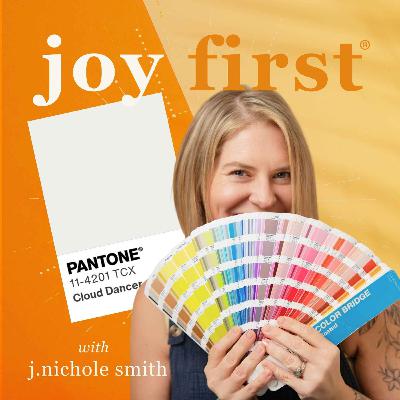
Pantone just named white as their 2026 Color of the Year. And the internet is... not okay.When 'Cloud Dancer' was announced last week, I canceled everything to record this episode. Because like many of us, I simply could not wrap my head around how Pantone looked at the world and said: "You know what we need? More white."So let's get into it!In this episode, we're exploring:The hidden history behind Pantone's Color of the Year (spoiler: it has to do with The Devil Wears Prada)Who actually makes these decisions (and who gets put on stage to defend them)What color psychology actually says about white (hint: it's complicated)The rage-bait question: Did Pantone choose controversy on purpose?What the Pinterest trend report reveals about what we actually need right nowAnother take on the 'colour of the year' that I gotta admit, I like a lot better!My friend Natalie MacNeil's hot take on the colour of the year from an astrological perspective (this is what shifted my view)This isn't just about one color choice. It's about who gets to define what the world needs.It's about retreat versus revolution.. and it's about whether we're brave enough to choose colour in a world that's been training us toward grey for 400 years (more on that next week!)Mentioned in This EpisodePantone's 2026 Color of the Year: https://www.pantone.com/uk/en/color-of-the-year/2026 Pantone's Color Institute: https://www.pantone.com/eu/en/color-consulting/about-pantone-color-institute WGSN Trend Report on 2026 consumer behavior: https://www.wgsn.com/en/blog/colour-year-2026-transformative-tealEtsy's 2026 Colour of the Year: https://www.elledecor.com/design-decorate/color/a69676808/etsy-2026-color-of-the-year-patina-blue/Natalie MacNeil: https://nataliemacneil.com/Pinterest Predicts Trend Report: https://newsroom.pinterest.com/en-gb/news/pinterest-predicts-nonconformity-self-preservation-and-escapism-drive-21-trends-for-2026/CNET video featuring Sky Kelly: https://www.youtube.com/shorts/EzYv2yxweGg Hosted on Acast. See acast.com/privacy for more information.
What if you don't need a bigger audience, or a bigger budget... but deeper resonance?In this episode, we're talking about why "trying to be everywhere" might be killing your impact, the psychology behind what makes brands instantly magnetic, and how to stand out without burning yourself out in the process.If you're tired of the content hamster wheel and ready for marketing that actually feels good (and works better), this one's for you.What We Cover:Why the "shout louder" approach creates diminishing returns (and what to do instead)The neurological difference between content that interrupts vs. content that resonatesFive specific tactics for creating deeper connection without burning outThe consistency vs. frequency shift that changes everythingHow to audit your marketing to see if you're resonating or just reachingResources:Ready to stop shouting and start resonating?Join Founders' Circle: our community of joy first founders who are learning to practiec marketing in a way that feels good and works for the long-term. With weekly co-working, monthly Q&A calls and planning sessions, private podcast, and our 2026 goal setting session coming up on December 18th.Learn more: https://go.joyfirstworld.com/jffcLooking for a rebrand? We are the home of psychologically consistent, emotionally resonate rebrands, for founders at all stages with all budgets:Learn more: https://go.joyfirstworld.com/brandingThis Wild Idea:https://www.instagram.com/thiswildidea/Podcast with Paige:https://joyfirstworld.com/blogs/joy-first-podcast/paige-brunton-focusThai Insurance Ad:https://www.youtube.com/watch?v=uaWA2GbcnJUTara Lynn & Co.Website; taralynnandco.com/Fb post: https://www.facebook.com/taralynnandco/posts/pfbid02y6iW2pWFKwUFNkV7Y7WbM9cSZzJaJFbJk9vi7Bi3Ggg5i4qi4i1j9G3vzasVsovelThe Antarctic Experience: antarcticexperience.comTrader Joes Newsletter:traderjoes.com/home/ffGlorious Gravel: https://gloriousgravel.com/ Hosted on Acast. See acast.com/privacy for more information.
Everyone keeps telling you to "push on the pain point"But what if that's exactly why your marketing feels so hard? What if that's why you freeze up when it's time to post, or why your sales copy makes you feel icky?Here's the truth: Not all purchasing decisions are driven by problem-solving.When was the last time you bought something expensive purely because it sparked joy? That weekend getaway you didn't "need." That dress that made you feel like your best self. The art piece that moved you.That decision came from a completely different place than booking an emergency plumber.In this episode, I'm challenging the biggest lie in marketing:That fear and pain points are the only way to sell. They're not.And for creative entrepreneurs, coaches, artists, and anyone selling transformation over transactions? Joy First marketing is often more profitable.What we're diving into:Why the pain-point formula works brilliantly for plumbers but might be killing your premium brandThe neuroscience behind joy-based purchasing (hint: happy people spend more generously)Real brands winning with positivity—from John Lewis's tear-jerking holiday ads to how Ryan Reynolds built a $14 billion empire through genuine enthusiasm and storytellingWhen joy-first marketing is your secret weapon (and the signs you're forcing the wrong approach)Why you get this intellectually but still can't implement it (and what actually helps)The truth nobody wants to say out loud:You're allowed to build a business that feels good. That leads with desire instead of desperation. That makes people feel better about themselves, not worse.And it can be more profitable than the fear-based alternative.Your work matters. Your joy matters. And showing up with genuine enthusiasm in a world drowning in manufactured urgency?That's how you stand out.Resources Mentioned:John Lewis 2024 Holiday Ad | https://www.youtube.com/watch?v=z1bRlnyQeDkWhite Stuff "Walkies" Campaign | https://www.whitestuff.com/life-stuff-style/episode-25Citrus 48-Hour Brand Refresh https://go.joyfirstworld.com/citrus (early bird pricing ends Friday)Joy First Founders' Circle https://go.joyfirstworld.com/jffc Hosted on Acast. See acast.com/privacy for more information.
Where Purpose, Product Market Fit, and Presentation CollideWhat makes Cheetos, Krispy Kreme and Reese's Peanut Butter Cup so dang addicting? These treats aren't perefction on accident, food scientists engineer them to hit what they call the "bliss point": the perfect balance of sugar, salt, and fat that makes your brain scream "more please" without you even consciously deciding.Your brand can hit this bliss point too.That sweet spot where what lights YOU up and what the market needs (and is willing to pay for) overlap so perfectly that people binge your content, buy whatever they can afford, and want to stay in your world long-term.Most founders I work with? They're operating with only one of the 'circles', which means they're either burning out doing work that pays but depletes them, or pouring their soul into something nobody will buy.In this episode, I'm breaking down the two foundational circles every brand needs, why most of us only nail one, and revealing the third circle that determines whether people stick around long enough to understand your brilliance.I'm also sharing my own painful story from 2024, how being out of alignment cost me big time, forced me to let go of team members, and nearly broke me. And what finally clicking back into my bliss point created (spoiler: it's Citrus).You'll discover:The ven diagram for sustainable business growthWhere "finding your why" fits into all thisWarning signs you're out of alignment (before it costs you big time)The third circle that makes everything clickHow AI is changing the game for founders who can articulate their bliss pointThis episode is for you if:You're making money but losing your soul in the processYou love what you're doing but nobody's buyingYou keep pivoting, second-guessing, feeling resentful about incoming workYou suspect there's a "next level" but can't quite see how to get thereYou're ready to stop bouncing between passion and profitThe founders who nail this now: all three circles aligned, are going to blow up in the next few years. Because AI is rocket fuel for amplifying what makes you unique. But if you can't articulate what that is? You can't use that fuel.Links & Resources:Citrus: 48 hr. brand refresh: https://go.joyfirstworld.com/citrusFree Masterclass Waitlist: Get the full framework + check-list for psychological consistency: https://go.joyfirstworld.com/future?utm_source=podcastBrand in a Week | Whyfinding® | Super Bloom® : VIP Brand Experiences using the Colour Brand® Method": https://go.joyfirstworld.com/brandingNext Week: The Profitability of Positivity: Why joy is the #1 strategy for small business success right now. Hosted on Acast. See acast.com/privacy for more information.
What Makes You Weird, Makes You WealthyYou've been trying to fit in. Learning the industry standards. Following best practices. Being professional. Being credible. Being like everyone successful.But what if you're optimizing for the wrong thing? What if instead of apologizing, you should be celebrating?Research shows industry outsiders drive breakthrough innovation at significantly higher rates than insiders. Not despite being different. Because of it.Sara Blakely (fax machine salesperson → Spanx). Yvon Chouinard (climber → Patagonia). Rihanna (cultural outsider → Fenty Beauty). None of them succeeded by fitting in. They succeeded by leveraging what made them different.Today: The four types of valuable outlier perspectives. And the exact framework for turning your "weirdness" into strategic advantage when building a brand.You'll discover:Why industry insiders are actually constrained (and you're not)The outlier type you probably are (and didn't know was an asset)Why neurodivergent thinking creates natural business advantagesThe four-step framework from hiding difference to leading with itWhy "what if I alienate customers" is the wrong thing to be worrying about How to price for uniqueness instead of competing on samenessListen if:You've been hiding parts of yourself to seem "professional"You don't have traditional industry credentials (and feel like an imposter)Your brain works differently than "normal"You've been told you're "too different" or "don't fit the mold"You're tired of trying to be like everyone elseLinks & Resources:Whyfinding® Sessions: Get Nic's help finding, defining your 'weird' : https://go.joyfirstworld.com/brandingThe 'troll' post on instagram: https://www.instagram.com/p/DQmC_0gDLR-/ Hosted on Acast. See acast.com/privacy for more information.
Your Logo Isn't the Problem (and It's not the solution either)You have 0-7 seconds. In that time, three subconscious questions get answered:"Can I trust this?""Is this for me?""Is it worth it?"Obviously in this time, your clients are not consciously analyzing your logo. But they are feeling their way to their answers to these three questions.Today I'm breaking down the three elements that actually drive the feelings in your first impression, and uncovering what makes buying obvious or creates instant resistance instead. And why most brands are accidentally creating discord instead of harmony.You'll discover:Why color discord happens even when your brand colors are "right"The personality type mistake that makes premium pricing feel "too expensive"How imagery can undermine credibility before anyone reads a wordWhy sophisticated visuals with uncertain copy kills conversionsThe three-question harmony audit to check your own brandHow to fix the biggest gap without rebuilding everythingListen if:You've invested in beautiful branding but conversions aren't improvingPeople say "you're too expensive"Your brand feels "off" but you can't figure out whyYou're getting mixed signals about your positioningYou want clarity on what actually moves the needleLinks & Resources:Free quiz: Discover your brand personality type: https://go.jnicholesmith.com/quizWaitlist: 48 hr brand refresh program: https://go.joyfirstworld.com/weekend-waitlist Hosted on Acast. See acast.com/privacy for more information.
Humans Have Been Telling the Same Twelve Stories for Thousands of Years. Your Brand Should Too.From ancient Greek mythology to Marvel movies. From Shakespeare to Star Wars. The same patterns keep showing up because they're wired into human psychology.And when your brand taps into these universal patterns, you're not just creating marketing. You're activating something that bypasses conscious thought and goes straight to emotion, memory, and identity.And if you’ve been in my world a while, then you know just how important emotion is when it comes to building a successful business. It’s not ‘nice to have’ - it needs to be the core of your brand and all your marketing.Today, after many many requests for this episode, I'm breaking down the twelve Jungian archetypes and why they're one of the most powerful strategic tools you can use to create instant recognition, deep connection, and fierce brand loyalty.But here's what most people get wrong: They pick an archetype based on what sounds cool and end up with a stereotype instead of a strategy. The secret is understanding the four core motivations underneath the twelve archetypes. That's what transforms this from marketing gimmick into psychological strategy that runs all the way the way from your reels to your company’s vacation policies.You'll discover why brands with tight archetypal clarity grow 97% more than confused brands, how Founders like Richard Branson manage to infuse their archetypes across over 400 companies worldwide.What You'll Learn:The Four Core Motivations:The Four Core psychological Motivations driving all archetypesJung’s 12 Core Archetypes with Brand ExamplesThe difference between founder archetype, brand archetype, and product archetypeWhy combining primary and secondary archetypes creates depthWarning signs of archetypal dissonance and which archetypes and personality types clash (and what to do about it)How to translate archetypes into voice, visuals, and customer experienceCreating an archetypal strategy document for consistencyLinks & Resources Mentioned:"The Hero and the Outlaw" by Margaret Mark and Carol PearsonNic’s Color Brand Quiz: https://go.jnicholesmith.com/quizGet on the waitlist for our new course to build your brand with archetypes: https://go.joyfirstworld.com/weekend-waitlist Hosted on Acast. See acast.com/privacy for more information.
That Endless Tweaking of Your Brand? It's Not About Making it Better.When you spend hours researching the perfect font pairing over and over again, you're not actually working on your business. You're avoiding something scarier.This is what I call 'procrastibranding'. And if you just felt called out, stay with me. Because I'm not here to shame you. I'm here to help you understand what's actually happening and how to break the cycle.Today I'm breaking down why brand work feels so productive when it's actually sophisticated procrastination, what it's really costing you in money and opportunity, and the practical framework for finally committing to your brand and focusing on what actually generates revenue.You'll discover the three psychological drivers of procrastibranding, why "good enough" often outperforms "perfect" in today's market, and the one question that changes everything. Plus...What You'll Learn:The three warning signs you're caught in procrastibranding (and which one is keeping you stuck)Why repetitive creative work feels productive but what it's costing youThe hidden costs nobody talks aboutHow inconsistency kills word-of-mouth (your most powerful free marketing)Why imperfect authenticity builds more trust than sterile perfection right nowWhich 20% of branding actually moves the needleMy "good enough" checklist: four boxes to check before you launchWhen a rebrand IS worth the investment (and when it's not)Five practical strategies to break the procrastibranding cycle Links & Resources Mentioned:Free Brand Personality Quiz: https://go.jnicholesmith.com/quizJoy First World: https://joyfirstworld.com/Book a Brand Breakthrough Call: https://go.joyfirstworld.com/brandingJoy First Founders' Circle community: https://go.joyfirstworld.com/jffcThe truth? Your ideal clients aren't waiting for your logo to be perfect: They're waiting for you to show up and help them. Hosted on Acast. See acast.com/privacy for more information.
Picture this: A room full of 5 yr olds listening to 'Golden' - when that three-part harmony hits... their little faces lit up - they could feel the harmony (and I got about 1000 cool points from my kids for being the mum who not only came in for career day, but managed to work KPop Demon Hunters into my presentation about Colour Psychology) If your visual brand is as on-point right now as the Huntr/x high-notes - customers are doing the exact same thing as those kids. They're lighting up in your funnels, on your website and in your social feeds.But how do you know if you're peddling visual harmony or discord?In today's episode, I'm breaking down why some brands make you feel instant trust while others make you want to close the tab (even though you probably can't quite explain why).The neuroscience of how your brain processes visual harmony (and why your brand should care)What Gordon Ramsay and fine dining can teach us about brand consistencyThe five elements I adjust most often in Design Time hot seats (and how to audit yours)Why mixing colour groups creates the same discomfort as notes out of tuneHow to identify visual discord in your brand using the "scramble test"Real metrics: why harmonious brands show higher conversions, longer time on site, and better word-of-mouthThe biggest harmony pitfalls facing most Founders, and how to fix themLINKS FROM TODAY:Starling Bank rebrand analysis: https://www.tiktok.com/@joyfirstworld/video/7550797369546198294Free Brand Personality Quiz: https://go.jnicholesmith.com/quizBook a Call to talk about your rebrand: https://go.joyfirstworld.com/brandingDM me on Instagram: https://www.instagram.com/jnicholesmith Hosted on Acast. See acast.com/privacy for more information.
I Spent Six Months Fighting Over Three Shades of Grey. Here's Why It Actually Mattered.Picture this: I'm VP of brand at a tech startup, locked in a battle with our UI/UX designer over whether our app's greys should be warm or cold. She's insisting on blue-based greys: Apple does it, all the big tech brands do it, so obviously it's correct for technology, right? Wrong. And today I'm going to de-code for you why this seemingly insignificant detail reveals everything you need to know about colour psychology.What You'll Learn:What happens in your mind with colour before your cognitive mind analyzes anythingThe four groups of colour and how they correlate with personality types (with the exact science behind it)How to choose colours strategically based on psychology, not just preferenceWhy certain colour combinations create delicious harmony while others trigger instant distrustThe critical questions to ask before choosing any colour for your brandReal examples of brands getting colour psychology right (and catastrophically wrong)Why it's so important to stick to colours from one 'group' to get the results you want with your brandThe psychology behind every major colour from brown to pink (including which one to avoid entirely)Links & Resources Mentioned:Free Brand Personality Quiz: go.jnicholesmith.com/quiz Tara Lynn & Co. photography (sunshine brand example)Janna Scharfenberg website (seaside brand example)The Ad Girls rebrand: theadgirls.com (fireside brand example)Natalie MacNeil website: nataliemacneil.com (fireside brand example)Dr. Romie Mushtaq - Busy Brain Cure bookStarling Bank rebrand breakdown (mentioned)Dealing with Whiteness podcast series (previous season)Color psychology resources and toolsBook a strategy call with NicSuper Bloom program informationColor Joy program Hosted on Acast. See acast.com/privacy for more information.
I spent over a decade searching for a way to ensure when my clients invested in rebranding, ROI was guaranteed.(not just making something new or pretty for the sake of new or pretty)As a serial entrepreneur as well as a branding expert, I've always had extremely high standards for how, where and when brand is worth investing in... and extremely high expectations for the kind of return I want to see on that investment.I've always bent over backwards to create this for my clients - but it always felt like 're-inventing the wheel' each time... a long, painful process for me and them, that always resulted in something fantastic, but often no one could really explain why it was great, or how we got there. As someone who loves science, systems and repeatable successes, that was never good enough for me.When I did a Masters in Marketing I thought for sure I'd find the missing link, the secret, the guarantee. But no. It wasn't until I got certified in Applied Colour Psychology that I found the answer, the key to creating visuals with more predictable impact on behavior...What if I told you that your brand, just like you, has a personality? A frequency. And what if there was a predictable, repeatable, profound framework for you to understand and lean-in to that personality and get better results in every metric that matters to your business? Today I'm sharing the breakthrough that transformed how I build brands and why it might be exactly what you've been searching for. We're diving into the psychology behind brand personalities. I'll introduce you to the four personalities and show you how when you find yours, and build your brand in exclusively that vibe, you can create more solid and predictable emotional responses in your customer (which as you know, is the key to driving purchase).You'll discover how to reveal your brand's natural frequency, learn why trying to force a personality that isn't authentic or aligned creates problems (and how to fix it), and you'll hear how to audit your current branding for psychological consistency.Links Mentioned in This Episode:Daily Mail Article Quoting me about Ellen DeGeneres' FarmhouseStarling Bank's Rebrand: Long Version | Short VersionJoy First Founder's CircleColour Brand® Colour Psychology Method overviewPersonality Type QuizJoy First® Brand Assessment Super Bloom® branding client case studies Hosted on Acast. See acast.com/privacy for more information.
This Week I Discovered Something That Will Change How You Think About Customer Psychology ForeverTwenty minutes. That's all it took for me to go from casual observer to completely bought-in advocate of a brand I'd barely heard of before. No pressure tactics, no manufactured urgency, just pure value, delivered with integrity.Last week I experienced the psychology of a Joy First brand in real time.Today I'm pulling back the curtain on the exact psychology behind building a Joy First Brand for the Joyconomy, including why Harvard Business Review says emotionally connected customers are 52% more valuable than just satisfied ones.The profitability in Joy First brands isn't just about making people happy. it is about creating deep connections that transform casual customers into lifelong evangelists who can't help but tell everyone about you.I'll show you the exact moment I knew this company understood something most businesses completely miss, and how you can reverse-engineer that same psychological magic in your own brand.We're diving deep into the neuroscience of joy, the difference between satisfaction and obsession, and why some brands create customers for life while others struggle with constant churn.I'll reveal which big brands have mastered these Joy First principles (and have seen massive revenue increases as a result), plus the cautionary tales of billion-dollar brands that abandoned these principles and watched their stock prices crater within weeks.You'll discover why purpose-driven joy hits differently than gimmicky happiness, how mirror neurons make joy literally contagious, and the ancient Greek concept that explains why some customer experiences create lasting transformation while others are instantly forgotten.Plus, I'm sharing specific examples of how small businesses can implement these principles immediately from the language you use to describe your services to the unexpected ways you can exceed expectations without breaking the budget.What You'll Learn:The exact neurological process that happens when customers experience Joy First brands (and why it creates addiction-level loyalty)Where and why dopamine is released in the joy process (and what this means for your brand)The critical difference between satisfaction and joy (and why most businesses are stuck in satisfaction mode)How several major corporations just proved Joy First principles drive real revenue (with specific numbers)Real examples of small businesses creating unforgettable customer experiences with simple psychological touchesThe customer journey audit that reveals exactly where you're missing joy opportunitiesLinks Mentioned in This Episode:Joy First branding services: https://go.joyfirstworld.com/brandingJoy First Founders' Circle: https://go.joyfirstworld.com/jffcJoy First Brand Assessment: https://quiz.joyfirstworld.com/brandColor Joy programBen & Jerry's linked prosperity model Hosted on Acast. See acast.com/privacy for more information.

Comments

Download from Google Play

Download from App Store
 United States