DiscoverThe IER Podcast
The IER Podcast
Claim Ownership

The IER Podcast

Author: The Institute of Employment Rights

Subscribed: 9Played: 61
Share

Description

The IER is delighted to launch our new podcast. In this 6-part series, our labour law experts will be dissecting the new employment legislation brought forward by Sir Keir Starmer's Labour government.

As many of our readers will know, the IER have been informing the debate on improving and strengthening labour laws for workers over the last 30 years. This body of work (undertaken on a voluntary basis by our labour law academics and lawyers) provided the blueprint for Labour's green paper on employment rights, New Deal for Workers document, their National Policy Forum document, and now their 'Making Work Pay' proposals, which are being brought to life by the Government's proposed Employment Rights Bill. Join us, as our experts consider how the proposals in the Bill measure up, and as we highlight the pitfalls and the possibilities the Bill may pose for the UK's 33 million workers.

The IER Podcast is kindly supported by Thompsons Solicitors.

8 Episodes
Reverse
The Institute of Employment Rights (IER) was established in 1989 to combat anti-trade union legislation enacted during the Thatcher era.It has since created an extensive library of labour law resources with the help of a network of volunteer lawyers, academics, and trade unionists.The IER aims to develop modern employment laws and offers publications, briefings, and conference papers.Supporters can subscribe and receive newsletters at www.ier.org.uk.Chapters:00:00 Introduction to the Institute of Employment Rights00:22 IER's Contributions and Resources00:58 Support and Subscription InformationCredits:The IER podcast is sponsored by Thompsons Solicitors.For Thompsons resources and advice on Trade Union law visit thompsonstradeunion.law.This podcast is produced for IER by Creative Kin.To find out more, visit creativekin.co.uk.Recorded at Creative Kin's London studios.Studio Producer and Editor: Jason CaffreyTheme Music: Daniel Jorgensen
What will Labour's new employment legislation bring for workers and trade unions?In this insightful episode, Carolyn Jones Vice President of the Institute of Employment Rights is joined by Lord John Hendy KC and Professor Keith Ewing to discuss the imperative need for comprehensive reforms in UK labour laws.Reflecting on changes since the Thatcher era, they explore critical issues such as sectoral collective bargaining, the establishment of a Ministry of Labour, and alignment with international legal standards.Key topics include the Labour Party’s new Employment Rights Bill, the impact of weakened trade unions, the controversial nine-month probation period, and specific cases like the P&O Ferries dismissals.The discussion emphasises the importance of effective enforcement mechanisms, protecting workers' rights, and the political dynamics influencing these legislative changes.Listeners are encouraged to engage in the debate over these pressing labour law reforms.About The Institute for Employment RightsThe IER aims to develop modern employment laws and offers publications, briefings, and conference papers.Supporters can subscribe and receive newsletters at www.ier.org.uk.Episode Chapters:00:00 The Employment Rights Bill: A New Era For Workers?00:37 Introduction03:01 Why UK Labour Law Needs Revision05:45 Four Pillars of Robust Employment Rights07:41 A Ministry of Labour Still Needed11:50 Sectoral Collective Bargaining17:15 Collective Action, Collective Rights20:02 P&O Ferries: A Case Study22:48 Legal Impunity For Businesses27:29 Day One Rights Vs Probation Periods30:28 Amending The Employment Rights Bill32:07 ConclusionThe IER podcast is supported by Thompsons Solicitors.For Thompsons resources and advice on Trade Union law visit thompsonstradeunion.law.This podcast is produced for IER by Creative Kin.To find out more, visit creativekin.co.uk.Recorded at Creative Kin's London studios.Studio Producer and Editor: Jason CaffreyTheme Music: Daniel Jorgensen
How can the experience of prior legislation help get the best out of Labour's new Employment Rights Bill? And will the Care Sector be the new flag-bearer for improved terms and conditions?Carolyn Jones, Senior Vice President of the Institute of Employment Rights, leads a detailed discussion on Labour's new Employment Rights Bill.Joined by IER Vice President Professor Lydia Hayes and Executive Committee member Sarah Veale, the panel examines past legislative experiences, challenges in drafting effective employment laws, and the need for precise legal wording.Special focus is given to the radical shift towards sectoral collective bargaining in adult social care. Emphasis is given to the importance of union involvement, addressing systemic issues like unequal pay and the pitfalls of zero-hour contracts.Despite challenges, new legislative consultations provide hope for fairer employment practices.The show closes with a call to reinforce workers' power through unions, balancing collective and individual rights.About The Institute of Employment RightsThe IER aims to develop modern employment laws and offers publications, briefings, and conference papers.Supporters can subscribe and receive newsletters at www.ier.org.uk.Episode Chapters:00:00 Getting The Bill Right: Lessons From Legislation Past00:47 Introduction04:31 Why Legal Language Matters05:42 Balancing The Long View06:32 Anticipating Problems With The New Bill07:59 Rights For Part-Time Workers09:58 How Employers Are Responding12:04 Looking Forward: The Care Work Sector14:46 Collective Bargaining In Adult Social Care16:18 A New Voice For Care Workers?20:03 Care work: A Marginalised Bellwether23:50 Balancing Individual Vs Collective Rights29:45 ConclusionCredits:The IER podcast is sponsored by Thompsons Solicitors.For Thompsons resources and advice on Trade Union law visit thompsonstradeunion.law.This podcast is produced for IER by Creative Kin.To find out more, visit creativekin.co.uk.Recorded at Creative Kin's London studios.Studio Producer and Editor: Jason CaffreyTheme Music: Daniel Jorgensen
Will the Employment Rights Bill 2024 pave the way to reform of employment status for workers? Or will it leave open a trap door for worker rights to fall through?Institute of Employment Rights Director James Harrison examines the gaps in the Labour Party's Employment Rights Bill with Keith Ewing, Professor of Public Law at King's College London, and Nicola Countouris, Professor of Labour Law at University College London.These distinguished experts explore the troubled issue of employment status and delve into the significant elements of the bill aimed at improving workers' rights.They examine the urgency of implementing new rights, the concept of day one rights and the value of probationary periods for new hires.Digging into zero-hour contracts, the potential for employee coercion, and the impact of sectoral collective bargaining on wages and inequality, James, Keith and Nicola shed light on the bill’s potential impact on workers and the challenges it faces in addressing systemic problems within the employment landscape.Chapters00:00 Worker Status, Worker Rights: Closing The Gaps In The Employment Rights Bill00:01 Welcome01:33 Five Questions The Bill Must Address03:27 Protecting Workers from Unfair Dismissal06:22 Day One Rights In Perspective09:01 Probation Periods And Short-term Contracts10:18 Why Worker Status Needs Reform16:27 A Two-Part Framework for Employment Status18:00 Case Study: Supreme Court Ruling On Deliveroo Riders22:19 Zero Hours Contracts: People As Commodities26:15 Lord Hendy's Status Of Workers Bill28:12 Collective Bargaining Beyond The Adult Social Care Sector29:42 Thank You for ListeningCredits:The IER podcast is supported by Thompsons Solicitors.This podcast is produced for IER by Creative Kin.To find out more, visit creativekin.co.uk/ierRecorded at Creative Kin's London studios.Studio Producer and Editor: Jason CaffreyTheme Music: Daniel Jorgensen
"Having a Proactive duty on employers to keep their workplace free of sexual harassment is, in principle, a very good step forward.The way in which it's formulated is that the employer must take on all reasonable steps to prevent sexual harassment, and the key issue is what are all those reasonable steps?"In the sixth episode of the Institute of Employment Rights podcast, equality and discrimination experts Professor Sandy Fredman and Dr. Joe Atkinson analyse the Labour Party's proposed changes to equality legislation and their impact on workers through the Employment Rights Bill, the Equality Race and Disability Bill, and other forthcoming legislation.The discussion, hosted by IER director James Harrison, covers new proactive duties on employers to prevent sexual harassment, the implications of extending paternity leave, the impact of mandatory pay gap reporting for ethnicity and disability, and the socioeconomic duty on public bodies.The episode also explores the challenges posed by AI in the workplace, including the need for regulatory measures to ensure compliance with employment laws and equality standards. Chapters;00:00 Welcome07:33 Equality Action Plans10:25 Including outsourced workers in pay gap reporting12:52 Changes to paternal leave23:12 AI and equality in the workplace28:05 Socio-economic duty - will it finally be enacted?32:59 Thank you for joining the debate Credits:The IER podcast is sponsored by Thompsons Solicitors.For Thompsons resources and advice on Trade Union law visit thompsonstradeunion.lawThis podcast is produced for IER by Creative Kin.To find out more, visit creativekin.co.uk.Recorded at Creative Kin's London studios.Studio Producer and Editor: Jason CaffreyTheme Music: Daniel Jorgensen
Unmasking the weaknesses in Labour's plan to tackle fire and rehire and zero-hours contracts."This is not ending fire and rehire, this is facilitating fire and rehire." - Professor Keith EwingIn this episode of the Institute of Employment Rights podcast, we delve into the Labour Party's proposed Employment Rights Bill with labour law experts Professor Keith Ewing and Neil Todd.Topics discussed:Zero-hours contracts: Do the bill's provisions offer genuine job security and prevent exploitation for workers on these contracts?Fire and rehire: Does the bill truly ban this practice or does it inadvertently provide a roadmap for employers to continue using it?Loopholes and limitations: Ewing and Todd highlight potential weaknesses in the bill, including vague definitions, limited enforcement mechanisms, and a lack of compensation for workers who lose their jobs due to fire and rehire.International examples: The episode explores how other countries, like Australia, have successfully tackled fire and rehire and what lessons the UK can learn.The role of unions: The experts emphasize the need for stronger unions and greater worker involvement in decision-making processes to prevent exploitative practices.Key takeaways:While the Employment Rights Bill offers some positive steps, it falls short of providing comprehensive protection for workers.Stronger enforcement mechanisms, clearer definitions, and greater union involvement are crucial to ensure fair labour practices.The UK can learn from international examples to create a more robust and equitable legal framework for workers.Chapters:00:35 Welcome01:28 The Rise of Zero-Hours Contracts: A Backward Step for Workers12:05 Fire and Rehire: Lessons from the P&O Scandal18:33 Accountability and Remedy: Where the Bill falls short22:41 Employment Law Long View: Historical and International Perspectives29:19 Empowering Unions: The foundation of Workers' Rights Protection30:00 Thank YouCredits:The IER podcast is sponsored by Thompsons Solicitors.For Thompsons resources and advice on Trade Union law visit thompsonstradeunion.lawThis podcast is produced for IER by Creative Kin.To find out more, visit creativekin.co.uk/ierRecorded at Creative Kin's London studios.Studio Producer and Editor: Jason CaffreyTheme Music: Daniel Jorgensen
"This is the first realistic chance we've had to revise the industrial relations structure of this country since Mrs. Thatcher came to power in 1979." - John Hendy KC Will the Employment Rights Bill fail to improve pay and conditions for British workers? Leading labour law experts Lord John Hendy KC and Prof. Keith Ewing address the absence of sectoral collective bargaining from the Labour government’s new Employment Rights Bill. These two industrial relations law heavyweights argue that the Bill leaves UK workers vulnerable to exploitation from companies hostile to collective agreements. "The minimum wage is the ceiling, and there's nothing above it." - Professor Keith Ewing They expound Britain’s historical sectoral bargaining arrangements, their decline under Conservative Prime Minister Margaret Thatcher, and the urgent need to reinstate trade union powers to negotiate effectively across entire industries. Topics & Questions: Sectoral Bargaining: Why is it crucial for improving wages and working conditions? Legislative Limitations: Does the Bill adequately address the need for sectoral bargaining? Government Responsibility: Should the government take a more active role in promoting sectoral collective bargaining? Chapters: 00:04 Welcome 02:16 Sectoral Collective Bargaining: Why It Matters 05:19 Britain's Low Collective Coverage 06:50 Minsters Control Bargaining 08:39 Stable Labour Costs And Higher Tax Revenues 11:28 Now Or Never For Collective Bargaining 14:16 US Vs European Model 16:27 Successful Economies Use Sectoral Bargaining 19:43 Recognition Procedures: A Fatal Weakness 24:51 The Outlook for Terms And Conditions 28:49 Thank You For Joining Us Takeaways: Sectoral collective bargaining is essential for achieving fair wages, better working conditions, and a more equitable society. The Employment Rights Bill misses a generational opportunity to strengthen workers' rights by failing to adequately support sectoral bargaining. Without reform, the UK risks continued wage stagnation and deteriorating working conditions. Credits: The IER podcast is sponsored by Thompsons Solicitors. For Thompsons resources and advice on Trade Union law visit thompsonstradeunion.law This podcast is produced for IER by Creative Kin. To find out more, visit creativekin.co.uk/ier Recorded at Creative Kin's London studios. Studio Producer and Editor: Jason Caffrey: https://www.linkedin.com/in/jason-caffrey/ Theme Music: Daniel Jorgensen https://audiio.com/daniel-jorgensen
"Having the right to strike doesn't mean you have to exercise it. The point is to have the right in order that workers ultimately have leverage in negotiations." - Lord John Hendy KC Without improved support for workers’ right to strike, will Labour’s new Employment Rights Bill leave British workers over-exposed and under-protected? In conversation with Institute of Employment Rights Director, James Harrison, leading labour law experts Lord John Hendy KC and Prof. Keith Ewing address the failure of the Bill to meet the UK's obligations under international employment law. They question if the new bodies created under the Bill have the teeth to fill the void left by a properly resourced Ministry of Labour - Britain is one of only a handful of developed nations that do not have a Labour Minister running their own department. " Businesses, employers will be laughing at unions all the way through the process, because they know that at the end of the day, they can keep the union out." - Professor Keith Ewing Pointing to the shortcomings in the Bill regarding the right to strike, union access to workplaces and adequate enforcement agencies, these two industrial law heavyweights raise the prospect that - even under the new legislation - there could be a repeat of the P&O case, where almost 800 sailors were summarily dismissed. Topics & Questions: The Right To Strike: Is the UK violating international law by restricting workers' right to strike? Still No Ministry Of Labour: Will the new Fair Work Agency be strong enough to truly protect workers? Workplace Access: Can unions overcome the obstacles in Labour's new bill to effectively advocate for workers? Chapters: 00:00 Welcome 01:26 The Right To Strike: A Fundamental Human Right 02:51 Britain's International Obligations On The Right To Strike 05:15 Electronic Ballots For Strike Action 08:03 Labour Party Commitments Dropped 15:28 Workplace Access Rights For Trade Unions 19:51 Remedies For Unions Vs Employers: A Legal Mis-Match 21:21 Union Access: How It Works Outside The UK 23:21 New Agencies, Limited Powers, No Labour Ministry 28:08 Inadequate Enforcement On Behalf Of Workers 32:28 Thank You For Joining Us Takeaways: Workers’ Rights: The UK's restrictive strike laws, particularly compared to international standards, undermine workers' bargaining power. This imbalance makes it harder for unions to negotiate fair wages, secure better working conditions. It also makes it harder to protect against unfair dismissal, ultimately leaving workers vulnerable to exploitation. Inadequate Enforcement: Despite the promise of a new Fair Work Agency, its limited powers and narrow focus raise serious doubts about its ability to protect workers. Without the ability to prosecute employers or address a wider range of labor violations, the agency may struggle to prevent future mass dismissals and other abuses. This situation will leave workers reliant on lengthy and costly legal battles to defend their rights - without much confidence of adequate compensation should they win. Unions Blocked: Although Labour's bill offers some positive changes, like simplifying ballot procedures, it falls short of addressing key obstacles to union organising and strike action. Unions will still need to navigate complex legal hurdles and employer resistance to gain workplace access and effectively exercise their right to strike. This highlights the need for strategic planning and continued advocacy for stronger worker protections. Credits: The IER podcast is sponsored by Thompsons Solicitors. For Thompsons resources and advice on Trade Union law visit thompsonstradeunion.law This podcast is produced for IER by Creative Kin. To find out more, visit creativekin.co.uk/ier Recorded at Creative Kin's London studios. Studio Producer and Editor: Jason Caffrey Theme Music: Daniel Jorgensen
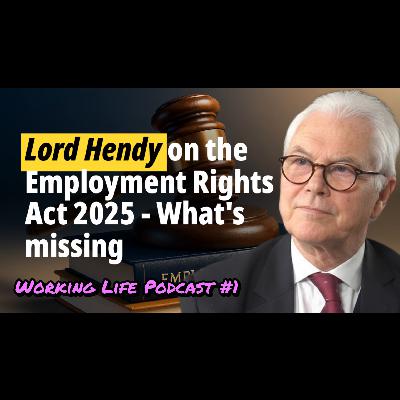
Welcome to the new 2nd season of the Institute of Employment Rights Podcast. In this episode, Prof Nicola Countouris (UCL & IER) and Lord John Hendy KC (UCL & IER), discuss the implications of the Government's new Employment Rights Act (2025). Topics covered are: - Worker Status - Sectoral bargaining - Industrial Action Legislation - Effective remedies for workers - Could P&O happen again after the Act?
Comments