


 Claim Ownership
 The Persistence
The PersistenceSubscribed: 0Played: 0
Subscribe

© Angélica Cordero
Description
The Persistence, hosted by Angélica Cordero, dives into the untold stories of people who’ve shaped history but rarely get the spotlight. Mixing bold personal stories, deep historical insights, and today’s fight for justice, each episode uncovers the connections between past movements and modern struggles. If you’re ready to see history through a fresh, intersectional lens, this is the podcast for you.
obsessivelycurious.substack.com
obsessivelycurious.substack.com
25 Episodes
Reverse
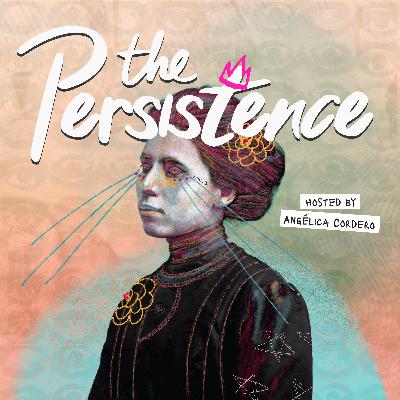
In this minisode of The Persistence, Angélica Cordero takes a hard look at the phrase “If you see something, say something” and what it’s really taught us about staying quiet, staying safe, and staying out of it. From civic culture to everyday behavior, this episode breaks down how silence often gets framed as maturity or common sense—when in reality, it can protect power and delay change.Through moments in history, civil rights struggles, and cultural flashpoints, Cordero shows how refusal, disruption, and non-cooperation have always been part of how progress actually happens. Silence doesn’t just happen. It’s encouraged. It’s rewarded. And it has a history.This episode explores:* Why “staying out of it” is rarely neutral* How power relies on compliance and quiet participation* The real cost of opting out when things go wrong* How refusal and non-cooperation create pressure for change* Why these patterns keep repeating todayThis episode was written by and produced by Angélica Cordero, with a little help from ChatGPT. Our theme song is Don’t Kid Yourself Baby by Fold, used with their blessings. Podcast artwork for The Persistence features Mexican-American activist Jovita Idar and was created by Tamra Collins of Sunroot Studio.Resources For Fellow Wascally WabbitsLinks“There’s Nothing I Enjoy More Than Acting In The Theater” - Ian McKellen EXTENDED INTERVIEW (The Late Show with Stephen Colbert)SupportIt’s free, it’s fast, and it tells the algorithm overlords this work matters. Supporting The Persistence means supporting all of it: the podcast, the posts, the zine, the whole enchilada.Send a post or an episode to a friend, a professor, or that cousin who loves debating politics at dinner.One quick Apple Podcasts review does more than any marketing budget I don’t have.Every coffee, every donation (and paid subscription) literally keeps the mic on and the stories flowing. Collaborate (let’s dream bigger): Educators? Creative? Filmmaker/Podcaster? Org with a mission? Let’s talk.Follow us on Instagram, TikTok, and share your thoughts with Angélica by emailing wearethepersistence@gmail.com.Don’t forget to sign up for host Angélica Cordero’s newsletter, Obsessively Curious!! It includes short insights that connect unlikely histories, recommendations, and details about other ways to interact with the show. Get full access to Obsessively Curious at obsessivelycurious.substack.com/subscribe
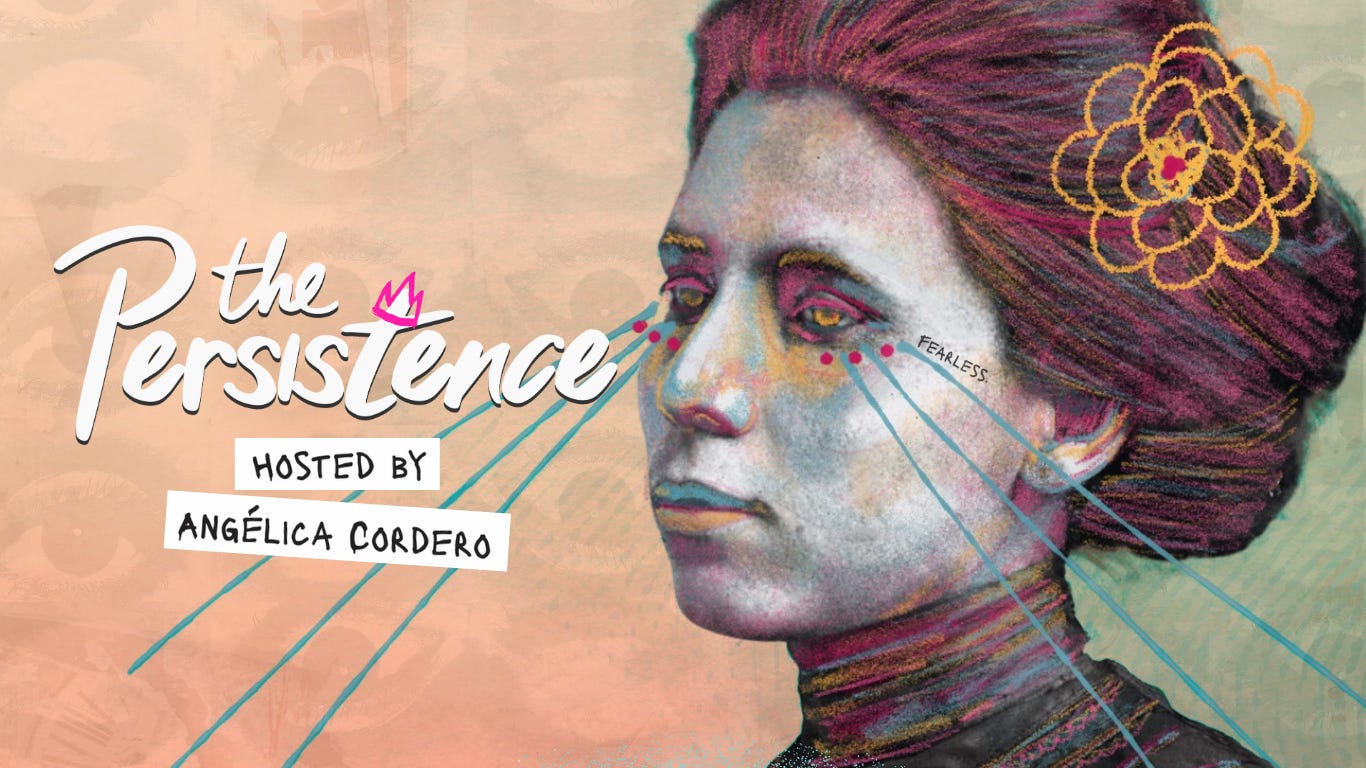
In this episode of The Persistence, Angélica Cordero traces how some of the most consequential changes in history didn’t begin with explosions or speeches, but with stillness. Opening with a personal memory of watching Jurassic Park alongside her grandmother (who always knew exactly when someone was about to make a terrible decision), Cordero draws a sharp line between moments we recognize as obviously reckless and the real-life systems we’re taught to trust long past their breaking point. From Mahatma Gandhi’s strategy of non-cooperation to the Greensboro sit-ins, the rise of the Student Nonviolent Coordinating Committee, the Freedom Rides, and the student-led confrontations that defined the early 1960s, this episode explores how quietly refusing to play along can expose the lie underneath power. With wit, cultural fluency, and a clear-eyed look at how systems react when compliance runs out, The Persistence invites listeners to reflect on the moment their own script cracked and what happens when stillness turns into momentum.This episode was written by and produced by Angélica Cordero, with a little help from ChatGPT. Our theme song is Don’t Kid Yourself Baby by Fold, used with their blessings. Podcast artwork for The Persistence features Mexican-American activist Jovita Idar and was created by Tamra Collins of Sunroot Studio.Resources For Fellow Wascally WabbitsBooksAmerica Dreaming by Laban Carrick HillLegendary Children: The First Decade of RuPaul’s Drag Race and the Last Century of Queer Life by Tom Fitzgerald and Lorenzo MarquezPersistence: Evelyn Butts and the African American Quest for Full Citizenship and Self-Determination by Kenneth Cooper AlexanderLinks“Ella Baker,” (People, SNCC Digital Gateway, Duke University Libraries)“Founding of SNCC,” (Events, SNCC Digital Gateway, Duke University Libraries)“Freedom Riders” in 1961: A Newborn Library and the World Beyond, (Olin @ 50: Inspiration Since 1961, Cornell University Library)“Freedom Rides,” (Civil Rights Digital Library, University of Georgia Libraries)“Jane Stembridge,” (Events, SNCC Digital Gateway, Duke University Libraries)“The Civil Rights Movement and Wesleyan Freedom Riders,” (2008 Issue 3, Historical Row, UpFront, Wesleyan University Magazine, Sep 20, 2008)The Creative Act: Marcel Duchamp’s 1957 Classic, Read by the Artist Himself by Maria Popova, (The Marginalian, Aug 23, 2012)Televised Address to the Nation on Civil Rights, (Historic Speeches, John F. Kennedy Presidential Library and Museum)“Woolworth’s lunch counter sit-in remembered by those who witnessed history,” (Museum Events, International Civil Rights Museum and Center, Aug 13, 2022)SupportIt’s free, it’s fast, and it tells the algorithm overlords this work matters. Supporting The Persistence means supporting all of it: the podcast, the posts, the zine, the whole enchilada.Send a post or an episode to a friend, a professor, or that cousin who loves debating politics at dinner.One quick Apple Podcasts review does more than any marketing budget I don’t have.Every coffee, every donation (and paid subscription) literally keeps the mic on and the stories flowing. Collaborate (let’s dream bigger): Educators? Creative? Filmmaker/Podcaster? Org with a mission? Let’s talk.Follow us on Instagram, TikTok, and share your thoughts with Angélica by emailing wearethepersistence@gmail.com.Don’t forget to sign up for host Angélica Cordero’s newsletter, Obsessively Curious!! It includes short insights that connect unlikely histories, recommendations, and details about other ways to interact with the show. Get full access to Obsessively Curious at obsessivelycurious.substack.com/subscribe
Christmas is often sold as a season of arrival and perfection, but its oldest stories tell something very different. In this episode of The Persistence, Angélica Cordero explores how modern Christmas imagery, from Santa’s familiar red suit to the feeling that the holiday should look a certain way, was shaped by 20th-century culture, then peels back the gloss to examine Christmas as a story of movement, displacement, and care. At the heart of the episode is A Charlie Brown Christmas, the 1965 animated special that defied television norms with its silences, real children’s voices, and sad little tree, shaped in part by Mexican immigrant animator Bill Melendez. From the nativity to Peanuts, this episode reflects on why stories that resist polish and certainty endure, and how belonging is often something we practice quietly, not something we’re handed.This episode was written by and produced by Angélica Cordero, with a little help from ChatGPT.Our theme song is Don’t Kid Yourself Baby by Fold, used with their blessings. Podcast artwork for The Persistence features Mexican-American activist Jovita Idar and was created by Tamra Collins of Sunroot Studio.Follow us on Instagram, TikTok, and share your thoughts with Angélica by emailing wearethepersistence@gmail.com.Don’t forget to sign up for host Angélica Cordero’s newsletter, Obsessively Curious!! It includes short insights that connect unlikely histories, recommendations, and details about other ways to interact with the show.Thanks for reading Obsessively Curious! This post is public so feel free to share it. Get full access to Obsessively Curious at obsessivelycurious.substack.com/subscribe
The latest episode of The Persistence opens with a very relatable childhood crisis: that first moment when a story you believed your whole life suddenly unravels. Host Angélica Cordero uses this myth-busting moment as a bridge into a larger cultural awakening, tracing how early 20th-century art movements like Dada, Neo-Dada, Judson Dance Theater, and Fluxus began shredding America’s shiny narratives long before the 1960s demanded it. Along the way, she spotlights boundary-pushers such as Marcel Duchamp, John Cage, and Yoko Ono, revealing how their weird, radical, rule-breaking work was not just art but prophecy. These creators exposed cracks in the culture decades before the mainstream could admit the foundations were shifting. This episode invites listeners to rethink the stories they were raised on, reflect on their own moments of disillusionment, and recognize why challenging the status quo has always been a necessary act of resistance.This episode was written by and produced by Angélica Cordero, with a little help from ChatGPT. Our theme song is Don’t Kid Yourself Baby by Fold, used with their blessings. Podcast artwork for The Persistence features Mexican-American activist Jovita Idar and was created by Tamra Collins of Sunroot Studio.Resources For Fellow Wascally WabbitsWant the full context? Check out the episodes referenced here:BooksAn Audience of Artists: Dada, Neo-Dada, and the Emergence of Abstract Expressionism by Catherine CraftAutocritique: Essays on Art and Anti-Art, 1963-1987 by Rose, BarbaraThe Experimenters by Eva DíazMarcel Duchamp’s Fountain: Its History and Aesthetics in the Context of 1917 by W. A. CamfieldNeo-Dada 1951-54: Between the Aesthetics of Persecution and the Politics of Identity by Seth MccormickPop Art and the Origins of Post-Modernism by Sylvia HarrisonSpecifically:* “Barbara Rose: Pop, Pragmatism, and ‘Prophetic Pragmatism’”, p. 115–145LinksA (Grudging) Defense of the $120,000 Banana by Jason Farago (New York Times, New York, Dec 8, 2019)About Peggy Guggenheim, (Peggy Guggenheim, Peggy Guggenheim Collection, Venice)"The Avant-garde and the Society of Independent Artists", (Movements, Documenting the Gilded Age: New York City Exhibitions at the Turn of the 20th Century, New York Art Resources Consortium, New York, NY, 2011)“Chapter 23: Dada” by D. Rogers & Julianne Gough Hartley, (History of the Fine Arts: Visual Art, Brigham Young University)The Creative Act: Marcel Duchamp’s 1957 Classic, Read by the Artist Himself by Maria Popova, (The Marginalian, Aug 23, 2012)The Creative Act by Marcel Duchamp, (Convention of the American Federation of Arts in Houston, Texas, April 1957)“Enter Digital Archives of the 1960s Fluxus Movement and Explore the Avant-Garde Art of John Cage, Yoko Ono, John Cale, Nam June Paik & More",” by Josh Jones, (Open Culture, Mar 15, 2018)George Maciunas. Fluxus Manifesto. 1963., (The Collection, MOMA, New York, 2025)Marcel Duchamp, (Artist and Musician Biographies, AAEP 1600: Art and Music since 1945, Department of Arts Administration, Education and Policy, The Ohio State University, 2024)“The National Purpose” series, Life Magazine* “‘LIFE’ Present a Crucial New Series: The National Purpose”, (May 23, 1960, Chicago, IL, p. 23-41)* Part II: Archibald MacLeish and Adlai Stevenson, (May 30, 1960, Chicago, IL, p. 86-88, 93-102)* Part III: David Sarnoff and Billy Graham (Jun 6, 1960, Chicago, IL, p. 108-110, 117-126)* Part IV: John W. Gardner and Clinton Rossiter (Jun 13, 1960, Chicago, IL, p. 98-118)* Part V: Walter Lippmann and Albert Wohlstetter, (Jun 20, 1960, Chicago, IL, p. 114-116, 122)"Performance Art, The Black Mountain College, John Cage & Merce Cunningham", (Art Terms, Tate, London)The Restless Innovation of Yoko Ono by Juliet Jacques, (Frieze, Feb 15, 2024)"See How Marcel Duchamp Broke the Rules and Shocked the Art World Again and Again" by Eli Wizevich, (Smithsonian Magazine, Washington, D.C., Jun 27, 2025)Yoko Ono, Cut Piece, (Re.Act.Feminism, Berlin)“YOKO ONO, CUT PIECE documented by The Maysles Bros, Carnegie Recital Hall, New York, March 21, 1965” by Greg Letson, (The Incubator, Dec 16, 2016)OtherGermany - Dada: and Alphabet of German Dadaism documentary Helmut Herbst (1968)John Cage on Silence, (Jul 14, 2007)Judson Dance Theater: The Work Is Never Done, (The Museum of Modern Art, Feb 1, 2019)Merce Cunningham’s Working Process, (Walker Art Center, Jul 28, 2009)SupportIt’s free, it’s fast, and it tells the algorithm overlords this work matters. Supporting The Persistence means supporting all of it: the podcast, the posts, the zine, the whole enchilada.Send a post or an episode to a friend, a professor, or that cousin who loves debating politics at dinner.One quick Apple Podcasts review does more than any marketing budget I don’t have.Every coffee, every donation (and paid subscription) literally keeps the mic on and the stories flowing. Collaborate (let’s dream bigger): Educators? Creative? Filmmaker/Podcaster? Org with a mission? Let’s talk.Follow us on Instagram, TikTok, and share your thoughts with Angélica by emailing wearethepersistence@gmail.com.Don’t forget to sign up for host Angélica Cordero’s newsletter, Obsessively Curious!! It includes short insights that connect unlikely histories, recommendations, and details about other ways to interact with the show. Get full access to Obsessively Curious at obsessivelycurious.substack.com/subscribe
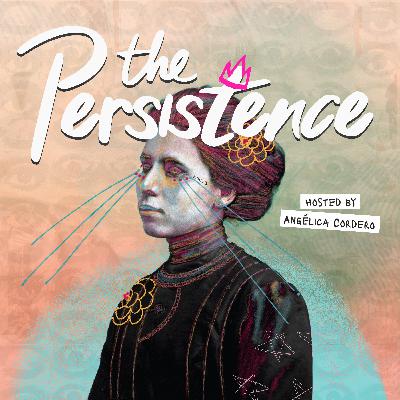
Finding the perfect theme song is almost impossible, until you stumble on Folds Band’s “Don’t Kid Yourself, Baby,” a funk-infused tribute to Fannie Lou Hamer, the civil rights legend who could turn a microphone into a movement. Band member Seth Moskowitz discovered her fire-breathing 1969 speech from the Vietnam Moratorium at UC Berkeley, and the rest is soul-shaking history. Hamer didn’t just fight voter suppression in Mississippi; she faced beatings, threats, and still showed up to shake the 1964 Democratic National Convention. Her voice, now echoing through basslines and protest chants, proves that politics is everywhere—in your playlists, your power, and your daily hustle. Tune in for a story that hits hard, grooves deeper, and reminds us that speaking up is always on beat.This episode was written by and produced by Angélica Cordero, with a little help from ChatGPT. Our theme song is Don’t Kid Yourself Baby by Fold, used with their blessings. Podcast artwork for The Persistence features Mexican-American activist Jovita Idar and was created by Tamra Collins of Sunroot Studio.Resources For Fellow Wascally WabbitsBooksUntil I Am Free: Fannie Lou Hamer’s Enduring Message to America by Keisha N. BlainLinks1961 U.S. Commission on Civil Rights Report Book 1 (University of Maryland School of Law, 1962)1960 Census: Population, Supplementary Reports: Per Capita and Median Family Income in 1959, for States, Standard Metropolitan Areas, and Counties (United States Census Bureau, 1965)Civil Rights Excerpts from the 1961 United States Commission on Civil Rights Report (U.S. Commission on Civil Rights, 1961)Fannie Lou Hamer (FBI The Vault, FBI)Fannie Lou Hamer and the Fight for Voting Rights by Keisha N. Blain (Blog, Smithsonian American Women’s History, Smithsonian, 2024)Fannie Lou Hamer: Civil Rights Activist by Kay Mills (Mississippi History Now, Mississippi Historical Society, 2015)Fannie Lou Hamer survived a prison beating, taught black people their rights and stood up to a president by Jamie Gass (The Hechinger Report, 2017)MFDP Challenge at Democratic National Convention (Digital SNCC Gateway, Duke University Libraries)Pioneers in the Black Women’s Suffrage Movement: Fannie Lou Hamer (News, League of Women Voters of CaliforniaRemarks regarding Mississippi economics, May 30, 1964 (Civil Rights Movement Archive, Duke University Libraries, 1964)Section 2 of the Voting Rights Act at the Supreme Court by Michael Li (Research Reports, Brennan Center for Justice, 2025)Stunned By Her Thunder: Fannie Lou Hamer by Jennifer Davis (Blogs, In Custodia LegisLaw Librarians of Congress, Library of Congress, 2021)The Sweat and Blood of Fannie Lou Hamer by Rosalind Early (Humanities, The Magazine of The National Endowment for the Humanities, Winter 2021)Testimony Before the Credentials Committee, Democratic National Convention (Say It Plain, American Public Media, 2018)SupportIt’s free, it’s fast, and it tells the algorithm overlords this work matters. Supporting The Persistence means supporting all of it: the podcast, the posts, the zine, the whole enchilada.Send a post or an episode to a friend, a professor, or that cousin who loves debating politics at dinner.One quick Apple Podcasts review does more than any marketing budget I don’t have.Every coffee, every donation (and paid subscription) literally keeps the mic on and the stories flowing. Collaborate (let’s dream bigger): Educators? Creative? Filmmaker/Podcaster? Org with a mission? Let’s talk.Follow us on Instagram, TikTok, and share your thoughts with Angélica by emailing wearethepersistence@gmail.com.Don’t forget to sign up for host Angélica Cordero’s newsletter, Obsessively Curious!! It includes short insights that connect unlikely histories, recommendations, and details about other ways to interact with the show. Get full access to Obsessively Curious at obsessivelycurious.substack.com/subscribe
When does paying attention become a form of protest? In this episode of The Persistence, host Angélica Cordero sits down with Bob Hotard, a UX designer who turned his skill for human-centered design into real-world activism. From building safe spaces for tough conversations inside AT&T to marching for justice in the streets, Bob’s journey proves that making change doesn’t always require a megaphone—just persistence. Blending personal storytelling, history, and a little wit, this episode challenges what activism looks like today and invites you to find your own way to make an impact.This episode was written by and produced by Angélica Cordero, with a little help from ChatGPT. Our theme song is Don’t Kid Yourself Baby by Fold, used with their blessings. Podcast artwork for The Persistence features Mexican-American activist Jovita Idar and was created by Tamra Collins of Sunroot Studio.Resources For Fellow Wascally WabbitsBooksSocial Change Now: A Guide for Reflection and Connection by Deepa IyerLinksD.I.N.E. EventsDoing Lunch Differently at AT&T by Rachel SimonSupportIt’s free, it’s fast, and it tells the algorithm overlords this work matters. Supporting The Persistence means supporting all of it: the podcast, the posts, the zine, the whole enchilada.Send a post or an episode to a friend, a professor, or that cousin who loves debating politics at dinner.One quick Apple Podcasts review does more than any marketing budget I don’t have.Every coffee, every donation (and paid subscription) literally keeps the mic on and the stories flowing. Collaborate (let’s dream bigger): Educators? Creative? Filmmaker/Podcaster? Org with a mission? Let’s talk.Follow us on Instagram, TikTok, and share your thoughts with Angélica by emailing wearethepersistence@gmail.com.Don’t forget to sign up for host Angélica Cordero’s newsletter, Obsessively Curious!! It includes short insights that connect unlikely histories, recommendations, and details about other ways to interact with the show. Get full access to Obsessively Curious at obsessivelycurious.substack.com/subscribe
What do Cold War witch hunts and old-school fables have in common? In this episode of The Persistence, host Angélica Cordero connects The Boy Who Cried Wolf and The Emperor’s New Clothes to America’s Red Scare, exposing how paranoia and denial fueled McCarthyism. With humor and insight, Angélica revisits the stories of Paul Robeson, Dorothy Parker, and Hazel Scott, brilliant artists and activists who refused to stay silent, even when the cost was everything. This isn’t just history. It’s a mirror for today’s culture wars and performance politics, reminding us that truth-telling has always been an act of resistance.This episode was written by and produced by Angélica Cordero, with a little help from ChatGPT. Our theme song is Don’t Kid Yourself Baby by Fold, used with their blessings. Podcast artwork for The Persistence features Mexican-American activist Jovita Idar and was created by Tamra Collins of Sunroot Studio.Resources For Fellow Wascally WabbitsBooksThe Broadcast 41: Women and the Anti-Communist Blacklist by Carol A. StabileFeminism Unfinished: A Short, Surprising History of American Women's Movements by Dorothy Sue Cobble, Linda Gordon, Astrid HenryIke and McCarthy: Dwight Eisenhower’s secret campaign against Joseph McCarthy by David A. NicholsThe Kitchen Debate and Cold War Consumer Politics: A Brief History with Documents (The Bedford Series in History and Culture) by Sarah Phillips and Shane HamiltonThe American Woman: Her Changing Social, Economic, and Political Roles, 1920-1970 by William H. ChafeThe Dismissal of Miss Ruth Brown: Civil Rights, Censorship, and the American Library by Louise S. RobbinsThe Undiscovered Paul Robeson: Quest for Freedom, 1939 - 1976 by Paul Robeson, Jr.The Way We Never Were: American Families and the Nostalgia Trap by Stephanie CoontzThe Women’s History of the Modern World: How Radicals, Rebels, and Everywomen Revolutionized the Last 200 Years by Rosalind MilesLinksThe 1950s Happy Housewife by Rachel Waugh (The Museum of Food and Culture, 2023)Alicia Keys just played two pianos at once in jaw-dropping Grammys performance by Sofia Rizzi, (ClassicFM, Feb 11, 2019)Black Skin in the Red Land: African Americans and the Soviet Experiment by Kimberly St. Julian-Varnon (The Russia File, Kennan Institute, Wilson Center, Feb 28, 2020)“Cold War Beginnings,” Growth and Turmoil, 1948-1977, (Women and the American Story, Center for Women’s History, The New York Historical)Free to Criticize by (The Center for Free, Fair, and Accountable Democracy, 2025)Hazel Scott: The Gorgeous Face of Jazz at the Mid-Century by Neely Tucker, (Timeless, Stories from the Library of Congress, October 12, 2021)“Hazel Scott Says Segregation Rule Surprise to Her,” (Austin American-Statesman, Nov 16, 1948, p 1)Red Channels: The Official Periodical of the Hollywood Blacklist by Peter Bowen (Bleecker Street,)“Texas U. Students Back Hazel Scott’s Fight on Bias,” (Daily World, New York, Nov 28, 1948)“To Be Somebody,” (Song of America)The FBI’s War on Folk Music by Alexander Billet, (Jacobin, Nov 22, 2020)“The Kitchen Debate,” Growth and Turmoil, 1948-1977, (Women and the American Story, Center for Women’s History, The New York Historical)“United States House Committee on Un-American Activities,” The Online Books Page, ed. John Mark Ockerbloom (University of Pennsylvania, )The Variation and Impact of Ol’ Man River by Paul Robeson (MHS: Music and Technology in the Twentieth Century, University of Rochester, Apr 2019)OtherUnited States Congressional Record, (September 21, 1949, p 13375)“Hazel’s Boogie Woogie,” Hazel Scott: Her Second Album (Archive.org, 1942)“Hazel Scott in ‘The Heat’s On‘ (1943),” Black Quotidian: Everyday History in African-American Newspapers, ed. Matthew F. Delmont, (Stanford University, 2019)The Disappearance of Miss Scott, (American Masters, PBS, Archive.org, 2025)SupportIt’s free, it’s fast, and it tells the algorithm overlords this work matters. Supporting The Persistence means supporting all of it: the podcast, the posts, the zine, the whole enchilada.Send a post or an episode to a friend, a professor, or that cousin who loves debating politics at dinner.One quick Apple Podcasts review does more than any marketing budget I don’t have.Every coffee, every donation (and paid subscription) literally keeps the mic on and the stories flowing. Collaborate (let’s dream bigger): Educators? Creative? Filmmaker/Podcaster? Org with a mission? Let’s talk.Follow us on Instagram, TikTok, and share your thoughts with Angélica by emailing wearethepersistence@gmail.com.Don’t forget to sign up for host Angélica Cordero’s newsletter, Obsessively Curious!! It includes short insights that connect unlikely histories, recommendations, and details about other ways to interact with the show. Get full access to Obsessively Curious at obsessivelycurious.substack.com/subscribe

The 1950s sold us smiling housewives, white picket fences, and tidy sitcom kitchens. But behind the canned laughter? Millions of women were juggling two jobs. One at home, one on the clock…and still getting shortchanged.In this episode of The Persistence, host Angelica Cordero pulls back the curtain on post–World War II America. From union women taking on GE and Westinghouse, to Black garment workers packing Madison Square Garden, to Latina mamas turning PTA meetings into organizing hubs. This is the story of how women, families, and communities fought back against wage gaps, housing discrimination, and runaway inflation.You’ll hear about:* The myth of the “traditional family” versus the reality of poverty and redlining.* Women fighting for equal pay, childcare, and dignity on the job.* Mutualistas, comadres, and community kitchens raising future leaders like Dolores Huerta and Helen Chávez.* Housewives boycotting overpriced groceries and flipping the “perfect homemaker” script into full-on protest.Because postwar America wasn’t just barbecue grills and baby booms. It was strikes, boycotts, and casseroles in one hand with protest signs in the other.The revolution wasn’t just televised. It was homemade.This episode was written by and produced by Angélica Cordero, with a little help from ChatGPT. Our theme song is Don’t Kid Yourself Baby by Fold, used with their blessings. Podcast artwork for The Persistence features Mexican-American activist Jovita Idar and was created by Tamra Collins of Sunroot Studio.Resources For Fellow Wascally WabbitsBooksAn African American and Latinx History of the United States by Paul OrtizCitizen, Mother, Worker: Debating Public Responsibility for Childcare after the Second World War by Emilie StoltzfusCommon Sense & A little Fire: Women and Working-Class Politics in the United States, 1900-1965 by Annelise OrleckFeminism Unfinished: A Short, Surprising History of American Women's Movements by Dorothy Sue Cobble, Linda Gordon, Astrid Henry Not June Cleaver: Women and Gender in Postwar America, 1945-1960 edited by Joanne MeyerowitzSpecifically:* Gender & Civic Activism in Mexican American Barrios in California: The Community Service Organization, 1947-1962 by Margaret Rose, p. 177-200* Recapturing Working-Class Feminism by Union Women in the Postwar Era by Dorothy Sue Cobble, p. 57-83Our Mother’s War: American Women at Home and at the Front During World War II by Emily YellinThe American Woman: Her Changing Social, Economic, and Political Roles, 1920-1970 by William H. ChafeThe Way We Never Were: American Families and the Nostalgia Trap by Stephanie CoontzLinksThe 1950s Happy Housewife by Rachel Waugh (The Museum of Food and Culture, 2023)1946 Orson Welles Commentaries (Archive.org, 1946)Tillie Olsen (Newton, Ma: The Shalvi/Hyman Encyclopedia of Jewish Women - Jewish Women’s Archive,)A Word to the Wives by Telamerica, Inc. (Archive.org, 1955)SupportIt’s free, it’s fast, and it tells the algorithm overlords this work matters. Supporting The Persistence means supporting all of it: the podcast, the posts, the zine, the whole enchilada.Send a post or an episode to a friend, a professor, or that cousin who loves debating politics at dinner.One quick Apple Podcasts review does more than any marketing budget I don’t have.Every coffee, every donation (and paid subscription) literally keeps the mic on and the stories flowing. Collaborate (let’s dream bigger): Educators? Creative? Filmmaker/Podcaster? Org with a mission? Let’s talk.Follow us on Instagram, TikTok, and share your thoughts with Angélica by emailing wearethepersistence@gmail.com.Don’t forget to sign up for host Angélica Cordero’s newsletter, Obsessively Curious!! It includes short insights that connect unlikely histories, recommendations, and details about other ways to interact with the show. Get full access to Obsessively Curious at obsessivelycurious.substack.com/subscribe
Drag in uniform? Believe it. In this episode of The Persistence, host Angélica Cordero uncovers the hidden world where World War II soldiers swapped rifles for wigs and turned the battlefield into a stage. From Irving Berlin’s hit This Is the Army to all-soldier revues that broke barriers of race, gender, and sexuality, these performances reveal how the military used theater to boost morale and how queer expression thrived in the unlikeliest of places.It’s a story of radical joy in the middle of chaos: sequins in the trenches, satire in the spotlight, and survival through spectacle. This isn’t your typical war story. It’s a provocative, witty look at how performance reshaped resilience, challenged norms, and gave soldiers a reason to laugh when the world was burning.This episode was written by and produced by Angélica Cordero, with a little help from ChatGPT. Our theme song is Don’t Kid Yourself Baby by Fold, used with their blessings. Podcast artwork for The Persistence features Mexican-American activist Jovita Idar and was created by Tamra Collins of Sunroot Studio.Resources For Fellow Wascally WabbitsAudio ClipsThe Army-Navy Screen Magazine 31 1944 (Archive.org)I Paid My Income Tax Today (Archive.org)Victor/Victoria Official TrailerWar Dept. Film Bulletin 155: Special Services In Action, 1944 (Archive.org)BooksComing Out Under Fire: The History of Gay Men and Women in World War Two by Allan BérubéSounds of War: Music in the United States during WWII by Annegret FauserLinksEarly Career & Tin Pan Alley (1888 to 1915) (New York, NY:The Irving Berlin Music Company)GIs as Dolls: Uncovering the Hidden Histories of Drag Entertainment During Wartime (New Orleans, LA: The National WWII Museum, 2021)Irving Berlin and Tin Pan Alley At War (College Park, MD: Modern Songs of War And Conflict, Michelle Smith Performing Arts Library, University of Maryland)Irving Berlin: This Is the Army (Washington, D.C.: Prologue Magazine, National Archives, 1996)Segregation and Musicals during World War II (Arlington, Va: Michael Feinstein’s American Songbook, PBS)Staging War. Theatre 1914-1918 - (Berlin: International Encyclopedia of the First World War, 2014)Theatre at the Front (Berlin: International Encyclopedia of the First World War, 2015)The War in Popular Music: Irving Berlin (Jersey City, NJ: Ellis Island Part of Statue of Liberty National Monument, National Park Service, 2023)'White Christmas’: From Pop Tune to Picture (New York, NY: The New York Times, 1953)Click below to read more about the what White Christmas has to do with the 1942 Musicians strike:SupportIf you haven’t please yet, subscribe and rate our feed in Apple Podcasts or wherever you get your podcasts. And even better, tell your friends.Follow us on Instagram, TikTok, and share your thoughts with Angélica by emailing wearethepersistence@gmail.com.Don’t forget to sign up for host Angélica Cordero’s newsletter, Obsessively Curious!! It includes short insights that connect unlikely histories, recommendations, and details about other ways to interact with the show.Or support her caffeine habit and buy her a coffee.Thanks for listening to The Persistence! This post is public so feel free to share it. Get full access to Obsessively Curious at obsessivelycurious.substack.com/subscribe

Forget Rosie the Riveter’s flex. In this episode of The Persistence, host Angélica Cordero flips the script on the usual WWII girl-power narrative and digs into the real story of the women who didn’t just roll up their sleeves—they reprogrammed the whole damn machine. From scrubbing floors and working fields to leading strikes, staffing factories, and forcing entire industries to modernize, these women fought for fair pay, safety, dignity, and a future where they mattered. Angélica takes you through their journey with wit, insight, and zero sugar-coating, spotlighting the Black, Brown, and working-class women whose stories rarely make the textbooks. And when the war ended? They didn’t quietly fade into the background—they left a legacy that still fuels modern fights for workplace justice. If you’ve ever been told to “know your place,” this one’s for you.This episode was written by and produced by Angélica Cordero, with a little help from ChatGPT. Our theme song is Don’t Kid Yourself Baby by Fold, used with their blessings. Podcast artwork for The Persistence features Mexican-American activist Jovita Idar and was created by Tamra Collins of Sunroot Studio.Get into the groove with our Spotify playlist of episode title references!Resources For Fellow Wascally WabbitsBooksCannery Women, Cannery Lives: Mexican Women, Unionization, and the California Food Processing Industry, 1930-1950 by Vicki L. RuizCommon Sense and a Little Fire: Women and Working-class Politics in the United States, 1900-1965 by Annelise OrleckFeminism Unfinished: A Short, Surprising History of American Women's Movements by Dorothy Sue Cobble, Linda Gordon, Astrid HenryFeminism in the labor movement : women and the United Auto Workers, 1935-1975 by Nancy Felice GabinFrom Coveralls to Zoot Suit: The Lives of Mexican American Women on the World War II Home Front by Elizabeth EscobedoMaking War, Making Women: Femininity and Duty on the American Home Front, 1941-1945 by Melissa A. McEuenManipulating Images World War II Mobilization of Women through Magazine Advertising by Tawnya J. Adkins CovertNo Ordinary Time - Franklin and Eleanor Roosevelt: The Home Front in World War II by Doris Kearns GoodwinOur Mother’s War: American Women at Home and at the Front During World War II by Emily YellinThe American Woman: Her Changing Social, Economic, and Political Roles, 1920-1970 by William H. ChafeThe Power of the Zoot: Youth Culture and Resistance during World War II by Luis AlvarezThree Strikes: Miners, Musicians, Salesgirls, and the Fighting Spirit of Labor's Last Century by Dana Frank, Robin D.G. Kelley, Howard ZinnLinksAnalysis of Work Stoppages 1956 (Washington, D.C.: United States Department of Labor, 1957)How did Public Opinion About Entering World War II Change Between 1939 and 1941? (Gallup; Americans and the Holocaust: United States Holocaust Memorial Museum)Work Stoppages Caused by Labor-Management Disputes in 1947 (Washington, D.C.: United States Department of Labor, 1948) SupportIf you haven’t please yet, subscribe and rate our feed in Apple Podcasts or wherever you get your podcasts. And even better, tell your friends.Follow us on Instagram, TikTok, and share your thoughts with Angélica by emailing wearethepersistence@gmail.com.Don’t forget to sign up for host Angélica Cordero’s newsletter, Obsessively Curious!! It includes short insights that connect unlikely histories, recommendations, and details about other ways to interact with the show.Or support her caffeine habit and buy her a coffee. Get full access to Obsessively Curious at obsessivelycurious.substack.com/subscribe

In Episode Nine of The Persistence, Angélica Cordero connects today’s personal and societal headaches to the messy fight for progress throughout history. She zeroes in on Margaret Sanger, the birth control trailblazer whose game-changing fight for reproductive rights is forever complicated by her ties to the eugenics movement. It’s a story that proves people, like history, are rarely tidy, and progress is always tangled in contradictions. With her signature mix of wit, heart, and a healthy dose of side-eye, Angelica breaks down Sanger’s legacy without sugarcoating it, challenging listeners to sit with the discomfort, learn from the past, and keep pushing forward anyway—because persistence isn’t about being perfect, it’s about showing up. This episode was written by and produced by Angélica Cordero, with a little help from ChatGPT. Our theme song is Don’t Kid Yourself Baby by Fold, used with their blessings. Podcast artwork for The Persistence features Mexican-American activist Jovita Idar and was created by Tamra Collins of Sunroot Studio.Get into the groove with our Spotify playlist of episode title references!Resources For Fellow Wascally WabbitsBooksBetween the Wars: America. 1919-1941 by David A. ShannonDaily Life in the United States, 1920-1940 by David E. KyvigSex and the Constitution: Sex, Religion, and Law from America's Origins to the Twenty-First Century by Geoffrey R StoneUnmentionable: The Victorian Lady’s Guide to Sex, Marriage, and Manners by Therese OneillLinks"Birth Control or Race Control? Sanger and the Negro Project" Newsletter #28 (Fall 2001) - The Margaret Sanger Papers, New York UniversityEugenic Value of Birth Control Propaganda (1921) - Social Welfare History Project, Virginia Commonwealth UniversityInterview with Margaret Sanger - Harry Ransom Center Digital CollectionsThe Mother of Mothers: Margaret Sanger - Vol. 17, Hohonu 2019, University of Hawai‘i at Hilo SupportIf you haven’t please yet, subscribe and rate our feed in Apple Podcasts or wherever you get your podcasts. And even better, tell your friends.Follow us on Instagram, TikTok, and share your thoughts with Angélica by emailing wearethepersistence@gmail.com.Don’t forget to sign up for host Angélica Cordero’s newsletter, Obsessively Curious!! It includes short insights that connect unlikely histories, recommendations, and details about other ways to interact with the show.Or support her caffeine habit and buy her a coffee. Get full access to Obsessively Curious at obsessivelycurious.substack.com/subscribe
In this compelling episode of The Persistence, host Angélica Cordero explores the idea of life as a never-ending performance, where each of us plays multiple roles to meet expectations, navigate pressures, and make sense of our identities. With her signature wit and insight, Angélica draws a vibrant parallel between our everyday performances and the dazzling world of 1920s queer nightlife during the Pansy Craze. She shines a spotlight on trailblazing drag performers like Gladys Bentley, Gene Malin, and Karyl Norman—artists who weren’t just entertainers but cultural revolutionaries. In an era of prohibition and societal repression, these bold figures challenged gender norms, carved out space for queer self-expression, and redefined the stage as a site of resistance and joy. Though the movement was stifled during the Great Depression, its echoes continue to shape modern drag and queer visibility. Bridging past and present, Angélica offers a powerful meditation on authenticity, courage, and the enduring impact of those who dare to be seen.This episode was written by and produced by Angélica Cordero, with a little help from ChatGPT. Our theme song is Don’t Kid Yourself Baby by Fold, used with their blessings. Voices heard in this episode include New York City drag queen Fonda Koxx and Ruben Freeman. Podcast artwork for The Persistence features Mexican-American activist Jovita Idar and was created by Tamra Collins of Sunroot Studio.Get into the groove with our Spotify playlist of episode title references!Resources For Fellow Wascally WabbitsBooksBetween the Wars: America. 1919-1941 by David A. ShannonDaily Life in the United States, 1920-1940 by David E. KyvigLegendary Children: The First Decade of RuPaul's Drag Race and the Last Century of Queer Life by Tom Fitzgerald and Lorenzo MarquezSex and the Constitution: Sex, Religion, and Law from America's Origins to the Twenty-First Century by Geoffrey R StoneSlumming: Sexual and Racial Encounters in American Nightlife, 1885-1940 by Chad HeapLinksGladys Bentley Was a Gender Outlaw, article, Harper’s Bazaar MagazineThe Great Blues Singer Gladys Bentley Broke All the Rules, podcast, Smithsonian MagazineHow dressing in drag made me uncover myself by Eric Dorsa, video, TEDxSanAntonioSupportIf you haven’t please yet, subscribe and rate our feed in Apple Podcasts or wherever you get your podcasts. And even better, tell your friends.Follow us on Instagram, TikTok, and share your thoughts with Angélica by emailing wearethepersistence@gmail.com.Don’t forget to sign up for host Angélica Cordero’s newsletter, Obsessively Curious!! It includes short insights that connect unlikely histories, recommendations, and details about other ways to interact with the show.Or support her caffeine habit and buy her a coffee. Get full access to Obsessively Curious at obsessivelycurious.substack.com/subscribe
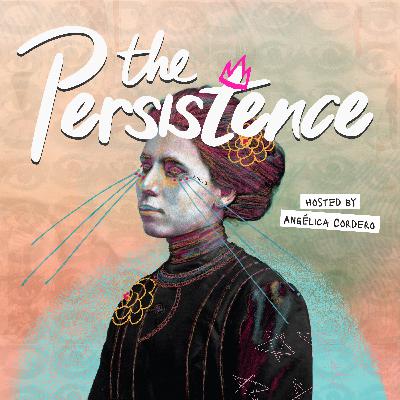
In this thought-provoking episode of The Persistence, host Angélica Cordero dives into the theme of growth through struggle. Using Henry Kissinger's controversial legacy as a backdrop, Angélica explores the idea that brilliance is born from pressure and challenges. The episode delves into historical and personal anecdotes, highlighting the importance of conflict in storytelling and real life. With a mix of humor and insight, she draws parallels to pop culture, historical events, and personal anecdotes, highlighting that triumph and progress emerge from friction and adversity. The episode also features a look back at May West's controversial 1937 radio appearance and celebrates the people and acts that defy conformity and drive progress. Tune in for a vibrant, witty exploration of the relentless spirit of change. This episode was written by and produced by Angélica Cordero, with a little help from ChatGPT. Our theme song is Don’t Kid Yourself Baby by Fold, used with their blessings. Podcast artwork for The Persistence features Mexican-American activist Jovita Idar and was created by Tamra Collins of Sunroot Studio.Resources For Fellow Wascally WabbitsBooksSex and the Constitution: Sex, Religion, and Law from America's Origins to the Twenty-First Century by Geoffrey R StoneLinksDecember 12, 1937 episode of The Chase and Sanborn Hour, audio, Archive.orgSupportIf you haven’t please yet, subscribe and rate our feed in Apple Podcasts or wherever you get your podcasts. And even better, tell your friends.Follow us on Instagram, TikTok, and share your thoughts with Angélica by emailing wearethepersistence@gmail.com.Don’t forget to sign up for host Angélica Cordero’s newsletter, Obsessively Curious!! It includes short insights that connect unlikely histories, recommendations, and details about other ways to interact with the show.Or support her caffeine habit and buy her a coffee. Get full access to Obsessively Curious at obsessivelycurious.substack.com/subscribe
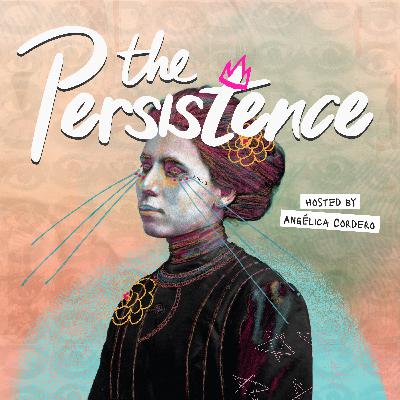
History is in motion, shaped by relentless activism and collective action. This episode reflects on the turbulence of late 2024 into early 2025, drawing a powerful analogy between life and a chaotic road trip. Rather than rushing ahead blindly, it’s a time to pause, reassess, and plan. Change isn’t inevitable—it’s made by those willing to fight for it. From Senator Cory Booker’s 25-hour filibuster to everyday acts of resistance, this conversation highlights the power of ‘good necessary trouble,’ echoing John Lewis’s call to action. With personal reflections and inspiring stories of modern-day changemakers, this episode is a rallying cry for persistence and resilience. History is being written right now—together.This episode was written by and produced by Angélica Cordero, with a little help from ChatGPT. Our theme song is Don’t Kid Yourself Baby by Fold, used with their blessings. Podcast artwork for The Persistence features Mexican-American activist Jovita Idar and was created by Tamra Collins of Sunroot Studio.SupportIf you haven’t please yet, subscribe and rate our feed in Apple Podcasts or wherever you get your podcasts. And even better, tell your friends.Follow us on Instagram, TikTok, and share your thoughts with Angélica by emailing wearethepersistence@gmail.com.Don’t forget to sign up for host Angélica Cordero’s newsletter, Obsessively Curious!! It includes short insights that connect unlikely histories, recommendations, and details about other ways to interact with the show.Or support her caffeine habit and buy her a coffee. Get full access to Obsessively Curious at obsessivelycurious.substack.com/subscribe
What keeps progress alive when the odds feel impossible? In this episode of The Persistence, host Angélica Cordero unravels stories of bold resilience that have shaped history—from Enheduanna, the first-known author who wielded her words to assert power, to Judy Chicago’s The Dinner Party, an unapologetic celebration of women’s achievements. Along the way, we explore how oral traditions and collective action have kept the flame of progress burning through the centuries. Tune in for a vibrant mix of history and insight that proves persistence isn’t just a virtue—it’s the force that keeps progress alive.This episode was written by and produced by Angélica Cordero, with a little help from ChatGPT.Our theme song is Don’t Kid Yourself Baby by Fold, used with their blessings. Podcast artwork for The Persistence features Mexican-American activist Jovita Idar and was created by Tamra Collins of Sunroot Studio.Resources For Fellow Wascally WabbitsBooksThe Dinner Party: Judy Chicago and the Power of Popular Feminism, 1970-2007 by Jane F. Gerhard“What’s in a Sign?” by John Foley in Signs of Orality edited by Anne MacKayLinks"Revisiting The Dinner Party: Why It's Important Now" with Judy Chicago and Diane Gelon, Through the Flower, YouTubeA Brief History of Archaeology in Mesopotamia, Cuneiform Digital Library Initiative, Oxford UniversityJudy Chicago Research Portal, Radcliffe Institute for Advanced Study, Harvard UniversityIn the Spotlight: The New Middle East Gallery at the Penn Museum by Grant Frame, International Association for AssyriologyNippur, UNESCO, World Heritage ConventionNippur Expedition, Institute for the Study of Ancient Cultures, University of ChicagoNippur: The Babylonian Collections of the University Museum, Penn MuseumRight Out of History: The Making of The Dinner Party (documentary)Thomas Jefferson, Jefferson's Library, Library of CongressUr Online, British Museum and Penn MuseumSupportIf you haven’t please yet, subscribe and rate our feed in Apple Podcasts or wherever you get your podcasts. And even better, tell your friends.Follow us on Instagram, TikTok, and share your thoughts with Angélica by emailing wearethepersistence@gmail.com.Don’t forget to sign up for host Angélica Cordero’s newsletter, Obsessively Curious!! It includes short insights that connect unlikely histories, recommendations, and details about other ways to interact with the show.Or support her caffeine habit and buy her a coffee. Get full access to Obsessively Curious at obsessivelycurious.substack.com/subscribe
In this episode, host Angélica Cordero takes a deep dive into the ominous origins of the Atlantic slave trade, beginning with Prince Henry the Navigator's arrival of enslaved Africans in Portugal in 1444. The narrative then shifts to Gomes Eannes de Azurara, Henry's chronicler, who struggles with the horrifying reality of human suffering he witnesses. Fast forward to the turbulent history of women's and civil rights activism in America, highlighting figures like Harriet Tubman, Susan B. Anthony, and Frederick Douglass, who played monumental roles in transformative movements. The episode underscores the relentless nature of progress and persistence, drawing stark parallels between historical and contemporary issues such as corporate greenwashing and sanitized narratives of atrocities. Filled with poignant insights and a touch of humor, this episode reaffirms the significance of understanding history in its entirety to fuel ongoing social justice movements.This episode was written by and produced by Angélica Cordero, with a little help from ChatGPT.Our theme song is Don’t Kid Yourself Baby by Fold, used with their blessings. Podcast artwork for The Persistence features Mexican-American activist Jovita Idar and was created by Tamra Collins of Sunroot Studio.BooksAmerican Women by Gail CollinsCommon Sense and a Little Fire by Annelise OrleckOrdinary Equality by Kate KellyOut to Work: A History of Wage-Earning Women in the United States by Alice Kessler-HarrisRevolution in Mexico: Years of Upheaval, 1910-1940, Edited by James W. Wilkie and Albert L. MichaelsU.S. Latino Patriots by Refugio I. Rochín, Ph.D. and Lionel Fernandez, Ph.D.The Verso Book of Feminism, Edited by Jessie KindigThe Women’s History of the Modern World by Rosalind MilesWomen Together by Judith PapachritouSee more citations at Obsessively CuriousIf you haven’t please yet, subscribe and rate our feed in Apple Podcasts or wherever you get your podcasts. And even better, tell your friends.Follow us on Instagram, TikTok, and share your thoughts with Angélica by emailing wearethepersistence@gmail.com. Get full access to Obsessively Curious at obsessivelycurious.substack.com/subscribe
This episode offers a guided meditation to help listeners release tension and find equilibrium. The narrative inspires courage to face uncertain futures, emphasizing the importance of small, consistent steps and the shared strength drawn from historical figures who persevered through challenges. The episode encourages recognizing one's part in a larger story and moving forward despite uncertainties, with an emphasis on contributing to a better future for all.This episode was written by and produced by Angélica Cordero, with a little help from ChatGPT. Podcast artwork for The Persistence features Mexican-American activist Jovita Idar and was created by Tamra Collins of Sunroot Studio.SupportIf you haven’t please yet, subscribe and rate our feed in Apple Podcasts or wherever you get your podcasts. And even better, tell your friends.Follow us on Instagram, TikTok, and share your thoughts with Angélica by emailing wearethepersistence@gmail.com.Don’t forget to sign up for host Angélica Cordero’s newsletter, Obsessively Curious!! It includes short insights that connect unlikely histories, recommendations, and details about other ways to interact with the show.Or support her caffeine habit and buy her a coffee. Get full access to Obsessively Curious at obsessivelycurious.substack.com/subscribe
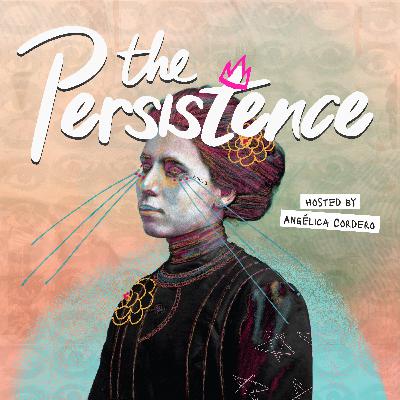
In this episode, host Angélica Cordero takes us on a personal visit to the birthplace of the U.S. women's rights movement in Seneca Falls, where over 300 men and women gathered in 1848. They boldly outlined their grievances in the Declaration of Sentiments, calling out gender inequalities enshrined in law and society. The constitution's inspiration from the Haudenosaunee Confederacy and their matrilineal society is explored. The episode also challenges the popular narrative that credits Susan B. Anthony as the major figure in women's suffrage, highlighting lesser-known truths about the movement's origins.This episode was written by and produced by Angélica Cordero, with a little help from ChatGPT.Our theme song is Don’t Kid Yourself Baby by Fold, used with their blessings. Voices heard in this episode include Amanda Flores and Hiram Skaggs. Podcast artwork for The Persistence features Mexican-American activist Jovita Idar and was created by Tamra Collins of Sunroot Studio.Resources For Fellow Wascally WabbitsThe Myth of Seneca Falls: Memory and the Women's Suffrage Movement, 1848-1898 by Lisa Tetrault (book)Haudenosaunee Guide for Educators, National Museum of the American Indian (PDF)Congressional Resolution 331, Congress.govOut to Work: A History of Wage-Earning Women in the United States by Alice Kessler-Harris (book)Poor People’s Campaign, The Martin Luther King, Jr. Research and Education Institute, Stanford (Link)And the walls came tumbling down : an autobiography by Rev. Abernathy (Book)Interpreting the Failure of the Poor People’s Campaign by Joule Voelz, Harvard (Link)Activism at Resurrection City, National Museum of African American History & Culture (Link)Making the Movement: How Activists Fought for Civil Rights with Buttons, Flyers, Pins, and Posters by by David L. Crane and Silas Munro (book)SupportIf you haven’t please yet, subscribe and rate our feed in Apple Podcasts or wherever you get your podcasts. And even better, tell your friends.Follow us on Instagram, TikTok, and share your thoughts with Angélica by emailing wearethepersistence@gmail.com.Don’t forget to sign up for host Angélica Cordero’s newsletter, Obsessively Curious!! It includes short insights that connect unlikely histories, recommendations, and details about other ways to interact with the show.Or support her caffeine habit and buy her a coffee. Get full access to Obsessively Curious at obsessivelycurious.substack.com/subscribe
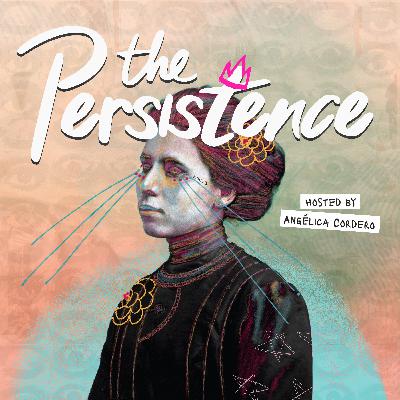
Host Angélica Cordero gets real about a delay in releasing episode 5 due to illness, but rather than leaving listeners empty-handed, she shares some reflections on resilience. Inspired by a recent trip to Monterrey, Mexico, and the symbolic power of Jesús Contreras’ sculpture Malgré Tout, she mixes personal stories with historical insight. Cordero recounts her time in Monterrey and Santiago, touching on her family’s roots and a trek into the mountains, all while exploring themes of persistence.This episode moves beyond typical history lessons. Cordero draws parallels between her own experiences and the unwavering spirit captured in Malgré Tout, a sculpture that symbolizes determination despite overwhelming challenges. She highlights that resilience isn't just found in big historical moments but also in the everyday struggles we all face. Cordero encourages listeners to think about their own stories of perseverance and share them, emphasizing the strong connection between personal journeys and the broader sweep of history.This episode was written by and produced by Angélica Cordero, with a little help from ChatGPT. Our theme song is Don’t Kid Yourself Baby by Fold, used with their blessings. You heard Malgré tout by Manuel Ponce as performed by Paul Barton. Podcast artwork for The Persistence features Mexican-American activist Jovita Idar and was created by Tamra Collins of Sunroot Studio.SupportIf you haven’t please yet, subscribe and rate our feed in Apple Podcasts or wherever you get your podcasts. And even better, tell your friends.Follow us on Instagram, TikTok, and share your thoughts with Angélica by emailing wearethepersistence@gmail.com.Don’t forget to sign up for host Angélica Cordero’s newsletter, Obsessively Curious!! It includes short insights that connect unlikely histories, recommendations, and details about other ways to interact with the show.Or support her caffeine habit and buy her a coffee. Get full access to Obsessively Curious at obsessivelycurious.substack.com/subscribe
In Episode 4 of The Persistence podcast, Angélica Cordero delves into the complexities of historical research, including biases, gaps, and the laborious efforts of preserving and interpreting sources. She touches on personal anecdotes, the overlooked roles of marginalized groups, and how figures like Olympe de Gouges and Olaudah Equiano fought against inequality. The episode also covers the Haitian Revolution, highlighting how lost and fragmented histories paint an incomplete picture of our collective past. Angélica emphasizes the importance of messy, raw narratives over sanitized history, urging listeners to question and explore history's hidden corners.This episode was written by and produced by Angélica Cordero, with a little help from ChatGPT.Our theme song is Don’t Kid Yourself Baby by Fold, used with their blessings. Podcast artwork for The Persistence features Mexican-American activist Jovita Idar and was created by Tamra Collins of Sunroot Studio.Resources For Fellow Wascally WabbitsThe Blue Stockings: A History of the First Women’s Movement by Susannah Gibson (Book)Women, Gender, and Enlightenment edited by Sara Knott and Barbara Taylor (Book)The World of the Salons by (Book)The Women’s History of the Modern World by Rosalind Miles (Book)The Interesting Narrative of the Life of Olaudah Equiano (Book)An African American and Latinx History of the United States by Paul Ortiz (Book)Toussaint Louverture and the American Civil War: The Promise and Peril of a Second Haitian Revolution by Matthew Clavin (Book)Haitian Revolutions - Crash Course (Video)SupportIf you haven’t please yet, subscribe and rate our feed in Apple Podcasts or wherever you get your podcasts. And even better, tell your friends.Follow us on Instagram, TikTok, and share your thoughts with Angélica by emailing wearethepersistence@gmail.com.Don’t forget to sign up for host Angélica Cordero’s newsletter, Obsessively Curious!! It includes short insights that connect unlikely histories, recommendations, and details about other ways to interact with the show.Or support her caffeine habit and buy her a coffee. Get full access to Obsessively Curious at obsessivelycurious.substack.com/subscribe

Comments

Download from Google Play

Download from App Store
 United States