


 Claim Ownership
Brackish (formerly Making Design Circular with Katie Treggiden)
Subscribed: 53Played: 825
Subscribe

© Katie Treggiden
Description
Welcome to this new iteration of my podcast, which was called Making Design Circular and now has the same name as my Substack, Brackish.
Brackish is a term used to describe water that is a mixture of saltwater and freshwater, for example, where a river meets the sea. I first encountered it sitting in a boat in just such water and it immediately became one of my favourite words. I am fascinated by intersections, liminal and littoral spaces, overlaps and interconnections, and I want to use this space to explore all of those things – the ideas that don’t fit into neat boxes.
So, I’ll be exploring those things here – the places where craft meets nature, where the rules don’t apply and ‘shoulds’ start to fall away. Which brings me to the second meaning of the word brackish.
As well as meaning ‘somewhat salty’ in very neutral terms, it has also come to mean ‘unpalatable’ or ‘repulsive’. I didn’t know this until after I decided upon it as a name, but as a woman in her middle years, who is relearning how to take up space, I am so here for that alternative definition!
From occasional ‘salty’ language to refusing to adhere to feminine standards of beauty or behaviour, I am leaning into my brackish era – and I’m doing it here with some brilliant women and non-binary folks who are doing the same. brackishbykatietreggiden.substack.com
Brackish is a term used to describe water that is a mixture of saltwater and freshwater, for example, where a river meets the sea. I first encountered it sitting in a boat in just such water and it immediately became one of my favourite words. I am fascinated by intersections, liminal and littoral spaces, overlaps and interconnections, and I want to use this space to explore all of those things – the ideas that don’t fit into neat boxes.
So, I’ll be exploring those things here – the places where craft meets nature, where the rules don’t apply and ‘shoulds’ start to fall away. Which brings me to the second meaning of the word brackish.
As well as meaning ‘somewhat salty’ in very neutral terms, it has also come to mean ‘unpalatable’ or ‘repulsive’. I didn’t know this until after I decided upon it as a name, but as a woman in her middle years, who is relearning how to take up space, I am so here for that alternative definition!
From occasional ‘salty’ language to refusing to adhere to feminine standards of beauty or behaviour, I am leaning into my brackish era – and I’m doing it here with some brilliant women and non-binary folks who are doing the same. brackishbykatietreggiden.substack.com
37 Episodes
Reverse
In this episode, Katie talks to Elle Bower Johnston. Elle (she/they) is a body witch. Their work is the alchemisation of breathwork, somatic, and rest practices with witchcraft and folk magic. She works with creatives, witches, queers, change-makers, weirdos - folks who might not necessarily feel like they belong in ‘wellness’ or ‘spiritual’ spaces - to help them get into deeper their relationship with their body and connect with their magic.Her work is queer- and trans-centred, trauma-conscious, and rooted in unravelling colonialism and capitalism from the ways we relate to our bodies. They believe that our personal practices can be microcosms of liberation that spiral out and create a better world.During this Katie & Elle discuss:The societal pressure to stay "busy" and how it often undermines our well-beingHow moving through space—whether walking, driving, or traveling by train—enhances mental clarity and creativity. Understanding different types of rest and exploring rest from various perspectives—physical, mental, spiritual, and social.The liberating power of saying "no" and how starting from a place of refusal can help reclaim energy and create space for true rest.The paradox of needing to slow down in an urgent world You can connect with Elle hereWebsite: ellebowerjohnston.comInstagram: @ellebowerjohnstonFree Notion dashboard of rest practices for rebels - Radical Rest Portal Here are some highlights:The Pressure of Productivity "Nobody comes up to me and says, ‘You seem inspired at the moment or happy or well-rested.’ It’s always, ‘Oh my gosh, you’re so busy,’ as if productivity is the only measure of success. But what about asking if my work is bringing me joy?”Embracing the Chaos of Rest "Rest isn’t just about napping or yoga Nidra. It’s anything that connects your mind and body, bringing you back to a sense of wholeness. It’s about exploring different layers of self and finding coherence, whether it’s through traditional practices or something as simple as revisiting childhood movies."The Power of Saying No"Starting from a place of refusal is a form of reclaiming energy. We often move with this sense of ‘I have to, I have to,’ but by saying no, we allow ourselves to drop back, be present, and reclaim rest as an act of self-care."The Importance of Listening to the Body"Listening to your body is key. It’s not just about what your mind wants but also what your body needs. Sometimes, rest is about allowing your body to guide you, trusting its signals, and respecting the need to pause, breathe, and reset." Books, Podcasts & Articles we mentioned:Experiments in Imagining Otherwise by Lola OlufemiThe BBC’s Witch podcastEmergent Strategy by Adriene Marie Brown Making Design Circular Conference – 2024LEARN HOW TO TALK ABOUT YOUR ECO-EFFORTS WITH CONFIDENCE so you can connect with values-aligned clients and customers without the fear of getting called out.10 am–5 PM BST Thursday 05 September 2024A 1-day virtual conference for purpose-driven founders making imperfect progress towards genuine environmental sustainability.Broken: Mending and repair in a throwaway worldKatie’s sixth book celebrates 25 artists, curators, menders and re-makers who have rejected the allure of the fast, disposable and easy in favour of the patina of use, the stories of age and the longevity of care and repair. Accompanying these profiles, six in-depth essays explore the societal, cultural and environmental roles of mending in a throwaway world.Cultivating Hope, 3 part mini course: Are you ready to cultivate hope in the face of the climate crisis? Sign up to Katie’s three-part free mini course that will help you move through feelings of helplessness, reconnect with nature and take aligned action.Making Design Circular membership: An international membership community and online learning platform for environmentally conscious designers, makers artists and craftspeople – join us! Spread the Word:Please share Making Design Circular with Katie Treggiden with wild abandon — with your friends, family, and fellow purpose-driven founders of making-based businesses or wherever interesting conversations about creativity happen in your world! If you love what you’re listening to, show us some love by following Circular with Katie Treggiden in this app and leaving a review. All that good stuff tells the ‘algorithm Gods’ to show the podcast to more people, and that can only be a good thing, right?Sign up for our my e-newsletter ‘Weekly(ish) Musings for Curious, Imperfect and Stubbornly Optimistic Environmentalists’ - just click here.And find me on the Interwebs: @katietreggiden (Twitter, TikTok), & @katietreggiden3908 (YouTube) & @katietreggiden.1 (Instagram) – and if you’re a designer, maker, artist or craftsperson, join me on IG @making_design_circular_ About Katie:Katie Treggiden is the founder and director of Making Design Circular – an international membership community and online learning platform for environmentally conscious designers, makers artists and craftspeople. She is also an author, journalist and podcaster championing a hopeful approach to environmentalism. With more than 20 years' experience in the creative industries, she regularly contributes to publications such as The Guardian, The Observer, Crafts Magazine and Dezeen. She is currently exploring the question ‘Can craft save the world?’ through her sixth book, Broken: Mending & Repair in a Throwaway World (Ludion, 2023), this very podcast. This is a public episode. If you'd like to discuss this with other subscribers or get access to bonus episodes, visit brackishbykatietreggiden.substack.com/subscribe
In this episode, Katie talks to Rosie Murphy. Rosie is a consummate communicator and connector.She is just one of a broad ecosystem of architectural workers uniting for greater social justice and environmental consciousness in all aspects of the built environment. She is an advocate for networks such as Black Females in Architecture, HomeGrown Plus and Architects Climate Action Network. Rosie's work is centred on youth engagement, creating creative opportunities and experiences for children and young people to be empowered, informed and activated citizens of the future. Rosie works collaboratively across boundaries of design, education and activism in the UK and her new community in Aotearoa, New Zealand.During this Katie & Rosie discuss:The importance of a non-linear approach to design thinkingCollaboration as an expression of hope How true collaboration requires honesty about power imbalances and a commitment to sharing power where possible, even when it’s challenging.The idea that collaboration can be deeply informed by observing and learning from natureChallenges in collaborationThe importance of integrating cultural identity into design work You can connect with Rosie hereWebsite: https://rosiemurphyme.wixsite.com/onlineportfolioInstagram: https://www.instagram.com/rosiemurphy.meLinkedIn:https://www.linkedin.com/in/contact-rosiemurphy/ Here are some highlights:Embracing Non-Linear Design Thinking"So this non-linear cycle includes points like ideation, reflection, prototyping and testing, so a lot of aspects of the design process that we're very familiar with, but I feel with a greater sensitivity to community, to ancestry and history, and to a great sensitivity to nature and resources, and yeah, in the way that it's laid out in this koru, this spiral which itself is taken from nature."Understanding Power Dynamics in Collaboration"…power is absolutely the most important and most essential aspect of collaboration... collaboration is not equal, there are many different forms of collaboration from community engagement to citizen participation, all the way up to citizen empowerment."Learning from Nature’s Wisdom"I just wanted to share a quite beautiful Maori proverb or saying that I was just introduced to recently, which is erere kau, mai te awa nui, mai te kahui, maunga ki tangaroa, pō au te awa, pō te awa, pō au. And that means the river flows from the mountain to the sea, I am the river, the river is me. And for me, that is truly understanding the fact that we are not separate to nature, we are not separate to the natural world, that the way that we operate is part of this global environmental system." Books, Podcasts & Articles we mentioned:Against the Loveless World by Susan AbulhawaDrunk Women Solving Crime Podcast with hosts Hannah George and Taylor Glenn Making Design Circular Conference – 2024LEARN HOW TO TALK ABOUT YOUR ECO-EFFORTS WITH CONFIDENCE so you can connect with values-aligned clients and customers without the fear of getting called out.10 am–5 PM BST Thursday 05 September 2024A 1-day virtual conference for purpose-driven founders making imperfect progress towards genuine environmental sustainability. Broken: Mending and repair in a throwaway worldKatie’s sixth book celebrates 25 artists, curators, menders and re-makers who have rejected the allure of the fast, disposable and easy in favour of the patina of use, the stories of age and the longevity of care and repair. Accompanying these profiles, six in-depth essays explore the societal, cultural and environmental roles of mending in a throwaway world. Cultivating Hope, 3 part mini course: Are you ready to cultivate hope in the face of the climate crisis? Sign up to Katie’s three-part free mini course that will help you move through feelings of helplessness, reconnect with nature and take aligned action. Making Design Circular membership: An international membership community and online learning platform for environmentally conscious designers, makers artists and craftspeople – join us! Spread the Word:Please share Making Design Circular with Katie Treggiden with wild abandon — with your friends, family, and fellow purpose-driven founders of making-based businesses or wherever interesting conversations about creativity happen in your world! If you love what you’re listening to, show us some love by following Circular with Katie Treggiden in this app and leaving a review. All that good stuff tells the ‘algorithm Gods’ to show the podcast to more people, and that can only be a good thing, right?Sign up for our my e-newsletter ‘Weekly(ish) Musings for Curious, Imperfect and Stubbornly Optimistic Environmentalists’ - just click here.And find me on the Interwebs: @katietreggiden (Twitter, TikTok), & @katietreggiden3908 (YouTube) & @katietreggiden.1 (Instagram) – and if you’re a designer, maker, artist or craftsperson, join me on IG @making_design_circular_ About Katie:Katie Treggiden is the founder and director of Making Design Circular – an international membership community and online learning platform for environmentally conscious designers, makers artists and craftspeople. She is also an author, journalist and podcaster championing a hopeful approach to environmentalism. With more than 20 years' experience in the creative industries, she regularly contributes to publications such as The Guardian, The Observer, Crafts Magazine and Dezeen. She is currently exploring the question ‘Can craft save the world?’ through her sixth book, Broken: Mending & Repair in a Throwaway World (Ludion, 2023), this very podcast. This is a public episode. If you'd like to discuss this with other subscribers or get access to bonus episodes, visit brackishbykatietreggiden.substack.com/subscribe
**This episode was originally an Instagram Live, so at the point of going live on the podcast, the rest challenge we talk about has already happened – however, the Making Design Circular Conference is happening on Thursday 05 September 2024 – find out more get your ticket for that HERE >>> ** In this episode, Katie talks to Jo Casey. Jo Casey is an Autistic and ADHD speaker and business coach who helps fellow quirky-brained entrepreneurs align their business strategies with their unique mental wiring. With over 20 years of coaching experience and 15 years of successfully wrangling her own neurodivergent business, Jo has mastered the art of turning cognitive curveballs into powerful business assets.Their innovative approach enables established entrepreneurs to work smarter, often achieving twice the results in half the time - without having to start from scratch or pretend to be neurotypical. At a time when neurodiversity is finally getting its moment in the spotlight, Jo's work is redefining success in the business world, proving that neurodivergent traits can be entrepreneurial superpowers in disguise.Jo's expertise has sparked meaningful conversations about neurodiversity in business, challenging traditional norms and paving the way for a more inclusive (and interesting!) approach to entrepreneurship. They’ve been featured in the Huffington Post, Kind Over Matter, and Tiny Buddha, among others.When not kicking the business world up the butt, Jo can be found curating the perfect playlist for her latest textile crafting session or passionately explaining to puzzled friends why Jesus Christ Superstar is, without a doubt, the greatest musical ever written.During this Katie & Jo discuss:The difference between physical tiredness and sensory overload How to spot the signs of sensory overloadHow to prevent sensory overload and take care of yourself when it happensHow neurodivergent folk sometimes need sensory rest, but sometimes sensory stimulationWhy physical and sensory rest is so important for purpose-driven founders of making based businesses making imperfect progress towards genuine sustainability You can connect with Jo here:Website: https://www.jocasey.com/Instagram: https://www.instagram.com/jocaseyb/Facebook: https://www.facebook.com/JoCaseyB/…and Jo has an amazing energy mapping tool, which will help with some of the stuff we discussed, which you can access here: https://www.jocasey.com/nd-energy-kit/ Here are some highlights:Depletion versus Nourishing“One of the concepts we talk about is the things that deplete you and things that nourish you – and I really like that concept because I could be doing something that is really calm, but I’m finding it really quite depleting, or I could be doing something that is really energetic, but you’re finding it really nourishing. I really like this idea of what is depleting and what is nourishing.” How to know when you’re experiencing sensory overload“Treat yourself like a glorious experiment... tune into to what’s going on in your body.” On rest as disruption “These are my needs – and it’s perfectly fine, in fact it’s admirable, to meet my needs. Exploitative capitalism teaches us to exploit resources to the point of depletion and we are our own primary resource.” Being the change we want to see“There is something about being the change that we want to see in the world – and having emotionally grounded, rested, healthy people, we ‘re much more likely to be able to inspire that in others… one of the things we know from neuroscience is that when we’re running on adrenaline and cortisol, the creative activity in our brain is really limited… so our ability to solve problems drops down and if there was a time when we needed people to come up with solutions to really complex, thorny problems, it’s now.” Books, Podcasts & Articles we mentioned:Emergent Strategy by Adriene Marie BrownMaintenance Phase podcast with Aubrey Gordon and Michael HobbesLaziness Does Not Exist by Dr Devon PriceHow To Discover Your Environmental Superpower – Making Design Circular short course Making Design Circular Conference – 2024LEARN HOW TO TALK ABOUT YOUR ECO-EFFORTS WITH CONFIDENCE so you can connect with values-aligned clients and customers without the fear of getting called out.10 am–5 PM BST Thursday 05 September 2024A 1-day virtual conference for purpose-driven founders making imperfect progress towards genuine environmental sustainability. Broken: Mending and repair in a throwaway worldKatie’s sixth book celebrates 25 artists, curators, menders and re-makers who have rejected the allure of the fast, disposable and easy in favour of the patina of use, the stories of age and the longevity of care and repair. Accompanying these profiles, six in-depth essays explore the societal, cultural and environmental roles of mending in a throwaway world. Cultivating Hope, 3 part mini course: Are you ready to cultivate hope in the face of the climate crisis? Sign up to Katie’s three-part free mini course that will help you move through feelings of helplessness, reconnect with nature and take aligned action. Making Design Circular membership: An international membership community and online learning platform for environmentally conscious designers, makers artists and craftspeople – join us! Spread the Word:Please share Making Design Circular with Katie Treggiden with wild abandon — with your friends, family, and fellow purpose-driven founders of making-based businesses or wherever interesting conversations about creativity happen in your world! If you love what you’re listening to, show us some love by following Circular with Katie Treggiden in this app and leaving a review. All that good stuff tells the ‘algorithm Gods’ to show the podcast to more people, and that can only be a good thing, right?Sign up for our my e-newsletter ‘Weekly(ish) Musings for Curious, Imperfect and Stubbornly Optimistic Environmentalists’ - just click here.And find me on the Interwebs: @katietreggiden (Twitter, TikTok), & @katietreggiden3908 (YouTube) & @katietreggiden.1 (Instagram) – and if you’re a designer, maker, artist or craftsperson, join me on IG @making_design_circular_ About Katie:Katie Treggiden is the founder and director of Making Design Circular – an international membership community and online learning platform for environmentally conscious designers, makers artists and craftspeople. She is also an author, journalist and podcaster championing a hopeful approach to environmentalism. With more than 20 years' experience in the creative industries, she regularly contributes to publications such as The Guardian, The Observer, Crafts Magazine and Dezeen. She is currently exploring the question ‘Can craft save the world?’ through her sixth book, Broken: Mending & Repair in a Throwaway World (Ludion, 2023), this very podcast. This is a public episode. If you'd like to discuss this with other subscribers or get access to bonus episodes, visit brackishbykatietreggiden.substack.com/subscribe
In this episode, Katie continues last week’s conversation with Tamu Thomas a renowned transformational life coach, dedicated to guiding women towards achieving work-life harmony by embracing holistic well-being practices that align with their nervous system. Katie & Tamu explore:The term ‘high-functioning freeze’Defiant hope & rage Activism v Martyrdom And of course, the final quick fire round of season 4!You can connect with Tamu hereWebsite: https://www.livethreesixty.com/ and https://www.womenwhoworktoomuch.co/Instagram: https://www.instagram.com/tamu.thomas/LinkedIn: https://www.linkedin.com/in/livethreesixty/Learn more about Tamu’s membership here: https://live-three-sixty.mykajabi.com/membership Here are some highlights:I learned that it was unsafe for me to express rage “Rage is part of the human experience, rage, emotion, energy in motion, rage is energy in motion that says you've got to make a change, whether it's externally or internally, but instead, we hold on to it, and have a lot of like, bitterness and resentment inside. And we get sidetracked with that. So we avoid the real issue. And we make it all about the anger or the rage.”Empowerment to build momentum"My life is mine, square with a life of service means that your life has to be of service to you too. Because if your life is not a service to you too, if you are giving away all of your lifeforce energy, you're not actually doing activism, you're doing martyrdom. Our planet doesn't need any more martyrs. Social justice causes for human beings, animals around the world doesn't need any more martyrs what they need, or what these things we believe in need, is for us to be and this word, sometimes it gets on my nerves, but it is for us to be empowered. Because when we are empowered, rather than doing things in fits and spurts, we can actually build momentum and have a compounding effect. And I say this to my clients. And I say to myself all the time. Social justice is not just if it's not just for you too, we don't need any more martyrs. "Books & Podcasts mentioned:10x Is Easier Than 2x, Benjamin HardyUpstream Podcast Broken: Mending and repair in a throwaway worldKatie’s sixth book celebrates 25 artists, curators, menders and re-makers who have rejected the allure of the fast, disposable and easy in favour of the patina of use, the stories of age and the longevity of care and repair. Accompanying these profiles, six in-depth essays explore the societal, cultural and environmental roles of mending in a throwaway world.Cultivating Hope, 3 part mini course: Are you ready to cultivate hope in the face of the climate crisis? Sign up to Katie’s three-part free mini course that will help you move through feelings of helplessness, reconnect with nature and take aligned action.Making Design Circular membership: An international membership community and online learning platform for environmentally conscious designers, makers artists and craftspeople – join us! Spread the Word:Please share Making Design Circular with Katie Treggiden with wild abandon — with your friends, family, and fellow designer-makers or wherever interesting conversations about creativity happen in your world! If you love what you’re listening to, show us some love by following Circular with Katie Treggiden in this app and leaving a review. All that good stuff tells the ‘algorithm Gods’ to show the podcast to more people, and that can only be a good thing, right?Sign up for our my e-newsletter ‘Weekly(ish) Musings for Curious, Imperfect and Stubbornly Optimistic Environmentalists’ - just click here.And find me on the Interwebs: @katietreggiden (Twitter, TikTok), & @katietreggiden3908 (YouTube) & @katietreggiden.1 (Instagram) – and if you’re a designer, maker, artist or craftsperson, join me on IG @making_design_circular_About Katie:Katie Treggiden is the founder and director of Making Design Circular – an international membership community and online learning platform for environmentally conscious designers, makers artists and craftspeople. She is also an author, journalist and podcaster championing a hopeful approach to environmentalism. With more than 20 years' experience in the creative industries, she regularly contributes to publications such as The Guardian, The Observer, Crafts Magazine and Dezeen. She is currently exploring the question ‘Can craft save the world?’ through her sixth book, Broken: Mending & Repair in a Throwaway World (Ludion, 2023), this very podcast. This is a public episode. If you'd like to discuss this with other subscribers or get access to bonus episodes, visit brackishbykatietreggiden.substack.com/subscribe
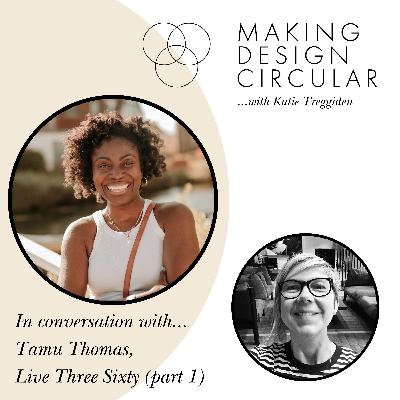
In this episode, Katie talks to Tamu Thomas a renowned transformational life coach and the author of "Women Who Work Too Much: Break Free from Toxic Productivity and Find Your Joy." She is dedicated to guiding women towards achieving work-life harmony by embracing holistic well-being practices that align with their nervous system. Tamu's groundbreaking book sheds light on the systemic pressures that force women into a cycle of over-functioning, often leading to significant workplace stress and an imbalanced share of emotional and domestic responsibilities. Drawing on her extensive background in social work, she has a profound understanding of the systemic roots of these issues, particularly the disproportionate impact they have on women. Tamu's unique coaching methodology is deeply influenced by somatic practices and Polyvagal theory, focusing on helping women rebuild a connection with their core selves, establish healthy boundaries, and forming a strong sense of self-trust. She is especially attuned to the nuanced challenges faced by Black women and women of the global majority, navigating what she terms ‘the trinity of oppression’: patriarchy, white supremacy, and capitalism. In her own words, Tamu asserts, "We don’t need more self-improvement; we need systemic change.” Her approach is not just about personal transformation but about sparking wider societal shifts. Her insights and guidance are invaluable for those seeking a life filled with fulfillment, deep connections, and genuine joy, amidst the demands of our fast-paced world.Linked with the “nurture” pillar of the Making Design Circular framework, Katie & Tamu discuss:The new book Women Who Work Too Much – Break Free from Toxic Productivity and Find Your Joy!Toxic ProductivityOur connection with nature and why it’s soWhy it’s so important that we reconnect mind and bodySimple ways we should be honouring our basic needsWhy we shouldn’t be adopting a belief that we’re brokenYou can connect with Tamu here:Website: https://www.livethreesixty.com/ and https://www.womenwhoworktoomuch.co/Instagram: https://www.instagram.com/tamu.thomas/LinkedIn: https://www.linkedin.com/in/livethreesixty/Learn more about Tamu’s membership here: https://live-three-sixty.mykajabi.com/membership Here are some episode highlights:Recognise we’re not designed to go it alone“The beauty is as human beings we're not designed to go it alone. So it can feel really daunting when we feel like oh my goodness, the system is rigged, for most of us to be at fault, for most of us to fail, when we recognise that we can start to embody the genius of our species, which is connection, and compassion, and all of that stuff. And we can start to work together to create systems and structures that care for us and our planet.” The Idea of Toxic Productivity“We don't just breathe in, we need to breathe in, we need to exhale. And in fact, something I say all the time is, the rest is quite often more important than the race. The rest is what sets us up. And we often talk about being part of nature. Actually, no, we are nature. We are all children of this earth. Whilst we were born of our mother's wombs, we are all children of this earth, there is nothing on this earth that is productive, that is producing all the time. Even our evergreen trees have times of rest and dormancy. We're not supposed to be doing that all the time. It is unnatural. So as we stepped into the industrial revolution, we started making all of these machines to make our life easier. But once we identified that we could create mass, and people could consume more. And that mass would result into profit it was profit and growth above everything else. So it shifted how we experience ourselves. And generally speaking, we started to compare ourselves to the machines we created to make our lives easier. And that's when we started talking more about consistency.” Capitalist Conditioning“let's be real, there are many times in life where we do have to go beyond our bandwidth sometimes. But it's about recognising the difference, so that we can make choices and we can do that for finite periods of time. We have a sympathetic nervous system for a reason, we go into states of fight or flight for a reason, they're not all bad, but it's a finite period of time. What happens in our culture is that the rules of capitalism say, actually, you should always be beyond your capacity, that's a good work ethic, that's being efficient, that is being somebody who is reliable. And it just conditions us, if you think of us like a piece of elastic, it conditions us to always be overstressed over stretched elastic. And so we have situations where people use anxiety as a motivational tool. None of this stuff will happen overnight, but over time, we can start being motivated by what feels good, what's in service of our long term good, as opposed to constantly being motivated by anxiety, which is our body's warning signal for terror.”Books & Podcasts mentioned:10x Is Easier Than 2x, Benjamin HardyUpstream PodcastBroken: Mending and repair in a throwaway worldKatie’s sixth book celebrates 25 artists, curators, menders and re-makers who have rejected the allure of the fast, disposable and easy in favour of the patina of use, the stories of age and the longevity of care and repair. Accompanying these profiles, six in-depth essays explore the societal, cultural and environmental roles of mending in a throwaway world.Cultivating Hope, 3 part mini course: Are you ready to cultivate hope in the face of the climate crisis? Sign up to Katie’s three-part free mini course that will help you move through feelings of helplessness, reconnect with nature and take aligned action.Making Design Circular membership: An international membership community and online learning platform for environmentally conscious designers, makers artists and craftspeople – join us! Spread the Word:Please share Making Design Circular with Katie Treggiden with wild abandon — with your friends, family, and fellow designer-makers or wherever interesting conversations about creativity happen in your world! If you love what you’re listening to, show us some love by following Circular with Katie Treggiden in this app and leaving a review. All that good stuff tells the ‘algorithm Gods’ to show the podcast to more people, and that can only be a good thing, right?Sign up for our my e-newsletter ‘Weekly(ish) Musings for Curious, Imperfect and Stubbornly Optimistic Environmentalists’ - just click here.And find me on the Interwebs: @katietreggiden (Twitter, TikTok), & @katietreggiden3908 (YouTube) & @katietreggiden.1 (Instagram) – and if you’re a designer, maker, artist or craftsperson, join me on IG @making_design_circular_About Katie:Katie Treggiden is the founder and director of Making Design Circular – an international membership community and online learning platform for environmentally conscious designers, makers artists and craftspeople. She is also an author, journalist and podcaster championing a hopeful approach to environmentalism. With more than 20 years' experience in the creative industries, she regularly contributes to publications such as The Guardian, The Observer, Crafts Magazine and Dezeen. She is currently exploring the question ‘Can craft save the world?’ through her sixth book, Broken: Mending & Repair in a Throwaway World (Ludion, 2023), this very podcast. This is a public episode. If you'd like to discuss this with other subscribers or get access to bonus episodes, visit brackishbykatietreggiden.substack.com/subscribe
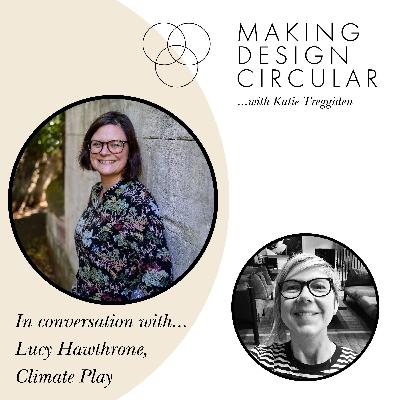
In this episode, Katie talks to Lucy Hawthorne. Lucy is a campaigner at heart and Founder of Climate Play. Through play-based training and facilitation for adults, she helps make it safe, light and fun for people to face climate change. Combining a lot of LEGO with climate psychology, she creates conversation on the topic that teams actually want to have, rather than only feel like they should. Her serious play approach helps people to engage more honestly, deeply and creatively, identifying ways to build alignment and shared action within their organisations, whether they are getting started or have gotten stuck on their sustainability journey. Climate Play was born after Lucy spent a good while in the charity and NGO-world and became concerned the heaviness of the conversation was affecting energy to act. So now she challenges the norm of serious seriousness as always the best way to get things done. She is a qualified coach and LEGO® Serious Play® facilitator. During this Katie & Lucy discuss:How Climate Play came aboutUnderstanding what Play is and how its definedWhere Play comes in to a topic such as the climate crisisHow to use her safe, light, fun form of engagement with environmentalismintrinsic versus extrinsic motivation. The overlap between choice, wonder and delight as well…Play archetypes and how they help us engage with environmentalismYou can connect with Lucy here:www.climateplay.orghttps://www.linkedin.com/in/lucyhawthorne/https://www.linkedin.com/company/climate-playlucy@climateplay.orgMonthly Climate Play Meetup (first Thurs of the month 1300 – 1400 GMT) https://www.eventbrite.co.uk/o/lucy-hawthorne-founderfacilitator-climate-play-29888274577 Here are some highlights:Origin of Climate Play“Climate play is in essence, trying to find different ways of really tapping into people's motivations and really trying to create spaces where people can engage in subjects that they don't really want to and that feels very different to a very hard hitting strategic approach that I spent many years, many years doing.”Become the best version of yourself“How many people actually fulfil their own moral compass? Very few, even people who are very dedicated, we're not perfect beings. And therefore, there's something about what will you always want to do. I'm not saying that if everyone suddenly untapped their playfulness, then climate change is going to disappear into a puff of smoke. But I think there is just something about reframing the way we engage with things. Whether that is thinking about and understanding (your audiences) motivations? What are they doing? If you're thinking about how you run initiatives in your company, or you're trying to think about how your family considers sustainability, there is just something about finding a combination of the things that you love doing, the things that you're good at doing, and the things that the world needs some support on. It's not a magic silver bullet, but I think there's something about understanding your sense of playfulness, you are highly likely to be more engaged. And when you are engaged, you're likely to be a better version of yourself.” Books, Podcasts & Articles we mentioned:The Art of Peace by John Paul LederachInternational School of BillundGood Bones by Maggie SmithPlay by Stuart BrownThe Dangers of Smoking in Bed by Mariana EnriquezYou’re Dead to Me, BBC Radio 4 PodcastUsing Play to Rewire & Improve Your Brain, Huberman Labs PodcastBroken: Mending and repair in a throwaway worldKatie’s sixth book celebrates 25 artists, curators, menders and re-makers who have rejected the allure of the fast, disposable and easy in favour of the patina of use, the stories of age and the longevity of care and repair. Accompanying these profiles, six in-depth essays explore the societal, cultural and environmental roles of mending in a throwaway world.Cultivating Hope, 3 part mini course: Are you ready to cultivate hope in the face of the climate crisis? Sign up to Katie’s three-part free mini course that will help you move through feelings of helplessness, reconnect with nature and take aligned action.Making Design Circular membership: An international membership community and online learning platform for environmentally conscious designers, makers artists and craftspeople – join us!Spread the Word:Please share Making Design Circular with Katie Treggiden with wild abandon — with your friends, family, and fellow designer-makers or wherever interesting conversations about creativity happen in your world! If you love what you’re listening to, show us some love by following Circular with Katie Treggiden in this app and leaving a review. All that good stuff tells the ‘algorithm Gods’ to show the podcast to more people, and that can only be a good thing, right?Sign up for our my e-newsletter ‘Weekly(ish) Musings for Curious, Imperfect and Stubbornly Optimistic Environmentalists’ - just click here.And find me on the Interwebs: @katietreggiden (Twitter, TikTok), & @katietreggiden3908 (YouTube) & @katietreggiden.1 (Instagram) – and if you’re a designer, maker, artist or craftsperson, join me on IG @making_design_circular_About Katie:Katie Treggiden is the founder and director of Making Design Circular – an international membership community and online learning platform for environmentally conscious designers, makers artists and craftspeople. She is also an author, journalist and podcaster championing a hopeful approach to environmentalism. With more than 20 years' experience in the creative industries, she regularly contributes to publications such as The Guardian, The Observer, Crafts Magazine and Dezeen. She is currently exploring the question ‘Can craft save the world?’ through her sixth book, Broken: Mending & Repair in a Throwaway World (Ludion, 2023), this very podcast. This is a public episode. If you'd like to discuss this with other subscribers or get access to bonus episodes, visit brackishbykatietreggiden.substack.com/subscribe
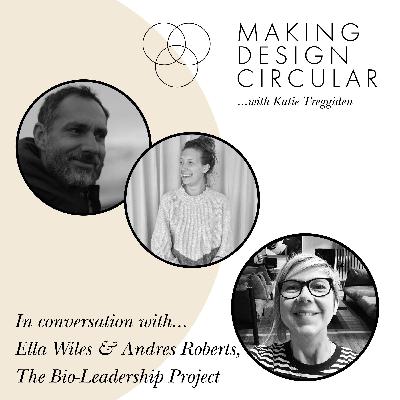
In this episode, Katie talks to Ella Wiles and Andres Roberts from The Bio-Leadership Project. The Bio-Leadership Project’s mission is to change the story of leadership by working with nature. A movement of people and organisations, changing human systems to be more resilient, regenerative, and designed to protect our planet.Bio-Leadership is about challenging an outdated story of progress, about building organisations and communities that protect and replenish our world. Most importantly, it is about reconnecting human progress back into our planet’s web of life. Working at this deep paradigm level, growing a culture of interconnection, is where we support the greatest change. During this episode, Katie, Ella & Andres discuss:How the Bio-Leadership Project can to existenceThe importance of nature connectionHow environmentalism isn’t about sacrifice and punishment and how we can actually be more helpful as environmentalists if we're well resourced and taking care of ourselvesThe three circle model: Self, our community and our workThe idea of ecosophy – deep experiences, deep questioning, deep commitment You can connect with Ella & Andres herehttps://www.bio-leadership.org/IG: @bioleadershipproject Here are some highlights:Collectively shifting what the story of human progress can be“The Bio Leadership Project effectively says there are there are different stories of what human progress looks like, and they can work with nature, and they can be inspired by nature. And even more than that, they can place people or humans back into being part of nature. Its about validating as many different stories as possible and needed. What we’ve seen is that there are just hundreds, if not 1000s, of amazing, inspired, courageous people saying, Yeah, we can change the story, we're going to do it. And it's just that they're all still swimming against the tide, you know, including ourselves, and nobody can do it alone. So the bio Leadership Project and the bio leadership fellowship are ways of helping these people and projects to connect, to share learning, hope and encouragement, and hopefully helping collectively to shift what the story of human progress can be, to care for life. A change is needed in how we measure leadership“We as individuals, but collectively, and then sort of as human society probably need a different set of qualities around how we navigate this moment in time and how we bring a positive change to the world. And you could argue that we're all a little bit conditioned by a way of acting, a way of being, a way of behaving that's about pushing, it's about driving, it's about achieving outcomes. And so if we were to just continuously repeat those behaviours, we might just end up with the same outcomes, even if the intention is to do good things in the world. What if, as humans, we had a different dashboard, what if we measure our progress in a different way? What qualities would that require? We need more resilience, we need more connection, we need more systemic awareness, the capacity to understand how things work as whole systems and flow as whole system. We need to be able to navigate and adapt better. What if leadership was measured by those things? Books, Podcasts & Articles we mentioned:https://en.wikipedia.org/wiki/Thích_Nhất_HạnhEcology of Wisdom by Arne NaessThere is no point of no return by Arne NaessStrangers: Essays on the Human and Nonhuman by Rebecca TamasJust Kids by Patti SmithGood to Great by Jim CollinsSky Above, Earth Below: Spiritual practice in nature buy John P MiltonThe Spaceship Earth Podcast with Dan BurgessBBC Radio 3, UnclassifiedBroken: Mending and repair in a throwaway worldKatie’s sixth book celebrates 25 artists, curators, menders and re-makers who have rejected the allure of the fast, disposable and easy in favour of the patina of use, the stories of age and the longevity of care and repair. Accompanying these profiles, six in-depth essays explore the societal, cultural and environmental roles of mending in a throwaway world.Cultivating Hope, 3 part mini course: Are you ready to cultivate hope in the face of the climate crisis? Sign up to Katie’s three-part free mini course that will help you move through feelings of helplessness, reconnect with nature and take aligned action.Making Design Circular membership: An international membership community and online learning platform for environmentally conscious designers, makers artists and craftspeople – join us! Spread the Word:Please share Making Design Circular with Katie Treggiden with wild abandon — with your friends, family, and fellow designer-makers or wherever interesting conversations about creativity happen in your world! If you love what you’re listening to, show us some love by following Circular with Katie Treggiden in this app and leaving a review. All that good stuff tells the ‘algorithm Gods’ to show the podcast to more people, and that can only be a good thing, right?Sign up for our my e-newsletter ‘Weekly(ish) Musings for Curious, Imperfect and Stubbornly Optimistic Environmentalists’ - just click here.And find me on the Interwebs: @katietreggiden (Twitter, TikTok), & @katietreggiden3908 (YouTube) & @katietreggiden.1 (Instagram) – and if you’re a designer, maker, artist or craftsperson, join me on IG @making_design_circular_ About Katie:Katie Treggiden is the founder and director of Making Design Circular – an international membership community and online learning platform for environmentally conscious designers, makers artists and craftspeople. She is also an author, journalist and podcaster championing a hopeful approach to environmentalism. With more than 20 years' experience in the creative industries, she regularly contributes to publications such as The Guardian, The Observer, Crafts Magazine and Dezeen. She is currently exploring the question ‘Can craft save the world?’ through her sixth book, Broken: Mending & Repair in a Throwaway World (Ludion, 2023), this very podcast. This is a public episode. If you'd like to discuss this with other subscribers or get access to bonus episodes, visit brackishbykatietreggiden.substack.com/subscribe
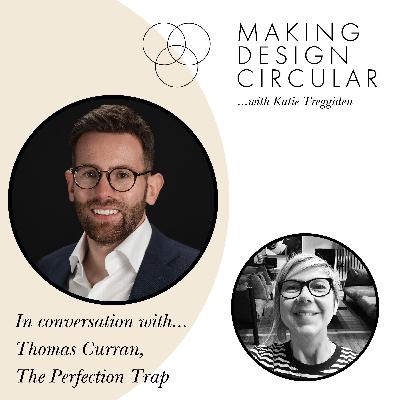
In this episode, Katie talks to Tom Curran, a World Leading Expert on Perfectionism. With an eye on politics, economics, and society, he takes a cultural lens to the study of perfectionism. His work is groundbreaking and has uncovered a frightening trend of young people breaking under the strain of perfectionistic pressures. Tom brings perfectionism to life and makes it relevant and understandable to the widest audiences. He is a TED speaker and Thought Leader, a regular contributor to high-profile podcasts and has been featured in the national and international mainstream media. With the objective to put perfectionism on the map as a public health concern, Curran draws on his unique sense of wit and self-depreciation when he travels the globe speaking on the topic. During this episode, Katie and Tom discuss:How he came into the field of social and personality psychology and what that actually isHis findings from the first systems-level cohort study showing that perfectionism is on the rise in American, Canadian, and British college studentsThe damaging impacts of perfectionismThe difference between perfectionism and the pursuit of excellenceHow to navigate perfectionismHow we can tap into failure as a strengthHow can craftspeople, makers, artists, and designers contribute to a culture of imperfect progressYou can connect with Tom hereLI: @thom_curranhttps://www.thomcurran.com/Here are some highlights:Seeking approval and validation“Perfectionists are really concerned about how other people appraise them, whether they're valued and approved and loved by other people. This is a huge part of perfectionistic psychology because deep down, they believe that they're flawed, they're imperfect, that they're deficient. And in order to feel a sense of self-worth, they go about the world trying to hide those deficiencies from other people and seeking their approval and validation all times. Well, that's okay, but what tends to happen is that perfectionistic people are so scared of rejection, so scared of criticism that they can move themselves away from people and away from situations where they feel like they might be judged. That can create some social disconnection which can lead into things like loneliness and there's a lot of data to suggest that perfectionistic people experience quite a lot of loneliness and social disconnection. That's the first reason why it has an impact on mental health” Pushing past human fallibilities“Perfectionism has quite an aggressive, aggravated vulnerability built into it, and perfectionist people push themselves to the max and then some, it's this idea of, well, what doesn't kill me makes me stronger, I've got to keep pushing through the pain, I've got to keep grinding, I've got to keep going, I've got to keep my head up and keep moving forward, and that that's an unsustainable way to live. You just don't let yourself rest. You just don't let yourself recuperate. You don't give yourself permission to accept that life sometimes defeats us and that's okay, that's a part of parcel of being human being. Perfectionism is really pushing past those very human fallibilities and vulnerabilities to try and project at all times a perfect persona. But of course, that's not, that's not possible and left untreated, left unchecked, that can be quite, quite different. Exposing ourselves to failure“You just got to get comfortable with it. You know, failure is such an intimately, human experience. Look, we're going to fail way, way more than we're going to succeed. That's the first thing to remember. We're fallible, we're exhaustible creatures. I think it's such an important way to go through life acknowledging that failures of this beautiful thing that we shouldn't be afraid of, it's very humanizing. The more we put ourselves out there and the more we can expose ourselves to failure, the more comfortable we get with it. Like taking a sledgehammer to perfectionism. Just putting yourself out there and feeling the fear of doing it anyway.” Books, Podcasts and articles we mentioned:The Perfection Trap by Thom CurranOur Dangerous Obsession with Perfectionism is Getting Worse, Ted Talk with Thom CurranNassim TalebThe Infinite Game by Simon SinekDoughnut Economics by Kate RaworthListen, Liberal by Thomas FrankChatabix with comedians Joe Wilkinson and David Earl Resources for Mental Health SupportWhatever you're going through, a Samaritan will face it with you. We're here 24 hours a day, 365 days a year. Visit https://www.samaritans.org/ or call 116 123 for free.Mind provides supportive and reliable information to empower you to understand your mental health and the choices available to you – take a look at https://www.mind.org.uk/ Broken: Mending and repair in a throwaway worldKatie’s sixth book celebrates 25 artists, curators, menders and re-makers who have rejected the allure of the fast, disposable and easy in favour of the patina of use, the stories of age and the longevity of care and repair. Accompanying these profiles, six in-depth essays explore the societal, cultural and environmental roles of mending in a throwaway world.Cultivating Hope, 3 part mini course: Are you ready to cultivate hope in the face of the climate crisis? Sign up to Katie’s three-part free mini course that will help you move through feelings of helplessness, reconnect with nature and take aligned action.Making Design Circular membership: An international membership community and online learning platform for environmentally conscious designers, makers artists and craftspeople – join us! Spread the Word:Please share Making Design Circular with Katie Treggiden with wild abandon — with your friends, family, and fellow designer-makers or wherever interesting conversations about creativity happen in your world! If you love what you’re listening to, show us some love by following Circular with Katie Treggiden in this app and leaving a review. All that good stuff tells the ‘algorithm Gods’ to show the podcast to more people, and that can only be a good thing, right?Sign up for our my e-newsletter ‘Weekly(ish) Musings for Curious, Imperfect and Stubbornly Optimistic Environmentalists’ - just click here.And find me on the Interwebs: @katietreggiden (Twitter, TikTok), & @katietreggiden3908 (YouTube) & @katietreggiden.1 (Instagram) – and if you’re a designer, maker, artist or craftsperson, join me on IG @making_design_circular_ About Katie:Katie Treggiden is the founder and director of Making Design Circular – an international membership community and online learning platform for environmentally conscious designers, makers artists and craftspeople. She is also an author, journalist and podcaster championing a hopeful approach to environmentalism. With more than 20 years' experience in the creative industries, she regularly contributes to publications such as The Guardian, The Observer, Crafts Magazine and Dezeen. She is currently exploring the question ‘Can craft save the world?’ through her sixth book, Broken: Mending & Repair in a Throwaway World (Ludion, 2023), this very podcast. This is a public episode. If you'd like to discuss this with other subscribers or get access to bonus episodes, visit brackishbykatietreggiden.substack.com/subscribe
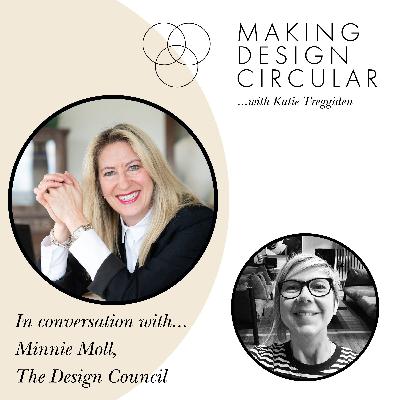
In this episode, Katie talks to Minnie Moll, Chief Executive at the Design Council. Minnie spent years in innovation, design, advertising and brand consultancy. She was Managing Partner of HHCL, the ‘Advertising Agency of the decade’ and then Global Marketing Director of Innovation company? What If!, which won Great Place to Work Institute’s ‘Best Place to Work in the UK’ two years running. Minnie was voted Vistage UK Business Leader of the Year in 2020. Always a purpose driven business leader, she has proved you can do well and do good. While Joint Chief Executive of the East of England Co-op, they won Alzheimer’s Society ‘Large Business of the Year’ in 2016. That year she was appointed by HRH Prince Charles as his Ambassador for Responsible Business in the East of England. She has passion for place making and has been a board member of two Business Improvement Districts and a Town Deals Board. Minnie has a First-Class Degree in Creative Arts. She is also a qualified Transformational Coach. When she’s not working, Minnie can be found animal wrangling and driving her 1952 little grey Fergie tractor. During this episode, Katie speaks to Minnie about how she came to join the Desing Council in 2021 and her involvement with their rebrand and new vision, mission and values which now fully align with ensuring environmental issues are at the heart of everything. We find out more about the 2023 Design for Planet Festival, now in its 3rd year. To find out more about the upcoming Design for Planet Festival, at which Katie with be in conversation with TOAST communications manages Madeleine Mitchell, head here: https://www.designcouncil.org.uk/our-events/design-for-planet-festival/ You can connect with Minnie and The Design Council here:The Design Council website: designcouncil.org.ukThe Design Council Twitter: https://twitter.com/designcouncilThe Design Council Instagram: https://www.instagram.com/designcouncil/The Design Council LinkedIn: https://www.linkedin.com/company/design-council/Minnie Moll Twitter: https://twitter.com/minniethemollMinnie Moll LinkedIn: https://www.linkedin.com/in/minnie-moll/ Here are some episode highlights:Why Design for Planet?“I think the biggest area that we've worked in (over the past 2 years) has been what I'd call, curating and convening. So a big, big focus on designers and commissioners of design. We knew that, following research, that of the 1.97 million people working in design in this country, a massive majority said, I really want to design for planet and I don't really know that I have all the right skills and tools to do so. So a lot of our focus in the last two years has been on galvanising and supporting designers. The key thing that we've done has been our Design for Planet festival, we did the first one in the in support of COP, that was held in Glasgow in 2021. And then we held the second one last year with Northumbria University. And that's been about bringing together thought leaders, really inspiring people working in design, some of them at the very cutting edge of thinking, some of them that are actually really making a difference in the organisations that they're in. So that sense of bringing in evidence, inspiration for designers, you know, we can do this.”Intelligent Collision“And I think there's also a sense of one of the one of the values of making design circular is collaboration over competition. And I think there's a sense isn't there, that the sort of apprentice style of doing business, it's all about winning because someone else is losing, whereas I think to solve this problem, we have to work together. We need scientists and techie people and strategists, but we also need designers and we need to plug design into those spaces that perhaps it hasn't always had a voice in…. And one of my favourite phrases is intelligent collision. So it’s almost, the more unlikely the partnership, probably the more dynamic it will be. And the sense of intelligent collision between architects, fashion designers, engineers, scientists, boy if there was ever a time for us to come together, and work in a collaborative way it's now.”Design can be regenerative“We are acutely aware that a regenerative world for all is a quite out there, far reaching vision, you know, that's not a five-year vision, that's it, I probably won't be here, kind of vision. But we feel so passionately that that is what we have to be shooting for. Because if you take the meaning of sustainability, sort of literally the sense of sustaining, we do not want to sustain floods, drought, catastrophic, biodiversity loss, you know, so you don't sustain that. And so this point that acknowledging that we have so depleted and so broken, some of the really important systems, we have to be looking for every opportunity where design can be regenerative” Books, podcasts and articles we mentioned:The Infinite Game by Simon SinekMaterial Matters Podcast by Grant GibsonThe Light We Carry by Michelle ObamaDolly Parton’s America PodcastTiny data centre used to heat public swimming poolBroken: Mending and repair in a throwaway worldKatie’s sixth book celebrates 25 artists, curators, menders and re-makers who have rejected the allure of the fast, disposable and easy in favour of the patina of use, the stories of age and the longevity of care and repair. Accompanying these profiles, six in-depth essays explore the societal, cultural and environmental roles of mending in a throwaway world. Cultivating Hope, 3 part mini course: Are you ready to cultivate hope in the face of the climate crisis? Sign up to Katie’s three-part free mini course that will help you move through feelings of helplessness, reconnect with nature and take aligned action.Making Design Circular membership: An international membership community and online learning platform for environmentally conscious designers, makers artists and craftspeople – join us! Spread the Word:Please share Making Design Circular with Katie Treggiden with wild abandon — with your friends, family, and fellow designer-makers or wherever interesting conversations about creativity happen in your world! If you love what you’re listening to, show us some love by following Circular with Katie Treggiden in this app and leaving a review. All that good stuff tells the ‘algorithm Gods’ to show the podcast to more people, and that can only be a good thing, right?Sign up for our my e-newsletter ‘Weekly(ish) Musings for Curious, Imperfect and Stubbornly Optimistic Environmentalists’ - just click here.And find me on the Interwebs: @katietreggiden (Twitter, TikTok), & @katietreggiden3908 (YouTube) & @katietreggiden.1 (Instagram) – and if you’re a designer, maker, artist or craftsperson, join me on IG @making_design_circular_ About Katie:Katie Treggiden is the founder and director of Making Design Circular – an international membership community and online learning platform for environmentally conscious designers, makers artists and craftspeople. She is also an author, journalist and podcaster championing a hopeful approach to environmentalism. With more than 20 years' experience in the creative industries, she regularly contributes to publications such as The Guardian, The Observer, Crafts Magazine and Dezeen. She is currently exploring the question ‘Can craft save the world?’ through her sixth book, Broken: Mending & Repair in a Throwaway World (Ludion, 2023), this very podcast. This is a public episode. If you'd like to discuss this with other subscribers or get access to bonus episodes, visit brackishbykatietreggiden.substack.com/subscribe
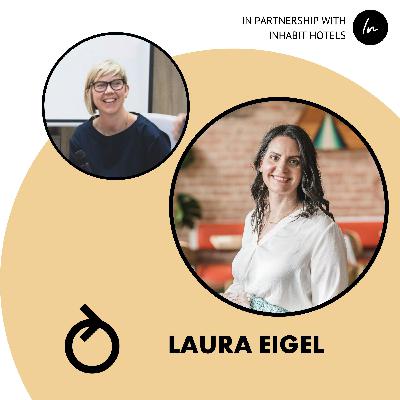
In this episode, Katie is joined by Laura Eigel PhD, the founder of The Catch Group, a leadership coaching firm accelerating women into the C-suite, and the host of the You Belong in the C-Suite podcast. Known for her direct feedback and her passion for living a life guided by her values, she has been an HR executive at Fortune 50 companies, joined the C-suite as a Chief Learning Officer, and now coaches high-achieving women to build fulfilling lives inside and outside of the boardroom. She's also a mom, wife, and true-crime podcast fan who loves indoor rowing.You can connect with Laura below:www.thecatchgroup.com (you will find her free Values worksheet in the footer of this site)LinkedIn: @lauraeigelInsta: @thecatchgroupKatie and Laura discuss,How being aligned to our values can make us be more successful in businessLaura’s six-part Values First frameworkHow to get clarity around what your values areWhy your values shouldn’t just sit on your pinboard!What a boundary is, how we set them, how we enforce them, and how they help to create businesses that are in alignment with your values when it comes to sustainability and environmentalismThe importance of uplifting others by modelling behaviours and getting the support of your communityThe red flags that might suggest the situation is not in alignment and what are some of the traps we can fall into that move us out of alignment and into conflictHow we can navigate conflict of valuesHow we can run values aligned creative practices for the long haul Here are some highlights:The six-part Values First framework“So it spells out values, and the V for Values is all about identifying your values, the A stands for Audit Time so just identifying like, what, how am I spending my time, is it aligned with my values or not? The L is for Life Boundaries and that's a really important, I think we should dig into a bit in our conversation today. And it's all about how you create, you know, systems and routines that align with your values in any way, and the U is for Uplifting Others and that's the idea of modelling it other for others, right to create those cultures. And E is for Experiencing Conflict, so it's not going to be, you know, if it's when we experience conflict, and I find that it's a lot of internal conflict, not just external conflict. And so how do you navigate through your values, and there's some ways to do that. And then S is for Sustaining Values and this idea that it's an ongoing journey, and you're never really done, it's always about what and how to dig in to what matters most to you now, and that next time in your life.” Boundaries are not about other people, they are about you! “When I ask people, “What do you think a boundary is?” generally people say, it's kind of a wall or restriction or a guideline or a hard line. I really like to think of it in a different way. And so if you think about your values, you have that in the centre. And then I think about like holding my values in my hand, and your boundaries are your hands. And it kind of creates care for your values. And that's really what I want you to do with boundaries, I want you to create care for yourself, for what's important. And so that can look like a lot of different things. That could look like who you work with, it could look like how you make decisions, it could be how you spend your time, right. And so as a business owner, it could be all of those things, it could be none of those things, it could be a mindset, it could be the story that you tell yourself.“ A decision doesn't have to be a lifetime one, it's okay to do things in a different way“I used to like to do this, but I don't like do it anymore. We don't have to, once we do something, once we make a decision, we do not have to say it and do it forever. And so that's another kind of knowing, sometimes it's your body, sometimes it's just like procrastination, sometimes it's something else. But I think we do a lot of things for lots of different causes that might mean giving time or money or both, or whatever it is. And a decision doesn't have to be a lifetime one. And it's okay to do things in a different way. And so I think one of the things that we can do is to think about, if we feel like I'm not super excited about this thing I used to be really excited about, like, why is that? And to kind of dig into that. I think that's a big thing for business too. Right? So just because you did it this way in the past, do you have to do it in the future?” Books & Podcasts we mentioned:Values First by Laura EigelThe Waymakers by Tara Jaye FrankCrime Junkie Spread the Word:Please share Circular with Katie Treggiden with wild abandon — with your friends, family, and fellow designer-makers or wherever interesting conversations about creativity happen in your world! If you love what you’re listening to, show me some love by following Circular with Katie Treggiden in this app and leaving a review. I’ll be honest, I don’t really understand how it works, but apparently, all that good stuff tells the ‘algorithm Gods’ to show the podcast to more people, and that can only be a good thing, right?And finally, sign up for our my e-newsletter ‘Weekly(ish) Musings for Curious, Imperfect and Stubbornly Optimistic Environmentalists’ landing gently in inboxes most Fridays - just click here. And find me on the Interwebs: @katietreggiden.1 (Instagram), @katietreggiden (Twitter, TikTok), & @katietreggiden3908 (YouTube). If you’re a designer-maker, DM me a ♻️ to be added to my close friends group especially for sustainable craftspeople and check out Making Design Circular at www.katietreggiden.com/membership About Katie:Katie Treggiden is a purpose-driven journalist, author, podcaster and keynote speaker championing a circular approach to design – because Planet Earth needs better stories. With 20 years' experience in the creative industries, she regularly contributes to publications such as The Guardian, Crafts Magazine, Design Milk and Monocle24. She is currently exploring the question ‘can craft save the world?’ through an emerging body of work that includes her fifth book, Wasted: When Trash Becomes Treasure (Ludion, 2020), and this podcast. About our partners:Inhabit hotels, located in the Bayswater area of London, offer restorative environmentally and socially conscious places to stay in the city. Wellness and well-being also play a major part in the brand's ethos Mindfully designed for the modern traveller, everything at this new hotel has been considered with a genuine commitment to environmental initiatives and meaningful community partnerships. To find out more please check out our Instagram @inhabit_hotels.Surfers Against Sewage is a grassroots environmental charity that campaigns to protect the ocean and everything that the ocean makes possible. They campaign against everything that threatens the ocean; plastic pollution, the climate emergency, industrial exploitation, and water quality, by taking action on the ground, that triggers change from the top. If like me, you'd like to support surfers against sewage, head over to https://www.sas.org.uk/ This is a public episode. If you'd like to discuss this with other subscribers or get access to bonus episodes, visit brackishbykatietreggiden.substack.com/subscribe
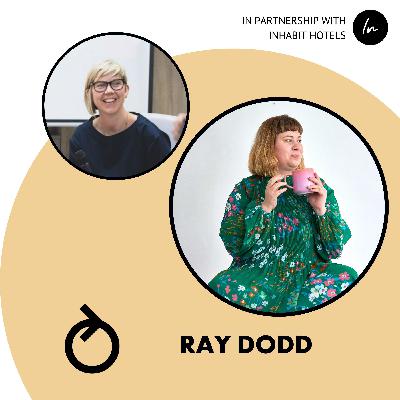
In this episode, Katie talks to Ray Dodd a Money Coach who helps those who have traditionally been excluded from making money, to make life-changing amounts of money. All without compromising who they are. If you’re hearing the term ‘money coach’ and wincing a little – imagining fluffy talk of manifesting millions in your sleep, – prepare to have your fears soothed – because you’re in for a treat. Ray is a money coach with a difference. You won’t hear ‘think good thoughts and watch the money come rolling in’ from her. Ray believes that money, business and intersectional feminism are inextricably linked and that there’s a lot more to making money than simply manifesting it.During this episode, Katie speaks to Ray about the ways in which your social conditioning is stopping you from having the impact you want to have, whether that's in your creative practice, in your business and money making or in your environmental work. You can connect with Ray below:IG: @ray_doddwww.raydodd.co.ukDownload Ray’s free Pricing with Feeling GuideListen to Ray’s podcast, Real You Real MoneyHere are some highlights:Eye Opening Experiences“All our lives as, particularly as people conditioned as women, we’re told that our bodies aren't good enough, right? That they need, fixing, improving, and all of that. And then as soon as I was pregnant, everyone's like, Oh, my God miracle of life, you just really need to trust your body. And I was like, hang on, you've told me my body is terrible, for the whole of my life, and now you're like glorifying it suddenly… it was just a really eye opening experience in terms of how I'd been conditioned to be and I'm sure we're going to talk a lot about conditioning today, versus what the actual experience in the world is.”Social Conditioning keeps us small“I 100% believe that we have been tricked into believing many things are not possible for us that absolutely are. And so we've been tricked by a culture and a society that conditions us to believe that there's only certain spaces that certain people are allowed to occupy… but I really think that we all have these spaces that are perfectly us sized in the world. And so for a lot of the designer makers listening, designing and making will be part of like, it's not just something they like, “oh that seems like a good idea, that's what I'll do”. There's something intrinsic in them that needs to create, needs to be in that cycle of putting work out and having people respond to it. There's something innate in them. And so what can happen, when we have these very narrow spaces to operate in, is we don't believe that the space that is intrinsically ours is even available to us.”The stigma around coaching“When you think about the general narrative around power, it's somebody at the top getting it all right, telling us all what to do. And actually having support is its own version of redistributing power. It is a version of saying, you know what, I don't have all the answers I do need help. You don't have to be lost to have coaching. But this conditioning that we've talked about runs so deep, and if we're not careful we recreate things like, we recreate systems that we actually are very, very much against because we're just not conscious of how it plays out in our lives.Books, Podcasts & Articles we mentioned:Tomorrow, tomorrow, tomorrow: The word of mouth sensation by Gabrielle ZevinThe Soul of Money: Transforming your relationship with money and lifeSerena Hicks is talking about money againDare to Lead with Brené BrownCultivating Hope, 3 part mini course: Are you ready to cultivate hope in the face of the climate crisis? Sign up to Katie’s three-part free mini course that will help you move through feelings of helplessness, reconnect with nature and take aligned action.Find out more about The Seed, Katie’s online course to help you Identify your unique contribution to environmentalism – either as a self-paced course or live digital course running in May 2023.Broken: Mending and repair in a throwaway world.This new book celebrates 25 artists, curators, designers and makers who have rejected the allure of the fast, disposable and easy in favour of the patina of use, the stories of age and the longevity of care and repair. Accompanying these profiles, six in-depth essays explore the societal, cultural and environmental roles of mending in a throwaway world.Spread the Word:Please share Circular with Katie Treggiden with wild abandon — with your friends, family, and fellow designer-makers or wherever interesting conversations about creativity happen in your world! If you love what you’re listening to, show me some love by following Circular with Katie Treggiden in this app and leaving a review. I’ll be honest, I don’t really understand how it works, but apparently, all that good stuff tells the ‘algorithm Gods’ to show the podcast to more people, and that can only be a good thing, right?And finally, sign up for our my e-newsletter ‘_Weekly(ish) Musings for Curious, Imperfect and Stubbornly Optimistic Environmentalist_s’ landing gently in inboxes most Fridays - just click here. And find me on the Interwebs: @katietreggiden (Twitter, TikTok), & @katietreggiden3908 (YouTube) & @katietreggiden.1 (Instagram) – if you’re a designer-maker, DM me a♻️ to be added to my close friends group especially for sustainable craftspeople and check out Making Design Circular at www.katietreggiden.com/membershipAbout Katie:Katie Treggiden is a purpose-driven journalist, author, podcaster and keynote speaker championing a circular approach to design – because Planet Earth needs better stories. With 20 years' experience in the creative industries, she regularly contributes to publications such as The Guardian, Crafts Magazine, Design Mil_k and _Monocle24. She is currently exploring the question ‘can craft save the world?’ through an emerging body of work that includes her fifth book, Wasted: When Trash Becomes Treasure (Ludion, 2020), and this podcast.About our partners:Inhabit hotels, located in the Bayswater area of London, offer restorative environmentally and socially conscious places to stay in the city. Wellness and well-being also play a major part in the brand's ethos Mindfully designed for the modern traveller, everything at this new hotel has been considered with a genuine commitment to environmental initiatives and meaningful community partnerships. To find out more please check out our Instagram @inhabit_hotels.Surfers Against Sewage is a grassroots environmental charity that campaigns to protect the ocean and everything that the ocean makes possible. They campaign against everything that threatens the ocean; plastic pollution, the climate emergency, industrial exploitation, and water quality, by taking action on the ground, that triggers change from the top. If like me, you'd like to support surfers against sewage, head over to https://www.sas.org.uk/ This is a public episode. If you'd like to discuss this with other subscribers or get access to bonus episodes, visit brackishbykatietreggiden.substack.com/subscribe
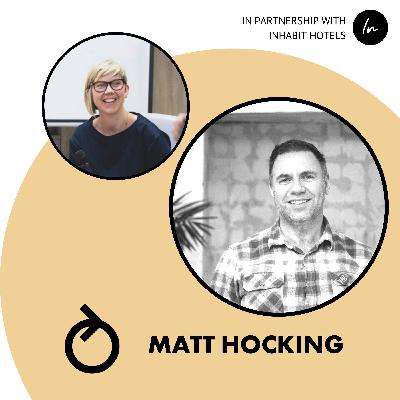
[Trigger Warning: Matt mentions female genital mutilation (FMG) in this episode, so listener discretion is advised.] In this episode, Katie talks with Matt Hocking from Leap.eco, an award-winning design studio who has proven it’s possible to create inspiring work which delivers positive outcomes for people, planet and profit.He has been passionate about working sustainably since long before it was cool. Every project he’s delivered doesn’t just meet a client’s business goals, it helps make the planet a better place – either directly or by changing the way a business thinks and works.And he’s not kept that knowledge a secret, priding himself on sharing what he’s learnt with the industry – helping define and develop a model for sustainable design and working with creatives across the world to ensure design remains at the forefront of change.He is committed to building a better future: one that is progressive, collaborative and thoughtful.We discuss:Matt’s development of the Giving Budget, a model where, when you feel called to be generous, and to give something away, you can put certain boundaries around that to make sure that it's a good thing.Why it’s important for Matt to not just run a design agencyThe fascinating role creatives can play in asking the difficult questionsHow creativity is one of the three pillars of the change we need in in the world for a better outcomeThe clients he has supported with the Giving Budget and the surprises along the way Here are some highlights:Designing for Change“…using my design skills to sort of make a living making a difference, kind of working with social and environmental issues, challenging projects to amplify what they're saying and what they're changing, the world they're trying to sort of manifest.” Reframing the transaction of Kindness“.. we all do free stuff, there's always somebody asking a creative can you do this or friend that saying, help me do this. You know, and a lot of people don't actually value how long that creativity takes or how much industry knowledge and training, I wouldn't want my creativity and a fee to be a barrier to get something great done that would support society to the planet…how do I reframe that while still giving back to say thank you for the creative journey that I'm on, so became our giving budget.” Be Valued“Look at what's sustainable for you, everything comes from you and if you break you, then the rest of the change you want to make in the world won't happen. Do you, look after yourself first, be valued, and be really thorough. A lot of people are takers and leeches in business, just really be careful about how this happens, this transaction, this agreement between you both, and do it in a way that works for you.” Books, Podcasts & Ted Talks we mentioned:The Path of the DoerThe Four AgreementsOutrage & OptimismJohn Richardson & The FuturenautsHow to Start a Movement or ‘the lone dancer’Other interesting things we talked about:Leap’s Impact Report: Love LanguagesYou can find out more about Leap here, and connect with Matt on LinkedIn Spread the Word:Please share Circular with Katie Treggiden with wild abandon — with your friends, family, and fellow designer-makers or wherever interesting conversations about creativity happen in your world! If you love what you’re listening to, show me some love by following Circular with Katie Treggiden in this app and leaving a review. I’ll be honest, I don’t really understand how it works, but apparently, all that good stuff tells the ‘algorithm Gods’ to show the podcast to more people, and that can only be a good thing, right?And finally, sign up for our my e-newsletter ‘Weekly(ish) Musings for Curious, Imperfect and Stubbornly Optimistic Environmentalists’ landing gently in inboxes most Fridays - just click here. And find me on the Interwebs: @katietreggiden.1 (Instagram), @katietreggiden (Twitter, TikTok), @katietreggiden3908 (YouTube). If you’re a designer-maker, DM me a ♻️ to be added to my close friends group especially for sustainable craftspeople and check out Making Design Circular at www.katietreggiden.com/membership About Katie:Katie Treggiden is a purpose-driven journalist, author, podcaster and keynote speaker championing a circular approach to design – because Planet Earth needs better stories. With 20 years' experience in the creative industries, she regularly contributes to publications such as The Guardian, Crafts Magazine, Design Milk and Monocle24. She is currently exploring the question ‘can craft save the world?’ through an emerging body of work that includes her fifth book, Wasted: When Trash Becomes Treasure (Ludion, 2020), and this podcast. About our partners:Inhabit hotels, located in the Bayswater area of London, offer restorative environmentally and socially conscious places to stay in the city. Wellness and well-being also play a major part in the brand's ethos Mindfully designed for the modern traveller, everything at this new hotel has been considered with a genuine commitment to environmental initiatives and meaningful community partnerships. To find out more please check out our Instagram @inhabit_hotels.Surfers Against Sewage is a grassroots environmental charity that campaigns to protect the ocean and everything that the ocean makes possible. They campaign against everything that threatens the ocean; plastic pollution, the climate emergency, industrial exploitation, and water quality, by taking action on the ground, that triggers change from the top. If like me, you'd like to support surfers against sewage, head over to https://www.sas.org.uk/ This is a public episode. If you'd like to discuss this with other subscribers or get access to bonus episodes, visit brackishbykatietreggiden.substack.com/subscribe

In this episode, Katie talks with Sarah Fox a coach and mentor helping organisations and individuals who are motivated to do good and do well, being drivers of positive social change. Sarah’s mission is to help people who care about the world to live a life of fulfilment, a life that is truly well lived, meaningful, purposeful and creative.We discuss:Sarah’s strive to always do good and her journey with ‘kindness’What is means to be good, not just to the natural world but to ourselves.Sarah’s values of kindness, compassion, cooperation, collaboration and courage (added during the podcast!)…and how these relate to our self-worth.Why this group of people, who are working so hard to look after everybody else and bring about positive change in the world, find it so difficult to take care of themselves.Do we need to learn to look after ourselves in order to look after the planet, are those things connected?The importance of connecting with nature, observing nature in the human world and reminding ourselves of the bigger picture. Here are some highlights:What does it mean to be good?“Essentially for me, the doing good bit is what it's about it's about leaving the world or trying to leave the world in a better place than you found it. Really stepping into what we can do that somehow contributes positively and whilst doing that, really thinking about how we do well based in terms of quality. But also in terms of our own well-being. When I talk about wellbeing, I'm talking about physical well-being emotional well-being and financial well-being. So how can we bring those things together so that we are making an impact of some kind and we're doing that in a way that is conscious and we have a self-awareness about that. But also, how can we do it so that we're not breaking in the process.” I have value in the world!“It’s as much about being kind to ourselves, as it is to everybody else. And if we can hold up a mirror, if we can talk to ourselves in the way that we talk to other people, if we can take action, and be kind to ourselves in the way that we are with other people, then I think the world would be a much better place, because it's coming from people feeling like they are enough already, without having to do all the things.” “if you already feel safe and enough, then you can really focus on delivering benefit in a way that most benefits the people you're trying to serve.” How can we step into our wise Jedi self?“I think if we're going to have these regenerative, restorative businesses, there needs to be a complete self-awareness as much as possible. We need to be in our autonomy, not standing in the narrative pattern that we have been in in the past. And how do we kind of step into, I call it the wise Jedi self, rather than that kind of inner critic? How do we step into that? So that we can create these businesses that are making a difference, that is having the impact that we want to have and that we don't get distracted?” Books & Podcasts we mentioned:Consumed by Aja BarberBetween the Stops by Sandi ToksvigThe Choice by Edith EgerHow to Own the Room by Viv Groskop | How To Own The Room on Apple PodcastsHow to be Hopeful by Bernadette Russell You can find out more about Sarah here, connect on LinkedIn and listen to her podcast on Spotify or Apple With reference to our conversation on what is “good” and who gets to decide – here is Alexandra Daisy Ginsberg’s PhD “better”: https://www.daisyginsberg.com/work/better Spread the Word:Please share Circular with Katie Treggiden with wild abandon — with your friends, family, and fellow designer-makers or wherever interesting conversations about creativity happen in your world! If you love what you’re listening to, show me some love by following Circular with Katie Treggiden in this app and leaving a review. I’ll be honest, I don’t really understand how it works, but apparently, all that good stuff tells the ‘algorithm Gods’ to show the podcast to more people, and that can only be a good thing, right?And finally, sign up for our my e-newsletter ‘Weekly(ish) Musings for Curious, Imperfect and Stubbornly Optimistic Environmentalists’ landing gently in inboxes most Fridays - just click here. And find me on the Interwebs: @katietreggiden.1 (Instagram), @katietreggiden (Twitter, TikTok), @katietreggiden3908 (YouTube). If you’re a designer-maker, DM me a ♻️ to be added to my close friends group especially for sustainable craftspeople and check out Making Design Circular at www.katietreggiden.com/membership About Katie:Katie Treggiden is a purpose-driven journalist, author, podcaster and keynote speaker championing a circular approach to design – because Planet Earth needs better stories. With 20 years' experience in the creative industries, she regularly contributes to publications such as The Guardian, Crafts Magazine, Design Milk and Monocle24. She is currently exploring the question ‘can craft save the world?’ through an emerging body of work that includes her fifth book, Wasted: When Trash Becomes Treasure (Ludion, 2020), and this podcast. About our partners:Inhabit hotels, located in the Bayswater area of London, offer restorative environmentally and socially conscious places to stay in the city. Wellness and well-being also play a major part in the brand's ethos Mindfully designed for the modern traveller, everything at this new hotel has been considered with a genuine commitment to environmental initiatives and meaningful community partnerships. To find out more please check out our Instagram @inhabit_hotels.Surfers Against Sewage is a grassroots environmental charity that campaigns to protect the ocean and everything that the ocean makes possible. They campaign against everything that threatens the ocean; plastic pollution, the climate emergency, industrial exploitation, and water quality, by taking action on the ground, that triggers change from the top. If like me, you'd like to support surfers against sewage, head over to https://www.sas.org.uk/ This is a public episode. If you'd like to discuss this with other subscribers or get access to bonus episodes, visit brackishbykatietreggiden.substack.com/subscribe
This week Katie is doing something a little different.As you may have heard her mentioned in the previous episode, her latest book, Broken: Mending and repair in a throwaway world came out in April of this year, and she will be reading you the wonderfully. Thought-provoking introduction to give you a flavour of the book. Here are some highlights:Making a statement“Although any form of mending or repair could be seen as a form of activism in today's single use culture, many of today's artists, menders and remakers are choosing to make a statement with their work. A broken object delivers frustration because it doesn't achieve its functionality says Paulo Goldstein, on page 122. But the same principle applies to a broken system that people profiled in repair as activism are deliberately using repair to point a finger at what is broken.”Broken World Thinking“If we want new and better stories, and world orders, ones that are better for all of us, not just a tiny minority, we can't look away any longer. We need to hold the stare with what is broken, with what can be repaired or remade, and what needs to be cleaned up and let go. The act of noticing, of paying attention and asking questions enables us to hold space for two radically different realities. Realities that Jackson describes as a fractal world, a centrifugal world an almost always falling apart world on the one hand, and a world in a constant process of fixing and reinvention, reconfiguring and reassembling into new combinations and new possibilities on the other. He describes our broken world as a world of pain and possibility, creativity and destruction, innovation and the worst excesses of leftover habits and power, and suggests that the fulcrum of those two worlds is repair. The subtle acts of care by which order and meaning and complex socio technical systems are maintained and transformed. Human value is preserved and extended, and the complicated work of fitting to the varied circumstances of organisations, systems and lives is accomplished.” Broken: Mending and repair in a throwaway worldKatie’s sixth book celebrates 25 artists, curators, menders and re-makers who have rejected the allure of the fast, disposable and easy in favour of the patina of use, the stories of age and the longevity of care and repair. Accompanying these profiles, six in-depth essays explore the societal, cultural and environmental roles of mending in a throwaway world. Cultivating Hope, 3 part mini course: Are you ready to cultivate hope in the face of the climate crisis? Sign up to Katie’s three-part free mini course that will help you move through feelings of helplessness, reconnect with nature and take aligned action. Making Design Circular membership: An international membership community and online learning platform for environmentally conscious designers, makers artists and craftspeople – join us! Spread the Word:Please share Making Design Circular with Katie Treggiden with wild abandon — with your friends, family, and fellow designer-makers or wherever interesting conversations about creativity happen in your world! If you love what you’re listening to, show us some love by following Circular with Katie Treggiden in this app and leaving a review. All that good stuff tells the ‘algorithm Gods’ to show the podcast to more people, and that can only be a good thing, right?Sign up for our my e-newsletter ‘Weekly(ish) Musings for Curious, Imperfect and Stubbornly Optimistic Environmentalists’ - just click here.And find me on the Interwebs: @katietreggiden (Twitter, TikTok), & @katietreggiden3908 (YouTube) & @katietreggiden.1 (Instagram) – and if you’re a designer, maker, artist or craftsperson, join me on IG @making_design_circular_ About Katie:Katie Treggiden is the founder and director of Making Design Circular – an international membership community and online learning platform for environmentally conscious designers, makers artists and craftspeople. She is also an author, journalist and podcaster championing a hopeful approach to environmentalism. With more than 20 years' experience in the creative industries, she regularly contributes to publications such as The Guardian, The Observer, Crafts Magazine and Dezeen. She is currently exploring the question ‘Can craft save the world?’ through her sixth book, Broken: Mending & Repair in a Throwaway World (Ludion, 2023), this very podcast. This is a public episode. If you'd like to discuss this with other subscribers or get access to bonus episodes, visit brackishbykatietreggiden.substack.com/subscribe
Do we always need to mend? How can mending help to nudge us towards significant behaviour shifts? What are the materials innovations that might help? Are there self-healing materials – or even self-destructing materials?In this bonus episode, I’m leading a panel discussion with TOAST, including amazing insights from Seetal Solanki, Tom van Deijnen, Celia Pym and Bonnie Kemske. We discuss:- The art of kintsugi and what it means within Japanese culture.- The fine line between repairing invented holes and using repair techniques as embellishment.- The stories and conversations held within the damage and the process of repairing.- How a lot of the world’s fashion waste comes from fast fashion and why this is so problematic.- Who gets to decide when something is ‘broken’ and what that means. … and more!Here are some highlights. How stories come through during the act of mending something“What I discovered very quickly was that if you ask someone, ‘do you have a hole in your clothing?’ you very swiftly discover an awful lot about a person that you weren't expecting to learn. You learn who their relative is, how the thing got damaged, you learn about maybe someone who's important to them who's died. And I thought, I'm onto something here, 'cause I'm fundamentally quite a nosy person. I'm always, if I'm on a bus, the person who wants to talk to my neighbor. I was very excited and moved to discover that clothing and this invitation to repair clothing would invite all this conversation.” - Celia PymWhy the cycle of fast fashion is so problematic “There are so many reasons, and I think a lot of it really comes down to the fact that we don't really care or respect these textiles, the clothing that they become and how they actually adorn our bodies. Because we haven't really formed a relationship to those pieces of clothing in a way where we build a relationship towards care and respect. We actually don't know where they have been derived from because the supply chain of a lot of the textiles being made for clothing is really convoluted and complicated, and deceitful. So it's really quite challenging to understand where things are being made, how they are being made, and where they end up even. We're so disconnected and so far removed from what things are made of, simply.” - Seetal SolankiThings aren’t meant to last forever “Not all materials will have a long life span, and I think that really stems down to the fact that there are materials that are meant to naturally bio degrade. And that's actually okay. And we need to be more accepting of the fact that things die. Everything has a birth, a life, a death and a re-birth, and that exists within the material world, human world, animal world, and plant world. We are so fixated on the fact that everything has to be long living, and I think there's a sense of renewal that needs to be understood a bit more, and that really comes down to the natural cycles of materials as well, that we need to kind of address rather than forcing our material to do something that maybe it's not meant to be doing.” - Seetal SolankiConnect with the panelists: Celia PymBonnie KemskeTom van DeijnenSeetal SolankiThe books we mentioned:Why Material Matter – Seetal SolankiKintsugi: The Poetic Mend – Bonnie KemskeWasted: When Trash become Treasure – Katie TreggidenHomemade Europe – Vladimir Arkhipov (sorry we could only find the follow-up to Homemade, the book Celia mentioned, and only on Amazon!) About Katie TreggidenKatie Treggiden is a purpose-driven journalist, author, podcaster and keynote speaker championing a circular approach to design – because Planet Earth needs better stories. With 20 years' experience in the creative industries, she regularly contributes to publications such as The Guardian, Crafts Magazine, Design Milk and Monocle24. Following research during her recent Masters at the University of Oxford, she is currently exploring the question ‘can craft save the world?’ through an emerging body of work that includes her fifth book, Wasted: When Trash Becomes Treasure (Ludion, 2020), and this podcast. You can find Katie on Instagram @katietreggiden.1, sign up for her e-newsletter here and if you’re a designer-maker interested in becoming more sustainable, sign up for her free Facebook Group here. If you’d like to support more fantastic content like this, you can buy Katie a ‘virtual coffee’ here in exchange for behind the scenes content and a shout-out in Season Three. This is a public episode. If you'd like to discuss this with other subscribers or get access to bonus episodes, visit brackishbykatietreggiden.substack.com/subscribe

Is there a trade-off between affordability and disposability? Can we go back to a mindset of mending and repair, without pricing ourselves out? How do we overcome the objections of time, money and skillset to get more people involved in this movement? On today’s episode, I’m talking to Tom van Deijnen – a self-taught textiles practitioner, founder of The Visible Mending Programme, and a volunteer at the Brighton Repair Café. He says that he likes ‘doing things that take forever’ because that slow pace gives him a deeper understanding of material qualities and traditional techniques.We discuss:- Why visibility in mending is important.- How wearing mended clothes still has associations with poverty for some people. - His time with Brighton Repair Café and its values and purpose. - Why mindset shifts are important as we try to move towards a more circular economy.… and more!Here are some highlights. What interests him in the visibility of the mend“Originally, I was of the very traditional mindset of, ‘Oh, if I repair something, it needs to be invisible, nobody should be allowed to see it.’ It turns out that it is really, really difficult to repair something invisibly! It's just very, very difficult to do that. So I was thinking, if you can kind of see it anyway, then just turn it into a feature and let's not try and hide the fact that it’s mended. I started changing my mind a bit about that, and then I started to enjoy adding something visible and highlighting the fact that my items have been worn. I love the patina of use anyway. I buy shoes that I really like, but I only find them really beautiful once I've worn them in and you get all the nice creases in the leather, that's when I find my shoes most beautiful or my bag or what have you. I enjoy seeing the patina of use and lots of people, for instance, with denim, they wanna see that used look. In fact, you can buy jeans pre-distressed. Obviously, there's a big interest in that. And for me, it's also a way of showing that I care about this item, highlighting the history of it. It's sometimes a conversation starter. I'm not gonna shout “you must mend,” but if somebody asks me, “Oh, I see you've got this patch on there, what's that all about?’ Then I'll explain that I like to look after my clothes and make them last for longer, and this is why I do it. Look, we've had a conversation about it now, maybe if you fancy it, give it a go yourself.”The popularity of the visible mending movement on social media “It's great to see. I really like seeing other people's repairs, and I really like the social aspect of social media. The Internet has really allowed people to come together from all over the world, and that's something that I really enjoy. I've met quite a few people through that. People I would never have met otherwise, and yeah, so you start sharing ideas and hear about how people in their own country or their own family look at these things and what they might do and not do, or how they view repairs. Yeah, I find it really interesting and it's very nice to see that so many people have embraced it.”The importance of understanding how things are made “I think it's important to realize when I say we should go back to an older mindset, I'm not saying we necessarily need to raise prices, it's more about the way that people would treat these items that I think we should go back to. And the other thing that people often confuse is price versus ethical production. You might spend a lot of money on designer clothes, but that doesn't mean that they have been produced more ethically than a t-shirt from H&M or Next, they can be made even in the same factory, there will just be given higher quality materials to sew with, and they are allowed to spend more time putting it together or use different techniques that are a bit more expensive to use. I think for me, that means even if you did only spend five pounds on a t-shirt because that's what you can afford, try to look at it as if you have spent two weeks worth of wages or a month of wages on it, so you look after it. And I think it is really difficult for people to understand. All clothes are made by hand. They are made by people.” Amy Twigger Holyroyd's book Folk Fashion in which she talks about open and closed objects/systems/structures: https://amytwiggerholroyd.com/Folk-FashionIPCC Sixth Assessment Report: https://www.ipcc.ch/report/ar6/wg1/Connect with Tom van Deijnen here.Follow Tom on Instagram here.About Katie TreggidenKatie Treggiden is a purpose-driven journalist, author, podcaster and keynote speaker championing a circular approach to design – because Planet Earth needs better stories. With 20 years' experience in the creative industries, she regularly contributes to publications such as The Guardian, Crafts Magazine, Design Milk and Monocle24. Following research during her recent Masters at the University of Oxford, she is currently exploring the question ‘can craft save the world?’ through an emerging body of work that includes her fifth book, Wasted: When Trash Becomes Treasure (Ludion, 2020), and this podcast. You can find Katie on Instagram @katietreggiden.1, sign up for her e-newsletter here and if you’re a designer-maker interested in becoming more sustainable, sign up for her free Facebook Group here . If you’d like to support more fantastic content like this, you can buy Katie a ‘virtual coffee’ here in exchange for behind the scenes content and a shout-out in Season Three. This is a public episode. If you'd like to discuss this with other subscribers or get access to bonus episodes, visit brackishbykatietreggiden.substack.com/subscribe
How does conservation differ from repair? How is it similar? How have the tenets and ideas of best practice with conservation changed over time?On today’s episode, I’m talking to Lauren Chang, a textile specialist, who spins, dyes, weaves, and writes about textiles on her website interstitial-spaces.com. She holds a B.A. in Art and Archaeology from Princeton University and an MA in Textile Conservation from the Textile Conservation Centre in the United Kingdom. Lauren worked as a textile conservator at the National Museum of the American Indian, Smithsonian Institution, the Los Angeles County Museum of Art, the British Museum, and the Art Institute of Chicago.We discuss:- How attitudes to repair differ between Chinese and American cultures.- How the tenets and ideas of best practice with conservation have changed over time.- The power dynamics at play in conservation between the people orchestrating the conservation and the people deciding what gets conserved and what doesn’t.- How we can start to repair some of those power imbalances within museums and within conservation.- The importance of ‘sitting in the discomfort of not knowing’, of holding two conflicting ideas at the same time, of nuance.… and more!Here are some highlights. The difference between textile conservation and domestic repair “Conservation is quite a rigorous and practical and theoretical discipline. So practically speaking, there are specifics like when you're stitching, you always move your needle or you place your pins through the interstices of the textile., so the spaces between the warps and wefts never split a thread. There’s also really stringent parameters around the material you select, so they don't cause damage just by sitting next to or how they age and degrade. There are also philosophical differences. You don't often choose what you repair. So for example, perhaps you work in a museum, it's usually exhibition driven. So you might be consulted for the choice of them looking at the condition, but the selection is really made by curatorial staff.”How opinions towards mending and repair have changed “There's a point in conservation where you learn everything. You learn different techniques, but you realize that no action is neutral, right? So you do one thing and that causes all these other problems, then you do another thing, and it causes another problem. But you still have to move ahead. Maybe you’re repairing to be thrifty or to be respectful of the environment, and I'm learning that my actions have all these different repercussions, but it doesn't mean we just stop. I feel like that's where the conversation is going, and I think it's really important because if you sit in the complexity of the discomfort, I think you understand the frameworks that lead us to this point.”Preserving the soul and culture of an item (in this case, dance regalia from Northern California)“It was really tense. But I remember Loren saying, ‘Oh, these pieces haven't been sung to or danced to in a really long time, and that's why they're in such bad shape. So he sang to them. He started telling me about the history and how they were made and how they were used and how that relates to the contemporary traditions in the community. And he moved the pieces as if they would be danced. And towards the end they dressed me in his aunt's regalia, which was such an honor, but also so incredibly moving. And I think these were all acts of preservation and care. And the power had really shifted because I only learned as much as they were willing to share. And they also brought up a lot of ideas about conservation for me because it was clear that I could learn to care for the materials, the physical aspects of the dance regalia, but it was also clear that I could not care for them in a way that actually preserved them. So it raised the question of what is my role as the conservator? What is best care or best practice? What are we conserving? And how do I fulfill my role in providing the best care?”Connect with Lauren Chang here. Follow Lauren on Instagram here. About Katie TreggidenKatie Treggiden is a purpose-driven journalist, author, podcaster and keynote speaker championing a circular approach to design – because Planet Earth needs better stories. With 20 years' experience in the creative industries, she regularly contributes to publications such as The Guardian, Crafts Magazine, Design Milk and Monocle24. Following research during her recent Masters at the University of Oxford, she is currently exploring the question ‘can craft save the world?’ through an emerging body of work that includes her fifth book, Wasted: When Trash Becomes Treasure (Ludion, 2020), and this podcast. You can find Katie on Instagram @katietreggiden.1, sign up for her e-newsletter here and if you’re a designer-maker interested in becoming more sustainable, sign up for her free Facebook Group here. If you’d like to support more fantastic content like this, you can buy Katie a ‘virtual coffee’ here in exchange for behind the scenes content and a shout-out in Season Three. This is a public episode. If you'd like to discuss this with other subscribers or get access to bonus episodes, visit brackishbykatietreggiden.substack.com/subscribe
Can mending and repair be used as self care? How can the traditions we’ve studied impact our current actions towards sustainability? Are we too disconnected from our past? What drives the culture of mending? On today’s episode, I’m talking to Ekta Kaul, an award-winning London based artist. Her artistic practice is focused on creating narrative maps that explore places, history and belonging through stitch. A pared back aesthetic coupled with a considered use of graphic marks and lines form the core elements of her work. These are underpinned by a thoughtful approach to making with meaning, a deep interest in heritage and a firm commitment to sustainability. We discuss:- What role mending and repair can play in mental health and self-care.- Her time both at the National Institute of Design in India and her MA in Edinburgh.- Portrait of Place and why maps interest her so much. - Her forthcoming book about kantha coming out in Spring/Summer 2023.- How she learned from her mother and grandmother, and how traditional skills can be modernized. … and more!Here are some highlights. Mending as an act of emotional repair“I feel that it is also an act of emotional repair. Sewing is so much related to catharsis and this idea of emotional repair for me, particularly within my own practice, this is something that I have come to realize, and I'm kind of reflecting more and more on this. When I am working with stitch, I am instantly connected to my mother, and I'm instantly connected to my grandmother and although they are not here in this world, it just feels that I'm sort of honoring their presence of what they handed down to me.”Stitching makes meditation accessible“It is about finding joy in creativity. It is about finding that space, a meditative space where all your worries begin to melt away and you're just focused on the journey that your needle is taking on the cloth. And really, I feel stitching makes meditation so accessible. This idea that sitting down for 20 minutes and listening to an app or focusing on our breathing, I know I do it and I find it so hard as do many people. But I feel that the cloth, the intimacy of the cloth there is something about that, and just this act of holding a needle and making a very simple line can help us access that state so very easily. And also it has a tremendous impact on our sense of well being.”Teaching our children traditional skills “I also feel that there is the need to be teaching our children and young people how to mend things, and I imagine that the national curriculum should have a module on that and how they can fix the things that they use every day. And also, I feel that there’s much to be learned from the wisdom of ancient cultures, which at the moment, we have somehow, almost like an amnesia, has happened since the industrial revolution that everything done before that was somehow not right. Or could be improved upon. I'm not against progress, but what I'm saying is that we can re-imagine tradition in contemporary ways. We can apply that wisdom to today's problems.”Connect with Ekta Kaul here. Follow Ekta on Instagram here. About Katie TreggidenKatie Treggiden is a purpose-driven journalist, author, podcaster and keynote speaker championing a circular approach to design – because Planet Earth needs better stories. With 20 years' experience in the creative industries, she regularly contributes to publications such as The Guardian, Crafts Magazine, Design Milk and Monocle24. Following research during her recent Masters at the University of Oxford, she is currently exploring the question ‘can craft save the world?’ through an emerging body of work that includes her fifth book, Wasted: When Trash Becomes Treasure (Ludion, 2020), and this podcast. You can find Katie on Instagram @katietreggiden.1, sign up for her e-newsletter here and if you’re a designer-maker interested in becoming more sustainable, sign up for her free Facebook Group here. If you’d like to support more fantastic content like this, you can buy Katie a ‘virtual coffee’ here in exchange for behind the scenes content and a shout-out in Season Three. This is a public episode. If you'd like to discuss this with other subscribers or get access to bonus episodes, visit brackishbykatietreggiden.substack.com/subscribe
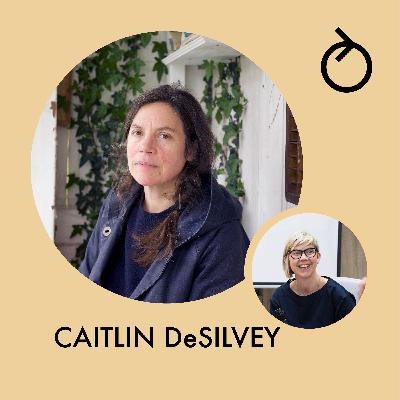
Do we only repair the things that we cherish? Is there a place for visible mending in our built environment as well as our clothes? Can a repair add value to the object that is mended? And do we always need to intervene with repair – or is 'curated decay' sometimes a better option? On today’s episode, I’m talking to Caitlin DeSilvey, a geographer whose research explores the cultural significance of material change and transformation, with a particular focus on heritage contexts. She has worked with artists, archaeologists, environmental scientists and heritage practitioners on a range of interdisciplinary projects, and is one of the most inspiring academics I have ever come across. She has worked with artists, archaeologists, environmental scientists and heritage practitioners on a range of interdisciplinary projects, supported by funding from UK research councils, the Royal Geographical Society, the Norwegian Research Council and the European Social Fund.We discuss:- The overlaps between cultural geography and history of design.- Her book, Visible mending: Everyday repairs in the South West. - Using visible mending in stonemasonry in heritage sites.- Why she uses visual imagery and storytelling as well as participatory activities to engage people in imagining changing environments and places.- Why damage and decay captures her imagination.… and more!Here are some highlights. How value can be created by repair:“One of the things that we became really interested in the project was how the objects that people were bringing to be repaired and then the stories that the repairers told us about these objects, were as much about people's identities as they were about the objects themselves. There were stories about the woman who would bring her all blown out slippers and say ‘Oh, I need you to put the new souls on these,’ and the repairers would say 'But it’s not economical. And the response would be, ‘No, no, but you really need to do this because they're the only slippers that are comfortable’ or ‘You need to fix my porridge pot because I've been making porridge in it for the last 50 years.’ There was always a little bit of a narrative attached to it. And that sense of value and what we value, and that being often uncoupled from economic valuation became really central to the project. We also became quite interested in how value is created by repair, so by attending to something, and extending care, we actually produce value. So it's not just about a thing that we value and therefore we get it repaired, there is actually this much more dynamic relationship with the things that we repair.”Our impulse as human beings to fix things:“I've been really interested in the value in actually not repairing. What happens when we have a structure that is probably already on that path, something that is falling apart, ruining, however we wanna describe that process, and instead of pulling it back from the brink and making intact again, we just let that process play out? And the stories that become available when you allow that to happen are interesting and worth telling. But it's an approach that only applies to specific contexts and that way of thinking around that. You can find heritage value in something that's falling apart as well as something that's held together. It really came out of that work at the Homestead – it was the decay and the dereliction and the interplay, the way in which animals had occupied the buildings and the way in which there was this real blurriness around nature and culture that actually was so rich about that site. But to be honest, my interest in damage and breakdown and decay is partly about the moments when we can allow that to play out and learn from it, but also partly about the moments when we just can't resist intervening and why? So it's not necessarily about always stepping back, it's also about trying to understand our impulse as human beings to fix things.”The importance of storytelling “One of the things I'm preoccupied now with is the fact that we really need better stories to move us into this future that we're facing. And we need ways of knowing the world and watching it change that are not all about loss and despair; where there's some hope, which can be difficult at times. So for me, I think it’s just trying what works.”About Katie TreggidenKatie Treggiden is a purpose-driven journalist, author, podcaster and keynote speaker championing a circular approach to design – because Planet Earth needs better stories. With 20 years' experience in the creative industries, she regularly contributes to publications such as The Guardian, Crafts Magazine, Design Milk and Monocle24. Following research during her recent Masters at the University of Oxford, she is currently exploring the question ‘can craft save the world?’ through an emerging body of work that includes her fifth book, Wasted: When Trash Becomes Treasure (Ludion, 2020), and this podcast. You can find Katie on Instagram @katietreggiden.1, sign up for her e-newsletter here and if you’re a designer-maker interested in becoming more sustainable, sign up for her free Facebook Group here. If you’d like to support more fantastic content like this, you can buy Katie a ‘virtual coffee’ here in exchange for behind-the-scenes content and a shout-out in Season Three. Waste: A masterclass is a 12-week programme conceived to inspire, educate and empower designer-makers to create circular products from waste. Click here to find out more or visit katietreggiden.com/masterclass. This is a public episode. If you'd like to discuss this with other subscribers or get access to bonus episodes, visit brackishbykatietreggiden.substack.com/subscribe
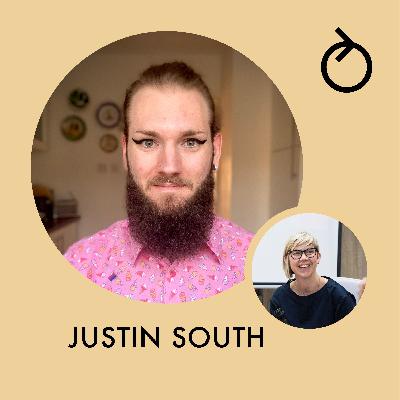
Is repair and restoration limited to the things we own? Can it be applied to other facets of our life? How is repair correlated to poverty, and can that change for the betterment of our planet? How is community related to all of this?On today’s episode, I’m talking to Justin South, a 32-year-old bisexual fashion student. Four years ago, Justin went into rehab for drug and alcohol addiction and has been in recovery ever since. During that time, he has worked with several charities that support recovering addicts and discovered the power of repair – as both a literal skill and a helpful metaphor. We discuss:- How restoration and repair played a role in his recovery .- His time learning at Restoration Station. - The idea of living with mistakes and how restoration helps to build that confidence.- Why mending and repair is so important from a sustainability perspective.- How mending and repair play a role while studying Fashion Pattern Cutting at London College of Fashion.… and more!Here are some highlights. How repair and restoration can heal“These ideas of repair and restoration, I think, are not just limited to the things that you own, it can also be yourself. And having an LGBTQ+ community, it creates this space where you can be accepted and you can air your “brokenness,” as it were and find within that community a way to heal.”People’s reactions to restoring for the first time at Restoration Station “I think people were really, really surprised and almost in a way that was unbelievable, that they couldn't even envisage this piece coming back to life. You get so used to – when something is broken – to it being always that way, and for them to see it go from simply being broken to being fixed without any of the in-between process, I think people got a real kind of shock and surprise and enjoyment out of how different their piece of, whatever it is they brought in, looked.”Mending and its assumed correlation to poverty [Katie adds] “I think there’s a real hierarchy sometimes between the different things we enjoy, and all the different things we like to do. I think it's interesting that you mentioned that you're from quite a middle class background and therefore mending and repair didn't necessarily come up. I think it's another thing that it’s interestingly often associated with poverty. We mend something because we can't afford to buy a new one rather than because we love that thing and we just wanna keep it in our lives.”Learn more about Restoration Station: https://www.sct.org.uk/social-enterprises/restoration-station/About Katie TreggidenKatie Treggiden is a purpose-driven journalist, author, podcaster and keynote speaker championing a circular approach to design – because Planet Earth needs better stories. With 20 years' experience in the creative industries, she regularly contributes to publications such as The Guardian, Crafts Magazine, Design Milk and Monocle24. Following research during her recent Masters at the University of Oxford, she is currently exploring the question ‘can craft save the world?’ through an emerging body of work that includes her fifth book, Wasted: When Trash Becomes Treasure (Ludion, 2020), and this podcast. You can find Katie on Instagram @katietreggiden.1, sign up for her e-newsletter here and if you’re a designer-maker interested in becoming more sustainable, sign up for her free Facebook Group here. If you’d like to support more fantastic content like this, you can buy Katie a ‘virtual coffee’ here in exchange for behind the scenes content and a shout-out in Season Three. Waste: A masterclass is a 12-week programme conceived to inspire, educate and empower designer-makers to create circular products from waste. Click here to find out more or visit katietreggiden.com/masterclass. This is a public episode. If you'd like to discuss this with other subscribers or get access to bonus episodes, visit brackishbykatietreggiden.substack.com/subscribe

Comments

Download from Google Play

Download from App Store
 United States