


 Claim Ownership
The Gone Sounds of Jazz with Sid Gribetz
Subscribed: 16Played: 856
Subscribe

© Copyright 2024 All rights reserved.
Description
An archive of jazz radio programs focused on intensive in-depth looks at great themes from jazz history. Winner of the Jazz Journalist Association Award for Career Excellence, Sid has been broadcasting for over 40 years on WKCR-FM, NYC. He was also voted ’Best Jazz DJ’ by the Village Voice in its 2008 Best Of NY Issue.
Browse the dozens of episodes by scrolling down on this page. Or for an artists’ index, copy this address into your browser: gonesounds.weeblysite.com/
Browse the dozens of episodes by scrolling down on this page. Or for an artists’ index, copy this address into your browser: gonesounds.weeblysite.com/
111 Episodes
Reverse
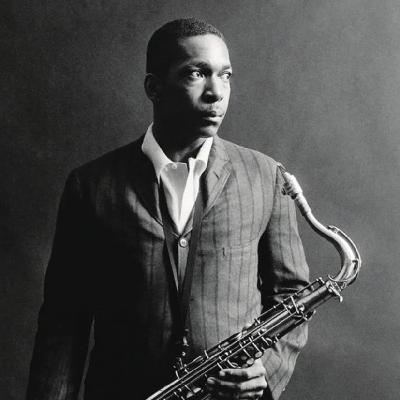
John Coltrane is a major figure in our culture. The majesty, grandeur and passion of his saxophone communicates with the soul and has inspired the reverence and spiritual devotion of his widespread listening audience.
It would be difficult to profile his widespread body of work in a single radio program. Therefore, this program focuses on one discrete portion of his career, his recordings on the Prestige record label.
Coltrane attained his first widespread notice in his late twenties as a member of the classic Miles Davis Quintet (fall 1955-early 1957). However, Coltrane was struggling with substance abuse and other personal difficulties, and Miles fired him from the group. With immense personal dedication, and spiritual guidance from his wife Naima, Coltrane beat his addiction and began a renewed, refreshed life. He moved to New York City (203 West 103rd Street). Trane began working with Thelonious Monk, and their legendary six month engagement at the Five Spot reinvigorated each of their careers.
At the same time, Coltrane was looking to establish himself as a recording artist. While with Miles, he was also a freelance sideman on many now classic albums, and in early 1957 Coltrane eventually got a contract with Bob Weinstock’s independent Prestige company, a deal that would last through the end of 1958.
There, Coltrane recorded his first three albums as a leader (“Coltrane”, “John Coltrane With The Red Garland Trio (aka Traneing In)” and “Soultrane”), sessions led by his friend Red Garland, and many all star dates. As was his custom, Weinstock recorded many sessions under Trane’s leadership, which were "kept in the can", stockpiled, and released on additional albums in the next few years.
This was a pivotal period in the development of Coltrane’s career, leading in to “Giant Steps” and further levels of artistry. Accordingly, these Prestige records are sometimes overlooked, but they, too, have a robust and sophisticated improvisational fervor worth savoring. Critic Ira Gitler wrote of “the excruciatingly exhilarating intensity of rapid exigent runs with their residual harmonic impact” in coining the overworked but still apt term “Sheets of Sound” to characterize this phase of Coltrane’s style.
originally broadcast May 19, 2024
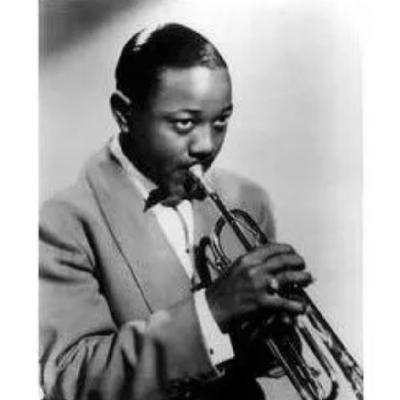
WKCR has a long standing tradition of celebrating Roy Eldridge, “Little Jazz”, with a marathon 24-hour broadcast tribute every year on the trumpet giant's birthday anniversary, January 30.
Here’s my shift from the 2026 edition. We begin at the 1977 Montreux Jazz Festival, followed by 70 minutes of Roy in the 1950s, including his Verve session with Art Tatum and other goodies. Next comes a detailed survey of Roy’s association with Gene Krupa (approx 85 minutes). This episode concludes with a potpourri of various recordings for general listening.
We continue an occasional series of programs focusing on the American Popular Song, examining the impact of the legendary composers on the jazz repertory. For some of the best in jazz improvisation derives from its interpretations of the musical forms, melodies and harmonies of these great treasures.
For this show I did something different, and fun, and less intensive. I surveyed songs that won the Academy Award Oscar as Best Original Song in a motion picture. These movie songs certainly contribute to the heritage of our great American songbook.
Among the composers winning this award are Jerome Kern, Harry Warren, Harold Arlen and Jimmy Van Heusen, to name a few. And tunes such as The Way You Look Tonight, Over The Rainbow, It Might As Well Be Spring, Days Of Wine And Roses.
We’ll present a curated presentation of jazz versions of the songs, by greats John Coltrane, Sonny Rollins, Clifford Brown, Kenny Dorham, and less famous figures as well.
originally broadcast March 15, 2026
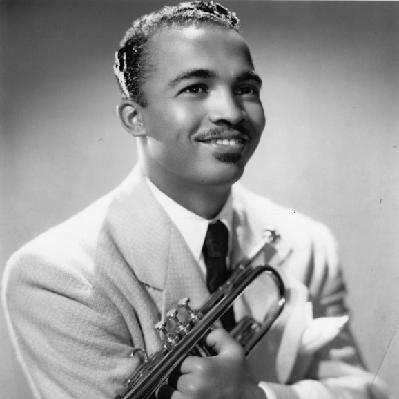
Howard McGhee, a renowned trumpeter of both the big band and be-bop eras, also was a leading figure and mentor on the New York jazz scene in the 1960's and 1970's.
Born in Oklahoma in 1918, and raised in Detroit, McGhee gained attention in his youth in the big bands of Lionel Hampton, Charlie Barnet, and, notably, Andy Kirk. Settling in Los Angeles in the 1940's and working in Coleman Hawkins small group, McGhee became a major player in California, recording with musicians ranging from Lester Young to R&B bands.
When Bird, Charlie Parker, famously stayed in LA in 1946 after Dizzy and his group returned to New York, McGhee became a key companion and an important figure in the history of bebop jazz.
McGhee also played with Machito’s Afro-Cuban band, with Milt Jackson, Jazz At The Philharmonic, and had many other significant associations.
In the 1950's, among other credits, he recorded for Bethlehem Records and performed regularly in James Moody’s working group.
Over the last decades of his life, McGhee made records with Phineas Newborn, Teddy Edwards and other prominent figures, which we will hear on the program. “Maggie”, as he was known, also led his own big band, and he was active in community events with the St. Peter’s Church jazz ministry.
McGhee died in 1987 at the age of 69.
originally broadcast February 10, 2019

Serge Chaloff was a fleeting star on the baritone saxophone during his brief lifetime, one of Woody Herman’s “Four Brothers” and a bebopping legend as well. He was a sophisticated musician and swinging performer. Serge possessed a lithe, fleet, flowing conception propelled with a lighter tone and nimble execution on the big horn.
Raised by his prominent classical musician and educator parents in Boston, Serge Chaloff was born November 24, 1923. His father Julius Chaloff was a pianist with the Boston Symphony Orchestra and ran his own music school; his mother Margaret Stedman Chaloff, revered by her many famous classical and jazz musician students as “Madame Chaloff”, was a long time teacher with her own studio and also at the New England Conservatory and other schools.
As a young child his parents taught him the piano, and he received formal lessons on the clarinet. Inspired by Harry Carney he was self taught on the baritone saxophone and began performing in big bands. Chaloff was also influenced by Charlie Parker and informed by the contemporary bebop scene, and he incorporated those styles as a major component of his expression.
Chaloff was hired by Woody Herman for the “Second Herd” band in 1947-1949 and excelled as part of its legendary saxophone section memorialized by the Four Brothers song and sound.
Unfortunately, Chaloff also absorbed another lesson from the bebop era and many contemporaries, succumbing to heroin addiction. Chaloff was smitten and suffered more intensively than most, harming his physical health and inspiring erratic behavior to an extent that almost cost him his musical career, and his life.
Let go by Herman, Chaloff spent the early 1950's basically in local Boston clubs and with some brief prominent spots such as a stint in Count Basie’s octet. He also spent some time on the road with low profile gigging.
By 1954, Chaloff began getting some treatment, and friends eventually prevailed upon him to enter an intensive in patient rehab program. Chaloff emerged totally clean and renewed his career with vigor. Highlights included appearances at George Wein’s Storyville nightclub and his record label. The “Fabel Of Mabel” album is a storied endeavor and a cult classic. Chaloff went on significant national tours, appeared on the Steve Allen TV show, and recorded with Capitol Records - two LPs “Boston Blow Up” and “Blue Serge”- that are now considered masterpieces.
However later in 1956 Chaloff was stricken with cancerous tumors on his spine and after some initial surgeries that allowed him to endure, the tumors spread and he died in July 1957 at the age of 33.
With his short life span and limited body of recordings, Chaloff is not well remembered, but he was a significant figure who deserves lasting recognition.
originally broadcast February 15, 2026
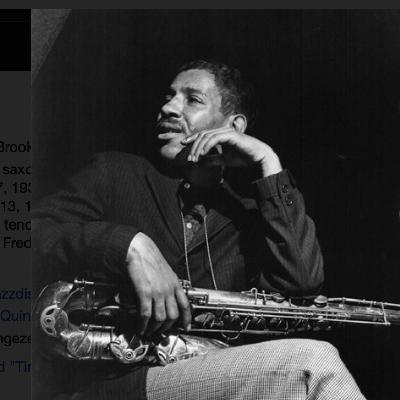
Tina Brooks was a lyrical tenor saxophonist with a yearning, introspective, yet soulful sound. He attained a brief measure of recognition on several Blue Note albums in the late 1950's and early 1960's but never achieved great fame.
Harold Floyd Brooks was born in Fayetteville, North Carolina on June 7, 1932, into a musical family. (His older brother David “Bubba” Brooks, also a saxophonist, was a mainstay in the jazz world for many years). In his youth, Harold was nicknamed Tina from his teeny, diminutive size. The family moved to the Bronx in 1944 when he was 12 years old, and Brooks was a Bronx-ite
He came of age playing in Latin and Rhythm and Blues bands, eventually gaining major professional experience in the touring groups of Amos Milburn and Lionel Hampton. By 1956 and 1957, under the tutorship and close friendship of modern jazz greats Benny Harris and Elmo Hope, Brooks was playing in the thriving Bronx jazz scene, in clubs such as the Blue Morocco, 845, and Freddie’s Bar, with friends such as Oliver Beener and Larry Gales.
Introduced to Blue Note Records executive Alfred Lion, Brooks was immediately thrust in to the big leagues on a Jimmy Smith record session. His extended saxophone solos on Smith’s “The Sermon” gained great repute. He made tremendous contributions as a sideman with Freddie Hubbard (Open Sesame), Kenny Burrell (Blue Lights), and Jackie McLean (Jackie’s Bag).
In 1959 and 1960, Brooks also worked in theater, serving as an understudy in the cast of Jack Gelber’s legendary Off Broadway play “The Connection”, with live jazz music by Freddie Redd. As a result of this relationship, Brooks would record with Redd on some of his albums.
Blue Note eventually made four sessions with Tina Brooks as a leader of quintets, recording dynamic versions of American popular song standards along with lyrical and sophisticated original compositions, in association with band-mates such as Hubbard, McLean, Lee Morgan, and Sonny Clark. However, only one album, “True Blue”, would be released in his lifetime. Championed by critics and record executives such as Michael Cuscuna, his remaining albums would be released posthumously, as an early staple of Cuscuna’s connoisseur Mosaic label, and also on Blue Note.
Tina Brooks suffered from various health problems, as well as being saddled with the scourge of heroin addiction. He was not well enough to perform beyond his thirties, and he succumbed to kidney illness and the ravages of his drug use, dying on August 13, 1974 at the age of 42.
originally broadcast July 21, 2024

Trumpeter and vocalist Hot Lips Page was a key figure in early jazz, the swing era, and rhythm ‘n’ blues.
Oran Page was born in Texas on January 27, 1908. As a teenager, he began a career with the “territory bands” and the southwestern swing tradition. From a young age he possessed a sizzling style and command of the trumpet, which perhaps was the source of his nickname, although his friends noted his enjoyment of the early ‘20's Henry Busse/Paul Whiteman record “Hot Lips”, too.
Page made his mark with the Blue Devils and other seminal Kansas City bands, and he was an important member of the early Count Basie and Reno Club orchestras.
Leaving Count Basie to embark on a solo career, Page made a key contribution as a leader of small combos during the swing era and the 52nd Street nightclub scene. In that milieu he made numerous significant recordings. He also appeared as the featured trumpet soloist for a time with the Artie Shaw band in 1941-42. After World War II, Page was a key figure in the development of the rhythm and blues sound, both with his own records and backing singers like Wynonie Harris (“Good Rockin’ Tonight”).
You’ll enjoy “Lips” for his dynamic approach on the trumpet and an earthy, down home singing style, all of which conveyed a deep humanity and emotional connection with the music.
Page died of pneumonia and heart trouble at the early age of 46 in 1954.
originally broadcast September 27, 2015; rebroadcast May 9, 2021
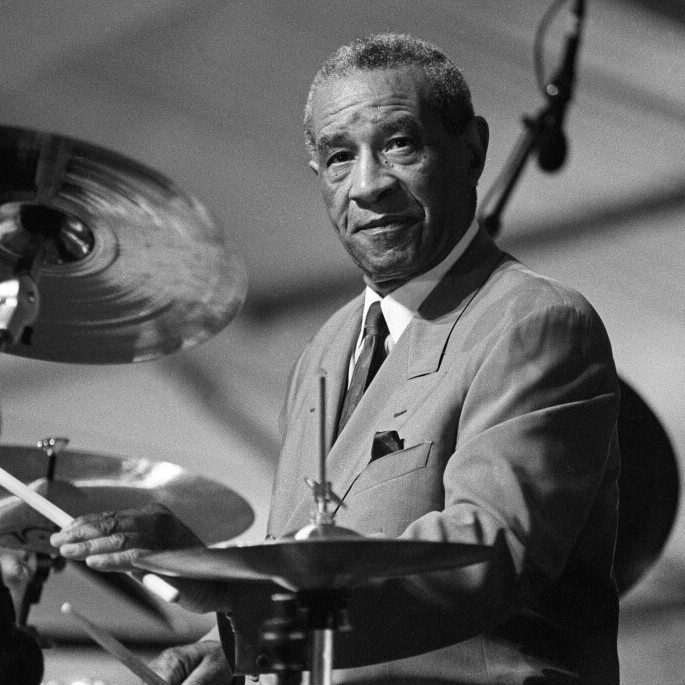
WKCR presents a marathon broadcast celebrating Max Roach annually, on his birthday anniversary, January 10.
Here’s my segment from the 2020 edition. It begins with a survey of Sonny Rollins collaborations with Max (81 minutes), then takes a relaxing visit to the Royal Roost to hear the Charlie Parker Quintet in live performance (18 minutes), and finally over an hour of selections of Max Roach as a sideman on recordings from the late 1940's bebop era, by Dexter Gordon, Allan Eager, J.J. Johnson, Stan Getz, Don Byas and Buddy DeFranco.

Johnny Griffin earned the nickname “The Little Giant” for his short physical height but big powerful sound on the tenor sax. Coming out of the blues and swing of his Chicago roots but also informed by the sophisticated developments of the bebop era, Griffin’s proficiency on his instrument and the fleet and darting lines of his attack make him one of our greats.
Griffin was born in Chicago on April 24, 1928 and attended DuSable High School under the tutelage of its legendary teacher, Captain Walter Dyett. As a teenager he played professionally in blues groups with T-Bone Walker. Immediately upon his high school graduation Griffin joined Lionel Hampton’s big band. In the late 40's and early ‘50s Griffin also played in R&B groups such as Joe Morris and appeared on some of the early Atlantic rhythm and blues records.
Griff established himself on the modern jazz scene of New York later in the 1950s. He was a key member of Art Blakey’s 1957 edition of the Jazz Messengers; he replaced John Coltrane as the saxophonist in Thelonious Monk’s Five Spot group and stayed for several months in 1958; signed to the Riverside label he made numerous significant recordings with great compadres; and in the early 1960's he teamed with Eddie Lockjaw Davis for a swinging Tough Tenor combo.
Griffin moved to Europe in 1963 and forged an international career as one of the leading expatriate American jazz artists. For many years he made many frequent trips to the US to visit Chicago, and the Village Vanguard in New York, with a regular group that included Michael Weiss, Dennis Irwin and Kenny Washington. He had a productive and active performing life into this century.
Griff died in 2008 in France at the age of 80.
originally broadcast January 18, 2026

Tiny Grimes was one of the innovators of the early days of the electric guitar, and he was a significant figure in the development of both jazz and rhythm and blues.
His first major professional engagement was with the popular novelty vocal group “The Cats and the Fiddle” in the early 1940's. Next, he became a key figure in the regular piano trio of the legendary Art Tatum.
After his experience with Tatum, Tiny Grimes remained a vital participant in the small group swing of the 52nd Street night clubs. During this period, Grimes also participated in recordings with jazz greats such as Charlie Parker, Coleman Hawkins, Billie Holiday, Buck Clayton, and Ike Quebec, all to be heard on the program.
Shifting gears, in the late 1940's and early 1950's, Tiny Grimes was an important figure in the beginning days of rhythm and blues and nascent rock and roll, with his “Rocking Highlanders” groups, work with Screaming Jay Hawkins, and participation in the early R&B recordings of Atlantic Records.
In the late 1950's, Tiny Grimes made some great mainstream jazz records for Prestige, and later, he was a key figure in classic jazz revival of the 1970's, performing frequently in Europe, and in New York venues such as the West End Café.
Grimes passed away in 1989 at the age of 72, after some debilitating illnesses.
originally broadcast December 20, 2009

WKCR presents an annual marathon 24 hour tribute to trumpet virtuoso Clifford Brown on October 30, his birthday anniversary.
From the 2021 edition, here are two thematic segments – Clifford Brown with vocalists (Sarah Vaughan, Helen Merrill, and Dinah Washington), about 85 minutes, and Clifford Brown in California in the spring and summer of 1954, about 50 minutes – along with several tracks of classic recordings for general listening at the beginning and end of the program.
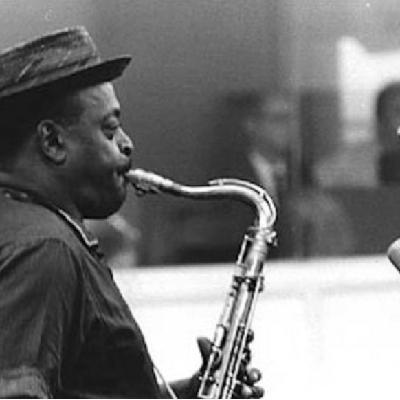
Ben Webster was nicknamed “The Brute” due both to his sometimes tempestuous temperament and also for his vigorous power on the tenor saxophone. But he was “The Beautiful” as well, with a personal sensitivity within his soul, and an elegant, romantic approach on the softer numbers, projecting a breathy tone with “air to spare”.
Webster (1909-1973), coming out of Kansas City, was already recognized as one of the original saxophone giants by the late 1930s. But when he joined Duke Ellington’s famous orchestra in 1940 his career reached a higher plateau, immortalized as the soloist on many Ellington/Strayhorn masterpieces such as “Cottontail” and “Raincheck”.
Webster left Ellington in 1943 and pursed a career as a “single”, fronting many small groups in various styles. In that regard Ben made many notable and powerful recordings, albeit not as famously remembered. In 1948 he briefly rejoined Ellington, although the orchestra did not make any studio records during that period. In 1949 Ben returned to Kansas City and participated in some fine bluesy activity.
Accordingly, this five hour program features a varied presentation of tasty music touching on these aspects of his career.
originally broadcast December 21, 2025
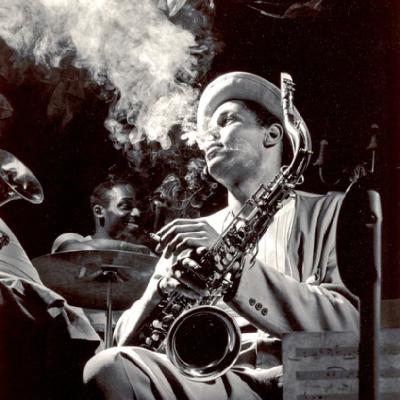
Celebrating the Centennial of Dexter Gordon on February 27, 2023, WKCR presented a marathon broadcast.
From my segment, here’s a detailed survey of Dexter’s early work in the 1940s. About 115 minutes, bookended for casual listening by a potpourri of some 1970s recordings upon his magical return to the US.
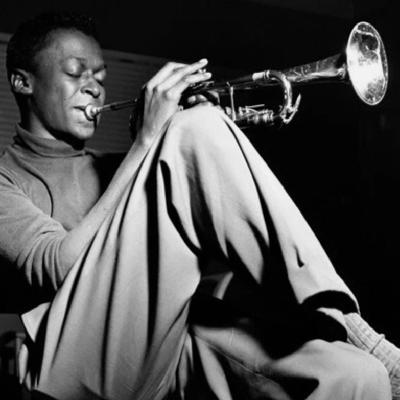
Miles Davis is one of the “superstars” of jazz, a dynamic trumpet master renowned throughout the world for many varied achievements during his decades long career.
For this radio program, I isolated a lesser remembered period, to put a sharp focus on his activity during the years 1953 and 1954.
Miles Davis was born in Alton, Illinois May 26, 1926. A teenage wunderkind, he arrived in New York in 1945 to play with Charlie Parker and join in forging the nascent bebop movement of modern jazz. By the late 1940's he was working on further innovations such as his creative arrangements for nonet orchestras, later named “The Birth Of The Cool”. In 1949, he was famous enough to be one of the headliners of the International Jazz Festival in Paris, a significant event returning American jazz to Europe in the postwar renewal of the continent.
In the legend and lore of Miles’s career, he had a triumphant “comeback” at the 1955 Newport Jazz Festival. This was to be followed soon by major landmarks we all know – the quintet including Red Garland and John Coltrane, Gil Evans orchestras, Kind Of Blue, the 1960's groups with Wayne Shorter, and all the further milestones until his death in 1991.
So then, what happened after 1949 that Miles needed a comeback? First, he succumbed to the demons hovering around the jazz world of the time and suffered the scourge of heroin addiction. However, the ravages of his drug use were not so great that it prevented him from performing, and he continued to tour the country and make records with different groups. During this time Miles was in a period not just of personal self-doubt and struggle, but also of re-assessment of his musical conceptions and trumpet tones. By some time in 1953 he had finally beaten the drug addiction, and with recuperation came renewed strength and consolidation of skills.
Jazz itself was also going through a period of re-assessment in the early 1950's, on the one hand searching for avenues to take the be-bop breakthroughs to whatever next levels would come, but on the other hand popular musical tastes were changing and rhythm and blues also on the rise.
So this is where we find Miles Davis in the early 1950's. He had signed with the young independent jazz label Prestige and starting in 1951 made dozens of records in the 15 or 20 dates he had with them. At first not an exclusive deal, he also had three sessions for Blue Note. Most of these recordings were not by regular working “groups” but amalgamations of those with whom he played regularly – saxophonists such as Sonny Rollins, Jackie McLean and Jimmy Heath, trombonist JJ Johnson, pianists Horace Silver and John Lewis, and drummers Art Blakey and Kenny Clarke, to name a few.
These records might also not be as well known in his oeuvre, but they do include some that should be considered classics. Perhaps another reason for their lack of lasting fame is that this was a period when record companies were in the transition to the long playing era, and these discs were originally issued as 78s, 45 EPs, 10" LPs, and other soon to be esoteric formats, and only later reissued in ersatz album groupings. Accordingly, they could not be so coherently known with common monikers so as to fit in a Davis “canon”.
With these factors in mind, this program features the years 1953 and 1954, with records such as Kelo and Tempus Fugit, When Lights Are Low and Tune Up, his definitive cool version of Old Devil Moon, the extended performance on Walkin’, and concluding with the legendary tempestuous date with Thelonious Monk, Milt Jackson and the Modern Jazz Giants on Christmas Eve 1954.
These 1953-4 records are glorious on their own merit and just as impressive as other Miles Davis offerings. As some have said upon reflection, one might think that the critics who had called 1955 a “comeback” were the ones who had been away, and not Miles.
And these recordings are key to study as a preface to the next level that Miles and other jazz artists took the music in the late 1950's. As Dick Katz perceptively wrote about the musicians on Walkin’: “To me they represent a sort of summing up of what had happened musically during the preceding ten years. It’s as if they all agreed to get together to discuss on their instruments what they had learned and unlearned, what elements of bop they had retained or discarded”.
originally broadcast December 22, 2019
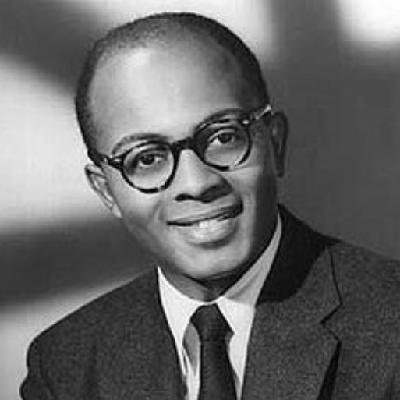
We celebrate the centennial of Gigi Gryce (Basheer Qusim).
Gryce became a leading figure in his brief career in the 1950s. as a saxophonist, composer, arranger, music publisher, and teacher and mentor to many musicians.
Gryce was born November 28, 1925 in Pensacola, Florida. His parents owned a clothes cleaning business, but his father died when he was seven. In the midst of the Great Depression, the family lost the business, and his mother raised a large brood of children as a single mother. But there was always music in the home with his various siblings, and Gigi also had a strong high school music education.
Drafted into the Navy during World War II, thankfully someone noticed his musical talent. He was eventually assigned to military bands, notably at the Great Lakes Training Station. Discharged from the service after the war, Gryce moved to New England and had serious classical music conservatory training in Hartford and Boston.
But upon graduating the conservatory, he moved to New York City and began an intensive career in our jazz fellowship. Gryce had a personal sound on the alto sax, and an organizational ability that had him successfully leading his own bands and consulting with many others in leading theirs.
He made some remarkable recordings in his own bands, a group with Art Farmer, and the “Jazz Lab” that he co-led with Donald Byrd. He appeared as a musician and arranger, sometimes both roles at once, in significant projects of the greats such as Clifford Brown, Thelonious Monk, Oscar Pettiford, Max Roach, Dizzy Gillespie, Teddy Charles, Thad Jones, and Benny Golson, to name a few.
Gryce composed more than 60 songs, most of which have remained components of our modern jazz repertory to this very day – examples are Minority, Hymn To The Orient, Nica’s Tempo, Reminiscing, Reunion, Social Call, Wildwood, and there are many more.
Distressed by the harsh economic realities of the music business and personal issues in the breakup of his family life, Gryce left jazz in the early 1960s. He began a second career as a schoolteacher in New York City Public Schools. He studied for a doctorate in Education at Fordham University, and eventually settled in as a leading educator at PS 53 in the South Bronx. Living under his Muslim name and otherwise drawing no attention to his prior musical life, Qusim became a beloved youth leader in the community. He died in 1983. Upon his passing the school was named for him, and still stands on East 168th Street.
originally broadcast November 23, 2025
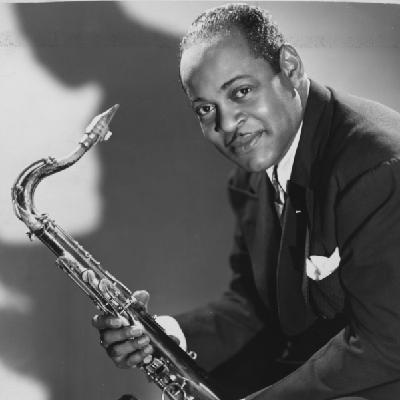
WKCR presents an annual marathon broadcast celebrating the Coleman Hawkins birthday on November 21.
From the 2025 edition here are segments from my contribution -- 60 minutes of a potpourri of Hawkins favorites, followed by a 105 minute survey of his recordings from the period 1945-1949.
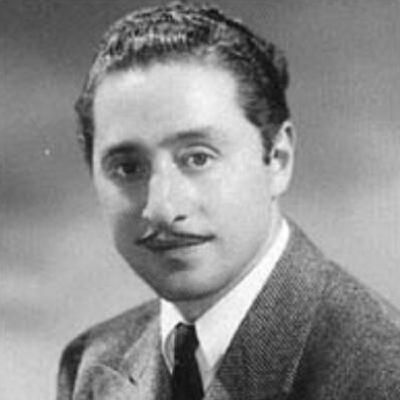
Five hours of Harold Arlen.
This program is one in my occasional series examining the impact of the legendary composers on the jazz repertory, as some of the best in jazz derives from its interpretations of the great American popular songbook, .
Harold Arlen was born in 1905 in Buffalo, New York, the son of an orthodox cantor. He began his musical career singing Jewish melodies with his father in the synagogue. Smitten with popular music as a rebellious teenager in the Roaring Twenties, Arlen dropped out of school and began a career as a touring pianist and vocalist in Jazz Age combos. After arriving in New York City, by the early 1930’s he secured work as the arranger for the house band and dancers at the Cotton Club, and he also played blues and jazz piano in small Harlem saloons.
Only at this point did Arlen turn his attention to a career composing popular songs for the Broadway stage and Hollywood film musicals. Synthesizing the influences of this varied background, Arlen’s songs are informed by a yearning, spiritual quality, and his musical modes are especially suited for jazz interpretation.
Often overshadowed in history by Kern, Gershwin, Rodgers, and the like, nonetheless Arlen is on a par with these giants and his legacy should bear a similar stature. Just a brief sample listing of his songs includes perennials such as Stormy Weather, I’ve Got The World On A String, It’s Only A Paper Moon, That Old Black Magic, One For My Baby, Blues In The Night, and Come Rain Or Come Shine. Not to mention the score for The Wizard Of Oz.
This program presents jazz versions of Arlen’s songs featuring many instrumental improvisations by the greats Louis Armstrong, Art Blakey’s Jazz Messengers, and John Coltrane, among others, and less famous recordings as well. With a nod to his lyricists Ted Koehler, Yip Harburg and Johnny Mercer, we sprinkle in some vocal versions by Tony Bennett, Dinah Washington, and more.
originally broadcast June 17, 2018
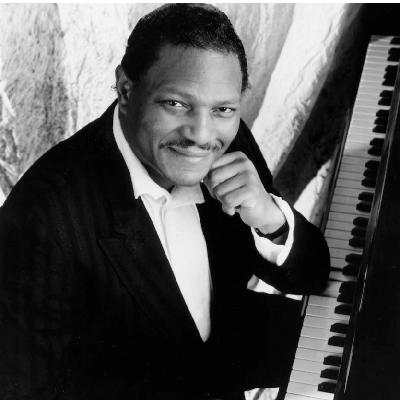
When McCoy Tyner passed away in March 2020, WKCR responded, as we often do, by pre-empting regular programming to present a memorial tribute, celebrating the legacy with a marathon broadcast of the artist’s music.
Here’s segments of my contribution, first about 60 minutes of piano trio recordings, and then a presentation of more than an hour sampling his collaborations in groups with John Coltrane.

Here’s five hours on blues and jazz singer and pianist Charles Brown.
Charles Brown was born September 13, probably 1920 (usually listed 1922), on the gulf coast of Texas and raised by his educated and religious grandparents. He played piano and sang in church, and excelled as a science student. His high school chemistry teacher, who also moonlighted as a musician, took Charles under his wing, and had Charles play piano with his dance band.
Brown had academic aspirations and attended Prairie View College. After graduation, Brown worked as a research chemist, eventually in government service for the war. When it was time to actually go in to the armed forces Charles was 4-F for a childhood illness. Instead, he left the science field, and the segregated South Brown decided to try his hand as an entertainer and moved to southern California.
The army’s loss was our gain, as Charles blossomed in his musical career. But, in effect, he still contributed to the war effort. During World War II there was a great migration of African-Americans to California, both in the workforce of industrial factories, and servicemen stationed while awaiting shipment to the Pacific. A burgeoning black entertainment scene developed in California to entertain this swelling community.
Brown’s first major engagement was at Ivie Anderson’s Chicken Shack in Los Angeles. Soon he teamed up with guitarist Johnny Moore, and they formed a trio emulating Nat King Cole’s group. (Johnny Moore’s brother Oscar was the guitarist with Cole.) Their “Three Blazers” took the elegant sound of the Nat King Cole trio and infused it with a grittier aspect. At the same time, Brown’s mellow vocal style, influenced by idols like Pha Terrell, offered a refined side of blues singing that struck a responsive chord with popular listeners.
Charles Brown and Moore’s Three Blazers had monster hits such as “Driftin’ Blues” and “Merry Christmas Baby” in the postwar period. Eventually leaving the group, Brown had continued success as a single for a number of years but drifted in to obscurity. He left a string of now forgotten hit records, but a direct influence acknowledged by singers from Ray Charles onward.
In the 1980's Brown was “re-discovered”, becoming a popular attraction at the famous New York nightclub Tramps, featured on an acclaimed PBS documentary, releasing a breakthrough 1986 jazz album “One More For The Road”, and taken on tour by artists like Bonnie Raitt to be exposed to a younger generation. With a base in northern California, and guitarist Danny Caron as musical director with a sympathetic style, Brown had great success once again touring the world and making many fine jazz records for the Muse and Verve labels, until his death in 1999.
We will explore Brown’s tasty, often overlooked, jazz piano playing, and his great blues and ballad singing, sampling the recordings from across his career during this five hour radio broadcast.
originally broadcast March 1, 2015

Five hours on piano legend Dodo Marmarosa!
Michael Marmarosa was born on December 12, 1925 to a working class Italian immigrant family in Pittsburgh. Dodo was a childhood nickname, and he began taking serious classical music lessons as a young child. He also befriended slightly older Steel City jazz pianists such as Billy Strayhorn, and especially Erroll Garner. With Garner and other young musicians, he explored their developing mutual jazz interests.
As a teenager during the World War II years, Marmarosa had opportunities to begin a professional career performing in popular swing era big bands, eventually gaining recognition with Gene Krupa, Charlie Barnet, and Tommy Dorsey. He had a significant stay with Artie Shaw. When Shaw disbanded in California in 1945, Marmarosa remained in Los Angeles. Establishing himself there, he was “present at the creation” to became THE pianist in the formative years of bebop on the West Coast.
Dodo not only “played with” all the greats, but he appears on classic, major, historic recordings of Lester Young, Charlie Parker, Artie Shaw’s Gramercy Five, Lucky Thompson, and Norman Granz “The Jazz Scene”. Marmarosa also delighted in the playground of Slim Gaillard, joining in the fun but also providing luscious piano counterpoint to the jive on many of his records.
Marmarosa returned to his native Pittsburgh by 1950, settled down domestically, and played the piano in local clubs and restaurants, away from the national limelight. He never made any more records, other than three isolated, stunning sessions for Argo in Chicago in 1961 & 1962 (only one of which was released at the time). He had retired from professional music by the mid-1970's, but lived quietly until 2002, when he died at the age of 76.
Dodo’s piano style is lively and tasty, informed from his swing era beginnings, while his harmonic sense also demonstrates the Romantic classical music roots, as well as the jazz modernism of his time. He is a neglected and overlooked figure in the scope of jazz history, but his piano recordings are daring and fresh, and will surprise and enthrall you.
originally broadcast October 12, 2025

Comments

Download from Google Play

Download from App Store
 United States