


 Claim Ownership
Arts First
Subscribed: 3Played: 68
Subscribe

© Arts First
Description
Arts First challenges the contemporary view of the arts as tools for social change; highlights how freedom of expression is compromised by political activism and institutional cowardice; explores what is unique and special about the arts; and celebrates new artistic achievement and courage in the face of today’s challenges. Arts First is produced by the Academy of Ideas Arts. and Society Forum.
artsfirst.substack.com
artsfirst.substack.com
43 Episodes
Reverse
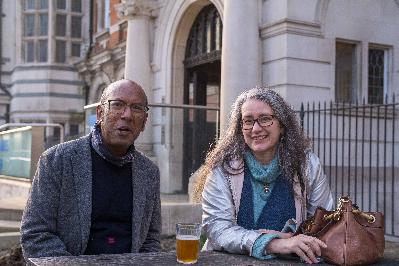
Today we dive into the world of contemporary art, focusing on the New Contemporaries exhibition, currently on show at the South London Gallery.We’re joined by two good friends of the show: artist Rachel Jordan and curator, writer, and campaigner Manik Govinda.New Contemporaries is a long-running institution within the UK art scene. It began in 1949 as Young Contemporaries, an annual exhibition established to showcase new work by emerging artists. Today, it organises a nationally touring exhibition, with works selected by leading figures from across the art world. This year’s show opens in South London before travelling to Middlesbrough Institute of Modern Art later in April.Listeners may remember that last year’s exhibition at the Institute of Contemporary Arts drew media attention, with protests outside the gallery relating to its sponsorship. We’ll return to some of that context later - but first, the art itself.We first visited the exhibition at the South London Gallery, before settling in the garden over a beer, a coffee, and cake to share our initial impressions. A few days later, we reconvened online for a more considered and in-depth conversation.For those unfamiliar with it, the South London Gallery sits on Peckham Road, close to Camberwell College of Arts. Founded in the 19th century by philanthropist William Rossiter, it was established to ‘bring art to the people of South London’, and today presents a wide-ranging programme of exhibitions by both established and emerging artists.We’re grateful to the gallery for allowing us to photograph and film.Art choices - RachelPainting: Ally Fallo - In My Beginning Is My End, 2025. Oil on Canvas. 130cm x 100cmPhotograph: Timon Benson - Compression, 2023.Film: Viviana Almas - SolusArt choices - ManickAlia Gargum, This was a Mosque, 2024Varvara Uhlik, Slide, 2025. Mild steel, 90 x 200 x 40cmVideo: Gregor Petrikovič, Sincerely, Victor Pike, 2024. Duration, 12 mins, 22 seconds Get full access to Arts First at artsfirst.substack.com/subscribe
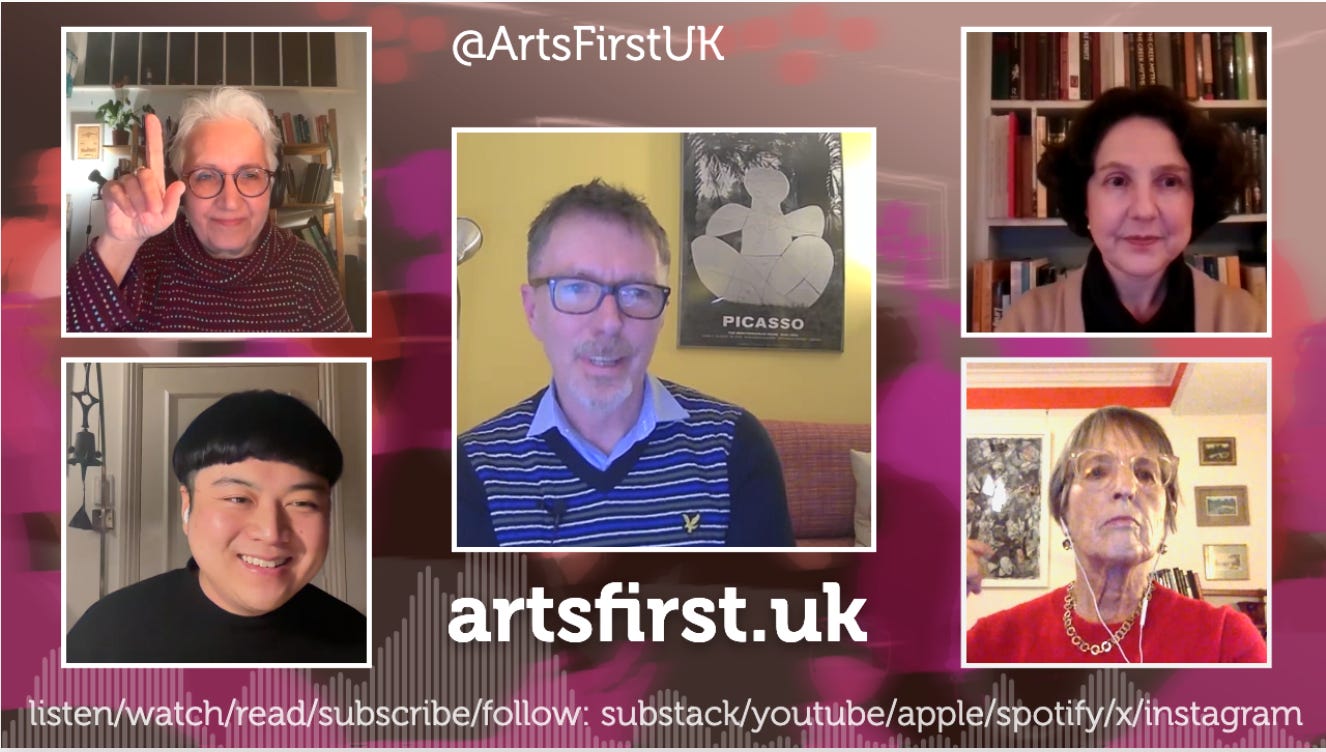
In recent years the National Trust, Britain’s largest heritage organisation, has faced growing criticism for shifting its focus. Once dedicated to preserving historic houses, gardens and landscapes for their architectural, artistic and historical value, the Trust has increasingly emphasised ‘decolonisation’, ‘social justice’ campaigns and reinterpretations centred on Britain’s links to slavery and colonialism.Critics argue that this approach reflects a loss of confidence in the Trust’s original purpose: stewarding the nation’s built heritage and presenting it on its own terms. Reports and public statements have spoken of “repurposing” historic houses, moving beyond the “outdated mansion experience,” and prioritising contemporary relevance over the buildings’ intrinsic qualities. At the same time, selective historical framing and changes to displays have raised concerns about the erosion of authentic engagement with the past.A particularly stark example is the Trust’s handling of Clandon Park, a Grade I-listed Palladian house that was gutted by fire in 2015. Initially expected to be restored, the property is now the subject of approved plans to conserve it largely as a fire-damaged shell rather than reinstate its celebrated interiors. The scheme includes modern interventions such as viewing platforms and a new roof terrace, using insurance funds that many argue should have supported full restoration. The decision has been pushed through with minimal scrutiny — approved by Guildford Borough Council in March 2025 despite widespread objections — and has highlighted broader concerns about how the Trust interprets heritage significance and overrides member opinion.This episode examines what is at stake for Britain’s country houses and the wider heritage sector. Has the National Trust abandoned its historic role as custodian of the nation’s cultural inheritance? What does genuine stewardship of heritage require today? And why does the confident transmission of history and beauty matter more than ever?Joining Niall and Wendy are three guests with deep knowledge of the issues: Cornelia van der Poll, chair of the campaign group Restore Trust; architectural critic and lecturer Calvin Po; and educator and campaigner Dr Alka Sehgal Cuthbert, director of Don’t Divide Us.The discussion explores the origins of the current controversies, the importance of beauty and historical imagination, parallels with earlier cultural upheavals, and practical ways forward—including the role of membership, education, traditional craft skills, and alternative models of heritage management such as Historic Houses.Guest BiographiesCornelia van der Poll is a co-founder and current chair of Restore Trust, the campaign group formed in 2020 to encourage the National Trust to return to its core mission of caring for historic houses and landscapes. She is a former lecturer in ancient Greek at the University of Oxford.Calvin Po: is a designer, researcher, writer and educator based in London. He lectures at the Architectural Association School of Architecture and writes on architecture for publications including The Critic and The Spectator. His perspective is informed by both his experience of the British Empire’s final outpost and a deep appreciation of Britain’s architectural heritage.Dr Alka Sehgal-Cuthbert is an educator, academic, author and director of the campaign group Don’t Divide Us, which advocates for a common-sense approach to race and against the politicisation of education and culture. She stood for election to the National Trust council in 2024 and is a founding supporter of Arts First. She has written and spoken widely on the importance of historical and aesthetic education. Get full access to Arts First at artsfirst.substack.com/subscribe
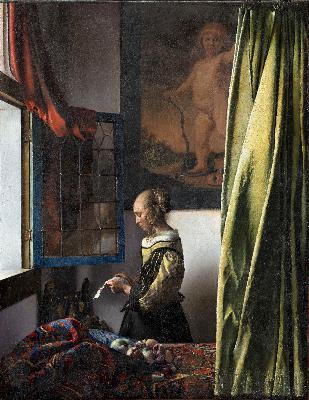
Cultural historian, Dr Tiffany Jenkins’ new and highly acclaimed book, Strangers and Intimates: the rise and fall of private life provides the focus for this episode. It is a thoughtful, well-researched, nuanced, very readable account of how the right to privacy for the individual and family emerged over the past 500 yrs or so, as a central social value and something to aspire to and defend, and how that right is gradually being eroded by cultural changes.Although the book is not about art, making only occasional references to artworks, as I read it I could see that art, in its historic course, might reflect the changes in ideas about privacy that Tiffany explores.For example, I recently watched the recent film Hamnet (Dir Chloé Zhao, 2025), which suggested that Shakespeare’s Hamlet was inspired by his son’s early death. Towards the end of the film, it struck me that Shakespeare by giving public expression to a deeply private sense of loss and grief provided an early theatrical example of what Tiffany’s book examines. So I asked Tiffany if she’d be interested in identifying works of art that illustrate her thesis … and thus an idea was born. And I was very excited by the list of works Tiffany wanted to talk about because I knew they would provide a fascinating way of exploring the motifs within her excellent book.The BBC Radio 4 programme, Desert Island Discs, inspired the structure of the episode although it is shaped by the narrative in Strangers and Intimates, instead of Tiffany’s biography. Her chosen works are:Johannes Vermeer, Girl Reading a Letter, exemplifying interiority and the inner life, which became increasingly important emerging from the Reformation in the 17th Century onwards. Samuel Richardson’s novel Pamela (1740) and Dr Samuel Johnson’s Diaries in the mid-in the 18th Century, reflecting the emergence of the public and private as separate spheres of life.In the 19th Century, Mary Cassatt, The Child’s Bath (1893) reflected the growing importance of privacy as a sphere of warmth and intimacy while Charlotte Perkins Gilman, The Yellow Wallpaper (1892), revealed the tensions and dangers that such a high valuation of privacy might pose to women. Egon Schiele’s self-portraits in the early 20th Century revealed a growing preoccupation with psychology and a desire to reveal or externalise the ‘authentic self’, the psychological man — expression of angst. Later in the century, Nan Goldin’s, The Ballad of Sexual Dependency (1973&1986), in its performative self-examination through candid photographic documentary, reveals important shifts in how private life is displayed and consumed. Sophie Calle (b1953) created works that highlighted the undermining and loss of privacy as the 20th century proceeded, with the blurring of voyeurism with artistic practice. See Frieze magazine here. Vincenzo Latronico’s novella, Perfection (2022) seems to reflect a sense that privacy can no longer exist nor is it desirable. The episode ends by contrasting the depiction of intimacy in Rembrandt’s Isaac and Rebecca (or The Jewish Bride, 1665-69) with Sally Rooney’s Normal People (2018). Get full access to Arts First at artsfirst.substack.com/subscribe
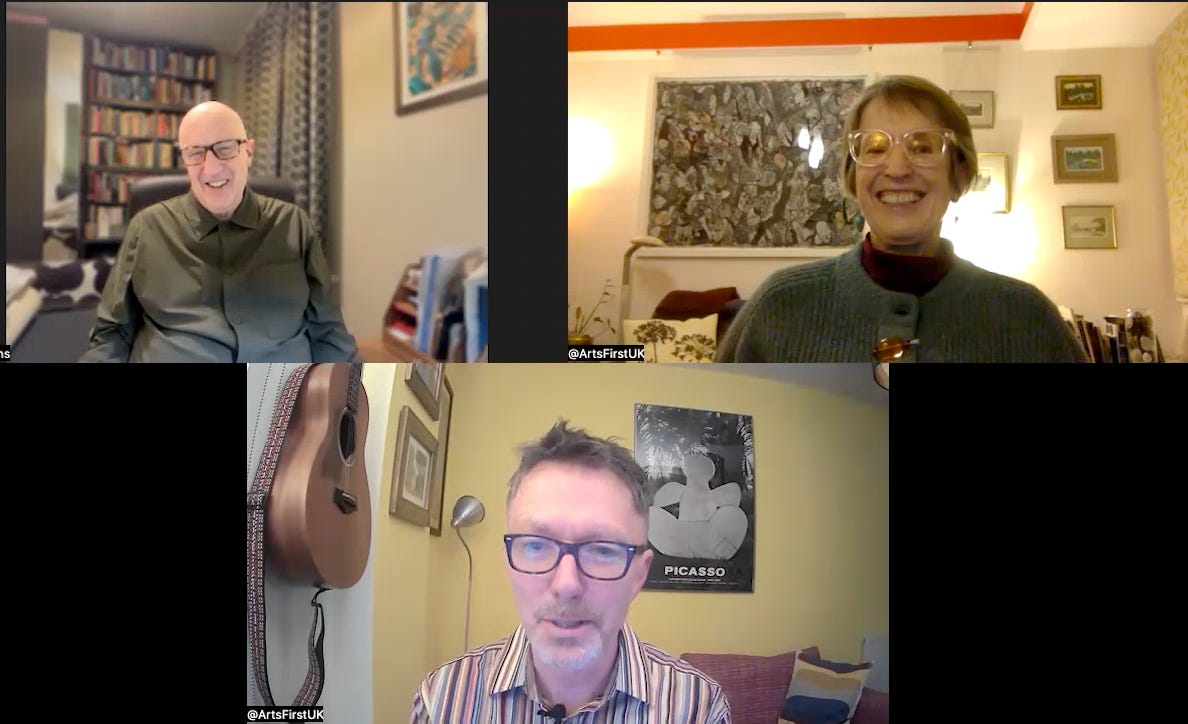
Arts First is now well into its second year and has created over 40 episodes (including our four-part Christmas Carols extravaganza). What started out as an experiment with an uncertain future has developed a bit of a rhythm of production and is very much part of our, its creators’, lives. We’ve enjoyed the process of deciding what to talk about and who to talk to, and of recording and creating the episodes which generally turn out better than expected, mostly because the people we have roped into our plans have such interesting and insightful things to say.In this episode we take a bit of time, the three of us, to review where we are at and where we want to go with the podcast. Our conversations with people from various walks of life, from long standing friends to people we have only just reached out to, have confirmed that we are lucky to be able to draw on the experience and expertise of a great range of people.Although there are a lot of arts podcasts out there, they tend to specialise in a particular art form. We have been deliberately eclectic in our approach. We don’t have a ‘big plan’ but we do want to talk about the issues that we feel matter. We may seem quite eclectic to listeners, but the guiding themes of our episodes are freedom of expression in the arts and the idea of art for arts sake. We don’t focus on one particular art form, and are keen to look at how these issues are played out across the arts. We believe that the instrumentalisation and politicisation of the arts over recent decades has done them no good, and possibly some harm. We also wonder if there is a tendency in the art world to ‘dehistoricise’ art — even within the discipline of art history. We are worried that art schools have ceased to really care about developing artists as artists with a commitment to free expression, instead seeking to shape ideological agendas around DEI (diversity, equity and inclusion), climate catastrophism and other contemporary preoccupations. So we want to explore how/how much these trends have undermined freedom of expression, and hence creativity, and presented artists with new challenges. Arts First is London-based but we are keen to look at issues in the arts from around the UK and across the globe. So far we have featured episodes from Glasgow, Nottingham, Salford, Warrington, Bishop Auckland and elsewhere. Friends who have offered suggestions are welcomed with open arms! (So far we haven’t reached beyond our national borders yet, but we are open to suggestions.) We have talked to a few artists who have faced cancellation because they don’t follow what seems to be the dominant ‘line’ in the arts sector: their support for Israel or critiques of transgenderist and Islamist ideologies, have got them into trouble so we have been keen to give them a chance to talk about their experiences. And we are always keen to talk to artists, and people working in the arts, about how they develop their art and their careers in the arts.Introducing the creators.Wendy Earle. I grew up loving the arts. I particularly enjoy going to art galleries, the theatre, opera and concerts. I am also a keen traveller, and wherever I go, I prioritise visiting galleries, and if possible attending local musical and theatrical events. I organise an annual series of London Gallery tours which are led by the artist Dido Powell, which take a close up and informative look at visual art. All of this feeds into my thinking about the arts and the reason why I initiated, with Niall, the Arts First podcast. The freedom to enjoy the arts, and to create new work, is essential to a good society. Niall Crowley. I discovered art history, hanging out after school, aged 11 or 12, in the FE college library where my mom worked as the cleaner. It was here for the first time I encountered Modern Art, the Renaissance, El Greco, Leonardo, Stanley Spencer, David Hockney.After school, I took an art foundation, and then messed around in design and print for a few years. Meanwhile I developed a passion for inter-war art, architecture, music and history. Later, bored with work, I decided to return to university, study Design History and ‘retrain’ as an academic.I left with a decent degree but a little disappointed with the direction of the course, and returned back into the world of work. Despite, or perhaps because of its limitations the course did leave me with many unanswered questions. So getting involved in Arts First has been a great opportunity to pick up where I left off, and for me, many of the nascent trends back then, such as the politicisation of the arts, have become mainstream today.My other passion would be music - 60s and 70s soul, jazz-funk, gospel, Brazilian jazz, opera, and classical. I’ve sung in a couple of amateur choirs and opera companies. Dr Michael Owens Mick to my friends. I’m a London-based researcher, writer and lecturer, focusing on urban change and the life of cities, reflecting my career background is in urban planning and development. I now teach undergraduate programmes for American university students studying abroad in London. My Doctoral thesis (2018) is an ethnographic study of London’s bid to host the 2012 Olympic Games. I sing in a choir. Get full access to Arts First at artsfirst.substack.com/subscribe
This is officially Part IV but they’re not in any chronological order, so after part one it doesn’t matter too much where you begin.When we set out on putting this episode together, we knew wanted to interview friends and colleagues and find out what Christmas carols mean to them, now or growing up, and if they have any favourites.We start off with a conversation between Mick and an old colleague, David Adam, who you may remember from our episode on the Paris Olympics opening earlier this year. David kindly agreed to join us to talk about his very talented musical family and the impressive-sounding family carol concert they are staging for themselves and their loved ones this Christmas.Then we catch up with some dear friends at a very merry Christmas carols party somewhere in north London. It’s an annual and very informal gathering where we eat, drink catch up before Christmas day and sing a few carols together. Thank you again for everyone who took the time to speak to us and share their thoughts and their memories.The music for this section was recorded at Waterloo Station where Mick just happened to stumble upon the London Philharmonic Orchestra entertaining commuters. And he also recorded a wonderful choir performing at Vauxhall station but we didn’t get their name. And we eavesdrop on our friends singing along at our annual Christmas carols party. Get full access to Arts First at artsfirst.substack.com/subscribe
In the previous episode of this series, we explored Christmas carols as folk music – songs that were shaped by communities, passed on by ear, and rooted in everyday life. In this episode, we turn to what happened next: how Christianity and the churches drew on those folk traditions, gradually bringing carols into worship, theology, and the rhythms of the liturgical year. What began outside the church walls was eventually drawn within them.Today, we are interested in what Christmas carols mean in this religious context – how they function in worship, how they are sung, and how they shape the experience of Christmas for congregations and choirs. To explore this, we hear from three guests: Alice Pettit, the Vicar of St Andrew’s Church in Ham; Margaret Haig, who runs the Orthodox Christian choir, Mosaic; and Mervi Mattilla, Service Manager at the Finnish Church in Rotherhithe.Together, they provide insight into the living role of carols in Christian worship today. We begin with Alice Pettit. Michael Owens spoke with Alice in the middle of Advent, so she was, understandably, quite busy at the time.Parts III to IV all now available on our Substack, Apple Podcasts and Spotify. See Mosaic choir YouTube channel here. Get full access to Arts First at artsfirst.substack.com/subscribe
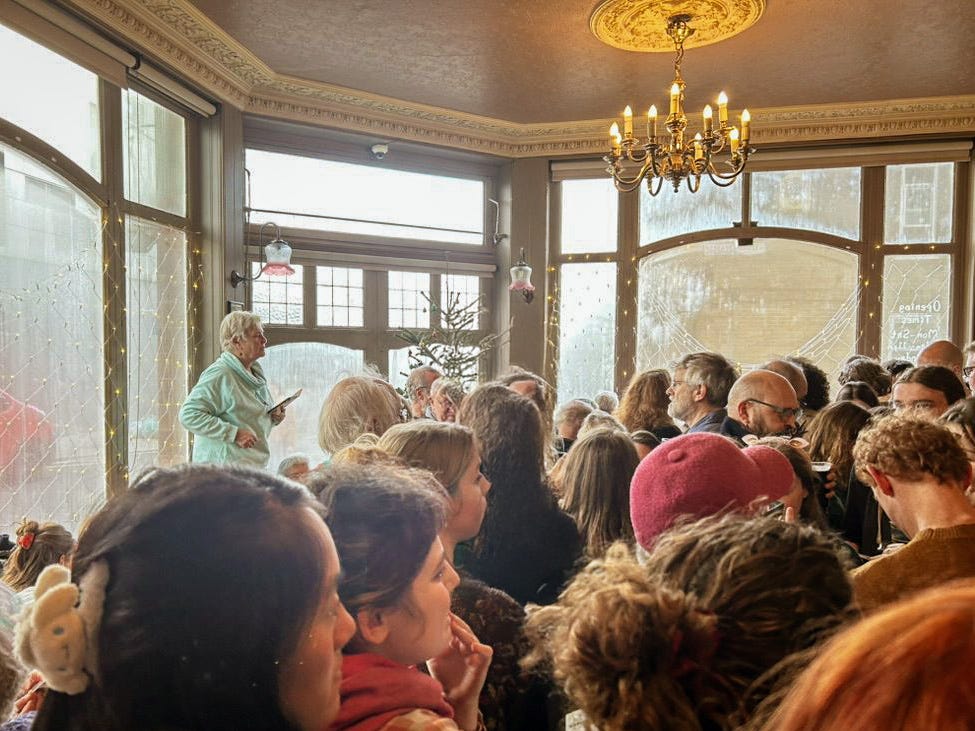
In the first part of our Christmas carols special, we explored how the origins of carol singing are believed to lie in folk music. While we often associate Christmas carols primarily with church services today, it may be that historically the relationship worked the other way around: carolling began as a popular community practice that was only later incorporated into a Christian context.To help untangle this history, we are digging deeper into these folk roots. In this episode, we speak with two guests embedded in the world of folk music. First, Mick speaks to Emma Waghorn, leader of the Kingston-upon-Thames folk choir, Pielarks.Next, Mick chats with Jeff Dent. In 2005, Jeff co-founded Traditional Carols in London, a project where friends meet annually to sing in London pubs. Jeff shares how he was inspired by the traditional caroling villages around Sheffield. Throughout the episode, we’ll hear clips of Pielarks and various pub sessions. It is a striking reminder that caroling has a historic place in noisy, public spaces, and it’s a pleasure to hear how these singers cut through the crowd to capture the public’s attention. We begin with Emma Waghorn.LinksPielarks choirVideo intro to PielarksTraditional Carols in LondonArticle by Jeff Dent Get full access to Arts First at artsfirst.substack.com/subscribe
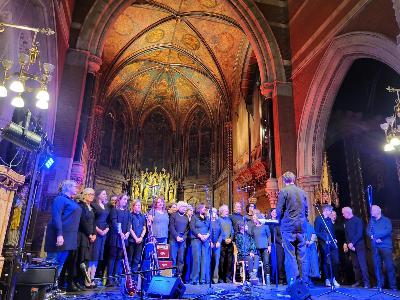
This Arts First Special explores the history and traditions of the great Christmas carol. We take a look at how the carol emerged, has been shaped by different influences and communities, and how they continue to change. As it’s a Christmas Special and we have so much great material we took the bold decision of splitting it into four short parts with plenty of overlapping material. In part one Michael and Niall speak with historian and chorister Kevin Yuill about the origins and development of Christmas carols, from their medieval roots to their movement between sacred and secular settings. Our conversation introduces key questions that run throughout: what defines a carol, how popular and religious traditions interact, and why carols have proved so adaptable and enduring.In the second part we take a look at folk and secular traditions, and community carol singing outside the Church, while in part three we dig down into the relationship between carols and the organised Church, in its varied liturgical forms. The final part we gets us to some really fun recordings. We talk to our friends about what carols mean to them and what they are up to this Christmas. We even persuade one or two of them to give us a few lines of their favourite carols. And as you’d expect there’s lots of music along the way. We’ve been recording in pubs, in churches, in people’s gardens. Music from part one comes from Mick’s wonderful SYRINX Choir, who are performing a song called Winter Song written by Anna Tabbush. You can find that on Spotify.We hope you enjoy this episode. Parts two, three and four will be out before Christmas Day so please stay tuned.Merry Christmas! Get full access to Arts First at artsfirst.substack.com/subscribe
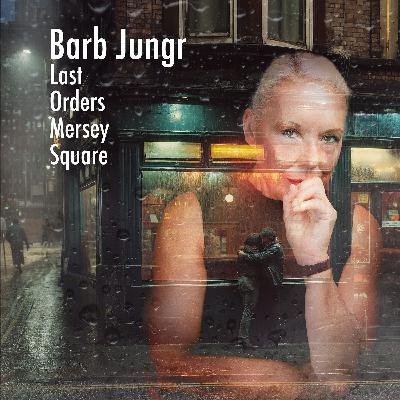
In this episode of Arts First, we turn our attention to music and the art of song: songwriting, interpretation, and performance. And who better to guide us than one of the most distinctive and acclaimed singers working today – Barb Jungr.Jungr has been described as “one of the most accomplished British singers of her generation,” a performer known for her ability to reinterpret familiar material and uncover new layers of meaning. As David Finkle of the Village Voice put it: “There’s no one like her in the States, or in her home, England.”Joining us is writer and academic Dr Shirley Lawes – specialist in culture and Modern Foreign Languages, and a Chevalier dans l’ordre des Palmes Académiques, awarded by the French Ministry of Education for her contribution to French language and culture. Shirley is also a regular at Barb’s London shows. In a wide-ranging and often funny conversation, Barb speaks about the musical world she grew up in:“My mum and dad listened to the radio all the time. As a little girl I got taken to the opera; we went to see Carmen and my dad said it was ever so hard to get people to play the role because she has to die every night… and of course I believed him!”She recalls cinema trips, early musical influences, and the mixture of classical, jazz and popular music that filled the house:“We were listening to everything – Nina Simone, Nat King Cole, South Pacific. We had the album at home and I learned the whole thing from having that record.”She talks about musical roots and influences, from northern England to the Southern States of America, which she explores in her 2010 album Stockport to Memphis, and her most recent single Last Orders at Mercy Square.She tells us about how moved she was on a trip to Memphis, one of America’s great musical cities. She describes arriving at the Stax Museum (former home of the famous soul music record company):“I burst into tears. All of it tore me apart. I had never understood the very direct links between the Civil Rights Movement, the Lorraine Motel and Stax itself… what a huge threat that label was in the Deep South, because it was utterly integrated. So I finally got to Memphis - I grew up with that music.”Barb speaks about some of current writing projects, including Worthing Girls, a new musical written with Sue Teddern and inspired by the classic TV comedy Golden Girls:“It’s about four women who share a Worthing sea front house. It’s very funny and it was a challenge for me ‘cause I said, I’m gonna write all the songs and all the music. We did two nights in Worthing – a workshop performance – I was knocked out that people laughed and got it and cheered.”It’s a wide-ranging and engaging conversation, full of stories, humour and insight into Barb’s creative life and career. We hope you enjoy it. LinksBarb Jungr’s website, which includes videos, recordings, gig and show news and more. Stax Museum Memphis More on Worthing GirlsDr Shirley Lawes profile. Get full access to Arts First at artsfirst.substack.com/subscribe
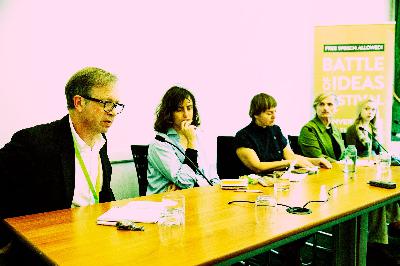
In December last year, critic Dean Kissick, in an article for Harper’s Magazine, caused controversy in the contemporary art world. He complained that the ‘fascination with identity’ was lending to a ‘nostalgic turn to history’. The ‘socially conscious turn’ of the early 2010s, he said, meant prestigious galleries were overwhelmed with works that were ‘progressive in content but conservative in form’, noting that ‘everyone in the world of contemporary art wants to revive a tradition, however recent’. What is lacking, he wrote, is much that is ‘inventive or interesting’.Perhaps this wave of progressivism is over. Commentators have heralded Trump’s second term as a ‘vibe shift’ and a rejection of identity politics. Following the cues of New York’s postliberal ‘Dimes Square’ subculture, youth-oriented ‘post-woke’ cultural scenes have popped up in major cities.But the same issues arise in these enclaves: few of the emerging works appear visually or ideologically new. For example, New York’s Fiume Gallery greeted Trump’s ‘spiritual insurrection’ by adopting the accelerationist ideals of the Italian Futurists and the neoclassical look of online ‘vaporwave’. Fashion designer Elena Velez shocked magazine editors by taking aesthetic cues from Gone with the Wind. And in June, ‘dark enlightenment’ figure Curtis Yarvin put in a bid to represent the United States at the 2026 Venice Biennale with a pavilion themed around Titian’s Rape of Europa.‘Art wants to break taboos’, Yarvin told Vanity Fair. But artists have been trying to break taboos since the age of Duchamp’s urinal. Will these latest provocations continue to resound when even the president himself relies on social-media shock tactics?How will a post-woke age affect the output of the contemporary art world? What role should artists take in the ‘vibe shift’? Will new styles emerge to greet this new political landscape – or did the roots of our old artistic stagnancy lie in something deeper than identity politics? And after years of a political controversy-offence cycle, is there still potential for grassroots provocation?SpeakersDr JJ Charlesworth, Art critic; editor, ArtReviewPierre d’Alancaisez, Co-founder, Verdurin; art critic, The CriticMaria Lisogorskaya, Artist; co-founding member, Assemble, Dr Ella Nixon, Art historian and writer; post-doctoral researcher, University of CambridgeChairVicky Richardson, architectural writer and curator; former head of architecture and Drue Heinz Curator, Royal Academy of Arts, We are grateful to the Battle of Ideas 2025 team for recording and allowing us to podcast this discussion here. Get full access to Arts First at artsfirst.substack.com/subscribe
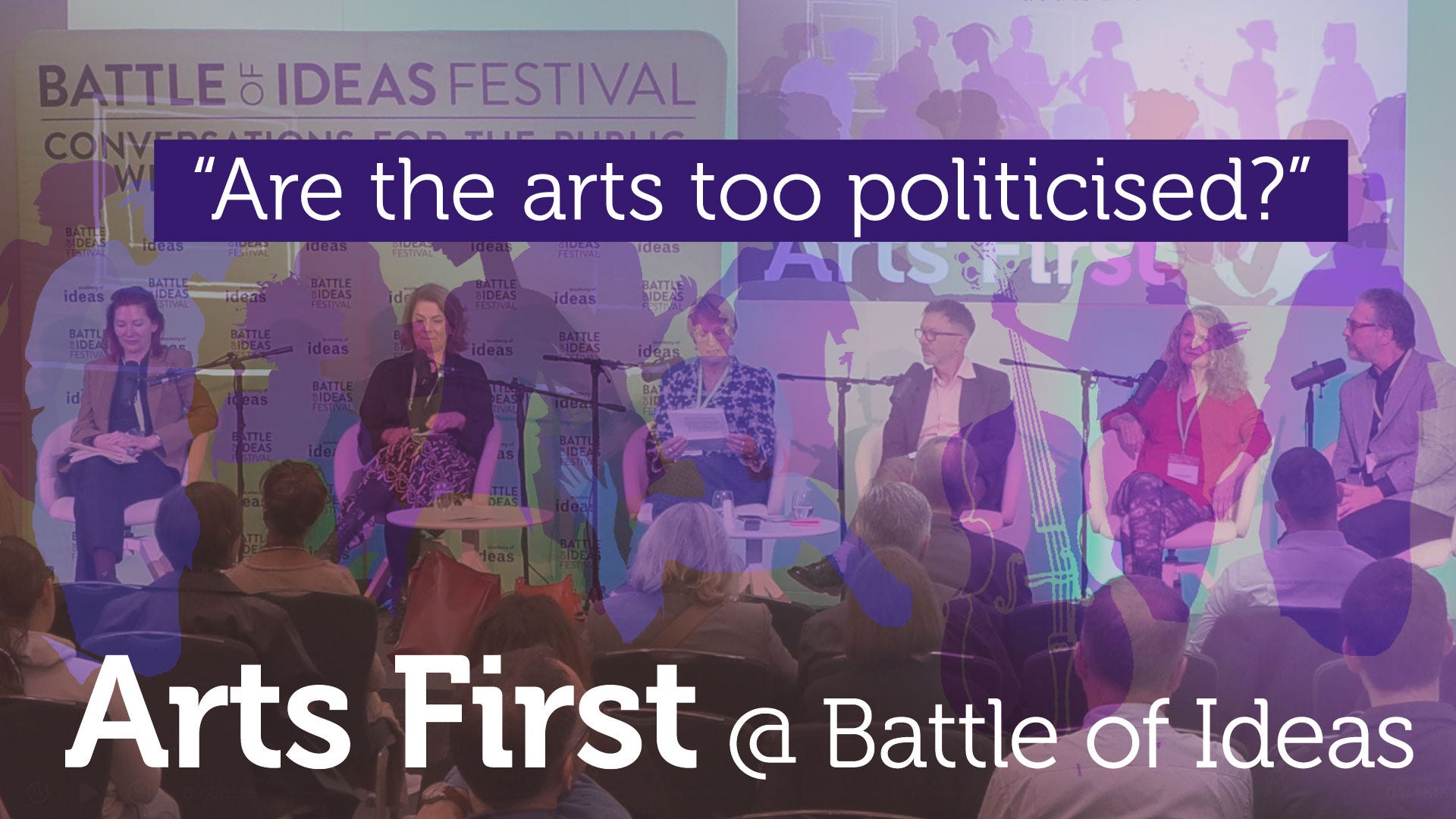
In this special live edition, hosts Wendy Earle and Niall Crowley explore the crisis of freedom of expression in the arts and ask how artists survive – and even prosper – in an age when political activism or ‘artivism’ has proliferated within the arts.The arts have long been considered a sphere of freedom, with successful artists often thriving on a reputation for pushing boundaries and challenging how we see the world. But as activism has taken hold, artists are increasingly under scrutiny – whether for their work, what they think or even who they associate with. To what extent does this new censoriousness affect artists and how do they deal with it?Wendy and Niall are joined by writer and journalist Joan Smith, cultural historian Dr Tiffany Jenkins, dancer Rosie Kay and New Culture Forum Literary Festival director, Philip Kiszeley to reflect on this challenging new climate for artistic production. How has been the impact of activism varied across different spheres of art? How has cancellation – or the threat of cancellation – affected their work, careers and lives? How should artists remake the case for artistic freedom?Guests panelistsJoan Smith: writer and journalist, whose latest book, Unfortunately She’s a Nymphomaniac, takes a thoroughgoing and fascinating swipe at the misogyny in the representation of women in Ancient Rome… including the failure to expose the vile treatment of women of the time. (full biog here)Dr Philip Kiszely: academic, author and political commentator, a Senior Fellow of the New Cultural Forum who has confronted attacks on freedom of expression at many different levels as an observer of and warrior in the culture wars. (full biog here)Rosie Kay: first and foremost a dancer and choreographer, she is a courageous defender of free expression in the arts, and co-founder of Freedom in the Arts with Denise Fahmy, which recently published a report evidencing how much this principle is now under threat. (full biog here)Dr Tiffany Jenkins: cultural historian, whose most recent book, Strangers and Intimates, provides a fascinating account of the emergence of the modern concept and value of privacy over the past 2000 years, pointing to how much that value is now being undermined. (full biog here)A big thank you to everyone at the Battle of Ideas Festival and staff at Church House, Westminster for the recording. Get full access to Arts First at artsfirst.substack.com/subscribe
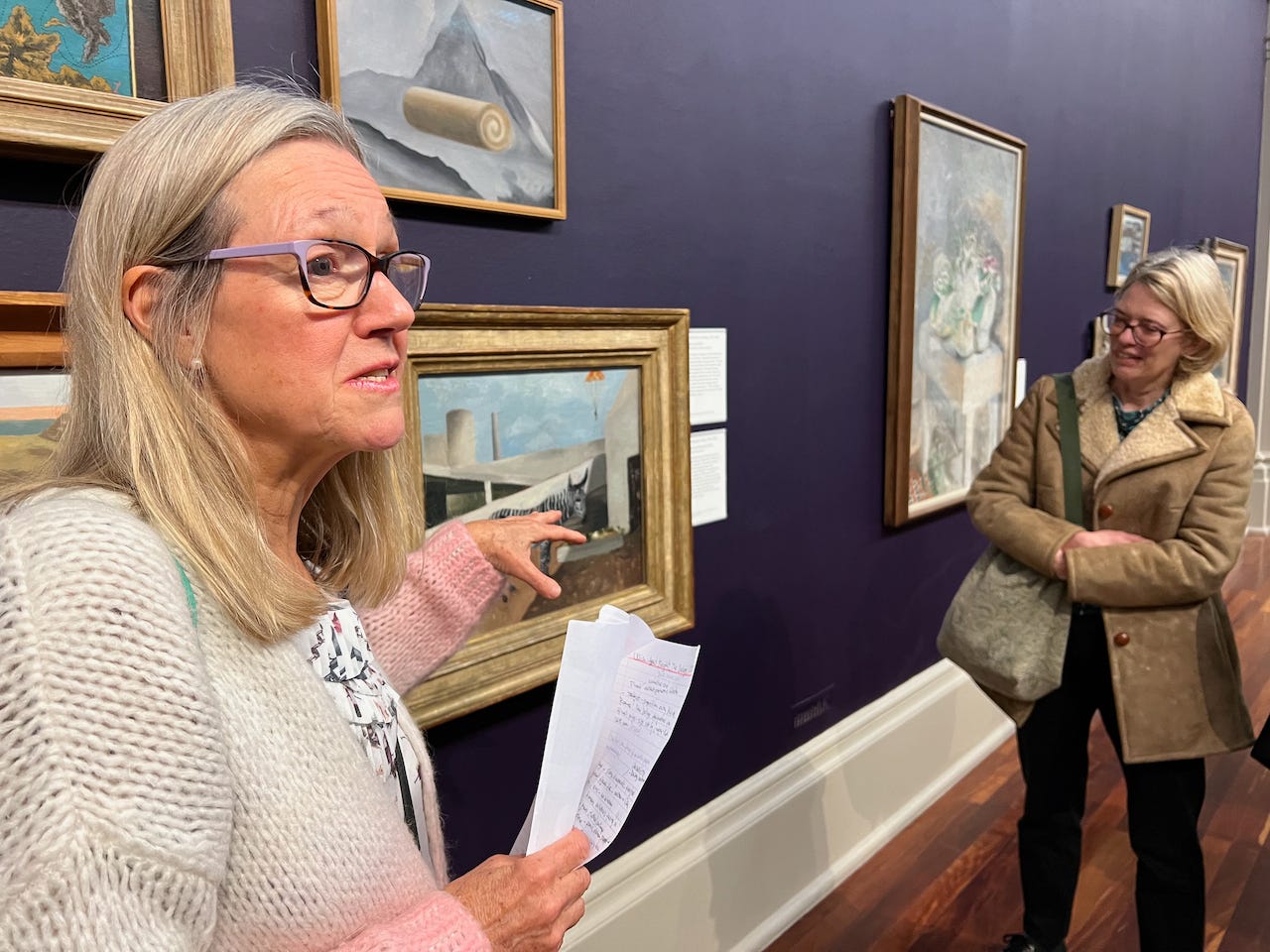
Do you enjoy going to art galleries? Have you ever done a tour of a gallery? Dido Powell’s tours are unique in the way she brings together her experience as an artist and her knowledge of art history to select and examine works in a gallery. This podcast offers a flavour of her approach to analysing an art work, as well as asking her about her practice as an artist and her interest in art history. Do listen, and if you would like to join a tour, details of the first one are below. If you would like to look at the painting while Dido describes it, go to the Tate website. Dido Powell’s London Art Gallery Tours 2025-2026This series of tours focuses on the theme of Fantasy and Imagination in Art.First tour Venue: Tate Britain, Millbank, London SW1P 4RG Date: Sunday November 30Time: 3pmTour leader, Dido Powell will select a small number of paintings for close analysis. We will start by looking at fantasy paintings from the 18th to 19th centuries inspired by literature and classical myths. We will explore the significance of the transformation from the written story to a visual language, of colour, haze, apparition and morphing creatures and humans.This will lead into looking at 19th century portraits of women in which the focus is on inner vision and dream, in defyance of the materialism and sexual prudery of the era.Finally , looking at 20th century paintings we will study the impact of new technologies, film and television on fantasies of the unreal made realistic, an ambition which enabled the Surrealists to proclaim that imagination was about to slash our notions of reality and rule supremeForthcoming tours will develop this theme. Dido will select for explication works in each gallery that we visit which defy or side step easy art historical classification. The creators of these works will have been driven by inner visions, a sense of mystery, secrecy, dreams, fantasies and obsessions. We will investigate the ways in which observed objective reality can be used to give credence to subjective fantasies and mysterious inner worlds, whilst simultaneously reflecting, for example, Enlightenment ideas on individuality and romantic myths associated with the crazed creative genius.These tours have now been running successfully for several years. Dido Powell is an excellent tour guide: as an artist and art history teacher, she provides unique insights into both familiar and less familiar masterpieces — including their historical context and their technical and aesthetic qualities. Her tours are always accessible, stimulating, informative and enjoyable.Price £15 per personIf you would like to book a place and/or receive information about further tours taking place from January to June 2026, please contact us here. Get full access to Arts First at artsfirst.substack.com/subscribe
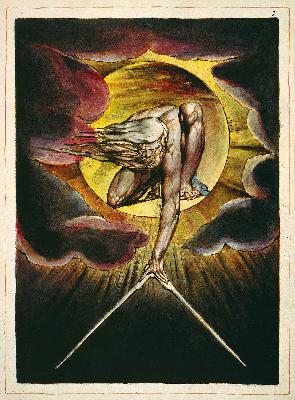
William Blake was a religious nonconformist, deeply philosophical and political. In his recently published and highly acclaimed book, ‘Awake! William Blake and the Power of the Imagination’, Mark Vernon finds him ‘brilliant and enticing and whilst regularly delightful, also often not easy. But then transformation isn’t. To follow him is to trust his promise that powers of imagination can lead us to a side of life otherwise impossible to know.’We invited Mark Vernon to join the ArtsFirst team, Niall and Michael, and Blake aficionados, Gareth Sturdy and Shirley Dent to consider the question of how Blake created innovative printing techniques to explore artistically and imaginatively the complex spiritual and philosophical discussions of his time. Focusing on Blake’s printing techniques, Michael Owens leads a conversation about one of Blake’s most famous images, the frontispiece for his 1794 work ‘Europe a Prophecy’, popularly known as: The Ancient of Days. One of the reasons this work is so captivating isn’t just the image itself, but the way Blake made it, using his innovative process of illuminated printing — what he called the ‘Infernal Method’. We examine why this process was so unique and how it shaped his aesthetics. We go on to look at how the artistic world responded to Blake’s work and how the cultural elite of his day saw him. Why does Blake seem more popular and relevant today than ever. Are we reading our own concerns into Blake, rather than letting him challenge us on his own terms?And finally, does Blake still matter now? What makes him speak to us in the twenty-first century?”Shirley Dent is an associate fellow of the Academy of Ideas and was formerly communications director. She is a communications specialist and consultant and lectures on public relations. Shirley researched the editorial and bibliographic history of William Blake’s works for her PhD, co-authoring a book on the subject with Jason Whittaker, Radical Blake.Gareth Sturdy is a teacher of physics, mathematics and English. An organiser of the Academy of Ideas Education Forum, he regularly runs debates on education and current affairs. He is a trustee of the Blake Society, where he has a special interest in bringing the poet’s work into schools, and was part of the team responsible for laying the new monumental stone at Blake’s grave. He can be found on Twitter/X @stickyphysics.Mark Vernon is a London-based psychotherapist, writer and former Anglican priest. A keen podcaster and a columnist with The Idler, he speaks regularly at festivals and on the BBC. He has a PhD in Philosophy and degrees in Theology and Physics. Blake, quoted by Vernon, and inscribed on his gravestone in Bunhill Fields:I give you the end of a golden string, Only wind it into a ball. It will leaf you into Heaven’s gate Built in Jerusalem’s wall.Further reading:Awake! William Blake and the Power of the Imagination, Mark Vernon, Hurst &Co, 2025 Mark’s Youtube channelFinding Blakehttps://findingblake.org.uk Get full access to Arts First at artsfirst.substack.com/subscribe
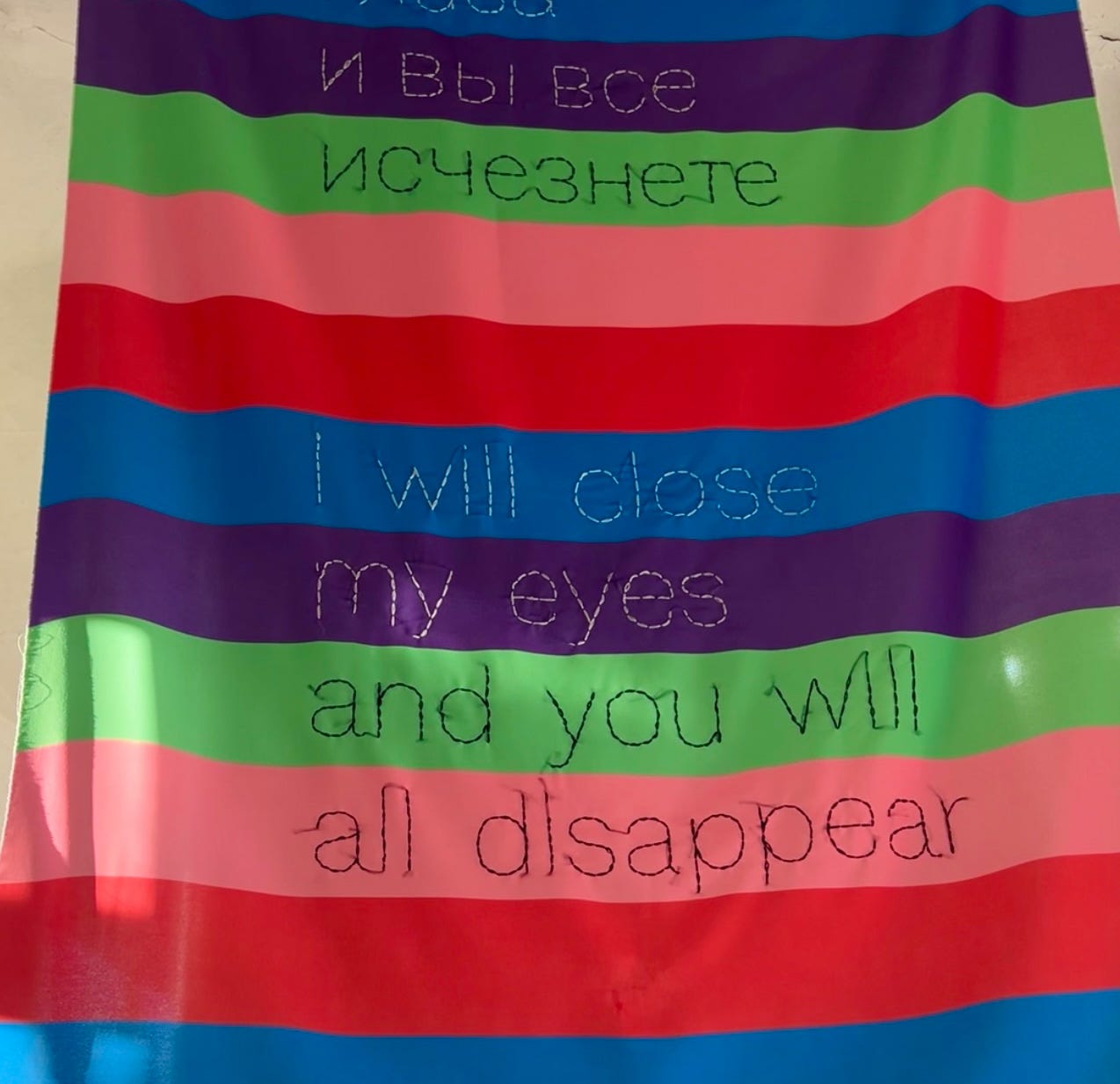
In 2022, a Russian art duo, who call themselves Pomidor, left their homes in Russia to take up residency in the UK because they could no longer work in Russia. Maria and Polina began working together in 2018, after they met as art students in Moscow, both dedicated to creating socially engaged art. In 2021, they founded Pomidor Residence to support like-minded artists. However, a dramatic change in legislation significantly restricting freedom of speech in Russia, and because their art criticised Russia’s invasion of Ukraine, it became clear they could not stay in that country. While Polina has stayed here in London, Maria, a Jew, decided to make Aliyah and move to Israel, although she still works in London.Their move to London offered new scope for their art which they were excited about. In the summer of 2023, they were approached by an east London gallery, Metamorphika, and were booked for an exhibition, in July 2024. But immediately after the exhibition launch party, the gallery curator called them into a meeting the next morning, literally hours before the show was due to open to the public. There had been complaints that Maria had expressed on social media her grief for Israel after the Hamas’ attack on October 7, 2023. He told Maria she would have to repudiate her country or take down the exhibition. Maria and Polina had come to the UK, where freedom of expression is supposedly a core value, only to find their freedom cruelly curtailed. In this episode I interview them about their story.A strong theme within Pomidor’s work is the common reluctance to speak out, and the readiness to silence speech. In Russia, open and honest discussion about the war in Ukraine is suppressed. Taking inspiration from a book, ‘An Elephant in the Room’ by American sociologist, Eviatar Zerubavel (Oxford University Press, U.S.A, 2007) which examines the social and political underpinnings of silence and denial — their work tries to highlight the problem of keeping of ‘open secrets’, of forbidding public discussion and the use of certain words, such as ‘war’, ‘peace’ and ‘attack’, in referring to Ukraine. So their exhibition featured flags embroidered with phrases such as…‘What would you do in my place?’‘Silence like a cancer grows’‘I will close my eyes and you will all disappear’and the mysterious rhyme…‘Yesterday upon the stair I saw a man that wasn’t there He wasn’t there again today Oh how I wish …. [he’d go away]’. These flags made up an installation, hanging down from the ceiling, with phrases and statements stitched into the fabric, gently whispered as you brush past them. They ask you to question the consequences of silence and denial, and of silencing dissent, of not speaking about difficult realities. It is deeply ironic that the exhibition, which was not even about Israel but rather responding to Russia’s invasion of Ukraine, was cancelled as a result of Maria’s denunciation of Hamas’s monstrous attack on her new home, Israel. Despite apparently wanting initially to exhibit Pomidor’s flags challenging Russia’s attempt to silence dissent, the gallery decided to dissociate from her as an Israeli, implying that her support for Israel made her work a legitimate target of similar silencing. Manick Govinda’s review of the exhibition, which eventually happened at the Not for Sale Gallery in Hackney, explains it well. The story as reported in The Times of Israel and by Index on Censorship. Pomidor was invited to exhibit at the Women Create exhibition at the end of May and Claudia Clare references their experience in Episode 28 of this podcast. The experience of antisemitism in the arts is becoming shockingly prevalent, as this YouTube video by the Campaign Against Antisemitism shows. More about Pomidor Get full access to Arts First at artsfirst.substack.com/subscribe
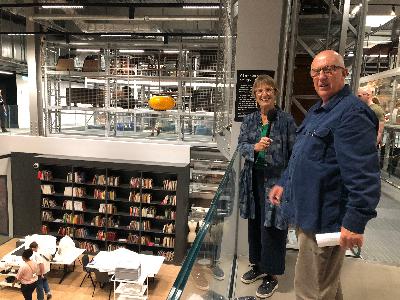
In this episode, Wendy Earle is joined by Niall Crowley and new team member Michael Owens to discuss the recently opened V&A East Storehouse in Stratford, East London. We visited the building together, and talk about what we see as we go around it … a very enjoyable field trip. The Storehouse, which opened at the end of May 2025, now houses more than 250,000 objects, 350,000 library books, and 1,000 archives from the V&A’s collections, previously stored at Blythe House in Olympia. Located in the Queen Elizabeth Olympic Park, the new facility is part of the museum’s wider expansion into East London.The building was originally completed in 2011 as the Media and Broadcast Centre for the London 2012 Olympic Games. Its large warehouse-style spaces have since been repurposed to hold the V&A’s collections and to provide new opportunities for access.The discussion also touches on the significance of the Storehouse’s location. Stratford has changed rapidly since the Olympics, with new housing, retail, and cultural spaces, while its longer industrial history - from dockside industries to plastics manufacture and confectionery production - remains visible in the area’s character. Looking ahead, the Storehouse is expected to serve not only as a collections facility but also as a resource for academic research and study, raising questions about how such a space might be used by different audiences in the future.This episode of the Week in Art podcast provides more detail of this facility. And you can go to the V&A website to get details about how to visit it, including ordering items for closer examination. Get full access to Arts First at artsfirst.substack.com/subscribe
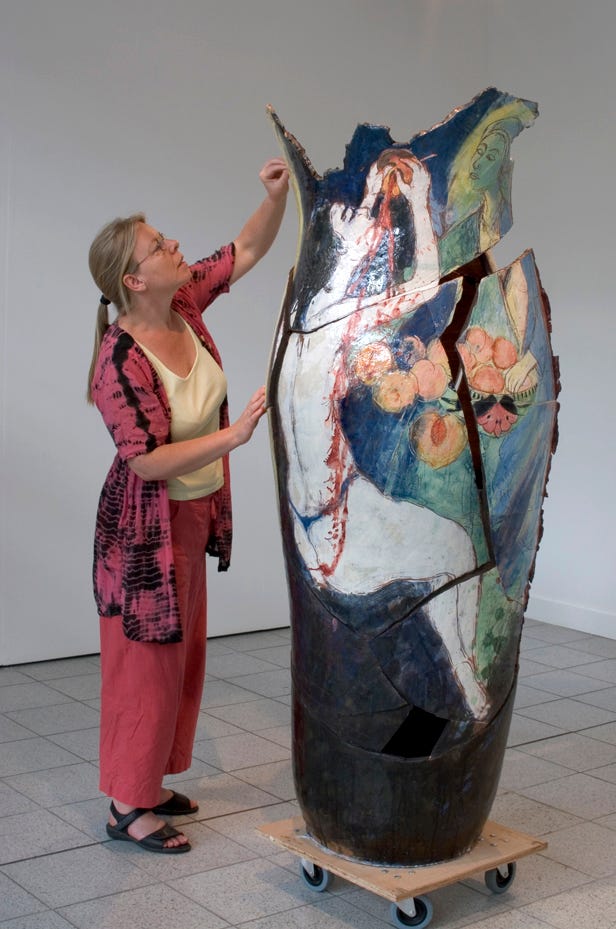
The worrying tendency towards censoriousness in the arts is destructive of creativity. Artists often express difficult ideas and reflections in their art, often dealing with the challenges of the human condition … such as the capacity for people to harm themselves and each other. Inevitably an artist’s work might cause offence to some people: but that is part of what artists can do … they address issues in ways that stimulate different responses from different people — sometimes enchanting, sometimes challenging and even offending. And we are free to look, or not look — if it upsets you too much. Art that isn’t simply propaganda — it’s not about telling you what to think: at its best it is both beautiful to look at and capable of stimulating a variety of emotional and thoughtful responses in viewers. Unfortunately curators have become risk averse about exhibiting work that might offend, often overestimating viewers’ capacity to be offended.Claudia Clare’s work can be quite challenging in terms of its content, which focuses particularly on issues faced by women, such as rape and abuse. For example, her series, Shattered, consists of five giant sized, broken and mended pots made in response to women’s accounts of surviving male sexual violence, 2004-7.She makes fabulous pots, some huge, and because she is extremely skilled and inventive in her use of her chosen material, clay — one can spend a long time looking at a piece without ever quite exhausting its possibilities. Her work tends to be characterised by narratives which she creates and draws and paints on to the clay, using a range of glazing techniques. Not all her pots are politically charged, but in this podcast we focus mainly on those that are, some of which have triggered her cancellation from exhibitions.From Claudia’s notes on her images: Princess Hymen is on the five pots in Shattered - it was the one partially hidden after I managed to convince them not to leave it out completely. Shattered was selected by Cartwright Hall and shown at Cliffe Castle, one of their museums.The broken Pot is Remembering Atefeh, 2011 which is now in The Women's Art Collection.How the Prophet was Driven to Drink, 2015 was shown at The People's History Museum, Manchester when they decided the image might be that of the Prophet Muhammed. It wasn't the title or text that put them off. The exhibition was called, 'Ideas Worth Fighting For.'Brave Face, 2022 was part of 'And the Door Opened,' my project with women@thewell (sic).Do check Claudia’s website for more information and images. In particular, check out her ‘Projects Past and Present’ to see a full range of her work. And there are also pots for sale! Get full access to Arts First at artsfirst.substack.com/subscribe
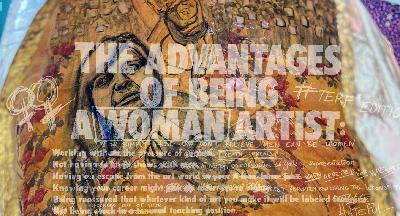
The ongoing issue of artist cancellation is of serious concern. Public pressure to cancel artists’ exhibitions, performances or publications because their views are consider ‘unacceptable’ to some people, and the willingness of some institutions to concede to such complaints, is a serious infringement of the right to freedom of expression. Not only does it potentially destroy the livelihoods of individual artists, it creates a climate of constraint … an atmosphere where artists do not feel free, as they should be, to explore and examine and create work that perhaps challenges the way we think about the world around us. Freedom in the Arts recently published a report showing a worrying trend that artists are increasingly afraid to speak out:Drawing on real experiences from across the sector, the report identifies a chilling effect that disproportionately silences emerging or marginal voices. It highlights how politically sensitive topics—such as gender identity, Israel-Palestine, and race—have become virtually off-limits, undermining the open debate and creative risk-taking that define the arts. We have now done several episodes examining this problem, trying to show why the new authoritarianism towards the arts is so problematic (see episodes 21,23, 24 & 25). This further episode is the first of two podcasts with the artist, Claudia Clare. In the first episode, following up on her interview with Rachel Jordan earlier this year about dissident artists (Episode 16), Claudia tells us about her and other artists’ experiences of cancellation. In the next episode she talks about her own work as a supremely gifted ceramicist.There is no doubt that artworks that express a clear political perspective are not necessarily just propaganda: they can also be art, as Claudia indicates in this episode. And you don’t have to like the propaganda in order to love the artistry of a work. Whether art can change the world is something for another discussion, but artists — like everyone else — should be allowed to express a viewpoint, whether in their art or elsewhere, even if it makes people feel uncomfortable or ‘offended’.Claudia has been working as a ceramicist since the mid 1980s, and she makes beautiful pots with political intent. Because her work can be challenging to contemporary sensibilities, and because she is also an outspoken gender critical feminist, she has faced cancellation a number of times over the past 15 years or so, since cancellation became fashionable as a contemporary form of censorship.She was invited to curate the exhibition of cancelled artists for the Women Create conference that took place in May this year. This conference was organised by performance artist, Victoria Guggenheim, to bring together women artists who have faced cancellation or exclusion because of their views. Over 30 female artists were represented in the exhibition, all of them affected, one way or another, by contemporary intolerance towards dissent. These artists included gender critical feminists, apostates from Islam, and Zionists. Note: During this episode, Claudia refers a couple of times to Maya Forstater, the gender critical activist whose case against her employer established that gender critical views are protected as a belief under the Equality Act 2010. This case has been extremely important in pushing back against attempts by trans activists to censor people, including artists, who publicly assert the well-known fact that women are adult human females.We hope you enjoy this podcast, and welcome (constructive, feedback and new suggestions. If you are an artist who have faced cancellation please let do us know your story. And you might want to check out Freedom in the Arts website for support. Get full access to Arts First at artsfirst.substack.com/subscribe
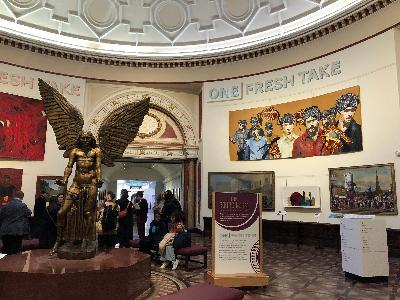
This episode returns to the subject of museums—this time with a focus on Birmingham. Across the UK, museums are facing profound challenges: cuts to public funding, declining sponsorship, and growing confusion about their purpose. Institutions are under pressure to redefine themselves around themes of colonialism, identity, and inclusion—often with uncertain results.At the heart of this episode is Birmingham Museum and Art Gallery (BMAG), a grand Victorian institution that closed in 2020 during the Covid lockdown. Four years later, its partial reopening in 2024 raised more questions than answers. Much of the building remains closed. Large sections of the permanent collection are nowhere to be seen. Visitors and former staff alike have expressed confusion and concern.Why is so much still missing? Why has there been so little public explanation? And why have local media and cultural institutions stayed so quiet? Brendan Flynn – is an independent curator, and is the former Curator of Fine Art at Birmingham Museums & Art Gallery responsible for the research, development, display and interpretation of the Fine Art collections. In 2014 Brendan was elected Professor of Art History for the Royal Birmingham Society of Artists.Michael Savage – is an investment banker by profession, but for our purposes writes a very well-respected blog called the ‘Grumpy Art Historian’. Art history is Michael’s passion, and he knows a fair bit about the Birmingham collection and its history, as he grew up in the city. You can find him on X @GrumpyArtRosie Cuckston - is one of the organisers of Birmingham Salon, which hosts regular in-person debates around the city on a wide range of topics – arts, culture, politics, philosophy et. Rosie was lead singer with Birmingham band Pram. Earlier this year Rosie organised a Birmingham Salon discussion titled ‘What future for Birmingham's museums?’ Her guest speaker was city Councillor Robert Alden, who is on the Board of Trustees of Birmingham Museums. A short recording of Cllr Alden’s introduction will be available shortly. Please email us if you are interested.Find Birmingham Salon on X - @birminghamsalon Get full access to Arts First at artsfirst.substack.com/subscribe
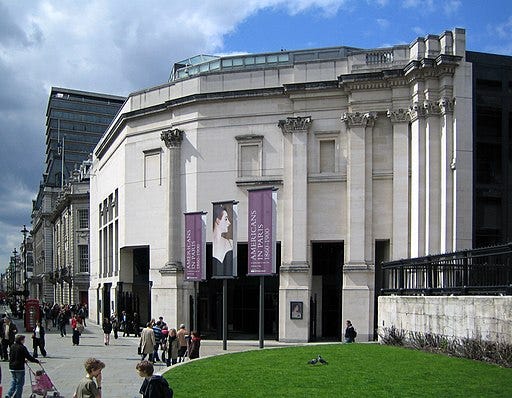
We are delighted to bring you our special tour of the newly refurbished National Gallery in London, UK.This podcast has been going for about a year now, offering you a varied range of episodes which we hope many have enjoyed. Niall Crowley created this substack to collate all the episodes, and provide a bit of additional commentary. Do sign up for regular notifications on future episodes.Still in the spirit of experimenting with what kind of content works well in a podcast format, this episode presents a brief tour of the new hang at National Gallery, with the reopening of the Sainsbury Wing as the gallery’s new main entrance.Quoting an National Gallery Press release:The Sainsbury Wing closed in February 2023 to undergo sensitive interventions to its external façade, foyer and first floor, to provide a better and more welcoming first experience to the National Gallery’s millions of visitors, in a plan designed by New York-based Selldorf Architects, working with heritage architects PurcellThe Sainsbury Wing reopened at the beginning of May and the critics’ responses have been broadly very positive, but self-styled ‘Grumpy Art Historian’, Michael Savage pulled me aside when we recently met at a book launch and suggested we should take a perhaps more critical look for ourselves. So Michael Savage and Dido Powell, with a few interjections from me, take us around what they like and don’t like at the revised Gallery.Michael is an art connoisseur who has a special interest in old masters, and on X calls himself ‘Grumpy Art Historian’; and Dido is an artist and a teacher of art history who runs regular art tours for the Academy of Ideas Arts and Society Forum. Both of them have appeared in previous episodes.By the way, The National Gallery website has a great interactive map, where you can check each of the rooms we visit and the paintings within them. This is not an exhaustive tour, not least because I have been determined to keep within our 40 minute limit. Michael and Dido had a lot more to say about the hang and about the Sainsbury Wing, but I think these are the highlights and hopefully we give you a flavour and you will want to see it for yourself sometime. Apart from anything else — and I should have said this more explicitly in the podcast — the National Gallery has some really beautiful art, and though one might find fault with some aspects of the rehang, and really merits multiple visits of its fabulous collection. Bt the way, if you are interested in attending Dido Powell’s London art gallery tours, which are due to start again in the autumn, please send an enquiry here, and we will let you know about them in due course. We expect to start the next series in the Autumn.(Art reproduced courtesy of https://commons.wikimedia.org) Get full access to Arts First at artsfirst.substack.com/subscribe
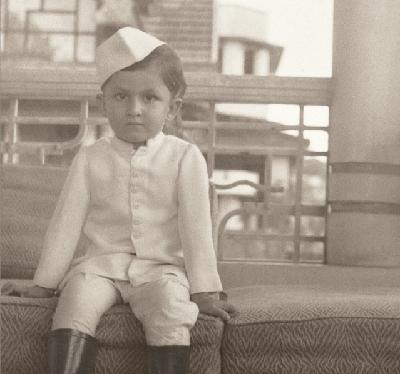
In this episode we pay tribute to the novelist Salman Rushdie, who was subject to a murderous knife attack in August 2022 that very nearly killed him and left him with a damaged hand and blind in one eye. His assailant was sentenced to life imprisonment in February this year.While it’s not entirely clear what motivated the young man he seems to have been, at some level, acting out the fatwa imposed on Rushdie by Iranian leaders in 1989 because they accused his novel, The Satanic Verses, of being blasphemous and thus its author punishable by death. Last year Rushdie’s latest book, Knife, was published. It is an autobiographical account of his fight for survival, and why he was subject to such a violent attack. In it Rushdie describes and reflects on the fatwa against him, which blighted his life for many years, and ultimately culminated in the horrendous attack. He says:…the weaponising of Islam around the world has led directly to the terror reigns of the Taliban and the ayatollahs, to the stifling society of Saudi Arabia, the knife attack against Naguib Mahfouz [the Nobel Prize winning Egyptian novelist], to the assaults on free thought and the oppression of women in many Islamic states and, to be personal, to the attack against me.It is remarkable that Rushdie survived the attack and after a gruelling period in hospital and rehab, he has returned to public life. His courage and fortitude in continuing to defend freedom of expression is even more remarkable. It’s important to recognise that his attempted murder is more than just personal: it has serious implication for freedom of expression that is essential for artistic integrity and openness. Picking up on what Rushdie argues about the weaponising of Islam, how is the growing influence of Islam or Islamism contributing to a more censorious environment that might constrain artistic expression? In this episode Manick Govinda, Ralph Leonard, Khadija Khan and Daniel Ben Ami discuss Rushdie’s novels and whether Islam/Islamism represent a serious threat to freedom of expression.Manick Govinda has appeared previously on this podcast. A courageous defender of freedom of expression in the arts, he is a curator, a consultant and writer. He recently co-curated an exhibition of art reflecting on the October 2023 attacks on Israel by Hamas. He has read most of Rushdie’s novels and is a huge fan. He makes the case for Rushdie as a great novelist.Ralph Leonard follows, with an overview of the fatwa against Rushdie and its consequences. Ralph is a British-Nigerian writer and commentator, specialising in international politics, religion, culture and humanism, and has his own substack, The Black Jacobin where he has written on Rushdie and the knife attack.Also discussing the implications of violent, politicised Islam or Islamism on freedom of expression, particularly in the arts are:Khan Khadija, a journalist and broadcaster based in the UK. She has a particular interest in human rights, mainly women’s rights, as well as minorities and extremism. She is a secular humanist and believes that the freedom to challenge bad ideas is the most effective way to counter extremist narratives. She is an editor and co-host of A Further Inquiry. andDaniel Ben Ami, an author and journalist. He runs the Radicalism of Fools website, examining contemporary developments in anti-Semitism. He argues in his website ‘In my view we need to challenge anti-Semitic ideas rather than try to supress them as a form of hate speech. Attempts to ban bad ideas only leads to them reappearing in new forms.’ Get full access to Arts First at artsfirst.substack.com/subscribe

Comments

Download from Google Play

Download from App Store
 United States