


 Claim Ownership
Aladdin’s Adventure
Subscribed: 0Played: 7
Subscribe

© 托尼李@小宇宙App
Description
Ready to dive into the exciting world of emerging markets? Our podcast brings you firsthand insights, expert analysis, and actionable advice. From the bustling streets of Shanghai to the vibrant cities of Dubai and Singapore, we're your go-to source for the latest trends, challenges, and opportunities.
63 Episodes
Reverse
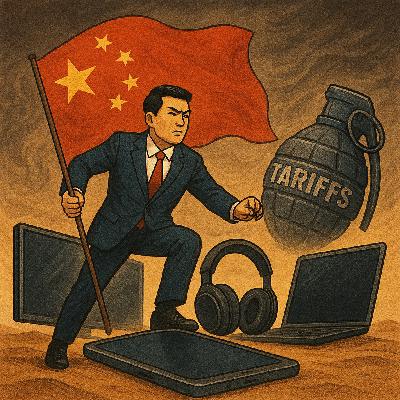
The global robot vacuum market experienced a moderation in growth during the first half of 2025 (H1 2025), following a robust start. Global shipments reached approximately 5 million units in Q1, achieving about 12% year-on-year (YoY) growth, but the pace slowed in Q2. This slowdown was primarily driven by the reduced impact of "Guo Bu" (state subsidies) in the Chinese market, the seasonal shift into the European off-season, and the negative effects of new US tariffs on North American sales.In terms of technology, the industry's leaders have reached an equilibrium, with innovations matched within six to twelve months. Future technological focus includes the deployment of full automatic water/drainage systems (already a significant trend in China) and the integration of high-performance computing, such as Horizon chips supporting 10T processing power, for enhanced intelligence.

In May 2024, a relic of the Cold War space race made a dramatic return to Earth after 53 years in orbit: the landing capsule of the Soviet Kosmos 482 Venus probe, originally launched in 1972, re-entered the atmosphere and crashed into the northeastern Indian Ocean. This event underscores how Cold War technological remnants continue to resonate decades after the Soviet Union’s collapse. The probe’s survival was extraordinary—its 465 kg titanium alloy hull withstood re-entry temperatures of 1,000°C, a testament to its design for Venus’s extreme environment (462°C surface heat, 92-times Earth’s pressure, and corrosive sulfuric clouds). Unlike typical space debris, it remained largely intact, visible as a meteor shower over Chinese cities before splashing into the ocean.The probe’s durability highlights the Cold War’s material science race, where superpowers prioritized performance over practicality. Titanium alloy—strong, lightweight, and heat-resistant—became a strategic obsession. The U.S. used it to build the SR-71 "Blackbird" spy plane, which leaked fuel on the ground due to titanium’s thermal expansion quirks, while the USSR constructed the Project 661 "Golden Fish" nuclear submarine, the world’s fastest but prohibitively noisy and expensive. Both projects exemplify a "technology trap" where cutting-edge materials led to unsustainable costs and limited scalability.Beyond superpower rivalries, other nations pursued unique material-driven paths. France, post-WWII, leveraged natural uranium for graphite-cooled reactors to achieve nuclear independence, though later adopted U.S. pressurized water reactor tech. China, after early setbacks, pioneered thorium molten salt reactors (MSRs) by overcoming corrosion and toxicity challenges, now leading in next-generation nuclear energy. The podcast also explores niche materials like low-background radiation steel (salvaged from pre-1945 shipwrecks for sensitive instruments) and gallium nitride (GaN), key to modern semiconductors and aerospace advances.Ultimately, the Kosmos 482 story reflects humanity’s quest to master temperature—from bronze smelting to controlled nuclear fusion. The probe’s return symbolizes both the ambitions of a bygone era and lessons for today: innovation must balance brilliance with practicality, ensuring technologies endure beyond their political origins.

"Today, we are going to explore whether the changes brought by Trump signify that the United States is undergoing a "transformation" analogous to the one led by Mikhail Gorbachev prior to the Soviet Union's collapse, delving into the nature, direction, and impact of this change on the world order.The change brought by Trump is a transformation of a major power, whose impact transcends typical political cycles. It touches upon four levels within the United States: the internal political order, the economic order, as well as the external regional order and international order. Some draw a parallel between "Trump's Transformation" and America's "Gorbachev-Svolution", as Trump takes aim at the American superstructure.1. Restructuring of Internal Order and Political ChangeThe domestic order restructuring brought by Trump is comprehensive. The "Trumpification" of Political Ideology: Trump has elevated national populism to an unprecedented height, leveraging populist and nationalist methods to counter established political establishments and parties. Ideologically, he represents traditional, often religiously-tinged values, standing against diversity, equity, and inclusion (DEI), "woke" culture, and LGBTQ+ rights. Changes to the System of Separation of Powers: Trump appears to possess a remarkable ability to disrupt the system of checks and balances. He capitalizes on a paralyzed or conflicted Congress and judiciary to impose his will upon the legislative and judicial branches through executive means. This is seen as a core method in his effort to overhaul the "deep state". Federal-Local Relations: Trump has shown a tendency to use federal power against predominantly Democratic "deep-blue" states and cities, even reportedly considering using military force to intervene in state and local politics. Military's "Inward Turn": Trump signed an executive order to revert the "Department of Defense" back to its old name, the "Department of War". His objective is to shift the defense focus towards "homeland defense" and the "Western Hemisphere", while implementing significant reforms within the Department, including purging "anti-war diversity policies". Media commentators have described a related summit as a "turning point" for the US military.2. Retrenchment and Reshaping of Foreign PolicyTrump's foreign policy priorities have shifted to a "Domestic-Periphery-Backyard" focus. Peripheral Nations: This refers primarily to Mexico and Canada. The US policy towards these neighbors aims squarely at extracting economic benefits and effectively controlling illegal immigration and goods. Backyard (Sphere of Influence): Latin America is treated as the US sphere of influence, where its diplomacy has been less than successful. Trump once announced renaming the "Gulf of Mexico" the "American Gulf", intending to diminish Mexican claims and counter Chinese influence in the region. Retreat from Regional and International Orders: Trump is committed to reducing US commitment to various regional orders. This policy of "withdrawal" is not merely a Trump tactic but also reflects shifts in the global geopolitical order. A US retreat from regions can create power vacuums leading to instability, leaving other actors to manage the consequences.3. The Essential Difference Between Trump's Change and Gorbachev's ChangeThe article discusses whether "Trump's Transformation" could evolve into a "Gorbachev-Style Transformation". The Core Issue for the Soviet Union: lay in the superstructure and production relations becoming incompatible with the development of the economic base and productive forces. Gorbachev's reforms aimed to break through the economic and technological stagnation of that time. The Core Issue for the United States: is precisely the opposite of the Soviet case. The core US problem is the contradiction between the superstructure and production relations and the advanced economic base and productive forces. Object of Reform: Trump's reforms target the superstructure, not the economic base. He seeks to strengthen the expression of capitalism and safeguard the interests represented by the US capitalist system. Therefore, this transformation involves adjustments to the superstructure and production relations, aiming to consolidate America's traditional constitutional system.
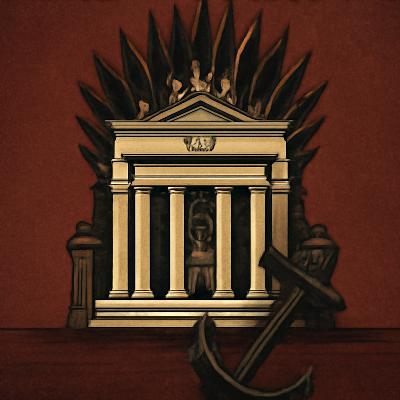
In this episode, we'll explore the complex, contradictory history and current political battles faced by the United States Federal Reserve (Fed), viewing its role as a high-stakes "Game of Thrones of global power". The episode focuses on how investors can navigate the challenges posed by political interference, fiscal dominance, and the emergence of a "losing anchor fiat world".
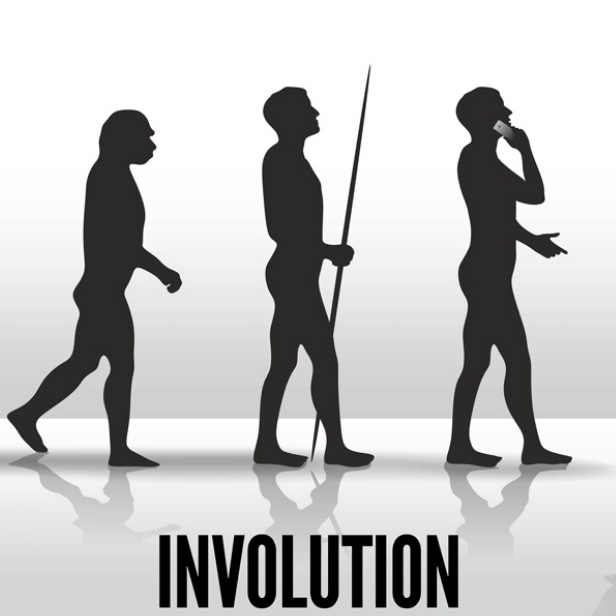
This episode dives deep into the phenomenon of "involution" in the Chinese economy, exploring its definition, widespread manifestations, underlying causes, and potential pathways forward, both at the national policy level and for individuals and investors.

In this insightful episode, we discuss the profound implications of AI for humanity. Departing from a purely technical perspective, offers a thought-provoking analysis, drawing on historical and philosophical insights to reframe the conversation around AI.

The Chinese hotpot business landscape is a vast, dynamic, and intensely competitive sector, firmly established as the largest single category within China's formal dining industry. With a total market size exceeding 610 billion RMB in 2024 and projected to surpass 650 billion RMB by 2025, it reflects a blend of deeply rooted culinary traditions and rapid commercial innovation. Despite its immense size, the market is remarkably fragmented, with the top five brands collectively accounting for only 8.1% of the market share in 2024, indicating a landscape rich in diverse players and regional specialties.
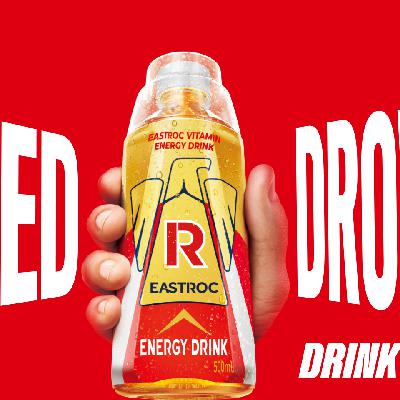
Welcome to an new insightful episode, today we are going to delve deep into the Chinese version of Monster, Eastroc Super Drink, or Dongpeng Beverage. One of the largest energy drink company.This episode promises to uncover the strategic and organizational decisions behind this "everything has no reason not to grow" ethos.
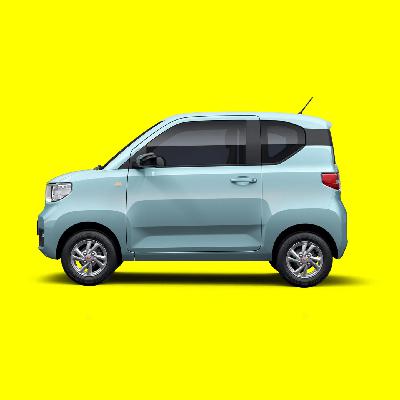
Join us as we trace the extraordinary journey of SAIC-GM-Wuling (SGMW), a company that rose from the periphery to become a "mythical" presence in the Chinese automotive industry. This episode delves into how Wuling, starting as a local state-owned enterprise, not only survived but thrived, becoming a crucial player for major automotive giants like SAIC and General Motors, and impacting the daily lives of millions, particularly in China's vast rural and peri-urban areas. We’ll explore its strategic decisions, product innovations, and the challenges it faces as it navigates an evolving market, drawing fascinating comparisons with global players like Suzuki.
Join us for a deep dive into how the rapid rise of AI and disruptive technology, while seemingly revolutionary, are reshaping humanity in ways that classic thinkers from centuries ago eerily foresaw. We explore how these "dusty old textbooks" offer a profound framework for understanding the "deeper why" behind the big questions AI raises about human nature, control, meaning, and power, revealing them as intensified versions of old dilemmas. The Disenchanted World & The Instrumental Person (Max Weber) The Iron Cage & Alienation (Max Weber & Karl Marx) Discipline and Surveillance (Michel Foucault) The Amateurization Paradox The Logic of Limitless Growth (John Locke) The Division of Labor (Émile Durkheim) Money Molds Man (Georg Simmel) Involution and Lying Flat AI as a "Big Behavior Model" & The Illusion of Empathy AI's Hallucinations and the Threat to Truth The Fear of Uncertainty & AIIn an AI world, conscious action becomes an act of resistance and self-definition. The "Iron Cage" of rationality has loopholes, not calculated by algorithms, but "made through deliberate human action, choice, courage". We can create new stories, embrace nonverbal life, and return to our bodies and real connections to counter AI's "perfect language" and "convincing hallucinations". It's up to us to "use your imagination. Seize the power to find those holes. Choose authenticity in a world swirling with algorithms."
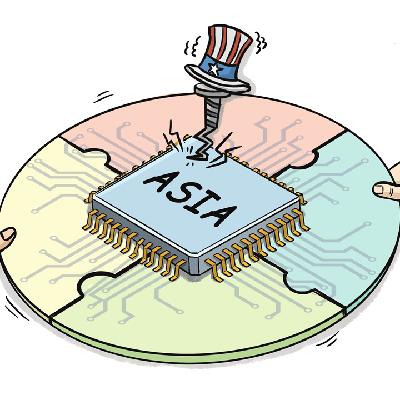
Welcome to a special episode where we unpack the complex world of semiconductors! We’re guided by an expert with a rare blend of deep industry knowledge, hands-on trading experience, and a high-level executive view from inside a semiconductor company. In This Episode, We Cover: The Global Story of Semiconductors Key Players & Early Innovations The Fableless Chip Manufacturing Process Market Dynamics: The Inventory Cycle Investment Angles: Evaluating Chip Design Companies Key Technology Drivers for Demand Investment Practicalities & Geopolitics Tracking the Inventory Cycle Synthesis & Looking Ahead (Investment & Trends)
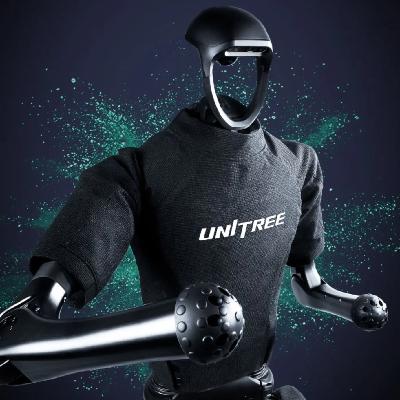
Dive deep into the fascinating early journey of Unitree, the Chinese startup behind those viral robot dogs and humanoids, with insights from early investor Peng Zhang, founder of Geek Park and Variable Capital. This episode goes beyond the polished demos to unpack the real story: the crucial technical decisions, the struggles, and the unique character of founder Wang Xing. Discover what Unitree's path reveals about the new generation of Chinese tech entrepreneurs and the nature of deep tech innovation itself.

Welcome to a special episode where we delve into the fascinating journey of Anker Innovations, a leading Chinese outbound brand. Anker stands out because it's not just a typical Amazon seller; it's a multi-brand group with global reach and a high-end positioning, making it a significant case study in brand transformation. Why Anker? Its Unique Significance Anker's Four Stages of Development Anker's Core Business Logic and Differentiation Anker's Multi-Brand Strategy & Challenges The Advantage of Overseas Markets: Amazon vs. Chinese E-commerce Anker's Organizational Culture and Leadership Competition and Future Outlook

Welcome to the new episode that takes a deep dive into the strategic triumph of Chinese new energy vehicle brand ROX Motor in the challenging Middle Eastern luxury market. Discover how they navigated intense competition and built a significant presence in a region traditionally dominated by established luxury car brands, leading to over 10,000 global deliveries by April 2025, with the Middle East and Central Asia accounting for more than 60% of sales. Strategic "Blue Ocean" Approach: Instead of competing in the crowded domestic Chinese or "red ocean" Southeast Asian markets, ROX Motor strategically chose the Middle East to find a unique market or "另辟蓝海" as a survival strategy amidst a wave of car company failures in China. Targeting the High-End: ROX positioned their only mass-produced model, the ROX 01, as an "all-terrain luxury SUV" to anchor themselves to the high-end demand prevalent in the Middle East. Product-Market Fit - EREV Technology: The ROX 01 features an extended-range electric powertrain (EREV). The CEO, Yan Feng, stated that globalization was part of ROX's DNA from the start. The Middle East's strong demand for all-terrain SUVs and weak charging infrastructure made the ROX 01's EREV technology, offering a CLTC range of 1065km, a perfect match for the need for long distances and insufficient charging infrastructure. Extreme Environment Adaptation: The vehicle was specifically modified for the harsh Middle Eastern climate and terrain. This included upgrading to double-power air conditioning compressors and reinforcing electric drive cooling modules to ensure system stability during dust storms. Real-world testing also demonstrated impressive desert off-road energy consumption, reportedly only 62% of a competitor's PHEV. Deep Cultural Localization: ROX went beyond hardware. The intelligent cabin uses an Arabic voice system integrated with local navigation. This system is capable of providing real-time alerts to avoid congestion around prayer areas during Ramadan. Physical sunshades were made standard to block intense UV rays and protect female passengers' veils. The interior also features Arabic patterns on the walnut wood trim . Strategic Partnerships with Local Oligarchs: In countries like Iraq, ROX partnered with major groups such as Auto-Zaq, which controls 70% of the luxury car channels. This leveraged their political and business resources, helping ROX enter government procurement lists. In Kuwait, the first store was funded by a local oil magnate. This strategy is seen as "purchasing social capital". Activating Niche Communities: The brand used niche products like the 11,999 RMB aluminum-magnesium alloy "Lure Box" designed for fishing enthusiasts. This box had designed slots for fishing gear and connected seamlessly to vehicle anchor points. By partnering with outdoor academies for events like the "Red Sea Fishing Competition," user videos gained over 100 million views on TikTok. This verified the logic of using vertical community products to engage the broader outdoor ecosystem and break through cultural barriers more effectively than advertising. Commanding a Premium Price: Despite low fuel prices in Saudi Arabia, the ROX 01 was priced at 560,000 RMB at the Riyadh LEAP technology exhibition in February 2025, representing a 15% premium over the China price. The brand demonstrated sales success at this price point, setting a record of 203 units sold in a single day. Adding Value Beyond Transportation: ROX integrates technology and entertainment. At the LEAP exhibition, they offered a "mobile e-sports cockpit" where users could play games like Genshin Impact while the car was charging. This "performance + entertainment" value proposition contributes to justifying the premium price. Becoming a Status Symbol: Young members of the Saudi royal family reportedly spontaneously promoted the brand. Within six months, ROX achieved a 5% market share among Saudi elite families who view it as an "electric version of the Land Cruiser" . This marks the first time a Chinese brand has become a symbol of social status in the Middle East.

Strategic Pillars Driving Chagee's Valuation1. Operational Alchemy: The 8-Second Profit Machine Automated Brewing Systems: Deploying 4th-gen smart tea dispensers achieving 8-second cup output, reducing labor costs to 9.7% of revenue vs industry 15% Inventory Wizardry: 5.3-day turnover cycle through AI demand forecasting, slashing waste to 0.3% (industry: 2.1%) Franchisee ROI Model: 14-month payback period for new stores, 37% faster than bubble tea sector average2. Cultural Arbitrage: Reinventing "Guochao"-Revitalized Ancient Chinese Arts for Global Palates Design Syncretism: Packaging fusing Song Dynasty aesthetics with De Stijl minimalism, driving 23% premium pricing power Linguistic Engineering: "CHAGEE" phonetic branding tested in 12 languages, achieving 94% accurate pronunciation rate Ceremonial Retail: Stores feature tea ceremony zones generating 18% higher dwell time vs Starbucks' third spaces3. Supply Chain Chess Game Vertical Integration: Controlling 43% of Pu'er tea supply through Yunnan cooperatives, locking in 2025-27 pricing Cold Chain 2.0: Solar-powered mobile prep centers enable 72hr freshness from leaf to cup across ASEAN markets Geopolitical Buffer: Dual sourcing for dairy (40% New Zealand, 60% Inner Mongolia) hedging trade risksGlobal Expansion BlueprintPhase 1: ASEAN Consolidation (2023-2025) Malaysia Playbook: 130 stores achieving $8M/month GMV, replicating in Thailand/Vietnam Halal Certification: 98% SKU compliance for Muslim markets, driving 37% non-Chinese customer basePhase 2: Western Incubation (2025-2027) LA Flagship Strategy: 2.5MBrentwoodstoretargeting1,200cups/dayat2.5MBrentwoodstoretargeting1,200cups/dayat8.5 ASP Cultural Bridging: Collaborating with LVMH's NÜWA platform for limited-edition teaware Tech Debt Avalanche: Legacy POS systems causing 23-minute downtime/week per store Talent War Attrition: 18-month tenure for store managers vs Starbucks' 31 monthsBull vs Bear Case AnalysisBull Thesis ($50B Valuation by 2028) Replicating Luckin's NASDAQ trajectory with 120% CAGR in Western markets Margin expansion to 28% through robotic stores and premiumization Becoming default "China culture ETF" for thematic investorsBear Case (40% Downside Risk) ASEAN market saturation by 2026 triggering price wars US FDA scrutiny over caffeine content (current cups exceed 180mg limit) Capital markets punishing "me-too" narrative post-IPO honeymoon
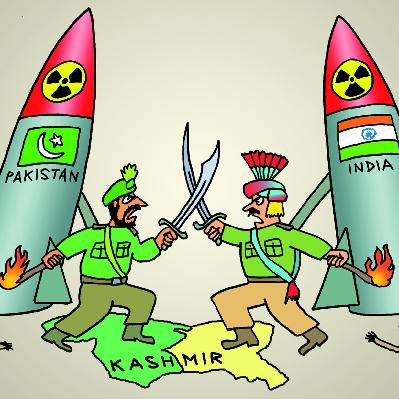
Welcome to the podcast! In this episode, we're taking a deep dive into a recent military confrontation between India and Pakistan. This clash escalated to a level unseen in decades, arguably even more significant than the Kargil war. We’ll unravel the swift, retaliatory actions from both sides, piecing together the sequence of events and analyzing the strategic thinking behind Pakistan's assertive military maneuvers, particularly after India's impactful missile strike on the Nirkan Air Force Base.
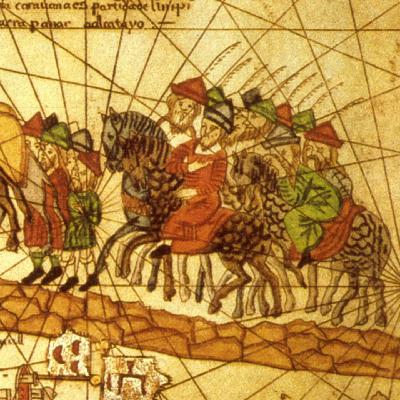
This week, we’re dusting off old maps and unraveling the hidden threads of the Silk Road—the ancient superhighway of empires, ideas, and cultures that shaped our world. Guided by insights from Peter Frankopan’s The Silk Road, we’re tearing down Eurocentric myths to reveal how this vibrant network was the true heart of global connection.🌍 The World’s “Center” Is a Illusion Medieval maps placed Jerusalem or Balas Lagoon at the core, pushing Europe to the margins. History’s “main character” depends on who’s telling the story. The Silk Road wasn’t “discovered”—it evolved over centuries, fueled by curiosity, conquest, and commerce.🤝 More Than Merchants: The Nomads, Emperors, and Unexpected Partners Why Alexander the Great was the OG influencer, stitching continents together. Nomadic tribes like the Huns weren’t just raiders—they were savvy traders, supplying China’s addiction to horses and livestock. Silk as Power: How China bribed its enemies with luxury fabrics to keep the peace.💎 Rome’s Obsession with the East After conquering Egypt, Rome went wild for Indian spices, gems, and silks. Discover how Roman vanity funded the world’s first luxury goods boom. Why Persia became the middleman of antiquity—and how this supercharged Silk Road trade.☯ Religious Revolution: Gods, Politics, and Clash of Beliefs The Silk Road as the original melting pot: Buddhism, Zoroastrianism, Christianity, and Manichaeism collided, merged, and spread. How rulers weaponized faith to stay in power—and why the Sogdians were the ultimate spiritual matchmakers.⚔️ From Mongols to Microbes: The Silk Road’s Rollercoaster Ride Genghis Khan: Destroyer or unifier? How Mongol chaos accidentally turbocharged global trade. The Black Death’s grim role in the Road’s decline—and why Timur’s revival efforts flopped. Maritime empires, the Suez Canal, and Industrial Revolution tech that left camels in the dust.🚂 21st-Century Silk Road: Revival or Mirage? Why land-based trade routes are making a comeback (think Russia-China pipelines and Belt and Road). Could crumbling sea routes and global instability give the Silk Road a second act?Final Thought:The Silk Road isn’t just a relic—it’s a blueprint. In a fractured world, could reconnecting these ancient pathways forge new alliances, spark innovation, and even prevent conflict? Tune in to explore whether history’s greatest network is poised for a blockbuster sequel.

The discussion explores the Japanese government's efforts to stimulate investment through the NISA (Nippon Individual Savings Account) and the newly introduced 新 NISA (new NISA). Despite these initiatives, a significant portion of Japanese individual investors favor investing in US stocks, particularly the NASDAQ 100 and S&P 500. This preference is attributed to lingering memories of the Japanese asset price bubble burst in the 1990s and the benefits of investing in appreciating US dollar assets due to the weakening yen. Interestingly, younger Japanese individuals in their 20s and 30s seem less engaged in financial investment compared to older generations.The podcast touches upon wage increases observed in Japan (around 5% based on "春鬥"), but questions whether these increases are keeping pace with the current rate of inflation. This economic pressure potentially affects service quality, as service workers may feel undervalued.The impact of overtourism on Japan, especially in popular destinations like Kyoto, is also examined. While tourism is acknowledged as crucial for the current Japanese economy, it creates significant disruptions for local residents.Labor shortages and immigration are highlighted as critical challenges. Despite a declining native-born population, Japan grapples with openly discussing and implementing large-scale immigration policies due to its culturally conservative nature. The "technical intern training" program is mentioned as a way Japan quietly addresses labor needs. The discussion points out that some Japanese companies are choosing between hiring Burmese laborers and adopting robotics to address labor shortages in sectors like logistics.The episode also sheds light on the revival of certain Japanese industries, such as semiconductors (linked to TSMC's investment in Kumamoto) and shipbuilding. This resurgence is potentially driven by geopolitical factorsand the restructuring of global supply chains. The establishment of TSMC in Kumamoto is already impacting the local economy, leading to increased wages and the development of supporting businesses.Warren Buffett's strategic investments in Japanese trading companies (商社) are analyzed. The rationale behind this move is suggested to be low borrowing costs in Japan, investment in upstream resources, and a strategic positioning for a potential era of deglobalization.The hosts briefly discuss Japan's historically strong industrial policy guided by government bureaucracy and its potential limitations in fostering innovation compared to more liberal approaches seen elsewhere. A trend of declining entrepreneurship among young Japanese, who often prefer stable employment in large corporations like 商社, is also noted.
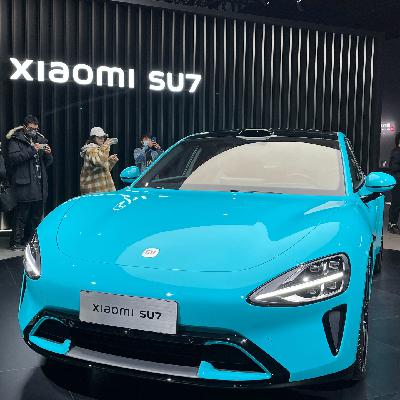
We dissect the explosive launch of the Xiaomi SU7, exploring its pricing, features, and the seismic wave it's creating in the EV landscape. Join us as we analyze its strengths, weaknesses, and whether it's truly a disruptor or just another player in the electric arena.Xiaomi SU7 Launch & Pricing:Standard (215,900 RMB), Pro (245,900 RMB, roughly only 30 Grands), Max (details discussed).Founder's Edition frenzy: Sold out in minutes, non-refundable deposits. Initial Reaction & Public Response:Unprecedented pre-order numbers: 50,000 in 27 minutes, 90,000 in 24 hours.Digital and automotive world buzzing. Features & Technology:Standard/Pro: Single-motor, RWD. Max: Dual-motor, AWD, high performance. Xiaomi ecosystem integration, Apple CarPlay, 56-inch HUD.Entertainment features: Screens for driver/co-driver, Xiaomi Pads for rear passengers. Target Audience & Marketing:Positioned as the "first dream car for young people."Appealing design and color options, especially to women.Targeting Tesla Model 3, BMW 3 Series, and similar owners. Competitive Landscape:Rivals: Zeekr, Geely, Xiaopeng, Tesla, AITO, Nio.Key competitors: Huawei's AITO, Zeekr, Tesla Model 3. Strengths:Ecosystem integration, handling, user-centric design.Value for money, accessory ecosystem, exterior design. Weaknesses:400V architecture (Standard/Pro), single-layer glass, sunroof.Rear seat comfort, first-generation vehicle risks.R&D & Innovation:Significant investment, innovative design choices.Talent acquisition: Hu Nan's influence on chassis performance. Production & Delivery:Potential challenges with massive pre-order numbers.Delivery wait times extending to August/October. Model & App Recommendations:Base model for core experience, Pro for lidar and range.App recommendations: Flighty, Feishu, SayHi Translate.Key Takeaways: Xiaomi SU7's launch has shaken up the EV market. Its ecosystem integration and user-centric design are key strengths. Potential production and first-gen vehicle risks remain.

This episode delves into the remarkable journey of Li Auto (理想汽车), tracing its dramatic turnaround from near-collapse to becoming a Top 3 force in China's fiercely competitive EV market. We unpack the unique entrepreneurial spirit of founder Li Xiang, a high-school dropout with a track record of building two successful startups, and explore how his unconventional philosophy shaped Li Auto's extraordinary rise.Li Xiang's Legendary Track Record:Brief overview of Li Xiang's previous successful ventures, highlighting his proven ability to build and scale companies.The pattern of identifying market gaps and delivering innovative solutions. Li Auto's Near-Death Experience:Early struggles and near-bankruptcy, facing intense competition and market skepticism.The critical decisions and strategic pivots that averted disaster. The Turnaround Triumph:Li Auto's rapid ascent to become a Top 3 New Force EV player in China.Key factors contributing to their market success: product innovation, strategic focus, and efficient operations. Li Xiang's Unconventional Philosophy:Exploring the impact of Li Xiang's high-school dropout identity on his entrepreneurial approach.Discussion of his distinct management style, emphasizing pragmatism, efficiency, and a data-driven mindset.How his approach differs from traditional entrepreneurs, and his unique worldview. LiXiang's Legacy and Influence:How his past experience effect the current Li Auto.How LiXiang's philosophy impact the company culture.The impact of his philosophy on the design of the vehicles. Key Product Innovations:Analysis of Li Auto's extended-range electric vehicles (EREVs) and their appeal to Chinese consumers.Discussion of the company's focus on family-oriented SUVs and their innovative features. Market Dynamics and Competition:The competitive landscape of China's EV market and Li Auto's strategic positioning.Analysis of Li Auto's advantages and challenges in relation to rivals like NIO and Xpeng. Future Outlook:Li Auto's growth trajectory and potential for further expansion.The company's long-term vision and its role in shaping the future of electric mobility.Key Takeaways: Li Xiang's unconventional background and philosophy have been instrumental in Li Auto's success. Li Auto's turnaround story is a testament to strategic agility and product innovation. The company's focus on family-oriented SUVs and EREV technology has resonated strongly with Chinese consumers. Li Auto's future prospects are promising, but it faces intense competition in a rapidly evolving market.

Comments

Download from Google Play

Download from App Store
 United States