


 Claim Ownership
Mysteries of the Vedas
Subscribed: 7Played: 11
Subscribe

© Caitanya Chandra dasa
Description
Deep insights and explanations on the Srimad Bhagavatam, Bhagavad-Gita, Vedanta-sutra, Upanisads, and other books that are part of the Vedas.
www.ccdas.net
www.ccdas.net
110 Episodes
Reverse
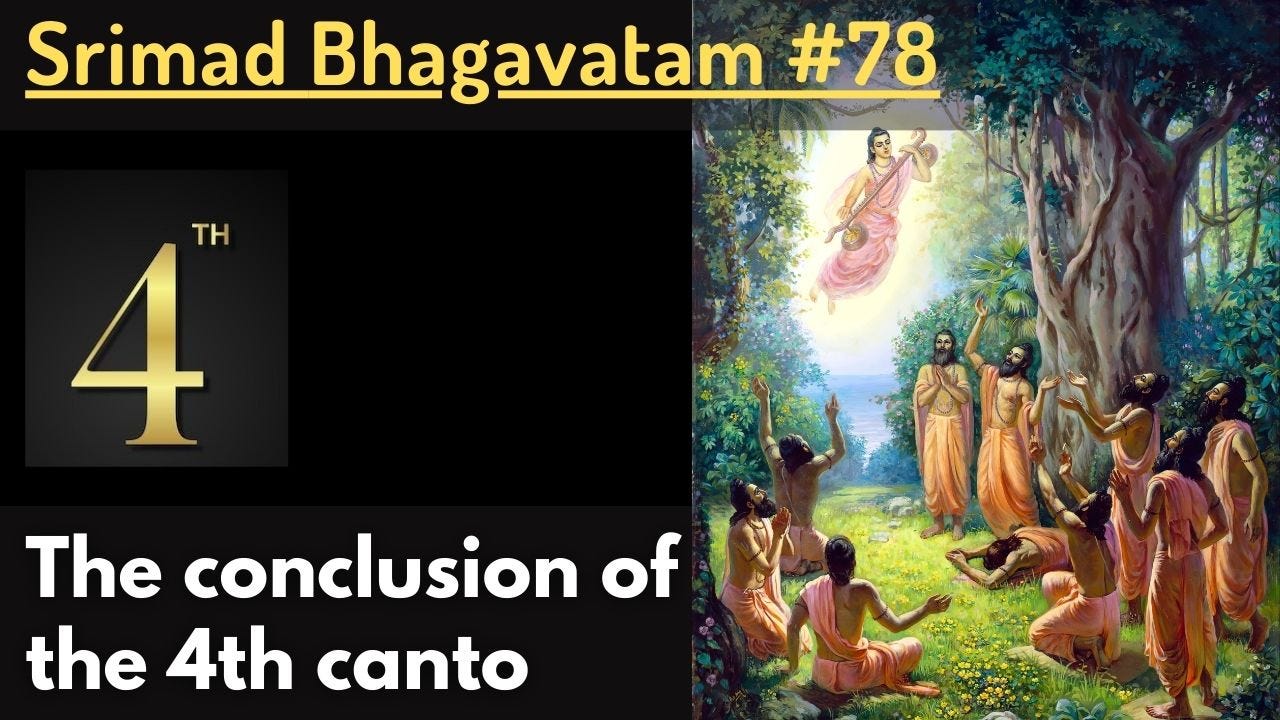
With this, we come to the end of the conversation between Vidura and Maitreya, which corresponds to most of the 3rd and 4th cantos of the Srimad Bhagavatam. By examining all of the important instructions we received in these two cantos, we can see how valuable they are and easily understand why Śukadeva Goswami chose to narrate them. Vidura heard from Maitreya many descriptions of kings who attained perfection at the end of life. Dhṛtarāṣṭra is also a great personality in a sense, for no common person could be born from the semen of a great sage such as Vyāsadeva and participate in the pastimes of the Lord, even if as an opponent. Vidura knew he had the determination to free himself of material contamination, even though it would be difficult for him to directly surrender to the Lord due to his many offenses. He thus engaged him in the practice of mystic yoga, so he could attain impersonal liberation. Śukadeva Goswami concludes the narration of the 4th canto, offering a blessing to all sincere readers. Get full access to Mysteries of the Vedas (Caitanya Chandra Dasa) at www.ccdas.net/subscribe
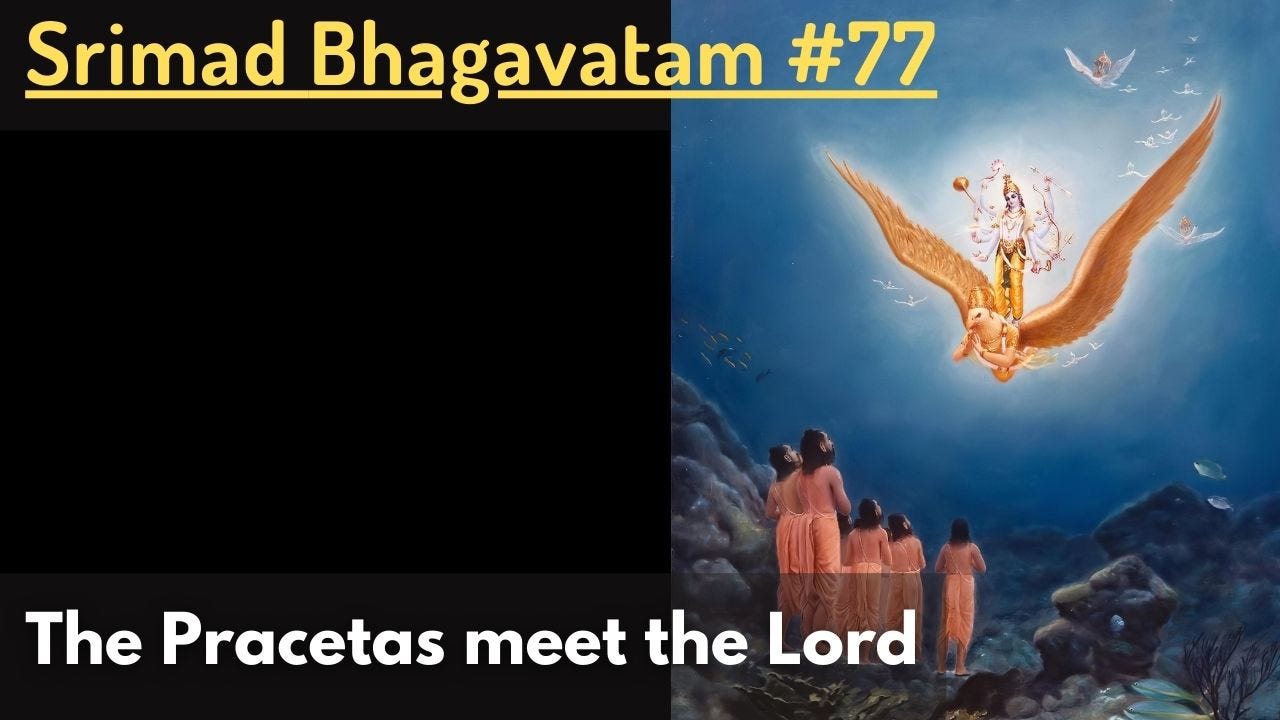
The Lord appeared on the shoulder of Garuḍa, in a form with eight arms, complete with all opulences. The Lord was satisfied with the Pracetas for their perfect recitation of the prayers of Lord Śiva, their dedication in the practice of devotional service, and many other factors, but the point he specifically mentioned when He met them was their sincere dealings with each other: "My dear sons of the King, I am very much pleased by the friendly relationships among you. All of you are engaged in one occupation — devotional service. I am so pleased with your mutual friendship that I wish you all good fortune. Now you may ask a benediction of Me." (SB 4.30.8) Get full access to Mysteries of the Vedas (Caitanya Chandra Dasa) at www.ccdas.net/subscribe
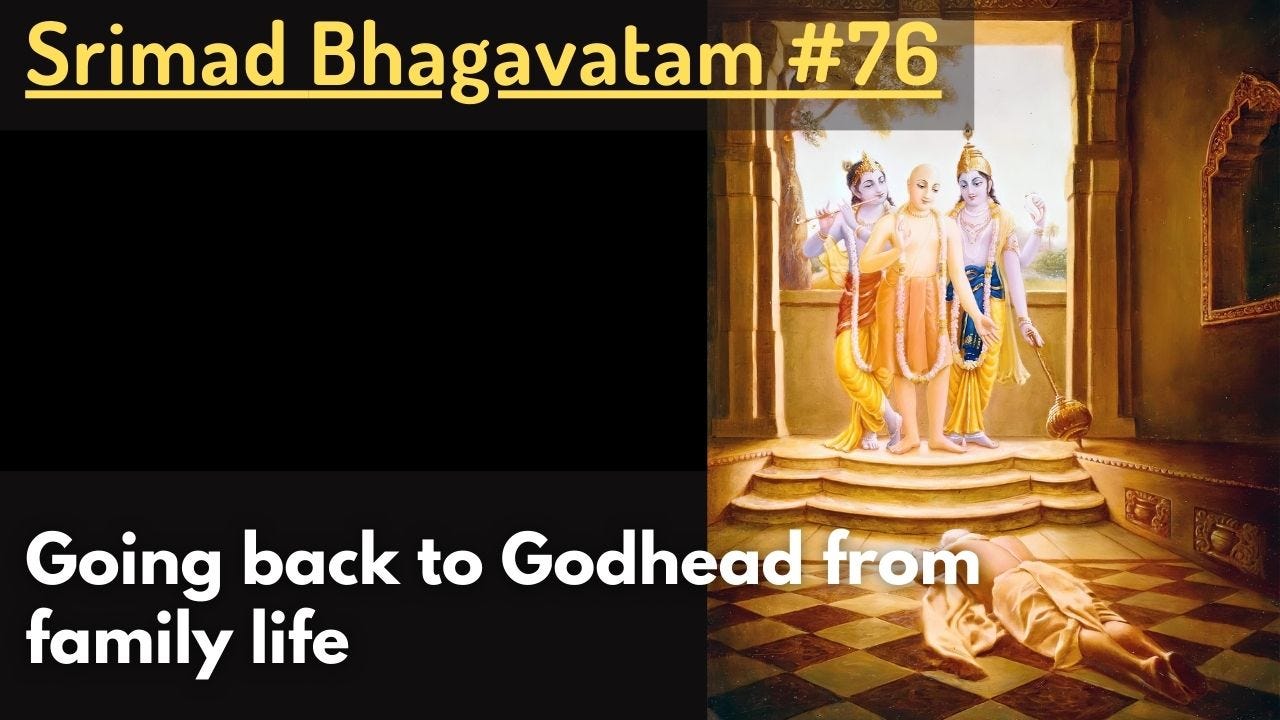
Just as Rāhu, which is normally invisible, sometimes becomes visible in the presence of the full moon, all the material desires stocked in the mind, which are normally invisible until manifested, become visible at once when the devotee attains the constant association of the Lord. One can thus see his entire stock of desires at once and, simultaneously, see the Lord present before him. In the presence of the Lord, all these material desires look insignificant, and a devotee completely loses interest in them. With all material desires destroyed, there is no more obstacle in one going back home, back to Godhead. Get full access to Mysteries of the Vedas (Caitanya Chandra Dasa) at www.ccdas.net/subscribe
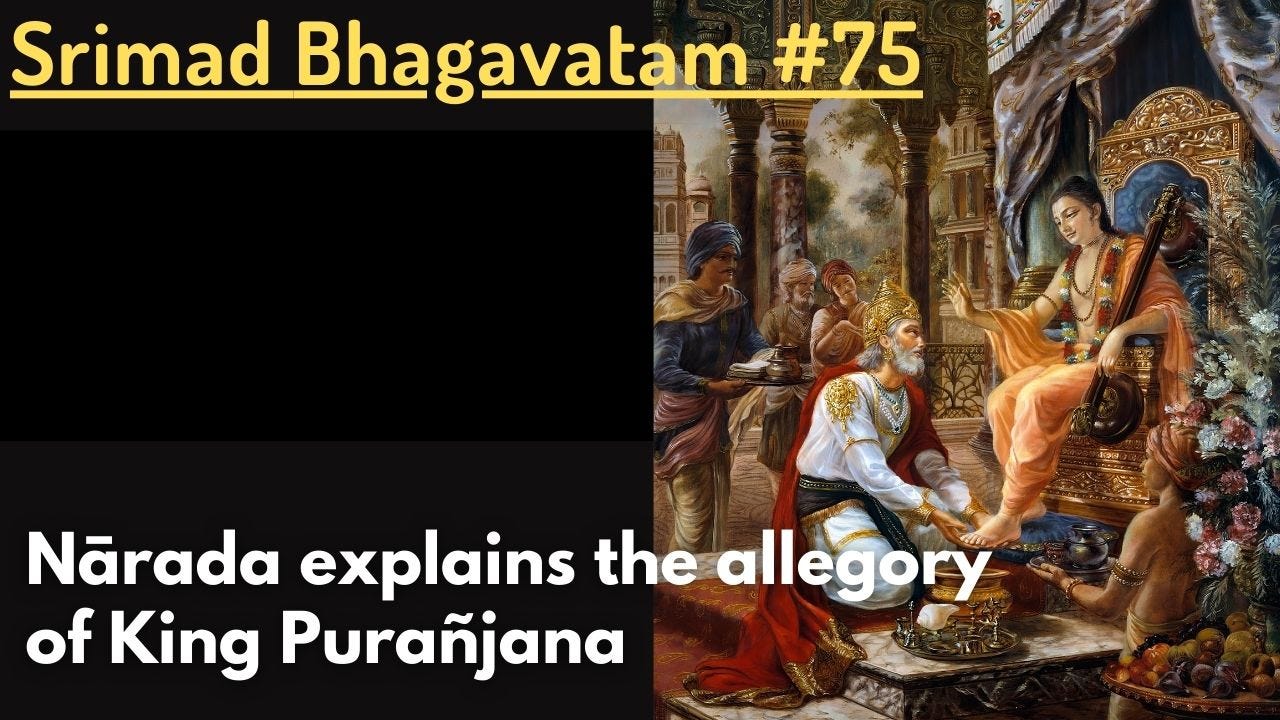
For us, the allegory of Purañjana is quite understandable because of all the details included in the purports of Srila Prabhupada. However, for one with access to just the Sanskrit verses, the meaning of the allegory is not clear at all. That's a situation similar to the second chapter of the Bhagavad-Gītā, where Arjuna becomes confused by the meaning of the verses, while for us, the meaning is quite clear due to the purports. Some of the symbolism was already revealed by the Lord, speaking in the form of the Brāhmana on verses 56 to 58 of the previous chapter, but the king was still puzzled by many aspects of the allegory. Get full access to Mysteries of the Vedas (Caitanya Chandra Dasa) at www.ccdas.net/subscribe
At the beginning of our movement, disciples of Prabhupada had no doubts about our eternal relationship with Krsna and how the soul ends up in the material world, because the only source of information for them was the books of Srila Prabhupada, where the question is explained clearly. However, in the late 1970s, devotees coming in contact with other ideas transformed this point into a battleground. At some point, Prabhupada wrote an essay directly clarifying the topic to his disciple, Madhudvisa Prabhu, which I try to explain in detail here. Get full access to Mysteries of the Vedas (Caitanya Chandra Dasa) at www.ccdas.net/subscribe
Some have the idea that Krsna doesn't care about the jīvas, sending some here and some to the spiritual world in a more or less random fashion. However, this idea is clearly dismissed in the Srimad Bhagavatam. Krsna is the friend of everyone, and the proof is that He follows each soul in its adventures in the material world, accompanying each soul as one goes from one material body to the other. No one can thus say that we are here due to the Lord's indifference. He wants us back; the question is just for us to accept His extended hand. Get full access to Mysteries of the Vedas (Caitanya Chandra Dasa) at www.ccdas.net/subscribe
Just as in the first part of the allegory, Srila Prabhupada adds a completely new layer of understanding to the passage of Purañjana taking his next birth as a woman. From verse 4.28.29 to 4.28.34, Prabhupada shows how the allegory describes the spread of the cult of bhakti, and how Vaidarbhī became involved in it as a result of her short devotional practice in her previous life as Purañjana. This meaning was first revealed by Srila Baladeva Vidyābhūṣaṇa in his commentary, and Prabhupada further expanded it to our contemporary context. Get full access to Mysteries of the Vedas (Caitanya Chandra Dasa) at www.ccdas.net/subscribe
After being attacked by the forces of Caṇḍavega for many years, the defenses of the city of Purañjana are already worn out. This illustrates the period preceding old age, where one sees a great diminution of energy, and the body starts to give trouble. This is the age the scriptures recommend one retire from active family life and focus on one's self-realization. Purañjana, however, preferred to ignore the warnings, and now Kālakanyā, followed by Prajvāra and Yavana-rāja, will deliver the final blow. Get full access to Mysteries of the Vedas (Caitanya Chandra Dasa) at www.ccdas.net/subscribe
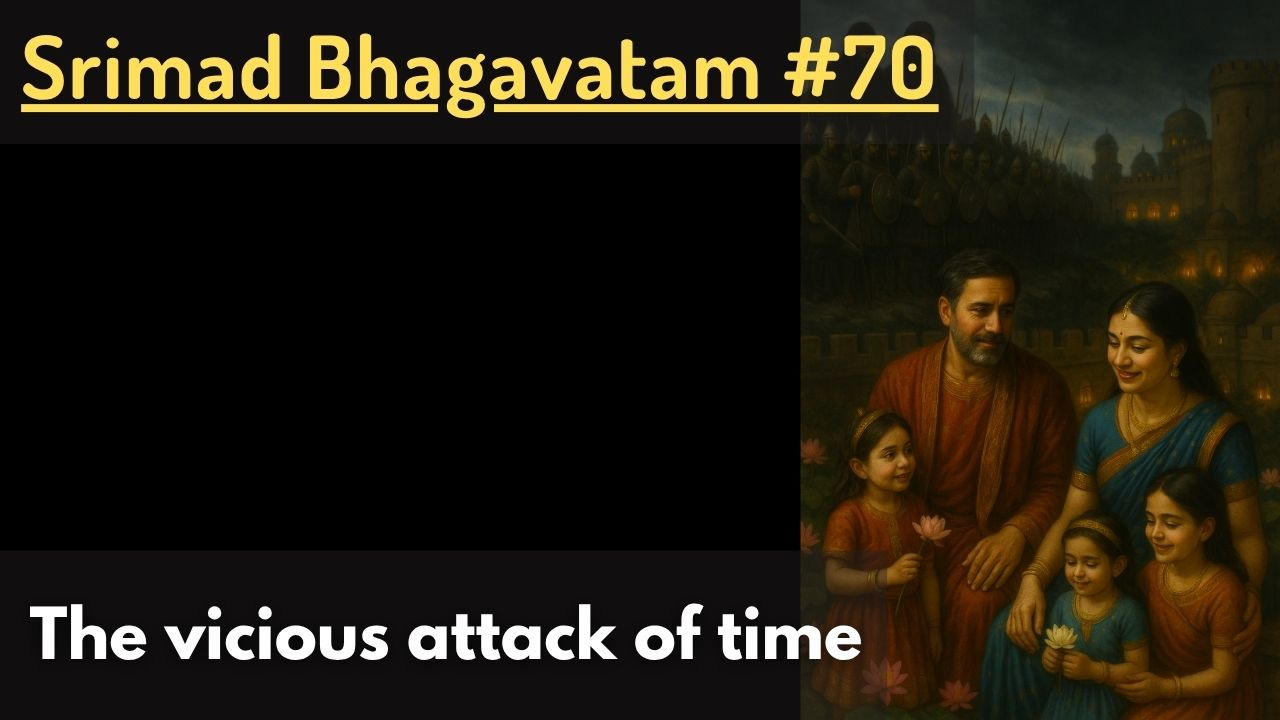
Every conditioned soul lives in a fort that is being constantly attacked by a powerful enemy, the irresistible force of time, which no one can stop. It is just a matter of time until the city falls, but still, Purañjana, the conditioned soul, continued to simply enjoy life together with the senses and desires, without caring for the future. Just like Purañjana, materialists prefer to ignore death until the last moment, believing that somehow or other, they will be able to avoid it. When the time comes, they are surprised. Just as a king collects taxes and thus enjoys life, we use the facilities of the body. There are billions of cells and other living entities in a human body, and they all perform their respective duties for the maintenance of the body. When we use this body to practice devotional service, they are all benefited, but when we misuse it for sinful activities, we have to face responsibility. We may think that it is our body and therefore we can do anything we want, but it is not like that. This attitude is similar to a king who just plunders the citizens instead of performing his duties. Get full access to Mysteries of the Vedas (Caitanya Chandra Dasa) at www.ccdas.net/subscribe
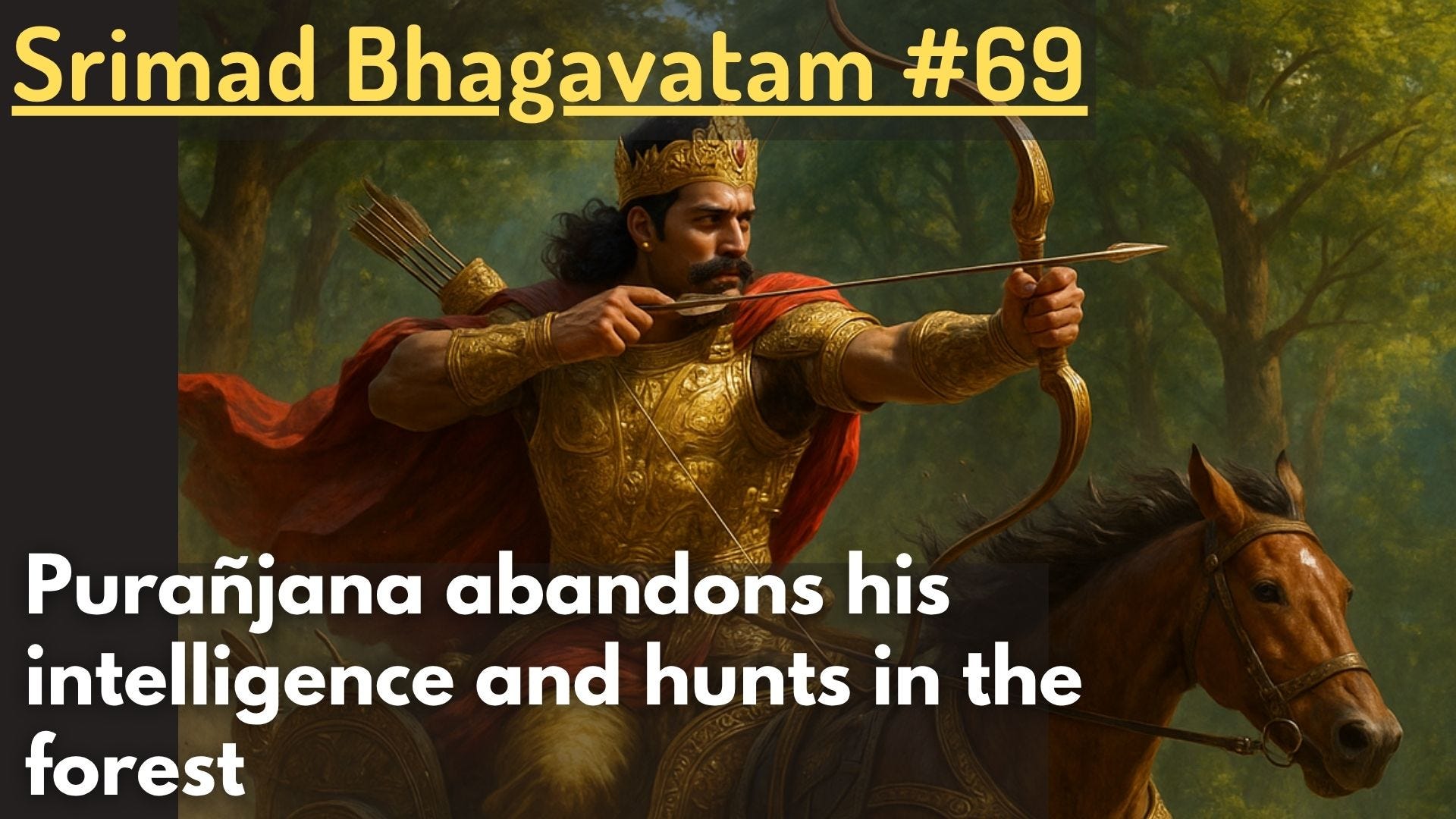
Purañjana left his queen and went to hunt in the forest. This part of the allegory illustrates the situation of a man who abandons his good sense and goes to perform sinful activities guided just by his senses and the desires of the mind. In the allegory, the queen represents one's intelligence, which may be imperfect and propense to materialistic activities, but that at least offers a degree of piety, religiousness, and morals to guide these activities. Purañjana was already entangled in material life by following his intelligence, but now, without it he becomes busy in simply performing gross sinful activities. Get full access to Mysteries of the Vedas (Caitanya Chandra Dasa) at www.ccdas.net/subscribe
Affected by lust, a man sees a beautiful girl as the source of satisfaction for all his desires, and similarly, a woman sees a handsome man as the source of wealth, adventure, and satisfaction. Just as it is difficult for a man to resist the beauty of a young, attractive lady, it is very difficult for a woman to resist the advances of a handsome man who tries to seduce her. This is the very basis of material conditioning. The strategy of seduction may be different for the two genders, but the attraction is similar. Because of this mutual attraction, both men and women become attracted to material life, and this keeps us forgetful of our original spiritual nature. Even experienced transcendentalists can fall when an opportunity for material enjoyment appears, as in the case of many sages seduced by apasaras described in the scriptures. As in most romantic stories, Purañjana took the initiative, attracted by the beauty of the girl, and, seduced in this way, she eagerly accepted him. Get full access to Mysteries of the Vedas (Caitanya Chandra Dasa) at www.ccdas.net/subscribe
Materialistic life is compared to a dark well, since once failing there, there is little possibility of escaping. If one somehow comes in contact with devotees who can pull him out, one should grab this opportunity with all his will, just as Prācīnabarhi did. As Prabhupada mentions in his purport to 4.25.6: "The King was very fortunate to be able to associate with Nārada, who enlightened him in spiritual knowledge. It is the duty of all saintly persons to follow in the footsteps of Nārada Muni and travel all over the world to every country and village just to instruct illusioned persons about the goal of life and to save them from the entanglement of karma-bandha, fruitive activity."The allegory of King Purañjana, which is nothing more than the story of the king himself, is crafted to make him understand his helpless condition and bring him to a platform of renunciation. Ultimately, this is the story of every conditioned soul, and if we study it attentively, it can have the same effect on us that it had on the king. After hearing it, Prācīnabarhi becomes self-realized. Get full access to Mysteries of the Vedas (Caitanya Chandra Dasa) at www.ccdas.net/subscribe
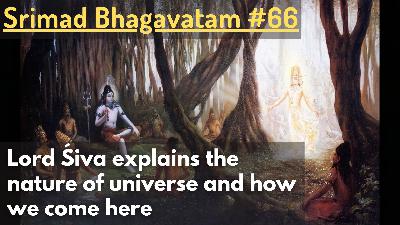
In the last part of his prayers, Lord Śiva reinforces that the Lord is the ultimate object of worship. What is the necessity of discussing this topic after the greatness and the personal qualities of the Lord have already been discussed? The point is that as conditioned souls, we always have a strong tendency to impersonalism. We can say that impersonalism is the default modus operandi for all conditioned souls. Unless we have a good philosophical foundation, we may eventually come to the idea that there is something else behind Krsna, and we are serving Him just to attain this impersonal unmanifest that is the ultimate origin. In the last verses, Lord Śiva clears this misconception, keeping us fixed in the proper understanding. Get full access to Mysteries of the Vedas (Caitanya Chandra Dasa) at www.ccdas.net/subscribe
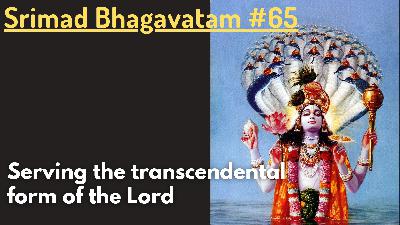
In the second part of his prayers, Lord Śiva speaks about the transcendental form of the Lord. Hearing about the power and opulences of the Lord helps us to develop respect and appreciation for Him, but it is usually not enough to inspire an attitude of service. This comes when we hear about the form and personal qualities and attributes of the Lord. This meditation brings Him closer, and from this we develop an attitude of service to Him. Get full access to Mysteries of the Vedas (Caitanya Chandra Dasa) at www.ccdas.net/subscribe
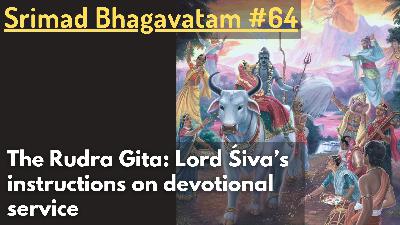
Lord Śiva or Rudra is the controller of egotism, but he does so as a representative of the Lord; therefore, the Lord is the supreme controller of egotism. Under the influence of this false ego, we forget our eternal spiritual identity and accept temporary identities in this material world. It was already established that although the Supreme controller of everything, the Lord reciprocates our desire, therefore He will not remove our false ego until we sincerely desire it. Lord Śiva thus prays for our benefit, teaching us how we should pray to the Lord so that our false ego may be removed and our real ego as eternal servants of the Lord may be awakened. The practical process for removing false egotism is to be engaged both in thought and actions in devotional service, according to the directions of the scriptures, received through the spiritual master. If the Vedic vibration, or the instructions received, are pure, without adulteration, they lead to perfect knowledge and perfect activities. Perfect knowledge includes chanting the Mahā-mantra, which is the conclusion of all scriptures. In this way, our mind, senses, and words will all turn toward devotional activities. Again, Lord Śiva shows by his own example how we should pray. Get full access to Mysteries of the Vedas (Caitanya Chandra Dasa) at www.ccdas.net/subscribe
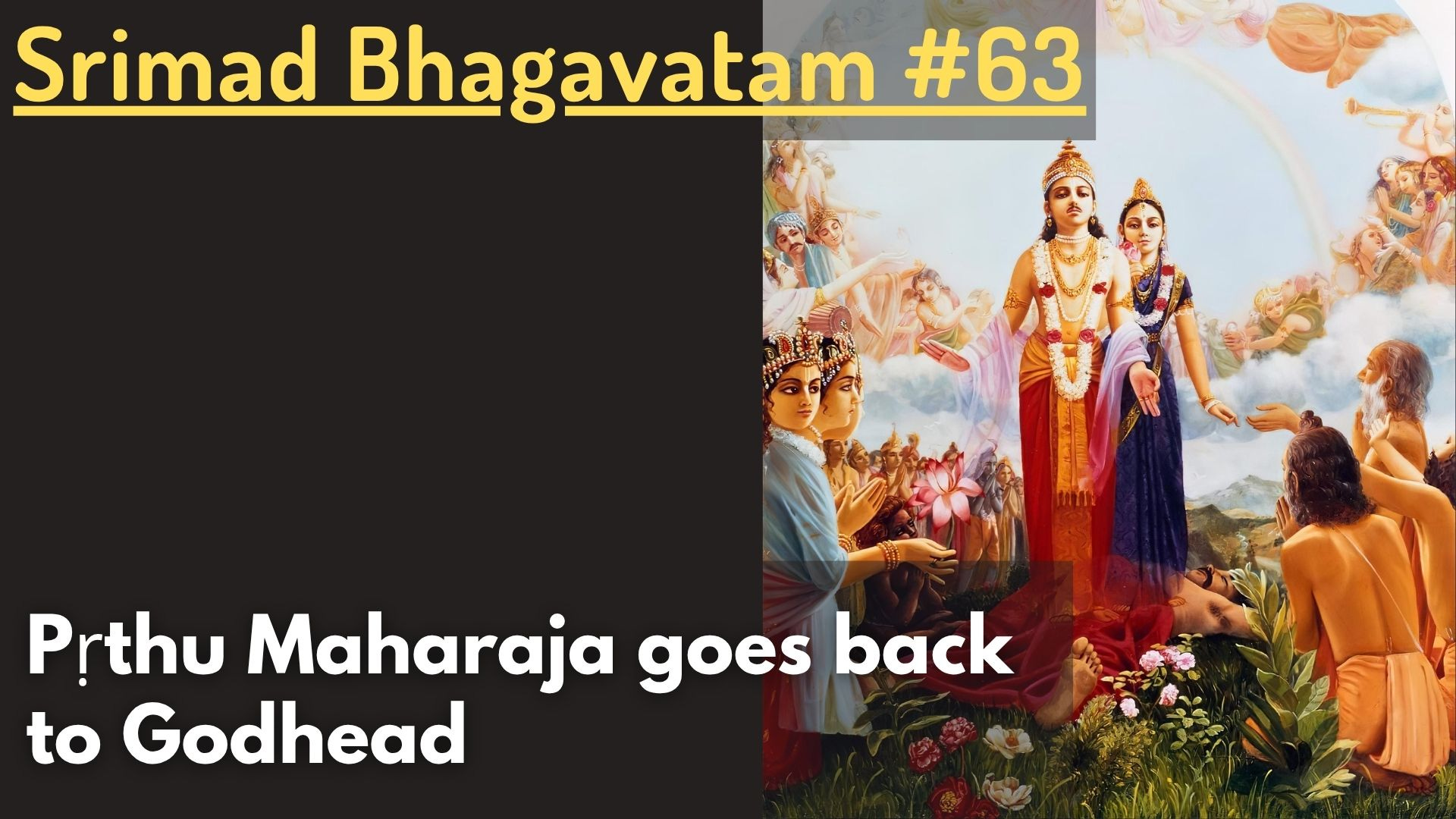
The last lesson of any great spiritual teacher is how to face the ultimate test: death. After fulfilling all his other duties in his earthly pastimes, Pṛthu Maharaja had a last mission to accomplish, abandoning his material body in perfect consciousness and returning home, back to Godhead, leaving his example for all who would follow. The time of death is the most difficult, and therefore is the test for all the spiritual practice we performed during our lives. We practice with the goal of fixing our attention on Krsna, always remembering Him, and never forgetting Him, and this is tested at the time of death. If we can pass this ultimate test, our trip back to Godhead is guaranteed. Get full access to Mysteries of the Vedas (Caitanya Chandra Dasa) at www.ccdas.net/subscribe
With the māyāvādī misconceptions cleared away, Sanat-kumāra returns to the main point of elevating a person to the platform of devotional service. Because the soul is blissful by nature, it is very hard for jñānīs and yogīs to give up their material desires. However, when one comes to the platform of devotional service and experiences a higher taste in the transcendental service to the Lord, material sense gratification becomes tasteless and is automatically rejected. Devotional service is thus the ultimate process by which a soul entangled in this material world can quickly achieve the ultimate goal of life. Get full access to Mysteries of the Vedas (Caitanya Chandra Dasa) at www.ccdas.net/subscribe
The whole purpose of the material creation is to give a chance to the conditioned souls to revive their eternal nature. The Puranas explain that there are 8,400,000 forms of life in this universe, distributed amongst aquatics, plants, insects, lower animals, humans, and also higher beings, all the way up to Brahma. Before attaining the human form, the soul has to pass through an extremely long evolutionary process, going through the millions of different forms of plants and animals. In all these different species there is some degree of intelligence and something to be learned, but only human beings have the higher intelligence necessary to understand philosophical topics. In all the lower species of life, the soul is fully immersed in the assumption that one is the body, and thus works tirelessly just to maintain it. Only in the human form of life, there is the possibility of understanding our real nature as spiritual sparks transcendental to the body, starting the process of brahma-jijñāsā (inquiry into Brahman). Get full access to Mysteries of the Vedas (Caitanya Chandra Dasa) at www.ccdas.net/subscribe
Sanat-kumāra makes the analogy of a lake drying up because of kuśa grass growing on its banks. If the grass is allowed to grow freely, it sucks the water until the lake completely dries up. In the same way, if material desires are allowed to grow, they progressively cover the original Krsna consciousness of the soul, up to the point where one can become a dog or a pig. Therefore, these columns of kuśa grass that are drying up our consciousness should be cut down from the beginning. We should understand the danger of unrestricted sense gratification and where it can lead us. Get full access to Mysteries of the Vedas (Caitanya Chandra Dasa) at www.ccdas.net/subscribe
Inquired by the King, the great Sanat-kumāra starts by glorifying the questions of Maharaja Pṛthu, who, even though already situated in the highest platform of devotion, is eager to hear about the process of devotional service, and always thinking about the welfare of others. The discussion happened in the view of all citizens; therefore, by asking these questions, the King guaranteed that they would receive spiritual instructions from the most exalted personalities. Get full access to Mysteries of the Vedas (Caitanya Chandra Dasa) at www.ccdas.net/subscribe

Comments

Download from Google Play

Download from App Store
 United States