


 Claim Ownership
Wild Heart Detroit
Subscribed: 1Played: 0
Subscribe

© Wild Heart Detroit
Description
Guided Meditations and Talks inspired by the teachings of the Buddha
93 Episodes
Reverse
This week, Andrew reflects on the Buddha’s teaching that the entirety of our lived experience unfolds through six sense doors. When we look closely at the moment of contact between the senses and the world, we begin to see how the cycle of craving forms—and how awareness can gently interrupt that pattern. The talk explores how mindfulness at the sense doors can become a doorway to liberation.Prompt: What is an evocative sense experience for you?Talk segment that complements the sit portion on The Six Sense SpheresGroup Date: 3/10/2026
This week, Andrew reflects on the Buddha’s teaching that the entirety of our lived experience unfolds through six sense doors. When we look closely at the moment of contact between the senses and the world, we begin to see how the cycle of craving forms—and how awareness can gently interrupt that pattern. The talk explores how mindfulness at the sense doors can become a doorway to liberation.Prompt: What is an evocative sense experience for you?Sitting segment that complements the talk portion on The Six Sense SpheresGroup Date: 3/10/2026
Olivia explores the Five Aggregates as a way the Buddha invited us to look closely at what we call a “self,” seeing it not as something solid but as a collection of changing experiences. By examining the body, feeling tone, perception, mental patterns, and awareness, we begin to understand how reactivity and suffering take shape. When we see these processes more clearly, there’s more space, compassion, and ease in how we move through our lives.Prompt: What is one perception of you, that you have taken on as an identity? This could align with how you see yourself, or not. Talk segment that complements the sit portion on The Five AggregatesGroup Date: 3/3/2026
Olivia explores the Five Aggregates as a way the Buddha invited us to look closely at what we call a “self,” seeing it not as something solid but as a collection of changing experiences. By examining the body, feeling tone, perception, mental patterns, and awareness, we begin to understand how reactivity and suffering take shape. When we see these processes more clearly, there’s more space, compassion, and ease in how we move through our lives.Prompt: What is one perception of you, that you have taken on as an identity? This could align with how you see yourself, or not. Sitting segment that complements the talk portion on The Five AggregatesGroup Date: 3/3/2026
This week Andrew explores the Five Hindrances through the lens of mindfulness, inviting us to see craving, aversion, restlessness, lethargy, and doubt not as failures, but as deeply human experiences that can become gateways to insight and liberation. Drawing on classical Buddhist metaphors, modern everyday examples, and the wisdom of Tuere Sala, Andrew reflects on how these mind states shape our lived experience, how they show up in meditation and daily life, and how learning to stay present with them can lead to clarity, compassion, and trust in the path. Prompt: What is the most common hindrance in your life? sense-craving, aversion, restlessness, lethargy, or doubt?Talk segment that complements the sit portion on The Five HindrancesGroup Date: 2/24/2026
This week Andrew explores the Five Hindrances through the lens of mindfulness, inviting us to see craving, aversion, restlessness, lethargy, and doubt not as failures, but as deeply human experiences that can become gateways to insight and liberation. Drawing on classical Buddhist metaphors, modern everyday examples, and the wisdom of Tuere Sala, Andrew reflects on how these mind states shape our lived experience, how they show up in meditation and daily life, and how learning to stay present with them can lead to clarity, compassion, and trust in the path. Prompt: What is the most common hindrance in your life? sense-craving, aversion, restlessness, lethargy, or doubt?Sitting segment that complements the talk portion on The Five HindrancesGroup Date: 2/24/2026
Olivia introduces mindfulness of dhammas as the practice of recognizing patterns in experience rather than taking our thoughts and emotions as personal identity. It explores the shift from simply noticing what is happening to gently investigating how experiences arise, unfold, and pass, while holding accountability and agency with care. Finally, it offers a brief look at how we’ll continue exploring these patterns together in the weeks ahead as a way of deepening insight and easing suffering.Prompt: What’s one thought that repeats in your head? Don’t say it out loud. If you could ask that thought one question, what would it be? Talk segment that complements the sit portion on DhammasGroup Date: 2/17/2026
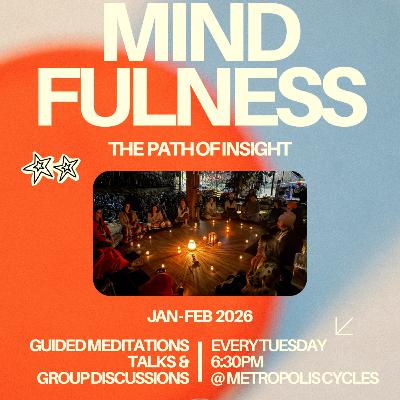
Olivia introduces mindfulness of dhammas as the practice of recognizing patterns in experience rather than taking our thoughts and emotions as personal identity. It explores the shift from simply noticing what is happening to gently investigating how experiences arise, unfold, and pass, while holding accountability and agency with care. Finally, it offers a brief look at how we’ll continue exploring these patterns together in the weeks ahead as a way of deepening insight and easing suffering.Prompt: What’s one thought that repeats in your head? Don’t say it out loud. If you could ask that thought one question, what would it be? Sitting segment that complements the talk portion on DhammasGroup Date: 2/17/2026
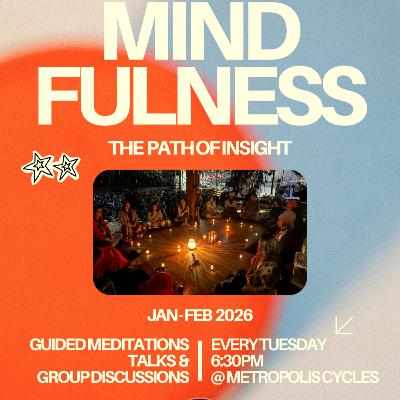
This week Andrew explores mindfulness of the mind as a practical, lived path to freedom that unfolds in everyday awareness. Drawing from Buddhist teachings and modern psychology, he invites us to see the mind not as who we are, but as a constantly changing stream of thoughts and mental states shaped by craving, aversion, and confusion. By observing impermanence, not-self, and the unsatisfying nature of grasping, the practice shifts our relationship to thoughts from identification to awareness. Through noticing both when the mind is caught and when it is free, and bringing this inquiry into daily life, habitual patterns begin to loosen, revealing the mind’s innate capacity for clarity, balance, and peace, and reminding us that liberation is possible here and now.Prompt: If your mind was a jukebox, what would the greatest hit of all time be?Talk segment that complements the sit portion on MindGroup Date: 2/10/2026 ( audio issues on the previous two weeks :/ )
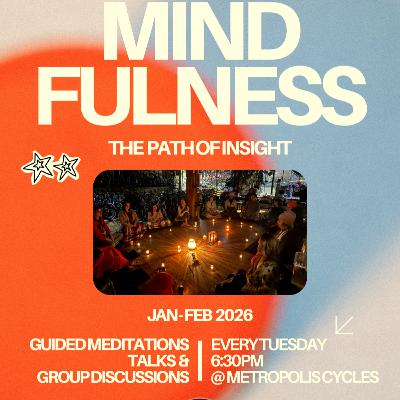
This week Andrew explores mindfulness of the mind as a practical, lived path to freedom that unfolds in everyday awareness. Drawing from Buddhist teachings and modern psychology, he invites us to see the mind not as who we are, but as a constantly changing stream of thoughts and mental states shaped by craving, aversion, and confusion. By observing impermanence, not-self, and the unsatisfying nature of grasping, the practice shifts our relationship to thoughts from identification to awareness. Through noticing both when the mind is caught and when it is free, and bringing this inquiry into daily life, habitual patterns begin to loosen, revealing the mind’s innate capacity for clarity, balance, and peace, and reminding us that liberation is possible here and now.Prompt: If your mind was a jukebox, what would the greatest hit of all time be?Sitting segment that complements the talk portion on MindGroup Date: 2/10/2026 ( audio issues on the previous two weeks :/ )
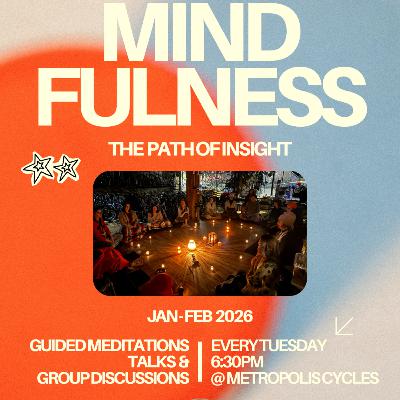
This week Olivia explores mindfulness of the body through the lens of the elements, inviting us to experience the body not as a fixed “thing,” but as living qualities of nature felt directly in sensation. She reflects on how recognizing these elemental experiences can soften the deeply rooted “I am” thinking that fuels comparison, attachment, and conceit. By widening our view to the impermanence of the elements within us and in the world around us, she connects this practice to the Buddha’s teachings on impermanence, not-self, and suffering.Prompt: What element do you feel connected to most and why? Elements being earth, fire, water, air.Talk segment that complements the sit portion on ElementsGroup Date: 1/20/2026
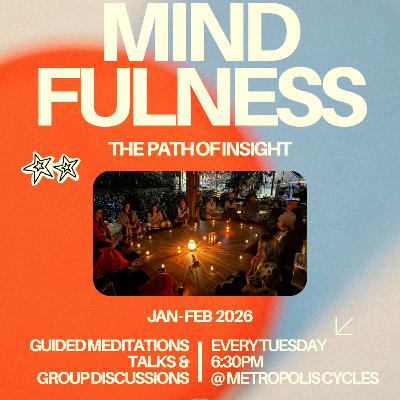
This week Olivia explores mindfulness of the body through the lens of the elements, inviting us to experience the body not as a fixed “thing,” but as living qualities of nature felt directly in sensation. She reflects on how recognizing these elemental experiences can soften the deeply rooted “I am” thinking that fuels comparison, attachment, and conceit. By widening our view to the impermanence of the elements within us and in the world around us, she connects this practice to the Buddha’s teachings on impermanence, not-self, and suffering.Prompt: What element do you feel connected to most and why? Elements being earth, fire, water, air.Sitting segment that complements the talk portion on ElementsGroup Date: 1/20/2026
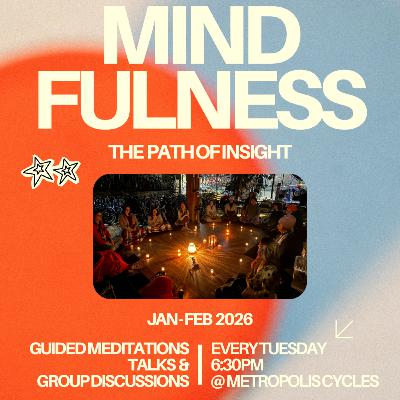
Andrew explores Mindfulness of the Body through the lens of the Satipaṭṭhāna Sutta, focusing on its grounding, calming, and stabilizing qualities. Drawing from early Buddhist teachings and lived experience, this talk highlights the body as a refuge, a place of return, and a powerful support for presence and collectedness in daily life.Through direct sutta readings and embodied reflection, listeners are invited to slow down, set things down, and reconnect with the simplicity of knowing the body as it is.Prompt: What is your earliest memory of an embodied experience? Playing? Falling? When do you remember feeling deeply present in your body for the first time?Talk segment that complements the sitportion on the Embodied MindfulnessGroup Date: 1/13/2026
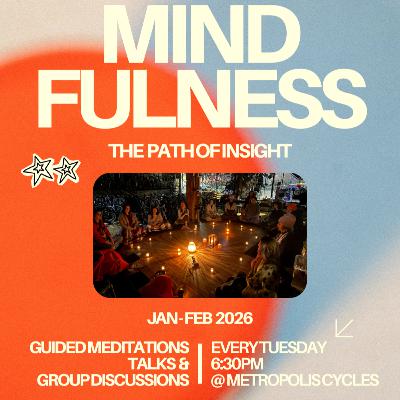
Andrew explores Mindfulness of the Body through the lens of the Satipaṭṭhāna Sutta, focusing on its grounding, calming, and stabilizing qualities. Drawing from early Buddhist teachings and lived experience, this talk highlights the body as a refuge, a place of return, and a powerful support for presence and collectedness in daily life.Through direct sutta readings and embodied reflection, listeners are invited to slow down, set things down, and reconnect with the simplicity of knowing the body as it is.Prompt: What is your earliest memory of an embodied experience? Playing? Falling? When do you remember feeling deeply present in your body for the first time?Sitting segment that complements the talk portion on the Embodied MindfulnessGroup Date: 1/13/2026
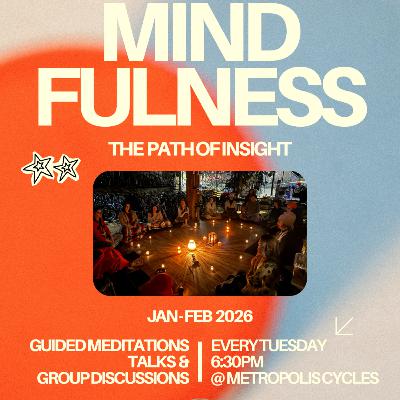
This week Olivia introduces a new series exploring mindfulness as a path to insight through Joseph Goldstein’s Mindfulness: A Practical Guide to Awakening, grounding the practice in the Buddha’s teachings on the Four Foundations of Mindfulness. It reframes mindfulness not as a relaxation technique, but as a systematic, ethical training of the mind that requires dedication, investigation, and clear knowing. Drawing from both modern science and ancient tradition, the talk highlights how mindfulness asks more of us than simple presence and leads beyond stress reduction toward wisdom and liberation. Ultimately, it reassures practitioners that their effort is not wasted, but is planting the conditions for greater clarity, freedom, and care in this very life.Prompt: When was the seed of mindfulness planted for you and what planted it?Talk segment that complements the sit portion on the Mindfulness as a Path to InsightGroup Date: 1/6/2026
This week Olivia introduces a new series exploring mindfulness as a path to insight through Joseph Goldstein’s Mindfulness: A Practical Guide to Awakening, grounding the practice in the Buddha’s teachings on the Four Foundations of Mindfulness. It reframes mindfulness not as a relaxation technique, but as a systematic, ethical training of the mind that requires dedication, investigation, and clear knowing. Drawing from both modern science and ancient tradition, the talk highlights how mindfulness asks more of us than simple presence and leads beyond stress reduction toward wisdom and liberation. Ultimately, it reassures practitioners that their effort is not wasted, but is planting the conditions for greater clarity, freedom, and care in this very life.Prompt: When was the seed of mindfulness planted for you and what planted it?Sitting segment that complements the talk portion on the Mindfulness as a Path to InsightGroup Date: 1/6/2026
This week, Andrew explores why life can feel like the same week repeating over and over, always telling ourselves, “After this, things will slow down.” Drawing on Buddhist teachings on samsara, he looks at how modern clock time fuels urgency, productivity, and endless becoming, keeping us caught in familiar cycles of stress and postponement. Rather than teaching us how to get more time, the Buddha pointed to a way of releasing the heart from time’s pressure and touching a freedom that is available here and now.Prompt: What is a pattern that you repeat often or a loop you are often stuck in?Talk segment that complements the sit portion on the second week of Not Enough TimeGroup Date: 12/16/2025
This week, Andrew explores why life can feel like the same week repeating over and over, always telling ourselves, “After this, things will slow down.” Drawing on Buddhist teachings on samsara, he looks at how modern clock time fuels urgency, productivity, and endless becoming, keeping us caught in familiar cycles of stress and postponement. Rather than teaching us how to get more time, the Buddha pointed to a way of releasing the heart from time’s pressure and touching a freedom that is available here and now.Prompt: What is a pattern that you repeat often or a loop you are often stuck in?Sitting segment that complements the talk portion on the second week of Not Enough TimeGroup Date: 12/16/2025
This week Olivia reflected on how much of our stress around time comes not from the hours we have, but from our desire for more and the self-judgment that follows. She explored dukkha dukkha and the second arrow, showing how craving, aversion, and unrealistic expectations layer extra suffering onto our days. By loosening our grip on plans, softening self-blame, and meeting ourselves with compassion, we can relate to time with more ease.Prompt: What do you wish you had more time for?Talk segment that complements the sit portion on the first week of Not Enough TimeGroup Date: 12/9/2025

This week Olivia reflected on how much of our stress around time comes not from the hours we have, but from our desire for more and the self-judgment that follows. She explored dukkha dukkha and the second arrow, showing how craving, aversion, and unrealistic expectations layer extra suffering onto our days. By loosening our grip on plans, softening self-blame, and meeting ourselves with compassion, we can relate to time with more ease.Prompt: What do you wish you had more time for?Sitting segment that complements the talk portion on the first week of Not Enough TimeGroup Date: 12/9/2025

Comments

Download from Google Play

Download from App Store
 United States