


 Claim Ownership
NBM Talks: Podcast from the Narrative-Based Medicine Lab
Subscribed: 2Played: 2
Subscribe

© CPD Programs
Description
NBM Talks is a podcast from the Narrative-Based Medicine Lab at Continuing Professional Development, Temerty Faculty of Medicine, University of Toronto.
Listen to engaging conversations with writers, clinicians, scholars, and artists working at the intersection of literature, medicine, and health. Discover the rewarding possibilities that exist when we engage with narrative-based principles and practices in healthcare.
Visit our website to learn more about our work and offerings: narrativebasedmedicine.ca
Listen to engaging conversations with writers, clinicians, scholars, and artists working at the intersection of literature, medicine, and health. Discover the rewarding possibilities that exist when we engage with narrative-based principles and practices in healthcare.
Visit our website to learn more about our work and offerings: narrativebasedmedicine.ca
43 Episodes
Reverse

Jay Baruch, physician, writer, and member of the NBM Lab's International Advisory Board, joins us from Providence, Rhode Island to trace where his interest in story, narrative, and medicine began. Jay shares stories from his career that illustrate how we can keep these interests joined and alive. In particular, he describes the benefits that working narratively has in the emergency room. Jay also shares his writing process and some exciting news about his current writing projects.About Our Guest:Jay Baruch is a writer, emergency room doctor, educator, and Professor of Emergency Medicine at the Warren Alpert Medical School of Brown University, where he serves as the Director of the Medical Humanities and Bioethics Scholarly Concentration. His academic and creative work centers on the complexity and uncertainty in patient care and the importance of creativity, interdisciplinarity, and the arts as clinical skills.His latest book of non-fiction essays is Tornado of Life: A Doctor’s Journey through Constraints and Creativity in the Emergency Room (MIT Press, 2022). He’s the author of two short fiction collections: What’s Left Out (Kent State University Press, 2015) and Fourteen Stories: Doctors, Patients, and Other Strangers (Kent State University Press, 2007).***Follow "NBM Talks" for future episodes, where we explore the transformative impact and reach of narrative-based medicine with talented guests. Visit the Narrative-Based Medicine Lab to learn about our work and offerings.
John Launer, educator, writer, and retired family physician and family therapist, joins us from across the pond just outside London, UK to discuss his career and the state of the narrative-based medicine field. John shares examples from his own career where he's witnessed the power of narrative at work in clinical settings, reminding us about the importance of allowing stories to develop, flow, and breathe in order to see patients as human beings first.He also shares thoughts on the possibilities offered by AI in general practice and how it might be a narrative tool. John's recommended reading is Fighting for the Soul of General Practice: The Algorithm Will See You Now by Rupal Shah and Jens Foell.About Our Guest:John Launer is a retired family physician and family therapist, now working as a full-time educator and writer. He is also a member of the NBM Lab's International Advisory Board. John has taught internationally on the application of narrative ideas and skills to medical practice including patient encounters, supervision, and teamwork.His posts include Honorary Lifetime Consultant at the Tavistock Clinic in London and Honorary Associate Professor at University College London. He is the author or editor of ten books including Narrative-Based Practice in Health and Social Care: Conversations Inviting Change and writes a regular column for the British Medical Journal (BMJ).***Follow "NBM Talks" for future episodes, where we explore the transformative impact and reach of narrative-based medicine with talented guests. Visit the Narrative-Based Medicine Lab to learn about our work and offerings.
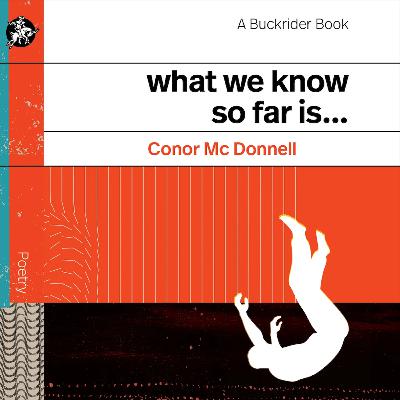
Conor Mc Donnell reads a passage from his new book of poetry What We Know So Far Is... (Wolsak & Wynn, 2025). Filled with vivid imagery, literary allusions, contemplations on the role of language, and cultural references, Conor joins the revival of the long poem movement.Conor kindly recorded this reading to accompany a feature article about this latest publication, available for reading over on the Narrative-Based Medicine Lab.Published by Wolsak & Wynn, What We Know So Far Is… is out now and available for order online and from your local bookstore.
Petal Abdool reads "The Tree of Life," a poem first penned in her youth and completed years later. Listen along and trace the passage of time woven through its lines.***Follow "NBM Talks" for future episodes, where we explore the transformative impact and reach of narrative-based medicine with talented guests. Visit the Narrative-Based Medicine Lab to learn about our work and offerings.
Petal Abdool shares how storytelling and lived experience bring medicine to life: from actors performing King Lear to help psychiatry residents reflect on aging to stepping into a geriatric suit to feel the physical challenges of growing older. She sheds light on how these immersive, hands-on experiences go beyond textbooks to help learners connect more deeply with their patients.About Our Guest:Petal Abdool is an Associate Professor in the Department of Psychiatry at the University of Toronto and a geriatric psychiatrist at the Centre for Addiction and Mental Health (CAMH).She is the Medical Director of the CAMH Simulation Centre and Faculty Lead for Simulation Education Integration at Postgraduate Medical Education, Temerty Faculty of Medicine, where her research focuses on simulation-based medical education and care for seniors experiencing homelessness and living with severe mental illness.***Follow "NBM Talks" for future episodes, where we explore the transformative impact and reach of narrative-based medicine with talented guests. Visit the Narrative-Based Medicine Lab to learn about our work and offerings.
Ryan Giroux reflects on his journey as a Métis physician, exploring identity, marginalization in Canada, and the struggle of belonging that shaped a resilient and distinct Métis culture in this personal narrative.***Follow "NBM Talks" for future episodes, where we explore the transformative impact and reach of narrative-based medicine with talented guests. Visit the Narrative-Based Medicine Lab to learn about our work and offerings.
Ryan Giroux shares how his experiences as an Indigenous resident inspired his work to support Indigenous learners in medicine. He discusses creating more inclusive residency training by fostering strong relationships among learners, faculty, and support staff. Through narrative-based medicine, he honours the stories of colleagues and transforms them into meaningful change in medical education and patient care.About Our Guest:Ryan Giroux is an Assistant Professor in the Department of Paediatrics at the University of Toronto and a general paediatrician at St. Michael’s Hospital in Toronto focusing on urban Indigenous child health.He serves as the Postgraduate Medical Education Indigenous Health Faculty Lead at the Temerty Faculty of Medicine and an Indigenous Educator with the Royal College of Physicians and Surgeons of Canada. He also serves on the Canadian Paediatric Society’s First Nations, Inuit, and Métis Health Committee, contributing to national advocacy and education efforts.***Follow "NBM Talks" for future episodes, where we explore the transformative impact and reach of narrative-based medicine with talented guests. Visit the Narrative-Based Medicine Lab to learn about our work and offerings.
Rory O'Sullivan reads from an original short narrative, "Teachings," which first appeared in Pulse in 2024.***Follow "NBM Talks" for future episodes, where we explore the transformative impact and reach of narrative-based medicine with talented guests. Visit the Narrative-Based Medicine Lab to learn about our work and offerings.
In this episode, Rory O'Sullivan chats with us about his work as a writer and family physician. He shares the place that writing holds in his life and how it interacts with his clinical work, as well as offering advice on balancing careers and thoughts on publication strategies for those starting out. Rory also shares the latest on his pseudonymous psychological thriller: Waking on the Ground.About Our Guest:Rory O'Sullivan is a family doctor who practices comprehensive family medicine at the Garrison Creek Clinic in Toronto. In his 12 years in practice, Rory has worked in emergency rooms and hospitals across several provinces and served for nearly 3 years as the community physician for the Poplar Hill First Nation in Northwestern Ontario.He is an Assistant Professor of Family Medicine at the University of Toronto, where he teaches reflective practice as part of the portfolio course for undergraduate medical students, and is currently enrolled in the NBM Lab’s Advanced Certificate.His written work has been published in medical journals and magazines including The Intima, Pulse, and Canadian Family Physician. He is a past recipient of the CFPC Mimi Divinsky Award for history and narrative in family medicine, and a long-listed finalist for the International Amy MacRae Award for memoir. His latest publication Waking on the Ground is a novella written under the pen name "Eamon Rourke," available on Kobo and Kindle platforms.***Follow "NBM Talks" for future episodes, where we explore the transformative impact and reach of narrative-based medicine with talented guests. Visit the Narrative-Based Medicine Lab to learn about our work and offerings.
Darian Goldin Stahl invites us to expand our perspective on what a book is, and what the act of reading a book entails, as she shares an excerpt from the introduction of Embodied Books: Experiencing the Health Humanities through Artists’ Books (Peter Lang International Academic Publishers, 2024).
Artist and scholar Darian Goldin Stahl joins us for a conversation about her work making (and teaching others to make) embodied books: beautiful, physical manifestations of health stories. Darian shares how her work in this field has origins in her family history and a family collaboration, which has become a profoundly original and generative approach to health humanities over time.About Our Guest:Darian Goldin Stahl is an interdisciplinary printmaker whose work explores themes of healthcare, disability, and well-being. After earning an MFA in Printmaking from the University of Alberta, she completed a research-creation PhD in Humanities at Concordia. Her dissertation, Embodied Books: Experiencing the Health Humanities through Artists’ Books, was published by Peter Lang International Academic Publishers in 2024.She was awarded a SSHRC Banting Postdoctoral Fellowship at the UNBC Northern Medical Program, which she used to launch the Embodied Books Project. This initiative empowers intrepid bookmakers to create new artists’ books on personal medical experiences.Her own artist’s books are included in many prominent permanent collections around the world, such as the Wellcome Collection in London, the Moody Library at Baylor University in Texas, the Thomas Fisher Rare Book Library at the University of Toronto, and the Herron Library at Indiana University.***Follow "NBM Talks" for future episodes, where we explore the transformative impact and reach of narrative-based medicine with talented guests. Visit the Narrative-Based Medicine Lab to learn about our work and offerings.
Monica Kidd reads an excerpt from her new novel The Crane (Breakwater, 2025).
In this wide-ranging conversation — author, physician, journalist, editor, mother, and Antarctic expedition guide (and much else) — Monica Kidd discusses the origins of her new novel The Crane. She also shares her creative advice for doctor-writers (“notice everything, dismiss nothing”), and tells us what she’s keeping an eye out for in her role as editor of the CMAJ Encounters column.About Our Guest:Monica Kidd is an award-winning multidisciplinary writer, journalist, and physician. She has published eight books of fiction poetry and non-fiction, including her new novel The Crane (Breakwater, 2025), and her creative work has appeared in many literary magazines, winning the Edna Staebler Award for Personal Essay and National Magazine Awards.Previously a reporter with CBC, her freelance writing has been featured in The Walrus, Canadian Geographic, Alberta Views, and other outlets. Monica studied ecology and evolutionary biology, then attended medical school at Memorial University.She now works as a family doctor specializing in child and maternal health, medical humanities, and equity. She has teaching roles at the University of Calgary and Memorial University and serves as Associate Editor of Humanities at the Canadian Medical Association Journal. She divides her time between Calgary and St. John’s.***Follow "NBM Talks" for future episodes, where we explore the transformative impact and reach of narrative-based medicine with talented guests. Visit the Narrative-Based Medicine Lab to learn about our work and offerings.
Jeff Thompson shares one of his collaborators' definitions of “awe,” which prompts us to consider how we can experience moments of wonder, amazement, and grandeur (or awe) amidst our daily routines.***Follow "NBM Talks" for future episodes, where we explore the transformative impact and reach of narrative-based medicine with talented guests. Visit the Narrative-Based Medicine Lab to learn about our work and offerings.
Jeff Thompson is a research psychologist and scientist, and retired NYPD police detective and hostage negotiator with more than 20 years of experience.Joining us from New York City, Jeff shares his journey into narrative-based medicine, and the ways in which narrative tools can help us remain calm in high pressure situations and moments of crisis. Jeff also shares his approach to “stories as science” as well as other aspects of his work such as The Awe Project, his book warr;or21, and his current work with NASA. Referenced in this episode: Psychology Today Beyond Words BlogAbout Our Guest:Jeff Thompson engages in work and research to better humankind here on Earth and beyond. He recently completed his second doctorate at Edinburgh Napier University in Narrative Psychology where his research supported hostage negotiators, NASA healthcare professionals, and others. Jeff is also a researcher at the New York State Psychiatric Institute at Columbia University Medical Center and the College of Leadership and Public Service at Lipscomb University. He retired from the New York City Police Department (NYPD) in 2022 after serving more than 20 years in the rank of detective having served in roles as a hostage negotiator and their first-ever mental health and wellness coordinator helping to oversee the well-being of 50,000 people, both uniformed and civilian.***Follow "NBM Talks" for future episodes, where we explore the transformative impact and reach of narrative-based medicine with talented guests. Visit the Narrative-Based Medicine Lab to learn about our work and offerings.
Jordan Goodridge is a family physician, clinical educator, and 2SLGBTQIA+ health advocate, who seeks to advance medical education through equity, diversity, and inclusion in medicine. In this conversation with Sarah Kim, we explore how storytelling in film and narrative can be reflective of lived experiences of trans and gender-diverse patient populations and how they can be used to inform meaningful patient interactions.Jordan shares reflections on how the health humanities can help future physicians recognize their own biases, understand intersecting patient identities, and cultivate the empathy needed to serve all patients with dignity and respect.The poem referenced is "Munich, Winter 1973 (for Y.S.)" by James Baldwin, one of the first prominent Black writers to weave queer themes into fiction. The speaker in this poem feels "strange," as if an outsider in his own home, yet filled with impatient anticipation and excitement at the thought of his lover’s imminent return.About Our Guest:Jordan Goodridge is an Assistant Professor in the Department of Family & Community Medicine at the University of Toronto and serves as the Temerty Medicine 2SLGBTQIA+ Health Education Theme Lead. He works at multiple locations in Toronto and the GTA, providing primary care, HIV care, and focused care in 2SLGBTQIA+ health. He has a strong interest in medical education, particularly in areas such as gender-affirming care, HIV primary care, and sexual health.***Follow "NBM Talks" for future episodes, where we explore the transformative impact and reach of narrative-based medicine with talented guests. Visit the Narrative-Based Medicine Lab to learn about our work and offerings.
Lisa Richardson shares insights from her years of experience in the health humanities, including her involvement with projects such as the Seeds of Change art initiative, and invites us to expand our perspective on different ways of knowing, seeing, and communicating in this illuminating conversation with Sarah Kim (Temerty Medicine Health Humanities Theme Lead).Lisa also speaks to the transformative role that the arts and humanities can play in reconciliation and our understanding of medical culture. In closing, Lisa reminds us about our deep interconnectivity as humans and reads an excerpt from Embers: One Ojibway’s Meditations by Richard Wagamese.About Our Guest:Lisa Richardson is Associate Dean, Inclusion & Diversity and Interim Vice Dean, Strategy at the Temerty Faculty of Medicine, University of Toronto. Lisa is also an Associate Professor in the Department of Medicine and practices general internal medicine at University Health Network. Her academic interests lie in the integration of critical, Indigenous, and feminist perspectives in medical education.***Follow "NBM Talks" for future episodes, where we explore the transformative impact and reach of narrative-based medicine with talented guests. Visit the Narrative-Based Medicine Lab to learn about our work and offerings.
Sarah de Leeuw reads from her poetry collection: Pine. Her vivid imagery explores wildfire-scarred geographies and the profound shifts of middle age that culminate in reflections on change, resilience, and the deep connections between land and self.***Follow "NBM Talks" for future episodes, where we explore the transformative impact and reach of narrative-based medicine with talented guests. Visit the Narrative-Based Medicine Lab to learn about our work and offerings.
Writer, researcher, and professor Sarah de Leeuw joins us for a reflection on her professional journey and how she discovered the power of narrative in her own work. Sarah shares insights from her academic and creative practice, exploring the intersections of geography, colonialism, and personal experience.About Our Guest:Sarah de Leeuw is Canada Research Chair in Humanities and Health Inequities at the University of Northern British Columbia. Her research focuses on colonialism in British Columbia, determinants of Indigenous health, and the impact of medical programs in northern and rural areas.Sarah's work has been recognized with numerous awards, including the CBC Literary Award for creative non-fiction and the Dorothy Livesay Poetry Prize. In 2017, she was inducted into the Royal Society of Canada. She’s also a member of the Narrative-Based Medicine Lab’s International Advisory Board.***Follow "NBM Talks" for future episodes, where we explore the transformative impact and reach of narrative-based medicine with talented guests. Visit the Narrative-Based Medicine Lab to learn about our work and offerings.
Muiris Houston reads a creative piece that began from a visual writing prompt facilitated by Damian Tarnopolsky in a section of the Foundational Certificate in Narrative-Based Medicine.***Follow "NBM Talks" for future episodes, where we explore the transformative impact and reach of narrative-based medicine with talented guests. Visit the Narrative-Based Medicine Lab to learn about our work and offerings.

Comments

Download from Google Play

Download from App Store
 United States