


 Claim Ownership
Rockets and Radars: Zero to Millions in Space and Defence
Subscribed: 0Played: 2
Subscribe

© Martin Majercin | VC Platform | Founder | Angel Investor
Description
Proven strategies from space & defence founders who went from zero to millions hosted by Martin Majercin. Perfect for early-stage founders and ambitious talent looking to break into space & defence.
Space and defence industries are being rebuilt, not in boardrooms, but by founders in startups and laboratories across the world. Each week, Martin brings you their unfiltered stories and tactics for success.
New episodes every Friday.
Space and defence industries are being rebuilt, not in boardrooms, but by founders in startups and laboratories across the world. Each week, Martin brings you their unfiltered stories and tactics for success.
New episodes every Friday.
37 Episodes
Reverse
Kenneth Richard Geipel (co-founder of Robotto) started his career not in a lab or a startup — but in the Danish Armed Forces, where he served three combat deployments. When he left the military, he went back to university to study robotics. His thesis project? A drone to deliver pizza from 500 meters away, because he and his classmates were too lazy to walk.What nobody expected is what happened next. A summer of record wildfires across Europe pulled that pizza drone into something more serious — autonomous wildfire detection software built with real firefighters in the field. Then COVID hit, nearly killing the company four days before their first major demo abroad. Then in 2022, a phone call from a former fellow veteran whose wife was Ukrainian changed everything. Kenneth had spent years turning down requests to weaponize his technology — but when a fellow soldier asks for help, you say yes.In this episode, Kenneth shares how Robotto went from a pizza drone thesis to deploying GPS-free autonomous software on Ukrainian frontlines daily, how they got selected for NATO's DIANA accelerator out of 3,500 applicants across 24 nations, and why he thinks the entire European defence industry is getting one thing catastrophically wrong.Get in touch with Kenneth:https://www.linkedin.com/in/kenneth-richard-geipel-081309186/-----------------------------------------------Chapters:(00:00) Introduction(00:33) Who Is Kenneth and What Does Robotto Do(01:37) Why a Soldier Became a Robotics Founder(03:50) What Deployments Taught Him That No Startup Book Will(08:27) The Pizza Drone Thesis That Started Everything(09:18) Pivoting from Pizza to Wildfire Detection(10:48) How Two Students Got a Meeting With a Government Agency(11:59) Incorporating Robotto — With Just a POC and Two Papers(16:33) COVID Hits Four Days Before Their First Major Demo(24:15) Fundraising After Near-Bankruptcy — and Why Radical Honesty Won(29:05) The Phone Call From a Veteran That Pulled Them Into Defence(31:17) The Ethical Conversations They Had Before Saying Yes(33:17) How They Got Their First Ukrainian Partner and Built in Two Weeks(35:44) Tracking Elephants in Thailand and Fighting Fires — at the Same Time(41:23) How Product Iteration Works When Your Customer Is on the Frontline(47:21) How Civilians Get It Catastrophically Wrong Selling to Military(49:49) What NATO's DIANA Gives You That Money Can't Buy(51:02) Robotto UA — Planting a Flag in Ukraine(54:25) Is the Future of War Fully Autonomous?(57:50) The Most Overrated Thing in the Drone Industry Right Now-----------------------------------------------You will learn:- Why building with end users is non-negotiable in defence — and what happens when you don't- How to get your first meeting with a government agency when you have nothing but a thesis and stubbornness- Why nearly going bankrupt made Kenneth a better fundraiser and what he told investors that most founders never would- How Robotto built and shipped their first frontline prototype in 2 weeks — and what brutal feedback from Ukrainian soldiers actually sounds like- Why civilians get it catastrophically wrong when they try to sell to the military- How to find the non-obvious accelerator programs you actually qualify for- What NATO's DIANA programme gives you that money simply cannot buy — and what it doesn't- Why Kenneth voluntarily gave up his CEO title — and why most founders should think harder about theirs- Why AI is the most overrated word in the drone industry right now- What Kenneth would do differently in the first 12 months if he started Robotto again tomorrow-----------------------------------------------Follow Martin Majercin on X:https://www.x.com/monsfrostFollow Martin Majercin on LinkedIn:https://www.linkedin.com/in/monsfrost/Follow Robotto on LinkedIn:https://www.linkedin.com/company/robottoai/
Nima Shahinian (co-founder of Nåva Space) had one dream: go to space. He trained for it, negotiated for it, and got closer than almost any private citizen ever has. Then in a single morning, everything collapsed after Russia invaded Ukraine in 2022. So he did the next best thing. He decided to rebuild the spacesuit instead.What people don’t know is that NASA has a handful of operational suits left, all 50 years old and becoming dangerous. Plus, Europe has never built a commercial suit yet, so Nima decided to do so.In this episode, Nima shares how Nåva Space went from a cardboard prototype to testing a next-generation spacesuit with a real ISS astronaut in just 11 months, why an investor he deeply respected told him it could never be done in Europe and why the biggest problem in European space isn't money or talent.Get in touch with Nima:https://www.instagram.com/astro_nims/https://www.linkedin.com/in/nima-j-shahinian-6b059086/-----------------------------------------------Chapters:(00:00) Introduction(03:01) Background: Designer, Soldier, Would-Be Cosmonaut(06:57) What the Military Taught Him That No Startup Book Will(16:33) Applying to ESA Without Qualifications(36:01) How Nima Funded His Own Cosmonaut Training(42:30) How He Walked Away from the Cosmonaut Program(51:01) Starting Nåva Space Broke, Wounded, and with No Clear Focus(56:36) The Global Spacesuit Crisis No One Is Talking About(01:05:01) How Nåva Went from Cardboard to ESA Astronaut Testing(01:10:01) Why Every Technology Nåva Builds Has to Work on Earth Too(01:13:00) Why They Started with a Human, Not an Engineering Spec(01:18:01) When to Stop Internal Testing and Bring in Real Users(01:23:00) How a Norwegian Startup Got Access to ESA's Astronaut Center(01:28:40) Why Nåva Sources a Spacesuit from a Norwegian Boot Maker(01:39:30) The Investor Who Said You'll Never Build a Suit in Europe(01:48:01) Final Message: Everything Around You Was Built by Someone-----------------------------------------------You will learn:- Why NASA's spacesuit crisis is more dangerous than anyone is admitting- How to go from zero to flight-ready spacesuit in 11 months- Why starting with cardboard beats starting with CAD every time- What an investor who said "you'll never build a suit in Europe" got wrong- How to find and hire world-class talent for a category that has never existed- How a spacesuit becomes a defence and industrial product — and why that's the only way to build the business- When to push 100% and when to stop, the work-life of building in space- Why Norway is one of the hardest places in Europe to build a space startup- Why the only question that matters when starting something impossible is: why not you?#spacesuit #nasa #space #spacex
Pavel Panasjuk was running cleantech startups when Russian missiles started hitting Ukraine in 2022. He had zero defencetech experience—his only military knowledge came from reading history books as a hobby. Like many Ukrainian entrepreneurs, he and his co-founder Oleksandr started by buying medkits, cars, ammunition, and bulletproof vests to supply friends in the army. But after a few months, they shifted from buying supplies to building something. So they made a crazy bet—instead of fixing today's problems, they'd design autonomous submarines for the war 15 years from now. They asked "what comes AFTER Ukraine's surface drones dominate the Black Sea?" Their answer: AI-powered mini-subs that make tactical decisions independently underwater.In this episode, Pavel shares how thinking ahead of the current war became Angler's strategy: why he believes human navies are finished and 90% of naval warfare will be autonomous by 2035, how Ukrainian startups move at 6-month cycles while watching Western contractors plan decade-long programs for systems that'll be obsolete before they launch, why European VCs frustrated him by acting "more like bankers lending money" instead of betting on breakthrough technology like American investors do—and the two things Ukrainian defence founders understand that Western founders are completely blind to: speed and affordability, because when your relatives live near the front line, you don't have time for 10-year development cycles.-----------------------------------------------Chapters:00:00 Introduction01:28 What Angler Actually Does02:32 From CleanTech to DefenceTech03:39 February 2022: The Decision to Build for War04:42 Finding Your Technical Co-Founder18:25 Customer Discovery: Who Actually Buys This20:31 The Pivot: Why We Went Hybrid21:49 First Prototypes: Garage to Water Testing30:40 How to Actually Raise from European VCs36:50 Building Fast vs Building Perfect42:35 Where to Incorporate as Ukrainian Founder52:27 Getting to Revenue Without 5-Year Timelines53:41 How Much Tech to Show Investors55:29 What Ukrainian Founders Know About Speed55:47 The 6-Month Product Cycle Rule56:15 The Unsexy Thing That Kill you Company-----------------------------------------------You will learn:- Why Pavel talked to military customers BEFORE building anything- The "cheap, good enough" rule that Ukrainian founders understand but Western defence companies completely miss- How Pavel found his first investor after cold emails failed- Why most defence tech pitches fail at the secrecy/disclosure balance- Why 90% of naval warfare will be autonomous within 10 years-----------------------------------------------Follow Martin Majercin on X:https://www.x.com/monsfrostFollow Martin Majercin on LinkedIn:https://www.linkedin.com/in/monsfrost/Follow Pavel Panasjuk LinkedIn:https://www.linkedin.com/in/ppanasjukFollow Angler on their website:https://anglerdrones.com#defence #drone #maritime #defencetechnology #startup #ukraine

Francesco Cacciatore, a space engineer who spent 20 years designing missions to Mars, Mercury, and comets at companies like Deimos and Sener, co-founded Orbital Paradigm in 2023. When most thought reentry was a closed market dominated by established players, his team did the unthinkable: they built Spain's first reentry capsule in 11 months—working nights and weekends while still employed—and got it flight-qualified. Today, Orbital Paradigm is the only payload that survived the catastrophic PSLV failure in January 2025, with their capsule enduring 35Gs (more than double design limits) and transmitting data all the way down.In this episode, Francesco shares the unfiltered journey of building Europe's newest reentry company: how a personal health crisis made him stop "watching life from the bench" and finally start something, how they qualified flight hardware faster than anyone expected by over-engineering for the wrong mission profile, and why European founders need to stop chasing manager titles and feeling guilty about wanting to get rich.-----------------------------------------------Chapters:00:00 Introduction01:40 What Orbital Paradigm Actually Does28:05 The Health Crisis That Pushed Me to Quit35:02 Why MBAs Are Useless for Space Founders45:39 First Weeks: Building While Working Full-Time50:50 The Pivot: From In-Space Robotics to Reentry Capsules01:09:24 Build vs Buy: Being Cleverly Integrated01:14:16 Finding Your First Customers: Pulling the Thread01:19:35 Fundraising Mistakes: Stop Leading with Step One01:28:24 Launch Day: When the Rocket Failed Mid-Flight01:33:20 How KID Survived 33Gs (When It Should Have Died)01:44:16 The Biggest Lie Investors Tell Founders01:48:03 Final Message: Why It's Worth It-----------------------------------------------You will learn:- What's the biggest mistake engineers make with investors and how to fix it- Why European founders need to stop chasing titles- Why to design for customers, not capabilities- Why "vertical integration" myth is bullsh*t- What kills most of the deep tech companies-----------------------------------------------Follow Martin Majercin on X:https://www.x.com/monsfrostFollow Martin Majercin on LinkedIn:https://www.linkedin.com/in/monsfrost/Follow Francesco Cacciatore LinkedIn:https://www.linkedin.com/in/francescocacciatore/Follow Orbital Paradigm on LinkedIn:https://www.linkedin.com/company/orbital-paradigm

Christian Schmierer, an aerospace engineer who grew up next to Europe's largest rocket test center, co-founded HyImpulse in 2018. When every expert dismissed hybrid rockets as failed technology from the 1960s, his team did the unthinkable: they built rockets powered by paraffin—essentially candle wax.Today, HyImpulse has raised over €45 million and became Germany's first privately-funded company to successfully launch a rocket—spending just €15 million to get there while competitors burned through ten times that amount.In this episode, Christian shares the unfiltered journey of building Europe's most unconventional launch company: how breaking world records as students made founding a company feel inevitable, why four engineers leaving stable jobs at the German Aerospace Center (DLR) turned out to be the right choice and why they had to ship their rocket halfway around the world to the Australian desert for a mission aptly named "Light This Candle.-----------------------------------------------Chapters:(00:00) Introduction(02:50) From Childhood Curiosity to Student Rocket Team(09:55) Why Hybrid Rockets? The Technology No One Believed In(14:32) Failure at 2 Kilometers: Our First Launch Attempt(22:49) Breaking the World Record: 32.3 Kilometers(24:04) The 16-Month Gap: From Students to Founders(31:23) How We Landed Our First Investor(35:37) Scaling from 4 Founders to 50 People(42:33) Cracking the Code: Winning EU Funding on the Third Try(48:25) Light This Candle: Germany's First Private Rocket Launch(51:21) How One Launch Changed Everything with Investors(53:05) Raising €45M and Planning the Orbital Rocket(58:21) The 10-Year Vision(01:05:03) Advice to Space Founders-----------------------------------------------Takeaways:1) Just get started - Europe rewards those who try: "If you have a great idea then there is definitely room in Europe to do this and follow your dream or your idea and you just have to get started because initially there will be people who say it's impossible or no one needs it." 2) Learn to speak different languages to different stakeholders: "The way how I explain it to a potential investor is completely different whether it's a VC or a strategic, but then if I have to explain it to an authority it's again completely different - I have to use a different language that they understand." Your pitch to a VC, a government agency, and a customer should sound completely different.3) Capital efficiency is a competitive advantage, not a limitation: HyImpulse launched their first rocket for just €15 million total. "We are actually very capital efficient but of course if you want to build amazing things, big things, then it also requires capital." Being scrappy forces you to make smarter decisions.4) Start where you have the edge, not where VCs tell you to start: While other rocket startups bought hired experienced engineers, HyImpulse started with basic research on hybrid rockets with paraffin. "We had to start with basic research whereas everyone else, if they wanted, they could have bought an engine."5) Resilience built in student days becomes the foundation for your company: As students, their first rocket failed at just 2 kilometers after years of work. They built two more rockets and broke the world record at 32.3 kilometers on their third attempt. That "fail, learn, try again" DNA carried directly into HyImpulse - where the stakes were exponentially higher but the resilience was already battle-tested.6) A successful launch changes everything - but only for non-engineers: "For us as rocket engineers, already in the testing phase on ground it was clear okay this will work at some point. But for non-engineers this is a different story. I can explain to people as many times 'yeah with candle wax, with paraffin you can launch into space' and people say 'yeah okay.' But with that launch, that of course changed - people say 'oh it looks like a real rocket!'"

Rafel Jorda Siquier, an aerospace engineer from Mallorca, founded Open Cosmos in 2015. When they landed their first satellite contract, every university—including his own—refused to give them clean room access. So they went to the Arctic Circle to assemble their first satellite. Today, Open Cosmos has secured over €120 million in contracts in the last year alone, building satellites faster and cheaper than the industry thought possible—while actually turning a profit.In this episode, Rafael shares the unfiltered reality of building Europe's fastest-growing space company: how launching stratospheric balloons as a student led to an internship that showed him starting a space company was actually possible, why he walked away from a dream job at Airbus—Europe's largest aerospace company—to chase a purpose he couldn't ignore, and why Open Cosmos is now pushing AI capabilities directly into orbit.-----------------------------------------------Chapters:(00:00) Introduction(02:22) From Stratospheric Balloons to Life Purpose(09:55) "Is That Even Possible?" - Leaving Airbus at 25(17:06) Why I Chose Europe Over the US(21:11) How to Land Your First Contract in 3 Months(25:58) Convincing My CTO to Quit His Dream Job(28:53) Why We Assembled our First Satellite near the North Pole(43:40) Start Where You Have the Edge, Not Where VCs Tell You(46:40) How to Kill a Product That Doesn't Sell(48:28) COVID Hit. Everything Broke at Once.(53:21) How We Became Profitable During a Pandemic(55:04) How to Build Investor Trust(57:01) Companies Exist to Solve Problems, Not Raise Money(01:00:50) Get Traction, Sell, Then Raise(01:10:34) Advice to Young Founders-----------------------------------------------1) Naivety is your most powerful weapon as a founder - don't lose it: "Naivety is essential as a founder because few things are so empowering as naivety to take that first step."2) Companies exist to solve problems and earn money - not to raise it: "Companies are not out there to raise money. Companies should be out there to solve problems and to earn money on the back of solving those problems." Open Cosmos bootstrapped their first satellite and only raised when they needed to scale into a new product line.3) Find customers before you find investors: "Get traction, prove the market - sell and then raise. Guys, we did it with satellites. So if we've done it, bootstrapping a satellite, maybe there are multiple industries where this approach may also work."4) Don't start the company the sake of starting - do it for purpose and need: The entrepreneurial drive should come from seeing a real problem that nobody else is solving, not from wanting to be a founder.5) Start where you have the edge, not where the market tells you to start: "For me, it was very clear that we had to start where we had an edge. Our edge was we were good system engineers with good design capabilities with an understanding of supply chain, unit economics. So we started building probably the hardest bit - the hardware."6) Take care of yourself - the founder journey is a marathon: "Make sure you take better care of yourself because the journey as a founder, it's a marathon... Probably I could have achieved the same while not necessarily having to grind it so crazily."7) When everything breaks at once, speed of decision is everything: "In these situations, if you doubt during two weeks or three weeks or a month to take a decision, you've burned a lot of that extra time. So we took extremely prompt decisions." When COVID hit, Open Cosmos furloughed half the team within days and brought everyone back four months later.8) Pay your suppliers on time - especially when you can barely afford it: "During those COVID months, we didn't miss or delay a single payment to our suppliers because we didn't want that to be done to us. I know for a fact that many of the suppliers went through that period relying on our payment."
V'yacheslav Shvaydak, an ex-lieutenant with a PhD in economics co-founded DROPLA in 2023. Starting with three co-founders and zero revenue, they pitched military officials: "we're a small startup, our name is nobody, can you please give us some land mines?" They were shown the door. Today, DROPLA has raised millions from international investors and built technology now deployed across Ukraine, expanding from humanitarian de-mining into real-time threat detection systems dictated by battlefield needs.In this episode, Slava shares the unfiltered reality of building defence tech during wartime: how his experience as a former tank commander sitting on ammunition watching turret caps fly shaped his product decisions, why European defence startups must stress-test products before bringing them to Ukrainian warfighters, the single biggest mistake that destroys defencetech companies, and why there's nothing shameful about forging weapons when democracy needs defending.-----------------------------------------------Chapters:(00:00) Introduction(01:32) PhD Economist, Engineer & Tank Commander: The Unusual Combo(09:30) How Slava ended with Starting a Defencetech Company(25:52) The Breakthrough: Getting Access to Real Land Mines(27:30) How We Built Europe's Biggest Mine Database(26:27) First Win: How We Got Ukrainian Forces to Say Yes(44:31) The Pivot: From Humanitarian to Battlefield(51:43) How to Actually Raise Money During a War(01:02:40) Why Defencetech Gives You Zero Second Chances(01:05:12) The Agreement That Saved Our Founding Team(01:09:07) What "Battle-Ready" Actually Means-----------------------------------------------1) Respect is your currency in defencetech - protect it ruthlessly: "You never badmouth people behind their back. You never badmouth people in the defence industry. The word spreads really quickly about you, your company. This respect is a very bad type of decision that you might choose."2) Face-to-face confrontation beats silent disrespect every time: "If you think that somebody is wrong, confront him. Openly confront him. It will be a sign of strength. It will be a sign of respect to him. And the truth will be revealed in this battle. And there is nothing bad in having different opinions."3) Never bring half-baked products to warfighters - it's unforgivable: "If you are a defence tech in Europe, I would strongly advise not to waste Ukrainian warfighters time... You would come with a completely raw, untested, under stress product in your environment, trying to bring something that you know for sure will not work. You know, personally inside. You are just doing that to stamp battle proven on your product and go brag about it."4) Impossible persistence beats perfect credentials: "Imagine you coming to the military guys and asking them 'hey guys, I'm a small startup with 4 co-founders, we just started, we have zero in revenue, our name is nobody and can you please give us some land mines to play with?' Right now we have the biggest land mine threat signature in Europe I would say without any doubt."5) There's nothing shameful in building shields and swords - "There is nothing bad in being strong. There is nothing bad in forging a shield. There is nothing bad in forging a sword. There is nothing bad in desire to defend your people. It is a source of strength... Straighten up your backs and work." European defence tech founders: abandon the shame. Defending your people is a source of strength, not embarrassment.6) Your weird combination is your unfair advantage: "We are all on our personal journeys with a designated set of skills... your pair of eyes have seen stuff that no one else in the world has seen or heard. And your unique connect of the brain is such a unique experience." Don't try to fit into boxes. Your strange path is your edge.#defence #ukraine #entrepreneurship #artificialintelligence

Lars Alminde co-founded GomSpace in 2007, one of Europe's first New Space companies, at a time when ESA openly dismissed their technology as "not something we're ever going to use." Fast forward 18 years, ESA is now a customer of GomSpace, and Lars has lived through nearly every crisis a space founder can face. He stepped down as CEO after seven years, watched the company go public with a 6x stock surge, then saw it nearly die twice - once from cancelled contracts in 2019, then again from a devastating stock crash in 2023 - before reaching profitability in 2025.In this episode, Lars shares the unfiltered reality of building in European space: how university consulting revenue from day one kept them alive, why stepping down as founding CEO was his best strategic move, and what he learned from surviving 2 decades in one of the world's most unforgiving industries.-----------------------------------------------Chapters:(00:00) Introduction(02:27) How a Student Project Became a Career(04:11) Two Satellites Failed & He Still Started a Company(08:16) "We'll Never Use This" - ESA Before Signing Their Contracts Years Later(15:24) First Success: GOMX-1 Changes Everything(18:29) Stepping Down as CEO After 7 Years(23:31) Going Public: The IPO That Changed Everything(28:47) First Near-Death: Major Contracts Cancelled(34:00) Second Near-Death: Stock Crashes 90%(37:02) New CEO, New Strategy: From Growth to Profitability(42:39) 18 Years to Profitability(44:26) The One Lesson From Years of Experience(45:32) Rapid Fire Questions-----------------------------------------------Takeaways:1) Plan your CEO exit before burnout forces it - "I couldn't keep working 150% for all of my career. And when you're the CEO, there's a lot of things you have to do because you're the CEO, which distracts you from where you can make your most important contributions." Lars stepped down after 7 years when he became a father, recognizing he needed to shift from CEO duties to his technical core strengths.2) If you're even thinking about stepping down, take it seriously - "If as an early stage CEO, you're even thinking about it, then you know there's something to take serious. Be curious, explore your feelings and your priorities. Do I need to be in this company for another three years? At some point, you have to make your career plan or you just get overwhelmed by all of the work."3) During crises, protect your personal life or you'll suffer constantly - "If everything you have is the business and the business suffered, then you suffer all of the time. If you also have a family, take your mountain bike in the forest on the weekend. If you have other interests, then you can distance from it and see the business is suffering, I'm doing what I can to fix it, but I'm okay."4) Radical transparency with employees helps everyone plan better - "The more people know, the better they are able to add and plan." After nearly dying twice, GomSpace now emphasizes extreme transparency.5) Stop selling your tech stack, start selling outcomes - "I think for most new technology it's about transitioning from being excited about a technology to have applications and customers who are excited about what that technology can do for them."6) Find real end users early - "Think beyond the grants and the government subsidies and think about what's the real application this technology can provide and make sure to get in contact with that group of end users as early as possible."7) Think in multiple scenarios, but don't focus on failure - "When you need to make that big adjustment, you have to think in multiple scenarios because there always are multiple scenarios. One of them is not making it, but it's just one of many scenarios.8) Success is about staying in the game long enough to catch opportunities. In the early years, Lars didn't know on the 20th of each month how he'd pay salaries by the 30th - but he always found a way to stay alive another month.

Philip Johnston is the CEO and Co-founder of Starcloud, a YC-backed startup building data centers in space to solve AI's growing energy crisis. After working at Goldman Sachs and consulting for Middle Eastern space agencies, Philip assembled what he calls "the 10 most kickass engineers in the world" from thousands of candidates. Their mission: create gigabit-scale orbital data centers with 4km solar arrays that could fundamentally transform computing infrastructure.In this episode, Philip reveals his journey from being rejected twice by YC to securing $21M in funding and preparing to launch Starcloud's first satellite this year. He explains why his small, elite team is developing technology to run NVIDIA's H100 chips in space (the first time in human history), their rapid 18-month satellite development cycle, and why conventional terrestrial data centers simply cannot scale to meet future AI energy demands.-----------------------------------------------Chapters:00:00 Introduction02:02 Growing Up with a YC Founder Brother04:28 Why Trading Skills Are Useless for Entrepreneurship12:13 The Starbase "Holy Sh*t" Moment That Started It All16:42 The First Angel Investor Who Changed Everything21:03 Why Redmond (Not LA) Is the Real Space Capital23:47 Y Combinator & The Viral White Paper That Got Them Roasted29:29 Over 200 VCs Reached Out: The $11M Round in Days32:35 Hiring Only 10 People: The World's Most Elite Space Team37:27 First to Fly NVIDIA H100s in Space42:20 Quick Fire Questions: Why Humanity Will Wipe Itself Out47:52 Why Your Crazy Idea Probably Sucks-----------------------------------------------Takeaways:1) Exposure to high achievers eliminates the impossible - "One thing that having an identical twin brother gives you is... it teaches you what is possible. If he can do something, there is no reason I shouldn't be able to do it." 2) Traditional finance experience is worthless for founders - "I would not recommend anybody become a trader if you want to be an entrepreneur... trading is an incredibly niche and non-transferable skill set." 3) Best founder training: startup experience beats everything - "The best path to founding a company is to go work for a startup." Philip's clear hierarchy of valuable pre-founder experience places startups at the top, followed by management consulting, with VC and trading trailing far behind.4) Lead with your most audacious vision, not incremental steps - Philip's biggest fundraising regret was initially pitching short-term vision: satellite edge computing instead of his revolutionary vision for orbital data centers.5) American angels wire money immediately; Europeans wait for others - "American angels are like absolute godsend because they sign and wire on the same day... in Europe they're like, who else is in?" The cultural difference in investor behavior meant Starcloud's first check came from an American who decided independently without needing social proof.6) Move your company to the talent, not where "space companies go" - "Everybody we want to hire lives in Redmond, Washington... for satellites, Redmond's like the global capital." Philip relocated from aerospace hub El Segundo when he discovered 90% of satellites were actually designed and built in Redmond.7) Hire slowly: interview thousands to find your 10 perfect engineers - "We spent an enormous amount of time interviewing and not hiring lots of people... we went through about 10,000 CVs." Starcloud's elite 10-person team resulted from an extraordinarily selective process that rejected thousands of qualified candidates.8) "Build it and see" beats "spend months in CAD" - "We are very much a build it and see culture rather than a spend six months in CAD and see culture." Philip's team prioritizes physical prototyping and testing over extensive theoretical design, accelerating their development cycle dramatically.
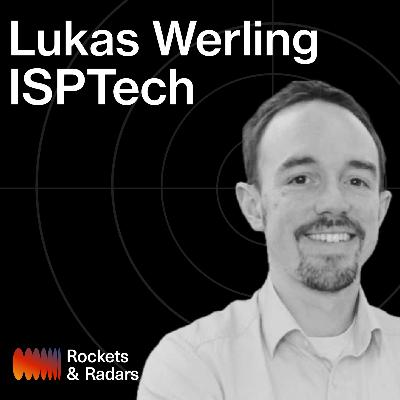
Lukas Werling is the CEO and co-founder of ISPTech, a German space startup developing green propellants that eliminate the need for hazmat suits and could slash space propulsion costs by 75%. The company has in a short time secured €2 million in funding with three orbital missions lined up for flight later this year.In this episode of Rockets and Radars, Lukas shares his journey from a mechanical engineering student rejected from aerospace programs to spending 14 years at DLR (Europe's premier rocket testing facility) before selling his motorbike to raise startup capital. From supervising thousands of rocket engine hot firings to managing Europe's most unique test facility, from watching technicians in hazmat suits handle toxic propellants to developing fuel safe enough to handle with bare hands, Lukas explains how patient research and perfect timing created a company that had paying customers before it even officially launched.Want to get hired in ISPTech? https://tally.so/r/mOq9b7Want to invest in ISPTech? https://tally.so/r/nGE4qp-----------------------------------------------Chapters:(00:00) Introduction(03:09) Getting Rejected(08:00) Breaking into DLR(14:34) Finding the Perfect Co-founder(21:01) The Spin-Out Decision(30:32) Incorporating with €25K: Selling the Motorbike(35:56) Getting First Customers Before Incorporation(44:36) Funding Journey: €2M Pre-Seed(51:17) Future Vision: Space Infrastructure & Mobility(54:34) Quick Fire Round: Biggest Mistakes & Key Decisions(58:52) Advice for Researchers-----------------------------------------------Takeaways: 1) Persistence beats rejection - keep asking until someone says yes. "I talked to my professor during his lectures. I went to his office several times... he was always saying, yeah, I will reach out." Lukas got into DLR by repeatedly asking his professor for an introduction until he finally made the call.2) Technology maturity trumps perfect business plans for deep tech - "We had like years and years of testing at the test bench... many companies didn't have those possibilities." Having proven technology from 14 years of research gave them customer confidence that business plans alone couldn't provide.3) Know your customers' pain points before you spin out - "We knew some spacecraft manufacturers, some people... what their issues are, what their pain points are." Don't guess at market needs - work directly with your future customers to understand their problems first.4) Hire people you've worked with for years, not strangers - "The first people we hired were from this... student team... We know them for years." Your early team should be people whose work quality and character you've personally witnessed over time.5) Speed beats bureaucracy when markets are moving fast - "We can decide, we can make progress as a company much, much faster... people from DLR approaching us, ah guys, can you do it so fast?" Startup agility is your biggest advantage over large institutions.6) Never start work without a written contract, no matter who asks - "The biggest mistake I made is to start some work... without a written contract... it never materialized." Even trusted contacts can disappear - always get agreements in writing before starting any work.7) Build your network before you need it - "We had our network. Of course, we knew some spacecraft manufacturers... this was an advantage." Relationships built over years become customers and partners when you're ready to commercialize.8) Focus on customer contracts, not just grant funding - "We need, just frame contracts... As a company you want customers and not additional grant funding." Paying customers validate your business better than government grants ever will.9) Plan backwards from your vision to find the first step - "You want to build this huge power plant... plan backwards... solve one issue after the other." Break dreams into manageable technical problems you can solve sequentially.
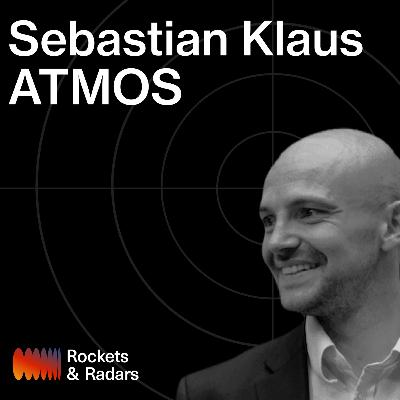
Sebastian Klaus (CEO and co-founder of ATMOS Space Cargo) went from a 17-year-old watching SpaceShipOne make history to building Europe's fastest-moving space reentry company from prototype to flight under 12 months.In this episode of Rockets and Radars, Sebastian reveals how ATMOS went from nearly going bankrupt in 2022 to successfully demonstrating inflatable heat shield technology from a small plane over the South Atlantic. From 14 years of military service to convincing investors to put €10M+ into the "most advanced technology in spaceflight history," this is the raw story of Europe's race to build space sovereignty—and how ATMOS could become the "FedEx for space."Want to get hired in ATMOS? https://tally.so/r/wvalVDWant to invest in ATMOS? https://tally.so/r/wLjeBp-----------------------------------------------Chapters:(00:00) Introduction(02:49) From 17-Year-Old Dreamer to Military Officer(10:23) Building the Dream Team: Finding Co-founders(19:32) Early Prototyping & Technical Validation(22:44) The Dark Year: 2022 Crisis & Near Bankruptcy(29:58) The Funding Gauntlet: Raising €10M+ Seed Round(38:45) Lori Garver & EIC Grant: €13M European Bet(44:20) Phoenix One Mission: Historic Flight Success(49:00) Defence Pivot: Ukraine War & Drone Applications(54:39) Quick Fire Round & Hiring Philosophy(58:21) Advice for Young Founders-----------------------------------------------Takeaways:1) Study the fundamental bottlenecks of your future industry before it exists. "I did my bachelor's on atmospheric reentry and my master's on reusable rocket engines. For me it was very clear - you need atmospheric reentry technology and you need to be able to reuse those things."2) Recruit co-founders when they're at career peaks but facing industry decline. "On Christmas Eve, I called a world-class engineer who had just launched a $10 billion space telescope. I said 'Your rocket program is being shut down. If you want to quit, now is the time.'" Target potential co-founders when their current path has obvious dead ends.3) Physical prototypes unlock funding that slide decks never will. "We dropped a 1:10 scale prototype from a helicopter to test our inflatable heat shield. It worked on the first try and became a very good marketing tool for customers and investors."4) Work second jobs to fund your startup - investors notice the sacrifice. "My co-founders and I were all working second jobs to keep the company afloat. We didn't pay ourselves a single euro in salary. Founders sacrificing personal income signals total commitment to investors.5) Find technologies where physics gives you 10X advantages over incumbents. "With inflatable technology, we can bring back 10X more cargo from space." Look for fundamental physical constraints that new approaches can completely break.6) Pivot when customers give you contracts, not just compliments. "Once we switched to building our own spacecraft and selling to pharmaceutical companies, we felt real customer pull. Companies immediately gave us letters of intent and MOUs." Polite interest isn't market validation - signed agreements are.7) Fly to the middle of nowhere for your company's biggest moments. "I flew 700 kilometers over the Atlantic Ocean in a small plane with Starlink duct-taped to the window to watch our spacecraft return from orbit." Critical company moments require founder presence, not remote management.8) Build operational flexibility into everything, not just your product. "We had to completely replan our space mission weeks before launch when our landing zone changed from the Indian Ocean to the South Atlantic." External changes will break rigid operations - adaptability determines survival.9) Dual-use technology can 10X your addressable market overnight. "The same technology that returns pharmaceutical experiments from space can deliver drones anywhere on Earth within hours." Defence applications can massively expand your total addressable market.
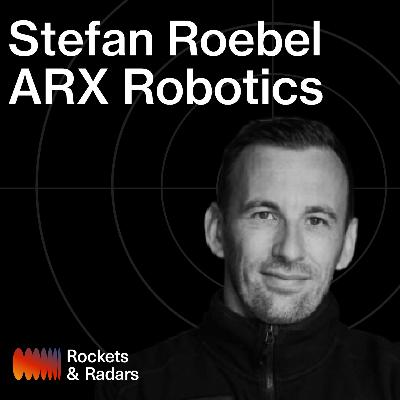
Stefan Roebel transformed from 12 years in the German military and a decade scaling Amazon operations to co-founding Europe's largest autonomous military vehicle production facility in just 3 years.In this episode of Rockets and Radars, Stefan reveals how ARX Robotics (ARX) went from a university research project to life-saving robots supporting Ukrainian troops in under 3 years. From a tired Thursday dinner where "nothing existed" to raising €40M+ and building combat-proven systems, this is the raw story of Europe's race to build its defense future before it's too late—and how ARX could become Europe's next defencetech unicorn.Want to get hired in ARX? https://tally.so/r/3qqAYdWant to invest in ARX? https://tally.so/r/mZA6Ga-----------------------------------------------Chapters:(00:00) Introduction(01:57) Personal Background & Joining ARX as 4th Co-founder(07:49) Project A Venture Studio Program(12:40) The First Prototype(19:37) Pivot to Modular Approach & ARX Framework(25:45) Customer Acquisition Strategy(31:27) Seed Round: €9 Million & NATO Innovation Fund(39:54) Launching Mithra OS(42:19) Series A: How we raised €31 Million(46:24) Vision: Becoming a European Defence Prime(50:35) Advice for Defence Tech Founders-----------------------------------------------Takeaways:1) Venture studios beat accelerators for hardware companies"A venture studio is a level two accelerator. They assign a founder associate, shared resources like hiring, legal contacts - they have all the tools a classical VC has plus operational background." This mindset was exactly what ARX needed for complex hardware development.2) Build your first prototype to fundraise, not to sell"Investors got super excited because they saw a physical product after a decade of SaaS presentations." Hardware founders need something tangible to overcome investor skepticism.3) Pitch deck hell is inevitable - embrace the chaos "We had 40 iterations of the first pitch deck. There are 500 different opinions on pitch decks, especially for hardware. Don't fight the feedback loop - use each iteration to find investors who actually understand your market and hardware.4) Win credibility through real competitions, not demos"We won the visitors award at Estonian autonomy trials. That was the first time we got exposure to other robotics companies." Public trials validate your tech against established competitors.5) Pivot from single-use to modular approach"We found most robots are single-use. But the change of situation is so rapid you need a new solution every five minutes." Undefined markets require maximum flexibility.6) Start with R&D contracts, scale to procurement later"We used smaller R&D programs to finance development of 1-10 robots. The procurement is still a tanker - we're the speedboats getting money to figure out new processes." Use innovation programs as stepping stones to larger contracts.7) Hire military experience locally for each country expansion"My military English is bad. We're replicating what we did in Germany by hiring local teams with military experience to understand customer needs and adapt our system." Defence is hyper-local - you need native military speakers.8) Series A requires proof, not just vision"Series A is proof of concept done, show us traction, pipeline, forward-looking revenue. It's more data-driven, unromantic. They need conviction the money scales an already working machine." Move from founder-market fit to product-market fit evidence.9) Speed of iteration determines battlefield winners"Fast iteration cycles will be the difference maker. The current speed of change is mission critical to battlefield success. Whoever iterates fastest wins."10) Pick investors who understand B2G]We had investors with SaaS mindset asking about recurring revenues. Find investors who've lived your customer's world, not just scaled software companies.

Mitch Hunter-Scullion is the CEO and founder of Asteroid Mining Corporation (AMC), Europe's first asteroid mining company with operations across three continents and partnership with Japanese lab that built HAYABUSA (actual asteroid missions).In this episode of Rockets and Radars, Mitch shares his journey from a 21-year-old university student writing a dissertation on asteroid mining to building a space robotics company with operations across three continents. From registering the company name on a whim to appearing on BBC World News, from failed crowdfunding campaigns to million-pound investment rounds, Mitch explains how he transformed an "impossible dream" into reality. He discusses developing climbing robots for both terrestrial industrial applications and future space missions, navigating cultural differences between UK and Japanese space ecosystems, and how persistence through skepticism led to collaborations with Tohoku University and the Japanese space industry.Want to get hired in AMC? https://tally.so/r/wbX6GoWant to invest in AMC? https://tally.so/r/npXk1b-----------------------------------------------Chapters:(00:00) Introduction(02:05) From University to Company(07:00) Credibility Crisis: When Everyone Thinks You're Mad(11:09) BBC World Breakthrough(14:24) The Crowdfunding Disaster: Why It Failed(18:40) Extreme Bootstrap: Living on £500 for Years(22:51) Japan Partnership: Random Beer to Tohoku University(33:22) Product Pivot: Satellites to Climbing Robots Strategy(39:00) First Million: The Institutional Investment Reality(47:48) Near-Term vs Ultimate Mission: Balancing Revenue & Vision(58:23) Fire Round Questions-----------------------------------------------Takeaways:1) Say yes to every conversation, especially early on"If someone wants to talk, you always talk... Random emails and coffee meetings led to Mitch's biggest partnerships and investment opportunities.2) One major media appearance can instantly establish credibility "When I first went on BBC News, people were like, okay, so I actually see something's real here." Early founders desperately need credibility - prioritize getting one big media hit over many small ones.3) Crowdfunding teaches you what real business looks like"Projects are projects, but business is business. Business is about creating a product and being able to generate profits." Failed crowdfunding forced Mitch to understand the difference between cool projects and viable businesses.4) Extreme frugality can extend your runway for years"I didn't have any more than £500 in my bank account... overnight buses from Glasgow to London."5) Academic partnerships are the easiest way into new markets"Academic partnerships are a really good way for startups to get their foot into a new market." Universities provide low-risk entry, cultural guidance, and credibility in foreign countries.6) Build sustainable revenue before attempting your moonshot"Slow and steady wins the race... we don't approve of the get to asteroids or go bust model." Terrestrial customers fund your space dreams and provide resilience against failures.7) Design once, sell twice: space tech for Earth applications"We always knew there were going to be industrial applications... synergistic development opportunities." Every space technology should have an Earth market - maritime, nuclear, mining industries pay well and prove your tech.8) Investors care more about timelines than technical perfection." Investors really wanted to see timelines... The quicker you can have something that you can demo, the better." Show progress and momentum over perfect engineering - demos beat specifications.9) Prepare financially and mentally for inevitable space failures"Space is incredibly difficult... when things go wrong, you need to be resilient." Unlike software, space has catastrophic single-point failures - build multiple revenue streams and mental toughness before attempting orbital missions.

Adel Haddoud is the CEO and co-founder of Infinite Orbits, a space servicing startup that has raised €12 million in Series A funding. In this episode of Rockets and Radars, Adel shares his journey from aerospace engineer and serial entrepreneur to building the world's first commercial nanosatellite in geostationary orbit. From surviving month-to-month during the pandemic to landing contracts with major players like Intelsat and the US Air Force, Adel explains how persistence and customer focus helped them achieve what many called impossible - repairing and servicing satellites in space.Want to get hired in Infinite Orbits? https://tally.so/r/w2gzAeWant to invest in Infinite Orbits? https://tally.so/r/3xLEDd-----------------------------------------------Chapters:(00:00) Introduction(02:06) From Investor to Founder to CEO(08:31) Finding First Customer(22:06) Surviving the Early Years: Month-to-Month Funding(29:37) Winning EIC Accelerator(36:37) Building Step-by-Step: Product Evolution Strategy(42:23) Fundraising Reality: Why We Are Always Raising(47:12) Hiring for Personality Over Process(50:11) Going Global While Staying European(51:37) Fire Round: Rejections, Competition & Founder Advice-----------------------------------------------Takeaways:1) Follow customers, not personal preferences "We are quite commercially driven. So we follow where our customers are." Infinite Orbits moved from Singapore to Europe because that's where their technology suppliers, talent, and major customers were located, not for personal convenience.2) Adapt your product to what customers actually want "We adapted to what customer wanted... They convinced us that it's good to go step by step." Instead of trying to do full satellite life extension immediately, they built simpler stepping-stone products that customers were willing to pay for and risk.3) Persistence beats perfection in early sales"A lot of people say, yeah, this is great, but this is so difficult." Adel's team kept explaining their vision-based rendezvous technology until people understood its potential, despite initial skepticism.4) Never allow yourself to think you might fail"I never thought we will not make it... Once you do, then it goes downhill. It's like a domino effect."5)Target the biggest market, not the easiest one"90 billion dollar was worth of assets in GEO orbit and less than 10 billion dollar worth of assets in LEO... it made sense to do servicing to something that costs 300 million euros."6) EIC Accelerator is a game-changer for European startups"That literally took us from one league to another league... That puts you on stage, really, that attracts investors." Winning EIC with only 4-6% success rate provided credibility and matching investment that unlocked their Series A.7) Hire for personality and natural motivation first"We are hiring for the personality most of the time... If a person is not naturally motivated by space and by our technology and by being part of the team, we don't hire them." Cultural fit and genuine passion matter more than perfect credentials.8) "Never take NO for an answer" in fundraising"The natural answer for a VC is like, oh, I'm not sure. Let's wait... So you just need to keep pushing and understand why you're pushing." Treat fundraising like sales - analyze why investors say no and work to convert them.9) Every space startup should stop pretending being great"Do not pretend. Get the truth from customers. Don't lie to yourself... Only a customer tells you if it's great or not." Adel's core philosophy: customer validation is the only truth that matters, not internal assumptions.10) Collaboration beats going alone in European space"Space is too big too difficult for everybody... if you're smart enough to collaborate, then you're open enough to collaborate." Their willingness to partner with companies across 17 European countries helped them win grants and build supply chains.

Kenneth Skorpen is the co-founder and CEO of BlinkTroll Robotics, a defence tech startup that has raised €1.5 million just a few days ago.In this episode of Rockets and Radars, Kenneth shares his journey from a decade in Norwegian special forces to building moving target systems that increase soldiers' hit accuracy from 10% to 80%. He reveals how his frustration with predictable static training targets during military exercises led him to start tinkering in his garage, eventually founding a company that now serves over 10,000 soldiers and police across Europe.Want to get hired in BlinkTroll? https://tally.so/r/3ErqPBWant to invest in BlinkTroll? https://tally.so/r/nrbDl2-----------------------------------------------Chapters:(00:00) Introduction(02:22) Kenneth's Personal Background & Military Experience(08:16) Transition from Oil & Gas to Defence Tech(11:01) Finding Co-Founder Øystein(19:40) Moving from Norway to Denmark(28:31) Hiring & Building an International Team(34:39) Fundraising Journey & Investor Alignment(43:21) Product Strategy & Future Vision(49:49) Fire Round: European Defence Industry Controversies(54:28) Military Procurement Across Different Nations(58:52) Can Europe Compete with American Defence Tech?(01:02:06) Final Reflections on Training & Purpose -----------------------------------------------Takeaways:1) Military experience provides unique market insight but isn't everything: Kenneth's special forces background gave him credibility and problem awareness, but passion and energy matter more than perfect credentials.2) Start building while employed to reduce financial pressure: Kenneth developed his moving target systems while working in oil and gas, avoiding the stress of needing immediate revenue to survive.3) Market pull beats technology push every time: Kenneth only founded BlinkTroll in December 2022 when customers were actively requesting his systems, not when the technology was ready.4) Find co-founders who complement, don't duplicate your skills: "If there was Kenneth number two, we'd be a terrible team. We'd be fighting over the same drawings." Kenneth handles technical development while Øystein manages sales and business operations - zero overlap, maximum coverage.5) Customer tolerance reveals product-market fit strength:"The product was pretty sh*tty to begin with... But our customer saw the value even in a flawed product and continued supporting it." When customers endure bugs because the core value is essential, you've found something worth building.6) Geographic arbitrage can unlock growth: Most of our customers were right across the border." Moving BlinkTroll from Norway to Denmark in 2023 provided better ecosystem support, customer proximity, and cultural alignment with defense priorities.7) Hire for spark, not just skills: "If you have 10 interviews, there's maybe one person who's got spark in their eyes... not necessarily one with the best education or the best skillsets." Energy and excitement predict performance better than credentials when building early-stage teams.8) Align with existing procurement needs, don't create new ones: "There is nobody with power or influence in the military procurement program itself by anything based on their own wishes or desires. They simply act upon what is being requested from them." Find out what the military is already looking to buy and align your product with those existing requirements, rather than trying to create new demand.9) Investor alignment matters: "Do you share my values?... Kenneth turned down higher offers from investors who didn't align with BlinkTroll's mission during their fundraising process.10) Simplest path to revenue wins over strategic perfection: "What's the shortest way to the money? The simplest solution that gets you revenue as fast as possible." Focus on products that generate cash quickly, then use that revenue to fund longer-term strategic initiatives for sustainable growth.
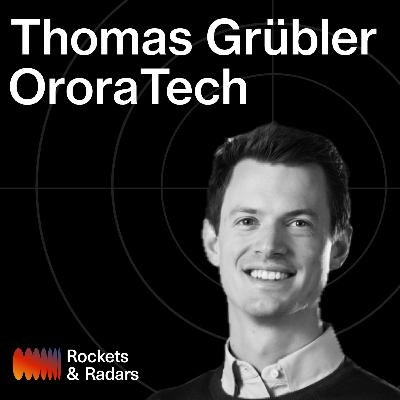
Thomas Grübler is the co-founder and Chief Strategy Officer of OroraTech, Germany's pioneering space-based wildfire detection company that has secured over €70 million in funding. In this episode of Rockets and Radars, Thomas shares his journey from building satellites as a university student to creating a company that provides fire intelligence to firefighters worldwide. He reveals how a simple question - "how can a fire burn for three days without anyone finding it out?" - led to pivoting from hardware to software, securing their first international contracts during COVID, and launching multiple thermal imaging satellites on SpaceX. Thomas discusses raising €37 million in Series B funding, expanding to the US market in Colorado, and his vision for a 100-satellite constellation capable of detecting fires within 30 minutes globally.Want to get hired in OroraTech? https://tally.so/r/3l1yBWWant to invest in OroraTech? https://tally.so/r/mRa0xJ-----------------------------------------------Chapters:(00:00) Introduction(03:28) University Origins & Space Passion(10:05) Advice for Academic Founders(12:50) The Pivot & Customer Discovery(19:22) Building the Founding Team(25:45) Angel Round & Going Global During COVID(31:16) Series A & Business Model Evolution(40:40) CEO Transition & US Market Entry(47:20) Series B & Scaling to 100 Satellites(56:10) Technical Challenges & European Ecosystem(01:02:30) Future Vision & Wisdom-----------------------------------------------Takeaways:1) Personal passion drives persistence through challengesHaving deep personal connection to your problem space gives you unique insights and motivation to push through inevitable obstacles.2) Talk to everyone about your idea - secrecy kills startupsThomas met his co-founder Björn by openly pitching his "very, very bad pitch deck" at a conference.3) Start with free money before touching equity OroraTech secured EXIST grant, ESA contracts, and competition winnings before raising their first equity round.4) Customer confusion forced a crucial pivot"Nobody understood when we were talking about satellites and thermal... Instead they aggregated 25+ existing satellite data sources into one unified product customers could actually understand.5) Engineer mindset can blind you to market realities"We were talking with firefighting agencies and they told us, there's a fire burning for two or three days. People assume existing technology is being used optimally - often it's not.6) COVID accelerated global sales strategy"We needed to sell and we found out that we need to take advantage of this that everyone is happy of taking video calls. Their first major contracts came from Chile and Australia during the pandemic.7) ROI trumps technology coolness for customers"The ROI for someone in Chile who has their own firefighting agency, a private one, who is losing money every season... needs to protect their shareholders' interest actually."8) Space doesn't make you special to investors"You shouldn't talk about space too much. You are not selling to space, and your investors are not doing space." Focus on the problem you solve and market you serve, not the technology that enables it.9) Series B requires bulletproof numbers, not just vision"In Series B, they check all the numbers. The due diligence is not only based on a few customer interviews, but they really dig into the numbers" OroraTech had to prove scalable product-market fit with hard metrics, not just early customer traction.10) US market entry demands local presence and patience"All the statistics say that you're not successful if you don't have a local entity there and local people there. It's a different culture." After years of struggling to win US customers remotely, OroraTech finally established their Colorado subsidiary in 2024.

Omar Qaise is the founder of OQ Technology, Luxembourg's first New Space startup as well as Europe's leading satellite 5G operator in direct-to-device connectivity. In this episode of Rockets and Radars, Omar shares his journey from working at ESA and DLR to founding a space startup without co-founders in 2016. He reveals how he secured early contracts, demonstrated the world's first satellite 5G connectivity through Tiger missions, and focused on connecting industrial assets beyond cellular coverage. Omar discusses securing €13M in Series A funding co-led by Aramco Ventures, winning the prestigious EIC Accelerator grant, and his vision for a European constellation enabling seamless global connectivity competing with American players.Want to get hired in OQ Technology? https://tally.so/r/nWdj4JWant to invest in OQ Technology? https://tally.so/r/mePYbq-----------------------------------------------Chapters:(00:00) Introduction(02:47) From ESA to Solo Founder(06:45) Why Luxembourg(10:52) First ESA Contracts(15:20) Patenting Strategy(19:38) Tiger-1 Mission(24:10) Securing €1.5M Seed Round(29:32) Aramco Partnership(35:45) Tiger-2 Mission(41:20) Series A: Raising €13M and Scaling the Company(48:30) Batch-1 Constellation(52:47) Direct-to-Smartphone Pivot(57:18) Winning the EIC Accelerator(01:02:30) Future Vision-----------------------------------------------Takeaways:1) Start alone if you have to - Omar started alone when others saw space as too risky: "The entrepreneurial mindset is not for everyone. Finding the right co-founder is difficult, but at some point, I had to take the decision to start the company and take the risk."2) Speed beats perfection - When asked if he'd spend more time finding co-founders, Omar emphasized momentum: "If you miss the opportunity, then it's an issue. Especially in space right now, things are moving very fast."3) Institutional funding needs commercial vision - Omar warns against getting trapped in technical development: "Once you get into technical development and excellence, you need always to keep in mind the commercial aspect. As engineers, we just love to build things and get sucked into the technical and forget about the business."4) Strategic patents create MOATs - OQ's early patents on satellite 5G technology became part of global standards: "Big companies try to push their patents to be part of the standard. That gives you a huge leverage, a big barrier to entry, but also potentially royalties in future."5) Trade shows should target customers, not space peers - Unlike most space startups, OQ focused on customer-centric events: "We go to the trade shows where we can sell. Maybe a lot of companies will go to space trade shows, but there you get people who try to sell you space things."6) Focus on real pain points beyond cell coverage - Omar identified critical gaps in global connectivity: "Beyond the cell tower in remote rural areas, in the seas, you don't have any connectivity solution that works with cellular."7) Capital efficiency is a competitive advantage - Omar strategically allocated limited resources: "We did have budget allocated, plus there are instruments and tools that help us in securing this without exhaustive cost at the beginning."8) Orbit demonstration creates unmatched experience - Flying early gave OQ Technology irreplicable knowledge: "We've been through a lot of learning and mistakes that we had to correct. Any company trying now to access that also has to go through this whole cycle."9) European space needs ambitious growth investments - Omar identifies a critical funding gap: "There's a lot of focus and investment on early stage, but you're gonna have companies that evolve to the scale-up stage."10) Geopolitics can create market openings - Omar recognized how global tensions create strategic opportunities: "Europe needs to be independent with its infrastructure and technology."
Dan Hermansen is the founder of MyDefence, an European drone defence company that's become a global leader in soldier-borne counter-unmanned aerial systems.In this episode of Rockets and Radars, Dan shares his remarkable journey from Danish Air Force reserve officer to building an European defence tech with 150% annual growth. He reveals how they pivoted from roadside bomb protection to drone defence, securing their first contract with Danish Defence in 2013 with just €1 million while working full-time jobs. He explains My Defence's innovative approach to portable drone detection, the unprecedented NATO framework agreement they recently secured, and his passionate vision for saving lives through technology that's become battle-proven in Ukraine's front lines.Want to get hired in MyDefence? https://tally.so/r/wkpL1JWant to invest in MyDefence? https://tally.so/r/wvpR1d-----------------------------------------------Chapters:(00:00) Introduction(02:47) Developing Anti-IED Tech from Scratch(05:42) How to Get MoD Funding for Your Defence Startup(10:20) Setting a 3-Year Product Development Deadline(14:38) First Hires: Building a Technical Defence Team(17:32) The Counter-Drone Pivot That Changed Everything(27:16) Building Multiple Product Lines with Limited Resources(33:37) Cracking the US Defence Market: Pentagon to Contracts(43:37) Product Evolution: From Detection to Protection Systems(52:47) How Ukraine Validated the Counter-Drone Market(55:58) The Bridgepoint Deal: Sale to a Major Investor(01:01:14) Securing NATO Contracts and Future Plans-----------------------------------------------Takeaways:1) Start with a meaningful problem - MyDefence began with a powerful mission: protecting soldiers from roadside bombs after meeting an injured soldier who said "If I just had something on me that could protect me against these bombs, then I wouldn't have been in a wheelchair."2) Begin part-time if necessary - Dan and his co-founders developed their concept for four years while keeping their full-time jobs: "We had full-time jobs. So this was just on the sideline." 3) Secure proper permission - Before working on their side project, they approached their employer: "We made an agreement with my employer that it was okay." Protect yourself legally before pursuing your startup idea.4) Leverage existing networks - Their breakthrough with Danish Defence came through co-founder Christian's military connections: "He was a former F-16 pilot and still had active reserve duties. So he could open the doors."5) Set clear product timelines - "We need a product to build a company within three years. If we don't succeed, then we'll be a project company which is not scalable." 6) Stay adaptable to market demands - Their pivot to drone defence came organically when police and prison services expressed interest: "Drones were smuggling stuff into prisons. And the police had problems with drones flying over crowds."7) Test early with actual users - "You have to give a very early prototype. You're almost embarrassed to give this away... Go test it out. Tell me what works and what doesn't work." 8) Recognize when to pivot resources - When MyDefence couldn't complete their 3D radar development: "We looked at the bank account and said, out of money. So we needed to focus." Know when to shelve promising ideas to survive.9) Pursue international opportunities aggressively - After meeting a US general at a conference who gave him a business card, Dan immediately arranged a Pentagon meeting: "Just after we've finalized the MITRE challenge, I'll be in Washington, DC."10) Use professional advisors for major transitions - For their acquisition by Bridgepoint, Dan emphasized expert guidance: "We had a team of three people full-time working for nine months on this case." At critical growth stages, professional help is essential.
José Mariano Lopez-Urdiales is the founder of Zero2Infinity, an European space balloon company that's been challenging conventional approaches to space access for over 15 years.In this episode of Rockets and Radars, José shares his remarkable journey starting with just €90,000 and a vision for space balloon technology that could revolutionize how we access space. He discusses nearly securing a groundbreaking €5M deal with Vodafone to send Will.i.am to perform the first-ever concert from space, the corporate politics that derailed it, and his unwavering determination despite numerous setbacks. José explains Zero2Infinity's innovative approach to space access through balloon technology, why traditional rockets aren't always the answer, and his passionate vision for a European space industry that leads rather than follows.Want to get in touch with José? https://tally.so/r/w7e479Want to invest in Zero to Infinity? https://tally.so/r/mBg8JA-----------------------------------------------(00:00) - Introduction(01:44) - What is Zero2Infinity(05:14) - The Genesis of Zero2Infinity(07:08) - Balloons vs. Traditional Rockets(15:43) - Funding Journey: From €200K to €1.5M(24:41) - The Vodafone Partnership That Almost Changed Everything(28:32) - Product Evolution: Elevate, Bloon, and Bloostar(35:03) - Funding Challenges and Strategic Pivots(43:43) - Current Status and Future Vision(53:50) - Rapid Fire Q&A-----------------------------------------------Takeaways:1) Start with your unique insight - Jose identified a market gap: "If we can offer a ride that requires less training, less G forces, less risk... Wouldn't that be wonderful?" Find overlooked opportunities where you have genuine conviction.2) Begin with limited resources - Jose started with just €90,000, strategically using it for "a team, a patent, a website, and a business plan." Get creative with compensation - he offered future flight tickets to attract talent3) Look beyond your industry's bubble - Rather than pitching at space conferences, Jose presented at luxury travel fairs. "The market for space tourism is adventure travelers, not space nerds." Go where your actual customers are, not where your peers gather.4) Secure strategic first investors - Getting Ultramagic (a balloon manufacturer) onboard provided technical validation: "They know the path to get all the permits, the insurance, the certification." Your first investors should bring expertise and credibility to unlock your next steps.5) Persevere through rejection - "No doesn't mean a no in these situations necessarily." The Ultramagic investment came after multiple rejections. Persistence matters more than perfect pitches.6) Build demonstration capability before scaling - Zero2Infinity proved their concept with a half-scale prototype before attempting full-scale human flight. Create tangible proof that "we've shown that we float, we can fly this" to convince skeptics.7) Fundraising is about relationships, not spreadsheets - "When I tried to do a roadshow and pitch to people with a spreadsheet, none of that ever worked." Instead, focus on "increasing the surface of contact with serendipity" through constant networking.8) Use individual investors to attract VCs - Jose found that venture capital firms followed after their limited partners had already personally invested: "We made it embarrassing for the VCs not to follow their LPs."9) Find investors who need you - "Go to somebody that needs you more than you need them." Standard VCs have endless options, but partners with strategic interests in your specific solution will fight harder to make you succeed.10) Corporate partnerships require holistic thinking - The OHB collaboration failed because "I was just trying to win... I wasn't thinking how do I make other stakeholders within OHB need my project." Success requires making partners feel valued, not just proving technical superiority.
Stanislas Maximin is the founder and Executive Chairman of Latitude, a company valued over €100 million that's putting France back in the orbital launch business after almost 50 years.In this episode of Rockets and Radars, Stanislas shares his journey from being a self-described "terrible student" with a passion for rockets to building a space company. He discusses the challenges of starting with just €25,000, battling established players, rebranding multiple times, and creating a culture of rapid iteration and risk-taking. Stanislas explains Latitude's approach to rocket development, his philosophy on team building, and his bold vision for a European space industry that can compete globally. Want to join Latitude? https://tally.so/r/nrg1B5Want to invest in Latitude? https://tally.so/r/3EAE5qInterested in the joining Stanislas' New Space conference? https://lesassisesdunewspace.org/discover-the-ans-2025/(8-9 July '25, Paris)-----------------------------------------------Chapters:(00:00) - Introduction(03:23) - "I was a terrible student" - Stan's background(05:01) - Why rockets are just really cool(12:42) - Starting from zero in the space world(16:34) - The European space market opportunity(21:13) - Surviving on €25K: The funding journey begins(24:42) - The messy rebranding story(30:25) - Almost running out of money before Series A(35:19) - The drama with Ariane Group and engine testing(40:14) - Leveling up: From Series A to Series B funding(44:24) - Fighting against slow European processes(50:58) - How rocket development actually works(56:24) - Creating a faster company culture(01:05:41) - Making micro-launchers profitable(01:11:15) - The engine test bet(01:16:52) - Can Europe compete in space again?-----------------------------------------------Takeaways:1) You don't need a fancy degree- Stan sucked at school but loved rockets enough to start a company anyway. Passion beats credentials every time.2) Just start somewhere - Stan had "no experience, no knowledge, no skills, no nothing except a vision and a passion." That was enough to begin.3) Your first company name will probably suck - Latitude went through multiple "s*it" names before finding the right one. Don't stress about perfect branding at the start.4) Incubators actually help- Stan joined an incubator and called it "a game changer" for learning startup basics when he had no business experience.5) The first €25K is the hardest- They started with just enough to hire some interns and couldn't even pay themselves for almost two years.6) Move super fast as you grow- "Your ability to build a great product is linked to your ability to improve, to iterate on every part very fast." This becomes even more important as you scale.7) Build your own test facilities- When suppliers and partners slow you down, get control of your testing. "We opened a massive test zone" to move at their own pace.8) Fight against getting corporate- As they grew, processes got "heavier and heavier." Stan had to actively reshape the culture to stay nimble.9) Crazy incentives actually work- Stan bet his team they couldn't test an engine in two weeks, now he needs a tattoo because they delivered faster than expected.10) Know when your role needs to change- Stan recognized when to step back as CEO to focus on vision and strategy where he adds more value to the company.11) Europe needs to dream again - "Europe has stopped believing that tomorrow is going to be better than yesterday" and space companies need to help change that.

Comments

Download from Google Play

Download from App Store
 United States