


 Claim Ownership
The Science Show
Subscribed: 8,741Played: 181,359
Subscribe

© Copyright 2026, Australian Broadcasting Corporation. All right reserved.
Description
The Science Show gives Australians unique insights into the latest scientific research and debate, from the physics of cricket to prime ministerial biorhythms.
510 Episodes
Reverse
When raised lead levels were noticed in Los Angeles last year, a chemist — who usually examines asteroids — quickly saw that the fires that ravaged the region in January 2025 were to blame.
Major international airports in the Middle East have been closed this week due to the war with Iran, leaving hundreds of thousands of passengers stranded. So, what happens after a major airspace closure?How do pilots know where they should fly? And how long will it take to get things back to normal?You can binge more episodes of the Lab Notes podcast with science editor and presenter Jonathan Webb on the ABC Listen app (Australia). You'll find episodes on animal behaviour, human health, space exploration and so much more.Get in touch with us: labnotes@abc.net.auFeaturing: Amy Briggs, science reporter Extra information: Air travel may be disrupted by the Iran war for months. This is whyThis episode of Lab Notes was produced on the lands of the Gadigal, Wurundjeri and Menang Noongar people.
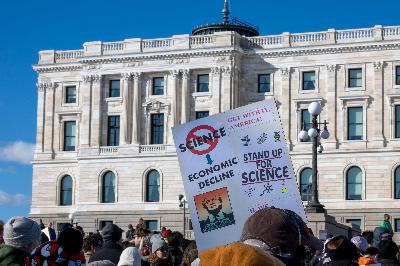
Robyn Williams reports from the 2026 annual meeting of the American Association for the Advancement of Science.
Backyard sprinklers have transformed the Aussie urban landscape. But their path to domination of our suburbs was haphazard — and hinged on the inventions of several knockabout tinkerers. Meanwhile with a rapidly drying climate, we may need to re-consider our reliance on this invention.You can binge more episodes of the Lab Notes podcast with science editor and presenter Jonathan Webb on the ABC Listen app (Australia). You'll find episodes on animal behaviour, human health, space exploration and so much more.Get in touch with us: labnotes@abc.net.auFeaturing: James Purtill, technology reporter Extra information:How the garden sprinkler conquered AustraliaThis episode of Lab Notes was produced on the lands of the Gadigal and Menang Noongar people.
An ancient human may be a new species, and extinct giant kangaroos - could they hop?
A quick online search reveals multiple paid services for naming stars as commemorative gifts. You'll be provided with a certificate and a map for finding your star in the sky. But these names are not official and are not used by astronomers — or anyone else, for that matter. So what's going on, and how do stars really get their names? Featuring: Laura Driessen, radio astronomer at the University of Sydney You can binge more episodes of the Lab Notes podcast with science editor and presenter Jonathan Webb on the ABC Listen app (Australia). You'll find episodes on animal behaviour, human health, space exploration and so much more.Get in touch with us: labnotes@abc.net.auThis episode of Lab Notes was produced on the lands of the Gadigal and Menang Noongar people.
A cave in Sulawesi was home to our ancestors for tens of thousands of years. Archaeologists are piecing together the story.
Retinoids are big business for reducing wrinkles and treating acne — but there's conflicting advice on their safety for pregnant women.Should manufacturers of these skincare products be providing warnings? Or are the risks not that great?You can binge more episodes of the Lab Notes podcast with science editor and presenter Jonathan Webb on the ABC Listen app (Australia). You'll find episodes on animal behaviour, human health, space exploration and so much more.Get in touch with us: labnotes@abc.net.auFeaturing:Caitlyn Davey, health reporterExtra information:Retinoids are booming in the beauty industry, but are they safe to use during pregnancy?This episode of Lab Notes was produced on the lands of the Gadigal and Menang Noongar people.
Australia’s social media ban aims to protect young people from online threats, but it may also restrict their access to discussion of democracy and political systems.
AI seems to be absolutely everywhere at the moment. While we're still waiting for the productivity revolution — or the jobs apocalypse — the energy costs of AI are already staggering.So how should we think about those environmental impacts of AI? And what can we learn from previous turns of the great technological wheel?You can binge more episodes of the Lab Notes podcast with science editor and presenter Jonathan Webb on the ABC Listen app (Australia). You'll find episodes on animal behaviour, human health, space exploration and so much more.Get in touch with us: labnotes@abc.net.auFeaturing: Dr Niraj Lal, renewables expert at the Australian National University Extra information: Data centres are vital for the future and AI but their environmental footprint can be a problemThis episode of Lab Notes was produced on the lands of the Gadigal and Menang Noongar people.
How did life begin? It may not have been on Earth, with asteroids carrying a range of organic molecules
Fire, insects and disease all pose a threat to Australia's forests but scientists are now seeing a rise in natural tree deaths right across the country. New research links this background mortality to higher average temperatures.So what do these higher temperatures mean for our forests and the future of Australia's ecosystems? You can binge more episodes of the Lab Notes podcast with science editor and presenter Jonathan Webb on the ABC Listen app (Australia). You'll find episodes on animal behaviour, human health, space exploration and so much more.Get in touch with us: labnotes@abc.net.auFeaturing: Professor Belinda Medlyn, plant ecologist from Western Sydney UniversityExtra information: Pervasive increase in tree mortality across the Australian continentRising tree death rates in all types of Australian forest tied to climate changeThis episode of Lab Notes was produced on the lands of the Gadigal and Menang Noongar people.
Natasha Hurley-Walker considers what might explain a mysterious stellar object which shines every 18 minutes.
A faint orange hand stencil on the wall of a cave in Indonesia just became the oldest art known to science. The art, made by splattering ochre over a hand, had been painted over by subsequent generations and was only preserved because moisture combined with the limestone of the cave to form a protective layer on top. The finding strengthens the picture that humans migrated via Borneo, Sulawesi and Papua to reach Australia at least 65,000 years ago. You can binge more episodes of the Lab Notes podcast with science editor and presenter Jonathan Webb on the ABC Listen app (Australia). You'll find episodes on animal behaviour, human health, space exploration and so much more.Get in touch with us: labnotes@abc.net.auFeaturing: Jacinta Bowler, ABC science reporter Extra information: Hand stencils discovered in an Indonesian cave are oldest-known rock artRock art from at least 67,800 years ago in SulawesiThis episode of Lab Notes was produced on the lands of the Gadigal and Menang Noongar people.
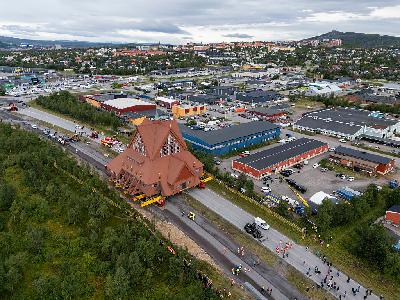
In the Swedish city of Kiruna, an entire community is being relocated to accommodate the expansion of the world's largest underground iron ore mine.
Australia's summer UV levels are high enough to cause sunburn in as little as 11 minutes.Yet the summer sun in the Northern Hemisphere rarely feels that full on.So why does our sunlight have that extra "bite"?Spoiler: it's not the hole in the ozone layer.You can binge more episodes of the Lab Notes podcast with science journalist and presenter Belinda Smith on the ABC Listen app (Australia). You'll find episodes on animal behaviour, human health, space exploration and so much more.Get in touch with us: labnotes@abc.net.auFeaturing: David Whiteman, medical epidemiologist and Cancer Control group leader at QIMR BerghoferMore information:Why is UV so high during Australia's summer? The ozone hole is not to blameCancer Council — UV RadiationWorld Health Organization — Radiation: The ultraviolet (UV) indexCSIRO — The future of the ozone holeThis episode of Lab Notes was produced on the lands of the Wurundjeri and Menang Noongar people.
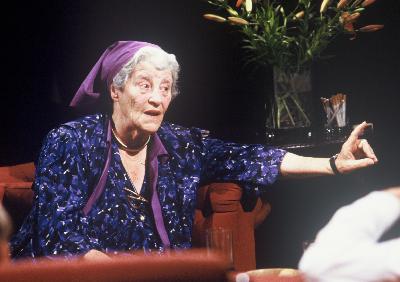
She became an expert on fleas and despite no formal education received honorary doctorates from both Oxford and Cambridge was elected a fellow of The Royal Society.
The next time you pick up a bag of spuds from the supermarket or fill up the car with petrol, you can thank the Treaty of the Metre for the metric system that underpins daily life. The treaty was signed exactly 150 years ago, when delegates from 17 countries gathered in Paris to establish a new and standardised way of measuring the world around us. But the metre's inception predates the treaty that bears its name by nearly 100 years. So how did it come about, and how has its definition changed over the centuries? This episode was first broadcast in May 2025. You can binge more episodes of the Lab Notes podcast with science journalist and presenter Belinda Smith on the ABC Listen app (Australia). You'll find episodes on animal behaviour, human health, space exploration and so much more. Get in touch with us: labnotes@abc.net.auFeaturing:Bruce Warrington, CEO and chief metrologist of the National Measurement Institute More information:The metre originated in the French Revolution, but its definition has changed many times sinceThis episode of Lab Notes was produced on the lands of the Wurundjeri and Menang Noongar people.
She could only read and write from age 10. She reared children and had a first unsupportive husband. But Mary Somerville was able to correct the work of Isaac Newton, help discover Neptune, and write a science book which became a university text.
Every now and again, dozens or even hundreds of perfectly healthy looking whales strand themselves on a beach. And despite people's best efforts, many — if not all of them — will die. So why do whales strand themselves, and why do they seem to do it at the same locations? This episode was first broadcast in August 2025. You can binge more episodes of the Lab Notes podcast with science journalist and presenter Belinda Smith on the ABC Listen app (Australia). You'll find episodes on animal behaviour, human health, space exploration and so much more. Get in touch with us: labnotes@abc.net.auFeaturing:Kate Sprogis, marine mammal ecologist at University of Western Australia More information: Cause of mass pilot whale stranding at Cheynes Beach still no clearer one year onThis episode of Lab Notes was produced on the lands of the Wurundjeri and Menang Noongar people.


Download from Google Play

Download from App Store
 United States
Doesn't download. Someone needs to check the settings.
🖐️
What gives? Eight mins and then cut off mid sentence. This is the second pod that has been cut off half way.